Introduction
Recently phytogenic feed additives are gaining more interest, comprising essential oils, herbs, spices and oleoresins. All these contain phenolic and terpene compounds, which are responsible for various activities (Christaki et al., Reference CHRISTAKI, BONOS, GIANNENAS and FLOROU-PANERI2012; Geetha and Chakravarthula, Reference GEETHA and CHAKRAVARTHULA2018; Farag and Alagawany, Reference FARAG and ALAGAWANY2019). Antibiotic growth promoters (AGPs) administered at sub-therapeutic levels in feed have been banned in many countries in the last two decades, due to increasing microbial resistance and antibiotics residue in animal products. This has led to more research into alternatives to antibiotics which do not have side effects on animal productivity and/or product quality (Seal et al., Reference SEAL, LILLEHOJ, DONOVAN and GAY2013; Saeed et al., Reference SAEED, ALAGAWANY, FAZLANI, KALHORO, NAVEED, ALI, ARAIN and CHAO2019; Orayaga et al., Reference ORAYAGA, OLUREMI and ADENKOLA2016; Nehru et al., Reference NEHRU, SUNANDHADEVI, RAMA and MUNIYAPPAN2017). It is anticipated that phytogenic supplementations in poultry via water or feed may prevent the colonisation of pathogens and positively alter the intestinal microbiota that can result in the improvements in health, immune status and production performance (Jadhav et al., Reference JADHAV, SHARMA, KATOCH, SHARMA and MANE2015; Zeng et al., Reference ZENG, ZHANG, WANG and PIAO2015; Dhama et al., Reference DHAMA, KARTHIK, KHANDIA, MUNJAL, TIWARI, RANA, KHURANA, ULLAH, KHAN, ALAGAWANY, FARAG, DADAR and JOSHI2018). Moreover, plant-origin supplements may increase feed consumption in farm animals and act as natural antioxidants in poultry products (Zeng et al., Reference ZENG, ZHANG, WANG and PIAO2015; Arain et al., Reference ARAIN, MEI, HASSAN, SAEED, ALAGAWANY, SHAR and RAJPUT2018a; Reference ARAIN, SAEED, HASSAN, RASHID, ZOHAIB, BHUTTO, ALAGAWANY and SHAR2018b).
Nowadays, researchers are seeking the best alternative of antibiotics in feed. Among herbs, Heracleum persicum (golpar) is a well-known herbaceous plant that belongs to family Umbelliferae. The genus Heracleum with more than 120 different species across the globe is the largest genera of the Umbelliferae (Apiaceae) family. Heracleum persicum is a perennial flowering plant native to Iran. It has been using as a flavouring agent for making various types of pickles. The fruits and leaves of this genus are used in Iranian folk medicine as antiseptic, digestive carminative and analgesic agents (Asgarpanah et al., Reference ASGARPANAH, MEHRABANI, AHMADI, RANJBAR and ARDEBILY2012). Scientific reports have indicated the existence of six flavonoids and furanocoumarins in the fruits of golpar (Brunton et al., Reference BRUNTON, LAZO and PARKER2006). The usually photochemical compounds from golpar are volatile substances, including furanocoumarins, triterpenes terpenoids, alkaloids and flavonoids. The main ingredients of the golpar fruit essential oil included hexyls butyrate (56.5%), hexyl-2-methyl butanoate (5.2%), octyl acetate (16.5%) and hexylisobutyrate (3.4%). The oil contains approximately 4% of aliphatic alcohols, 95% of aliphatic esters, and 1% monoterpenes, 37 esters and 17 monoterpenes (Hemati et al., Reference HEMATI, AZARNIA and ANGAJI2010). It exhibits a variety of biological activities including as an antioxidant, antimicrobial and antidiabetes (Jayaprakasha et al., Reference JAYAPRAKASHA, OHNISHI-KAMEYAMA, ONO, YOSHIDA and JAGANMOHAN RAO2006). The antioxidative action of some secondary metabolites of H. persicum, including furanocoumarins, has been well observed (Souri et al., Reference SOURI, FARSAM, SARKHEIL and EBADI2004). Furthermore, it has been revealed that furanocoumarins have significant potential for inhibiting the lipid peroxidation in food products (Vimal and Devaki, Reference VIMAL and DEVAKI2004).
H. persicum is conventionally consumed as carminative, gastrointestinal mobility enhancer, antiseptic, and aromatic substance (Shahrani et al., Reference SHAHRANI, NABAVIZADEH, SHIRZAD, YOUSEFI, MORADI and MOGHADDASI2006). This plant is known to reduce low density lipoprotein (LDL) cholesterol (Panahi et al., Reference PANAHI, PISHGOO, BEIRAGHDAR, ARAGHI, SAHEBKAR and ABOLHASANI2011) and has potent analgesic, anti-inflammatory, antibacterial, antifungal, anticonvulsant, cytotoxic and immunomodulatory effects (Hajhashemi et al., Reference HAJHASHEMI, SAJJADI and HESHMATI2009). It has been reported that various parts of this herb contain terpenoids, terpenes, furanocoumarins, alkaloids, volatile metabolites and flavonoids (Hemati et al., Reference HEMATI, AZARNIA and ANGAJI2010). The fruits of golpar are commonly being used as a seasoning agent in the preparation of pickles, spices and in traditional medicines against gastrointestinal disorders (Mojab et al., Reference MOJAB, RUSTAIYAN and JASBI2002). To date, it has been adopted as a traditional remedy to cure disorders like stomach gas or flatulence, infections; and as a potent appetiser, anthelmintic, antiseptic, diuretic and painkiller (Hajhashemi et al., Reference HAJHASHEMI, SAJJADI and HESHMATI2009; Hemati et al., Reference HEMATI, AZARNIA and ANGAJI2010). In the pharmaceutical arena, additional pharmacological applications of H. persicum have been discovered including anticancer, cardioprotective, antithrombotic, and immunostimulatory effects (Souri et al., Reference SOURI, FARSAM, SARKHEIL and EBADI2004; Sayyah et al., Reference SAYYAH, MOAIED and KAMALINEJAD2005; Hajhashemi et al., Reference HAJHASHEMI, SAJJADI and HESHMATI2009). The experiments reported by Taghizabet et al. (Reference TAGHIZABET, MANGOLI, ANBARI, MASOODI, TALEBI and MAZROOEI2016) showed that H. persicum extracts improved sperm motility in the different animal models. It has been reported that H. persicum extract enhanced the growth performance, blood cholesterol and ND titre in broiler chickens (Kheiri et al., Reference KHEIRI, RAHIMIAN and RAFIEE2014). This could be credited to the flavonoids and furanocoumarins it contains which can boost the humoral immunity by stimulating the B-cells and macrophages for the production of antibodies (Sharififar et al., Reference SHARIFIFAR, POURNOURMOHAMMADI, ARABNEJAD, RASTEGARIANZADEH, RANJBARAN and PURHEMMATY2010). The hydroalcoholic extract from this herb exhibits antinociceptive and anti-inflammatory effects in animal models that supported the customary use of this herb in addressing inflammation and pain (Hajhashemi et al., Reference HAJHASHEMI, SAJJADI and HESHMATI2009).
In the published literature, the effects of H. persicum on feed intake, weight gain and feed efficiency in broiler are not widely available. But it can be hypothesised that it may positively affect the performance of broilers due to the presence of pharmacological agents with substantial digestive and antioxidative effects. So, the aim of this review is to highlight the importance H. persicum for veterinarians and nutritionists to examine its promising beneficial effects and to identify its effective inclusion rates in feed for the poultry industry to replace the antibiotic growth promoters. Further research is required to elucidate its mechanism of action and the metabolites responsible for its multidimensional pharmacological effects. In addition, this review sheds light for the development of new therapeutic drugs from this herb and its future use as a feed supplement in poultry.
Geographical distribution and identification of golpar
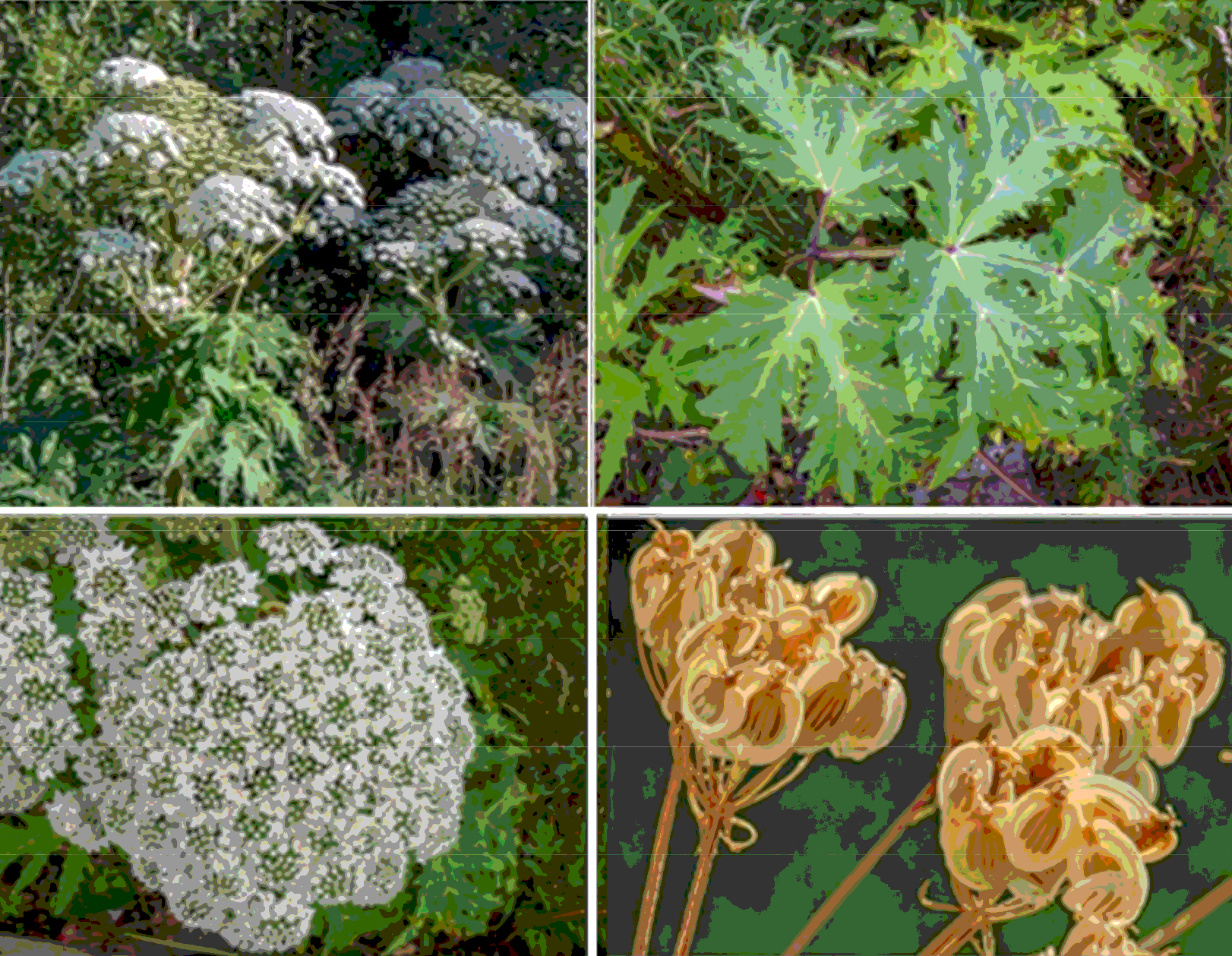
H. persicum (golpar) is native to Iran, and is found in humid mountainous regions of various Asian countries including Iraq and Turkey and in some parts of Europe including, Sweden, Finland, Norway and Denmark (Amin, Reference AMIN1991). It is a persistent plant which is around five to seven feet tall (Figure 1). It has a red-brown hollow stem from its base which is 50 mm thick and coarse-haired. The leaves of this herb have a pod-like base. Leaf blades are elongated, thickly haired at bottom, hairless on the top side and pinnate, and leaflets have blunt-toothed margins (Figure 1). Flowers have five stamens, five petals and are deeply uneven. Sepals are short. Its fruits are generally obovate, 7-8 mm in length and bilaterally separated with a marginally grooved schizocarp (Asgarpanah et al., Reference ASGARPANAH, MEHRABANI, AHMADI, RANJBAR and ARDEBILY2012).
Morphology of Golpar (Heracleum Persicum) regarding leaves, flowers and fruits/seed (Asgarpanah et al., Reference ASGARPANAH, MEHRABANI, AHMADI, RANJBAR and ARDEBILY2012).

The chemical composition of Golpar
The most well-known phytochemical compounds of this herb belong to volatile substances, furanocoumarins, terpenoids, alkaloids, triterpenes and flavonoids (Hemati et al., Reference HEMATI, AZARNIA and ANGAJI2010). Hexyl butyrate (56.5%), hexyl-2-methyl butanoate (5.2%), octyl acetate (16.5%) and hexyl isobutyrate (3.4%) have been recognised as the key elements of golpar fruit essential oil. As reported by Hemati et al. (Reference HEMATI, AZARNIA and ANGAJI2010), the oil derived from this herb comprised about 4% aliphatic alcohols, 95% aliphatic esters and 1% monoterpenes. Its leaves contain 0.13% of a volatile oil that comprises trans-anethole (82.8%) as the chief constituent, and contain β-pinene, α-farnesene, β-springene α-bergamotene, terpinolene, cis-anethole, ρ-cymene, 2,5-dimethyl styrene, spathulenol and stragole (Mojab et al., Reference MOJAB, RUSTAIYAN and JASBI2002).
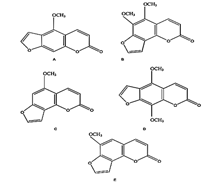
The important constituents in ripe and unripe seed oil of golpar were hexyl isobutyrate (3.2 and 9.1%), octyl acetate (27 and 19%) and hexyl butyrate (35.5 and 22.5%), respectively (Sefidkon et al., Reference SEFIDKON, DABIRI and MOHAMMAD2004). However, (E)-anethole was a major ingredient of oils extracted from leaves and flower parts (Sefidkon et al., Reference SEFIDKON, JALILI and MIRHAJI2002), although the roots contain pimpinellin, isobergapten, isopimpinellin, bergapten, sphondin and furanocoumarins (Aynehchi et al., Reference AYNEHCHI, ALIABADI and SURMAGHI1978; Tosun et al., Reference TOSUN, KıZıLAY, EROL, KıLıÇ, KÜRKÇÜOĞLU and BAŞER2008) (Figure 2). These furanocoumarins are seen in the seeds and leave parts (Merijanian et al., Reference MERIJANIAN, COLASURDO, SAMTAK, ULLRICH and SPAGNUOLO1980). A bioflavonoid named quercetin has been found in the ether extract of golpar fruits. From the study of Coruh et al. (Reference CORUH, SAGDICOGLU CELEP and OZGOKCE2007) the total amount of phenolic compounds was found to be 59.6 µg/mg in the crude extract of H. persicum.
The various structures (A= Bergapten; B= Pimpinellin; C=Isobergapten; D= Isopimpinellin; E= Sphondin) from Golpar (Aynehchi et al., Reference AYNEHCHI, ALIABADI and SURMAGHI1978; Tosun et al., Reference TOSUN, KıZıLAY, EROL, KıLıÇ, KÜRKÇÜOĞLU and BAŞER2008).

Biological activities of golpar
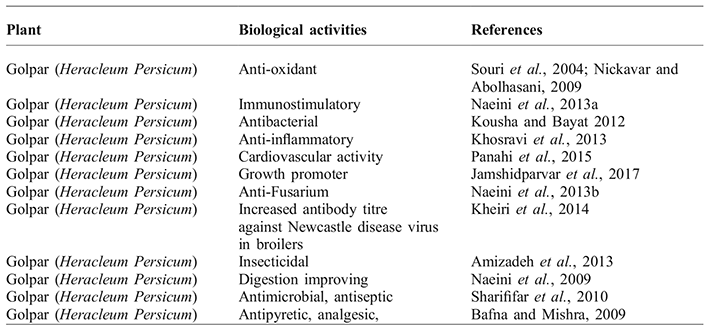
The biological studies of golpar (Heracleum persicum) have shown that, like other members of the genus Heracleum, this plant has broad spectrum bioactivity (Souri et al., Reference SOURI, FARSAM, SARKHEIL and EBADI2004; Kousha and Bayat Reference KOUSHA and BAYAT2012; Naeini et al., Reference NAEINI, SHOKRI and KHOSRAVI2013a). Extracts, essential oils and isolated constituents from different parts of the plant often have remarkable biological activities (summarised in Table 1). It is used as a traditional remedy against upset stomach, flatulence, infections and urinary disorders in humans because of its potential as antimicrobial, antioxidant and analgesic (Souri et al., Reference SOURI, FARSAM, SARKHEIL and EBADI2004; Hajhashemi et al., Reference HAJHASHEMI, SAJJADI and HESHMATI2009; Hemati et al., Reference HEMATI, AZARNIA and ANGAJI2010). Its fruits are abundant in furanocoumarin content, which has been determined as a dermal photosensitising agent. This compound is abundant in suntan oils and topical creams and is effectively being used in the treatment of leukoderma (Aynehchi et al., Reference AYNEHCHI, ALIABADI and SURMAGHI1978).
Summary of different studies regarding various promising biological effects of golpar plant.

antioxidative activity
A substance is classified as an antioxidant when inclusion at a low concentration (compared to those of an oxidisable substrate) may significantly stop oxidation of that substrate (Rhee et al., Reference RHEE, PARK and CHO2009). There is a growing body of evidence that plant-origin substances and their by-products have effective antioxidant properties, associated to antiaging, hypolipidemic, anti-inflammatory and anticancer activities (Aruoma, Reference ARUOMA2003; Cho et al., Reference CHO, PARK, KIM, KIM, SONG, LEE, SUNG, RHEE, KIM and PARK2006). The antioxidant potential of H. persicum was confirmed by its lipid peroxidation and DPPH radical scavenging activity (Coruh et al., Reference CORUH, SAGDICOGLU CELEP and OZGOKCE2007). The effect of golpar extract on antioxidant glutathione S-transferase (GST) activity was explored in addition to its antioxidative potential; as the GST enzymes played a key role in the defensive mechanisms against oxidative stress, and detoxify endogenous injurious compounds like the by-products of DNA hydroperoxides or lipid peroxidation (Nordberg and Arnér, Reference NORDBERG and ARNÉR2005).
anti-inflammation
In the last few decades, researchers have moved towards plant-origin products to find novel anti-inflammatory compounds, because of the many reported undesirable effects of non-steroidal or steroidal anti-inflammatory drugs (Shokrzadeh and Saravi, Reference SHOKRZADEH and SARAVI2010). Golpar fruit are effective and novel agents that can satisfy this need (Hajhashemi et al., Reference HAJHASHEMI, SAJJADI and HESHMATI2009). Many mediators and cellular components are involved in the onset of inflammation, e.g. macrophages are inflammatory cells known to be involved in acute as well as chronic inflammatory responses by up-regulation of pro-inflammatory cytokines synthesis, including interleukin (IL) -1b, tumour necrosis factor (TNF)-α, and other inflammatory mediators (Lundberg, Reference LUNDBERG2003; Rhee et al., Reference RHEE, PARK and CHO2009). In many counties, golpar fruits are used as a traditional treatment against body pain (Hemati et al., Reference HEMATI, AZARNIA and ANGAJI2010). The anti-inflammatory actions of hydroalcoholic extract and essential oils of golpar fruits may be credited to their furanocoumarins. Spondin (furanocoumarin) has shown significant inhibitory effects on IL-1 beta-induced cyclooxygenase-2 expression via suppression of NF-kappaβ activity (Yang et al., Reference YANG, LIANG, CHANG, LEE, KUO, WANG, LEE and LIN2002). Since cyclooxygenase plays a main role in inflammation and pain, this may explain the observed analgesic and anti-inflammatory effects of hydroalcoholic extract from golpar fruits (Hemati et al., Reference HEMATI, AZARNIA and ANGAJI2010).
immunomodulatory activity
The immune system is a fundamental physiological mechanism in all eukaryotic organisms that plays a key role in reductions of pathophysiologic mechanisms and aetiology of many ailments. Modulation of immune responses to reduce many diseases has been studied for many decades (Sharififar et al., Reference SHARIFIFAR, POURNOURMOHAMMADI, ARABNEJAD, RASTEGARIANZADEH, RANJBARAN and PURHEMMATY2010). The medicinal herbal plants are considering a major source of bioactive compounds which are claimed to bring para-immunity, which is the non-specific immunomodulation of macrophages, granulocytes, natural killer cells and complement functions (Sharififar et al., Reference SHARIFIFAR, POURNOURMOHAMMADI, ARABNEJAD, RASTEGARIANZADEH, RANJBARAN and PURHEMMATY2010; Dhama et al., Reference DHAMA, SAMINATHAN, JACOB, SINGH, KARTHIK, AMARPAL, TIWARI, SUNKARA, MALIK and SINGH2015). Golpar can improve both the cellular and humoral activities of the immune system. In the aspect of haemagglutination titre (HT) test, H. persicum had noteworthy effects at all the supplemental doses, but this effect was only significant for at 100 mg/kg feed. This improved haemagglutination titre could be credited to various furanocoumarins and bioflavonoidal contents, which can augment the humoral response by upregulating the activity of beta-lymphocytes and macrophages involved in antibody synthesis (Sharififar et al., Reference SHARIFIFAR, POURNOURMOHAMMADI, ARABNEJAD, RASTEGARIANZADEH, RANJBARAN and PURHEMMATY2010; Jamshidparvar et al., Reference JAMSHIDPARVAR, JAVANDEL, SEIDAVI, BLANCO, MARÍN, RAMÍREZ, BUENDÍA and NÚÑEZ-SÁNCHEZ2017). Bioflavonoids and furanocoumarins found in golpar seem to be the most probable candidates provoking immunomodulatory effects (Kawakita et al., Reference KAWAKITA, GIEDLIN and NOMOTO2005). Possibly, furanocoumarins could be useful in the development of new drugs against various ailments, including immunodeficiency disorders.
Use of golpar in poultry
In recent decades plant derivates have received focus of AGP replacement and preventing the proliferation of aflatoxigenic fungi and subsequent aflatoxin contamination in poultry feed (Ownagh et al., Reference OWNAGH, FALLAHI, RAHMAN and MOHAMMADZADEH2015). Plant extracts, mainly essential oils, possess antimicrobial properties and are excellent sources of innovative anti-viral, antifungal and anti-bacterial compounds (Shams-Ghahfarokhi et al., Reference SHAMS-GHAHFAROKHI, SHOKOOHAMIRI, AMIRRAJAB, MOGHADASI, GHAJARI, ZEINI, SADEGHI and RAZZAGHI-ABYANEH2006; Tolouee et al., Reference TOLOUEE, ALINEZHAD, SABERI, ESLAMIFAR, ZAD, JAIMAND, TAEB, REZAEE, KAWACHI and SHAMS-GHAHFAROKHI2010). Recently, consumer awareness about food quality and safety and the reported upsurge in resistance in microbes to prophylactic drugs, together with the ban of the AGPs in numerous countries, have led to the need for substitutes to AGPs while attaining the same level of production in broiler farms (Seal et al., Reference SEAL, LILLEHOJ, DONOVAN and GAY2013). These substitutes comprise, among others, plant-origin feed additives (Pourakbari et al., Reference POURAKBARI, SEIDAVI, ASADPOUR and MARTÍNEZ2016; Franciosini et al., Reference FRANCIOSINI, CASAGRANDE-PROIETTI, FORTE, BEGHELLI, ACUTI, ZANICHELLI, DAL BOSCO, CASTELLINI and TRABALZA-MARINUCCI2016). It is expected that including phytogenics in poultry diet or drinking water may inhibit the multiplication of many pathogenic microbes and modify beneficial gut microbiota, resulting in improvements in the immune status, health and performance (Jadhav et al., Reference JADHAV, SHARMA, KATOCH, SHARMA and MANE2015; Zeng et al., Reference ZENG, ZHANG, WANG and PIAO2015). Moreover, supplementation with plant-origin products can increase feed intake in farm animals and being act as natural antioxidants in poultry products (Zeng et al., Reference ZENG, ZHANG, WANG and PIAO2015). It has been reported that supplementation with H. persicum extract significantly improved the feed intake (9.4%), weight gain (14.7%) and body weight (13.9%) and reduced feed conversion ratio (8.7%) in broilers comparing with the control group (Jamshidparvar et al., Reference JAMSHIDPARVAR, JAVANDEL, SEIDAVI, BLANCO, MARÍN, RAMÍREZ, BUENDÍA and NÚÑEZ-SÁNCHEZ2017). Similarly, in another study, an aqueous extract of golpar was found beneficial for weight gain in broiler chickens (Jamshidparvar et al., Reference JAMSHIDPARVAR, JAVANDEL, SEIDAVI, BLANCO, MARÍN, RAMÍREZ, BUENDÍA and NÚÑEZ-SÁNCHEZ2017). Golpar extract may have a stimulatory effect on accessory cell types and lymphocytes (Vimal and Devaki, Reference VIMAL and DEVAKI2004). In the study of Jamshidparvar et al. (Reference JAMSHIDPARVAR, JAVANDEL, SEIDAVI, BLANCO, MARÍN, RAMÍREZ, BUENDÍA and NÚÑEZ-SÁNCHEZ2017) it was found that golpar extract supplemented at a concentration of 1.0, 1.5, 2.0 and 2.5 ml/l in drinking water could increase broiler performance and immune functions, and give positive effects on the relative indices of carcass, abdominal fat and small intestine weight. Similarly, Kheiri et al. (Reference KHEIRI, RAHIMIAN and RAFIEE2014) described that the weight indices of the gizzard and liver improved in a quadratic fashion in response to H. persicum in feed. The negative linear trend of small intestine weight index in response to the H. persicum inclusion levels might be due to the thinning of the intestinal wall, thus expediting nutrient absorption (Lee et al., Reference LEE, KIM and OH2015).
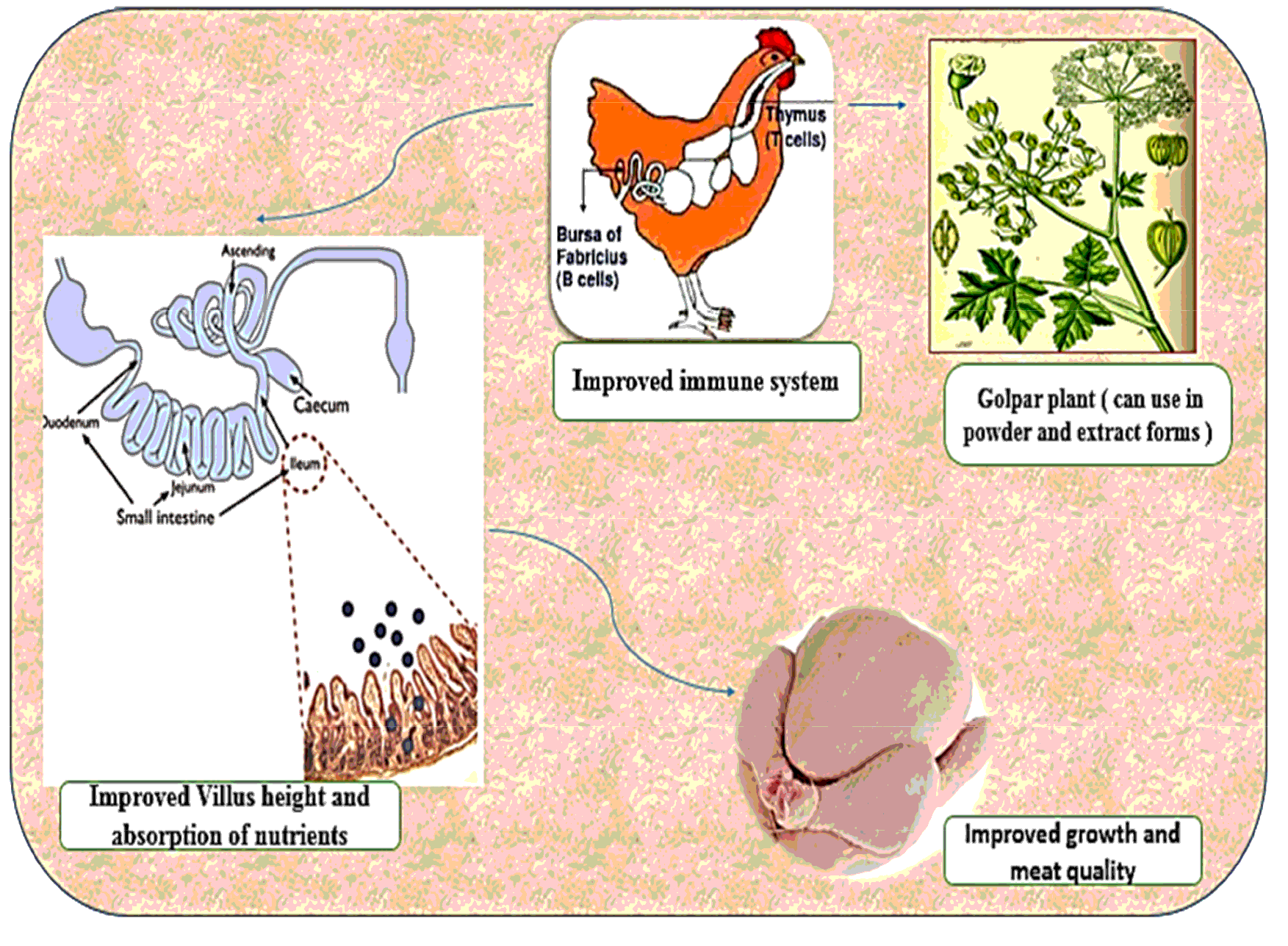
Whether phytogenic supplementation in feed showed positive effects on blood cholesterol are questionable from the literature (Abou-Elkhair et al., Reference ABOU-ELKHAIR, AHMED and SELIM2014; Ghasemi et al., Reference GHASEMI, KASANI and TAHERPOUR2014). Inconsistencies between studies might be due to variance in the type of phytogenics fed, their phytochemical contents, and dosages used. It was reported that H. persicum extracts expressively decreased the plasma levels of low-density lipoprotein (LDL) cholesterol (up to 52.2%), triglycerides (up to 17.8%) and total cholesterol (up to 5.6%) while increasing the high-density lipoprotein (HDL) cholesterol (up to 17.2%) in broiler chickens (Kheiri et al., Reference KHEIRI, RAHIMIAN and RAFIEE2014; Jamshidparvar et al., Reference JAMSHIDPARVAR, JAVANDEL, SEIDAVI, BLANCO, MARÍN, RAMÍREZ, BUENDÍA and NÚÑEZ-SÁNCHEZ2017). Feeding golpar exhibited consistent positive effects on the IgM, IgG and total immunoglobulin concentrations (Jamshidparvar et al., Reference JAMSHIDPARVAR, JAVANDEL, SEIDAVI, BLANCO, MARÍN, RAMÍREZ, BUENDÍA and NÚÑEZ-SÁNCHEZ2017), but did not show any effect on the response to ND (Newcastle Disease), which was at odds with the findings of Kheiri et al. (Reference KHEIRI, RAHIMIAN and RAFIEE2014). Sharififar et al. (Reference SHARIFIFAR, POURNOURMOHAMMADI, ARABNEJAD, RASTEGARIANZADEH, RANJBARAN and PURHEMMATY2010) indicated that H. persicum could stimulate both cellular and humoral immune responses in mice because of its contents of bioflavonoids and furanocoumarins. Furthermore, in the study of Naeini et al. (Reference NAEINI, SHOKRI and KHOSRAVI2013a) it was found that H. persicum has a noteworthy immune stimulatory activity on murine macrophages. The inhibitory effect of H. persicum on alpha-amylase enzyme activity (Afrisham et al., Reference AFRISHAM, ABEROMAND, GHAFFARI, SIAHPOOSH and JAMALAN2015) suggested that some albumin was changed to gluconeogenesis to compensate for the lesser absorption of glucose in the intestine. The positive linear effect of uric acid levels in blood plasma with H. persicum inclusion levels in feed could support this idea. Elevated uric acid content in blood circulation might increase the antioxidant status of the chickens (Machin et al., Reference MACHIN, SIMOYI, BLEMINGS and KLANDORF2004). Currently, H. persicum serves as a cheap, effective and best substitute for inhibiting toxigenic Aspergillus spp. growth as well as preventing aflatoxin contamination in feeds (Razzaghi-Abyaneh et al., Reference RAZZAGHI-ABYANEH, SABERI, SHARIFAN, REZAEE, SEIFILI, HOSSEINI, SHAMS-GHAHFAROKHI, NIKKHAH, SABERI and AMANI2013). A proposed flow diagram illustrating the positive effects of golpar (Heracleum persicum) in poultry have shown in Figure 3.
Proposed flow diagram illustrating golpar effects on in poultry.

Conclusions
Golpar (Heracleum persicum), has shown promising therapeutic potential for several ailments. After compilation of previously published work, it was observed that there has been scant research on poultry, even though H. persicum has potentially useful properties including antioxidation, antifungal, antidiabetic, hypocholesterolaemic, anticonvulsant, antibacterial, growth enhancer, anti-inflammatory and immunomodulatory activities, which are attributed to its wide range of active compounds (volatile substances, flavonoids, terpenoids, furanocoumarins, triterpenes and alkaloids). The current literature indicates the potential for golpar's phytochemical furanocoumarins in the development of new drugs to overcome numerous health issues in commercial poultry, including AGP replacement. It must be kept in mind that poultry producers should remain very cautious until more decisive scientific reports demonstrate the safety, efficacy and quality of golpar. The main finding was the need for more research on golpar and its extracts on a molecular level to investigate the therapeutic and health-boosting capacities as well as possible mechanism of action in avian models and suitable inclusion levels.
Acknowledgments
The author is very thankful for the support of project the Major National Scientific Research Projects (2015CB943102) and the National Nature Science Foundation of China (31572365) and Key Sci-tech innovation team of Shaanxi province (2017KCT-24). The authors are also grateful to the China Postdoctoral Science Foundation.