Introduction
Toxocariasis is one of the commonest helminthic zoonoses worldwide, caused by Toxocara canis or Toxocara cati. The main routes of human infection are contact with puppies, ingestion of eggs or larvae accidentally by pica, geophagia or in contaminated food, and consumption of raw beef or liver (Schantz, Reference Schantz1994). Clinical toxocariasis could be in the form of ocular toxocariasis (OT), visceral toxocariasis or covert toxocariasis, according to the infected organ. Typical OT varies according to infective parasite load, the host immune response to the parasites and Toxocara larval migration (Despommier, Reference Despommier2003).
OT depends on Toxocara larval migration through the blood vessels into the posterior eye compartment (Taylor, Reference Taylor2001). Although OT diagnosis is essentially performed by biopsy of the infected sites for detection of larvae, it is difficult and risky to gain a proper biopsy from the eye. Consequently, the diagnosis of OT is based on clinical findings and serology (Ahn et al., Reference Ahn, Ryoo and Woom2014a).
Currently, OT serology is based on enzyme-linked immunosorbent assay (ELISA), which depends on Toxocara larva excretory–secretory antigen (TES Ag) or crude larva antigens to measure immunoglobulin G (IgG) antibody titers (Jin et al., Reference Jin2013).
Yet OT differential diagnosis in patients with idiopathic uveitis is occasionally difficult, and the interpretation of ELISA results is not always simple. Therefore, the current study is a trial to assess the efficacy of serum anti-Toxocara IgG by ELISA as a diagnostic tool for OT and to detect OT prevalence and the associated ocular manifestations in sera of patients with uveitis.
Materials and methods
Patients and study design
This study was carried out on 112 patients with newly diagnosed uveitis from March 2017 to February 2018, according to the Declaration of Helsinki. All patients were examined at ophthalmology outpatient clinics, Zagazig University and ophthalmology hospitals, in Sharqia Governorate, Egypt. Full ocular examinations were performed by an ophthalmologist, including measurement of visual acuity, refraction, intraocular pressure (IOP), slit lamp examinations after maximum pupil dilation, optical coherence tomography (OCT) and fluorescein angiography (Rubinsky-Elefant et al., Reference Rubinsky-Elefant2010). All patients were subjected to stool examination to exclude other parasitic infections. Complete serological investigations were performed, including complete blood count, serum angiotensin converting enzyme level, total serum IgE level, rheumatoid factor, Toxoplasma IgM and IgG, syphilis test, antinuclear antibody and human leukocyte antigen (HLA) B51 and HLA B27. X-rays of the chest and pelvis were taken for all patients. Computed tomography (CT) of the chest and abdomen were performed in suspected patients with abnormal findings on the X-ray to exclude other reasons for ocular inflammation, such as granulomatous uveitis as a result of sarcoidosis and tuberculosis (Kwon et al., Reference Kwon, Sim and Jee2017).
A questionnaire about eating habits, consumption of raw meat and pet ownership was administered (Rubinsky-Elefant et al., Reference Rubinsky-Elefant2010). Also, patients were asked about general symptoms, including fever, weight loss, pulmonary or extra-pulmonary symptoms, lower back pain and night sweats (Bae et al., Reference Bae2016). All cases were examined by a rheumatology specialist to detect the underlying cause of uveitis.
Diagnosis of the OT was based on the following items: (1) typical and characteristic clinical findings, such as granuloma formation (unilateral chorio-retinal granuloma or focal lesions in the posterior or periphery of the eye) and Toxocara endophthalmitis (diffuse intraocular inflammation and IgG positive only for Toxocara) (Ahn et al., Reference Ahn, Ryoo and Woom2014a), (2) positive serologic tests (total serum IgE level and eosinophil count and Toxocara IgG, and (3) exclusion of other causes of infectious granulomatous uveitis, such as sarcoidosis, toxoplasmosis and tuberculosis (Ahn et al., Reference Ahn2014b). The negative group included patients with a final diagnosis of other etiologies of infectious uveitis or with an idiopathic cause (Rubinsky-Elefant et al., Reference Rubinsky-Elefant2018).
Serum anti-Toxocara IgG ELISA test
Blood samples (10–15 ml) were collected from all patients; serum samples were separated and stored at −20°C until used. The Toxocara IgG ELISA used was an enzyme immunoassay for quantitative determination of Toxocara IgG excretory–secretory antigens (TES Ag).
All sera were tested using the anti-Toxocara IgG ELISA kit (Sigma-Aldrich, St. Louis, MO, USA) at the Parasitology Department of the Faculty of Medicine, Zagazig University, according to the manufacturer's instructions. The cut-off value of the kit was 0.250. Positive and negative control sera were used in all plates.
Statistical analysis
Statistical analysis of the collected data was conducted using SPSS version 18.0 (IBM, Armonk, USA). Quantitative data were expressed as mean ± SD (standard deviation). Groups were compared using either a chi-square test or student's t-test. P < 0.05 indicates statistically significant results.
Results
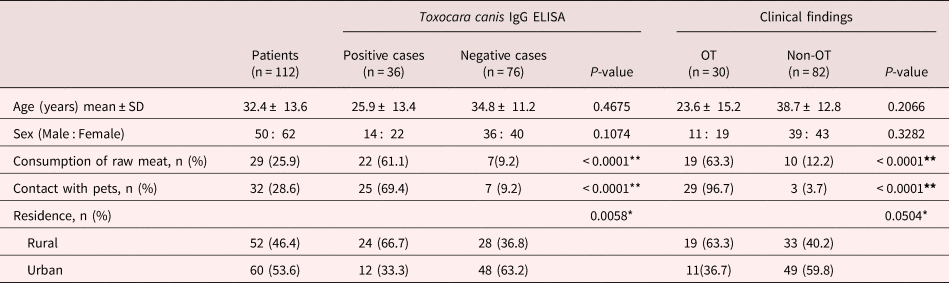
One hundred and twelve patients (62 females and 50 males) were classified serologically by Toxocara IgG ELISA results (positive or negative) and clinically as OT or non-OT. Certain socio-demographic factors, such as age, sex, consumption of raw meat, contact with pets and residence, were compared between different groups.
Among the 112 patients the mean age was 32.4 ± 13.6 years (range 8–45 years). There was no statistically significant difference in the mean age between positive and negative Toxocara IgG ELISA patients (25.9 ± 13.4 and 34.8 ± 11.2, respectively; P = 0.4675) and between OT and non-OT patients (23.6 ± 15.2 and 38.7 ± 12.8, respectively; P = 0.2066). Regarding sex, there was no statistically significant difference between males and females with positive and negative Toxocara IgG ELISA (14 : 22 and 36 : 40, respectively; P = 0.1074) and between OT and non-OT (11 : 19 and 39 : 43, respectively; P = 0.3282).
Additionally, there was a statistically significant difference in the history of consuming raw meat, commonly raw liver, between positive and negative Toxocara IgG ELISA (61.1% and 9.2%; P < 0.0001) and between OT and non-OT (63.3% and 12.2%, P < 0.0001). Also, there was a statistically significant difference in contact with pets between positive and negative Toxocara IgG ELISA (69.4% and 9.2%, respectively; P < 0.001) and between OT and non-OT (96.7% and 3.7%, respectively; P < 0.001).
Regarding residence, there was a statistically significant difference in rural and urban areas between positive and negative Toxocara IgG ELISA (P < 0.0058) and between OT and non-OT (P < 0.0504) (table 1).
Socio-demographic differences among positive & negative serum anti-Toxocara IgG ELISA and OT & non-OT groups.

*P < 0.05 = statistically significant; **P < 0.001 = highly statistically significant; using either χ2 or Student's t test.
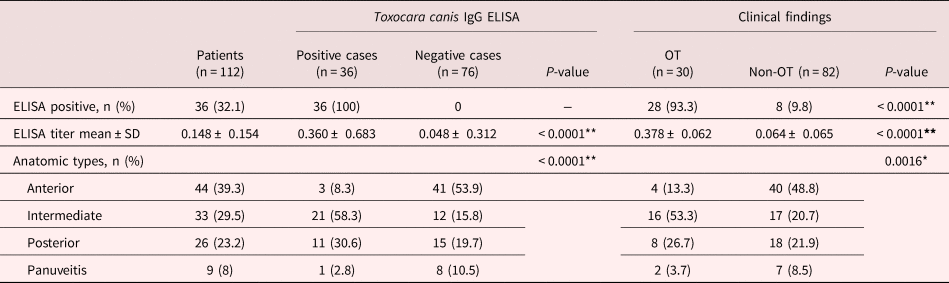
Among the 112 patients, 36 (32.1%) had positive serum Toxocara IgG ELISA and 30 (26.8%) were diagnosed with OT. Twenty-eight of 30 patients (93.3%) with OT had positive serum Toxocara IgG ELISA and 74 of 82 (90.2%) patients were diagnosed as non-OT with negative serum Toxocara IgG ELISA. In addition, there were two OT patients with negative Toxocara IgG ELISA (P < 0.001) and eight patients with non-OT and positive Toxocara IgG ELISA (P < 0.001).
There was a statistically significant difference in Toxocara IgG ELISA between OT and non-OT (0.378 ± 0.062 and 0.064 ± 0.065, respectively; P < 0.0001).
According to the anatomic site of ocular inflammation (anterior, intermediate, posterior and panuveitis), there was a statistically significant difference between positive and negative serum anti-Toxocara IgG patients (P < 0.001) and between OT and non-OT (P < 0.0016). Intermediate uveitis was the most common in OT with positive anti-Toxocara IgG ELISA, followed by posterior uveitis (16, 53.3%; 8, 26.7%, respectively), while anterior uveitis was the commonest in non-OT patients followed by posterior uveitis (40, 48.8%; 18, 21.9%, respectively) (table 2).
Anatomic types of uveitis among positive & negative serum anti-Toxocara IgG ELISA and OT & non-OT groups.

*P < 0.05 = statistically significant; **P < 0.001 = highly statistically significant; using either χ2 or Student's t test.
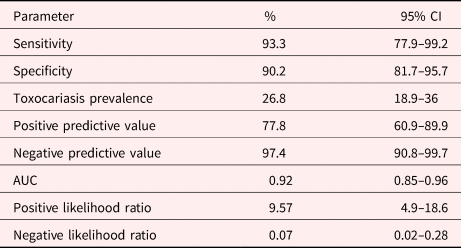
The sensitivity and specificity of the ELISA test were 93.9% (28/30) and 90.2% (74/82), respectively. The positive and negative predictive values were 77.8% (28/36) and 97.4% (74/76), respectively. The toxocariasis prevalence was 26.8% (table 3).
The diagnostic performance of serum anti-Toxocara IgG titer in diagnosis of ocular toxocariasis.

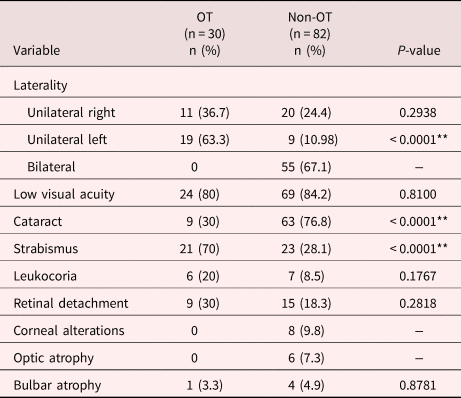
Regarding symptoms and signs associated with OT and non-OT, unilateral left eye affection was more prominent in the OT group, with a statistically significant difference (P < 0.001), while the right eye was more affected in non-OT, with a non-statistically significant difference (P = 0.2938). There was not a statistically significant difference in low visual acuity between OT and non-OT (P = 0.8100). Strabismus and leukocoria were the most common signs in OT patients, whereas cataract was common in non-OT, with a significant difference (P < 0.001) (table 4).
Ocular symptoms and signs associated with OT and non-OT.

**P < 0.001 = highly statistically significant; using Student's t test.
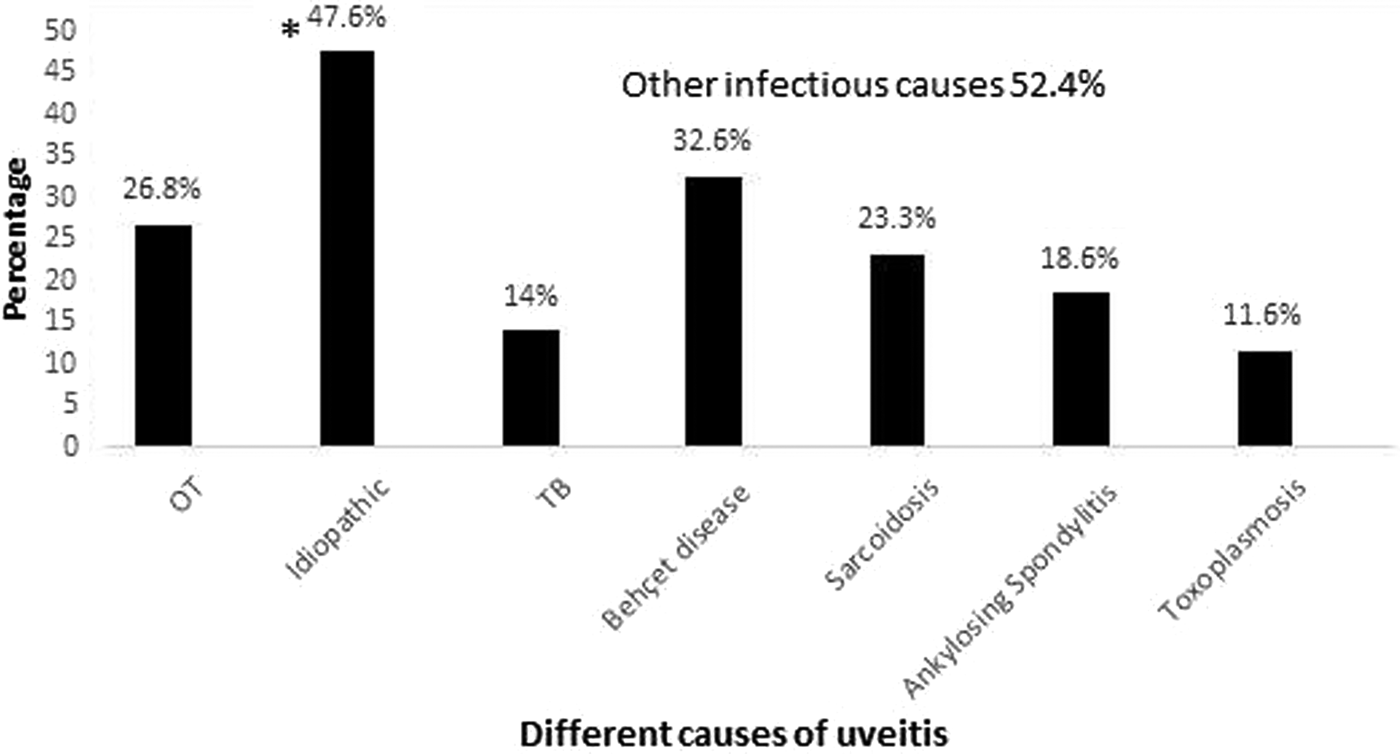
OT prevalence was 26.8% in relation to other causes of uveitis (73.2%), which subdivided into idiopathic causes (47.6%) and other infectious causes (52.4%). The infectious causes were further subdivided into TB (14%), Behçet disease (32.6%), sarcoidosis (23.3%), ankylosing spondylitis (18.6%) and toxoplasmosis (11.6%). Idiopathic causes were the commonest (P < 0.001) (fig. 1).
Prevalence of OT and non-OT. *P < 0.001 = highly statistically significant. Idiopathic causes are the commonest.

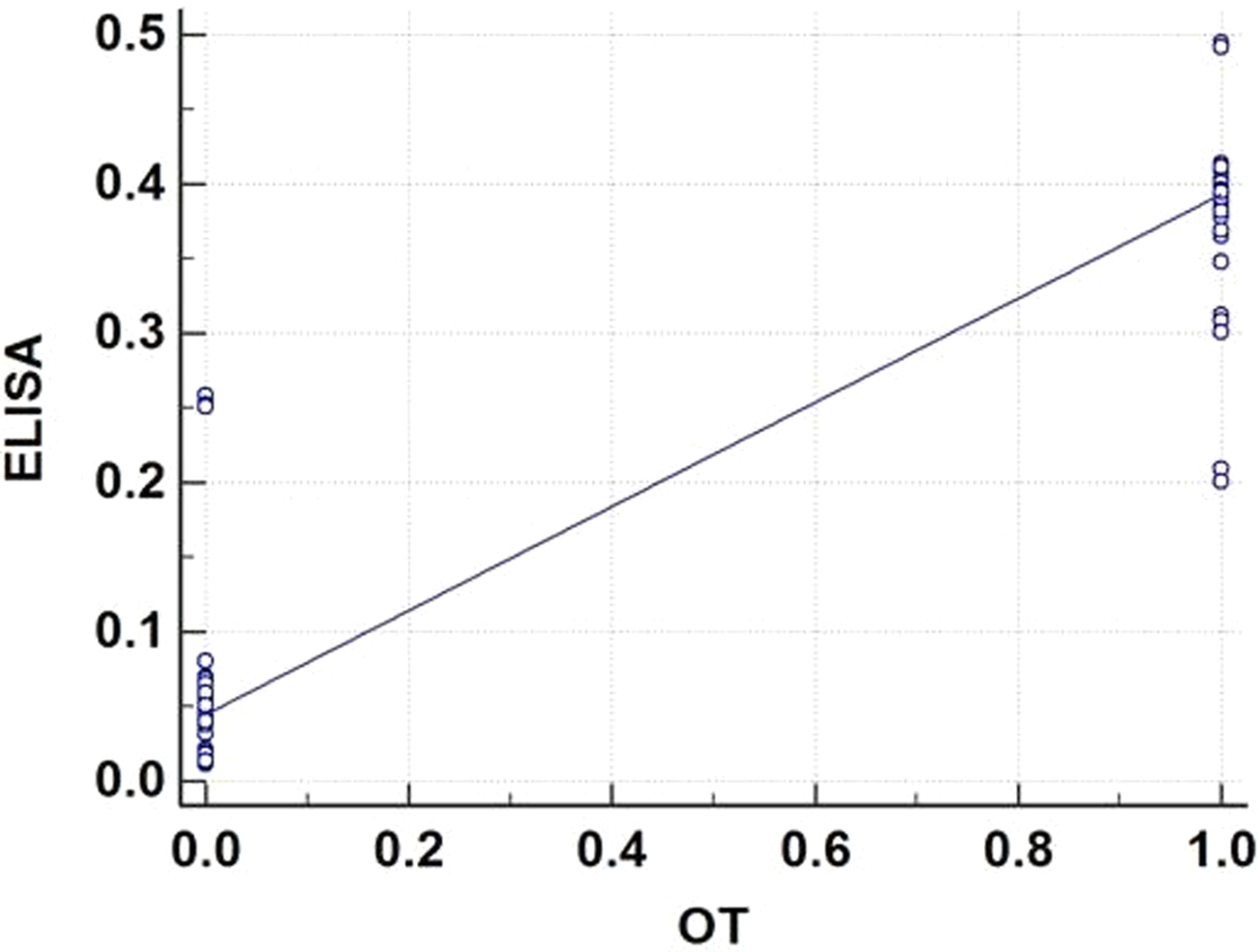
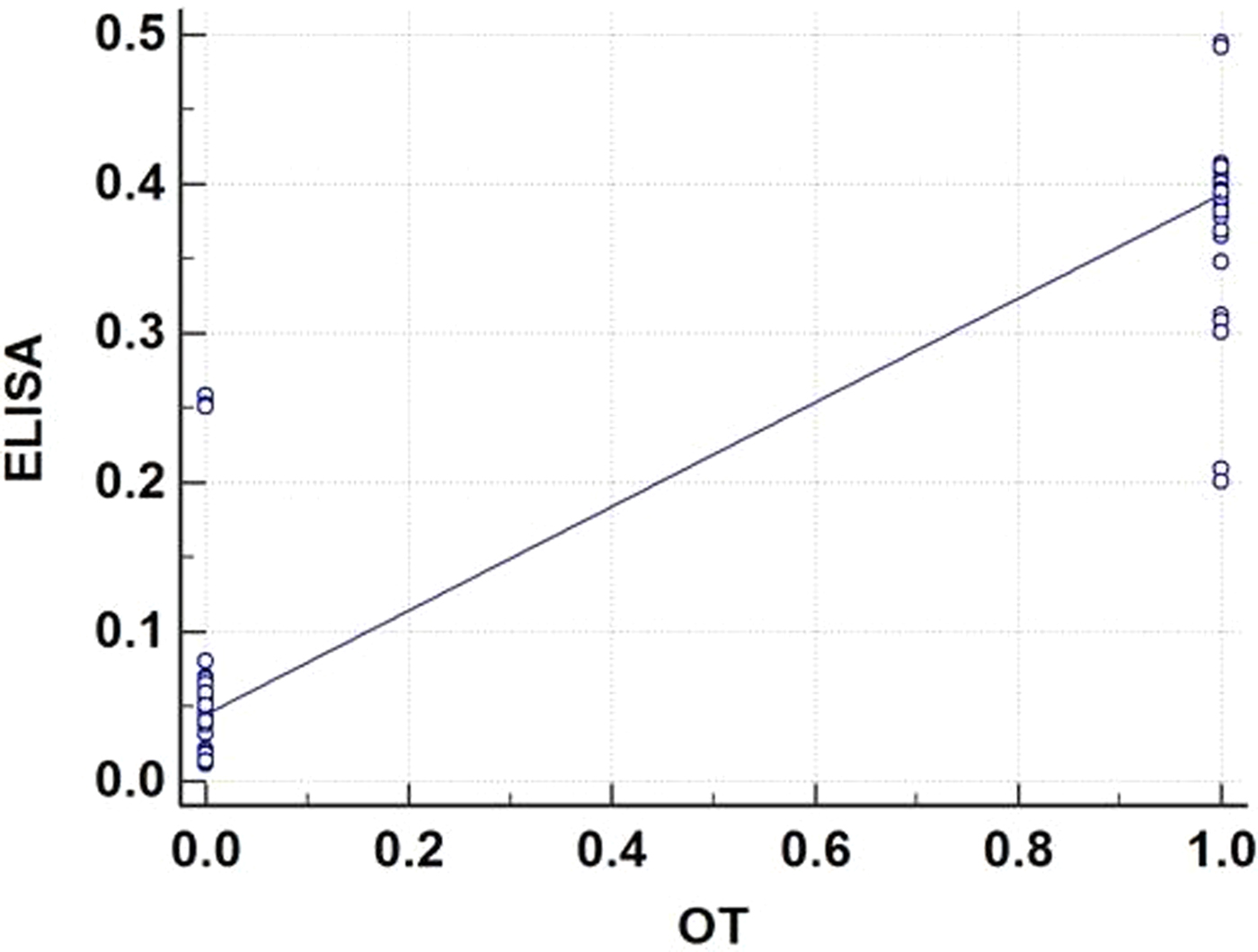
In the results there was a significant correlation between serum anti-Toxocara IgG ELISA level and clinically diagnosed OT positivity (r = 0.9086, P < 0.0001, 95% CI 0.8696–0.9363) (fig. 2).
Correlation between serum anti-Toxocara IgG titers and OT. A significant positive correlation was observed (r = 0.9086, P < 0.001).
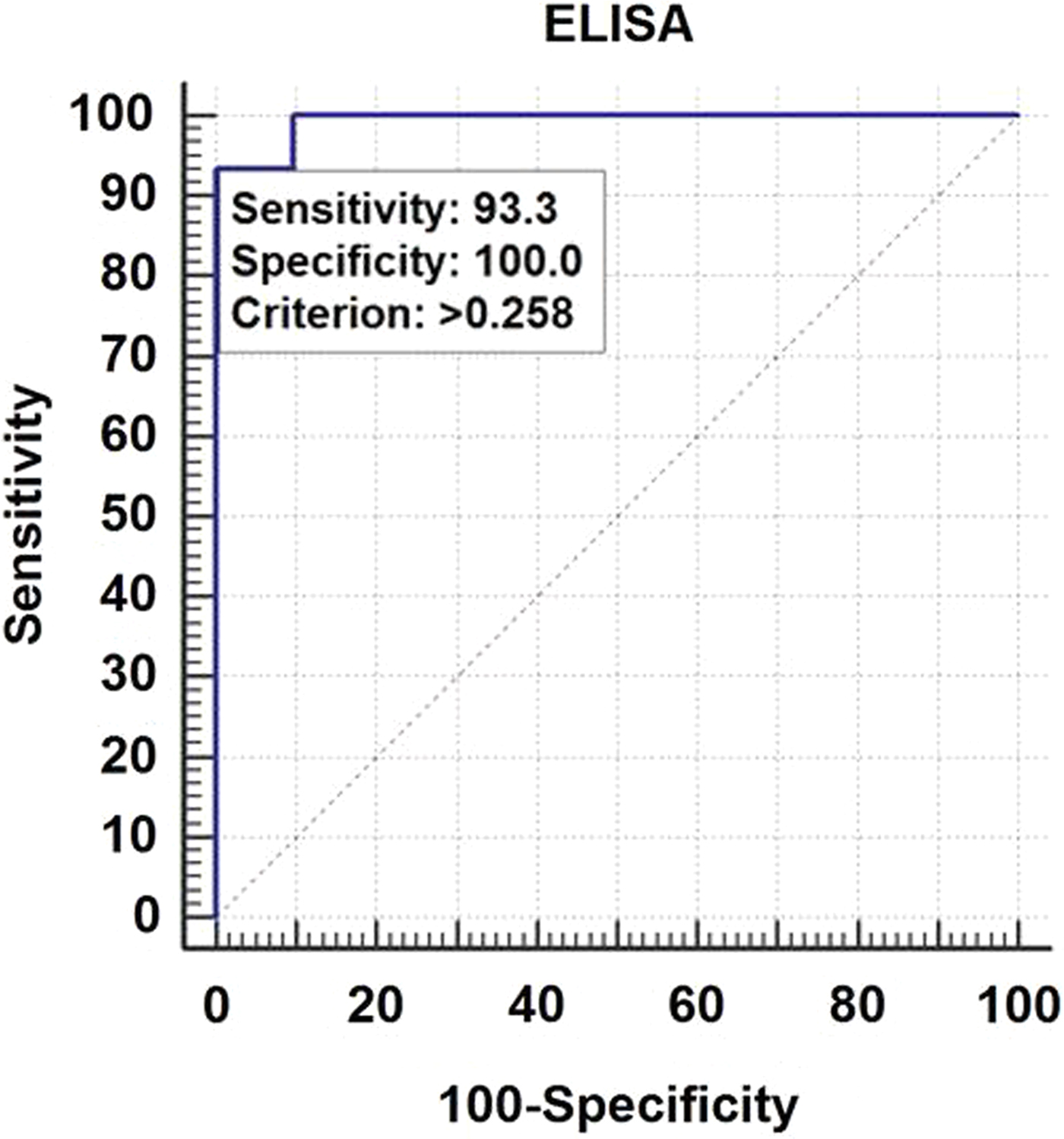
We analysed the dataset of the serum anti-Toxocara IgG ELISA level to determine the cut-off value for diagnosis of OT using the receiver operating curve (ROC). ROC analyses (fig. 3) yielded an ideal cut-off value of 0.258 (AUC = 0.993, 95% CI 0. 0.955–1.000, P < 0.0001). The application of this cut-off value was associated with a sensitivity of 93.3% (95% CI 77.9–99.2) and a specificity of 100% (95% CI 95.6–100.0).
The ROC analyses of the diagnostic performance of the anti-Toxocara IgG for diagnosis of OT as evidenced by clinical examination as a reference standard. The best cut-off for definite OT diagnosis was found at 0.258, resulting in 93.3% sensitivity and 100% specificity.

Discussion
Uveitis often results in visual disturbance, and vision can deteriorate when adequate treatment is delayed. Therefore, it is important to determine the underlying cause of intraocular inflammation to start treatment at once and overcome the complications.
The clinical awareness of toxocariasis and its associated symptoms and signs is neglected, and the infection underestimated, in many countries (Smith et al., Reference Smith2009). Despommier (Reference Despommier2003) found that human toxocariasis was still a poorly diagnosed disease, largely unknown to health professionals and the general public in Egypt. Jin et al. (Reference Jin2013) reported that OT diagnosis is mainly dependent on clinical confirmation and serology, as biopsy is risky. Several studies have reported the importance of serology in the diagnosis of OT and these have yielded controversial results, as serological methods differ between laboratories; there is no worldwide unit to measure the exact results (ratio, OD units, titers) and there are differences in the cut-off values (Rubinsky-Elefant et al., Reference Rubinsky-Elefant2010; Bae et al., Reference Bae2016).
Our results recorded that children and young adult females were the most frequently affected with uveitis in general and OT in particular as they were more susceptible to infection with toxocariasis. This could be explained by a change in lifestyle, environment, eating raw liver, beef and freshwater fish, and contact with puppies at home. Bae et al. (Reference Bae2016) reported that OT occurs in adults commonly, and Yoshida et al. (Reference Yoshida1999) reported that 89% of OT patients in Japan were older than 20 years. In contrast to our findings, Bae et al. (Reference Bae2016) and Rubinsky-Elefant et al. (Reference Rubinsky-Elefant2018) detected that uveitis and OT were more frequent in males in Korea and Brazil, respectively, as they are more exposed to the environment, with recurrent exposure to playgrounds, sandboxes, and soil contaminated with cat and dog faeces.
Although the seroprevalence for OT in our study was high (26.8%), it was in accordance with Noordin et al. (Reference Noordin2005), who reported high rates of toxocariasis in middle-income countries, with prevalence rates reaching 40%. We attributed this high prevalence to the increase of risk factors such as pica (geophagia), low socio-economic conditions, poor hygiene, contact with puppies in homes or with soil contaminated with Toxocara eggs, and consumption of raw liver or meat. The relative importance of these risk factors may differ between countries and between geographical regions within countries.
The current results revealed that OT patients with positive Toxocara ELISA IgG were commonly infected as a result of consumption of raw beef, mainly raw liver, and contact with pets. This is inconsistent with the findings of Kwon et al. (Reference Kwon, Sim and Jee2017).
Concerning residence, although rural areas have more OT patients, our results indicated that urban areas exceeded rural areas in the incidence of uveitis. These results are in line with Magnaval et al. (Reference Magnaval2001), who detected that toxocariasis is more common in rural than urban areas. Also, Cilla et al. (Reference Cilla1996) found that toxocariasis is more common among those of low socio-economic level and poor environmental hygiene. Moreover, Hotez and Wilkins (Reference Hotez and Wilkins2009) reported that OT prevalence depends on region and socio-economic status.
In the current study, OT was associated with Toxocara IgG ELISA high titer and the diagnosis was mainly based on the clinical evidence. The clinical signs were the reference standard for our diagnosis, yet it depends on the concensus of all clinicians who diagnose the patients. Also, our results detected a positive correlation between serum anti-Toxocara IgG ELISA and OT, in which patients with OT had higher serum anti-Toxocara IgG results than non-OT uveitis patients. These findings are in line with the results of Bae et al. (Reference Bae2016).
Based on a cut-off value of 0.250, our sensitivity, specificity and positive predictive value of ELISA test in OT cases were 93.9%, 90.2% and 77.8%, respectively. These values were similar to those reported by Bae et al. (Reference Bae2016), who reported Toxocara IgG ELISA sensitivity and specificity of 91.5% and 91.0%, respectively.
Additionally, our results recorded two OT patients with negative Toxocara IgG ELISA. We attributed this to a very low titer in their serum or low parasite load. These findings are in agreement with those of Rubinsky-Elefant et al. (Reference Rubinsky-Elefant2010) and Taylor (Reference Taylor2001), and could also be due to chronic long-lasting infection, according to Schantz (Reference Schantz1989).
The results revealed eight patients with non-OT and positive Toxocara IgG ELISA. This was probably due to asymptomatic non-OT and visceral toxocariasis, such as in lung, liver or brain, which may give positive results. Furthermore, application of a cut-off value of 0.258 yielded 100% specificity. Thus, IgG ELISA is a promising diagnostic tool. This finding is compatible with Jin et al. (Reference Jin2013), who suspected that Toxocara IgG ELISA is a promising diagnostic tool for OT. At a cut-off value of 0.250, Jin et al. (Reference Jin2013) recorded sensitivity and specificity of 92.2% and 86.6%, respectively, and Bae et al. (Reference Bae2016) reported sensitivity and specificity of 91.5% and 91.0%, respectively. This difference is probably due to the use of crude antigen of Toxocara larvae in these studies, which differs from TES Ag used in the current study.
As regards anatomic uveitis, anterior uveitis was the commonest in uveitis patients. In OT patients with positive Toxocara IgG ELISA, intermediate uveitis was the commonest, followed by posterior uveitis. However, in non-OT patients with negative Toxocara IgG ELISA results, anterior uveitis was the commonest, followed by posterior uveitis. We attributed this to the distribution of infection and movement of the Toxocara worm in ocular blood vessels to the posterior eye component; this result is in agreement with Taylor (Reference Taylor2001). Also, our results are in accord with Kwon et al. (Reference Kwon, Sim and Jee2017), who detected that OT was the commonest cause of intermediate uveitis in Korea.
Our results revealed that the left eye was the most affected in patients with OT, complaining mainly of diminution of vision, strabismus, leukocoria; less common manifestations were cataract, retinal detachment, corneal alterations, optic atrophy and bulbar atrophy. In non-OT patients, bilateral uveitis with cataract was the commonest manifestation.
The current results are consistent with those of Cortez et al. (Reference Cortez2011), who detected that OT is typically unilateral and associated with a decrease in visual acuity, strabismus and leukocoria. Also, Paroli et al. (Reference Paroli2014) reported that in non-OT patients uveitis more frequently occurs bilaterally, in up to 81% of patients, whereas unilateral involvement is more common in OT patients (Ahn et al., Reference Ahn2014b). Furthermore, Benitez del Castillo et al. (Reference Benitez del Castillo1995) reported that bilateral OT is extremely rare, while Rubinsky-Elefant et al. (Reference Rubinsky-Elefant2018) found that the right eye was the most affected in OT patients.
Among negative non-OT patients, idiopathic causes were the commonest cause of uveitis in general. Other causes include TB (n = 6), Behçet disease (n = 14), sarcoidosis (n = 10), ankylosing spondylitis (n = 8) and ocular toxoplasmosis (n = 5). These results are inconsistent with those of Rubinsky-Elefant et al. (Reference Rubinsky-Elefant2018).
From our results, we have gained insight into the importance of the Toxocara IgG ELISA in the interpretation and differential diagnosis of OT in uveitis patients, and of the diagnostic significance with 100% specificity at a cut-off value of 0.258. On the contrary, negative serology or low serum titers cannot exclude OT as a possibility at cut-off value of 0.250.
The present study established several clinically important conclusions. First, at a novel cut-off value of 0.258, the serum anti-Toxocara IgG ELISA test is a promising diagnostic tool with regards to sensitivity and specificity. Second, OT is highly associated with intermediate and posterior uveitis. Third, anti-Toxocara IgG should be a routine test in suspected cases. Fourth, some health education guidelines should be adopted to prevent toxocariasis and to assist in early detection and treatment. Finally, further studies are recommended to evaluate these results, especially for young age groups because of the spread of geophagia and playing with cats and dogs.
Author ORCIDs
N.F. Abd El-Aal 0000-0003-3770-4960.
Author contributions
NFA designed the study, contributed reagents and materials and wrote the manuscript. MAA and AM diagnosed the cases. All authors analysed and interpreted the data, and reviewed and approved the final version of the manuscript.
Financial support
None.
Conflict of interest
None.
Ethical standards
The study was conducted according to the international guidelines approved by the Research Ethics Committee, Faculty of Medicine, Zagazig University. Informed consent was obtained from all patients prior to analysis.