Introduction
Adolescence is a critical period of development, which shapes the likelihood, severity and course of mental health problems (Kim-Cohen et al. Reference Kim-Cohen, Caspi, Moffitt, Harrington, Milne and Poulton2003; Kessler et al. Reference Kessler, Amminger, Aguilar‐Gaxiola, Alonso, Lee and Ustun2007; Kessler et al. Reference Kessler, Avenevoli, Costello, Georgiades, Green, Gruber, He, Koretz, McLaughlin, Petukhova, Sampson, Zaslavsky and Merikangas2012). Between 50% and 75% of psychiatric disorders begin before the age of 18 and early age of onset is associated with increased persistence of symptoms across the lifespan, greater symptom severity and poorer treatment response (Kessler et al. Reference Kessler, Amminger, Aguilar‐Gaxiola, Alonso, Lee and Ustun2007; Merikangas et al. Reference Merikangas, He, Burstein, Swanson, Avenevoli, Cui, Benjet, Georgiades and Swendsen2010; Kessler et al. Reference Kessler, Avenevoli, Costello, Georgiades, Green, Gruber, He, Koretz, McLaughlin, Petukhova, Sampson, Zaslavsky and Merikangas2012). Anxiety, conduct, mood and substance misuse disorders are the most common psychiatric disorder affecting adolescents (Merikangas et al. Reference Merikangas, He, Burstein, Swanson, Avenevoli, Cui, Benjet, Georgiades and Swendsen2010).
Depression and anxiety
A recent review of psychiatric disorders in adolescence reported a prevalence rate of 21.8%, with depression estimated at 6.1% (interquartile range 3.1–7.2%) and anxiety estimated at 10.7% (interquartile range 5.5–14.9%; Costello et al. Reference Costello, Copeland and Angold2011). In Ireland, large-scale epidemiological studies on adolescent mental health are largely absent, however, two studies examining the prevalence of psychiatric disorders in an Irish sample have found similar results. The Clonmel Project estimated the prevalence of at least one psychiatric disorder in 12–18-year-olds at 21.2% (Martin et al. Reference Martin, Carr, Burke, Carroll and Byrne2006). The Challenging Times Study, conducted within a defined geographical catchment area of a Dublin-based mental health team, reported the prevalence of psychiatric disorders in 12–15-year-olds at 15.6%; the prevalence of anxiety and depression were reported as 3.7–4.5%, respectively (Lynch et al. Reference Lynch, Mills, Daly and Fitzpatrick2005). In 2013, the Challenging Times Study Two reported that a total of 56% of the 19–24-year-old sample met the lifetime criteria for any mental disorder (Cannon et al. Reference Cannon, Coughlan, Clarke, Harley and Kelleher2013). Depression and anxiety in adolescence inflict a heavy economic and social cost borne out by the cost of treatment, increased susceptibility to mental health problems later in life, educational underachievement and unemployment (Farrell & Barret, Reference Farrell and Barrett2007; Pape et al. Reference Pape, Bjørngaard, Holmen and Krokstad2012). This vulnerability creates an imperative to better understand the factors, which shape risk and resilience towards depression and anxiety in adolescence.
Risk and protective factors
A comprehensive body of research has identified a range of socio-demographic, psychosocial and risk-taking factors, which differentially affect the age of onset, severity and persistence of depression and anxiety disorders (Costello et al. Reference Costello, Swendsen, Rose and Dierker2008). Socio-demographic correlates of depression and anxiety include age, gender, family socio-economic status, family composition, poor parental mental health and stressful life events, such as experience of bereavement and racism (Kirwin & Hamrin, Reference Kirwin and Hamrin2005; Zimmermann, Reference Zimmerman2005; Vostanis et al. Reference Vostanis, Graves, Meltzer, Goodman, Jenkins and Brugha2006; Costello et al. Reference Costello, Copeland and Angold2011; Kessler et al. Reference Kessler, Avenevoli, Costello, Georgiades, Green, Gruber, He, Koretz, McLaughlin, Petukhova, Sampson, Zaslavsky and Merikangas2012; Kennedy, Reference Kennedy2013). Elevated levels of optimism, resilience, life satisfaction, self-esteem, emotional dysregulation (anger) and body satisfaction are psychosocial factors protecting adolescents from depression and anxiety (Vickers & Vogeltanz, Reference Vickers and Vogeltanz2000; Creed et al. Reference Creed, Patton and Bartrum2002; Martin & Dahlen, Reference Martin and Dahlen2005; Davison & McCabe, Reference Davison and McCabe2006; Paxton et al. Reference Paxton, Neumark-Sztainer, Hannan and Eisenberg2006; Hjemdal et al. Reference Hjemdal, Aune, Reinfjell, Stiles and Friborg2007; Proctor et al. Reference Proctor, Linley and Maltby2009; Hjemdal et al. Reference Hjemdal, Vogel, Solem, Hagen and Stiles2011; Glaesmer et al. Reference Glaesmer, Rief, Martin, Mewes, Brähler, Zenger and Hinz2012; Sowislo & Orth, Reference Sowislo and Orth2013). Additional psychosocial factors associated with depression and anxiety in youth include low levels of family cohesion, high levels of parental criticism and low level of peer and school connectedness (Repetti et al. Reference Repetti, Taylor and Seeman2002; Shochet et al. Reference Shochet, Dadds, Ham and Montague2006; McGraw et al. Reference McGraw, Moore, Fuller and Bates2008; Hjemdal et al. Reference Hjemdal, Vogel, Solem, Hagen and Stiles2011; Nelemans et al. Reference Nelemans, Hale, Branje, Hawk and Meeus2014). Furthermore, adolescents who are bullied, experience a romantic relationship or who have low levels of support from an available adult are at greater risk of experiencing poor mental health (Hawker & Boulton Reference Hawker and Boulton2000; Joyner & Udry, Reference Joyner and Udry2000; Berg-Nielsen et al. Reference Berg-Nielsen, Arne and Dahl2002; Boelen & Reijntjes, Reference Boelen and Reijntjes2009; Sterrett et al. Reference Sterrett, Jones, McKee and Kincaid2011). Finally, alcohol and substance use are risk-taking behaviours found to increase the likelihood of depression and anxiety in adolescence (Saban & Flisher, Reference Saban and Flisher2010; Fergusson et al. Reference Fergusson, Boden and Horwood2011).
The present study
A substantial body of research has demonstrated the effect of individual risk and protective factors on the mental health of adolescents (Creed et al. Reference Creed, Patton and Bartrum2002; Martin & Dahlen, Reference Martin and Dahlen2005; Davison & McCabe, Reference Davison and McCabe2006; Paxton et al. Reference Paxton, Neumark-Sztainer, Hannan and Eisenberg2006; Hjemdal et al. Reference Hjemdal, Aune, Reinfjell, Stiles and Friborg2007; Sowislo & Orth, Reference Sowislo and Orth2013). However, few studies to date have examined how multiple risk and protective factors relate to mental health difficulties in a representative, national sample of adolescents. The present study uses the My World Survey-Second Level (MWS-SL) data set to examine how a wide range of risk and protective factors are associated with depression and anxiety in a large community-based sample. Risk and protective factors are considered across socio-demographic, psychosocial and risk-taking domains.
Method
Sample
Data used in this study were drawn from a subset of the My World Survey (MWS) data set. The MWS-SL subset recruited a representative sample of adolescents enrolled in the 732 post-primary schools in Ireland. A random sample of 171 schools were contacted of which a total of 72 schools agreed to participate; a final sample of 6085 students were recorded with a response rate for student participation of 45% between February and October 2011. From this subset, 55 cases were removed on the basis of not reporting their gender (n=28) or being over 18 (n=27). The resultant sample consisted of 3094 females (51.3%) and 2936 males (48.7%). A mean age of 14.93 (s.d.=1.62) was reported with 44.8% of respondents categorised in a younger cohort (12–15) and 55.2% in an older cohort (16–18).
Procedure
Ethical approval to conduct the MWS-SL was received from the authors’ institution. School principals in each of the 171 post-primary schools were contacted by post about participating in the MWS-SL. They received a research pack that contained letters for students and guardians describing the study, consent forms and a paper copy of the survey. Once student and guardian consent forms had been returned, a data collection date was set and the option of either a paper-based or an electronic version of the MWS-SL was offered. In addition, schools were offered the options of organising data collection independently or being assisted by a researcher.
Measures
The MWS-SL version contained two sections. The first section included a range of demographic and personal well-being questions. The second section contained a number of scales previously shown to have good reliability and validity.
Socio-demographic and personal well-being questions
Participants were asked to indicate: their mother’s level of education, whether their parents experienced mental health problems, with whom they lived, whether they had used cannabis, level of support from an available adult in their life and whether they had experienced racism, bullying, bereavement, the break-up of a romantic relationship, body dissatisfaction or anger. To determine the availability of an adult in the life of an adolescent, participants rated the following question ‘There is a special adult who is around when I am in need’ from strongly disagree to strongly agree. The responses were further coded into the three categories of low availability, moderate availability or high availability. Further information on socio-demographic and personal well-being questions is available in the MWS methodological paper (Dooley & Fitzgerald, Reference Kenny, Dooley and Fitzgerald2013).
Depression, Anxiety and Stress Scale (DASS-21)
The DASS-21 is a self-report measure where participants rate the frequency and severity of negative emotions over the previous week. Using recommended cut-off scores, adolescents are classified as displaying normal, mild, moderate, severe or very severe symptoms of depression, anxiety or stress (Lovibond & Lovibond, Reference Lovibond and Lovibond1995). The validity of the DASS-21 has been consistently demonstrated in both adult and adolescent populations (Crawford & Henry, Reference Crawford and Henry2003; Henry & Crawford, Reference Henry and Crawford2005; Tully et al. Reference Tully, Zajac and Venning2009). Cronbach’s α for depression (0.88), anxiety (0.80) and stress (0.83) support the reliability of these sub-scales.
Life Orientation Test Revised (LOT-R)
The LOT-R is a six-item measure of dispositional optimism. The LOT-R has acceptable internal consistency and 4- and 13-week-test-retest reliability (Scheier & Carver, Reference Scheier and Carver1985; Carver & Gaines, Reference Carver and Gaines1987). Scores on the LOT-R are correlated positively with self-esteem and negatively with hopelessness, depression and perceived stress. Reliability of the LOT-R was supported by a Cronbach’s α of 0.89.
Resilience Scale for Adolescents (READ)
The READ is a 28-item measure of adolescent resilience (Hjemdal et al. Reference Hjemdal, Friborg, Stiles, Martinussen and Rosenvinge2006). This scale focuses on how the adolescent relates to family and friends, and the degree to which they are goal-oriented. This scale consists of five factors: personal competence (PC), social competence (SC), structured style (SS), family cohesion (FC) and social resources (SR). The conceptual definition of resilience includes personal agency (PC), the availability of resources from the family (FC) and from the community; in the current study we assessed personal agency and FC (Windle et al. Reference Windle, Bennett and Noyes2011). The READ has shown adequate psychometric properties and promising validity (Hjemdal et al. Reference Hjemdal, Friborg, Stiles, Martinussen and Rosenvinge2006). Only two subscales are reported on in the current paper, personal competence and family cohesion. Cronbach’s α for these sub-scales were: 0.77 (PC) and 0.76 (FC).
Brief Multidimensional Students’ Life Satisfaction Scale (BMSLSS)
The BMSLSS is a six-item measure, which asks the adolescent to indicate the degree to which they are satisfied with ‘family life’, ‘friends’, ‘school experience’, ‘myself’, ‘where I live’ and with ‘my overall life’ (Huebner et al. Reference Huebner, Suldo, Valois, Drane and Zullig2004). The BMSLSS has good reliability and validity for adolescents (Seligson et al. Reference Seligson, Huebner and Valois2003). Cronbach’s α of 0.86 was reported.
Rosenberg’s Self-Esteem Scale (RSE)
Self-esteem was assessed with the 10-item RSE scale (Rosenberg, Reference Rosenberg1965). The RSE is the most widely used scale of self-esteem and assesses a person’s overall evaluation of his/her worthiness as a human being and was originally designed for use in an adolescent population (Whiteside-Mansell & Corwyn, Reference Whiteside-Mansell and Corwyn2003). A reliability coefficient of 0.89 was reported.
Network of Relationships Inventory: relationship qualities version (NRI-RQV)
The NRI-RQV assesses the quality of relationships with mothers, fathers, same-sex friends and romantic partners (Furman, Buhrmester, Unpublished Manual). Three subscales from the NRI-RQV assessed two positive relationship features, approval and satisfaction, in addition to one negative relationship feature: criticism. The NRI-RQV has previously been used among Irish adolescents and the internal consistency of all the subscales are acceptable (Kenny et al. Reference Kenny, Dooley and Fitzgerald2013). In the current study, only two subscales (mother criticism; father criticism) of the NRI-RQV were reported. Cronbach’s α for these subscales were NRI-RQV-mother criticism (0.84) and NRI-RQV-father criticism (0.85).
Hemingway Measure of Adolescent Connectedness (MAC)
Two subscales from the Hemingway MAC were used to assess adolescents’ connectedness with their peers and school (Karcher & Lee, Reference Karcher and Lee2002). The Hemingway has adequate validity (Resnick et al. Reference Resnick, Bearman, Blum, Bauman, Harris, Jones, Tabor, Beuhing, Sieving, Shew, Ireland, Bearinger and Udry1997; Roth & Brooks-Gunn, Reference Roth and Brooks-Gunn2003). Cronbach’s α for peer connectedness, and school connectedness were 0.71 and 0.82, respectively.
CRAFFT substance use screening scale (CRAFFT)
The CRAFFT is a valid measure to detect substance use, abuse and dependence among adolescent populations (Knight et al. Reference Knight, Shrier, Bravender, Farrell, Vander Bilt and Shaffer1999). A total score for the CRAFFT is computed ranging from 0 to 6. When evaluated in a general paediatric setting, a cut-off score of ⩾2 correctly classified in 86% of cases whether the youth did or did not have a current substance abuse or dependence disorder (Knight et al. Reference Knight, Sherritt, Shrier, Harris and Chang2002). With a Cronbach’s α of 0.74, the CRAFFT was found to be reliable.
Alcohol Use Disorders Identification Test (AUDIT)
The World Health Organization AUDIT tool is a 10-item questionnaire to screen for high-risk alcohol consumption (Saunders et al. Reference Saunders, Aasland, Babor, de la Fuente and Grant1993). Using standardised cut-offs, AUDIT scores were classified as: low risk, problem drinking, hazardous drinking or possible dependence. The AUDIT has been shown to be a valid and reliable tool for identifying adolescents’ alcohol behaviour (Santis et al. Reference Santis, Garmentdia, Acuña, Alvarado and Arteaga2009). The efficacy of the AUDIT has been confirmed in different contexts and cultures (de Meneses-Gaya et al. Reference Meneses-Gaya, Zuardi, Loureiro and Crippa2009). A Cronbach’s α of 0.82 was recorded for the AUDIT.
Statistical analyses
Analyses examined socio-demographic, psychosocial and risk-taking factors in relation to depression and anxiety. Normal, mild, moderate, severe and very severe levels of depression and anxiety were generated using established cut-offs from the DASS-21. χ 2 analyses examined the strength of the relationships between categorical variables and levels of depression and anxiety. Degrees of freedom, statistical significance and a χ 2 statistic were reported – standard residuals of ±2.0 indicate a significant departure from the expected outcome (Hinkle et al. Reference Hinkle, Wiersma and Jurs2003). One-way analysis of variance (ANOVA) examined mean differences in continuous variables for levels of depression and anxiety. Mean scores, standard deviations, degrees of freedom and level of significance were reported – Scheffe post-hoc analyses identified where means differed.
Results
Mean scores and standard deviations were generated for depression (M=7.25, s.d.=8.58) and anxiety (M=6.37, s.d.=7.33). Using established cut-offs from the depressive sub-scale of the DASS, participants were classified by level of severity: normal (69.9%), mild (10.8%), moderate (11.3%), severe (3.7%) and very severe (4.3%). For anxiety, participants fell within the following classifications: normal (67.9%), mild (7%), moderate (13.8%), severe (4.4%) and very severe (6.9%). Overall, when reporting their mother’s level of education: 10.6% indicated it was below Leaving Certificate; 25% indicated they had obtained a Leaving Certificate; 24.1% stated that their mother had a college of university degree while 12.4% reported that their mother had a professional qualification (e.g. doctor, lawyer). In addition, 26.1% were unaware of their mother’s education level. In terms of ethnic cultural background, 95.1% identified themselves as white and ∼1% reported themselves as black, Asian, Irish traveller or as other. Respondents reported that 81.4% lived with both parents. Among adolescents, 89.5% reported that they had never been treated unfairly because of their race. Over three quarters (79.5%) of adolescents recorded that their parents had never had a mental health problem, 11.9% indicated that a parent had experienced mental health difficulty while 11% of participants were unsure. Over 71.3% had not experienced bereavement within the last 12 months.
Depression, anxiety and socio-demographic factors
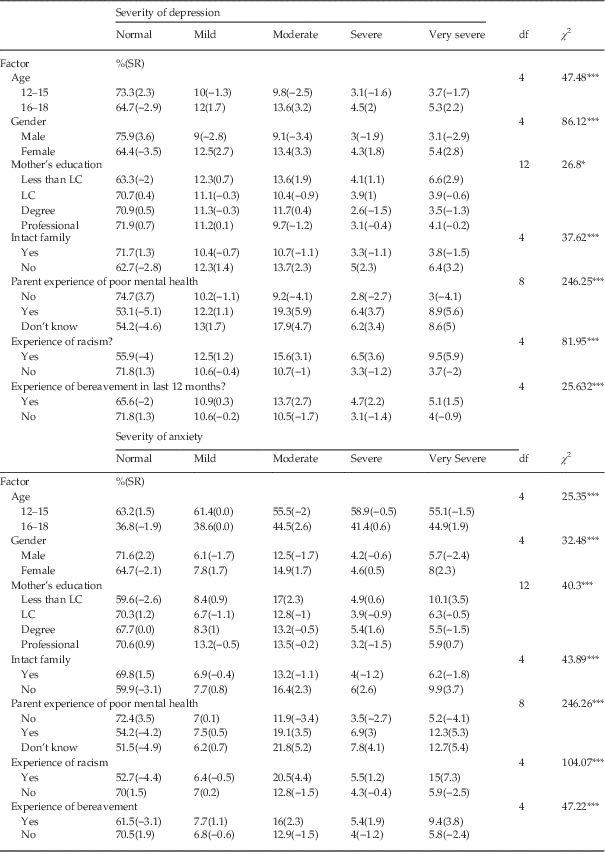
All statistical analyses conducted on socio-demographic variables are presented in Table 1.
Socio-demographic factors associated with level of depression and anxiety

SR, standardised residuals.
*p<0.05; ***p<0.001.
χ 2 analyses indicated that the older cohort were more likely to report moderate, severe and very severe levels of depression, additionally this cohort were more likely to experience moderate levels of anxiety. Females were more likely to have mild, moderate or very severe levels of depression and very severe levels of anxiety. When a mother’s level of education was less than Leaving Certificate, respondents were more likely to experience at least moderate levels of anxiety. Adolescents whose mother’s education attainment was less than a Leaving Certificate were less likely to fall within the normal range of anxiety. For this group, <60% were in the normal range for anxiety, whereas over 70% were in the normal range when the mothers’ education was reported to be within the professional category. Children without an intact family, who had experienced racism, who experienced bereavement within the last 12 months or who believed or were not sure whether a parent had experienced a mental health problem were all more likely to have moderate, severe or severe levels of depression and anxiety.
Psychosocial risk and protective factors associated with depression
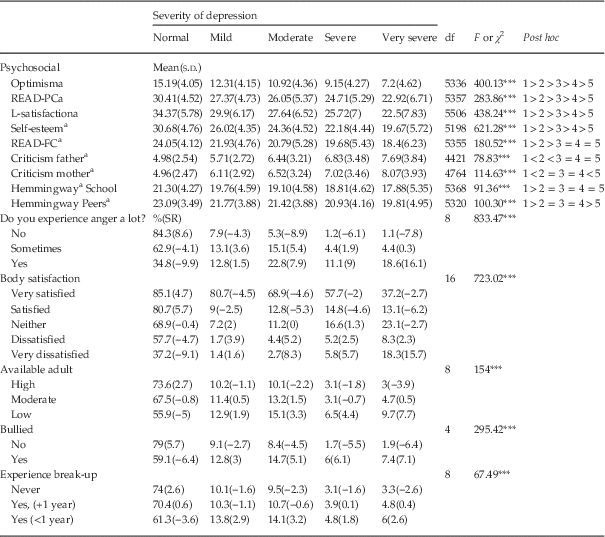
The relationship between psychosocial risk and protective factors and levels of depression are presented in Table 2.
Psychosocial risk and protective factors associated with depression
SR, standardised residuals.
a Indicates that ANOVA was carried out rather than χ 2 analysis.
***p<0.001.
ANOVAs examined mean differences in psychosocial factors including optimism, PC, life satisfaction, self-esteem, FC, maternal criticism, paternal criticism as well as both peer and school connectedness. Significant differences in mean scores were reported across levels of depression. Scheffe post-hoc analyses revealed a broadly similar linear relationship for each variable, with more severe levels of depression linked to lower mean scores. In the case of maternal and paternal criticism, higher mean scores were associated with higher levels of depression. Upon examination of mean scores for life satisfaction, those who fell within a normal range of depression reported a mean of 34.37, whereas those classified with very severe levels of depression reported a mean of 22.5 indicating that a significant reduction in life satisfaction is associated with increased levels of depression. χ 2 analyses indicated that those who reported higher levels of anger and body dissatisfaction were more likely to be categorised with more severe depressive symptoms. In addition, the absence of an available adult, experience of being bullied or the break-up of a romantic relationship within the last year were all associated with significantly higher levels of depression. Those who have never experienced a romantic relationship reported lower levels of moderate and severe depression than expected.
Psychosocial risk and protective factors associated with anxiety
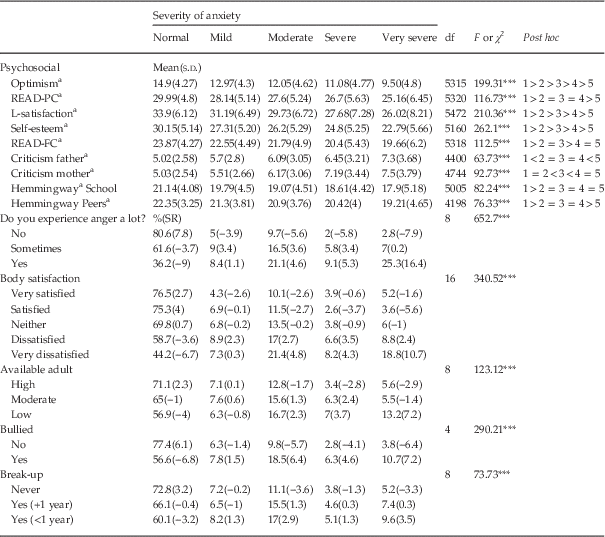
The relationship between psychosocial risk and protective factors and levels of anxiety are presented in Table 3.
Psychosocial risk and protective factors associated with anxiety
SR, standardised residuals.
a Indicates that ANOVA was carried out rather than χ 2 analysis.
***p<0.001.
In line with the analyses conducted for depression, ANOVAs examined mean differences in key psychosocial variables for levels of anxiety. Significant differences in mean scores were reported for each variable. All psychosocial variables were found to differ across varying levels of anxiety. Scheffe post-hoc analyses revealed that lower levels of anxiety symptoms were associated with higher mean scores for optimism, personal competence, life-satisfaction, self-esteem, family cohesion as well as both peer and school connectedness. This trend observed for anxiety broadly mapped those of depression.
Focusing on optimism and mother’s criticism illustrate the trends found. For optimism, the data observed a significant linear decrease from normal to very severe levels of anxiety. Maternal criticism was also linked to anxiety, where adolescents in the severe and very severe range of anxiety report significantly higher levels of criticism from their mother compared with adolescents who fall within the normal range for anxiety.
χ 2 analyses indicated that those who reported higher levels of anger, higher levels of body dissatisfaction, low support from an available adult or being bullied were more likely to report more severe anxious symptoms. Adolescents who had experienced a break-up within the past year were more likely to be in the moderate and very severe categories for anxiety. Examination of anger indicates that 25.3% of adolescents that reported experiencing anger a lot were classified with very severe levels of anxiety, whereas this was 2.8% for those that did not experience anger.
Risky behaviours associated with depression and anxiety
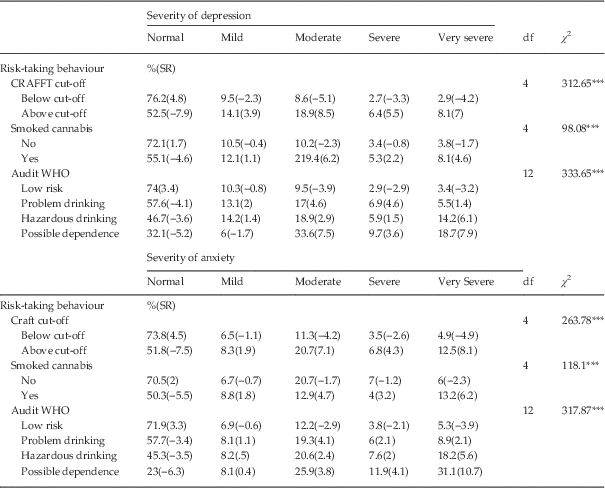
The relationship between risky behaviours and levels of depression and anxiety are presented in Table 4.
Risk-taking behaviour associated with depression and anxiety
***p<0.001.
χ 2 analyses demonstrated that those categorised above the cut-off for substance misuse were more likely to experience higher levels of depression. A similar pattern was evident for those who reported smoking cannabis. For adolescents identified by the AUDIT as engaging in problematic or hazardous drinking or having a possible dependence, standardised residuals indicated the presence of experiencing symptoms of depression. It should be noted that 18.7% of those classified within the possible dependence category experienced very severe levels of depression (SR=7.9).
A similar pattern of results was evident for anxiety. Substance misuse exhibited an increased likelihood to score outside the normal range. Similar to substance misuse, those who reported smoking cannabis were more likely to be classified with moderate, severe or very severe anxiety. Adolescents engaging in risky drinking were highly likely to fall outside the normal range for anxiety, only 23% classified as possibly alcohol dependent fell within the normal category for anxiety; whereas 71.9% were in this range if classified as low risk.
Discussion
In a national sample of Irish adolescents, elevated levels of depression and anxiety were recorded in a significant proportion of this representative group. Over 30% of Irish adolescents experienced levels of depression and anxiety outside of a normal range. Higher levels of support from an available adult were shown to be a protective factor against more severe symptoms of depression and anxiety. Body dissatisfaction and the experience of anger were strongly associated with increased anxiety and depression. Replicating previous research, socio-demographic factors such as age, gender, maternal education, family composition, parental mental health as well as the experience of racism and bereavement were associated with depression and anxiety. Psychosocial factors found to be associated with depression and anxiety included optimism, personal competence, life-satisfaction, self-esteem, family competence, maternal and paternal criticism, experiencing a romantic relationship as well as school and peer connectedness. Finally, engaging in substance misuse was found to increase the likelihood of anxiety and depression in adolescence.
Socio-demographic factors
Many of the associations between socio-demographic variables and poor mental health support previous research. Higher levels of anxiety and depression in older adolescents support a body of research (Kessler et al. Reference Kessler, Amminger, Aguilar‐Gaxiola, Alonso, Lee and Ustun2007; Cannon et al. Reference Cannon, Coughlan, Clarke, Harley and Kelleher2013). Likewise, females in the present study were found to be at a greater risk for depression and anxiety in line with previous research (Lewinson et al. Reference Lewinson, Gotlib, Lewinsohn, Seeley and Allen1998; Nolen-Hoeksema, Reference Nolen-Hoeksema2001; Twenge & Nolen-Hoeksema, Reference Twenge and Nolen-Hoeksema2002; Kessler et al. Reference Kessler, Avenevoli, Costello, Georgiades, Green, Gruber, He, Koretz, McLaughlin, Petukhova, Sampson, Zaslavsky and Merikangas2012). A low maternal level of education significantly increased the likelihood of very severe anxious and depressive symptomology. However, since 26.1% of respondents were unaware of their mother’s level of education, some caution should be exerted in interpreting the significance of this finding. A consistent relationship between maternal education and mental health outcomes has not been found in the wider literature (Zimmermann, Reference Zimmerman2005; Kessler et al. Reference Kessler, Avenevoli, Costello, Georgiades, Green, Gruber, He, Koretz, McLaughlin, Petukhova, Sampson, Zaslavsky and Merikangas2012). Previous research, which has shown that family composition is a risk factor for mental health problems in adolescence is also borne out by this study’s results (Kessler et al. Reference Kessler, Avenevoli, Costello, Georgiades, Green, Gruber, He, Koretz, McLaughlin, Petukhova, Sampson, Zaslavsky and Merikangas2012). Examining a representative sample of British 10 438 5–15-year-olds, Vostanis et al. (Reference Vostanis, Graves, Meltzer, Goodman, Jenkins and Brugha2006) identified a significant relationship between parental and child mental health difficulties, which this study replicated. The data from this study support a link between bereavement and higher levels of depression, which has previously been established by Krupnick et al. (Reference Krupnick, Green, Stockton, Goodman, Corcoran and Petty2004). Although the literature suggests that the link between bereavement and mental health problems may be mediated by other factors (such as bereavement of a family member or social support available during bereavement) – this study was not designed to test these mediating pathways (Kirwin & Hamrin, Reference Kirwin and Hamrin2005). Therefore, unknown factors may explain the relationship observed in the current study.
A US study of perceived racial discrimination found a relationship, in cross-sectional data, with increased perception of racism associated with greater likelihood of mood disorders (Kennedy, Reference Kennedy2013). In these Irish data, perceived racism was strongly associated with elevated levels of anxiety and depression. Although 10.1% of the sample reported racism, the socio-demographic question recording racism did not distinguish between those who were non-Irish and white, this leading to a large discrepancy between numbers reporting themselves as not white and those reporting the experience of racism. This finding is particularly relevant given the significant increase in ethnic diversity in Ireland over the previous 20 years and increasing diversity of Irish adolescents (Gilmartin, Reference Gilmartin2012).
Psychosocial factors
The significant protective qualities of dispositional optimism, positive life satisfaction and high self-esteem for mental well-being all support previous research (Vickers & Vogeltanz, Reference Vickers and Vogeltanz2000; Creed et al. Reference Creed, Patton and Bartrum2002; Hjemdal et al. Reference Hjemdal, Aune, Reinfjell, Stiles and Friborg2007; Proctor et al. Reference Proctor, Linley and Maltby2009; Hjemdal, et al. Reference Hjemdal, Vogel, Solem, Hagen and Stiles2011; Glaesmer et al. Reference Glaesmer, Rief, Martin, Mewes, Brähler, Zenger and Hinz2012; Sowislo & Orth, Reference Sowislo and Orth2013). Likewise, the relationship between body dissatisfaction, depression and anxiety has been replicated in this study (Davison & McCabe, Reference Davison and McCabe2006; Paxton et al. Reference Paxton, Neumark-Sztainer, Hannan and Eisenberg2006). A rich body of research has identified the role of emotional dysregulation in the development of anxiety and depression (Neumann et al. Reference Neumann, van Lier, Frijns, Meeus and Koot2011). The prominence of the experience of anger in those with higher levels of depression and anxiety supports the centrality of emotional dysregulation. It remains, however, beyond the scope of this study to detect whether reported anger reported reflects emotional dysregulation or sensitivity to emotion eliciting stimuli in adolescents (Kim-Spoon et al. Reference Kim‐Spoon, Cicchetti and Rogosch2013). This study identified the importance of the school environment in a young person’s mental health, where increases in anxiety and depression were associated with bullying, and low peer and school connectedness (Repetti et al. Reference Repetti, Taylor and Seeman2002; Shochet et al. Reference Shochet, Dadds, Ham and Montague2006; McGraw et al. Reference McGraw, Moore, Fuller and Bates2008; Hjemdal et al. Reference Hjemdal, Vogel, Solem, Hagen and Stiles2011; Nelemans et al. Reference Nelemans, Hale, Branje, Hawk and Meeus2014). Given that adolescents spend a high proportion of their waking day in the school environment, this finding highlights the important role of schools and how they should carefully consider their policies to support student mental health. This is consistent with the Department of Education and Skills guidelines for Well-Being in Post-Primary Schools (Department of Education and Skills, 2013).
The relationship between anxiety, depression and romantic relationships has been a relatively neglected area of adolescent mental health (Davila, Reference Davila2008). The protective effect of not forming a romantic relationship and the negative effect of a recent break-up is evident in this research and supports similar findings from a national longitudinal study of adolescence (Joyner & Udry, Reference Joyner and Udry2000). However, other factors such as age and the characteristics of the partner if in a relationship should be considered to be more fully understand the protective effect of romantic relationships in adolescence. Similarly, the significant role which one good adult plays in the mental well-being of adolescents is underlined by the results of this study (Berg-Nielsen et al. Reference Berg-Nielsen, Arne and Dahl2002; Sterrett et al. Reference Sterrett, Jones, McKee and Kincaid2011). Stewart and Suldo (Reference Stewart and Suldo2011) found when looking at social support sources, that parental support was the strongest predictor of mental health in adolescence. In the MWS-SL, over 50% of adolescents identified an available adult in their lives as being their mother, father or both parents.
Risk-taking behaviour
The considerable risk for elevated levels of depression and anxiety by engaging in alcohol, cannabis and drugs use is underlined by the results of this study – findings that support a consistent body of work (Saban & Flisher, Reference Saban and Flisher2010; Skrove et al. Reference Skrove, Romundstad and Indredavik2013). These findings are of particular importance because, first, exposure to substances typically begins in adolescence and, second, given the high, although gradually decreasing, rates of substance use in Irish adolescents (Vega et al. Reference Vega, Aguilar-Gaxiola, Andrade, Bijl, Borges, Caraveo-Anduaga, DeWit, Heeringa, Kessler, Kolody, Merikangas, Molnar, Walters, Warner and Wittchen2002; Murphy et al. Reference Murphy, Sahm, McCarthy, Lambert and Byrne2013).
Strengths and limitations
A major strength of this study has been the large nationally representative sample of adolescents of risk and protective factors associated with mental health – the first of its kind in Ireland. This provides a baseline on youth mental health for clinicians and public health policy makers. Furthermore, the measurement of depression and anxiety and a wide array of risk and protective factors has been undertaken with the use of psychometrically sound internationally recognised measures found to be appropriate for use with this age group. However, it was beyond the scope of the study to investigate the relationship between all variables of significance and depression and anxiety; consequently, important factors such as child abuse and neglect were not considered. Limitations include the cross-sectional nature of the data, which limit the ability to establish causal relationship between a range of risk and protective factors and mental health outcomes. In addition, given the number of measures in the MWS-SL, missing data was observed to occur towards the latter part of the survey, which may indicate a number of issues such as boredom or lack of time to complete. This may have introduced bias for those particular variables. Finally, future studies could usefully address limitations in the gathering of data on the race of participants by ensuring that both race and ethnicity are recorded as to identify groups who are both Irish and do not identify themselves as white.
Implications and conclusions
The study’s results identify that, within an ecological framework, a range of risk and protective factors (individual, family and social) exist that can affect the levels of depression and anxiety experienced by adolescents. The association of substance use with depression and anxiety was a clear result of the study – intensifying public health strategies to reduce substance use in adolescence may improve mental health outcomes. In addition, schools may be well positioned to address the risks arising from bullying and the experience of racism.
The role of the family in the MWS was captured as both protective (family cohesion) and risk (parental criticism). The study found that cohensive families and low levels of criticism are key to adolescents’ mental health well-being. This indicates that parents need to be mindful that they still play a vital role in a young person’s life, despite adolescents’ increasing autonomy and time spent with peers. As noted, over 50% of adolescents report that their available adult is their parent; this has implications for how they may manage stressful events through adolescence. If we consider the risk of bereavement and the break-up of a romantic relationship, one good adult may be particularly important in identifying and supporting an adolescent during this vulnerable period. That factors protecting and putting adolescents at risk of mental health difficulties exist at every level of the adolescent’s ecological system, which emphasises that youth mental health is everybody’s business and reinforces the importance of a community-based approach to dealing with youth mental health (Department of Health and Children, 2006).
Acknowledgements
The authors would like to acknowledge all the young people who participated in the MWS. The authors would also like to acknowledge funding for this research from the One Foundation in Dublin, Ireland.