





Introduction
In the Upper Midwest of the United States, an increasing number of farmers are planting soybean earlier in the growing season due to the potential for higher yields resulting from an greater number of nodes and pods and extended vegetative and reproductive stages compared with soybean planted later (Bastidas et al. Reference Bastidas, Setiyono, Dobermann, Cassman, Elmore, Graef and Specht2008; Robinson et al. Reference Robinson, Conley, Volenec and Santini2009; Wilcox and Frankenberger Reference Wilcox and Frankenberger1987). A multistate study reported an approximately 1% reduction in soybean yield for each day planting was delayed after May 30 through early July, whereas soybeans planted in April consistently produced higher yields, which strongly supports early planting as a strategy for improving yield (Egli and Cornelius Reference Egli and Cornelius2009). Although that study reported similar yields for April-planted soybean, a long-term study by Potter et al. (Reference Potter, Cerrudo and Naeve2025) found that although soybean planted in April produced higher yields, there was greater variability in yield compared with soybean planted at later dates. Despite the potential yield benefits of planting soybean earlier, colder temperatures and wet soils in early spring can produce suboptimal conditions for soybean development (Kandel et al. Reference Kandel, Mueller, Legleiter, Johnson, Young and Wise2018). Previous research reported decreased soybean yield after soil-residual herbicides were applied when temperatures were low and soils were wet, likely because higher soil moisture increases herbicide uptake, and slower soybean metabolism reduces detoxification rates (Niekamp et al. Reference Niekamp, Johnson and Smeda1999; Taylor-Lovell et al. Reference Taylor-Lovell, Wax and Nelson2001). Additionally, the distinct germination periods of summer annual weeds, which are influenced by variable abiotic factors that break seed dormancy, can result in shifts in the weed spectrum and infestation intensity during early soybean development and at the time when herbicides are typically applied (Chudzik et al. Reference Chudzik, Nunes, Arneson, Dewerff, Ferreira, Proctor, Stoltenberg, Conley and Werle2025; Goddard et al. Reference Goddard, Singh and Sprague2025; Ogg and Dawson Reference Ogg and Dawson1984; Werle et al. Reference Werle, Sandell, Buhler, Hartzler and Lindquist2014). Chudzik et al. (Reference Chudzik, Nunes, Arneson, Dewerff, Ferreira, Proctor, Stoltenberg, Conley and Werle2025) reported a 32% increase in giant ragweed density at postemergence (POST) herbicide application in soybean planted on May 16 compared with soybean planted on June 1, whereas Goddard et al. (Reference Goddard, Singh and Sprague2025) observed an 81% increase in common lambsquarters density at POST herbicide application in soybean planted on April 13 compared with soybean planted on May 11. Goddard et al. (Reference Goddard, Singh and Sprague2025) also observed the presence of velvetleaf (Abutilon theophrasti Medik.) when the postemergence herbicide was applied at early planting dates but not later dates. Based on this complex scenario of increased potential injury from soil-residual herbicides and shifts in the weed spectrum found in crops of soybean planted early in the growing season, herbicide programs need to be adjusted to optimize weed management and maximize yield gains.
Herbicide used on soybean crops have changed considerably since the introduction of glyphosate-resistant soybean (Young Reference Young2006). In the Midwest, an overreliance on glyphosate in annual cropping systems has shifted the weed population from predominantly perennial grasses and broadleaf species to predominantly annual broadleaf weed species, such as common lambsquarters, giant ragweed, and waterhemp [Amaranthus tuberculatus (Moq.) Sauer] (Johnson et al. Reference Johnson, Davis, Kruger and Weller2009). A diverse approach to weed management, such as including soil-residual herbicides, is essential for maintaining the sustainable use of glyphosate, glufosinate, 2,4-D, and other postemergence herbicides (Powles Reference Powles2008; Shaner Reference Shaner2014). Previous studies have shown that adding soil residual herbicides to glyphosate-based weed management programs increases control of glyphosate-resistant, difficult-to-control weeds, thereby reducing weed seed production and leading to higher grain yields (Legleiter et al. Reference Legleiter, Bradley and Massey2009). Current recommendations for delaying the evolution of herbicide-resistant weeds to commonly used POST herbicides in annual crop systems which rely primarily on chemical control for weed management, include (1) rotating the herbicide mode of action (MOA), (2) applying multiple effective MOAs simultaneously, (3) including residual herbicides in POST applications, and (4) overlapping soil-residual herbicides (Busi et al. Reference Busi, Powles, Beckie and Renton2020; Neve et al. Reference Neve, Norsworthy, Smith and Zelaya2011; Norsworthy et al. Reference Norsworthy, Ward, Shaw, Llewellyn, Nichols, Webster, Bradley, Frisvold, Powles, Burgos, Witt and Barrett2012; Sarangi and Jhala Reference Sarangi and Jhala2019).
The overlapping residual herbicide approach involves applying a full rate of soil residual herbicides at the PRE timing, followed by a POST application of residual herbicide before the first flush of weed emergence. This strategy provides additional residual control before the soil-residual herbicide reaches a concentration below the biologically effective dose (Neve et al. Reference Neve, Norsworthy, Smith and Zelaya2011).
Despite previous research reporting no differences in weed control between postemergence applications with and without residual herbicides (Chahal et al. Reference Chahal, Ganie and Jhala2018; Sarangi and Jhala Reference Sarangi and Jhala2019; Striegel et al. Reference Striegel, Oliveira, DeWerff, Stoltenberg, Conley and Werle2021), the inclusion of a residual herbicide in postemergence applications should be adopted in two-pass postemergence programs to reduce selection pressure for herbicide-resistant biotypes exposed to the second postemergence application, especially in fields infested with weed species that have a wide germination period, such as waterhemp and Palmer amaranth (Amaranthus palmeri L.) (Werle et al. Reference Werle, Sandell, Buhler, Hartzler and Lindquist2014). Inclusion of residual herbicides in the postemergence application can also prevent the germination of weeds that emerge late in the season, such as ivyleaf morningglory [Ipomoea hederacea (L.) Jacq.], burcucumber (Sicyos angulatus L.), and redroot pigweed (Amaranthus retroflexus L.) and prevent the completion of the weed life cycle, resulting in reducing the weed seedbank (Riar et al. Reference Riar, Norsworthy, Steckel, Stephenson, Eubank, Bond and Scott2013; Werle et al. Reference Werle, Sandell, Buhler, Hartzler and Lindquist2014).
For optimal weed control, the application of soil-residual herbicides should coincide with the peak germination period of the target weeds (Vollmer et al. Reference Vollmer, Vangessel, Johnson and Scott2019). A diverse weed seedbank can lead to multiple weed germination events throughout the growing season, requiring growers to use residual herbicides more strategically to achieve satisfactory weed control (Stoller and Wax Reference Stoller and Wax1973). Meyeres (Reference Meyeres2024) demonstrated improved end-season control of Palmer amaranth but no benefits in cotton yield with a preemergence application followed by a two-pass postemergence program that included a residual herbicide in the first postemergence application, compared to a preemergence application followed by a single postemergence application with a residual herbicide included.
Several soil-residual soybean herbicides, such as flumioxazin, metribuzin, and sulfentrazone, are not labeled for early postemergence application because severe crop injury may occur when they are sprayed over emerged soybean; therefore, the number of residual herbicides available for application at postemergence is limited (Jhala Reference Jhala2023). In Midwest soybean production, commonly used residual herbicides in POST application include acetochlor, S-metolachlor, pyroxasulfone, dimethenamid-P [very long chain fatty acid (VLCFA) inhibitors], fomesafen [protoporphyrinogen oxidase (PPO) inhibitor], chlorimuron-ethyl, cloransulam-methyl, and imazethapyr [acetolactate synthase (ALS) inhibitors] (Striegel et al. Reference Striegel, Oliveira, DeWerff, Stoltenberg, Conley and Werle2021).
While additional application of a soil-residual herbicide during the growing season may offer potential benefits for resistance management, it may not appeal to soybean growers because of the added time and cost, especially if this extra application does not affect grain yield. Additionally, research evaluating the potential benefits of overlapping residual herbicide applications for weed control in early-planted soybean is scarce. Therefore, experiments were conducted with the objectives of (1) the effect of adding an extra application of soil residual herbicide at early POST (EPOST) timing, before weed emergence, on weed density at POST application with foliar-only-active herbicides, compared to a program without overlapping soil residual herbicide, and (2) the interactive effect of planting timing and overlapping residual herbicide programs on soybean grain yield and season-long weed control.
Materials and Methods
Field experiments were conducted in 2024 and 2025 at three locations in Indiana: Pinney Purdue Agricultural Center (PPAC; Wanatah, Indiana, 41.44351°N, 86.92992°W), Purdue University Samuel G. Meigs Farm (Meigs; Lafayette, Indiana, 40.28769°N, 86.88375°W), and Throckmorton Purdue Agricultural Center (TPAC; also in Lafayette, 40.29695°N, 86.90327°W). The PPAC soil is a Tracy sandy loam with 1.5% organic matter (OM), pH 6.2, and CEC 5.9 mEq/100 g. The Meigs soil is a Starks silt loam with 1.9% OM, pH 6.9, and CEC 8.3 mEq/100 g. The TPAC soil is a Drummer silt loam with 2.5% OM, pH 6.6, and CEC 9.5 mEq/100 g.
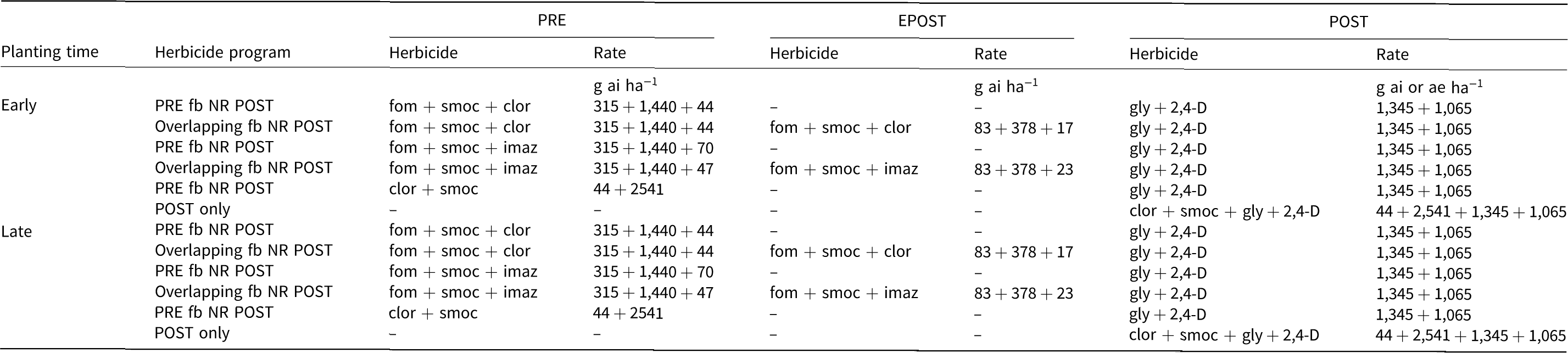
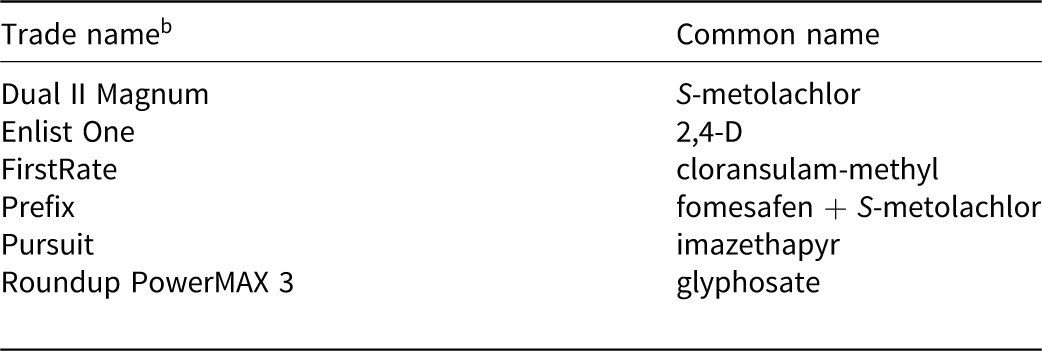
The experimental design was a two-by-six factorial arrangement. Factor A was soybean planting date, with two levels: early (March to early May) and late (late May to June). Factor B consisted of six herbicide programs plus a nontreated control for each planting date. The herbicide programs included: PRE residual followed by non-residual POST (PRE fb NR POST), PRE residual followed by EPOST residual followed by non-residual POST (Overlapping fb NR POST), and POST only of residual + non-residual herbicides (POST only). Preemergence herbicides were applied at soybean planting after sowing, early postemergence herbicides when applied when soybean reached the V3 growth stage, and postemergence herbicides when applied weeds reached 10 cm in height. Herbicide programs that included early postemergence applications were intended to overlap the biologically effective dose of residual herbicides, because no weeds had emerged at the time of application. The treatment list, including planting timing, herbicide programs, active ingredients, and herbicide rates, is shown in Table 1. The experiment was arranged in a split-plot design with four replications. Planting date was the whole-plot factor, with herbicide program as the subplot factor randomized within each whole plot measuring 3 m wide by 9 m long. Herbicides were applied using a CO2-propelled handheld sprayer equipped with AIXR11001 nozzles (TeeJet Technologies, Glendale Heights, IL). Herbicides used in the study are listed in Table 2. Soybean cultivars were selected based on the most-used maturity group for each location: cultivar 3140E3 (Beck’s Hybrids, Atlanta, IN) at PPAC, and cultivar 34EA12 (Stine Seed Company, Adel, IA) at TPAC and Meigs. Soybeans were planted in 76-cm rows at a seeding rate of 345,000 seeds ha−1 at all sites. The soybean cultivars we selected are resistant to glufosinate, glyphosate, and 2,4-D. Early and late planting dates were established in a weed-free environment. Conventional tillage occurred 1 d before the early planting, and paraquat (716 g ai ha−1) was applied as a burndown herbicide 1 d before the late planting.

Table 1. Long description
The table presents a comparison of herbicide programs and their application rates for early and late soybean planting times. It is structured with 12 rows and 7 columns. The columns are labeled as follows: Planting time, Herbicide program, PRE Herbicide, PRE Rate, EPOST Herbicide, EPOST Rate, and POST Herbicide, POST Rate. The planting times are categorized as Early and Late. Each row details a specific herbicide program, including the herbicides used and their rates at different application times (PRE, EPOST, POST). The herbicides and their rates are listed in grams per hectare (g ai ha⁻¹) or grams per hectare or area equivalent (g ai or ae ha⁻¹). The table includes various combinations of herbicides such as fomesafen (fom), s-metolachlor (smoc), cloransulam-methyl (clor), imazethapyr (imaz), glyphosate (gly), and 2,4-D. The rates vary across different herbicide programs and planting times.
a Abbreviations: clor, cloransulam-methyl; EPOST, early postemergence; fb, followed by; fom, fomesafen; gly, glyphosate; imaz, imazethapyr; NR, nonresidual; POST, postemergence; PRE, preemergence; smoc, S-metolachlor.
b EPOST herbicides were applied at the V3 soybean growth stage.
c POST herbicides were applied when target weeds reached 10 to 15 cm in height. All POST applications included 50 mL L−1 of ammonium sulfate.
Trade names, common names, and manufacturers of the herbicides used in the trial.a

Table 2. Long description
A table with two columns and six rows. The first column is labeled ‘Trade name’ and the second column is labeled ‘Common name’. Row 1: Dual II Magnum, S-metolachlor. Row 2: Enlist One, 2,4-D. Row 3: FirstRate, chloransulam-methyl. Row 4: Prefix, fomesafen + S-metolachlor. Row 5: Pursuit, imazethapyr. Row 6: Roundup PowerMAX 3, glyphosate.
a Specimen labels for each product and mailing and website addresses for each manufacturer can be found at www.cdms.net.
b Manufacturers: Dual II Magnum and Prefix, Syngenta Crop Protection, Greensboro, NC; Enlist One and FirstRate, Corteva Agriscience, Indianapolis, IN; Pursuit, BASF Agricultural Solutions, Research Triangle Park, NC; Roundup PowerMAX 3, Bayer CropScience, St. Louis, MO.
Data collection included soybean visual injury assessed 14 d after emergence using a scale from 0% (no injury) to 100% (complete seedling death), and soybean stand counts (plants m−1) recorded at the V3 growth stage from four representative 1-m sections within each plot. Weed density (number of plants per square meter) of the predominant weed species was evaluated when the postemergence herbicides were applied using a 0.25-m2 quadrat at two representative locations within each plot. The species collected included common lambsquarters at PPAC, barnyardgrass [Echinochloa crus-galli (L.) Beauv.] and giant ragweed at TPAC, and barnyardgrass and waterhemp at Meigs. Weed biomass was measured at harvest. To determine weed biomass, aboveground weed material was collected from two 0.25-m2 quadrats per plot, placed in paper bags, and dried in an oven at 40 C for 7 d. Soybean grain yield was determined by harvesting the two central soybean rows from each plot using a plot combine at crop physiological maturity, and final yield was adjusted to a 13% moisture level.
Data were analyzed separately for each location using R software (v. 4.2.1) (R Core Team 2026). Soybean stand and yield were analyzed using linear mixed-effects models (mixed function and afex package) with year, planting date, herbicide program, and their interactions as fixed effects. Planting date was assigned to the whole plots and herbicide program to the subplots, with replication nested within year and the whole-plot error structure included as random effects. Weed biomass was analyzed using the same mixed-model approach after log-transformation [log(x + 1)] to improve normality and homogeneity of variance. Model assumptions for stand, yield, and weed biomass were evaluated by visual inspection of residual and normal quantile plots and by the Shapiro-Wilk and Levene tests. Soybean visual injury was analyzed using generalized linear mixed models with a beta distribution and logit link after adjusting percentage values to the open interval (0, 1). Weed density at postemergence data were analyzed using generalized linear mixed models with a Poisson distribution and log link. Postemergence-only treatments were excluded from the weed density at postemergence analysis because no herbicide had been applied before the evaluation. Means separation was performed using Tukey-adjusted comparisons (emmeans) at α = 0.05.
Results and Discussion
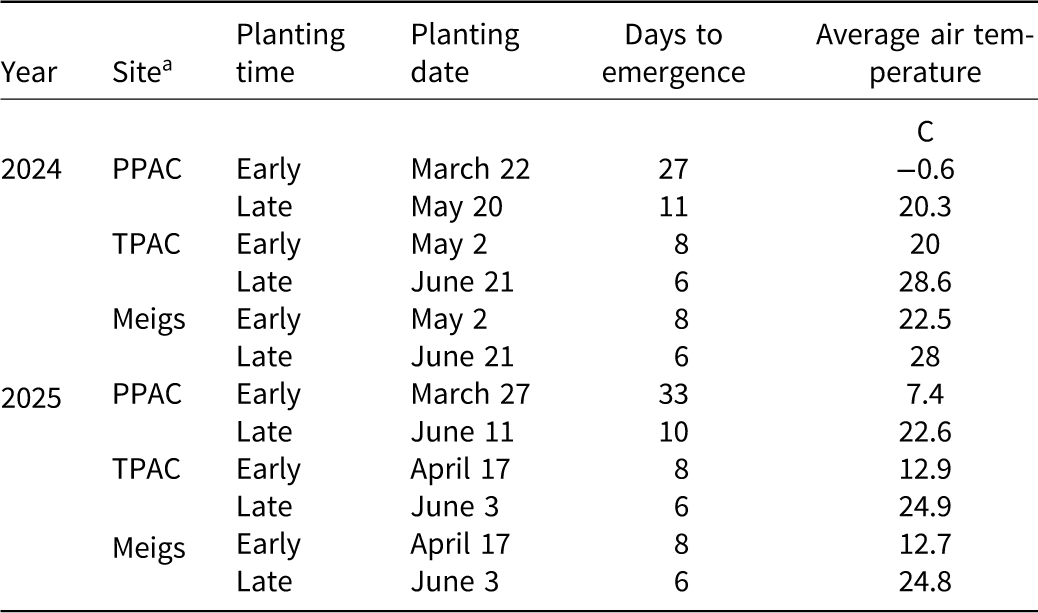
Days to soybean emergence and average air temperatures for each planting date and location are presented in Table 3.
Soybean planting date, days to emergence, and weather conditions at planting.

Table 3. Long description
A table comparing soybean planting dates, days to emergence, and average air temperatures across different years and sites. The table has 2 columns and 12 rows. Column headers are Year, Site, Planting time, Planting date, Days to emergence, and Average air temperature. Row labels include years 2024 and 2025, and sites PPAC, TPAC, and Meigs. Each row provides specific data for early and late planting times, including planting dates, days to emergence, and average air temperatures in degrees Celsius. Notable trends include variations in days to emergence and average air temperatures based on planting dates and sites.
a Meigs represents the Purdue University Samuel G. Meigs Farm; PPAC, Pinney Purdue Agricultural Center; TPAC, Throckmorton Purdue Agricultural Center.
Soybean Injury
Soybean injury was minimal across herbicide programs, not exceeding 5% (data not shown), and did not differ between planting dates (P > 0.05).
Soybean Stand
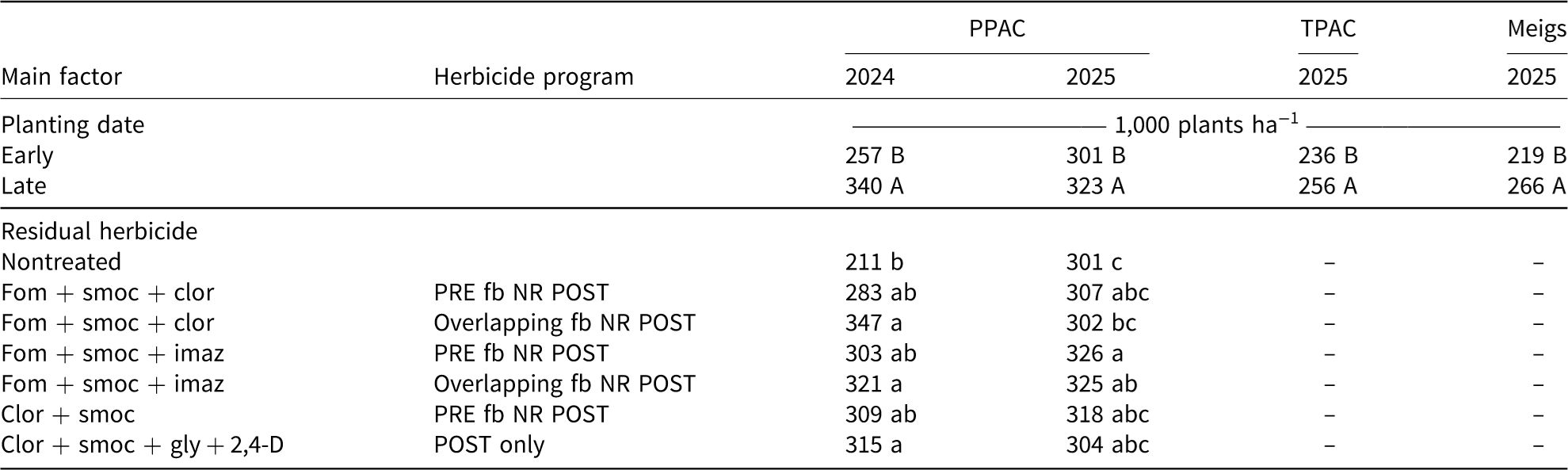
Early planting resulted in a 7% to 25% reduction in stand, with the higher reduction at PPAC (Table 4). The herbicide program had minimal effect on soybean final stand, and the interaction between planting date and herbicide program was not significant for soybean stand.

Table 4. Long description
The table presents data on the effect of planting date and herbicide program on soybean stand, with columns for different locations (PPAC, TPAC, Meigs) and years (2024, 2025). It includes rows for early-planted crop, late-planted crop, nontreated, and various herbicide programs. The table has 10 rows and 6 columns. Column headers are Main factor, Herbicide program, PPAC 2024, PPAC 2025, TPAC 2025, and Meigs 2025. Row labels include Early-planted crop, Late-planted crop, Nontreated, and various herbicide programs. Values are provided for each combination of planting date, herbicide program, location, and year. Notable trends include variations in soybean stand based on planting date and herbicide program, with specific values indicating the impact of these factors.
a Abbreviations: clor, cloransulam-methyl; fb, followed by; fom, fomesafen; gly, glyphosate; imaz, imazethapyr; NR, nonresidual; POST, postemergence; PRE, preemergence; smoc, S-metolachlor. Meigs represents the Purdue University Samuel G. Meigs Farm; PPAC, Pinney Purdue Agricultural Center; TPAC, Throckmorton Purdue Agricultural Center.
b Means followed by the same lowercase or uppercase letters indicate no statistical difference in soybean stand based on a Tukey HSD test at α = 0.05.
Stand reduction associated with early planting resulted in 8% and 18% reductions in soybean stand at TPAC and Meigs, respectively, in 2025 (Table 4). At TPAC and Meigs in 2024, the planting date had no effect on soybean stand, primarily because the early planting was established only on May 2, and weather conditions were similar for both early and late-planted soybean planting timing (Table 3). Although early planting resulted in a stand reduction, final plant population numbers remained above the threshold suggested to prevent yield losses (Castel and Smith Reference Castel and Smith2022). Current results showing reduced soybean stand with early planting are supported by previous literature (Goddard et al. Reference Goddard, Singh and Sprague2025; Knott et al. Reference Knott, Herbek and James2019; Rowntree et al. Reference Rowntree, Suhre, Weidenbenner, Wilson, Davis, Naeve, Casteel, Diers, Esker, Specht and Conley2013).
Reduced soybean stands with early planting compared with late planting occurred at all three sites, typically due to cold soils after planting. Plant stands were above the recommended threshold levels for optimal yield, with minimal differences among preemergence followed by postemergence and overlapping residual programs.
Weed Density at Nonresidual Postemergence Application and Weed Biomass Reduction at Soybean Harvest
Barnyardgrass
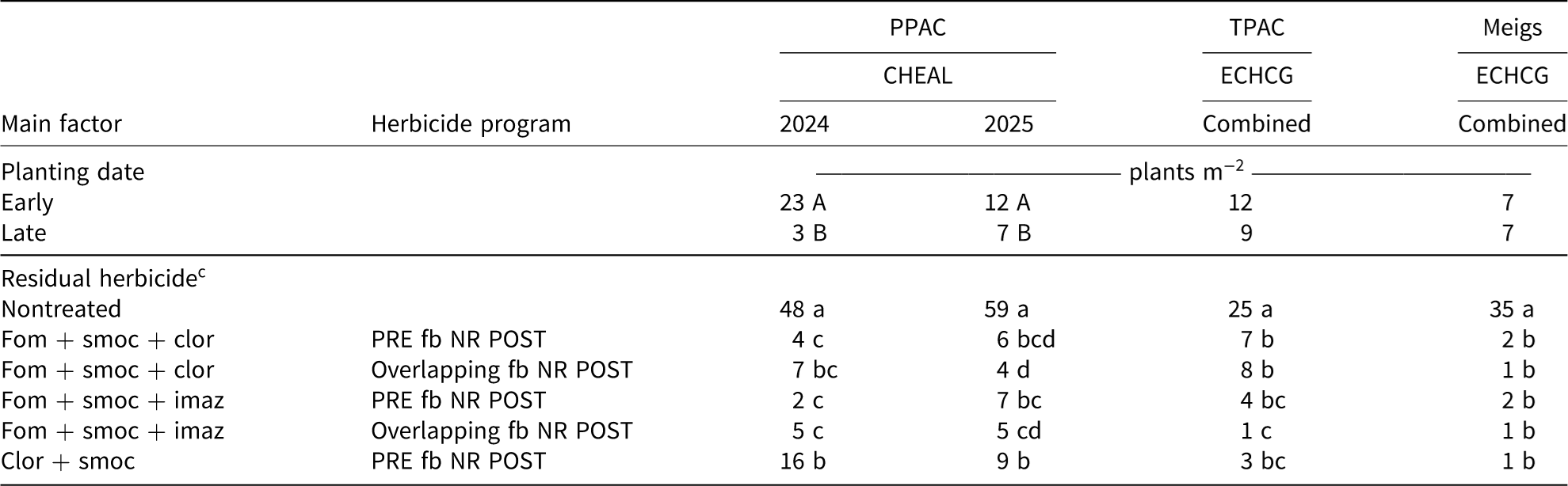
At TPAC and Meigs, only the herbicide program resulted in differences in barnyardgrass density reduction at the POST application timing (Table 5). At TPAC, barnyardgrass density was lower when the overlapping residual herbicide imazethapyr was applied compared to applications of cloransulam (Table 5). At Meigs, all programs that contained residual herbicides resulted in similar weed density at postemergence, except for nontreated plants (Table 5). For weed species such as barnyardgrass, which typically emerge mid-season, soybean planting date has less potential to affect their competitiveness during early soybean growth stages (Werle et al. Reference Werle, Sandell, Buhler, Hartzler and Lindquist2014).

Table 5. Long description
A table comparing weed density under different herbicide programs and planting times. The table has 10 rows and 7 columns. Column headers are Main factor, Herbicide program, PPAC CHEAL 2024, PPAC CHEAL 2025, TPAC ECHCG Combined, and Meigs ECHCG Combined. Row labels include Early-planted crop, Late-planted crop, Residual herbicide, Nontreated, Fom + smoc + clor 2 b, Fom + smoc + clor Overlapping fb NR POST, Fom + smoc + imaz PRE fb NR POST, Fom + smoc + imaz Overlapping fb NR POST, and Clor + smoc PRE fb NR POST. Values are provided for each herbicide program and planting time combination. Notable trends include variations in weed density based on herbicide program and planting time.
a Abbreviations: CHEAL, Chenopodium album; clor, cloransulam-methyl; ECHCG, Echinochloa crus-galli; fb, followed by; fom, fomesafen; imaz, imazethapyr; NR, nonresidual; POST, postemergence; PRE, preemergence; smoc, S-metolachlor. Meigs represents the Purdue University Samuel G. Meigs Farm; PPAC, Pinney Purdue Agricultural Center; TPAC, Throckmorton Purdue Agricultural Center.
b Means followed by the same lowercase or uppercase letters indicate no statistical difference in weed density at POST based on a Tukey HSD test at α = 0.05.
c Residual herbicides were applied at soybean planting date for PRE fb NR POST and at soybean planting date and V3 soybean growth stage for overlapping fb NR POST.
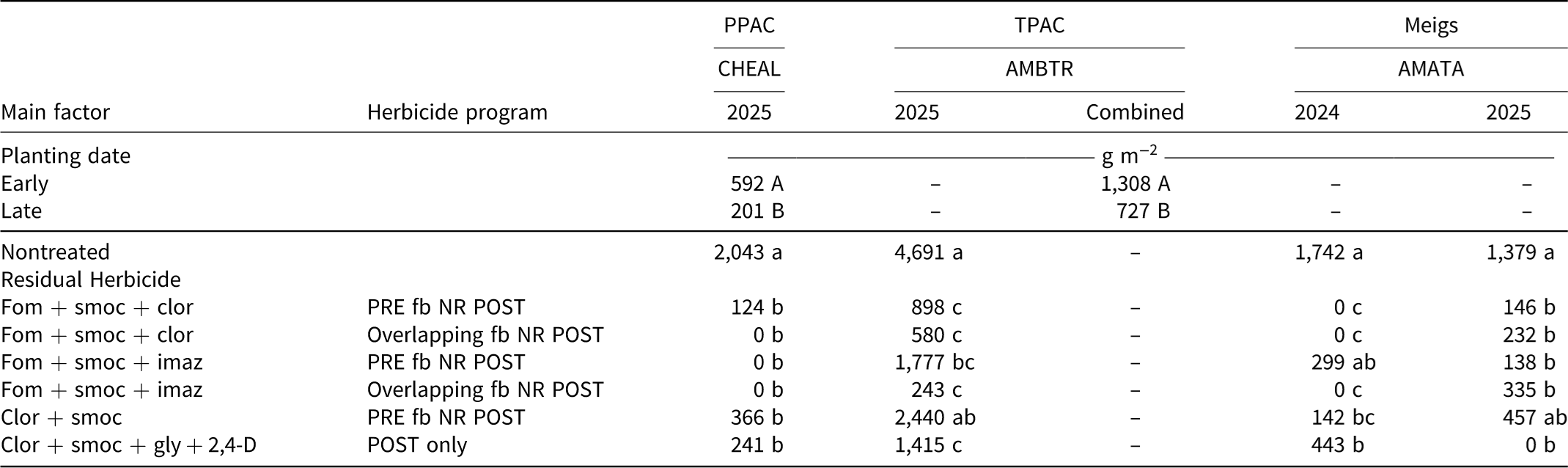
At TPAC in 2024, barnyardgrass was absent at soybean harvest in all plots where herbicides were applied except nontreated control plots, resulting in no measurable biomass (data not shown). In 2025, no barnyardgrass biomass was present at soybean harvest except in plots where a preemergence herbicide was applied followed by a postemergence herbicide combination of fomesafen + S-metolachlor + imazethapyr, which resulted in 374 g m−2 of biomass (data not shown). At Meigs, in 2024, the only herbicide program 221 other than the nontreated control that resulted in measurable barnyardgrass biomass at soybean harvest was the POST-only program (1,758 g m−2). In 2025, the only herbicide program with 223 measurable barnyardgrass biomass at harvest was the PRE followed by POST program containing cloransulam + S-metolachlor (586 g m−2; data not shown).
Common Lambsquarters
Late planting resulted in a 76% and 45% reduction in common lambsquarters density at postemergence compared with early planting in 2024 and 2025, respectively (Table 5). In 2024, three-way tank mixtures treatments that included fomesafen in the preemergence application resulted in at least 56% lower common lambsquarters density than with the preemergence application of chloransulam + S-metolachlor (Table 5). Oliveira et al. (Reference Oliveira, Feist, Eskelsen, Scott and Knezevic2017) demonstrated increased control of common lambsquarters with preemergence application mixtures that included fomesafen compared with applications of single active ingredients, supporting the use of soil-residual herbicide mixtures for extended control.
In 2024, common lambsquarters was absent at soybean harvest in all herbicide-treated plots, resulting in no measurable biomass, and it was present only in the nontreated control plots (data not shown). In 2025, biomass was reduced by 66% with late planting compared with early planting (Table 6). Additionally, all herbicide applications resulted in similar common lambsquarters biomass at soybean harvest, with biomass remaining lower than in the nontreated control plots (Table 6).

Table 6. Long description
The table presents data on weed biomass at soybean harvest, focusing on different herbicide programs and planting times. It has 10 rows and 7 columns. The columns are labeled as PPAC CHEAL 2025, TPAC AMBTR 2025, TPAC AMBTR Combined, Meigs AMATA 2024, and Meigs AMATA 2025. The rows are categorized under Main factor, Herbicide program, Early-planted crop, Late-planted crop, and Nontreated, followed by various herbicide treatments. Each cell contains specific biomass values in grams per square meter (g m^-2). Notable trends include variations in biomass reduction across different herbicide treatments and planting times, with specific values provided for each combination.
a Abbreviations: AMBTR, Ambrosia trifida L., AMATA, Amaranthus tuberculatus (Moq.) Sauer; CHEAL, Chenopodium album L.; clor, cloransulam-methyl; fb, followed by; fom, fomesafen; gly, glyphosate; imaz, imazethapyr; smoc, S-metolachlor. Meigs represents the Purdue University Samuel G. Meigs Farm; PPAC, Pinney Purdue Agricultural Center; TPAC, Throckmorton Purdue Agricultural Center.
b Means followed by the same lowercase or uppercase letters indicate no statistical difference in weed biomass at soybean harvest based on a Tukey HSD test at α = 0.05.
Giant Ragweed
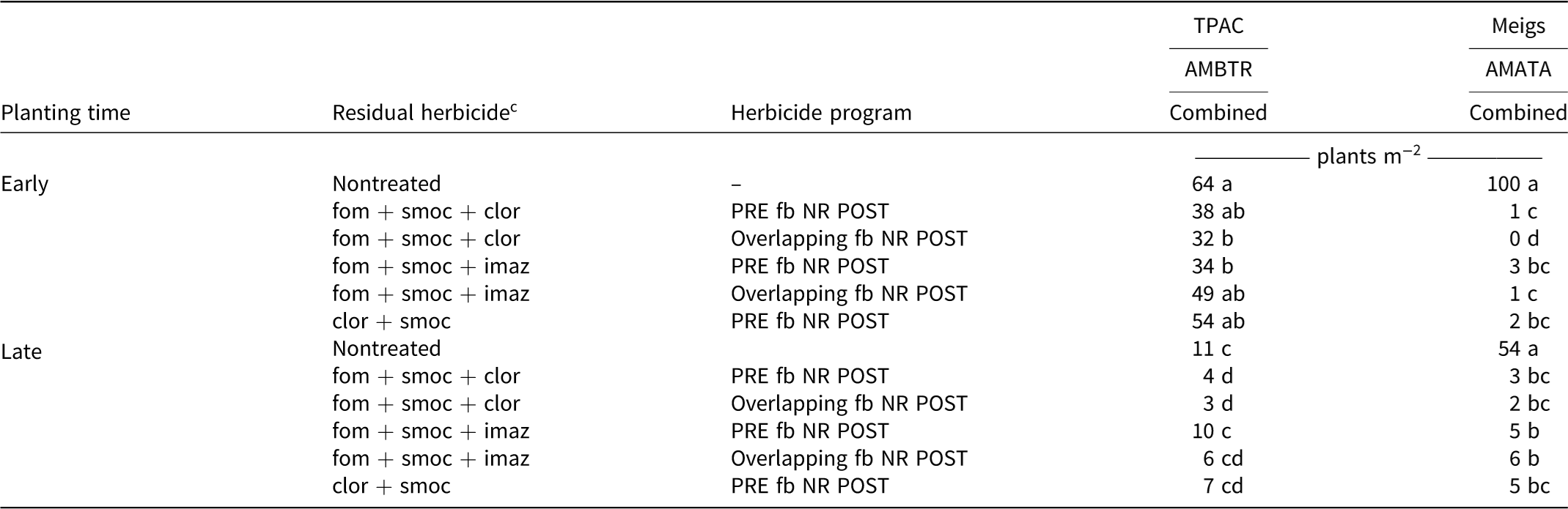
The interaction between planting date and herbicide program affected giant ragweed density at postemergence. When soybean was planted early, the overlapping residual herbicide combination of fomesafen + S-metolachlor + cloransulam and the preemergence application followed by a postemergence combination of fomesafen + S-metolachlor + imazethapyr resulted in the lowest giant ragweed density (32 and 34 plants m−2, respectively). When the soybean crop was planted late, the herbicide combinations that contained cloransulam provided the greatest residual control (Table 7). Chudzik et al. (Reference Chudzik, Nunes, Arneson, Dewerff, Ferreira, Proctor, Stoltenberg, Conley and Werle2025) reported reduced giant ragweed density at postemergence by delaying soybean planting compared with early planting in Wisconsin (61 vs. 118 plants m−2). Previous research demonstrated that preemergence applications of cloransulam, either alone or in a mixture with herbicides, resulted in more effective control of Ambrosia species that when premixes were used that included other ALS-inhibiting herbicides, such as imazethapyr (Taylor et al. Reference Taylor, Loux, Harrison and Regnier2002; Werle et al. Reference Werle, DeWerff, Arneson, Smith and Mobli2026).

Table 7. Long description
A table with 12 rows and 6 columns comparing weed density at postemergence herbicide application at TPAC and Meigs. The columns are Planting time, Residual herbicide, Herbicide program, TPAC Combined, and Meigs Combined. The rows are categorized by Early and Late planting times with different herbicide treatments. Each row lists the weed density in plants per square meter for each treatment combination. Notable trends include varying weed densities based on planting time and herbicide program, with specific combinations showing lower weed densities.
a Abbreviations: AMATA, Amaranthus tuberculatus; AMBTR, Ambrosia trifida; clor, cloransulam-methyl; fb, followed by; fom, fomesafen; imaz, imazethapyr; NR, nonresidual; POST, postemergence; PRE, preemergence; smoc, S-metolachlor. Meigs represents the Purdue University Samuel G. Meigs Farm; TPAC represents the Throckmorton Purdue Agricultural Center.
b Means followed by the same lowercase or uppercase letters indicate no statistical difference in weed density at POST based on a Tukey HSD test at α = 0.05.
c Residual herbicides were applied at soybean planting date for PRE fb NR POST and at soybean planting date and V3 soybean growth stage for overlapping fb NR POST.
At soybean harvest, late planting resulted in 44% lower giant ragweed biomass than early planting (Table 6). In 2024, all herbicide applications produced similar results in giant ragweed biomass as those of nontreated control plots (data not shown). In 2025, herbicide programs containing fomesafen applied PRE and the POST only program resulted in similar biomass at soybean harvest, whereas the cloransulam + S-metolachlor PRE program resulted in biomass similar to that of the nontreated control (Table 6).
Waterhemp
Waterhemp density when the postemergence herbicides were applied was affected by the interaction between planting date and herbicide program. In the early planting date, the overlapping residual application of fomesafen + S-metolachlor + cloransulam provided the greatest residual control. At planting late, all herbicide programs provided similar levels of residual control (Table 7). Waterhemp biomass at soybean harvest was affected only by herbicide program. In 2024, herbicide combinations that contained cloransulam and the overlapping residual application of fomesafen + S-metolachlor + imazethapyr resulted in no waterhemp biomass at harvest (Table 6). In 2025, all herbicide programs except cloransulam + S-metolachlor resulted in lower waterhemp biomass than the nontreated control (Table 6).
Soybean Yield
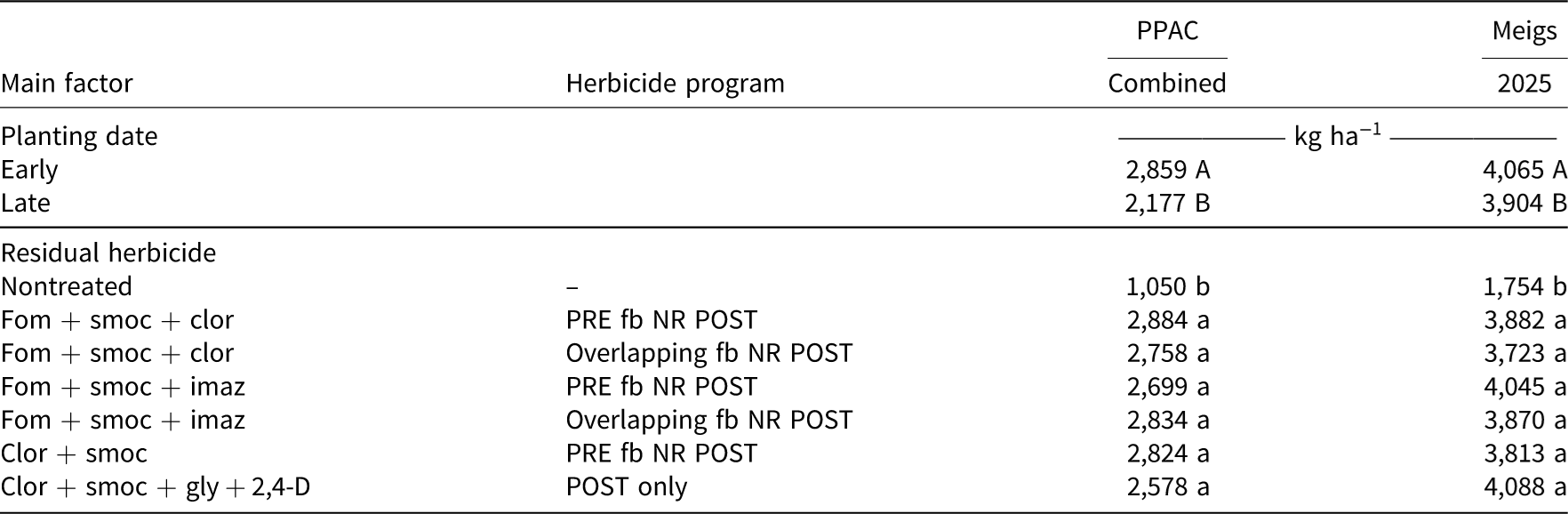
At PPAC, early-planted soybean produced a 24% higher yield than the late-planted crop in both 2024 and 2025, whereas at Meigs in 2025, yield from the early-planted crop was 4% higher (Table 8). At both Meigs and TPAC in 2024, the crop was planted on May 2 due to heavy rain during April, resulting in similar yields between planting dates (P > 0.05; Egli and Cornelius Reference Egli and Cornelius2009).

Table 8. Long description
The table presents data on soybean yield under different planting dates and herbicide programs at PPAC and Meigs. It has 10 rows and 4 columns. The columns are labeled ‘Main factor’, ‘Herbicide program’, ‘PPAC Combined’, and ‘Meigs 2025’. The rows are labeled with different main factors such as ‘Early-planted soybean’, ‘Late-planted soybean’, ‘Nontreated’, and various herbicide treatments. The values in the columns represent the yield in kg per hectare. Notable trends include higher yields for early-planted soybeans compared to late-planted ones, and variations in yield based on different herbicide programs.
a Abbreviations: clor, cloransulam-methyl; fb, followed by; fom, fomesafen; gly, glyphosate; imaz, imazethapyr; NR, nonresidual; POST, postemergence; PRE, preemergence; smoc, S-metolachlor. Meigs represents the Purdue University Samuel G Meigs Farm; PPAC represents is the Pinney Purdue Agricultural Center.
b Means followed by the same lowercase or uppercase letters indicate no statistical difference in soybean yield based on a Tukey HSD test at α = 0.05.
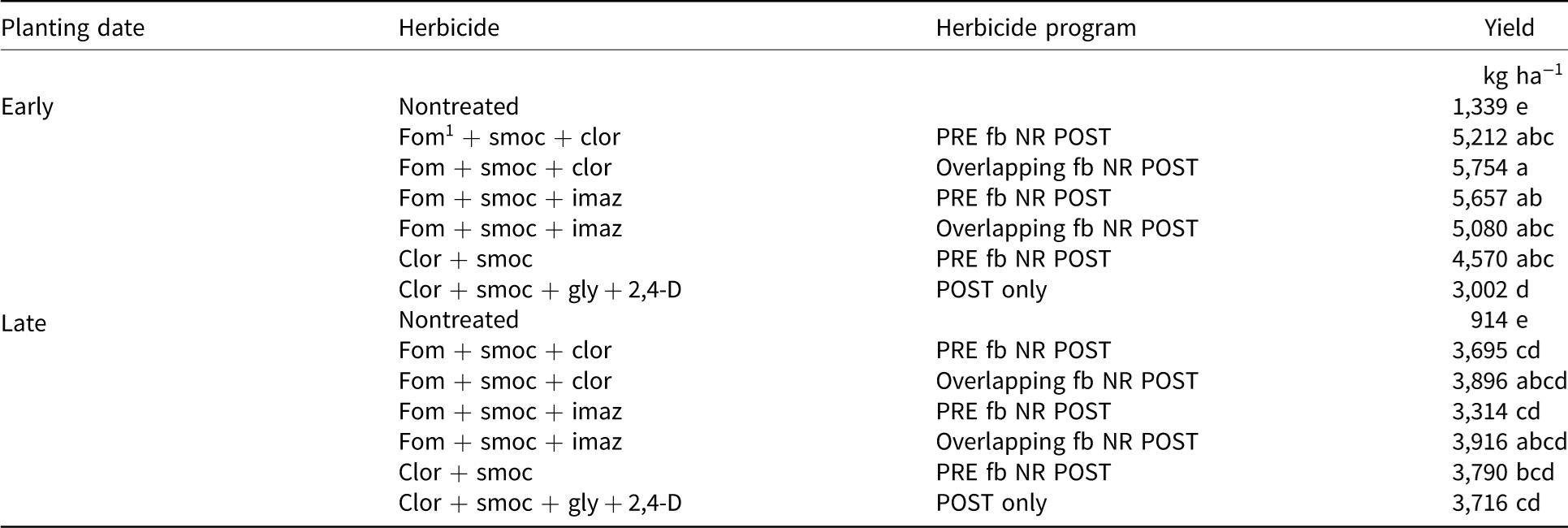
At PPAC in 2024 and 2025, and Meigs in 2025, yields from all plots where herbicides were applied were similar and at least 45% greater than the yields from the nontreated controls (Table 8). At TPAC in 2025, herbicide programs at late planting resulted in similar yields, whereas at early planting the POST only program resulted in lower yields compared to the PRE fb NR POST and overlapping residual programs (Table 9). In Illinois, Miller et al. (Reference Miller, Landau, Williams and Hager2025) reported comparable yields from early-planted soybean treated with postemergence-only and preemergence followed by postemergence herbicide applications. Current yield results represent the first report of the interaction between residual herbicide application timing and early-planted soybean affecting yield.
Effect of the interaction of planting date and herbicide treatment on soybean yield at Throckmorton Purdue Agricultural Center in 2025.a,b

Table 9. Long description
A table comparing soybean yield under different planting dates and herbicide treatments. The table has 16 rows and 4 columns. Column headers are Planting date, Herbicide, Herbicide program, and Yield. Row labels include Early and Late planting dates. The Yield column is measured in kg ha^-1. Row 1: Early, Nontreated,, 1,339 e. Row 2: Early, Fom + smoc + clor, PRE fb NR POST, 5,212 abc. Row 3: Early, Fom + smoc + clor, Overlapping fb NR POST, 5,754 a. Row 4: Early, Fom + smoc + imaz, PRE fb NR POST, 5,657 ab. Row 5: Early, Fom + smoc + imaz, Overlapping fb NR POST, 5,080 abc. Row 6: Early, Clor + smoc, PRE fb NR POST, 4,570 abc. Row 7: Early, Clor + smoc + gly + 2,4-D, POST only, 3,002 d. Row 8: Late, Nontreated,, 914 e. Row 9: Late, Fom + smoc + clor, PRE fb NR POST, 3,695 cd. Row 10: Late, Fom + smoc + clor, Overlapping fb NR POST, 3,896 abcd. Row 11: Late, Fom + smoc + imaz, PRE fb NR POST, 3,314 cd. Row 12: Late, Fom + smoc + imaz, Overlapping fb NR POST, 3,916 abcd. Row 13: Late, Clor + smoc, PRE fb NR POST, 3,790 bcd. Row 14: Late, Clor + smoc + gly + 2,4-D, POST only, 3,716 cd.
a Abbreviations: clor, cloransulam-methyl; fb, followed by; fom, fomesafen; gly, glyphosate; imaz, imazethapyr; NR, nonresidual; POST, postemergence; PRE, preemergence; smoc, S-metolachlor.
b Means followed by the same lowercase or uppercase letters indicate no statistical difference in soybean yield based on a Tukey HSD test at α = 0.05.
In fields infested with giant ragweed, early-planted soybean required that a residual herbicide be applied at planting to prevent yield loss from weed competition. In contrast, when the crop was planted late, when the competitive period was shorter, the application of a residual herbicide had no effect on soybean yield (DeWerff et al. Reference DeWerff, Conley, Colquhoun and Davis2015).
Practical Implications
Because soil moisture and temperature are key factors that determine weed germination and subsequent competition with soybean, the effectiveness of herbicides for weed control varied by year. The data suggest that adopting early planting to increase soybean yield may make weed management more challenging. This is particularly true for species that emerge in early spring, such as common lambsquarters and giant ragweed. Overlapping residual herbicides did not consistently improve residual weed control across site-years, suggesting that the benefits of overlapping residual herbicide applications compared with a single preemergence residual application at planting depend on the target weed species and environmental conditions that influence herbicide persistence and weed emergence. Future research should investigate the timing of early postemergence applications within overlapping residual programs to evaluate the potential of this strategy to increase season-long weed control.
Early planting dates typically resulted in reduced stand, but still above the threshold needed to cause yield losses. Additionally, early planting did not negatively affect soybean stand establishment, demonstrating the crop safety of sequential residual herbicide applications under cool weather conditions.
Early planting results in greater yield. When the crop had to compete with giant ragweed, the timing (preemergence or early postemergence) of residual herbicide application influenced yield, suggesting that a preemergence residual herbicide is necessary when a crop is planted early to prevent yield loss due to weed competition and to coincide with the typical peak germination period of giant ragweed in Indiana. In contrast, under late planting scenarios, when the competition period between crop and weeds is shorter, the inclusion of a residual herbicide is still required to protect yield, but the timing of application is less influential than it is with early planting.
Acknowledgments
We thank the graduate students, faculty, and staff at Purdue University for their valuable contributions.
Funding
This research received no specific grant from any funding agency or the commercial or not-for-profit sectors.
Competing Interests
The authors declare they have no competing interests.

 Open access

