In October 1935, photographer Arthur Rothstein made a series of around two hundred photographs that captured Blue Ridge Mountain families who were soon to be relocated outside the boundaries of the newly created Shenandoah National Park.Footnote 1 Working for the Historical Section of the New Deal Government's Resettlement Administration (RA) under the direction of Roy Stryker, head of the Information Division, Rothstein went to the mountains to document a way of life that was understood to be vanishing forever.Footnote 2 The shoot marked the start of a huge campaign to justify and document RA efforts to solve rural poverty by identifying those living on depleted lands and moving them to less isolated, modern agricultural units and homesteads. Once resettled in new communities, those rehoused were to be taught new techniques of subsistence farming to supplement their low or sporadic incomes during hard times, enabling them to be self-sufficient rather than reliant on government support. In 1937 the RA was absorbed into the Farm Security Administration (FSA) and by 1943 the team of photographers employed by Stryker had produced around 175,000 images – many of which became celebrated records of human resilience and the effort of welfare government to alleviate the hardship caused by the Great Depression. The photos were made to document Americans’ successful transition to modern living as well as to justify government spending on the New Deal's subsistence homestead policy at a time of reduced tax revenues and nationwide economic depression.Footnote 3
Rather than resettlement and rehousing, however, at least ten of the people from the two families that Rothstein had focussed on (the Corbins and the Nicholsons), were subsequently sent to the State Colony for Epileptics and Feebleminded in Lynchburg, Virginia, where they were incarcerated and forcibly sterilized some time after Rothstein's photos were taken.Footnote 4 Court records and oral testimony from relatives confirm their institutionalization between 1935 and 1942, many as young children or adolescents. The 1940 census lists nine members of the Corbin family as residents in what became known as “the Colony” in Lynchburg.Footnote 5 The photographs Rothstein produced on his visit highlight a controversial and provocative paradox: that the decade in which the United States created a welfare state and federal aid to the poor, intended to lift up the “forgotten man” at the bottom of the economic heap, was also the decade of widespread state-sanctioned coerced eugenic sterilization, on an unprecedented scale.Footnote 6
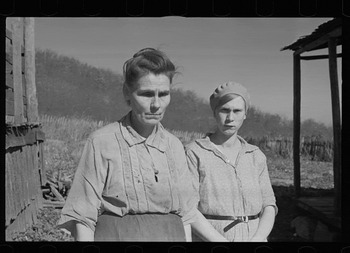
Fanny Corbin, the mother of twenty-two children, Shenandoah National Park, Virginia. October 1935. Photograph by Arthur Rothstein. Library of Congress Prints and Photographs Division, LC-USF33-T01-002170-M2.

There was nothing particularly unique about these sterilizations: the state of Virginia had been forcibly sterilizing citizens for over a decade before Rothstein's photos were taken.Footnote 7 Yet there is no evidence to show that Rothstein knew that he was photographing people who would end up victims of Virginia's eugenic legislation. Few FSA photographers appeared to have questioned their relationship with, or preconceptions of, the rural underclass they captured on film and almost all saw the New Deal policy they represented as benign or benevolent: there is no reason to think that Rothstein was any different.Footnote 8 Yet the coincidence of the photo shoot with the subjects’ incarceration and displacement is hard to explain without implicating Rothstein and raises questions about how we read and understand this set of FSA photographs.Footnote 9 In this essay I propose to reread the images as a product of competing but intersecting ideologies produced by a number of authorities who were not all in agreement, including federal and local governments, medical professionals, media professionals, artists and educational experts. Rather than avoid interpretive, circumstantial and conflicting readings using partial evidence, my argument here is that these problematic methodologies are probably the only way that we can explain and piece together the story of American eugenics’ murky past.Footnote 10
Jeff Allred suggests a rereading of contradictory narrative threads in Depression-era photography by looking at how such images were grouped, collected, edited and transformed by accompanying captions. Rereading You Have Seen Their Faces (1937), the documentary photo-essay created by Margaret Bourke-White and Erskine Caldwell, he reveals a structural tension in which a positive modernizing narrative that affirms New Deal progress collides with a deconstructive counternarrative that subverts the authority of that discourse. You Have Seen Their Faces, Allred argues, breaches the commonly assumed position of the documentary text as “spontaneous witness” in the way that it openly positions itself as a constructed narrative, where the captioned statements beneath photographs that appear as “truth” undermine the images as analogues of reality. Allred sees this as a defamiliarizing modernism generic to the art of the 1930s and an aesthetic experiment that documents a “subtle registering both of the dominant modernizing ideology [of New Deal civic nationalism] and the resistance to it grounded in local structures of feeling.”Footnote 11 This valuable observation, however, misses the context and presence of preexisting eugenic narratives, which is at least one “local structure” that had also been a “dominant modernizing ideology” since the Progressive Era, and which feeds into the photo-essay's semantics and reception. As Paul Lombardo has shown, You Have Seen Their Faces in fact included pictures taken six years prior to publication by Caldwell's father Ira Caldwell, images that had been used to illustrate a series of articles about the dysgenic “Bungler” family for the journal Eugenics.Footnote 12 You Have Seen Their Faces also employs a trope of eugenic fictionalizing in using ventriloquism that poses as unmediated recorded dialogue.
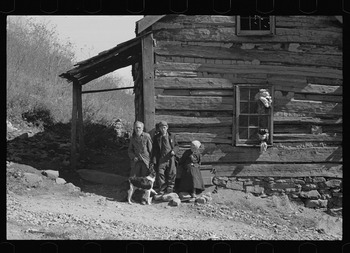
Two important local contexts for Rothstein's Shenandoah series were the eugenic case studies undertaken in the region prior to his visit – Mongrel Virginians (1926) and Hollow Folk (1933) – studies which circulated widely in the media as well as among public welfare workers, medical students, health workers and social scientists at the time.Footnote 13 In Mongrel Virginians photographs showing isolated, dirty and deteriorated residences – often in a state of collapse – accompanied the text to illustrate that occupants were feebleminded and could not look after their property, justifying eugenicists’ demand for segregation and sterilization.Footnote 14 Dilapidated houses were particularly symbolic of the householder's inability to “keep up” or “fit in” and were used in this case, without any human figure visible, to symbolize the social problems of “dysgenic” breeding. Taken out of the context of the eugenic textbook, however, it would be impossible to discern eugenic intent in these photographs alone, even where we know the image was created as part of an extended eugenic study: structurally similar, there is little to distinguish between the photographs included in Mongrel Virginians, such as the interior and exterior shots of family homes (“An Average Win Home” and “Interior of a Better Grade Home”) and strikingly similar images by Rothstein (“Dicee Corbin's Cabin. Shenandoah National Park, Virginia” and “Two of Charlie Nicholson's children”).Footnote 15 The same could be said for the many other images of rural poverty that were taken by Stryker's “sociologists with cameras,” or those taken by Walker Evans for Let Us Now Praise Famous Men.Footnote 16 While academics have traced photography's long history as a “eugenic technology” which classified human bodies in order to categorize and frame disability as a way to rationalize scientific exclusion in the US, eugenic discourses in images that do not include people are harder to use as convincing evidence of eugenics’ presence.Footnote 17 Certainly, for the FSA photographers, capturing poverty and squalid living conditions was intended to support the application of welfare and the transition to security and modernity, rather than to establish categories of the deserving or undeserving poor.
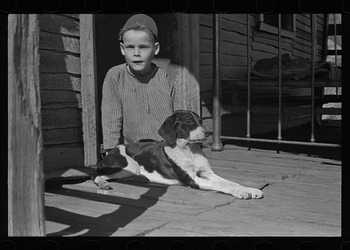
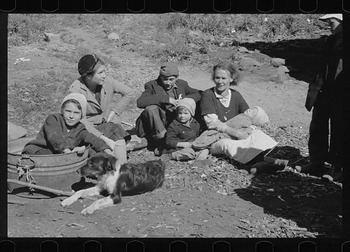
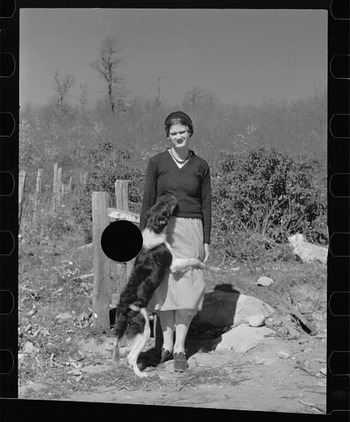
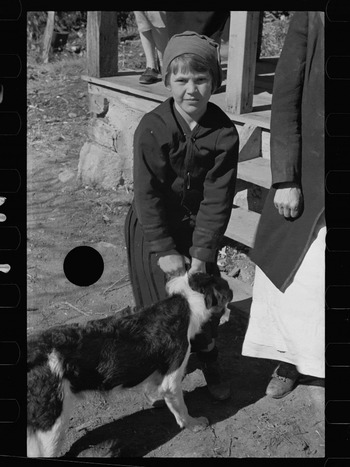
Other ways in which the Shenandoah series were framed and organized, however, might indicate a stronger connection with eugenic ideology. The photographs taken for the Mongrel Virginians study visually constructed eugenic meaning through the careful placement of pets and animals to suggest a classification of subjects on a lower evolutionary scale.Footnote 18 Dogs in eugenic photographs signified the potential of eugenic policy to breed pedigree or mongrel people and, from a social-welfare angle, it showed people living in filthy environments alongside and like animals, to justify their removal from those conditions. Some of Rothstein's Shenandoah photographs, taken nine years after Mongrel Virginians, show a structural resemblance to these that may be accidental and unintentional, a result of pure contingency: a family dog appears in several images, particularly those accompanying some of the children who were later committed to the Lynchburg Colony. Many of these were punctured by Stryker to make them unusable, the lack of control or the demeaning implication of the framing possibly making him uncomfortable.
Contextually germane to Rothstein's images was the public controversy in the February before Rothstein's visit, caused by the publication of a series of dispatches by Erskine Caldwell in the New York Post in which he described infants he visited in rural Georgia as so malnourished that, lying on the floor in front of the fire, they had tried to suck “the dry teats of a mongrel bitch” for sustenance. This depiction of depraved rural poverty may have been in Rothstein's thoughts when he visited the Shenandoah families just a few months later, though there is no evidence to establish that. His attention to a family dog that clearly does not always want to stay in shot, or that interrupts the pose, is highly unusual among the FSA collections taken as a whole.Footnote 19
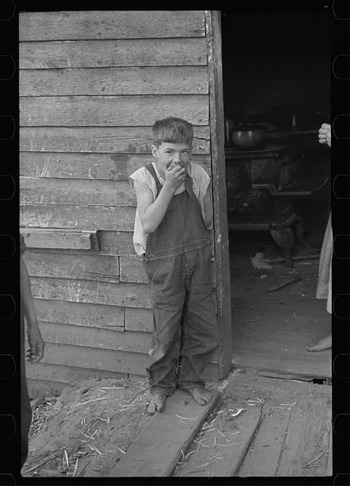
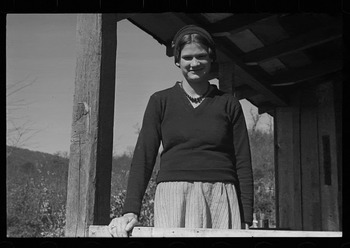
Similarly unusual among the RA/FSA photograph collection, some of the Shenandoah group display revealing eugenic preoccupations with intelligence or number of children that align them with eugenic case studies, such as: “Virgie Corbin, Blue Ridge Mountain Girl. This girl who is about sixteen has the mentality of a child of seven. She has never advanced beyond the second grade”; “Half-wit Corbin Hollow boy”; “Mrs. Dodson and one of her nine children”; “Fanny Corbin, the mother of twenty-two children.”
For both eugenicists and Stryker, control of photography's multivalent narrative was essential if the images were to promote their intended message. For both, the only way of managing the ideological effect of the multivalent photograph was to embed it in a narrative or mediated framework. In order to allow for their correct interpretation and thereby to function as ideological justification of the controversial resettlement housing and homesteading projects, Roy Stryker paid careful attention to the captioning of photographs published by the RA/FSA photographers.Footnote 20 Controlling the captions and their media circulation controlled the narrative that Stryker wanted to project and enabled him to construct, to use Allred's term, “plausible fictions of the real.”Footnote 21
Son of Fannie Corbin, Shenandoah National Park, Virginia. October 1935. Photograph by Arthur Rothstein. Library of Congress Prints and Photographs Division, LC-USF33-T01-002169-M2.

While the connection between eugenics and modernist literature has been explored, less attention has been paid to the apparatus of fiction used to disseminate eugenics.Footnote 22 For eugenicists, in order to construct an appreciation of the impossible-to-see gene and to project a future scenario for “wrong” breeding, it was necessary to resort to narrative devices that were common to popular fictional genres: eugenic case studies were replete with suggestion, metaphor, experimental language and metaphoric naming, as well as fantasies of the future, traits that also appear in the “trash” fiction of Gothic horror and science fiction.Footnote 23 Eugenicists also constructed travelling-theatre performances in order to visually popularize eugenic theory with mass audiences in the first half of the twentieth century.Footnote 24 As eugenicists utilized fictional conventions to educate the public, photographs in eugenic texts increasingly functioned to provide factual documentary evidence that appeared both scientific and irrefutably truthful, counteracting the dramatic or “unreal” elements.Footnote 25 At the same time, in order to control the slippery semantics of the visual, the photographs required accompanying captions that overtly linked the narrative text with the visual.
Dicee Corbin with some of her children and grandchildren, Shenandoah National Park, Virginia. October 1935. Photograph by Arthur Rothstein. Library of Congress Prints and Photographs Division, LC-USF33-T01-002211-M4.

Untitled. Photograph by Arthur Rothstein. Library of Congress Prints and Photographs Division, LC-USF33-T01-002172-M1.

Untitled. Photograph by Arthur Rothstein. Library of Congress Prints and Photographs Division, LC-USF33- 002180-M1.

The captions of the Shenandoah series display a collision of the modernizing ideology of the New Deal with the prevailing eugenic narrative that surrounded this particular group of Virginians. Provided with local information and a structure for choosing, framing and interpreting their subjects, photographers relied on welfare workers and a network of local officials in order to gain access to the people they wanted to capture. The subject matter and the captions (which appear factual but are often not true) illustrate the federal project's reliance on a growing network of regional welfare workers operating under state eugenic laws and educated by the fictions of eugenic propaganda. Although sent out to take photos with shooting scripts written by Stryker, and often captioned and edited by him, all photographers were required to register with regional FSA offices and relied on the help and guidance of the local administrators who identified and located potential subjects and provided the information that appeared in the photographer's field notes.Footnote 26 In Rothstein's case, the choice of subject matter would have been particularly reliant on the casework of Miriam Sizer, a fieldworker who had collected data for a Washington Child Research Center project resulting in the book Hollow Folk: A Study in the Blue Ridge (1933) by Mandel Sherman and Thomas R. Henry. The book surveyed five mountain family groups living in the Shenandoah and represented each as having reached a different stage of evolution, with the residents of Corbin Hollow – the Corbins and the Nicholsons – at the lowest level. Hollow Folk was in fact peppered with eugenic discourse that put forward both environmental and hereditarian causes for rural degeneracy and was structurally and ideologically similar to eugenic family studies popular in the Progressive Era used to educate welfare workers throughout the 1930s.Footnote 27
Fennel Corbin and two of his grandchildren, Shenandoah National Park, Virginia. Photograph by Arthur Rothstein. Library of Congress Prints and Photographs Division, LC-USF33-002206-M4.

“Half-wit Corbin Hollow boy,” Shenandoah National Park, Virginia. October 1935. Photograph by Arthur Rothstein. Library of Congress Prints and Photographs Division, LC-USF33-T01-002186-M1.

“Virgie Corbin, Blue Ridge Mountain Girl. This girl who is about sixteen has the mentality of a child of seven. She has never advanced beyond the second grade.” Shenandoah National Park, Virginia. October 1935. Photograph by Arthur Rothstein. Library of Congress Prints and Photographs Division, LC-USF33-T01-002179-M4 (b&w film dup. neg.).

Rothstein drew from a preexisting narrative that was framed by newspaper articles which appeared in the wake of the Washington Child Research Center report and reflected intense interest in the “primitive” lives of the Shenandoah poor. In 1930, beneath the heading “‘Lost’ Communities in Blue Ridge Hills: Centres Where Intelligence Practically Is Missing Reported by Psychologists,” the New York Times reported that the research showed that Blue Ridge residents were “pathetically unfit to meet competition and the struggle for existence in the outside world.”Footnote 28 In 1931 the Washington Post reported a trip made to Washington, DC by seven of the Corbin Hollow children to have their tonsils removed, with the headline “Corbin Hollow Discovers America,” with a subheading stating they had been “Born to Primitive Life within 100 Miles of Capital – Like Juvenile Citizens of Another World”.Footnote 29 The next year the Baltimore Sun reported that there was “Primitive Life in Modern Virginia.”Footnote 30 Reports, however, offered assurances that these “forgotten” people were to be cared for by modern welfare government: the Journal Courier wrote that
Ray Lyman Wilbur, Secretary of the Interior, visited Corbin Hollow and heartily approved of the plan to move the Corbins and the Nicholsons to another location near a Church mission where they will be adequately cared for. They will be out of the new national park then, and better located.Footnote 31
Beyond this local context, eugenic ideology also filtered through into the complex application of public-welfare and housing policy in 1930s as the expansion of assistance and welfare grew. As poverty and budgets spiraled in southern states, federal housing and resettlement policy relied on the cooperation of local welfare workers whose practice was guided by an education in eugenics and the implementation of state eugenic laws which had been ratified by the Supreme Court in 1927: all of which worked to place those designated “feebleminded” into institutions and sterilize them to prevent them from producing further burdens on the state purse. Workers for various New Deal agencies entered into regional situations where eugenic policies underpinned key aspects of state welfare planning.
In the context of rising welfare and federal relief during the Great Depression, eugenicists remained highly active, using national debates about spiraling welfare costs to push their agenda and embed themselves into New Deal programs. Paul Popenoe, general director of the Institute of Family Relations in Los Angeles and a prominent eugenicist, argued in July 1935 that sterilization laws had become “an American contribution to social welfare.”Footnote 32 By 1940, R. Clyde White, a professor of social service administration at the University of Chicago, instructed his public-welfare students that even the scientific basis for eugenics – genetic inheritance of feeblemindedness – was less important than the social welfare advantages sterilization could bring:
The case for sterilizing all defectives who are likely to reproduce does not, therefore, rest upon proof in each case that mental defect is due to poor heredity. Mental defectives are a social and economic liability to the state, and if they have children, whether defective or not, they are more than likely to be liabilities to the state, because in any case they would have to grow up in a home that in most cases is poor from every point of view.Footnote 33
White's Administration of Public Welfare, intended as a general textbook for all public-welfare students and workers starting out in their careers, argued that if “less than one fourth of all mental defectives discharged from institutions are expected to be fully self-supporting and a smaller proportion still would be able to support a family, it would probably be an advantage to the state to have all of them sterilized.”Footnote 34
Eugenicists were taking on increasingly central roles within New Deal agencies. The National Advisory Committee on Subsistence Homesteads, for instance, had at least four eugenicists on the board, including health guru and publisher Bernarr MacFadden. At the same time the methods of tenant selection relied on data and local knowledge provided by sociologists and social-welfare workers schooled in eugenics, who had been working in communities for several decades and who decided on a candidate's fitness, or unfitness, for new homes.Footnote 35 Both Laura Lovett and Molly Ladd-Taylor have noted that New Deal spending provided an influx of funds for projects that were of key interest to eugenic societies, respectively pronatalist community planning, and child welfare and social work.Footnote 36 While Lovett sees the pronatalism of housing and community schemes as coincidental to New Deal welfare aims, Ladd-Taylor notes that New Deal funds enabled a vast increase in the local power of “amateurish child welfare workers” with (often female) social workers, and relief workers, schooled in prevailing eugenic beliefs over the 1920s, who wielded increased control over the lives of the poor.Footnote 37 Ladd-Taylor concludes that welfare programs which dealt with “parenting rights” were characterized by “local variation, political manipulation, and dubious questions about maternal fitness” operating at a local level.Footnote 38 In both of these excellent studies, then, the federal policies of the New Deal are accidental facilitators of both “positive” and “negative” eugenics at state level. In Virginia compulsory sterilizations were taking place on an unprecedented scale as fears grew that “white trash” numbers would overwhelm the state budget during the Depression. Only California outpaced the number of documented sterilizations.Footnote 39
To eugenicists, New Deal federal housing policy offered the potential to create and control living environments to an unprecedented degree. The demographer, geneticist and eugenics publicist Robert C. Cook discussed the Resettlement Administration policy in the Journal of Heredity in 1937. In his essay “Eugenics at Greenbelt” he examined the potential for eugenics in the New Deal model housing project that had recently opened at Greenbelt, Maryland.Footnote 40 Cook pointed out, “Since its beginning the New Deal has made a variety of efforts to house the ‘forgotten man’,” and while the Resettlement Administration made no claim that any of its housing projects were eugenic experiments, “the fact remains that they can hardly be devoid of eugenic implications” because the people chosen to become “‘Greenbelters’ represent a hand picked group … selected as carefully as possible for certain characteristics of social value, such as cooperative interest, economic worth, and other less tangible attributes of personality.”Footnote 41 This contingent and unplanned outcome of housing selection policy was thereby seen as progress. Cook showed that, before receiving public housing, applicants were carefully investigated using US Department of Agriculture selection procedures and commended methods documented in a government research report for the Department of Agriculture titled An Analysis of Methods and Criteria Used in Selecting Families for Colonization Projects (1937). To Cook, this report was “a document of considerable eugenic interest. It abstracts and evaluates all selective methods used on resettlement and reclamation projects in the United Statse [sic]” and thereby indicated the potential eugenic benefits of federal housing projects.Footnote 42 Using these methods in Greenbelt, he approvingly noted that candidates for housing were selected on the basis of several interviews and visits that judged “personality, intelligence, and cooperative spirit” as well as “psychological, moral, hereditary, and physical factors.”Footnote 43
Certainly, Greenbelt was not an isolated case: a 1939 report in the journal Sociometry showed similar selection methods were being used in Arkansas and were considered by planners as the best for reconstructing communities in times of upheaval.Footnote 44 As such reports show, the creation of new communities through housing projects gave sociologists unhindered and unprecedented opportunity to map and examine families (not just problem or dysfunctional groups as only eugenicists had been doing), and provided invaluable socio- and biometric data of great interest to the eugenics movement. Such projects were not just directed at urban slum clearance, however. The first circular of the Division of Subsistence Homesteads in November 1935 stated that the projects aimed for the “reorganization of disorganized rural” or “stranded agricultural communities,” as well as for the movement of rural families from submarginal lands, and stated,
Such completely dislocated rural communities must be reorganized and rehabilitated. The poor lands should be put into forests or grass or other vegetative cover and the farm families given a chance to get out of the rural slums onto better lands where they will have an opportunity to become self-supporting and to achieve a decent standard of living.Footnote 45
It explained,
Selection of families for the homesteads will be made by qualified local agencies subject to approval by the Division. Careful inquiry will be made into character and ability, past record, interest and fitness for agricultural pursuits, present employment status and prospects for wage-employment off the homestead and other factors.Footnote 46
In 1935, the first bulletin issued by the Division of Subsistence Homesteads, titled A Homestead and Hope, clearly indicated that those exiled by the Depression would move “From This” (next to an image of dilapidated wooden shacks) “To This” (next to an image of children playing before a white newly built schoolhouse). Other images showed “BEFORE” and “AFTER” interiors of a former unemployed miner's family who had become a homesteader. Yet selection was also to be carefully employed to create healthy families: “SUBSISTENCE HOMESTEADERS are selected from a list of applicants on the basis of character, need, adaptability, and ability to pay for their homesteads.” “HOMESTEADERS MUST have children, or be of such an age that children may be expected.” “HOMESTEADERS MUST have an employment record indicating steadiness and initiative; the reputation of the family in the community must be good.” Once this information had been gathered by local agents, it was sent to a committee in Washington, DC, which approved the names of those recommended “best qualified” to be homesteaders.Footnote 47
At the same time, various eugenics associations were discussing the other side of the housing problem: how to deal with and exclude from public projects those who were not desirable as either tenants or parents (often equating the two). American philanthropist and eugenicist Frederick Osborn presented a paper to the American Eugenics Association annual meeting in 1936 that urged for the standard of the current home to be the basis for eugenic selection, since “the quality of the home,” as he suggested, “was the best indication of the quality of those who lived in it.”Footnote 48 Indeed, to become a “Greenbelter” applicants were first visited at home by a social worker where their standard of living, neighborhood and previous actions as a tenant were surveyed. Methods approved of by eugenicists were used to measure eligibility for selection, which gave social workers raised on eugenic training particular power in the selection process and surveillance of new, and old, communities.Footnote 49
As the 1938 American Eugenic Society conference on the eugenic aspects of housing shows, eugenicists had their eyes closely fixed on the effect (either eugenic or dysgenic) of New Deal public-housing policy. In her presentation on tenant selection, May Lumsden noted that while housing initiatives were promising, “America's newest venture in social amelioration – is not a panacea … it reduces the task still to be done about as much as you can reduce the garbage dump on Riker's Island by a day's spading.”Footnote 50 To eugenicists, “white trash” Americans were the human equivalent of the ever-expanding garbage dump. One medical professional stated in 1937 that such “Human Rubbish” would only be eliminated by sterilizing all those incapable of reproducing “normal offspring.”Footnote 51 Lumsden noted that the huge number of applications for housing – 35,000 for New York's 1,328 new federal houses and apartments – had led to a pressing problem of tenant selection. As there were no eugenic intentions in the United States Housing Act, she noted, any eugenic effect was “purely by accident.” Despite this lack of planning, she noted that the difficult application process itself operated eugenically, for the process encouraged those “a shade more intelligent and aggressive” to be successful. The better housing and cheaper rents “will enable them to have the larger families that many of them wish to have.” Moreover,
The [NY Housing] Authority's system of rent collecting, whereby trained women collectors visit the tenants each week, keeps the management in close personal touch with the tenants; and without being obtrusive, they are continually able – are invited – to give help and advice on personality, family, and housekeeping and financial problems.
Several “maladjusted” women, she claimed, had been known to fit into their communities better and perform their tasks of housekeeping and childcare more effectively with such aid.Footnote 52
The problem remained, however, of what to do with those whose applications for federal housing failed or those who did not meet the criteria. After all, at least 40 per cent of the original applicants for housing in Greenbelt were rejected. So while federal housing projects prided themselves on the creation of new, modern, healthy communities, as they did so, the “wasteland” of rejects appeared to be increasing. The eugenics movement intensified a campaign for sterilizing those who were considered to be incapable of living in these new modern environments – a policy that overlapped with concerns over spiraling public welfare spending during a time of decreasing tax revenue. As Popenoe argued in the welfare reform journal The Survey in June 1938, “The state is concerned with persons who cannot look out for themselves and who are a burden or a menace to the community. It is a question not of eugenics but of economics and social welfare.”Footnote 53
In Tomorrow's Children: The Goal of Eugenics (1935), president of the American Eugenics Society Ellsworth Huntington explained how both positive and negative eugenics should be considered mutually beneficial, rather than as two separate issues. Using the garden metaphor so beloved of city planners he wrote,
The case is like that of seeds in a garden. What we want is good seed from which to get not only good flowers and vegetables, but more good seed for next season. The only way to be sure of such seed is to have plenty of good plants and prevent poor varieties from growing with the good ones.Footnote 54
Prevention of poor varieties from growing, or negative eugenics, had benefits over the more complex propagation of better humans because the methods were “relatively simple and easily understood. They can be applied without any great changes in our social system … [and] the results are immediately visible, and their social advantages in the alleviation of human misery are as great as their eugenic advantages.”Footnote 55 Huntington wrote that prevention of births among social “inadequates” would be “accomplished by segregation in institutions such as insane asylums, homes for feeble-minded, reformatories, and the like, where the inmates of the two sexes are kept separate,” but this was “very expensive compared with sterilization.”Footnote 56 Sterilization was considered a modern and efficient solution as it enabled people to safely reintegrate in communities where they could become self-supporting, remaining as a source of rural labor but without adding to relief rolls. Yet, as eugenicists noted with disappointment again, this was not federal housing policy.
Media concerns with the housing and welfare of the Shenandoah families increased through the 1930s as their removal and sterilization approached: federal housing projects and resettlement began to feature more prominently in newspaper articles about the families as the solution to their rural poverty and justification of their forced removal from the park. One month after visiting the Shenandoah, Rothstein's photographs featured in the Washington Post under the headline “Blue Ridge Hillbillies Get a Transfer – From 19th to 20th Century.” The report stated that “Corbin Hollow's Homes Must Fall before the March of Progress,” and a subheading noted on one side that “Mountain Folk Know Nothing of Our Age,” while on the other side it reassured that “Uncle Sam Will Move Them to Model Homes”: they were to be removed from their “ramshackle” cabins, dark with filth, and relocated in “frame cottages in nearby fertile Ida” provided by the “United States Government's Resettlement Administration.” A caption under the image of Fannie Corbin states, “She and her kin are proud of their miserable shack but ready to move to ‘modern’ quarters to be provided by Uncle Sam.” Yet these reports also show the influence of eugenics discourse framed by Hollow Folk’s assessments, particularly with regard to family arrangements, illegitimacy, infant mortality and fecundity – explaining that mate selection had been limited among such a small group and that family intermarriage was common. Once they were relocated, it continued, they would be able to “do more shopping around for mates” and learn modern social and sexual mores.Footnote 57 By 1936 the story of Corbin Hollow had even spread beyond the US to London, where The Times reported the removals as a Resettlement Administration experiment to relieve the “human damage” of the environmental disaster that had created America's “rural slums.” According to the Times report, relocation was assured as “sufficient land is being bought to give [Corbin Hollow residents] four or five acres apiece” of fertile land.Footnote 58
While archeological work has since dispelled the myth that the residents of Corbin Hollow were isolated premodern primitives, social-science narratives worked to establish such rural isolation as de facto idiocy, a dysgenic category.Footnote 59 Secretly hired by the National Park Service in 1932 to assess the residents for eviction, Sizer's findings were used to justify their removal from the park: as noted in a memo to Arno Cammerer, director of the National Park Service, from Herbert L. Brooks of the Department for the Interior, Sizer's report made it “very clear that these people are undesirable and must not be left within the park.”Footnote 60 Sizer's report, however, also confirmed that these were not people who would survive the transition to modernity:
In order that the Park may function successfully, sanitation, safety, and security need to be established. With the above mentioned type of mountaineer remaining in the area such conditions as are described would be almost impossible to establish. To send such individuals into the competition of modern life would be, in all probability, to thrust them into either the pauper or the criminal classes.
These people, it would seem, need the care and protection of the State as do Indian tribes.Footnote 61
Written prior to the creation of New Deal housing projects, Sizer's solution was a “State Farm” where Corbin Hollow residents would generate profits that would be placed in a state-run trust created to fund the building of new homes on an “approved economic State plan.”Footnote 62 Rothstein's photographs can be seen as an unintentional or contingent record of this moment where these removal plans overlapped with Resettlement Administration, housing and welfare policy: read between the lines, counterintuitively and counternarratively, they offer “spectral evidence” of the presence of eugenics in American welfare discourse at the time.Footnote 63
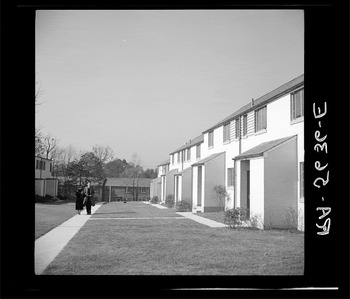
The photographs quickly became part of a nationwide narrative on the health and progress of the nation within the press and mass media over the 1930s.Footnote 64 Some entered into an ambivalent structure of mass-mediated significations, producing a “sharecropper narrative” that was “amenable to generic experimentation” by the late 1930s as they simultaneously expressed conflicting ideologies – from “the nation's no. 1 economic problem” to New Deal populist ideals reflecting the stoicism of the common man. Images such as those taken of Fennel Corbin, patriarch of the Corbin family, were reframed nostalgically as a promotional image for the “See America First” national tourism campaign.Footnote 65 Likewise, photographs taken of a pregnant “sharecropper” mother with her children were used to accompany a newspaper article with the title “Rehearsal for State Medicine,” a reframing that rendered the rural poor as passive beneficiaries.Footnote 66 Rothstein's mission to visually represent the Resettlement program's aim to shift rural Americans from a premodern to a modern existence by relocating them into planned communities and homesteads thereby collided with a history of eugenic case studies, welfare and forced removals. It is likely that, to Rothstein, the Shenandoah photos documented the “before”, or the “From This,” while underscoring the continuing need for modernization and resettlement. Indeed, a year later he took a series of photographs at Greenbelt, Maryland, which recorded the construction of new model housing complexes built by the RA. To Rothstein, perhaps, these were the “after” or the “To This” that the families would be relocated to. Regularly visiting and photographing the creation of Greenbelt over the 1936–41 period, Rothstein had no reason to think that his subjects would not receive the new homes promised by the state and federal authorities and promised in the newspaper articles he had contributed photographs to.
Completed houses, Greenbelt, Maryland. A model community planned by the Suburban Resettlement Division of the United States Resettlement Administration. November 1936. Photograph by Arthur Rothstein. Library of Congress Prints and Photographs Division, LC-USF34-005636-E.

Despite this, letters now held at the National Archives show that many property owners within the new park boundaries missed the sixty-day claim announcement and subsequently lost their rights to their own land and were left destitute.Footnote 67 Among these were the families that Rothstein captured. After losing land and property rights, unable to provide evidence of sufficient income or employment to show they could meet the subsistence homestead mortgage repayments, families subsequently found it hard to pass the stringent financial and behavioral tests required for residency. Katrina Powell notes that “many families were promised homesteads if they sold their land to the park. After they sold their land, however, they were assessed by the Resettlement Administration and often did not ‘qualify’ for the government loan needed in order to purchase the homestead,” as one letter showed:
dear Mr Lassiter the welfare woman was just hear and Says they Cant buy us a place but wants us to go and rent for our Selves but you Know as for our Contract that I had Signed up for a homestead at ada and now have been bin turned down and was turned over to the welfare and they Say we have to rend for our selves …Footnote 68
Once they were evicted, neither the state of Virginia nor Rexford Tugwell, director of the Resettlement Administration, wanted to take responsibility for those effectively made homeless: as Bernard Sternsher notes, “Tugwell protested in vain that the stranded communities had been created by someone else,” and the Virginia Senator, Harry Byrd, who was politically and economically opposed the RA's housing policy, resisted covering the cost of relocation, claiming it was a National Park Service role.Footnote 69 Having spent many years trying to get the state and federal governments to take responsibility for their plight and knowing the desperate condition that the families were in, it is likely that local welfare workers saw Rothstein's visit as an opportunity to bring increased federal help and attention to the problems of the isolated mountain families. The families, however, were far from lacking attention: the apparently isolated rural subjects of the photographs were, in fact, surrounded by landlords, case workers, Rural Rehabilitation supervisors and teachers, alongside the city-dwelling photographer, whose “help” and zeal to reform was not always received with a welcome.Footnote 70
There is good reason to reread the expressions in the photos in light of this tension between the individuals and liberal state functionaries surrounding them. In a statement, signed on 17 July 1935, just a few months before Rothstein's visit, it was declared, “We the undersigned are willing for [Fannie Corbin's daughter Mollie Nicholson] to be sterilized. This is to be done under direction of Miss Florence Strickler, Senior Worker in Federal Relief Work.”Footnote 71 Buck Corbin, Fannie Corbin (parents) and the young woman's husband, Noah Nicholson, signed their consent for this with crosses as, presumably, they were unable to read or write. The witness to the statement was Ruby Ruebush, “Teacher of Corbin Hollow School,” who Rothstein had also photographed during his shoot in the mountains. The statement added that the woman's husband “came to the Relief Office, Madison County, before he was sent to the penitentiary” to state that he agreed for his wife to be sterilized. A doctor's letter dated the following day shows that her sterilization necessitated her commitment to the State Colony for Epileptics and Feebleminded in Lynchburg:
We saw Mrs. Noah [Mollie] Nicholson in the clinic and found her to be well down to the imbecile level. Certainly there is every reason in the world why this woman should be sterilized. We found no physical defect except some impetigo. However, as both the husband and wife are minors, and wife obviously feebleminded we cannot get the gynecology department to sterilize her, however so much they wish to do so, because of the State Laws to that effect. According to State Laws she would have to be committed to the Colony at Lynchburg. We will be glad to do this if you do not wish to carry it out yourself. I think it is too bad that this girl cannot be sterilized without all this trouble, but, apparently, it cannot be done.
Thank you for sending her down. We will be glad to help any way that we can.
Yours very truly,
David C. Wilson.Footnote 72
Wilson was an associate professor of neurology and psychiatry at the University of Virginia and author of the 1932 “Mental Hygiene Survey of the State of Virginia,” in which he argued, “There are probably 50,000 feebleminded in Virginia” and that “the feebleminded must be and are being eliminated as inheritance factors by judicious sterilization and segregation.”Footnote 73 Brought to him by Florence Strickler, a senior worker in federal relief and later superintendent of public welfare, the warrant for committal shows that the eighteen-year-old was sent to Lynchburg on 1 November 1935, just after Rothstein's visit and two days before his photographs of her mother featured in the Washington Post article.Footnote 74
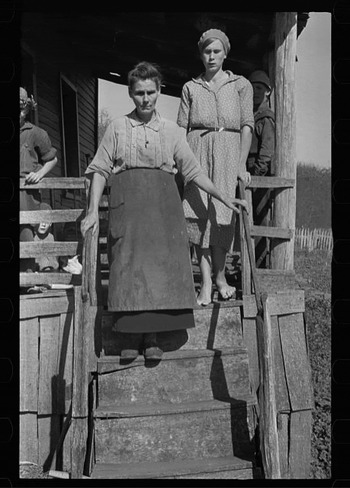
Fannie Corbin with some of her children, Shenandoah National Park, Virginia. October 1935. Photograph by Arthur Rothstein. Library of Congress Prints and Photographs Division, LC-USF33- 002170-M3.

The photograph of Fannie Corbin with her daughter Mollie thus captures the young woman in the period between her clinical assessment as an “imbecile” and her incarceration for sterilization, which a State Hospital Board discharge certificate shows to have lasted until June 1940, when she was released as “improved.” Although the Shenandoah families were familiar with intrusion, they were not necessarily amenable to it: as letters show, Sizer's presence had caused some resentment of authority within the community years before.Footnote 75 With the knowledge of these facts the image presents the opposite of a passive family pose: facing them, out of the frame, were the child- and public-welfare officers who kept showing up in automobiles and suits, promising aid. Fannie Corbin looks more resentful than weary, while her daughter stares into the camera with a slight frown that suggests defensive, if somewhat powerless, anger. Fannie steps forward protectively to stand in front of her daughter Mollie, whose records show that her baby had died, her husband had been sent to the penitentiary, and her sterilization in Lynchburg had been scheduled under the direction of Florence Strickler, her Federal Relief social worker. There is no firm evidence that Strickler had accompanied Rothstein during his visit, but it is highly possible that she was there to guide Rothstein's camera eye and to even provide the phrases that would become the captions that Stryker decided to use. Further court records show that Fannie's other child, the one clearly unable to walk in the photograph, was also sent to the Colony on the same day as his older sister. Records show that these were Fannie's remaining four children of eleven births (not the twenty-two mentioned in one caption). On Mollie's commitment record Fannie, too, had been deemed feebleminded, while her husband was recorded as “alcoholic.” Fannie is perhaps thinking about the loss of her children and future grandchildren. Her stance on the steps of her house is far from inviting – it is sternly protective; she guards the entrance as if to prevent the city intruders and welfare workers coming any further. Mollie, though behind Fannie, stands in guard of her brothers, also to be taken away. Fannie's weary look reflects the fact that, for over five years, they had been visited, inspected, watched, photographed and evicted – and none of it had provided them with the new homes and new lives that they had been promised and so desperately needed.
Rereading the images in the light of wider contextual evidence exposes the way in which the subjects were interpolated by the fictions eugenicists created about their lives. Tracing the presence of eugenics is clearly problematic as the historical evidence can be vague and circumstantial. Yet, more authoritative evidence and records often come from the people and institutions who created and sustained eugenic policy. Those most affected by these policies had no voice in the shaping of eugenic narrative and have left behind little evidence of their experience.Footnote 76 As Katrina Powell has written,
when the displaced try to speak, or when their individual discourses come in contact with and resist the dominant discourses (that is, law), then they are immediately considered outside the law. They become outlaws and are often immediately silenced and literally moved out of sight so that the displacement can continue.Footnote 77
Even when the voices of the rural poor can be located in letters and interviews, they may only offer partial, vague and circumstantial evidence. Fragile evidence is eroded over time as memories may be patchy and hard to recapture: told in 1979 that she had in fact been sterilized in the Lynchburg Colony fifty years earlier, one woman expressed her confusion in an interview: “I never knew anything about it … I'm not mad, just broken hearted is all. I just wanted babies bad … I don't know why they done it to me.”Footnote 78 Voices found in letters to officials are further muted by their encounter with those authorities who held the power to incarcerate and sterilize them: a letter addressed to Virginia governor Harry Byrd in 1928 shows that one couple were prepared to question the state's “help” in order to get their daughter released from Lynchburg State Colony, but such voices were rare (and, in this case, ineffectual): “She is feeble-minded. She was not feeble-minded when she went there … She was sent there by the Red Cross because she was coaxed away from her people by outsiders.”Footnote 79 There were also good reasons to hide complicity, knowledge and involvement from those who lived alongside the pariah “defectives,” leading to further silences: remaining out of sight from welfare workers who might then identify them as a problem might have been one strategy; gaining from a disliked neighbor's incarceration, rather than oppose their treatment, might have been another:
Feb 5 1937 Syria Virginia
Dear Mr Hoskins
I heard that you are going to move (blank) and (blank) to the Feble mind Colinly if you do Please move me in that house as Mr Smith that live ther is my Brother and that house would suit me I could get my mail every day and I could my food Broght to me and I wold have some Fruit …Footnote 80
At the same time, official records have also misled: crosses made in place of signatures by parents and husbands on numerous committal proceedings show a “consent” that may have been coerced or manipulated. Paul Popenoe could thus write in the social welfare journal The Survey that “most of the operations performed in American institutions are in effect voluntary, since the written consent of the patient's nearest relatives is obtained … Since the patient himself is legally either insane or feebleminded, he cannot give a consent which has any legal value”.Footnote 81
Effectively made homeless by progressive ideals for a new national park and denied a place in the New Deal housing projects because of eugenic selection criteria, the Shenandoah families were rendered both visible “misfits” at the same time as their needs and rights were rendered invisible by those who came to help them. Their “relocation” to the only state institution willing to take them in – the State Colony for Epileptics and Feebleminded in Lynchburg – thus became the logical consequence of the narrative in which they were placed. Had Rothstein not turned up with his camera in October 1935 the families would still have been committed and in this sense the images have nothing to do with their eugenic sterilization. Yet whatever Rothstein's intentions or knowledge, eugenic rhetoric operates unseen in the photographs by contributing to and constructing a modernizing discourse that designated certain bodies as “ruins,” as primitives or remnants from past civilizations, and their communities as depleted wastelands, all of which justified a widespread rebuilding of society that dovetailed with public-welfare ideology.
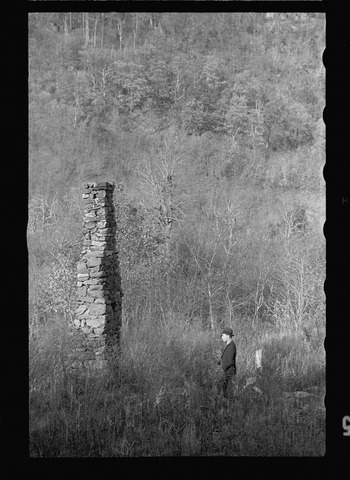
Corbin Hollow ruins, Blue Ridge Mountains, Virginia. November 1937. Photograph by John Vachon. Library of Congress Prints and Photographs Division, LC-USF33-T01-001009-M5.

Historians trying to read and interpret such photographs tread a fine line between evidence, proof, artifice and fiction. Examining the intersection of eugenic and welfare imperatives uncovers the inadequacy of the historical method that reconstructs the past using only evidence obtained from documents created by those whose voices are already privileged over their subjects. Trying to find alternative methodologies also raises a series of related problems when trying to provide historical evidence of eugenic practices, including a lack of testimony from the disenfranchised and disinherited; voices eliminated from the historical record, or ventriloquized and distorted; making confidential sources public (such as information held in medical records, legal reports, educational or social worker reports) without invading the privacy of the most powerless; and decontextualizing or indicting those from the past, such as social workers, public-welfare workers, artists and educators, for what we now define as human rights abuses in the present.Footnote 82
Paradoxically, perhaps, Rothstein's photographs show how welfare and public-housing policy intersected with eugenic ideology at a time when assistance for the poor was a key objective for politicians: they thereby make visible the process by which humans can be both disempowered and denied a historical presence even when their welfare is foremost and the camera is focussed on them. Exposing the absent presence of eugenics in Rothstein's series shows the mechanism through which displaced families were constructed and construed within a framework of commonly held and widely sanctioned assumptions about the diagnosis and treatment of “feeblemindedness” during the 1930s and 1940s.
Just two years after Rothstein had left, FSA photographer John Vachon revisited and photographed the former homes of those committed to the Colony. His “Corbin Hollow Ruins,” taken in 1937, shows that the park had indeed been cleansed of the traces of “human rubbish” and little evidence was left to tell the story of the residents who had owned and worked the land for centuries. The remaining chimney stack appears absurdly dislocated in the natural landscape, a cipher of modern progress for the contemplation of park visitors but also a spectral vision of the way eugenic discourses had become so embedded in ideas of health and national progress that they could no longer be seen by those standing staring straight at them.Footnote 83
POSTSCRIPT
In February 2015 surviving victims of Virginia's Eugenical Sterilization Act of 1924 were awarded compensation by the state of up to $25,000 each, following years of campaigning. Three of the eleven remaining victims who had fought for recognition and visibility died before they could receive their compensation, including Mary Francis Corbin Donald, who passed away on 14 April 2015 in Lynchburg, Virginia. Mary was the daughter of Harrison Corbin and granddaughter of Fennel Corbin and was born in Madison County, Virginia on 17 May 1935 in the Shenandoah National Park.Footnote 84