Since its publication in 1991, the Wahlke Report has been a focal document among political scientists who care about curricular design. However, the Wahlke Task Force does not get enough credit for recognizing the fundamental connection between curricular design and Dungeons and Dragons (DnD). A great DnD campaign is about providing the player characters (PCs) with an escalating set of engaging encounters that require them to develop new skills, abilities, strategies, and tactics to progress to higher levels. At the end of the campaign, the PCs are tested by a “boss fight” that requires them to use all that they have learned to survive. In other words, it is a program of sequential learning that culminates in a senior capstone in which students “integrate knowledge from the totality of their program” (Wahlke Reference Wahlke1991, 57). As in DnD, students should have had fun, perhaps made some friends, learned a lot, and appreciated the challenge of their boss-fight senior project.
What happens when our students keep losing the boss fights? In a game context, the problem is likely that the players were not equipped with the right weapons or items; perhaps they skipped some encounters so their powers and abilities are not at a high enough level; or maybe the encounters did not require the players to use the types of strategies and tactics that would be necessary for that final battle. This article uses the methodology developed by Siver, Greenfest, and Haeg (Reference Siver, Greenfest and Haeg2016) to investigate these possibilities at an all-male, all-Black, liberal arts college in the South. Although the demographics of this study are atypical, the lessons are broadly applicable: faculty need a shared vision of curricular outcomes; that shared vision can and should be closely aligned with the mission of the department and college; and curriculum is more about student experiences than faculty intentions.
…faculty need a shared vision of curricular outcomes; that shared vision can and should be closely aligned with the mission of the department and college; and curriculum is more about student experiences than faculty intentions.
The first section of this article briefly provides context about the department’s curriculum and the reforms that this study was originally intended to assess. The second section is a basic description of the data that are used throughout this examination. The third section presents the key finding of this investigation: student performance in the capstone course is driven almost entirely by the section of senior seminar in which students enroll. The fourth section discusses broader questions about how to achieve uniform standards for the capstone while maintaining methodological pluralism.
THE REFORMED CURRICULUM
In spring 2016, the faculty were dissatisfied with the relatively low quality of senior capstone projects. Students did not seem prepared to do original research, personnel constraints often resulted in a mismatch between faculty expertise and students’ research interests, and a significant minority of students were completing the capstone prior to taking the research methods course. We made four changes to the curriculum to address these problems. First, the track system, which required students to take three upper-division electives in one subfield, was eliminated. The idea was to provide students with an opportunity to explore their interests and different methodological approaches. This also created flexibility in how personnel could be allocated to courses. Second, we offered multiple sections of senior seminar (i.e., the capstone course) organized around broad topics such as racial capitalism, democracy, and representation. The idea was to provide a stronger match between faculty expertise and student interests. Third, a required cognate writing course was replaced with a fourth upper-division elective. Fourth, the research methods course was taught as an applied quantitative methods course (rather than as a research design course), and the methods course was made a prerequisite for the capstone.
After these reforms, the curriculum was more in line with the sequential learning advocated for in the Wahlke Report (1991). The department’s intended path to the capstone is that students will have completed the four subfield introductory courses to establish a baseline as sophomores. The research methods course arms them with the tools to begin producing political science. We want juniors to develop specialized knowledge and interest, apply their new methodological skills, and learn how to engage with the literature through the four upper-division electives. Ideally, seniors would emerge from that curriculum with some defined interests, and then they would enroll in the section of senior seminar that most closely matches those research interests.
DATA COLLECTION
This study examines senior seminar from spring semester 2016 through spring semester 2019. Following Siver, Greenfest, and Haeg (Reference Siver, Greenfest and Haeg2016), there are three components to the study: (1) transcripts are used to identify the paths that students actually took toward the capstone; (2) the course syllabi for the political science electives are analyzed for whether they conceivably could prepare a student to complete his capstone research; and (3) the senior seminar papers are assessed using a common rubric. I adapt the rubric provided by Siver, Greenfest, and Haeg (Reference Siver, Greenfest and Haeg2016), as follows: Does the thesis explicitly define and measure its main concepts? Does the thesis have a minimum of seven academic sources? Is there a critical assessment of the literature? Is there a hypothesis that states an explicit relationship between a dependent and an independent variable? Does the thesis analyze primary data or documents? Does the thesis contain some original presentation of data analysis? Each thesis was coded as either having these individual elements or not (Platt Reference Platt2020).
Part of our college’s mission is “teaching the history and culture of Black people,” so I included an additional category: Can the research be classified as Black political science? The term “Black political science” is loosely defined based on various writings by Jones (Reference Jones2015). For the purposes of this study, capstone research is classified as Black political science if (1) Black people and their conditions are the central focus of inquiry, or (2) the phenomenon being studied is viewed primarily in terms of how it impacts Black people. For example, research on Black political participation would satisfy the first criterion, and a project on mass incarceration could satisfy the second criterion.
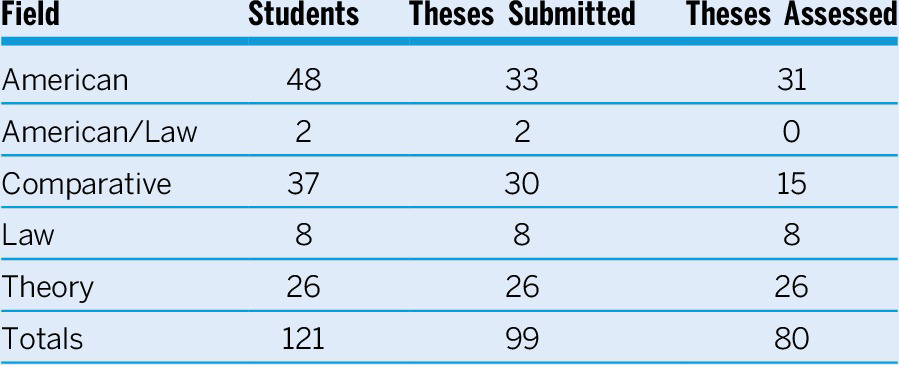
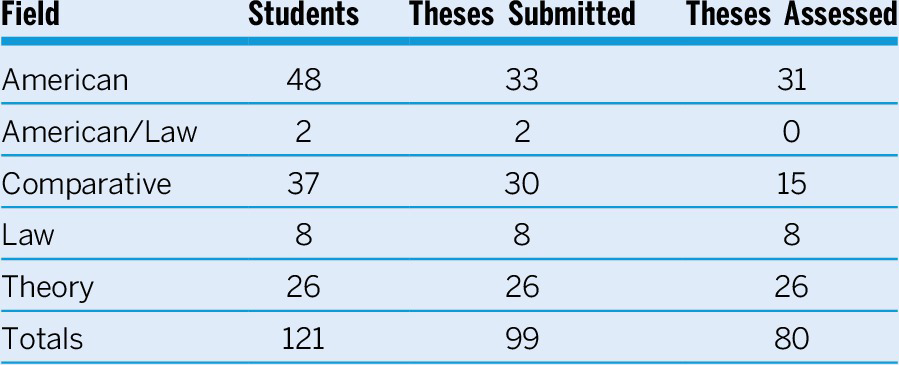
Table 1 is an overview of the data. There is transcript data for all 121 studentsFootnote 1 who were enrolled in senior seminar. However, 22 students never submitted a research paper, two students submitted papers that were plagiarized (and thus are not included in the assessment), and 17 of the submitted papers were not made available for this study.Footnote 2
Number of Senior Theses by Seminar Field, Submission, and Assessment
With this background and set of caveats, we now can explore how students traverse through the curriculum, how well the actual courses map onto our idyllic vision of the curriculum, and how those two factors shape the quality of research papers produced in our senior seminar.
RESULTS
These results examine the path that students take to the capstone. The focus then shifts to whether that path matters to the quality of capstone projects.
The Path to the Capstone
I am interested in whether students take the methods course prior to the capstone, how many upper-level electives are taken prior to the capstone, and whether their capstone research matches their choice of electives. To answer these questions, I examined the transcripts of the 121 students who were enrolled in senior seminar during the period of study.
Based on the transcript data, table 2 shows the proportion of students who completed the methods and electives requirements prior to taking senior seminar. The table reveals that 62% of students passed our scope and methods course before taking senior seminar. However, only 18.2% completed all four of their upper-level elective courses before taking senior seminar. Overall, this means that only 11.6% of students entered the capstone “fully prepared” according to our ideal curricular path.Footnote 3 Additionally, a minority (45%) of students’ capstone fields match the elective courses they completed.Footnote 4 Students are not following the prescribed path.
Students are not following the prescribed path.
Most Students Take Methods but Not Their Electives Prior to the Capstone

Are We Teaching Them?
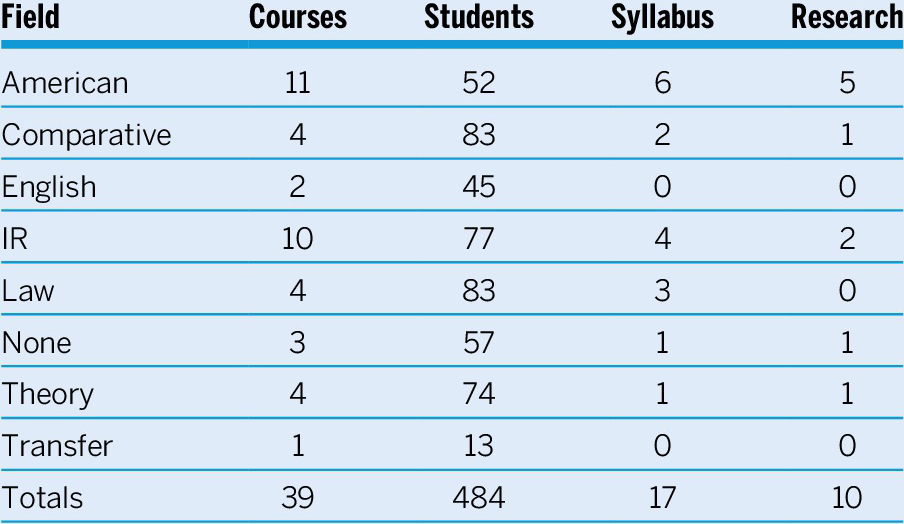
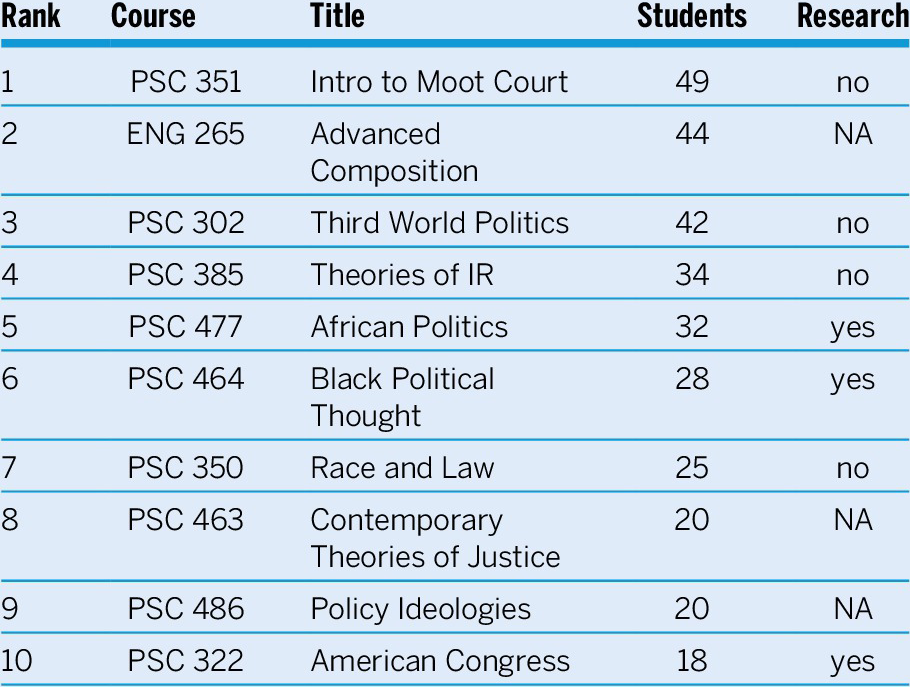
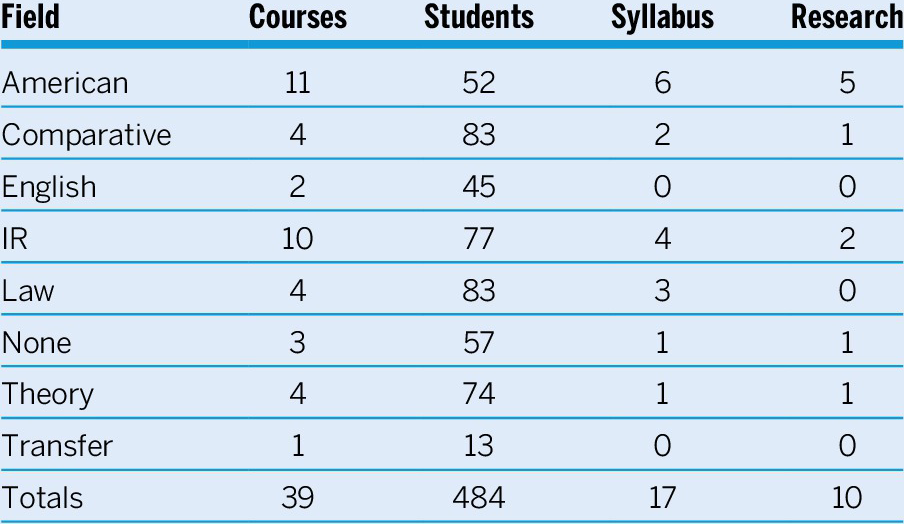
Table 3 summarizes the 37 different courses that were used to satisfy the upper-level elective requirement during the period of study.Footnote 5 The most important takeaway from table 3 is that only 10 of the 17 courses with an available syllabus include an assignment that is either a full research paper or a major component of the research process (e.g., annotated bibliography, literature review, research design, or data collection).Footnote 6 Table 4 underlines this point by reviewing the top 10 electives by student enrollment.
Students Gravitate Toward Law and Comparative Electives
Upper-Level Electives Are Not Developing Research Skills
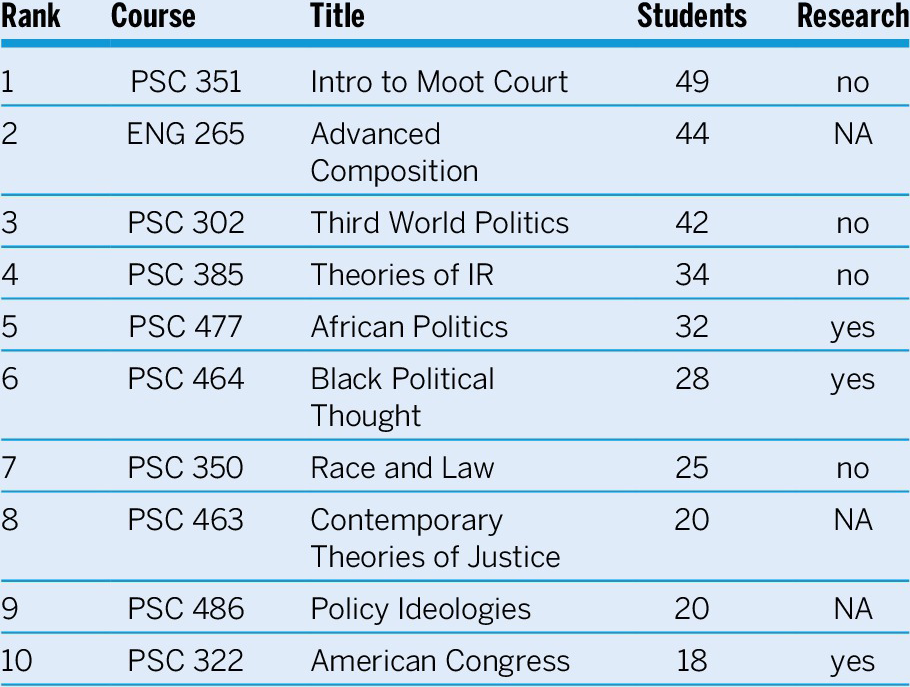
Only three of these 10 courses have an explicit research component. Combining these findings with what we discovered about students’ paths toward the capstone, the electives are not fully serving the functions for which they are intended. The next section discusses whether that matters for the quality of seniors’ research projects.
Does it Matter?
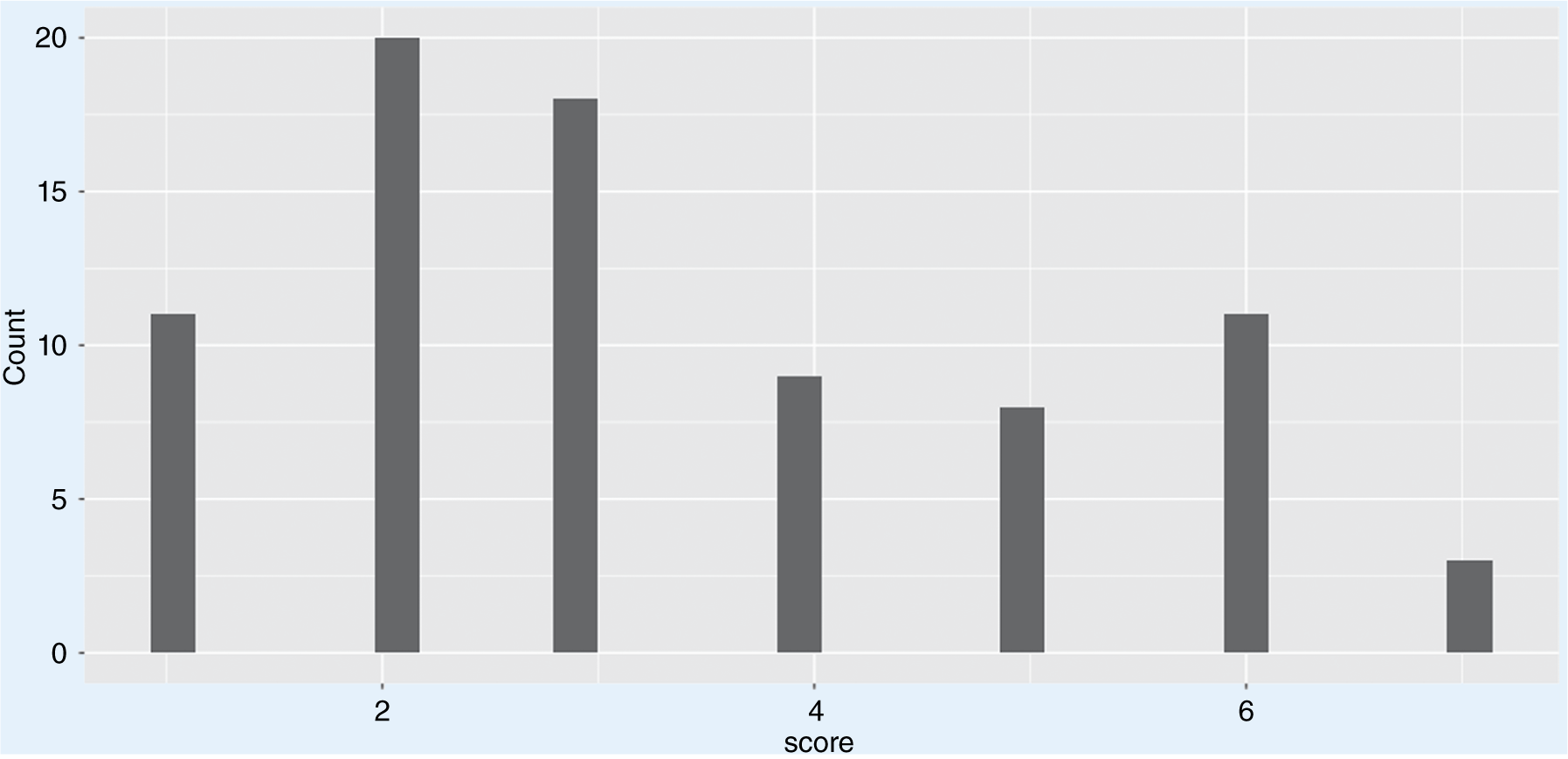
Students are not necessarily following the prescribed path toward the senior capstone, and the path itself may not prepare students in the way it was intended. This section explores variation in the quality of students’ research projects. Recall that quality has been operationalized as the six criteria highlighted in Siver, Greenfest, and Haeg (Reference Siver, Greenfest and Haeg2016) and whether the research can be classified as Black political science. Both the individual components and a score that simply sums across the seven categories are analyzed. Figure 1 is a histogram of those summed scores.
Most Senior Projects Have Three or Fewer Key Attributes

The majority of observations contain three or fewer of the key attributes; however, a substantial minority of students completed research projects that have five or more of the attributes of a quality research project.
Table 5 shows the percentage of projects that satisfy each of the seven criteria. Students had the most difficulty in providing an evaluation or critique of the literature (25%), and only a sizable minority of students included an original presentation of data within their capstone papers. A majority of the research projects had sufficient sources, defined concepts, used primary sources, and could be classified as Black political science.
For Four out of Seven Key Attributes, Most Student Projects Demonstrate Competence

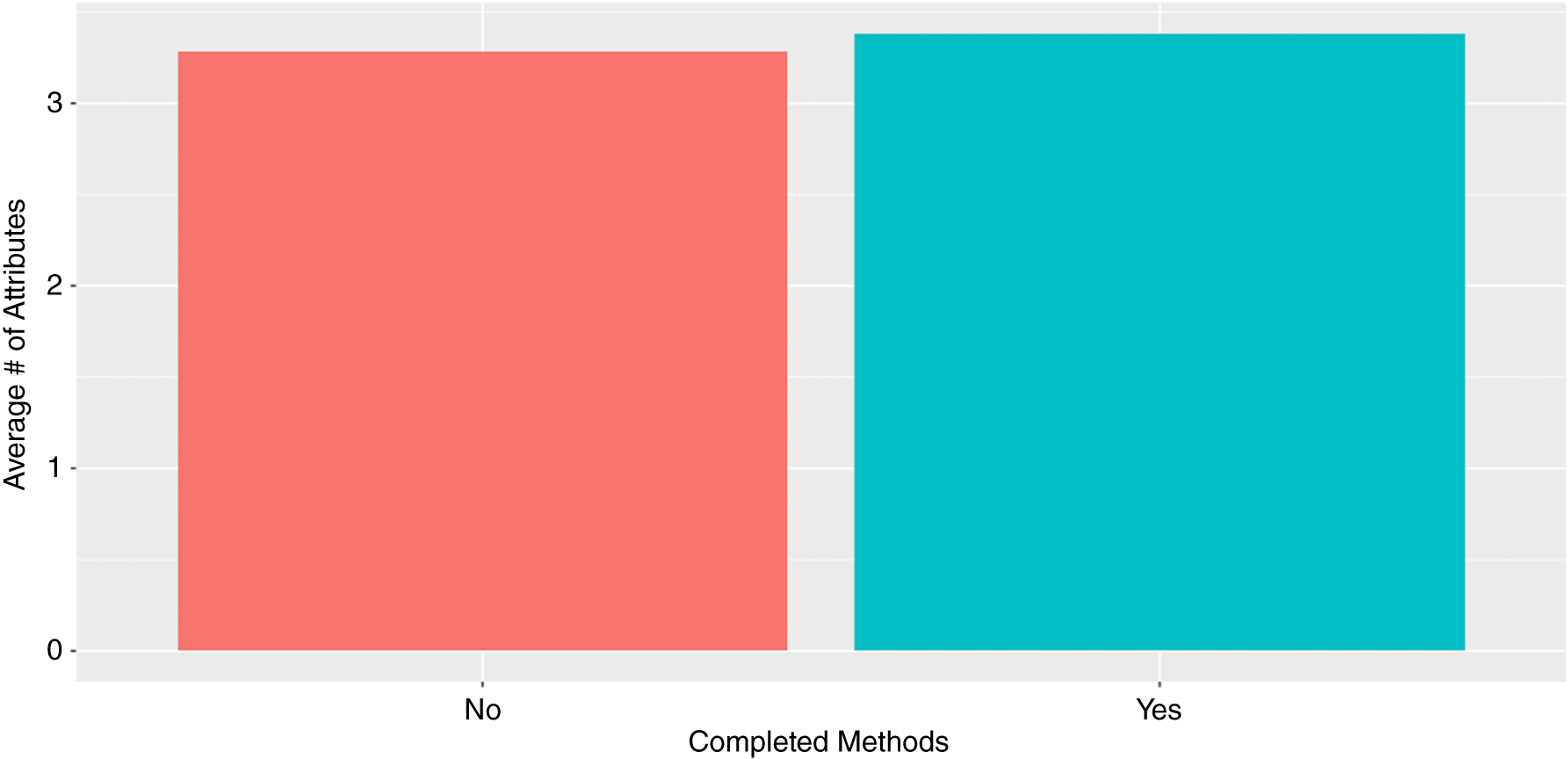
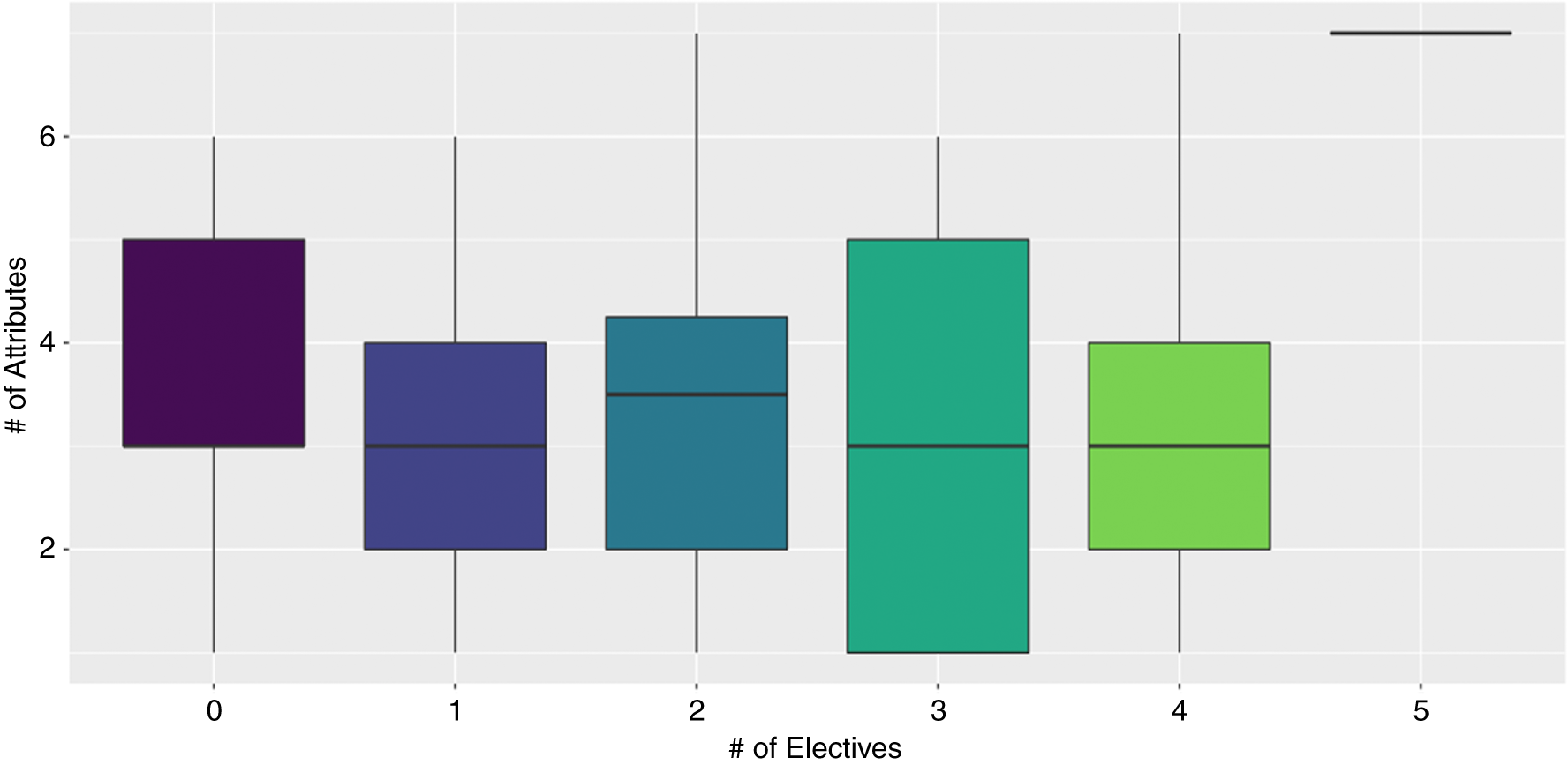
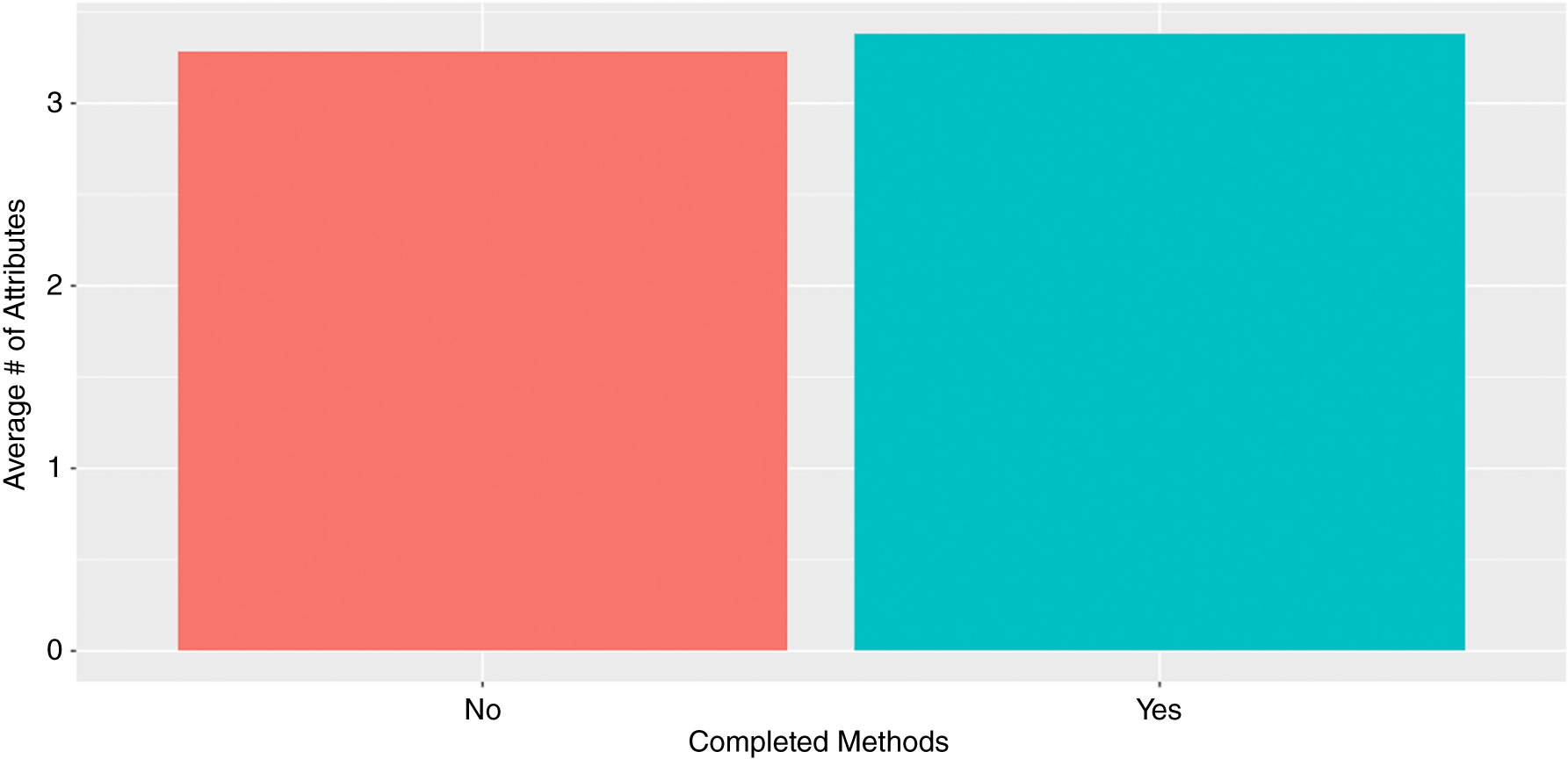
Figures 2 and 3 illustrate that completing the intended prerequisites does not affect the quality of capstone projects. The average attribute score for those students who completed the methods course is not significantly different (neither statistically nor substantively) from those who did not take the methods course before taking senior seminar. The path to the capstone does not matter. What matters is the actual version of the capstone in which a student enrolls.
Taking Methods Does Not Matter for the Quality of the Research Project
Taking Electives Does Not Matter for the Quality of the Research Project
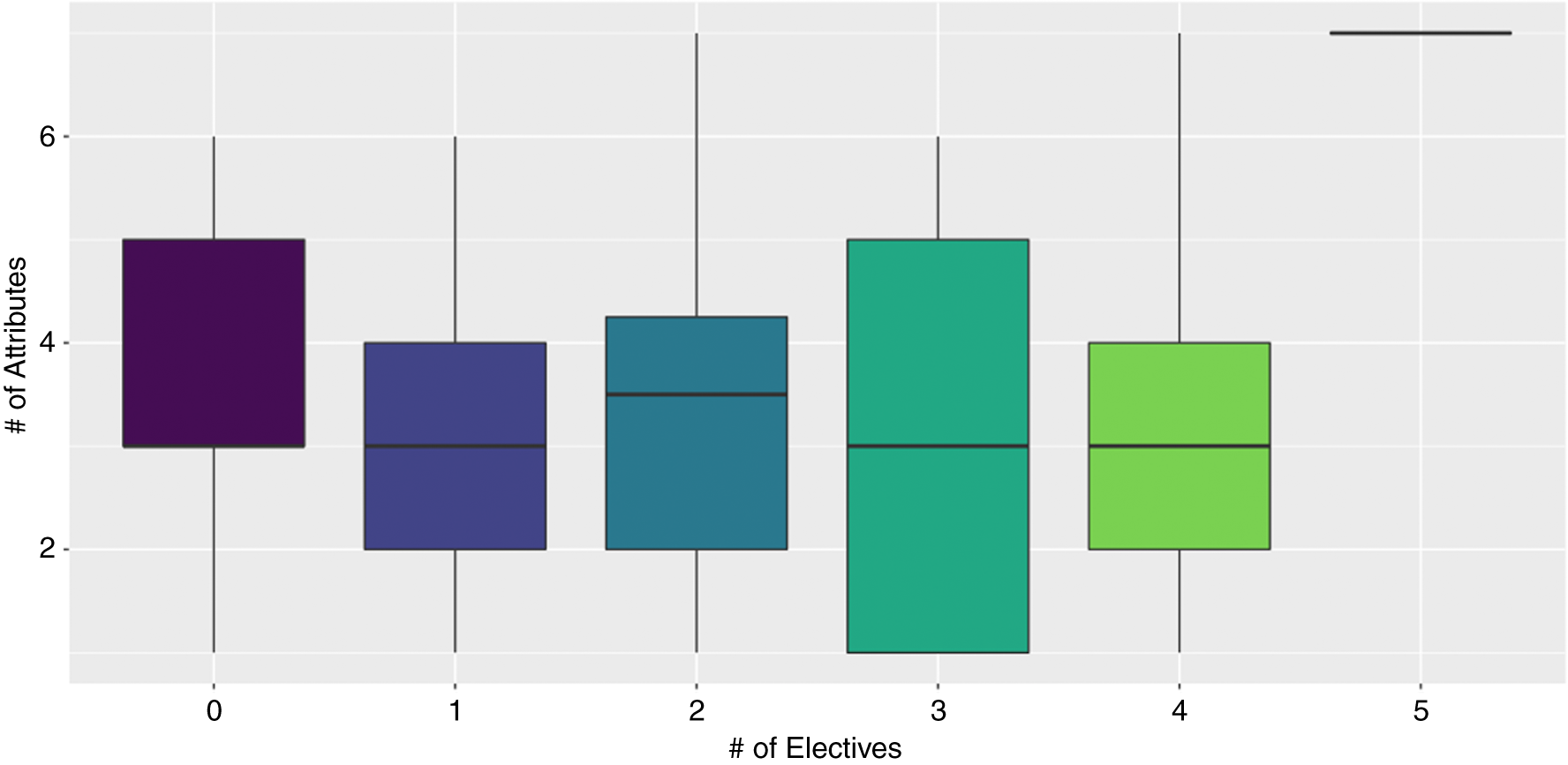
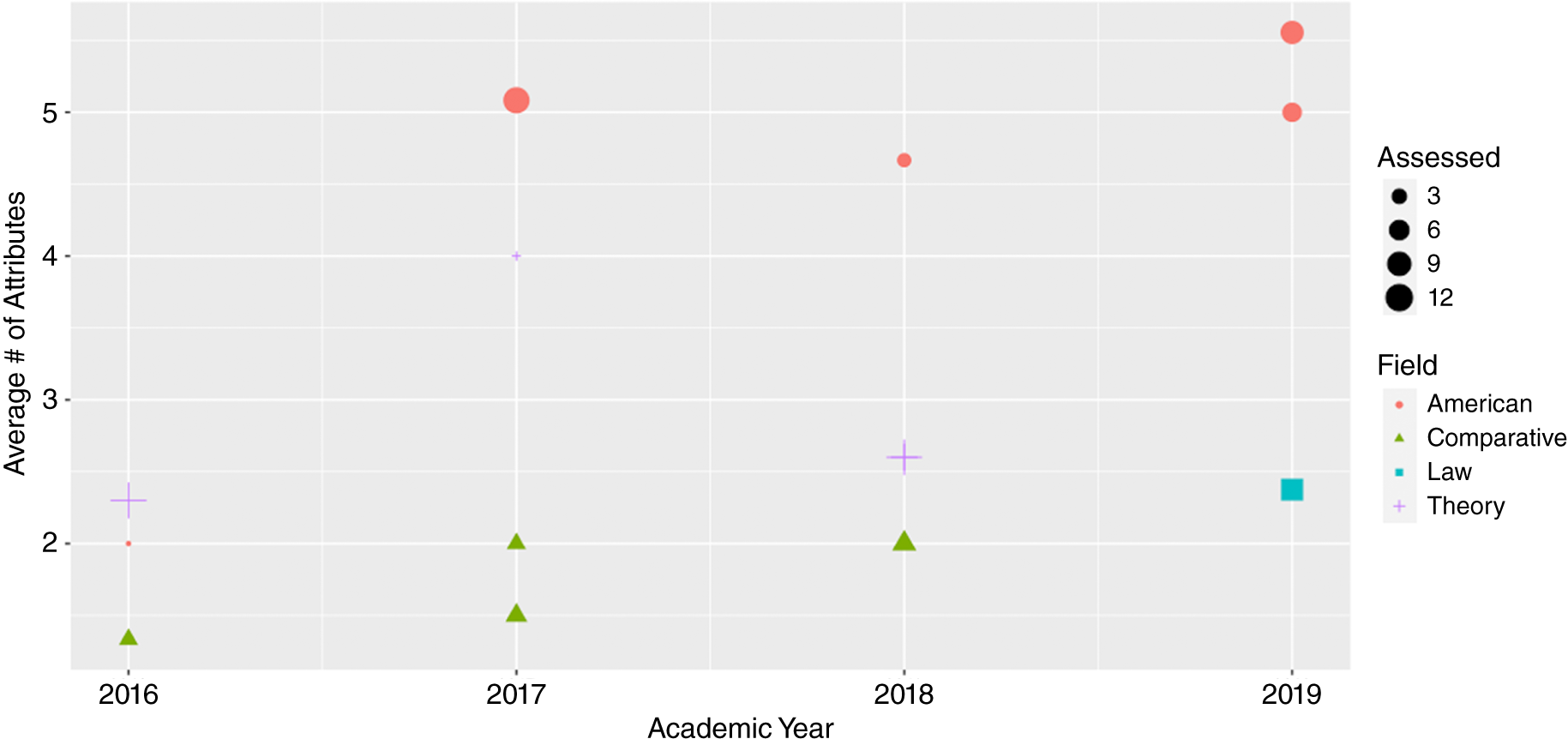
Figure 4 plots the average attribute score for capstone projects by academic year and seminar subfield. On average, research projects in the American politics senior seminar meet more of our criteria than those in other subfields.
Which Senior Seminar Students Take Matters
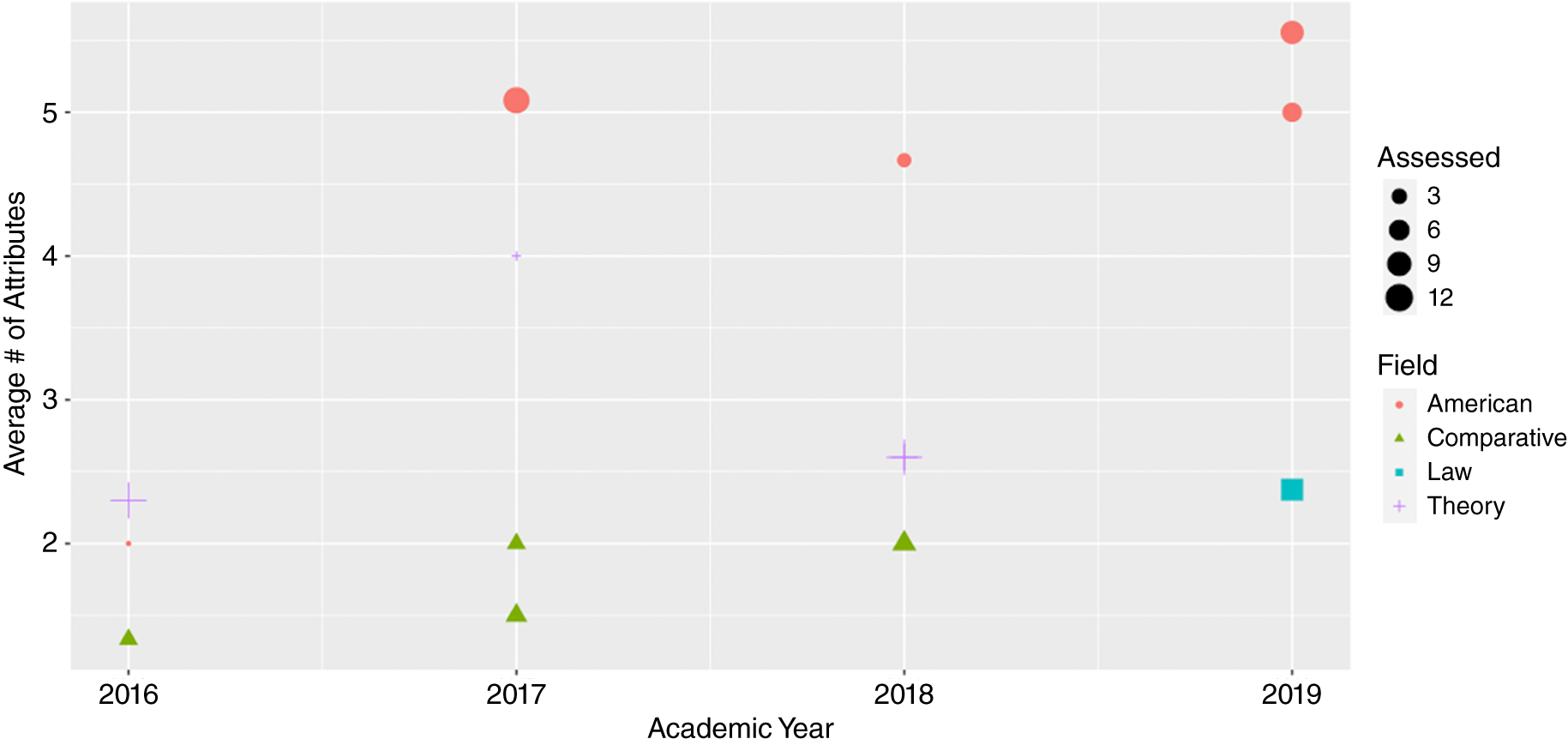
Table 6 reinforces the message of figure 4 by showing the percentage of students who satisfy each criterion by the senior seminar subfield. The lack of a relationship between the curricular path and capstone outcomes is the product of these substantial differences in the approaches of the senior seminar sections. A student’s choice of seminar overwhelms the potential benefits or deficits of his previous curricular choices.
American Politics Seminars Meet the Criteria at a Higher Level Than Other Fields

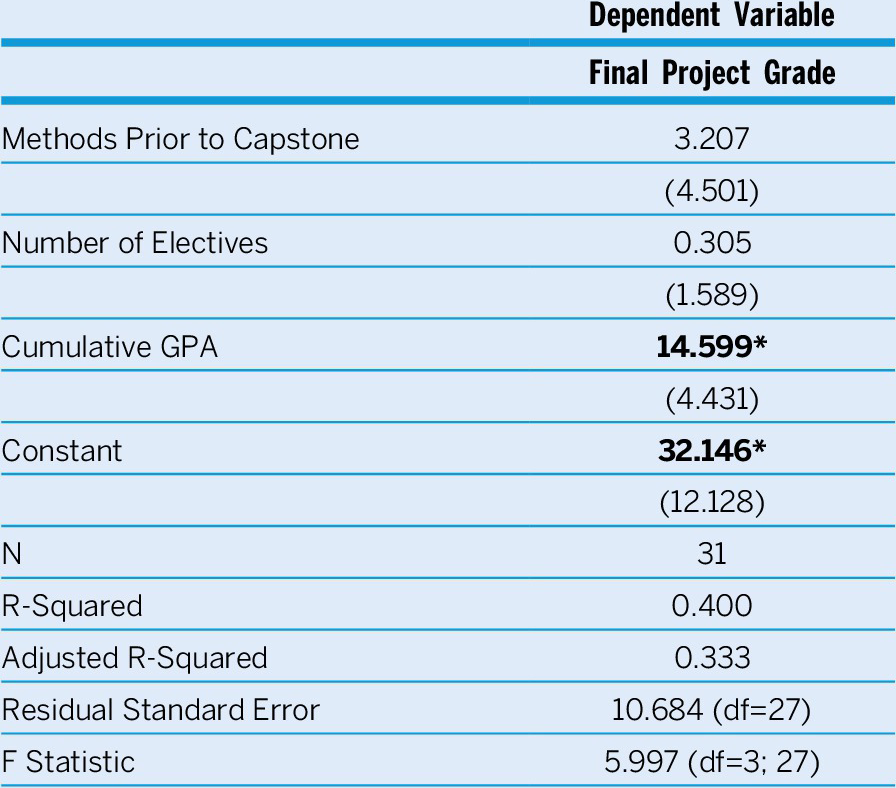
The American politics sections of senior seminar provide an opportunity to explore that claim. All 31 of the research projects from these senior seminar sections were graded with an identical rubric that assigns scores from 0 to 100. This allows for a better comparison of how the curricular path impacts the quality of students’ final research projects. Table 7 presents a simple linear regression of students’ thesis grades (scored on a 100-point scale) on whether they had taken a methods course prior to the capstone, the number of upper-level electives taken prior to the capstone, and their cumulative GPA. Consistent with the other results, the curricular path does not have an effect.
Research Grades Are Driven by GPA and Not Curriculum
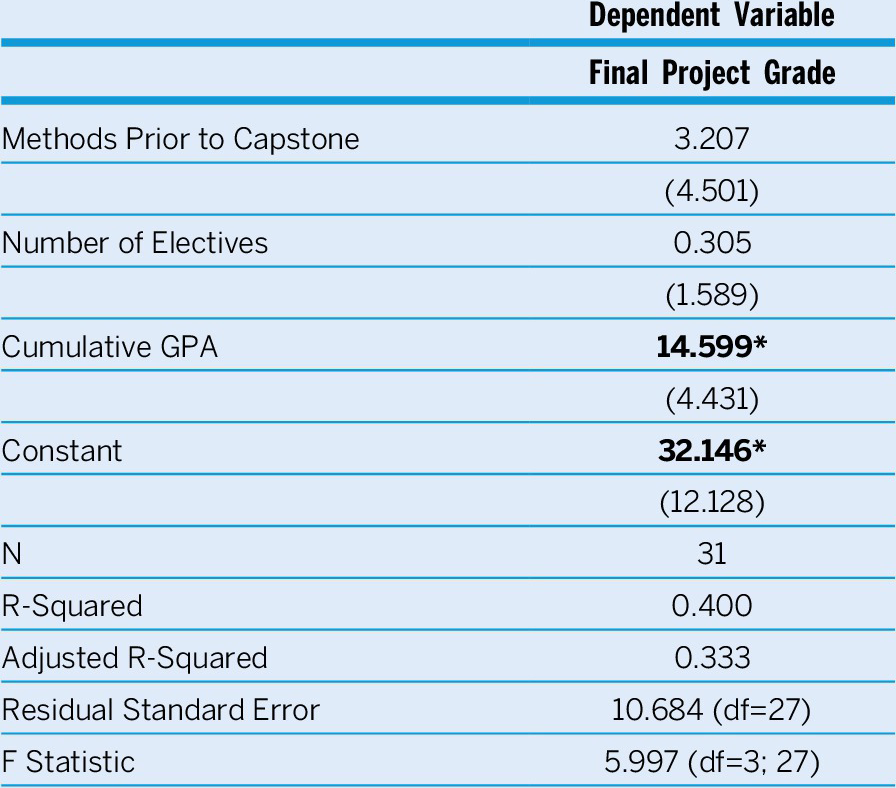
Note: * indicates that the coefficient is statistically significant at the level of p<0.05.
THE BIGGER PICTURE
In reviewing the results of this study of the department’s capstone, an easy conclusion would be that curriculum does not matter. Instead, I think these results reveal that we were operating with a flawed definition of “curriculum.” I was thinking about curriculum in terms of the sequence of courses outlined in the catalog. The review of course syllabi shows that curriculum must be thought of in terms of the realities of the classroom. Whichever approach to curricular design a department takes, the faculty must regularly review how and whether that design is being implemented. Stated simply, we cannot expect integrated learning without an integrated curriculum.
Stated simply, we cannot expect integrated learning without an integrated curriculum.
The central finding of this study also highlights that students were coming into senior seminar as virtual “blank slates.” They did not have a strong or clear sense of what political science research entailed, so they adopted whatever schema their section offered. This indicates that the department has not articulated a comprehensive vision of what constitutes a good political science education. The curriculum should take students on a coherent journey with a defined endpoint in mind. Faculty must buy into that vision for any curriculum to function properly. These results reveal distinct notions of “good political science” and potentially of the purpose of senior seminar. How can we reconcile the idea of a curriculum that articulates a universal vision of political science education with the desire to maintain the existing methodological pluralism?
Finally, this examination shows that it is possible to successfully provide instruction with a focus on mission and a point of view. The student research projects overwhelmingly fit within a broad concept of Black political science. Our college has a degree of demographic homogeneity in terms of race and gender that sets it apart from other schools. However, I think there are lessons that can translate into different environments. We do not have departmental meetings in which the meaning of “Black political science” is the subject of discussion. Instead, we have been able to achieve this apparent consensus through the hiring process. That is, applicants are explicitly asked to reckon with the college’s particular mission, the population of students that we have, and how race is and should be integrated into any understanding of politics. The second component is that students are freely choosing these approaches to their research because that is what is defined as “normal” within our classrooms. We teach political science from the vantage point of an oppressed racial minority; therefore, conventional wisdoms are rarely presented as neutral. Instead, class discussions and lectures push students to examine whether standard theories or approaches apply to Black people or regard us as fully human. That ties into the first point—curriculum is not what we hope students are doing; it is what happens in our classrooms.
DATA AVAILABILITY STATEMENT
Replication materials are available on Harvard Dataverse at https://doi.org/10.7910/DVN/1VCMGG.