


Introduction
Case study outline
This case study includes the following sections. Firstly, we present a literature review of the relevant research. This is followed by case introduction, case formulation and course of therapy sections. The process and outcomes of treatment are outlined, including the clients’ and therapists’ views on the most helpful ingredients of therapy. This is followed by a discussion of the clinical implications of the case and recommendations for practice.
Literature review – theoretical and research basis for the chosen therapy
Literature searches were conducted using key resources including PubMed, Medline and PsychINFO.
Post-traumatic stress disorder (PTSD) is defined as persistent psychological distress following experiencing or witnessing single, repeated or multiple traumatic events including assault, serious accidents, abuse and torture. About 5% of the general population will experience PTSD at any one time, resulting in functional impairment (McManus et al., Reference McManus, Meltzer, Bebbington and Jenkins2008). In line with the DSM-5 [American Psychiatric Association (APA), 2013], PTSD is characterised by persistent nightmares and/or flashbacks including vivid visual images. In PTSD, the autobiographical time-tag and contextualisation are disrupted and clients experience a sense of current threat ‘nowness’ and stimulus generalisation; that is, they experience false alarms and heightened perception of threat. This in turn leads to four main symptom clusters: re-experiencing, hyperarousal, avoidance and negative alterations in cognitions and mood. Other symptoms can include dissociation and emotional numbing or dysregulation such as anger outbursts and mistrust (APA, 2013). Guilt, shame and disgust may also occur (Hathaway et al., Reference Hathaway, Boals and Banks2010). Co-morbid depression is also common and causes low mood, sleep problems and poor concentration. PTSD is a common presentation within primary care in the UK. The current main treatments for PTSD are individual trauma-focused cognitive behavioural therapy (TF-CBT) and eye movement desensitisation and re-processing (EMDR) (NICE, 2018). However, PTSD treatment waiting lists in primary care are common, which reinforces the need for group treatment (NHS Digital, 2019).
State of the art group CBT for PTSD
Group treatment, in particular CBT, is well established as an alternative cost-effective option for emotional disorders including depression and anxiety disorders (Whitfield, Reference Whitfield2010).
In terms of PTSD, the cost-effectiveness of group TF-CBT has been demonstrated for treating children and adolescents in 6–12 sessions (e.g. Deblinger et al., Reference Deblinger, Pollio and Dorsey2016; NICE, 2018). The major active ingredients of this treatment include TF-CBT, written narratives, cognitive processing and in vivo mastery as recommended by the NICE (2018) guidelines.
Regarding PTSD treatment in adults (aged 18 years and above), exposure-based group therapy for PTSD is well documented (e.g. Foy et al., Reference Foy, Glynn, Schnurr, Janowski, Wattenberg, Weiss, Gusman, Foa, Keane and Friedman2000). In fact, meta-analyses have demonstrated its efficacy (e.g. Schwartze et al., Reference Schwartze, Barkowski, Strauss, Knaevelsrud and Rosendahl2017). However, there is still a gap in the delivery of group therapy for PTSD in adult primary care in the UK, as indicated by its lack of endorsement by the NICE (2018) guidelines. Barriers include the need to manage hyperarousal, dissociation and secondary traumatisation. Due to these barriers, the number of research studies on group therapy in PTSD has still remained limited over the years as practitioners have been deterred. Using the limited number of studies, meta-analyses have not proven its cost-effectiveness. So far arguments from previous studies reported that this treatment requires increased therapist input and a large number of sessions ranging from 14 to 20 sessions (Foy et al., Reference Foy, Glynn, Schnurr, Janowski, Wattenberg, Weiss, Gusman, Foa, Keane and Friedman2000). Furthermore, Foy et al. (Reference Foy, Glynn, Schnurr, Janowski, Wattenberg, Weiss, Gusman, Foa, Keane and Friedman2000) argued that the inconclusive data on the efficacy of group therapy for PTSD in adults could be due to considerable differences in methodological rigor across studies. This means that protocols for PTSD treatment need to be carefully designed. Although this presents an opportunity, there are also challenges, especially given the current lack of clear guidelines on how to set up effective PTSD therapy groups for adults.
According to the NICE (2018) guidelines, evidence for the clinical and cost-effectiveness of group TF-CBT in adults is limited. Nevertheless, the development of group therapy for PTSD has been advocated (e.g. Thompson et al., Reference Thompson, Wilde and Boon2008). An avenue of interest is group TF-CBT and practitioners have made efforts to mitigate the aforementioned barriers. For example, Taylor et al. (Reference Taylor, Fedoroff, Koch, Thordarson, Fecteau and Nicki2001) conducted a 12-session group therapy for small groups of 4–6 clients. Their main ingredients of therapy were applied relaxation, imaginal exposure and in vivo exposure. They demonstrated 14% drop-out rates, but only 36% recovery rates. However, they suggested that further adaptations to the group treatment were required. Beck and Coffey (Reference Beck and Coffey2005) capitalised on this and developed a 12-session exposure-based treatment. They also included imaginal exposure and relaxation. However, they included an adaptation which emphasised homework in order to manage any re-traumatisation. They reported a 25% drop-out rate and 75% recovery. In another study with chronic PTSD, Beck et al. (Reference Beck, Coffey, Foy, Keane and Blanchard2009) reported 88.3% recovery. They used a 14-session, 2-hour treatment protocol. They used exposure as the main ingredient. However, the main adaptation was that imaginal exposure was assigned as homework and exposure to the target trauma was conducted as a written-narrative. In a similar protocol, Thompson et al. (Reference Thompson, Wilde and Boon2008) developed a 20-session small therapy group of six road traffic accident (RTA) survivors. Their adaptations included written-narratives, cognitive-restructuring and reclaiming. It also included addressing affect such as shame and guilt through normalising and cognitive-restructuring. They also demonstrated 67% recovery, although their protocol required a large number of sessions. These studies each demonstrated different individual adaptations, which mitigated some of the barriers. However, the current intervention collated these adaptations and developed a comprehensive shorter treatment. Further adapted protocols could improve and standardise group therapy for PTSD in adults. Over the past few years, consideration for therapy for PTSD in adults has shifted towards present-moment and compassion-focused approaches, which have been shown to be effective in PTSD symptom alleviation (e.g. Orsillo and Batten, Reference Orsillo and Batten2005; Hoffart et al., Reference Hoffart, Øktedalen and Langkaas2015). These in addition to one-to-one TF-CBT models are potential areas for use in further adaptations of group CBT for PTSD in adults and were included in the current intervention.
To date, the current treatment guideline recommendations are as follows: The NICE (2018) guidelines do not recommend group therapy including TF-CBT for treatment of PTSD in adults. A recent randomized controlled trial with active-duty military personnel by Resick et al. (Reference Resick, Wachen, Dondanville, Pruiksma, Yarvis, Peterson, Mintz, Borah, Brundige, Hembree, Litz, Roache and Young-McCaughan2017) found group therapy to be inferior to individual therapy. However, the Veterans Health Administration and Department of Defense (VA/DOD, 2017) recommend group therapy over no treatment, although they do not emphasise any one treatment. Furthermore, the NICE (2018) guidelines do recommend group treatments for children and adolescents exposed to a shared trauma, which may suggest more evidence is required to ascertain whether the recommendation may actually also be helpful for adults. In fact, patient-reported outcome research with military veterans suggests that group therapy is a favourable modality (Thompson-Hollands et al., Reference Thompson-Hollands, Litwack, Ryabchenko, Niles, Beck, Unger and Sloan2018). In their meta-analysis, Schwartze et al. (Reference Schwartze, Barkowski, Strauss, Knaevelsrud and Rosendahl2017) have suggested that sufficient evidence exists to recommend group therapy as a treatment option for PTSD in adults and the need to update the evidence base for group therapy guidelines. This lends further support to the need for the development of group therapy for PTSD in adults.
Purpose of this case study – why implement this group intervention?
Based on the above research evidence and current guidelines, the rationale for developing this brief 8-session group TF-CBT protocol was to adapt a NICE-compliant intervention which circumvented the aforementioned barriers whilst also being accessible and acceptable to clients.
According to the NICE (2018) guidelines, people have the right to be involved in discussing decisions about accessing suitable care. In line with this, the current treatment was initiated as a result of a request from a local community centre to engage a group who had been involved in a shared single RTA on a coach. The centre had over 30 women who were part of the group of survivors and were familiar with one another on a formal level. Following an initial community engagement workshop, triage assessments indicated the presence of PTSD amongst most of them. Upon discussion around their needs and available options, the women unanimously requested the option for a therapy group provided within the community. Their rationale related to various reasons including issues with transport to get to the sessions, time factor in relation to their other responsibilities and mobility issues. The clients also reported issues around confidence and trust in attending sessions outside of their community. In response to this a TF-CBT group was set up and delivered in the community. This inclusive proactive approach promoted access to treatment.
Client choice, accessibility and acceptability of the therapy group
Following the clients’ request for group therapy, team discussion among the involved clinicians led to a clinical decision to adapt a responsive group intervention. The aims of the treatment were: to offer client choice by working in partnership with clients to collaboratively meet their needs and expectations for therapy; accessibility, by being provided in the local community to mitigate client concerns around attendance and engagement; and acceptability, discussing the rationale of the group treatment and using client feedback throughout. This adaptation of treatment was in line with the NICE (2018) guidelines which emphasise the importance of promoting access to people with PTSD by: (1) providing care that places a positive emphasis on the range of interventions offered and their likely benefits; (2) providing multiple points of access to the service; and (3) offering flexible modes of delivery such as delivery in different settings and considerations for language barriers.
Case introduction
Participants
Thirty females aged 30–77 years who were part of a community involved in a shared single incident RTA on a coach trip 6 months prior were identified.
Presenting problem
Following an initial community engagement workshop, triage assessments indicated the presence of PTSD.
Measures
In order to measure the baseline level of severity and to establish therapeutic outcome, the following questionnaires were administered.
Symptom severity of PTSD was measured using the Impact of Event Scale-Revised (IES-R), a 22-item self-report measure that assesses subjective distress caused by traumatic events (Weiss and Marmar, Reference Weiss, Marmar, Wilson and Keane1997). Depression symptoms were assessed using the Patient Health Questionnaire-9 (PHQ-9) scale, a reliable and valid diagnostic measure of depression (Kroenke et al., Reference Kroenke, Spitzer and Williams2001). Anxiety symptoms were assessed using the Generalized Anxiety Disorder Assessment-7 (GAD-7) scale, a valid and efficient tool for GAD (Spitzer et al., Reference Spitzer, Kroenke, Williams and Löwe2006). The functional impairment impact of distress symptoms on the client was assessed using the Work and Social Adjustment Scale (WSAS), a reliable and valid tool (Mundt et al., Reference Mundt, Marks, Shear and Greist2002). Improvement and recovery were measured in line with the IAPT (2014) manual. In line with this manual, PHQ-9 scores range from 0 to 27 with a clinical caseness cut-off of 10, and a reliable change index of 6-points. The GAD-7 scores range from 0 to 21 with a clinical caseness cut-off of 8, and a reliable change index of 4-points. The IESR scores range from 0 to 88 with a clinical caseness cut-off of 33, and a reliable change index of 9-points. Recovery was defined as a score shift from above to below the clinical cut-off following therapy.
Qualitative information about the therapy process was gathered using a patient experience questionnaire where the clients evaluated and rated what aspects of therapy were most helpful. Outcomes were measured throughout therapy from beginning, end and at 3-month follow-up.
Assessment
All clients were offered an initial screening assessment in order to decide the best treatment option. Based on the planned protocol, criteria for the therapy group were set as follows:
Inclusion criteria: exposure to the single incident RTA, clinical caseness for PTSD symptoms as established from the IESR and clinical interview, informed consent to group therapy, ability to talk about and write about the event in English, motivation to engage in group therapy, ability to tolerate associated distress and acceptance of rationale for reliving the trauma memory.
Exclusion criteria: complexity which might impact on engagement with group therapy including severe PTSD symptoms, severe depression including suicidal risk, severe anxiety such as panic attacks, psychotic or neurological disorder, substance misuse and inability to speak or write in English, presence of psychosocial crises.
Of the 30 clients, 12 did not meet the criteria for PTSD and were offered alternative options. Eighteen clients met the criteria for PTSD. Ten were offered one-to-one TF-CBT and the remaining eight were offered the group intervention. This was a small group which took account of any drop-outs.
At assessment, all eight group clients portrayed clinically significant symptoms of PTSD as established by the IES-R and clinical interview. In line with the DSM-5 (APA, 2013), they reported the presence of nightmares, flashbacks and vivid intrusive trauma memories coupled with a sense of current threat, hyperarousal and avoidance. This was captured by their scores on the IES-R. They also reported altered cognitions and low mood, which were captured by their scores on the minimum data set. Physical pain due to the RTA was also present in three clients who were also receiving physical healthcare. Clients reported that the PTSD was having a major functional impact as captured on their WSAS scores. The clients consented to their data being used in this study. Group therapy goals focused on PTSD-symptom alleviation.
Case formulation and design
The intervention was developed from several evidence-based individual and group protocols for PTSD in adults and children/adolescents. The aim of this group TF-CBT intervention was to circumvent the aforementioned existing barriers as follows:
The need for a large number of sessions and therapist input: focus on trauma-process rather than trauma-content. Emphasis on belief-testing rather than extinction, core-values clarification, homework and in vivo mastery (Ehlers et al., Reference Ehlers, Clark, Hackmann, McManus and Fennell2005); use of Socratic dialogue and cognitive-restructuring (Monson et al., Reference Monson, Price and Ranslow2005). The rationale behind using belief-testing was that it would enable the clients to directly address memories including thoughts and feelings related to the traumatic event and experiential learning in fewer sessions rather than exposure which would require several sessions for habituation to occur. This was also enhanced by focus on homework as clients learnt the skill in-session but practised further outside the sessions.
Managing hyperarousal, dissociation and secondary traumatisation: solid grounding and present-moment focus, reliving based written-narrative rather than spoken-narrative and emphasis on homework (Beck and Coffey, Reference Beck and Coffey2005; Beck et al. Reference Beck, Coffey, Foy, Keane and Blanchard2009; Dōmen et al., Reference Dōmen, Ejiri and Mori2012; Frost et al., Reference Frost, Laska and Wampold2014; Grech and Grech, Reference Grech and Grech2018; Sloan et al., Reference Sloan, Sawyer, Lowmaster, Wernick and Marx2015; Thompson et al., Reference Thompson, Wilde and Boon2009). The rationale behind using written-narratives was to ensure that clients were contained within their own memory rather than be confronted with those of others, thereby mitigating the possibility of secondary traumatisation. This was also enhanced by emphasis on homework as clients wrote the narrative in silence in session but read it out loud for homework.
Managing emotions such as anger, guilt and shame: belief-testing, present-moment focus and self-compassion (Ehlers et al., Reference Ehlers, Clark, Hackmann, McManus and Fennell2005; Hoffart et al., Reference Hoffart, Øktedalen and Langkaas2015). The rationale behind including present moment focus was to enhance ‘acceptance’ in order to mitigate self-blame and criticism. This was also enhanced by belief-testing and cognitive-restructuring.
Enhancing reclaiming: core-values clarification, self-compassion and emphasis on homework (Beck and Coffey, Reference Beck and Coffey2005; Orsillo and Batten, Reference Orsillo and Batten2005; Weiner et al., Reference Weiner, Schneider and Lyons2009). The rationale behind including values clarification was to help clients evaluate what was important and to promote behavioural change.
Dissociation, hyperarousal and resistance to visiting the trauma memory were also managed by using the flash technique borrowed from EMDR as described by Manfield et al. (Reference Manfield, Lovett, Engel and Manfield2017). Using this technique allowed brief exposure of a few seconds to the trauma memory in order to safely prime the clients for full engagement with the trauma memory.
All the above ingredients have been shown to influence the process of change in TF-CBT. Like all process groups, the current protocol introduced the trauma content under the theme of a traumatic event leading to the PTSD. However, the focus of the group was to address the memory processes that maintained the PTSD symptoms rather than the traumatic event. This focus on process is similar to those illustrated by Wild and Ehlers (Reference Wild and Ehlers2010) and Mitchell and Hopkins (Reference Mitchell and Hopkins1998). Both these protocols demonstrate how focus on process rather than content can enhance group PTSD intervention. The current intervention provided a brief enhanced group TF-CBT treatment which was different from previous ones because it applied group TF-CBT but also added helpful ingredients from other models. In fact, the NICE (2018) guidelines support the use of additional ingredients to promote uptake and engagement with TF-CBT. Furthermore, Cloitre (Reference Cloitre2015) advocates that interventions for PTSD should consider the symptom heterogeneity of PTSD in the development of treatments that promote the tailoring of interventions according to patient needs. In line with this, the current intervention was enhanced as follows: (1) the present-moment focus ingredient enhanced grounding and helped clients connect to the present (Frost et al., Reference Frost, Laska and Wampold2014); (2) the core-values clarification ingredient helped clients to bear in mind ‘what is important to me?’ in order to evaluate and enhance motivation for change, reclaiming, self-efficacy and in vivo mastery (Orsillo and Batten, Reference Orsillo and Batten2005); and (3) the self-compassion work helped clients to bear in mind ‘how can I be accepting and kinder to myself?’, which was important for managing self-blame, guilt, shame, re-appraisal of maladaptive beliefs and reclaiming (Beaumont et al., Reference Beaumont, Galpin and Jenkins2012; Hoffart et al., Reference Hoffart, Øktedalen and Langkaas2015). In line with the TF-CBT group models for children and adolescents and individual TF-CBT model for adults (e.g. NICE, 2018; Ehlers et al., Reference Ehlers, Clark, Hackmann, McManus and Fennell2005), the aims of the current therapy group were to: reinforce grounding; elaborate and process the trauma memory; and approach avoided stimuli and reclaim meaningful values and goals.
Course of therapy
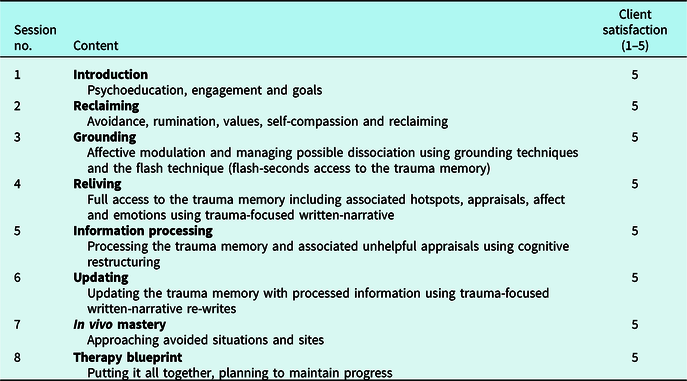
Of the eight clients, two dropped out, one due to childcare and another due to a pre-planned trip. They were offered alternative options. The remaining six clients completed treatment. These were identified as Client 1 to Client 6. Each client was provided with a pen and notebook to use throughout therapy. The group was shared between two accredited CBT therapists supervised by accredited senior CBT therapists and clinical psychologists, who collectively developed the intervention. The majority of the group spoke and wrote comprehensible English. However, two clients reported struggle with certain terms and a group trained interpreter was also present as back-up. The therapy consisted of a brief 8-session group running for 2 hours each week. An overview of the intervention including the main ingredients is shown in Table 1, which also shows the average client satisfaction scores.
Overview of session content and mean client satisfaction rating (0–5; not satisfied to completely satisfied)

Outcome
Quantitative outcomes
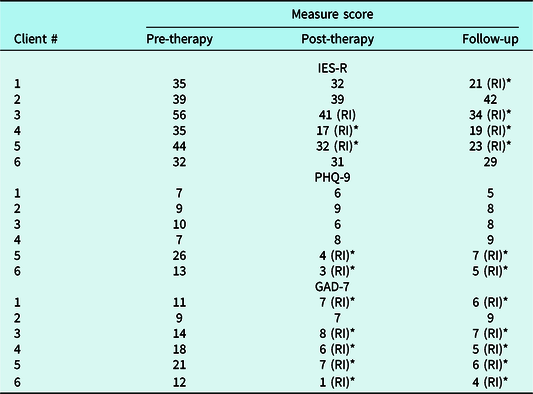
Pre-therapy, Client 1 had moderate symptoms of PTSD and moderate symptoms of GAD. At the end of therapy, her PTSD symptoms persisted but she showed reliable improvement and recovery in her GAD symptoms which were maintained at follow-up. Client 2 had moderate symptoms of PTSD which persisted through therapy and at follow-up. Client 3 had severe symptoms of PTSD, moderate symptoms of depression and moderate symptoms of GAD. At the end of therapy, she showed reliable improvement in her PTSD symptoms and reliable improvement and recovery in her depression and GAD symptoms which were maintained at follow-up. Client 4 had moderate symptoms of PTSD and severe symptoms of GAD. At the end of therapy, she showed reliable improvement and recovery in her PTSD and her GAD symptoms which were maintained at follow-up. Client 5 showed severe symptoms of PTSD, depression and GAD. At the end of therapy, she showed reliable improvement and recovery across all three measures which were maintained at follow-up. Client 6 showed mild symptoms of PTSD, moderate depression and moderate GAD. At the end of therapy, she showed reliable improvement and recovery in her depression and GAD symptoms which were maintained at follow-up. These outcomes are summarised in Table 2.
Individual client symptom outcomes as measured on the IES-R, PHQ-9 and GAD-7. Improvement and recovery were measured in line with the IAPT (2014) manual. RI indicates reliable improvement; * indicates recovery

In summary, at the end of treatment, 3/6 clients attained reliable improvement in their PTSD symptoms. Two of these three clients also reached recovery. This change was maintained at 3-month follow-up where 4/6 clients attained reliable improvement, with three maintaining recovery. The remaining two clients showed minimal change in their PTSD symptoms.
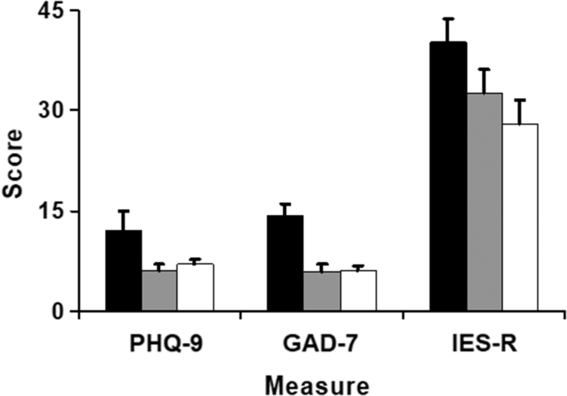
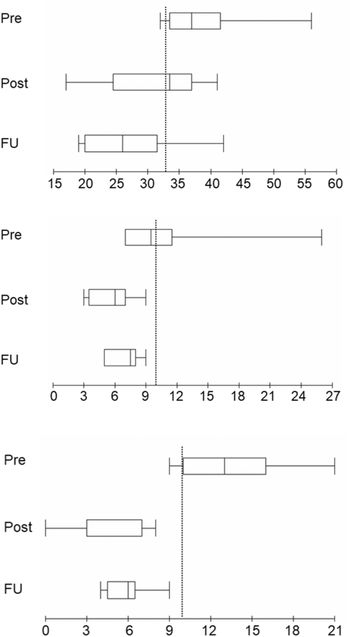
Overall, clients showed significant improvements in their PTSD symptoms and accompanying moods. Figure 1 shows the mean outcomes for PHQ-9, GAD-7 and IES-R. Figure 2 shows the overall distribution of outcome including median and range.
Outcome measures showing mean outcomes for PHQ-9 (depression), GAD-7 (anxiety) and IES-R (PTSD). Black bars, pre-therapy measures; grey bars, post-therapy measures; white bars, measures at 3-month follow-up.

Overall distribution of client outcomes in PTSD and mood symptoms. The figure includes median and range as measured on the IES-R (top), PHQ-9 (middle) and GAD-7 (bottom). Each chart shows pre-therapy (top), post-therapy (middle) and follow-up (FU) scores (bottom). Dotted vertical lines indicate clinical cut-offs, above which each measure is considered to indicate clinical symptoms [defined as moderate to severe PTSD (IES-R), depression (PHQ-9) and anxiety (GAD-7)].

Qualitative outcomes
Qualitative outcomes were captured from client trauma memory updates, overall group process issues and descriptive feedback from clients and therapists as follows:
Client trauma memory updates
Peri-traumatic worst moment appraisals (then) included: ‘We are going to crash’, ‘Nobody will help us’, ‘I am going to die’, ‘This is the end’, ‘I will never see my family again’. This evoked feelings of terror, helplessness and detachment. Post-traumatic appraisals centred on the sense of current threat and included: ‘I am unsafe’, ‘It will happen again’, ‘It is better to avoid all public transport’, ‘All drivers cannot be trusted’, ‘I will be too scared if I think about it’. This evoked feelings of anger, mistrust and avoidance of reminders including thinking about it and talking about it. It also led to stimulus generalisation, including getting in cars and public transport and avoidance of meaningful activities. One client (Client 5) reported that physical pain was linked to her sense of current threat. All clients reported feeling low, vulnerable, distrust and unsafe. Four clients (Clients 2, 3, 5 and 6) reported anger whilst two clients (Clients 1 and 3) reported guilt. Coping strategies included avoidance, numbing and hypervigilance. Post-trauma ruminative beliefs included wishing they had stayed at home that day.
Following cognitive-restructuring (then vs now), updated appraisals (now) included: ‘I know now that we overturned but survived’, ‘I know now that they helped us and brought us to safety’, ‘I know now that I am alive, ‘I know now that I am with my family’, ‘I know now that I am here’, ‘I know now that not all coaches are the same’. One client (Client 4) described having been given a second chance to spend time with her family, which linked in to her values. Another client (Client 1) reported that she was now able to separate physical pain from her trauma memories, ‘I know now that the pain is under control and I survived’. By the end of therapy all women except one (Client 2) had started using cars and buses. All clients except Client 2 reported a marked decrease in nightmares and flashbacks. They also reported diminished fear, anger, guilt and elevated mood. What was also apparent was the correlation between avoidance of engagement with the trauma memory and the lack of in vivo mastery as demonstrated in Client 2. At 3-month follow-up, all clients except Client 2 maintained progress.
Overall group processes
Overall, clients engaged well with the group. Although the clients had gone through a shared trauma and were supportive of one another, they also worked through individual processes. Initially clients were focused on the content and there was an avoidance of addressing the trauma. This was mitigated via solid psychoeducation and emphasis that the focus would be on process rather than content. The emphasis on their individual processes ensured that they focused on their own process of change. This was mostly apparent in the written-narrative stage where the clients were able to silently write and engage with their own memory. During the updating stage there was mutual support and respect that they each experienced their own process. Therefore the fact that this was a shared trauma enhanced trust and support whilst also allowing for individual processes.
Client feedback
Clients reported that this group dynamic and process was helpful as they were able to address the trauma symptoms (process) rather than just talk about the trauma event (content). All clients reported finding the overall intervention and number of sessions helpful and sufficient. The ingredients of therapy were evaluated as follows: (1) the grounding stage was rated as the most helpful with all clients reporting that it helped with affect modulation and connection with the present. (2) The reclaiming stage was also rated as helpful by all clients. Four clients (Clients 1, 3, 4 and 5) reported that discussing values was a helpful reminder of what was important and the need for behaviour change. These four clients also reported that the self-compassion discussion was helpful in managing their self-blame and guilt. (3) Five clients except Client 2 (who was still engaging in avoidance) reported that they found the written-narrative stage helpful and that although it was the hardest part of therapy, it also helped them address the trauma memory.
Therapist feedback
Therapists reported that the protocol was user-friendly. What worked best seemed to be the staged process and how the sessions built on one another. The difficult element was management of the therapeutic environment by ensuring that clients did not veer off into focusing on content, whilst also being mindful of any hyperarousal, dissociation and any possible secondary traumatisation. However, this was mitigated by ensuring to use solid psychoeducation and grounding techniques. The therapists also ensured that the pace was optimal for all clients by seeking feedback and reminding clients to each work at their own pace. The therapists reported that the written-narrative stage the most effective part of therapy in relation to observed client change. The therapists also reported that this was the hardest theme to work with as it had to be conducted in such a way that all clients were contained and worked at their own pace. This was mitigated by being present with the clients and solid grounding.
Discussion
These findings demonstrate the effective use of a TF-CBT protocol for a shared single incident trauma. This treatment protocol achieved the following matrices: client involvement in decisions and respect for preferences, fast access to treatment, clear and comprehensible intervention design and effective treatment which empowered them to become their own therapists. These findings create new information for further consideration given the current standing of group therapy for treating PTSD in adults.
In this study, the clients were given a choice and were actively involved in adapting the treatment they received. They also found the treatment both accessible and acceptable, as indicated by both their quantitative and qualitative outcomes. Qualitatively, in line with their feedback, clients reported finding the protocol and ingredients of therapy beneficial and expressed satisfaction. Quantitatively, clients showed good recovery on the outcome measures. Furthermore, the differences in client outcomes and the fact that the clients were familiar with each other prior to therapy cancels out some of the effects of other non-specific factors such as the passage of time and non-specific group support. These data compared with our service one-to-one TF-CBT outcomes as follows: (1) waiting times for one-to-one TF-CBT average about 6 months and the group clients were seen within 1 month; (2) drop-out rates from one-to-one PTSD treatment average about 30–40% and this group showed a drop-out rate of 25%; (3) recovery for one-to-one TF-CBT averages 30–40% and this group yielded over 67% recovery. However, these comparisons are a guide as the service one-to-one TF-CBT also includes complex PTSD cases.
The current protocol focused on process using TF-CBT whilst adding ingredients of core-values clarification (which helped clients re-evaluate what was important to them); solid grounding (which helped manage affect, dissociation and secondary traumatisation); and self-compassion (which helped clients consider being kinder to themselves and manage anger, guilt and shame). Incorporating these ingredients enabled the development of a comprehensive and yet brief treatment protocol. This was in line with the NICE (2018) recommendation of offering the least-intrusive option, adding enhancing ingredients and giving clients a choice. Given the high prevalence of PTSD waiting lists, it creates scope for further developments for use in primary care. Interestingly, the clients also found the values and self-compassion enhancing ingredients as helpful as the core CBT components. This lends further support to the need for careful incorporation of these ingredients. There also seemed to be a correlation between engagement and outcome with how many ingredients the clients found helpful.
Strengths
Strengths of these findings are that they present a brief intervention which yielded sustained improvement as indicated at 3-month follow-up. The clients requested this group therapy, which enhanced their engagement. This lends support to research showing group therapy as a favoured therapy option in PTSD (Thompson-Hollands et al., Reference Thompson-Hollands, Litwack, Ryabchenko, Niles, Beck, Unger and Sloan2018). The clients qualitatively reported finding the ingredients of therapy helpful and eight sessions as sufficient. Attendance to the group was good and most clients attended all eight sessions. Retention was also satisfactory, with two out of eight clients dropping out. These two clients were still motivated for therapy but were unable to continue: one due to childcare and the other due to a pre-planned trip. This 25% drop-out rate is within the range of dropout for one-to-one TF-CBT for PTSD (Imel et al., Reference Imel, Laska, Jakupcak and Simpson2013). In the current case study, the group formed naturally which enhanced a brief 8-session model. Group therapy also has the value of normalising symptoms and offering universality, cohesiveness, support and imitative learning from each other (Yalom, Reference Yalom1995). This was apparent in this case study as clients were supportive to one another throughout therapy.
Limitations
As with all case studies, the current case study has limited generalisability as follows: (1) the current group had special characteristics as they were familiar with one another on a formal level and requested group therapy for a shared trauma. (2) This was a single group with a small number of participants which did not include a control. Therefore, the effects of natural recovery and non-specific factors of the group process cannot be ruled out. (3) The case was of a shared single incident simple trauma. This may not be generalisable to heterogeneous, complex or multiple trauma cases. Further work aims to address these limitations. (4) Although these outcomes were comparable to individual TF-CBT outcomes from our service, this study did not conduct a direct comparison. As this is a case study, these findings are not intended to compare or quantify the effectiveness of group therapy against individual therapy for PTSD. Rather, they illuminate a possible avenue to explore, particularly given the potential cost-effectiveness of group therapy.
Despite the above limitations, this case study demonstrates a brief group TF-CBT intervention for a shared single incident trauma and contributes new information on group TF-CBT of PTSD in adults.
Clinical implications of the group
Finding effective ways to deliver TF-CBT in a group format is of interest to services treating PTSD. This intervention identified existing barriers and suggests ways of overcoming them. It developed and evaluated a NICE-complaint TF-CBT PTSD group for adults exposed to a shared trauma. This study demonstrates the importance of working to maximise client choice, accessibility and acceptability of intervention through adapting the TF-CBT model whilst holding to the principles underlying the effective treatment of PTSD. This study presents a helpful contribution to this important area given the limited real-world evidence for utilising group treatments for PTSD in adults. This study extends the guidance on group TF-CBT treatment from children to adults and will hopefully encourage more studies in order to further inform the NICE guidelines.
Recommendations for practice
This study could benefit services working to manage waiting lists or where it seemed this was more likely to meet the needs of a particular group. Therefore the recommendations are:
Clinicians must not be deterred to try group TF-CBT for homogeneous PTSD in adults and will hopefully adapt some of the ideas presented in this study.
Services must evaluate their demand versus supply in terms of waiting lists and available treatment for PTSD in adults and adapt treatments accordingly.
Clinicians must collaborate with clients to carefully plan and tailor the best treatments for PTSD.
Using the core TF-CBT model augmented with enhancing ingredients may be helpful in developing effective groups.
Questions arising for further consideration are: (1) could this intervention be applicable to other homogeneous single incident traumas?; (2) could this intervention be applicable to heterogeneous single-incident trauma groups?; (3) would eight sessions be enough for other single-incident trauma groups?; and (4) would this brief design be applicable to complex or multiple trauma cases?
Acknowledgements
The authors would like to acknowledge the support and encouragement of Daniela Antonie (clinical lead) and Eiza Griffin (deputy clinical lead) at Newham Talking Therapies. Thanks also go to Dr Denise Sloan at the National Center for PTSD VA Boston healthcare system who provided advice on the importance of present-centred focus, and to the clients for their consent.
Conflicts of interest
There are no known conflicts of interest.
Financial support
This research received no specific grant from any funding agency, commercial or not-for-profit sectors.
Ethical statements
The authors have abided by the Ethical Principles of Psychologists and Code of Conduct as set out by the APA. In line with this, ethical approval was sought from the East London Foundation Trust board of Ethics committee (GECSE). Client consent and data management was conducted in line with their recommendations.
Key practice points
(1) Demonstrates the use of brief group TF-CBT in homogeneous single incident PTSD which could potentially be cost-effective and help reduce PTSD waiting lists.
(2) Focus on TF-CBT whilst integrating present-moment focus, core-values clarification and self-compassion.
(3) Emphasis on process rather than content, reliving via written-narrative rather than spoken-narrative and homework minimised secondary traumatisation and enhanced client self-efficacy, in vivo mastery and potential for expanding to other single-incident traumas.



Comments
No Comments have been published for this article.