Introduction
Terrorism-related deaths have fallen year after year since peaking in 2014.Reference Dudley1 The coronavirus disease 2019 (COVID-19) pandemic further disrupted terrorist organizations capacity to conduct attacks, presumably due to the non-pharmaceutical countermeasures of closed borders, limited air travel, disrupted logistics, and economic impacts, while lockdowns and crowd limitations have robbed terrorists of many potential targets.Reference Dudley1,Reference Arianti and Muh2 Counter-terrorism experts, however, believe this is a short-term phenomenon, given clear indications that terrorists have been exploiting the socio-economic disruptions and distractions brought about by the pandemic.Reference Kruglanski, Gunaratna, Ellenberg and Speckhard3,4 Violent extremist groups have been capitalizing on anti-government sentiments and lockdown isolation to further their propaganda agenda and recruitment efforts, and experts predict a surge in terrorism activity in the near future.Reference Barton5,6 This study aims to provide an epidemiological analysis of all terrorism-related mass-fatality events (>100 fatalities) sustained between 1970-2019, including historical attack strategies, modalities used, and target selection, to better inform health care responders on the injury types they are likely to encounter. These data will be useful to inform policy makers and influence funding decisions for the development of training programs in Counter-Terrorism Medicine (CTM), a rapidly emerging Disaster Medicine sub-specialty.Reference Court, Edwards, Issa, Voskanyan and Ciottone7
Methods
Data collection was performed using a retrospective search through the Global Terrorism Database (GTD).8 This database is open-access, with publicly available data collection methodology utilizing artificial intelligence that continuously identifies events from news media around the world, confirmed by human evaluation of the events by the National Consortium for the Study of Terrorism and Responses to Terrorism (College Park, Maryland USA).9 The GTD contains no personal identifiers for victims and links specific events to open-source news articles. All “weapon types” were selected for the purpose of this study and the regional breakdowns used were pre-defined by the GTD. The GTD was searched using the internal database search functions for all events which occurred from January 1, 1970 through December 31, 2019. Years 2020 and 2021 were not yet available at the time of the study. The GTD defines terrorist attacks as: The threatened or actual use of illegal force and violence by a non-state actor to attain a political, economic, religious, or social goal through fear, coercion, or intimidation. The GTD database does not include acts of state-sponsored terrorism.
Results were exported into an Excel spreadsheet (Microsoft Corp; Redmond, Washington USA) for analysis. Attacks met inclusion criteria if they fulfilled the following three terrorism-related criteria, as set by the GTD. Ambiguous events were excluded when there was uncertainty as to whether the incident met any of the criteria for GTD inclusion as a terrorist incident. These inclusion criteria are determined within the database and not by the authors:
-
Criterion I: The act must be aimed at attaining a political, economic, religious, or social goal.
-
Criterion II: There must be evidence of an intention to coerce, intimidate, or convey some other message to a larger audience (or audiences) than the immediate victims.
-
Criterion III: The action must be outside the context of legitimate warfare activities (ie, the act must be outside the parameters permitted by international humanitarian law, particularly the admonition against deliberately targeting civilians or non-combatants).
Data analysis and subsequent discussions were focused on events causing 100+ fatal injuries (FI).
Results
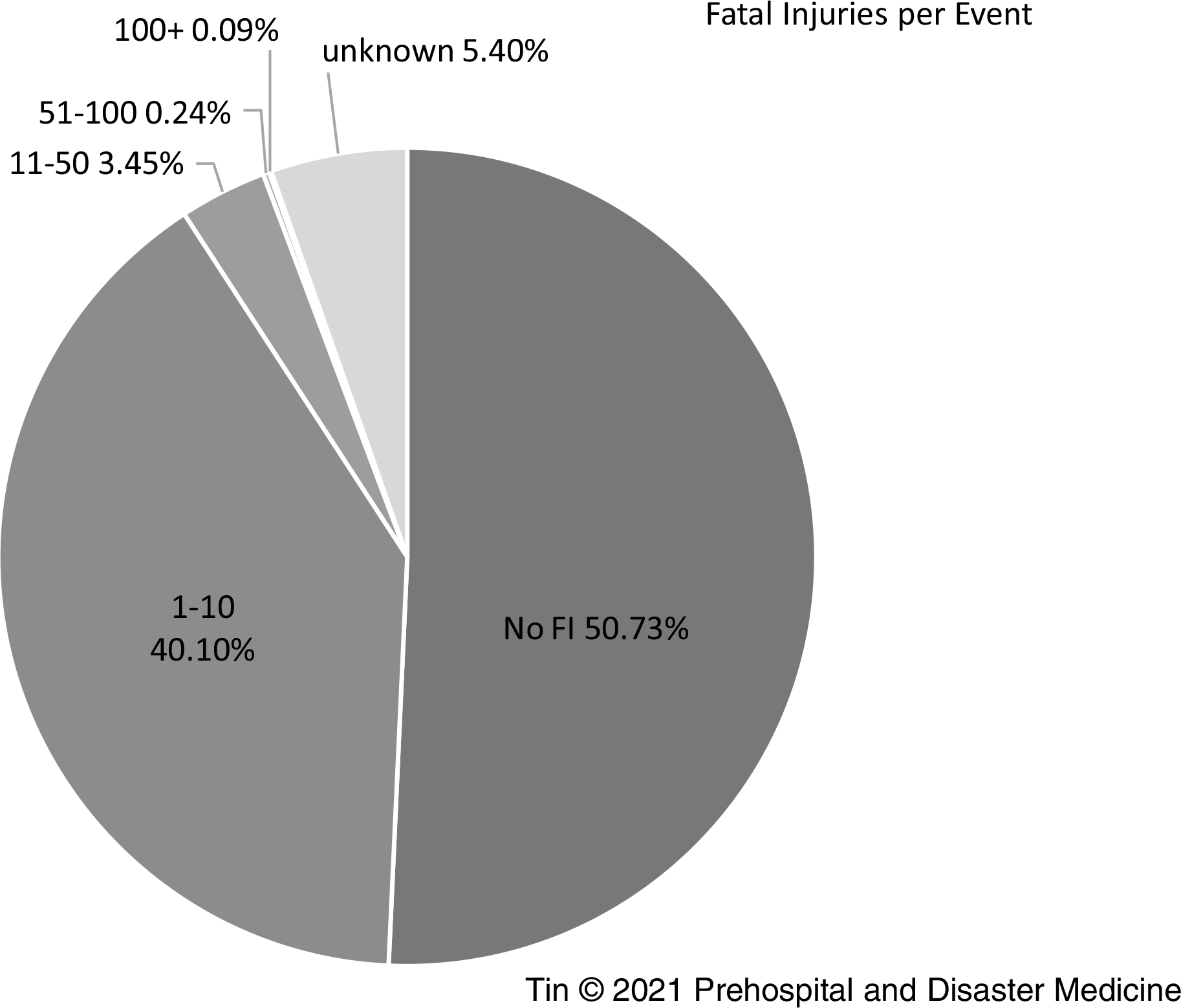
In total, 168,003 events were recorded between the years 1970-2019. Of these, 85,225 (50.73%) events recorded no FI; 67,356 (40.10%) events recorded 1-10 FI; 5,791 (3.45%) events recorded 11-50 FI; 405 (0.24%) events recorded 51-100 FI; 149 (0.09%) events recorded 100+ FI; and 9,077 (5.40%) events recorded an unknown number of FI (Figure 1).
Fatal Injuries (FI) per Event.

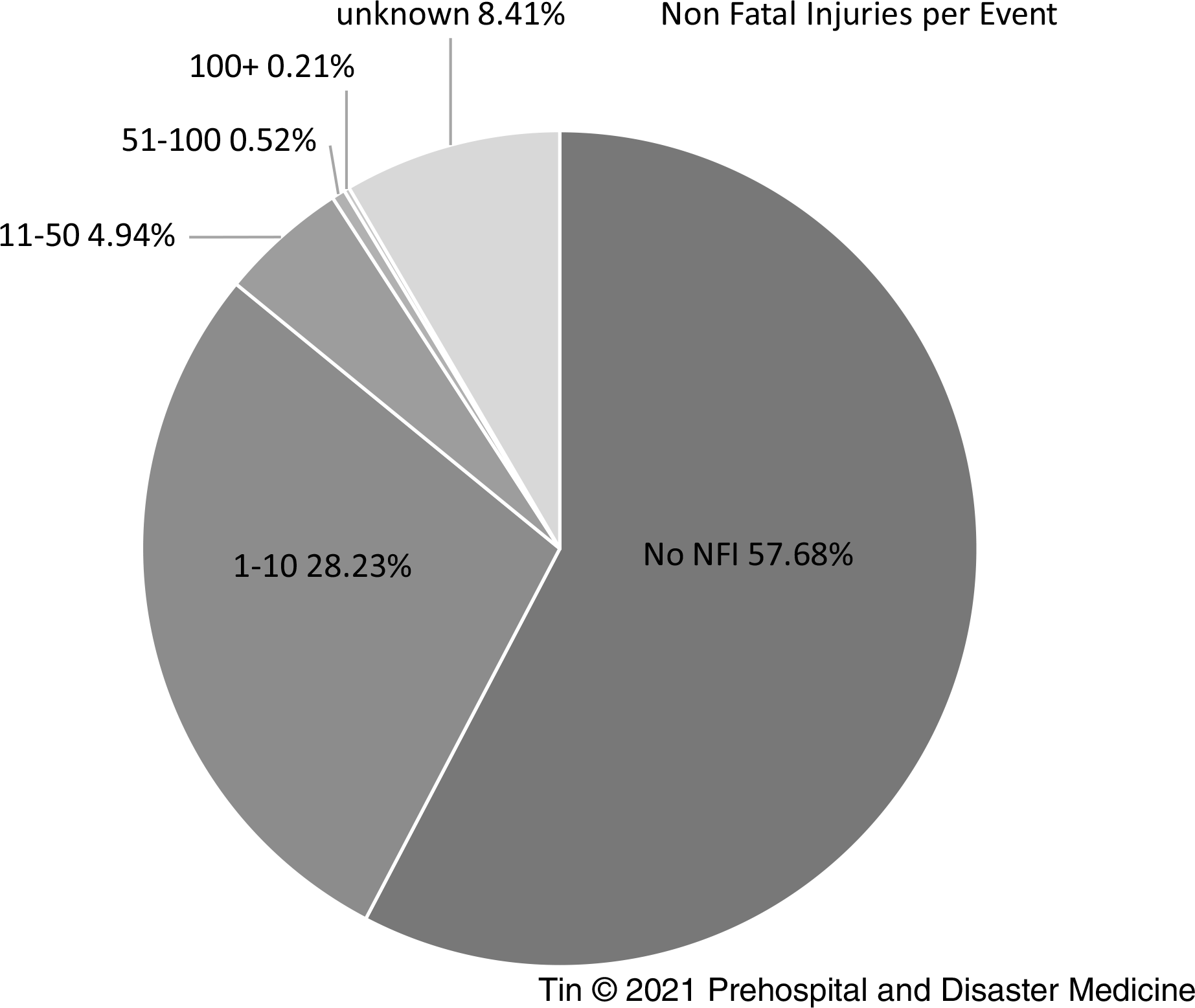
Also, 96,905 (57.68%) events recorded zero non-fatal injuries (NFI); 47,425 (28.23%) events recorded 1-10 NFI; 8,313 (4.94%) events recorded 11-50 NFI; 867 (0.52%) events recorded 51-100 NFI; 360 (0.21%) events recorded 100+ NFI; and 14,130 (8.41%) events recorded an unknown number of NFI (Figure 2).
Non-Fatal Injuries (NFI) per Event.

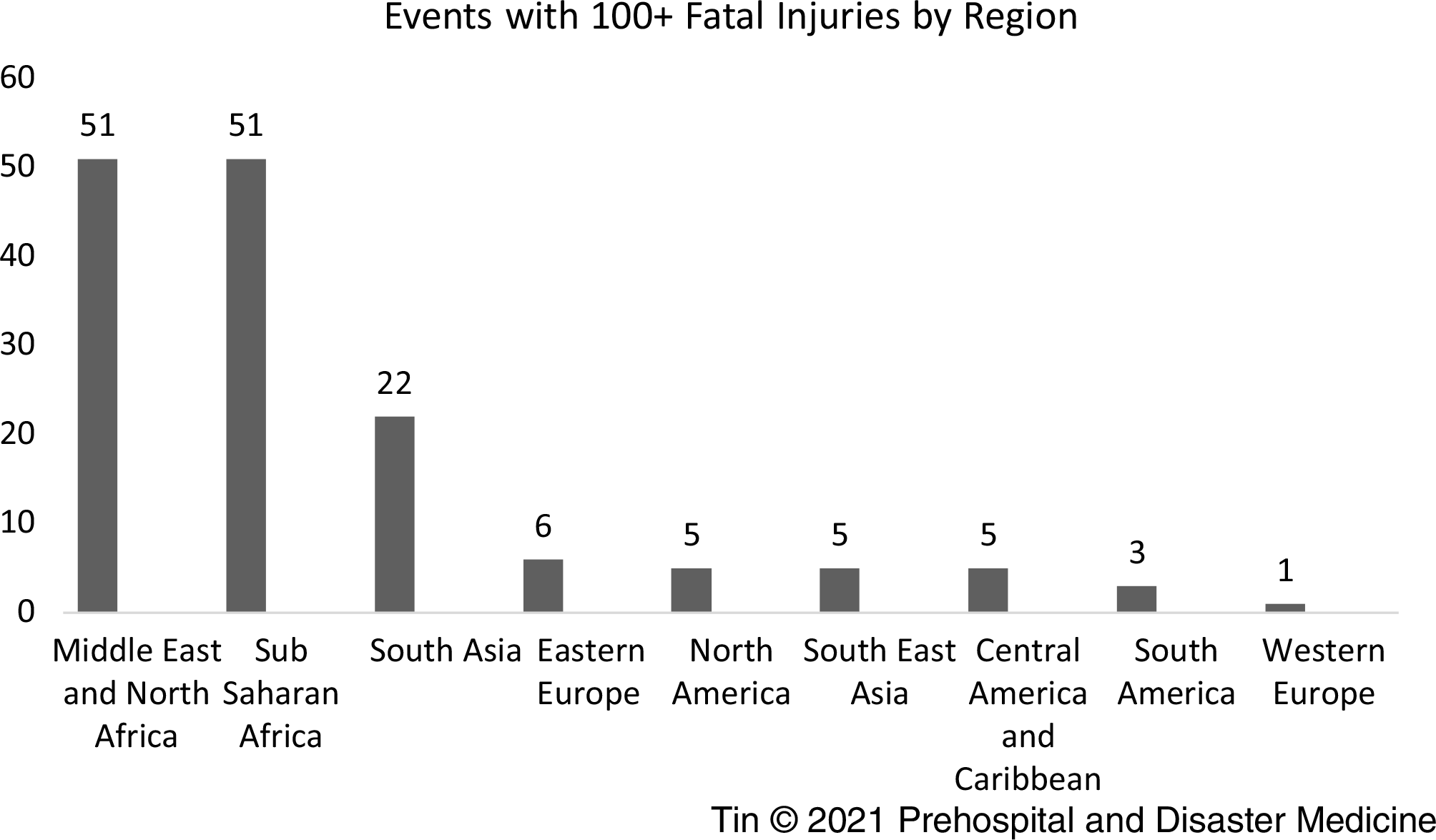
A total of 149 events were reported with 100+ FI; 51 (34.23%) of these high-FI events occurred in the Middle East and North Africa. A further 51 (34.23%) occurred in Sub-Saharan Africa, 22 (14.77%) in South Asia, six (4.03%) in Eastern Europe, five (3.36%) in North America, five (3.36%) in South East Asia, five (3.36%) in Central America and the Caribbean, three (2.01%) in South America, and one (0.67%) in Western Europe (Figure 3).
Events with 100+ Fatal Injuries (FI) by Region.

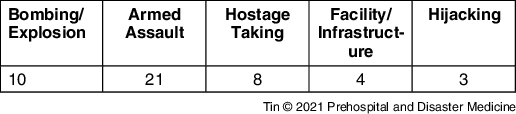
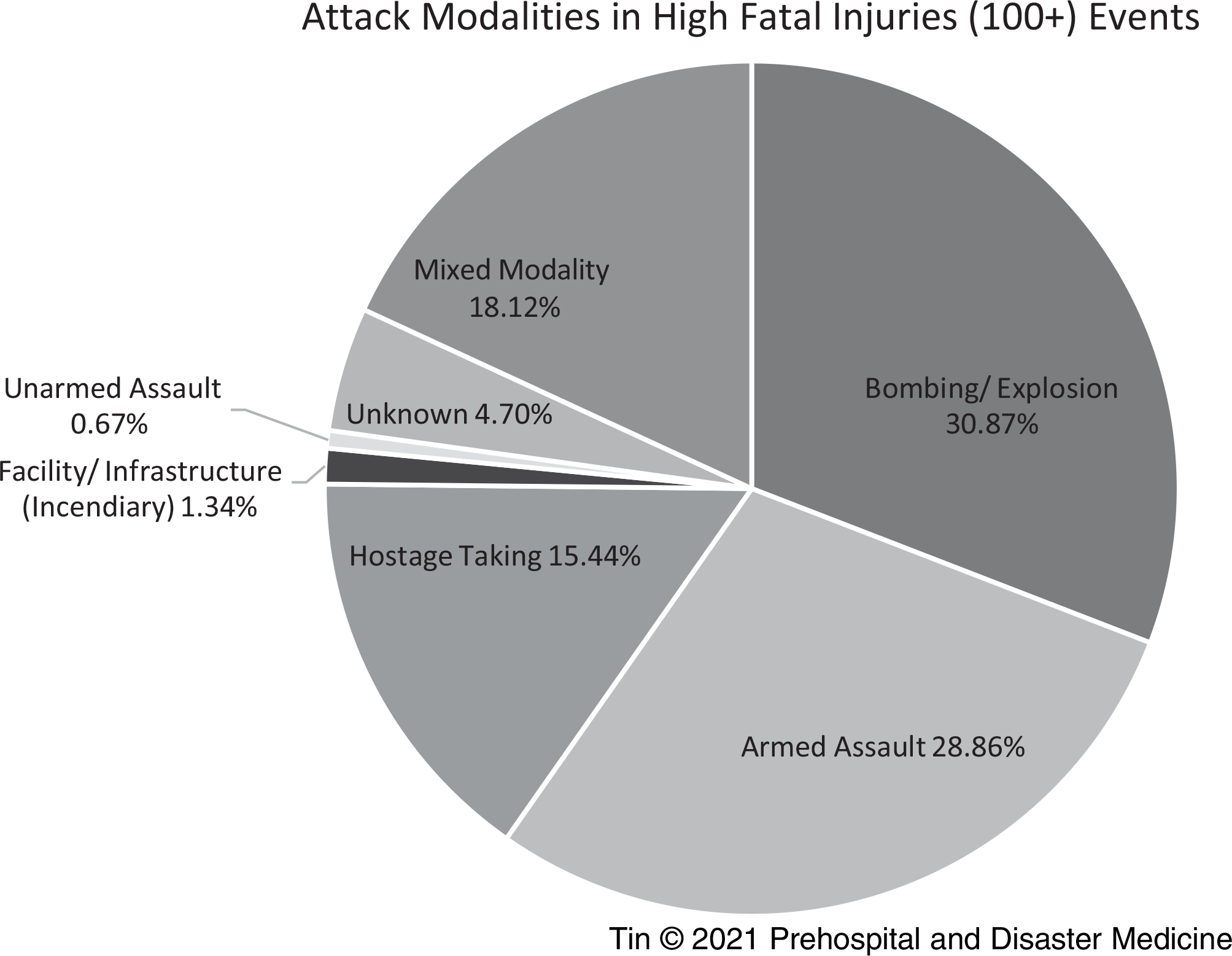
Of the 149 events recording 100+ FI, 46 (30.87%) were attributed to bombings/explosions as the primary attack modality, 43 (28.86%) were armed assaults, 23 (15.44%) hostage incidents, two (1.34%) were facility/infrastructure attacks (incendiary), one (0.67%) was an unarmed assault, seven (4.70%) had unknown modalities (grey literature describes one of the events as a potential sabotage/train derailment but did not elaborate further on specifics), and 27 (18.12%) were mixed modality attacks (Table 1 and Figure 4).
Breakdown (Cumulative) of the 27 Mixed Modality Attacks

Attack Modalities in High Fatal Injury (100+) Events.

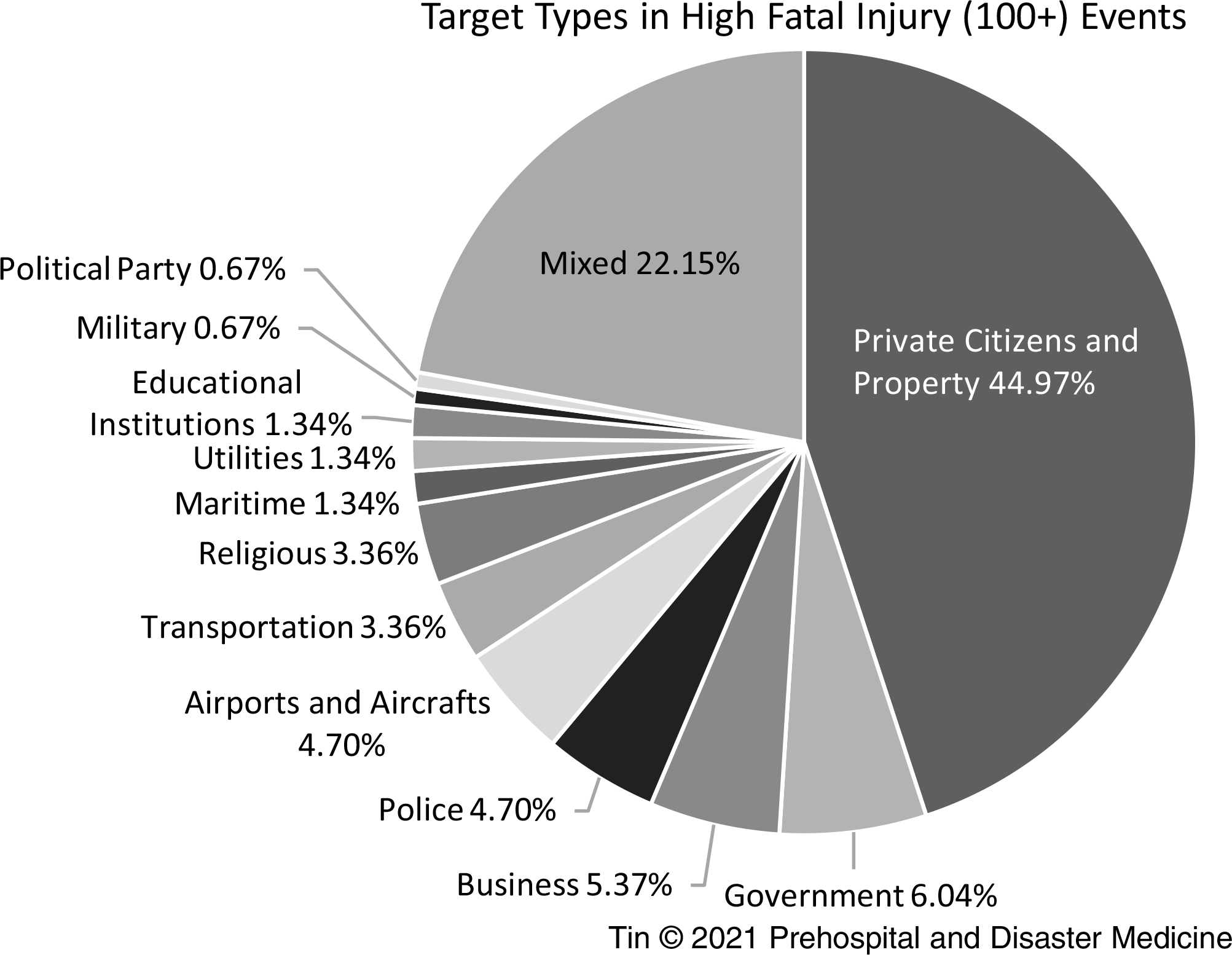
Private citizens and property were the primary targets in 67 of the 149 high-FI events. Nine events targeted governments (eight governmental, non-military buildings and one bombing of a homecoming procession for an exiled former Prime Minister in Karachi), eight targeted businesses, seven targeted police, seven targeted airports and aircrafts, five targeted transportation nodes, five targeted religious places, two had maritime targets, two targeted utilities, two targeted educational institutions, one targeted the military, one targeted a political party, and 33 events were against mixed targets (Figure 5 and Table 2).
Target Types in High Fatal Injury (100+) Events.

Breakdown (Cumulative) of the 33 Mixed Targets

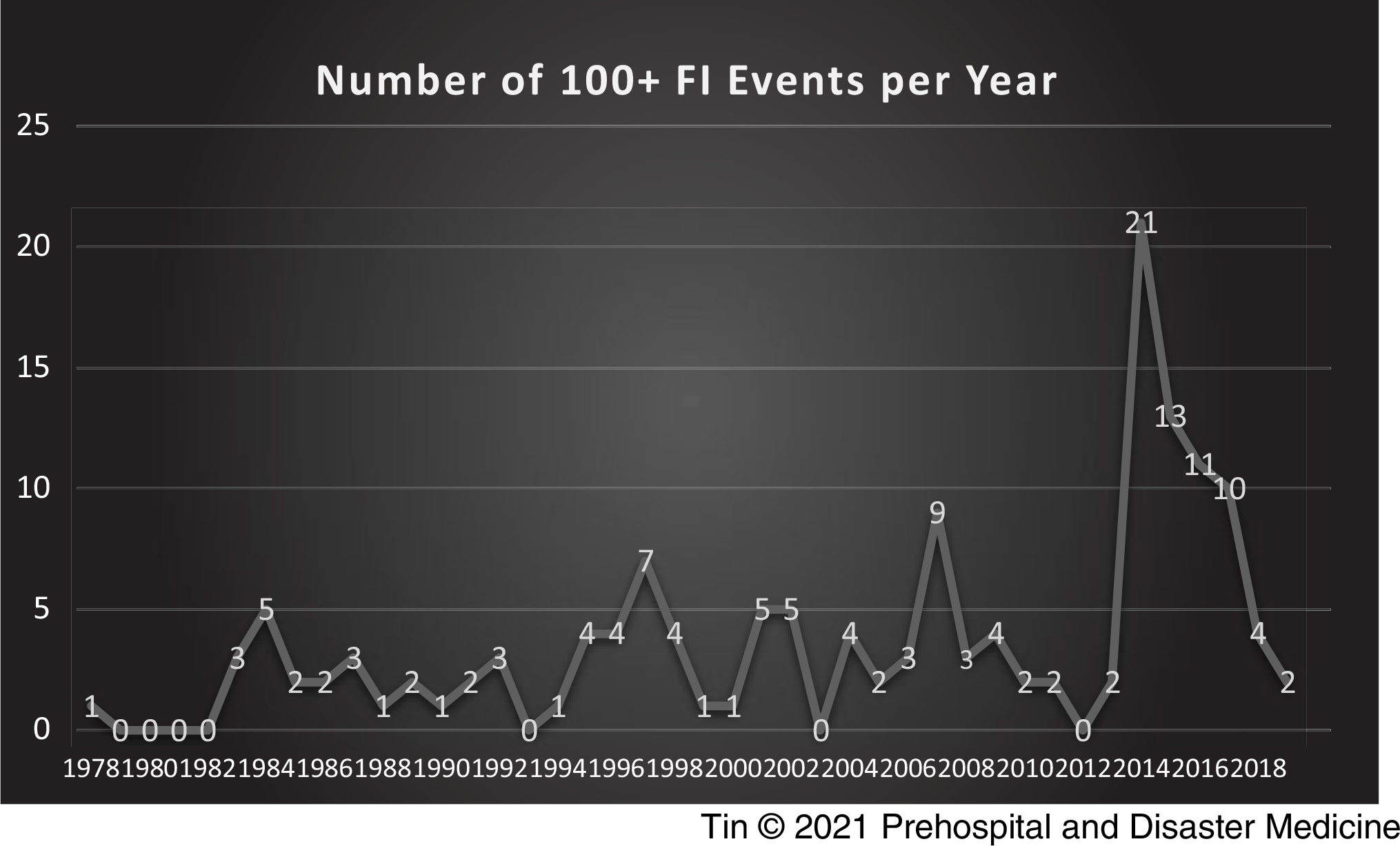
The year 2014 saw a spike in the number of events causing 100+ FI and correlates with a spike in global terrorist activities that year. The terrorist organization Boko Haram carried out 10 of the 21 100+ FI events in 2014 (Figure 6).
Number of 100+ Fatal Injury (FI) Events per Year.

Discussion
The September 11, 2001 attacks by Al Qaeda remains the deadliest terrorist attack in recent history, with nearly 3,000 FI and over 25,000 NFI. This event marked the beginning of the “War on Terror,” an on-going US-led international military campaign against extremist terrorist groups.
The rise of the Islamic State of Iraq and the Levant (ISIL) was tied to the large spike in terrorist events in the Middle East and North Africa region. Notable ISIL attacks include the Sinjar massacre on August 3, 2014 (953 FI), which marked the beginning of the United Nations recognized genocide of the Yazidis; and the Badush Prison Massacre during which 670 Shia prisoners were executed on June 10, 2014.10,Reference Labott and Kopan11 The October 10, 2017 truck bombing in Mogadishu by the terrorist group Al-Shabaab caused 588 FI and remains the deadliest bombing event in Africa.12
The interdependencies amongst terrorist organizations are complex, but the regional presence of well-recognized and established terrorist organizations (such as those mentioned above) and their affiliations should alert organizations of the increased risks of potential mass-fatality events, especially in areas with high civilian populations and other soft targets.13
Disasters are often described as low-frequency, high-acuity events and are rarely defined by a specific casualty toll. Rather, they are defined as events that overwhelm locally available resources, leading to changes in care provision or the requirement of outside resources. It is worth noting that historically, 91% of terrorism-related events caused ten or fewer FI (86% resulted in ten or fewer NFI), and 3.78% of events caused between 11-100+ FI (5.67% resulted in 11-100+ NFI). Though FI and NFI are not mutually exclusive, these numbers should give health care providers a risk estimate of the potential casualty numbers during terrorist events.
Bombings/explosions contributed to 30.87% of the attack modalities, and the mean and range of FI and NFI per incident and injury prediction varies widely depending on bomb type, method of detonation, and the environment in which it occurs. Classification of such attacks remains complex, with variables such as suicide versus non-suicide bombing, open versus semi-confined or confined spaces, and the presence or absence of building collapses to be taken into account.Reference Rozenfeld and Peleg14 Previous studies showed suicide bombings resulted in greater FI and NFI than non-suicide bombings, incidents involving building collapse resulted in higher FI, and closed space attacks (such as train compartments) were more likely to inflict primary blast injuries, whereas open space attacks resulted in greater tertiary blast injuries, particularly amputations.Reference Edwards, McMenemy, Stapley, Patel and Clasper15 These findings have implications in blast mitigation strategies such as retro fitting cladding layers and choice of materials to use as structural components of buildings and transport systems.Reference Magnus, Khan and Proud16 Further studies reveal the predominant post-explosion injuries amongst survivors involve standard penetrating and blunt trauma, with “blast lung” being the most common FI amongst initial survivors. Importantly, one-half of all initial casualties will seek medical care over a one-hour period, with the most severely injured arriving after the less injured, a potential useful predictor for response resource needs and allocation.Reference Sorbie17
Armed assaults and the use of conventional firearms such as during the 2008 Mumbai attacks, 2011 Norway attacks, and 2016 Orlando nightclub shootings, remain a prominent terrorist attack methodology. Previous research has shown firearm-related injuries have a disproportionally high fatality rate.Reference Tessler, Mooney and Witt18 Health care professionals should be up to date with wound ballistics treatment literature and address common misconceptions about the physical effects of penetrating projectiles in tissue, as these may adversely affect the proper management of gunshot injuries. Understanding the difference in ballistic dynamics of high velocity assault rifles versus small arms, the fragmentation patterns of bullets, and the energy transfer characteristics affecting the temporary cavitation and size of permanent wound channels can all enhance clinical and surgical care.Reference Stefanopoulos, Mikros, Pinialidis, Oikonomakis, Tsiatis and Janzon19
While these are well-recognized attack modalities extensively described in medical literature and generally well-understood by emergency personnel, Disaster Medicine specialists have identified educational and capability gaps in the health care sector when dealing with terrorist and mass-casualty events and recognized the need for further research and discussion into novel, non-traditional attack methodologies.Reference Tin, Hertelendy, Issa and Ciottone20–Reference Gabbe, Veitch and Curtis22 The emergence of CTM as a Disaster Medicine sub-specialty addresses these unique terrorism-related issues relating to mitigation, preparedness, and response measures to asymmetric, multi-modality terrorist attacks.Reference Court, Edwards, Issa, Voskanyan and Ciottone7 Furthermore, health care facilities and medical responders are at risk of being primarily or secondarily targeted, and risk mitigation strategies need to be reviewed and vulnerabilities addressed.Reference De Cauwer, Somville, Sabbe and Mortelmans23–Reference Tin, Hart and Ciottone26
The COVID-19 response highlighted flaws in the traditional All-Hazards Approach framework in disaster risk planning and reduction, and is a major wakeup call in the approach to mass casualties and disasters.Reference Peleg, Bodas, Hertelendy and Kirsch27 Terrorism events are unique in their intentionality to kill and cause havoc and are inherently different than natural or other man-made disasters, and as such, require different mitigation and planning tactics. Funding for CTM activities should be considered a priority, as the potential for mass-casualty terrorist events remains a significant threat globally.
Limitations
The GTD is a comprehensive record of global events. It is maintained by the National Consortium for the Study of Terrorism and Responses to Terrorism, and is the basis for other terrorism-related measures, such as the Global Terrorism Index (GTI). Reliance wholly on the GTD is partially mitigated by confirmation with other lay sources, and searches for other online data, but if there are incidents not reported in the GTD, this could limit the veracity of the findings. Furthermore, injuries and fatalities were cross-matched with news records rather than formal hospital or coroner reports, and so rely on the completeness and accuracy of these sources.
Conclusion
The most common attack modality causing 100+ FI was the use of bombs and explosions (30.87%), followed by armed assaults (28.86%). Private citizens and properties (44.97%) were most commonly targeted, followed by government (6.04%), businesses (5.37%), police (4.70%), and airports and aircrafts (4.70%). This highlights the on-going importance for emergency medical personnel to be well-versed in the prehospital response and emergency treatment of associated injury patterns, and for increased vigilance of emergency response organizations in high civilian population areas.
While the historic attack strategies have remained consistent over the past five decades, health care systems and emergency responders need to be aware of the potential changing landscape of terrorism and the increasing sophistication of attacks. Novel methodologies should be examined, hospital vulnerabilities reviewed, and risk mitigation strategies critically analyzed through a unique approach involving CTM specialists, tactical medicine experts, and counter-terrorism and defense organizations.
Conflicts of interest
The authors declare no conflict of interest.