Introduction
Behavioral and psychological symptoms of dementia (BPSD) mainly include agitation, psychotic symptoms, mood disturbances, and impulsive–aggressive behavior (Cohen-Mansfield and Billig, Reference Cohen-Mansfield and Billig1986; Bidzan et al., Reference Bidzan, Bidzan and Pąchalska2012). Troublesome behavior has been reported to occur in over 80% of patients with dementia (Swearer et al., Reference Swearer, Drachman, O'Donnell and Mitchell1988). Aggressive behavior in particular appears to be a common phenomenon in dementia as it is present in approximately one of five patients (Eastley and Wilcock, Reference Eastley and Wilcock1997). Aggression has been defined as “any verbal, non-verbal, or physical behavior that was threatening or physical behavior that actually did harm (to self, others, or property)” (Morrison, Reference Morrison1993).
Aggressive behavior in Alzheimer's disease (AD) is related to disease severity and resulting cognitive deficits (Swearer et al., Reference Swearer, Drachman, O'Donnell and Mitchell1988), and it has been shown to be associated with a faster progression to severe dementia (Peters et al., Reference Peters2015).
Neuropsychiatric symptoms are frequently associated with caregiver distress (Tan et al., Reference Tan, Wong and Allen2005) and aggression is the most difficult symptom to handle (Argyle et al., Reference Argyle, Jestice and Brook1985). There is evidence that psychiatric nurses are particularly at risk of being confronted with aggression (Nijman et al., Reference Nijman, Merckelbach, Allertz and à Campo1997). In addition, it has been suggested that the consequences for the patients are severe. Violence and aggression can, amongst others, worsen the quality of treatment, cause longer periods of absence of nurses from work and undermine the working climate (Deimling and Bass, Reference Deimling and Bass1986; Franz et al., Reference Franz, Zeh, Schablon, Kuhnert and Nienhaus2010).
The way in which patients’ aggressive behavior is viewed and judged by hospital staff can be evaluated by the “Attitudes Towards Aggression Scale” (ATAS), representing the following three types of attitudes towards aggression: aggression as a “harming,” “normal,” and “functional” reaction (Jansen et al., Reference Jansen, Dassen, Burgerhof and Middel2006). It has been suggested that the attitude of the nursing staff towards aggression may depend on the sector and type of setting in the workplace. Nurses from psychogeriatric hospitals evaluated aggression as a harming reaction (perceiving aggression as unacceptable) more often than their colleagues in adult and child psychiatry (Jansen et al., Reference Jansen, Dassen, Burgerhof and Middel2006).
Previous studies emphasize the urgent need for psychological and organizational prevention of aggressive behavior and aftercare measures (Beech and Leather, Reference Beech and Leather2006; Franz et al., Reference Franz, Zeh, Schablon, Kuhnert and Nienhaus2010).
The first step in developing a violence management program is the assessment of the risk of potential violent behavior (Monahan, Reference Monahan1996; Harris and Rice, Reference Harris and Rice1997). It has been concluded that “actuarial methods are more accurate in predicting risk than unaided clinical judgment” (Harris and Rice, Reference Harris and Rice1997; Nijman et al., Reference Nijman, Merckelbach, Evers, Palmstierna and à Campo2002).
Purpose of this study was to systematically collect data in a representative sample of psychogeriatric inpatients using the SOAS-R scale in order to identify risk factors leading to aggressive patient–staff interaction, develop prevention measures and determine possible differences between patients with dementia and patients with other diagnoses.
Methods
The SOAS is an instrument for assessing aggressive behavior (Palmstierna and Wilstedt, Reference Palmstierna and Wistedt1987; Steinert et al., Reference Steinert, Wölfle and Gebhardt2000). The scale has been constructed to assess the degree and frequency of violent acts from psychiatric and psychogeriatric inpatients (Nijman et al., Reference Nijman, Merckelbach, Evers, Palmstierna and à Campo2002). Initial testing of the SOAS suggested satisfactory reliability in the scale's capacity to discriminate between different patterns of aggressive behavior in different groups of patients (Palmstierna and Wilstedt, Reference Palmstierna and Wistedt1987; Nijman et al., Reference Nijman, Merckelbach, Evers, Palmstierna and à Campo2002). Later, the revised SOAS (SOAS-R) was developed by adding the option to record auto-aggressive behavior and the items “seclusion” and “physical restraints” as possible intervention measures (Nijman et al., Reference Nijman1999).
Patients and measures
SOAS-R scales were used to monitor aggression at three secure psychiatric wards in the Division of Geriatric Psychiatry, Department of Psychiatry and Psychotherapy of the University Hospital of Düsseldorf, Germany. This retrospective study analyzed the collected SOAS-R scales over a period of 12 months (01/01/2013–31/12/2013). SOAS-R was completed each time a staff member witnessed aggressive behavior involving a patient. The patients (males and females > 65 years) were subdivided into two diagnostic subgroups, “dementia” and “other disorders” (according to the International Classification of Diseases-10, ICD-10, criteria). The following parameters (derived from the SOAS-R scales and patients’ files) were used to assess the spectrum of the aggressive pattern: date and time of the incident, diagnosis, age and gender of the patient, gender of the reporting person, total duration of hospitalization, trigger for the aggressive behavior, mode and target of the aggressive act (verbal or physical aggression, use of objects), and consequences for the victim (ranging from no consequences to injuries requiring medical treatment).
To determine the emotional distress for the staff caused by each incident, the SOAS-R scales were extended with a Likert scale (0 = no stress, 10 = maximum stress). In our institution, a score of more than seven points initiates the invitation to a special supportive counseling for the staff. In our institution, all nurses attend a de-escalation training program, where they receive instructions on the SOAS-R scoring. As a part of the de-escalation program, nurses receive training in preventive measures and information on the aftercare recommendations.
The pattern of aggressive behavior of the first diagnostic group (dementia) was compared to the pattern of the second group (all other diagnoses).
Statistics
For the statistical analysis, the t-test, the Mann–Whitney U-test, and the χ 2 test were used. The age of the patients was normally distributed, therefore the t-test (two-tailed) was used to compare both the diagnostic groups in terms of their age. For the comparison of average duration of hospitalization of the patients and emotional stress of the medical staff the Mann–Whitney U-test was used. To determine if the duration of stay has an impact on our results (emotional stress; all other parameters were categorical) we performed an ANOVA test with the duration of hospitalization and the time up to the event (in days after the admission) as covariates. The χ 2 test was applied for the dichotomous comparisons of the time of the event (aggressive vs. not aggressive for each shift), patient gender (aggressive vs. not aggressive), the SOAS-R categories provocation (provocation identified vs. no provocation identified), object of aggression (nurses vs. other staff members and other patients), and consequences for the affected persons (consequences vs. no consequences). Our study was descriptive/explorative and was not based on a hypothesis; therefore, alpha adjustment was not performed. Values are given as the mean ± standard error of the mean (SEM) or as the percentage of the incidents. Data were analyzed using Graph Pad Prism, version 5.01 (GraphPad Software, Inc.). The study was approved by the ethics committee of the University Hospital of Düsseldorf (study number: 4933).
Results
A total of 146 aggressive events (number of SOAS-R scales) involved 66 inpatients treated during the observation period. This accounts for 8.8% of all patients (n = 752) treated during the 12 months, and 60% of the inpatients were involved in more than one incident. The highest number of incidents per patient was n = 13 and the mean incidents per patient was n = 2.2. While male patients constituted only 37% of the total patient number (male-to-female ratio of 1:1.7) in the observation period, most aggressive patients (58%) in our study were male (male-to-female ratio of 1:0.7). The percentage of male and female patients (in both diagnostic groups) treated during the study period who became aggressive (calculated together) differed significantly (14% vs. 6%, χ2 = 12.81, df = 1, p < 0.001).
Forty-one patients suffered from some form of dementia and were included in the first group. The following diagnoses were documented: AD (n = 22), vascular dementia (n = 7), mixed dementia (n = 3), frontotemporal dementia/dementia in Pick's disease (n = 2), dementia in Parkinson disease (n = 1), delirium superimposed on dementia (n = 4), Lewy-body dementia (n = 1), and mental disorders due to alcohol use: amnestic syndrome (n = 1). All other patients formed the group (n = 23) consisting of the following diagnoses: paranoid schizophrenia (n = 9), schizoaffective disorder (n = 5), depression with psychotic features (n = 1), bipolar disorder with psychotic features (n = 4), delirium not superimposed on dementia (n = 2), and mental disorders due to brain damage, physical disease (n = 1), or alcohol use (withdrawal state with delirium, n = 1).
Comparisons between the two diagnostic subgroups of aggressive patients (dementia vs. other diagnoses)
In the analyzed sample, patients with dementia were significantly older than patients with other disorders (83.6 ± 1.2 vs. 74.3 ± 1.3, p < 0.001). The total average length of stay for patients with other disorders was longer than that of the patients with dementia (83.1 ± 16.0 vs. 48.3 ± 4.1 days, p = 0.056). The average length of stay of all patients in the department of geriatric psychiatry was 32.5 days during the observation period. In the performed univariate analysis of covariance, the duration of the hospitalization correlated significantly with the emotional stress of the affected person (F (1, 86) = 4.37, p = 0.04) whereas the time up to the event did not (F (1, 98) = 0.009, p = 0.923). In both cases, no significant difference between the two diagnostic groups was identified (duration of hospitalization: F (1, 86) = 0.241, p = 0.625; time up to the event: F (1, 98) = 0.056, p = 0.814). 65% of the aggressive incidents involving patients with dementia occurred during the first two weeks of inpatient treatment.
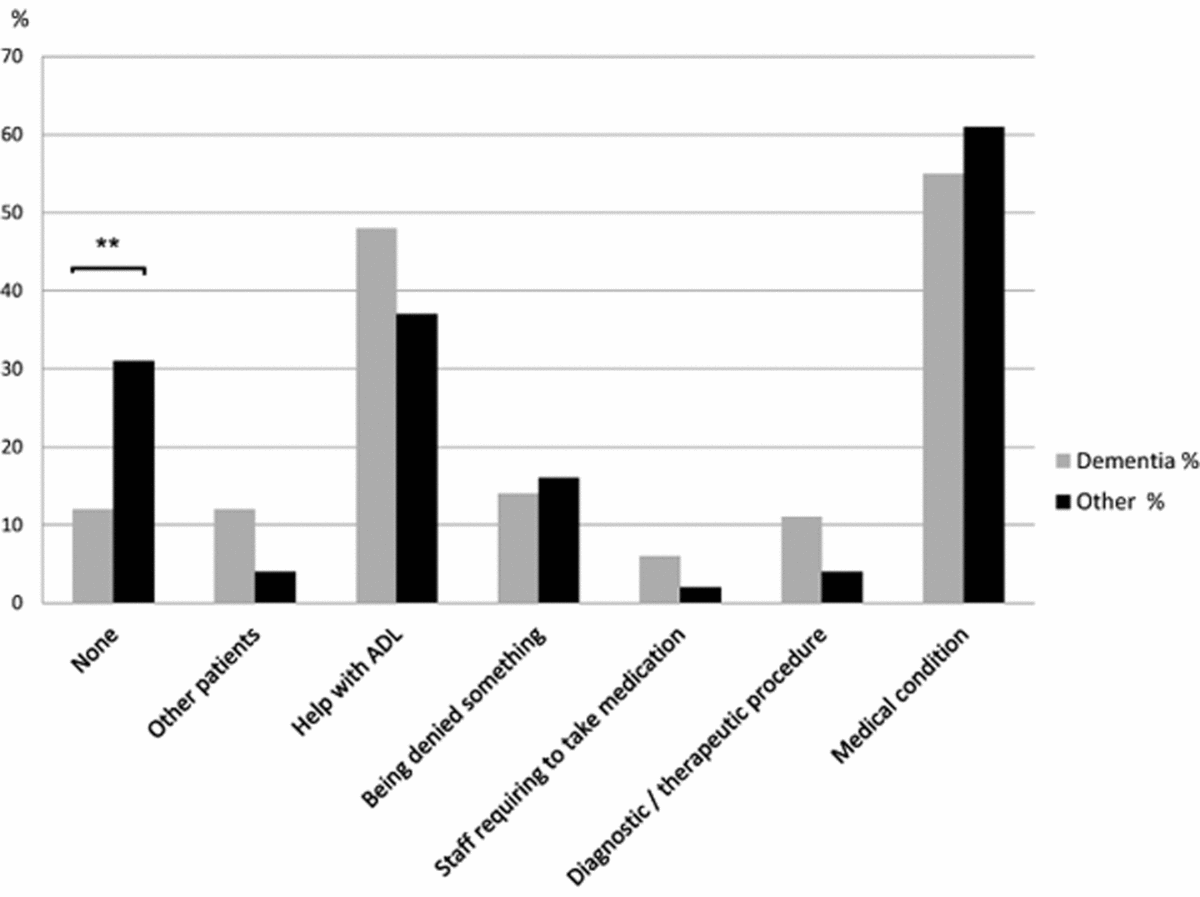
The predominant diagnosis among the aggressive patients was dementia (n = 41; 62%), and these patients were also involved in most of the incidents (n = 84; 58%). The most frequently identified causes were the severity of the psychiatric disturbance and related medical conditions of the patient (delirium, psychosis, and pain) and erratic reactions to nurses’ assistance with activities of daily life (stated in 55% and 40% of the events, respectively). Patients with disorders other than dementia appear to be involved in aggressive incidents without an identifiable trigger for the reporting person more often than patients with dementia (n = 16 vs. n = 10, χ2 = 7.73, df = 1, p = 0.005, Figure 1).
Presumed triggers for aggressive behavior. Patients with other disorders appear to be involved in aggressive incidents without identifiable trigger more often than patients with dementia (p = 0.005). ADL = activities of daily life.

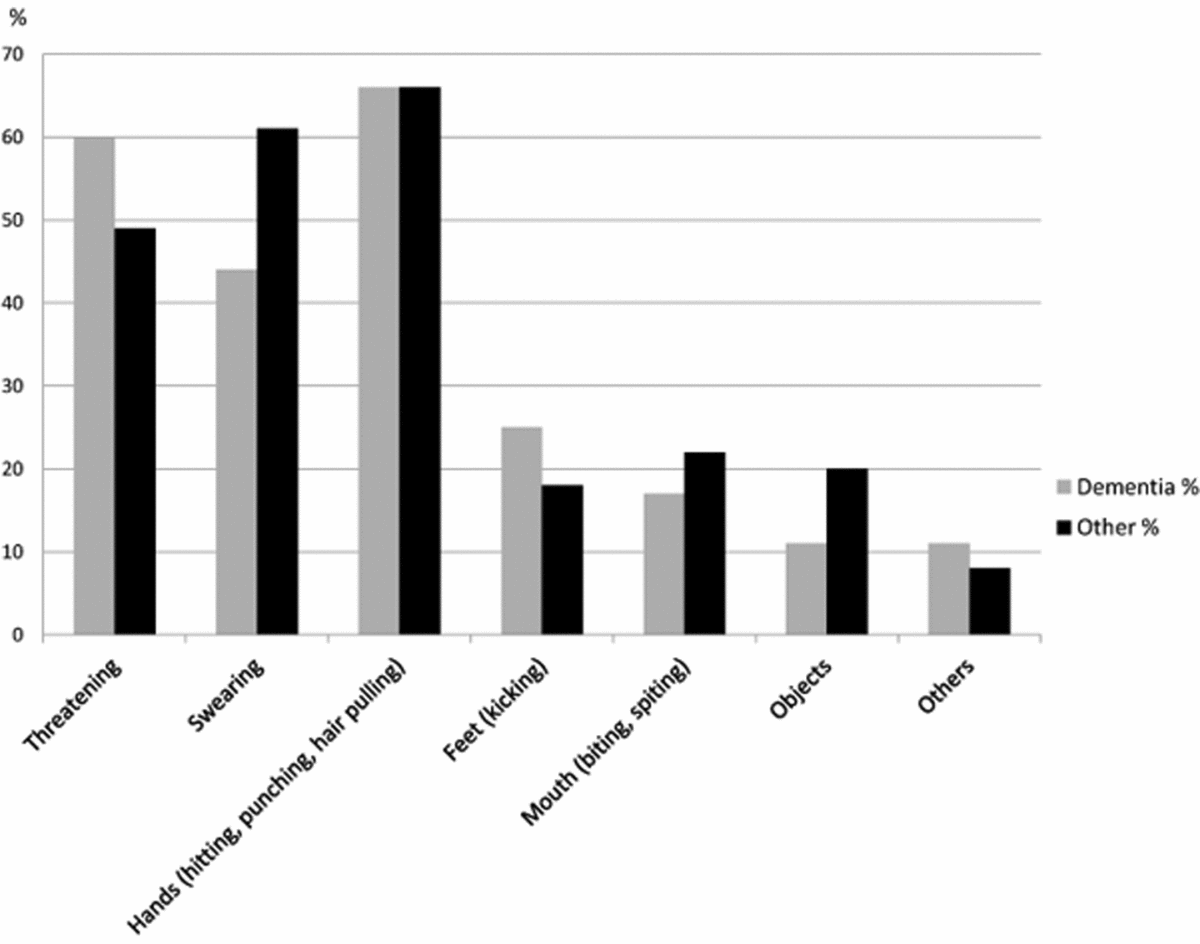
Isolated verbal aggression was reported in the minority of cases (n = 18); in almost half of the cases (45%), both verbal and physical aggression occurred (n = 66). Physical aggression involved the use of different body parts (hand, feet, and mouth), especially the hand or fist (64% of the incidents). The means used by the patients to act out aggression are demonstrated in Figure 2.
Means used by the patient. The most common means used to act out aggression were verbal aggression and physical aggression using the hands. No significant differences were found between the diagnostic groups.

Aggression was shown to be predominantly directed at nurses (82% of all incidents). In incidents involving patients with dementia, nurses were the target of aggression more often than in incidents involving patients with other diagnoses (n = 70 vs. n = 39, χ2 = 7,9, df = 1, p = 0.005). Numerically, more female nurses had been assaulted. However, when the ratio of female (n = 83) to male nurses (n = 47) on the secure psychogeriatric wards was considered, there was no gender difference.
The distributions of the aggressive incidents in the early, late, and night shifts were significantly different for patients with dementia; 37% of the events involving dementia patients in the evening shift (19% morning shift, 20% night shift; χ2 = 8.84, df = 2, p = 0.012). Unfortunately, the exact time of the event was not documented for 20 events.
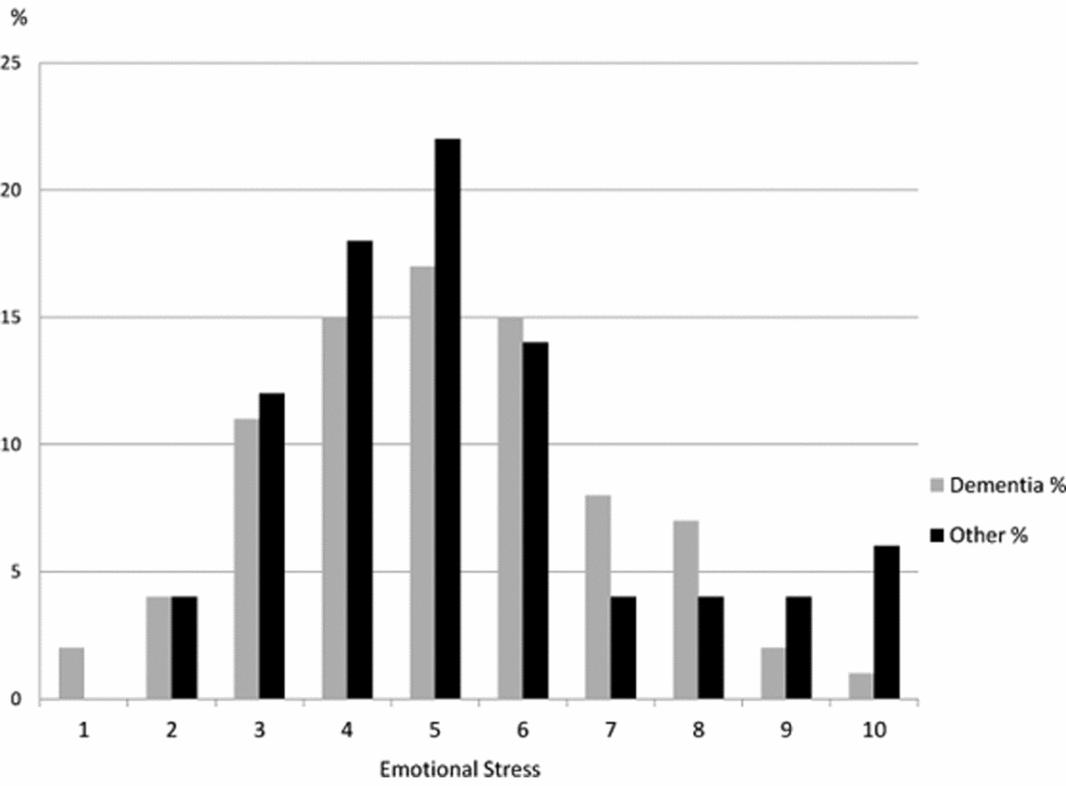
The emotional stress of the medical staff, rated in each event with a metric scale (1–10), did not differ between the diagnostic groups (5.14 ± 0.23, dementia; 5.3 ± 0.34, other diagnoses, p = 0.7), indicating that violence was equally perceived regardless of the diagnoses.
Consequences of aggressive behavior
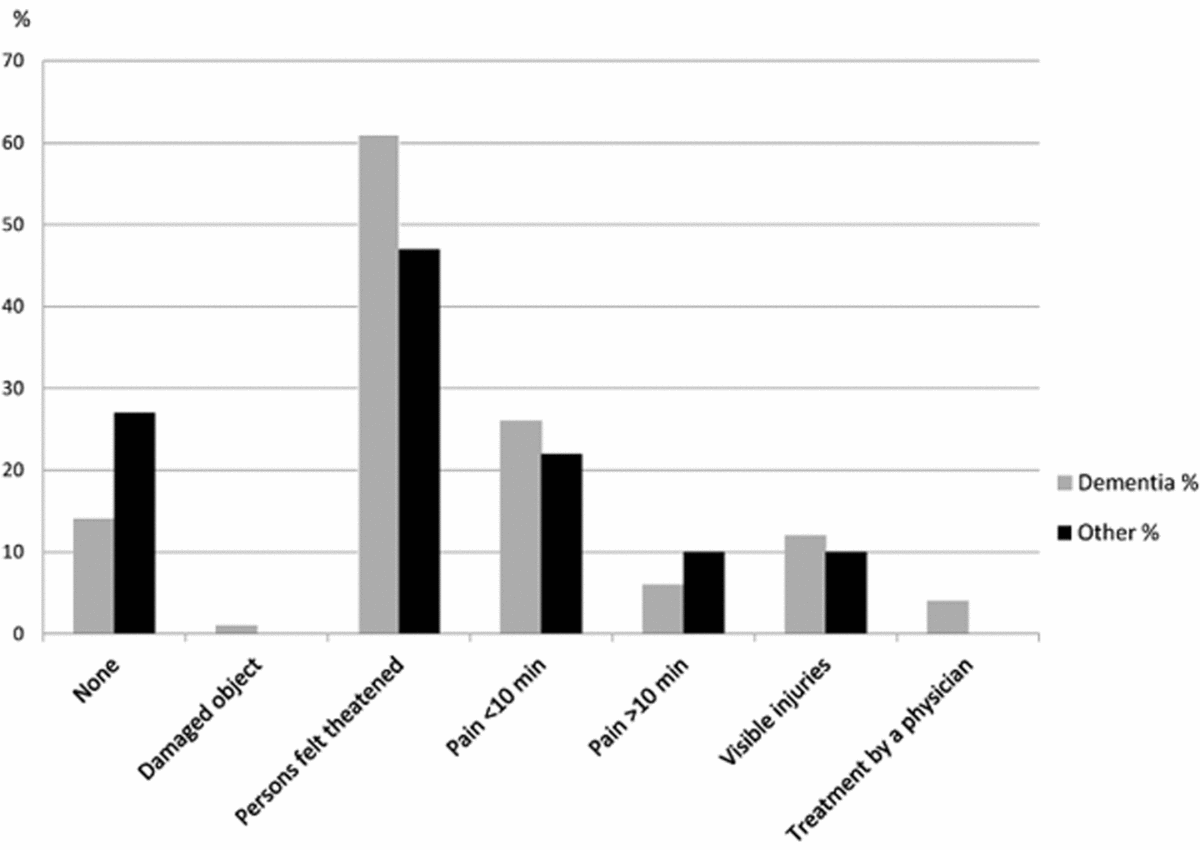
The most common consequences of aggressive behavior for the affected persons were of psychological nature with staff reporting feelings of threat during the incidents in 56% of the cases. Physical consequences in terms of experiencing pain were documented in 33%, and visible injuries were reported in 10% of the cases (n = 15). Medical treatment of an injured co-patient was necessary for 3% (n = 4, Figure 3). None of the incidents with nurses affected required medical treatment. In addition, a strong tendency towards the middle score (5/10) was observed in the reporting of incident-related stress (mean score 5.2 ± 0.2, Figure 4). Concerning the severity of the events, nurses characterized the methods used as dangerous (e.g. use of knifes and strangulation) in 8% of the cases.
Consequences of the aggressive incidents for the affected persons. There were no significant differences between the two diagnostic groups concerning the consequences of aggressive behavior.

Emotional stress of the medical staff after the aggressive incidents. The emotional stress of the medical staff did not differ between the diagnostic groups. A tendency towards the middle score was observed.

Discussion
The current study examined and described the prevalence, nature, and consequences of aggressive behavior in psychogeriatric inpatients using the SOAS-R scale.
Incidents involving patients with dementia occur relatively often (in almost 50%) in situations where the patients are receiving help with activities of everyday life. An identifiable trigger for the rater was observed significantly more often in patients with dementia than in patients with other diagnoses, indicating that aggression in dementia is often reactive and probably more predictable than in other diagnoses (Figure 1). Furthermore, 65% of the aggressive incidents involving patients with dementia occurred during the first two weeks of inpatient treatment, suggesting that aggression is more likely to occur at the beginning of an inpatient treatment on a closed ward.
In line with previous findings (Nijman et al., Reference Nijman, Merckelbach, Allertz and à Campo1997), aggression was shown to mostly be directed at nurses compared to other members of the staff or other patients. The fact that nurses are more frequently in direct contact with patients – especially patients with dementia – than any other occupational group may be the obvious reason for this finding.
The fact that 43% of the incidents had physical consequences for the affected persons, underscores that aggressive behavior poses a significant challenge in geriatric psychiatry. In line with previous findings (Cheung et al., Reference Cheung, Schweitzer, Tuckwell and Crowley1996), only a small percentage of the injuries required treatment. However, the medical staff reported they felt threatened in 56% of the cases. Emotions, such as rage, anger, disappointment, helplessness, and anxiety, often occur after aggressive incidents (Franz et al., Reference Franz, Zeh, Schablon, Kuhnert and Nienhaus2010). The health and quality of life of those affected after the assault were significantly impaired and led to job changes, chronic pain, and depression in the long run (Findorff-Dennis et al., Reference Findorff-Dennis, McGovern, Bull and Hung1999). However, little is known about the long-term consequences for nurses after severe assaults in terms of their attitude towards patients with dementia and overall motivation to work. While nurses did not suffer from severe injuries in the observation period of this study, a few staff members encountered such assaults in the last years, resulting in sick notes in some cases.
It is well-known that aggression is significantly underreported; therefore, the actual prevalence rates may not exactly be representative (Danesh et al. Reference Danesh, Malvey and Fottler2008; Lanza, Reference Lanza2016). Possible reasons for the under-reporting are the work overload (with failure of documentation), a less supportive work environment and the staff attitude expecting assaults as a part of the job, and considering the incident as minor and isolated or as a normal or functional behavior (Gerberich et al., Reference Gerberich2004, Jansen et al., Reference Jansen, Dassen, Burgerhof and Middel2006; Lanza, Reference Lanza2016). Our results also indicate under-reporting because none of the incidents involving nurses reported that the affected nurses received medical treatment, which seems unlikely. A further indicator for under-reporting is the tendency of the staff to have a middle score on the stress scale on our SOAS-R scales (Figure 4). Awareness that an indicated score of more than seven points may trigger staff counseling which staff may tend to avoid, could also be a reason for under-reporting.
We identified male gender, previous aggressive incidents of the same patient, and the evening shift (for dementia patients) as risk factors that could lead to a higher count of aggressive incidents. Nevertheless, the medical staff indicated in our study that aggressive behavior occurred without any identifiable warning signs in 20% of the cases, which could impede the development of intervention measures. However, there is evidence that standardized reporting of aggressive incidents by staff members per se may reduce violent incidents (Nijman et al., Reference Nijman, Merckelbach, Allertz and à Campo1997). This is probably due to the increased awareness of the early signs of violent escalations, which is needed to maintain the protocol (Nijman et al., Reference Nijman, Merckelbach, Allertz and à Campo1997).
Our results showed that patients with dementia were involved in most of the incidents (n= 31) during the evening shift, which is covered by fewer personnel than the morning shift. A probable additional explanation is the impaired circadian rhythm in dementia. Hence, an improvement in the staff ratio of the evening shifts should be considered. As the medical condition of the patient was recorded in 55% of the cases as a trigger, earlier intervention using de-escalating techniques and/or medication may be needed. Furthermore, knowing that previous aggressive events constitute a risk factor for further events, we propose including a warning note in the patient's file to prevent recurrent events.
Taken together, our results demonstrate that aggression poses a serious threat to the safety and well-being of psychiatric patients and their caregivers, including nursing staff. In conclusion, medical staff should be encouraged to thoroughly monitor/report aggressive incidents to facilitate the development of violence management programs and ultimately reduce such incidents in daily practice. Moreover, we propose an increase in the staff numbers at evening shifts. In addition, we stress the importance of employer support programs, which would avoid under-reporting, and mental health interventions immediately after an assault to prevent impairments in the quality of life and the health of the medical staff, especially nurses.
Conflict of interest
None.
Description of authors’ roles
M. Paschali collected the data, carried out the statistical analysis, and wrote the paper. D. Kamp assisted with writing the paper and carrying out the statistical analysis. C. Reichmann collected the data. M. Jaenner was responsible for the statistical design of the study. C. Lange-Asschenfeldt assisted with writing the paper. T. Supprian designed the study, supervised the data collection, and the writing of the paper.