




No CrossRef data available.
Maternal and environmental factors influence the hypothalamic–pituitary–adrenal axis response to corticotropin-releasing hormone infusion in offspring of mothers with or without mood disorders
Published online by Cambridge University Press: 10 February 2006
Abstract
Individuals with melancholic major depression exhibit basal hypercortisolism and an attenuated ACTH response to exogenous corticotropin-releasing hormone (CRH) infusion. Given the greater incidence of depression in children of depressed parents, we examined the ACTH and cortisol responses to ovine CRH (oCRH) infusion in 63 adolescent offspring of mothers with major depression, bipolar illness, or no psychiatric illness. Psychiatric and observational assessments of these families had been conducted over the course of 10 years preceding this study. We examined the children's responses to CRH in relation to maternal characteristics and family environment and found the following: (a) cortisol responses were negatively related to chronic family stress and (b) offspring of depressed mothers with an avoidant personality disorder showed an exaggerated ACTH response. In addition, adolescents in late puberty (Tanner 4 and 5) had lower ACTH and cortisol responses to oCRH infusion than those in early puberty. Further, offspring with early histories of mood problems, and those who developed major depressive disorder as young adults, did not exhibit basal hypercortisolism but did show an attenuated ACTH response to CRH. Our results add to the growing body of literature showing the influence of maternal characteristics and environmental factors on hypothalamic–pituitary–adrenal axis patterns in children.
We acknowledge the efforts of our predecessors on this project, whose work made this study possible. In addition, we thank Ann Mayfield, Sara Torvik, and Patricia Kasdan for their recruitment efforts and Sue Harris and Hayley Kleitz for their editorial comments on the manuscript. Finally, we thank all of the mothers and their children who have dedicated their time to this study over the course of 20 years.
Information
- Type
- Research Article
- Information
- Copyright
- © 2006 Cambridge University Press
An influential theory views depression as the result of a stress system that has gone awry. In patients with melancholic depression (a subtype of depression characterized by nonreactive mood, decreased appetite, and early morning awakening), the hypothalamic–pituitary–adrenal (HPA) axis appears to be in a continual state of activation. These patients display elevated basal levels of cortisol, despite normal ACTH levels, in comparison with psychiatrically well individuals (Gold, Calabrese, et al., 1986; Holsboer, Vonbardeleben, Girken, Stalla, & Muller, 1984; Young, Carlson, & Brown, 2002). In contrast, patients with atypical depression (characterized by mood reactivity, weight gain or appetite increase, and hypersomnia) are hypothesized to have a downregulated HPA axis (Gold, Licinio, Wong, & Chrousos, 1995), but evidence supporting this hypothesis has been mixed (Martinez et al., 2003; Young et al., 2002).
The primary components of the HPA axis are the hypothalamus, the pituitary, and the adrenal cortex. Corticotropin-releasing hormone (CRH), which is primarily produced in the hypothalamus, stimulates the pituitary to secrete ACTH. ACTH then stimulates the adrenal cortex to release cortisol. Cortisol plays a central role in regulating this process by triggering a negative feedback loop (Darlington & Dallman, 2001). Under typical circumstances, both ACTH and cortisol are released in a pulsatile, diurnal pattern with a morning peak and a nighttime nadir. In response to threatening situations, however, the HPA axis goes into a state of increased activation, resulting in the subjective experience of arousal and anxiety, promoting survival by mobilizing fuel, increasing cardiac performance, inhibiting the growth hormone and reproductive axes, and decreasing need for sleep and nutritional intake (Van Cauter, 2001). This pattern of activation may be adaptive in the face of perceived danger, but chronic activation of the HPA axis, as is seen in melancholic depression, may have long-term detrimental consequences such as increased risk for heart disease and osteoporosis (Meyer, Chrousos, & Gold, 2001).
The administration of exogenous CRH has been used as a challenge to the HPA axis. It was devised for the study of patients with known hypothalamic CRH abnormalities due to hypothalamic tumor or injury, but it has also been useful in detecting more subtle aspects of HPA axis functioning. Compared to techniques measuring salivary or urinary cortisol the CRH challenge test provides more information regarding impairment in the HPA axis feedback regulation and the locus of dysfunction. In addition, the CRH challenge is largely free of the subjective, experiential responses associated with physical, mental, or social stimuli frequently employed in the study of HPA axis functioning. Compared with normal controls, melancholic depressed patients often show an attenuated ACTH response, but similar cortisol response, after administration of exogenous CRH (Gold, Calabrese, et al., 1986; Gold, Loriaux, et al., 1986). A corollary of these findings is that a low ACTH/cortisol ratio, during the CRH infusion, is characteristic of melancholic depression. Chronic hypersecretion of CRH with consequent hypertrophy of the adrenals has been suggested as an underlying mechanism for both the attenuated ACTH but normal cortisol response to exogenous CRH and for the basal hypercortisolism in melancholic depression (Arborelius, Owens, Plotsky, & Nemeroff, 1999; Coplan et al., 1996; Gold, Calabrese, et al., 1986).
HPA Axis Development
HPA axis reactivity to stressful stimuli appears in infancy. Developmental studies show that infants' cortisol responses to the stress of an injection appear as early as 2 months of age and decrease as the infant progresses to 4, 6, and 12 months (Gunnar, Brodersen, Krueger, & Rigatuso, 1996). By early school age, children respond with increased cortisol to the stress of testing or social interactions, and their responses are related to temperament (Tennes & Kreye, 1985; Tennes, Kreye, Avitable, & Wells, 1986). Further, cortisol in urine collected after a morning's activities was positively associated with popularity with peers and “on-task” behavior and negatively associated with hostility toward teachers (Tennes & Kreye, 1985).
Studies of gender and developmental influences on HPA function have produced conflicting results. Some studies comparing healthy children and adults have shown few differences in basal (Knutsson et al., 1997) or CRH stimulated (Attanasio et al., 1987; Ross et al., 1986) levels of ACTH and cortisol due to age, gender, or pubertal stage. However, one study found a positive relationship between basal cortisol levels and age, as well as puberty stage (Kiess et al., 1995). With regard to gender, Dorn and colleagues (1996), reported both higher basal ACTH and a greater ACTH response to CRH in adolescent boys than girls. Moreover, a longitudinal study of the cortisol response to exercise stress in girls showed variations related to puberty stage: the peak response occurred at Tanner Stage 2 and subsequently decreased (Atko, Laaneots, Karelson, Smirnova, & Viru, 1998). Thus, it appears that basal levels of cortisol may increase, and stimulated cortisol may decrease, as a function of puberty. Further, gender may interact with puberty stage in the developmental process (Angold, Costello, & Worthman, 1998). An increase in basal cortisol has been suggested as a factor contributing to the increased appearance of psychopathology after puberty (Walker, Walder, & Reynolds, 2001). These mixed findings indicate the importance of taking both gender and puberty stage into account in the study of the HPA axis in adolescents.
Studies of depressed children have also reported mixed results. Depressed children do not usually reveal the HPA axis patterns typical of depressed adults (Dorn et al., 1996; Kaufman, Martin, King, & Charney, 2001; Kaufman & Ryan, 1999; Ryan & Dahl, 1993). However, one study found elevated evening basal levels of cortisol in older (13–16), compared to younger (8–13 years), depressed children (Goodyer, Park, & Herbert, 2001). In another study, nocturnal urinary cortisol in depressed adolescents was higher during their active phase than in their remitted phase (Rao, McCracken, Lutchmansingh, Edwards, & Poland, 1997). Luby et al. (2003) reported elevations in salivary cortisol in depressed preschoolers, particularly those with anhedonia (suggestive of melancholia), during a laboratory separation paradigm, compared to nondepressed children and children with disruptive behavior disorders. Birmaher and colleagues (1996) found no significant baseline or CRH infusion induced differences in cortisol or ACTH between children with major depression and control children. A subgroup of children with melancholic depression, however, had significantly higher baseline cortisol levels than nonmelancholic children, and both inpatient and melancholic children showed significantly lower total ACTH secretion after CRH infusion. In sum, these studies show the importance of considering depressive subtype, severity, and state, when studying the HPA axis in depressed children and adolescents.
A number of studies have examined relationships between children's salivary cortisol levels and broad measures of internalizing and externalizing problems. Some research suggests that children's internalizing problems, including mood problems, are negatively associated with basal cortisol (Granger et al., 1998). One study found that children's low basal cortisol levels were associated, at 5-year follow-up in adolescence, with externalizing problems such as aggressive, impulsive behavior (Shoal, Giancola, & Kirillova, 2003). Research employing social stressors has shown a greater salivary cortisol response associated with internalizing problems (Klimes-Dougan, Hastings, Granger, Usher, & Zahn-Waxler, 2001). Among clinic-referred children, increases in salivary cortisol after a social conflict predicted anxiety and internalizing problems at 6-month follow-up (Granger, Weisz, McCracken, Ikeda, & Douglas, 1996). These results suggest that certain clinical and psychosocial variables may be associated with alterations in HPA function (Gunnar & Vasquez, 2001).
Factors Influencing HPA Axis Function
Adverse experiences in early life have been studied extensively in relation to the HPA axis and behavioral responses to stress. In animal studies, neonatal handling of infant rats was envisioned as a stressor that might increase reactivity to future stressful situations. Contrary to expectations, however, neonatal handling actually reduced the adult animals' behavioral and adrenocortical responses to stressors such as cold, restraint, shock, and novelty (Levine, 2000). Variations of the handling paradigm employing longer periods of separation from the mother, however, resulted in animals showing increased reactivity to stress as adults (Francis & Meaney, 1999; Plotsky & Meaney, 1993).
In additional, maternal separation has been used extensively in nonhuman primates as a model for producing anxiety and depression in infants (Harlow, Rowland, & Griffin, 1964). Maternally separated rhesus monkeys reared with peers exhibit increased adrenocortical responses in a variety of stressful situations through adolescence (Fahlke et al., 2000; Shannon, Champoux, & Suomi, 1998; Suomi, 1999).
Even in the absence of maternal separation, monkeys reared by prenatally or postnatally stressed mothers display greater and more prolonged responses to stress than infants of nonstressed mothers. For example, monkeys reared by mothers who were exposed to the stress of variable foraging conditions had persistently elevated cerebrospinal fluid (CSF) levels of CRH, compared to monkeys raised in a more predictable environment (Coplan et al., 1996). As adults, monkeys raised in variable foraging conditions showed lasting effects of their early rearing, including CSF levels of several neurochemicals, such as serotonin, that were positively correlated with their CRH levels (Coplan et al., 1998). Further, monkeys whose mothers were stressed prenatally on a daily basis with loud noises exhibited more prolonged elevations of cortisol and ACTH in the playroom than did nonstressed peers (Clarke, Wittwer, Abbott, & Schneider, 1994).
In humans, naturally occurring experiments provide the basis of our studies of adversity. For example, studies of orphans demonstrate the effects of maternal separation on the HPA axis. Gunnar found that children reared at a Romanian orphanage under suboptimal care for several months during their early life had elevated levels of salivary cortisol, even after adoption, compared to those who were adopted early or to children reared at home (Gunnar, Morison, Chisholm, & Schuder, 2001). Like nonhuman primates, children whose mothers were exposed to long periods of stress in infancy, as well as concurrently, had elevated cortisol levels (Essex, Klein, Cho, & Kalin, 2002). Further, many studies of humans show the effects of early adverse experiences, such as physical or sexual abuse, on HPA axis function. De Bellis et al. (1994) found that sexually abused girls (ages 7–15 years) had blunted basal and CRH stimulated ACTH levels, but similar cortisol levels, compared to matched controls. Another study showed that abused children who were depressed had a greater ACTH response to the CRH challenge than nonabused children with depression or control children (mean age = 9.5–9.9), but the groups did not differ in their cortisol responses (Kaufman et al., 1997). A study of adult women with histories of sexual or physical abuse during childhood reported that those without depression had an elevated ACTH response to CRH, but those with depression had an attenuated response compared to controls (Heim, Newport, Bonsall, Miller, & Nemeroff, 2001). Further, patients with posttraumatic stress disorder (PTSD) and the offspring of Holocaust survivors with PTSD show reduced cortisol in response to dexamethasone (a synthetic steroid that suppresses ACTH secretion) challenge, a response contrary to that shown by patients with melancholic depression (Yehuda et al., 1993, 2000). These studies show the importance of considering the effects of early, chronic, adverse conditions on HPA axis functioning.
The effects of maternal or caregiver behavior on HPA functioning has also been studied extensively. In rodents, the maternal mediation hypothesis for the counterintuitive effects of early handling has received extensive support. For instance, in rat pups, a brief separation from the mother results in increased licking, grooming, and arched back nursing (LG/ABN) once the pup is returned to the nest. When rat pups reared by mothers exhibiting different levels of LG/ABN are compared as adults, those pups receiving the highest level of LG/ABN show reduced levels of the behavioral and HPA response to stress, compared to pups reared by mothers with low levels of LG/ABN (Caldji, Diorio, & Meaney, 2000). High levels of LG/ABN exhibited by rat mothers have been shown to affect neural systems that mediate the expression of fearfulness in the pups (Caldji et al., 1998) and to increase glucocorticoid feedback sensitivity (Liu et al., 1997). Rat pups separated from their mothers for long periods receive a reduced quality of care from their mothers when they are returned to the nest. These differences can be ameliorated by cross-fostering the mother to a substitute litter during separation from her own pups (Huot, Gonzalez, Ladd, Thrivikraman, & Plotsky, 2004).
Similarly, infant monkeys who have been separated from their mothers show the effects of maternal behavior upon return to the home area. Direct contact of the infant and mother results in a rapid decrease in the adrenocortical response. Anxious mothers provide less of this contact (Suomi, 1999). In addition, a large body of work shows the consequences of early social deprivation of monkey mothers on their own offspring (Suomi & Levine, 1998).
In addition to animal models, a growing body of literature shows the effects of parental or caregiving behavior on infants' and children's adrenocortical responses to stress. Sensitive caregiving has been shown to buffer the neuroendocrine stress responses in infants separated from their mothers for 30 min (Gunnar, Larson, Hertsgaard, Harris, & Brodersen, 1992), and secure attachment to buffer the cortisol response to inoculation (Gunnar, Brodersen, Nachmias, Buss, & Rigatuso, 1996). Further, an extensive study of children in a remote village in Dominica showed that children living with their mothers, but also with unrelated individuals, such as stepfathers, had increased salivary cortisol levels compared to their half siblings related to both parents or to other children living only with biological relatives (Flinn & England, 1997). Low salivary cortisol in children has been reported to be associated with indices of the mother's social withdrawal in childhood and aspects of expression of anger and conflict in the family (Granger et al., 1998).
Genetic factors have also been demonstrated to affect HPA responsiveness. Selective breeding of rats results in pups that are differentially affected by early stress (King & Edwards, 1999; Ohta, Shirota, Adachi, Tohei, & Taya, 1999). However, cross-fostering to a mother of a different strain can increase or decrease strain differences in stress reactivity (Francis, Diorio, Liu, & Meaney, 1999), demonstrating the importance of the interaction of genetic and environmental factors. A study of HPA axis function in nondepressed relatives in the families of hospitalized unipolar and bipolar depressed patients found HPA axis functioning suggestive of a genetic predisposition for depression (Holsboer, Lauer, Schreiber, & Krieg, 1995). Another study showed increased basal cortisol in unaffected offspring of parents with bipolar disorder (Ellenbogen, Hodgins, & Walker, 2004).
In sum, it appears that environmental and genetic factors both contribute to the development of HPA axis reactivity. Children reared by mothers with affective illness have increased vulnerability for later development of psychopathology, especially mood and anxiety disorders (Beardslee, Bemporad, Keller, & Klerman, 1983; Orvaschel, Walsh-Allis, & Ye, 1988). Maternal depression during the child's first 2 years of life has been associated with elevations in baseline salivary cortisol levels at age 7–8 years (Ashman, Dawson, Panagiotides, Yamada, & Wilkinson, 2002). In the same study, children with higher levels of internalizing symptoms, whose mothers had been diagnosed with depression, showed elevated cortisol levels after a startle response. Both human and animal research suggest that maternal rearing practices, combined with possible genetic risk in the offspring of affectively ill mothers, influence the stress responses of these offspring (Granger et al., 1998).
The Present Study
The present study examines the contributions of potential genetic risk, maternal characteristics, and familial environmental factors to HPA axis function during a CRH infusion test in adolescents. The participants are the offspring of both unipolar depressed (UPD) and bipolar depressed (BPD) mothers and psychiatrically well mothers enrolled in a longitudinal study of affective development. We pursued the following questions regarding HPA axis functioning. First, do the children of mothers with affective illness differ from children of well mothers in their ACTH and cortisol responses to CRH infusion? Given the greater incidence of depression in children of both UPD and BPD parents, we hypothesized that children of these depressed parents would exhibit HPA axis patterns more characteristic of depressed individuals than do children of well mothers. Second, do children's experiences in the family affect the HPA axis response to stress later in life? In particular, we explored the relationships between irritable, angry maternal behavior, as well as supportive behavior, and children's responses to stress. In addition, in depressed mothers, avoidant and borderline personality disorders, as well as poor functioning, may affect the quality of parenting behavior and thereby affect the children's stress response. Further, children who experienced high levels of family stress might show dampening of the cortisol response, as observed in patients with PTSD. Third, are childhood mood disorders a prelude to HPA axis dysfunction or are adolescent HPA axis characteristics predictive of later problems? Because research supports the hypothesis that events in early childhood prime the HPA axis for later responses, we anticipated that children with depression would already show atypical HPA axis patterns. Fourth, in view of inconsistent findings regarding the effects of the transition through puberty and of gender on HPA axis functioning, we assessed the effects of puberty and/or gender, alone or in interaction with maternal affective illness on HPA axis development.
Methods
The NIMH longitudinal study of children in families with and without maternal affective illness is the source of data for this study. Families recruited from the community were eligible for the study if the mothers met the Research Diagnostic Criteria for unipolar depression, bipolar illness, or no past or current psychiatric diagnosis on the Schedule for Affective Disorders and Schizophrenia: Lifetime Version (SADS-L; Spitzer & Endicott, 1977). Two children from each family participated. At the time of initiation of the study (early 1980s), children in the younger sibling group were required to be 1.5–3.5 years of age, and the older sibling was approximately 3 years older. Spouses of the depressed women were allowed to meet the criteria for anxiety or mood disorders, but not schizophrenia or active substance abuse. Spouses of well mothers were free of psychiatric problems. At the initial visit, participants were predominantly middle to upper middle class, but inner city families on welfare and affluent families also participated. Reports of parental occupation and education were obtained as indicators of socioeconomic status (SES). Based on the Hollingshead (1975) system, the average SES was 51 (SD = 15). Most parents were college educated (75%) and 94% of the families had children living with both biological parents at the initial assessment.
Parents from 35 of the families gave consent for their children to participate in the current study (all families were invited to participate). Sixty-three children from these families participated: 29 children of mothers with UPD (12 pairs, 5 singles), 17 children of mothers with BPD (7 pairs, 3 singles), and 17 children of mothers without psychiatric illness (5 pairs, 2 triples, 1 single). Twenty-nine children were from the younger sibling group, 29 from the older sibling group, and 5 children of control mothers were “other” siblings who were not part of the longitudinal study.
The current study was conducted after the third round of data collection. Mean ages at the time were 11.9 years for younger, 15.6 years for older, and 13.6 years for “other” siblings. For the current study, the children were 81% Caucasian, 13% African American, 3% Asian American, and 3% Hispanic. Seventy percent of the families participating in this study were intact at the time. Distributions of the children among sibling groups, gender, and puberty status are shown in Table 1.
Gender, puberty status, and age of participants by mother's diagnosis and sibling group

Prior to the current study, mothers and children came to the Laboratory of Developmental Psychology three times, spanning the course of approximately 10 years. An overall view of assessments appears in Table 2. The mothers' overall functioning was assessed at Times 1 and 3 (Global Assessment Scale [GAS]; Endicott, Spitzer, Fleiss, & Cohen, 1976). At the third visit, mothers received further psychiatric evaluation (Structured Clinical Interview for DSM-III-R—Revised [SCID-R]; Spitzer, Williams, Gibbon, & First, 1989, and SADS-L) and personality assessment for Axis II disorders (Personality Disorders Examination; Loranger, 1988). Information about stress in the family, including marital discord, family conflicts, problems with money and housing, loss of significant people, and health problems, was collected at each time point using the Brown–Harris schedule for assessing family function (Brown & Harris, 1978).
Schedule of assessments, including offspring age and relevant procedures

Children and their parents were interviewed at each visit for the purpose of diagnosing affective, anxiety, and disruptive disorders in the children. Diagnoses were based on a “play interview” (described in other publications: Radke-Yarrow, Martinez, Mayfield, & Ronsaville, 1998; Radke-Yarrow, Nottelmann, Martinez, Fox, & Belmont, 1992) for the younger cohort at Time 1 (T1) and on the Child Assessment Schedule (Hodges, Kline, Fitch, McKnew, & Cytryn, 1981) for the younger cohort at Time 2 (T2) and the older cohort at T1 and T2. Children were interviewed for Diagnostic and Statistical Manual of Mental Disorders, Third Edition—Revised (DSM-III-R) classifications, using the Diagnostic Interview for Children and Adolescents (DICA, Version 5–Revised; Herjanic & Reich, 1982), at Time 3 (T3), approximately 2.5 years prior to the CRH study. At each time period parents were interviewed about the child with the Child Behavior Checklist (CBCL; Achenbach & Edelbrock, 1983) and with the DICA—Parent Version at T3. At each assessment time, offspring received a combined diagnosis, based on both mother and child reports. Because the nomenclature of childhood depression was controversial at the time of initiation of the study, and to study development of affective disorders, children were given a “mood disorder” diagnosis if they met the DSM-III-R diagnostic criteria for major depression or dysthymia or lacked only one symptom, or if they indicated suicidal ideation. Children received an anxiety diagnosis if they met the DSM-III-R criteria for any anxiety disorder. A disruptive diagnosis was given if the child met DSM-III-R criteria for attention-deficit/hyperactivity disorder, conduct disorder, or oppositional defiant disorder. Further, a child was given a disruptive diagnosis in the case of clinically significant scores (T score at or above the 90th percentile) on any of the following CBCL scales: Attention Problems, Delinquency Problems, and Aggression Problems.
Further psychiatric interviews were conducted after the current study. Offspring and their parents were interviewed for DSM-III-R diagnostic classifications of the child, again using the DICA, at Time 4 (T4), approximately 2.3 years after the CRH challenge study. The offspring were interviewed again, using the Structured Clinical Interview for Axis I Disorders (DSM-IV, SCID-I/Nonpatient Version), when the offspring were young adults at Time 5 (T5).
Both maternal and child behavioral patterns were coded from 6 hr of videotaped interactions during the first two visits. The maternal behaviors, coded on a scale from 0 to 5, were factor analyzed into two components, using principal components analysis followed by varimax rotation, for each of the two visits. Reliability measures of the behaviors were greater than .60, as determined by intraclass correlations. The factor loadings were very similar at the two time periods. The two factors, with factor loadings for highly loading behaviors at T1 and T2 in parentheses were as follows:
- irritable: higher scores indicate high levels of parental irritability (.87/.91), strong verbal (.87/.85), controlling (.84/.87), and negative (.70/.76) interactions; and
- supportive: higher scores indicate high levels of parental support (.86/.91), warmth (.81/.86), involvement (.84/.89), happiness (.83/.85), and positive (.80/.85) interactions with the child.
Procedures
All children received a physical examination with medical history and laboratory tests (measuring electrolytes, thyroid function, liver function, complete blood count, renal function, and urine drug screens). Exclusion criteria were the following: the presence of significant medical disorders, the use of any medications (except acetaminophen within 2 weeks of the study), and body weight and height below the 5th or above the 95th percentile.
Physical examination included rating of pubertal development, as formalized by Tanner (Marshall & Tanner, 1969; Zachmann, Prader, Kind, Hafliger, & Budliger, 1974), on 54 of the 63 children. Nine children declined Tanner stage assessment and their pubertal stage was estimated based on self-report and age. Because of small numbers in some of the five Tanner stages, in final analyses the stages were classified as early (Stages 1–3: 18 boys, 6 girls) and late puberty (Stages 4–5: 5 boys, 25 girls; see Table 1). Seventy-five percent of those in early puberty were younger siblings, and 70% of those in late puberty were older siblings. Gender and puberty stage were also related: 75% of the early and 16.4% of the late puberty group were boys.
Children arrived at the National Institutes of Health (NIH) clinic with a parent or legal guardian by 1800 hr. One or both parents and children older than 18 years gave written informed consent; underage children gave verbal assent after hearing a description of the procedure. All participants were asked to abstain from caffeine for the day and to ingest only fluids after 1500 hr on the day of the study. Participants were reimbursed according to the guidelines set by the Normal Volunteer office of the NIH. The Institutional Review Board of the National Institute of Child Health and Human Development approved the study. All testing took place at the Clinical Center of the NIH.
The Child Depression Inventory (CDI; Kovacs, 1992) and the Beck Hopelessness Scale (Beck & Steer, 1988) were administered to all children on the day of the CRH test to assess depressive symptoms. A combined score to estimate mood disorder included three components: presence of suicidal ideation, a score of 5 or more on the CDI scale for negative mood, and a score of 4 or more on the Beck Hopelessness Scale. Children meeting two of the above criteria received a mood disorder rating. Children of control mothers not currently participating in the longitudinal study (“other” siblings) were screened for psychiatric disorders with the Diagnostic Interview for Children and Adolescents—Revised interview by a psychiatrist who was blind to the mother's diagnosis, using both parent and child report. These other siblings were free of past or current depressive symptomatology. All children participating in the longitudinal study could meet a lifetime mood disorder diagnosis, based on assessments at the three preceding visits.
CRH stimulation test
Synthetic ovine CRH (oCRH), which was obtained from Bachem (Torrance, CA) and prepared at the NIH pharmacy, was administered as an intravenous bolus injection of 1 μg/kg, the smallest dose to evoke a maximal plasma cortisol response in both children and adults (Ross et al., 1986). oCRH is a 41 amino acid peptide that has been isolated from ovine hypothalami and sequenced; it is a safe and selective stimulus of ACTH secretion in human adults and children (Schulte et al., 1982). To evoke the maximal response, injection occurred at 2000 hr, when the HPA axis is normally at its lowest level of activity.
Testing took place in a comfortable, spacious room at the Infusion Clinic of the NIH Clinical Center. The children were able to read, draw, or listen to music, but were not allowed to fall asleep during the testing. An intravenous catheter was inserted in an antecubital vein 1 hr before testing. The catheter was kept patent with a slow infusion of normal saline. All children remained supine throughout the test. Blood samples were collected at −15, 0, +30, +60, +90, +120, and +180 min. CRH injection occurred at Time 0. Blood was collected in prechilled tubes containing ethylenediaminetetraacetic acid, for measurement of plasma ACTH and cortisol. The samples were immediately placed on ice, centrifuged at 1000 × g for 12 min at 4°C, within 2 hr of collection, and stored at −80°C until analysis. No major adverse effects, including variations in heart rate, blood pressure, or respiratory rate, were recorded as a consequence of the CRH infusion. Approximately 15 to 20% experienced transient upper body and facial flushing, which disappeared in 15–30 min. All children completed the study.
Hormone assay
Plasma ACTH and cortisol assays were performed at Hazelton Laboratories (Vienna, VA) and were measured in duplicate by previously described radioimmunoassays (Chrousos et al., 1984). The sensitivity for ACTH ranged from 0.9 to 2.2 pmol/L, and the sensitivity for cortisol ranged from 5.5 to 22 nmol/L. The intraassay and interassay coefficients of variation were 8.5 and 22% for ACTH and 6 and 13% for cortisol, respectively.
Statistical analysis
Three primary dependent variables were considered for both ACTH and cortisol: baseline, the mean of the −15 and 0 samples; delta, the difference between the baseline and the peak value; and the net area under the curve (AUC), the sum of the areas of the trapezoids defined by the mean value at times x and y minus the baseline, times the elapsed time [Σ(((x − y)/2) − baseline) × (ty − tx)].
To maximize the number of subjects in each analysis, the sibling groups were combined, and multilevel analyses, as described by Singer (1998) were conducted to adjust for possible correlations within families. Intraclass correlations (ICCs) calculated from the unconditional means model (no independent variables entered) were significant only for the ACTH AUC (ICC = .38, p < .02), and marginal for the ACTH delta (ICC = .28, p < .08). Multilevel analyses were used regardless, to address concerns about dependent observations. SAS Proc Mixed (SAS Institute, 1990) was used for these analyses, with restricted maximum likelihood methods implemented to estimate variance and covariance parameters.
The first set of analyses assessed the effects of maternal diagnosis, puberty stage, and gender on HPA axis responses. Each of three dependent variables (baseline, delta, AUC) for ACTH and cortisol was assessed in a separate analysis testing for effects of maternal diagnosis (UPD, BPD, well), gender, and puberty stage (early or late), and their two-way interactions. Nonsignificant interactions were removed from the model to maximize power. Only children with formal Tanner staging were included in these analyses (n = 53).
The second set of analyses assessed the contributions of maternal behavior in childrearing, aspects of maternal psychopathology, and family environment to ACTH and cortisol deltas and AUCs and their ratio during the CRH challenge. Independent variables were standardized or centered. Maternal behavioral variables included the two factor scores, irritable and supportive. Measures of maternal psychopathology included functioning (GAS), as measured at the first visit, and presence or absence of avoidant and borderline personality disorders (the two most common personality disorders in our study group), assessed at T3. Personality disorders are relatively enduring characteristics, and they have been reported to increase risk for children of parents with psychiatric disorders (Rutter & Quinton, 1984). None of the well mothers met criteria for a personality disorder. A measure of persistent family stress over the course of the study was included as an indicator of the family environment. Nine children were omitted from these analyses due to absence of maternal interaction variables, leaving a sample size of 54.
The third set of analyses assessed the HPA axis response in relation to past or current mood disorders. Three different analyses were conducted. The first compared offspring with a mood disorder assessed before the CRH challenge (T1–T3) with children who had no mood problems during that time. To rule out transient problems, we considered the child to have been depressed only if a mood problem had been documented at two or more assessment periods. In addition, anxiety or disruptive problems assessed during that time frame were entered as independent variables, again considering only problems that were assessed at least twice. The second analysis compared children actively depressed at the time of the CRH challenge with those not depressed at that time. The analyses included all 64 participants. Finally, the HPA axis response was assessed in relation to major depressive episodes that occurred subsequent to the CRH challenge. Because of puberty stage findings in the first set of analyses, these analyses all included adjustment for puberty stage. “Other” siblings were not assessed at T5, so they were omitted from this analysis (n = 58).
Results
In the following, the term offspring means all children, regardless of maternal psychiatric status, unless a particular subgroup is specified.
Effects of maternal diagnosis, offspring puberty stage, and gender
All 54 children with formally assessed Tanner staging (see Table 1) were included in these analyses.
Neither the children of UPD nor BPD mothers differed significantly from offspring of well mothers in either their ACTH or cortisol response (no main effect of maternal diagnosis and no significant preplanned contrasts among groups). Further, there was no significant effect of gender and no significant interaction between maternal diagnosis and gender or maternal diagnosis and puberty stage for either ACTH or cortisol. The two-way interaction of gender and puberty stage and the three-way interaction of maternal diagnosis, gender, and puberty stage were not tested because of inadequate cell sizes. (Note that children without formally assessed Tanner staging were omitted from these analyses.)
Puberty stage effects were significant for both ACTH and cortisol responses. Offspring in early puberty had a greater ACTH response to CRH infusion than offspring in late puberty (illustrated in Figure 1a) as measured by both the ACTHdelta, F (1, 11) = 5.91, p < .04, and the net AUC, F (1, 11) = 6.18, p = .03. Consistent with the ACTH response, the post infusion cortisol response was significantly greater for offspring in early puberty than for those in late puberty for both the cortisol delta, F (1, 11) = 7.51, p < .02, and the net AUC, F (1, 11) = 10.00, p < .01 (see Figure 1b). Further investigation showed that Tanner Stage (1–5) was significantly negatively correlated, at every post-CRH infusion time, with both ACTH (Kendall tau b ranging from −.34 to −.25, all ps < .05) and cortisol levels (tau b from −.29 to −.24, all ps < .05). As puberty stage increased, ACTH and cortisol levels decreased. The correlation of Tanner stage with the mean postinfusion level of ACTH was −.36 (p < .001), and with the mean level of cortisol was −.31 (p < .01). Tanner stage was not significantly correlated with basal levels of ACTH or cortisol. Because we had inadequate statistical power to test the gender by puberty stage interaction, and to ensure that puberty effects were not due to higher levels of ACTH or cortisol in boys, who comprised 75% of the children in early puberty and only 16% of those in late puberty, we compared the mean values of all the measures by gender within puberty stage. Boys and girls did not differ on any measure, in either early or late puberty.

(a) ACTH response to CRH infusion by puberty stage (means and CIs) and (b) cortisol response to CRH infusion by puberty stage (means and CIs).
Relationship of offspring response during CRH challenge to maternal psychopathology and behavior and family stress
In further analyses, we attempted to find maternal and family characteristics associated with the responses to CRH stimulation. As stated in the introduction, the variables assessed were the two factor scores, irritable/angry behavior and supportive behavior, as well as avoidant and borderline personality disorders, maternal functioning (GAF), and family stress scores. Only the 54 children of both depressed and well mothers who had participated in the longitudinal study were included in the full models because the behavioral factor scores were not available for the remaining siblings. However, in reduced models that did not include the behavioral scores, all 63 children were included.
Maternal characteristics
Mothers' avoidant personality disorder was associated with children's ACTH responses. Seven mothers (4 UPD, 3 BPD) were definitively diagnosed with an avoidant personality disorder. Thirteen of their children participated in the study. Eight depressed mothers (4 UPD, 4 BPD) had a diagnosed borderline personality disorder. Fifteen of their children participated in the study. Three mothers had comorbid avoidant and borderline personality disorders. No well mother had a diagnosed personality disorder. Mothers' avoidant personality was associated with ACTH responses in her children that were 21.5 pg/ml higher for the delta, F (1, 33) = 7.90, p < .01, and 2,472 units higher for the AUC, F (1, 33) = 5.51, p < .03, after accounting for puberty stage, but similar cortisol responses, in comparison with those of all other children (see Figure 2). Investigation of the coded behavioral interactions of mothers with avoidant personality disorders showed that they were significantly less supportive and less positively involved with both the younger (p < .05) and older (p < .01) siblings in early childhood (T1), compared to mothers without avoidant personalities. However, the maternal supportive and angry factor scores, as well as borderline personality disorders and maternal GAF scores were not significantly related to either the ACTH or cortisol response to CRH infusion. No maternal variable was related to either ACTH or cortisol baseline measures.

ACTH response to CRH infusion in the offspring of mothers with or without avoidant personality disorder, adjusted for puberty stage (means and CIs).
Family stress
Mean family stress was 0.75 (SD = 0.52) in families with a well mother, 2.47 (SD = 1.01) in families with a BPD mother, and 2.00 (SD = 1.05) in families with a UPD mother. Family stress was negatively associated with the cortisol response, a decrease of 1.96 per unit of stress for the delta, F (1, 32) = 10.25, p < .005 (see Figure 3), and a decrease of 215 per unit of stress in the net AUC, F (1, 32) = 6.62, p < .02, after adjusting for puberty stage, but not with the ACTH response. In addition, persistent family stress was positively associated with basal ACTH levels (+2.3/unit of stress), F (1, 27) = 6.51, p < .02, and with reduced cortisol responses, relative to ACTH response (increase of .78 in the ACTH to cortisol ratio), F (1, 33) = 6.44, p < .03.

Cortisol response to CRH infusion by family stress and puberty stage.
Offspring diagnosis
The frequencies of offspring mood disorders before and during the CRH challenge, as well as major depressive disorder subsequent to the CRH challenge (T4 and T5), are shown in Table 3. All analyses of offspring diagnoses are adjusted for puberty stage. Puberty stage was estimated by knowledge of menarcheal status and/or age in six children who had declined Tanner staging.
Proportion of study participants with a mood disorder at each assessment time by gender and puberty status

Relation of childhood (T1–T3) mood, anxiety, or disruptive disorders to ACTH and cortisol responses
All offspring of both depressed (UPD or BPD) and well mothers are included in the following analyses. Seven children showed early chronic signs of depression (met criteria for major depression or dysthymia or lacked only one symptom, or indicated suicidal ideation, at two or more assessment periods), and three of them were in early puberty at the time of the study. Three were children of BPD mothers; four were children of UPD mothers. Fourteen children were anxious in childhood; four of these participants had comorbid depression. Fourteen children had disruptive problems in childhood; five of these individuals had comorbid depression.
Children with chronic childhood depression had a reduced ACTH response as measured by both delta (decrease of 23.7), F (1, 24) = 5.00, p < .04, and net AUC (decrease of 2707), F (1, 24) = 4.16, p = .05, after adjustment for puberty stage, but only when we accounted for disruption. (Disruption was associated with a nonsignificant increase in ACTH.) Cortisol responses were unaffected by childhood depression.
Children with disruptive problems had an increased cortisol response, as measured by delta (increase of 4.4), F (1, 24) = 6.13, p = .02, and AUC (increase of 537), F (1, 24) = 4.83, p < .04. Childhood anxiety was not associated with either increased or decreased HPA responses. Baseline measures of ACTH and cortisol were unrelated to childhood diagnoses.
Offspring actively depressed at the time of the CRH challenge versus those not actively depressed
At the time of the CRH challenge, six children were judged to be actively depressed, based on their responses to the CDI and the Beck Hopelessness Scale: four offspring of UPD, one offspring of BPD, one offspring of a well mother. Offspring who were depressed at the time of the CRH challenge did not differ from those offspring who were not depressed at that time in their ACTH or cortisol responses to the CRH challenge or in their baseline measures.
Offspring who experienced major depression subsequent to the CRH challenge or chronic mood problems prior to the challenge versus those without depression
Only the 58 offspring of both depressed and well mothers who participated in the longitudinal study are included in the following analyses. Nine offspring were diagnosed with MDD subsequent to the CRH challenge (T4 and/or T5): four children of UPD, two children of BPD, and three children of well mothers. Four of these nine offspring had experienced chronic mood problems (at least two assessment periods) in childhood (two of these four developed BPD, but they are grouped with those with UPD because of their small number and for simplicity). Three children of well mothers and two children of depressed mothers developed depression only after the CRH study. Only three offspring experienced chronic childhood mood problems, but had no signs of MDD as young adults. Thus, a total of 12 children had either chronic childhood mood problems and/or MDD as young adults, and 75% of them were children of depressed mothers. All of these individuals experienced comorbid anxiety.
Offspring who experienced MDD after the CRH challenge or who had experienced chronic childhood mood problems had significantly reduced baseline levels of ACTH (decrease of 4.4), F (1, 21) = 5.61, p < .03, and a significantly reduced ACTH response to CRH challenge as measured by the ACTH delta (decrease of 12.9), F (1, 21) = 6.10, p < .03, and net AUC at a trend level (decrease of 1331), F (1, 21) = 3.48, p < .08, after adjustment for puberty stage. Further, the ACTH to cortisol ratio was reduced in this group for both delta (decrease of 1.9), F (1, 22) = 12.68, p < .002, and net AUC (decrease of 2.7), F (1, 22) = 4.40, p < .05. The effect of puberty was marginal for both ACTH delta and AUC (both ps < .10) once depression was entered. None of the cortisol measures showed significant effects of chronic childhood mood problems and/or MDD.
Final questions
To address possible questions regarding the relation between basal and response scores, we conducted correlation analyses. Basal cortisol levels were negatively correlated with both the cortisol delta (r = −.63, p < .0001) and the cortisol AUC (r = −.71, p < .0001) in the entire group of children of depressed and control mothers.
Discussion
The results of this study indicate that HPA axis functioning of children is influenced by their early experience with mothers and the concurrent family environment. In addition, we found that both the ACTH and cortisol responses to CRH infusion are affected by the pubertal transition. Finally, although the number of adolescents who were depressed is small, the data suggest that a blunted ACTH response but normal cortisol response to CRH infusion in adolescence may be indicative of both childhood and later depression.
Relationship of offspring response during CRH challenge to family stress
Children living in families with high levels of persistent family stress, as assessed over the course of the study, showed proportional reduction in their cortisol response to the CRH infusion. Cortisol responses were negatively related to levels of persistent family stress. Because the families of mothers with depression reported higher frequency and chronicity of stress than families of mothers without psychiatric illness these reductions in cortisol response occur primarily in the children at risk. Other research has shown dampening of HPA responses after chronic stress. Reduced elevations in CRH mRNA in the PVN and the amygdala were seen in response to an acute stressor in animals that had been chronically stressed, particularly when presented with a homotypic stressor (Ma, Levy, & Lightman, 1997; Ma, Lightman, & Aguilera, 1999; Mamalaki, Kvetnansky, Brady, Gold, & Herkenham, 1992). In addition, monkeys, who as infants were subjected to stressful, variable foraging conditions, demonstrated increased levels of CSF CRH but reduced CSF cortisol after the stress of capture, as adults (Coplan et al., 1996). Further, an attenuated cortisol response to ACTH stimulation has been reported in nondepressed women exposed to childhood physical or sexual abuse (Heim et al., 2001). Although an attenuated cortisol response may appear to be contrary to evidence for elevated basal levels of cortisol associated with early or chronic stress (Essex et al., 2002; Gunnar et al., 2001), in this study, as well as previous studies (Gold, Calabrese, et al., 1986), cortisol responses to CRH stimulation were negatively correlated with basal cortisol. We did not find alterations in basal cortisol related to family stress, but basal ACTH levels were positively related to family stress. Our knowledge of the families does not suggest that these children suffered severe physical or sexual abuse. These findings imply that levels of stress not considered extreme could have significant implications for the HPA axis.
Relationship of offspring response during CRH challenge to maternal psychopathology
We found evidence that HPA axis function was influenced by maternal personality style. Avoidant personality disorder, characterized by introversion, neuroticism, and behavioral inhibition resulting in significant social or occupational impairment (Alden, Laposa, Taylor, & Ryder, 2002), is one of the more prevalent forms of personality pathology in clinical and nonclinical populations (Stuart et al., 1998), and is frequently associated with major depressive disorder (Alpert et al., 1997). Offspring of depressed mothers with avoidant personality disorder had higher ACTH responses, but similar cortisol responses to the CRH infusion (a high ACTH to cortisol ratio) when compared with all other children in the study. The relatively low cortisol response to the elevated ACTH suggests a hypersensitivity of the pituitary to CRH and a corresponding downward adaptation of the adrenal. Analysis of videotaped mother–child interactions during early childhood indicated that the depressed mothers with comorbid avoidant personality disorder provided significantly reduced levels of parental support, warmth, involvement, happiness, and positive interactions to their offspring when compared to the remaining group of depressed and nondepressed (control) mothers. Although we were unable to demonstrate any direct effect of maternal behavior on HPA responses to CRH for the children in our study, we suggest that reduced supportive interactions and increased social anxiety in depressed mothers with avoidant personality result in altered neuroendocrine patterns in their offspring, as seen in animal models. Findings of exaggerated ACTH responses, without exaggerated cortisol responses have been reported, in the context of a psychosocial stressor or CRH infusion, for women with early life history of sexual or physical abuse but no depression (Heim et al., 2000, 2001). In addition, elevated ACTH responses were observed during a CRH challenge in depressed abused children continuing to live in stressful conditions (Kaufman et al., 1997). Heim et al. (2000) suggest that elevated ACTH responses may reflect vulnerability for development of mood and anxiety disorders.
Effects of offspring puberty stage and gender
Our data showed distinct effects of pubertal stage on HPA axis functioning. Children in late puberty (Tanner 4 and 5) had lower level responses of both ACTH and cortisol to CRH stimulation than children in early puberty (Tanner 1–3). Furthermore, postinfusion levels of ACTH and cortisol decreased systematically with progression through the five Tanner stages. The cortisol changes associated with puberty stage are in agreement with a previous study (Atko et al., 1998). These changes are parallel to the systematic reduction of the adrenomedullary hormone, epinephrine, during the pubertal transition (Weise, Eisenhofer, & Merke, 2002). The similar patterns of adrenocortical and adrenomedullary hormones may be an effect of common, central regulatory influences, with inputs from the hypothalamic CRH neurons and noradrenergic neurons of the brain stem (Chrousos & Gold, 1992). These pubertal changes suggest a possible role for gonadal hormones, and/or their interaction with environmental events associated with pubertal changes, in the development of HPA axis dysfunction and the increased appearance of major depression after puberty. Because these CRH response measures represent cross-sectional rather than longitudinal data, we cannot determine whether this is a true puberty effect or a chance finding. We are unable to state with certainty that these findings were not due to gender, rather than puberty status, given that boys were predominantly in early puberty and girls were predominantly in late puberty. Statistical comparisons within the early and late puberty groups, however, showed that boys and girls had very similar mean values. These results add to evidence suggesting the importance of considering pubertal stage when studying the HPA axis in adolescents.
Offspring diagnosis
Children who had chronic mood problems in childhood and those who went on to develop major depression as young adults had significantly blunted plasma ACTH responses but normal cortisol responses during the CRH stimulation test. A blunted ACTH response to CRH has consistently been found in adult patients with severe melancholic major depressive illness (Gold, Loriaux, et al., 1986; Holsboer et al., 1984). The ACTH response may be blunted because of downregulation of pituitary CRH receptors in response to chronically increased hypothalamic CRH secretion (Hauger et al., 2002; Newport et al., 2003) and/or loss of fast-feedback regulation in the hypothalamus and hippocampus (Young, Haskett, Murphy-Weinberg, Watson, & Akil, 1991). A normal cortisol response to blunted ACTH secretion is evidence of a hyperresponsive adrenal cortex, reflecting a disruption in the homeostasis of the HPA axis (Gold et al., 1995). Because these children were not hypercortisolemic at baseline, it is likely that they are in a state of relatively mild hypersecretion of hypothalamic CRH. This might represent an early transitional stage to a hypereactive adrenal.
Although we did not find that the adolescents who were depressed at the time of the CRH challenge differed significantly from those who were not depressed at that time, four of the six children who were actively depressed conformed to the pattern of a blunted ACTH response, accompanied by a robust cortisol response, suggesting possible lack of statistical power to detect a difference. In addition, these diagnoses were based on questionnaires, not on a psychiatric interview. It is noteworthy that children who had shown chronic problems of depressed mood during childhood, without necessarily meeting the full criteria for a major depressive episode, showed the same pattern of blunted ACTH response to the CRH challenge with normal cortisol response. Four of these children with chronically depressed mood went on to develop a major depressive episode as young adults. It will be of interest to see if the remaining three children with chronically depressed mood and the blunted ACTH response in adolescence develop major depression later in life. Finally, five children who developed a major depressive episode as young adults had shown no signs of depressed mood in childhood, but they conformed to the pattern of blunted ACTH and normal cortisol response to CRH stimulation as adolescents. The blunted ACTH response is associated with melancholic depression. Most children in this study had symptoms suggestive of mixed episodes, rather than strictly melancholic, but all displayed the HPA axis pattern associated with melancholic depression. Although some adolescents showed a blunted ACTH response with normal cortisol response and were not depressed in either childhood or adolescence, the evidence suggests that a blunted ACTH response with normal cortisol response to CRH infusion during adolescence may be an indicator of vulnerability to depression.
A further finding was that children who exhibited chronic attention and/or disruptive problems in childhood responded to the CRH challenge with increased cortisol. Previous research has shown mostly reduced basal levels of cortisol in children with externalizing behavioral problems (King, Barkley, & Barrett, 1998; van Goozen, Matthys, Cohen-Kettenis, Buitelaar, & van Engeland, 2000), a finding not replicated in our study. However, an increased cortisol response to CRH is compatible with low basal cortisol, because we found, as in previous research (Gold, Calabrese, et al., 1986), negative correlations of basal and CRH infusion levels of cortisol. Children with anxiety that was not comorbid with depression did not exhibit any atypical HPA axis patterns.
Strengths and limitations
Our study was limited by a relatively small number of participants with comparatively homogeneous demographic backgrounds and a small number of control children. Nevertheless, its longitudinal design and prospective measurement of psychopathology, family interaction patterns, and ongoing family stressors has provided a unique opportunity to observe long-term biological and psychosocial outcomes. Furthermore, compared to procedures that use psychological or physical challenges, the CRH test provides a direct challenge to the HPA axis that is largely free of the individual's experience with the stressor. Longitudinal measurement of the response to CRH infusion in children would provide further valuable information about the development of the HPA axis.
Because the findings of the effects of maternal avoidant personality disorder on offspring's HPA axis function and psychosocial adaptation were from exploratory analyses, further research is required to extend and validate these findings. In addition, the finding of pubertal stage effects on the HPA axis, in contrast to some previous findings, suggests that further longitudinal studies of the transitional period, especially taking into account boys' later passage through puberty, are warranted. The different patterns of HPA response to the CRH infusion, within the context of maternal mood disorder, point to the complexity of factors that can influence the axis and the need for careful assessment of the environmental variables in which development occurs. The integration of developmental and biological information in longitudinal studies of at-risk populations is a costly and difficult undertaking, but the data presented here highlight the importance of such studies in elucidating the vulnerability to potentially disabling psychopathology.
Conclusions
Our findings suggest mechanisms through which maternal psychopathology can be transmitted to offspring and add to the growing body of evidence suggesting that in humans, as in other species, HPA axis functioning is affected by early experience with mothers and the quality of the environment. It is noteworthy that the increased ACTH response in children of depressed mothers with an avoidant personality disorder and the reduced cortisol response in children whose families have high levels of stress are not the HPA axis responses typically associated with adult melancholic depression. The elevated ACTH responses with normal cortisol responses shown by children of avoidant mothers and the reduced cortisol responses to average ACTH response shown in the context of chronic family stress are both suggestive of a hyporesponsive adrenal. Other researchers have suggested that these patterns may present a vulnerability factor for development of later mood and anxiety disorders (Heim et al., 2000). In contrast, the children who went on to develop major depression in adolescence or young adulthood displayed reduced ACTH and normal cortisol responses, a pattern suggestive of a hyperresponsive adrenal. This is similar to the response typically associated with adult melancholic depression. These data indicate that those who went on to develop depression in young adulthood had developed a relatively downregulated response to CRH during childhood. We are unable to determine, based on our data, whether the children who developed depression progressed from the hyporesponsive pattern to the hyperresponsive pattern, or whether these patterns represent two distinct pathways to HPA axis dysfunction in at-risk populations. We were also unable to associate any maternal or environmental characteristics with the pattern observed in the children who developed depression. Later stressful events and susceptibility to depression may be required to force the system, primed in childhood, into the pattern observed in the children who were depressed and in adult melancholic depression. Atypical depression has been associated with the hyporesponsive adrenal pattern, so it will be of interest to see if any of the adolescents who displayed this pattern develop atypical depression in the future.
References
REFERENCES
Achenbach, T., &
Edelbrock, C.
(1983).
Manual for the Child Behavior Checklist and revised child behavior
profile.
Burlington, VT:
University of Vermont, Department of Psychology.
Alden, L.,
Laposa, J.,
Taylor, C., &
Ryder, A.
(2002).
Avoidant personality disorder: Current status and future
directions.
Journal of Personality Disorders,
16,
1–29.CrossRefGoogle Scholar
Alpert, J. E.,
Uebelacke, L. A.,
McLean, N. E.,
Nierenberg, A. A.,
Pava, J. A.,
Worthington, J. J.,
et al.
(1997).
Social phobia, avoidant personality disorder and atypical
depression: Co-occurrence and clinical implications.
Psychological Medicine,
27,
627–633.CrossRefGoogle Scholar
Angold, A.,
Costello, E. J., &
Worthman, C. M.
(1998).
Puberty and depression: The roles of age, pubertal status and
pubertal timing.
Psychological Medicine,
28,
51–61.CrossRefGoogle Scholar
Arborelius, L.,
Owens, M. J.,
Plotsky, P. M., &
Nemeroff, C. B.
(1999).
The role of corticotropin-releasing factor in depression and anxiety
disorders.
Journal of Endocrinology,
160,
1–12.Google Scholar
Ashman, S. B.,
Dawson, G.,
Panagiotides, H.,
Yamada, E., &
Wilkinson, C. W.
(2002).
Stress hormone levels of children of depressed mothers.
Development and Psychopathology,
14,
333–349.CrossRefGoogle Scholar
Atko, V.,
Laaneots, L.,
Karelson, K.,
Smirnova, T., &
Viru, M.
(1998).
Exercise-induced hormone responses in girls at different stages of
sexual maturation.
European Journal of Applied Physiology,
77,
401–408.Google Scholar
Attanasio, A.,
Rosskamp, R.,
Bernasconi, S.,
Terzi, C.,
Ranke, M.,
Giovanelli, G.,
et al.
(1987).
Plasma adrenocorticotropin, cortisol, and dehydroepiandrosterone
response to cortocotropin-releasing factor in normal children during
pubertal development.
Pediatric Research,
22,
41–44.CrossRefGoogle Scholar
Beardslee, W.,
Bemporad, J.,
Keller, M., &
Klerman, G.
(1983).
Children of parents with major affective disorder: A review.
American Journal of Psychiatry,
140,
825–832.Google Scholar
Beck, A. T., &
Steer, R. A.
(1988).
Beck Hopelessness Scale (BHS).
San Antonio, TX:
Psychological Association/Harcourt Brace Jovanovich.
Birmaher, B.,
Dahl, R. E.,
Perel, J.,
Williamson, D. E.,
Nelson, B.,
Stull, S.,
et al.
(1996).
Corticotropin-releasing hormone challenge in prepubertal major
depression.
Biological Psychiatry,
39,
267–277.CrossRefGoogle Scholar
Brown, G., &
Harris, T.
(1978).
Social origins of depression. A study of psychiatric disorders in
women.
London:
Tavistock.
Caldji, C.,
Diorio, J., &
Meaney, M. J.
(2000).
Variations in maternal care in infancy regulate the development of
stress reactivity.
Biological Psychiatry,
48,
1164–1174.CrossRefGoogle Scholar
Caldji, C.,
Tannenbaum, B.,
Sharma, S.,
Francis, D.,
Plotsky, P. M., &
Meaney, M. J.
(1998).
Maternal care during infancy regulates the development of neural
systems mediating the expression of fearfulness in the rat.
Proceedings of the National Academy of Sciences of the United States
of America,
95,
5335–5340.CrossRefGoogle Scholar
Chrousos, G. P., &
Gold, P. W.
(1992).
The concepts of stress and stress system disorders: Overview of
physical and behavioral homeostasis.
Journal of the American Medical Association,
267,
1244–1252.CrossRefGoogle Scholar
Chrousos, G. P.,
Schulte, H. M.,
Oldfield, E. H.,
Gold, P. W.,
Cutler, G. B., Jr., &
Loriaux, D. L.
(1984).
The CRF stimulation test: Aid in the differential diagnosis of
Cushing's disease.
New England Journal of Medicine,
310,
622–627.CrossRefGoogle Scholar
Clarke, A. S.,
Wittwer, D. J.,
Abbott, D. H., &
Schneider, M. L.
(1994).
Long-term effects of prenatal stress on HPA axis activity in
juvenile rhesus monkeys.
Developmental Psychobiology,
27,
257–269.CrossRefGoogle Scholar
Coplan, J. D.,
Andrews, M. W.,
Rosenblum, L. A.,
Owens, M. J.,
Friedman, S.,
Gorman, J. M.,
et al.
(1996).
Persistent elevations of cerebrospinal fluid concentrations of
corticotropin-releasing factor in adult nonhuman primates exposed to
early-life stressors: Implications for the pathophysiology of mood and
anxiety disorders.
Proceedings of the National Academy of Sciences of the United States
of America,
93,
1619–1623.CrossRefGoogle Scholar
Coplan, J. D.,
Trost, R. C.,
Owens, M. J.,
Cooper, T. B.,
Gorman, J. M.,
Nemeroff, C. B.,
et al.
(1998).
Cerebrospinal fluid concentrations of somatostatin and biogenic
amines in grown primates reared by mothers exposed to manipulated foraging
conditions.
Archives of General Psychiatry,
55,
473–477.CrossRefGoogle Scholar
Darlington, D. N., &
Dallman, M. F.
(2001).
Feedback control in endocrine systems. In
K. L. Becker (Ed.),
Principles and practice of endocrinology and metabolism
(3rd ed., pp.
50–56).
Philadelphia, PA:
Lippincott Williams & Wilkins.
De Bellis, M. D.,
Chrousos, G. P.,
Dorn, L. D.,
Burke, L.,
Helmers, K.,
Kling, M. A.,
et al.
(1994).
Hypothalamic–pituitary–adrenal axis dyregulation in
sexually abused girls.
Journal of Clinical Endocrinology and Metabolism,
78,
249–255.Google Scholar
Dorn, L. D.,
Burgess, E. S.,
Susman, E. J.,
von Eye, A.,
De Bellis, M. D.,
Gold, P. W.,
et al.
(1996).
Response to oCRH in depressed and nondepressed adolescents: Does
gender make a difference?
Journal of the American Academy of Child and Adolescent
Psychiatry,
35,
764–773.Google Scholar
Ellenbogen, M. A.,
Hodgins, S., &
Walker, C. D.
(2004).
High levels of cortisol among adolescent offspring of parents with
bipolar disorder: A pilot study.
Psychoneuroendocrinology,
29,
99–106.CrossRefGoogle Scholar
Endicott, J.,
Spitzer, R.,
Fleiss, J., &
Cohen, J.
(1976).
The global assessment scale.
Archives of General Psychiatry,
33,
766–771.CrossRefGoogle Scholar
Essex, M. J.,
Klein, M. H.,
Cho, E., &
Kalin, N. H.
(2002).
Maternal stress beginning in infancy may sensitize children to later
stress exposure: Effects on cortisol and behavior.
Biological Psychiatry,
52,
776–784.CrossRefGoogle Scholar
Fahlke, C.,
Lorenz, J. G.,
Long, J.,
Champoux, M.,
Soumi, S. J., &
Higley, J. D.
(2000).
Rearing experiences and stress-induced plasma cortisol as early risk
factors for excessive alcohol consumption in nonhuman primates.
Alcoholism: Clinical and Experimental Research,
24,
644–650.CrossRefGoogle Scholar
Flinn, M. V., &
England, B. G.
(1997).
Social economics of childhood glucocorticoid stress response and
health.
American Journal of Physical Anthropology,
102,
33–53.3.0.CO;2-E>CrossRefGoogle Scholar
Francis, D. D.,
Diorio, J.,
Liu, D., &
Meaney, M. J.
(1999).
Nongenomic transmission across generations of maternal behavior and
stress responses in the rat.
Science,
286,
1155–1158.CrossRefGoogle Scholar
Francis, D. D., &
Meaney, M. J.
(1999).
Maternal care and the development of the stress response.
Current Opinions in Neurobiology,
9,
128–134.CrossRefGoogle Scholar
Gold, P. W.,
Calabrese, J. R.,
Kling, M. A.,
Avgerinos, P.,
Khan, I.,
Gallucci, W. T.,
et al.
(1986).
Abnormal ACTH and cortisol responses to ovine corticotropin
releasing factor in patients with primary affective disorder.
Progress in Neuro-Psychopharmacology and Biological
Psychiatry,
10,
57–65.CrossRefGoogle Scholar
Gold, P. W.,
Licinio, J.,
Wong, M. L., &
Chrousos, G. P.
(1995).
Corticotropin releasing hormone in the pathophysiology of
melancholic and atypical depression and in the mechanism of action of
antidepressant drugs.
Annals of the New York Academy of Sciences,
771,
716–729.CrossRefGoogle Scholar
Gold, P. W.,
Loriaux, D. L.,
Roy, A.,
Kling, M. A.,
Calabrese, J. R.,
Kellner, C. H.,
et al.
(1986).
Responses to corticotropin-releasing hormone in the hypercortisolism
of depression and Cushing's disease. Pathophysiologic and diagnostic
implications.
New England Journal of Medicine,
314,
1329–1335.CrossRefGoogle Scholar
Goodyer, I. M.,
Park, R. J., &
Herbert, J.
(2001).
Psychosocial and endocrine features of chronic first-episode major
depression in 8–16 year olds.
Biological Psychiatry,
50,
351–357.CrossRefGoogle Scholar
Granger, D. A.,
Serbin, L. A.,
Schwartzman, A.,
Lehoux, P.,
Cooperman, J., &
Ikeda, S.
(1998).
Children's salivary cortisol, internalising behavior problems,
and family environment: Results from the Concordia Longitudinal Risk
Project.
International Journal of Behavioral Development,
22,
707–728.CrossRefGoogle Scholar
Granger, D. A.,
Weisz, J. R.,
McCracken, J. T.,
Ikeda, S. C., &
Douglas, P.
(1996).
Reciprocal influences among adrenocortical activation, psychosocial
processes, and the behavioral adjustment of clinic-referred
children.
Child Development,
67,
3250–3262.CrossRefGoogle Scholar
Gunnar, M. R.,
Brodersen, L.,
Krueger, K., &
Rigatuso, J.
(1996).
Dampening of adrenocortical responses during infancy: Normative
changes and individual differences.
Child Development,
67,
844–889.CrossRefGoogle Scholar
Gunnar, M. R.,
Brodersen, L.,
Nachmias, M.,
Buss, K., &
Rigatuso, J.
(1996).
Stress reactivity and attachment security.
Developmental Psychobiology,
29,
191–204.3.0.CO;2-M>CrossRefGoogle Scholar
Gunnar, M. R.,
Larson, M. C.,
Hertsgaard, L.,
Harris, M. L., &
Brodersen, L.
(1992).
The stressfulness of separation among nine-month-old infants:
Effects of social context variables and infant temperament.
Child Development,
63,
290–303.CrossRefGoogle Scholar
Gunnar, M. R.,
Morison, S. J.,
Chisholm, K., &
Schuder, M.
(2001).
Salivary cortisol levels in children adopted from romanian
orphanages.
Development and Psychopathology,
13,
611–628.CrossRefGoogle Scholar
Gunnar, M. R., &
Vasquez, D. M.
(2001).
Low cortisol and a flattening of expected daytime rhythm: Potential
indices of risk in human development.
Development and Psychopathology,
13,
515–538.CrossRefGoogle Scholar
Harlow, H. F.,
Rowland, G. L., &
Griffin, G. A.
(1964).
The effect of total social deprivation on the development of monkey
behavior.
Psychiatry Research Report American Psychiatry Association,
19,
116–135.Google Scholar
Hauger, R. L.,
Shelt, S. G., &
Redei, E. E.
(2002).
Decreased corticotropin-releasing factor receptor expression and
adrenocorticotropic hormone responsiveness in anterior pituitary cells of
Wistar–Kyoto rats.
Journal of Neuroendocrinology,
14,
126–134.CrossRefGoogle Scholar
Heim, C.,
Newport, D. J.,
Bonsall, R.,
Miller, A. H., &
Nemeroff, C. B.
(2001).
Altered pituitary–adrenal axis responses to provocative
challenge tests in adult survivors of childhood abuse.
Americal Journal of Psychiatry,
158,
575–581.CrossRefGoogle Scholar
Heim, C.,
Newport, D. J.,
Heit, S.,
Graham, Y. P.,
Wilcox, M.,
Bonsall, R.,
et al.
(2000).
Pituitary–adrenal and autonomic responses to stress in women
after sexual and physical abuse in childhood.
Journal of the American Medical Association,
284,
592–597.CrossRefGoogle Scholar
Herjanic, B., &
Reich, W.
(1982).
Development of a structured psychiatric interview for children:
Agreement between child and parent on individual symptoms.
Journal of Abnormal Child Psychology,
19,
307–324.CrossRefGoogle Scholar
Hodges, K.,
Kline, J.,
Fitch, P.,
McKnew, D., &
Cytryn, L.
(1981).
The Child Assessment Schedule: A diagnostic interview for research
and clinical use.
Catalogue of Selected Documents in Psychology,
11,
56.Google Scholar
Hollingshead, A. B.
(1975).
Four factor index of social status.
Unpublished manuscript.
Department of Sociology, Yale University.
Holsboer, F.,
Lauer, C. J.,
Schreiber, W., &
Krieg, J. C.
(1995).
Altered hypothalamic–pituitary–adrenocortical regulation
in healthy subjects at high familial risk for affective disorders.
Neuroendocrinology,
62,
340–347.Google Scholar
Holsboer, F.,
Vonbardeleben, U.,
Girken, A.,
Stalla, G. K., &
Muller, O. A.
(1984).
Blunted corticotropin and normal cortisol response to human
corticotropin-releasing factor in depression.
New England Journal of Medicine,
311,
1127.Google Scholar
Huot, R. L.,
Gonzalez, M. E.,
Ladd, C. O.,
Thrivikraman, K. V., &
Plotsky, P. M.
(2004).
Foster litters prevent hypothalamic–pituitary–adrenal
axis sensitization mediated by neonatal maternal separation.
Psychoneuroendocrinology,
29,
279–289.CrossRefGoogle Scholar
Kaufman, J.,
Birmaher, B.,
Perel, J.,
Dahl, R. E.,
Moreci, P.,
Nelson, B.,
et al.
(1997).
The corticotropin-releasing hormone challenge in depressed abused,
depressed nonabused, and normal control children.
Biological Psychiatry,
42,
669–679.CrossRefGoogle Scholar
Kaufman, J.,
Martin, A.,
King, R., &
Charney, D.
(2001).
Are child-, adolescent-, and adult-onset depression one and the same
disorder?
Biological Psychiatry,
49,
980–1001.Google Scholar
Kaufman, J., &
Ryan, N.
(1999).
The neurobiology of child and adolescent depression. In
D. Charney,
D. Nestler, &
B. Bunny (Eds.),
The Neurobiological Foundation of Mental Illness (pp.
810–822).
New York:
Oxford University Press.
Kiess, W.,
Meidert, A.,
Dressendorfer, R.,
Schriever, K.,
Kessler, U.,
Konig, K.,
et al.
(1995).
Salivary cortisol levels throughout childhood and adolescence:
Relation with age, pubertal stage, and weight.
Pediatric Research,
37,
502–506.CrossRefGoogle Scholar
King, J. A.,
Barkley, R. A., &
Barrett, S.
(1998).
Attention-deficit hyperactivity disorder and the stress
response.
Biological Psychiatry,
44,
72–74.CrossRefGoogle Scholar
King, J. A., &
Edwards, E.
(1999).
Early stress and genetic influences on
hypothalamic–pituitary–adrenal axis functioning in
adulthood.
Hormones and Behavior,
36,
79–85.CrossRefGoogle Scholar
Klimes-Dougan, B.,
Hastings, P. D.,
Granger, D. A.,
Usher, B. A., &
Zahn-Waxler, C.
(2001).
Adrenocortical activity in at-risk and normally developing
adolescents: Individual differences in salivary cortisol basal levels,
diurnal variation, and responses to social challenges.
Development and Psychopathology,
13,
695–719.CrossRefGoogle Scholar
Knutsson, U.,
Dahlgren, J.,
Marcus, C.,
Rosberg, S.,
Bronnegard, M.,
Stierna, P.,
et al.
(1997).
Circadian cortisol rhythms in healthy boys and girls: Relationship
with age, growth, body composition, and pubertal development.
Journal of Clinical Endocrinology and Metabolism,
82,
536–540.Google Scholar
Kovacs, M.
(1992).
The Children's Depression Inventory (CDI) manual.
Toronto:
Multi-Health Systems.
Levine, S.
(2000).
Influence of psychological variables on the activity of the
hypothalamic–pituitary–adrenal axis.
European Journal of Pharmacology,
405,
149–160.CrossRefGoogle Scholar
Liu, D.,
Diorio, J.,
Tannenbaum, B.,
Caldji, C.,
Francis, D.,
Freedman, A.,
et al.
(1997).
Maternal care, hippocampal glucocorticoid receptors, and
hypothalamic–pituitary–adrenal responses to stress.
Science,
277,
1659–1662.CrossRefGoogle Scholar
Loranger, A.
(1988).
Personality Disorder Examination (PDE) manual.
Yonkers, NY:
DV Communications.
Luby, J. L.,
Heffelfinger, A.,
Mrakotsky, C.,
Brown, K.,
Hessler, M., &
Spitznagel, E.
(2003).
Alterations in stress cortisol reactivity in depressed preschoolers
relative to psychiatric and no-disorder comparison groups.
Archives of General Psychiatry,
60,
1248–1255.CrossRefGoogle Scholar
Ma, X. M.,
Levy, A., &
Lightman, S. L.
(1997).
Emergence of an isolated arginine vasopressin (AVP) response to
stress after repeated restraint: A study of both AVP and
corticotropin-releasing hormone messenger ribonucleic acid (RNA) and
heteronuclear RNA.
Endocrinology,
138,
4351–4357.CrossRefGoogle Scholar
Ma, X. M.,
Lightman, S. L., &
Aguilera, G.
(1999).
Vasopressin and corticotropin-releasing hormone gene responses to
novel stress in rats adapted to repeated restraint.
Endocrinology,
140,
3623–3632.CrossRefGoogle Scholar
Mamalaki, E.,
Kvetnansky, R.,
Brady, L. S.,
Gold, P. W., &
Herkenham, M.
(1992).
Repeated immobilization stress alters tyrosine hydroxylase
corticotropin-releasing hormone and corticosteroid receptor messenger
ribonucleic acid levels in rat brain.
Journal of Neuroendocrinology,
4,
689–699.CrossRefGoogle Scholar
Marshall, W. A., &
Tanner, J. M.
(1969).
Variations in pattern of pubertal changes in girls.
Archives of Disease in Childhood,
44,
291–303.CrossRefGoogle Scholar
Martinez, P.,
Ronsaville, D.,
Torvik, S.,
Eskandari, F.,
Kotila, C.,
Mistry, S.,
et al.
(2003).
Women aged 21 to 45 with atypical depression exhibit greater plasma
ACTH, and delayed ACTH and cortisol nocturnal nadirs compared to
melancholic, and mixed subtypes and control subjects. Potential
implications for the pathophysiology and medical consequences of major
depressive subtypes. Poster presented at NIH Research
Festival, October, 2003.
Meyer, S. E.,
Chrousos, G. P., &
Gold, P. W.
(2001).
Major depression and the stress system: A life span
perspective.
Development and Psychopathology,
13,
565–580.CrossRefGoogle Scholar
Newport, D. J.,
Heim, C.,
Owens, M. J.,
Ritchie, J. C.,
Ramsey, C. H.,
Bonsall, R.,
et al.
(2003).
Cerebrospinal fluid corticotropin-releasing factor (CRF) and
vasopressin concentrations predict pituitary response in the CRF
stimulation test: A multiple regression analysis.
Neuropsychopharmacology,
28,
569–576.CrossRefGoogle Scholar
Ohta, R.,
Shirota, M.,
Adachi, T.,
Tohei, A., &
Taya, K.
(1999).
Plasma ACTH levels during early, two-way avoidance acquisition in
high- and low-avoidance rats (Hatano strains).
Behavior Genetics,
29,
137–144.CrossRefGoogle Scholar
Orvaschel, H.,
Walsh-Allis, G., &
Ye, W.
(1988).
Psychopathology in children of parents with recurrent
depression.
Journal of Abnormal Child Psychology,
16,
17–28.CrossRefGoogle Scholar
Plotsky, P. M., &
Meaney, M. J.
(1993).
Early, postnatal experience alters hypothalamic
corticotropin-releasing factor (CRF) mRNA, median eminence CRF content and
stress-induced release in adult rats.
Molecular Brain Research,
18,
195–200.CrossRefGoogle Scholar
Radke-Yarrow, M.,
Martinez, P.,
Mayfield, A., &
Ronsaville, D.
(1998).
Children of depressed mothers: From early childhood to
maturity.
New York:
Cambridge University Press.
Radke-Yarrow, M.,
Nottelmann, E.,
Martinez, P.,
Fox, M. B., &
Belmont, B.
(1992).
Young children of affectively ill parents: A longitudinal study of
psychosocial development.
Journal of the American Academy of Child and Adolescent
Psychiatry,
31,
68–77.CrossRefGoogle Scholar
Rao, U.,
McCracken, J. T.,
Lutchmansingh, P.,
Edwards, C., &
Poland, R. E.
(1997).
Electroencephalographic sleep and urinary free cortisol in
adolescent depression: A preliminary report of changes from episode to
recovery.
Biological Psychiatry,
41,
369–373.CrossRefGoogle Scholar
Ross, J.,
Schulte, H.,
Gallucci, W.,
Cutler, G.,
Loriaux, D., &
Chrousos, G.
(1986).
Ovine corticotropin-releasing hormone stimulation test in normal
children.
Journal of Clinical Endocrinology and Metabolism,
62,
390–392.CrossRefGoogle Scholar
Rutter, M., &
Quinton, D.
(1984).
Parental psychiatric disorder: Effects on children.
Psychological Medicine,
14,
855–880.CrossRefGoogle Scholar
Ryan, N. D., &
Dahl, R. E.
(1993).
The biology of depression in children and adolescents. In
J. J. Mann &
D. J. Kupfer (Eds.),
Biology of depressive disorders, Part B: Subtypes of depression and
comorbid disorders
(Vol. 4, pp.
37–58).
New York:
Plenum Press.
SAS Institute.
(1990).
SAS/Stat users guide. Version 6
(4th ed.,
Vol. 1).
Cary, NC:
SAS Institute.
Schulte, H. M.,
Chrousos, G. P.,
Oldfield, E. H.,
Gold, P. W.,
Cutler, G. B., Jr., &
Loriaux, D. L.
(1982).
The effects of corticotropin releasing factor on the anterior
pituitary function of stalk-sectioned cynomolgus macaques: Dose response
of cortical secretion.
Journal of Clinical Endocrinology and Metabolism,
55,
810–812.CrossRefGoogle Scholar
Shannon, C.,
Champoux, M., &
Suomi, S.
(1998).
Rearing condition and plasma cortisol in rhesus monkey
infants.
American Journal of Primatology,
46,
311–321.3.0.CO;2-L>CrossRefGoogle Scholar
Shoal, G. D.,
Giancola, P. R., &
Kirillova, G. P.
(2003).
Salivary cortisol, personality, and aggressive behavior in
adolescent boys: A 5-year longitudinal study.
Journal of the American Academy of Child and Adolescent
Psychiatry,
42,
1101–1107.CrossRefGoogle Scholar
Singer, J.
(1998).
Using SAS PROC MIXED to fit multilevel models, hierarchical models,
and individual growth models.
Journal of Educational and Behavioral Statistics,
24,
323–355.CrossRefGoogle Scholar
Spitzer, R. L., &
Endicott, J.
(1977).
The Schedule for Affective Disorders and Schizophrenia: Lifetime
version.
New York:
New York State Psychiatric Institute, Biometrics Research.
Spitzer, R. L.,
Williams, T. B. W.,
Gibbon, M., &
First, M. B.
(1989).
Structured Clinical Interview for DSM-III-R, nonpatient
version.
New York:
New York State Psychiatric Institute, Biometrics Research.
Stuart, S.,
Pfohl, B.,
Battaglia, M.,
Bellodi, L.,
Grove, W., &
Cadoret, R.
(1998).
The co-occurrence of DSM-III-R personality
disorders.
Journal of Personality Disorders,
12,
302–315.CrossRefGoogle Scholar
Suomi, S. J.
(1999).
Attachment in rhesus monkeys. In
J. Cassidy &
P. R. Shaver (Eds.),
Handbook of attachment: Theory, research, and clinical
application (pp.
181–197).
New York:
Guilford Press.
Suomi, S. J., &
Levine, S.
(1998).
Psychobiology of intergenerational effects of trauma. Evidence from
animal studies. In
Y. Danieli (Ed.),
International handbook of multigenerational legacies of trauma
(pp.
623–637).
New York:
Plenum Press.
Tennes, K., &
Kreye, M.
(1985).
Children's adrenocortical responses to classroom activities and
tests in elementary school.
Psychosomatic Medicine,
47,
451–460.CrossRefGoogle Scholar
Tennes, K.,
Kreye, M.,
Avitable, N., &
Wells, R.
(1986).
Behavioral correlates of excreted catecholamines and cortisol in
second-grade children.
Journal of the American Academy of Child Psychiatry,
25,
764–770.CrossRefGoogle Scholar
Van Cauter, E.
(2001).
Endocrine rhythms. In
K. L. Becker (Ed.),
Principles and practice of endocrinology and metabolism
(3rd ed., pp.
57–68).
Philadelphia, PA:
Lippincott Williams & Wilkins.
van Goozen, S. H.,
Matthys, W.,
Cohen-Kettenis, P. T.,
Buitelaar, J. K., &
van Engeland, H.
(2000).
Hypothalamic–pituitary–adrenal axis and autonomic
nervous system activity in disruptive children and matched
controls.
Journal of the American Academy of Child and Adolescent
Psychiatry,
39,
1438–1445.CrossRefGoogle Scholar
Walker, E. F.,
Walder, D. J., &
Reynolds, F.
(2001).
Developmental changes in cortisol secretion in normal and at-risk
youth.
Development and Psychopathology,
13,
721–732.CrossRefGoogle Scholar
Weise, M.,
Eisenhofer, G., &
Merke, D. P.
(2002).
Pubertal and gender-related changes in the sympathoadrenal system in
healthy children.
Journal of Clinical Endocrinology and Metabolism,
87,
5038–5043.CrossRefGoogle Scholar
Yehuda, R.,
Bierer, L. M.,
Schmeidler, J.,
Aferiat, D. H.,
Breslau, I., &
Dolan, S.
(2000).
Low cortisol and risk for PTSD in adult offspring of Holocaust
survivors.
American Journal of Psychiatry,
157,
1252–1259.CrossRefGoogle Scholar
Yehuda, R.,
Southwick, S. M.,
Krystal, J. H.,
Bremner, D.,
Charney, D. S., &
Mason, J. W.
(1993).
Enhanced suppression of cortisol following dexamethasone
administration in posttraumatic stress disorder.
American Journal of Psychiatry,
150,
83–86.Google Scholar
Young, E. A.,
Carlson, N. E., &
Brown, M. B.
(2002).
Twenty-four-hour ACTH and cortisol pulsatility in depressed
women.
Neuropsychopharmacology,
25,
267–276.Google Scholar
Young, E. A.,
Haskett, R. F.,
Murphy-Weinberg, V.,
Watson, S. J., &
Akil, H.
(1991).
Loss of glucocorticoid fast feedback in depression.
Archives of General Psychiatry,
48,
693–699.CrossRefGoogle Scholar
Zachmann, M.,
Prader, A.,
Kind, H. P.,
Hafliger, H., &
Budliger, H.
(1974).
Testicular volume during adolescence. Cross-sectional and
longitudinal studies.
Helvica Paediatric Acta,
29,
61–72.Google Scholar
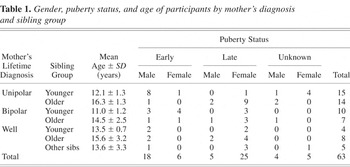
Gender, puberty status, and age of participants by mother's diagnosis and sibling group
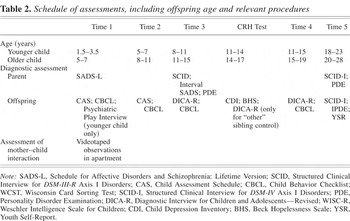
Schedule of assessments, including offspring age and relevant procedures
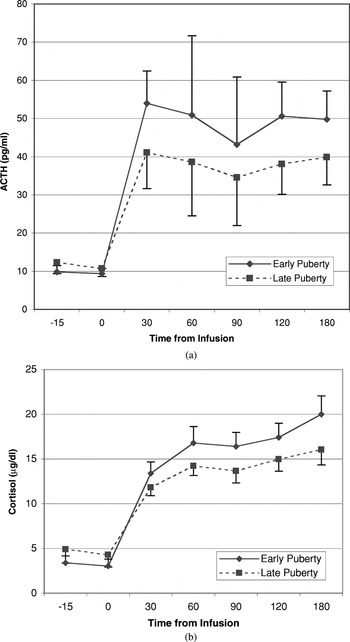
(a) ACTH response to CRH infusion by puberty stage (means and CIs) and (b) cortisol response to CRH infusion by puberty stage (means and CIs).
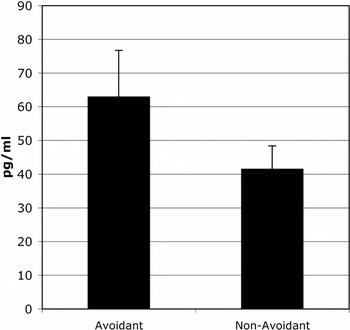
ACTH response to CRH infusion in the offspring of mothers with or without avoidant personality disorder, adjusted for puberty stage (means and CIs).
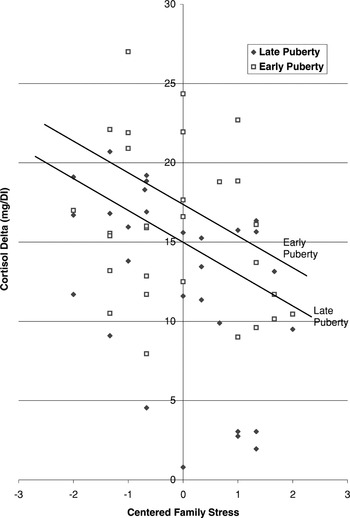
Cortisol response to CRH infusion by family stress and puberty stage.
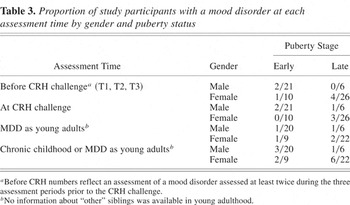
Proportion of study participants with a mood disorder at each assessment time by gender and puberty status
 You have
Access
- 31
- Cited by