Introduction
When the Japanese forced Hŭnsŏng Taewŏn'gun (1820–98) to sign the Kanghwa Treaty in 1876, the Chosŏn kingdom's (ad 1392–1910) policy of isolationism effectively ended as Korea was propelled into the international arena. Following the establishment of trade and diplomatic relations with Japan, similar treaties were established with Western nations. In 1882 a treaty was signed between Korea and the United States; it was soon followed by treaties with Britain, Germany and other European countries.Footnote 1
The formation of trade and diplomatic relations between Korea and countries outside of East Asia brought about important and irreversible changes to Chosŏn Korea as it was no longer able to cocoon itself in the ways of the past, but was forced instead to respond to a changing world order. Until then, little was known about the “Hermit Kingdom”.Footnote 2 However, over the course of the late nineteenth and early twentieth centuries a growing number of Westerners lived in Seoul and elsewhere on the peninsula. Some took up positions at the Chosŏn royal court as government officials or physicians, while others worked as diplomats, missionaries, doctors and hoteliers, among other professions. Soon tourists began to choose the peninsula as an exciting travel destination and several published accounts of what they saw and experienced in the country. Their writings added to the rising number of contemporary volumes on Korean language, history and customs.Footnote 3 Some of these volumes included discussions of Korean ceramics and other artefacts, which began to attract the attention of art collectors and museum curators and marked the beginning of the study and subsequent collecting of Korea's cultural heritage.
During the 1880s and 1890s interest in Korean artefacts increased as more objects surfaced, were studied, and were better understood. It is a common misconception that only the Japanese were interested in Korean objects at this time. Diaries and other accounts from the late nineteenth century indicate that Americans and Europeans sourced many pieces, too. The interest of both the Japanese and Westerners focused primarily on celadon ceramics from the Koryŏ period (ad 918–1392), which became sought-after commodities over the course of the early twentieth century. Celadon ceramics began to be manufactured in Korea during the tenth century, but their production went into decline in the closing decades of the Koryŏ rule. As white porcelains were preferred by the elite of the new Chosŏn kingdom, the production of celadon was not revived until the Colonial period (1910–45), when the Japanese established so-called “new Koryŏ kilns” (Shin Koryŏso 新高麗燒) where contemporary interpretations of Koryŏ celadon were made.Footnote 4
The preference for celadon ceramics remains to be studied in depth. Collecting as practice is often seen as “a basic urge”, but this does not explain the motives which lie behind the predilection for specific things over others.Footnote 5 Rather, the collecting of artefacts is driven by a range of different impetuses, some planned, others impulsive, but all framed by the particular social, historical and economic conditions of a specific time and place.Footnote 6 It will here be argued that the avid collecting of Korean celadon ceramics was not a chance phenomenon. The objects were initially hard to come by, as it was illegal to desecrate the tombs in which they were found. Also, the study of Korean art was at its infancy, making information on ceramics difficult to access. Furthermore, when Japan and the West descended upon the peninsula, there were other artworks, which could be sourced more easily. However, by the 1910s, celadon ceramics had become desirable collectibles. Among other qualities they were celebrated for their beauty, their uniqueness and their antiquarian references. It will here be argued that such qualities are not exclusive to celadon but culturally manufactured and socially conditioned.Footnote 7 The significance of the collecting of celadon lies in the aggregation of its related practices and outcomes. The interest in and acquisition of celadon among the Japanese, the Americans, the Europeans as well as the Koreans betray different and at times overlapping ideas of Korea, its past and present, and they in turn have come to shape later perceptions and understandings of Korean art and culture.
Questions concerning the date of the first discovery of celadon wares, the ways in which they surfaced and became collectors' items, and the identity of those who acquired them, have long been intertwined with narratives of colonial and post-colonial historiography, making it difficult to gain a clear picture of the parameters at play. The commercial, aesthetic and antiquarian values of celadon were appropriated through different, though not necessarily separate, channels, and it indicates a system of appreciation that was constantly in flux. This article outlines the collecting practices and art market trends of Koryŏ celadon from their discovery in the 1880s to the market boom in the 1910s, culminating in the decrease in availability in the 1930s. By then celadon were largely believed to be among the best, most beautiful and most uniquely Korean artworks to be found on the peninsula. Even today, celadon ceramics are regarded as one of the highlights of Korean cultural heritage both within and outside Korea.Footnote 8 The following pages explore factors that directly and indirectly influenced the collecting practices of different groups of people, including the desire for unique Korean objects, the availability of ceramics and the value attached to objects from a bygone era. The discussion concentrates on British collections. However, since interest in and scholarship on Korean art developed along a similar trajectory in the USA, references to select American collectors and museums are also included.
In search of “Koreanness”
There are no records from late nineteenth-century collectors stating why they developed a liking for Korean celadon. Therefore, the motives behind their preference for what were, at the time, relatively unknown pieces of art are obscure. However, travelogues and articles by Americans and Europeans suggest that at around this time a major impetus lay in the search for “things Korean”. When foreigners arrived on the peninsula, they often wished to acquire mementos of their visit. However, many failed to find anything of interest, not least because they rarely knew what to look for. Volumes on Korean art were few as it was not until 1929 that the first study devoted exclusively to Korea's cultural heritage was published in the West. Written by the Benedictine missionary Andreas Eckardt (1884–1974), it covered all aspects of art, from architecture to Buddhist sculpture, and also included a section on Koryŏ ceramics.Footnote 9 Prior to this some authors had made mention of Korea's cultural traditions, one of the earliest being Louise Jordan Miln (1864–1933), but their discussions tended to be vague and at times misguided.Footnote 10
In many writings Korean artefacts were dismissed as lacking in artistic merit, leaving museum curators with the challenge of how to expand their Korean collections with good pieces of art. When Thomas Watters (1841–1901), who worked in the Consular Service in Seoul, donated an inlaid lacquer chest, tobacco boxes and items of embroidery to the Victoria and Albert Museum (hereafter V&A) in 1888, a museum official noted that: “The items are of little importance or value”. In an effort to expand the Museum's Korean collection, the objects were nevertheless acquired.Footnote 11
The Scotswoman Constance J. D. Coulson (1868–1948), who travelled to Korea several times around the turn of the twentieth century, was one of few Westerners to be enamoured with Korean goods. She found that there were plenty of interesting purchases to be made: “The shops are full of silks and gauzes in the prettiest colours, of ribbons, of strings of coral and amber, which are used as hat-strings; of cabinets and boxes, in black lacquer, ornamented with mother-of-pearl, or covered with lacquer in brilliant green and red”.Footnote 12 Several such items were acquired by Western museums, including the V&A and the British Museum (hereafter BM), in the late nineteenth and early twentieth centuries, often by individuals charged with the task of collecting typical local objects.Footnote 13 In 1912, the growing interest in Korean arts led the V&A to send C. H. Wylde, a curator in the Ceramic Department, on a buying trip to Seoul, where he purchased several pieces of textiles, furniture as well as ceramics.Footnote 14
The fact that few things seemed to be uniquely Korean in character is also crucial. Ink paintings were generally thought to look very similar to Chinese ones, although inferior in quality.Footnote 15 Westerners, including Carles, often ended up buying contemporary iron tobacco boxes as they were, in Carles’ words, “[t]he only distinctly native article” available for purchase at this time.Footnote 16 Other objects that were considered to be characteristically Korean and of reasonable quality were wooden cabinets and brassware, also of contemporary date.Footnote 17 In the late nineteenth and early twentieth centuries the V&A and the BM acquired several such artefacts, including wooden chests and a large number of brass articles, ranging from bowls to chopsticks and candlesticks.Footnote 18 The challenge facing collectors and curators was that the majority of the artefacts available for purchase in Korea were of an ethnographic nature, leaving some curators to acquire them reluctantly.Footnote 19 In contrast, celadon ceramics were singled out as genuinely Korean artworks on a par with anything produced in China and Japan, leading some to proclaim them as the sole great product in Korea and therefore worth collecting.
The problem was how to define “good art”. Initially Westerners relied on judgements made by the Japanese on what constituted good Korean art. Several Western accounts from the late nineteenth and early twentieth centuries make mention of how highly the Japanese valued celadon wares. The ornithologist Pierre Louis Jouy (1856–94) wrote that: “These pieces [Koryŏ celadon wares], to which a remote antiquity was ascribed, were held in high esteem by Japanese connoisseurs”.Footnote 20 Similarly, the American missionary, physician and later diplomat Horace N. Allen (1858–1932) stated that in the late nineteenth century celadon wares were in demand in Japan, where they were sold at high prices.Footnote 21 This suggests that many Western scholars and collectors were well aware of Japanese collecting practices.Footnote 22 The Japanese had for centuries taken a keen interest in Korean ceramics, largely due to their fondness for tea wares.Footnote 23 Their preference for Korean bowls dates back to the fifteenth and sixteenth centuries when punch'ŏng stonewares of the early Chosŏn kingdom became popular among the tea-drinking Japanese elite, leading to their export to Japan. The sixteenth-century invasions of the Korean peninsula led by the Japanese warlord Toyotomi Hideyoshi (1536–98) have even been dubbed the “pottery wars” by contemporary art historians, due to the large numbers of potters who were forcibly brought to Japan to set up kilns there. It is therefore understandable that the Japanese developed an interest in celadon as soon as the wares began to surface.
Westerners' appreciation of celadon wares was also informed by the taste of Koreans, especially after the opening of the Imperial Museum of Korea (Chesil pangmulgwan 帝室博物館) in 1909, which will be discussed further below. However, it is unclear to what extent Koreans took an active interest in the study and collecting of celadon and other local artworks in the late nineteenth century. A comment made by the scholar Yu Kil-chun 兪吉濬 (1856–1914) in Observations on Travels in the West (Sŏyugyŏnmun 西遊見聞) suggests that some Koreans took great pride in Koryŏ celadon ceramics. Yu wrote that “Koryŏ celadon are famous in the world” and likened them to other great Korean achievements, such as the invention of metal movable type printing.Footnote 24 Whether Yu's statement was informed by the collecting practices of the Japanese and Westerners, or by Koreans, is not known. Around this time, Japanese collectors seem to have greatly outnumbered local collectors, but some Koreans from privileged backgrounds did acquire celadon pieces in the late nineteenth century. King Kojong (r. 1863–1907) offered a celadon dish to the above-mentioned Horace N. Allen in gratitude for having saved the life of Min Yŏng-ik 閔泳翊 (1860–1914), the queen's nephew, in 1885.Footnote 25 Allen later noted that this was the most highly prized article that the court could present to him, though he was himself not at first very fond of it. Yet, it seems to have spurred his interest in Korean ceramics and he eventually built up a substantial collection while he resided in Seoul.Footnote 26 It may have been the royal family that Louise Jordan Miln referred to when she wrote in 1895 that: “Koreans value highly all sorts of crackle ware [celadon ceramics], and have been excelled, I fancy, in its manufacture by no other”.Footnote 27
By the 1910s Eastern as well as Western collectors had firmly established Koryŏ celadon as the best, most beautiful and most distinctively Korean product available on the peninsula, as stated in an article published in the Boston Museum of Fine Arts Bulletin in 1911:
Like Korean painting, sculpture, and architecture, [Korean pottery] had its source in China and passed on its tradition to Japan; but unlike those greater arts, pottery making in Korea developed in its own way, growing into something rich and quite different from anything produced in China, and teaching Japan everything but its own beauty. In other words, we have in Korean pottery of the best period [Koryŏ] a distinctively Korean expression of taste and skill.Footnote 28
The view that Koryŏ celadon surpassed other types of Korean ceramic wares was shared by British collectors and museum officials. In 1918 the V&A curator Bernard Rackham stated that: “All the best pottery found in Corea dates from the period of the Kōrai dynasty”.Footnote 29
Looking for difference
As the quote from the Boston Museum of Fine Arts Bulletin indicates, comparisons with Chinese and Japanese art were a crucial means to prove the uniqueness of Korean celadon. Over the course of the 1910s scholars became especially interested in differences between Korean and Chinese glazed stonewares. This shift was rooted in the changing tastes among Western collectors of Chinese ceramics. In 1929 the Japanese archaeologist and historian Fujita Ryōsaku 藤田亮策 (1892–1960) argued that for Europeans, tired of ostentatious Ming (1368–1644) and Qing (1644–1912) porcelains, Song (960–1279) and Yuan (1279–1368) stonewares seemed “pure and immaculate” (청순하다). According to Fujita, Koryŏ celadon were also seen to possess such desirable qualities and were for this reason collected.Footnote 30 Fujita referred to the shift in interest towards Song and Yuan ceramics following a seminal exhibition of Early Chinese Pottery and Porcelain, organized by the Burlington Fine Arts Club (hereafter BFAC) in London in 1910.Footnote 31 The authors of the BFAC catalogue wrote of the pieces that “… their delicate restrained tints cannot fail to appeal to lovers of Chinese art”.Footnote 32 By this time, eighteenth-century Chinese porcelains, popular with nineteenth-century collectors, were regarded as decadent and commercial in comparison to Song ceramics, which were associated with purity and therefore became collectable.Footnote 33 The shift in collectors' interests coincides with the rising fascination with Koryŏ celadon during the 1910s among art collectors and museum curators based in Korea, Japan, the United States and Britain, suggesting that the new taste for Song and Yuan stonewares promoted appreciation of Koryŏ wares too, partially since comparisons with Song and Yuan celadon served as a way to pinpoint unique characteristics of Koryŏ wares. For example, in a description of Koryŏ celadon bowls, Raphael Petrucci noted that “the body … seems to be different from that found in … Sung [Song] and Yuan pieces, it is heavier in itself and more heavily modeled”.Footnote 34 Such comparative approaches helped to understand what made Koryŏ celadon beautiful, a point that will be explored later.
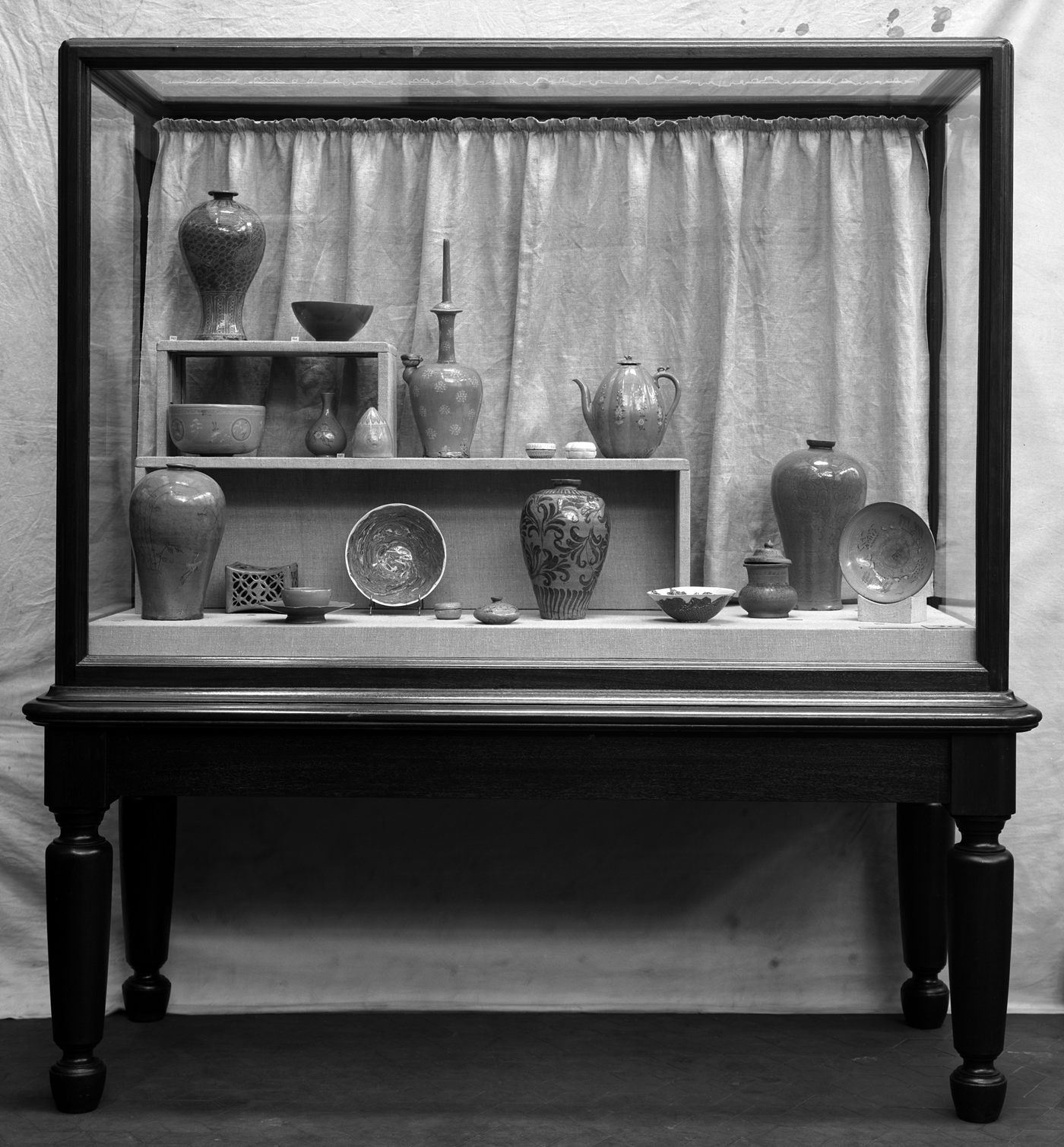
Scholarship on Korean celadon ceramics also increased at this time.Footnote 35 For some Chinese art collectors studies of Korean celadon aided understanding of early Chinese ceramics. For this reason, wares from China and Korea were at times displayed alongside one another.Footnote 36 For example, an exhibition of Song and Yuan stonewares held in New York in 1914 also featured around fifty Korean celadon wares.Footnote 37 This approach led some collectors of Chinese art, including George Eumorfopoulos (1863–1939), to purchase Korean ceramics as well. His pieces of Koryŏ celadon were shown alongside early Chinese ceramics in the Eumorfopoulos Exhibition of Chinese Art, which opened at the V&A in 1936 (Figure 1).Footnote 38
Display of Koryǒ celadon in the Eumorfopoulos Exhibition of Chinese Art, at the Victoria and Albert Museum in 1936. (After V&A Archive, Nominal File: Mr and Mrs George Eumorfopoulos.) © Victoria and Albert Museum, London

In pursuit of antiquity
Koryŏ celadon were thus validated as being uniquely Korean products. However, it was their antiquarian references as “mortuary wares” that cemented their worth as objets d'art from the time when they were first discovered in Koryŏ tombs. It is through our interpretations of the past that artefacts are ascribed particular forms of cultural or artistic “authenticity”. Antiques are generally attributed a sense of temporal “depth” and, for this reason, the collecting of objects from ancient civilizations is widely regarded as being more rewarding than the collecting of contemporary things. Moreover it is typically objects of cultural or historical value that may be promoted to the status of fine art, as was the case of celadon.Footnote 39
Korea was recognized as an ancient nation with a long history: this was made apparent in writings published from the late nineteenth century onwards. Many were captivated by the notion of Korea as a country where time stood still and where past customs and ways of life had been preserved for centuries. This matched the widespread image of the “Hermit Kingdom” and fuelled a fascination with the peninsula.Footnote 40 A prominent characteristic of the Korean countryside were the numerous tomb mounds that dotted the hillsides. The peninsula was frequently described as a vast graveyard, with burial mounds and monuments of varying age and archaeological interest.Footnote 41 From the time they were first discovered and collected, celadon ceramics were known to have been unearthed from ancient graves and were referred to as ”tomb” or “mortuary wares” in many early writings.Footnote 42 The persistent use of such terms suggests that collectors attached great significance to the tomb origins of celadon wares. By referring to celadon as “mortuary wares”, collectors branded them as antiques and in so doing separated them from lower quality artefacts of Chosŏn and contemporary times. In highlighting the historical value of celadon ceramics, they authenticated the wares as collectibles and by association labelled themselves as authentic and erstwhile collectors. The practice of referring to celadon as tomb wares was common until the 1940s but by the 1970s it had disappeared from scholarly writings, marking a significant shift towards the perception of celadon as art objects, rather than as mortuary wares.Footnote 43 By the 1970s celadon ceramics were established as desirable objects and it was no longer necessary to promote their antique connotations. They were largely seen and interpreted within museum contexts and, as a result, the historicities of celadon wares were reconfigured and their past roles as tomb goods became less important.
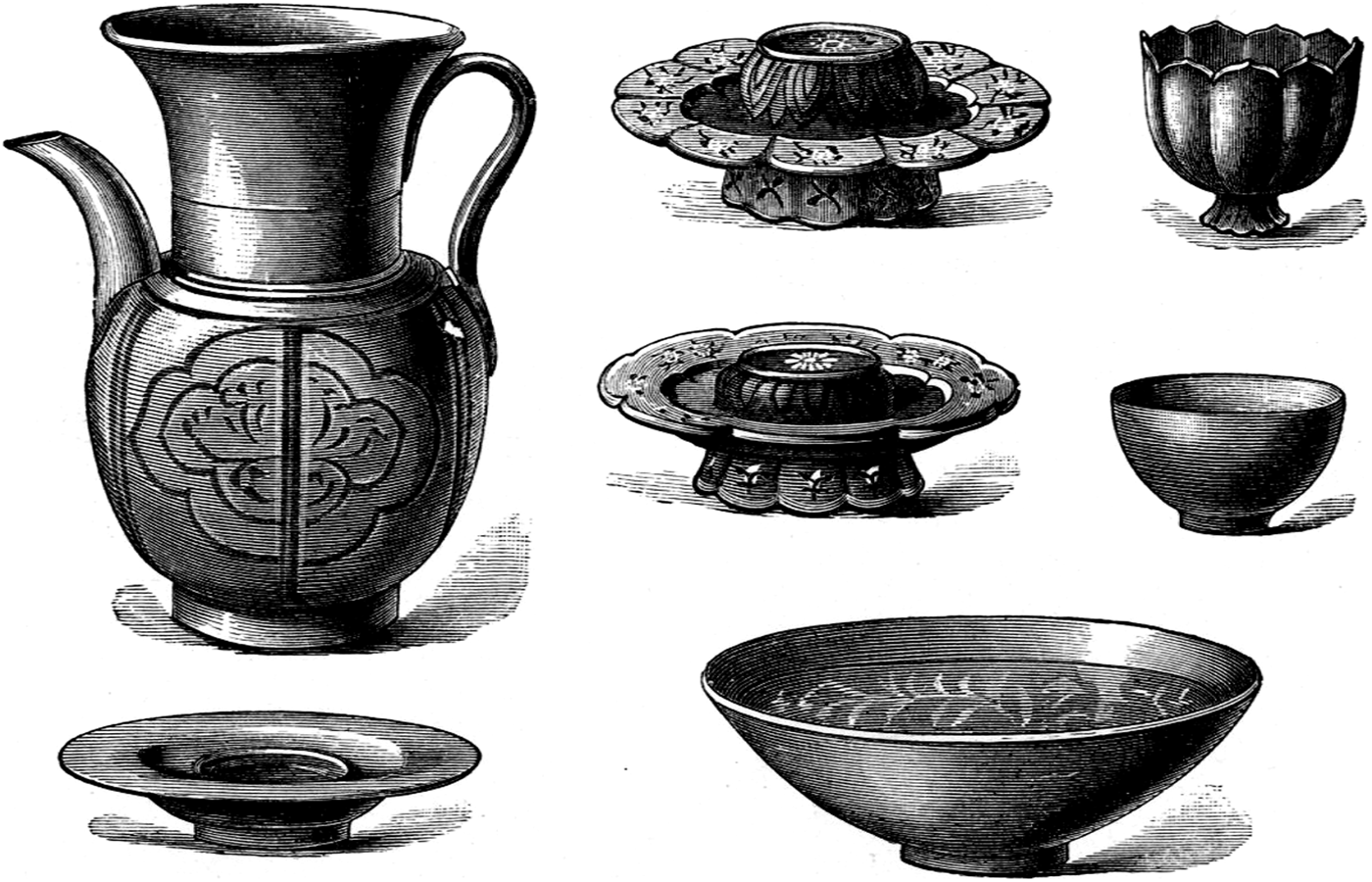
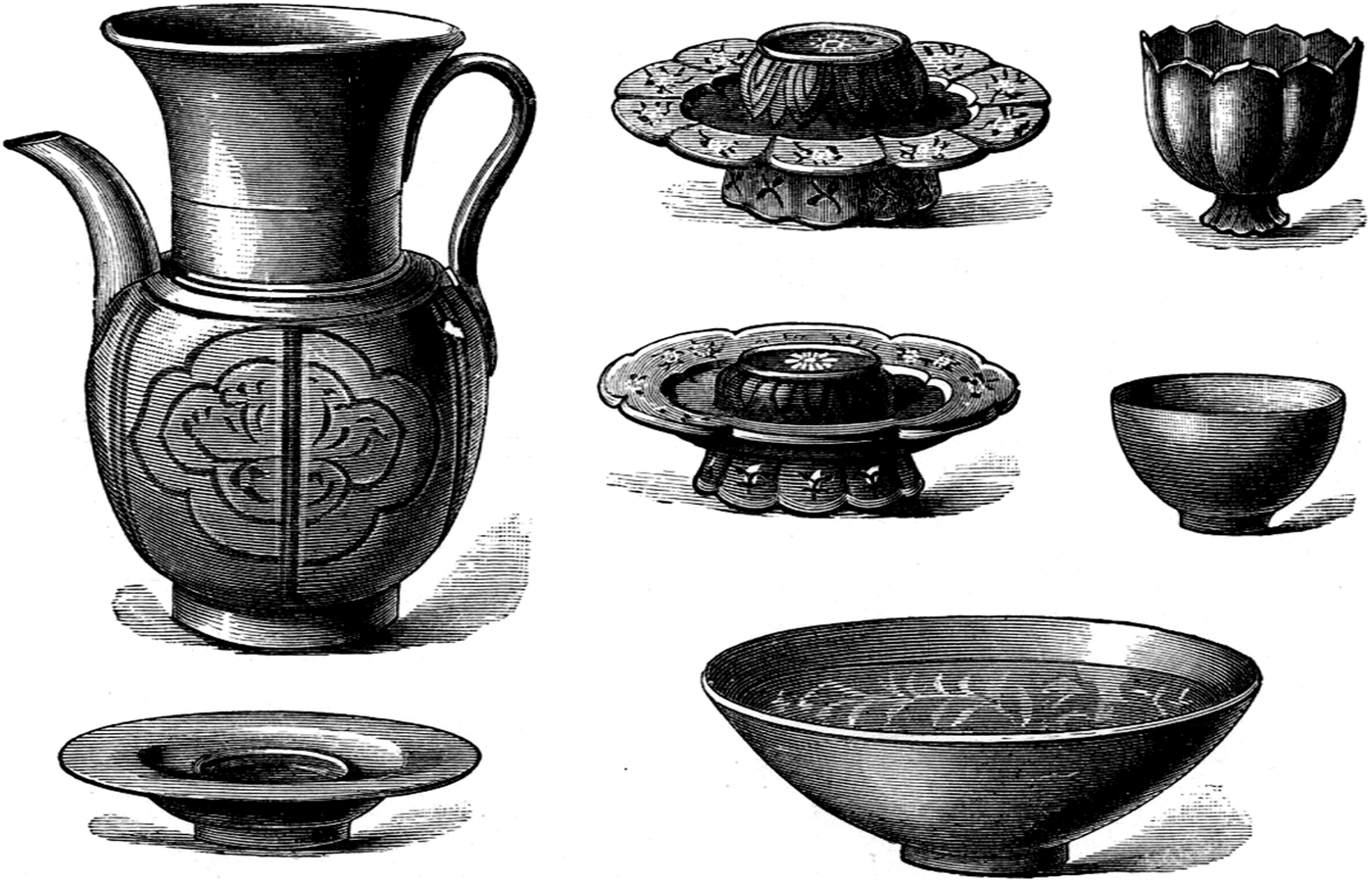
It is not known exactly when the first discoveries of celadon wares were made but written accounts suggest that it was in the 1880s. In 1888 the British Vice-Consul William R. Carles (1848–1928) published the first account of how celadon were removed from graves near Kaesǒng, where members of the Koryŏ royal family were buried. He writes: “In the winter after my return to S[e]oul [in 1884–85] I succeeded in purchasing a few pieces, part of a set of thirty-six, which were said to have been taken out of some large grave near Songdo [Kaesǒng]”.Footnote 44 The majority of the acquired pieces were celadon wares, some of which were decorated with sanggam inlay (Figure 2). The fact that they were largely unknown at the time is evidenced by Carles' misguided belief that the inlaid motifs were made up of a “series of irregular white fragments of quartz or porcelain, which must have been imbedded in the clay before the baking”.Footnote 45 In reality, the inlaid patterns were created by filling the incised motif with slip.
Celadon ceramics purchased by Carles. After William R. Carles, Life in Corea (London: Macmillan and Co., 1888), 140–1.
The discoveries of Koryŏ tombs in the 1880s are also referred to by the British collector and amateur archaeologist William Gowland (1842–1922), who wrote that “cream-coloured glazed” wares – this being a frequently used term for Koryǒ celadon at this time – were being unearthed from tombs at Kaesǒng.Footnote 46 The speed at which these artefacts became collectible commodities is remarkable considering very little was known of Korea's ceramic history when they were first discovered. It is telling that Gowland does not even attempt to date the glazed wares he saw, merely saying that “a great age is ascribed [to them] by the Koreans”.Footnote 47
Over the course of the late nineteenth and early twentieth centuries a steadily increasing number of celadon wares were unearthed and sold within and outside Korea, culminating in the boom of the celadon art market in the 1910s. Many tomb goods surfaced following the end of the Russo-Japanese War of 1904–05, when new roads and railways were constructed on the peninsula.Footnote 48 In the early twentieth century the Japanese acquired the partially constructed railway between Seoul and Sinŭiju, located 40 km from the mouth of the Yalu River that borders Korea and China, from French and American companies: they completed it in 1905. The project was driven by the desire to secure a stronghold on the peninsula. Furthermore, the railway offered an effective means to gain access to Manchuria and Russia. The fact that the line ran through Kaesǒng is not insignificant, as it seems to have led to accidental discoveries of the well-furnished royal and aristocratic tombs located there. By the 1910s it had become common knowledge that the richest graves with the “best goods” were those situated in the mountains surrounding Kaesǒng.Footnote 49
Wares continued to surface into the 1930s and even the 1950s. In the summer of 1935 a considerable stir was caused among scholars and collectors when “freshly excavated” wares were said to have come from islands in Haeju Bay, near the city of Kaesŏng.Footnote 50 Numerous Chinese porcelains of the Song period, including Ding wares, were reported as having been plundered from tombs in the area, particularly on Yongmaedo, the largest island in the group, and according to rumour at least one-hundred tombs from the Koryŏ period were found there. They were most likely built for the aristocrats and traders who lived in the region.Footnote 51 However, by the time they surfaced, the colonial government had issued stringent preservation and export laws, as discussed further below, making it impossible to export the wares legally. Instead, it seems that the majority entered the collection of the Museum of the Government-General of Korea.Footnote 52
Appropriating the past
From the time when international scholarship on Korea's past and present began in the late nineteenth century, research developed into its past kingdoms and rulers, as well as significant historical events and cultural sites. By the 1910s an increasingly detailed picture of Korea's history had emerged. However, not all past eras were assigned equal worth, with some being valued more highly than others. William Gowland was one of the few collectors who paid attention to prehistoric Korean artefacts.Footnote 53 His archaeological interest in Japan and his belief that Korea was “the point of departure from the mainland of the Japanese race”Footnote 54 led him to travel to the peninsula, and in 1884 he journeyed from Seoul to Pusan. He was interested mainly in stonewares of the Three Kingdoms period (trad. 57 bc–ad 668), several of which he excavated and collected. They were later acquired by S. W. Franks, who donated them to the British Museum where he was a Keeper of Antiquities.Footnote 55 Another early collector of Three Kingdoms ceramics was Edward Sylvester Morse (1838–1925) who, like Gowland, was interested in making connections between prehistoric Japan and Korea.Footnote 56 However, they were exceptions. Most collectors of Korean art only had eyes for celadon ceramics. Though Three Kingdoms stonewares pre-date Koryŏ celadon and therefore were in principle of higher historical value, most collectors did not value them in such a manner.
Writings by early Western and Japanese collectors suggest that the Koryŏ kingdom represented a bygone, once glorious, era. Many writers lamented the state of the Korean peninsula in the late nineteenth and early twentieth centuries, criticizing its lazy population, the lack of progress in manufacturing and the absence of originality in the arts, among other faults. Chosŏn Korea was widely regarded as a drowsy backwater that was slipping into decline because of its inability to modernize.Footnote 57 The 500 years of Chosŏn rule offered little that was worth celebrating and its art was therefore largely overlooked by Westerners.Footnote 58 In contrast, the Koryŏ kingdom was heralded as the best period of pottery making in Korea.Footnote 59 Therefore, celadon came to represent a lost art that could not be revived (given the poor state of the country), but could only be preserved through appropriation. The antiquarian merits of the wares were reinforced through a romanticized image of a once-glorious kingdom that perished along with its art, much like Atlantis. The fact that they had stayed secret and underground for hundreds of years enhanced their appeal.
The notion that Korean society went into decline after the fall of Koryŏ was particularly popular among Japanese scholars, as it fitted the colonial argument of the impossibility of independent Korean development. Central to the colonial view of Korea was the belief that Korean people were by nature subordinate to other, more powerful, nations. Historians supported these theories through references to historical events, highlighting that Korea had never invaded another country but had repeatedly been invaded as well as colonized by more dominant states. Japan's colonization of Korea was therefore seen as a normal and inevitable outcome of Korean identity, its history and geography.Footnote 60 In emphasizing the successes of earlier periods, including the arts, past achievements were thus juxtaposed with current failures. This served to reinforce Japan's colonial role as the protector of Korean art and the ultimate saviour of the peninsula.Footnote 61 This view is reiterated in one of the earliest published Japanese exhibition catalogues of Koryŏ celadon, in which the authors state that: “It goes without saying that the Korean social situation is deteriorating. It is surprising that the ancestors of this Korean race successfully produced the finest art objects [Koryŏ celadon]. We Japanese have to introduce such a hidden beauty actively”.Footnote 62
Defining beauty
The collecting of artefacts is often driven by a pursuit of particular notions of beauty and, in addition to their uniquely Korean characteristics and their antique references, Korean celadon presented an aesthetic appeal that gained them popularity. In a discussion of his Chinese ceramics, George Eumorfopoulos summed up his collecting attitude as follows: “Archaeological appeal alone, however, has never induced me to acquire an object: to enter my collection it was indispensable that it should at the same time appeal to me aesthetically in some way or another”.Footnote 63 There is little doubt that collectors of Korean art shared his views.
While the grouping of artefacts into typologies presupposes some notion of permanence, the definitions of those typologies are temporal. In the same way, although the object of beauty may remain the same, definitions of how that beauty should be interpreted may differ between groups of people. In the case of Korean celadon, definitions of what made them beautiful were formed in the 1880s and had by the 1910s become standardized. However, by the 1930s interpretations of what constituted that beauty differed among Western and Japanese collectors. For Westerners, comparisons with Song wares often provided a means to demonstrate the unique beauty of Korean celadon. Decorative features that are typically not seen on Song celadon tended to be highlighted and were often seen as significant contributing factors to the beauty of Koryŏ celadon. They included qualities such as the soft tinge of their clear glazes, their exquisitely carved designs and their inlaid decorations.Footnote 64
However, Japanese ideas of what constituted the beauty of Korean celadon were firmly embedded within colonial readings of past and present Korean society. The theories espoused by Yanagi Sōetsu 柳宗悦 (1889–1961), one of Japan's most famous collectors and scholars of Korean art, were particularly influential. In a seminal essay published in 1922, Yanagi characterized Korean history as unstable and the Koreans as subservient to foreign powers, leading to the “essence” of Korea being lonely, sorrowful and spiritual. This national trait was manifested in the arts, as reflected in form, colour and line. Korean art, he argued, was characterized by long and narrow lines, denoting fragility, in contrast to Chinese art which was exemplified by stable forms, signifying power, and Japanese art, represented by bright colours, typifying pleasure. In a similar vein, the paucity of colour in Korean works of art signalled an “absence of pleasure in life”.Footnote 65
Not all scholars subscribed to this analysis of Korean art. The British collector and scholar Sir Godfrey Gompertz (1904–92) criticized heavily the argument that the aesthetics of Korean ceramics bore the effects of the so-called sadness and suffering of the Korean people. He claimed that the Koryŏ period was “just as full of light as well as shade as most other human eras”.Footnote 66 Nevertheless, Yanagi's theories had an enormous impact on Japanese and later Korean interpretations of the beauty of Korean ceramics. Many Japanese scholars and collectors, such as Koyama Fujio 小山富士夫 (1900–75) and Uchiyama Shōzō 內山尚三 (1920–2002), reiterated Yanagi's views in their appraisals of Korean pottery. For them a quietness of spirit and sense of loneliness formed the beauty and essence of Koryŏ celadon.Footnote 67
Acquiring the illicit
The perception that celadon ceramics had lain undisturbed for centuries before being discovered was in principle correct, irrespective of its romantic connotations. Following the demise of Koryŏ rule in 1392, the kings of Chosŏn had maintained the Koryŏ royal tombs, since Confucian codes of conduct called for them to visit and maintain the graves of previous rulers.Footnote 68 The tombs were built in the form of stone chambers, covered by a small earthen mound in front of which stone figures of officials and tigers were placed. However, these tombs could be looted relatively easily by breaking through the stone walls of their underground chambers, as indicated in a drawing of the interior of the tomb of King Myǒngjong (r. 1170–97) in which the grave robbers' entry points are clearly marked (Figure 3).Footnote 69
Interior of the tomb of King Myŏngjong (r. 1170–97), located near Kaesŏng. Looters' entry points are circled. (After Chōsen Sōtokufu, Taishō 5-Nendo Koseki Chōsa Hōkoku (1916 Report on investigations of historic remains) (Keijō [Seoul]: Chōsen Sōtokufu, 1916), 507.) (colour online)
Despite the fact that the tomb interiors could be accessed without much difficulty, they were left untouched until the late nineteenth century. By 1916, however, when Japanese archaeologists working for the Government-General of Chōsen (Chōsen Sōtokufu 朝鮮總督府) surveyed the tombs, they had all been fully or partially emptied of burial artefacts.Footnote 70 One of the main reasons why they remained intact was the severe punishments meted out to those who desecrated a grave. In Chosŏn Korea this was seen as a moral violation against Confucian filial sentiments and was therefore one of the most serious crimes in the Korean penal code.Footnote 71 Westerners, too, knew that it was a capital offence to loot tombs, making it initially “very hard to obtain specimens”, as H. S. Saunderson noted in 1895.Footnote 72 With the weakening of Chosŏn at the end of the nineteenth century and in the early twentieth century, these laws lapsed, leading to increased plundering of grave sites.
John Platt provides a good summary of the situation on the peninsula during these years:
Any desecration of the tombs being a capital offence, and always accomplished at much risk, very few specimens were obtained in this manner, the great scarcity of fine early examples [of Koryŏ celadon] continuing till we come to the time of the Russo-Japanese war, when the Japanese army made its headquarters in Korea. This was too good an opportunity to be lost, and Japanese and Koreans, who knew what was likely to be found in the tombs, systematically robbed them and obtained a large number of most valuable specimens. The most important excavations were made in the vicinity of Song-do [Kaesŏng] where the graves of the early kings and nobility of the Koryu [Koryŏ] dynasty were to be found. To-day most of the graves in this neighborhood have been plundered.Footnote 73
Artefacts continued to be stolen from tombs even after Korea became a protectorate of Japan in 1905. Gompertz went so far as to describe the situation in Korea as a “veritable orgy of pillaging”.Footnote 74 Shimokōriyama Seiichi 下郡山誠一 (b. 1883), who worked as a government advisor to the Imperial Museum of Korea in 1908, wrote that after having taken up his position in Seoul, he visited the official residence of Komiya Mihomatsu 小宮三保松 (1859–1935), a cabinet secretary, where he was surprised to see a room full of boxes with artefacts raided from Koryŏ tombs. To avoid being seen by the police, looters would bring their goods during the night to dealers in Seoul, who would sell them on to interested buyers the following morning. Dealers visited Komiya, who would assess and purchase such pieces virtually every day. Following the visit, Shimokōriyama himself also began to frequent the dealers.Footnote 75
News of the plundering of tombs and the subsequent availability of cheap mortuary ceramics also reached art collectors in Britain. In an article published in Burlington Magazine in 1912, John Platt explained in detail how pit tombs and their contents were discovered by grave robbers:
In order to locate the tombs heavy sticks and pointed iron rods were used. By knocking on the ground it was often possible to tell that there was a hollow place beneath, and when the pointed iron rod was bored into the ground and went through into space it was known that a tomb would be found in this spot.Footnote 76
Rumours of the many antique ceramics that could be found in Seoul, often at cheap rates, led some Western collectors to travel to the peninsula in search of bargains. One such individual was Aubrey Le Blond (1869–1937), a British collector who donated and sold many of his Korean pieces to the V&A.Footnote 77 In 1913 Le Blond and his wife met Professor Archibald H. Sayce, who recommended that they travel to Korea to purchase antiques for their collection, since good quality objects could be acquired for reasonable prices.Footnote 78
By the 1920s the “orgy” was over, as the Japanese took measures to preserve Korea's cultural heritage. In 1916, the colonial government drew up the first of several articles to enforce the safeguarding of cultural sites and historic artefacts. Titled “Regulations on the Preservation of Ancient Rites and Relics of Chōsen” (Koseki oyobi ibutsu hōson kitei 古蹟及遺物保存規則), the article clarified how ancient monuments (koseki 古蹟) and ancient remains (ibutsu 遺物) should be defined, and stated that if such ancient monuments or remains were disturbed, the perpetrator should be reported to the police. It also stipulated that official permission was needed from the government for the removal, repair and preservation of remains.Footnote 79 Although the regulation did not stop the looting of tombs altogether, it did have some impact.
As celadon wares became scarcer on the art market, their prices inflated, much to the frustration of private collectors and museum institutions. In 1920, Reverend A. S. Hewlett wrote to the V&A, inquiring whether it had a possible interest in purchasing a number of Korean antiques, including celadon ceramics, in his possession. He explained that he had difficulties in pricing the objects, “since Corean things have been at a fabulous price since the rifling of the tombs has been stopped by the Government in compliance with the Coreans protectorate and the Japanese […] ask an exorbitant price both in Corea and Japan”.Footnote 80 The regulation of 1916 was replaced in 1933 by the “Treasures, Ancient Sites, Famous Places, and Natural Monuments Act” (Hōmotsu koseki meishō kinnenbutsu hōzonrei 寶物古蹟名勝記念物保存令), which was put in place to reinforce the 1916 regulation and to monitor private institutions and individuals who possessed national treasures.Footnote 81 It effectively put an end to the export of antiques and from this time onwards Western collectors and curators had to source Korean artefacts from already-established collections outside the peninsula.Footnote 82
Appropriating celadon through museum displays
There is no doubt that the illegality of plundering tombs initially deterred many Koreans from desecrating graves. Yet, it should also be taken into account that until the late nineteenth century there was no local interest in the archaeological remains from past Korean kingdoms. Fujita Ryōsaku attributed this to the Confucian scholars' penchant for written documents.Footnote 83 The Chosŏn elite did collect Chinese paintings, ancient Chinese bronzes and contemporary ceramics. In this respect, they followed the practices of contemporary and earlier Chinese emperors, who built up substantial collections of Chinese artworks.Footnote 84 However, the Korean elite did not covet local artefacts from tombs, partially due to the prevailing belief in the sacredness of the bodies of ancestors and their tomb sites. The non-Korean heritage of artefacts from mainland China may have made it easier for the Confucians of Chosŏn to ignore the original tomb contexts of Chinese antiques. The reluctance to acquire Korean mortuary goods seems to have persisted even after the fall of Chosŏn. Lorraine D'O Warner wrote in 1930 that “the Koreans have a strong religious dislike of using objects that were buried with the dead, and for this reason they place no great value on pottery that was so used”.Footnote 85
However, attitudes did begin to change in the 1880s, as members of the royal family started to acquire celadon ceramics, as demonstrated by King Kojong's gift of a celadon dish to Horace Allen mentioned earlier. It is not known whether the dish formed part of a larger collection of ceramics, but it signals a shift in attitude towards local mortuary goods. It is not known which impetus lay behind the royal family's acquisitions of Korean antiques. Perhaps they were a reactionary countermeasure against the Westerners and the Japanese, who were buying up Korean antiques in increasingly large numbers around this time.
The official endorsement of the collecting of mortuary goods culminated in the founding of the Imperial Museum of Korea.Footnote 86 Questions abound as to whether it was the Koreans or the Japanese who initiated the establishment of the museum. Komiya Mihomatsu was in charge of the renovation of Ch'angdŏk Palace in 1907, a project that had been necessitated by the move of Emperor Kojong'sFootnote 87 residence from Tǒksu Palace to Ch'angdǒk Palace. According to him, the Cabinet Prime Minister Yi Wan-yong 李完用 (1858–1926) and Supreme Officer Yi Yun-yong 李允用 (1854–?) were concerned that Kojong would be bored in Ch'angdǒk Palace, and asked whether entertainment of some form could be arranged for him. This led Komiya to propose the building of a zoo, a botanical garden and a museum within the precincts of Ch'anggyǒng Palace, located immediately south of Ch'angdǒk Palace.Footnote 88
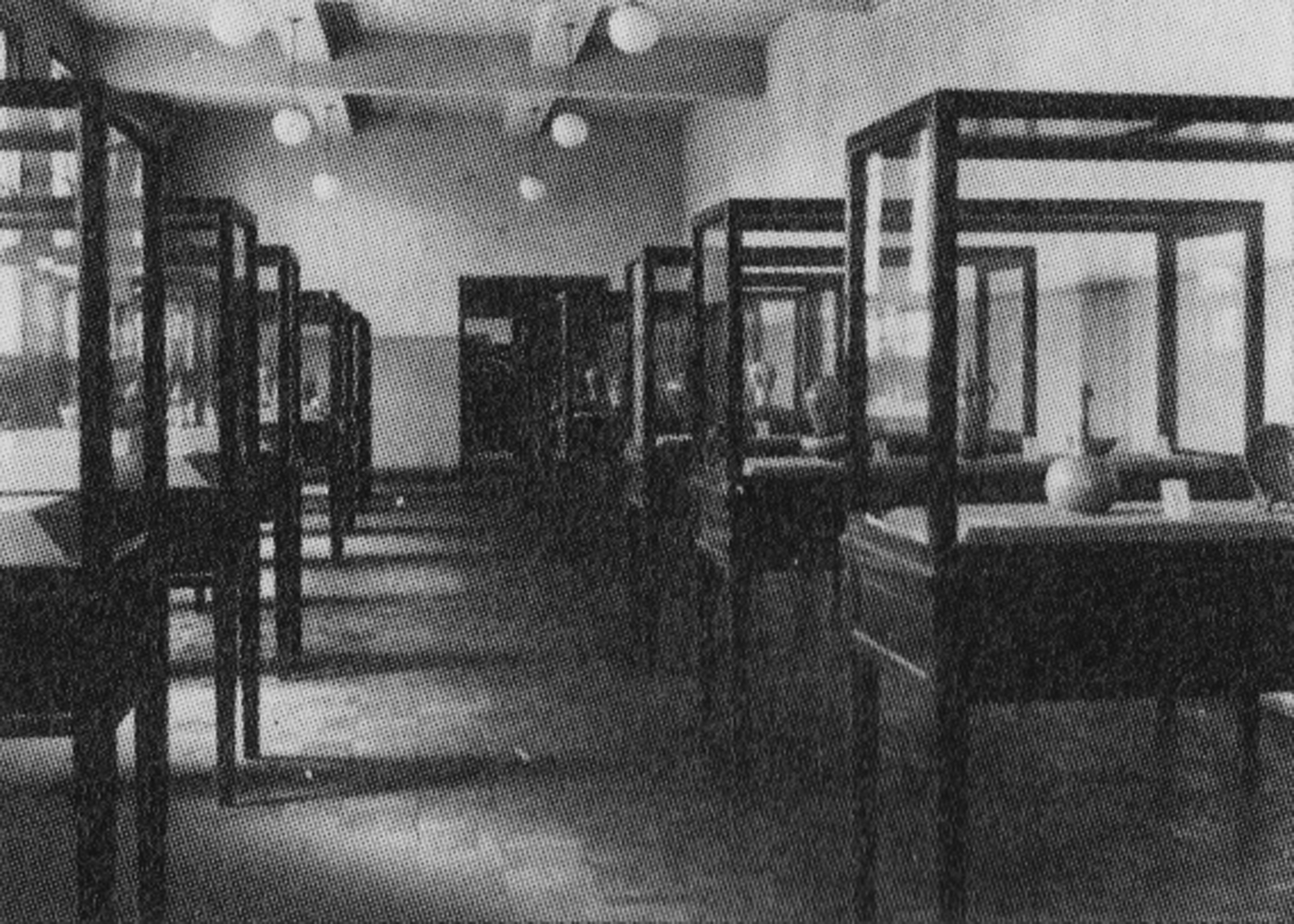
After having amassed 17,000 objects of various materials, the Museum opened to the public in 1909.Footnote 89 The royal family's endorsement of it was signalled by Emperor Sunjong's (r. 1907–10) declaration that the museum would “share pleasure with people” (더불어 즐거음을 나누고자).Footnote 90 Inside the galleries, celadon ceramics were displayed alongside archaeological artefacts, Buddhist sculptures and Chosŏn ink paintings (Figure 4). The Museum is significant as it allowed the Korean people to encounter their cultural heritage for the first time, but its impact went beyond Korea's borders. By the 1920s travel guides to Seoul, published in English, recommended that tourists visit the museum as a way to study “the ancient arts of the country”.Footnote 91 From the time of its opening, the museum publicly validated celadon ceramics as collectible commodities that formed an integral part of Korea's cultural heritage. An inlaid celadon ewer and basin set with underglaze copper-red decoration from the thirteenth century was among the first pieces to be acquired in 1908 (Figure 5). It was purchased from Kondo Sagoro 近藤佐五郞, a Japanese antiques dealer based in Seoul, for the significant sum of 950 wǒn. For the sake of comparison, it may be noted that the entry fee to the museum was initially set at ten chǒn for adults and that in the same year Kondo sold an inlaid celadon bottle from the thirteenth century to the Museum for only 150 wǒn (Figure 6).Footnote 92 The cultural and archaeological significance of Koryŏ celadon was further strengthened when the Japanese opened the Museum of the Government-General of Korea in Seoul in 1915.Footnote 93 Founded as a means to store and display the large body of artefacts that Japanese archaeologists were excavating on the peninsula, the museum firmly placed celadon within Korea's past cultural heritage and highlighted their antiquarian references.
Ceramic galleries in the Museum of the Yi Royal Family. (After Kungnip chung'ang pangmulgwan, Han'guk pangmulgwan kaegwan 100 chunyǒn kinyǒm t'ŭkpyǒlchǒn (Korean museums 100 year celebration) (Seoul: National Museum of Korea, 2009), 42.)
Double gourd wine ewer and basin inlaid with grapes and boys and painted with underglaze copper-red, thirteenth century, Koryǒ period (ad 918–1392). Ewer H. 34.2 cm, D. of body 14.6 cm, of base 8.5 cm; Basin H. 7.4 cm, D. of rim 17.9 cm, of base 11.2 cm. National Museum of Korea, Seoul. (colour online)
Vase inlaid with peony and chrysanthemum, thirteenth century, Koryǒ period (ad 918–1392). H. 25.6 cm, National Museum of Korea, Seoul. National treasure no. 114. (colour online)
Prior to the opening of these museums in Seoul, ceramics had already been displayed in museums and galleries outside Korea. In October 1885, the first overseas exhibition of Korean ceramics was shown in New York at a gallery owned by Edward Greey (1835–88), a well-known dealer of Japanese and Chinese art. Greey offered for sale the East Asian ceramic collection of Captain Francis Brinkley (1841–1912), an Irish newspaper owner, editor and scholar, who resided in Japan. Among Brinkley's pieces were thirteen Korean ceramics, including a few which appear to be Korean celadon wares.Footnote 94
In Japan, the first major exhibition of celadon ceramics was held in Tokyo in the autumn of 1909. It featured pieces owned by Japanese collectors in Tokyo, Osaka, Kyoto as well as in Seoul. Several of the collectors were from aristocratic and high-class families, including Marquees Matsukata 侯爵松方 and Baron Takahashi 男爵高橋, signalling the fact that the collecting of celadon was mainly a high-class pursuit at this time (Figure 7). Around one-hundred pieces were exhibited, among them black glazed Ding wares of the Song period which had been popular among the Koryŏ aristocracy (Figure 8). According to the authors of the catalogue, the significance of the exhibition lay in its display of artefacts which could not normally be seen above ground. They urged the Japanese to “penetrate into Korea and excavate the rest of the tombs if objects remain there”, thus supporting the view that the Japanese were the protectors of Korea's cultural heritage.Footnote 95 Over the course of the twentieth century, these exhibitions were followed by several others within and outside Korea and they served to establish celadon wares as suitable for display within high-class government institutions.
Set of celadon cosmetics boxes and an oil bottle in the collection of Baron Takahashi. (After Itō Yasuburō and Nishimura Shōtarō, Kōryū-shō (Koryŏ celadon) (Tokyo: Itō Yasuburō and Nishimura Shōtarō, 1910), no page number) (colour online)
Ceramics from Ding kilns in the collection of Nishimura Shōtarō (After Itō Yasuburō and Nishimura Shōtarō, Kōryū-shō (Koryŏ celadon) (Tokyo: Itō Yasuburō and Nishimura Shōtarō, 1910), no page number) (colour online)
Conclusion
Celadon ceramics began to be unearthed in the late nineteenth century and by the 1910s had become desirable commodities for the Koreans, the Japanese, the Americans and the British, among other Westerners. During the first decades of the twentieth century, interest in celadon caused a veritable collecting frenzy and hundreds of ceramics changed hands. However, by the 1930s the boom was over. The richest tombs had been looted and the stringent export laws issued by the Japanese in 1933 meant that what had already been unearthed could no longer be sold to overseas buyers. Nevertheless, by then, substantial collections of ceramics had already been formed in Korea, Japan and the West.
It is clear that different groups of people collected Korean celadon for a variety of reasons. For Westerners, celadon wares initially presented a positive image of what was different and unique about Korea and served as markers to position Korea's cultural heritage within a broader East Asian context. Another strong impetus behind the collecting of celadon lay in their antiquarian references. Among Western and Japanese collectors, the Koryŏ kingdom came to be associated with a long-lost heyday of which the only trace remaining was celadon. This idea was particularly influential among Japanese collectors and scholars, whose visions of Korea's past conformed to a colonial reading of Japan's role as the saviour of the peninsula.
The fact that celadon ceramics accorded well with prevailing perceptions of beauty served to enhance their appeal. For Westerners, Korean celadon stonewares were unlike Ming and Qing porcelains that, by the 1910s, had been branded as decadent and ugly. Instead, they bore similarities to the restrained and simple forms typical of Song and Yuan celadon that had begun to attract the attention of collectors. For the Japanese, Korean celadon were more different than akin to Song and Yuan celadon. To them, the beauty of Korean celadon was rooted in the qualities of quietness, spirituality, nothingness and sadness; characteristics that, according to them, formed the essence of Korea.
By the 1910s celadon ceramics had been appropriated through institutional practices and scholarly writings that served to validate them as antiques, treasured for their “Korean”, historic and aesthetic qualities. Some celadon had even been canonized as “the best” of Korean art. Since their first discovery celadon ceramics have shifted from being obscure things in the ground to being prized exhibits coveted by an increasingly large and diverse group of individuals and institutions. Their temporal connotations have also changed. During the early twentieth century celadon signified the highlights of a bygone era for Japanese and Western collectors alike, but after the 1950s they became national symbols of Korea's past as well as present achievements. This concept has continued until today and was recently reiterated by Kim Young-na, Director of the National Museum of Korea, who stated that Koryŏ celadon pieces “represent the very essence of art and craftsmanship at its finest”.Footnote 96