Scotta represents the main by-product of the production of ricotta cheese. Ricotta is obtained from cheese whey after acidification followed by a heat treatment at temperature of 85–90 °C for 20–30 min to allow coagulation and subsequent precipitation of whey proteins (Maubois & Kosikowski, Reference Maubois and Kosikowski1978; Mucchetti & Neviani, Reference Mucchetti and Neviani2006). Scotta, the liquid remaining after ricotta preparation, is considered a waste by the dairy industry, characterized by high BOD and COD values, of about 50 and 80 g/l, respectively. It represents an environmental pollutant whose disposal constitutes a considerable expense for cheese making companies (Sansonetti et al. Reference Sansonetti, Curcio, Calabrò and Iorio2009). This by-product is abundantly produced mainly in southern Europe and in the Mediterranean area. In Italy about 15% of the whey obtained annually is devoted to the production of ricotta (ISTAT, 2013) thus generating about 1 million tons of scotta per year (Sansonetti et al. Reference Sansonetti, Curcio, Calabrò and Iorio2009). For this reason, the transformation of scotta into useful products, besides being a remarkable approach for the reduction of its environmental impact, would allow its exploitation and valorization as a source of interesting compounds, similarly to what was hypothesized for whey in the last years (Siso, Reference Siso1996). In this direction the European Commission does recommend the exploitation of by-products of the dairy industry as raw material for alternative processes (EC, 2005).
To date possible uses for scotta have been poorly studied, and its valorization is limited to some physico-chemical approaches, such as production of lactose by crystallization (Pisponen et al. Reference Pisponen, Pajumägi, Mootse, Karus and Poikalainen2013) or to microbiological transformations, such as production of lactic acid by LAB fermentation (Secchi et al. Reference Secchi, Giunta, Pretti, García, Roggio, Mannazzu and Catzeddu2012) or bio-ethanol using mainly the yeast Kluyveromyces marxianus (Sansonetti et al. Reference Sansonetti, Curcio, Calabrò and Iorio2009; Zoppellari & Bardi, Reference Zoppellari and Bardi2013). However, no studies have been published on the possible use of scotta as a starting point for the production of novel foods. In this work we tested the possibility of using this waste material as substrate for microbial fermentation in view of a potential production of a fermented drink. Differently from other approaches, this perspective could allow valorization of scotta directly inside the cheese factories that produced it, since the proposed technological process is similar to those already used by companies for their dairy productions.
Materials and methods
Scotta sampling
Scotta samples were collected the day after cheese production from five cheese factories (indicated by initials AG, EL, LT, SO, TO) located in the Veneto Region (Italy) and maintained refrigerated (0–4 °C) during transportation. Sample temperature and pH values were monitored by portable thermometer and pH meter (Hanna instruments, Padova, Italy).
Strains selection
Bacterial strains used in this work were from a laboratory collection of LAB isolated from commercial yogurts. Four are starter strains, namely Streptococcus thermophilus PR, S. thermophilus CP, Lactobacillus delbrueckii subsp. bulgaricus ACV and Lb. delbrueckii subsp. bulgaricus MI while 5 are non-starter potentially probiotic strains, namely Lb. acidophilus LA5, Lb. casei SH, Lb. casei IM, Lb. johnsonii LA1 and Lb. rhamnosus GG.
Growth media and culture conditions
For total bacteria counts scotta samples were diluted in sterile saline solution (0·9% NaCl w/v) and incubated on Plate Count Agar (PCA, Oxoid, Basingstoke, UK) at 32 °C for 48 h. For determination of coliforms Violet Red Bile Agar (VRBA, Oxoid) was used at 37 °C for 24 h. Kanamycin Aesculin Azide agar (KAA agar, Oxoid, UK) at 37 °C for 48 h was used for enumeration of enterococci while de Man, Rogosa and Sharpe agar (MRS agar, Oxoid, UK) at pH 5·5 incubated anaerobically at 42 °C for 48 h was used for the determination of lactobacilli, excluding streptococci. M17 agar (Oxoid, UK) was used at 42 °C for 48 h for lactic streptococci and M17 agar at 30 °C for 48 h for total LAB count.
For long-term maintenance, cultures were grown in their specific growth medium, centrifuged, resuspended in the same fresh medium added with 20% (v/v) of glycerol and stored at −80 °C.
Scotta pre-treatments
The following approaches were tested to reduce the indigenous microbiota of scotta: (a) pasteurization for 15 min at 72 °C or (b) sterilization by autoclaving for 5 min at 121 °C. After thermal treatment, the scotta was either centrifuged at 5000 g for 20 min at 10 °C or filtered through 0·22 µm filters (Sartorius, Goettingen, Germany).
Fermentation set up
For scotta fermentation in 96-wells microplates, 10 ml of overnight pre-cultures were prepared. S. thermophilus strains were grown in M17 at 37 °C, Lb. delbrueckii subsp. bulgaricus and Lb. johnsonii were grown in MRS medium at 37 °C, Lb. acidophilus was grown in MRS medium added with 0·5 g/l of L-cysteine-HCl (Lin et al. Reference Lin, Hwang, Chen and Tsen2006), Lb. casei and Lb. rhamnosus were grown in MRS medium at 30 °C.
In each well 200 µl of scotta were inoculated with 1% (v/v) of the specific pre-culture. Plates were placed inside a microplate reader (Tecan, Männedorf, Switzerland) and incubated for 24–48 h at 37 °C. Microbial growth was monitored by optical density readings at 590 nm every hour. Immediately before each reading plates were automatically shaken horizontally for 10 s.
Fermentations in flasks were conducted in 250 ml sterilized glass bottles filled with 200 ml of scotta inoculated with 1% (v/v) of overnight pre-cultures and incubated at 37 °C for 28 h.
Chemical analyses
Lactose content was measured using the Lactose Assay Kit (Sigma-Aldrich, Milano, Italy) based on spectrophotometric determinations. Protein content of scotta and of fermented samples was measured by the method described by Bradford (Reference Bradford1976) with Bradford Reagent (Sigma-Aldrich) and bovine serum albumin (Sigma-Aldrich, Milano) as standard.
Statistical analyses
Assays were carried out in triplicate and results were expressed as mean values with standard deviations. Statistical analyses were performed using XLSTAT (version 2011, Addinsoft, USA).
Results and discussion
Scotta characterization
Scotta samples from five different cheese factories were analyzed to determine pH and lactose content. Sugar content was variable from 3·6 to 4·7%, in agreement with values previously reported for the same material (Sansonetti et al. Reference Sansonetti, Curcio, Calabrò and Iorio2009). Data confirm that scotta retains a very high percentage of the sugar present in cow milk, from 72 to 95% in our samples, and constitutes therefore a potentially valuable substrate for microbial fementation.
As regards pH, samples presented values between 5·5 and 5·9. These values, if compared to pH of milk, whose pH is comprised between 6·4 and 6·8, evidence that autochthonous microbiota did not carry out substantial fermentative activity until sampling.
Microbiota of scotta
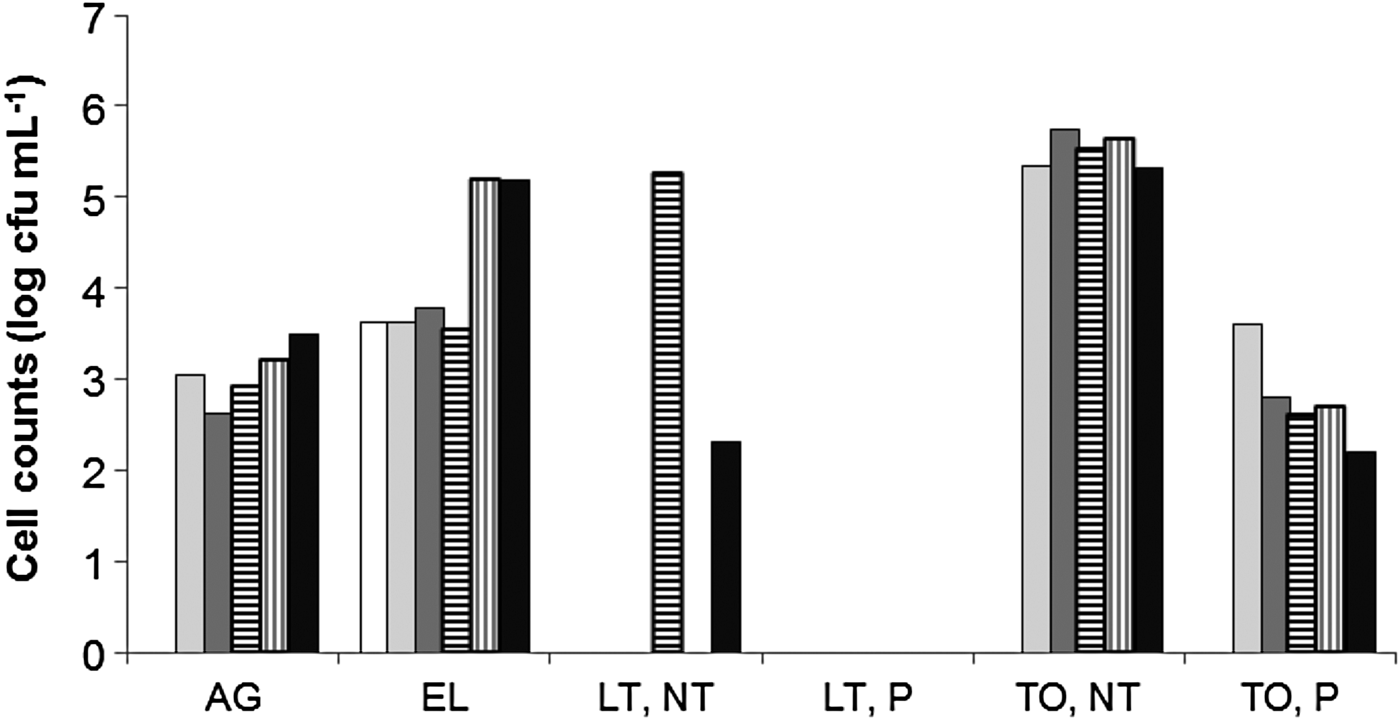
Scotta samples were analyzed to determine their microbial content in terms of viable bacteria belonging to the most relevant groups for the dairy environment. Results (Fig. 1) evidence a quite uneven situation, as total counts varied from 2·2 to 5·3 log cfu/ml among samples. In scotta from SO no viable bacteria were rescued since, differently from the others, samples were collected immediately after ricotta cheese production and therefore the treatment at high temperature, required for coagulation of whey proteins, strongly reduced bacterial population, below the detection limit. As regards major bacterial groups, namely coliforms, enterococci, lactobacilli, lactic streptococci and total lactic acid bacteria, they tend to be equally distributed inside the same sample, with the exception of scotta from LT in which only streptococci were rescued. In LT sample the number of streptococci exceeds that of total count analysis because these bacteria grow better on their specific medium and temperature with respect to the conditions used for total count analysis.
Main bacterial groups present in scotta samples from cheese factories: coliforms (white), enterococci (light grey), lactobacilli (dark grey), lactic streptococci (horizontal lines), total lactic acid bacteria (vertical lines), total viable count (black). For LT and TO samples data are also reported both before (NT) and after (P) pasteurization treatment.

The variability of bacterial loads among different cheese factories, from about 103 to 105 cfu/ml, is mostly linked to scotta handling and in particular to management of temperature before storage that could also explain the high level of coliforms, found only in EL, in accordance to what reported by Pintado et al. (Reference Pintado, Macedo and Malcata2001).
Preparatory treatments of scotta samples
Since scotta microbiota could be noticeably different among different scotta batches, it was decided to devise a treatment capable of lowering microbial population to a level anyway not able to let them compete with bacteria successively inoculated. This treatment was intended to have a sufficiently low amount of viable bacteria in any scotta lot, irrespective of its original microbial content.
Four different treatments were tested. In essence, pasteurization (72 °C for 15 min) was assessed vs. sterilization (121 °C for 5 min), followed by either centrifugation (5000 rpm for 10 min) or filtration (0·22 μm filter). Tests were performed on two scotta samples, namely TO (the most contaminated) and LT (the least contaminated). Sample SO was not included, since its microbial content was already below the detection limit.
The sterilization treatment reduced the number of viable bacteria below the detection limit, as expected (data not shown), while pasteurization lowered noticeably but did not completely eliminate viable cells (Fig. 1). It was anyway decided to adopt the second treatment for its lower cost and less detrimental effect on lactose (Van Boekel, Reference Van Boekel1998). Its capability to reduce of about 3 logs the autochthonous microbiota was deemed sufficient to avoid competition problems with the inoculated strains.
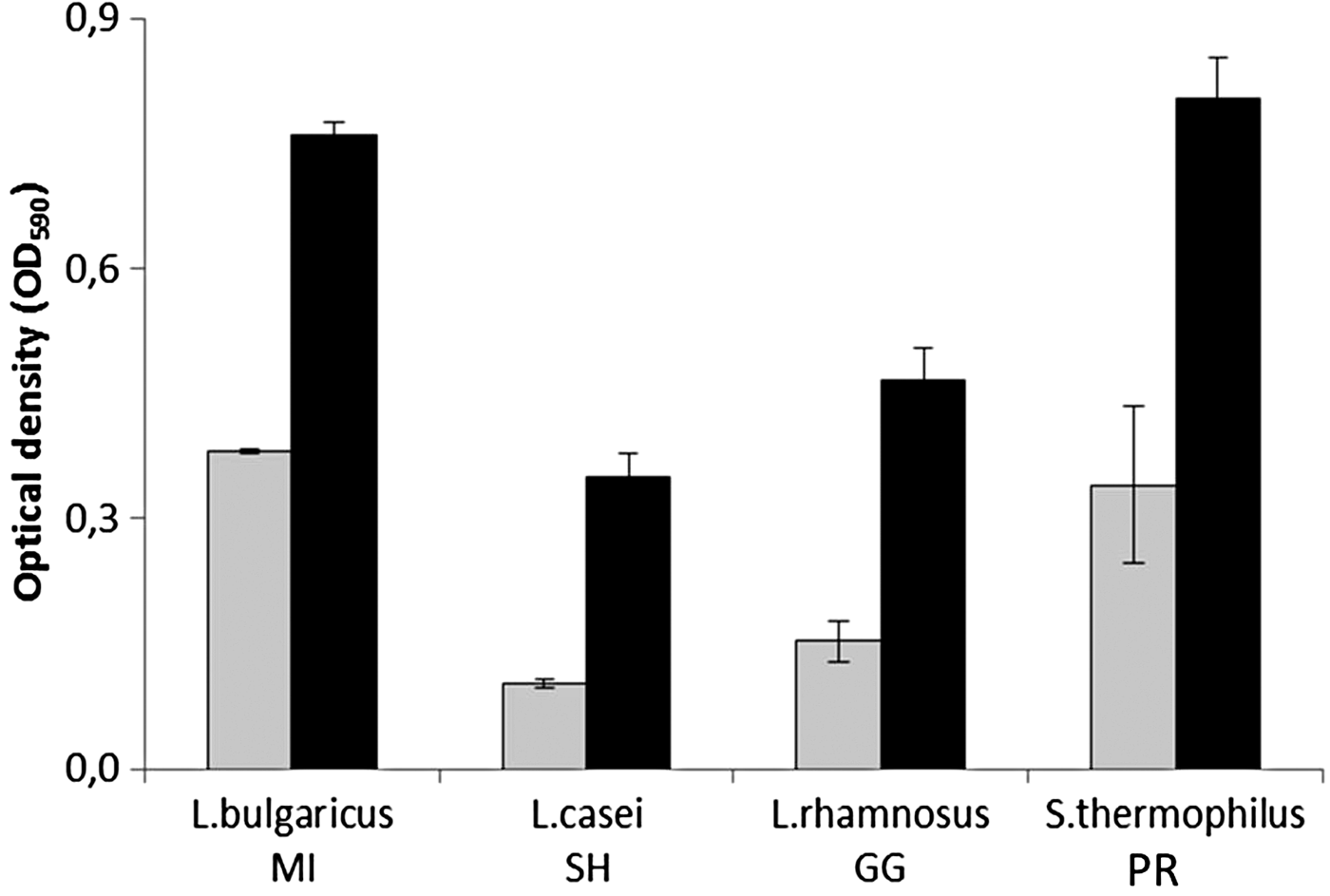
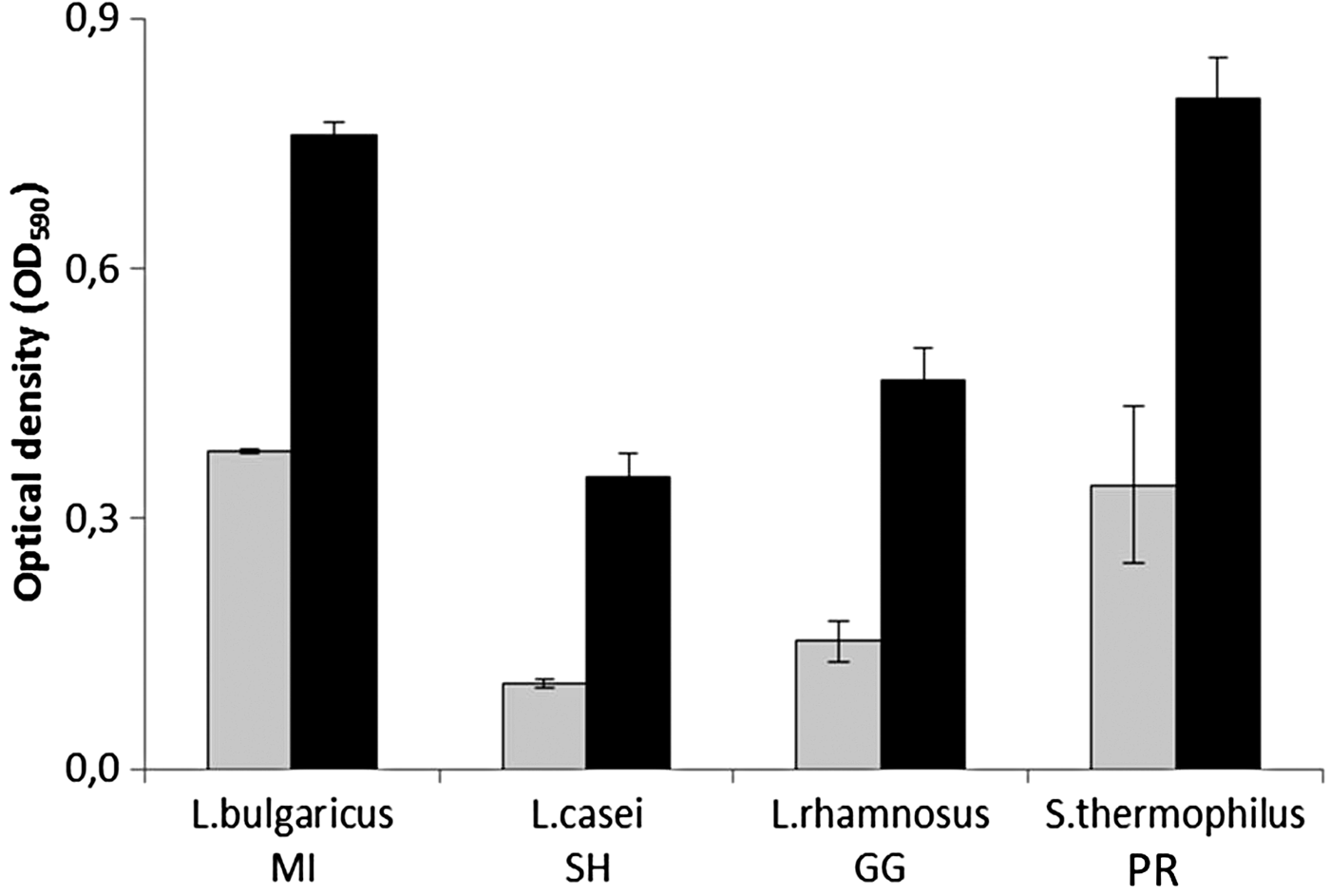
A subsequent centrifugation or filtration step was adopted in order to lower scotta turbidity level, which would have represented an obstacle to spectrophotometrical readings, used to measure microbial growth. Four strains, namely Lb. bulgaricus MI, Lb. casei SH, Lb. rhamnosus GG and S. thermophilus PR, were grown in pasteurized scotta, either centrifuged or filtered. We used sample LT for its lower indigenous microbiota, to examine the sole effect of centrifugation vs. filtration on inoculated strains, avoiding possible interferences of resident bacteria.
Results (Fig. 2) clearly evidence a marked negative effect of the filtration procedure on bacterial growth after 28 h, compared to centrifugation, probably because the first method eliminated some substances important for microbial growth. Hence the chosen pre-treatment was pasteurization at 72 °C for 15 min followed by centrifugation at 5000 rpm for 15 min at controlled temperature of 10 °C.
Population growth, measured spectrophotometrically as absorbance at 590 nm, of four strains in pasteurized scotta samples filtered (grey) or centrifuged (black) from cheese factory LT after 28 h.
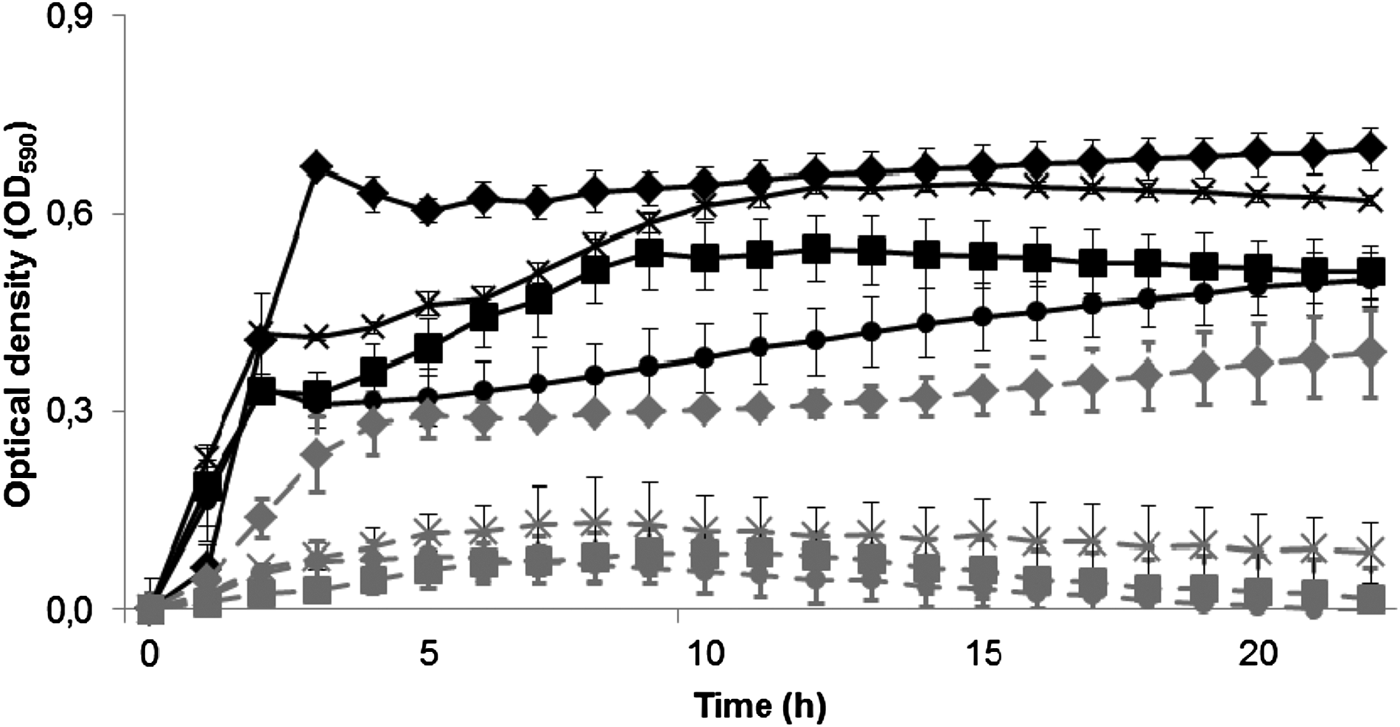
To assess the effect of such pretreatment on the overall growth performances the same four strains were inocuated in either pasteurized-centrifuged or non treated scotta from LT factory (Fig. 3). Scotta LT was chosen for its low indigenous microbiota content, since we were interested to determine the performance of the inoculated strains. Results clearly confirm that in treated scotta the growth dynamics are constantly significantly better, showing OD590 values dramatically higher than those of the non treated scotta.
Growth curves of strains in treated (pasteurized and centrifuged, continuous black lines) and in non-treated (dashed grey lines) scotta from cheese factory LT. (♦) S. thermophilus PR, (■) Lb. delbrueckii subsp. bulgaricus MI; (×) Lb. rhamnosus GG; (•) Lb. casei SH.
Single-strain fermentations
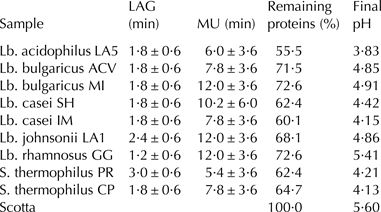
Nine strains, isolated from commercial fermented milks, were grown in treated scotta from factory LT to study their growth kinetics. Results are reported in Table 1. Growth parameters were calculated from growth curves constructed using the OD590 values (Linares et al. Reference Linares, Kok and Poolman2010) by fitting data with the Gompertz model (Zwietering et al. Reference Zwietering, Jongenburger, Rombouts and van ‘t Riet1990). The lag phase duration (LAG) and maximum growth rate (MU) were compared by means of two-way analysis of variance (ANOVA) using strains and repetitions as factors for the analysis. Statistical analysis showed significant differences (P < 0·05) among strains and a non-significant effect among replicates of same strains. The duration of lag phase was always considerably short, lasting only few minutes, as expected, since inocula were made from actively growing pre-cultures.
Fermentation parameters of strains grown in treated scotta from factory SO
LAG, lag phase duration; MU maximum growth rate; percentage of proteins remaining at the end of fermentation with respect to their initial content; pH of scotta at the end of the fermentation period (48 h).
Regarding the exponential phase, strains showed a different behavior in terms of growth rate, as indicated by generation times ranging from about 5–12 min. Among starter strains, S. thermophilus, particularly strain PR, were the fastest growing, while Lb. bulgaricus strains seemed to behave worse. Among non-starters, Lb. acidophilus showed the fastest growth rate.
Metabolic activity of the strains modified the pH of scotta that decreased from of 5·6 to values between 5·41 and 3·83. The highest value was scored by Lb. rhamnosus which was unable to lower the pH significantly with respect to that of the non-fermented scotta, followed by the two Lb. bulgaricus strains that reached pH 4·85 and 4·91 respectively. On the contrary, S. thermophilus brought pH close to 4 (4·21 and 4·13 for strain PR and strain CP, respectively), while the lowest value was scored by Lb. acidophilus LA5, that was the only one capable of acidifying scotta below pH 4.
The consumption of protein nitrogen, measured as percentage of remaining proteins in the medium at the end of fermentation, shows values that appear related to pH values, since in general a higher pH corresponds to higher amounts of proteins remaining in the medium. This could reasonably be due to the higher metabolic activity of the best fermenting strains that release higher amounts of acid from catabolic activity (i.e. lactic acid fermentation) and hence consume higher amounts of organic nitrogen for anabolic activity. In fact, the higher quantity of proteins, about 50% of the total present in scotta, is consumed by the best acidifying strain, Lb. acidophilus LA5. The least amount of protein nitrogen is consumed by Lb. rhamnosus GG and Lb. bulgaricus strains, which are the less acidifying bacteria among those tested.
Selection of the best strain combination
In view of the development of a possible probiotic drink from the fermentation of scotta, a co-inoculum of three strains was tested in treated scotta. The idea was to include two starter strains, and a potentially probiotic non-starter strain. As for starter strains, we considered the main species commonly used for many dairy fermentations and, since acidification speed is a crucial parameter, S. thermophilus PR and Lb. bulgaricus ACV were chosen for their better growth rate. Among non-starter strains, L. acidophilus LA5 was chosen for its excellent growth rate and outstanding acidification capabilities. The inoculum was made by preparing three separate overnight precultures, that were subsequently mixed to obtain an approximately equal amount of the three strains.
Differently from what reported by Pescuma et al. (Reference Pescuma, Hébert, Mozzi and Font de Valdez2008), our results evidence that the strains tested were able to grow in mixed culture reaching very high population levels, all above 108 cfu/ml (namely 8·5 × 108 cfu/ml for S. thermophilus PR, 8·7 × 108 cfu/ml for Lb. bulgaricus and 8·9 × 108 cfu/ml for L. acidophilus LA5), and reaching a very good pH value of 4·2, which corresponds to that of yogurt.
A preliminary sensory evaluation was done to get an overview of the consumer acceptance of the product. Tasters, although generally evidencing a pleasant slightly acidic aroma, suggested to work on its flavor to ameliorate the characteristics of the drink. Since it has been reported that flavors in fermented whey depend both on the origin of the material (Gallardo-Escamilla et al. Reference Gallardo-Escamilla, Kelly and Delahunty2005b) and on the strains chosen for fermentation (Gallardo-Escamilla et al. Reference Gallardo-Escamilla, Kelly and Delahunty2005a), further studies on different strains and strain combinations will be useful to develop an appropriate starter mixture for production of a pleasant probiotic drink from scotta fermentation. The addition of other components to the fermented product (e.g.: fruit juice) could be also worth considering.
Conclusions
The present study demonstrates the capability of several LAB species to use scotta, opportunely pretreated to reduce autochthonous microbiota, as substrate for growth. All strains tested were able to develop, although at different levels, and to lower pH values. The co-inoculum of three strains, i.e. Streptococcus thermophilus PR, Lactobacillus delbrueckii subsp. bulgaricus ACV and Lb. acidophilus LA5, showed a balanced development of all three bacteria that reached levels of viable cells above 108 cfu/ml and a pH value comparable to that of yogurt. The resulted products thus presents a high content of live potentially beneficial bacteria and a low pH that favors product stability and hinders develop of potentially harmful bacteria. These results therefore encourage further studies towards an applicative outcome on the use of scotta as substrate for production of a fermented probiotic drink.
The authors wish to thank the cheese factories Latterie Vicentine S.C.A, Latterie Soligo S.C.A., AgriCansiglio S.C.A, Caseificio Gaion Giovanni S.N.C, Caseificio Elda S.R.L. which provided scotta samples. Authors are thankful to M.G. Mattesco and D. Fuchs for their help during sampling and analysis. This work was partially supported by MIUR (Ministero dell'Istruzione, dell'Università e della Ricerca Scientifica) ex-60% and by the “Distretto Veneto Lattiero Caseario” Progetto “LATSIER”, Misura 2a - Bando 2008. Fondazione Cassa di Risparmio di Padova e Rovigo funded the PhD scholarship of V.V.