Introduction
Mental health problems (i.e. impairments in emotional, psychological and social wellbeing, which can present as a diagnosable clinical condition such as depression or less severe symptoms of emotional distress; Mental Health Foundation, 2016) are considered a leading cause of disability worldwide (Whiteford et al., Reference Whiteford, Degenhardt, Rehm, Baxter, Ferrari, Erskine, Charlson, Norman, Flaxman, Johns, Burstein, Murray and Vos2013). Given significant growth in ageing populations globally (Kinsella and He, Reference Kinsella and He2009; World Health Organization, 2015), older adults’ mental health has become a growing public health concern. Data from the World Mental Health Surveys Initiative carried out in 17 countries suggests that 4.5 per cent of adults aged 80 years or older experienced a past-year depressive or anxiety disorder with or without pain and physical comorbidities (Scott et al., Reference Scott, Von Korff, Alonso, Angermeyer, Bromet, Bruffaerts, de Girolamo, de Graaf, Fernandez, Gureje, He, Kessler, Kovess, Levinson, Medina-Mora, Mneimneh, Oakley Browne, Posada-Villa, Tachimori and Williams2008). Furthermore, subsyndromal mental disorders are common in later life and associated with clinically significant impairment (Lyness et al., Reference Lyness, Kim, Tu, Conwell, King and Caine2007). Older adults’ experiences with mental health problems can be particularly complex due to the high likelihood of comorbid mental and physical disorders (El-Gabalawy et al., Reference El-Gabalawy, Mackenzie, Shooshtari and Sareen2011). Unfortunately, the majority of individuals with clinically significant mental health concerns do not seek professional help (Demyttenaere et al., Reference Demyttenaere, Bruffaerts, Posada-Villa, Gasquet, Kovess, Lepine, Angermeyer, Bernet, de Girolamo, Morosini, Polidori, Kikkawa, Kawakami, Ono, Takeshima, Uda, Karam, Fayyad, Karam, Mneimneh, Medina-Mora, Borges, Lara, de Graaf, Ormel, Gureje, Shen, Huang, Zhang, Alonso, Haro, Vilagut, Bromet, Gluzman, Webb, Kessler, Merikangas, Anthony, Von Korff, Wang, Brugha, Aguilar-Gaxiola, Lee, Heeringa, Pennell, Zaslavsky, Ustun and Chatterji2004) and older adults are especially unlikely to seek treatment for mental health problems that can be severe, complex and chronic (Wang et al., Reference Wang, Aguilar-Gaxiola, Alonso, Angermeyer, Borges, Bromet, Bruffaerts, de Girolamo, de Graaf, Gureje, Haro, Karam, Kessler, Kovess, Lane, Lee, Levinson, Ono, Petukhova, Posada-Villa, Seedat and Wells2007; Cairney et al., Reference Cairney, Corna and Streiner2010; Mackenzie et al., Reference Mackenzie, Pagura and Sareen2010).
Theoretical models of help-seeking have emerged in an attempt to guide our understanding of individual and system-level factors influencing access to treatment. Beginning in the late 1980s, a number of theoretical models were developed to explain health and mental health service use (e.g. Goldsmith et al., Reference Goldsmith, Jackson, Hough, Goldsmith, Lin, Bell and Jackson1988; Andersen, Reference Andersen1995; Maddux and DuCharme, Reference Maddux, DuCharme and Gochman1997; Strecher et al., Reference Strecher, Champion, Rosenstock and Gochman1997; Vogel et al., Reference Vogel, Wester, Larson and Wade2006b). Expanding from this, conceptual models of help-seeking intentions emerged, including expectancy-value models, dual-process models, stage theories and series frameworks (White et al., Reference White, Clough and Casey2018). These models informed a large body of research identifying barriers and facilitators of treatment (e.g. Pepin et al., Reference Pepin, Segal, Klebe, Coolidge, Krakowiak and Bartels2015; Kantor et al., Reference Kantor, Knefel and Lueger-Schuster2017).
Research suggests that older adults with mental health concerns encounter the following individual barriers when considering the need for professional help: limited perceived need for care (Mackenzie et al., Reference Mackenzie, Pagura and Sareen2010; Wuthrich and Frei, Reference Wuthrich and Frei2015; Volkert et al., Reference Volkert, Andreas, Härter, Dehoust, Sehner, Suling, Ausín, Canuto, Crawford, Da Ronch, Grassi, Hershkovitz, Muñoz, Quirk, Rotenstein, Santos-Olmo, Shalev, Strehle, Weber, Wegscheider, Wittchen and Schulz2018); a desire to handle problems on their own (Wetherell et al., Reference Wetherell, Kaplan, Kallenberg, Dresselhaus, Sieber and Lang2004; Mackenzie et al., Reference Mackenzie, Pagura and Sareen2010; Volkert et al., Reference Volkert, Andreas, Härter, Dehoust, Sehner, Suling, Ausín, Canuto, Crawford, Da Ronch, Grassi, Hershkovitz, Muñoz, Quirk, Rotenstein, Santos-Olmo, Shalev, Strehle, Weber, Wegscheider, Wittchen and Schulz2018); financial concerns (Pepin et al., Reference Pepin, Segal, Klebe, Coolidge, Krakowiak and Bartels2015; Wuthrich and Frei, Reference Wuthrich and Frei2015); poor mental health literacy (e.g. lack of knowledge about symptoms of mental disorders as well as where and from whom to seek treatment; Wetherell et al., Reference Wetherell, Petkus, McChesney, Stein, Judd, Rockwell, Sewell and Patterson2009; Mackenzie et al., Reference Mackenzie, Pagura and Sareen2010; Pepin et al., Reference Pepin, Segal, Klebe, Coolidge, Krakowiak and Bartels2015); and stigma (Pepin et al., Reference Pepin, Segal, Klebe, Coolidge, Krakowiak and Bartels2015). A qualitative study exploring older adults’ help-seeking for depression found that a limited perceived need for formal care was a barrier to participants seeking health services. Individuals in their study felt that the responsibility for combating depression was an internal, individual task and that seeking external support was secondary (Lawrence et al., Reference Lawrence, Banerjee, Bhugra, Sangha, Turner and Murray2006). Additionally, a study, in which 15 primary care practitioners and 20 patients were interviewed regarding their views on the causes and management of late-life depression, found that there were elements of poor mental health literacy among all participants. For example, both practitioners and patients viewed depression as a consequence of social and contextual issues. Moreover, participants from this study stated that depression experienced by elderly patients was ‘understandable’ and ‘justifiable’ (Burroughs et al., Reference Burroughs, Lovell, Morley, Baldwin, Burns and Chew-Graham2006). Furthermore, a lack of knowledge regarding mental health service utilisation was a commonly cited problem reported in a qualitative study exploring support-seeking among older adults with complicated grief (Ghesquiere, Reference Ghesquiere2013). The findings from this study showed that individuals who sought specialised mental health care found the process challenging, as they were unsure about where to access resources.
Older adults do not only experience individual barriers to accessing mental health care; a number of systemic barriers have also been identified. Systemic barriers contributing to the underutilisation of mental health services include a lack of economic resources (e.g. insurance limitations; Pepin et al., Reference Pepin, Segal, Klebe, Coolidge, Krakowiak and Bartels2015), a shortage of accessible and age-appropriate services (Bartels and Naslund, Reference Bartels and Naslund2013), and a scarcity of providers with expertise in the assessment and treatment of older adult mental health problems (Bartels and Naslund, Reference Bartels and Naslund2013; Moye et al., Reference Moye, Karel, Stamm, Qualls, Segal, Tazeau and DiGilio2019). For example, despite older adults’ preference for psychological treatments for mental health problems (Wetherell et al., Reference Wetherell, Kaplan, Kallenberg, Dresselhaus, Sieber and Lang2004; Gum et al., Reference Gum, Areán, Hunkeler, Tang, Katon, Hitchcock, Steffens, Dickens and Unützer2006), they are increasingly being prescribed psychotropic medications (Schellander and Donnerer, Reference Schellander and Donnerer2009; Vieweg et al., Reference Vieweg, Wood, Fernandez, Beatty-Brooks, Hasnain and Pandurangi2009) and they are less likely than younger adults to receive referrals within primary care to specialty mental health providers (Alvidrez and Areán, Reference Alvidrez and Areán2002). This may be due in part to primary care physicians’ beliefs that psychological treatment is less effective for older adults compared to young adults (Mackenzie et al., Reference Mackenzie, Gekoski and Knox1999), in addition to the lack of medical coverage or finances older adults have to utilise psychological resources (Pepin et al., Reference Pepin, Segal, Klebe, Coolidge, Krakowiak and Bartels2015).
Unfortunately, although research informed by commonly used models of treatment-seeking, such as the Health Belief Model (Strecher et al., Reference Strecher, Champion, Rosenstock and Gochman1997) and the Behavioral Model of Health Service Utilization (Andersen, Reference Andersen1995) has highlighted factors affecting access to treatment, a comprehensive understanding of why so many younger and especially older adults are not accessing treatment remains elusive (Bartels et al., Reference Bartels, Coakley, Zubritsky, Ware, Miles, Areán, Chen, Oslin, Llorente, Costantino, Quijano, McIntyre, Linkins, Oxman, Maxwell and Levkoff2004). Pescosolido et al. (Reference Pescosolido, Boyer, Medina, Aneshensel, Phelan and Bierman2013) have argued that one reason for this is that theoretical help-seeking models have not adequately captured the complex and dynamic process of navigating and negotiating pathways to and from the community and treatment system as people attempt to understand and manage mental health problems.
To address perceived limitations with previous help-seeking models, the Network Episode Model-II (NEM-II; Pescosolido and Boyer, Reference Pescosolido, Boyer, Sheid and Brown2010; Pescosolido et al., Reference Pescosolido, Boyer, Medina, Aneshensel, Phelan and Bierman2013) considers coping with a mental health problem as a social process that is managed through an individual's interactions with informal (e.g. friends and family) and formal (e.g. physicians and mental health professionals) social networks and treatment systems. The NEM-II captures how an individual's illness career can change over time, how it is shaped by earlier events and it acknowledges not everyone will travel the same path into the formal treatment system (Pescosolido et al., Reference Pescosolido, Boyer, Medina, Aneshensel, Phelan and Bierman2013). The NEM-II expands the earlier version of the model, which emphasised the dynamics of the illness career and social networks (Pescosolido, Reference Pescosolido1992), by elaborating and refining social network influences. Although more recent versions of the model have expanded to include broad system factors (Pescosolido, Reference Pescosolido, Pescosolido, Martin, McLeod and Rogers2011), the NEM-II focuses specifically on mental health service utilisation and is better suited to understanding older adults’ experiences seeking psychological services and the barriers and facilitators that may influence their pathways to care. Choi et al. (Reference Choi, Morrow-Howell and Proctor2006) utilised the NEM-II to identify patterns and configurations of service use, including all medical, psychiatric and psycho-social services used by depressed older adults. Results indicated that factors in older adults’ social networks, a key element of the NEM-II, did not significantly contribute to their use of services, calling into question the applicability of this theoretical model for older adults. Another possible explanation for the lack of social network influences in that study, however, is its quantitative methods that may not have adequately captured social complexity according to the NEM-II. Additionally, due to the co-occurring physical health, mental health and social changes that take place in later life (El-Gabalawy et al., Reference El-Gabalawy, Mackenzie, Shooshtari and Sareen2011), the NEM-II may not have previously identified influencing factors unique to older adults’ service use. Therefore, the objective of this study was to use qualitative methods to examine whether the NEM-II is a helpful and appropriate model for understanding the dynamic process of how older adults navigate the mental health system, including factors that advanced and delayed help-seeking.
Methods
Research strategy
We used interpretive description to meet our study objective (Thorne et al., Reference Thorne, Kirkham and O'Flynn-Magee2008). This method seeks to articulate a meaningful and coherent description of a target phenomenon being studied by identifying and generating an interpretive description capable of informing clinical understanding. Thorne et al. describe the purpose of this method as identifying themes and patterns within subjective perceptions in order to generate an interpretive description capable of informing clinical understanding. Interpretive description is often used in small-scale qualitative studies and requires samples to be theoretically and purposively generated, reflecting an understanding of expected and emerging variations within the phenomenon being studied. The techniques used for data collection and analysis can vary within interpretive descriptive methodology; our research was guided by a social constructivist worldview (Lincoln et al., Reference Lincoln, Lynham, Guba, Denzin and Lincoln2011) and we analysed our data using the Framework Analytic approach (Pope et al., Reference Pope, Ziebland and Mays2000; Ritchie and Spencer, Reference Ritchie, Spencer, Huberman and Miles2002). Our research team was comprised of five members with professional and research backgrounds in nursing, gerontology and clinical psychology.
Framework Analytic approach
This form of qualitative methodology offers clear, systematic directions for analysing transcribed interviews. Additionally, it allows researchers to identify themes deductively that originate from a priori theories as well as key concepts emerging inductively from the interviews. Therefore, this method allowed us to be guided by the NEM-II while at the same time remaining open and flexible by incorporating and building on new concepts that emerge from the interviews. With an interest in mapping the collection of participants’ experiences navigating pathways to psychological care, we kept the analysis closer to the described experiences of the participants as opposed to deriving higher-order meaning from the data.
The Framework Analytic approach is comprised of six interconnected stages: (a) familiarisation, (b) identification of a thematic framework, (c) indexing and sorting, (d) reviewing data extracts, (e) data summary and display, and (f) abstraction and interpretation (Ritchie and Spencer, Reference Ritchie, Spencer, Huberman and Miles2002). After we familiarised ourselves with the data by listening to the interview recordings and reading the transcripts, notes of key concepts and recurrent themes in each interview were made. Specifically, three members of the research team read and coded the complete versions of the 15 transcripts and the remaining team members reviewed excerpts from each transcript in detail. All members of the research team then created the thematic framework by integrating the key themes and sub-themes that appeared within and throughout the interviews. During this stage, we referred back to the mental health and help-seeking literature, and specifically the NEM-II to help guide and refine the analysis. The framework was then applied to each interview. Each participant's transcript was made into a thematic chart according to the index codes. This stage allows researchers to view the full range of data within each sub-theme and compare across key themes and participants. During the final stage, abstraction and interpretation, we interpreted the concepts to identify associations and patterns within the data and ensured the full range of participants’ experiences had been described. This was an iterative process; we continued to compare and contrast the emerging codes and themes in new interviews with previous interviews already established within the framework to ensure we had a thorough understanding of participants’ experiences.
Participants and recruitment
Fifteen older adults, who accessed mental health services from a geropsychology clinic located in a large health sciences centre of a major Canadian city, participated in this study. To meet eligibility requirements, participants needed to be (a) 60 years of age or older, (b) fluent in English, and (c) cognitively intact with no obvious signs of cognitive impairment (i.e. indicators of dementia) as determined by geropsychologists during the initial intake sessions. Geropsychologists recruited participants from August 2015 to March 2016 and provided their patients, who met eligibility criteria, with information about the study. Patients who were interested in learning more about the study provided their contact information so the study's principal investigator could contact them to explain the study further and obtain initial informed consent to participate. The geropsychologists approached a total of 25 clients regarding participation in this research, and N = 15 clients (ten female and five male) agreed to participate, resulting in a response rate of 60 per cent. We implemented purposive and theoretical sampling when recruiting participants. Purposive sampling allowed us to target older adults who were accessing mental health services from a specific hospital-based geropsychology outpatient service and theoretical sampling allowed us to refine the interview protocol to investigate further the emerging concepts based on our Framework Analysis. Recruitment and analysis occurred simultaneously, with the research team examining emerging themes and sub-themes and making changes to the interview protocol throughout the study. We recruited participants until the data reached saturation, where few new ideas were emerging with additional interviews (O'Reilly and Parker, Reference O'Reilly and Parker2013).
Information on participants’ socio-demographic characteristics is presented in Table 1. Participants were, on average, 72.3 years of age, 66.7 per cent female and 93.3 per cent White (one identified as Filipino). Just under half of the sample (46.7%) reported that they were diagnosed with a mental health problem, including mood disorders and anxiety. Participants exhibited a range of emotional distress, with 40 per cent being classified as having low levels of distress on the Kessler Psychological Distress Scale-6 (K6; Kessler et al., Reference Kessler, Barker, Colpe, Epstein, Gfroerer, Hiripi, Howes, Normand, Manderscheid, Walters and Zaslavsky2003), 33.3 per cent having mild/moderate distress and 26.7 per cent having high distress. With regard to comorbid conditions, 66.7 per cent reported that they had been diagnosed with at least one chronic disease, including arthritis, irritable bowel syndrome, fibromyalgia, diabetes, Parkinson's disease, hypothyroidism and osteoporosis. With regard to participants’ time spent in treatment, 20 per cent stated they just started seeing a psychologist, 53.3 per cent were part-way through and 26.7 per cent were nearing the end or recently completed treatment for a variety of mental health concerns including mood, anxiety, grief and stress.
Sample characteristics

Notes: N = 15. SD: standard deviation.
Data collection
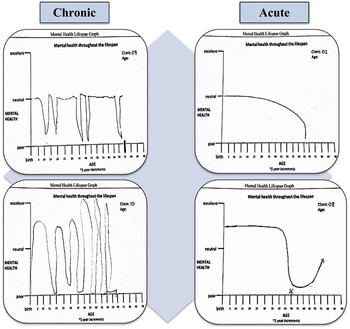
Participants completed semi-structured, in-depth, approximately 60-minute interviews conducted by the first author (BEB) in a location of their choice (e.g. their home, BEB's research laboratory or at the geropsychology clinic). Prior to the interview, participants completed a mental health across the lifespan graph (see Figure 1), which was used during the interview to help them reflect and discuss previous episodes in their lives when their mental health was poor, neutral or excellent, and what shaped their previous experiences. The interview protocol began with the central, open-ended question, ‘What brought you in for treatment?’ Depending on the responses that emerged from this question, the interviewer explored more specific questions regarding the course of participants’ mental health experiences, beliefs about causes of their mental health problems, past and current experience with various health-care providers, treatment preferences (including benefits and drawbacks) and support received from social networks. Interviews were audio-recorded and professionally transcribed.
Mental health across the lifespan illustration: examples of ‘chronically emotionally unwell’ versus ‘late-life first onset’.

Throughout data collection and analysis, we employed a number of procedures to address the rigour of the study's findings. First, members of the research team: (a) helped develop the interview protocol to minimise bias in the interview questions, (b) read and coded transcripts to increase inter-rater agreement, and (c) collaboratively developed the thematic framework (Pope et al., Reference Pope, Ziebland and Mays2000). Our research team discussed discrepancies in interpretation or coding until the group reached a consensus. Furthermore, we used deviant case analysis to ensure the framework and our overall interpretation explained all the data (Mays and Pope, Reference Mays and Pope2000). Using this approach, we searched for data that contradicted our interpretation and adjusted our analysis as needed. Additionally, the interviewer remained mindful of how her personal biases affected interpretation of the data with a reflexive journal (Creswell, Reference Creswell2014). Finally, framework analysis provided a transparent audit trail, documenting how data moved from interview, to transcripts, to themes, to framework, thereby enhancing the credibility of the findings (Ritchie and Spencer, Reference Ritchie, Spencer, Huberman and Miles2002).
This study received Research Ethics Board approvals from both the host university and from the hospital where participants were recruited. Participants provided written consent prior to their participation, and were free to withdraw from the study at any time during the research process. To protect participants’ confidentiality, we changed their names and identifying information.
Findings
Thematic framework: older adults’ experiences seeking psychological services
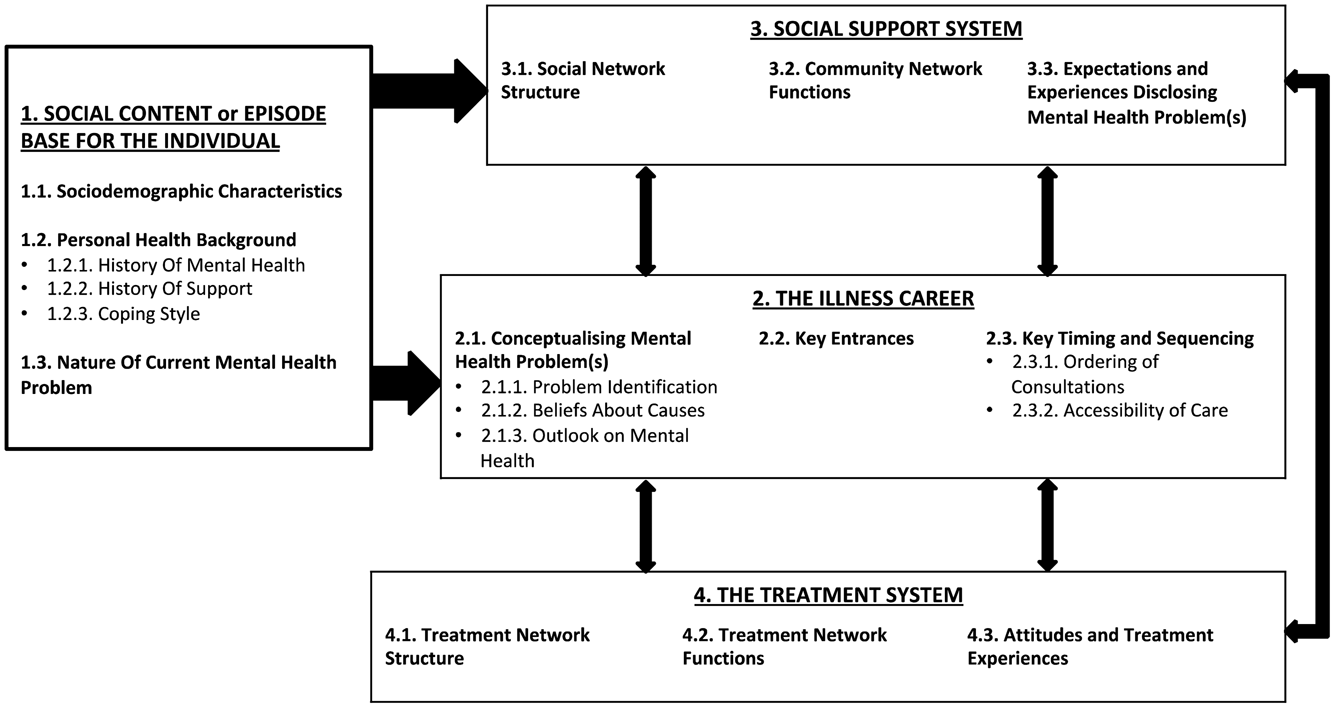
A number of themes emerged from participants’ experiences seeking psychological services. These themes were refined and categorised into the four broad sections of the NEM-II: the social content/episode base for the individual, the illness career, the social support system and the treatment system (Figure 2). However, unlike the model, which incorporates the opinions and beliefs from the social support system and treatment system, the thematic framework focused solely on the perspective of the individual. In focusing on the perspective of the individual, we explored their experiences within their social content, illness career, and their experiences interacting with their social support system and treatment system. Each of these themes will be discussed in detail below.
Sub-themes emerging from interviews and organised according to the Network Episode Model (NEM-II) framework.

1. Theme 1: Social content/episode base for the individual
This contextual theme forms the base of the framework and sets the trajectory for participants’ illness careers. The three sub-themes are not static; changing conditions in the illness career, social system and treatment system can influence outcomes in the social content/episode base for the individual and vice versa.
1.1. Socio-demographic characteristics
Participants discussed two main socio-demographic characteristics that influenced their social content/episode base: age/ageing and income. Participants described several negative effects of ageing that impacted their mental health, including more frequent illness and bereavement. The majority of participants noted a decline in their physical health and discussed how they were sick more frequently, had a difficult time ‘bouncing back’ and described a lack of control over their physical symptoms. Some participants noticed a decline in their cognitive abilities as well, and described the difficulty they experienced trying to distinguish between normal versus abnormal changes in cognition (e.g. ‘Taking into account that we both do forget, but then so do some friends our age, so there's another difficulty in distinguishing what the problem is’). Participants also discussed the theme of loss in later life, including bereavement and loss of independence. Additionally, some participants discussed how financial concerns were causing them worry and stress, as they tried to calculate how much longer they could afford to live (e.g. ‘I guess it comes back a bit to finances. I do have financial fear … there's a bit of that going on and that sort of scares me’).
1.2. Personal mental health background
Three categories emerged under the personal health background sub-theme: history of mental health, history of support and coping style.
1.2.1. History of mental health
Not surprisingly, the majority (60%) of participants in this study reported episodes of poor mental health in the past and described an ongoing struggle to manage their mental health, which they illustrated in their mental health across the lifespan graphs. In contrast, some participants (40%) talked about how their mental health was fairly good for much of their adulthood with only recent struggles with mental health (see Figure 1).
1.2.2. History of support
Related to participants’ history of mental health problems was the kinds of informal and formal supports they received in the past. Some participants described feeling consistently supported by their friends and family during times of need, while others discussed times when they did not receive the kinds of support they needed. One man said:
When I was young, I was only about 16, 17, I was still home and had an argument with my mother and I said I'm gonna go kill myself and I took the rifle and she said go ahead and do it. That time I was really depressed. My parents were pretty good parents, they did their job but they were happy to see you leave. We never got together as a family. You know, there didn't seem to be any love towards us like we never had birthday parties or Christmases or anything like that.
Similarly, participants described both negative and positive experiences with receiving support from mental health professionals in the past. One man said:
I went to see a psychologist for post-traumatic stress disorder and, with all due respect, it was a joke. He treated me as though I was now a total mentally decrepit person suffering the worst kind of stress.
In contrast, other participants who had previous treatment described their experience as positive, and in some cases, their prior experience with treatment influenced their most recent decision to seek help. Even when participants had a negative experience with a health professional, other positive experiences with the treatment system appeared to influence their current decision to seek help again.
1.2.3. Coping style
This category refers to three general approaches participants had taken when dealing with mental health challenges: problem-focused, emotion-focused and avoidant. The majority of participants discussed using a combination of the three. Participants described using problem-focused coping when discussing ways in which they would change or modify the fundamental cause of the source of distress. Other times, participants used emotion-focused coping strategies by changing their emotional response to the stress instead of changing the source of the stress, through prayer, meditating or relaxation techniques. One man said:
This may sound stupid but I'd go to bed and I'd cover my head up, make it dark in there. That sort of gave me comfort because I felt that nothing was going on with me, I could just stay in there and feel relaxed; I felt better. It was a safe spot I suppose. I still do that once in awhile.
Lastly, some participants talked about avoiding the source of distress by distracting themselves or minimising the problem (e.g. ‘When I was feeling stressed out I would go to the shopping centre just to ease my mind. That's why I keep myself occupied’).
1.3. Nature of current mental health problem
The final social content sub-theme captured participants' varied responses when describing the severity and course of their current mental health problem(s). Some participants described their mental health problem(s) as being quite severe and impacting other aspects of their lives (e.g. ‘[My depression] was very bad, I was very ill, like I couldn't eat. I would force myself to drink and it was very tough’). In contrast, some participants described their struggles with mental health as more manageable (e.g. ‘I wouldn't say it's really severe ’cause it doesn't stop me from doing things’). When participants were asked how long they had been struggling with the current mental health problem for which they were seeking treatment, responses ranged from three to 16 years. This range emphasises the importance of understanding entrance to treatment not as a discrete event, but rather as a point in a typically long help-seeking process.
2. Theme 2: The illness career
The second theme centred on factors that shaped participants’ illness career. Illness careers begin when an individual first displays behaviour they or others judge to be outside a range that is ‘normal’ for that particular individual, in that social context (Perrucci and Targ, Reference Perrucci and Targ1982; Pescosolido, Reference Pescosolido1991). These factors were refined into three sub-themes: conceptualising mental health problems, key entrances into patient role, and key timing and sequencing.
2.1. Conceptualising the mental health problem(s)
When participants first experienced their current mental health problem, they discussed how they made sense of the changes that were taking place and how they felt about what was happening to them, including: problem identification, beliefs about causes and outlook on mental health.
2.1.1. Problem identification
When discussing what brought them in for treatment, the majority of participants described feeling like they were not themselves. One man said:
I was walking around and feeling a little weird, I don't know why, it was almost like something was brewing in the way of, maybe anxiety about mobility, I'm not sure. I remember feeling edgy a lot of the time.
Many participants described seeking help due to the onset of somatic symptoms (e.g. ‘Every new pain or ache my mind just seems to have a mind of its own and it takes me places I don't wanna go’). It was often not until medical professionals ruled out physical causes that participants began to consider emotional conceptualisations of their problems.
2.1.2. Beliefs about causes
Participants’ explanations of what they think caused their mental health problem(s) varied, including biological (e.g. brain–gut connection, genetic predispositions, etc.), psychological (e.g. ‘it's part of my personality’) and social (e.g. care-giving effects, dysfunctional relationships, etc.) causes, and sometimes a combination of the three. When asked what she thought caused her mental health problem, one woman said:
I do have the brain–gut connection going on. If I have friends over [my stomach pain] would get so bad that I just couldn't wait for them to go. I would never say that but my gut was hurting me so much. And from the literature that I read about the brain–gut connection I thought oh, I'm a primary example of that.
Other participants talked about how their personality may increase their vulnerability to mental health problems (e.g. ‘You know I was afraid to make a mistake, I always felt that I had to be perfect. Not anything that anybody ever laid on me, it just came from within’). Some participants also indicated their mental health declined because of social causes such as caring for a sick spouse or parent, dysfunctional family relationships and bereavement (e.g. ‘I think the grief part was influencing me in lots of ways and it was making me anxious and fearful and lots of negative kinds of things’).
2.1.3. Outlook on mental health
Nearly half of the participants described having a positive outlook on their mental health, which included stories of resiliency, optimism and feeling grateful. When describing how she felt after experiencing a traumatic life event, one woman said:
I had to let it go because I had to survive. I have three children, three grandchildren, I have a wonderful husband. There was no way I was going to let that ruin my life.
In contrast, some participants described having a pessimistic outlook on their mental health, and described being very critical of themselves, experiencing hopelessness or thoughts of ending their life, embarrassment and feeling their mental health problem(s) prevented them from living a ‘normal life’. When one man believed he had dementia, he said:
Oh I'm a catastrophiser, I'm a huge pessimist so this is why I was contemplating stepping in front of a train.
2.2. Key entrances into the patient role
Participants discussed three categories related to key moments when they recognised and accepted themselves as a patient in need of psychological services: readiness for change, worsening of symptoms/sick role and bystander role/invisible patient (e.g. participants who did not identify as needing care because they had someone else in their life whom they perceived was in greater need of care). Some participants said, although they were not experiencing significant distress, they were hoping for some sort of positive change in their lives. One woman said:
In the back of my mind I keep thinking am I crazy or what's wrong, I don't see myself as being entirely sick but I do have my problems and I wanna sort that out, I wanna be happy.
However, the majority of participants described experiencing a worsening of symptoms such that at some point they saw themselves as ‘sick’ and in need of help (e.g. ‘I think it was only in the last number of years otherwise I wouldn't dare go [see a psychologist] but then I got real desperate’). In contrast, participants who were care-givers talked about how they did not identify themselves as needing care, because their spouse or parent was always the patient. One care-giver described a conversation she had with her mother's social worker:
She recognised that I needed some help and she said we need a family meeting, something needs to be done, you need some help, but I didn't really recognise that I needed help.
2.3. Key timing and sequencing
Each participant described how the timing and sequencing of contact with the treatment system influenced their entry into the patient role. Two factors emerged within this sub-theme.
2.3.1. Ordering of consultations
When asked about their path into the treatment system, the majority of participants described an indirect process, involving multiple steps and a variety of health practitioners. All but one of the participants first sought help from their primary care physician, who functioned as the gate-keeper to various other specialised services. Sometimes physician visits were for physical and somatic symptom complaints, and at other times, the purpose of the visit was for mental health concerns. One woman said:
My doctor referred me to the psychiatrist but then I went from the psychiatrist to a psychologist. I think because I was struggling a lot she thought seeing a psychiatrist would be good, but … it was the wrong referral.
2.3.2. Accessibility of care
In line with the ordering of consultations that participants experienced, they described how accessible they perceived treatment to be. Some participants described this process as slow, time-consuming and frustrating. Even though primary care physicians were accessible to all participants, some participants described their primary care physicians as preventing them from getting the treatment they wanted. One man who was struggling with depression said:
I went to Dr X [primary care physician] and I asked him for an increase in my [antidepressant] pills. He said, ‘Well, I can't. You're taking the maximum now, you can't take anymore.’ He said, ‘You know, try and take it easy’, and uh no matter what I said he wouldn't refer me. I said, ‘Well, I need help’, and he says, ‘I'm reluctant to have you go to a psychiatrist because I don't want you to take that strong medicine’ … And the only thing that got me to the psychologist was when I went to a thing for my pacemaker, the doctor there looked at my prescription says, ‘Oh, citalopram, so you have some depression?’ I said, ‘I have a terrible time with depression’, and she says, ‘I'll look after this.’ Within a week or so I had my [psychologist] appointment but it was really a struggle to try and get help. It was really a tough, tough time to get help.
Despite the difficulty many participants had before receiving what many described as the ‘right referral’ to a psychologist, most participants were satisfied with the outcome. One man said:
It was time consuming as anything to do with health issues in Canada, but when it [seeing a psychologist] happens, it's brilliant. It's absolutely marvellous.
3. Theme 3: Social support system
This theme centred on participants’ social support systems and the interactions that took place within their social network regarding their current mental health expectations and experiences disclosing mental health problem(s), and community network functions.
3.1. Social network structure
The structure of participants’ current social support system consisted of: the network members, the frequency of contact with them and the quality of these relationships. Network members consisted of family, friends and neighbours. Some participants described having a large social support network, whereas others described only having a spouse or a few close friends for support. The frequency of contact with the social network also varied and was usually (although not always) related to the size of the network. One man, who came from a large family, said, ‘I had my whole family for help, I was never alone.’ In contrast, a few participants who also had small social networks reported not seeing or hearing from people very often, such as one participant who said, ‘My son can't have us down there because they're working, it's hard.’ Finally, there was variability in the quality of relationships with their social network members. Most participants described having strong bonds (e.g. speaking of his son, one man said, ‘It's a good relationship, it's a warm relationship, it's an open relationship’), whereas others described strained and distant relationships that obviously resulted in less support around mental health concerns.
3.2. Community network functions
In discussing the main functions of their social network, participants described how their network provided them with information, advice, emotional support and practical support. Participants viewed the majority of their community network functions as helpful. One woman said:
I couldn't ask for a better support network … they were there for me with my first husband [dying] and now they're here for me with this. And any of them, I would do anything for them.
3.3. Expectations and experiences disclosing mental health problem(s)
The majority of participants were reluctant to disclose their problems due to concerns about being perceived differently, being a burden, confidentiality and a belief others will not understand their situation. One woman said:
I think that people who have not gone through this, and most of my friends fortunately haven't had to, don't quite understand. You know, everybody's got their own problems and they've got their own lives and they're not gonna worry a whole bunch about what's happening with me, even though they are friends.
In contrast, a few participants described feeling very comfortable about disclosing their struggles and mental health problem(s) to their social network, especially if they perceived their social network members as understanding, open or having shared a similar experience.
Participants also discussed their positive and negative experiences after disclosing their mental health problem(s) to their social network. One man said:
I shared it with my family who was intimate with me and with my wife, so she knew everything was going on. I didn't hold anything back so thank goodness I was able to do that and she was there to listen. So I was lucky, very lucky.
In contrast, many participants described having negative experiences such as losing family and friends who were tired of listening to them talk about their struggles with mental health. Some participants also discussed experiencing stigma and not feeling understood by the people in whom they confided. One man described not feeling understood by his wife and said:
Sue tried cheering me up, she says, ‘Look at you, you got so much to look forward to’, and all this kind of stuff. I was crying all day and one day she said, ‘Get a grip, life is good.’
4. Theme 4: The treatment system
The fourth theme centred on the factors that make up the participants’ treatment system, which according to the NEM-II includes a changing set of providers and organisations (Pescosolido and Boyer, Reference Pescosolido, Boyer, Horwitz and Sheid1999). This theme includes three categories: treatment network structure, treatment network functions and attitudes and treatment experiences.
4.1. Treatment network structure
Participants’ treatment network structure consisted of: its members, the frequency of contact with them and the quality of those relationships. Network members included primary care physicians, mental health professionals and health professionals (e.g. neurologists, cardiologists, nurses). All but one participant first sought help from a primary care physician, and the majority of participants were in contact with their primary care physicians more frequently than any other medical professional. Interestingly, the frequency of contact with primary care ranged from one short visit to many visits over 23 years with the same physician. Also, the quality of participants’ relationships with treatment network members influenced whether participants continued seeing them and how committed they were to their treatment plan. One man said, of his first experience with a psychiatrist, who ultimately referred him to a psychologist:
It was almost an insulting interview, you know when I left I was angry at him because of his disengagement, his lack of concern, his trivialisation of people's pain. Here's a psychiatrist who acts like he's dealing with a sore back or something … And that's really all, he just wanted to get me out of his office so that was an unpleasant [appointment] but it actually was incredibly helpful [because he referred me to my psychologist].
4.2. Treatment network functions
Treatment network members also provided information, advice, emotional support and practical support. Some participants viewed their health practitioners as a great source of information regarding treatment options, who they should go to for additional help (e.g. referral to psychiatry), and for feedback regarding their mental health. One woman, who was experiencing somatic symptoms in addition to anxiety, said her psychologist gave her information that helped her understand what was going on (e.g. ‘Last summer Dr X [psychologist] gave me literature on it, and this is something that we were kind of working on a bit was understanding the brain–gut connection’). Participants described how members in the treatment system provided them with advice, such as taking medication, attending therapy or making other positive changes. A participant reported:
Dr X [psychologist] said that I should get out and see people and so that's why I joined that seniors group, so I do that.
Participants also received emotional support, which consisted of empathy, compassion and a genuine concern for their wellbeing from members in the treatment system – especially from psychologists. One participant said:
I really feel that I can go in [to my psychologist] and be upfront, I deal with it right then and it's acknowledged … that is the biggest thing that I need, the acknowledgement that I have the right to exist.
Lastly, several participants described a particular kind of practical support from their primary care physicians in the form of referrals to specialty mental health care. One man said:
I was the one that found an article about [my psychologist's] programme in the Free Press [newspaper] and then I had to mention it to him [primary care physician]. And like a lot of doctors, you gotta punch them between the eyes before they do anything and I told him about this programme … he said oh sounds good to me so he gave me the referral but everything was my doing.
In contrast, a few participants discussed experiences they had when their treatment network was not functioning well. For example, participants received misinformation, did not feel respected or supported by medical professionals, and felt unimportant to the physician treating them.
4.3. Attitudes and treatment experiences
Past experiences influenced participants’ treatment preferences at the time they were seeking help. The most common preference, endorsed by a slight majority of participants, was for psychological treatment, often because they did not want to take medication. One woman said:
I wanted therapy … I don't wanna take medication because the medication is only gonna do something to my brain to make me feel better but it's not really getting rid of the problem, you know.
Other participants wanted therapy to help get better control over their lives, for information or advice, and to have someone they could talk to confidentially, who would help them address the problem directly. Some participants described having no preference due to a lack of information about the available treatment options and their effectiveness, and a small number preferred pharmacological or combined pharmacological and psychological treatments. Some of these participants described that getting a prescription from their primary care physician was usually their first course of action and they thought medication would ‘fix them’, or at the very least, provide some relief. One woman said:
I'm looking at my little box of bottles here and these are sleeping and those are blood pressure and cholesterol, but this one here, clonazepam. If I'm feeling stressed, it's amazing what one of these will do.
Discussion
This study is the first to use the NEM-II (Pescosolido and Boyer, Reference Pescosolido, Boyer, Sheid and Brown2010; Pescosolido et al., Reference Pescosolido, Boyer, Medina, Aneshensel, Phelan and Bierman2013) as the theoretical foundation to examine qualitatively older adults’ experiences seeking psychological services. The objective of this study was to gain an in-depth understanding of whether the NEM-II adequately captured the dynamic pathways through which older adults with mental health problems come into the formal treatment system. A social constructivist worldview was particularly valuable to this area of research, as the focus is rooted in the idea that subjective meaning-making of an experience or phenomena is formed through interactions with others and through historical and cultural norms that shape individuals’ lives (Creswell, Reference Creswell2014). Our study aligned strongly with this focus because coping with a mental health problem can be viewed as a social process that is managed through an individual's interactions with social networks in the community, the treatment system and social service agencies (Pescosolido et al., Reference Pescosolido, Boyer, Medina, Aneshensel, Phelan and Bierman2013).
In applying the NEM-II to an older adult population, age-specific factors were accounted for within the model. First, given that chronic illness and bereavement are more commonly experienced in later life (Butler-Jones, Reference Butler-Jones2010), it is not surprising that our older participants discussed both of these as issues they encountered to a greater degree later in life (1.1). Second, older adults have rich life experiences, including some cases of chronic mental health problems. This was accounted for in the personal health background section (1.2) and the nature of the current mental health problem(s) (1.3) sections of the NEM-II. This was also observed in the ‘conceptualising mental health problem(s)’ (2.1) section, which was not previously identified as such in the NEM-II. Yet, it was clearly a relevant theme generated from this study as participants’ understanding, beliefs about causes, identification and outlook on mental health were recurring sub-themes. Finally, unique to our older adult sample was the relevance and complexity of physical comorbidity and, as a result, older adults were frequently in more contact with different aspects of the formal treatment system. This was accounted for in the demographics (1.1) and key timing and sequencing sections (2.3) of the NEM-II. Overall, data from this study suggest the NEM-II is an appropriate service use model, adequately capturing the complexity of older adults’ experiences understanding and seeking help for mental health problems, and highlighting factors that either delayed or facilitated help-seeking.
Complexity of help-seeking
The general factors that advanced and delayed help-seeking in our sample of older adults varied between and within individuals at different times in their illness career, which speaks to the complex and dynamic nature of help-seeking. This complexity is due to help-seeking being socially embedded within the informal (family and friend) and formal (treatment provider) communities in which those with mental health problems occur (Pescosolido and Boyer, Reference Pescosolido, Boyer, Sheid and Brown2010). This dynamic process is fundamental to the NEM-II (Pescosolido and Boyer, Reference Pescosolido, Boyer, Sheid and Brown2010; Pescosolido et al., Reference Pescosolido, Boyer, Medina, Aneshensel, Phelan and Bierman2013), which challenges the underlying, rational choice assumption of traditional utilisation models (Parsons, Reference Parsons1951; Goldsmith et al., Reference Goldsmith, Jackson, Hough, Goldsmith, Lin, Bell and Jackson1988; Andersen, Reference Andersen1995; Maddux and DuCharme, Reference Maddux, DuCharme and Gochman1997; Strecher et al., Reference Strecher, Champion, Rosenstock and Gochman1997; Vogel et al., Reference Vogel, Wester, Larson and Wade2006b). Reconsidering the rational choice assumption has expanded the way researchers and clinicians consider and conceptualise other pathways into care (Pescosolido and Boyer, Reference Pescosolido, Boyer, Sheid and Brown2010; Pescosolido et al., Reference Pescosolido, Boyer, Medina, Aneshensel, Phelan and Bierman2013), to better reflect the diversity across and within individuals’ experiences seeking help and utilisation of mental health services. Given the socially embedded nature of help-seeking, it will be worthwhile for future research to examine how the opinions and beliefs held by social and treatment network members affect how individuals consider their options for care and the effect this has on service use.
Factors that advanced and delayed help-seeking
Social support
Consistent with the NEM-II (Pescosolido and Boyer, Reference Pescosolido, Boyer, Sheid and Brown2010; Pescosolido et al., Reference Pescosolido, Boyer, Medina, Aneshensel, Phelan and Bierman2013), participants in our study highlighted the complex ways in which the informal social network influenced the process of delaying or advancing seeking help. A lack of support among some participants’ social network members negatively affected their ability to be open and identify they had a problem, which sometimes resulted in a delay in seeking help. For example, when several participants disclosed they were struggling to manage their mental health, certain members in their social network made stigmatising comments or displayed a lack of compassion and understanding (i.e. public stigma), resulting in participants feeling embarrassed, alone and questioning whether they could actually get better. Stigma theory and research suggests public stigma can become internalised, resulting in greater self-stigma, which can then negatively affect attitudes towards seeking help and actual help-seeking (Vogel et al., Reference Vogel, Wade and Haake2006a). Further, research has shown this to be especially true among older adults (Mackenzie et al., Reference Mackenzie, Heath, Vogel and Chekay2019), and is consistent with previous findings emphasising the importance of social networks in either encouraging or discouraging efforts to recognise mental health problems and to seek help for them (Pescosolido and Boyer, Reference Pescosolido, Boyer, Sheid and Brown2010; Pescosolido et al., Reference Pescosolido, Boyer, Medina, Aneshensel, Phelan and Bierman2013).
With regard to advancing help-seeking, support from certain members in participants’ social networks had a positive influence on their ability to accept that they were struggling and in need of help. Essentially, within each social network, there were network members who were helpful and others who were not, yet how helpful a participant's social network was depended on to whom a participant spoke about their problems and the quality of these relationships. When participants felt more comfortable to disclose and when members in their social network provided them with support, this positive interaction helped facilitate help-seeking among participants because they were encouraged, offered guidance and did not feel alone in their struggle, and subsequently reported high treatment satisfaction. This finding is consistent with previous research, suggesting greater social support is associated with higher levels of treatment satisfaction and perceived treatment effectiveness (Lippens and Mackenzie, Reference Lippens and Mackenzie2011). However, other research suggests that individuals with a strong social network are less likely to seek formal psychological services and instead it is those who lack social support who are more likely to seek professional help (Sherbourne, Reference Sherbourne1988; Woodward et al., Reference Woodward, Taylor, Bullard, Neighbors, Chatters and Jackson2008). Given the conflicting information in the literature, further research is required to explore the complex role of social networks in an individual's help-seeking process.
Treatment network functioning
Whereas some help-seeking models suggest that the help-seeking process ends when individuals enter treatment, according to the NEM-II the interactions with the formal treatment system are dynamic and complex, as we found. Our findings are consistent with previous research suggesting that primary care physicians are usually the first point of contact for older adults with mental health problems (Klap et al., Reference Klap, Unroe and Unützer2003) but they are less likely to treat and refer these older patients in comparison to their younger counterparts (Mackenzie et al., Reference Mackenzie, Gekoski and Knox1999; Alvidrez and Areán, Reference Alvidrez and Areán2002). Many of our participants described receiving ‘inappropriate’ referrals from their primary care physicians, which caused a delay in what they described as receiving ‘appropriate’ treatment from a psychologist. It is possible that participants felt a referral to psychiatry was ‘inappropriate’ because they were not properly informed regarding what an appointment with a psychiatrist would entail. Nevertheless, this clear delay in psychological treatment speaks to the importance of informing not only primary care physicians, but also older adults about treatment options available for mental health problems.
Although the majority of participants experienced delays and setbacks in the health-care system, some reported receiving an immediate referral from their primary care physician to a psychologist. As a result, their pathway to care was fairly direct and efficient. Participants who were able to receive psychological treatment when they first began experiencing a decline in their mental health described noticing a fairly immediate improvement in their mental health and wellbeing. Therefore, it is important for older adults to receive accessible psychological treatment prior to their symptoms becoming more severe and chronic, and more difficult to treat. It is important to note that although participants in this study preferred more intensive and ongoing treatment from psychologists to briefer and often medication-focused treatment by psychiatry, the latter treatment is more readily available, at least in Canada (Romanow and Marchildon, Reference Romanow and Marchildon2003; Payne and Myhr, Reference Payne and Myhr2010).
Mental health literacy
A third factor that advanced or delayed help-seeking, which again aligns with the dynamic NEM-II (Pescosolido and Boyer, Reference Pescosolido, Boyer, Sheid and Brown2010; Pescosolido et al., Reference Pescosolido, Boyer, Medina, Aneshensel, Phelan and Bierman2013), was older adults’ previous knowledge of mental health and treatment options (i.e. mental health literacy; Jorm, Reference Jorm2012). A lack of information regarding treatment options available to older adults often resulted in delays in seeking psychological treatment, what many of them perceived to be the most appropriate form of treatment. When participants were asked if there were other times in their lives they would have liked to talk to someone like a psychologist, all but one said yes, and they indicated that they wished they had received help sooner. Therefore, had participants had greater mental health literacy, they likely would have tried to access psychological services sooner, which of course is dependent on the availability of geropsychology services (Karel et al., Reference Karel, Gatz and Smyer2012).
In contrast, some participants in this study who had previous positive experiences with psychologists or who were informed about the types of treatment psychologists offered, had a more direct and advanced pathway to psychological services. This was, in part, due to participants specifically requesting a referral to a psychologist from their primary care physician, rather than relying on their physician to make the appropriate referral. Indeed, previous research suggests good mental health literacy may lead to better outcomes for individuals with mental health problems by facilitating early help-seeking (Jorm et al., Reference Jorm, Korten, Jacomb, Christensen, Rodgers and Pollitt1997). Unfortunately, research suggests older adults have poorer mental health literacy in comparison to young adults (Fisher and Goldney, Reference Fisher and Goldney2003; Farrer et al., Reference Farrer, Leach, Griffiths, Christensen and Jorm2008; Wetherell et al., Reference Wetherell, Petkus, McChesney, Stein, Judd, Rockwell, Sewell and Patterson2009). Therefore, as previously mentioned, it is important to ensure older adults are informed about mental health problems and treatment options available, to facilitate a more seamless pathway into psychological care, and that such services are readily accessible.
Limitations
In addition to the strengths of this study, including its nuanced qualitative approach to a very complex topic, there are also several limitations. First, we recruited a sample of older adults from a specific treatment facility in a specific geographical location. Participants who made their way to this treatment facility likely have a different illness career experience compared to other older adults. For example, each participant in this study had accessed specialty mental health services from psychologists, yet only a small percentage of older adults in the general population receive such treatment (Bartels and Drake, Reference Bartels and Drake2005; Mackenzie et al., Reference Mackenzie, Pagura and Sareen2010). Therefore, the experiences of the participants in this study are only capturing ‘successful stories’ into the formal treatment system, and our sample was likely biased in their positive perceptions of their current experiences in a geropsychology clinic. Second, this study focused primarily on individual factors (e.g. perceived need for care, mental health literacy, financial concerns, etc.) and did not capture larger environmental and structural barriers to treatment (Pescosolido, Reference Pescosolido, Pescosolido, Martin, McLeod and Rogers2011). Third, given that the majority of the participants were in treatment at the time of their interview, we were unable to capture key exits from participants’ illness career, as identified in the NEM-II (Pescosolido and Boyer, Reference Pescosolido, Boyer, Sheid and Brown2010; Pescosolido et al., Reference Pescosolido, Boyer, Medina, Aneshensel, Phelan and Bierman2013).
Implications and conclusions
Older adults are especially unlikely to seek professional help for mental health problems (Cairney et al., Reference Cairney, Corna and Streiner2010; Mackenzie et al., Reference Mackenzie, Pagura and Sareen2010; Mosier et al., Reference Mosier, Vasiliadis, Lepnurm, Puchala, Pekrul and Ternpier2010; Byers et al., Reference Byers, Arean and Yaffe2012), which is a growing public health concern given global population growth and ageing (Kinsella and He, Reference Kinsella and He2009; World Health Organization, 2015). We believe theoretical models of mental health service use that capture the dynamic, social nature of help-seeking are necessary to better understand when, and under what circumstances, people seek help or fail to do so. Findings from this study suggest the NEM-II (Pescosolido and Boyer, Reference Pescosolido, Boyer, Sheid and Brown2010; Pescosolido et al., Reference Pescosolido, Boyer, Medina, Aneshensel, Phelan and Bierman2013) is an appropriate model to use with older adults, even though their experiences with mental health problems and service use are often complicated by factors such as medical comorbidity (El-Gabalawy et al., Reference El-Gabalawy, Mackenzie, Shooshtari and Sareen2011; Bartels and Naslund, Reference Bartels and Naslund2013) and ageism (Alvidrez and Areán, Reference Alvidrez and Areán2002). Our hope is that findings from this study will generate hypotheses that future research can test regarding dynamic help-seeking processes. Most importantly, this knowledge may inform researchers, clinicians and perhaps even public policy initiatives aimed at enhancing older adults’ access to psychological treatment specifically, as well as other mental health services more generally.
Acknowledgements
We would like to extend our sincere gratitude to the men and women who participated in this study.
Author contributions
BEB and CSM contributed to the study conception and design, analysis and interpretation of data, the drafting and revisions of the article, and approval of the version to be published. GT and LK contributed to the study design, analysis and interpretation of data, revisions of the article and approval of the version to be published. TE contributed to the analysis and interpretation of data, revising the article and approval of the version to be published. JRW contributed to the study design, revisions of the article and approval of the version to be published.
Financial support
This work was supported by a Centre on Ageing Award, University of Manitoba; and a Joseph Armand Bombardier (SSHRC) Canada Graduate Scholarship (BEB). Funding agencies did not contribute to the design, execution, analysis and interpretation of data, or writing of the study.
Conflict of interest
The authors declare no conflicts of interest.
Ethical standards
Ethical approval was obtained through the University of Manitoba Psychology/Sociology Research Ethics Board (P2015:057) and from the St. Boniface General Hospital Research Review Committee (RRC:2015:1491) in Winnipeg, Manitoba, Canada.