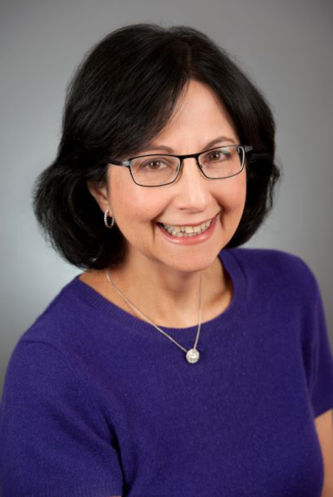
We are very pleased that Dr. Jane Newburger (Fig 1) is the focus of our first in a planned series of interviews in Cardiology in the Young entitled, “Global Leadership in Paediatric and Congenital Cardiac Care”. Dr. Newburger was born in Manhattan, New York, United States of America. She was raised in the Bronx for her first six years of life, at which point, her family moved to Yonkers, where she spent the rest of her childhood. She then attended Bryn Mawr College, majoring in psychology. Dr. Newburger subsequently attended Harvard Medical School, graduating in 1974. She did her internship and residency in paediatrics at Boston Children’s Hospital in 1974–1976, followed by her fellowship at Boston Children’s Hospital in 1976–1979. She received her Masters in Public Health at the Harvard School of Public Health in 1980.
Jane W. Newburger, MD.

Dr. Newburger has spent her entire career as a paediatric cardiologist at Boston Children’s Hospital and Harvard Medical School, where she was appointed a Professor of Pediatrics in 1999 and has held the position as Commonwealth Professor of Pediatrics since 2008. She has established herself as a leading clinical scientist within the field of paediatric cardiology, with expertise in leadership of multicentre and multidisciplinary research, including the building of collaborative groups. She has been continuously funded by the National Institute of Health since 1982, and amongst other areas has led the field in the areas of neurodevelopmental outcomes in congenital heart disease, improved methods of vital organ support, and management of Kawasaki disease. We had the pleasure to interview Dr. Newburger in order to discuss her path towards becoming a clinical scientist, understand her interests spanning four decades of hard work, and gain insight into her strategies to design and lead successful multicentre studies.
Dr. Tretter: Tell us about your upbringing and any role models or events which led both to your pursuit of medicine in general, and specifically to the field of paediatric cardiology.
Dr. Newburger: My parents were German-Jewish immigrants who escaped from Nazi Germany and came to the United States. Although I was born in the United States, because of this family history, I always felt a sense of privilege to be in a country with such freedoms and opportunities. I was raised with the idea that I had to have an independent career and always wanted to be a doctor. I cannot exactly tell you why, but I was fascinated with medicine and specifically the relationship a doctor could have with families and the clear respect that doctors were given. This fascination was related to what I observed from our “old fashioned” family physician, who took care of the entire family and whom my parents held in such high regard. So as young as I can remember, it was never so much about what I wanted to be when I grew up, but instead what part of medicine I wanted to pursue.
I ended up majoring in psychology at Bryn Mawr College near Philadelphia, Pennsylvania, thinking that I would pursue a career in psychiatry. Human behaviour always interested me. I completed undergraduate school in three years and went on to Harvard Medical School. In medical school, I became fascinated with neurology; however, it seemed like such a depressing specialty. I also really enjoyed surgery and paediatrics. I didn’t think a career as a surgeon was compatible with everything else that I wanted in my life, so pursued paediatrics. My last rotation as a medical student was in cardiothoracic surgery, after Dr. Aldo Castaneda had just come to Boston Children’s Hospital. Dr. Castaneda spent a ton of time teaching the medical students, and this really started to spark my interest in congenital heart disease. I remember in December of my intern year as a paediatric resident having Dr. Amnon Rosenthal as my spectacular attending; Ami would subsequently leave to develop the paediatric cardiology program at University of Michigan. Dr. Nadas was a huge presence, and I became totally immersed in paediatric cardiology. Pediatric cardiology seemed to be the perfect marriage of the excitement of surgery with the long-term patient and family relationships of paediatrics. I think a very important message that should come across to the trainee is that my road to paediatric cardiology was all by circumstance and chance.
Dr. Tretter: That is a great message to the trainee, as that is clearly a common scenario in choosing a medical specialty. You have shed some light on your interest in neurodevelopmental outcomes in congenital heart disease. Can you elaborate what led you towards clinical research in general and towards this specific clinical and research focus?
Dr. Newburger: This choice also highlights the importance the people one meets and luck. In my second year of fellowship, our T32 training grant was up for renewal. All second-year fellows were called into Dr. Nadas’ office, and we each were told we had to write a grant in case the T32 wasn’t funded. I still remember Dr. Nadas’ slapping at his knee, a typical gesture for him, while delivering this news. He told us that our grants didn’t need to get funded, but if we didn’t deliver our grant applications to his office, he couldn’t promise us third-year positions. So, I very unhappily wrote a grant. I remember being miserable! To write it, I sought help from Olli Miettinen from the Harvard School of Public Health and wrote the grant on how well a board-certified paediatric cardiologist could determine if a murmur is organic or innocent by auscultation alone, i.e., before review of echocardiography (in those days, M-mode), EKG, and chest X-ray. The grant was funded, which also allowed funding for me to go to the Harvard School of Public Health. The study was ultimately published in the New England Journal of Medicine, which gave me an early taste of success.Reference Newburger, Rosenthal, Williams, Fellows and Miettinen1
Dr. Tretter: This is remarkable, and encouraging to someone like myself early in his research career, to hear that Dr. Newburger, a recognized leader in our field who has continuously been grant funded by the National Institute of Health since 1982, really struggled and begrudgingly took on grant writing. But, you overcame that learning curve and have not looked back.
Dr. Newburger: Yes, the first grant is always the hardest. I am sure I would have happily never written a grant if I had not been forced to do it. The second event related to chance was my involvement in Kawasaki Disease. After the cardiologist (Staff Grady) who primarily cared for the patients with Kawasaki Disease left Boston Children’s in the early 1980s, Dr. Nadas called me into his office and told me I needed to assume the care of Kawasaki Disease patients, since I had gone to the Harvard School of Public Health. I remember expressing disinterest and uncertainty related to my lack of expertise; however, Dr. Nadas was insistent I should take this on. So, the embarrassing fact regarding my initial involvement in Kawasaki Disease is that I was assigned to take this on, with little say in the matter. I partnered up with my infectious disease colleague, Jane Burns, and continue to collaborate with her to this day.
Dr. Tretter: It’s very inspiring that you developed interest and expertise early in your career in three primary domains and have continued for four decades leading the way in our understanding and improved management in these areas: management of Kawasaki disease, neurodevelopmental outcomes in congenital heart disease, and improved methods of vital organ support.
Dr. Newburger: I have always been fascinated by neurodevelopment and cognitive function. Don Fyler had an incredible database from the New England Regional Infant Cardiac Program. Dr. Fyler’s office was right next to mine, and he randomly mentioned during a conversation that the database had clinical and demographic information from every baby operated on with congenital heart disease at Boston Children’s Hospital, and that a psychologist went around New England in the 1970s and tested all of these children before they entered kindergarten. But, no one ever published the data. I was interested in how cyanosis affected the brain in patients with transposition of the great arteries, and I was able to look at the effects of duration of cyanosis on intelligence and neurocognitive function before kindergarten. This paper was also published in the New England Journal of Medicine, and this experience revitalised my long-time passion in neurodevelopment.Reference Newburger, Silbert, Buckley and Fyler2 This study about cognitive function and age at repair in patients with transposition of the great arteries in children was a much easier experience than my first study, using an already existing dataset to answer a fundamental question. Because of this paper and gained experience, when Dr. Jonas became interested in the neurodevelopmental effects of circulatory arrest versus low-flow bypass, he proposed that I help him with putting together the Boston Circulatory Arrest Trial.Reference Newburger, Jonas and Wernovsky3 This successful trial then laid the building blocks for many subsequent related trials, such as the pH and haematocrit trials, along with follow-up studies to the original Boston Circulatory Arrest Trial.Reference Gruber, Jonas, Newburger, Zurakowski, Hansen and Laussen4–Reference Bellinger, Newburger, Wypij, Kuban, duPlesssis and Rappaport10
Dr. Tretter: So, what have been some of the barriers that you have encountered in designing and implementing these trials?
Dr. Newburger: I think most of the barriers are just internal. Trials take a lot of work, and one of the hardest things is to try to balance all the aspects of your life: your children, your family, taking care of patients, and research. Most of us went into medicine because we wanted to take care of patients, and that certainly takes precedence over research. So, finding time for a whole other set of pressures is one of the main barriers. When you do a trial, it is a human experiment that needs to be taken incredibly seriously. Enrolling patients takes time, the relationships that you build in research take time, and you ultimately need to support what becomes a small business with the necessary personnel involved in your research group. Early on, the challenge is to balance the things you love to do and not short-change them.
Dr. Tretter: Can you summarise for me your journey of evolution of understanding of neurodevelopmental outcomes in congenital heart disease. Where were things when you started in the early 1980s, what have been the main findings and resulting interventions towards improving such outcomes from your work, and what do you see as the main direction towards continued improvement?
Dr. Newburger: In the 1980s, it was considered normal and acceptable for babies to have seizures after surgery for congenital heart disease. It was unchartered territory with very little understanding. Early on, the pump circuits had been too large, so bypass was very harmful, and one could not do surgery without total circulatory arrest. By the late 1980s, there were better circuits and bypass methods, but we did not have our arms around the scope of their relative effects on neurodevelopmental outcomes. The first area in the field of cardiac neurodevelopment that received extramural funding were the surgical trials, because it was assumed that what we did to the patients in the operating room negatively impacted their neurocognitive function. “It must be surgery; it must be the things the surgeon did and the bypass techniques.” Intraoperative factors certainly were the most modifiable factors and initially received the most attention. We then started to focus on all the things that happened when the patient was sick before and after surgery, including the postoperative care in the cardiac intensive care unit. Then, we began to appreciate the importance of foetal circulation and the foetal environment, as well as the genetic factors that dictate neurodevelopmental outcomes. These factors have become the current focus in advancing understanding and represent a huge frontier in understanding outcomes. For example, the Pediatric Cardiac Genomics Consortium is underway with the Congenital Heart Disease Brain and Gene Study. Also, virtually every Pediatric Heart Network study now includes a biobank with the capacity to look at DNA and genomics. Future research will focus more holistically on all of the factors that determine how a person turns out, including socioeconomic and environmental factors.
Dr. Tretter: Specifically, which study would you direct our readers towards which led us to our current understanding of neurodevelopmental outcomes in congenital heart disease, and which study do you think will bring us to the next level?
Dr. Newburger: The Boston Circulatory Arrest was a great study, not because of the question of circulatory arrest so much, but because of what it showed us about the skewed distribution of neurodevelopmental problems in children with d-transposition compared with normal children.Reference Newburger, Jonas and Wernovsky3 It allowed us to characterise the neurodevelopmental signature of children with congenital heart disease and gave rise to a whole number of other studies. Retrospectively, the question that was asked was not as important as the indirect information that was gained and the understanding that we could do trials in paediatric cardiac surgical patients.
Similarly, the Single Ventricle Reconstruction Trial has had a huge payoff in looking at neurodevelopmental outcomes in the single ventricle population and its precursors.Reference Newburger, Sleeper and Bellinger11–Reference Mahle, Hu and Trachtenberg19
In the future, I hope we can apply machine learning to big datasets that include information on a person’s genotype and phenotype, home environment, and non-social environment. With a big enough dataset, machine learning will allow us to explore the interrelationship of known factors and also identify new risk factors.
In Kawasaki Disease, the first multicentre Intravenous Immunoglobulin trials that we began in the 1980s have probably impacted the health of more children than any other studies that I have been a part of.Reference Newburger, Takahashi and Burns20 And, it was not an original idea. A smaller trial in Japan led by Dr. Furusho had already begun and was said to be positive, so we wanted to replicate it with a larger North American population.Reference Furusho, Sato and Soeda21,Reference Furusho, Kamiya and Nakano22
Dr. Tretter: As you have mentioned, you have been a key leader in at least two studies that have followed two large cohorts of children over time and published the sequential outcomes of these cohorts, the Boston Circulatory Arrest TrialReference Newburger, Jonas and Wernovsky3–Reference Bellinger, Newburger, Wypij, Kuban, duPlesssis and Rappaport10 and Single Ventricle Reconstruction Trial.Reference Newburger, Sleeper and Bellinger11–Reference Mahle, Hu and Trachtenberg19 Can you share with our readers your thoughts on the keys to success in these types of trials, both with respect to academics and engagement of the patients and families?
Dr. Newburger: Let me start with the academics. One of the most satisfying things one can do in their career is to work with a multidisciplinary group. You learn so much from other disciplines, as in the Boston Circulatory Arrest Trial,Reference Newburger, Jonas and Wernovsky3–Reference Bellinger, Newburger, Wypij, Kuban, duPlesssis and Rappaport10 and from colleagues at other institutions, as in the Single Ventricle Reconstruction Trial.Reference Newburger, Sleeper and Bellinger11–Reference Mahle, Hu and Trachtenberg19 Both of those experiences were exhilarating in so many ways. The keys to success are to be collaborative and to understand that everyone involved should have a piece of the pie and benefit. The guiding principle is to “follow the golden rule,” a saying often promoted by Dr. Nadas. This mentality helps people work together. The Single Ventricle Reconstruction Trial thrived because everyone was in it together. We were all excited and learning together, and everyone involved had papers they could write. That was also true for the Boston Circulatory Arrest Trial.
To make these trials successful, you quickly learn whom you can rely on. Trials require a huge amount of infrastructure to facilitate multidisciplinary work. Every meeting should have a purpose, and end with key action items that you can revisit to ensure completion. It is great to have administrative help with recorded meeting minutes, and it is key to have a fantastic statistician.
I think it is exciting for patients to know that they are part of something much larger and to be members of a community. This concept is true even if they might not benefit directly but know that other children could benefit in the future. Many families are altruistic, and if there is no added harm to their child, many families and patients are excited to be involved in an effort greater than themselves.
Each study builds on the previous study, and each piece of knowledge facilitates the next. And, while the studies we are discussing may be forgotten fifty years from now, they will have been the predecessors of much better, bigger, and more exciting work.
Dr. Tretter: In addition to your influence as a clinical scientist, you have established yourself as a phenomenal teacher and mentor. What advice do you give to early career clinical scientists aiming to follow in your footsteps? What would you say are the keys to your success?
Dr. Newburger: First, I think each person will find his or her own way, but the advice I give to my mentees is to follow their own passions. We all work so hard; you cannot work this hard without loving what you do. So, you must love it, and sometimes what you love is off the beaten path. I mean, neurodevelopment was way off the beaten path!
Dr. Tretter: I must interrupt you then. You said you were forced into your clinical and research interest of Kawasaki Disease. I take it you have learned to love it.
Dr. Newburger: Oh yes, I love being involved in the management and research related to Kawasaki Disease now - I love it! You must lean in to new areas that present themselves, even if they are off the beaten path, and you may discover new passions like I did. I think multidisciplinary work has challenges, but is incredibly rewarding. You do have to take some risks. If you take a risky project, it is good to have one or two projects that have a high likelihood of being important regardless of whether the results are positive or negative. Choosing a topic that is important is crucial, and finding an answer that is important generally leads to publication in a higher impact journal. You need to be highly self-critical, but you should not be a perfectionist – when it comes to trying new approaches, the perfect can be the enemy of the good.
Dr. Tretter: We have focused a lot on academic work. What advice do you have for the clinically oriented cardiologist?
Dr. Newburger: Direct patient care is the primary focus for most physicians, whether or not they are involved in research. If you are combining research with clinical care, you want to be careful to make sure your research and clinical activities are compatible and ideally synergistic. For example, if you are doing genetics research at a very high level, cardiovascular genetics would be a perfect clinical fit given the lower clinical and on call demand. A career in bench research might not be a good choice for those who aspire to a clinically demanding field like paediatric and congenital interventional cardiology, where one needs to develop and maintain technical skills. For me, the clinical care of children with Kawasaki disease was a perfect fit with my research about Kawasaki disease. One nourished the other.
Dr. Tretter: I would like to change gears a little. We are amidst a global pandemic related to COVID-19. With its recognised paediatric multisystem inflammatory syndrome temporally associated with COVID-19, and its similarities to Kawasaki Disease, you have become a sought-after expert for related webinars and knowledge-sharing events. COVID-19 has become the overwhelming focus in academic medicine. Can you comment on your perspective related to the current knowledge-sharing and hyperfocus in academic medicine on COVID-19?
Dr. Newburger: This disease just burst into the scene, and no one was prepared for this pandemic. I would just make some observations about the global community and how we have come together on this challenge. We live in an age of incredibly rapid communication. Even before people could publish the first articles on their experiences, knowledge was being shared by email and webinars.
This pandemic is another circumstance requiring multidisciplinary involvement, with almost feverish efforts in both clinical care and translational research, and with an excitement to be at the forefront of understanding. So how do we collaborate academically during the pandemic? There is some similarity to how we felt in the early 1980s when Kawasaki Disease first became more common in the US, with excitement to be on the forefront of something brand new. For COVID-19, the stakes for our health are much higher. Academic activities related to COVID-19 and the multisystem inflammatory syndrome of children associated with SARS-CoV-2 have become very complicated, with every researcher from every specialty wanting the same blood samples, and investigators in different multicentric collaborative groups wanting to do the same experiments with the same blood samples. So, sorting this out in a fair way is an ongoing challenge. As soon as an area of investigation becomes important and high profile, you have to work very hard for it not to become contentious. So, again, collaboration and following the golden rule will become key.
Dr. Tretter: Before we end our interview, we know Dr. Newburger the outstanding paediatric cardiologist and clinical scientist. Tell us something about your interests and hobbies outside of medicine. If you are not busy taking care of patients, writing grants or papers, or teaching trainees, where would we find you?
Dr. Newburger: Number one, I love being with our family – husband, children, and grandchildren. I also like to hike and travel and just to do outdoor activities with family. My husband and I love music and are regulars at the Boston Symphony, and we also love good food and wine.
Dr. Tretter: Dr. Newburger, the Editorial TEAM of Cardiology in the Young is thrilled that you are the focus of our first in a planned series of interviews in Cardiology in the Young entitled, “Global Leadership in Paediatric and Congenital Cardiac Care”. Any reader of this manuscript will agree that you are the perfect choice for this honour, a choice even more appropriate given that you previously wrote two “Hall of Fame” manuscripts for Professor Robert Anderson and Cardiology in the Young, one about Alexander Sandor Nadas (November 12, 1913–May 15, 2000)Reference Newburger and Fyler23 and the other about Donald Charles Fyler (1924–2011).Reference Newburger, Fyler and Colan24 Thank you so much for taking time for this interview. It was such a pleasure to get to know you better. I am just so impressed and inspired by you and your impactful career.