Introduction: The Bureaucratization of Islam as a Social and Cultural Phenomenon
Despite widespread notions that Islam—unlike the Catholic Church—lacks centralized leadership and institutions, there are formalized Islamic hierarchies in various contemporary settings, particularly but not exclusively, in states where Islam is politically powerful. Following the transnational waves of Islamic resurgence beginning in the late 1970s, state-sponsored Islamic bureaucracies have become influential societal actors in Muslim-majority countries where Islam enjoys constitutional status as the state's official religion, such as Brunei Darussalam, commonly known as Brunei; Morocco; Iran; and Malaysia. The influence of Islamic bureaucracies has also become significant in more “secular”-oriented states, such as Indonesia, Singapore, and Turkey. In these states, governments have empowered state-funded “administrative” bodies to guide and influence Islamic discourse in accordance with their political interests and particular nationally framed agendas. However, a legal definition of bureaucracy as exclusively consisting of certain state institutions in the public administration would contradict the much broader anthropological usage of the term. Many non-, or only indirectly, state-linked Islamic organizations and movements, such as educational and Islamic finance institutions, also have sophisticated institutional hierarchies, decision-making procedures, and certification systems that are essentially bureaucratic in nature, insofar as they operate through bureaucratic symbols, codes, and procedures.Footnote 1 In Southeast Asia, the politics of bureaucratizing Islam are particularly salient in those countries where Muslim populations play a politically significant role, either in a majority situation as dominant forces or as minorities that are seen by some state actors as potentially destabilizing, namely Brunei, Indonesia, Malaysia, the Philippines, Singapore and Thailand.
This article, which departs from the conceptual contours of a newly established anthropological research group,Footnote 2 presents the group's conceptual perspective on the bureaucratization of Islam in Southeast Asia, and will position this new perspective with reference to ongoing debates in the anthropology of bureaucracy. The article views the bureaucratization of Islam not simply as a formalization, expansion, and diversification of Islamic institutions, but as a much wider social and cultural phenomenon that transcends its organizational boundaries. As the bureaucratization of Islam is integral to the state's exercise of classificatory power,Footnote 3 which is necessarily coproduced and contested in society and thus entails dialectically interlocked top-down and bottom-up processes, the bureaucratic imposition of categorical schemes of Islam has consequences that deeply affect the everyday life of various social actors, the role of Islam in the public sphere, the formation of Muslim subjectivities, and the very meaning(s) of Islam in state and society. In this transcending capacity, the bureaucratization of Islam is inextricably interlinked with a bureaucratization of knowledge and the related processes of systematizing and reflecting, which the anthropologist Dale Eickelman has famously called the “objectification” of Muslim knowledge, resulting in “a significant reimagining of religious and political identities”Footnote 4 across the Muslim world.
The bureaucratization of Islam necessarily operates with characteristic forms, symbols, and procedures—a “language” of bureaucracy. Changing forms, however, causes changes on the level of meanings,Footnote 5 as, by definition, there is a mutually informing and semantically productive relationship between form and meaning. The bureaucratization of Islam therefore entails a transformative rewriting, that is, a translation of Islam into the codes, procedures, and symbols, or language, of bureaucracy and, simultaneously, produces its own meanings that are unique to specific discursive arenas. Considering the multifaceted nature of this transformative rewriting of Islam into the “language” of modern state bureaucracy, it is beneficial to analyze both the functional (that is, power related) and the hermeneutic (that is, meaning- and knowledge-production related) dimensions of the bureaucratization of Islam, and to study them in relation to each other.Footnote 6 This goes beyond more established notions of bureaucratization of religion, which primarily focus on instrumental and power-related explanations, where bureaucratization is viewed as a strategy for politically controlling Islam and neutralizing religious opposition. I argue that our analysis should not be limited to these undeniably important functional aspects, nor should it narrowly focus on official policies and discourses of political and religious leaders, elites, and high-ranking decision-makers, which are the principal interest of other disciplines studying state-Islam relations. We should also not reduce our analysis of the social phenomenon of the bureaucratization of Islam to the mechanic logics of interests, resources, incentives, and reflexes; rather, our analysis would benefit from simultaneously investigating the complex production of social meanings that accompanies such bureaucratization processes, the specific local discursive contexts that generate these meanings (which naturally also have translocal and transnational dimensionsFootnote 7), and the social changes with which these processes interact at the micro level.
Using the case of Brunei as an example, I lay out an analytic framework to study the bureaucratization of Islam anthropologically, a project ideally to be pursued comparatively and collaboratively. First, I introduce some themes and epistemic interests of the anthropology of bureaucracy and elaborate on the absence of studies on Islamic bureaucracies, particularly in Southeast Asia, from theoretical debates in this field. Next, I present an anthropological case study from Brunei, with empirical data gathered in the preparations and early phase of my larger group project on the bureaucratization of Islam in Southeast Asia. Then, I briefly turn to a regional comparison and illustrate how in the context of another state-Islamic bureaucracy in the region, namely in Singapore, Islamic knowledge and meaning-production unfolds very differently, despite some shared functional features. Finally, I offer remarks on the relevance of the case studies from Brunei and Singapore for the larger project of a collaborative anthropological study of the bureaucratization of Islam across and potentially beyond the Southeast Asian region.
Bringing Southeast Asian Islam to the Anthropological Study of Bureaucratization: Existing and Envisioned Roads of Inquiry
There is growing interest in government-sponsored attempts to bureaucratize Islam, and parallel strategies by non-state Muslim groups to engage in bureaucratization practices, across the globe—be it in Europe, Central Asia, the Middle East and North Africa, or China.Footnote 8 In Malay-speaking Southeast Asia, however, the quest for “order” appears to be particularly strong. Although there is much literature on Islamic governance, law, and sharia politics in Southeast Asia, relatively few anthropological studies contribute to these debates. Empirically well-grounded research in this field mostly remains confined to singular country- , province-, institution-, or movement-specific investigations.Footnote 9 In most of these studies the bureaucratization of Islam is presented in descriptive terms as an empirical fact or as a contextual side-aspect; it is not analytically reflected upon as a sociocultural phenomenon and process, let alone based on ethnographic fieldwork among bureaucrats and bureaucracies.Footnote 10
While other disciplines have produced remarkable collaborative and comparative works on Islam, law, and the state in and beyond the region,Footnote 11 so far there is no larger comparative or theory-producing anthropological work on the bureaucratization of Islam that transcends country-specific case studies. This is regrettable, as there can be no doubt about the influential role that the modern nation stateFootnote 12 and its institutional forces have played, and continue to play, in the revival of Islam in the region. For the involved bureaucratic institutions, developing state-ified categorical schemes of Islam—that is, Islam being translated into the language of bureaucracy—and establishing regulations for Islam-related public communication and practice is a foundational concern. Due to context-specific, tempo-spatially embedded environments and power structures, the bureaucracies’ approaches to interpreting, regulating, and administering the meanings of Islam differ widely, reflecting its character as a contested “discursive tradition,”Footnote 13 wherein hegemonic truth claims and the politics of orthodoxy are inseparably intertwined with asymmetric power relations and their accompanying disciplining mechanisms. As I show in this article, the anthropology of bureaucracy can serve as a productive foundation for studying social dynamics between Islam, as interpreted by organized Muslim actors, and the state.
Existing studies on state-Islam relations in Southeast Asia are dominated by the political sciences, history, and legal studies. An unparalleled source transcending country-specific work is the meticulous mapping of existing jurisdictions, institutional assemblages, and their settings in Lindsey and Steiner's three-volume Islam, Law and the State in Southeast Asia. Other recent work rethinks the implications of colonial state-building for transformations of Islamic law. Iza Hussin'sFootnote 14 study of Muslim legal politics, interconnectivities, and translations in and between colonial Malaya, India, and Egypt stands out and resonates with literature on colonial reinventions of Islamic law elsewhere.Footnote 15 While these masterful studies (and the referenced nonanthropological works) are based on research with legal texts, official documents, archives, and sometimes interviews, they focus primarily on elite practices and discourses. To be sure, they provide deep insights into state efforts for creating a “monopoly on religious interpretation”Footnote 16 through legal and bureaucratic means. However, they also present methodological and comparative divergences from the anthropological approach that I propose. The bureaucratization of Islam, viewed as a sociocultural phenomenon that transcends its organizational boundaries, has multiple facets and is socially negotiated in ways that cannot be captured in purely institutional terms or by exclusively focusing on policies and law. Bureaucratic classificatory practices acquire their social realization and meanings in the spheres of everyday life, and therefore, at least for anthropological purposes, should be studied there. This is not to say that anthropologists should ignore official policies, the letter of the law, and documents—quite the contrary. As my case study of Brunei demonstrates, these sources provide important context for ethnographic accounts. But to develop an anthropological understanding of bureaucratic contestation and its workings in dynamics of discursive change in the religious and intersecting social fields, fieldwork and empathizing personal interactions with involved actors over longer periods of time are necessary.
Beyond the Ideal-Type: The Rise of Anthropological Bureaucracy Studies
The conceptual approach I propose needs to be understood in the context of its disciplinary point of departure, that is, the anthropology of bureaucracy. In this section I briefly introduce the historical trajectory and some characteristics of the anthropology of bureaucracy. Bureaucracies differ from more common sites of ethnographic fieldwork insofar as social action in such settings is characteristically “framed by a set of formalized rules and procedures.”Footnote 17 Anthropologists are skeptical of bureaucracies’ self-representation as primarily carrying out policies decided elsewhere in an objective and mechanical manner.Footnote 18 Thus, anthropologists view bureaucracy not only as an “aspect of the modern state that makes the state function,” but also as a productive site for “social life”Footnote 19 and creative political action. This challenges classical assumptions about bureaucracy, prominently developed by Weber, according to which bureaucracy ideal-typically represents depersonalized administrative perfection and “impersonal rationality,”Footnote 20 historically expressed by a “shift” toward “rule by disinterested bureaucrats” as opposed to “rule by notables.”Footnote 21 In contrast, anthropological studies have explored the human factor by elucidating bureaucratic micropolitics, their ambiguities and arbitrariness, and the constitutive role of bureaucrats’ personal worldviews and charisma.Footnote 22 Such approaches are, of course, not exclusive to anthropology, as sociologists have long,Footnote 23 sometimes on overlapping grounds, revised the Weberian bureaucratic ideal-type as well. Despite its obsessive concentration on problematizing Weber—for whom bureaucracy was incompatible with sincere and passionate religiosity on part of the bureaucrats (although they may strategically exploit religion), let alone empowering public religiosityFootnote 24—the anthropology of bureaucracy has until now largely omitted the bureaucratization of religion and especially Islam from its reflections on the nature and workings of state bureaucracies.Footnote 25 My work, outlined in this article, aims to address these research gaps.
Heyman, one of the first to attempt to systematize the anthropology of bureaucracy, argues that anthropologists have “arrived late on the scene of the study of bureaucracies.”Footnote 26 It is certainly true that “calls for ethnographic exploration of the everyday workings of the state have grown louder”Footnote 27 since the 1990s, and these calls have resulted in the anthropology of bureaucracy, which intersects with the anthropology of the state, undergoing a “deepening” over the past two decades.Footnote 28 Anthropological interest in bureaucracy, however, began much earlier, as can be seen by the example of monographs like Lloyd Fallers's Bantu Bureaucracy (published in 1965!),Footnote 29 Beidelman's Colonial Evangelism,Footnote 30 and Cohen'sFootnote 31 work on the implications of the first census of India for “organizing” natives and their social categories.Footnote 32 From the late 1980s onwards, Handelman, pointing at “social taxonomies” applied “to the citizenry”Footnote 33 that aim to eradicate grey areas and indeterminacy as characteristic (if not defining) features of bureaucratic ways of seeing and organizing the world, and Herzfeld, theorizing “symbolic roots” of bureaucracy and bureaucratic indifference (among many other points), then influenced an entire new generation.Footnote 34 The new anthropology of bureaucracy then increasingly focused on the exercise and contestation of power. It views “bureaucrats as participants in a complex social arena”Footnote 35 and is skeptical of established studies approaching the “negotiation of power in state institutions” with a “focus on situations with clear one-way flows and monologic communication—speeches, announcements—where one can distinguish the voices and the persons representing the state to its people.”Footnote 36 The state, in this understanding, is inevitably a fragile and fragmented entity, a point long stressed also by political scientists who refuse to speak about the state in any essentializing way. The state, in this problematized sense, requires constant reproduction by social and symbolic means, and, as GuptaFootnote 37 and the “new anthropology of the state”Footnote 38 have demonstrated, its boundaries with “non-state” spheres are blurrier the closer we examine them ethnographically.
The anthropology of bureaucracy differs from anthropological studies where bureaucracies are merely mentioned as actors or contextual factors. It both describes what specific bureaucracies or bureaucrats do and asks what bureaucracy is—as a “social phenomenon”Footnote 39—and how this can help us make sense of what bureaucracy does in the empirical contexts we study. The anthropologist Josiah Heyman distinguishes two opposing approaches to the anthropology of bureaucracy: the “broad brush” and the “particularistic.” The “broad brush” approach operates with metanarratives that, in his view, are often prematurely imposed on data, so that conclusions are drawn too quickly (he names Foucauldian-inspired authors in general, and James Scott's Seeing Like a State Footnote 40 among others).Footnote 41 This approach claims to reveal “seeming ‘truth’ about the way all bureaucracies (or states, or experts) think and act,” but would pay too little attention to “immediate bureaucratic politics.”Footnote 42 “Particularistic” approaches would be “less monolithic” and more attentive “to complex play of ideas and struggles in actual organizations,” without demonizing bureaucracy as a “necessarily evil” through a “totalistic critique.”Footnote 43 My approach to the anthropology of bureaucracy strikes a balance between the two.
Unpacking the Anthropology of Bureaucracy: Bureaucracy, Classification, and the Social Life of State Power
A recurrent theme in the anthropology of bureaucracy is the bureaucratic exercise of power in settings of unequal power relations—in institutions, in wider societal contexts, and particularly in “interface situations”Footnote 44 between the two.Footnote 45 HeymanFootnote 46 views bureaucracies as “the preeminent technology of power in the contemporary world” as they are capable of “orchestrat[ing] numerous local contexts at once.” As Graeber argues, such exercise of power characteristically includes the “bureaucratic imposition of simple categorical schemes on the world,”Footnote 47 often coercively enforced by policing agencies. This echoes Scott's notion of “state simplification.” It also resembles, albeit without referencing, what Bourdieu earlier described as “state forms of classification”Footnote 48 and the social power they exert in the spheres of habitus, the education sector, and the formation of a “(national) common sense.”Footnote 49 In his sociology of the state, Bourdieu noted how beyond law-enforcement, the state bureaucratically engages in social categorization, resulting in normalized inequalities of various kinds.Footnote 50 Involved agencies organize and map the population along classificatory distinctions, for example: class, gender, race/ethnicity, or citizenship.Footnote 51 We might add that these classificatory distinctions can—and in Brunei and Malaysia, do—include religious categorical schemes such as “good Muslims” adhering to state-sponsored doctrines and “deviant groups/teachings endangering the true faith.”Footnote 52 Legally, such state classification often has compulsory force, although the actual exercise of state power in society is often indirect, without constant or direct coercion. As Bourdieu argues, many people internalize hegemonic ascriptions if it disadvantages them, and thereby become complicit in (re)producing the state's classificatory power, but these ascriptions can also be countered through a reflexive deconstruction of their “genesis” and historicity,Footnote 53 among other forms of noncompliance.
While one relevant theme is social production of power, knowledge, and meanings, the other pertains to their effects. Nonbureaucrats may internalize hegemonic classification, so that bureaucratic categorical schemes “acquire a commonsensical, taken-for-granted character,”Footnote 54 but they also “often take the initiative by pursuing goals that bypass official control.”Footnote 55 Bureaucracies are sites of attempted control, but to be effective, this control requires some level of popular compliance. Even the most powerful bureaucracy, however, cannot determine how precisely its schemes are appropriated by social actors, the relational process of which is at the heart of producing state power and generating its social meanings. This societal appropriation is neither passive nor a one-directional process between a “sender” and “receiver.” Depending on the actual modes of appropriation, bureaucratic classificatory schemes, including religiously framed ones, may (or may not!) become discursively naturalized and thus taken for granted. Such appropriation is, to varying extents, a creative process in which unexpected re-significations and new transformative ascriptions of meaning may occur. This unfolds not only among the target groups of bureaucratization (often society at large, or the Muslim community specifically), but also within bureaucracies themselves. Therefore, analytically, the diversity of reactions to the intended exercise of classificatory power (in society and within institutions themselves) must be distinguished. Circumvention, secretive refusal of normative compliance, “everyday forms of resistance,”Footnote 56 the development of alternative (de)justifying narratives, direct confrontation, or even counter-hegemonic bureaucratization are just a few possible responses.
Another relevant theme of the anthropology of bureaucracy pertains to tensions between formalized normativity and practice. Norms do not always correspond with behavior, as discursive frames of reference they may also conceal it. “Rules can never be enforced enough,”Footnote 57 as bureaucratic actors are “masking the exercise of power in the guise of an always emergent—but never attained—perfect order.”Footnote 58 This is related to what Hoag calls “the god trick performed by universalizing authoritative bureaucracies,”Footnote 59 a notion acquiring an unintended double meaning in the context of Islamic bureaucracies operating with their own transcendental universalisms in the name of divine revelation. This self-absolutizing, which characterizes bureaucracy in general and religious state-bureaucracy in particular, largely forecloses the possibility of open-ended discourse and acquires even more powerful effects in combination with the nation state's own modes of elevating its truth claims to the spheres of the unquestionable, which itself mirrors religious patterns.Footnote 60 The symbiosis between the universalizing tendencies of both religion and the nation state typically accompany particular modes of bureaucratic thinking and organizing that operate with standardized, objectified truth claims and marginalize alternative perspectives, as well as social actors and groupings representing those perspectives. This bureaucratization of knowledge, which in particular settings may be filled with social and doctrinal meanings of very different (and tempo-spatially changing) kinds, is integral to the socio-legal consequences of the bureaucratization of Islam, as I conceptualize it.
The late anthropologist Richard AntounFootnote 61 argued based on his work in Jordan that the “growth of fundamentalism” is often intertwined with two other processes: The “bureaucratization of religion,” which in his understanding “focuses on the hierarchicalization of religious specialists,” and “the state co-optation of religion” which aims at the “neutralization” of these religious specialists as potential “political opponents.”Footnote 62 Antoun demonstrates through a village-based ethnography how the bureaucratization of Islam (in the above-defined sense), state co-optation, and the rise of fundamentalism in Jordan have symbiotically evolved “in mutually supportive and sometimes in antagonistic relations.”Footnote 63 I would argue that there is an inseparable relationship between functional (that is, strategy-, power- and resources-related) aspects of the bureaucratization of Islam and transformations in the production of new religious meanings, which is implicit in Antoun's call to analytically link these three processes (the rise of fundamentalist interpretations of Islam; hierarchicalization of religious experts; and political neutralization of religious experts). It is precisely this focus on the interrelatedness of functional and hermeneutic aspects, with an emphasis on the latter, that is central to my own approach to the bureaucratization of Islam, and that the following empirical examples aim to illustrate.
State-ified Islam in the Abode of Peace: The Case of Brunei
In the following, I present some preliminary data on bureaucratized Islam in Brunei to illustrate how the Brunei government has formalized a state brand of Islam that is integral to the state's exercise of classificatory power. This state brand of Islam not only functions to serve political interests of the government and to accumulate symbolic capital, but it also, alongside parallel changes of everyday normativities within society, produces meanings of Islamic governance that are unique to the country's discursive context.Footnote 64
I must stress that I do not view the contents and social meanings of bureaucratized Islam in Brunei as representing any general regional trends. But in more abstract and comparative terms, the bureaucratization of Islam in Brunei exhibits features that illustrate how Islamic bureaucracies can be integral to the state's exercise of classificatory power, how they empower bureaucratically translated “categorical schemes” of Islam and claim their characteristic “right to define the situation,”Footnote 65 and how this affects normative transformations in the wider social world. But in each national context, these shared characteristics of the bureaucratization of Islam play out quite distinctly. Similarly, like in almost any contemporary setting of bureaucratized state governance, phenomena such as what Scott describes as “state simplifications” (“the basic givens of modern statecraft”) and the quest for rationalization, “scientization,” and “technocratization,”Footnote 66 as well as cultural forms of the market (neoliberalism), have to varying extents made inroads into the bureaucratization of Islam across national boundaries, often intersecting with growing Islamic legalism and its passion for taxonomical purity.Footnote 67 But these partly shared characteristics (family resemblances) of the bureaucratization of Islam are manifested differently in each national context. In Brunei, much more than any other country in the region, the state has become the primary interpreter of Islam, with its very own dynamics at the level of local meaning production, despite symbolically drawing upon a much more universal and globalized language of bureaucracy at the levels of function and form.
The Sultanate of Brunei is the most understudied Southeast Asian country. Brunei has been defined by its government as a “non-secular” “Islamic State,”Footnote 68 without publicly expressed disagreement or organized secular or religious opposition. Brunei is unique in Southeast Asia as the only country to unambiguously identify as an Islamic state since its independence from British indirect rule in 1984. Brunei has no general elections or parliamentary system, and ruling power is centered in the person of the sultan, presently Hassanal Bolkiah (in office since 1967), who is prime minister, minister of finance, minister of foreign affairs and trade, minister of defense, supreme commander of the army, inspector general of the police, and chancellor of the national university. He is also the constitutional “head of the official religion” (ketua ugama rasmi) and officially described as “leader of the (Muslim) believers” (ulil amri). In his royal address (titah) on Independence Day in 1984, Hassanal Bolkiah declared that Brunei should “forever be a Malay Islamic Monarchy” (Melayu Islam Beraja). Resembling similar pillar models of modern nation-building elsewhere (for example, the French national motto, Liberté, Égalité, Fraternité, the Indonesian Pancasila, or the Malaysian Rukun Negara), Melayu Islam Beraja (Malay Islamic Monarchy, officially abbreviated MIB) is a government-defined “national ideology” (ideologi negara), “national philosophy” (falsafah negara), and “concept of the nation” (konsep negara). Since the late 1980s, Melayu Islam Beraja, or MIB, has been systematically propagated and bureaucratically institutionalized.
The “MIB-ization” of Brunei included numerous social, cultural, and legal policy initiatives. In the juridical field, the government began to place increasing emphasis on its “commitment to making the Islamic system the most effective system in the country.”Footnote 69 While MIB itself became increasingly institutionalized, it was also integral to the wider bureaucratization of Islam in Brunei. Along with the bureaucratization of MIB, the expansion of codified Islamic law represents a way of establishing categorical schemes of Islam, aiming to exercise classificatory power, while claiming the right to define the situation, and in that process producing meanings that are unique to the MIB-state's context. Legal Islamization initiatives included fields such as family law, adoption, evidence, and arbitration mechanisms, as well as banking and finance.Footnote 70 The Islamization of the law was not limited to codifying “sharia law.” In 1990, the sultan declared that all laws, including British-derived “civil law,” should “be brought in line with Islam,”Footnote 71 and he formed an expert committee of Islamic scholars (ulama) from the Islamic bureaucracy to advise him on implementation. Selling and publicly consuming alcohol was banned in 1991 (although non-Muslims can still import limited amounts and consume them privately), the production and sale of pork was prohibited in 1992, and public entertainment became further restricted.
Since the colonial era Brunei has maintained a legal system that is locally described as “dual,” with sharia and civil courts and codes coexisting separately. Civil law applies to all citizens, while sharia law applied only to Muslims before 2014 but now applies partially to non-Muslims as well (a development I discuss further below). As noted, Brunei's civil law is derived from British Common Law and primarily regulates business matters and disputes between persons, but British-derived legislation also includes a penal code, so that the term “civil legal system” is used “to describe the non-Islamic legal system.”Footnote 72 Although these “civil” laws exist parallel to the “Islamic” codes and courts, they are not viewed as “secular,” and the process of comprehensively reviewing “civil” laws vis-à-vis Islamic stipulations to make them “sharia-compliant”Footnote 73 since 1990 underlines this point. The sharia courts, on the other hand, are primarily concerned with family and personal status law; although, already in colonial times, certain criminal offenses were punishable, such as the moral offense of khalwat (“close proximity” between nonmarried couples) or men's unexcused absence from Friday prayers. Following Brunei's independence, these and other offenses became part of the Religious Council and Kadis Courts Act of 1984.
Simultaneous with the banning of alcohol sales and other religiously justified restrictions on public life, some established popular cultural practices were probed with regard to their potential (in)compatibility with Islam or, more precisely, with the bureaucracy's interpretation of Islam, in the course of its growing monopolization of Islamic discourse and religious classificatory power. Activities like gambling during His Majesty's public birthday festivities (the longest public celebration of the year) soon disappeared.Footnote 74 A leading MIB ideologue of the time described this process of cultural review: “several … cultural manifestations which have pre-Islamic … elements have either been refined or gradually phased out to suit Islamic teachings.”Footnote 75
Since the early 1990s, the techniques for disciplining the population along the lines of state-Islamic discourse and instilling the bureaucracy's official religious truth claims into the mind of the population became increasingly sophisticated and institutionally diversified. Obligatory state-Islamic education was expanded and intensified at all levels of the education system. As a former leader of the MIB Supreme Council puts it, the state apparatus underwent a systematic “Islamization of the agencies.”Footnote 76 This massive intensification of Islamization discourse and policies coincided with changes among the Islamic bureaucracy's leadership. These changes included the sultan's 1994 appointments of Abdul Aziz Juned as state mufti (a position that had been occupied by Ismail Omar Abdul Aziz since its creation in 1962) and Mahmud Saedon OthmanFootnote 77 as the government's special advisor in Islamic legal affairs. These appointments empowered two of the most influential ulama in modern Bruneian history, alongside former state mufti Ismail Omar Abdul Aziz, whose “strict” stance was credited by elderly local interlocutors with the “orthodox” turn away from certain traditional Malay practices.Footnote 78 Two years later, the sultan declared in titah (some of which are likely authored after consultation with government officials who are experts in the addressed fields, that is, ulama from the Islamic bureaucracy) that “no law or constitution” can be “superior to, or truer than al-Quran.”Footnote 79 In the same speech, he spoke for the first time publicly about plans to establish a comprehensive Islamic criminal law code (“akta undang-undang jenayah syariah”).Footnote 80 The monarch then formed a working group of Islamic legal scholars to look into the matter, a process that has been ongoing for almost two decades.Footnote 81 Most influential has been the Islamic Law professor Anwarullah Shafiullah (from Pakistan), who has been working for Brunei's Ministry of Religious Affairs since the 1990s.
The Introduction of an Islamic Penal Code
In the same year, 1996, the special advisor in Islamic legal affairs Mahmud Saedon Othman published a strategy paper referring to the sultan's speech and declaring that to realize His Majesty's vision, Brunei should unify its dual legal system (British-derived “civil law” and “Islamic law”) by abandoning the non-sharia law altogether, thus going beyond the revisions of the “civil” system that were already underway.Footnote 82 The monarch's will, in which Mahmud Saedon Othman framed his call (following a normative pattern in Brunei politics), required “immediate actions … [to] be taken without delay.”Footnote 83 The demanded abrogation of civil law never happened, but the Islamic bureaucracy continued working towards an Islamic penal code, initially opposed behind the scenes by some state elites, as WikiLeaks cables from the 1990s indicate.Footnote 84 Two decades after its first announcement, the government finally presented its Islamic criminal law code, the Syariah Penal Code Order 2013 (Perintah Kanun Hukuman Syariah 2013), which included provisions for internationally controversial hudud (corporal) and qisas (retribution) punishments.
The Religious Council and Kadis Courts Act, sections 129–131,Footnote 85 already included some criminal offenses based in the state's view of Islam, such as “close proximity” between nonmarried men and women (khalwat), or adult men's unexcused absence from Friday prayers. The 2013 Syariah Penal Code Order increases punishments for these and other “sharia crimes” (jenayah Syariah), and many other such crimes were added. Most controversially (international media exclusively focused on this aspect), the new provisions include the amputation of limbs for repeated cases of theft and robbery and stoning to death as the maximum punishment for certain offenses, such as adultery,Footnote 86 homosexual and anal intercourse,Footnote 87 blasphemy,Footnote 88 and apostasy.Footnote 89 Similarly, the questioning of hadith by MuslimsFootnote 90 has become a serious offense. However, officials emphasize the strict procedural conditions and a particularly high burden of proof, as well as several mechanisms for repentance and pardoning, which would make it unlikely that these severe punishments would regularly (if ever) be carried out. Apostates, for example, can repent up to the moment of the punishment's execution and must be freed afterwards. The same applies to any person, including non-Muslims, who would insult the prophet Muhammad: despite facing the death penalty or up to thirty years in prison (and forty strokes with the cane), they can be freed following a declaration of repentance.Footnote 91 However, as is not the case in other Islamic legal contexts, such as under Iranian penal law, non-Muslims are not treated differently (that is, less harshly) when insulting the prophet Muhammad (and other prophets).Footnote 92 Government members, most notably the state mufti, passionately stress the “merciful” character of the new code. For example, he argues that their regulations for caning were much more “humane” than those in neighboring non-Islamic states like Singapore.Footnote 93 It remains to be seen whether Brunei's Syariah Penal Code order will follow the Islamic legal tradition of the “art of not punishing,”Footnote 94 or a more punitive-oriented trend. It may also be a combination of the two. As Peletz observes in Malaysia's contemporary sharia judiciary (as opposed to two decades ago),Footnote 95 and FeenerFootnote 96 in the context of Aceh (Indonesia), an increasing codification of sharia-framed offenses and regulations can also go along with a numerically declining (or only occasional, selective) enforcement, where arrests and punishments are the exception rather than the norm, and merely fulfill symbolic purposes. Particularly in Aceh, the focus is much more on “public pedagogy” than punishment, and any regular observer of Bruneian state media and state-religious discourse can attest to the enormous presence of similar “educational” measures in Brunei's everyday public sphere.
Although the Syariah Penal Code Order does not abrogate civil law, as Mahmud Saedon Othman had proposed, it does include sharia provisions and punishments that, for the first time in (post)colonial Brunei, now also apply to non-Muslims. Each section specifies its applicability, for example, for “any person,” “any Muslim” (in its Malay version, “mana-mana orang” vs. “mana-mana orang Islam”), sometimes with gender-related distinctions. Against this backdrop, the Ministry of Religious Affairs and state media speak of a “hybrid[ization]” of Brunei's sharia and civil law.Footnote 97 At the time of writing, a reform of enforcement structures is also underway, following which the police and religious enforcement agencies would cooperate in the enforcement of the Syariah Penal Code Order more systematically.
The Syariah Penal Code Order is to be enacted in three stages. The first began in May 2014.Footnote 98 The second is planned to begin twelve months after a procedural code, the Syariah Courts Criminal Procedure Code (Perintah Kanun Peraturan Jenayah Syari'ah), will be gazetted. The third phase is scheduled to start two years after the second.Footnote 99 The most drastic punishments can only be applied in the second and, particularly, the third phases.
The behind-the-scenes preparations for the Syariah Penal Code Order that began during the past two decades and its enactment since 2014 are not only illustrative of the Islamic bureaucracy's growing powers vis-à-vis less legalistically Islamist-minded government members, but they also illustrate the standardization of a Brunei-specific state-Islam. Many of the code's sections also serve the obvious purpose of further cementing the Islamic bureaucracy's exclusive monopoly to publicly speak about Islam,Footnote 100 or, to use Graeber's phrase, the bureaucratic “right to define the situation.”Footnote 101 Islamic teaching without a permit and contempt of members of sharia courts or other institutions of the Islamic bureaucracy can now be punished with two years of imprisonment.Footnote 102 Accordingly, the only ulama that legally can and de facto do exist in Brunei are civil servants. Mocking or insulting Islamic laws—as defined by the bureaucracy—or the state mufti's fatwas (which enjoy the force of law, as discussed belowFootnote 103) can be punished with three years of imprisonment.Footnote 104 Spreading beliefs that are “contrary to Sharia law,” as established through classificatory schemes by the bureaucracy, can result in up to five years in jail. Publishing about Islam-related matters without a permit can also lead to jail terms.Footnote 105 It is forbidden to set up mosques without a government license. Issuing “illegal fatwas” (and any fatwa other that the state mufti or his personnel's is illegal) can be punished with two years of imprisonment or monetary fines.Footnote 106 Insulting, or hindering the work of religious enforcement officers, is also punishable with jail terms.Footnote 107
To be sure, no one from Brunei's small population is presently imprisoned for any of these offenses. Despite harsh regulations, the practical approach remains largely nonpunitive: Most “deviant”-declared Muslims who have been identified by religious enforcement agencies in previous years received “warnings” and were “invited” to undergo “faith purification counselling,” among other forms of soft pressure.Footnote 108 This was also emphasized by a high-ranking officer and a voluntary “informant” of a religious enforcement unit whom I interviewed separately in 2014 and 2017. With the exception of occasional minor cases, such as the imprisonment of members of the original Malaysian al-Arqam community who were detained under the Internal Security Act for attempting to set up a local branch in the 2000s, the relative absence of enforcement indicates the effectiveness of the pedagogical measures employed by the Islamic bureaucracy's powerful legal regime and the educational apparatus that it uses to expose the population to the “right” knowledge in accordance with the MIB-state's classificatory power. The aim is to convince people instead of coercing them, and to create conditions of governmentality whereby citizens sincerely believe it is in their best interest, and religiously right, to act in accordance with the ruling order. Enabled by Brunei's generous welfare state, its unique political economy, and a powerful educational machinery, this is remarkably successful.
The rare instances where individual citizens directly challenge the bureaucracy's discursive monopoly, however, are not always solved by soft approaches. In 2013, a Brunei Malay citizen questioned a detail of the then just publicly presented Syariah Penal Code Order and argued in a letter to the editor of a newspaper (and printed, which was surprising considering the control of local media) that death by stoning in adultery cases is not required by divine legislation, as in his personal reading of the sharia, caning would be sufficient.Footnote 109 Brunei's Islamic bureaucracy, however, does not tolerate the public expression of personal readings of the sharia that differ from its own. The Ministry of Religious Affairs published a response in the same newspaper, ending with an “invitation” to the author.Footnote 110 He was arrested shortly following a multi-agency operation of the police, intelligence, and religious enforcement agencies, and accused of heresy, which was illegal also under pre-code legislation. In the presence of religious officers, he made a public “declaration of repentance,” which freed him from prosecution.Footnote 111 The case served as a well-staged warning to members of the public not to think and speak beyond the taxonomic boundaries of bureaucratized “truth” and “deviance.” Most recently, in 2017, a non-Muslim civil servant has been detained under the Internal Security Act after insulting the Ministry of Religious Affairs on the internet—in both cases, the bureaucracy aimed to demonstrate that despite all emphasis on mercy and the Islamic art of not punishing, questioning the state's exercise of classificatory power in the religious field is a red line not to be crossed.
The Syariah Courts Criminal Procedure Code
In 2016, the Ministry of Religious Affairs announced that the Criminal Procedure Code is almost completed (which it had already proclaimed in late 2014), after it had sharply been criticized by the sultan, who made a “surprise visit” to the ministry. During and after this visit, he questioned the ministry over the code's slow progress, declaring that he “refused to listen to excuses” and challenged the authorities “to explain the two-year delay.”Footnote 112 In a meeting with the Islamic religious council, the Majlis Ugama Islam Brunei, he then asked “how many” of the Syariah Penal Code Order's “provisions have been enforced” and even mimicked possible excuses, speculating whether the ministry might point to the Attorney General's Chambers, which is tasked with vetting the ministry's draft, and vice versa. He asked, “How thick is the draft? The A[ttorney] G[eneral's] C[hambers] might tell us there are many other legal documents that need to be urgently dealt with too,” which he called an “unacceptable excuse.”Footnote 113 He proceeded: “Where is the Minister of Religious Affairs? And where is the Attorney General? Why have they not come forward to remedy this unsatisfactory situation?” He even asked whether certain bureaucrats might “intentionally refuse to vet” the draft of the Criminal Procedure Code. Their inaction might make the Syariah Penal Code Order's implementation—enacted “solely for the sake of Allah, not in pursuit of glamour”—“look worthless.”Footnote 114 What followed, was a more general criticism of the ministry's work: “The minister and his deputy minister should not simply enjoy making visits upon visits, for instance to schools, mosques, and elsewhere. In doing so, both of them pay a visit to the same place and enjoy media coverage,” which was acceptable, but “if the events are becoming too many and frequent, what about office work and worse, if too many attend them—the minister, his deputy minister and a horde of other officers! Is it not more reasonable for one of them to make the visit while the other stays behind?”Footnote 115 The entire event was fully covered through newspapers and state television. The minister, Badaruddin Othman (who was just appointed in late 2015), quickly reacted and told the press that the Criminal Procedure Code would be would be gazetted in June 2016, so that the second phase would start a year afterwards (by the time of writing, October 2017, this still had not happened). He explained that the draft of the Criminal Procedure Code was already “completed, but final changes are still being made,”Footnote 116 to ensure the Syariah Penal Code Order's enforcement to be “as fair as possible and carried out according to Islamic law requirements.” He also described the Syariah Penal Code Order as “something totally new,” and—as predicted by the monarch—added that “some chapters need to be reviewed many times by the Attorney General's Chambers and the ministry,” with “various (other) agencies” also being involved.Footnote 117 According to local reports, training programs are presently organized partly in cooperation with religious officials from abroad as “consultants” and include “staff exchanges” with foreign countries’ religious institutions with experience in the enactment of Islamic criminal law. The Ministry of Religious Affairs has a budget specifically allocated for coordinating the Syariah Penal Code Order's final preparations.Footnote 118 As it is common in Brunei, the bureaucracy's final draft of the Criminal Procedure Code has to be “proposed” to the sultan, who will then “accept” the bureaucracy's “advice”—which frees him from mistakes made by his advisors, while still being able to take credit for the project as his own. In the fiscal year 2015–16, 247 crimes were prosecuted under already existing sharia laws.Footnote 119
The education sector is involved in practical and discursive preparations on various levels: In the course of engaging in participant observation, I attended a lecture at the University of Brunei Darussalam, held by a Bruneian legal expert for students in 2014, which educated its audience about the unquestionable Islamicness of the new law, and explained how hudud-punishments, the most “just” and divinely prescribed form of criminal law, had assumedly already existed in precolonial Brunei (a claim also made in Mahmud Saedon Othman's above-mentioned paper). The new Universiti Islam Sultan Sharif Ali (Islamic University of Brunei), founded in 2007, has just produced the first graduates holding a double degree as Bachelor of Laws and Bachelor of Sharia Law, a program that was started in 2012, with the apparent intention to produce more Islamic legal experts for the bureaucracy. There is rarely any “Islamic” job market outside the government-paid religious posts. Forty percent of the Universiti Islam Sultan Sharif Ali's bachelor's degree graduates from all disciplines who graduated between 2011 and 2014 were unemployed in 2016.Footnote 120 The Syariah Penal Code Order's implementation, and the multiple structural innovations that accompany it, including also agencies such as the regular police, are expected to create new job opportunities. The sultan has recently stated that graduates of the Universiti Islam Sultan Sharif Ali should become a “driving force” in the Syariah Penal Code Order's enforcement and “support government administration.”Footnote 121
More than two years after the sultan's public complaint about the slow progress of enforcement, and seven years after his public rhetorical question, “Who are we to say ‘wait’?”Footnote 122 (which became the media story related to the Syariah Penal Code Order locally and among admirers in neighboring Malaysia), the situation long remained unclear. Throughout this period, while international observers already (mistakenly) speculated about the legal reform's abandonment, Bruneian television regularly referred to the Syariah Penal Code Order, and, on the occasions of both his seventy-first birthday (July 15, 2017) and the fifty years “crown jubilee” (Jubli Emas) of his ascendance to the throne in October, the Syariah Penal Code Order was presented as one of the monarch's most outstanding achievements in clips playing in an endless loop from morning to late night, accompanied by patriotic songs about the ruler. During a fieldwork stay in early 2017, a senior bureaucrat spoke to me (on condition of anonymity) of a legal official involved in the preparations for the Syariah Penal Code Order, now retiring, who said that he was relieved that “this wasn't his problem anymore,” adding that several parties were still “unprepared” (“nobody is trained to chop hands”) and speaking of an “intentional delay” among parts of the bureaucracy. Finally, when few observers still believed it would ever happen, the minister of religious affairs announced that the Criminal Procedure Code's final version has been completed and “consented to” by the sultan. Despite stating it would now be implemented as scheduled (which means that “phase two” of the Syariah Penal Code Order would begin twelve months later), the minister also alluded to some further flexibility, pointing to the logistical challenge of restructuring judicial and enforcement procedures in such a far-reaching manner,Footnote 123 which had likely been underestimated when the project was first announced.
In the meantime, the Universiti Islam Sultan Sharif Ali continues preparing students for a more comprehensive implementation: In October 2017, a public “moot court” was held at Brunei's International Convention Centre, where sixteen students from the Faculty of Syariah and Law enrolled in a Higher National Diploma program for a newly established Syariah Criminal Certificate and students of the double degree of Law and Syariah law held a moot court. One of the cases was a person suspected of having drunk alcohol (illegal under the Syariah Penal Code Order). Although it was clear that the person was de facto guilty, de jure the court was unable to prove his guilt under the Syariah Penal Code Order's strict conditions for providing evidence. As a participant told the local press, the chosen case aimed to “show both the students and members of the public that it isn't easy to convict anyone in the Syariah Court.”Footnote 124 Clearly, while status of institutional implementation towards the “second phase” remained on hold and caused various speculations locally and abroad, the discursive preparations and educational measures towards instilling the “right knowledge” about the Syariah Penal Code Order among its future practitioners and the wider public remained ongoing. There is a strong emphasis on Brunei's wanting to implement Islamic criminal law in the “true spirit” of the sharia—that is, just, merciful, and procedurally correct under God's legislative will—unlike other places where “wrong” understandings of the sharia led to cruel forms of practice which gave the sharia a bad reputation among those who do not have proper “knowledge” about it. There is a strong sense of feeling misrepresented, and misunderstood, by international observers, about Brunei in general, and the Syariah Penal Code Order in particular.
From Classification to Enforcement: “Doctrine Control” in Action
Brunei's Islamic bureaucracy consists of numerous institutions, with several internal and district-specific sub-institutions. Among them are the Majlis Ugama Islam Brunei (Islamic Religious Council, constitutionally the highest Islamic authority below the sultan), the Ministry of Religious Affairs, the State Mufti Department, the Islamic Da'wah (propagation) Center, and the Sharia Affairs Department, just to name a few. The state mufti and his department play a crucial role in producing the meanings of Brunei's state-brand of Islam, most crucially through their numerous fatwas, sermons, and publications. Whereas fatwas are normally nonbinding legal opinions by Islamic scholars, the Bruneian state mufti's fatwas enjoy the force of law,Footnote 125 and he and persons authorized by him are the only persons allowed to issue fatwas. While “fatwa shopping” and the pluralization of religious authoritiesFootnote 126 are common elsewhere, and the digital age has seen numerous self-declared religious scholars spreading their own fatwas on cyberspace, such developments are banned and nonexistent in Brunei. Whoever issues fatwas beyond the Islamic bureaucracy can be imprisoned, although to my knowledge, this has never happened. Even an officer of the State Mufti Department with whom I spoke about this in 2017 appeared unaware of their legally binding forceFootnote 127 and argued they rather served as religious advice (nasihat), which points at a relative irrelevance of this (and other) legal norm(s) in practice. Nevertheless, the de facto bureaucratic monopolization of issuing fatwas illustrates how, beyond its functional capacities as a tool for discourse control and serving the monarchy's political interests, the State Mufti Department has become the key institution in producing the official meanings of the formalized schemes of Islam—which, I hasten to add, are related to, but must be distinguished from, the social meanings arising from the bureaucratization of Islam produced in wider society.Footnote 128
The previous state mufti, Ismail Omar Abdul Aziz, began to formalize a growing list of banned Muslim “deviant teachings” in the 1970s.Footnote 129 The list—as such a classical bureaucratic genre and instrument for exercising power—initially included the country's small Baha'i community as early as 1970–71, especially targeting the quickly banned Spiritual Assembly of the Baha'is of Brunei, and was later enlarged with several other groups, including Al-Arqam, the Ahmadiyyah, Shia Islam, and some other Sufi groups.Footnote 130 Other groups, such as the Sufi Ahmadi order, are not banned as “deviant” but are considered “not suitable” (tidak sesuai) and similarly cannot officially organize themselves.
Brunei's Islamic bureaucracy not only formalizes categorical schemes of Islam, but it has also developed institutional structures, mechanisms, and bodies for enforcing these schemes and turning them into social facts. In this capacity, and in mutual dependency with the State Mufti Department and other institutions, these bodies practice what Bourdieu described as agencies exercising the state's classificatory power, where, also beyond law enforcement, the state bureaucratically engages in social categorization.Footnote 131 Similarly, they are key agents in what Graeber called “[t]he bureaucratic imposition of simple categorical schemes on the world,” often coercively imposed by policing agencies, as presented above in my conceptual introduction. The Ministry of Religious Affairs’ Faith/Doctrine Control Section, the Bahagian Kawalan Aqidah, provides insight on the development and policing of Islam-related social categorization. Its aim, shared by other institutions, is to ensure that Muslim citizens do not transgress the boundaries of state-Islam. While functioning to protect the Islamic bureaucracy's “right to define the situation,”Footnote 132 it has become part of the very meaning of what constitutes Islam in Bruneian state and society.
The Bahagian Kawalan Aqidah's first predecessor institution was formed in 1986. According to a narrative of origin shared by a high-ranking Bahagian Kawalan Aqidah officer, its founding initiative was related to the instance of a “possessed” (dirasuk) child in the Tutong district that was “able to answer any question correctly,” and therefore attracted attention by people having questions who queued in front of the family's house. State ulama came to the village to conduct an Islamic exorcism, which is a normalized practice across the Malay world, albeit it would have traditionally been practiced by a bomoh or orang pandai (supernatural healer) or mosque representative, and not by a state bureaucrat. After the case was solved, the ministry decided to establish an institution to deal specifically with “deviant” behavior. The “deviant” aspect in this initial instance was seeking the services of spirits (jin) or sorcery (sihir) that were assumed to have caused the possession. Both are strictly considered forbidden (haram) in orthodox Sunni discourse, although among Malays it is widely assumed that many people in one's social environment engage in such magic practices and spirit interactions. The newly formed institution was repeatedly renamed and gradually further empowered.Footnote 133 In 2001 it merged with the religious Investigation Unit (Bahagian Penyiasatan). It presently operates under the Ministry of Religious Affairs’ Shariah Affairs Department (Jabatan Hal Ehwal Syariah). As part of the Syariah Penal Code Order's enactment, it is planned to be integrated in a new institutional structure of religious enforcement. However, although its director told me in a group interview in 2014 that this restructuring was imminent, and part of the code's enforcement (which he greatly welcomed as it would improve the legal foundations of his institution's work), as of 2017, this has not yet materialized.
The Bahagian Kawalan Aqidah's corporatized structure includes departments for “operations” and “administration,” and “surveillance.” Following the bureaucratic logic of institutionally diversifying specialized labor, specific units are responsible for handling systematically defined sub-fields of potential deviance, including units investigating Sufi orders (tareqat), spiritualism (ilmu kerohanian), shamans/healers (perbomohan), “superstition” (khurafat), and “deviations from the faith and comparative religion” (penyelewengan aqidah dan perbandingan Ugama).Footnote 134 Like the government at large, the Bahagian Kawalan Aqidah considers itself responsible to “command the good and prevent the evil” (amar ma'ruf nahi munkar / al'amru bil-ma'ruf wannahyu'anil-mun'kar), a central principle of Islam, albeit, beyond Brunei, it is theologically contested what this precisely means, and whether, or how, this individual duty should also be fulfilled by states. Its public relations materials, such as a professionally produced colorful folder given to me during my fieldwork in 2014, cites Quranic and hadith sources to underline the divine nature of its controlling mission.
The Bahagian Kawalan Aqidah also offers 24/7 telephone hotlines for citizens to report deviations, and regularly identifies suspects following tip-offs. This practice is attested to by regular press coverage and by the vivid narrations provided by members of the Bahagian Kawalan Aqidah in my interviews with them, partly backed up by photographic evidence and confiscated materials. Some of the photographic evidence and confiscated materials collected by the Bahagian Kawalan Aqidah and other agencies made available to the public through two permanent exhibitions for educational purposes.Footnote 135 Cases pursued by the Bahagian Kawalan Aqidah in recent years included black magic, insults to Islam, an inappropriate usage of Islamic symbols, Islamic teaching without license, one “mosque” without license (organized by South Asian guest workers), a blog promoting atheism, involvement in Christian and Buddhist practices, not attending Friday prayers, attendance at “deviant” activities abroad (for example, with a Sufi community, and with a guru engaging in magic practices), and unislamic worship at an anthill considered to contain powers (just to name a few).
Identified individuals were, at least prior to the Syariah Penal Code Order reform, normally not imprisoned but received a “warning” and effectively urged to “voluntarily” undergo “counselling.” According to a lower-level source involved in investigations, normally a person would receive three “warnings” before more serious action would be taken, that is, bringing the cases to the sharia court.Footnote 136 To my knowledge, none of the numerous temporarily arrested bomoh, for example, has ever been sentenced by a court.Footnote 137 Also, as I illustrate further below, the Syariah Penal Code Order contains new provisions, which, as the director or the Bahagian Kawalan Aqidah pointed out in my interview with him, would place its work on a more solid legal ground, so that we might possibly see such cases occasionally being brought to court in the future.
Regulating Keramat Shrine-Worshipping and Bomoh Practices
In line with its disciplining and educational motivations, the Bahagian Kawalan Aqidah engages in public relations work: It utilizes the local news media, but also organizes workshops and lectures and maintains a permanent exhibition of confiscated materials used in “deviant activities” titled “Exhibition of Objects Leading to the Deviation of the (True) Doctrine” (Pameran bahan-bahan yang membawa kepada Penyelewengan Akidah).Footnote 138 Some of these materials have been confiscated from arrested bomoh, who have long been central (albeit always ambivalent) figures of traditional village life across the Malay World,Footnote 139 but have been declared as “deviant” in the course of Brunei's Islamization policies since the 1980s.Footnote 140 Under the bureaucracy's exercise of classificatory power, with its increasingly orthodox and anti-pluralistic orientation, the bomoh practice became viewed as a “big sin,”Footnote 141 and the figure of the bomoh was turned from a widely accepted (sometimes feared) social institution into a marginalized criminal.Footnote 142 The public is regularly asked to report bomoh, and arrests occur,Footnote 143 normally followed by “counselling,” “in singular cases even for the rest of their life.”Footnote 144 During a fieldwork stay in July 2017, I was put in touch with a person who had voluntarily contacted the authorities to report a bomoh and was then recruited to infiltrate the group for the gathering of evidence. The person, who spoke to me on condition of anonymity, considered this work as both a civic and a religious duty and felt that the harm this investigation would do to the bomoh and his followers was ethically justified considering the harm that he does to them (a small community of “followers, helpers, and students” surrounding him), to his patients, and to religious normativity more generally.Footnote 145 Notably, my interlocutor worked in the private sector, and was well educated, self-reflective, and cosmopolitan in appearance. Nevertheless, over the five-hour long interview it became evident that many of the official discourse's assumptions about “deviance” were part of the interviewee's convictions—some of which clearly predated reporting the case, others may have been learned through the personal exchange with the religious enforcement authorities for whom the interviewee now worked as a voluntary, part-time spy (without a salary, and without needing one). This microlevel case, just as the numerous other regular tip-offs given to the authorities since the early 2000s,Footnote 146 exemplifies how in Brunei, the state's classificatory power is coproduced among significant parts of society in a Bourdieuian sense and how its hegemonic discourse is internalized and can “acquire a commonsensical, taken-for-granted character”Footnote 147 for individuals. Clearly, the national education system, ranging from the actual educational institutions (school, university) to the wider educational machinery in the public sphere, and their genesis, described earlier, since the 1980s, play a key role in providing the discursive substratum that enables such social processes to unfold (in part reflecting Bourdieu, Wacquant, and Farage's description of the role of institutionalized education and schooling in “the bureaucratic field,”Footnote 148 albeit in a regionally very different setting, which makes some of their descriptions inapplicable). This pertains in particular to the “MIB generation,”Footnote 149 Bruneians below the age of 40 who underwent institutionalized MIB education since their early childhood.
Another example of the effects the state's exercise of classificatory power—that is, claiming a monopoly on interpreting Islam—through the bureaucratization of Islam and the processes of meaning-making and social change that accompany it—are their effects on the Malay, originally Sufi-inspired tradition of worshipping practices at “powerful places” (tempat keramat), including “graves containing powers” (kubur keramat/kubur yang berkat). Many Muslim Malays prayed at such places and/or provided offerings to the spirit of the deceased person, who is believed to serve as an intermediary to God to convey their wish (niat). The practice was common across the Malay world in the nineteenth and during much of the twentieth century.Footnote 150 In Indonesia and Singapore, this is still openly practiced today—some accept it, an arguably growing number of Muslims consider it a “sin” (syirik), but the states’ religious bureaucracies do not interfere with sanctions or surveillance. With the popular Islamic revival and its increasingly orthodox orientation, especially in Brunei and Malaysia, these practices became viewed as “superstitious” (khurafat), “pre-Islamic,” and as contradicting the unity of God (tahwid) in mainstream Islamic discourse. In Indonesia, a similar stance is increasingly visible, but has not yet acquired hegemony. Members of one of the largest Muslim organizations, Nahdlatul Ulama, for example, practice and defend such traditions and other supernatural beliefs as from their point of view essentially Islamic.
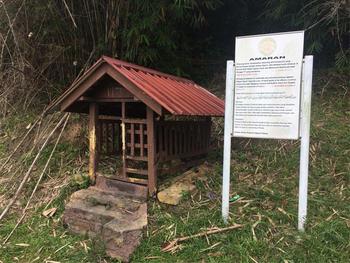
Brunei's Islamic bureaucracy has banned keramat-worshipping practices, and the Bahagian Kawalan Aqidah has been active in conducting surveillance at such places and identifying suspected worshippers.Footnote 151 By the time when the issue became a bureaucratic concern, and the state's ulama addressed the issue more regularly, some keramat places had already been abandoned, or were frequented much less than in earlier decades. One of the few still existing and widely known keramat places is called Tuan Syarif or Tuan Sae (referring to the person buried there, allegedly a traveling Arab missionary). Located next to a road in the Tutong district (Kampung Pancur Papan), it is immediately visible, as it has a structure built over the grave (photo 1). A district-based sharia affairs office has erected a signboard next to it, warning worshippers of jail terms (up to four months under pre-Syariah Penal Code Order legislation), fines, and divine punishments in the afterlife.Footnote 152
Keramat grave shrine with a signboard announcing a “warning” (amaran) about punishments for violations against sharia law (Hukum Syara’). Kampung Panchor Papan, Brunei Darussalam, 2017. (Photo: Dominik M. Müller)

I visited the place repeatedly between 2013 and 2017 and always found minor traces of occasional use (incense sticks, coins thrown at it, a bottle of water, soy sauce, a “lucky number” for a lottery). I also spoke with inhabitants of the district about the place who narrated stories of more intense use in earlier years (with actual ceremonies having been conducted there, as described in a local blog,Footnote 153 which apparently does not happen anymore), and the remaining practice of throwing coins at it from a car. Bahagian Kawalan Aqidah officers told me they had conducted surveillance there and that it had “become quiet” in recent years.Footnote 154 They also explained they could not simply remove the place, as it would be religiously forbidden to destroy a Muslim grave. This stands in contrast to practices in Saudi Arabia, where domes or other structures over graves are forbidden and may well be destroyed.Footnote 155 In neighboring Malaysia, where each state deals with the administration of Islam separately, some keramat graves in Malacca have been destroyed by a state-Islamic institution with the purpose of countering “superstitious deviance,”Footnote 156 whereas others are still openly in use, depending on the regional religious authorities’ stance. Surveillance at Brunei's Tuan Syarif shrine is supported by neighbors who filed reports about “deviant” activities there in the past and also expressed their worries about “sinful” activities being carried out there through social media.Footnote 157
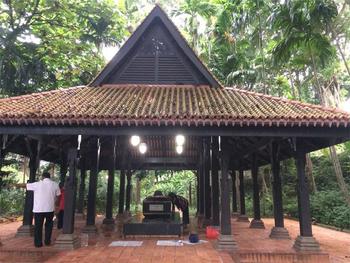
These patterns also appear at other keramat graves. At one formerly used keramat grave, which is located in a private garden and has been described in depth in a bachelor's thesis of a Bruneian student in 2010,Footnote 158 I found that only four years after the student had documented its ongoing usage, the garden's owner (a relative of the buried person) had removed the structure over it (rusty pieces of which were still in the garden), signaling her wish to put an end to the practice. At yet another such grave, the scenery was different: there were fresh traces of intense worshipping, and a neighbor tolerant of the practice spoke more openly about it, claiming, however, that those who came and sometimes stayed there overnight were nowadays mainly foreigners (Indonesians). The Bahagian Kawalan Aqidah officers similarly told me that the majority of bomoh in Brunei were nowadays foreigners, mainly from Indonesia, both of which indicates a decline of such practices among the state-disciplined and from the Islamic bureaucracy's point of view “better educated” local population. At yet a third similar grave that I visited in 2017 (photo 2), a neighbor who was born in a house right next to the grave (its structure still stood but was in poor condition) stated that worshipping practices started to decline since the 1980s and finally ended.
He hastened to add that these practices had contradicted Islamic teachings.Footnote 159 At the very margins of society, some of these practices persist, but those still engaging in them—thus refusing to comply with the bureaucracy's interpretation of Islamic doctrine—deploy tactics of secrecy to avoid the authorities’ attention.
Abandoned keramat grave shrine in the Tutong district. Brunei Darussalam, 2017. (Photo: Dominik M. Müller)

While the practices of Brunei's Islamic and MIB-bureaucracy have obviously affected social changes in the spheres of Muslim Malay everyday life, such as the decline of keramat worshipping and the consultation with bomoh, it has also created an elaborate habitus of not revealing one's thoughts where they contradict state doctrines, and relegating them to the spheres of what Scott called the “hidden transcript.”Footnote 160 The refusal of normative compliance expressed by a very small group of persons who still secretly visit such places furthermore reflects some aspects of what Scott calls “everyday forms of resistance.”Footnote 161 Not to be confused with open confrontation or rebellion, such everyday resistance is shaped by a pragmatic adaptation to the hegemonic powers and (sometimes remarkably subversive) secretive circumvention, without actually supporting or internalizing their truth claims.Footnote 162 To be sure, these “resistances” are truly marginal: the few Bruneians who still practice the attendance of keramat places are locally said to belong to the older generations, which is explained by pointing out their lack of “better education” about Islam. Similarly, bomoh are nowadays said to be primarily foreigners, whereas no new generation would follow the elderly local bomoh, with just a few exceptions.
Parallel to this decline, however, there is a massive rise of a new phenomenon of “Sharia-compliant” healing and exorcism, which I have described in more detail elsewhere,Footnote 163 and which enables former bomoh and other interested persons to “purify” their work and thus relegitimize it within the parameters of the MIB-state. However, members of the Bahagian Kawalan Aqidah observe this development, and the institution that oversees it and provides a standardized curriculum, called Darusysyifa Warrafahah (established in 2007 following a Malaysian model), with some reservations. In an interview, an official of the Bahagian Kawalan Aqidah hinted at this skepticism by providing examples of two cases of transgression (one man abusing his certificate to inadequately “treat” a female patient, later claiming to have been possessed by a jin; and another bomoh falsely claiming to hold such a certificate). He added, however, that the institution as such could not be blamed for these transgressions, and generally welcomed that it provides a supposedly more Islamic alternative to “deviant” specialists.Footnote 164 While this institution is a non-state body, it and its curriculum have been approved by the Islamic bureaucracy. Some of its “governing board” members are retired civil servants, and it is itself bureaucratic in organizational and symbolic matters (organizational structure, standardization, certificates). In some aspects, it illustrates a particular instance in which the bureaucratization of Islam transcends its institutional boundaries in unintended and unexpected ways, pointing to the contingent socially productive nature of such bureaucratization processes even in highly controlled settings. The Darusysyifa Warrafahah, for its part, has appropriated Bruneian MIB-state bureaucratic forms as both organizational structures and in more abstract ways of thinking and organizing.
In the legal sphere, the Syariah Penal Code Order further cements the notion that Islam forbids certain Sufi-inspired practices and other Malay traditions related to supernatural beliefs, and that the state may legitimately punish “criminals” in this field. Section 216 stipulates that shrine worship—more specifically worshipping “any person, place, nature or any object, thing or animal in any manner” contrary to Islamic law, for example by believing that objects or animals possess certain powers, increase wealth, heal diseases or bring good luck—can be punished with two years of imprisonment, a fine, and “counselling.” Section 208 states, any person proven to have conducted or advertised black magic can be sentenced to five years in jail or fined BND 20,000 and sent to “counselling.”Footnote 165 Attempted murder by black magic can be punished by ten years, BND 40,000, or both.Footnote 166 Any Muslim who falsely “claims that he or any other person knows an event or a matter that is beyond human understanding or knowledge” and contradicts Islamic teachings can be imprisoned for ten years, receive forty strokes, “and the Court shall order him to repent.”Footnote 167 It remains to be seen how these legal stipulations will acquire social relevance in the spheres of everyday life and institutional practice.Footnote 168
As both examples—keramat shrine-worshipping and bomoh practices—illustrate, the state's exercise of classificatory power, alongside interrelated changes in popular religiosity, have triggered normative transformations in the everyday life of affected social actors, and have substantially changed the parameters of publicly acceptable religious practice in Brunei. Top-down and bottom-up developments of discursive change and bureaucratized (or in Eickelman's terms “objectified”) thinking inform each other in dialectical and socially productive ways. Accordingly, normalized notions of being a “good Muslim” have acquired new doctrinal and social meanings, which in some aspects differ from those that were normalized in the past. In the following section, I offer a brief regional comparison in order to illustrate contrasting manifestations and embedding of the bureaucratization of Islam, where even in neighboring, historically closely intertwined Malay-speaking settings, very different meanings are produced and equally different transformations in the normativities of everyday life arise.
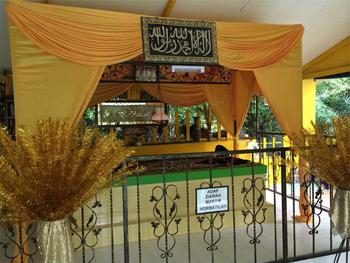
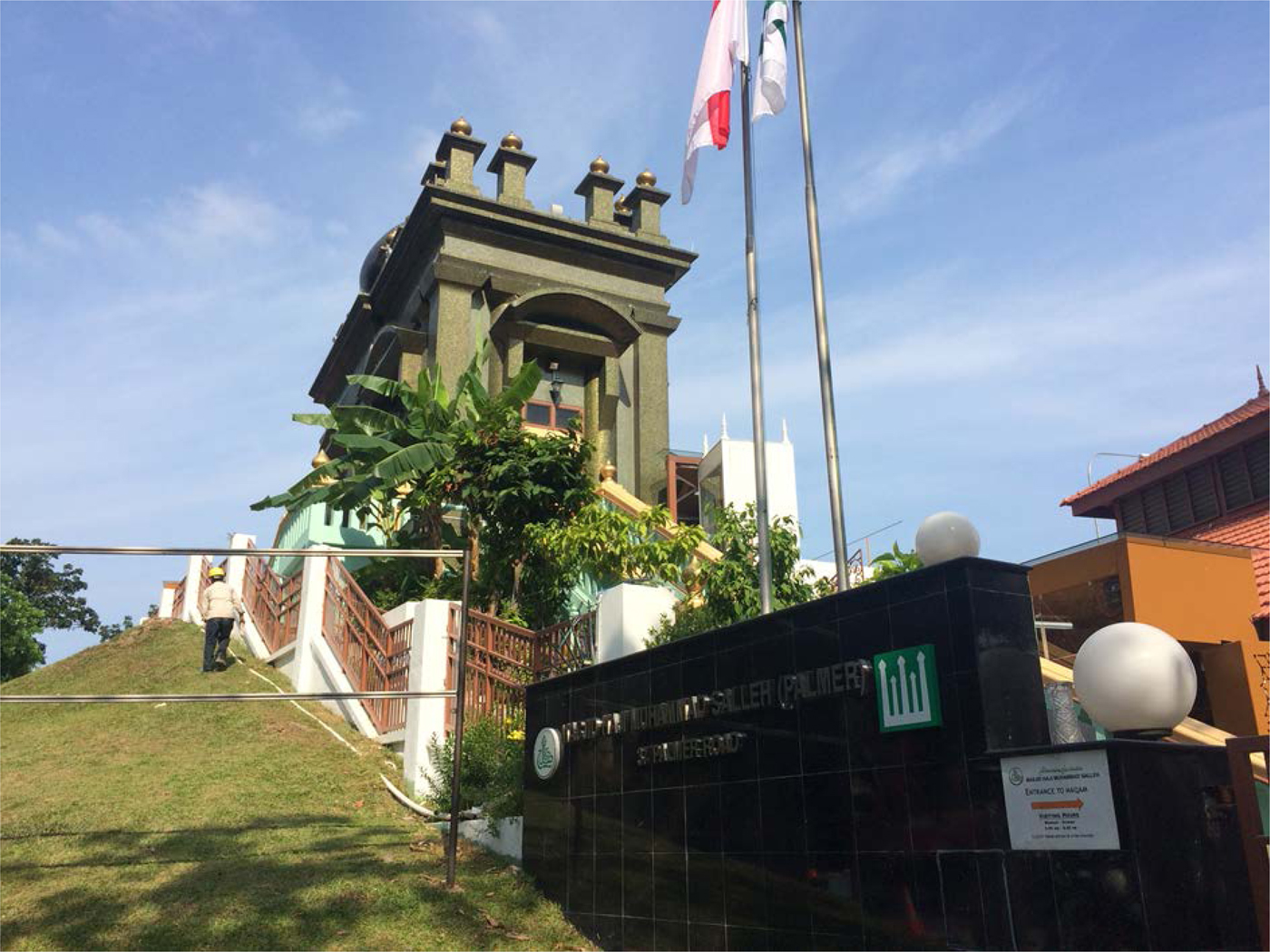
Beyond Brunei: Reflections on the Potential of Intraregional Comparison
The contents of bureaucratized Islam, and their underlying processes of meaning-making, are locally specific, and conditioned by each nation state's very own discursive substrate. Comparatively viewed, the Malay Islamic Sultanate of Brunei, with its declared “non-secular” and antipluralistic religious policies in a nondemocratic context, stands in sharp contrast to other contexts in the region, such as Singapore. The latter is a decidedly “secular,” albeit by no means nonreligious,Footnote 169 semidemocratic “soft authoritarian”Footnote 170 state with a significant Muslim Malay minority traditionally perceived by parts of the government as a potential threat to “national harmony,” security, and economic development. While in Singapore state-Islamic power is mainly centralized under a single institution, namely the Islamic Religious Council of Singapore, Majlis Ugama Islam Singapura (MUIS), with several sub-institutions, the Bruneian bureaucracy consists of a much wider assemblage of institutions. The Majlis Ugama Islam Singapura explicitly affirms its commitment to “pluralism”Footnote 171 and the “secular” state—notions categorically opposed by Brunei's Islamic bureaucracy.
In contrast to Brunei, Singapore has turned some keramat shrines (for example, at Fort Canning and Bukit Faber, photo 3) into tourist sites and presents them as part of Malay “cultural heritage.” These and other, less widely known places are regulated as well—each Muslim grave outside of a graveyard must be registered with the state-Islamic bureaucracy—and the holding of “religious ceremonies” in groups is explicitly forbidden at Fort Canning, as is the practice of leaving behind food sacrifices, but these rules are not justified on religious doctrinal grounds, and individual worshipping there is both permitted and an observable everyday reality.
Worshipping place and heritage tourism attraction: Keramat Iskandar Shah, Fort Canning, Singapore, 2017. (Photo: Dominik M. Müller)

Many of Singapore's once numerous Malay keramat shrinesFootnote 172 have disappeared in the push for commercial development and infrastructural city-planning projects. Other sites that are not marketed to tourists, such as at Bukit Kasita, and at the Old Malay Cemetery, are still taken care of and regularly attended by worshippers. Some state-registered mosques in Singapore (such as Malabar Muslim Jama-Ath Mosque) even serve as caretakers of “exceptional” graves, where they conduct Sufi-style worshipping practices (especially on Thursday nights).Footnote 173 At the shrine of Bukit Faber called Makam Puteri Radin Mas Ayu (photo 4), where a Javanese princess is said to be buried, a caretaker (penjaga) belonging to the Naqshbandiyyah Sufi order stays on site (reflecting earlier traditions of caretakers of such places).
Makam Puteri Radin Mas Ayu, a well-maintained keramat-grave shrine, believed to be the grave of a Javanese princess. Mount Faber, Singapore, 2014. (Photo: Dominik M. Müller)

He accepts the notions of getting in contact with the deceased princess and asking her to covey one's wishes to Allah, but he rejects some other traditional keramat practices as sinful (syirik) and insists on upholding orderly “manners of grave visiting” (adab ziarah makam).Footnote 174 The above-mentioned non-overly religious interviewee from Brunei who spied on a bomoh for the authorities, who had learned in Brunei that any such practices are incompatible with Islam, and to whom I narrated the Singaporean caretaker's stance, found this bewildering and simply wrong: it would clearly deviate from the aqidah. Singapore's most well-known keramat grave shrine, Habib Noh (photo 5), on the other hand, has recently been substantially renovated, funded by the Islamic bureaucracy's central institution, Majlis Ugama Islam Singapura, notwithstanding some of its members’ theological disagreement with the practice of saint worshipping, and their most intellectual reflections on their own understandings of the “true” aqidah in a Sunni Shafi'i, Muslim Malay-dominated framework.
Touristic site and active keramat worshipping place: Habib Noh, with a MUIS flag and signboard in front of it. Singapore, 2017. (Photo: Dominik M. Müller)

The elites of both Singapore's and Brunei's Islamic bureaucracy typically hold degrees from the same Islamic educational institution abroad, most notably al-Azhar University in Egypt, albeit usually combined with additional degrees from other countries, in Singapore's case more often also from prestigious Western universities.
In line with Malay keramat tradition, yellow and white cloth placed at gravestones or other objects (for example, Malay daggers wrapped in cloth at home) can easily be found at several places in Singapore, whereas in Brunei, one of the two exhibitions of confiscated objects at the Ministry of Religious Affairs mentioned earlier shows precisely such cloths to illustrate how they are part of “deviant” traditions. One of these showcased objects, for example, was a “royal throne” wrapped in yellow cloth, used by a self-declared bomoh king (raja bomoh), as the officers explained to me. A Bruneian citizen similarly showed me a “powerful” Malay dagger at his home, wrapped in yellow cloth—if reported on, the authorities might well have confiscated it from him. I have not seen a single grave in Brunei where a yellow or white cloth would still be placed (except in a book on “deviant practices” published by local authorities, with photographic evidence from the 2000s), whereas in Singapore, they exist at many places.
In Singapore, Indonesia, and Malaysia, bomoh (Bahasa Indonesia: dukun), may sometimes be arrested, but for different reasons than in Brunei, usually related to fraud accusations or sexual offenses, not due to doctrinal crimes. Furthermore, in Singapore, bomoh practitioners openly advertise their services in newspapers and on cyberspace—a practice for which they could now face jail terms in Brunei under the Syariah Penal Code Order. However, a member of the Majlis Ugama Islam Singapura told me how some non-state Islamic groups approach Singapore's Islamic bureaucracy, as they consider practices such as those of bomoh and Sufi-inspired keramat shrine worshippers, superstitious, and would like to see their Islamic authorities (in this case, the Majlis Ugama Islam Singapura) taking a more orthodox and forceful stance on these issues. This illustrates how in Singapore, quite differently from Brunei, the bureaucracy not only serves as a government-installed tool for propagating a state-friendly version of Islam or neutralizing Islamic opposition (which it to some extent does), but is simultaneously constantly navigating its stance between top-down and bottom-up pressures. To be sure, there is much agreement on the more uncontroversial fundamentals of Islam among Southeast Asia's Islamic bureaucracies, all of whom primarily adhere to the Sunni Islam of the Shafi'i legal school, and even have close contacts and regular international exchanges. But when it comes to the boundaries of formalized truth claims, to intra-Muslim minorities, to controversial traditional practices, and to the question of (in)tolerance towards the plurality of beliefs and practices, the nationally conditioned contents of categorical schemes of bureaucratized Islam, and their implications for conceptions of (not) being a “good Muslim,” differ widely. Another case in point are groups like the Ahmadiyyah and Shia Muslims, who in Singapore maintain community centers, mosques, hold public activities, and have regular mutually respectful communication with the Islamic bureaucracy, which is unimaginable in Brunei. As these examples show, the social and doctrinal meanings produced through the bureaucratization of Islam in both countries are enormously different, although a functional analysis (as opposed to the hermeneutic) asking for characteristic features of bureaucratic Islam would more likely identify partial similarities pertaining to their political instrumentality and bureaucratic structural logics.
A partial overlap exists in how Islam is translated into the “language” of bureaucracy on a more formal level, namely through the establishment of categorical schemes of a national brand of Islam. The powerful motto here is “Singapore Muslim Identity,” commonly referred to as SMI, which programmatically consists of ten desired attributes.Footnote 175 Majlis Ugama Islam Singapura itself sums up the essence of Singapore Muslim Identity more briefly as “knowledge, principle-centeredness, progressiveness and inclusiveness, which describe the identity of Singaporean Muslims today,”Footnote 176 while presenting a normative statement in descriptive terms. Singapore Muslim Identity, however, is not a national ideology, as is Melayu Islam Beraja; it is targeted exclusively to the Muslim minority population. Another such categorical scheme, made mandatory in 2017, is the Asatizah Recognition Scheme, under which all religious teachers (asatizah) are required to be register with the Majlis Ugama Islam Singpura and need to fulfill certain “minimum standards of qualification.” In line with the “inclusiveness”-oriented contents of the Singapore Muslim Identity, it is emphasized that “various schools of thought” would be included.Footnote 177 This doctrinal inclusiveness, however, which stands in contrast to Brunei's monolithic approach, now excludes those who refuse to submit to the coercively imposed categorical scheme. Here, again we see overlaps in the functional analysis, namely the attempt to increase state control over Islamic discourse through bureaucratic agencies, and to outlaw those who reject the state's claim to set the rules for Islam-related public communication and practice. According to Singapore's former minister-in-charge of Muslim affairs, Yaacob Ibrahim, the state now aims to assure that “Islamic education providers engage only teachers registered under the scheme.”Footnote 178 Through this obligatory registration, which is presented as giving “benefits” to Islamic scholars, the field of Islamic teaching is being made further “legible”Footnote 179 to the state.
This brief glimpse at differences between some social and doctrinal meanings of bureaucratized Islam in Brunei and Singapore illustrates that the regional scope on Malay-speaking Southeast Asia covers national environments in which Islamic bureaucracies have standardized state-brands of “Islamic truth” and “heresy” by formalizing classificatory lists of banned “deviant” teachings and practices (especially in Brunei and Malaysia), but also countries with much more diversified and inclusive classificatory notions of Islam, such as Singapore and Indonesia. Although the state has in both countries taken a strong interest in influencing the direction Islamic discourse is taking in its territory, and both countries’ bureaucracies aims to strengthen the state's monopoly over classificatory power, while engaging in translating Islam into the “language” of bureaucracy, the contents, social meanings, and knowledge production of bureaucratized Islam differ sharply.
Concluding Remarks
Comparatively viewed, Brunei may be the most “successful” or drastic case of a state securing a monopoly for defining the contents and boundaries of Islamic normativity, for controlling Islam-related public communication and practice, and for informing politically desired national Muslim subjectivities in Southeast Asia. The wider phenomenon of the bureaucratization of Islam, however, which has been outlined in this article with an analytic focus on the state's classificatory power, which is necessarily co-produced and contested in society, has much broader implications. As illustrated, in both Brunei and Singapore the bureaucratization of Islam is not simply a process of building, diversifying, and further empowering state-Islamic institutions and legal frameworks, or of neutralizing opposition and serving political interests. It is also a social and cultural phenomenon with multifaceted implications for the everyday lives of citizens, and as such far transcends its organizational boundaries. Notably, it is also neither per se a successful and one-directional nor irreversible process, although in the case of Brunei, such counterforces only survive at the very margins of society and in the spheres of secrecy. Beyond this rather unique case, however, the bureaucratization of Islam typically faces opposing calls for debureaucratizingFootnote 180 Islam, or bureaucratizing Islam in different ways. The quest for non-state alternatives, and attempts of distancing oneself and maintaining one's autonomy from the state and its bureaucratization of Islam, however, normally stand in a specific relation to what they reject, pointing to the dialectical relationship between the bureaucratization and the debureaucratization of Islam.Footnote 181 Those dynamics are best empirically observed, I argue, by ethnographically studying interface situations between bureaucracy and society, and in spheres where categorical schemes of Islam diffuse into society and become appropriated, transformed, manipulated, or opposed by societal actors.
By investigating the bureaucratization of Islam anthropologically as a larger phenomenon to be theorized beyond country-specific single case studies, we can develop a more complex understanding of the microlevel dynamics of Islamic discourse in the context of state power in Southeast Asia, with potential analytic implication beyond the region. National histories, discursive contexts, and power relations differ, but in all countries in the region with politically significant Muslim populations, including minority situations, state actors aim to exert control over Islamic discourse in their territories through bureaucratization practices, while this control is not only concerned with expanding state power, but also shapes specific nationally framed social and doctrinal meanings of Islam, with consequences for normative transformations in the spheres of everyday life in society.
In Brunei and Malaysia, religious bureaucracies have become driving forces in the dynamics of Islamic revival, which is still often narrowly conceived of as a popular and oppositional project to capture the state from the outside, rather than something that is actively pushed forward by state actors themselves, alongside members of state-sponsored institutions in a wider sense (among others, religious educational institutions, such corporate bodies as “outsourced” state-zakat service providers or halal institutions in Malaysia,Footnote 182 and state-approved organizations like Brunei's Darusysyifa, which would not fall under the category of bureaucracy in a purely legal understanding). The formation of state-brands of Islam, and its legal expansion and empowerment, are in many cases inseparably intertwined with the politics of bureaucratizing Islam, be it in the Islamic monarchy of Brunei or the “secular” state of Singapore.
Yet in other countries, such as in Indonesia and the Philippines, which this article has not (but my research group will) address, the extent of contestation and movements aspiring for a debureaucratization of Islam are much more salient, as suspicion toward bureaucracy has powerful popular histories in both countries. Nevertheless, also in these contexts, state elites and certain religious actors invest enormous energies and resources in attempts for bureaucratizing Islam.Footnote 183
Across the region, the consequences of the attempted bureaucratization of Islam for citizens, and in some settings for the very notion of citizenship, have been profound, and deserve a more systematic effort to be studied comparatively. This article presents the starting point for a larger collaborative anthropological project over the coming years—which, as I have conceptually introduced and ethnographically exemplified through the case studies of Brunei and Singapore, needs to be long-term, fieldwork-based, and actors-oriented, and combine both functional (power-, resources-, and interests-oriented) and hermeneutic (bureaucratic meaning-making-related) modes of analysis.
The bureaucratization of Islam in Brunei, which I have addressed in depth here, is a process that has much of its institutional roots in the colonial period and has acquired unprecedented social and political significance since the late 1980s. Multiple factors contributed to this development, including changing contexts of knowledge production among religious elites, an unprecedented emphasis on public piety, and a popular Islamic revival. The conventional functional explanation, according to which states bureaucratize Islam to control or neutralize religious opposition has very limited explanatory force in the Bruneian context, as the country never witnessed any organized religious opposition. At best, it could be argued that the state's Islamization policies were meant to foreclose such opposition, or, probably more relevant, to fulfill the ideological demands of the religious establishment within the state apparatus, which have been the driving forces in the lobbying for and drafting of these policies. Undeniably, the state's standardization of state-Islamic orthodoxy, to the effect of socially marginalizing and legally outlawing the (mostly nonexistent) public expression of any alternative interpretations of Islam, serves to reproduce and enhance the absolute monarchy's power and legitimacy and further cements the state ulama's monopoly to define and speak about Islam. But it would be inadequate to claim that these functional aspects or material benefits can provide a comprehensive explanation or would represent the primary motivation for the involved actors, many of whom have deeply internalized their own discourse's truth claims, passionately believe it supports a divine mission that is not of their own making, and try to actively shape their bureaucratic and societal environment based on deep personal religious convictions. Furthermore, under conditions of a powerful bureaucratization of Islam, as it exists in Brunei, social meanings of Muslim subjectivity and citizenship are produced that are unique to the country's discursive settings and can only be sufficiently understood vis-à-vis their deep local embeddedness in the context of the Bruneian postcolonial MIB-state. The same is true for Singapore, although, or precisely because, the locally specific contents, meanings, and power structures are very different.
The Bruneian state's exercise of classificatory through Islam-bureaucratic agencies is not only a forcefully imposed process, but it depends on popular normative compliance, ideally not only at the level of public transcripts. To achieve this, the MIB-state's educational measures of religious knowledge- and meaning-production since the 1980s have been crucial. But no matter how powerful Islamic bureaucracies are, the bureaucratization of Islam does not determine behavior or structure social changes, and the bureaucratic attempt to “define the situation” should not be confused with its contingent, open-ended outcomes. By taking the microlevel social negotiations over the social meanings of the bureaucratization of Islam seriously, and examining how the state's classificatory power unfolds in the lives of the citizens over which it claims sovereignty, rather than just pursuing a conventional functional analysis, we can develop a much more multifaceted and anthropologically meaningful picture of the bureaucratization of Islam and its socio-legal dimensions in Southeast Asia. This article presents a starting point for the realization of this project, which will now be pursued (and further modified) by my newly established research group.
ACKNOWLEDGMENTS
Research for this article was generously supported by the German Research Foundation's Emmy Noether Program, the Max Planck Institute for Social Anthropology's Department of Law and Anthropology (both since October 2016), and the Cluster of Excellence, Formation of Normative Orders, Goethe-University Frankfurt, prior to that. I am particularly grateful for the very helpful comments offered by Dale Eickelman, Mirjam Künkler, Annika Benz, and the anonymous reviewer.