Introduction
Chronic heart failure (CHF) is a group of clinical syndromes caused by low ventricular filling and/or ejection capacity due to various cardiac structural or functional abnormalities, which is the terminal stage of the development of most cardiovascular diseases (Wang and Liang Reference Wang and Liang2018). According to statistics, there are as many as 23 million patients with CHF worldwide and they increase at the rate of 2 million per year, among which the prevalence rate of the elderly over the age of 70 is as high as 10% (Morbach et al. Reference Morbach, Gelbrich and Tiffe2020; Trullas et al. Reference Trullas, Perez-Calvo and Conde-Martel2021). In China, according to the 2018 China Cardiovascular Report, the prevalence of CHF is about 0.9%, and the mortality rate is about 4.1%, which is equal to that of a malignant tumor. And studies have shown a clear positive correlation between the incidence and age (Gillilan et al. Reference Gillilan, Qawi and Weymiller2017). CHF has become the leading cause of hospitalization for people over 65 years of age and is one of the major problems in global public health (Al-Omary et al. Reference Al-Omary, Davies and Evans2018).
Spirituality originated from the Latin word “spiritus,” which means breathing, representing an indispensable part of life (Lazenby Reference Lazenby2010). The National Consensus Project for Quality Palliative Care clinical practice guidelines for high-quality hospice care pointed out that spirituality is a way for people to find and express the meaning and purpose of life, and also a way to experience the connection between self and the present, others, god, the natural environment, and beliefs (Ferrell et al. Reference Ferrell, Twaddle and Melnick2018). Spiritual care meets the spiritual needs of patients through listening, accompanying, or discussing the meaning and value of life with patients according to the assessment results of individual spiritual needs/troubles, including helping patients to find the meaning and purpose of life, giving love and forgiveness, and obtaining internal and external resources. It enables patients to obtain peace and comfort and provides individual care measures or activities consistent with their culture and beliefs (Bar-Sela et al. Reference Bar-Sela, Schultz and Elshamy2019; Nissen et al. Reference Nissen, Viftrup and Hvidt2021; Ramezani et al. Reference Ramezani, Ahmadi and Mohammadi2014). At present, the definition of spiritual care needs has not been unified, and the most common definition currently used is that it refers to the expectation and need of everyone to find the meaning, value, and purpose of life, as well as the need to understand their connection with the present, self, others, god/holiness, faith, and nature (Bandeali et al. Reference Bandeali, Des Ordons and Sinnarajah2020; Van Nieuw et al. Reference Van Nieuw, Schaap-Jonker and Anbeek2021).
A literature review has shown that in the process of disease diagnosis, treatment, and prognosis, the elders for CHF patients must face not only the recurrence of the disease but also the possible death, often resulting in different degrees of spiritual distress and spiritual pain, such as anxiety, depression, fear and other negative emotions, increased burden of self-perception, and decreased sense of self-existence and happiness (Park and Sacco Reference Park and Sacco2017; Ross and Miles Reference Ross and Miles2020). Studies have shown that there is a significant positive correlation between spiritual distress and cardiac functional classification of CHF patients. When the spiritual well-being of CHF patients is in a poor state, the patients’ constitutions will decline in a periodic manner (Clyne et al. Reference Clyne, O’Neill and Nuzum2019). At the same time, patients with CHF are more eager to find sustenance in the spiritual world, understand the value and significance of life, and then have a strong need to seek love and sense of belonging, hope, and forgiveness, and experience the connection between self and the present, others, holiness, and nature, that is, spiritual care needs.
The General Office of the National Health and Family Planning Commission of the People’s Republic of China (2017) in China points out that hospice care should include providing spiritual care for patients. It has been proposed in many studies that spirituality is the cornerstone of holistic nursing practice and that the assessment of patients’ spiritual care needs is the first step in developing targeted intervention programs for them (Ghorbani et al. Reference Ghorbani, Mohammadi and Aghabozorgi2021; Maazallahi et al. Reference Maazallahi, Ghonchepour and Sohrabi2021; Weathers Reference Weathers2021). The resuts of many studies have shown that spiritual care for patients with advanced cancer, which intends to meeting their spiritual care needs, is conducive to alleviating pain, relieving discomfort, promoting recovery, and prolonging life expectancy (Bar-Sela et al. Reference Bar-Sela, Schultz and Elshamy2019; Johnson et al. Reference Johnson, Hauser and Emanuel2021; Riklikiene et al. Reference Riklikiene, Tomkeviciute and Spirgiene2020; Ripamonti et al. Reference Ripamonti, Giuntoli and Gonella2018). Weathers et al. (Reference Weathers, McCarthy and Coffey2016) pointed out that providing supportive spiritual care with connectivity, transcendence, and life significance and addressing the needs of spiritual care are important components of implementing high-quality spiritual care for patients. For the elderly, the integration of spirituality and psychological factors of elderly patients can help them to understand their self-value, improve their self-identity and self-efficacy, and make life more valuable and meaningful (Fudalej and Badowska-Kozakiewicz Reference Fudalej and Badowska-Kozakiewicz2021). Satisfying spiritual care needs of elderly patients is conducive to promoting their physical and mental health and positive self-disease management behaviors (Chen et al. Reference Chen, Lin and Yan2018). In addition, Michael et al. (Reference Michael, Bobevski and Georgousopoulou2020) found that the need to improve the spiritual dimension could help increase the quality and satisfaction of holistic care. However, for elders hospitalized for severe CHF who have suffered from the special physical and mental effects of disease for a long time, their need for spiritual care may be more intense.
With the increasing incidence of CHF and continuous prolongation of survival time, relevant studies on spiritual care needs of CHF patients overseas are increasing. The result of a study has shown that CHF patients have unique spiritual distress and pain during the treatment and prognosis of the disease process, resulting in their existence of at least one spiritual care need, which is at a high level (Ross and Miles Reference Ross and Miles2020). A qualitative study by Cagle et al. (Reference Cagle, Bunting and Kelemen2017) demonstrated that elderly CHF patients receiving spiritual care have unique psychological needs. Murray et al. (Reference Murray, Kendall and Boyd2004) conducted in-depth qualitative interviews with 20 elderly CHF patients at the end of the year. All of them expressed the need for love, significance, and transcendence, and their needs changed with the changes in the severity of symptoms and were affected by religious beliefs. A qualitative study of patients with end-stage CHF found that their spiritual care needs were mostly centered on love and belonging, beliefs, hopes, values, and beliefs, and changed over time. Patients with end-stage CHF had a positive attitude toward spiritual nursing in palliative care (Ross and Austin Reference Ross and Austin2015). Similarly, Westlake and Dracup (Reference Westlake and Dracup2001) further confirmed this viewpoint by conducting a qualitative study on 87 elderly CHF patients.
In contrast, Liu et al. (Reference Liu, Zhu and Wang2019) conducted a qualitative interview with 12 elderly CHF patients and found that their spiritual care needs included themes of regaining the right to choose, return to roles, promotion of dignity, and sublimation of life significance. And Liu et al. (Reference Liu, Zhan and Hu2020) tested the reliability and validity of the Chinese Version of Spiritual Needs Questionnaire in elderly CHF patients, conducted a cross-sectional investigation, and found that their spiritual needs were at the medium level. Wang et al. (Reference Wang, Zhao and Ye2022) also found that spiritual needs among elderly CHF patients were moderate. However, due to the differences in religious beliefs, traditional cultures, and values between the East and the West, the unique spiritual care model suitable for China’s national conditions is still under continuous exploration. Many reasons together limit the improvement of nurses’ spiritual care perspectives and competence, resulting in the mismatch with patients’ spiritual care needs, and the ineffective satisfaction of their spiritual care needs (Eriksson et al. Reference Eriksson, Bergstedt and Melin-Johansson2015). Additionally, in terms of research methods, the qualitative research was mainly adopted in the domestic research on spiritual care needs of CHF patients. Besides, the existing research contents in China and abroad mainly focused on the analysis of the status quo of spiritual care needs scores, and few studies have explored attributes of spiritual care needs among CHF patients in depth from both quantitative and qualitative aspects by using an analysis model, such as the Kano model.
The Kano model is a simple method to identify attributes of service needs, which is mainly used in service industry at first and classifies attributes of needs into 6 categories: one-dimensional attribute (O), must-be attribute (M), attractive attribute (A), indifference attribute (I), reversing attribute (R), and questioned answer (Q). In this model, forward and reversing questions are asked for each item in the questionnaires, and the available answer choices included: “like,” “should be so,” “it doesn’t matter,” “bearable,” and “dislike.” Each respondent contained 5 × 5 possible answer combinations. And the maximum-frequency analysis, the importance-satisfaction matrix analysis model, and the blue-sea strategy analysis model are used to qualitatively define, sort, classify, and optimize attributes. It can identify the customer’s attributes of service needs accurately. In recent years, some scholars in both China and abroad have applied the Kano model to the field of health care to determine patients’ attributes of needs for medical and nursing services, which is of great significance to improve patients’ satisfaction (Johnson and Johnson Reference Johnson and Johnson2021; Wang et al. Reference Wang, Li and Wang2021). The model is easy to operate, and can identify various attributes of needs and conduct regular and qualitative analysis on attributes of needs. Moreover, the empirical research results of the Kano model in multiple fields showed that the classification of attributes of needs is of great significance for the satisfaction of needs (Qu Reference Qu2021).
Aims
The aims of this study are to (1) quantitatively investigate spiritual care needs among Chinese elders hospitalized for severe CHF; (2) qualitatively define, sort, classify, and optimize attributes of spiritual care needs based on the Kano model; and (3) provide a reference for the construction of targeted spiritual care intervention programs, so as to improve the quality of spiritual care and patients’ satisfaction.
Methods
Study design and setting
An observational design was employed, and the equator checklist used in this study was issued by Strengthening the Reporting of Observational Studies in Epidemiology, which was used to ensure quality reporting of the study.
Participants and sample
The convenience sampling was used to recruit Chinese elders hospitalized for severe CHF from 2 tertiary grade-A hospitals in China. Respondents met the following criteria. The inclusion criteria were as follows: (1) meeting the diagnostic criteria of “Guidelines for Diagnosis and Treatment of Heart Failure in China (2018)” (Wang and Liang Reference Wang and Liang2018); (2) age of ≥60; (3) having hospitalized in the Department of Cardiology ≥1 month at the time of investigation; (4) The New York Heart Association (NYHA) cardiac function was grade III or IV; (5) being able to communicate effectively and complete questionnaires independently or with help; and (6) informed consent and voluntary participation. The exclusion criteria were as follows: (1) complicated with other serious organic diseases so they can not cooperate with the investigation and (2) having participated or participating in similar research.
According to the determination principle of Hulland et al. (Reference Hulland, Chow and Lam1996) on the number of questionnaires for the Kano model, the sample size should be greater than 10 times and greater than 200 of the items. The number of items in this study was 36, considering 5% invalid questionnaires, so the minimum sample size N = (36 × 10) × (1 + 5%) = 378, and 451 samples were included in this study.
Data collection
Participants were recruited from 2 tertiary grade-A hospitals in China from September 2021 to March 2022. First, the investigation was conducted with the prior approval of the hospital authority and cardiovascular department administrators. And verbal and written consent was obtained from the participants who met the inclusion criteria. If the patients could not read the questions, the researchers would help them by reading the questions. The questionnaires were filled in approximately 10–15 min using a face-to-face interview and paper/pencil. The precaution was taken to protect the privacy of the participants, and only researchers have access to the data. Additionally, researchers recalled questionnaires on the spot, checked whether there was any defect, and made corrections in time. Finally, 451 valid questionnaires were collected.
Instruments
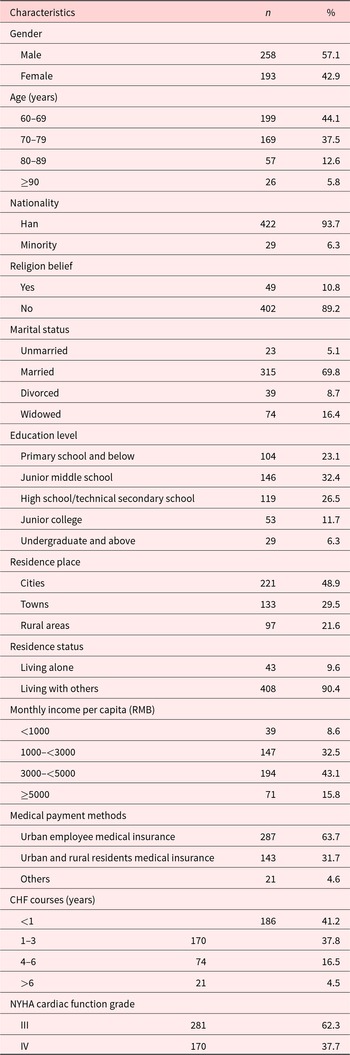
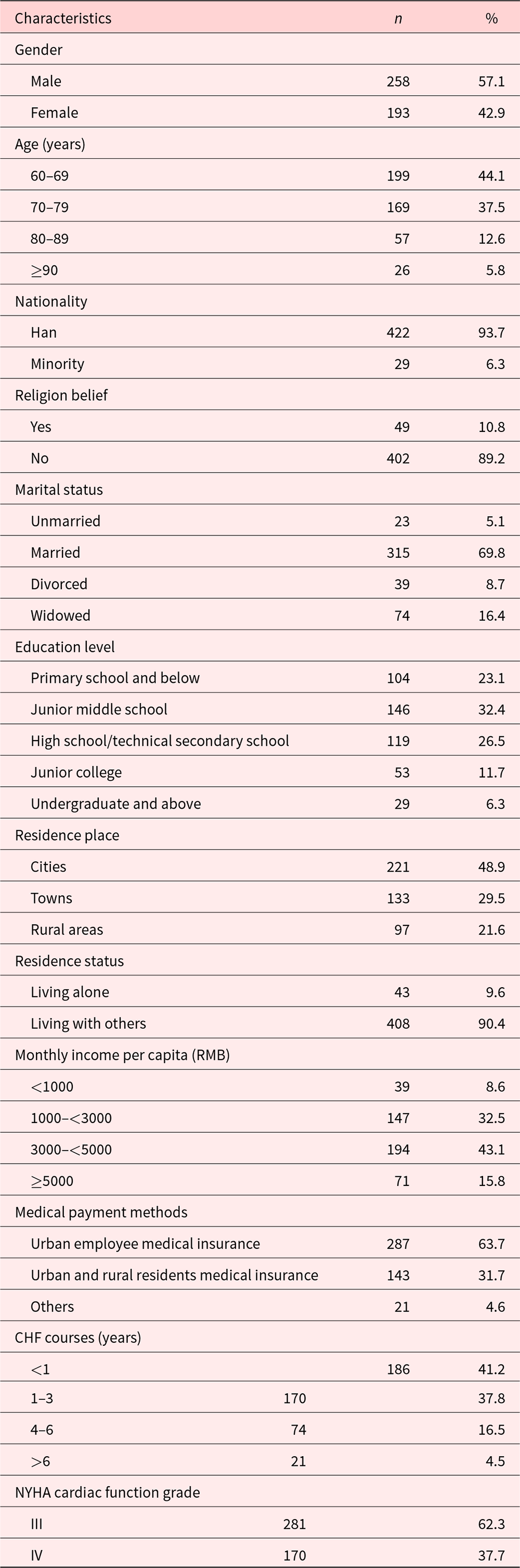
The questionnaire on demographic characteristics was developed by the researchers in accordance with the literature reviews, including 12 items, such as gender, age, nationality, education level, and religious belief, as shown in Table 2.
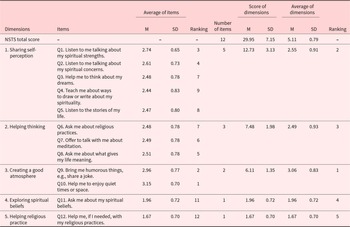
The Nurse Spiritual Therapeutics Scale (NSTS) (Taylor and Mamier Reference Taylor and Mamier2005; Xie et al. Reference Xie, Li and Wang2017) consists of 5 dimensions and 12 items, including “sharing self-perception” (5 items), “helping thinking” (3 items), “creating a good atmosphere” (2 items), “exploring spiritual beliefs” (1 item), and “helping religious practice” (1 item). And Cronbach’s α was reported to be 0.792. The items in the scale are a 4-point Likert type, with the 1–4 scores indicating a range from “never” to “strongly.” The total score of the NSTS was 12–48. And 12–24, 25–36, and 37–48 were mild, moderate, and severe, respectively, with a higher score indicating higher spiritual care needs.
The Kano model–based Nurse Spiritual Therapeutics Attributes Scale was used to assess attributes of spiritual care needs among elders hospitalized for severe CHF. Based on the Kano model, the forward and reversing questions were asked on 12 items of the NSTS to form 24 questions, and a preliminary investigation was conducted on 30 elders hospitalized for severe CHF. The results showed that Cronbach’s α coefficient of forward questionnaire was 0.892, and that of reversing questionnaire was 0.903.
Analysis model instrument
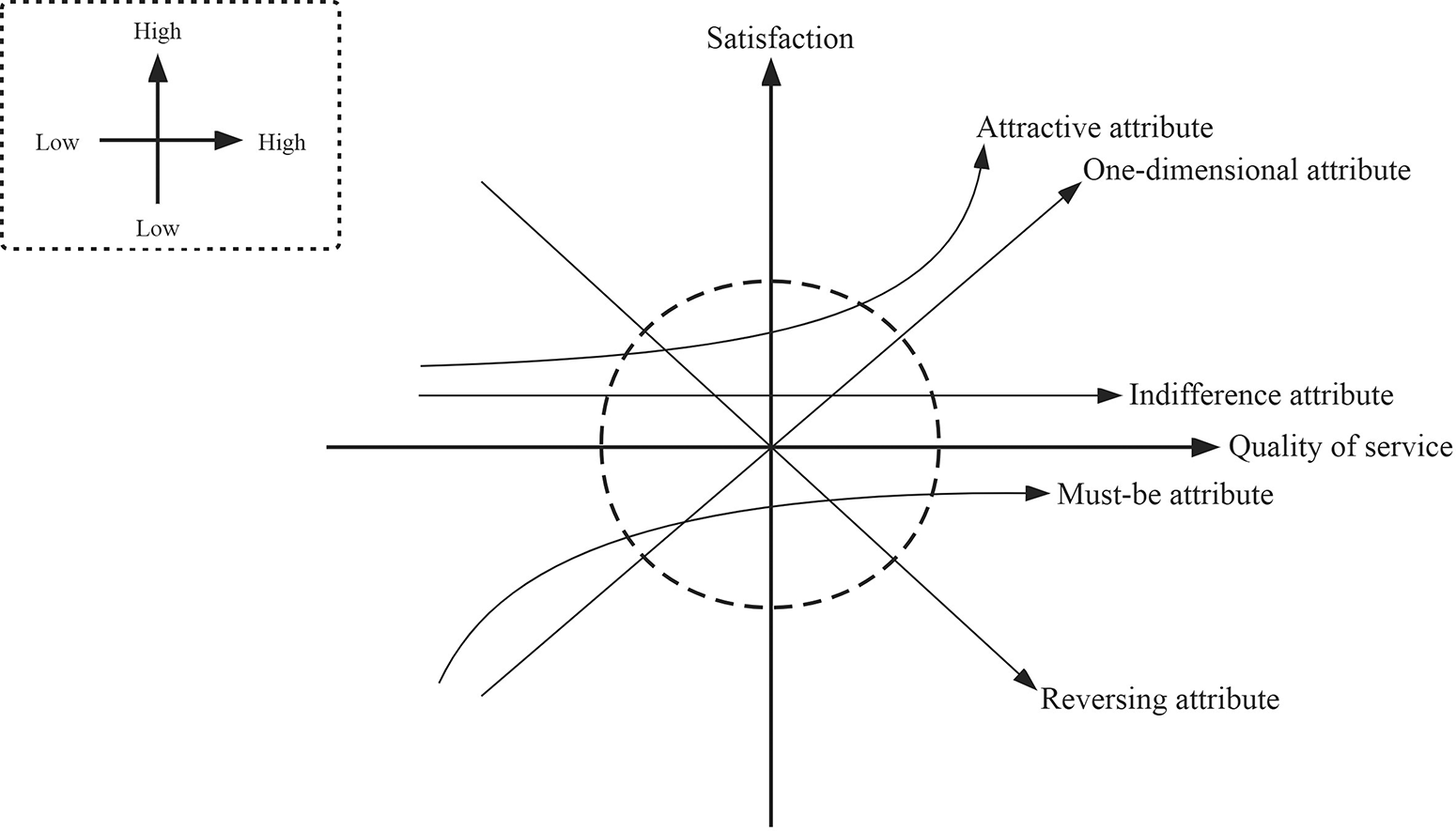
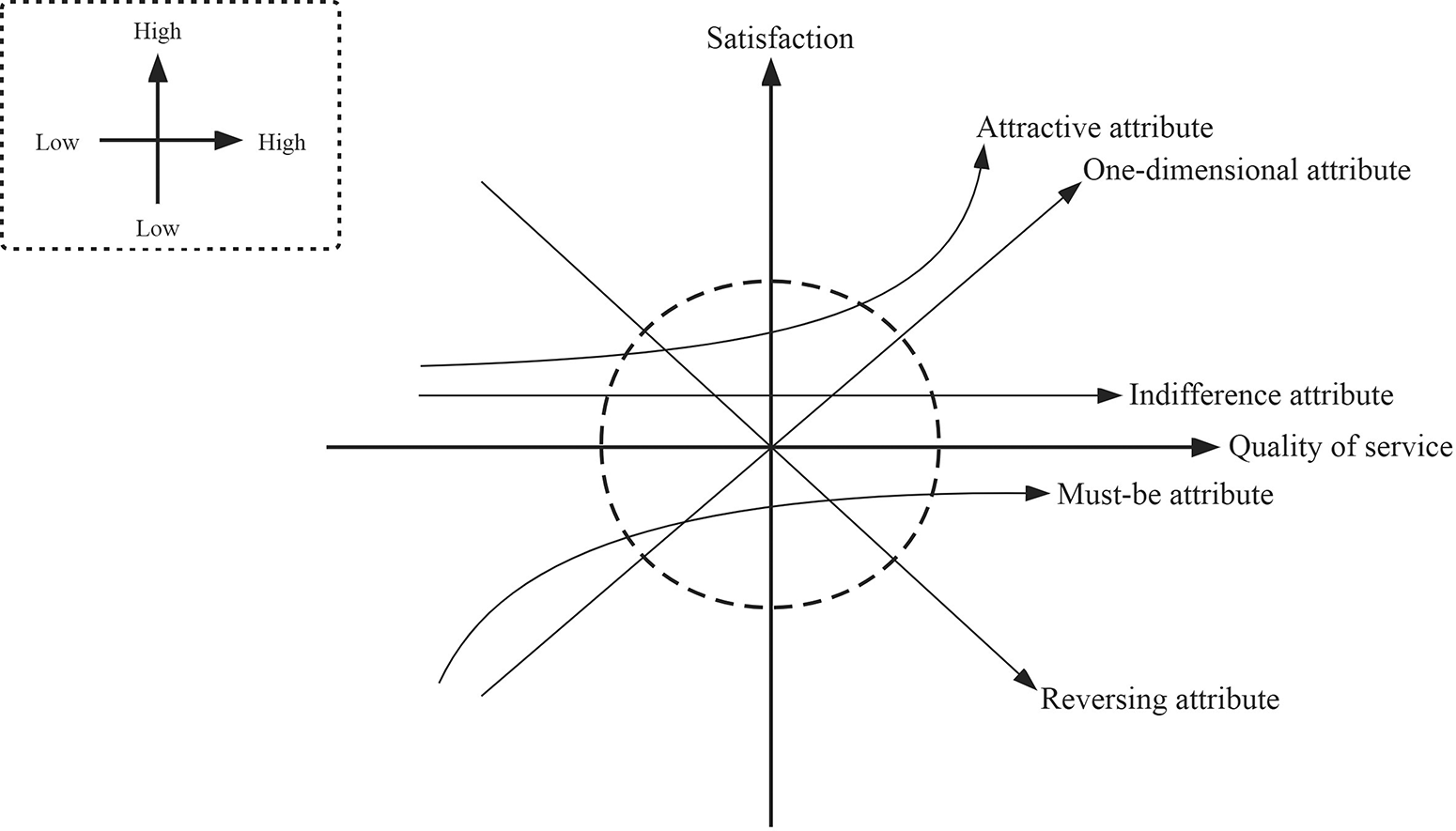
The analysis model instrument in this study was the Kano model, which classifies attributes of needs into 6 categories: one-dimensional attribute (O), must-be attribute (M), attractive attribute (A), indifference attribute (I), reversing attribute (R), and questioned answer (Q). And the diagram of the relationship between 6 attributes, satisfaction, and quality of service is shown in Figure 1.
The diagram of relationship between six attributes, satisfaction, and quality of service.
Data collection of the Kano model
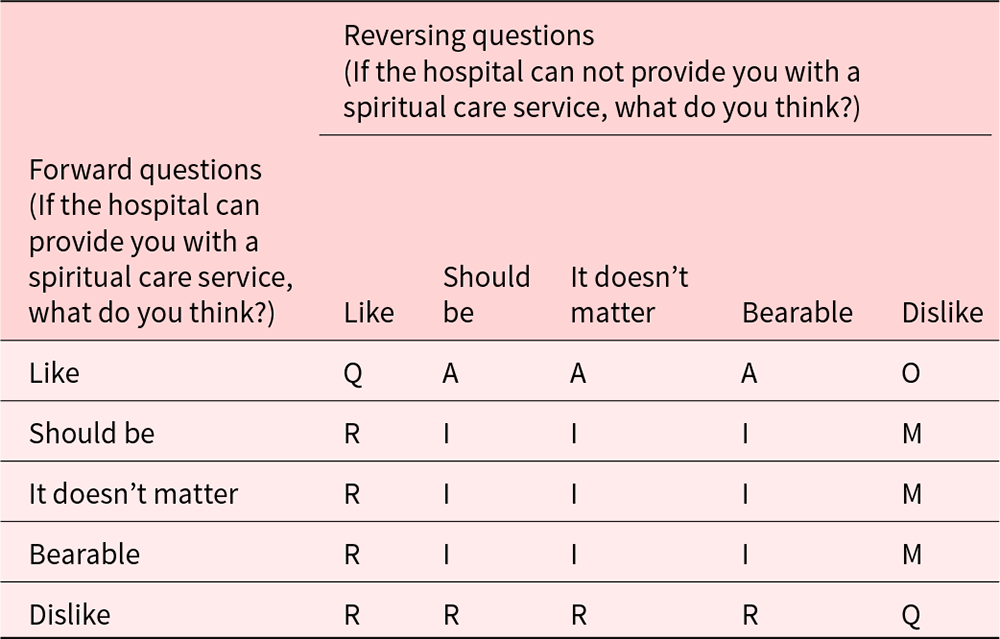
Participants are asked for forward and reversing questions for each item, such as “If the hospital can provide you with a spiritual care service, what do you think?” “If the hospital can not provide you with a spiritual care service, what do you think?” The responses were “like,” “should be,” “it doesn’t matter,” “bearable,” and “dislike,” and respondents could have 5 × 5 answer combinations, as shown in Table 1.
The spiritual care needs attributes classification and construction of the evaluation method based on the Kano model
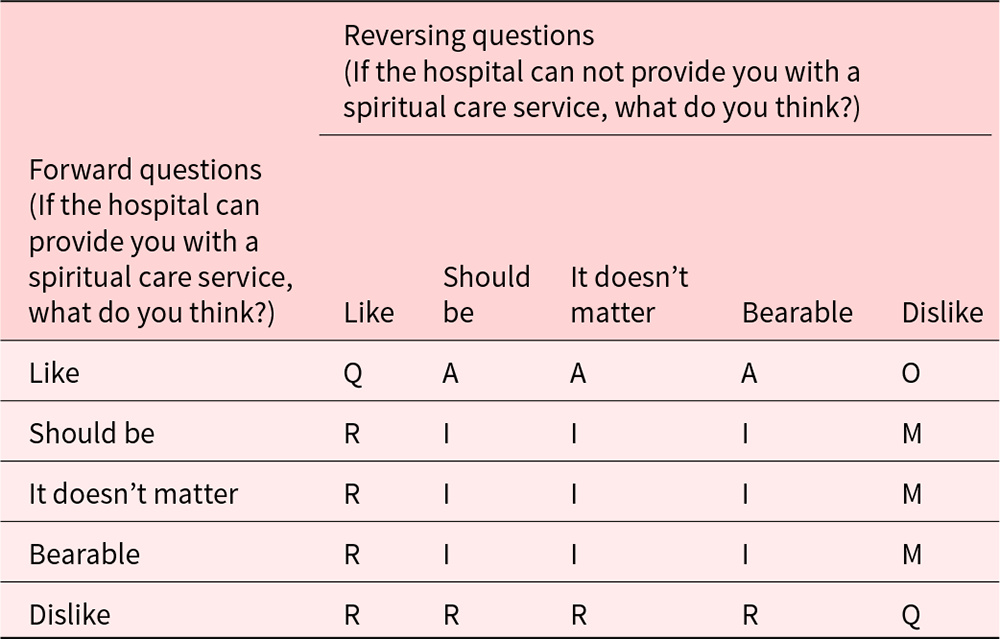
Notes: Construction of the evaluation method based on the Kano model:
(1) Forward questions: If the hospital can provide you with a spiritual care service, what do you think?
(2) Reversing questions: If the hospital can not provide you with a spiritual care service, what do you think?
Data analysis of the Kano model
The data were analyzed by the maximum-frequency analysis, the importance-satisfaction matrix analysis model, and the blue-sea strategy analysis model:
(1) The maximum-frequency analysis: The attributes of needs were defined and sorted. The Kano attribute corresponding to the entry is the one with the most frequency among the 6 attributes (O, M, A, I, R, and Q).
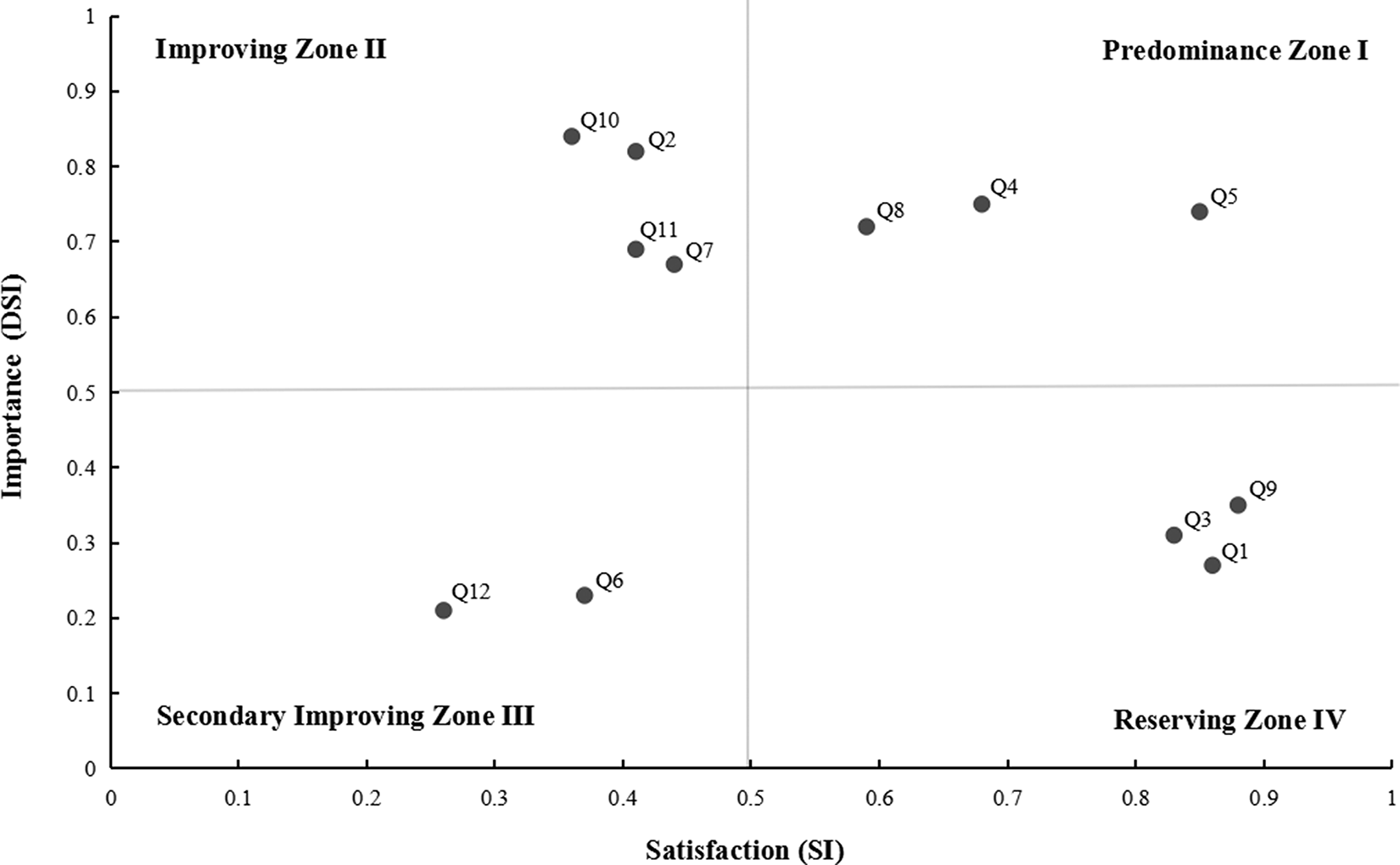
(2) The importance-satisfaction matrix analysis model: The importance and satisfaction of attributes were calculated, analyzed, and classified. The closer the importance (worse index/DSI) = (M + O)/(A + M + O + I) was to “1,” the greater the impact of spiritual care on the patients’ importance would be. The closer the satisfaction (better index/SI) = (A + O)/(A + M + O + I) was to “1,” the greater the impact of spiritual care on the patients’ satisfaction would be. According to the results of importance and satisfaction, a quadrant matrix was constructed with importance (DSI) as the vertical axis and satisfaction (SI) as the horizontal axis. The intersection value of the horizontal and vertical coordinates was “0,” the endpoint value of the left and downward coordinates was “0,” and the endpoint value of the right and upward directions was “1,” which was divided into 4 regions: Predominance Zone I, Improving Zone II, Secondary Improving Zone III, and Reserving Zone IV.
(3) The blue-sea strategy analysis model: Based on the results of (1) and (2), the attributes of needs were objectively analyzed and optimized, so we can develop and innovate attractive attributes on the basis of maintaining and perfecting must-be and one-dimensional attributes, and objectively analyze and optimize indifference attributes.
Statistical analysis
The raw data were recorded and checked by 2 researchers using Epidata 3.1 software, and the data were statistically analyzed by using SPSS 21.0 version program. Descriptive statistics were used to describe the demographic characteristics of the participants. Mean ± standard deviation [M (SD)] and [M (Q, R)] were used to describe the measurement data in accordance with normal distribution or non-normal distribution, respectively. The Kano model was used to qualitatively analyze attributes of spiritual care needs among elders hospitalized for severe CHF, as follows: (1) the maximum-frequency analysis was used to define and sort attributes; (2) the importance-satisfaction matrix analysis model was used to analyze the importance and satisfaction of attributes and to classify attributes; (3) the blue-sea strategy analysis model was used to optimize attributes.
Ethical considerations
Ethical approval for conducting this study was obtained from the ethics committees of hospitals. After receiving the official permission from hospital authority, the researchers contact the participants. A consent form for volunteer participation was completed by the participants. The participants were entitled to deciding whether to participate in the study or not. Anonymity was ensured as the questionnaire contained no marks, names, or numbers that could identify participants. The questionnaires were anonymous and confidential, and the data obtained are only used for academic research.
Results
A total of 451 elders hospitalized for severe CHF were enrolled in this study, including 258 males (57.1%), 193 females (42.9%), with an average age of 71.34 ± 6.82 (range from 60 to 95), 199 inpatients aged 60–69 (44.1%), 169 inpatients aged 70–79 (7.5%), 57 inpatients aged 80–89 (12.6%), and 26 inpatients aged ≥90 (5.8%), as shown in Table 2.
Demographic characteristics of Chinese elders hospitalized for severe chronic heart failure (n = 451)
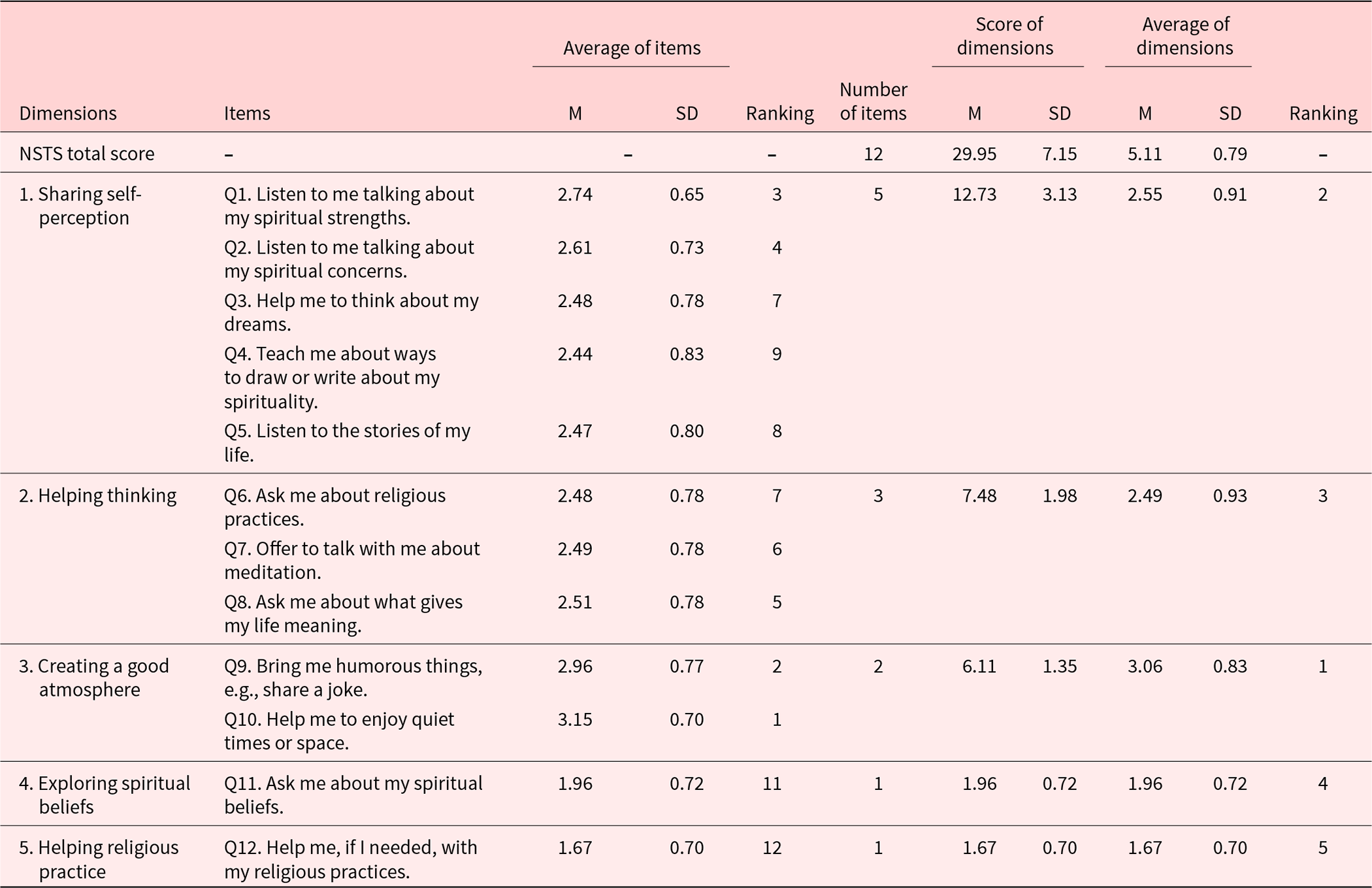
The total score of spiritual care needs among 451 elders hospitalized for severe CHF was 29.95 ± 7.15 (range from 12 to 48), which was moderate. The number of inpatients who were mild, moderate, and severe with spiritual care needs were 39 (8.7%), 354 (78.6%), and 58 (12.7%), respectively. And among 5 dimensions, the average scores of dimensions from high to low were “creating a good atmosphere” (3.06 ± 0.83) (range from 2 to 8), “sharing self-perception” (2.55 ± 0.91) (range from 5 to 20), “helping thinking” (2.49 ± 0.93) (range from 3 to 12), “exploring spiritual beliefs” (1.96 ± 0.72) (range from 1 to 4), and “helping religious practice” (1.67 ± 0.70) (range from 1 to 4), as shown in Table 3.
The score of NSTS among Chinese elders hospitalized for severe chronic heart failure (n = 451, M (SD))
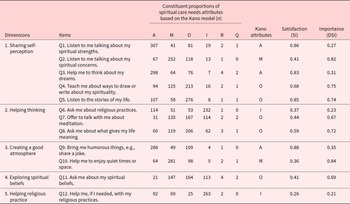
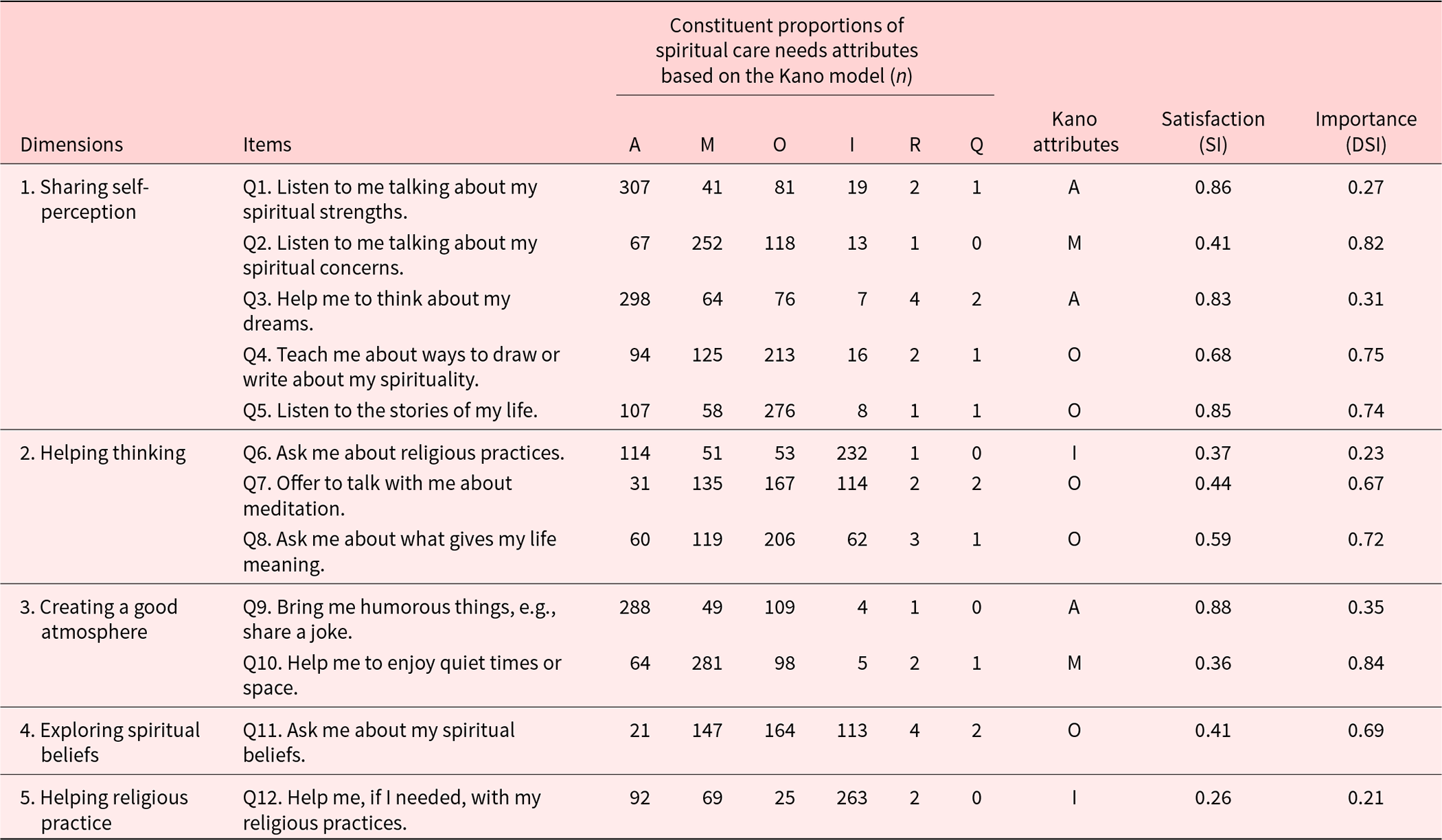
Among the 12 items of spiritual care needs, 3 items (items 1, 3, and 9, accounting for 25.0%) were attractive attributes, all of which were located in Reserving Zone IV; 5 items (items 4, 5, 7, 8, and 11, accounting for 41.7%) were one-dimensional attributes, of which 3 were located in Predominance Zone I and 2 were located in Improving Zone II; 2 items (items 2 and 10, accounting for 16.7%) were must-be attributes, all of which were located in Improving Zone II; and 2 items (items 6 and 12, accounting for 16.7%) were indifference attributes, all of which were located in Secondary Improving Zone III. Among 5 dimensions, in “sharing self-perception,” there were 2 attractive attributes, 2 one-dimensional attributes, and 1 must-be attribute. In “helping thinking,” there were 2 one-dimensional attributes and 1 indifference attribute. In “creating a good atmosphere,” there were 1 attractive attribute and 1 must-be attribute. In “exploring spiritual beliefs,” both were one-dimensional attributes. And in “helping religious practice,” both were indifference attributes, as shown in Table 4.
The attributes of spiritual care needs among Chinese elders hospitalized for severe chronic heart failure based on the Kano model (n = 451)
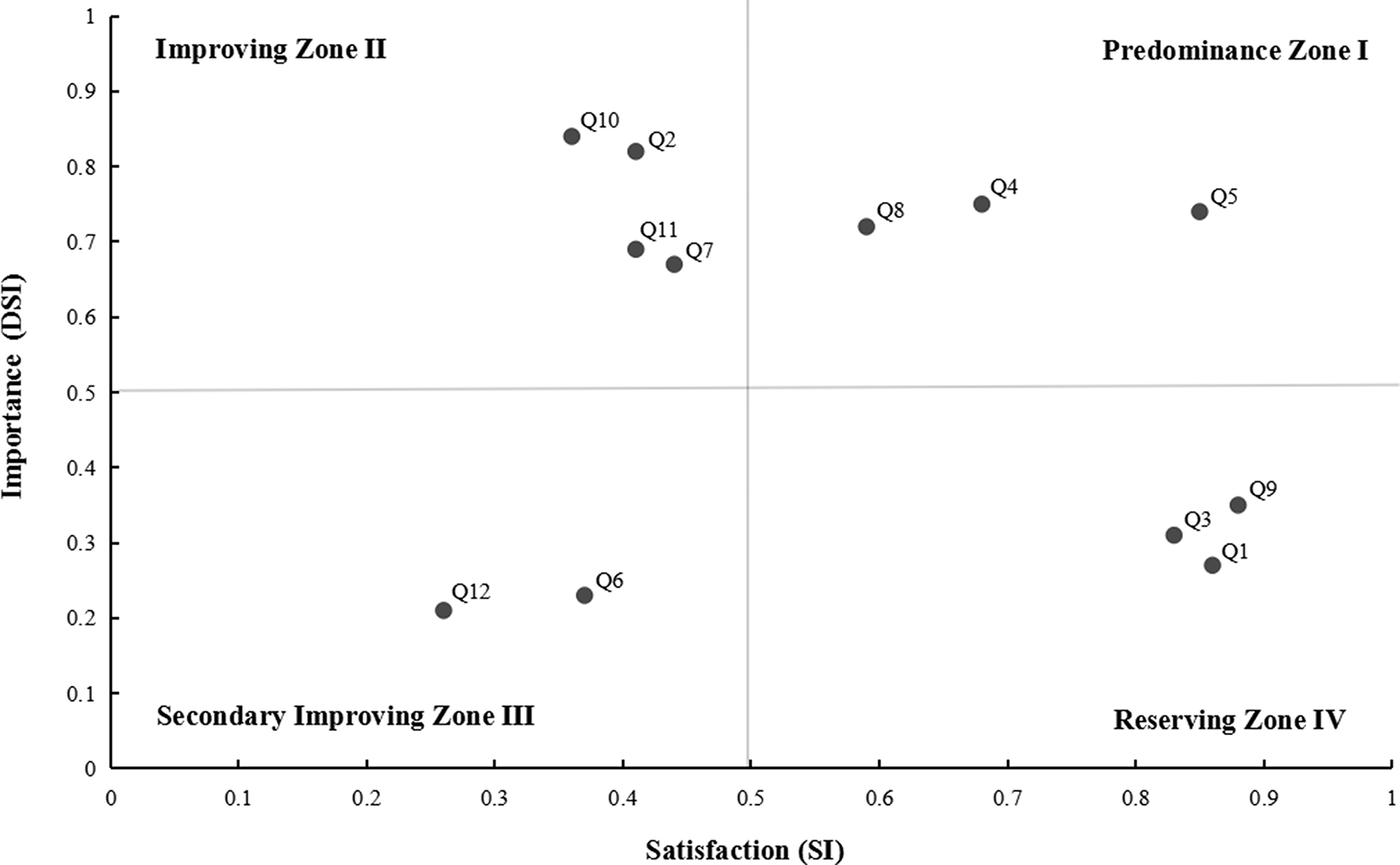
Based on the importance-satisfaction matrix analysis model, attributes of spiritual care needs among elders hospitalized for severe CHF were analyzed, and the results showed that in Figure 2, there were 2 items of “sharing self-perception,” 1 item of “helping thinking,” and 1 item of “creating a good atmosphere” located in Predominance Zone I, and 3 items were one-dimensional attributes. And in Improving Zone II, there were 1 item of “sharing self-perception,” 1 item of “helping thinking,” and 1 item of “exploring spiritual beliefs,” and 2 items were must-be attributes. There were 1 item of “helping thinking” and 1 item of “helping religious practice” located in Secondary Improving Zone III, and 2 items were both indifference attributes. And there were 2 items of “sharing self-perception” and 1 item of “creating a good atmosphere” located in Reserving Zone IV, and 3 items were both attractive attributes.
The matrix diagram of attributes of spiritual care needs among Chinese elders hospitalized for severe chronic heart failure based on the importance-satisfaction matrix analysis model.
Discussion
Scores of spiritual care needs among Chinese elders hospitalized for severe CHF
In this study, the total score of spiritual care needs among 451 Chinese elders hospitalized for severe CHF was 29.95 ± 7.15 (range from 12 to 48). The number of inpatients who were mild, moderate, and severe with spiritual care needs were 39 (8.7%), 354 (78.6%), and 58 (12.7%), respectively. A comparison of domestic normative scores shows that the overall spiritual care needs among elders hospitalized for severe CHF were prevalent and generally moderate (Xie et al. Reference Xie, Li and Wang2017). Among the 5 dimensions, the highest score was 3.06 ± 0.83 (range from 2 to 8) for “creating a good atmosphere,” and the top 2 scores for the items of spiritual care needs were “help me to enjoy quiet time or space,” “bring me humorous things, e.g., share a joke,” respectively, indicating that the patients wish the nurses to provide them with a solitary environment, bring some humor, and be exposed to positive things and ideas as well as encouragement from others to enhance their confidence so that they could perceive the meaning of faith, death, life, and family, and overcome fear and experience inner peace, which was consistent with the research on cancer by Hampton et al. (Reference Hampton, Hollis and Lloyd2007) and Nixon and Narayanasamy (Reference Nixon and Narayanasamy2010), but was slightly different from the research by Xie et al. (Reference Xie, Li and Wang2017). The reason may be related to the characteristics in disease and demographics between cancer patients and CHF patients. When cancer patients face the end stage of their lives, they would prefer the nurses to bring them a sense of humor, while CHF patients would prefer to rest in a quiet environment due to the limitation of heart function and shortness of breath caused by disease. CHF itself (edema, dyspnea, etc.) and the adverse reactions of treatment will seriously affect the sleep, diet, and mood of patients, so a quiet rest environment is necessary for CHF patients. Therefore, nurses need to provide CHF patients with time to be alone and a quiet environment so that they can experience peace and quietness, rest, and relaxation. “Listen to me talking about my spiritual strengths” and “listen to me talking about my spiritual concerns” were also included in the top 5 items of needs, which indicate that the patients hope that the nurses would listen to them. The lowest score was only 1.67 ± 0.70 (range from 1 to 4) in the dimension of “helping religious practice,” which was similar to the research of Xie et al. (Reference Xie, Li and Wang2017), and may be due to the fact that 402 (89.2%) of the patients in this study had no religious belief, and the non-religious patients were more resistant to religious practices.
Attributes of spiritual care needs among Chinese elders hospitalized for severe CHF
Maintaining and perfecting must-be and one-dimensional attributes of spiritual care needs
The results of this study showed that must-be and one-dimensional attributes mainly concentrated on “sharing self-perception,” “creating a good atmosphere,” and “helping thinking” dimensions. They were eager to share their feelings at the end of their life and explore the spiritual care needs such as death and love through communication. However, due to the relatively closed hospital environment, their contact with the outside world, family members, and friends was blocked, and they can only hope that nurses would provide the conditions to help them resort to the “gods,” pour out their concerns to seek spiritual peace, share their own life significance, values, goals, and beliefs, review their own life experience and stories, get an understanding of life, strengthen the positive events, and affirm their own value (Wisesrith et al. Reference Wisesrith, Sukcharoen and Sripinkaew2021). At the same time, it is hoped that nurses will provide them with a quiet environment where they can feel alone, so that they can understand the faith, death, life significance, and experience the inner peace of themselves, which is similar to the results of Ayik et al. (Reference Ayik, Ozden and Kahraman2021). Must-be attribute, as an attribute that has a marked impact on patients’ sense of importance but a slight impact on sense of satisfaction, is the most basic attribute of patients and should be satisfied first. And one-dimensional attribute, as an attribute with great influence on patients’ sense of importance and satisfaction, is the key factor to improve the satisfaction of spiritual care in hospitals. It is suggested that hospital authority should pay attention to the satisfaction of attributes of “sharing self-perception,” “creating a good atmosphere,” and “helping thinking,” to maintain and perfect their must-be and one-dimensional attributes. When providing spiritual care, nurses should be given priority to ensure the satisfaction of must-be and one-dimensional attributes of patients. Nurses should play a good role in listening, be good at using the art of speech to communicate with patients, provide them with a quiet environment, and listen to their spiritual concerns, life stories, and experiences, so that they can have a good rest.
Developing and innovating attractive attributes of spiritual care needs
The results of this study showed that attractive attributes mainly concentrated on “sharing self-perception” and “creating a good atmosphere” dimensions. Due to the long cycle of treatment and prognosis of CHF, most patients will suffer from negative emotions such as anxiety, depression, and fear, and often fall into the vicious circle of self-doubt and self-denial. It is urgent to establish self-mental strength to deal with the dilemma in front of them (Akuoko et al. Reference Akuoko, Chambers and Yates2022). In the process, the nurses are expected to give them some humor and happiness, come into contact with positive things and other encouragement, forget the pain, and guide them to positively face the difficulties and problems, weaken the negative emotions on the negative impact on themselves, restore a calm state of mind, waken their own consciousness of the subject, and then regain the sense of control over life and confidence in disease treatment, which is similar to the results of Li et al. (Reference Li, Wang and Xie2017). Attractive attribute, as an attribute that has a small impact on patients’ importance but a great impact on their satisfaction, is an attribute that surprises patients. If it can be fully met, that will greatly improve their satisfaction, and it is an attribute of “something better or nothing.” Its corresponding spiritual care service is also an advantageous service to improve the quality of spiritual care. It is suggested that hospital authority should attach importance to the satisfaction of attributes of “sharing self-perception” and “creating a good atmosphere,” develop, and innovate their attractive attributes. Diversified methods were adopted to improve the nurses’ spiritual care competence. For example, during the treatment, some humor was brought to the patients (such as telling a joke), what patients said were listened to carefully about their own spiritual strength, the conditions were actively provided to help the patients think about their dreams, the patients were helped to be in a peaceful state of mind, and they were allowed to obtain the understanding and affirmation of the significance and value of life, so that they could relax physically and mentally.
Objectively analyzing and optimizing indifference attributes of spiritual care needs
The results of this study also showed that indifference attributes mainly concentrated on “helping thinking” and “helping religious practice” dimensions, which were “ask me about religious practices” and “help me, if I needed, with my religious practices,” respectively. The reasons for this may be that only 49 patients (10.8%) had religious beliefs in this study. Compared with the West, the religious atmosphere in the eastern cultural background was not so strong, and the activities to help religious practice were only applicable to patients with religious beliefs. Those without religious belief tended to have a sense of resistance, which was similar to the result of Zhang (Reference Zhang2018). Indifference attribute, as an attribute with little impact on patients’ importance and satisfaction, is an attribute that does not matter in hospital. It should be objectively analyzed and optimized according to the actual situation to better match the patients’ must-be, one-dimensional, and attractive attributes to maximize the satisfaction of patients. It is suggested that hospital authority should implement the spiritual care pertinently according to the individual differences of elders hospitalized for severe CHF. For patients with religious beliefs, the religion-related part of spiritual care needs should be paid attention to and implemented in combination with their religious beliefs. And for patients without religious beliefs, communication should be strengthened. And effective psychological interventions such as dignity therapy, significance therapy, and grief counseling should be adopted to improve their sense of purpose, significance, and value in life, reduce their physical and mental burden, and actively listen to the opinions and suggestions of different patients to carry out targeted optimization and transformation (Wang et al. Reference Wang, Zhao and Ye2022).
Strengths and limitations
There were several limitations in this study. First, the study was conducted using a convenience sampling method, and only 451 elders hospitalized for severe CHF were selected from 2 tertiary grade-A hospitals in China, which may mean that the samples are not representative enough and the findings are somewhat one-sided and cannot be generalized. It is suggested that more CHF patients in different regions and levels should be included in further study. Additionally, due to the differences and abstractness of “spirituality” cultures between the East and the West, there may be some deviations in the results. It is recommended that assessment tools suitable for the Chinese cultural background should be adopted. Last but not least, the Kano model is only a qualitative analysis tool, but no quantifiable mechanism has been established. It is suggested that it be combined with quantitative analysis tools in the future to make the results more scientific and convincing.
Conclusions
In this study, spiritual care needs among 451 elders hospitalized for severe CHF were prevalent and generally moderate. And the Kano model can accurately and effectively qualitatively analyze attributes of spiritual care needs and achieve the optimal ranking of improvement of spiritual care services, namely, “must-be attributes > one-dimensional attributes > attractive attributes > indifference attributes > reversing attributes.” And the must-be and one-dimensional attributes mainly focus on “creating a good atmosphere” and “sharing self-perception” dimensions, while the attractive attributes mainly focus on the “sharing self-perception” and “helping thinking” dimensions. It is suggested that hospital authority should take targeted measures in spiritual care according to characteristics and differences of the patients’ individual personality, develop and innovate attractive attributes on the basis of maintaining and perfecting must-be and one-dimensional attributes, and objectively analyze and optimize indifference attributes, so as to improve the quality of spiritual care and satisfaction in patients.
Acknowledgments
The authors would like to thank all the persons who participated in the study, and thank Xuechun Li and Zhihu Wang from the Tianjin University of Traditional Chinese Medicine for improving the language, tables, and figures of the article.
Author contributions
Z.W. contributed to the work design, data collection, data acquisition, data analysis, data interpretation, draft the article, revise important intellectual content of the article, and the final approval of the version to be submitted. Y.Y., Y.Z., and M.L. contributed to the data collection, data acquisition, data analysis, data interpretation, draft the article, revise important intellectual content of the article, and the final approval of the version to be submitted. X.Z. and L.X. contributed to the work design, analysis, data acquisition, data interpretation, draft the article, and the final approval of the version to be submitted. Y.Z., F.L., and Z.Y. contributed to the analysis of the work, data interpretation, draft the article, and the final approval of the version to be submitted. X.P. and H.W. contributed to the data interpretation, revise important intellectual content of the article, and the final approval of the version to be submitted.
Conflicts of interest
The authors declare that there is no conflict of interest.