Introduction
Many research projects on epiphytic lichens have focused on species richness and abundance in managed stands, compared to old natural forest (e.g. McCune Reference McCune1993; Esseen et al. Reference Esseen, Renhorn and Petersson1996; Holien Reference Gaarder, Håpnes, Tønsberg and Holien1997; Dettki & Esseen Reference Dettki and Esseen1998; Wei-Dong Gu et al. Reference Gu, Kuusinen, Konttinen and Hanski2001). However, few studies have focused on species richness and abundance in young plantations and little is known about the changes that occur as the plantations age. The rate of establishment at the level of stands is almost completely unknown for common, as well as for rare species, in boreal spruce forests. Such studies might be of special interest within the region of the oceanic spruce forests of Norway, as this habitat harbours a high diversity of lichen species (Holien & Tønsberg Reference Holien and Tønsberg1996). The area has been intensively logged since the 1950s. Thus, a species' ability to survive in a long term perspective will depend on its ability to colonize and reproduce in planted stands.
Even-aged plantations differ from multilayered forests, in both physical factors and structural heterogeneity. Trees at a given age in even-aged plantations do not experience the same environmental conditions as trees at a similar age in old natural stands. Light availability, being of particular importance for lichen growth has been found to be a limiting factor for lichen vitality in planted stands (Gauslaa et al. Reference Gauslaa, Palmqvist, Solhaug, Holien, Hilmo, Nybakken, Myhre and Ohlson2007). Esseen et al. (Reference Esseen, Renhorn and Petersson1996) suggested that the limited quantity of substratum, i.e. small and young branches in young stands providing only a short time for lichen establisment and growth, is an important factor limiting epiphytic lichen abundance in managed forests. Modelling the long-term effects of forestry, Dettki & Esseen (Reference Dettki and Esseen2003) found that normal, 110 year, and short, 60 year, scenarios could support only a small quantity of pendulous lichens compared to the amount estimated without forestry.
Dispersal limitation has been discussed as a key factor in explaining the slow accumulation of several lichen species in forests (e.g. Sillett et al. Reference Sillett, McCune, Peck, Rambo and Ruchty2000; Hilmo & Såstad 2001; Walser Reference Walser2004; Ockinger et al. Reference Ockinger, Niklasson and Nilsson2005). Snäll et al (Reference Snäll, Ribeiro and Rydin2004) demonstrated that connectivity has important effects on the probability of colonization in epiphyte metapopulations. According to metapopulation theory, both local habitat availability (often measured as patch size) and habitat isolation are important in determining species distribution (Hanski Reference Hanski1999). These factors are of special importance in managed forests characterized by fragments of old natural stands distributed in a matrix of plantations and clear-cuts.
The species' ability to colonize a new site (i.e. plantation) is also influenced by the success of the deposited diaspores to establish on the substratum. In field experiments Scheidegger (Reference Scheidegger1995) and Hilmo & Ott (Reference Hilmo and Ott2002) found that attachment of vegetative diaspores to the substratum might be a bottleneck in the reproduction process of several old-forest lichens. However, Hilmo & Såstad (2001) found that when transplanting diaspores of Platismatia glauca, P. norvegica and Lobaria scrobiculata establishment was as successful in young plantations as it was in the old forest stands. This indicates that environmental conditions in plantations fulfill these species requirements for establishment and juvenile development. The rate of colonization at a new site (i.e. plantations) also depends on the species generation time (time to first reproduction). The Norwegian Red List (Kålås Reference Kålås, Viken and Bakken2006) has suggested a generation time of 17 years for lichens growing on unstable substrata and branches.
The present investigation, performed in plantations of Picea abies, aims to study the pattern of species richness and abundance of epiphytic lichens. The effect of stand age on lichen richness is emphasized and the change in forest structure as the plantations become older is also shown. Increased knowledge about distribution of lichens in planted stands might be of special interest within the oceanic spruce forests. Knowledge about the species' ability to colonize planted stands is a prerequisite for an appropriate management aimed to increase and maintain lichen diversity in managed forests.
Materials and Methods
Study area
The study area is situated in the Overhalla municipality, Central Norway (64°25′N – 64°30′N and 11°41'E – 12°05′E). The area is confined to the eu-oceanic section of the boreal zone (Moen Reference Moen1999) on nutrient-rich marine sediments at low elevation. Mean annual precipitation for the period 1961–1990 varied from 1033 mm to 1375 mm (Førland Reference Førland1993). Based on the high and frequent rainfall the coastal spruce forest of Central Norway has been classified as boreal rain forest (Holien & Tønsberg Reference Holien and Tønsberg1996). Ravine systems and small scattered patches of old natural forests, distributed in a matrix of young plantations, clear cuts and agricultural fields are characteristic of this lowland area. Up to the 1950s selective cutting was the prevailing method of timber utilization. Subsequently clear cutting took over as the main logging method (Rolstad et al. Reference Rolstad, Gjerde, Storaunet and Rolstad2001). Forest rotation time depends on the growth conditions but about 80 year cycles are typical in the coastal spruce forests of Central Norway.
Study design
Information on all plantations within the study area of about 230 km2 was obtained from the forestry authorities. The plantations were shown on maps with information on plantation year.
Seventy one plantations were randomly selected with the restriction that the whole age span of plantations in the area should be represented. The selected plantations varied in age from 9 to 85 years; the stand of 85 years was the oldest available plantation. However, as most ofthe stands were planted after the Second World War, it was difficult to obtain a high number of plantations aged > 60 years. Only plantations situated on nutrient-rich soil below 100 m above sea level were included. The size of the selected plantations varied from 0·5 to 11·3 hectares; most were situated in ravines.
Within each plantation one tree, located at least 20 m from the forest edge, was selected at random. If the randomly selected tree was not representative for the stand regarding height, age and trunk circumference a new tree was selected. From each of these trees (n = 71) one unbroken branch (with or without needles, but with intact bark), was selected at random below a height of 2·5 m measured along the trunk.
The cover of foliose lichens was recorded in cm along the edge of a tape placed on the upper surface of the main axis of the branch, from the base to the tip. For pendulous lichens the number of thalli, attached to the main axis of the branch, was counted. The number of species was recorded for each branch. All species, except crustose lichens, were counted irrespective of where they had established on the branch. Species of Bryoria, Usnea, Melanelia and Nephroma were determined only to generic level. Many thalli were less than 5 mm in size and therefore difficult to determine with certainty in the field. The nomenclature is according to Santesson et al. (Reference Santesson, Moberg, Nordin, Tønsberg and Vitikainen2004).
For each selected tree the following variables were measured: height, age, trunk circumference (at 1·30 m) and number of branches below 2·5 m height of the trunk. The age of the tree was measured by an increment borer at breast height, thus the real tree age is higher. The measured age at breast height of the selected tree was defined as stand age. The total length (cm) of the selected branch was measured and the cover of needles, calculated as % of branch length, was recorded. For each plantation the following parameters were recorded: stand basal area (m2 ha−1), number of deciduous tree stems and stand area (hectare). Basal area expresses the tree density of a stand and was measured with a basal area relascope. The number of deciduous tree stems was counted within a radius of 10 m around the selected tree.
Statistical analyses
Relationships between stand age and the other tree and stand variables measured were tested by regression models, one by one. The best fitted model was chosen for each of the variables. The effect of stand age on branch length (cm) was tested by linear regression models. A nonlinear regression model was used when testing the effect of stand age on number of deciduous stems, stand basal area (m2 ha−1), number of branches below 2·5 m height, proportion of dead branches (%) and cover (%) of needles on the selected branch. The number of deciduous stems was square-root transformed and stand basal area (m2 ha−1) was log-transformed.
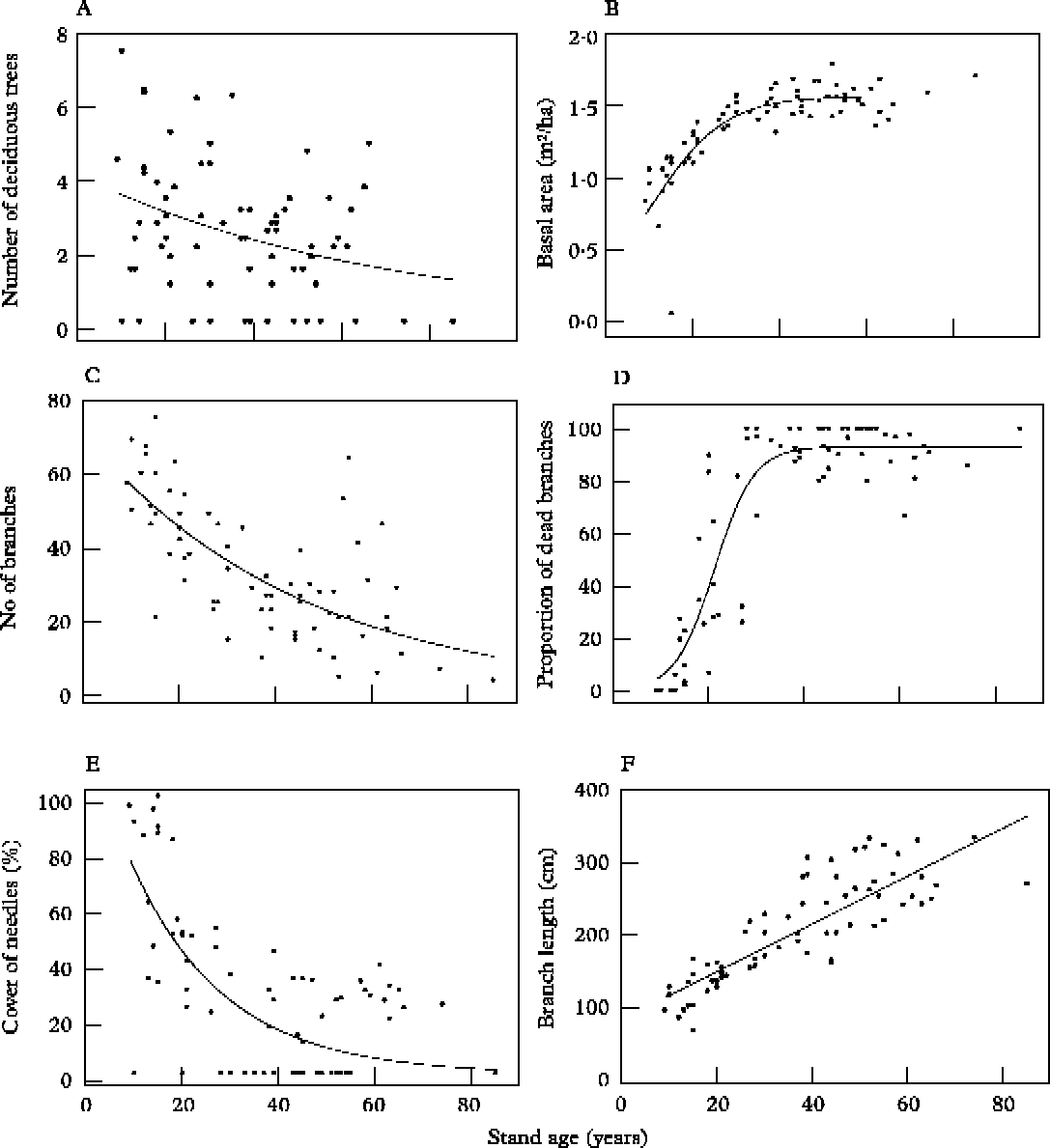
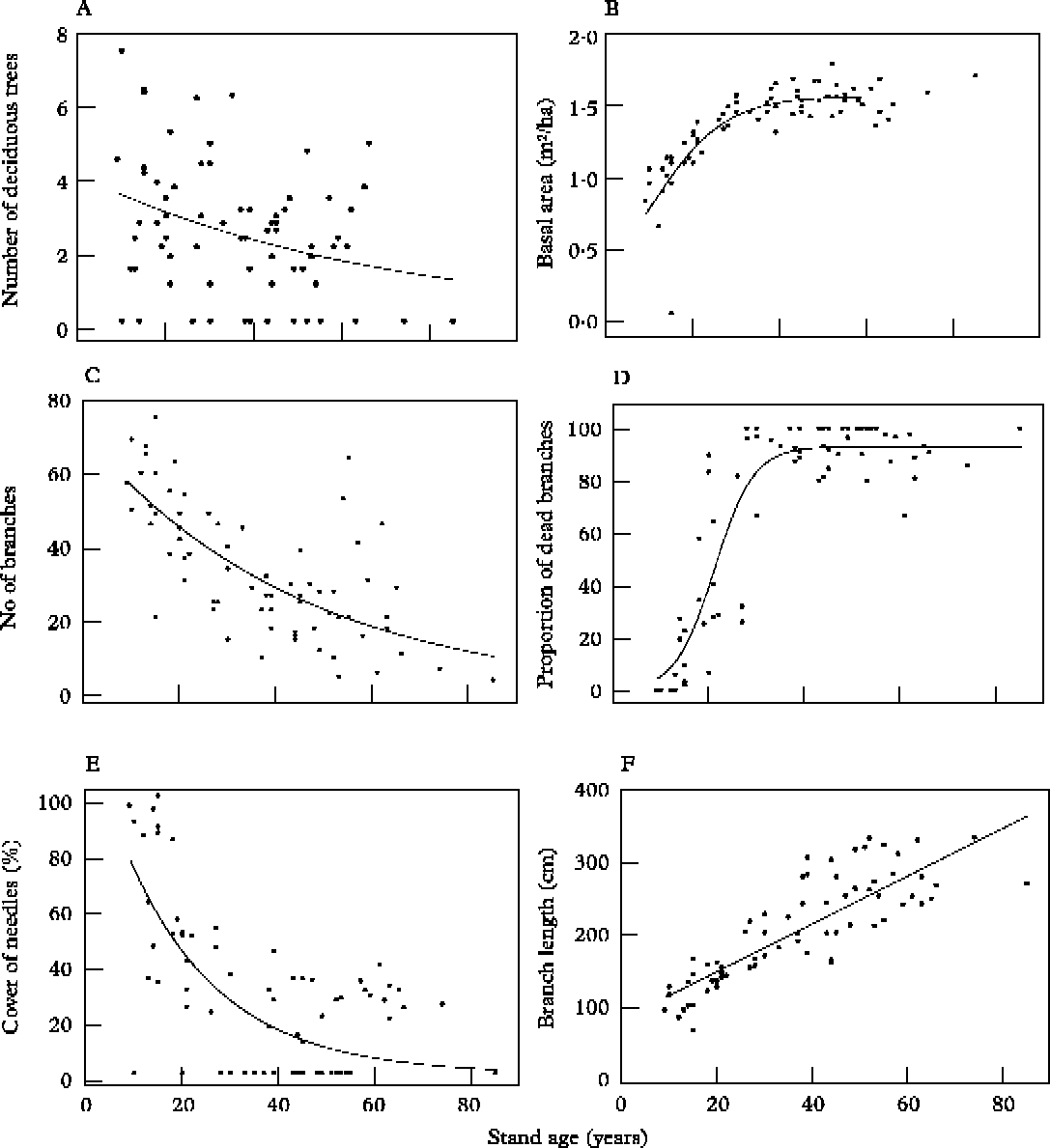
The effects of the measured environmental variables on species number, lichen cover and number of fruticose thalli were tested by non-parametric regression models. Non-parametric regression was used to avoid making assumptions about the possible shape of the response curves. Generalized additive models (GAMs) with smoothing function (s) (Crawley Reference Crawley2002) were used to test the response variables in relation to the explanatory variables. All measured variables, except stand size, were related to stand age (Fig. 1 A–F). Therefore, the regression models included only two explanatory variables; stand age and stand size.
The relationship between stand age in 71 Picea abies plantations investigated in Central Norway and: A, number of deciduous trees (square root-transformed); B, basal area, m2 ha−1 (log-transformed); C, number of branches; D, proportion of dead branches; E, cover (%) of needles; F, branch length (cm). The best-fit regression line for A, C and E is based on exponential decay, f = a*exp(−b*x). B is based on an exponential rise to maximum fitted with equation f = a*(l−exp(−b*x)) and the best fit for D is based on a sigmoid distribution fitted by the equation f= a/(l+exp(−(x−x0)/b)).
The rate of colonization by each single species was studied by analyzing the effect of stand age on species occurrence (0: absent, 1: present). GLM with binary response variable and binomial errors was performed. Species response curves were fitted by ordinal logit regression in order to model the probability of species occurrence in relation to stand age. It was tested whether the ‘gaussian logit curve’ significantly improved the fit over the sigmoid curve by testing the significance of the quadratic function of stand age (Jongman et al. Reference Jongman, ter Braak and van Tongeren1995).
Results
Forest structure
Tree and stand structure changed from the youngest stands to the oldest. The number of deciduous tree stems decreased with stand age (r2 = 0·12, P = 0·038, Fig. 1A) and varied from 0 to 53 within the circle area of 314 m2. The most common deciduous trees were young individuals of Betula pubescens Ehrh. The mean number of birch was 5·6 (±9·6) (n = 71). Alnus incana (L.) Moench and Sorbus aucuparia L. were also common, whereas Salix caprea L. was present in 2 plantations only. Browsing by the large moose population in this area (Gaarder et al. Reference Gaarder, Håpnes, Tønsberg and Holien1997) has greatly damaged the deciduous trees and most likely few will be old.
The estimated basal area of the stands increased significantly with stand age (r2 = 0·70, P <0·001), most rapidly until stand age of 30 years (Fig. 1B). As the stand age and basal area increased the canopy closed and the number of branches in the lower canopy decreased significantly (r2 = 0·49, P <0·001, Fig. 1C). The proportion of dead branches below a height of 3 m increased until 30 years (r2 = 0·81, P <0·001, Fig. 1D). In the densest plantations only short stubs of dead branches were left in the lower canopy, probably due to reduced light conditions. The quantity ofneedles, measured as percentage cover of branch length, decreased significantly with stand age (r2 = 0·42, P <0·001, Fig. 1E). A lower percentage cover of needles at highstand ages is due to long branches in the old plantations (r2 = 0·7, P <0·001, Fig. 1F). The cover of needles in cm is not influenced by branch length (P = 0·890).
The effect of stand and tree characteristics on species richness and abundance
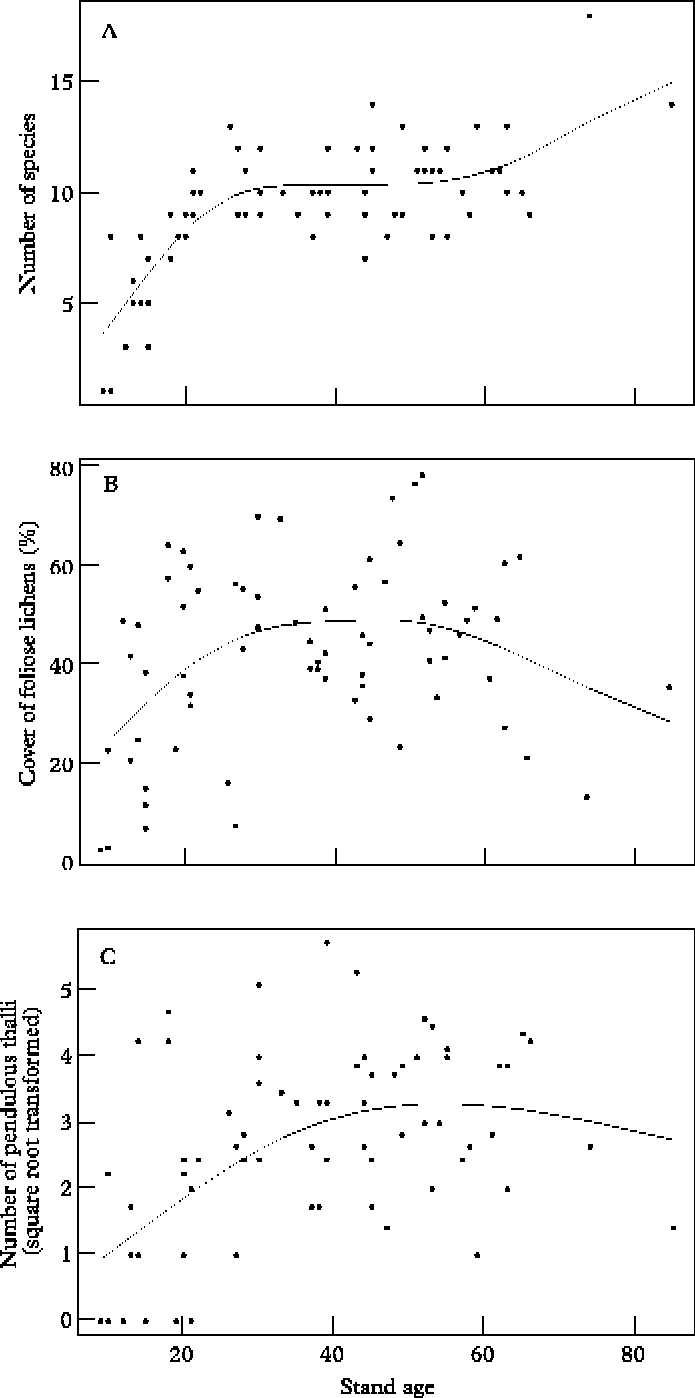
A total of 23 species was recorded on the 71 branches studied. The non-parametric regression model showed that the number of epiphytic foliose and pendulous lichen species was significantly influenced by stand age (NparF= 12·06, P <0·001, Fig. 2A). Colonization was characterized by a rapid increase in number of species, from one species in the youngest plantations (12 years) to about 10 species in plantations aged 20 years. Stands between 30 and 70 years showed no clear increase in species number (Fig. 2A). A high number of species in the oldest stands was due to the occurrence of old forest species such as Hypogymnia vittata (Ach.) Gas., Lobaria pulmonaria (L.) Hoffm., Parmeliella parvula (P. M. Jørg.), Pseudocyphellaria crocata (L.) Vain. and Ramalina thrausta (Ach) Nyl.). These species are mainly distributed in old natural forests.
The relationship between stand age and: A, number of species; B, cover (%) of foliose lichens; C, the number of fruticose thalli (square root-transformed), in 71 Picea abies plantations in Central Norway fitted by a generalized additive regression model.
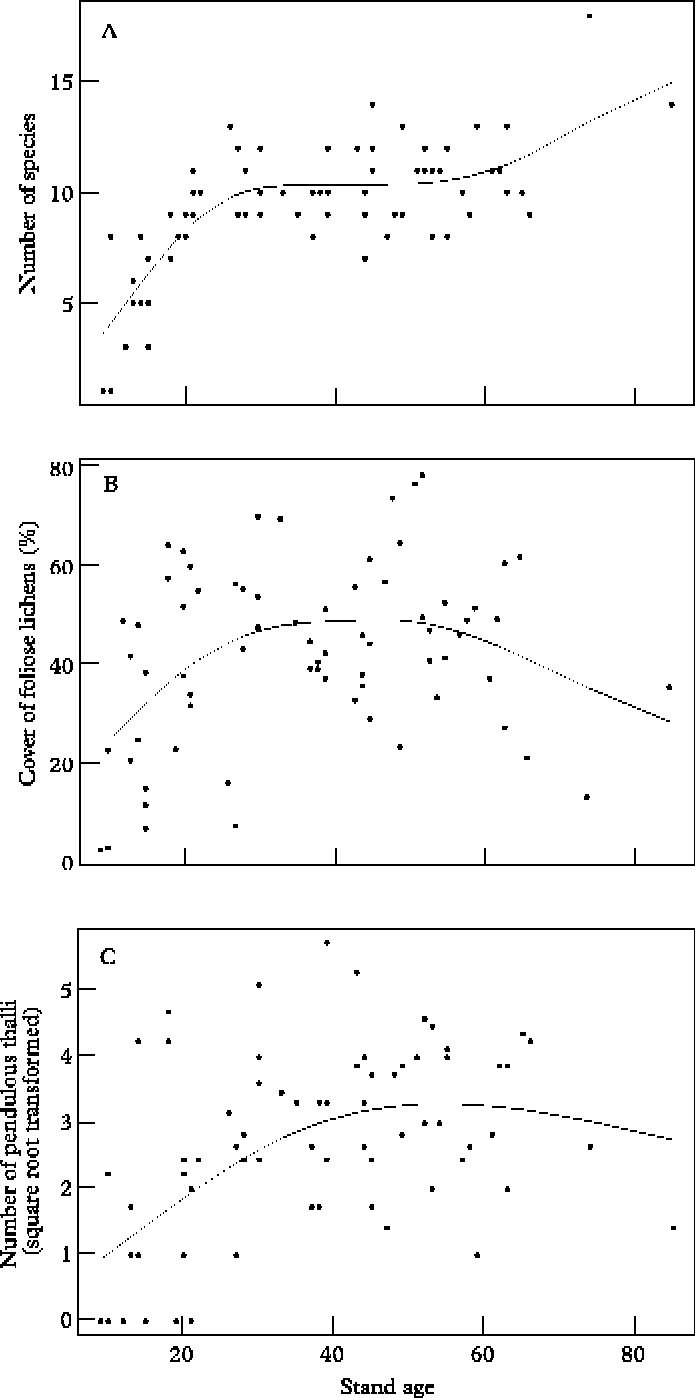
The cover of lichens on the 71 branches investigated varied from 2 cm to 237 cm or from 2% to 78% of branch length. The cover of foliose lichens (%) was significantly influenced by stand age (NparF = 6·82, P <0·001). The response to stand age showed a nearly unimodal pattern with the highest cover of lichens on branches situated in middle-aged plantations (Fig. 2B). This pattern of distribution was observed irrespective of whether the lichen cover was calculated as % of branch length or as cm cover per branch.
Fruticose thalli were represented by the rather rare old forest species Alectoria sarmentosa (Ach.) Ach. and the more common Bryoria spp. and Usnea spp. The occurrence of fruticose thalli in samples from different plantations of about the same age was highly variable. The highest number of fruticose thalli was counted on branches in plantations about 40 years old. The regression model showed that the number of thalli was influenced by stand age (NparF = 4·98, P <0·004, Fig. 2C). Stand size did not influence the number of species or species abundance significantly and no interaction was found between the two explanatory variables included in the model.
Patterns of colonization of common epiphytic lichens
The logit regression models performed for each species showed a significant effect of stand age on species occurrence for all species investigated, except for Melanelia spp. and Pseudevernia furfuracea (L.) Zopf.
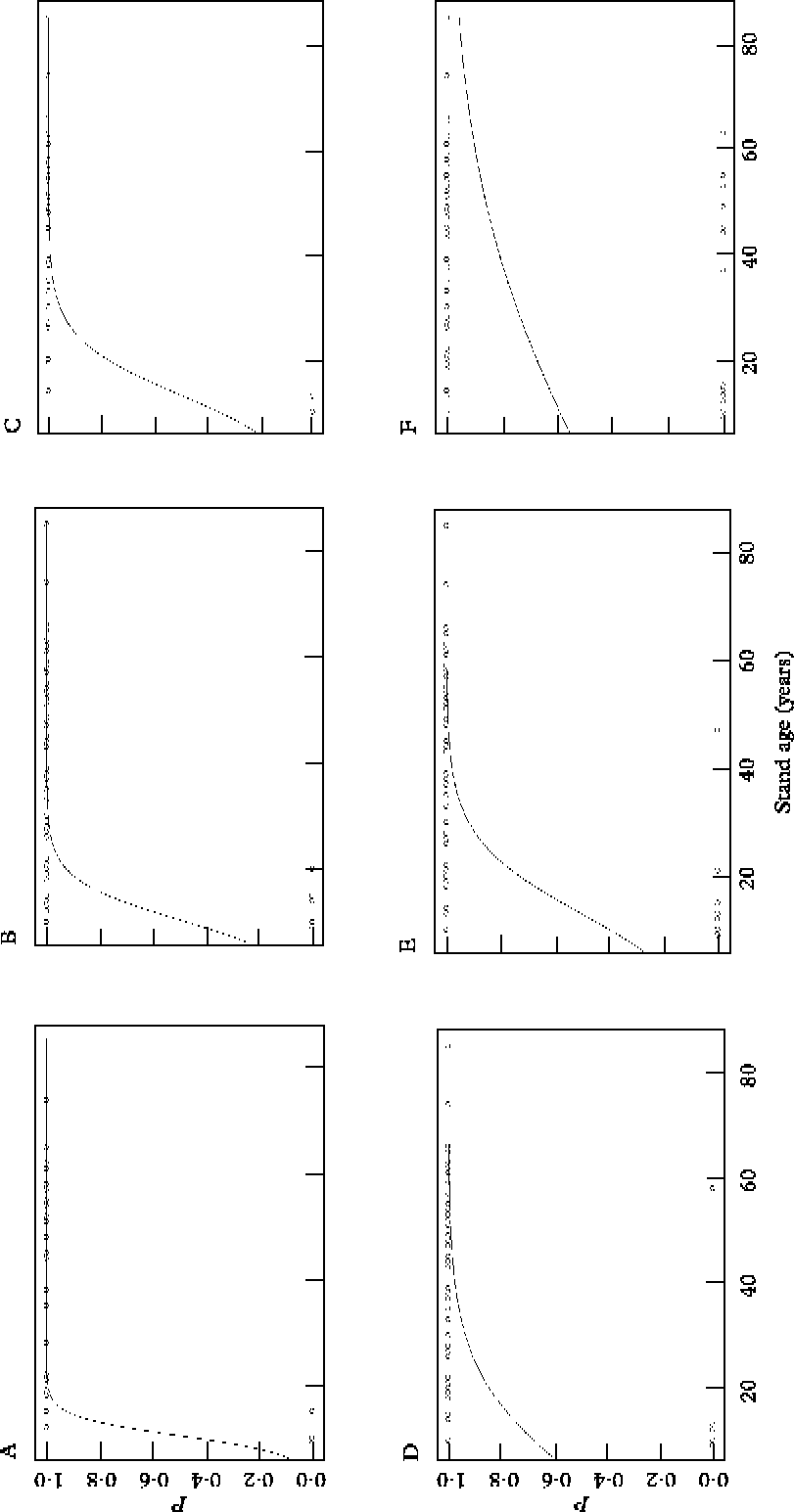
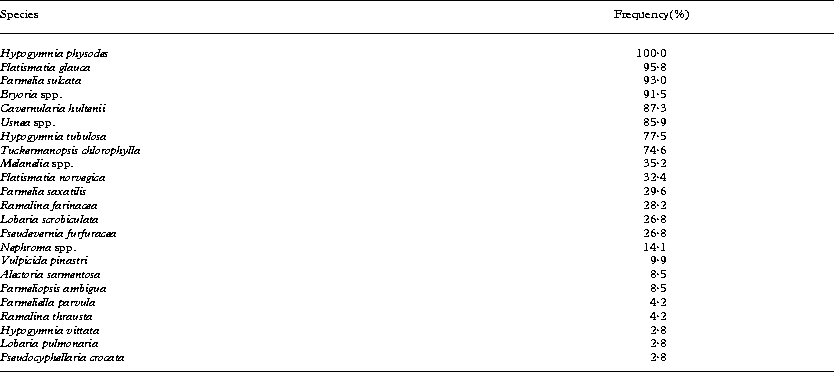
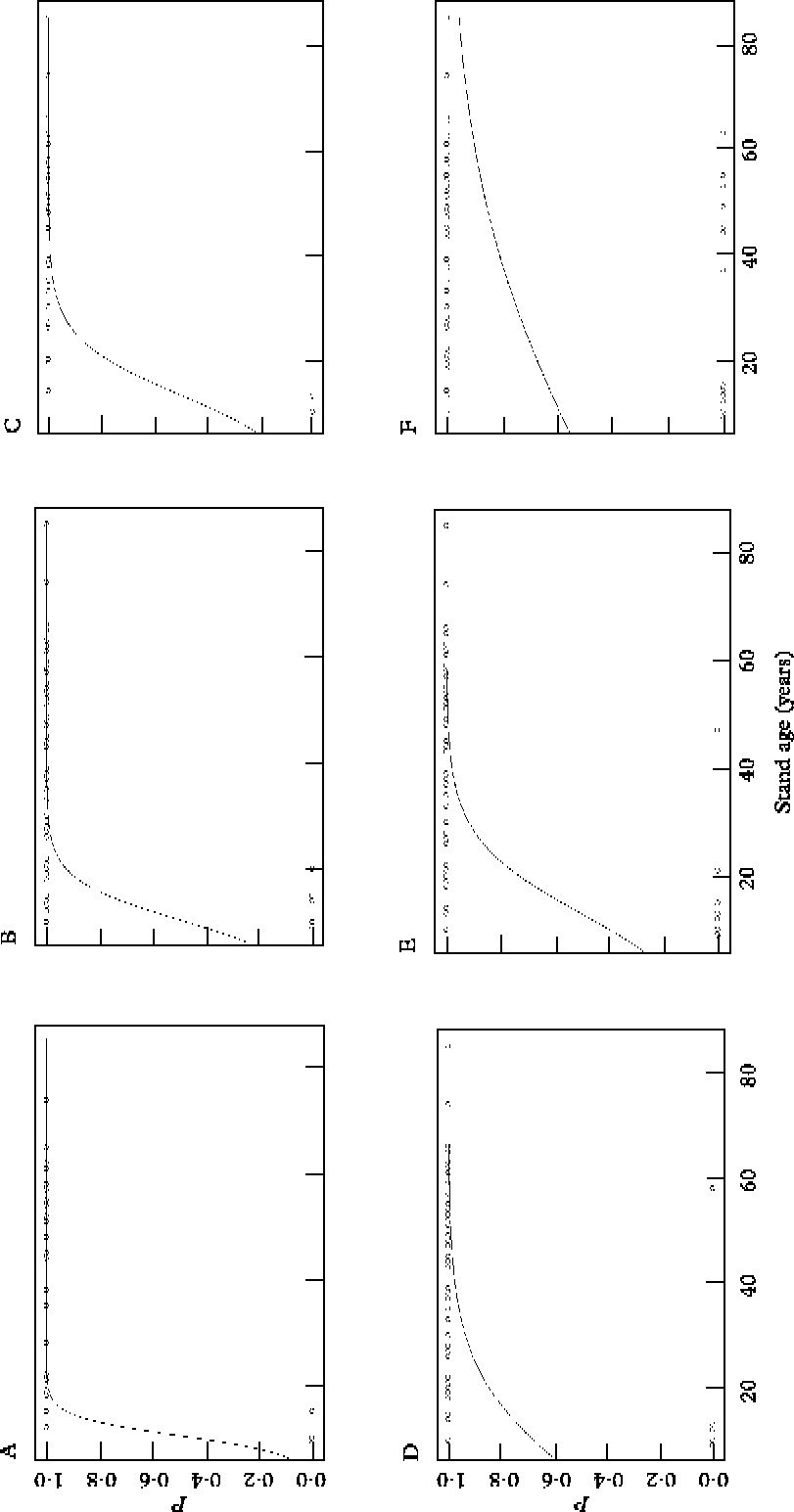
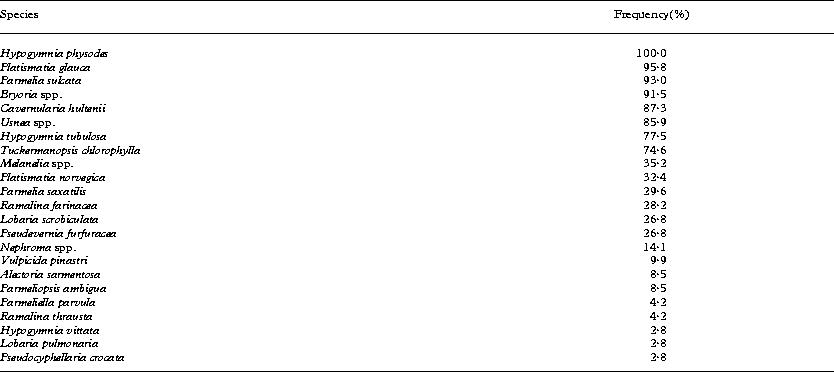
Hypogymnia physodes was among the first species to establish on the new substratum as the branches grew. This indicates an effective dispersal and high diaspore production. This species could be characterized as a typical pioneer species and it was observed on all the branches studied (Table 1). Platismatia glauca (L.) W. Culb. & C. Culb. (Fig. 3A) and Parmelia sulcata T. Tayl. (Fig. 3B) could also be characterized as ‘early colonists’ as a steep increase in the probability of occurrence was found at young stand ages (<20 years). This pattern of colonization was also characteristic for Cavernularia hultenii Degel. (Fig. 3C), Usnea spp. (Fig. 3D) and Bryoria spp. (Fig. 3E). These species occurred on >80% of the branches studied (Table 1) and their occurrences were significantly influenced by stand age; P <0·001 for all species, except Bryoria spp. (P = 0·004). The probability of occurrence of Bryoria spp., mainly B. capillaris Brodo & D. Hawksw., was high even in the youngest plantations aged about 10 years.
Hypogymnia tubulosa (Schaer.) Hav. (Fig. 3F) and Tuckermanopsis chlorophylla (Willd.) Hale (Fig. 3G) differed from the species above and were absent from several stands aged between 40 and 60 years. These stands are characterized by a high basal area (Fig. 1B) and a high proportion of dead branches in the lower canopy (Fig. 1D). The regression model showed a significant effect of stand age on the occurrence of H. tubulosa and T. chlorophylla, P = 0·036 and P = 0·004, respectively.
Platismatia norvegica (Lynge) W. Culb & C. Culb. (Fig. 3H) and Parmelia saxatilis (L.) Ach. (Fig. 3I) showed a slower rate of colonization and did not enter the plantations until stands were about 30 years old. For both species the occurrence was significantly influenced by stand age (P<0·001) and the probability of occurrence increased rapidly in stands >40 years old.
Lobaria scrobiculata (Scop.) DC. (Fig. 3J) and Nephroma spp. (Fig. 3K) occurred on 27% and 14% of the branches studied, respectively. Both species were significantly influenced by stand age (P = 0·030 and P = 0·003 respectively), though both species were also found in several young plantations. Surprisingly, the old forest associated lichen Alectoria sarmentosa (Fig. 3L) was observed in nearly 10% of the plantations and in three stands <40 years old. However, the probability of occurrence increased with stand age (P = 0·035). The length of the thalli counted varied between 1·5 cm and 10·0 cm.
Species response curves fitted by ordinal logit regression depending on stand age in 71 Picea abies plantations in Central Norway. A, Platismatia glauca; B, Parmelia sulcata; C, Cavernularia hultenii; D, Bryoria spp.; E, Usnea spp.; F, Hypogymnia tubulosa; G, Tuckermanopsis chlorophylla; H, Platismatia norvegica; I, Parmelia saxatilis; J, Lobaria scrobiculata; K, Nephroma spp.; L, Alectoria sarmentosa.
The relative frequency of all species in the 71 Picea abies plantations in Central Norway (n = 71)
Vulpicida pinastri (Scopoli) Mattsson & Lai and Parmeliopsis ambigua (Wulf.) Nyl. were observed only in the youngest stands. The regression model for both species showed that the ‘Gaussian logit curve’ significantly improved the fit over the ‘sigmoid curve’ by testing the significance of the quadratic function of stand age (P = 0·001 and P = 0·003, respectively). This was also the case for Ramalina farinacea (L.) Ach. (P = 0·001) which was most commonly observed in middle-aged plantations.
Ramalina thrausta, Hypogymnia vittata, Lobaria pulmonaria and Pseudocyphellaria crocata were observed in the oldest plantations (Table 1). Statistical analyses were not performed for these species because of the small number of observations.
Discussion
The number of lichen species in the studied plantations
It is difficult to place the number of lichens found into context owing to lack of previous studies on old plantations. However, in a study of lichen diversity in an old natural spruce forest near the plantations investigated here, Prestø & Holien (Reference Prestø and Holien2001) recorded 29 foliose and fruticose epiphytic species (crustose lichens were not included and pendulous lichens determined to generic level only, as in the present study). Thus, this suggests that 23 foliose and fruticose species in plantations is relatively high. The highest number of species, as expected, was observed in the mature plantations. Some of these plantations hosted several old-growth associated species, such as Hypogymnia vittata, Lobaria pulmonaria, Pseudocyphellaria crocata and Ramalina thrausta.
A relatively high number of epiphytic lichens (23 foliose or fruticose species) has also been found in Sitka spruce (Picea sitchensis) plantations in Ireland (Coote et al. Reference Coote, Smith, Kelly, O'Donoghue, Dowding, Iremonger and Mitchell2007). This was explained by the oceanic climate of Ireland. The macroclimatic conditions are also suggested to play an important role in the relatively high species richness in the present study since all the plantations studied are situated within the area of the oceanic spruce forest. However, there are many additional factors that influence the number of species in plantations. Distances to old-growth stands and to old deciduous trees, representing sources of propagules, are important since old-growth associated-lichens have been reported as dispersal limited (Peck & McCune Reference Peck and McCune1997; Hilmo & Såstad 2001; Walser Reference Walser2004; Ockinger et al. Reference Ockinger, Niklasson and Nilsson2005). The relatively high bark pH of Picea abies branches in this area (Gauslaa & Holien Reference Gauslaa and Holien1998) is also important, especially for the occurrence of cyanolichens.
The influence of stand age on species richness and abundance
Stand age was found to be important for explaining the change in species richness. Stand age represents the length of time for which trees have been available for lichen colonization and the plantations go through a series of structural changes (Fig. 1A-F) as stand age increases. These changes influence physical factors such as light and humidity. Recent papers have emphasized the importance of light for lichen growth and vitality (Hilmo Reference Hilmo2002; Gauslaa et al. Reference Gauslaa, Lie, Solhaug and Ohlson2006; Reference Hanski2007). Finally, stand age also represents a certain tree size. Tree height and branch length (substratum availability) reflect the target area for colonization. Thus, long branches have a higher probability of being colonized compared to small branches.
Plantations of Picea abies within the oceanic spruce forest area are characterized by a rapid colonization of ubiquitous lichens. The most successful colonizers amongst foliose and fruticose species (Hypogymnia physodes, Platismatia glauca, Parmelia sulcata, Cavernularia hultenii, H. tubulosa, Tuckermanopsis chlorophylla, Bryoria spp. and Usnea spp.) were established on the branches before the stand age reached 25 years and before the canopy was closed. These young stands are characterized by a low basal area (m2 ha−1), a low proportion of dead branches and short needle-rich branches. The colonization pattern could be characterized as an additional entrance of species, rather than by replacement sequences. Species found in young plantations were also found in mature stands, along with species characterized as old-forest species (i.e. Alectoria sarmentosa, Lobaria pulmonaria, Platismatia norvegica, Ramalina thrausta). This result is in accordance with Peterson and McCune (Reference Peterson and McCune2001) who found that some old-growth associated lichens began to colonize Douglas-fir forests between 70 and 110 years old. However, two species, Vulpicida pinastri and Parmelioposis ambigua, were only observed in the youngest stand. Their occurrence in the youngest stands could probably be explained by their photophilous and chinophilous behaviour (Barkman Reference Barkman1958). This suggestion is supported by Hilmo (Reference Hilmo1994) who observed that species belonging to the Parmeliopsidetum were most frequent on small trees in forest glades, commonly covered by snow during winter.
The number of pendulous thalli was significantly influenced by stand age. Studying the species probability of occurrence in relation to stand age showed that A. sarmentosa could be characterized as a late-successional species, whereas Bryoria spp. and Usnea spp. behave more like early colonists. This agrees with Esseen et al. (Reference Esseen, Renhorn and Petersson1996) who found that A. sarmentosa requires late-successional stands to become abundant and McCune (Reference McCune1993) who showed that the highest biomass of alectorioid lichens occurred in old growth forests (400+ years). A rapid colonization by both Bryoria and Usnea of young plantations is probably due to their dispersal mechanisms. It is likely that both Bryoria spp. (mainly B. capillaris) and species in the genus Usnea disperse effectively by very tiny fragments and/or by vegetative propagules. The result is in agreement with Holien (Reference Gaarder, Håpnes, Tønsberg and Holien1997) who observed that young forests are rapidly invaded by B. capillaris and Usnea species.
Previous studies have found that lichen biomass increases with stand age (McCune Reference McCune1993; Berryman & McCune Reference Berryman and McCune2006). This was not the case in the present study sites since the change in lichen cover, with stand age, was characterized by a nearly unimodal response curve. The high cover of foliose lichens in middle-aged plantations reflects a high abundance of the two most common species, Hypogymnia spp. and Platismatia glauca. The reason for the lower lichen cover in late successional stages of Picea abies, compared to middle aged stands, could be reduced light on branches in the lower canopy of mature stands (Gauslaa et al. Reference Gauslaa, Palmqvist, Solhaug, Holien, Hilmo, Nybakken, Myhre and Ohlson2007). This assumption is supported by Hilmo (Reference Hilmo2002) who found a significantly lower mean rate of growth of Platismatia glauca located in a mature stand (0.18 cm2 cm−2 yr−1), compared to a young open plantation (0.36 cm2 cm−2 yr−1). It is important to note that, as in most studies on the distribution of epiphytic lichens, the present study has focused only on the lower branches in the canopy (<2·5 m height). It is likely that a vertical movement of the epiphyte community occurs due to increased light higher in the canopy. Thus, the total lichen biomass of the whole tree might not be lower in mature plantations, than in middle-aged plantations. However, if the rotation cycle is prolonged, there will be time for creation of gaps and a multitayered canopy structure. It is probable that such a change in the forest structure will increase lichen cover on the branches, as well as species richness. However, increased rotation time should not replace preserving old forests. Many species associated with old stands require centuries to build a significant biomass even if they colonize a stand at an early age (McCune Reference McCune1993).
The occurrence of old-forest species in the oldest plantations is interesting from the point of view of species conservation and forest management. Aastrup (Reference Aastrup2007) discussed this subject and it will be discussed further in two additional papers focusing on the abundance of old forest associated lichens in spruce plantations within the boreal spruce forest. Improving the conditions for epiphytic lichens in managed forests is crucial, since only 1·4% of the productive Norwegian forest area is protected by law (Kålås et al. Reference Kålås, Viken and Bakken2006). Conversion of old natural forests to even aged plantations has been one of the major causes of decrease in forest lichen abundance (McCune Reference McCune1993; Esseen et al. Reference Esseen, Renhorn and Petersson1996) and species richness (Holien Reference Gauslaa and Holien1998; Kuusinen & Siitonen Reference Kuusinen and Siitonen1998).
The authors are grateful to the forest owners and to the local forest authorities, Tor Aursand and Aksel Håkonsen, for permission to do the field work. We are also grateful to Ove Mogård, ALLSKOG (Forest owner's association Northern Norway), for maps and valuable information about the selected forest stands. The work was funded by the Norwegian Research Council.