


Perceptual Control Theory (PCT) and the Method of Levels (MOL)
PCT was developed by Powers (Powers et al. Reference Powers, Clark and McFarland1960; Powers, Reference Powers1973, Reference Powers1998, Reference Powers2008), and provides an account of normal psychological functioning. From a PCT perspective, people do not seek to control their behaviour (output) but their perceptual experiences (input). The goal is to make the way in which an individual perceives the environment match with ‘internal standards’ or goals (Powers, Reference Powers1990). Therefore, behavioural responses to stimuli are understood as attempts to minimize any disturbance on what is being controlled. Stated in the most simplistic way, the central tenet of PCT is that normal psychological functioning is all about control – making experiences fit with what feels right. In this sense, PCT makes a radical theoretical departure from cognitive behavioural theories of psychological functioning, where the premise is that people seek to control their behaviour.
PCT specifies that internal standards [which might be understood as somewhat analogous to schemas in Cognitive Behaviour Therapy (CBT)] are organized as hierarchical control systems with higher goals (standards) at the top (e.g. ‘to be an honest person’) which set a series of lower goals at the levels below (e.g. ‘always tell people the truth’). Successful functioning involves minimizing conflict and balancing one's goals into a cohesive strategy. People compare their perceptions of what is sensed to an internal goal. When discrepancy (error) between a perception and a goal is detected, people automatically reorganize internal control systems to create change and reduce the discrepancy. This process can be understood as a negative feedback loop (Powers, Reference Powers2005).
According to PCT, all psychological distress and emotional difficulties can be understood as the consequence of a person experiencing reduced or loss of control (Powers, Reference Powers2005). A person's ability to control might be disrupted or blocked for a number of reasons. A physical problem or disability (e.g. a brain injury) would most certainly impair ability to control. Similarly, lack of knowledge about how to control might pose problems (i.e. needing to get a broken-down car started but not knowing how to do so). Uncontrollable and extreme life events or environmental factors (e.g. the death of a loved one) might be overwhelming and also make control temporarily impossible. However, a common disruption to control for people is conflict within internal control systems. People often have multiple goals that are prone to conflict with one another – e.g. ‘to be successful at new activities and pursuits’ vs. ‘to prevent failure by avoiding new challenges’ (Powers, Reference Powers2008; Carey, Reference Carey2008c). According to PCT everybody has the capacity to reorganize and thus, usually people solve their own problems that result from reduced control. Normally, attention gets drawn to the area with the most amount of discrepancy (error). Exceptions to this process might include the existence of numerous areas of error; or the implementation of a control strategy that blocks attention being applied to where error occurs (e.g. avoidance of things that allow reorganization); or a control strategy being applied that does not permit reorganization.
MOL is a psychotherapy that is a direct application of the principles of PCT (Carey, Reference Carey2005, Reference Carey2008a). PCT states that successful change in any psychotherapy is due to the shifting of a person's awareness to higher perceptual levels (goals) so that conflict (error) in control systems can be reorganized (Carey et al. Reference Carey, Carey, Mullan, Spratt and Spratt2009). In practice, MOL might appear somewhat similar to a range of other psychotherapies, but it is distinct in the way it focuses solely on what it identifies as the effective ingredient of psychotherapy – the mobility of ‘mental (meta-cognitive) awareness (Carey, Reference Carey2005, Reference Carey2008b).
During a session of MOL, clients’ choose the problem they want to talk about and the therapist observes shifts in their awareness (known as disruptions). Disruptions are identified through alterations to the flow of conversation such as changes in gesture, tone of voice or dialogue flow. The MOL therapist directs clients’ attention to these by enquiring about associated background thoughts, images or other perceptual experiences. This helps clients to become aware of the higher goals and standards leading to their problems so that conflict can be reorganized. The redirecting of awareness is not dissimilar to other therapeutic methods such as Socratic questioning, utilized in CBT. However, for the MOL therapist, there are only two main goals; getting a client to talk about a problem and the identification of disruptions. MOL can be regarded as facilitating direct ‘meta-cognitive’ processing (Carey, Reference Carey2005) and the linking of cognition, affect and emotion in an ‘online’ experiential way.
The central tenet of a PCT perspective is that conflict and subsequent emotional distress is inevitable from time to time and is part of the realm of normal human functioning (Powers, Reference Powers2008). For people to solve the problems that occur as a result of loss of control, they need to solve the ‘right’ problems at the appropriate higher level for effective resolution (Carey, Reference Carey2008a).
Psychotic symptoms are within the realm of normal experience
Challenges to the assumption that psychotic experiences lie outside of the realms of normal psychological functioning have only relatively recently emerged within the literature. There is considerable argument for abolishing diagnostic labels such as schizophrenia that stigmatize experiences such as hearing voices and unusual beliefs as abnormal and a sign of illness (Bentall, Reference Bentall1990; Boyle, Reference Boyle1990; Heinrichs, Reference Heinrichs2001). Such assumptions have long resulted in psychological treatments being regarded as unsuitable for psychotic symptoms. Until recently, psychological theory and treatments for people experiencing psychosis lagged far behind those developed for non-psychotic disorders (Tai & Turkington, Reference Tai and Turkington2009). However, there is now a well developed literature demonstrating how anomalous perceptual experiences such as hearing voices and unusual beliefs are commonly experienced by the majority of the population (Johns & van Os, Reference Johns and van Os2001). Epidemiological studies have also provided evidence that there are many people experiencing delusions and hallucinations that do not have a mental disorder and do not feel the need to access mental health services (Tien, Reference Tien1991; Bijl et al. Reference Bijl, Ravelli and van Zessen1998; van Os et al. Reference van Os, Hanssen, Bijl and Vollebergh2001). Normal psychological processes that occur trans-diagnostically across a range of common disorders (i.e. anxiety) (Harvey et al. Reference Harvey, Watkins, Mansell and Shafran2004) are also seen as contributing to the experience of psychotic symptoms (Morrison & Wells, Reference Morrison and Wells2003).
Romme & Escher (Reference Romme, Escher, Haddock and Slade1996) argued that core symptoms such as hallucinations and delusions do not in themselves represent expressions of psychopathology but are the consequences of other underlying life problems. This is in keeping with a PCT perspective whereby even the most severe forms of psychological distress and unwanted perceptual experiences might be understood in relation to normal processes of control and conflict. Circumstances in which an individual's perceived experiences are in conflict with what feels right for them leads to control being compromised. Attempts to establish control in one control system can result in conflict within other internal control systems. Powers (Reference Powers2005, p. 265) argued that conflict of any kind ‘represents the most serious kind of malfunction of the brain short of physical damage’.
Control and psychosis
There is considerable evidence that within all psychopathology control has a central role. Carey (Reference Carey2008c) argued that when people seek help (i.e. psychotherapy), they do so in relation to problems controlling their behaviour, emotions, thoughts, relationships or some other area of their life. Control is important in normal psychological functioning and has been found to be a reliable indicator of positive wellbeing and mental health (Fiske & Taylor, Reference Fiske and Taylor1991; Thompson & Spacapan, Reference Thompson and Spacapan1991). However, it is the individual's internal experience or ‘perception’ of control which is the objective; as opposed to control as measured on the basis of observable behaviour. This is in accord with findings such as Averill (Reference Averill1973) who reported that perceived control is more important for predicting functioning than actual control. From a PCT perspective, perceived control is actual control.
Psychosis is no exception and symptom manifestations can be understood as the result of psychological distress relating to underlying problems of control. There is evidence that problems relating to interpersonal control are a developmental factor in psychosis (Ballon et al. Reference Ballon, Kaur, Marks and Cadenhead2007; Pinkham et al. Reference Pinkham, Penn, Perkins, Graham and Siegel2007; Berry et al. Reference Berry, Barrowclough and Wearden2008). Moreover, lack of control over life events is frequently a precursor (Bentall & Fernyhough, Reference Bentall and Fernyhough2008). For example, there is considerable evidence of the associations between psychosis and previous traumatic life events (see Read, Reference Read1997; Read et al. Reference Read, van Os, Morrison and Ross2005 for a review of the literature). Loss of control is a common consequence of psychosis. For example, Birchwood et al. (Reference Birchwood, Mason, MacMillan and Healy1993) found that people experiencing psychotic symptoms were also far more likely to experience depression if they perceived they had less controllability of their ‘illness’. Those individuals who had accepted a diagnosis (i.e. schizophrenia or bipolar disorder) reported lower perceived control over illness and an external locus of control. Although accepting a diagnosis is often considered to indicate good ‘insight’ and a predictor of better prognosis, these people were no less likely to experience depression, poor self-esteem and unemployment than people who did not accept the diagnosis they were given. Mental control has also been demonstrated to be an important maintenance process in psychotic symptoms. There are certain ways in which people try to control their thoughts which can make things worse. For example, Morrison & Wells (Reference Morrison and Wells2000) demonstrated that people with a diagnosis of schizophrenia used different thought control strategies (more worry and punishment-based strategies and fewer distraction-based strategies) compared to non-psychiatric controls. There is further evidence that control of one's life as a goal or outcome is an essential part of recovery from psychosis (Gumley & Schwannauer, Reference Gumley and Schwannauer2006). Control in other forms is also evident, such as the reduced interpersonal control often reported during therapy (Tyrrell et al. Reference Tyrrell, Dozier, Teague and Fallot1999).
Conflict and psychosis
The idea that conflict is another central component in any mental health problem is by no means new or specific to PCT (e.g. Freud, Reference Freud1955; Miller, Reference Miller and Hunt1944). Carey (Reference Carey2008c) provides a thorough overview of the evidence, with case examples, of conflict as the underlying source in a range of psychological disorders, including psychosis. The notion that the underlying problems leading to psychosis are somehow different to those implicated in other disorders poses a risk of detracting attention away from the personal relevance of the individual's difficulties and in turn placing undue attention on the symptom cluster manifestation (Romme, Reference Romme1998). Psychotic experiences in isolation often appear ‘un-understandable’ to the observer, leading to people making judgements about the rationality and normality of such experiences. There is evidence demonstrating the benefit of making sense of psychotic experiences through understanding the personal meaning and context of the experiences and identifying other problems that occurred prior to onset of the symptoms (e.g. Gumley & Schwannauer, Reference Gumley and Schwannauer2006). This statement is not to minimize the severity of distress and disruption to normal functioning that is often seen in people with psychoses. It is merely an emphasis of the fact that an individual's perceptions are unique and experienced internally and thus are unlikely to make sense to another individual who does not share those experiences.
PCT accounts for psychotic experiences in the same way it accounts for all other expressions of emotional distress. Control systems are organized in hierarchies and conflict in goals can manifest themselves in unwanted perceptual experiences at lower levels (Powers, Reference Powers2005). For example, ‘Sandra’ was a client who was referred for therapy due to her experiences of paranoia. However, it came to light that her main concern was her unhappy marriage. She experienced conflict between wanting to leave her husband whilst simultaneously feeling fearful of being alone. Sandra subsequently identified further conflicts at higher levels including the beliefs ‘I am weak and inadequate’ vs. ‘I must be strong’. She also experienced conflicts within her procedural beliefs relating to how she responded to distress resulting from higher level conflicts. For example, her desire to socially withdraw to prevent people seeing her weakness conflicted with her need to seek support from friends. Her use of self-criticism as a method of trying to motivate herself to be strong conflicted with her need to be self-soothing and compassionate towards herself. These methods of coping were ineffective in helping her to cope and served to increase her ongoing conflict and maintain her overall distress. During therapy Sandra spoke of how prior to the onset of her paranoia, there had been continuous arguments with her husband and she had experienced excessive anxiety and prolonged sleep deprivation. She developed awareness of how underlying conflicts associated with her marital problems (‘I want to be free and independent’ vs. ‘I am scared to be alone’) resulted in severe anxiety and sleep deprivation that culminated in paranoia. This is consistent with evidence that anxiety and sleep disturbance have been implicated in the development of paranoid ideation (Freeman et al. Reference Freeman, Pugh, Antley, Slater, Bebbington, Gittins, Dunn, Kuipers, Fowler and Garety2008, Reference Freeman, Pugh, Vorontsova and Southgate2009). For Sandra, she found that during therapy, focusing on her psychotic experiences was less helpful than understanding the underlying difficulty of her feelings related to her marriage and finding alternative solutions to this problem.
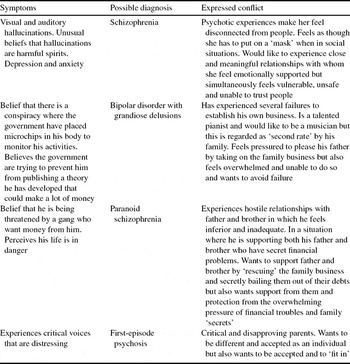
Table 1 presents four examples of other clients whose underlying problems demonstrated extreme disruption to control leading to severe unwanted anomalous perceptual experiences. In each case, the resulting psychological distress was significant enough to result in psychotic experiences for which they were referred for psychological treatment.
Examples of problems underlying psychotic experiences

How conflict and control can maintain psychosis
Problems underlying psychosis can be conceptualized as reduced control within a control system. Subsequent disturbance at the lower levels of the control system manifests itself as the perception of unwanted psychotic experiences. It is the experience of unwanted perceptual events (psychotic symptoms) that are usually the most obvious to the individual and thus people usually focus attention at these lower level perceptions and try to develop coping strategies to control them. There are a number of unfortunate consequences that might occur. First, attention to the original underlying problem becomes neglected. Further, many of the control strategies aimed at controlling the unwanted perceptual activities (psychotic experiences) create further conflict with higher level control systems, potentially exacerbating the original problem. In addition, control strategies aimed specifically at controlling the psychotic experiences are often unhelpful. For example, thought suppression and worrying are common control strategies used by people with psychosis (Morrison et al. Reference Morrison, Wells and Nothard2000; Morrison & Wells, Reference Morrison and Wells2003; Campbell & Morrison, Reference Campbell and Morrison2007). Other unhelpful control strategies commonly utilized are in the form of safety behaviours such as social withdrawal and avoidance (Morrison, Reference Morrison2001), and coping mechanisms such as substance abuse (Smith et al. Reference Smith, Thirthalli, Abdallah, Murray and Cottler2009). For example, a man who experienced hearing critical voices responded by hiding in is bedroom and using alcohol to try blocking out the voices. He subsequently developed feelings of hopelessness, apathy and lost motivation to engage in any activities. This is an example of a common problem of people becoming ‘stuck’ and entrenched in their difficulties. Often these difficulties get labelled as negative symptoms (Beck et al. Reference Beck, Rector, Stolar and Grant2009).
Traditional treatment approaches for people experiencing psychosis
Traditional psychiatric approaches for psychoses have been criticized for focusing only on the presence of certain experiences and behaviours associated with these in order to diagnose and treat (e.g. Romme, Reference Romme1996; Bentall, Reference Bentall2009). Romme (Reference Romme1998) argued that subsequently the causes for the behaviour and an understanding of the problems that led to the psychotic experiences in the first place are neglected. A common complaint from people who access mental health services is their experience of mental health professionals as dismissive of the personal psychological distress associated with their problems. They have commonly reported that diagnostic procedures have not helped them in any way to solve their problems and prevented them from making sense of their psychotic symptoms (Pitt et al. Reference Pitt, Kilbride, Nothard, Welford and Morrison2007). Romme (Reference Romme1998) highlighted that treatments might potentially be harmful if professionals failed to help people identify the underlying problem for their psychotic experiences or to deal with the consequences of their psychosis. Romme specified that treatments should first help people cope with the effects of their unwanted experiences (e.g. the anxiety they experience as a result of voices) and then deal with the original problems that lead to their mental health problems. He described how by helping people understand the relationships between their perceptual experiences (symptoms) and their experiences in life, it is possible to facilitate a change in attitude towards the problems and the people involved with them (Romme & Escher, Reference Romme, Escher, Haddock and Slade1996). This is entirely in accord with a PCT perspective, although PCT also provides an account for why this strategy is a successful mechanism of psychotherapy. PCT postulates that the essential feature of psychological treatment for psychosis is the shifting of a person's awareness to higher perceptual levels (goals) so that conflict in control systems can be reorganized (Carey, Reference Carey2008a).
Many psychological approaches to psychosis have utilized a specific symptom approach as opposed to treatments determined by diagnostic categories. CBT is the treatment for psychosis with the most established evidence base (NICE, 2009). As a treatment for psychosis, CBT usually directly targets helping people cope with psychotic symptoms (e.g. Morrison et al. Reference Morrison, Renton, Dunn, Williams and Bentall2003; Kingdon & Turkington, Reference Kingdon and Turkington2005; Turkington et al. Reference Turkington, Kingdon, Rathod, Wilcock, Brabban, Cromarty, Dudley, Gray, Pelton and Siddle2009). However, from a PCT perspective there are a number of reasons why cognitive behavioural approaches could potentially interfere with meta-cognitive processing and reorganization at the right level of internal control (higher-order goals). Thus successful therapy might only occur in some cases by chance. For example, strictly symptom-focused approaches that place too much attention to a particular psychotic experience (symptom) might detract from focusing on helping people uncover the original underlying problem which is of a more idiosyncratic nature and less symptom specific. The earlier example of Sandra demonstrated how for this client, focusing on her paranoia was less helpful than dealing with the problems associated with her marital difficulties. It is not unusual that people with psychosis who seek therapy often do not want to focus on their unusual experiences and develop problem lists about very different types of problems related to their life in general (Pitt et al. Reference Pitt, Kilbride, Nothard, Welford and Morrison2007). Moreover, CBT approaches are theoretically based on the idea that groups of ‘schemas’ and ‘thinking styles’ exist which need to be addressed. If particular schematic and thinking styles are regarded as typical of certain psychotic symptoms or syndromes, such an approach is subject to the same criticisms of potential reductionism that were made in relation to diagnostic approaches. The assumption underlying CBT, that people control their behaviours and their actions, is theoretically inconsistent with PCT. A causal link is inferred in assuming that individuals create goals and then control their behaviour to reach them. PCT is based on the notion that people control their perceptions (input) as opposed to controlling their behaviour (output). Techniques commonly employed in CBT approaches involve teaching people to be able to control their thoughts (e.g. Drury et al. Reference Drury, Birchwood and Cochrane2000). From a PCT perspective, directive approaches as such do not always result in reorganization within control systems as they can potentially interfere with the required shifting of awareness and meta-cognitive processing. Finally, in traditional psychological approaches, there is an assumption that people are able to access their thoughts easily through verbal reflection and can recall meta-cognitive processes that might have occurred the day before or a week ago. Subsequently, there is an emphasis on attending to the content of thoughts or specific details regarding the context in which they occurred. From a PCT perspective, people are unlikely to accurately recall mental events from the past, therefore asking them might not be meaningful. A requirement in MOL is to focus on the process of thinking as opposed to the content of thoughts. MOL is specific to ‘here and now’ or ‘online’ meta-cognition enabling the client to shift awareness to higher levels in whichever modality (e.g. verbal or imagery) perceptions might occur.
Using MOL with people experiencing psychosis
Preliminary studies evaluating MOL have demonstrated that it is an effective and acceptable psychotherapy with benefits at end of therapy and in short-term follow-up studies (Carey & Mullan, Reference Carey and Mullan2007, Reference Carey and Mullan2008; Carey et al. Reference Carey, Carey, Mullan, Spratt and Spratt2009). These studies have been based in primary-care clinics predominantly with people with mild to moderate mental health problems. There are some methodological limitations to consider in light of these promising results, including the absence of control groups, no randomization of participants to treatment, relatively small numbers and short post-treatment follow-up times of no more than 3–6 months. Although evaluation of MOL is at a preliminary stage, qualitative reports from clients have also reported it to be a useful and acceptable form of therapy with no reports to date of negative ‘side-effects’ (Carey et al. Reference Carey, Carey, Stalker, Mullan, Murray and Spratt2007). In MOL, because the structure, content and pace of therapy are determined and controlled by the client, this potentially maximizes the suitability and acceptability of therapy for each individual. Carey et al. opined that MOL has the potential to be especially useful for people with anomalous perceptual experiences and complex problems particularly when engagement is difficult or people feel ‘stuck’ and are unclear about their problems.
The problems associated with psychotic experiences can appear difficult to make sense of. In addition to thought content and thinking styles, there is evidence of other factors having a role in the wide array of experiences or symptoms representing psychoses. These include arousal (Morrison & Wells, Reference Morrison and Wells2003); emotion (Birchwood, Reference Birchwood2003); attachment and interpersonal issues (Birchwood et al. Reference Birchwood, Meaden, Trower, Gilbert and Plaistow2000; MacBeth et al. Reference MacBeth, Schwannauer and Gumley2008); loss and trauma (Read et al. Reference Read, van Os, Morrison and Ross2005); self-esteem (Gumley et al. Reference Gumley, Karatzias, Power, Reilly, McNay and O'Grady2006); acceptance, and self to self-relating (Gilbert et al. Reference Gilbert, Birchwood, Gilbert, Trower, Hay, Murray, Meaden, Olsen and Miles2001). The importance of these factors has been demonstrated in recovery approaches to psychosis, through which individuals have reported being able to develop personal meaning and empowerment from their own psychotic experiences, acquire a sense of inner control and self-regulation, and enable emotional and cognitive change facilitating the attainment of goals and recovery (Gumley et al. Reference Gumley, White and Power1999).
MOL is a therapy that is aimed directly at helping people to make sense of their perceptual experiences in a way that is personally meaningful and relevant to them as an individual (Carey, Reference Carey2008a). From this perspective, MOL is potentially an ideal approach to use with people experiencing extreme unwanted perceptual events and complex problems. At present there is no literature available documenting the use of MOL specifically for psychosis. There is a need for research in this area and pilot studies are underway. However, it is possible to provide some preliminary examples of the advantages and difficulties in using MOL therapy with people experiencing psychoses on the basis of clinical practice with single case work. A summary of delivering MOL in secondary mental health services will now be provided.
Clinical examples of delivering MOL to people experiencing psychosis
Engagement is an essential aspect of being able to work with clients with problems involving psychotic experiences and is a factor that influences recovery (Turkington et al. Reference Turkington, Kingdon, Rathod, Wilcock, Brabban, Cromarty, Dudley, Gray, Pelton and Siddle2009). Commonly, engagement of clients with mental health services is low, especially in cases where people have experienced the first episode of psychosis (Lecomte et al. Reference Lecomte, Spidel, Leclerc, MacEwan, Greaves and Bentall2008). In a study by Mueser et al. (Reference Mueser, Rosenberg, Goodman and Trumbetta2002) nearly 50% of people with serious mental problems had suffered childhood trauma and were described as more likely to have low self-esteem, use substances, and find it difficult to build therapeutic alliances, thus refusing psychological treatment or avoiding seeking help. Specific experiences such as paranoia are also likely blocks to people feeling able to remain in therapy (Killaspy et al. Reference Killaspy, Banerjee, King and Lloyd2000). MOL is a client- centred therapy where the client directs the content of sessions and chooses what they do and do not speak about. The very nature of MOL involves focusing on the experience of the client in the here and now. This provides a good opportunity to focus awareness on the client's perception of the therapeutic process. A client might report he does not want to speak about his unusual experiences with the therapist. In this scenario, the therapist would not require the client to disclose details of these experiences but instead enquire about how he is experiencing this. For example, the therapist might ask ‘what makes it difficult to talk about your experiences’? This is especially useful in engaging people who might find it too emotionally challenging to recall traumatic events or discuss anomalous experiences such as paranoid ideation. It also increases the chances of people feeling that therapist is making an effort to understand them. In MOL it is not necessary for people to talk directly about specific memories, mental events or experiences where they might otherwise be unlikely to remain in therapy if they feel pressure to do so.
An example is the case of ‘Simon’, who came to therapy for help with extreme anxiety regarding his experiences of being followed by the Mafia. In the first therapy session he appeared highly anxious and was ambivalent about whether he could even stay for longer than 10 minutes. He was reluctant to speak about his problems and responded to every question asked of him with ‘I don't know’. During MOL in this instance Simon was asked to speak about what it was like for him to have come along to a therapy session for help but not to know what to say. Examples of questions asked included:
• ‘Are you trying to figure out what you want to tell me?’
• ‘Would you rather not say at the moment?’
• ‘Does it bother you that you don't know?’
• ‘Are you worried about how it might sound?’
• ‘Is it difficult to think about that?’
It turned out that Simon was experiencing extreme paranoid beliefs about the possibility of the therapist being involved with the Mafia. He also associated the colour of the therapist's clothes with a symbolic colour code belonging to the Mafia. A goal of MOL is to ask about disruptions in speech in order to draw attention to foreground and background thoughts. Simon was asked why he had laughed when he disclosed his concerns about the therapist's potential collusion with the Mafia. Questions included ‘How does it sound to hear yourself saying you think I might be involved?’ and ‘How do things seem to you as you explain what's happening to me?’ On reflection, Simon was able to report that it sounded ‘silly’ to him that he would think the therapist was involved with the Mafia. On further questioning, he reported that although at a rational level he felt this was unlikely, he continued to feel anxious. Simon spoke about his frequent experiences of conflict between knowing something at one level but experiencing contradictory emotions at another level. He made a connection between these perceptions and his experience of finding it difficult to trust people. He described how on the one hand he wanted to be an honest person but on the other hand he perceived that honesty could be dangerous. This eventually enabled him to talk about some of the underlying problems he was experiencing involving trust and relationships with his family. From the therapist's perspective, it was possible at an early stage in therapy to deal directly with the trust issues that arose in relation to the therapeutic alliance. Through focusing on the verbal utterances Simon made, this facilitated engagement and the discovery of what for Simon were the underlying problems related to his paranoid thoughts. The intentions of the therapist during this process were to try and understand how Simon perceived his experiences, using questions such as:
• ‘What is he experiencing?’
• ‘What is he experiencing as he tells me he thinks I'm involved with the Mafia?’
• ‘Why is he telling me this?’
• ‘What does he want me to do?’
• ‘Does he think I might not understand how distressed he is?’
• ‘Does he want more support than he's getting?’
• ‘Does he experience everything as threatening and confusing?’
MOL involves asking clients what they mean when they use certain words which reduces opportunities for misunderstanding and increases the clients’ experience that they are being listened to and understood. Moreover, many people find it difficult to verbalize their thoughts and experiences. For example, some people prefer to describe their experiences in relation to visual images of pictures or colours. MOL enables the therapist to gravitate to whichever sensory modality the client uses. This is especially useful for clients who experience perceptions that are very unusual or complex. In the case of Emily, she felt unable to verbally describe her experiences of feeling ‘disconnected’ from other people, although she was aware that this was somehow relevant to her experience of visual hallucinations. She was able to describe the experience through an image of herself in a large box that she was unable to climb out of. She described her perception of being in the box as feeling ‘trapped’ and lonely but was also able to identify additional conflicting feelings of being safe and comfortable. A further benefit of MOL is that it can help reduce potential discrepancy between the client and therapist that might arise in relation to differences in terminology and expression. It removes any expectations or assumptions of the therapist in relation to ‘symptoms’ which is a common block to the therapist's understanding and the client's experience (Romme, Reference Romme1998). MOL is about facilitating the development of clients’ awareness of their problems which can only be achieved through understanding their problems from an idiosyncratic perspective. This makes MOL particularly useful when clients report feeling ‘stuck’ and hopeless or when they are unclear about what the nature of their problems is.
Delivering MOL is about enabling the client to exercise as much control as possible within the therapeutic process. Handing control back to clients is important given the emphasis placed on control within PCT. For example, in MOL clients can determine when they have appointments, session duration and what the focus of therapy is, etc. Service parameters might limit choices to some extent; for example, the maximum duration of a session might be no more than 50 minutes. However, there are massive clinical benefits (Carey & Mullan, Reference Carey and Mullan2007). Clients have reported being satisfied with this flexible approach. Therapy can be short term or long term and delivered as and when the client requires (e.g. as opposed to weekly). The following case of ‘Eddie’ is an example of the importance of client control. Eddie was a 34-year-old man who had a diagnosis of schizophrenia and had been seen by a community mental health team (CMHT) for 14 years. He had many experiences related to control. His psychiatrist and mother used to place medication in his food without his knowledge and his CMHT had facilitated Eddie moving out of his own flat to live with his mother. His care coordinator referred Eddie for CBT although Edddie had not requested this. Eddie's mother suggested that the psychologist visit him at their home. Subsequently, she was always in the house during therapy sessions. She was very anxious for Eddie to provide the psychologist with enough information for his benefit. She would frequently come into the room, interrupting the session to speak on behalf of Eddie. Therapy sessions were scheduled weekly but Eddie would spend most of the time in silence or pacing up and down. He denied having anything he wanted to work on although he did express that he wanted the sessions to continue. The psychologist described Eddie as very softly spoken and passive. After 3 months, there was little change. The psychologist then asked Eddie if he would prefer to choose the location and timing and length of his sessions. Eddie agreed to take control of organizing sessions when he wanted them (interim risk management was agreed with the CMHT). After 4 weeks, he eventually made contact with the psychologist by phone and negotiated a convenient appointment at his home. In subsequent sessions, Eddie chose to direct the content of sessions and no longer paced the floor. He behaved assertively, ending sessions when he felt he had covered everything he wanted to. His mother also agreed to go out of the house during his therapy time. On a number of occasions Eddie wanted to focus on problems that he had previously rejected. This case example demonstrated how powerful the impact of handing over control to the client can be.
MOL is a form of meta-cognitive therapy. The reasons why meta-cognitive processing might be effective in psychotherapy were outlined earlier from a PCT perspective. There is also good evidence of the benefits of CBT approaches that have utilized meta-cognitive techniques as a treatment for psychosis (e.g. Chadwick, Reference Chadwick2006; Valmaggia et al. Reference Valmaggia, Bouman and Schuurman2007). MOL therapy is all about focusing on thoughts, feelings and emotions that occur in the present moment. Clients are not required to talk about what happened yesterday or last week; but how it feels to recall the experience in the ‘here and now’. From clinical experience, this is an excellent way of facilitating experiential processing and linking of cognition, affect and emotion. MOL is a method of bringing ‘implicational knowledge’ (abstract ‘knowing with the heart’ – based on integrated information drawn through the senses (e.g. sight, smell, taste, etc.; Teasdale, Reference Teasdale1993) into awareness. In this sense, MOL provides opportunities for ‘online’ meta-cognitive processing that creates what can be regarded as true ‘hot cognitions’. An additional benefit is that therapy is not reliant on post-hoc analysis of meta-cognitive processes based on memory recall. MOL is applicable to people who might experience memory problems as well as other problems with thinking. For example, in clinical practice, MOL has been a useful approach with people presenting with formal thought disorder. It has been possible to increase a client's attentional focus on how they are speaking and thinking in the present moment with the impact of reducing frequency with which less relevant information intrudes into the flow of conversation. For example, in some instances of tangential thinking or loss of goal, it has been possible to facilitate clients in shifting their awareness to their thought processing in order they might clarify the meanings and connections of their words rather than focusing on the content of the speech.
There are some aspects of implementing MOL in clinical practice that have been more challenging. MOL requires helping clients to develop awareness of their perceptions of their experiences. In practice it can be difficult for people to hold onto perceptions long enough to facilitate such reflection. For example, during therapy ‘Mary’ reported that she was experiencing frustration in relation to her experience of frequently having to explain how she felt to her husband. Mary reported fleeting experiences of a similar sense of frustration during therapy. It was possible to shift her awareness to her perception that people should be able to understand how she might be feeling without her needing to specify what her thoughts and emotions were. During therapy it was often difficult for Mary to focus on her perception long enough to explore this. The frustration she experienced was often instantaneous and dissipated very quickly. This example demonstrates how it is sometimes difficult to catch a perception and facilitate the client to focus long enough to communicate about it. This is particularly so if the client feels distracted, or experiences high levels of affect and distress. Moreover, people frequently experience multiple perceptions simultaneously and this can further complicate the process of shifting awareness to specific perceptions. For Mary, it is possible that she was controlling for an additional goal of not wanting to show frustration, whilst simultaneously controlling for wanting to be understood. If this was so, the conflict between these two goals might in itself have made it difficult for her to focus on her perception of how frustrated she was for long enough to communicate about it. Given the nature of psychosis, the challenges identified here might be common when delivering MOL. MOL requires a therapist to have a good degree of concentration and creativity to ask the right questions to understand a client's perceptions and shift awareness up levels. From the perspective of a therapist it can often be difficult to know if you are getting good-quality information and it is necessary to ask clients about the process of what they perceive during the therapeutic process in order to know if it feels OK for them and they are moving up levels.
Conclusions
In summary, PCT offers a comprehensive and evidence-based theory of normal psychological functioning. It also offers an account of what the mechanisms of change are within psychotherapy. Control and conflict are central to understanding distress underlying psychosis. MOL is an effective form of psychotherapy that is applicable to understanding anomalous experiences and can be utilized when working with people with a range of psychotic symptoms. There are many aspects of MOL as a therapeutic intervention that make it particularly beneficial for working with people who experience problems that are severe and enduring. Preliminary case examples demonstrate potential benefits and difficulties that warrant further investigation of applying MOL therapy to psychosis.
Acknowledgements
I thank Warren Mansell and Timothy Carey for their ongoing encouragement and support. I also thank Clive Lindley for his help with earlier drafts of this paper.
Declaration of Interest
None.
Learning objectives
After reading this paper people will be able to:
(1) Understand how PCT relates to understanding psychotic experiences.
(2) Appreciate the ways in which control and conflict are central to problems associated with psychosis.
(3) Understand how MOL might be applied to working with people who experience psychosis.
(4) Appreciate some of the potential benefits and more complex aspects of using MOL as a therapist working with people who have severe and enduring mental health problems.



Comments
No Comments have been published for this article.