Rehospitalisation has a significant financial impact on the healthcare system and is associated with increased patient morbidityReference Jencks, Williams and Coleman1. Although estimates of the proportion of preventable hospital readmissions varyReference van Walraven, Jennings and Forster2, it is thought that many are avoidable, making readmission an important metric of healthcare efficiency for quality improvement initiatives. In the United States, hospital readmission rates are tied to federal reimbursements and penalties, and a reduction in readmissions has become the standard for comparing relative quality of care.
Rehospitalisation is a significant aspect of providing care to CHD patients, particularly as the overall burden of disease shifts towards older patients with increasingly complex lesions and co-morbiditiesReference Gilboa, Devine and Kucik3 and as resource utilisation among this population is projected to increase in the setting of rising healthcare costsReference Briston, Bradley, Sabanayagam and Zaidi4. Rehospitalisation is responsible for as much as 10% of the annual inpatient cost of caring for adult CHD patientsReference Cedars, Burns, Novak and Amin5, and even in the setting of publicly funded universal access to health care, hospital readmission is common among CHD patientsReference Mackie, Ionescu-Ittu, Pilote, Rahme and Marelli6. As rehospitalisation continues to be an important driver of healthcare costs among this resource-intense population, the identification of predictors of readmission is an important first step to ensuring the appropriate management of CHD patients through the perioperative period.
There are limited data exploring early outcomes after CHD surgery, particularly among adolescent and adult CHD patientsReference Kim, He, MacGillivray and Benavidez7–Reference Putman, van Gameren and Meijboom9, despite an estimated 15–20% of hospitalisations among CHD patients being admissions for congenital cardiac surgeryReference Opotowsky, Siddiqi and Webb10. Among children who undergo cardiac surgery rehospitalisation is common, with frequent readmission for non-cardiovascular complicationsReference Kogon, Oster and Wallace11. The Society of Thoracic Surgeons Congenital Heart Surgery Database collects perioperative information on all patients undergoing operations for CHD at participating centres and has been identified as a valuable repository of surgical information that allows for the evaluation of outcomes in the CHD populationReference Kim, He, MacGillivray and Benavidez7,Reference Kogon, Oster and Wallace11–Reference Mahle, Jacobs and Jacobs15 .
The purpose of this study was to determine the 30-day readmission rate for CHD patients of all ages who undergo cardiac surgery and to examine potential risk factors associated with readmission, utilising the STS Congenital Heart Surgery Database supplemented by a clinical and administrative data repository that allowed for longitudinal follow-up of CHD patients across multiple metropolitan sites in Georgia. It is hypothesised that identifiable demographic, clinical, and surgical risk factors are present during the index surgical admission that are associated with unplanned 30-day hospital readmission for CHD patients.
Methods
Data source
We conducted a retrospective cohort study to assess readmissions of children and adults with CHD. Patient demographics, clinical characteristics, and surgical outcomes were obtained from the 2010–2013 Society for Thoracic Surgeons Heart Surgery Database for both children and adult patients with a CHD diagnosis. To identify hospital readmissions, information from the STS database was linked to Emory University’s population-based surveillance data repository for individuals with a CHD diagnosis that includes data from 2011–2013. The data are part of an expanded collaboration between Emory University and the Centers for Disease Control and PreventionReference Glidewell, Book and Raskind-Hood16 that includes Georgia Medicaid administrative claims, allowing for the follow-up of patient outcomes longitudinally across multiple sites in GeorgiaReference Glidewell, Book and Raskind-Hood16,Reference Raskind-Hood, Hogue, Overwyk and Book17 .
Study participants
Primary analysis included all patients from the 2010–2013 (STS) Heart Surgery database with at least 1 International Classification of Diseases, Ninth Revision, Clinical Modification (ICD-9-CM) diagnostic code indicating a CHD diagnosis and at least 1 Current Procedural Terminology code indicating a congenital heart surgery procedure. Patients who were unable to be linked into the Emory CHD data repository, as well as patients who died during the index surgical hospitalisation, were excluded because they were not at risk of readmission. Patients who were admitted for greater than 1 month following surgical intervention were also excluded from analysis. Patients who were discharged from their index hospitalisation prior to January 1, 2011 or after November 30, 2013 were also excluded, allowing for the tracking of 30-day readmissions during a 3-year period from 2011 to 2013. For the purpose of developing a predictive model of readmission, this population was separated into a derivation cohort (patients discharged January 2011 through December 2012) and a validation cohort (January 2013 through November 2013).
Patient and admission characteristics
The primary outcome of interest was hospital readmission. Readmission was defined as any non-elective hospitalisation of a patient within ≤30 days of discharge from the index admission, in which a cardiac surgery procedure was performed as indicated by Current Procedural Terminology codes. Transfers to another facility from the index readmission were excluded from analysis.
Patient- and admission-level characteristics included age, gender, race, payer status, CHD severity, co-morbidities, length of stay, presence of previous cardiac surgeries, type of surgical intervention, presence of in-hospital complications, and weekend discharge. Age was defined categorically as <1 year, 1–18 years, 19–64 years, and ≥65 years. Race was categorised using self-report as White, Black/African-American, or other. Insurance payer status was categorised as public (including Medicare and Medicaid), private/employer-based, uninsured or self-pay, or other/unknown. Severity of CHD disease was classified as severe or not severe using a modified Marelli classification scheme, as outlined in Glidewell et alReference Glidewell, Book and Raskind-Hood16,Reference Marelli, Mackie, Ionescu-Ittu, Rahme and Pilote18 . Co-morbidities of interest were identified using ICD-9-CM codes and were classified as cardiac, pulmonary, pulmonary hypertension, renal, hepatic, neurologic, haematologic, genetic syndrome, nutritional (specifically, overweight/obesity, underweight, or failure to thrive), or endocrine disease. Individual diagnoses, ICD-9-CM codes, and their classification are summarised in Supplementary Table 2. Length of stay was measured in days from cardiac surgery to discharge and categorised as ≤1 week, >1 week and ≤2 weeks, and >2 weeks and ≤ 1 month. The presence of in-hospital post-operative complications was documented using STS definitions. The day of the week of discharge from index hospitalisation was dichotomised as Sunday to Thursday and Friday to Saturday to account for patients’ ability to seek outpatient follow-up within 24 hours of discharge.
Surgical interventions were categorised using Current Procedural Terminology codes as surgery on the heart and great vessels, valve surgery, single ventricle repair and shunt placement, septal defect repair, sinus of Valsalva or venous anomaly repair, transposition of the great arteries repair, truncus arteriosus repair, aortic anomaly repair, pulmonary artery surgery, heart transplant, electrophysiology/pacemaker procedures, and other/non-cardiac procedure. Examples of surgeries on the heart and great vessels include cor triatriatum repair and pulmonary atresia repair; septal defect repairs include tetralogy of Fallot repair and atrial, ventricular, and atrioventricular septal defect repair; while pulmonary artery surgery includes pulmonary artery reconstruction or unifocalisation of major aortopulmonary collateral arteries. These surgical interventions were not deemed mutually exclusive events, and patients may have undergone multiple categories of surgical intervention during a single operation (e.g., both a septal defect repair and a valve repair). The number of cardiac surgery types received during index hospitalisation was categorised as 1, 2, or ≥3. A full listing of individual surgical procedures and their classification is summarised in Supplementary Table 3.
Data analysis
Statistical analyses were conducted using SAS 9.4 (Cary, North Carolina, United of America). Descriptive statistics include median and interquartile range for continuous variables and frequencies and percentages for categorical variables. Demographic and clinical data were compared using the chi-square test or Fisher’s exact test, where appropriate, for categorical variables. The odds of 30-day readmission were assessed using both univariate and multivariate logistic regression analyses. Receiver operating curves derived from multivariate logistic modelling were utilised to discriminate between patients who were readmitted and not readmitted at 30 days. Model goodness of fit was assessed using the Hosmer–Lemeshow test statistic option included in the multivariate logistic regression procedure. Data from logistic regression models are reported as odds ratios and 95% confidence intervals.
Results
From 2011 to 2013, there were 2083 patients who met inclusion criteria from the STS database. Of these, patients were excluded if they did not have either an identifiable CHD ICD-9-CM diagnosis code or CHD surgery Current Procedural Terminology code (n = 73), if they could not be linked to the Emory University surveillance data repository (n = 482), or if they did not survive from surgery to 30 days after hospital discharge (n = 49). The remaining 1469 patients form the study population for analysis, with 981 patients included in the derivation cohort and 488 in the validation cohort.
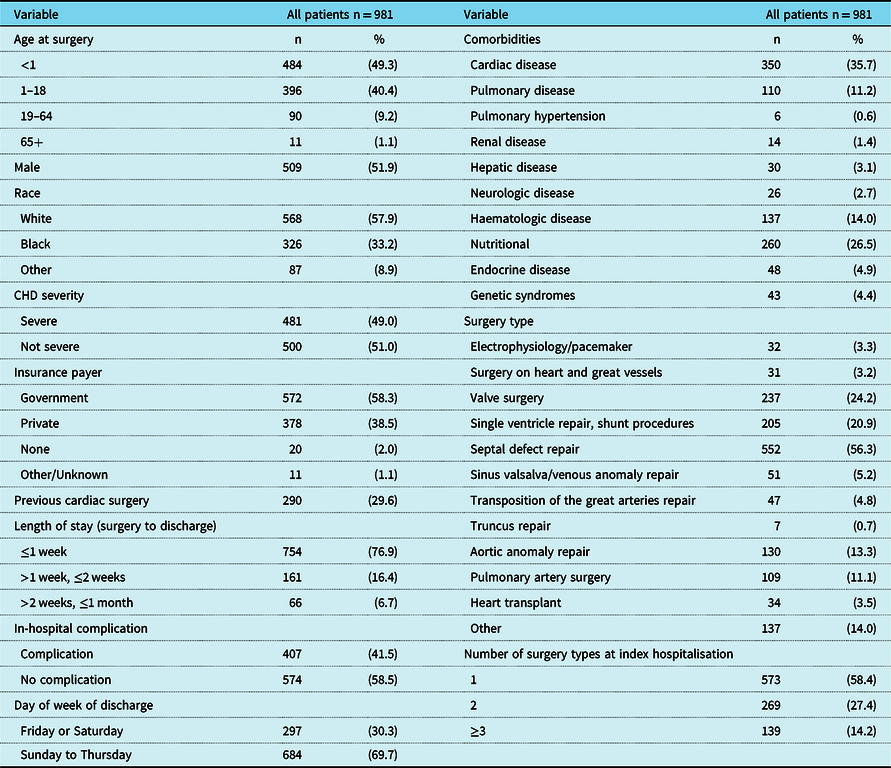
Baseline demographic and admission characteristics of the derivation cohort are summarised in Table 1. The median age at index hospitalisation was 12 months, with patients ranging in age from <1 month to 88 years. Patients under 1 year of age (n = 484) comprised 49.3% of the sample and adults (n = 101) made up 10.3% of the sample. Using a modified Marelli grouping, 49.0% of patients (n = 481) were classified as having severe CHD, and 29.6% (n = 290) were found to have undergone prior cardiac intervention. A majority of patients had a post-surgical length of stay of less than 1 week (n = 754, 76.9%), and 30.3% (n = 297) had a Friday or Saturday discharge. In-hospital complications were common, occurring among 41.5% (n = 407) of patients, and 41.6% of patients had more than one type of cardiac surgery during the index hospitalisation. The most common types of cardiac surgery performed on patients were septal defect repairs (n = 552, 56.3%), valve surgery (n = 237, 24.2%), and single ventricle repair and shunt placement (n = 205, 20.9%). The most common co-morbid conditions were cardiac (n = 350, 35.7%), nutritional (n = 260, 26.5%), haematologic (n = 137, 14.0%), and pulmonary (n = 110, 11.2%). Baseline characteristics of the validation cohort and comparison to the derivation cohort are summarised in Supplementary Table 1. The validation cohort notably differed from the derivation cohort in prevalence of pulmonary artery surgery (16.9% compared to 11.1% in derivation cohort, p = 0.01), cardiac co-morbidities (25.2% versus 35.7%, p < 0.001), and nutritional co-morbidities (34.6% versus 26.5%, p = 0.001).
Baseline characteristics of derivation cohort at index hospitalisation
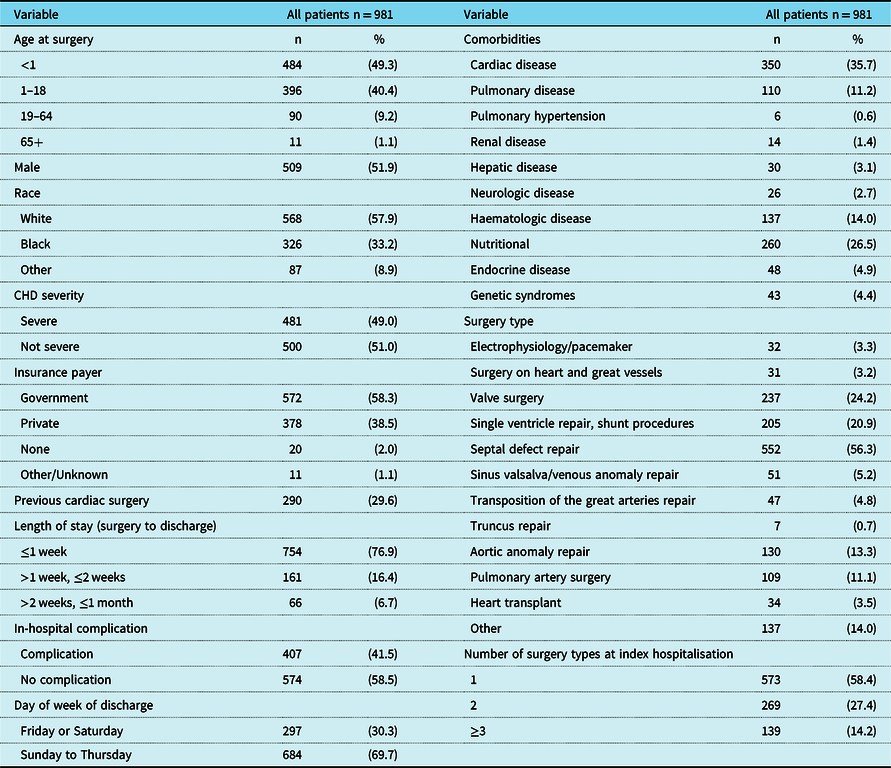
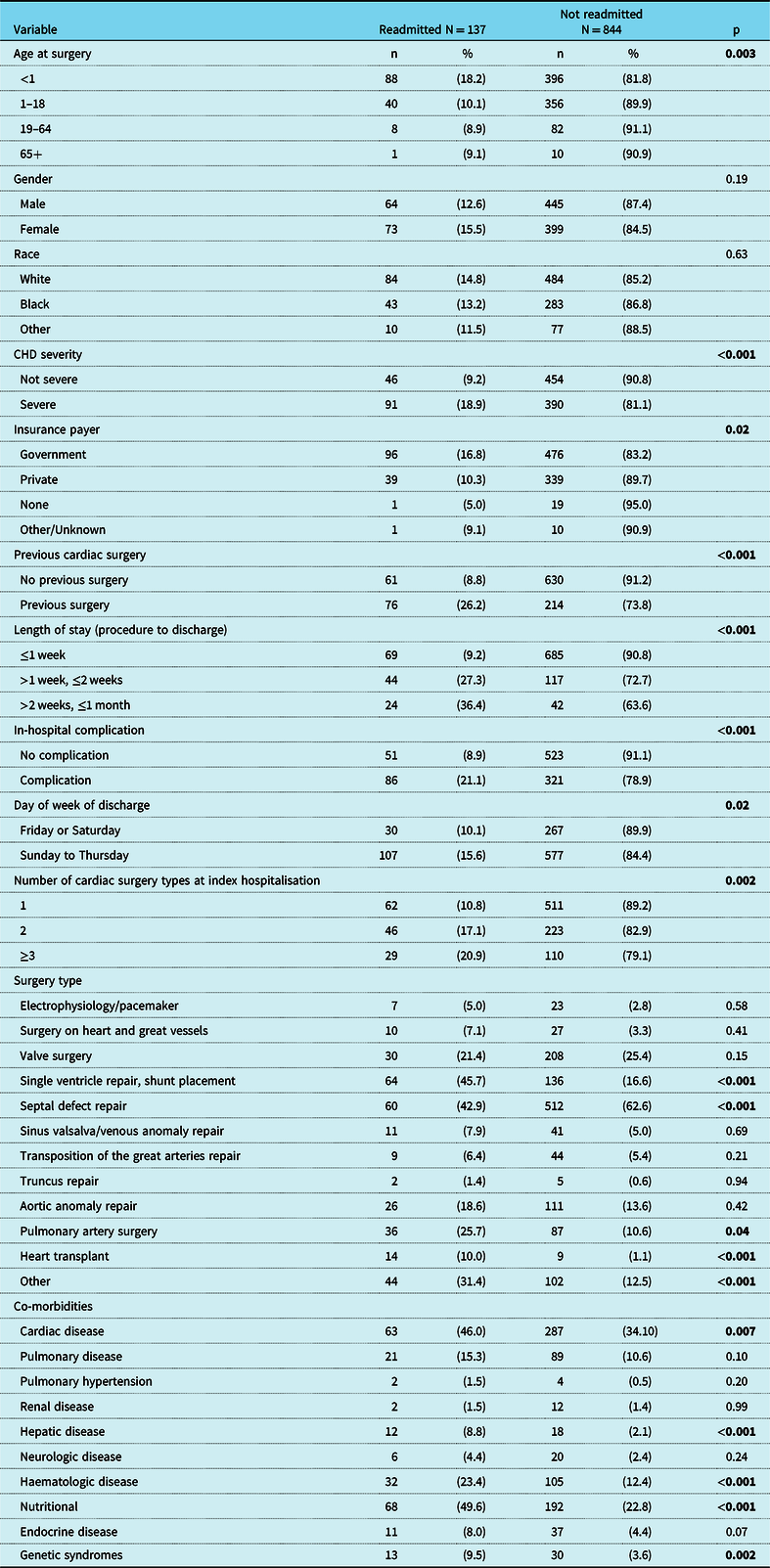
From 2011 to 2012, of 981 patients, a total of 137 were readmitted within 30 days of discharge from an index hospitalisation (14.0%). The median time to readmission was 8 days. A univariate analysis of predictors of 30-day readmission is summarised in Table 2. Patient gender and race were not significantly associated with hospital readmission. Insurance payer, severe CHD, history of previous cardiac surgery, longer hospital length of stay, in-hospital complication, weekend discharge, and increased number of cardiac surgeries were independently associated with rehospitalisation. Single ventricle repair and shunt placement, septal defect repair, pulmonary artery surgery, heart transplant, and other surgeries were associated with 30-day readmission, as were the presence of cardiac, hepatic, haematologic, nutrition, and genetic syndrome co-morbidities.
Univariate comparison of 30-day hospital readmission among derivation cohort

P values <0.05 have been bolded, as have variable labels.
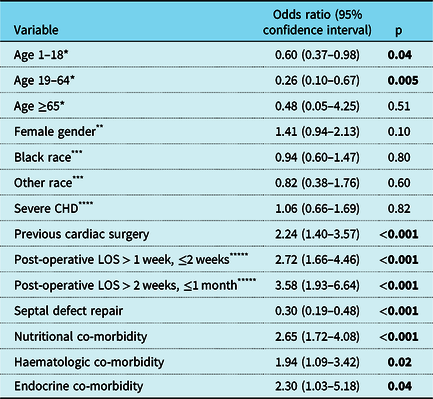
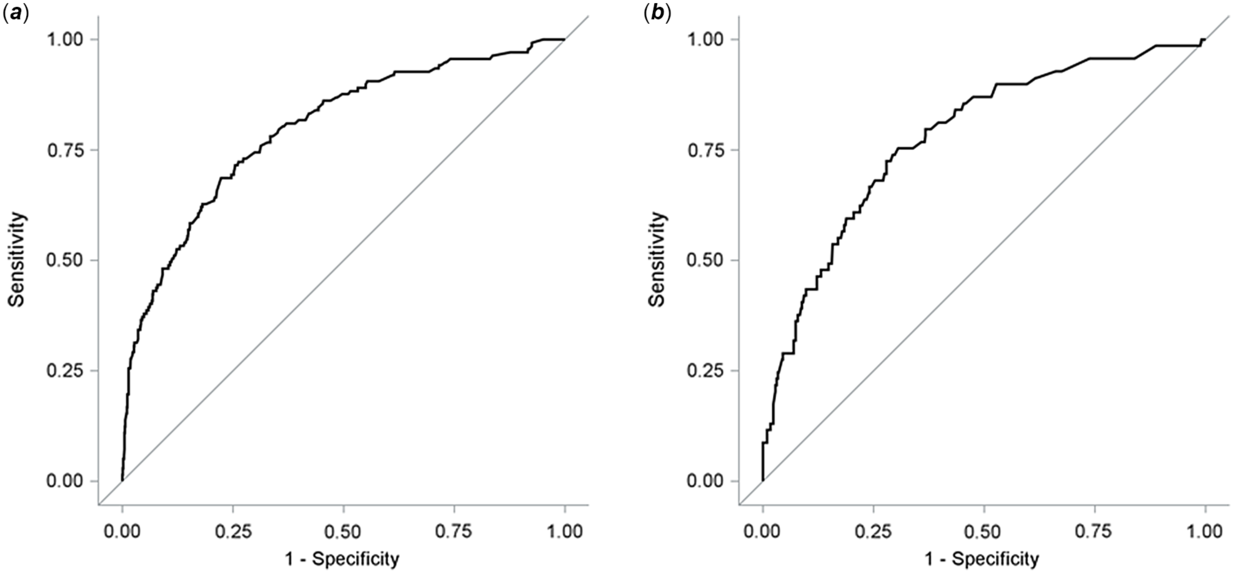
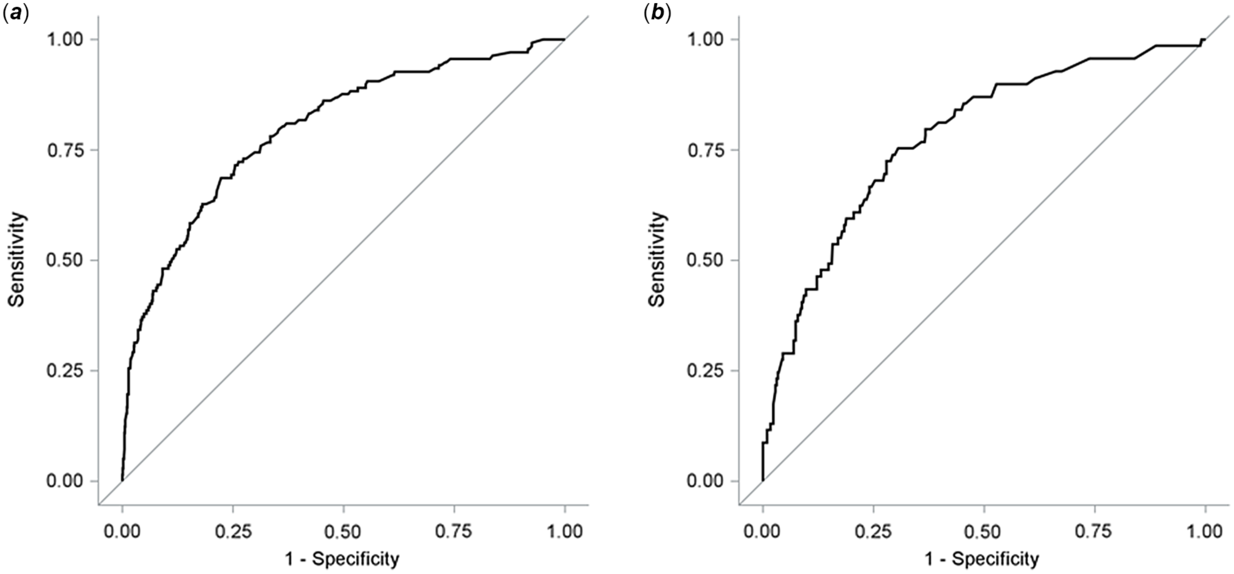
A multivariate model predicting 30-day hospital readmission was devised using predictors identified through univariate analyses and is summarised in Table 3. A previous history of cardiac surgery (odds ratio 2.24, 95% confidence interval 1.40–3.57, p < 0.001), hospital length of stay >1 week and ≤2 weeks (odds ratio 2.72, 95% confidence interval 1.66–4.46, p < 0.001), and hospital length of stay ≥2 weeks and ≤1 month (odds ratio 3.58, 95% confidence interval 1.93–6.64, p < 0.001) were associated with increased 30-day readmission, as were the presence of nutritional (odds ratio 2.65, 95% confidence interval 1.72–4.08, p < 0.001), haematologic (odds ratio 1.94, 95% confidence interval 1.09–3.42, p = 0.04), and endocrine (odds ratio 2.30, 95% confidence interval 1.03–5.18, p = 0.02) co-morbidities. Patient aged 1–18 years and 19–64 years had decreased odds of readmission relative to patients <1 year of age (odds ratio 0.60, 95% confidence interval 0.37–0.98, p = 0.04 and odds ratio 0.26, 95% confidence interval 0.10–0.67, p < 0.01, respectively), and septal defect repairs were also associated with reduced odds of admission (odds ratio 0.30, 95% confidence interval 0.19–0.48, p < 0.001). No surgical procedure was significantly associated with increased odds of 30-day readmission. Model performance was evaluated using a receiver operating curve to demonstrate the model relationship between model sensitivity and false negatives, yielding a c statistic of 0.80 (95% confidence interval 0.75–0.84, p < 0.001), as demonstrated in Figure 1. Evaluation of model goodness of fit yielded a Hosmer–Lemeshow statistic of 0.73. The derivation model c statistic was subsequently validated with the use of the validation cohort, again yielding similar performance characteristics (c statistic 0.78, 95% confidence interval 0.72–0.84, p < 0.001).
Multivariate logistic regression model of 30-day readmission predictors controlling for patient gender, race, and CHD severity
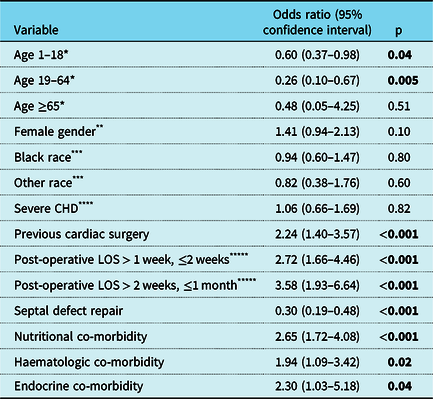
LOS=length of stay
* Age 0–1
** Male gender
*** White race
**** Non-severe CHD
***** LOS<1 week
P values <0.05 have been bolded, as have variable labels.
Receiver operator characteristic curve predicting 30-day hospital readmission for both (a) derivation cohort (AUC = 0.80, 95% confidence interval 0.75–0.84) and (b) validation cohort (AUC = 0.78, 95% confidence interval 0.72–0.84). AUC=area under curve.
Discussion
Our study demonstrates that 30-day rehospitalisation is associated with a complex overlay of patient demographic characteristics, admission characteristics, surgical complexity, and post-surgical course. An unplanned 30-day readmission rate of 14.0% was revealed following congenital heart surgery, which is similar to the experiences of children and adult patients at other centresReference Kim, He, MacGillivray and Benavidez7,Reference Kogon, Oster and Wallace11,Reference Mackie, Gauvreau, Newburger, Mayer and Erickson19–Reference Cotts, Khairy and Opotowsky22 . A history of previous cardiac surgery, longer post-operative hospital length of stay, as well as nutritional, endocrine, and haematologic co-morbidities were associated with increased odds of 30-day readmission, while patient age 1–18 years, patient age 19–64 years, and septal defect repairs were associated with decreased odds of readmission.
Gender, race, ethnicity, and socio-economic status have been previously associated with hospital readmission and mortality in CHD patients. Kim et al identified female gender, black race, low median annual income, and insurance payer as being associated with 30-day readmissions following congenital heart surgery in a multi-institutional study of adult CHD patientsReference Kim, He, MacGillivray and Benavidez7. Similarly, Hispanic ethnicity and insurance payer have been identified as risk factors of 30-day readmission in a paediatric CHD patient populationReference Kogon, Oster and Wallace11,Reference Smith, Doyle, Mettler, Bichell and Gay21 . Our study failed to show a significant association between either insurance payer or race and rehospitalisation. Interestingly, results also failed to show a significant association between patient gender and rehospitalisation, although previously female gender has been correlated with worse surgical and post-operative outcomes despite being associated with milder forms of CHDReference Kim, He, MacGillivray and Benavidez7,Reference Seifert, Howard, Silber and Jobes23,Reference Marelli, Gauvreau, Landzberg and Jenkins24 . A previous study of risk factors for readmission after paediatric cardiothoracic surgery that was also based in Atlanta found that Hispanic ethnicity was associated with increased risk of readmissionReference Kogon, Jain, Oster, Woodall, Kanter and Kirshbom20. While the current study had access to self-reported data on patient race, data on ethnicity were missing from several data sources.
Children aged 1–18 years and adult patients aged 19–64 years were at lower risk of 30-day readmission than neonates, which may reflect more compensated congenital disease among this group. Although the post-surgical readmission rates among adults aged ≥65 (9.1%) years were similar to children (10.1%), a significant reduction in risk of hospital readmission in the elderly relative to neonates was not demonstrated, likely due to smaller sample sizes limiting statistical power. In one Canadian population-based retrospective study of 30-day hospital readmission among CHD patients after hospitalisation for any reason, readmission rates increased with increasing ageReference Islam, Yasui, Kaul and Mackie8. This effect was attributed to a greater burden of cardiac complications, co-morbid conditions, and greater need for re-intervention and revision of previous surgical procedures in adult CHD patients. One limitation of the study is inability to further differentiate readmission risk among patients <1 year old, as it is possible that the increased odds of readmission in this age group may be driven by younger neonates than by infants.
A history of previous cardiac surgery and increased post-operative length of stay were also associated with increased risk of 30-day readmission in multivariate analysis, potentially reflecting poorer overall health status when there is a need for surgical re-intervention, or active decompensation requiring a more complex intervention. Interestingly, in multivariate analysis, the severity of the underlying CHD lesion and the presence of post-operative in-hospital complications were not significantly associated with rehospitalisation. Our definition of severe CHD reflects patients with high probability for cyanosis or surgical intervention early in life, and this definition may not accurately reflect disease severity following surgical intervention later in lifeReference Marelli, Mackie, Ionescu-Ittu, Rahme and Pilote18.
The day of the week of hospital discharge has been increasingly examined as a predictor of readmission among CHD patients, with the thought that patients discharged on a Friday or Saturday have limited access to outpatient services within the first 24–48 hours after dischargeReference Mackie, Ionescu-Ittu, Pilote, Rahme and Marelli6,Reference Islam, Yasui, Kaul and Mackie8,Reference Smith, Doyle, Mettler, Bichell and Gay21 . These studies have yielded conflicting results. In a study by Mackie et al of hospital readmission among Canadian children with CHD, Friday or Saturday discharge was identified as an independent predictor of readmissionReference Mackie, Ionescu-Ittu, Pilote, Rahme and Marelli6. Other population-based studies in Canada failed to identify weekend discharge as a predictor of readmission among CHD patients of all agesReference Islam, Yasui, Kaul and Mackie8. The current study failed to demonstrate that day of week of hospital discharge is associated with 30-day rehospitalisation in multivariate analysis. However, it is possible that providers are more hesitant to facilitate discharge for more complex post-surgical patients on the weekend, and that weekend discharges favour lower acuity patients. This theory is supported by Smith, et al, who found that post-surgical children with CHD that consumed greater inpatient resources were less likely to be discharged over the weekendReference Smith, Doyle, Mettler, Bichell and Gay21.
Haematologic and nutritional co-morbidities were also associated with increased odds of 30-day readmission. Anaemia is common in patients with complex CHD and has been described as an independent predictor of length of stay in adults with CHDReference Cedars, Benjamin, Burns, Novak and Amin25. Poor pre-operative nutritional status has also been extensively described as a predictor of clinical outcomes in children with CHD, including increased ICU length of stay, prolonged mechanical ventilation, and increased mortalityReference Ross, Latham and Joffe26. Chronic renal insufficiency has previously been described as a risk factor for readmission following congenital heart surgery in adultsReference Kim, He, MacGillivray and Benavidez7, while other chronic co-morbid conditions including hypertension, congestive heart failure, chronic lung disease, and liver disease were not significantly associated with readmission. While results failed to demonstrate a significant association between renal disease and 30-day readmission, it is possible that these data lacked sufficient statistical power to adequately examine individual chronic co-morbidities taken in isolation, especially given the relatively young age of our study population.
None of the examined categories of congenital heart surgery were associated with increased odds of 30-day rehospitalisation. Certain types of congenital heart surgery, including single ventricle repair and heart transplant, may reflect more complex underlying congenital heart lesions, poorer overall health status, and in the case of heart transplant concern for additional post-surgical complications including organ rejection and infection in the setting of compromised immunity. However, it is possible that this study lacked sufficient statistical power to identify significant differences in odds of readmission in a multivariate model. Septal defect repairs, including simple atrial and ventricular septal defect repairs and closure of a patent foramen ovale, were associated with decreased odds of rehospitalisation. Although patent foramen ovale is considered a normal physiologic variant rather than a congenital heart lesion, ICD-9-CM codes were unable to differentiate patent foramen ovale from isolated atrial septal defect, and this remains a potentially significant limitation in the interpretation of these findingsReference Rodriguez, Ephrem, Gerardin, Raskind-Hood, Hogue and Book27.
The findings of this study are subject to several limitations. Patient CHD diagnoses, surgeries, and outcomes were categorised using diagnostic and procedural codes from a combined clinical and administrative dataset, resulting in limited sensitivity and specificity when defining cases and associated outcomes as well as potential inaccuracies in coding. The specificity of stratifying congenital heart surgery complexity by Current Procedural Terminology code was limited, as Current Procedural Terminology codes are organised for medical billing purposes and do not capture the complexity of congenital heart surgery procedures. The Risk Adjustment for Congenital Heart Surgery-1 method is a validated tool that has been used to adjust for congenital surgical case complexity in children and has previously been applied to adult patients. Although the Risk Adjustment for Congenital Heart Surgery-1 score has been demonstrated to predict mortality, major adverse events, and prolonged length of stay in adults undergoing congenital heart surgeryReference Kogon and Oster28, it has not been validated in this population. Similarly, the STS-European Association for Cardiothoracic Surgery score has been validated as a method of discriminating surgical complexity in CHD repairReference O’Brien, Clarke and Jacobs29. These scoring systems may provide additional robust prognostic data, although for the purposes of predicting outcomes, this study demonstrates that Current Procedural Terminology codes may offer some prognostic value in predicting hospital readmission. Additionally, this study was designed to capture readmission among patients at multiple facilities within Georgia; patients who underwent congenital heart surgery at a referral centre and were admitted to a facility not captured may potentially underestimate the true incidence of readmission. Similarly, it is important to note that patients who were excluded from analysis due to inability to be captured in our data repository may represent an unmeasured source of selection bias.
Hospital readmission is common following cardiac surgery among CHD patients across the entire lifespan and is more likely to occur in specific populations of patients. Although we identify several preoperative, perioperative, and post-operative risk factors associated with unplanned rehospitalisation, it is clear that readmission is dependent on a complex array of factors. Additional factors not considered in this study likely contribute to improving our ability to accurately identify those at risk of rehospitalisation, although the use of administrative databases limits the ability to include institutional- and systems-level factors. These include variations in provider practice, outpatient resource availability, and institutional policies that may contribute to potential readmission following congenital heart surgery. In addition, recent work has also sought to identify clinical and biomarker predictors of readmission following paediatric congenital cardiac surgeryReference Brown, Stabler and Parker30–Reference Parker, Everett and Stabler34, although work remains to identify the extent to which these findings apply to adults who undergo congenital cardiac surgery.
Conclusion
Rehospitalisation is common in both children and adult CHD patients following congenital heart surgery. A history of previous cardiac surgery, increased post-operative length of stay, anaemia, endocrine co-morbidity, and nutritional co-morbidity are described as independent predictors that may serve to identify patients at increased risk of unplanned hospital readmission. Septal defect repair is associated with decreased risk of rehospitalisation. Children and adult patients had lower odds of readmission relative to neonates. This study demonstrates the feasibility of linking a national subspecialty registry to a combined clinical and administrative data repository allowing for longitudinal follow-up of outcomes of interest, potentially paving the way for using surgical registries to track longer term morbidities that impact follow-up and access to care. This information may serve to guide efforts to prevent readmission, as well as inform resource allocation in the transition of care to the outpatient setting.
Supplementary Material
To view supplementary material for this article, please visit https://doi.org/10.1017/S1047951120002012
Acknowledgements
I.E.: Cleaned and compiled data sources, conducted statistical analyses, analysed data, and drafted the initial manuscript. T.H.: Contributed to cleaning, compilation, and linkage of data sources. C.R.-H.: Assisted with statistical analyses and manuscript preparation. C.H., F.H.R., and W.M.B.: Supervised this work and assisted with manuscript preparation. All authors discussed the results and contributed to the final manuscript.
Financial Support
This work was supported by the Centers for Disease Control and Prevention, Grant/Award Number: CDC-RFA-DD12-1207.
Conflicts of Interest
None.