1. Introduction
Safety in shipping is affected by a multitude of factors, among them the non-technical skills of the crew (Hetherington et al., Reference Hetherington, Flin and Mearns2006). These skills encompass cognitive and interpersonal competencies that are necessary for safe navigation and ship operation by the crew. Examples are team communication, decision making, situation awareness, leadership or managerial skills to effectively use all available technical and personal resources during routine operations and in emergencies (Wahl and Kongsvik, Reference Wahl and Kongsvik2018). Training to improve such non-technical skills, called crew resource management training (CRM), was first developed in commercial aviation in response to a series of fatal flight accidents in the 1970s (Helmreich et al., Reference Helmreich, Merritt and Wilhelm1999). In seafaring, resource management, leadership, teamwork and managerial skills were incorporated into the Standards of Training, Certification and Watchkeeping (STCW) of the International Maritime Organization (IMO) with the 2010 Manila Amendments. This has led to a marked increase in research and development of maritime resource management training. Such training is required for the nautical department, called bridge resource management training (BRM), as well as for the engineering department, for which the term engine room resource management training (ERM) was established. One theme in the maritime resource management literature is the demand for practice (e.g. Barić et al., Reference Barić, Čulin and Bielić2018; Sanjeev Vakil, Reference Sanjeev Vakil2019; Cavaleiro et al., Reference Cavaleiro, Gomes and Lopes2020). Although the STCW do not prescribe a certain training method, the common line of argument is that trainees must experience and perform teamwork and leadership behaviours in order to develop the required skills. Accordingly, studies on the effectiveness of classroom-based resource management training so far show hardly any transfer to applications in the simulator (Saeed et al., Reference Saeed, Wall, Roberts, Riahi and Bury2017) or in the real world (Röttger et al., Reference Röttger, Vetter and Kowalski2016). While the use of simulators for resource management training seems to be more promising, designing and implementing such training may be difficult for two reasons. Firstly, simulator time is a costly and limited resource, which is not easily available. Secondly, there is still too little evidence on effective simulator-based resource management training that could guide training design and implementation and justify the more expensive use of simulators. The review of Havinga et al. (Reference Havinga, De Boer, Rae and Dekker2017) gives a good impression of the state of affairs in research on maritime resource management training up to 2015. The authors found eight studies reporting formal outcome measures of maritime resource management training, of which six employed simulators. Because of methodological shortcomings, not one of these studies allowed for a valid conclusion on the effectiveness of the training. Most severe methodological problems were lack of a control group or of a control condition, missing statistical analysis to determine whether observed effects exceed measurement error, or small sample sizes insufficient to detect systematic training effects.
From 2016 on, two further publications showed that simulation-based maritime resource management training is positively perceived and evaluated by training participants (Hong and Kim, Reference Hong and Kim2016; Espevik et al., Reference Espevik, Saus and Olsen2017). Again, actual training effects in terms of improvements of knowledge, behaviour or performance were not in the scope of these studies.
The first and, up to now, only experimental study of such training effects was published by Tvedt and colleagues in 2018. In this study, BRM-related knowledge and attitudes as well as behaviour and performance in simulator scenarios were assessed in 94 bridge officers before and after their participation in BRM training. The training started with two days of classroom lectures, followed by two days of simulator exercises. Only one simulator exercise served for actual training, i.e., giving feedback on teamwork and situation awareness. The remaining simulator time had to be used for familiarisation, pre-test and post-test measurements. Tvedt et al. (Reference Tvedt, Espevik, Oltedal, Fjeld and Mjelde2018) found that the BRM course was positively evaluated by training participants, and that BRM-related knowledge as well as some BRM-related attitudes had significantly improved. Observer ratings of teamwork, situation awareness and mission success in the simulator, however, did not improve over the course of the BRM training. The missing training effects on behaviour and performance may reflect the fact that with only one feedback session, a rather small part of the overall training time was devoted to directly addressing the actions and procedures of the bridge team. Another explanation could be that the training participants formed synthetic teams, i.e., they did not work together as a team on a regular basis. Thus establishing a common way of working together may have interfered with adopting the teamwork behaviours taught in the BRM training.
2. Research question
The purpose of this study was to determine whether including a BRM training unit into the nautical team training of the German Navy improves BRM-related attitudes, behaviour and performance of the training participants. The standard nautical team training is a nautical simulator training for bridge teams with a focus on ship handling and navigation. Bridge teams book such training, for example, to prepare for an upcoming voyage or to train for manoeuvres in advance of a real-life exercise. The purpose of including a BRM unit was (1) to additionally address and increase resource management skills during this training, while (2) providing a BRM training opportunity to operational bridge teams that have a tight schedule and could not accommodate the regular three- or four-day BRM training.
In doing so, this study goes beyond the study of Tvedt et al. (Reference Tvedt, Espevik, Oltedal, Fjeld and Mjelde2018) in three ways. First, natural bridge teams are studied, i.e., teams of seafarers who work together on the bridge of their ship on a daily basis. Thus, it is assumed that the basic processes of working together were clear, so participants were better able to focus on implementing the resource management skills introduced and debriefed by the instructors. Second, in order to capture training effects on behaviour reliably, video recordings of simulator scenarios were analysed with a detailed and exhaustive coding manual and all observable behaviours were counted. Third, a control group design was employed, thus it was possible to ascertain the effect of BRM-enriched simulator training compared with conventional nautical simulator training of bridge teams.
3. Methods
3.1 Participants
Thirty bridge teams from 30 different vessels of the German Navy participated in the study. Due to malfunctions of audio and video recordings, data from six teams could not be used for analysis. This affected five data sets in the BRM group and one data set in the control group. The remaining sample consists of 24 bridge teams with 126 sailors of the German Navy. Training participants formed natural teams, i.e., they worked together on the bridge of their respective ships. Fourteen teams (72 sailors, 22% females) served as control group. Relative frequencies of military ranks in this group are: 54% officers, 28% petty officers and 18% enlisted ranks. Ten teams (54 sailors) were in the experimental group and received the BRM unit. This group consisted of 11% females, 54% officers, 35% petty officers and 11% enlisted ranks. No other personal or demographic information was collected to ensure the anonymity of participants in the data analyses. BRM group and control group were opportunity samples, i.e., the bridge teams visited the simulator facility for nautical training and volunteered to participate in the data collection and the BRM training, respectively. Bridge teams participating in the study had not received simulator-based BRM training before. Each team consisted of at least five sailors: commander, officer of the watch, helmsman, radar operator and ECDIS (Electronic Chart Display and Information System) operator. Occasionally, a sixth sailor accompanied the teams. His or her task was to support either the radar or the ECDIS operation, or to operate the radio set.
3.2 BRM training unit
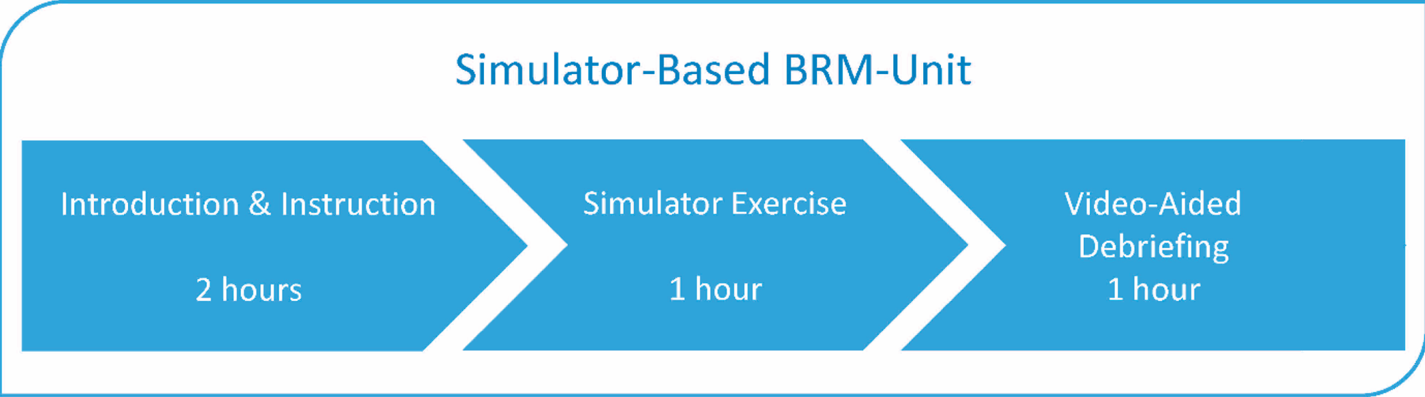
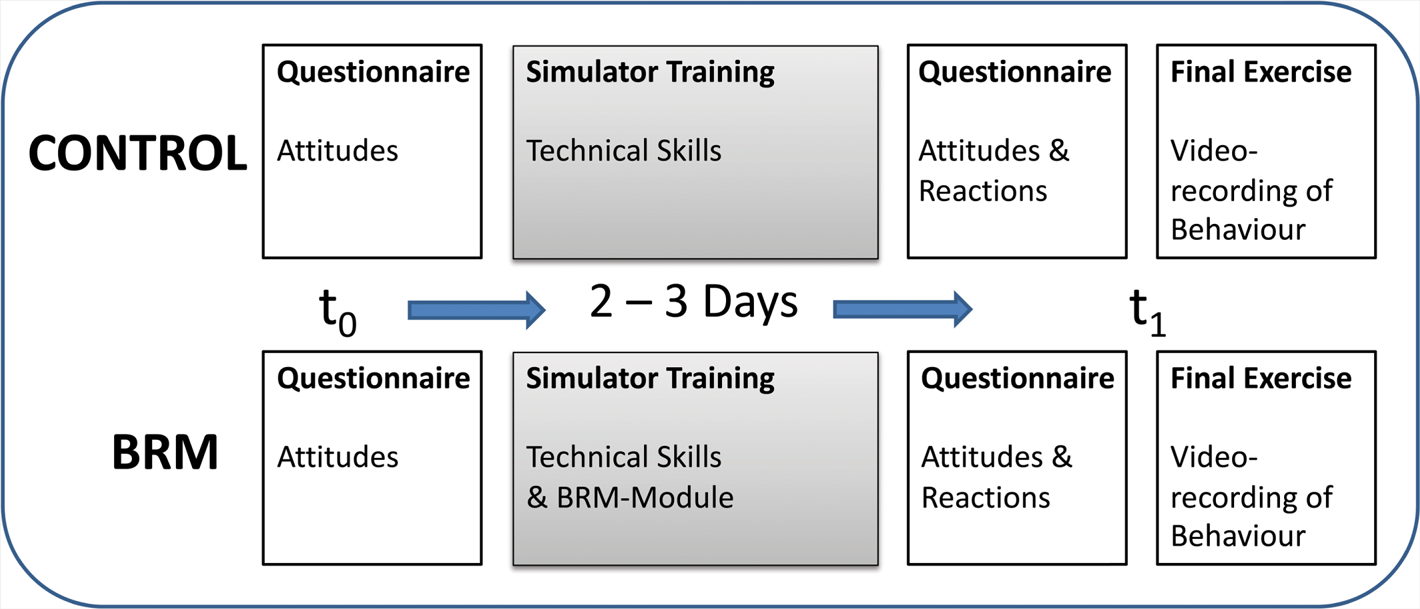
The structure of the training unit as administered to the BRM group is depicted in Figure 1. Training commenced with an introductory lecture on the reasons for conducting BRM training and on principles of effective non-technical skills. More specifically, leadership and management, cooperation in a team, building and maintaining situation awareness, decision making and effective communication were addressed. These topics were illustrated by examples of successful and unsuccessful teamwork or leadership behaviours in navigation.
Structure of the BRM training unit

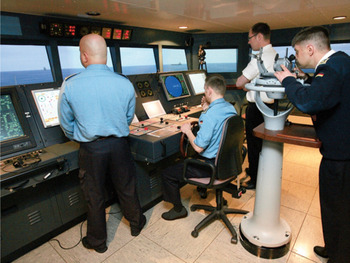
The lecture was followed by a one-hour simulator exercise (Figure 2). The task of the bridge teams was to apply the non-technical skills while navigating into Eckernförde Bay and mooring in the naval harbour. The demand for effective teamwork and leadership was increased by dense traffic, rough weather with impaired visibility, and areas with restricted room to manoeuvre. After the exercise, the bridge team received a video-aided debriefing regarding the successful application of non-technical skills and the possibilities for further improvements. In order to achieve detailed and complete feedback, three instructors were involved in observing and debriefing the five to six sailors of each bridge team.
Bridge team during simulator exercise. One of the cameras used for video-aided debriefing and data collection can be seen in the forward corner on starboard

3.3 Measures
Differences between control group and BRM group were assessed on four levels of training evaluation as proposed by Kirkpatrick (Reference Kirkpatrick1979). These are (1) the evaluation of the training by the participants, called reactions, (2) learning effects in terms of cognitive changes as, for example, in knowledge or attitudes towards the training contents, (3) behaviour of training participants while performing the trained tasks, and (4) results of performing the trained behaviours, for example, in terms of quality, quantity, efficiency or safety. Although Kirkpatrick's original assumption, that lower level training effects are the best predictor and a prerequisite for effects on the next higher level, did not hold empirically (Alliger et al., Reference Alliger, Tannenbaum, Bennett, Traver and Shotland1997), the four levels are a useful systematic to guide the design of a comprehensive training evaluation. The individual measures are described in the following paragraphs.
3.3.1 Reactions
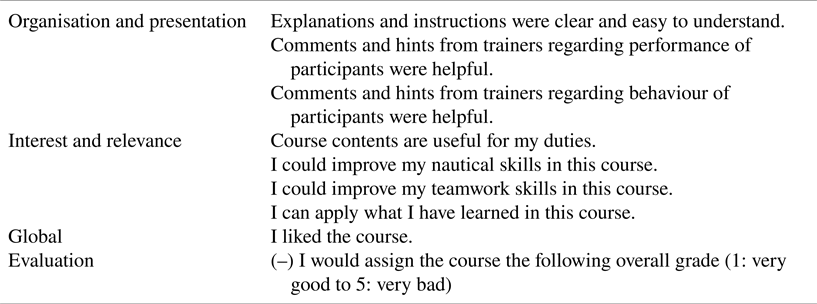
Participants’ reactions were assessed with a nine-item questionnaire (see Table 1) based on the results of Staufenbiel (Reference Staufenbiel2000) and Holgado Telo et al. (Reference Holgado Tello, Chacón Moscoso, Barbero García and Sanduvete Chaves2006). They found that course evaluations as given by learners usually refer to three different aspects: (a) organisation and presentation of course contents, (b) interest of the contents and their relevance for the learners’ work activities, and (c) a more global, affective evaluation. The scale ranged from one to five with values below three indicating rather negative evaluations and values above three rather positive evaluations.
Scales and items of the ‘Reactions’ questionnaire

Note: (–) indicates negative polarity.
3.3.2 Learning
Cognitive effects were assessed in terms of attitude changes. In the early days of CRM in aviation, studies had shown that many pilots held dysfunctional attitudes about, for example, how a cockpit team should communicate, who has to take responsibility for the flight's safety, or how stress and fatigue affect pilots’ capabilities (e.g. Foushee, Reference Foushee1984; Helmreich, Reference Helmreich1984). Using the standardised Cockpit Management Attitudes Questionnaire (CMAQ), Helmreich et al. (Reference Helmreich, Foushee, Benson and Russini1986) could correctly classify the performance ratings of 96% of the pilots in their study as being below or above average. Thus, attitude changes are a viable training aim in their own regard, and resource management attitudes were assessed with the Ship Management Attitudes Questionnaire – German Navy (SMAQ-GN, Röttger et al., Reference Röttger, Vetter and Kowalski2013), an adaptation of the CMAQ for use in naval seafaring. The questionnaire consists of three scales that cover attitudes towards communication and coordination, command responsibility and recognition of stress effects on a scale ranging from one to five. Higher values indicate more effective attitudes for BRM.
3.3.3 Behaviour
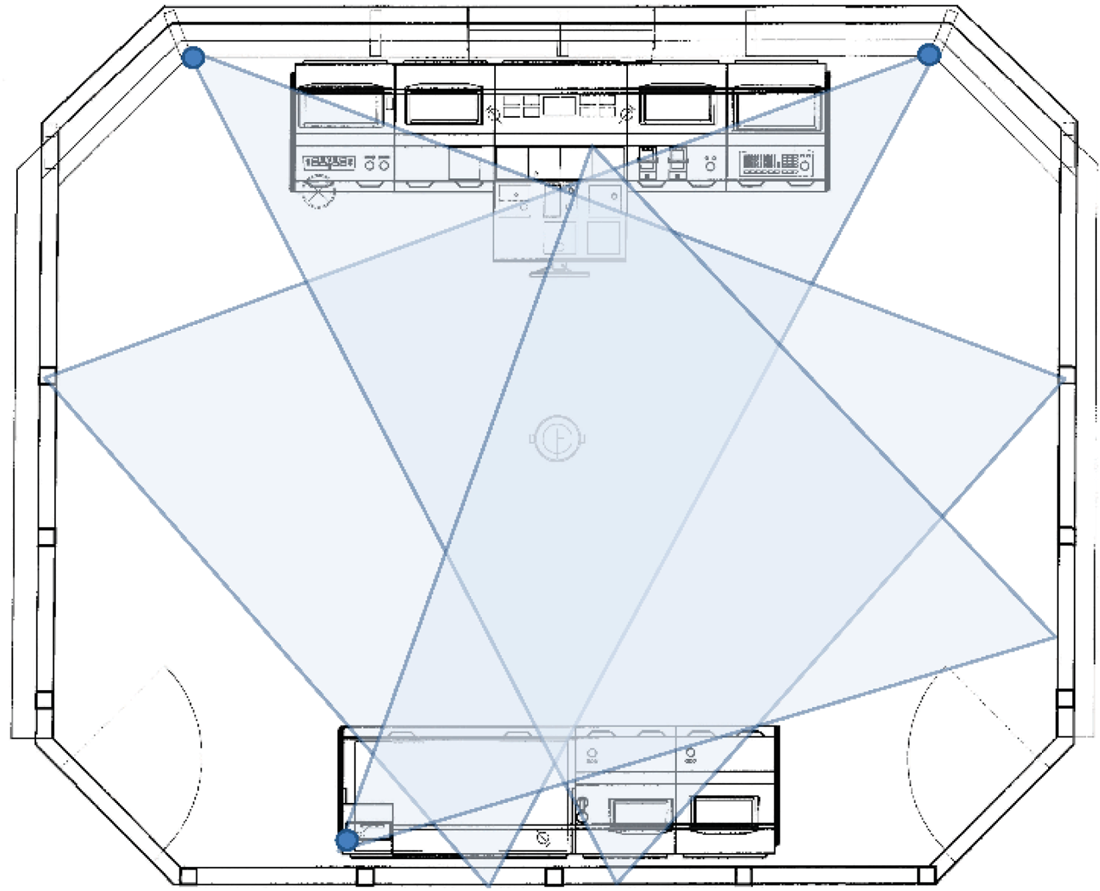
Behaviour of study participants was recorded with three video cameras (see Figure 3) for subsequent offline-review with Biobserve Spectator, a software solution for observational data acquisition and analysis.
Layout of the ship's bridge simulator with camera positions (dots) and areas covered by the cameras (triangles)

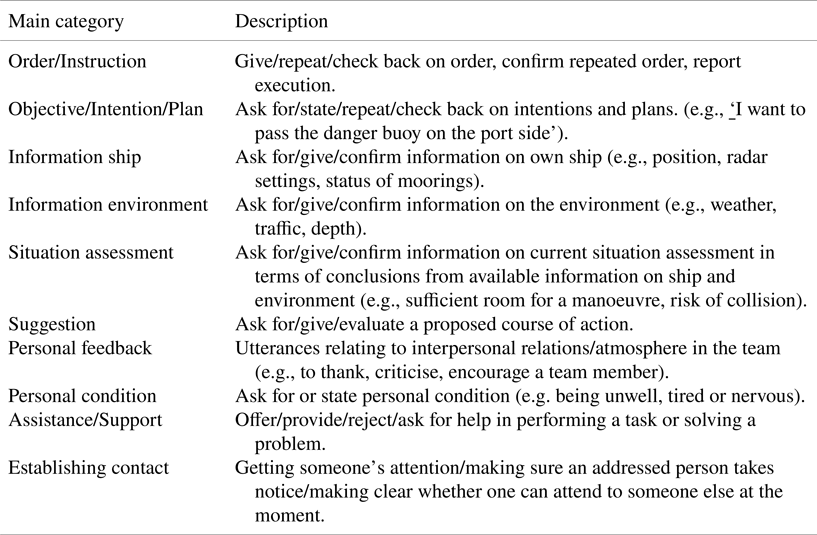
To minimise bias in the video analyses, two measures were taken. First, the analyst was blind towards the experimental condition (Hróbjartsson et al., Reference Hróbjartsson, Thomsen, Emanuelsson, Tendal, Hilden, Boutron and Brorson2013), i.e., they did not know whether the bridge teams belonged to the control group or to the BRM group. Second, analysis was based on registering observable behaviours instead of judging the participants’ performance (Kent and Foster, Reference Kent, Foster, Ciminero, Calhoun and Adams1977, 283–284; Hartmann and Wood, Reference Hartmann, Wood, Bellack, Hersen and Kazdin1990, 118–119). To this end, the Exhaustive Bridge Team Interaction Coding Scheme (EBTICS, Röttger et al., Reference Röttger, Krey, Vetter, Stein and Kowalski2015) was developed, a coding manual designed to be exhaustive for any act of communication of a navigating bridge team. Table 2 gives an overview of the main categories of EBTICS. The complete coding scheme can be obtained from the corresponding author or downloaded from researchgate.net.
Overview of the EBTICS categories for analysis of participants’ teamwork behaviour

The main categories of EBTICS reflect common CRM/BRM principles, as described, for example, in the NOTECHS taxonomy (van Avermaete and Kruijsen, Reference Van Avermaete and Kruijsen1998; Flin et al., Reference Flin, Martin, Goeters, Hoermann, Amalberti, Valot and Nijhuis2003). For building and maintaining a shared situation awareness, the relevant behaviours are: communicating information on the own ship and the environment as well as discussing situation assessments. Techniques of effective leadership as defined in NOTECHS are: statement of intentions and plans, creating an open team atmosphere by giving positive personal feedback and asking for or considering suggestions of the crew. The category suggestions also pertains to decision making and speaking-up behaviour, the latter being specifically targeted by some BRM courses (Espevik et al., Reference Espevik, Saus and Olsen2017; Barić et al., Reference Barić, Čulin and Bielić2018). Cooperation and mutual support, at the very core of teamwork, are mirrored in the EBTICS categories of giving personal feedback, providing assistance or support, and communicating about personal conditions of teammates. Finally, techniques to ensure proper communication, which are not contained in NOTECHS, were included. For example repeating/confirming orders and reports or making sure that someone is actually attending to a message.
In contrast to the assessment systems and rating scales for BRM training that have been published so far (e.g., Saeed et al., Reference Saeed, Wall, Roberts, Riahi and Bury2017; Bolstad, Reference Bolstad2018; Tvedt et al., Reference Tvedt, Espevik, Oltedal, Fjeld and Mjelde2018; Da Conceição et al., Reference Da Conceição, Mendes, Teodoro and Dahlman2019), EBTICS was developed for research purposes with an emphasis on behaviour definitions that refer to directly observable targets, are easy to understand and require as little interpretation as possible (Hartmann and Wood, Reference Hartmann, Wood, Bellack, Hersen and Kazdin1990, 109–110). This fosters objectivity, but makes the coding of observations too fine-grained and time-consuming for application in a training setting. Data from a second analyst who independently coded video recordings of 16 participants showed an inter-rater-reliability of .74 (Röttger et al., Reference Röttger, Krey, Vetter, Stein and Kowalski2015).
Each act of verbal and non-verbal communication of the commander, officer of the watch, helmsman, radar operator and ECDIS operator was classified with EBTICS and counted. As the absolute number of observed behaviours varied with the duration of the simulator run, relative frequencies (utterances per minute) entered the statistical analysis.
3.3.4 Results
To evaluate the impact of the training in terms of performance outcome, each bridge team was confronted in the test scenario with a vessel that was on collision course but difficult to detect. The result of this critical situation could be (1) timely detection of the vessel without necessity of a last-minute manoeuvre; (2) avoiding collision with last-minute manoeuvre (which can be considered a near miss); (3) collision despite last-minute manoeuvre; (4) collision without attempting last-minute manoeuvre. Performance outcome was assessed for each bridge team, and frequencies of collisions and last-minute manoeuvres were compared between BRM group and control group.
3.4 Procedure
Figure 4 gives an overview of the data acquisition procedure for the BRM group and control group. The study was conducted in the ship's bridge simulator of the German Navy as part of the standard nautical simulator training of bridge teams. This training lasts between two and three days depending on the training needs and the availability of the bridge team in question. At the start of the first day of simulator training (t1), all participants signed informed consent and the questionnaire on ship management attitudes was administered. Then, the control group went through the traditional simulator training with an emphasis on technical and navigational skills. The BRM group received the BRM module during their simulator training. The time needed for the BRM module was compensated for by shortening the training time for nautical simulator exercises. At the end of the last day of their simulator training (t2), all participants filled in the reactions questionnaire and the attitudes questionnaire and went through the test scenario, which was video recorded for later analysis of behaviour and performance.
Overview of study procedure in experimental group (BRM) and control group

3.5 Statistical analysis
Analyses were conducted with the software R version 3.4.2 (R Core Team, 2017). Means (M) and standard deviations (SD) of measurements are reported in the text and tables. In figures, standard error is used as a measure of dispersion. Differences in attitudes were tested with t-tests for dependent samples (comparison of pre- and post-training values within each group) and for independent samples (comparison between control group and BRM group at the end of the training). Scores of the reaction questionnaire and the behaviour frequencies did not meet the distribution requirements for t-tests, so the Wilcoxon rank-sum test was used instead to analyse differences between the control group and the BRM group. Pearson's χ2 test was performed to compare the frequencies of all performance outcomes. Statistical significance of a difference in collision frequencies only could be determined with the more sensitive Lancaster's mid-P value (Lancaster, Reference Lancaster1961; Hwang and Yang, Reference Hwang and Yang2001). Statistical tests of differences in participants’ reactions was based on the assumption that simulator training including a BRM unit could be evaluated as better than, as well as worse than, traditional simulator training. Thus, two-sided significance tests were conducted. Regarding ship management attitudes, behaviour and performance, it was assumed that the training would have either a positive effect or no effect at all, because negative effects on these outcome variables have not been reported in the CRM literature (e.g. Helmreich and Wilhelm, Reference Helmreich and Wilhelm1991; Salas et al., Reference Salas, Burke, Bowers and Wilson2001; O'Connor et al., Reference O'Connor, Campbell, Newon, Melton, Salas and Wilson2008; Marquardt et al., Reference Marquardt, Robelski and Hoeger2010). Accordingly, significance tests for these training effects were one-sided.
4. Results
4.1 Training evaluation
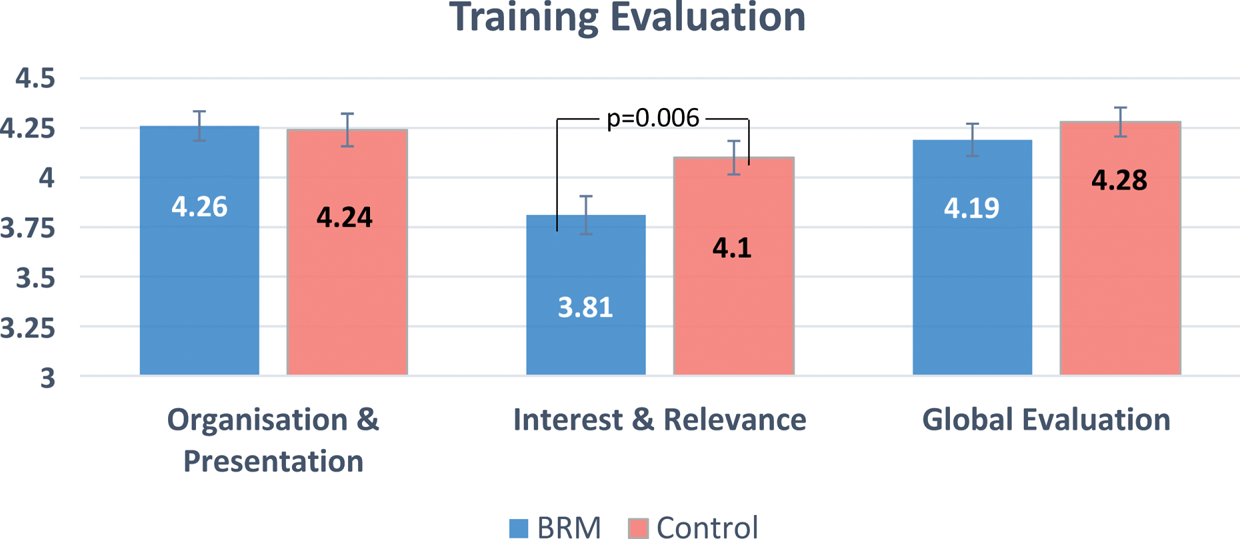
Means and standard errors of training evaluations in control group and BRM group are depicted in Figure 5. With values greater than three on a five-point scale, evaluations were consistently positive. The means of global evaluation were 4⋅19 (SD = 0⋅61) in the BRM group and 4⋅28 (SD = 0⋅59) in the control group and did not differ significantly, W(54,72) = 2117⋅5, P = 0⋅375. Organisation and presentation of training contents, too, were evaluated equally well in both groups (BRM group 4⋅26, SD = 0⋅62; control group 4⋅24, SD = 0⋅61), W(54,72) = 1895, P = 0⋅808. With a mean of 3⋅75 (SD = 0⋅68), interest and relevance of the simulator training was perceived significantly lower in the BRM group than in the control group, which gave a mean rating of 4⋅25 (SD = 0⋅77), W(54,72) = 2493⋅5, P = 0⋅006.
Means and standard errors of training evaluations in BRM group and control group

4.2 Ship management attitudes
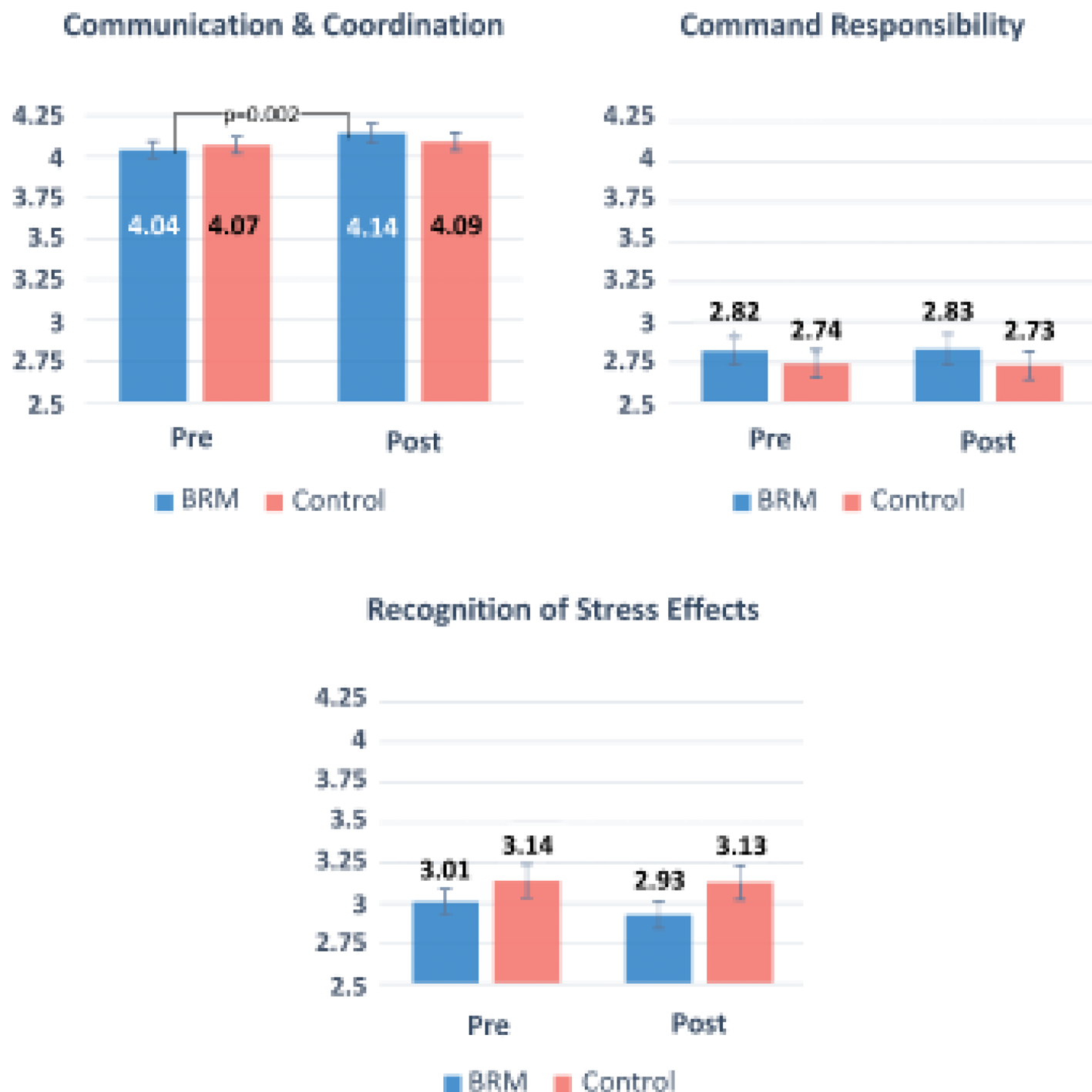
Figure 6 gives an overview of means and standard errors of the SMAQ-GN scales in both groups before and after simulator training. Ship management attitudes did not differ significantly between BRM group and control group before the start of the simulator training. The means of the communication and coordination scale were 4⋅04 (SD = 0⋅41) in the BRM group and 4⋅07 (SD = 0⋅37) in the control group, t(117) = 0⋅46, P = 0⋅644. The command responsibility scale showed mean values of 2⋅82 (SD = 0⋅7) and 2⋅74 (SD = 0⋅64) in BRM group and control group, respectively, t(117) = −0⋅66, P = 0⋅51. The means of the scale regarding recognition of stress effects were 3⋅01 (SD = 0⋅64) and 3⋅14 (SD = 0⋅74), t(117) = 0⋅98, P = 0⋅328.
Means and standard errors of ship management attitudes in BRM group and control group before and after simulator training

The hypothesis that the BRM group would show more effective ship management attitudes than the control group after the training was not confirmed. Statistical analysis yielded no significant differences in the direction of higher scale values in the BRM group compared with the control group after training. The mean values in for the communication and coordination scale were 4⋅14 (SD = 0⋅44) and 4⋅09 (SD = 0⋅45) for BRM and control, t(120) = −0⋅58, P = 0⋅28. The mean values for the command responsibility scale were 2⋅83 (SD = 0⋅71) and 2⋅73 (SD = 0⋅73) in BRM group and control group, t(120) = −0⋅73, P = 0⋅232. The recognition of stress effects scale did not show a higher mean value in the BRM group (2⋅93, SD = 0⋅62) compared with the control group (3⋅13, SD = 0⋅87) either, t(120) = 1⋅43, P = 0⋅922.
However, statistical analysis of differences between pre- and post-training measurements, and thus changes of participants’ ship management attitudes over the course of the simulator training, showed a significant increase in the communication and coordination scale in the BRM group, t(52) = −3⋅07, P = 0⋅003. No such attitude change was detected in the control group, t(61) = 0⋅04, P = 0⋅516. No other increases in effective ship management attitudes were found in the control group [command responsibility: t(61) = 0⋅68, P = 0⋅75; recognition of stress effects: t(61) = 0⋅61, P = 0⋅729] or the BRM group [command responsibility: t(52) = −0⋅08, P = 0⋅47; recognition of stress effects: t(52) = 1⋅1, P = 0⋅862].
4.3 Behaviour
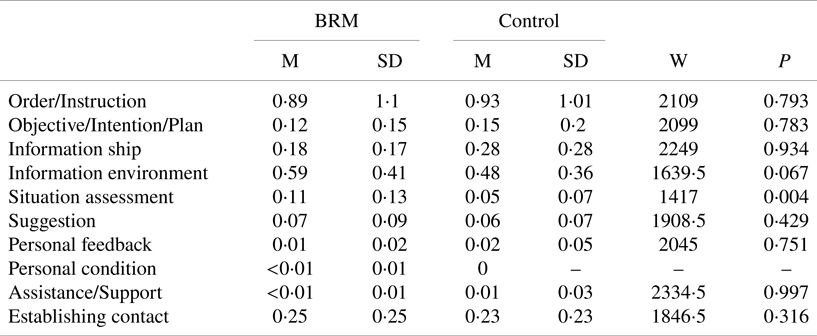
Table 3 shows the mean frequencies of individual communication and teamwork behaviours in the BRM group and the control group during the final simulator run, along with statistical test results. Giving and confirming orders and reporting their execution was the most frequent teamwork behaviour, and was not carried out more often in the BRM group than in the control group. Communicating about the external environment was the second-most frequent teamwork behaviour. This was observed more often in the BRM group. Wilcoxon test showed that this difference closely missed statistical significance. Establishing/assuring contact with a teammate and communicating about the own ship ranked third in the mean frequencies of individual teamwork behaviours and did not show a better performance in the BRM group. Communicating about intentions and plans did not show an advantage of the BRM group either. Communications about the current nautical situation, however, occurred twice as frequently in the BRM group as in the control group, which is statistically a highly significant difference. No such difference was found in the frequencies of suggestions.
Mean frequencies (counts per minute) of individual communication and teamwork behaviours in BRM group and control group during final simulator run

Note: M: mean. SD: standard deviation. W: Wilcoxon test statistic. p: significance test of hypothesis BRM > control. For descriptions of the behaviour categories, see Table 2.
The remaining teamwork behaviours of giving personal feedback, informing or asking about personal conditions, and asking for or giving support occurred too infrequently during the final simulator run to base any conclusion on these observations.
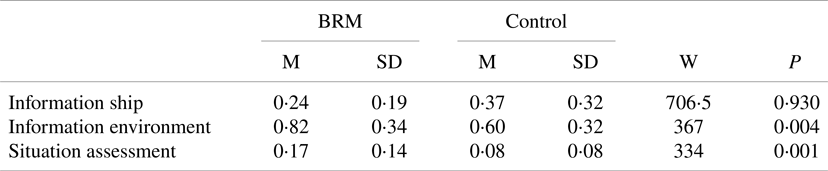
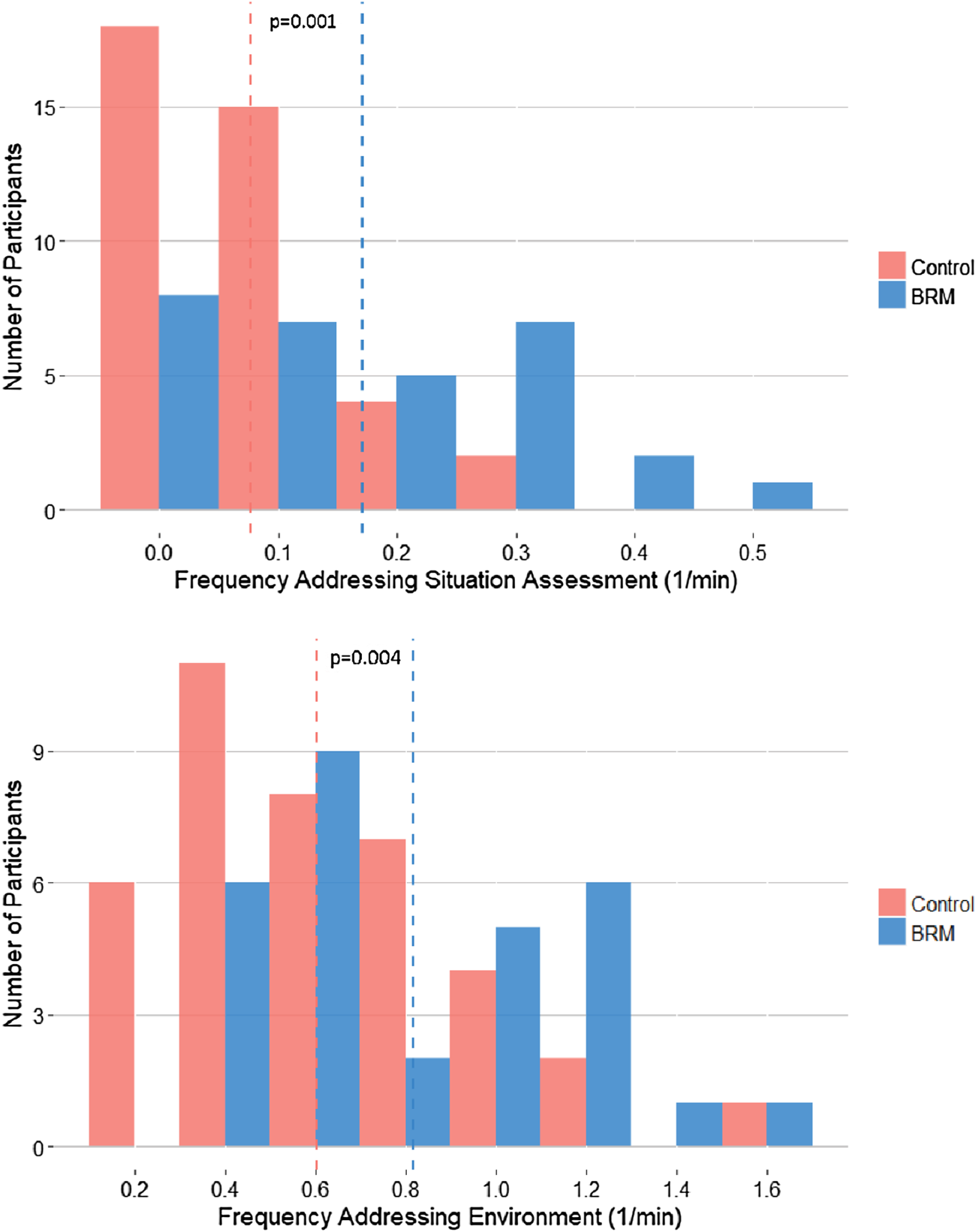
Restricting the analysis of information exchange to those members of the bridge team that work together most closely and frequently in navigation, i.e., officer of the watch, radar operator and ECDIS operator, gives the results depicted in Table 4. As can be expected, the mean frequencies are higher. The surplus of the BRM group in communicating about the environment and about situation assessments becomes larger and is statistically significant. Figure 7 shows the distribution of the individual frequencies in exchanging information about the aforementioned issues in both groups. The pattern in the histograms suggests that the observed mean differences are due to the fact that there are fewer training participants in the BRM group that communicate rarely or not at all about the environment and situation assessments.
Mean frequencies (counts per minute) of individual information exchange by officer of the watch, radar operator and ECDIS operator in BRM group and control group

Note: M: mean. SD: standard deviation. W: Wilcoxon test statistic. p: significance test of hypothesis BRM > control. For descriptions of the behaviour categories, see Table 2.
Individual frequencies of addressing the current situation assessment (upper graph) and the environment (lower graph) by officer of the watch, radar operator and ECDIS operator in BRM group and control group

4.4 Performance
Table 5 shows the number of bridge teams that took proper evasive actions in due time (no collision, no last-minute manoeuvre), that encountered a near miss (no collision, last-minute manoeuvre), that detected the other vessel too late but took evasive actions to reduce the consequences of the upcoming collision (collision despite last-minute manoeuvre) and that became aware of the other vessel too late to attempt any evasive action (collision, no last-minute manoeuvre).
Performance in evading a vessel on collision course

Note: LMM: Last-minute manoeuvre. χ2 = 3⋅43, P = ⋅056.
The same number of teams was observed in the BRM and control groups avoiding a collision with or without a last-minute manoeuvre. Four collisions were observed in the control group, half of them without any previous attempt to take evasive action. In the statistical analysis of the joint frequencies of last-minute manoeuvres and collisions, statistical significance is narrowly missed with χ2 = 3⋅43, P = ⋅056.
Significance test of the collision frequencies only as depicted in Table 6 gives a Lancaster's mid-P value of 0⋅047. The risk of a collision can be considered significantly lower in the BRM group compared with the control group.
Number of simulator runs with and without collision in BRM group and control group

Note: Lancaster mid-P = 0⋅047.
5. Discussion
Significant effects of a single simulator-based BRM training unit on training evaluations, attitudes, behaviour and performance of natural bridge teams were found. This is the first empirical study to show such effects in a control group design and with a behaviour analysis that was blind towards the completion of a BRM training.
In the light of consistent evidence that BRM training is positively perceived by training participants (e.g. Hong and Kim, Reference Hong and Kim2016; Espevik et al., Reference Espevik, Saus and Olsen2017; Havinga et al., Reference Havinga, De Boer, Rae and Dekker2017; Tvedt et al., Reference Tvedt, Espevik, Oltedal, Fjeld and Mjelde2018), the partly better evaluation of the simulator training without a BRM module may be surprising. This difference can be explained by the fact that bridge teams of the German Navy enter their simulator training with specific training plans. In order to allocate training time to the BRM module, some of these plans had to be skipped. This could have led to lower ratings on interest and relevance of the simulator training in the BRM group compared with the control group. Nevertheless, the ratings from the BRM group were still in the positive range.
An improvement in BRM-related attitudes over the course of the simulator training occurred in the experimental group only. The pattern of attitude change, with a significant increase in positive attitudes towards open communication, but not towards command responsibility and recognition of stress effects, reflects the focus of the BRM module during instruction and feedback. A similar change in attitudes did not occur but could have been expected in the study of Tvedt et al. (Reference Tvedt, Espevik, Oltedal, Fjeld and Mjelde2018). However, the attitudes of their training participants towards communication and cooperation were already very positive before the beginning of the training, so a further improvement was hardly possible. The training of Tvedt et al. (Reference Tvedt, Espevik, Oltedal, Fjeld and Mjelde2018) did succeed in improving attitudes towards the recognition of stress effects, which demonstrates the potential of combining classroom lectures and simulations to change attitudes of training participants.
Analysis of behaviour counts showed that the bridge teams that had received a BRM training unit did communicate more frequently than the control group about the environment and about assessments of the current nautical situation. This difference is most pronounced and highly significant if the analysis is focused on the officer of the watch, the radar operator and the ECDIS operator. The magnitude and the meaning of the observed frequency differences become apparent if they are translated into the periods of time between two communications. While each of the above mentioned bridge team members in the BRM group communicated on average every 1 min 13 s about the environment and every 5 min 53 s about the current nautical situation, these times were 1 min 40 s and 12 min 30 s in the control group, respectively. The distribution of the communication frequencies suggests that this difference is due to a much lower number of training participants in the BRM group who never, or very rarely, communicate about the environment and the situation assessment.
This advantage of the experimental group over the control group in sharing information and situation assessments may have contributed to the successful separation from a conflicting vessel by all bridge teams of the BRM group in the final simulator scenario. In contrast, bridge teams of the control group performed overall significantly worse, accounting for all four collisions observed in this study.
Although it could be shown that the BRM training module under study successfully improved the attitudes, behaviour and performance of natural bridge teams, it has to be noted that these effects are overall rather small or limited to only a few aspects of attitudes and behaviour. This can be explained by the limited scale of the BRM unit, which lasted just four hours and comprised only one cycle of instruction, exercise and feedback. If the instructions on non-technical skills are scheduled at the beginning of a nautical simulator training, and BRM feedback is provided together with nautical feedback at the end of each simulator run over the course of two to four days, more extensive effects would be expected than those found in this study.
The need for more exercise and feedback opportunities is one conclusion that can be derived from the results presented here and in Tvedt et al. (Reference Tvedt, Espevik, Oltedal, Fjeld and Mjelde2018). Another is that it might be easier for natural teams to adopt and apply resource management techniques than it is for teams that work together for the duration of the training only. This observation supports the proposition of Wahl and Kongsvik (Reference Wahl and Kongsvik2018) to train seafarers within their communities of practice.
Other factors that might be beneficial for resource management training are nautical experience of training participants, blending nautical and resource management training, and adjusting training contents to the individual needs of the training participants. Regarding previous nautical experience, Tvedt et al. (Reference Tvedt, Espevik, Oltedal, Fjeld and Mjelde2018) found stronger effects of two days of classroom lectures on knowledge and attitudes of experienced nautical officers than Röttger et al. (Reference Röttger, Vetter and Kowalski2016) found after five days of classroom-based BRM training with junior naval officers. Similarly, resource management training evaluations seem to be more positive among more experienced training participants compared with those with a shorter work experience (e.g. Hong and Kim, Reference Hong and Kim2016). Combining nautical training and resource management training is advocated by Sellberg and Viktorelius (Reference Sellberg, Viktorelius, Nazir, Ahram and Karwowski2020) as well as Sanjeev Vakil (Reference Sanjeev Vakil2019), for example. They argue that nautical skills and resource management skills should not be treated as separated, because they must be applied in combination and consequently must be trained jointly. Finally, Cavaleiro et al. (Reference Cavaleiro, Gomes and Lopes2020) stress that BRM training cannot be thought of a one size fits all prescription, and that it has to consider the training needs of the individuals and the teams at hand. Such training needs analysis are commonly called for in team training guidelines, as for example in Salas et al. (Reference Salas, Benishek, Coultas, Dietz, Grossmann, Lazzara and Oglesby2015).
6. Conclusion
With regard to the research question, this study found that including a BRM training unit in the nautical team training of the German Navy does improve BRM-related attitudes, behaviour and performance of the training participants. Regarding the scientific literature, this is the first time that BRM training-related improvements in behaviour and performance have been demonstrated. The methods used in this study proved to be overall useful to assess training effectiveness. However, future studies should assess more demographic data in order to ensure better comparability of experimental group and control group. In addition, performance data should be assessed in a more comprehensive manner. Open research questions that should be addressed systematically are training effects over a longer period and the hypotheses that BRM training is most effective if conducted with natural teams, integrated into the nautical simulator training, and focused on the training needs of the team at hand.
Author Note
Hannes Krey is now working at LKM GmbH, Kiel, Germany.