Introduction
The poultry red mite (PRM), Dermanyssus gallinae, can cause serious damage. An infestation of these mites can reduce poultry welfare, increase mortality and even cause allergic reactions in poultry facility workers. To get an idea of the scale of the problem, PRM costs Dutch poultry farmers (30 million laying hens) an estimated 11 million euro/year (Emous et al., Reference EMOUS, FIKS-VAN NIEKERK and MUL2005).
On 7-9 November 2006, an international seminar was held to discuss most current knowledge and state of the art research regarding the poultry red mite. The aim of the seminar was to bring international scientists in this area together to detect knowledge gaps and where possible to fill in these knowledge gaps by sharing knowledge. To do this, the seminar was divided into four sessions, dealing with the following aspects of the PRM:
• Life cycle issues of D. gallinae
• Effects of D. gallinae on hen and egg production
• Monitoring methods for D. gallinae infestation in poultry facilities
• Control methods for D. gallinae in poultry facilities
Researchers actively involved in PRM research (as manifest from publications and/or congress participation) across Europe were invited. Eighteen researchers participated, coming from eight European countries: Norway, Sweden, Denmark, United Kingdom, The Netherlands, Belgium, France and Switzerland. This paper describes the results and conclusions of that seminar and incorporates information on key publications.
Life cycle and habitat issues of D. gallinae
D. gallinae was first described by De Geer in 1778. It belongs to the sub-class Arachnida. The common name is poultry red mite (PRM) or chicken mite (in the US). This mite is the most common ectoparasite in poultry. It feeds on blood of the host and, although it favours poultry and other birds, it will also feed on blood from other animals, including humans (Sikes and Chamberlain, Reference SIKES and CHAMBERLAIN1954).
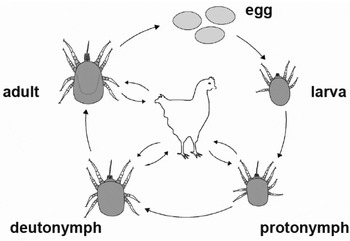
PRM has three juvenile stages from egg to adult: larva, protonymph and deutonymph (Figure 1). For the development of PRM larva to protonymph no host is needed. PRM requires blood from a host for the development of protonymph to deutonymph to the adult stage (Axtell and Arends, Reference AXTELL and ARENDS1990). PRM also requires blood for adult reproduction. Therefore, during the last three stages, PRM lives as a parasite on poultry, wild birds and sometimes even on humans. An important characteristic of PRM is that it does not permanently reside on its host, but only feeds there. PRM spends 30-60 minutes on the hen, during an average visit (Maurer et al., Reference MAURER, BIERI and FOLSCH1988), whilst the rest of the time it hides in cracks and crevices in the neighbourhood of its host, seeking shelter where it can digest its blood meal, mate and lay eggs. PRM usually feeds every 2-4 days generally 5-11 hours after onset of the dark period (at a 12/12h light/dark cycle) (Maurer et al., Reference MAURER, BIERI and FOLSCH1988). Only very few mites feed during daylight and not all mites crawl of the host in the morning (Wood, Reference WOOD1917). However, the seasonal activity of the mites is mainly driven by temperature (Kirkwood,1968).
Life-cycle of Dermanyssus gallinae (© V. Maurer, FiBL)

The optimum temperature for PRM to produce eggs is 25-30°C and the most favourable temperatures for juvenile development are between 25 and 37°C, where developmental rates are highest and mortalities low (Maurer and Baumgärtner, Reference MAURER and BAUMGÄRTNER1992). Their best survival rate is observed at a relative humidity (RH) of 70-90% (Nordenfors et al., Reference NORDENFORS, HÖGLUND and UGGLA1999). Temperatures below -20°C and above 45°C are considered lethal. Although sub-optimal conditions reduce the speed of reproduction, the mites are able to survive and reproduce within a wide temperature and RH range. For example, in Sweden between May and October more mites are found in traps in poultry houses than from November to April (Nordenfors and Höglund, Reference NORDENFORS H. and HÖGLUND2000). Under moderate climatic circumstances (5-25°C), PRM may survive up to 9 months without feeding (Nordenfors et al.,1999).
Hungry mites have several resources that help them find food. A very sensitive response to changes in temperature and odours enables PRM to migrate and locate its host; starved PRM can detect a temperature gradient as low as 0.005°C/sec (Kilpinen, Reference KILPINEN2001). Resting mites react to a heat stimulus with increasing activity, probably as part of this host location process. This effect is most pronounced after 8-10 days of starvation (Kilpinen and Mullens, Reference KILPINEN and MULLENS2004). PRM react to surface skin lipids of the host, which act as feeding stimulants (Zeman, Reference ZEMAN1988). Furthermore, kairomones are thought to play a role in the host location behaviour, but it is unknown what specific kairomones are involved. Finally, carbon dioxide, which is known for its role in the host location behaviour of other haematophagous arthropods, is important for host detection by PRM (Kilpinen, Reference KILPINEN2005). Once fed, PRM congregate in cracks and crevices to mate, they seem to return to the places where mites have previously congregated, a behaviour that is guided by pheromones (Entrekin and Oliver, Reference ENTREKIN and OLIVER1982).
Under laboratory rearing conditions, PRM eggs have a sex-ratio of 50:50 (i.e. ratio of haploid and diploid eggs) (Oliver, Reference OLIVER1965). In similar conditions a 50:50 ratio was found (Maurer and Baumgärtner, Reference MAURER and BAUMGÄRTNER1992) in young adult PRM, thus making it reasonable to assume that mortalities of both sexes during juvenile development are similar. However the normal male:female ratio in a natural population is unclear.
Inside poultry houses, PRM seem to prefer cracks smaller than 2 millimetres for breeding and hiding. Preferred hiding places are composed of paper, plastic and wood, whereas aluminium and glass are not preferred (Chirico, unpublished data). As Maurer (Reference MAURER1993) found during her experiments, PRM can drop from the ceiling, prefer to feed on the neck and back of the hen, and are also found in the manure and litter of heavily infested poultry houses.
Topics identified as requiring further research include lifespan and behaviour, survival and necessary conditions for eggs and the different stages of PRM, host finding and the cause of aggregation, attracting and repelling substances, the specific behaviour of the hens towards PRM and how feeding behaviour is influenced by (different kinds of) light, by light-dark cycles and by different dose of sunlight. Researchers in various countries have different experiences with sex ratios under field conditions ranging from 50/50 males/females to 1 male per few hundred females. This difference may be due to difficulties in distinguishing the deutonymph of D. gallinae and male of D. gallinae. Generally it appears that only a few males are needed for reproduction. Questions were also raised about the mating behaviour of PRM males and females.
Effects of D. gallinae on hen, egg productivity and human health
PRM infestations have various negative effects on hens, both directly due to their presence on the bird, and indirectly through their blood meals and as a vector for infectious diseases. An adult mite ingests approximately 0.2 µl blood (Sikes and Chamberlain,1954) and high infestation rates of mites may cause anaemia and mortality of the hen/host. Infested hens increase their production of new blood cells, but during periods of rapid mite population growth, blood loss exceeds blood production capacity resulting in severe anaemia (Kilpinen et al., 2005). Other negative effects of PRM include high mortality, stress behaviour (higher levels of preening, head scratching and gentle feather pecking), lower body weight and reduced egg quality due to blood spots (Chauve, Reference CHAUVE1998). Commercial farmers often claim lower egg production, but this has not been confirmed by experimental research. The productivity link could be that a severe mite infestation can increase mortality, and as Arkle (Reference ARKLE2007) showed, there is a direct effect of the size of the mite population on bird mortality. This of course means lower flock productivity; however, lower egg production per hen has not been found as a result of a mite infestation (Kilpinen et al., 2005).
PRM can have a serious impact upon human health. Apart from causing skin irritation and itching, the mites can cause allergic skin reactions (Sahibi et al., Reference SAHIBI, SPARAGANO and RHALEM2008; Potenza et al., Reference POTENZA, ASSUNTA CAFIERO, CUCCHIARINI, LA SALANDRA, GIANGASPERO, SPARAGANO and CAMARDA2008). The chemicals used to control PRM may have adverse effects on humans as well, both directly, for workers exposed to chemicals and indirectly through consumption of poultry eggs containing pesticide residues (Hamscher et al., Reference HAMSCHER, PRIESS, HARTUNG, NOGOSSEK, GLUENDER and NAU2003). Moreover, the eggs may have blood spots on the shells and would therefore be downgraded. This is caused when eggs roll over fed red mites. Effects on humans and eggs were not extensively discussed during the seminar.
Scientific information on the effects of PRM on hens is incomplete as information is mainly sourced from the industry and is not well documented. Researchers agree that there are indications for the following effects of PRM, which include
• increased water intake in infested hens
• lower egg production from the flock overall
• increased feed intake and a lower feed conversion ratio in infested hens
• hens avoiding places with high infestations
• general increase of immune response and/or immune suppression of infested hens
• disease transmission by PRM to hens
• reduced feather quality of infested hens
• hen genotype dependent effects and changes in mite populations due to the immune response of the hen
Monitoring methods for a D. gallinae infestation in layer houses
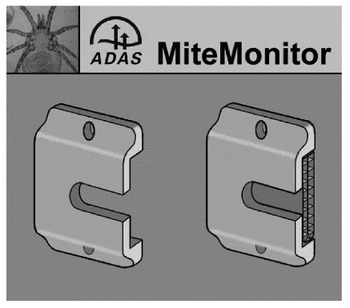
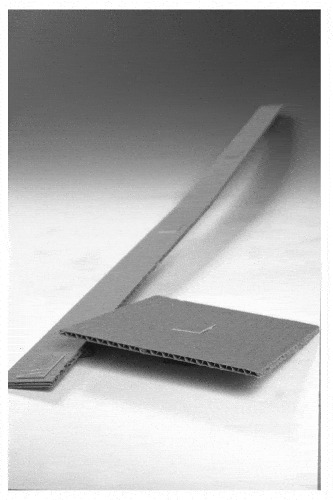
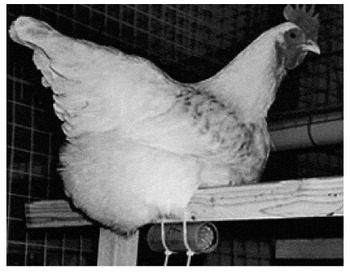
Various monitoring systems have been put forward for PRM. Until 2006 the majority of the poultry farmers noticed infestations because workers were being bitten by PRM, or found faecal (mite) spots on feeders and other equipment, clumps of mites on the belt and feeders, or blood spots on eggs. However, when these signs are evident, the infestation is already heavy and widespread. Specially designed corrugated cardboard traps for mites have been developed and evaluated by Nordenfors and Chirico (Reference NORDENFORS and CHIRICO2001); Thind (personal communication) has demonstrated four types of traps: the ADAS monitoring trap (Figure 2a), the corrugated cardboard/plastic trap (Figure 2b), the perch trap and the tube trap (Figure 2c).
These traps may be improved by 1) varying the exposure duration, 2) selecting the most suitable sites for the traps, 3) good management and use of traps, 4) adding lures and attractants to the traps and 5) treating the traps with biological or chemical acaricides as part of lure and kill strategy.
Traps treated with these acaricides should be placed out of reach of the birds (Chirico and Tauson, Reference CHIRICO and TAUSON2002; Lundh et al., 2005). Traps can be used as both monitoring devices and a control method. In the future, monitoring may be improved by developing electronic sensors (Thind, personal communication).
Participants agreed that no simple advice could be given regarding number of spots in the poultry facilities to monitor or the method of monitoring. Being able to quantify the infestations would reduce negative effects of PRM on the hens, and could reduce the costs of mite control, if early awareness resulted in producers only having to treat a restricted infected zone rather than a complete layer house. Thus monitoring the flocks and a subsequently quick reactions are paramount to prevent an increase of the mite population. However, it must be borne in mind that the currently available monitoring methods only indicate trends in the mite population and are unable to give the actual number of PRM present.
ADAS monitoring trap (©ADAS, UK)

Corrugated cardboard trap (© Bengt Ekberg, SVA)

Tube trap (© Van Emous, WUR)

Control methods
Control can be divided into two parts: conventional methods and alternative methods. Conventional methods mostly focus on killing PRM or preventing infestations. ‘Alternative’ methods included using light, odours, predatory mites, fungus or vaccines. These ideas and approaches are in various stages of development.
conventional methods
Regular cleaning of poultry facilities and maintaining good hygiene practices is still considered laborious and their benefits are grossly underestimated. These approaches can aid in the removal of large proportions of the mite populations. Simple cleaning with water can remove a large number of mites and eggs (Nordenfors and Höglund, Reference NORDENFORS H. and HÖGLUND2000). Another conventional method is the use of acaricides although this may carry the risk of exposing eggs, poultry and humans to their residues (Hamscher et al., Reference HAMSCHER, PRIESS, HARTUNG, NOGOSSEK, GLUENDER and NAU2003). Furthermore, experts indicated that it is only a matter of time before PRM develops resistance to acaricides as pyrethroids, making them ineffective, as already shown in Italy (Marangi et al., Reference MARANGI, CAFIERO, CAPELLI, CAMARDA, SPARAGANO and GIANGASPERO2009), UK (Thind and Ford, Reference THIND and FORD2007), Sweden (Nordenfors et al., Reference NORDENFORS, HÖGLUND, TAUSON and CHIRICO2001) and France (Beugnet et al., 1997). With diminishing numbers of approved chemicals available, chemical treatments were not considered as sustainable solutions. However one new compound which may show a) a rapid response, b) no indication of cross resistance and c) an extremely low mammalian toxicity may offer a short term solution or be used as part of an integrated approach in parallel with other control methods presented later in this paper.
The use of various types of silica dusts was considered, as they demonstrate no known poisoning effect to hens and humans and resistance is unlikely. The main benefit of silica is through its ability to immobilise a mite by adhering to its body, especially to the tarsal part of legs, and preventing locomotion. Silica products are also thought to cause damage to the protective cuticle of PRM, impairing their water balance so that they rapidly dehydrate and die. In humans there is a small risk of silicosis especially during application. Consequently appropriate precautions must be taken. Silica products, especially powdered forms, can cause skin irritations, but other formulations are available (e.g. gel, fluid). The efficacy depends on the quality of the silica, environmental factors and the extent the silica attaches to the treated surfaces.
Controlling PRM by heating hen houses to temperatures above 45°C is a well known and commonly applied method in The Netherlands and Norway. Heat treatment is usually carried out between the production cycles. In Norway, this method can be combined with a chemical treatment called phoxime prior to introducing the new flock. In a trial, all six treated hen houses remained free of PRM during the production cycle after the treatment (Gjevre, unpublished data). In the Netherlands, heat treatment without chemical treatment failed to offer similar control and the houses were re-infested within six months (Van Emous, personal communication). This may be due to a number of factors, including being unable to achieve the required temperature throughout the building, given the larger and more complex hen houses and the high farm density in The Netherlands, or the absence of the use of chemicals. The main disadvantage of heat-treatment is its high cost; another disadvantage of the heat treatment is the risk of heat related damage to the hen house equipment. To avoid damage, it is of great importance to continuously measure the temperature and to circulate the hot air with fans to minimise areas with sub-lethal temperatures where mites could survive. Because it may be possible for some mites to survive by escaping into areas with non-lethal temperature, chemical treatment should always follow the heat treatment (Gjevre, personal communication).
In The Netherlands, several designs of housing systems have been tested to prevent PRM from reaching the hens. In these systems there are very few contact points between the perches and the floor. To minimise migration of PRM to the perches, barriers containing oil or silicas are installed to prevent mites reaching the hens during the night. Another design-related method for lowering the mite burden in the hen houses is to minimize the hiding places by using slatted floors and laying nest floors with more open structures and fewer hiding places for the mites. Although these adaptations do not solve the problem, they can give good results when integrated with other measures.
Finally, another conventional approach to controlling PRM is to consider the production chain. It is generally known that PRM is not only present in layer farms, but also in rearing farms. Transport of eggs, birds and manure are known risk factors for introducing PRM. Visitors, including those related to work that needs to be done with the birds, are a risk factor. Good hygiene processes and openness in relation to PRM problems is important in reducing the spread of PRM along the production chain.
alternative methods
One alternative method to control PRM infestation is to use a specific lighting programme. Research in Belgium indicated that a light schedule of ¼ hour light and ¾ hour dark could reduce PRM infestations (Zoons, Reference ZOONS2004). This effect has been verified by research from other countries, although some farms reported that the effect disappeared after a time. It is unclear why this lighting programme affects PRM. Possible explanations are that PRM activity is inhibited by light and thus with short periods of darkness the mites cannot reach the hens and/or PRM are unable to reach their hiding places in time, so the hens are able to eat them. As EU-Directive 1999/74 for the protection of laying hens dictates a continuous dark period of at least 8 hours, this light schedule is not allowed in Europe and thus no light pattern option is available. Whether there are other possibilities within the regulations to control PRM with light has not been discussed.
Another alternative method is the use of attractant or repellent odours. French research indicates that PRM respond to these odours, but the reactions are not always predictable and the strength of the odours can confound responses (Chauve, personal communication). Furthermore PRM produces odours themselves to attract other PRM, and, in case of high infestations, it is not clear which will be more attractive: the appealing natural odours of clusters of PRM or artificially applied odours. Researchers agreed that odours could be manipulated to give some control, but more research is needed to find a workable concept.
Natural acaricides include essential oils, herbs or plant extracts which contain a chemical component that kills PRM (George et al., 2008a, b; Maurer et al., Reference MAURER, PERLER and HECKENDORN2009). Despite their natural origin, these acaricides may be harmful to humans and animals and may result in residues in the manure. The existing commercial products also lack consistency in the concentration of the actual components due to influences of weather, sun, soil, etc. on the growing plants and due to the variability in concentration of active ingredients in existing commercial products. Furthermore, resistance can build up just as it does with chemical acaricides. Success therefore will depend greatly on the way of application. Participants considered the prospect of success of this measure as only moderate.
Predatory mites are another alternative option. Mites are already widely used in the control of pests in greenhouses. The use of these predators to control PRM appears promising, especially if the predators will attack all stages of PRM. If these predatory mites hide in the daytime in the same cracks and crevices as PRM, they may disrupt the natural aggregation of PRM and also would not be easily pecked by the hens. The speed of reproduction of the predator mites would need to reflect the population dynamics of PRM and they would have to be capable of keeping the number of PRM at an acceptably low level. Additionally, they should be able to withstand and survive the conditions found in the poultry houses. The selection of suitable candidate predatory mites should also take into account any impact on human and poultry health (Lesna, personal communication).
There are many species of predatory mites, and research will focus on those species that fit the basic profile. To select these, mites and insects will be collected from the nests of birds that reuse nesting sites (Lesna et al., Reference LESNA, WOLFS, FARANJI, ROY, J. and SABELIS2009). The predators found will be assessed on their ability to feed on PRM and its different stages, and the candidate predators will be reared and assessed under conditions similar to those in poultry houses. The best candidate will then be tested on a small scale. This research will be undertaken by researchers at the University of Amsterdam and the University of Groningen, who have a wide experience in the biological control of pests in crops and the ecology of birds. Knowledge of poultry will be brought into the project by researchers of Wageningen UR Livestock Research.
Danish and UK researchers recently took part in the EU CHIMICO-project which included studies on entomopathogenic fungi (Steenberg et al., Reference STEENBERG, KILPINEN, JESPERSEN, SOLER-CRUZ, VEGA-ROBLES, BIRKETT, DEWHIRST and PICKETT2005). These fungi are capable of infecting and killing insect and mite species. The spores of the fungi germinate on the host cuticle, penetrate it and spread through the body. After the fungus has killed the mite, it can grow out of the mite cadaver and produce more spores, increasing the chance for other PRM to be infested, potentially increasing persistence of control. There is a wide variety of fungi, many of which are well documented in terms of specific characteristics and their area of application. To control PRM, a fungus is needed that affects PRM and/or its eggs and thus prevents their multiplication. A very important aspect is safety to non-targets, such as humans, poultry and eggs, but the record of these fungi is excellent in this (Vestergaard et al., Reference VESTERGAARD, CHERRY, KELLER and GOETTEL2003) and safe isolates will be available. The selected fungi should be able to survive in PRM and the ecosystem of PRM (e.g. the high ammonia levels, 25ºC and 75% RH in poultry houses). In some preliminary studies, fungi were able to affect PRM, but the multiplication rate of the fungi was too low to reduce the PRM population effectively. These first results indicate that it is possible to use fungi as a control method for PRM. The persistence of fungal isolates on materials such as metals (Hong et al., Reference HONG, EDGINGTON, ELLIS, AQUINO DE MURO and MOORE2005) that may be found in poultry units suggests that long term protection is feasible. With selection of a suitable isolate, fungi appear to have the potential to provide a successful eradication strategy for the future.
In the UK, research is being conducted to develop a vaccine against PRM (Arkle et al., Reference ARKLE, HARRINGTON, DE LUNA, GEORGE, GUY and SPARAGANO2008). The idea is that hens develop a natural defence reaction if they are bitten by PRM. This reaction can have many different expressions. For example, the hen can react by making its skin thicker and thus more difficult to penetrate. Another proposal is introducing an antibody in the blood that makes the blood coagulate the moment it enters the mite. Natural resistance like this usually starts slowly, but can be accelerated by vaccinating animals with mite components. Researchers in the UK already have obtained some positive results in their preliminary studies. However, it will take time to develop the most effective vaccine, and it is likely that it will be several years before the first vaccines is available.
Conclusions
Much is still unknown about PRM (e.g. reproduction, survival methods, etc.). Sustained and extensive investigations are necessary to make PRM control efficient. PRM probably causes more damage than envisaged, the projected costs in Europe indicating a large expenditure (Emous et al., Reference EMOUS, FIKS-VAN NIEKERK and MUL2005; Bell, personal communication). Monitoring is an important instrument in recognising and admitting the problem and taking measures in time, but needs to be more finely tuned. Co-operation is needed to prevent transmission of mites along the production chain. Wide-ranging investigations into control strategies focused on fine-tuning of current control measures is urgently required. Furthermore, an approach wherein knowledge from different research fields is integrated will help to identify effective new control or eradication methods.
In the short term, the most promising control method is heating of the hen house combined with chemical treatment. Future areas of development which show promise are:
1) Use of entomopathogenic fungi. Some very promising results have been obtained, but more work needs to be done regarding practical application in poultry farms;
2) Vaccination. Rapid developments are made in this area and the first preliminary results are very promising;
3) Predatory mites. They will not eradicate PRM but have the potential to allow an acceptable low-level infestation with no harm to poultry, product, environment and people.
Several European Research groups are working on these promising concepts and the international seminar was the first initiative to exchange information on PRM among researchers. Because this cross-fertilisation was felt to be useful and productive, effort should be made to convene such meetings on a regular basis in the future.
Acknowledgements
This international seminar was funded by the Dutch National Egg Board. The authors also would like to thank L. McPhee for helpful comments on an earlier version of the manuscript and all other participants of the workshop: S. Arkle (School of Agriculture, Food and Rural Development, University of Newcastle, UK) , D. van Doorn (Animal Health Services, The Netherlands), R. van Emous (Animal Sciences Group of Wageningen UR, The Netherlands), J. Guy (School of Agriculture, Food and Rural Development, University of Newcastle, UK) and I. Lesna (Institute for Biodiversity and Ecosystem Dynamics, The Netherlands).