





No CrossRef data available.
Article contents
Close to a Tipping Point? The Amazon and the Challenge of Sustainable Development under Growing Climate Pressures
Published online by Cambridge University Press: 22 May 2020
Abstract
This commentary examines the challenge of sustainable development in the Amazon, arguing that global efforts to mitigate climate change and current Amazonian policies are clearly inadequate to prevent global warming and deforestation from tipping the forest into a savanna. It analyses the growing climate pressures jeopardising the Amazon's resilience; the erratic Brazilian, Bolivian, Colombian, Ecuadorian and Peruvian governance of the forest; and the failure of the Amazon Cooperation Treaty Organization (ACTO) to establish long-term forest conservation policies in the region. The research demonstrates that the ‘savannisation hypothesis’ is potentially closer to reality than most debates in the social sciences assume and should be considered seriously. The commentary concludes by suggesting possible pathways for preventing the dieback of the Amazon. These are based on three strategic axes: the strengthening of the ACTO, the promotion of a technological revolution in the forest, and a progressive environmental diplomacy by the Amazonian countries.
Spanish abstract
Este comentario examina los desafíos al desarrollo sustentable en la Amazonia, argumentando que los esfuerzos globales para mitigar el cambio climático y las políticas actuales amazónicas son claramente inadecuados para evitar que el calentamiento global y la deforestación transformen la selva en una sabana. El material analiza las crecientes presiones climáticas que ponen en peligro la resistencia amazónica; la errática gobernanza brasileña, boliviana, colombiana, ecuatoriana y peruana para la selva; y el fracaso de la Organización del Tratado de Cooperación Amazónica (OTCA) para establecer políticas de conservación forestales de largo plazo en la región. La investigación demuestra que potencialmente la ‘hipótesis de sabanización’ está más cerca de la realidad que lo asumido por la mayoría de los debates en ciencias sociales y debe de ser seriamente considerada. El comentario concluye sugiriendo rutas posibles para prevenir la extinción de la Amazonia. Estas se basan en tres ejes estratégicos: el fortalecimiento de la OTCA, la promoción de una revolución tecnológica en la selva y una diplomacia ecológica progresista de parte de los países amazónicos.
Portuguese abstract
Este comentário examina a dificuldade de um desenvolvimento sustentável na Amazônia, argumentando que os esforços globais para mitigar a mudança climática e as políticas atuais para a Amazônia são claramente inadequados para prevenir que o aquecimento global e um desmatamento levem a floresta a se tornar um cerrado. O comentário analisa as crescentes pressões climáticas que ameaçam a resiliência da Amazônia; a errática governança da floresta por parte dos governos do Brasil, Bolívia, Colômbia, Equador e Peru; e a falha da ACTO (Organização do Tratado de Cooperação da Amazônia) em estabelecer políticas de conservação a longo prazo na região. A pesquisa mostra que a ‘hipótese de savanização’ da floresta tropical está potencialmente mais perto da realidade do que muitos debates nas Ciências Sociais admitem e deveria ser considerada mais seriamente. O comentário conclui sugerindo possíveis maneiras de prevenir a extinção da Amazônia. As sugestões são baseadas em três eixos estratégicos: o fortalecimento da ACTO, o incentivo a uma revolução tecnológica na floresta e uma diplomacia ambiental progressista entre os países Amazônicos.
Keywords
AmazonAmazon Cooperation Treaty Organization (ACTO)Amazonian politics and policiesclimate changedeforestationsustainable developmenttipping pointsAmazoniaOrganización del Tratado de Cooperación Amazónica (OTCA)política y políticas amazónicascambio climáticodeforestacióndesarrollo sosteniblepuntos álgidosAmazôniaOrganização do Tratado de Cooperação da Amazônia (ACTO)política e políticas amazônicasmudança climáticadesmatamentodesenvolvimento sustentávelpontos de não retorno
Information
- Type
- Commentary
- Information
- Copyright
- Copyright © Cambridge University Press 2020
References
1 Brienen, R. J. W., Phillips, O. L., Feldpausch, T. R., Gloor, E., Baker, T. R., Lloyd, J., Lopez-Gonzalez, G. et al. , ‘Long-Term Decline of the Amazon Carbon Sink’, Nature, 519 (2015), pp. 344–8CrossRefGoogle Scholar.
2 Defined as ‘a biomass loss of at least 25% of the total biomass in 2070–2100 in comparison to 1970–2000’. See: Rammig, Anja, Jupp, Tim, Thonicke, Kirsten, Tietjen, Britta, Heinke, Jens, Ostberg, Sebastian, Lucht, Wolfgang et al. , ‘Estimating the Risk of Amazonian Forest Dieback’, New Phytologist, 187: 3 (2010), pp. 694–706CrossRefGoogle Scholar.
3 Lovejoy, Thomas E. and Nobre, Carlos, ‘Amazon Tipping Point’, Science Advances, 4: 2 (2018)CrossRefGoogle ScholarPubMed.
4 Nobre, C. A., Sampaio, G., Borma, L. S., Castilla-Rubio, J. C. and Cardoso, M., ‘Land-Use and Climate Change Risks in the Amazon and the Need of a Novel Sustainable Development Paradigm’, Proceedings of the National Academy of Sciences of the United States of America, 113: 39 (2016), pp. 10759–68CrossRefGoogle ScholarPubMed.
5 Baccini, A., Walker, W., Carvalho, L., Farina, M., Sulla-Menashe, D. and Houghton, R. A., ‘Tropical Forests Are a Net Carbon Source Based on Aboveground Measurements of Gain and Loss’, Science, 358: 6360 (2017), pp. 230–4CrossRefGoogle ScholarPubMed; Brienen et al., ‘Long-Term Decline of the Amazon Carbon Sink’; Lovejoy and Nobre, ‘Amazon Tipping Point’; Nobre et al., ‘Land-Use and Climate Change Risks in the Amazon’; Zemp, D. C., Schleussner, C.-F., Barbosa, H. M. J. and Rammig, A., ‘Deforestation Effects on Amazon Forest Resilience’, Geophysical Research Letters, 44: 12 (2017), pp. 6182–90CrossRefGoogle Scholar.
6 Pereira, Joana C. and Viola, Eduardo, ‘Catastrophic Climate Change and Forest Tipping Points: Blind Spots in International Politics and Policy’, Global Policy, 9: 4 (2018), pp. 513–24CrossRefGoogle Scholar; Pereira, Joana C. and Viola, Eduardo, ‘Catastrophic Climate Risk and Brazilian Amazonian Politics and Policies: A New Research Agenda’, Global Environmental Politics, 19: 2 (2019), pp. 93–103CrossRefGoogle Scholar.
7 Brazil accounts for approximately 68% of the entire Amazonian forest; together, Bolivia, Colombia, Ecuador and Peru account for almost 27% of the region. Venezuela, French Guyana, Guyana and Suriname account for the remaining 5.5%. See PNUMA/OTCA/CIUP, ‘Perspectivas do meio ambiente na Amazônia’ (2009): https://www.mma.gov.br/estruturas/PZEE/_arquivos/geoamaznia_28.pdf. All URLs were last accessed 11 March 2020. In this commentary, our analysis covers approximately 95% of the Amazon; we do not include discussion of the state of the forest in Venezuela, French Guyana, Guyana and Suriname for data availability reasons.
8 Brazil accounts for half of the region's population and GDP. The country has been a key driver in South America. In the 2000s, the election of Luiz Inácio Lula da Silva, the candidate of the Partido dos Trabalhadores (Workers’ Party, PT), was influential in the electoral victories of several leftist candidates in other countries in the region who favoured increased intervention by the state in the economy and whose power was based on a strong charismatic leader. Since 2014, the continuous growth of an extensive and profound anti-corruption investigation – ‘Operation Car Wash’ – in Brazil has promoted similar campaigns in many South American countries. Since the operation began, corruption has risen up the agenda and become a major issue in public debates in the region. In addition, as we shall see, following deforestation control in the Brazilian Amazon, forest loss by deforestation declined in almost all other Amazonian countries.
9 In this regard, see, for instance, Pereira, Joana C., ‘The Limitations of IR Theory Regarding the Environment: Lessons from the Anthropocene’, Revista Brasileira de Política Internacional, 60: 1 (2017)CrossRefGoogle Scholar and Pereira and Viola, ‘Catastrophic Climate Change and Forest Tipping Points’.
10 Steffen, Will, Richardson, Katherine, Rockström, Johan, Cornell, Sarah E., Fetzer, Ingo, Bennett, Elena M., Biggs, Reinette et al. , ‘Planetary Boundaries: Guiding Human Development on a Changing Planet’, Science, 347: 6223 (2015)CrossRefGoogle Scholar.
11 In this regard, see, for instance, Burke, Anthony, Fishel, Stefanie, Mitchell, Audra, Dalby, Simon and Levine, Daniel J., ‘Planet Politics: A Manifesto from the End of IR’, Millennium: Journal of International Studies, 44: 3 (2016), pp. 499–523CrossRefGoogle Scholar.
12 Data from the National Oceanic and Atmospheric Administration (NOAA): www.ncdc.noaa.gov/cag/.
13 Brando, Paulo Monteiro, Balch, Jennifer K., Nepstad, Daniel C., Morton, Douglas C., Putz, Francis E., Coe, Michael T., Silvério, Divino et al. , ‘Abrupt Increases in Amazonian Tree Mortality due to Drought–Fire Interactions’, Proceedings of the Natural Academy of Sciences, 111: 17 (2014), pp. 6347–52CrossRefGoogle Scholar.
14 Exbrayat, Jean-François, Liu, Yi Y. and Williams, Mathew, ‘Impact of Deforestation and Climate on the Amazon Basin's Above-Ground Biomass during 1993–2012’, Scientific Reports, 7 (2017)CrossRefGoogle ScholarPubMed.
15 de Faria, Bruno L., Brando, Paulo M., Macedo, Marcia N., Panday, Prajjwal K., Soares-Filho, Britaldo S. and Coe, Michael T., ‘Current and Future Patterns of Fire-Induced Forest Degradation in Amazonia’, Environmental Research Letters, 12: 9 (2017)Google Scholar.
16 Jiménez-Muñoz, Juan C., Mattar, Cristian, Barichivich, Jonathan, Santamaría-Artigas, Andrés, Takahashi, Ken, Malhi, Yadvinder, Sobrino, José A. et al. , ‘Record-Breaking Warming and Extreme Drought in the Amazon Rainforest during the Course of El Niño 2015–2016’, Scientific Reports, 6 (2016)CrossRefGoogle Scholar.
17 de Andrade, Rafael B., Balch, Jennifer K., Parsons, Amoreena L., Armenteras, Dolors, Roman-Cuesta, Rosa M. and Bulkan, Janette, ‘Scenarios in Tropical Forest Degradation: Carbon Stock Trajectories for Redd+’, Carbon Balance and Management, 12: 6 (2017)CrossRefGoogle ScholarPubMed.
18 Bathiany, Sebastian, Dakos, Vasilis, Scheffer, Marten and Lenton, Timothy M., ‘Climate Models Predict Increasing Temperature Variability in Poor Countries’, Science Advances, 4: 5 (2018)CrossRefGoogle ScholarPubMed.
19 Duffy, Philip B., Brando, Paulo, Asner, Gregory P. and Field, Christopher B., ‘Projections of Future Meteorological Drought and Wet Periods in the Amazon’, Proceedings of the National Academy of Sciences, 112: 43 (2015), pp. 13172–7CrossRefGoogle ScholarPubMed.
20 de Faria et al., ‘Current and Future Patterns of Fire-Induced Forest Degradation in Amazonia’.
21 Malhi, Yadvinder, Gardner, Toby A., Goldsmith, Gregory R., Silman, Miles R. and Zelazowski, Przemyslaw, ‘Tropical Forests in the Anthropocene’, Annual Review of Environment and Resources, 39 (2014), pp. 125–59CrossRefGoogle Scholar.
22 IPCC, ‘Summary for Policymakers’, in V. Masson-Delmotte et al. (eds.), Global Warming of 1.5 °C: An IPCC Special Report on the Impacts of Global Warming of 1.5 °C above Pre-Industrial Levels and Related Global Greenhouse Gas Emission Pathways, in the Context of Strengthening the Global Response to the Threat of Climate Change, Sustainable Development, and Efforts to Eradicate Poverty (Geneva: World Meteorological Organization, 2018).
23 Henley, Benjamin J. and King, Andrew D., ‘Trajectories toward the 1.5 °C Paris Target: Modulation by the Interdecadal Pacific Oscillation’, Geophysical Research Letters, 44: 9 (2017), pp. 4256–62CrossRefGoogle Scholar.
24 Data from the independent Climate Action Tracker (CAT): http://climateactiontracker.org/global.html.
25 Warren, Rachel, Price, Jeff, VanDerWal, Jeremy, Cornelius, Stephen and Sohl, Heather, ‘The Implications of the United Nations Paris Agreement on Climate Change for Globally Significant Biodiversity Areas’, Climatic Change, 147: 3 (2018), pp. 395–409CrossRefGoogle Scholar.
26 ‘Planetary boundaries’ are ‘the environmental limits within which humanity can safely operate’. See Steffen et al., ‘Planetary Boundaries’.
27 Ibid.
28 Gaffney, Owen and Steffen, Will, ‘The Anthropocene Equation’, The Anthropocene Review, 4: 1 (2017), pp. 53–61CrossRefGoogle Scholar.
29 Steffen, Will, Rockström, Johan, Richardson, Katherine, Lenton, Timothy M., Folke, Carl, Liverman, Diana, Summerhayes, Colin P. et al. , ‘Trajectories of the Earth System in the Anthropocene’, Proceedings of the National Academy of Sciences of the United States of America, 115: 33 (2018), pp. 8252–9CrossRefGoogle Scholar.
30 Pereira and Viola, ‘Catastrophic Climate Change and Forest Tipping Points’.
31 Houghton, Richard A., Birdsey, Richard A., Nassikas, Alexander and McGlinchey, David, Forests and Land Use: Undervalued Assets for Global Climate Stabilization (Woods Hole Research Center, 2017)Google Scholar.
33 Data from the Brazilian Instituto Nacional de Pesquisas Espaciais (National Institute for Space Research, INPE): http://www.obt.inpe.br/OBT/assuntos/programas/amazonia/prodes.
34 Monitoring of the Andean Amazon Project (MAAP), ‘MAAP Synthesis: 2019 Amazon Deforestation Trends and Hotspots’: https://maaproject.org/2020/synthesis-2019/.
35 Ibid.
36 Ibid.
37 Ibid.
38 RAISG, ‘Deforestation in the Amazonia (1970–2013)’: https://www.amazoniasocioambiental.org/wp-content/uploads/2017/01/Deforestation_in_the_Amazonia1970-2013.pdf.
39 La Rovere, Emilio Lèbre, Dubeux, Carolina B., Pereira, Amaro Olimpio Jr. and Wills, William, ‘Brazil beyond 2020: From Deforestation to the Energy Challenge’, Climate Policy, 13 (2013), pp. 70–86CrossRefGoogle Scholar; Viola, Eduardo and Franchini, Matías, Brazil and Climate Change: Beyond the Amazon (New York and Abingdon: Routledge, 2018)Google Scholar. It should be noted that deforestation control in Brazil has led to negative spill-overs in the form of leakage of agricultural activities and deforestation to other Amazonian countries, such as Bolivia. See: Interview with Carlos A. Nobre, ‘Will Deforestation and Warming Push the Amazon to a Tipping Point?’, Yale Environment 360, 4 Sept. 2019: https://e360.yale.edu/features/will-deforestation-and-warming-push-the-amazon-to-a-tipping-point.
40 Andreucci, Diego, ‘Populism, Hegemony, and the Politics of Natural Resource Extraction in Evo Morales's Bolivia’, Antipode, 50: 4 (2018), pp. 825–45CrossRefGoogle Scholar.
41 Kauffman, Craig M. and Martin, Pamela L., ‘Constructing Rights of Nature Norms in the US, Ecuador, and New Zealand’, Global Environmental Politics, 18: 4 (2018), pp. 43–62CrossRefGoogle Scholar.
42 Becerra, Manuel Rodríguez, ‘¿Hacer más verde al Estado colombiano?’, Revista de Estudios Sociales, 32 (2009), pp. 18–33Google Scholar; Valqui, Michael, Feather, Conrad and Llanos, Roberto E., Haciendo visible lo invisible: Perspectivas indígenas sobre la deforestación en la Amazonía peruana (Lima: AIDESEP/Forest Peoples Programme, 2014)Google Scholar.
43 Viola and Franchini, Brazil and Climate Change.
44 Pereira and Viola, ‘Catastrophic Climate Risk’.
46 Hirsch, Cecilie, ‘Makers and Shapers of Environmental Policy Making: Power and Participation in Forest Legislation in Bolivia’, Journal of Rural Studies, 50 (2017), pp. 148–58CrossRefGoogle Scholar.
47 Gautreau, Pierre and Bruslé, Laetitia Perrier, ‘Forest Management in Bolivia under Evo Morales: The Challenges of Post-Neoliberalism’, Political Geography, 68 (2019), pp. 110–21CrossRefGoogle Scholar.
48 Valladares, Carolina and Boelens, Rutgerd, ‘Extractivism and the Rights of Nature: Governmentality, “Convenient Communities” and Epistemic Pacts in Ecuador’, Environmental Politics, 26: 6 (2017), pp. 1015–34CrossRefGoogle Scholar, here p. 1024; Lu, Flora, Valdivia, Gabriela and Silva, Néstor L., Oil, Revolution, and Indigenous Citizenship in Ecuadorian Amazonia (New York: Palgrave Macmillan, 2016)Google Scholar.
49 Villalba-Eguiluz, C. Unai and Etxano, Iker, ‘Buen Vivir vs Development (II): The Limits of (Neo-) Extractivism’, Ecological Economics, 138 (2017), pp. 1–11CrossRefGoogle Scholar; Lewis, Tammy L., Ecuador's Environmental Revolutions: Ecoimperialists, Ecodependents, and Ecoresisters (Cambridge, MA, and London: The MIT Press, 2016)Google Scholar.
50 Wilson, Japhy and Jiménez, Manuel Bayón, ‘The Nature of Post-Neoliberalism: Building Bio-Socialism in the Ecuadorian Amazon’, Geoforum, 81 (2017), pp. 55–65CrossRefGoogle Scholar.
51 Morley, Joanna, ‘… Beggars Sitting on a Sack of Gold’: Oil Exploration in the Ecuadorian Amazon as Buen Vivir and Sustainable Development’, The International Journal of Human Rights, 21: 4 (2017), pp. 405–41CrossRefGoogle Scholar; here p. 426.
52 Survey by Confederação Nacional da Indústria / Instituto Brasileiro de Opinião Pública e Estatística (National Confederation of Industry / Brazilian Institute of Public Opinion and Statistics, CNI/IBOPE): http://www.portaldaindustria.com.br/estatisticas/rsb-22-problemas-e-prioridades/.
53 Viola and Franchini, Brazil and Climate Change.
54 Kröger, Markus, ‘Inter-sectoral Determinants of Forest Policy: The Power of Deforesting Actors in Post-2012 Brazil’, Forest Policy and Economics, 77 (2017), pp. 24–32CrossRefGoogle Scholar.
55 Viola and Franchini, Brazil and Climate Change.
56 Ibid.
57 Bustos, María Camila, ‘What Shapes Colombia's Foreign Position on Climate Change?’, Colombia Internacional, 94 (2018), pp. 27–51CrossRefGoogle Scholar.
58 O'Toole, Gavin, Environmental Politics in Latin America and the Caribbean, vol. 2: Institutions, Policy and Actors (Liverpool: Liverpool University Press, 2014)CrossRefGoogle Scholar.
59 Bustos, ‘What Shapes Colombia's Foreign Position on Climate Change?’
60 Luisa Fernanda Báez, ‘Balance ambiental de la gestión de Santos: Lo bueno y lo malo’, Latin American Post, 9 Aug. 2018: https://latinamericanpost.com/es/22519-balance-ambiental-de-la-gestion-de-santos-lo-bueno-y-lo-malo.
61 Deborah Poole and Gerardo Rénique, ‘Peru: Humala Takes off his Gloves’, NACLA Report on the Americas, 22 March 2012: https://nacla.org/article/peru-humala-takes-his-gloves; Oxfam Latin America and the Caribbean Blog, ‘Captura política y desregulación ambiental: Un caso en el Perú’: https://www.oxfamblogs.org/lac/captura-politica-y-desregulacion-ambiental-un-caso-en-el-peru/.
62 Environmental Investigation Agency (international, non-profit), ‘Peruvian Environment under Attack from Government, EIA Comments’, 19 March 2015: https://eia-global.org/press-releases/peruvian-environment-under-attack-from-government-eia-comments#0; Paul Shortell, ‘In Need of Investment, Peru Rolls back Environmental Standards’, World Politics Review, 28 July 2014: https://www.worldpoliticsreview.com/articles/13955/in-need-of-investment-peru-rolls-back-environmental-standards.
63 Lust, Jan, ‘Social Struggle and the Political Economy of Natural Resource Extraction in Peru’, Critical Sociology, 42: 2 (2016), pp. 195–210CrossRefGoogle Scholar.
64 Fontaine, Guillaume, Narvez, Ivan and Velasco, Susan, ‘Explaining a Policy Paradigm Shift: A Comparison of Resource Nationalism in Bolivia and Peru’, Journal of Comparative Policy Analysis, 20: 2 (2018), pp. 142–57CrossRefGoogle Scholar; Avilés, William and Rosas, Yolima Rey, ‘Low-Intensity Democracy and Peru's Neoliberal State: The Case of the Humala Administration’, Latin American Perspectives, 44: 5 (2017), pp. 162–82CrossRefGoogle Scholar.
65 Pereira and Viola, ‘Catastrophic Climate Risk’.
66 Alceu Luís Castilho, Brazilian Agribusiness Observatory, ‘Frente Parlamentar da Agropecuária compôs 50% dos votos do impeachment e 51% dos votos para manter Temer’: https://deolhonosruralistas.com.br/2017/09/25/frente-parlamentar-da-agropecuaria-compos-50-dos-votos-do-impeachment-e-51-dos-votos-para-manter-temer/.
67 Pereira and Viola, ‘Catastrophic Climate Risk’.
68 Fearnside, Philip M., ‘Challenges for Sustainable Development in Brazilian Amazonia’, Sustainable Development, 26: 2 (2018), pp. 141–9CrossRefGoogle Scholar.
69 Alceu Luís Castilho, ‘55% dos novos votos a favor de Temer saíram da Frente Parlamentar da Agropecuária’, Brazilian Agribusiness Observatory: https://deolhonosruralistas.com.br/2017/10/26/55-dos-novos-votos-favor-de-temer-sairam-da-frente-parlamentar-da-agropecuaria/.
70 Viola and Franchini, Brazil and Climate Change.
71 Overbeck, Gerhard E., Bergallo, Helena Godoy, Grelle, Carlos E. V., Akama, Alberto, Bravo, Freddy, Colli, Guarino R., Magnusson, William E. et al. , ‘Global Biodiversity Threatened by Science Budget Cuts in Brazil’, BioScience, 68: 1 (2017), pp. 11–12CrossRefGoogle Scholar.
72 Fernández-Llamazares, Álvaro and Rocha, Ricardo, ‘Bolivia Set to Violate Its Protected Areas’, Nature, 523: 158 (2015)CrossRefGoogle ScholarPubMed.
73 Krommes-Ravnsmed, Jeppe, ‘The Frustrated Nationalization of Hydrocarbons and the Plunder of Bolivia’, Latin American Perspectives, 46: 2 (2019), pp. 65–83CrossRefGoogle Scholar.
74 James Bargent, ‘Bolivia Raises Coca Cultivation Limits, Widens Legal Supply–Demand Gap’, InSight Crime, 24 Feb. 2017: https://www.insightcrime.org/news/brief/bolivia-raises-coca-cultivation-limits-widens-legal-supply-demand-gap/.
75 Fernández-Llamazares, Álvaro, Helle, Joose, Eklund, Johanna, Balmford, Andrew, Moraes, R. Mónica, Reyes-García, Victoria, Cabeza, Mar, ‘New Law Puts Bolivian Biodiversity Hotspot on Road to Deforestation’, Current Biology, 28: 1 (2018)CrossRefGoogle ScholarPubMed.
76 Emily Achtenberg, ‘Why is Evo Morales Reviving Bolivia's Controversial TIPNIS Road?’, NACLA Report on the Americas, 21 Aug. 2017: https://nacla.org/blog/2017/08/22/why-evo-morales-reviving-bolivia%E2%80%99s-controversial-tipnis-road.
77 ‘Corrupción en Bolivia es el “mayor problema”’, El País, 19 Sept. 2016: https://www.elpais.com.uy/mundo/corrupcion-bolivia-mayor-problema.html.
78 Secretaría Nacional de Comunicación, ‘Ecuador pone en marcha Programa Integral Amazónico de Conservación de Bosques y Producción Sostenible’ (2017): http://www.comunicacion.gob.ec/ecuador-pone-en-marcha-programa-integral-amazonico-de-conservacion-de-bosques-y-produccion-sostenible/.
79 ‘Ecuador to Offer New Oil Concessions despite Government Pledge to the Contrary’, Amazon Watch, 1 March 2018: http://amazonwatch.org/news/2018/0301-ecuador-to-offer-new-oil-concessions-despite-government-pledge-to-the-contrary.
80 Morley, ‘… Beggars Sitting on a Sack of Gold’.
81 María Belén Arroyo, ‘La maldición del oro rojo en Ecuador’, Mongabay, 30 Sept. 2018: https://es.mongabay.com/2018/09/cedro-ecuador-tala-ilegal-amazonia-bosques/. The ‘red gold’ in the report title is a reference to the valuable cedar hardwood.
82 Information from the Ecuadorean Centro de Estudios y Datos (Centre for Studies and Data, CEDATOS): https://www.primicias.ec/noticias/politica/ciudadanos-ven-con-pesimismo-situacion-actual-futura-ecuador/.
83 ‘MAAP #96: Minería aurífera alcanza máximo histórico en la Amazonía sur peruana’: https://maaproject.org/2019/peru-mineria-2018/.
84 Bennett, Aoife, Ravikumar, Ashwin and Cronkleton, Peter, ‘The Effects of Rural Development Policy on Land Rights Distribution and Land Use Scenarios: The Case of Oil Palm in the Peruvian Amazon’, Land Use Policy, 70 (2018), pp. 84–93CrossRefGoogle Scholar.
85 Aoife Bennett, Ashwin Ravikumar and Homero Paltán, ‘The Political Ecology of Oil Palm Company–Community Partnerships in the Peruvian Amazon: Deforestation Consequences of the Privatization of Rural Development’, World Development, 109, pp. 29–41, here p. 39.
86 Global Green Growth Institute (GGGI) / Deutsches Institut für Entwicklungspolitik (German Institute for Development Policy, DIE) / German Development Institute (DIE) / SERFOR, ‘Interpretación de la dinámica de la deforestación en el Perú y lecciones aprendidas para reducirla’ (2015): https://www.serfor.gob.pe/wp-content/uploads/2016/03/Interpretacion-de-la-dinamica-de-la-deforestacion-en-el-Peru-y-lecciones-aprendidas-para-reducirla-1.pdf.
87 United Nations Office on Drugs and Crime (UNODC), ‘Coca Cultivation Area in Peru Increased by 14 per cent during 2017’ (2018): https://www.unodc.org/unodc/en/frontpage/2018/December/coca-cultivation-area-in-peru-increased-by-14-per-cent-during-2017.html.
88 Muñoz, Paula and Guibert, Yamilé, ‘Perú: El fin del optimismo’, Revista de Ciencia Política, 36: 1 (2016), pp. 313–38CrossRefGoogle Scholar; McNulty, Stephanie, ‘Peru 2016: Continuity and Change in an Electoral Year’, S, 37: 2 (2017), pp. 563–87Google Scholar.
89 Suarez, Andres, Árias-Arévalo, Paola Andrea and Martínez-Mera, Eliana, ‘Environmental Sustainability in Post-Conflict Countries: Insights for Rural Colombia’, Environment, Development and Sustainability, 20 (2017), pp. 997–1015CrossRefGoogle Scholar.
90 Álvarez, María D., ‘Could Peace Be Worse than War for Colombia's Forests?’, Environmentalist, 21: 4 (2001), pp. 305–15CrossRefGoogle Scholar.
91 Colombian Instituto de Hidrología, Meteorología y Estudios Ambientales (Institute of Hydrology, Meteorology and Environmental Studies, IDEAM), ‘Resultados monitoreo de la deforestación 2017’ (2018): http://www.ideam.gov.co/documents/24277/72115631/Actualizacion_cifras2017+FINAL.pdf/40bc4bb3-370c-4639-91ee-e4c6cea97a07.
92 Maria Fernanda Lizcano, ‘Criminal Mafias Take over Colombian Forests’, Mongabay, 7 Sept. 2018: https://news.mongabay.com/2018/09/criminal-mafias-take-over-colombian-forests/.
93 Natalie Arenas, ‘Land Hoarding: What Colombia's New Administration Has Inherited’, Mongabay, 10 Sep. 2018: https://news.mongabay.com/2018/09/land-hoarding-what-colombias-new-administration-has-inherited/.
94 Sarmiento, Manuel Bayona, ‘Fortalecer la institucionalidad: Prerrequisito para construir la paz en el postacuerdo colombiano’, Reflexión Política, 18: 35 (2016), pp. 144–57CrossRefGoogle Scholar.
95 ‘La encrucijada de los bosques colombianos’, Semana, 9 March 2019: https://www.semana.com/nacion/articulo/bosque-en-guaviare-sucumbe-por-la-corrupcion/604891.
96 Isabel Peñaranda, ‘Coca and Agriculture in Post-Peace Accord Colombia (Part I)’, NACLA Report on the Americas, 29 Nov. 2017: https://nacla.org/news/2017/11/29/coca-and-agriculture-post-peace-accord-colombia-part-i.
97 McNeish, John-Andrew, ‘Extracting Justice? Colombia's Commitment to Mining and Energy as a Foundation for Peace’, The International Journal of Human Rights, 21: 4 (2017), pp. 500–16CrossRefGoogle Scholar.
98 Morales, Lorenzo, La paz y la protección ambiental en Colombia: Propuestas para un desarrollo rural sostenible (Washington, DC: Diálogo Interamericano, 2017)Google Scholar.
99 Antonio José Paz Cardona, ‘Colombia: El balance ambiental de Juan Manuel Santos y los enormes retos que le quedan a Iván Duque’, Mongabay, 6 Aug. 2018: https://es.mongabay.com/2018/08/balance-ambiental-presidente-juan-manuel-santos-retos-ivan-duque-colombia/.
100 Oscar Medina, ‘Post-Conflict Colombia Seeks to Become Agricultural Powerhouse’, Bloomberg, 27 July 2017: https://www.bloomberg.com/news/articles/2017-07-27/post-conflict-colombia-seeks-to-become-agricultural-powerhouse.
101 Salazar, Alejandro, Sanchez, Adriana, Villegas, Juan C., Salazar, Juan F., Carrascal, Daniel Ruiz, Sitch, Stephen, Restrepo, Juan Darío et al. , ‘The Ecology of Peace: Preparing Colombia for New Political and Planetary Climates’, Frontiers in Ecology and the Environment, 16: 19 (2018), pp. 525–31CrossRefGoogle Scholar.
102 ‘Maioria dos colombianos desaprova gestão de Iván Duque’, Exame, 16 Nov. 2018: https://exame.abril.com.br/mundo/maioria-dos-colombianos-desaprova-gestao-de-ivan-duque/.
103 Pereira and Viola, ‘Catastrophic Climate Risk’.
104 ‘Desejo de mudança e rejeição ao PT alavancam candidatura de Bolsonaro’, Datafolha survey, 22 Oct. 2018: http://datafolha.folha.uol.com.br/eleicoes/2018/10/1983550-desejo-de-mudanca-e-rejeicao-ao-pt-alavancam-candidatura-de-bolsonaro.shtml.
105 Matos, Sergio Ricardo Reis, ‘Segurança e desenvolvimento nas políticas de defesa dos países da Organização do Tratado de Cooperação Amazônica’, Boletim Meridiano 47, 15: 144 (2014), pp. 10–16Google Scholar.
106 The English copy of the signed treaty is available at www.otca-oficial.info/assets/documents/20170119/65da0529bc0c48762847257a9bdc9f40.pdf.
107 Ibid.
110 ‘Monitoreo de la Cobertura Forestal’, http://www.otca-oficial.info/projects/details/1.
111 Tigre, Maria Antonia, ‘Cooperation for Climate Mitigation in Amazonia: Brazil's Emerging Role as a Regional Leader’, Transnational Environmental Law, 5: 2 (2016), pp. 401–25CrossRefGoogle Scholar.
112 Viviane Passos Gomes and Francisco Delgado Piqueras, ‘The Role of the Amazon Cooperation Treaty for Shared Water Management’, Actualidad Jurídica Ambiental, 53 (11 Jan. 2016): http://www.actualidadjuridicaambiental.com/wp-content/uploads/2016/01/2016_01_11_Passos-Gomes_Delgado-Piqueras_Amazon-Cooperation-Treaty.pdf.
113 Nunes, Paulo Henrique Faria, ‘A Organização do Tratado de Cooperação Amazônica: Uma análise crítica das razões por trás da sua criação e evolução’, Revista de Direito Internacional, 13: 2 (2016), pp. 219–45CrossRefGoogle Scholar.
114 As of 15 March 2019: www.otca-oficial.info/library/index/6.
115 Schenoni, Luis Leandro, ‘The Brazilian Rise and the Elusive South American Balance’, Giga Research Programme: Power, Norms, and Governance in International Relations, no. 269 (Hamburg: German Institute of Global and Area Studies, 2015)Google Scholar.
116 Malamud, Andrés, ‘A Leader without Followers? The Growing Divergence between the Regional and Global Performance of Brazilian Foreign Policy’, Latin American Politics and Society, 53: 3 (2011), p. 8CrossRefGoogle Scholar.
117 Ensuring that the sovereignty of the ACTO's member countries is respected and promoted is a strategic objective of the ‘Amazonian Strategic Cooperation Agenda’ approved in 2010 (see note 108).
118 On the issue of sovereignty and regional integration in Latin America, see, for instance, de Almeida, Paulo Roberto, ‘Sovereignty and Regional Integration in Latin America: A Political Conundrum?’, Contexto Internacional, 35: 2 (2013), pp. 471–95CrossRefGoogle Scholar.
119 Garcia, Beatriz, The Amazon from an International Law Perspective (Cambridge: Cambridge University Press, 2011)CrossRefGoogle Scholar.
120 Tigre, Maria Antonia, Regional Cooperation in Amazonia: A Comparative Environmental Law Analysis (Leiden and Boston, MA: Brill/Nijhoff, 2017)CrossRefGoogle Scholar.
121 It is worth noting the timing of the three meetings of presidents under the aegis of the ACT thus far: the first was held in 1989 after the IPCC was founded and climate change became an international concern; the second one occurred in 1992, four months before the Earth Summit (Rio92), where the UNFCCC was signed; and the last one was held in 2009, a few days before the 15th Conference of the Parties (COP) in Copenhagen, a meeting for which there were high expectations of reaching a new climate deal.
122 See, for instance, Gardini, Gian Luca, ‘Towards Modular Regionalism: The Proliferation of Latin American Cooperation’, Revista Brasileira de Política Internacional, 58: 1 (2015), pp. 210–29CrossRefGoogle Scholar.
123 Nunes, ‘A Organização do Tratado de Cooperação Amazônica’.
124 Since the Amazon is a transnational biome, transnational cooperation is a critical step to ensuring its preservation.
125 Becker, Bertha K., ‘Geopolitics of the Amazon’, Area Development and Policy, 1: 1 (2016), pp. 15–29CrossRefGoogle Scholar.
126 Tigre, ‘Cooperation for Climate Mitigation in Amazonia’.
127 Burkhart, Katie, McGrath-Horn, Maxwell C. and Unterstell, Natalie, ‘Comparison of Arctic and Amazon Regional Governance Mechanisms’, Polar Geography, 40: 2 (2017), pp. 144–61CrossRefGoogle Scholar.
128 La Rovere, Emilio Lèbre, ‘Low-Carbon Development Pathways in Brazil and “Climate Clubs”’, Wiley Interdisciplinary Reviews: Climate Change, 8: 1 (2017)Google Scholar.
129 See, for instance, Edwards, Guy and Roberts, J. Timmons, A Fragmented Continent: Latin America and the Global Politics of Climate Change (Cambridge, MA, and London: The MIT Press, 2015)CrossRefGoogle Scholar.
130 Viola and Franchini, Brazil and Climate Change.
131 La Rovere, ‘Low-Carbon Development Pathways in Brazil’, p. 5.
132 de Ciências, Academia Brasileira, Amazônia: Desafio brasileiro do século XXI. A necessidade de uma revolução científica e tecnológica (São Paulo: Academia Brasileira de Ciências e Fundação Conrado Wessel, 2008)Google Scholar; Nobre et al., ‘Land-Use and Climate Change Risks in the Amazon’.
133 Pereira, Joana Castro, ‘Reducing Catastrophic Climate Risk by Revolutionizing the Amazon: Novel Pathways for Brazilian Diplomacy’, in Sequeira, Tiago and Reis, Liliana (eds.), Climate Change and Global Development: Market, Global Players and Empirical Evidence (Cham: Springer, 2019), pp. 189–218CrossRefGoogle Scholar; Viola and Franchini, Brazil and Climate Change.
134 Latin American countries are extremely rich in natural resources with significant low-carbon potential.
135 Pereira, ‘Reducing Catastrophic Climate Risk’; Viola and Franchini, Brazil and Climate Change.
136 Academia Brasileira de Ciências, Amazônia: Desafio brasileiro do século XXI. It is worth noting, nevertheless, that a technological revolution per se is an insufficient condition for conserving the Amazon. Considering the imminent risk of crossing a threshold, and the urgency of concrete answers, technology has a critical role to play in solving the problem. However, a paradigm shift in the way in which we relate to nature is also absolutely fundamental; otherwise, technology might become a vehicle for reinforcing unsustainable consumption patterns that jeopardise the forest's resilience. Discussing the new ethical and societal approach required to conserve the Amazon is beyond the scope of this commentary. For an early approach to the subject, see Nobre, Ismael and Nobre, Carlos A., ‘The Amazonia Third Way Initiative: The Role of Technology to Unveil the Potential of a Novel Tropical Biodiversity-Based Economy’, in Loures, Luis (ed.), Land Use: Assessing the Past, Envisioning the Future (London: IntechOpen, 2019), pp. 183–213Google Scholar, where it is argued that science and its instruments can help people understand and recognise nature's intrinsic knowledge and value.
137 The 2010 supplementary agreement to the 1992 UN Convention on Biodiversity.
138 The level of ambition of the pledges presented thus far by most Amazonian countries is inconsistent with the temperature goals of the Paris Climate Agreement. See https://climateactiontracker.org/countries/ and http://paris-equity-check.org/warming-check.html.
139 Pereira, ‘Reducing Catastrophic Climate Risk’.
140 See Pereira and Viola, ‘Catastrophic Climate Risk’, table 1.
141 Pereira and Viola, ‘Catastrophic Climate Risk’.
142 Dom Phillips, ‘Jair Bolsonaro Launches Assault on Amazon Rainforest Protections’, The Guardian, 2 Jan. 2019: https://www.theguardian.com/world/2019/jan/02/brazil-jair-bolsonaro-amazon-rainforest-protections?CMP=share_btn_tw.
143 Escobar, Herton, ‘Bolsonaro's First Moves Have Brazilian Scientists Worried’, Science, 363: 6425 (2019), p. 330CrossRefGoogle ScholarPubMed.
144 Jan Rocha, ‘Bolsonaro Government Reveals Plan to Develop the “Unproductive Amazon”’, Mongabay, 28 Jan. 2019: https://news.mongabay.com/2019/01/bolsonaro-government-reveals-plan-to-develop-the-unproductive-amazon/.
145 Jenny Gonzales, ‘Brazil Wants to Legalize Agribusiness Leasing of Indigenous Lands’, Mongabay, 21 Feb. 2019: https://news.mongabay.com/2019/02/brazil-wants-to-legalize-agribusiness-leasing-of-indigenous-lands/.
146 Sue Branford and Maurício Torres, ‘Brazil to Open Indigenous Reserves to Mining without Indigenous Consent’, Mongabay, 14 March 2019: https://news.mongabay.com/2019/03/brazil-to-open-indigenous-reserves-to-mining-without-indigenous-consent/.
148 Robert Muggah, Adriana Abdenur and Ilona Szabó, ‘Fighting Climate Change Means Fighting Organized Crime’, Project Syndicate, 12 March 2019: https://www.project-syndicate.org/commentary/amazon-illegal-mining-climate-change-by-robert-muggah-et-al-2019-03?.
149 ‘Brasileiros estão otimistas com governo Bolsonaro’, CNI/IBOPE survey: http://www.portaldaindustria.com.br/estatisticas/rsb-47-perspectivas-bolsonaro/.
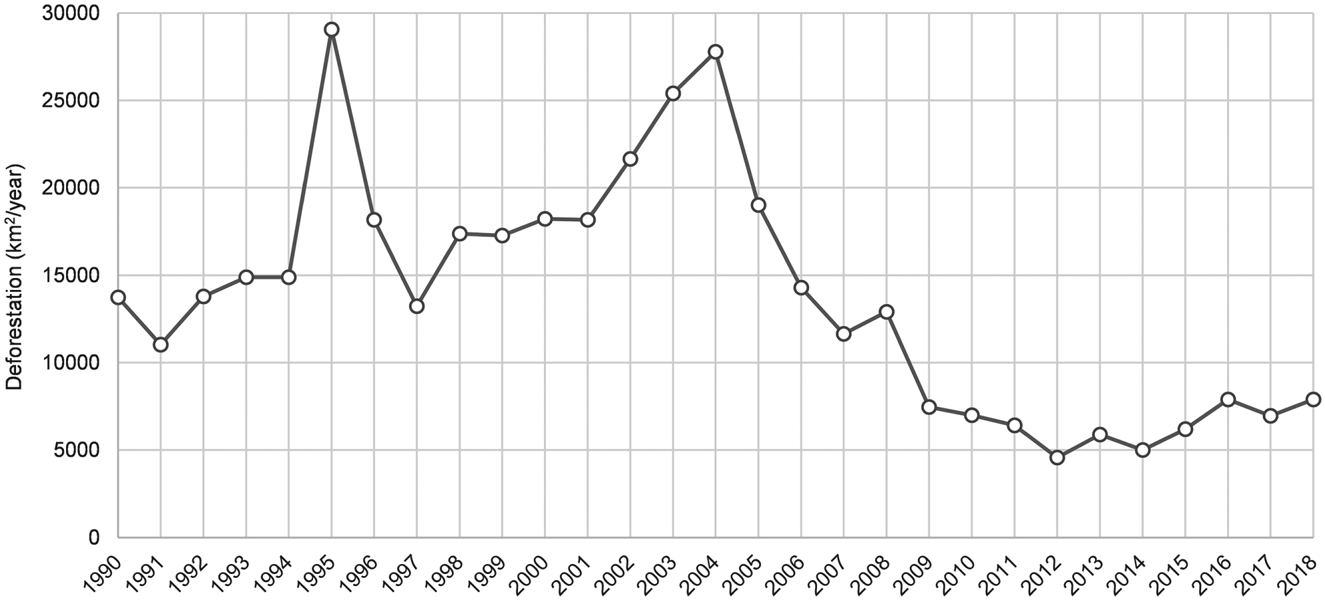
Figure 1. Annual Deforestation in the Brazilian Legal Amazon (km2; 1990–2018)
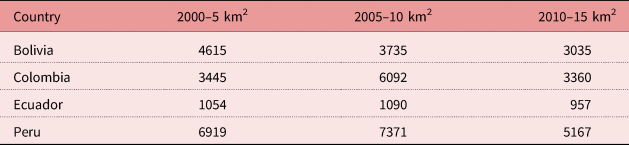
Table 1. Deforested Areas in the Bolivian, Colombian, Ecuadorian and Peruvian Amazon
 You have
Access
- 14
- Cited by
Introduction
The Amazon rainforest covers nearly 5.5 million km2, extending through Bolivia, Brazil, Colombia, Ecuador, French Guyana, Guyana, Suriname, Peru and Venezuela. It is the greatest continuous tropical forest in the world, storing 150–200 Gt C, i.e., approximately half of all tropical forest carbon.Footnote 1 The Amazon is a key element of the Earth system, whose diebackFootnote 2 may trigger a global climate catastrophe.
Two tipping points have been associated with the collapse of large parts of the Amazonian biome. In the absence of other contributing factors, a global temperature increase of 4 °C would potentially cause the forest to enter a catastrophic feedback loop, transforming forest ecosystems into impoverished savannas in the eastern, southern and central Amazon. However, considering potential negative synergies between deforestation, climate change and widespread use of fire, estimates indicate a threshold for the dieback of the forest at 20 to 25 per cent deforestation.Footnote 3 Alarmingly, the region has warmed approximately 1 °C over the last six decades and deforestation is close to reaching 20 per cent of the forested area.Footnote 4
Several studies suggest that the resilience of the Amazon is deteriorating, possibly leading to abrupt and irreversible environmental damage during this century.Footnote 5 If this is the case, massive amounts of carbon would be released into the atmosphere, precipitating an environmental catastrophe. However, neither the social science community that is studying the Amazon nor the political debates over the region have yet acknowledged the real prospect of the dieback of the forest.Footnote 6
In this commentary, we analyse the challenge of sustainable development in the Amazon, demonstrating that global efforts to mitigate climate change and Amazonian policies are clearly inadequate to prevent global warming and deforestation from tipping the forest into a savanna. In addition, we highlight the urgent need for a paradigm shift in how the Amazonian countries relate to the forest and position themselves internationally regarding the climate and biodiversity agendas.
The commentary is organised as follows. The next section describes briefly how climate change has affected the Amazon and emphasises the insufficiency of the current international efforts to prevent global warming from reaching a level that would severely compromise the forest's fundamental ecological functions. The following section examines the Brazilian, Bolivian, Colombian, Ecuadorian and Peruvian governance of the Amazon,Footnote 7 focusing on the period 2005 to 2018. Policy developments are analysed and the differences and similarities between the five country case studies identified. It is demonstrated that societal attention to environmental protection issues in those countries is highly determined by economic growth and social development levels. The next section focuses on the Amazon Cooperation Treaty Organization (ACTO) and discusses the failure of the Amazonian countries to build common policies for governing the region and tackling the challenges which they are confronted with. The following section suggests possible pathways for the sustainable exploitation of the forest. The commentary concludes by summarising the main threats to the resilience of the Amazon and by briefly reflecting on the present and future of the Brazilian political dynamic, and its potential impact on the whole Amazonian region.
The four main sections reflect our knowledge of the topics and are informed by (1) a literature review conducted through a comprehensive search of the English, Portuguese and Spanish references indexed on the Web of Science, Scopus and Redalyc databases over the past decade; (2) a methodical search of governmental publications and data; (3) studies conducted by scientific agencies, consortiums and international organisations; (4) public opinion surveys; and (5) a systematic online search of relevant news reports published in credible national and international newspapers over the past decade, whose content was analysed for facts. Because in most dimensions – share of forest cover, capacity of environmental and scientific institutions, financial resources and relevance in global governance – Brazil is the key player regarding the protection of the Amazonian forest, and considering that, in twenty-first-century South America, political dynamics have become more interdependent and generally influenced by Brazil,Footnote 8 the Brazilian case is covered in more detail. The analysis starts in 2005 as this is the year that marked the beginning of a dramatic decline in deforestation rates in the Brazilian Amazon. As will be demonstrated, this positive trend began to be reversed in 2013 and has worsened since 2016.
Despite the forest's global importance, the study of Amazonian governance – at either domestic or transnational levels – is virtually absent from the literature written in English in the fields of Political Science and International Relations. There is a significant amount of research on the local governance of the Amazon in Brazil written in Portuguese, and a more limited amount of work on the topic regarding the other Amazonian countries written mostly in Spanish. In addition, a few reports on forest governance in the region by national and international research organisations have been published; nevertheless, these focus neither on explaining policy developments nor on contrasting the differences and identifying the similarities among the various national contexts in order to shed light on how they should be seen as a whole in the context of a transboundary biome. This commentary aims to make an analytical contribution towards (1) a better understanding of the political, economic and social challenges confronting forest conservation policy in the Amazonian countries, and (2) thinking about the Amazon beyond national boundaries. Moreover, by demonstrating that the forest is risking abrupt and irreversible environmental damage during this century, this commentary defies dominant analyses which assume progressive and linear processes of environmental degradation.Footnote 9 Scholars in the social sciences and decision makers are prevented from recognising the growing possibility of a global ecological catastrophe by ignoring (1) the fact that anthropogenic interference with the Earth System may have already crossed the boundary below which the danger of destabilisation of the System is likely to remain low and (2) the dominant role humanity currently plays in driving global environmental change.Footnote 10 As will be seen, this risk is the result of human, political decisions, which means that mitigating it is fundamentally a matter of implementing new policies and reorienting human activities.Footnote 11 Accordingly, the present commentary also suggests a strategy for the Amazonian countries to promote a new development paradigm for the Amazon region and to ensure that global warming does not reach a level that critically affects the forest.
The Amazon and the Challenge of Climate Change
Global temperatures are rising at a rate that challenges previous climate models: 2015 (+0.90 °C), 2016 (+0.95 °C), 2017 (+0.85 °C) and 2018 (+0.79 °C) were the four warmest years since 1880; 2017 was the warmest year not influenced by an El Niño event, which typically magnifies global warming. Since 2013, land temperatures have persistently registered an annual average anomaly above 1 °C (+1.45 °C in 2016, the warmest year on record).Footnote 12 The Amazon has been severely hit by rising global temperatures: the 2005, 2010 and 2015–16 extreme droughts that affected the forest were uncommon events that will probably have long-term adverse effects. Drought–fire interactions are causing tree mortality and biomass loss in the region.Footnote 13 Climate change is reducing the capacity of disturbed forests to recover and recapture lost carbon.Footnote 14 During the 2005 and 2010 droughts, the Amazon lost approximately 1.6 Gt C and 2.1 Gt C respectively.Footnote 15 In 2015–16, the impact of El Niño was nearly 20 per cent greater than in previous extreme El Niño events; the region experienced unprecedented warming and forest fires intensified substantially.Footnote 16 Estimates indicate that, in the Amazon, the net effect of deforestation and reforestation currently results in a release of 0.15–0.35 Gt C/year.Footnote 17 As land warms, the Amazonian region will certainly experience more frequent and severe droughts and fires that may further jeopardise the forest's resilience. In a recent study on projected impacts of climate change across the planet, the forest emerged as a particular point of concern.Footnote 18 By 2100, the area affected by severe droughts might triple;Footnote 19 under a business-as-usual scenario, droughts might trigger fires that are 90 per cent more severe than non-drought fires.Footnote 20
Moreover, anthropogenic disturbances in the Amazon such as forest conversion to agricultural use, logging and other resource extraction, deliberately-started fires, the hunting and wildlife trade, and the spread of introduced species and pathogens are acting in synergy with the effects of climate change, potentially leading to outcomes that cannot be predicted.Footnote 21
The pledges that countries have made under the Paris Climate Agreement are clearly insufficient to safeguard the planet's climate. According to the 2018 special report by the Intergovernmental Panel on Climate Change (IPCC),Footnote 22 the global carbon budget for keeping global warming at 1.5 °C (115 Gt C) could be depleted in one decade. Nevertheless, the IPCC's latest conclusions have been widely criticised for being too conservative. In fact, there is a growing consensus among climate scientists that the threshold between incremental and dangerous climate change has already been crossed.Footnote 23
Estimates indicate that the current Paris commitments, the Nationally Determined Contributions (NDCs), have more than a 90 per cent probability of exceeding 2 °C and a 50 per cent chance of reaching 3.2 °C.Footnote 24 Countries are currently not even on track to meet their pledges. A global average temperature increase greater than 3 °C has been associated with catastrophic climate change, which would probably imply, among many other devastating consequences, extreme and widespread impacts on unique and threatened systems as well as large-scale species extinctions. This would trigger negative cascading effects on the functioning of forest ecosystems. A global warming increase of 3.2 °C could cause the Amazon to lose more than half of its biodiversity; in a 2 °C global warming scenario, more than one-third of the forest's wildlife could be at risk of extinction.Footnote 25 Furthermore, it is worth noting that humanity may have already crossed the core planetary boundaryFootnote 26 for climate change, which, if continuously crossed, may it alone push the planet into a global environmental catastrophe.Footnote 27
Disturbingly, humanity is potentially causing the climate to change 170 times faster than natural forces.Footnote 28 The latest scientific evidence indicates that self-reinforcing feedback loops are established once temperatures surpass a certain level, possibly leading to an abrupt rise in the concentration of greenhouse gases (GHGs) in the atmosphere. It also suggests that tipping points in the biosphere may be triggered even by a global warming increase of 2 °C, pushing the planet into a completely different state.Footnote 29 Considering that under the Paris Climate Agreement commitments on curbing GHG emissions are not legally binding, there are no defined dates by which countries must achieve their emissions peaks, and the system defined for monitoring the implementation of the parties’ pledges is weak, there are strong reasons for concern.Footnote 30
Conserving the forest under growing climate pressures is an extremely arduous task. However, the Amazon has a key role to play in limiting warming to 1.5 °C – ‘ending tropical forest loss, improving tropical forest management, and restoring 500 million hectares of tropical forests could reduce sufficient emissions to provide 10–15 years of additional time to dramatically reduce our use of fossil fuels’.Footnote 31 Nevertheless, although the Paris Climate Agreement (Article 5) encourages parties to ‘take action to conserve and enhance, as appropriate, sinks and reservoirs of greenhouse gases … including forests’,Footnote 32 there are no legally binding mechanisms regarding forest conservation. In addition, as will be seen over the next section, the Amazonian countries seem far from controlling forest loss in the region.
Amazonian Politics and Policies in Brazil, Bolivia, Colombia, Ecuador and Peru
Under the Paris Climate Agreement, most Amazonian countries have committed to reduce or halt deforestation in the region and to protect the forest's ecosystems. Nevertheless, there is a profound gap between the necessary policies to achieve these goals and the recent deteriorating governance of the region.
Although Brazil reduced the Amazonian deforestation rate by approximately 84 per cent between 2004 and 2012, during the 2013–15 and 2016–18 periods the average annual deforestation rates in the Amazon have been respectively 25 and 66 per cent higher than the historical minimum registered in 2012 (Figure 1). In 2018, deforestation reached nearly 8,000 km2,Footnote 33 which is still an extremely large area and unique for a middle-income country. In Colombia, Amazonian deforestation rates declined by 45 per cent in the 2010–15 period compared with the previous five years, with an annual average rate of forest loss by deforestation of nearly 700 km2 (Table 1). Between 2016 and 2018, the annual average rate of primary forest loss in the Amazon increased by 140 per cent compared with the previous three-year period.Footnote 34 In Peru, Amazonian deforestation rates declined by 30 per cent in the 2010–15 period compared with the previous five years, with an annual average rate of forest loss by deforestation of nearly 1,000 km2 (Table 1). Between 2016 and 2018, the annual average rate of primary forest loss in the Amazon increased by 20 per cent compared with the previous three-year period.Footnote 35 In Bolivia, there was a decline of approximately 20 per cent in Amazonian deforestation rates in both the 2005–10 and 2010–15 periods compared with the respective previous five years (Table 1). Between 2016 and 2018, the annual average rate of primary forest loss in the Amazon increased by 60 per cent compared with the previous three-year period.Footnote 36 In Ecuador, the annual average rate of forest loss by deforestation in the Amazon remained virtually unchanged between 2000 and 2015 – approximately 200 km2 (Table 1). Between 2016 and 2018, the annual average rate of primary forest loss in the Amazon increased by 90 per cent compared with the previous three-year period.Footnote 37
Annual Deforestation in the Brazilian Legal Amazon (km2; 1990–2018)
Deforested Areas in the Bolivian, Colombian, Ecuadorian and Peruvian Amazon
Note: Amazonian deforestation rates (see source below) calculated by the Red Amazónica de Información Socioambiental Georreferenciada (Amazon Geo-Referenced Socio-Environmental Information Network, RAISG) are an estimate of the forest area affected by the loss of vegetation as a result of human activity between August and July over a five-year period. Other reliable monitoring systems follow different methodologies. For example, measurements by the Global Land Analysis and Discovery (GLAD) laboratory at the University of Maryland do not distinguish between natural and human causes of loss; they capture loss in all tree cover and measure the loss of forest between January and December. See Global Forest Watch, ‘Technical Blog: Global Forest Watch's 2018 Data Update Explained’: https://blog.globalforestwatch.org/data-and-research/technical-blog:-global-forest-watch's-2018-data-update-explained. Because our commentary addresses Amazonian politics and policies, therefore focusing exclusively on direct anthropogenic drivers of deforestation, we use data produced by RAISG for Bolivia, Colombia, Ecuador and Peru. However, at the time of the writing, deforestation data produced by RAISG for the post-2015 period are still lacking. For the period 2016 to 2018, we use the reports produced by the Monitoring of the Andean Amazon Project (MAAP), whose analyses are made using data generated by GLAD. The numbers presented by MAAP indicate that the loss of primary forest in most of the Amazon in recent years has increased. In spite of the different measurement methodologies, recent data, alongside current political, economic and social dynamics in most Amazonian countries, suggest that forest loss by deforestation in those four countries might have increased after 2015.
Source: Authors’ elaboration of data from https://ecociencia.org/publicaciones-raisg/.
Deforestation in the Amazon has been driven by agriculture and cattle ranching, legal and illegal logging and mining, growing illicit crops, infrastructure building and hydrocarbon extraction.Footnote 38 As we shall see, economic growth and social development imperatives; rural poverty; weak law enforcement; financial constraints on environmental policies; and high economic dependence on the primary sector challenge forest conservation in the Amazon. The sustainable governance of the region is further compromised by powerful economic interests in different sectors in Brazil, Bolivia, Ecuador and Peru; the peace process in Colombia; and the low level of public and political attention paid to environmental issues in all Amazonian countries.
In the following subsections, the Brazilian, Bolivian, Colombian, Ecuadorian and Peruvian governance of the Amazon is addressed. On the basis of Amazonian deforestation trajectories over the past 13 years, the discussion is divided into three periods:
• 2005–10, when a stable national context in Brazil allowed pro-environmental forces in the country to increase their political power and to draw governmental and public attention towards sustainability issues. Conversely, these were neglected in Colombia and Peru for most of this period. In Bolivia and Ecuador, where New Left practices were initiated following years of economic, social and political instability, progressive conservationist discourses emerged – these had a visible positive impact on deforestation in Bolivia, but not in Ecuador.
• 2011–15, years which were characterised by the rise of anti-environmentalist forces, economic decline, political instability and environmental neglect in Brazil. Contradictions between environmental protection rhetoric and reality on the ground emerged in Bolivia and became evident in Ecuador. On the other hand, in Colombia and Peru there were some positive advances.
• 2016–18, a period marked by the consolidation of the political power of anti-environmentalist forces, a deepening of political instability and the election of a new president manifestly hostile to the imperatives of environmental sustainability in Brazil; an environmentally-challenging post-conflict context in Colombia; political instability in Peru; and an increase in extractive and environmentally-damaging activities in most of the Amazon.
2005–10
In 2004, forest loss in the Brazilian Amazon reached almost 28,000 km2 (Figure 1). However, in the 2005–10 period, controlling deforestation was a political priority for the federal government. The two ministers of the environment of Lula da Silva's administrations, Marina Silva (2003–8) and Carlos Minc (2008–10), notable Brazilian environmentalists, were able to promote a profound shift in the country's Amazonian politics and policies – their vigorous action resulted in law enforcement, enhanced institutional capacity, new national parks and conservation units, and significant cooperation between the federal government and the Amazon state governments. In addition, during the same period, coalitions by several stakeholders to oppose the consumption of beef and soy beans produced in deforested areas emerged, and the scientific community and environmental NGOs increased their influence on the Brazilian media, drawing attention to the problem of deforestation.Footnote 39
This period was marked by great economic and political stability in Brazil: growing improvement in economic conditions, successful social policies and wide public support for the government. This favourable context allowed both political and public attention on environmental issues to grow in the country.
In Bolivia, after multiple popular struggles against the neoliberal orientation of the previous government, Evo Morales and the Movimiento al Socialismo (Movement towards Socialism, MAS) party rose to power in 2006 supported by peasants, indigenous organisations, coca growers, miners and leftist sectors, with an anti-imperialist, indigenous-inspired and radical environmentalist discourse based on the need to recover control, ‘for the people’, of the country's natural resources.Footnote 40 The Morales administration promised to promote an alternative development paradigm that would respect nature – a new government forest strategy was announced in early 2008 and nature's rights were recognised in national legislation in 2010 (Law no. 071). However, as will be seen, to secure political stability the MAS had to adjust to dominant interests and progress was reversed.
In Ecuador, following a decade of extreme political and economic instability, Rafael Correa rose to power in 2007 supported by social movements and promising a ‘citizens’ revolution’. His government enacted a new Constitution recognising the legal rights of nature – one of the world's most socio-environmentally progressive – in 2008. Indigenous and environmental groups, part of Correa's coalition, had a significant influence on the process of writing Ecuador's new constitution. However, after the constitution was adopted, the extractivist economic vision of the president and other socialists prevailed.Footnote 41
In Colombia and Peru, this period was mostly marked by political neglect of environmental issues.Footnote 42
2011–15
Although deforestation rates in the Brazilian Amazon continued to fall until 2012, the first year of Dilma Rousseff's term marked the beginning of a serious setback for forest conservation in the country. Short-term economic growth was the top priority of the new president; Izabella Teixeira, minister of the environment between 2010 and 2016, lacked the political weight of her predecessors. In addition, the agribusiness caucus in the Chamber of Deputies gained strong ground. In 2011, supported by the Ministry of the Environment (MMA) – which accepted the peripheral role of the environment in the federal political agenda – the Brazilian Congress approved a reform to the Forest Code that significantly reduced environmental protections, leaving the Amazon vulnerable.Footnote 43 The wave of deforestation that followed and persists today is, to a significant extent, symptomatic of the political power of the Agribusiness Parliamentary Front (APF) in the national Congress.Footnote 44 In the 2007–10 legislature, the agribusiness caucus accounted for 21 per cent of the deputies; this percentage rose to 28 and 39 per cent during the 2011–14 and 2015–18 legislatures respectively, allowing the ‘ruralists’ to lead an offensive policy against environmental legislation. Modern, competitive and extremely well-organised, the agribusiness sector is an important pillar of the Brazilian economy, accounting for almost half of Brazilian exports, and playing a major role in the country's trade balance.Footnote 45 The sector's economic strength and organisational robustness at national and congressional levels make the ‘ruralists’, as will be seen, powerful actors, capable of broadly influencing the country's political agenda. Since their support is critical in passing legislation, the ‘ruralists’ are able to exert significant power over executives.
In Bolivia, following the example of the Brazilian new Forest Code, a law (no. 337) promoting the expansion of the agriculture frontier, decriminalising illegal deforestation of land, and giving the agribusiness sector an amnesty for their historic responsibility for deforestation, was passed in 2013.Footnote 46 Yet only a year earlier, a law (no. 300) establishing the vision and principles of integral development in harmony and balance with nature had been approved in the country. The second half of this period was marked by profound lack of coherence between forestry and land use policies, and between the president's conservationist discourse and his administration's goal of guaranteeing food production and export through extractivist methods.
Contradictions between rhetoric and practice in Bolivia reflect indigenous demands for nature conservation policies and international pressure to prevent massive deforestation. In addition, and conversely, there is widespread public support for forest extractivism as a means of reducing poverty and inequality and guaranteeing food sovereignty, while there is also a need to address demands for greater forest clearance by the agribusiness and peasant sectors – the latter providing the government with its main political support.Footnote 47
For very similar reasons, Ecuador too was living a paradox. Correa's government prioritised large infrastructure projects such as roads and bridges and promoted hydrocarbon and mineral extraction in the Amazon, stressing ‘man's mission to subordinate nature’.Footnote 48
Once in office, Correa implemented a number of redistributive policies; these were successful in gaining the public's approval. To be seen as legitimate, the government continued to distribute social benefits, which enhanced the need for revenues. As a consequence, the state engaged in extractivist activities to accumulate wealth. The Correa administration was among the most popular in Latin America; in Ecuador, it is widely accepted that extractive activities are critical in order to finance poverty-reduction programmes.Footnote 49 Correa took advantage of the oil boom of the 2000s to renegotiate contracts and strengthened the state's control over the Ecuadorian oil industry. Oil extraction is the country's leading source of revenue, accounting for nearly half of exports. To diversify the economy, Correa encouraged mining:Footnote 50 ‘Ecuador is free to engage in the natural resource sector in an unsustainable manner [not only because of massive public support, but also] because it is … in line with the political interests of the traditional oligarchy at the national level.’Footnote 51
In the meantime, in Brazil, the strength of the ‘ruralist’ lobby and the federal government's neglect of the environment were being reinforced by the deteriorating state of the country's economic and political situation since 2013. Amid declining economic performance, massive public demonstrations against corruption and the poor quality of education and healthcare and growing political instability, attention to environmental issues has decreased dramatically in the country.Footnote 52
The environmental agenda was largely overlooked during campaign discussions for the 2014 Brazilian general elections.Footnote 53 During her second term, Rousseff – facing four consecutive years of subpar economic growth and a massive corruption scandal (‘Operation Car Wash’) that nearly cost her her re-election – appointed as minister of agriculture Kátia Abreu, the president of the Brazilian Confederation of Agriculture (a lobby group of large landowners) and the leading figure in the agribusiness caucus, whose anti-environmentalist positions earned her the title of ‘Miss Deforestation’.Footnote 54
Unsurprisingly, under the Rousseff administration the creation of new conservation units was interrupted; in some cases, the existing protected areas were reduced.Footnote 55 In addition, the worsening of Brazil's fiscal situation resulted in a drastic reduction in financial support for pivotal environmental agencies acting in the Amazon – nearly 70 per cent during Rousseff's first term when compared to Lula's last term. The decline in forest protection policies encouraged illegal deforestation activities in the Amazon – not only by organised criminal groups but also by vulnerable forest communities hit by fast-growing unemployment who, without other means of survival, have engaged in forest conversion activities promoted by small firms operating on the margins of law.Footnote 56
Conversely, in Colombia and Peru there were some positive advances. The Centre–Right government of Juan Manuel Santos (2010–18) advanced the Colombian environmental agenda. The president was driven by a strong wish to enhance the country's international prestige and benefit from international cooperation; the growing awareness of Colombia's ecological vulnerability which had been triggered by the impact of the 2010–11 La Niña event;Footnote 57 and the fact that the presidential candidate of the Colombian Green Party (one of the most organised green parties in the region) received the second-most votes in the 2010 election.Footnote 58 In addition, unlike what happens in other Amazonian countries, domestic pressure groups have limited political influence in Colombia.Footnote 59 Following the Brazilian example of the second half of the 2000s, new protected areas were created and indigenous reserves expanded, and action was taken to strengthen the institutional capacity of the Ministry of Environment and Sustainable Development.Footnote 60
In Peru, leftist President Ollanta Humala (2011–16), supported by important figures on the Peruvian Left and the regions most affected by extractive activities, promised ‘a great transformation’ and, at the beginning of his mandate, took progressive environmental and social measures (e.g. indigenous consultation law; plans for minimum wages and pensions and cash transfers).Footnote 61 Nevertheless, as the Peruvian economy slowed, the power of anti-environmentalist forces was reinforced and environmental regulations were reversed by the end of this period.Footnote 62 Peru is heavily dependent on the export of raw materials that are mainly extracted by foreign capital. In particular, mining revenues are critical for the country's economic growth and social development.Footnote 63 Moreover, the pro-extractivist interests of the country's powerful economic groups and transnational capital exert significant influence over the Peruvian state.Footnote 64 With a politically inexperienced party and lacking a legislative majority, Humala was forced to maintain neoliberal and extractivist policies.
2016–18
In Brazil, a severe economic recession in 2015, growing evidence of the systemic corruption exercised within the PT, and charges of fiddling government accounts made Rousseff lose control of her coalition at the beginning of 2016. In March, the APF – envisioning an opportunity for reinforcing its political power and advancing its anti-environmentalist agenda – declared its full support for the president's impeachment. The next month, leaders of the APF met with Michel Temer, the country's vice-president, to discuss their concerns and positions.Footnote 65 The APF's votes were critical to impeaching Rousseff in August 2016.Footnote 66
During Temer's presidency, deforestation rates increased (Figure 1). The new president engaged in large offensives against the Amazon in return for the support of the agribusiness caucus. Temer, who faced not only the lowest presidential approval rate in the country's history (3 per cent), but also accusations of corruption and two impeachment votes, signed laws, decrees and provisional acts that reduced protected areas in the Amazon, suspended the ratification of indigenous lands, enabled those who had misappropriated land in the region to legalise those holdings simply and cheaply, and forgave billions of dollars in environmental fines and debts owed by farmers and ranchers.Footnote 67 The Brazilian president also released vast sums of pork-barrel allocations to several ‘ruralist’ representatives in the months preceding the two impeachment votes.Footnote 68 In fact, more than half of the votes that defeated the 2017 impeachment motions against Temer came from the agribusiness caucus.Footnote 69
In addition, one key goal of Temer's economic policy was to drastically reduce Brazil's fiscal deficit. Consequently, the budget of the MMA was reduced by more than 50 per cent; this hampered the ministry's ability to promote effective climate and forest protection policies.Footnote 70 The fields of science and technology also suffered severe budget cuts (44 per cent in 2017 and an additional 35 per cent in 2018) that affected research into biodiversity, a key basis of public policies for sustainable development and environmental protection.Footnote 71
In Bolivia, governmental incentives for oil and gas exploitation in protected areasFootnote 72 further jeopardised forest ecosystem health. The challenge of finding new gas reserves to sustain the volume of exports as well as the fact that public expenditures depended significantly on hydrocarbon rents explain the government's encouragement of hydrocarbon exploitation. In response to a growing external and internal market for gas, low international oil and gas prices in the 2014–16 period and economic slowdown, the government sought to rapidly expand the volume of exports by partnering with transnational firms.Footnote 73
In addition, the political strength of the country's environmentally conservative forces became evident. In February 2017, after violent protests by farmers, the Bolivian government agreed to raise coca cultivation limits;Footnote 74 in August, aiming to authorise the construction of a 300-km road, it passed a controversial law (no. 266) reducing the legal protection of the Isiboro-Sécure National Park and Indigenous Territory (TIPNIS, from its Spanish initials). Forest loss in TIPNIS is mostly associated with coca cultivation.Footnote 75 In addition to coca growers, farmers in the department of Cochabamba and agricultural and meat producers in the department of Beni will also benefit from the new road.Footnote 76
The situation is aggravated by rural poverty and lawlessness in the region, and public neglect of environmental issues. For the Bolivian population, corruption, drug trafficking, public insecurity and unemployment are the country's greatest problems.Footnote 77
In Ecuador, contradictions reflecting the demands of indigenous communities and environmental groups, and international pressure on the one hand, and the need for revenue to sustain the government's social policies on the other, continued during Lenín Moreno's administration. In September 2017, Ecuador launched the Programa Integral Amazónico de Conservación de Bosques y Producción Sostenible (Whole-Amazon Programme for Forest Conservation and Sustainable Production, PIACBPS). According to the government, PIACBPS will take action in an area of 20,000 km2 by recovering degraded land, encouraging sustainable production systems and promoting Amazonian products and bio-enterprises in local and national markets.Footnote 78 Nevertheless, and although President Moreno committed, in December 2017, to end new mining and oil concessions in areas where local indigenous peoples had not been consulted, Ecuador's minister of hydrocarbons announced in March 2018 that the government would auction 16 new oil concessions in Ecuador, covering over 28,000 km2 of primary forest in the south-eastern region and within the titled territories of several indigenous peoples.Footnote 79
The pressure on natural resources in the Ecuadorian Amazon is exacerbated by rural poverty, and the presence of criminal groups in the region is encouraged by the weak rule of law. Rural communities have not shared fully in the benefits of economic growth,Footnote 80 and are forced to engage in deforestation activities, including those promoted by groups operating on the margins of the law.Footnote 81 In addition, environmental protection is overshadowed by concerns over unemployment levels, economic growth, corruption and public insecurity.Footnote 82
In Peru, as a result of rising prices for precious metals, deforestation by mining reached historically high levels in the Amazon in this period.Footnote 83 In addition to mining, small-scale coffee and cacao cultivation and palm oil production – also encouraged by high international prices and rapidly becoming a key national strategy for agricultural development – are threatening the ecology of the Amazonian landscape.
The cultivated area of palm oil in the Peruvian Amazon occupies nearly 780 km2, with pending requests for almost 1,000 km2 to establish 11 additional palm oil concessions. Recently, the Peruvian government declared another 60,000 km2 suitable for cultivation and established a ‘Multi-sectoral Commission on Palm Oil’.Footnote 84 Palm oil production is rapidly becoming a key national strategy for agricultural development and is supported by many smallholders and indigenous communities: this support is
in part a result of oil palm companies providing basic services such as roads, infrastructure, market access, and even healthcare and education, that the government had failed to provide. The lack of government presence and appropriate or successful rural development projects in the area has strengthened the coalition for agricultural intensification.Footnote 85
The Peruvian government is also encouraging infrastructural projects such as road construction to facilitate the activities of extractive industries. Estimates indicate that the construction of roads might cause the loss of 170,000 km2 of Amazonian forest by 2021.Footnote 86 Moreover, in a context of weak law enforcement and rural poverty, the illicit crop cultivation area in Peru has increased in recent years.Footnote 87
In addition, it worth noting that, as in Brazil, corruption scandals involving elected officials at the highest levels have marked the Peruvian political landscape over the past few years. In 2018, after less than two years in office, President Pedro Pablo Kuczynski, accused of involvement in the Odebrecht ‘campaign cash for construction contracts’ case, resigned. Unsurprisingly, corruption is currently the main concern of the Peruvian population. Increasing levels of criminality and violence have also diverted public and political attention away from environmental issues.Footnote 88
In Colombia, the Santos administration's post-conflict plan did not adequately address the environmental challenges of peace. Post-conflict states usually experience deterioration in environmental conditions – governments tend to focus on socioeconomic issues, overlooking nature conservation imperatives.Footnote 89 Post-conflict scenarios are generally marked by growing levels of forest loss.Footnote 90 Indeed, in 2016, the year the peace agreement was signed, total deforestation in Colombia increased significantly. Over one-third of forest loss was concentrated in areas previously occupied by the rebels of the Fuerzas Armadas Revolucionarias de Colombia – Ejército del Pueblo (Revolutionary Armed Forces of Colombia – People's Army, FARC-EP). The Amazon was the most deforested area in the country.Footnote 91 Institutional weaknesses and budget limitations have prevented the Colombian government from establishing its presence in places historically affected by the conflict. As a result, new paramilitary groups (including dissidents of the former FARC guerrilla group), guerrillas of the Ejército de Liberación Nacional (National Liberation Army, ELN), criminal gangs, drug-trafficking organisations and cattle ranchers are now in control of the territory.Footnote 92
The main cause of the current wave of deforestation is land hoarding,Footnote 93 a practice that is not only encouraged by corruption and the absence of the state in remote forest areas, but also by the fact that Colombia lacks a registry of unoccupied land.Footnote 94 Taking advantage of poor rural communities, criminal groups and landowners hire peasants to deforest large areas.Footnote 95 In the absence of economic alternatives, rural populations are easily drawn into illegal forest activities.Footnote 96
In addition, the government plans to expand extractivist activities to finance the peace programmes.Footnote 97 It is also worth noting that the Colombian state is struggling with fiscal deficitsFootnote 98 – the government of Iván Duque, in office since August 2018, has drastically reduced the budget for the environmental sector.Footnote 99 In the face of the declining price of oil, Colombia's largest source of revenue, ‘the country is eyeing Brazilian-style agribusiness projects’.Footnote 100 Only a third of the country's available agricultural land is currently being used; areas previously inaccessible and unproductive due to control by non-state armed groups are now being targeted by national and international firms. In addition, the desire of rural populations for rapid economic growth and the return of people displaced during the conflict are expected to aggravate the pressure on land and resources.Footnote 101 Moreover, political neglect of environmental issues will most likely be exacerbated by the fact that corruption, unemployment, public security and the poor quality of education and healthcare are the main problems concerning the population at a time when almost two-thirds of Colombians disapprove of Iván Duque's administration.Footnote 102
The end of this period was marked by the victory of right-wing conservative Jair Bolsonaro – a candidate manifestly hostile to environmental policyFootnote 103 – in the 2018 Brazilian general elections as a result of the population's strong desire for political renewal and widespread ‘anti-PT’ sentiment (both originating from deep mistrust of political parties and four years of severe economic crisis with a decline of nearly 10 per cent in per capita income), the urge for firm measures to fight crime and violence, and the support of the most socially conservative segments of the population and the country's business and financial sectors.Footnote 104 Environmental issues were once more almost completely overlooked during campaign discussions.
The future of the Amazon looks unpromising.
The Amazon Cooperation Treaty Organization: Failing the Forest
At the regional level, efforts to promote the overall integration of the Amazonian territories, establish long-term sustainable forest policies and provide a regional approach to the climate crisis have failed thus far. Although the process began four decades ago with the signing of the Amazon Cooperation Treaty (ACT) and was reinforced with the creation of the ACTO in 1998, the transnational integration of the region is still just a rhetorical intention. The ACTO is essentially a platform for the exchange of information.
Cooperation among the Amazonian countries began in the 1970s, when the emergence of environmental concerns – promoted by the United Nations Conference on the Human Environment, held in Stockholm in 1972 – shed light on the global importance of the Amazon rainforest and raised the possibility of the internationalisation of the region as a means to preserve the forest. Within this context, under the doctrine of ‘national security’ and aiming to reaffirm and strengthen their sovereignty over the Amazonian region and its natural resources,Footnote 105 Bolivia, Brazil, Colombia, Ecuador, Guyana, Suriname, Peru and Venezuela signed the ACTFootnote 106 in July 1978. In 1995, the ACT was strengthened with the creation of a Permanent Secretariat, endowed with legal authority; in 1998, the ACTO Protocol of Amendment was approved and the ACTO was founded. In 2002, the headquarters of the organisation were established in Brasília. The ACT is still in effect today and the ACTO is responsible for the treaty's implementation, the main purpose of which is the promotion of the balanced development of the Amazon whilst respecting the ‘importance to each one of the Parties of their respective Amazonian regions as an integral part of their respective territories’.Footnote 107 Commercial navigation, physical infrastructure, cooperation in the education and health sectors, tourism and indigenous peoples’ rights are also included in the ACT/ACTO agenda.Footnote 108 In 2010 climate change – described as an ‘emerging topic’ in the ‘Amazonian Strategic Cooperation Agenda’Footnote 109 approved at the 10th Meeting of the ACT's Ministers of Foreign Affairs – was incorporated into the organisation's programme.
ACTO's most promising initiative thus far lies in a project supported by the INPE to develop and implement integrated systems of forest monitoring, providing the Amazonian countries with the technical skills needed to gather information to address deforestation in their territories; ‘Forest Cover Monitoring in the Amazon Region’Footnote 110 aims to replicate, in the other countries, the successful satellite monitoring methodology used by Brazil. This has been an effective avenue for regional cooperation; apart from information sharing, it has been the only one.Footnote 111
Amazonian cooperation faces several challenges. The first is the low level of interest by the various governments; between 1978 and 2018, only three meetings of presidents (1989, 1992 and 2009) and 13 meetings of ministers of foreign affairs were held under the aegis of the ACT.Footnote 112 Second, the Amazonian countries have divergent views and interests as well as internal struggles regarding key issues such as energy, drug trafficking, transnational security and defence.Footnote 113 Third, and most importantly, the organisation suffers from technical and financial capacity limitations as well as institutional weaknesses that, stemming from sovereignty and territorial integrity concerns, hinder its effectiveness. The vast majority of the projects approved by the ACTO have not been implemented; according to the organisation's official website, only three projects have been executed thus far.Footnote 114
Brazil, the member of the ACTO with the political and financial power to develop the organisation, has not invested in it. The country has constantly hesitated in supporting regional institutions and rules that could reduce its autonomy, taking a selective approach based on a strict assessment of its national interest. Brazilian elites consider that the country is often too generous with its neighbours.Footnote 115 As Andrés Malamud puts it, ‘the argument is that Brazil will be more capable of pursuing its foreign goals on its own rather than depending on costly agreements with unpredictable partners’.Footnote 116
In fact, sovereignty and territorial integrity remain key principles in Amazonian cooperation,Footnote 117 and these concerns have slowed the institutional development of the ACTO, inhibiting policy formulation and implementation at a regional level.Footnote 118 Being particularly protective of their borders, the Amazonian countries have often refused regional or international commitments that could threaten their sovereignty. Accordingly, the ACTO does not have any supranational power and relies on a unanimous voting process for each decision taken, which complicates and slows the decision-making process and reduces the ambition of policies, rendering the organisation's decisions unenforceable.Footnote 119 Furthermore, the ACTO lacks a dispute resolution or enforcement mechanism that allows its member countries to find cooperative solutions for transboundary issues. Sovereignty concerns have also prevented the creation of transboundary protected areas (TPAs) and other common solutions to protect shared ecosystems. Although several attempts have been made, Brazil has rejected proposals to create TPAs due to concerns that these might become independent indigenous states or supranational territories under the aegis of the United Nations. As a result of territorial integrity concerns, forest protection attempts in border areas face complex and bureaucratic challenges and are usually unsuccessful – environmental conservation projects along these areas have to be approved at the ministerial level, and environmental issues between municipalities from different countries can be resolved only by the capital and the national diplomats, who, considering their distance from the problem, have a limited sense of the realities at hand.Footnote 120
Essentially, the ACTO has undergone long periods of inertia, which are broken only when the Amazonian countries feel the need to reaffirm their sovereignty over the region in global environmental negotiations, namely, in the United Nations Forum on Forests (UNFF) and the United Nations Framework Convention on Climate Change (UNFCCC).Footnote 121
Moreover, given the proliferation of cooperation projects in Latin America and the inevitable overlapping of goals among them,Footnote 122 and despite the strategic relevance of the Amazonian region, the ACTO is overshadowed by other regional institutions and projects (e.g. the trading bloc MERCOSUR, the Initiative for the Integration of the Regional Infrastructure of South America [IIRSA], the Pacific Alliance, and others, which address many of ACTO's strategic themes), thereby playing a marginal role in the member states’ foreign policy agenda. Synergies between the ACTO and other regional institutions are also missing.Footnote 123
Considering the low public and political attention paid to environmental protection in most of the Amazonian countries, it seems very likely that, at least in the short term, the ACTO will remain a marginal organisation in South America, devoted mainly to information sharing. Nevertheless, reversing this trend by forging a long-term, common vision and developing more effective regional cooperation and integration mechanisms should be a priority in the Amazonian countries’ foreign policy agenda.Footnote 124 As we shall see in the next section, this is a key step for halting deforestation in the region.
Pathways for the Sustainable Exploitation of the Amazon
The failed international efforts to combat climate change and the poor quality of governance in the Amazon are jeopardising the forest's resilience. The risk of crossing a tipping point leading to the dieback of large parts of the Amazonian biome is real and should thus be seriously considered. This reflects the urgent need of a paradigm shift in the way the Amazonian countries relate to the forest as well as in how they position themselves internationally with regard to the environmental agenda (particularly the climate and biodiversity agendas). In this section, we offer a set of guidelines and conditions for the preservation and sustainable exploitation of the Amazon. These are based on three strategic axes: the strengthening of the ACTO, the promotion of a technological revolution in the forest, and vigorous environmental diplomacy by the Amazonian countries.
First, reviving the ACTO would help its members in responding to various challenges facing forest conservation. As has been seen, the Amazonian countries face a problem of weak enforcement and lack of financial resources to effectively manage the forest; these common problems could be at least partially solved by joining forces and implementing shared policies. The transnational integration of the Amazon would strengthen the presence of the Amazonian countries in the international arena and, as a consequence, raise the attention of the international community to the need of ensuring that global warming does not reach a level that potentially leads to the savannisation of the forest. Such integration would promote the establishment of joint projects to sustainably explore shared biodiversity and water resources, including in areas where infrastructure and equipment exchange already exist. Transnational integration would also help in controlling illegal activities.Footnote 125 Additionally, it could bring together public, private and voluntary institutions at different levels to respond to the climate crisis in an integrated way, through a mitigation and adaptation strategic plan designed to promote the strengths of each country.Footnote 126
As has been noted, the project of the transnational integration of the Amazon largely depends on Brazilian political will and resources. Individual countries can promote positive regional change by exercising leadership in developing and implementing sustainable development initiatives.Footnote 127 Brazil has accumulated significant experience in the field of forestry and other land use. In addition to early warning systems for forest clearance and fire detection via satellite imagery mentioned in the previous section, the Brazilian experience includes, for example, enforcement of laws and regulations, an inventory of GHG emissions from land use change, forest plantations for native forest restoration, low-carbon agricultural practices, and experimental projects for forest protection and sustainable use.Footnote 128 It is thus absolutely essential that the country abandon its current neglect of the Amazon and that Brazilian diplomacy reverse its distant attitude towards the ACTO, engage with its Amazonian neighbours and forge a unified and reformist voice for the Amazon countries. Since the organisation has an environmental mandate, it is headquartered in Brasília, and two of its major member countries, Colombia and Peru, are cooperative,Footnote 129 Brazil could, with relatively few resources, build sustainable leadership and revive and strengthen the ACTO by promoting forest protection and a new development paradigm for the Amazonian region.Footnote 130 This leads us to the second strategic axis.
Considering the need for economic growth and social development in all Amazonian countries, protecting the Amazon requires acknowledging that the economic value of the conservation of the forest is greater than that of its deforestation and degradation. As Emilio La Rovere has noted, ‘the main challenge remains to make [it] cost-effective to keep the tropical forest in place, through the development of new technologies and markets for forest products’.Footnote 131 According to the Brazilian Academy of Sciences, transdisciplinary science, technology and innovation are able to attribute great economic value to the standing forest, helping us to explore the vast potential of the Amazon without destroying nature.Footnote 132
Opening the region to technological innovation on a socially inclusive and sustainable basis would entail integrating the vast knowledge of indigenous peoples and rural populations regarding the forest and its resources, and developing the economic potential of the Amazon by prioritising low-carbon projects in infrastructure, international ecological tourism (rigorously controlled to prevent forest degradation), agri-silviculture and information- and knowledge-intensive productive systems related to forests, biodiversity, water and climate.Footnote 133 Investing in low-carbon infrastructure in the region could encourage the development of a green economy at the national level in each Amazonian country.Footnote 134
This new development paradigm would naturally imply zeroing deforestation in the short term (empirical evidence has already demonstrated the low cost of deforestation control) and eradicating illegal activities such as biopiracy. As noted earlier, this task would be easier with the transnational integration of the region. The Amazonian governments should guarantee strong rule of law in the Amazon, not only to ensure nature conservation, but also to facilitate local and international investments and projects by promoting favourable conditions and establishing clear competition rules.Footnote 135 This is particularly pressing, since creating new public universities as well as research centres and technological institutes to qualify, attract and establish high-quality human resources would be fundamental to revolutionising the Amazon. The acceleration of innovative industrialisation, the emergence of new economic activities, the development of employment opportunities and the expansion of a highly qualified workforce would, according to the Brazilian Academy of Sciences, fully offset the large investments needed.Footnote 136
Promoting and implementing this novel sustainable development model in the region would also require an activist and progressive attitude on the part of the Amazonian countries in the international arenas of climate change and biodiversity discussion, essentially founded on three principles: the urgency of the global ecological crisis, the fact that the Amazon is a global natural asset needed to prevent a catastrophic climate change scenario, and the economic value of the conservation of the forest. Amazonian diplomacy should act with the double aim of preventing global warming from reaching a level that leads to the dieback of the forest and of building coalitions and partnerships to manage and preserve the Amazon as well as attracting the best investments to develop a green knowledge economy in the region.
Following this strategy, it is absolutely essential that Brazil and Colombia ratify the Nagoya ProtocolFootnote 137 as soon as possible and that the ACTO members become vigorously involved in the UN Convention on Biological Diversity (CBD). Simultaneously, the Amazonian countries should improve their NDCsFootnote 138 and pressure for an immediate and ambitious revision of the mitigation targets made under the Paris Climate Agreement. Since the agreement formally recognised the central role of forests in tackling climate change, a more active international role by the Amazonian countries could help them raise considerable funds to protect the forest.Footnote 139 In addition, the Amazonian countries should broadcast the debate on climate change and biodiversity loss throughout the most important global governance forums, such as the World Trade Organization, the International Monetary Fund, the World Bank and the G-20.
Following the above-mentioned pathways would certainly help the Amazonian countries become global environmental leaders and prevent the Amazon from tipping into a savanna.
Conclusion
Global warming is accelerating and the Amazon has been suffering from the effects of rising temperatures; current pledges of NDCs place the planet at a potentially catastrophic level of climate change by 2100, and a rise of even 2 °C in global temperatures may trigger self-reinforcing feedback loops in the biosphere that would severely affect forest ecosystems. In all Amazonian countries, the demand for economic growth and social development, weak law enforcement, financial limitations and high economic dependence on the primary sector are threatening the forest's resilience. The situation is aggravated by powerful interests in the agriculture and land-use, hydrocarbon and mining sectors. In addition, political instability and corruption investigations, economic difficulties and rising levels of crime and violence have diverted political and public attention away from environmental issues over the past few years. In spite of the fact that all countries addressed in this commentary face similar challenges regarding forest protection and could benefit from an integrated Amazonian strategy, a shared identity is yet to be forged – at the regional level, efforts to preserve the Amazon are undermined by sovereignty and territorial integrity concerns.
We have argued that the preservation and sustainable exploitation of the Amazon depend on the strengthening of the ACTO, on the promotion of a technological revolution in the forest and on progressive environmental diplomacy by the Amazonian countries. An integrated strategy for the Amazon both at the regional and international levels depends entirely on Brazilian leadership. However, the election of Bolsonaro in the 2018 general elections has stalled this possibility.
The APF, which will continue to be very powerful during the 2019–22 legislature, has already formalised its support for the new Brazilian president. The APF's leader, Tereza Cristina, is the new minister of agriculture. Over the last few years, the ‘ruralists’ have revived a set of anti-environmentalist bills and constitutional amendment proposals that endanger protected areas in the Amazon and the Brazilian environmental licensing system;Footnote 140 Tereza Cristina is a key advocate of a flexible licensing system in the country. Another aspect to consider is the fact that the public security caucus, whose territorial integrity concerns make their members favourable to the construction of major infrastructure in the Amazon that could deepen the government's control over the region's permeable borders, will reinforce its presence in the Congress. In addition, the new minister of the environment, Ricardo Salles, is very close to the ruralists – having worked for the Brazilian Rural Society – and has recently been convicted of environmental fraud. The ministry of foreign affairs, meanwhile, is headed by a climate change denier, Ernesto Araújo.Footnote 141
During the presidential campaign, Bolsonaro promised to fight organised crime and corruption. As the Amazon is host to a sophisticated criminal underworld, the region should be a priority for the new government. Nevertheless, since Bolsonaro took office, his administration has transferred the regulation and creation of indigenous lands to the ministry of agriculture,Footnote 142 and dismantled governmental divisions dedicated to climate change.Footnote 143 The government plans to build new dams and highways in the Amazonian region,Footnote 144 legalise agribusiness leasing of indigenous lands,Footnote 145 and allow mining on these territories, including within the Amazon.Footnote 146 There is a profound contradiction between the government's approach to the region and its goal of increasing the rule of law in the country. Criminal activity is growing in the Amazon.Footnote 147 ‘By weakening government regulatory bodies, offering more tax subsidies and incentives to logging and mining companies, and selling off land, … [Bolsonaro's administration] will further embolden those engaged in organised crime.’Footnote 148
Public interest in environmental issues will most likely remain low over the next few years. For most Brazilians, substandard public health care, unemployment, corruption and violence and criminality are the country's greatest problems, and should be the new government's top priorities; environmental protection currently ranks 22nd among the population's concerns.Footnote 149 Nevertheless, if the economic and anti-corruption policies of Bolsonaro's administration are successful, public attention to environmental issues might increase. If this is the case, and should a new administration which is committed to nature conservation imperatives take office in 2023, it may be possible to revisit the goals of the Brazilian NDC. Such a scenario would probably have a positive impact over time on Amazonian policies in Bolivia, Colombia, Ecuador and Peru.
However, it is worth emphasising that advancing sustainable low-carbon development in the Amazon and reaching zero deforestation also depend on vigorous regional and international actions and commitments on the part of the Amazonian countries. These are not only absolutely essential for promoting a paradigm shift in how the forest is explored, but also for ensuring that the global temperature does not reach a level that causes the collapse of large parts of the Amazonian biome.
Acknowledgments
Funding for this work was provided by the Portuguese Foundation for Science and Technology (FCT) in the framework of the project CEECIND/00065/2017 and by the Brazilian National Council for Scientific and Technological Development (CNPq).