Introduction
Depression and atherosclerotic cardiovascular disease (CVD) are prevalent, disabling, deadly, and costly chronic conditions (Lépine & Briley, Reference Lépine and Briley2011; Tsao et al., Reference Tsao, Aday, Almarzooq, Anderson, Arora, Avery and Martin2023). In addition, depression is an independent risk factor for CVD. Meta-analyses have shown that people with major depressive disorder or elevated depressive symptoms are at increased risk of developing coronary heart disease (Gan et al., Reference Gan, Gong, Tong, Sun, Cong, Dong and Lu2014) and cerebrovascular disease (Pan, Sun, Okereke, Rexrode, & Hu, Reference Pan, Sun, Okereke, Rexrode and Hu2011). Several candidate mechanisms have been proposed to explain the depression-CVD risk association, including autonomic dysfunction, systemic inflammation, altered platelet function, endothelial dysfunction, CVD-relevant health behaviors, and traditional CVD risk factors (Carney & Freedland, Reference Carney and Freedland2017; Penninx, Reference Penninx2017). The present study focuses on a subset of these factors – i.e. CVD-relevant health behaviors (CVD prevention medication adherence, sedentary behavior, and sleep quality) and traditional CVD risk factors (lipid fractions and blood pressure) (Tsao et al., Reference Tsao, Aday, Almarzooq, Anderson, Arora, Avery and Martin2023).
There are links between depression and several CVD-relevant health behaviors and traditional CVD risk factors. Regarding health behaviors, depression has been associated with poorer medication adherence (DiMatteo, Lepper, & Croghan, Reference DiMatteo, Lepper and Croghan2000), greater sedentary behavior (Schuch et al., Reference Schuch, Vancampfort, Firth, Rosenbaum, Ward, Reichert and Stubbs2017), and increased sleep disturbance (Bao et al., Reference Bao, Han, Ma, Wang, Shi, Wang and Lu2017). Concerning traditional risk factors, depression has been associated with an increased risk of hypertension (Meng, Chen, Yang, Zheng, & Hui, Reference Meng, Chen, Yang, Zheng and Hui2012) and dyslipidemia (Shin, Suls, & Martin, Reference Shin, Suls and Martin2008; Wei et al., Reference Wei, Cai, Liu, Liu, Wang, Tang and Wang2020). Importantly, improvements in depression could result in improvements in these health behaviors, which, in turn, could lead to improvements in these CVD traditional risk factors. Past studies have found that treating depression can have a positive impact on medication adherence and sleep disturbance (Carney, Segal, Edinger, & Krystal, Reference Carney, Segal, Edinger and Krystal2007; Sin & DiMatteo, Reference Sin and DiMatteo2014). Moreover, prior research has shown that increases in medication adherence (Watanabe, Bounthavong, & Chen, Reference Watanabe, Bounthavong and Chen2013; Yue, Bin, Weilin, & Aifang, Reference Yue, Bin, Weilin and Aifang2015), decreases in sedentary behavior (Crichton & Alkerwi, Reference Crichton and Alkerwi2015; Lee & Wong, Reference Lee and Wong2015; Li et al., Reference Li, Lear, Rangarajan, Hu, Yin, Bangdiwala and Mony2022b), and increases in sleep quality (Liu et al., Reference Liu, Qian, Trevathan, Chang, Zelicoff, Hao and Dong2016; Wan Mahmood et al., Reference Wan Mahmood, Draman Yusoff, Behan, Di Perna, Kyaw Tun, McDermott and Sreenan2013) are associated with improvements in blood pressure and lipid fractions and reductions in CVD events.
To date, few clinical trials have examined the effect of depression treatment on CVD-related outcomes among people without clinical CVD, and the available results have been mixed (Gupta et al., Reference Gupta, Slaven, Liu, Polanka, Freiberg and Stewart2020; Sherwood et al., Reference Sherwood, Blumenthal, Smith, Watkins, Hoffman and Hinderliter2016; Stewart et al., Reference Stewart, Patel, Polanka, Gao, Nurnberger, MacDonald and Callahan2023; Stewart, Perkins, & Callahan, Reference Stewart, Perkins and Callahan2014). On the one hand, a secondary analysis of the Improving Mood-Promoting Access to Collaborative Treatment (IMPACT) trial revealed that primary care patients with depression randomized to collaborative care for depression had a 48% lower risk of having an incident CVD event during the 8-year follow-up period than patients randomized to usual primary care for depression (Stewart et al., Reference Stewart, Perkins and Callahan2014). In another randomized controlled trial of patients with major depressive disorder, all three depression interventions (supervised aerobic exercise, home-based aerobic exercise, and sertraline) combined, v. pill placebo, improved brachial flow-mediation dilation (FMD) and carotid intima-media thickness (IMT), indicators of subclinical CVD (Sherwood et al., Reference Sherwood, Blumenthal, Smith, Watkins, Hoffman and Hinderliter2016). On the other hand, a pilot randomized controlled trial of patients with HIV and elevated depressive symptoms found that the internet cognitive-behavioral therapy (CBT) for depression, v. usual care, did not improve FMD (Gupta et al., Reference Gupta, Slaven, Liu, Polanka, Freiberg and Stewart2020). Additionally, in the eIMPACT trial main outcomes paper (Stewart et al., Reference Stewart, Patel, Polanka, Gao, Nurnberger, MacDonald and Callahan2023), we report that modernized collaborative care for depression did not improve CVD risk biomarkers (FMD, high-frequency heart rate variability, interleukin-6, high-sensitivity C-reactive protein, β-thromboglobulin, and platelet factor 4) compared to usual primary care for depression. Given these mixed results, it remains unknown if successful depression treatment improves indicators of CVD risk, including CVD-relevant health behaviors and traditional CVD risk factors. Furthermore, to the best of our knowledge, no prior studies have examined health behaviors as potential mediators of depression treatment effects on CVD risk factors in people without clinical CVD.
The present study seeks to fill these knowledge gaps by conducting a secondary analysis of the eIMPACT trial to achieve the following aims: (1) to examine the effect of modernized collaborative care for depression on 12-month changes in blood pressure (systolic blood pressure [SBP] and diastolic blood pressure [DBP]) and lipid fractions (low-density lipoprotein cholesterol [LDL-C], high-density lipoprotein cholesterol [HDL-C], and triglycerides); (2) to examine the effect of modernized collaborative care on 12-month changes in the CVD-relevant health behaviors of CVD prevention medication adherence, sedentary behavior, and overall sleep quality; (3) to test whether 12-month changes in the CVD-relevant health behaviors mediate modernized collaborative care's effect on 12-month changes in blood pressure and lipid fractions; and (exploratory) to examine the effect of modernized collaborative care on incident CVD events. We hypothesized that modernized collaborative care for depression would improve traditional CVD risk factors and CVD-relevant health behaviors and would be associated with a numerically lower risk of incident CVD events.
Materials and methods
Study design
This study is a secondary analysis of data from eIMPACT trial, which was a 24-month, phase II, single-center, parallel-group, assessor blinded randomized controlled trial conducted from 2015 to 2020 (Stewart et al., Reference Stewart, Patel, Polanka, Gao, Nurnberger, MacDonald and Callahan2023). Participants were recruited from eight primary care clinics of Eskenazi Health, a safety net healthcare system in Indianapolis, IN that primarily serves people with lower socioeconomic status. The primary goal of the eIMPACT trial was to determine the effect of successful depression treatment on an indicator of subclinical CVD (FMD) and candidate mechanisms underlying this effect (depressive symptoms, autonomic dysfunction, systemic inflammation, and platelet activation) in primary care patients with depression and elevated CVD risk. Pre-treatment (baseline) and post-treatment (12 months) visits took place at a clinical research center (CRC) of the Indiana Clinical and Translational Science Institute (CTSI). Study staff instructed participants to fast and avoid tobacco and exercise for ≥8 h before these visits. Participants provided written informed consent at the start of the pre-treatment visit. At each visit, participants underwent a blood draw and physiological assessments; had their height, weight, and vital signs measured; and completed a battery of self-report questionnaires on a secure computer. To end the pre-treatment visit, participants were randomized 1:1, stratified by age group (50–59 years, ≥60 years) and sex (male, female), to 12 months of modernized collaborative care for depression (eIMPACT intervention) or usual primary care for depression (comparator). Full details regarding the trial methods, including assessments, are reported elsewhere (Stewart et al., Reference Stewart, Patel, Polanka, Gao, Nurnberger, MacDonald and Callahan2023).
This trial was approved by the Indiana University Institutional Review Board and the Eskenazi Health Research Committee and is registered at ClinicalTrials.gov (NCT02458690). As previously reported in the main outcomes paper for this trial (Stewart et al., Reference Stewart, Patel, Polanka, Gao, Nurnberger, MacDonald and Callahan2023), the eIMPACT intervention, v. usual primary care for depression, yielded statistically significant (p < 0.01), moderate-to-large (Hedges' g = −0.65), and clinically meaningful (43% responders v. 17% responders) improvements in depressive symptoms at 12 months.
Participants
The 216 participants were recruited from the Eskenazi Health primary care clinics from 2015 to 2018. Inclusion criteria were age ≥50 years, current depression defined as a Patient Health Questionnaire-9 (PHQ-9) score ≥10 (Kroenke, Spitzer, & Williams, Reference Kroenke, Spitzer and Williams2001) and a PHQ-9 depressive disorder diagnosis (Kroenke & Spitzer, Reference Kroenke and Spitzer2002), and elevated CVD risk defined as ≥1 (if 60+ years) or ≥2 (if 50–59 years) traditional CVD risk factors. Exclusion criteria were clinical CVD, HIV/AIDS, chronic kidney disease, active cancer/current cancer treatment, current pregnancy, continuous treatment for a systemic inflammatory condition in the past 3 months, current use of anticoagulant medications, severe cognitive impairment (Callahan, Unverzagt, Hui, Perkins, & Hendrie, Reference Callahan, Unverzagt, Hui, Perkins and Hendrie2002), bipolar or psychotic disorder, acute risk of suicide, and ongoing depression treatment with a psychiatrist outside of Eskenazi Health. Patients unable to understand English were also not eligible, as the intervention was available only in English.
Treatment groups
The eIMPACT intervention is a modernized version of the collaborative care approach of the IMPACT trial (Unützer et al., Reference Unützer, Katon, Callahan, Williams, Hunkeler, Harpole and Lin2002). It involves a multidisciplinary team delivering evidence-based depression treatments consistent with patient preference using a stepped, flexible, treat-to-target approach. The IMPACT intervention was modernized by adding an internet CBT program called Beating the Blues US (BtB; Workpartners UPMC) as the first-line psychotherapy and telephonic Problem-Solving Treatment in Primary Care (PST-PC) as the second-line psychotherapy. In addition, the other psychological components (psychoeducation, behavioral activation, and antidepressant adherence support) were delivered by phone or FaceTime, and the antidepressant algorithm was optimized for CVD risk reduction. The remaining components of the IMPACT intervention were not altered. The intervention team consisted of a Master's-level behavioral health clinician as the depression clinical specialist (DCS), a supervising psychiatrist, a primary care liaison, and the participants' usual primary care providers (PCPs).
BtB is an efficacious internet CBT program for depression and/or anxiety that is appropriate for adults with at least a 5th grade reading level and little computer experience (Marks, Cavanagh, & Gega, Reference Marks, Cavanagh and Gega2007; Proudfoot et al., Reference Proudfoot, Ryden, Everitt, Shapiro, Goldberg, Mann and Gray2004; Rollman et al., Reference Rollman, Herbeck Belnap, Abebe, Spring, Rotondi, Rothenberger and Karp2018). It uses an interactive, multimedia format to deliver eight weekly sessions, with similar structure and content to face-to-face CBT. Participants completed BtB sessions from a self-chosen location with internet access (e.g. home or work). If participants had limited internet access or limited computer skills, they could complete sessions in the principal investigator's (J.C.S.) laboratory with the DCS available for assistance. Participants completed sessions on their own and received weekly support from the DCS via phone. Participants were instructed to complete one session per week.
PST-PC is an effective telephonic CBT program developed for primary care that provides strategies to address problems contributing to depression (Hegel, Barrett, Oxman, Mynors-Wallis, & Gath, Reference Hegel, Barrett, Oxman, Mynors-Wallis and Gath1999; Zhang et al., Reference Zhang, Hickey, Drogalis-Kim, Zheng, Gjertson, Cadeiras and Reed2018). The intervention includes six to eight weekly manualized sessions that teach patients the seven problem-solving steps (i.e. defining the problem, setting a realistic goal, brainstorming solutions, evaluation solutions, selecting a solution, implementing the solution, and assessing the outcome) and how to apply them to current problems contributing to their depression. The DCS was certified in PST-PC and delivered all sessions by phone, which has been shown to be feasible and efficacious (Davidson et al., Reference Davidson, Bigger, Burg, Carney, Chaplin, Czajkowski and Freedland2013).
The IMPACT intervention manual (Unützer, Reference Unützer1999) guidelines for antidepressant management were followed. Our psychiatrist made necessary updates to dosing/titrating in line with current standards. The algorithm was optimized for CVD risk reduction by restricting the IMPACT medication list to selective serotonin reuptake inhibitors (SSRIs), duloxetine, bupropion, and mirtazapine. These FDA-approved antidepressants are the safest from a cardiovascular perspective (Mago, Tripathi, & Andrade, Reference Mago, Tripathi and Andrade2014). The use of most serotonin-norepinephrine reuptake inhibitors (SNRIs) and all tricyclic antidepressants was prohibited due to their potential adverse effects on cardiovascular parameters (Mago et al., Reference Mago, Tripathi and Andrade2014; Mavrides & Nemeroff, Reference Mavrides and Nemeroff2015). The intervention team made antidepressant recommendations, which the DCS communicated to participants and PCPs. PCPs wrote all prescriptions, and the intervention team and PCPs collaboratively managed pharmacotherapy.
The intervention process followed the IMPACT manual with some modifications (Unützer, Reference Unützer1999). Participants met with the DCS for 20 min over FaceTime at the end of the pre-treatment visit to review psychoeducation materials, begin behavioral activation (Hegel et al., Reference Hegel, Barrett, Oxman, Mynors-Wallis and Gath1999), and schedule the initial telephonic visit within seven days. During the initial telephonic visit, the DCS completed an assessment interview and discussed treatment preferences and options. The DCS then presented cases to the intervention team every two weeks, and the team formulated a Step 1 plan to be implemented in collaboration with the participant and their primary care provider. Step 1 treatment was 2–3 months of CBT or an antidepressant, chiefly determined by patient preference. BtB was the first-line CBT, and PST-PC was the second-line CBT. SSRIs were the first-line antidepressants, and other medications were second-line antidepressants. Participants were followed for 12 months by the DCS, who monitored treatment progress and staffed each case with the intervention team at least every 3 months. During active treatment, DCS contacts (typically 30 min by phone) occurred every 1–2 weeks. These contacts usually involved assessing depressive symptoms, continuing behavioral activation, delivering CBT (if prescribed), and supporting antidepressant adherence including side effect monitoring (if taking an antidepressant). Participants who achieved remission (Unützer et al., Reference Unützer, Katon, Callahan, Williams, Hunkeler, Harpole and Lin2002) developed a relapse prevention plan with the DCS and would receive follow-up calls from the DCS every 2–4 weeks. When remission was not achieved after Step 1, a Step 2 treatment was delivered for an additional 2–3 months. Step 2 treatment involved augmenting Step 1 treatment with CBT or an antidepressant or switching to another CBT or antidepressant. When remission was not achieved after Step 2, a Step 3 treatment was delivered consisting of additional CBT and/or adjustments to the antidepressant regimen and, if indicated, a phone evaluation with the trial psychiatrist.
The usual care group, modeled after the comparator of the IMPACT trial (Unützer et al., Reference Unützer, Katon, Callahan, Williams, Hunkeler, Harpole and Lin2002), consisted of 12 months of typical primary care for depression. The Eskenazi Health primary care clinics use a team care approach for behavioral health issues, with primary care providers (medical doctors or nurse practitioner) supported by embedded Master's-level behavioral health clinicians and affiliated psychiatrists available for brief counseling and antidepressant medication management. To end the pre-treatment visit, participants were informed of their depression diagnosis, were provided with a list of local mental health services and were encouraged to follow-up with their primary care provider regarding their depression. Participants' usual primary care providers were notified of their patient's depressive disorder and group assignment via a letter or EHR message, and they were encouraged to work with the participant to address their depression with no restrictions on the care they could provide.
Results regarding depression treatment received for both groups are reported in the eIMPACT trial main outcomes paper (Stewart et al., Reference Stewart, Patel, Polanka, Gao, Nurnberger, MacDonald and Callahan2023).
Depressive symptoms
Like the IMPACT trial (Unützer et al., Reference Unützer, Katon, Callahan, Williams, Hunkeler, Harpole and Lin2002) depressive symptoms were assessed using the Hopkins Symptom Checklist-20 (SCL-20) (Derogatis, Lipman, Rickels, Uhlenhuth, & Covi, Reference Derogatis, Lipman, Rickels, Uhlenhuth and Covi1974). The SCL-20 consists of the 13 depression scale items and seven other depression-related items from the Hopkins Symptom Checklist-90-Revised (SCL-90-R). It has been shown to be reliable and valid in primary care populations and responsive to depression treatment (Johns et al., Reference Johns, Kroenke, Krebs, Theobald, Wu and Tu2013; Katon et al., Reference Katon, Robinson, Von Korff, Lin, Bush, Ludman and Walker1996).
Traditional CVD risk factors
CRC research nurses measured SBP and DBP after each participant had been seated for ≥5 min. Three readings were obtained with two minutes between measurements. Consistent with accepted guidelines (Perloff et al., Reference Perloff, Grim, Flack, Frohlich, Hill, McDonald and Morgenstern1993), SBP and DBP were computed as the mean of the second and third readings.
CRC research nurses obtained fasting blood samples from each participant via standard venipuncture. Fasting blood samples were collected in EDTA tubes and centrifuged within 20 min. Plasma aliquots were frozen at −80 °C until the time of the assay at the Indiana University Center for Diabetes and Metabolic Diseases Translation Core. LDL-C, HDL-C, and triglycerides were measured in duplicate using a Daytona Clinical Analyzer (Randox Laboratories Ltd, Crumlin, UK).
CVD-relevant health behaviors
CVD prevention medication adherence was assessed using the Morisky Medication Adherence Scale (MMAS-8) (Morisky, Ang, Krousel-Wood, & Ward, Reference Morisky, Ang, Krousel-Wood and Ward2008). The MMAS-8 has shown adequate reliability, moderate to high correlations with electronic monitoring of medication adherence, and good predictive validity to identify patients with poor blood pressure control (Gupta & Goren, Reference Gupta and Goren2013; Morisky et al., Reference Morisky, Ang, Krousel-Wood and Ward2008; Morisky, Green, & Levine, Reference Morisky, Green and Levine1986; Shi et al., Reference Shi, Liu, Koleva, Fonseca, Kalsekar and Pawaskar2010). The scale consists of seven yes-no items and one item that asks, ‘How often do you have difficulty remembering to take all your medicine?’ (0 = all the time to 4 = never/rarely, with responses divided by 4). The total score is the sum of all the responses and ranges from 0–8, with higher scores indicating better medication adherence. In the eIMPACT trial, only those participants (n = 161; 75%) who reported taking prescription medication for high blood pressure or high cholesterol were administered the MMAS-8. The following MMAS-8 instructions tailored to this trial were presented before the items: ‘You indicated that you are taking medication for your high blood pressure and/or high cholesterol. Individuals have identified several issues regarding their medication-taking behavior, and we are interested in your experiences. There is no right or wrong answer. Please answer each question based on your personal experience with your blood pressure or cholesterol medication.’
Sedentary behavior was assessed using item 7 (sitting time) of the International Physical Activity Questionnaire-Short Form (IPAQ-SF) (Craig et al., Reference Craig, Marshall, Sjöström, Bauman, Booth, Ainsworth and Oja2003). This item has shown mixed results for agreement with accelerometer counts, with correlations ranging between 0.22 and 0.59 (Rosenberg, Bull, Marshall, Sallis, & Bauman, Reference Rosenberg, Bull, Marshall, Sallis and Bauman2008). Participants were asked, ‘During the last seven days, how much time did you usually spend sitting on a weekday?’ Responses in hours were converted to minutes.
Overall sleep quality was assessed using the Pittsburgh Sleep Quality Index (PSQI) (Buysse, Reynolds, Monk, Berman, & Kupfer, Reference Buysse, Reynolds, Monk, Berman and Kupfer1989). The PSQI has good internal consistency and test-retest reliability and has been shown to distinguish between good sleepers and patients with sleep disorders (Backhaus, Junghanns, Broocks, Riemann, & Hohagen, Reference Backhaus, Junghanns, Broocks, Riemann and Hohagen2002; Mollayeva et al., Reference Mollayeva, Thurairajah, Burton, Mollayeva, Shapiro and Colantonio2016; Spira et al., Reference Spira, Beaudreau, Stone, Kezirian, Lui and Redline2012). The scale consists of 10 items evaluating seven components: subjective sleep quality, sleep latency, sleep duration, habitual sleep efficiency, sleep disturbances, use of sleep medication, and daytime dysfunction. The seven component scores (range: 0–3) are summed to compute a global PSQI (range: 0–21), with higher scores reflecting poorer sleep quality.
Incident CVD events
Our incident CVD events outcome was modeled after that of the JUPITER trial (Ridker et al., Reference Ridker, Danielson, Fonseca, Genest, Gotto, Kastelein and MacFadyen2008). To identify incident CVD events, we leveraged a statewide health information exchange called the Indiana Network for Patient Care (INPC) (Biondich & Grannis, Reference Biondich and Grannis2004; McDonald et al., Reference McDonald, Overhage, Barnes, Schadow, Blevins, Dexter and Mamlin2005), which is one of the nation's largest clinical data repositories and has been used extensively for clinical research. INPC includes vast data from the participating healthcare systems, Indiana Medicaid, and other commercial payers as well as death data from the Indiana State Department of Health. For our study, we constructed an INPC query in collaboration with an experienced Regenstrief Institute data manager to identify the following CVD events occurring between each participant's randomization date and 3/31/21: CVD death, nonfatal MI, nonfatal stroke, unstable angina, percutaneous coronary intervention, or coronary artery bypass graft (see online Supplementary Table S1 for diagnostic/procedural codes and lab values used). Of note, our incident CVD events definition did not include the presence of CVD without major CVD events (e.g. a coronary heart disease diagnosis determined by an abnormal exercise treadmill test). The first author (M.D.S.) reviewed the data from the INPC query, coded incident CVD events and captured their dates, and computed the time from the participant's randomization date to each CVD event. All questions were resolved via discussion with the trial principal investigator (J.C.S.).
Data analysis
We prepared the data using standard procedures in SPSS version 28. All variables were normally distributed except for triglycerides (Kline, Reference Kline2015). A log10 transformation was applied to pre- and post-treatment triglyceride levels to normalize their distributions. Twelve-month residualized change scores were computed for each traditional CVD risk factor, each CVD-relevant health behavior, and the SCL-20 by running linear regression models with the pre-treatment value as the predictor of the post-treatment value and saving the unstandardized residuals for use as outcomes in subsequent models. This approach was chosen instead of an arithmetic difference score approach because the data were more likely to meet the assumptions of the former approach – i.e. randomization of participants helps to ensure that the independent variable (treatment group) is not correlated with baseline measurements of the dependent variables (Castro-Schilo & Grimm, Reference Castro-Schilo and Grimm2017). To identify any treatment group imbalance on participant characteristics at baseline, we ran independent-samples t tests for continuous variables and χ2 tests for categorical variables. Imbalance was defined as present if p < 0.10.
To achieve Aims 1–3 examining the effect of the eIMPACT intervention on traditional CVD risk factors and CVD-relevant health behaviors and mediation by CVD-relevant health behaviors, we ran five separate parallel mediation models using the ‘lavaan’ package in R version 4.1.1. In these models, the predictor variable was treatment group (eIMPACT intervention v. usual care); the three parallel mediators were 12-month residualized change scores for CVD medication adherence, sedentary behavior, and overall sleep quality; and the outcome was the 12-month residualized change score for one of the five traditional CVD risk factors (SBP, DBP, LDL-C, HDL-C, or triglycerides). Full information maximum likelihood (FIML) estimation was used to handle missing data. Indirect effects were assessed using a bias-corrected bootstrap 95% CI with 10 000 bootstrap samples. Mediation was deemed statistically significant if the 95% CI did not include zero. Supplemental models were run controlling for the stratification variables of age group and sex as well as baseline imbalance between the treatment groups in education, income, and SBP. A dichotomous CVD medication use variable (0 = no, 1 = yes) was also included as a covariate in these same supplemental models, given that FIML was used for participants who did not complete the MMAS-8 due to not taking a medication for high blood pressure or high cholesterol. Finally, to evaluate whether 12-month improvements in depressive symptoms are associated with 12-month improvements in the traditional CVD risk factors, we ran five separate simple mediation models using the same analytic approach as Aims 1–3, except that these models contained only one mediator (12-month residualized change score for SCL-20).
To achieve our exploratory aim examining the effect of the eIMPACT intervention on incident CVD events, we conducted a survival analysis in R version 4.1.1 using the ‘survival’ package. Participants were censored at their date of death or the last date of follow-up (3/31/21). Kaplan-Meier survival curves were used to illustrate the time from enrollment to first CVD event in each treatment group. We also ran a Cox proportional hazards model with treatment group as the predictor and time to first CVD event as the outcome. We tested the proportional hazards assumption first using the Schoenfeld test and next by adding a time × randomization status interaction term to the model. Additionally, a supplemental model controlling for the stratification variables of age group and sex as well as baseline education, income, and SBP was run. This set of analyses is considered exploratory due to the low frequency of incident CVD events, which reduced statistical power.
Results
Participant characteristics
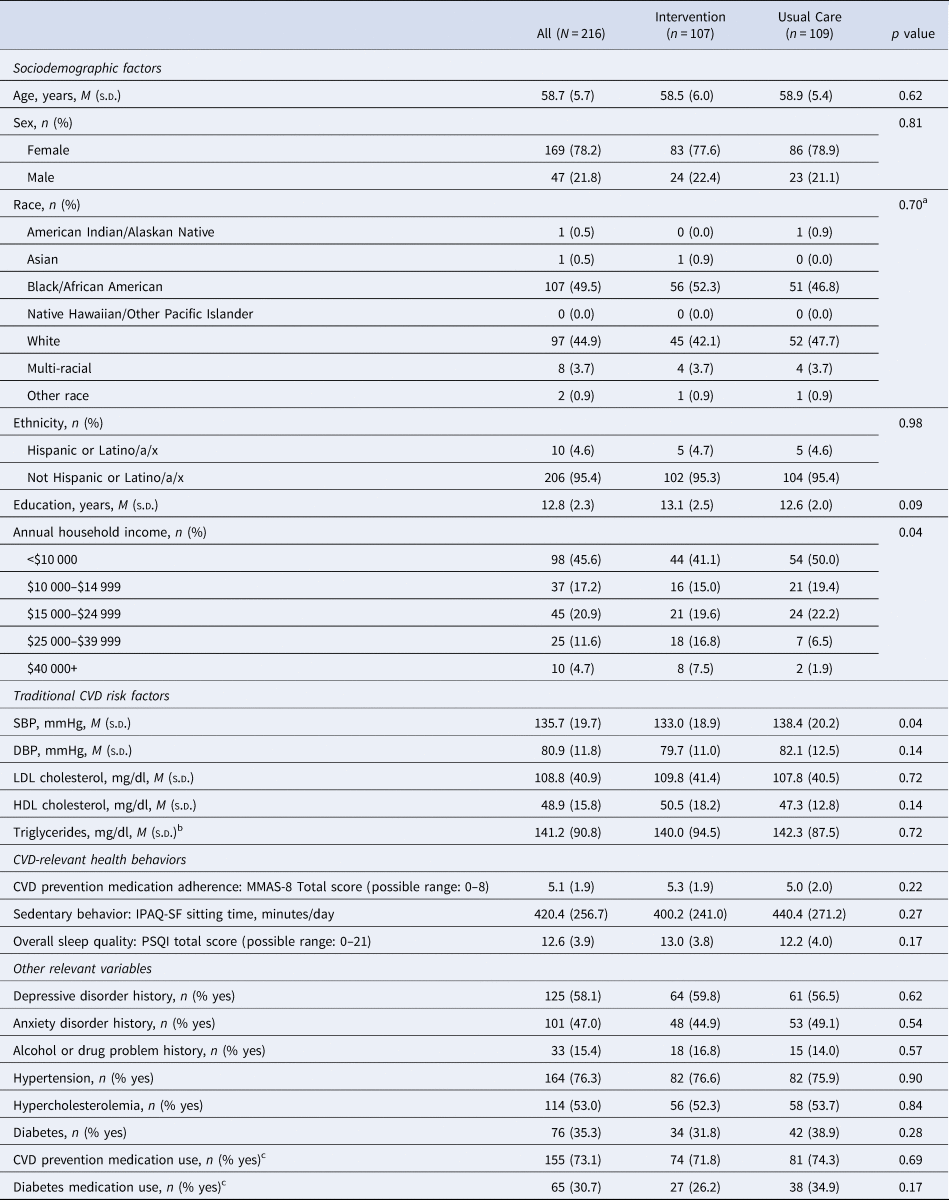
A total of 216 participants were enrolled in the eIMPACT trial, with 107 randomized to the intervention group and 109 to the usual care group (see Fig. 1). As can been seen in Table 1, the mean age of the randomized sample was 59 years. The sample had good representation of women, was almost evenly split between Black/African American adults and White adults, and had lower income levels (46% reporting less than $10 000/year).
Flowchart of screening, enrollment, randomization, and follow-up for the eIMPACT Trial. Participants were screened and enrolled from 13 August 2015 to 31 July 2018. Data collection ended on 31 July 2020. aFor two of these participants, 12-month survey data were obtained. bFor all withdrawn by investigator (intervention: 3; usual care: 1), it was determined after randomization that the participant met an exclusion criterion.

Baseline characteristics of participants in the eIMPACT trial by treatment group

Note: All variables have complete data except (n): income (215), LDL cholesterol (214), HDL cholesterol (214), triglycerides (214), MMAS-8 total score (160 out of a possible 162), IPAQ-SF sitting time (199), PSQI total score (193), depressive disorder (215), anxiety disorder (215), alcohol or drug problem (214), hypertension (215), hypercholesterolemia (215), diabetes (215), CVD prevention medication (212), diabetes medication (212). p values are from independent-samples t tests for continuous variables and χ2 tests for categorical variables comparing the intervention and usual care groups. CVD, cardiovascular disease; SBP, systolic blood pressure; DBP, diastolic blood pressure; HDL-C, high density lipoprotein cholesterol; LDL-C, low density lipoprotein cholesterol; CVD, cardiovascular disease; MMAS-8, 8-Item Morisky Medication Adherence Scale; IPAQ, International Physical Activity Questionnaire; PSQI, Pittsburgh Sleep Quality Index.
a Due to some low cell counts, race was recoded into a 3-level variable (Black/African American, White, Other Race) prior to conducting the χ2 test.
b For triglycerides, untransformed values are shown. To normalize their distributions, this variable was log10-tranformed prior to conducting t tests.
c At post-treatment, rates of CVD prevention medication use (intervention: 69.1% v. usual care: 76.2%; p = 0.27) and diabetes medication use (intervention: 28.7% v. usual care: 33.7%; p = 0.46) also did not differ between the treatment groups.
Table 1 also presents baseline levels of the outcome variables. The mean pre-treatment SBP/DBP was 136/81 mmHg, falling in the stage 1 hypertension range (James et al., Reference James, Oparil, Carter, Cushman, Dennison-Himmelfarb, Handler and Ortiz2014). The mean pre-treatment LDL-C of 109 mg/dl fell in the near optimal/above optimal range, and the mean pre-treatment HDL-C of 49 mg/dl fell in the lower normal range (NCEP-ATP III) (Adult Treatment Panel III, Reference Adult Treatment Panel III2002). The mean pre-treatment triglycerides was in the normal range at 141 mg/dl (Adult Treatment Panel III, Reference Adult Treatment Panel III2002). The mean MMAS-8 total score was 5.1, which is indicative of low medication adherence (Morisky et al., Reference Morisky, Ang, Krousel-Wood and Ward2008). The mean sedentary behavior time as measured by the IPAQ-SF was 420 min/day, consistent with the national average for the U.S. (Matthews et al., Reference Matthews, Chen, Freedson, Buchowski, Beech, Pate and Troiano2008). The mean PSQI score was 12.6, which falls in the poor sleepers range (Buysse et al., Reference Buysse, Reynolds, Monk, Berman and Kupfer1989).
Participant characteristics at baseline were balanced across the treatment group, except for education, income, and SBP (see Table 1). The intervention group had somewhat higher education and income and lower SBP than the usual care group (ps < 0.10). Consequently, these factors were included as covariates in supplemental models.
Effect of the eIMPACT intervention on depressive symptoms
As reported in the eIMPACT trial main outcomes paper (Stewart et al., Reference Stewart, Patel, Polanka, Gao, Nurnberger, MacDonald and Callahan2023), the intervention group, v. the usual care group, exhibited statistically significant (p < 0.01), moderate-to-large (Hedges' g = −0.65), and clinically meaningful (43% v. 17% had a ≥ 50% reduction) improvements in depressive symptoms as assessed by the SCL-20 at post-treatment.
Effect of the eIMPACT intervention on traditional CVD risk factors and CVD-relevant health behaviors
Figure 2 shows the parameter estimates for the five separate parallel mediation models, one for each traditional CVD risk factor. Regarding Aim 1, there were no treatment group differences in 12-month change in SBP (Model 1: c = −2.44, 95% CI −7.40 to −2.42), LDL-C (Model 3: c = −5.05, 95% CI −12.72 to −2.66), HDL-C (Model 4: c = −0.06, 95% CI −2.80 to −2.66), or triglycerides (Model 5: c = −0.02, 95% CI −0.10 to −0.04). In contrast, 12-month change in DBP did differ between the treatment groups (Model 2: c = 3.27, 95% CI 0.74–5.82), with the usual care group exhibiting greater decreases in DBP over time than the intervention group.
Unadjusted parallel mediation models examining CVD-relevant health behaviors as candidate mediators of eIMPACT intervention effects on traditional CVD risk factors. Full information maximum likelihood was used to handle missing data. SBP, systolic blood pressure; DBP, diastolic blood pressure; LDL-C, low-density lipoprotein cholesterol; HDL-C, high-density lipoprotein cholesterol; TGs, triglycerides.

Concerning Aim 2, there were no treatment group differences in 12-month change in CVD prevention medication adherence (MMAS-8 total score; a 1 = 0.14, p = 0.64) or sedentary behavior (IPAQ-SF sitting time; a 2 = −18.42, p = 0.57); however, there was a treatment group difference in 12-month change in overall sleep quality (PSQI total score; a 3 = −1.90, p = 0.001). The intervention group exhibited greater improvement in overall sleep quality (decreases in PSQI total score) over time than the usual care group. Of note, a 1, a 2, and a 3 are similar across all five models, as they examine the same relationships.
With respect to Aim 3, there was no evidence that 12-month change in the CVD-relevant health behaviors mediated the effect of eIMPACT intervention on 12-month change in the traditional CVD risk factors. Specifically, all the 95% CI's for the indirect effects across the five models included zero, indicating the absence of statistically significant mediation. Also of note, none of the b paths (b 1, b 2, and b 3), representing associations between CVD-relevant health behaviors and traditional CVD risk factors, were statistically significant. Supplemental models adjusting for the stratification variables of age group and sex; baseline imbalance between the treatment groups in education, income, and SBP; and CVD medication use yielded similar results (see online Supplementary Fig. S1).
Finally, simple mediation models revealed no significant associations between 12-month changes in depressive symptoms (SCL-20 score) and 12-month changes in the traditional CVD risk factors (see b paths in online Supplementary Fig. S2). In addition, there was no evidence that 12-month change in depressive symptoms mediated the effect of the eIMPACT intervention on 12-month change in the traditional CVD risk factors (95% CI's for the indirect effects included zero). However, the a paths were significant and negative, indicating the eIMPACT intervention significantly improved depressive symptoms, consistent with our previously reported results (Stewart et al., Reference Stewart, Patel, Polanka, Gao, Nurnberger, MacDonald and Callahan2023).
Effect of the eIMPACT intervention on incident CVD events
The mean length of the CVD event monitoring window (time between randomization date and last date of follow-up) did not differ between the intervention group (4.05 years) and the usual care group (4.04 years; t(214) = −0.088, p = 0.93). A total of 22 participants experienced an incident CVD event, and 13 participants died from a non-CVD cause (see online Supplementary Table S2 for frequencies by event type and treatment group).
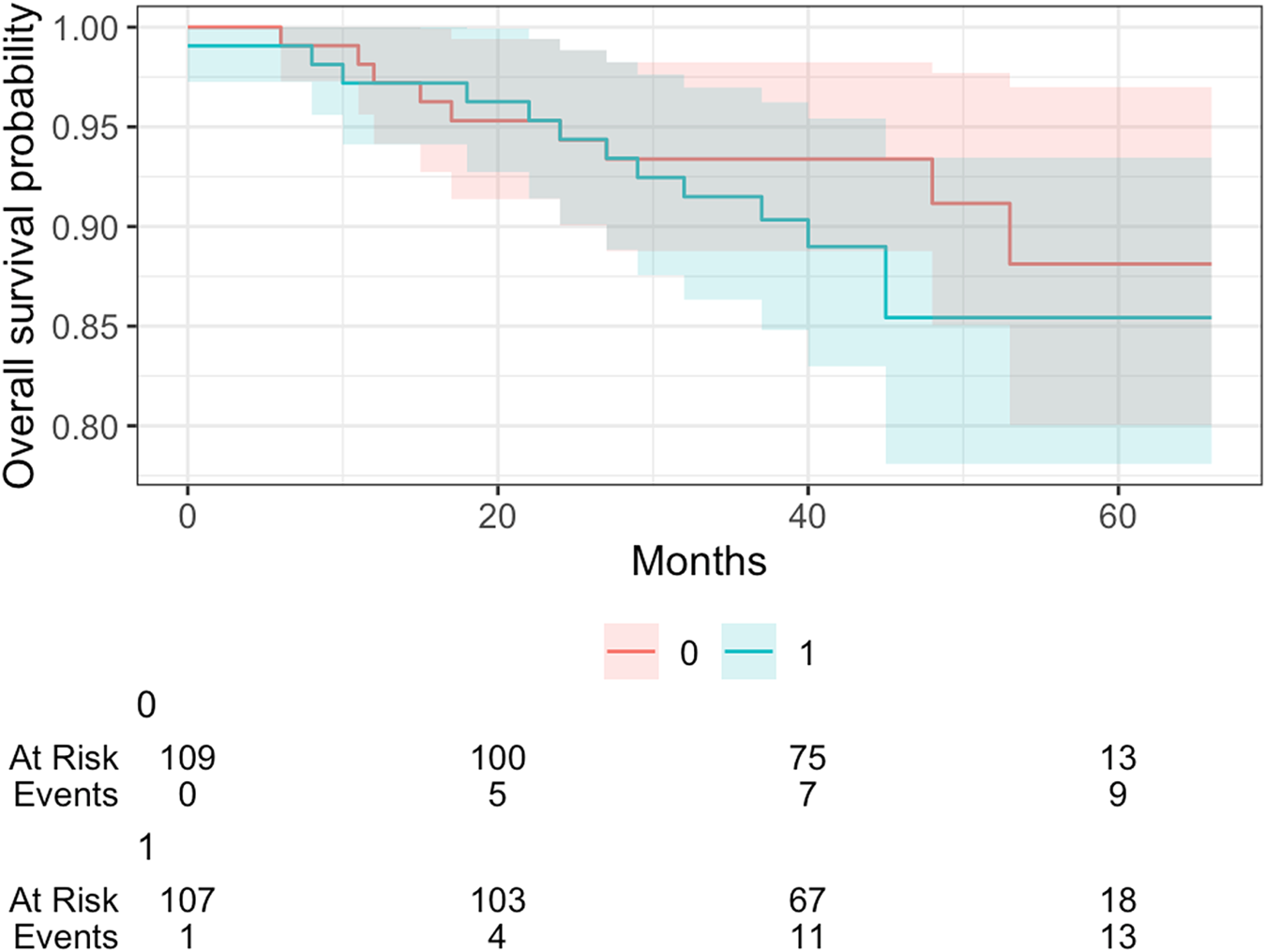
Figure 3 shows the Kaplan–Meier survival curves for the intervention group and the usual care group. The 4-year CVD event rate was numerically higher for the intervention group (13/107 = 12.1%) compared to the usual care group (9/109 = 8.3%). However, this difference was not statistically significant (log-rank X 2 = 0.76, p = 0.40).
Kaplan–Meier survival curves for time to first incident CVD event for each treatment group (0 = usual primary care for depression, 1 = eIMPACT intervention).

The unadjusted Cox proportional hazards model with treatment group as the predictor and time to first CVD event as the outcome yielded similar results (HR = 1.45, 95% CI 0.62–3.40, p = 0.39). This hazard ratio indicates that the intervention group had a 45% higher risk of incident CVD events than the usual care group; however, this risk difference was not statistically significant. The proportional hazards assumption was first tested using the Schoenfeld test, which failed to reject the proportional hazards assumption (X 2 = 0.09, p = 0.77). It was next tested by adding a time × randomization status interaction term to the Cox model, which rejected the proportional hazards assumption (X 2 = 39.2, p < 0.001). This discrepancy was likely due to the low number of CVD events. The adjusted Cox model controlling for stratification variables of age group and sex as well as baseline imbalance in education, income, and SBP yielded similar results for treatment group as a predictor of time to first CVD event (HR = 1.37, 95% CI 0.57–3.29, p = 0.90).
Discussion
This secondary analysis of the eIMPACT trial examined the effect of modernized collaborative care for depression on candidate mechanisms underlying the depression-CVD risk association and on incident CVD events. Overall, our hypothesis that the intervention would improve these outcomes was not supported. Although the intervention reduced depressive symptoms and increased sleep quality, it did not improve blood pressure, lipid fractions, CVD prevention medication adherence, or sedentary behavior. In fact, the usual care group showed greater improvements in DBP than the intervention group. Our exploratory analyses examining incident CVD events are consistent with this pattern, as no significant or meaningful differences between treatment groups were observed. Additionally, 12-month changes in the CVD-relevant health behaviors (CVD prevention medication adherence, sedentary behavior, and overall sleep quality) did not mediate any intervention effects on 12-month changes in traditional CVD risk factors (SBP, DBP, LDL-C, HDL-C, and triglycerides). Our findings indicate that successful depression treatment alone is not sufficient to reduce the heightened CVD risk of people with depression.
The present findings are in line with the results of two recent studies by our group. First, in our main outcomes paper for the eIMPACT trial (Stewart et al., Reference Stewart, Patel, Polanka, Gao, Nurnberger, MacDonald and Callahan2023), we report that no intervention effects were detected for a measure of subclinical CVD (brachial FMD) or multiple markers of biological candidate mechanisms underlying the depression-CVD risk association (autonomic dysfunction, systemic inflammation, and platelet activation). Second, in a pilot trial of people with HIV and depression (Gupta et al., Reference Gupta, Slaven, Liu, Polanka, Freiberg and Stewart2020), we found the intervention group (who received internet CBT for depression), and the usual care group did not differ on changes in brachial FMD at 12 or 24 weeks.
In contrast, our findings are less consistent with the results of two other notable studies. A recent trial of patients with MDD compared the effects of three depression treatments (supervised aerobic exercise, home-based aerobic exercise, or sertraline) to pill placebo on indicators of subclinical CVD – i.e., brachial FMD and carotid IMT (Sherwood et al., Reference Sherwood, Blumenthal, Smith, Watkins, Hoffman and Hinderliter2016). All three depression treatments combined improved brachial FMD and carotid IMT v. pill placebo. It is plausible that the exercise-based interventions may have been the drivers of these beneficial effects. Additionally, our prior secondary analysis of the IMPACT trial compared the effect of collaborative care for depression to usual care on incident CVD events in primary care patients with depression (Stewart et al., Reference Stewart, Perkins and Callahan2014). We found that patients randomized to collaborative care had a 48% lower risk of having an incident CVD event during the 8-year follow-up period than patients randomized to usual care. It is unclear why we observed discrepant results for incident CVD events in the present study. Two potentially important differences are the mean age of our sample (58.7 years) is considerably younger than that of the IMPACT trial (67.5 years) and our follow-up period (four years) is half that of the IMPACT trial (eight years).
Our Aim 2 results agree with some previous studies and conflict with others examining the impact of depression treatment on health behaviors. Regarding medication adherence, a 2013 meta-analysis (29 studies) examined the effect of depression treatment on adherence to antiretroviral therapy in people with HIV and depression (Sin & DiMatteo, Reference Sin and DiMatteo2014). Results revealed that people being treated for depression had an 83% greater odds of adhering to their medication regimen than people not receiving depression treatment. To our knowledge, this is the first study to examine the effect of depression treatment on sedentary behavior, and our results suggest that successful treatment alone is not sufficient to reduce sedentary behavior. Concerning sleep quality, it is well documented that treatment of sleep disturbance (e.g. CBT for insomnia) improves depressive symptoms (Cunningham & Shapiro, Reference Cunningham and Shapiro2018; Hertenstein et al., Reference Hertenstein, Trinca, Wunderlin, Schneider, Züst, Fehér and Baglioni2022; Ho, Chan, Lo, & Leung, Reference Ho, Chan, Lo and Leung2020). It is often stated that sleep disturbance tends to linger following treatment for depression, which is true for some but not all cases of depression with sleep disturbance (Carney et al., Reference Carney, Segal, Edinger and Krystal2007). Our results help to clarify this statement by demonstrating that successful depression treatment does improve self-reported overall sleep quality, but the effects are not large enough to change the average participant's sleep status from a poor sleeper (PSQI total score >5) to good sleeper (PSQI total score ≤5) (Buysse et al., Reference Buysse, Reynolds, Monk, Berman and Kupfer1989).
There are several possible explanations for our null findings. A first potential explanation is that depression is not a causal risk factor for CVD and that some third factor (confounder) accounts for the link between depression and future CVD. For instance, both childhood adversity and insomnia are potential causes of future depression and cardiovascular disease (Buysse et al., Reference Buysse, Angst, Gamma, Ajdacic, Eich and Rössler2008; Sofi et al., Reference Sofi, Cesari, Casini, Macchi, Abbate and Gensini2014; Suglia et al., Reference Suglia, Koenen, Boynton-Jarrett, Chan, Clark, Danese and Zachariah2018; Turner & Butler, Reference Turner and Butler2003). However, this seems unlikely, given that a recent Mendelian randomization study found a genetic predisposition to depression is casually associated with CVD (Li et al., Reference Li, Cheung, Chung, Cheung, Wong, Fok and Sham2022a). A second potential explanation is that the depression treatment was delivered too late in the natural history of CVD. The primary hypothesis of the eIMPACT trial was that successful depression treatment earlier in the natural history of CVD yields cardiovascular benefits. However, the prevalence of CVD risk factors, and possibly advanced subclinical atherosclerosis, was high in our sample due to the inclusion criteria. It is plausible that depression treatment needs to be delivered earlier in the development of CVD to have cardiovascular benefits. A third potential explanation is that, while depression is a causal risk factor for CVD, it is less pronounced and more distal than previously described (Harshfield et al., Reference Harshfield, Pennells, Schwartz, Willeit, Kaptoge, Bell and Wassertheil-Smoller2020). Depression treatment alone, therefore, may not be sufficient to lead to meaningful improvements in CVD risk.
Our study has strengths, including the randomized controlled trial design, the racial and socioeconomic diversity of the sample, the use of advanced statistical methods, and the substantial effect of the eIMPACT intervention on depressive symptoms. Our study also has limitations to consider. First, only self-report assessments of health behaviors were obtained in the eIMPACT trial. It is possible that we would have observed different results for objective assessments, such electronic monitoring devices for medication adherence and actigraphy for sedentary behavior and sleep parameters. Others have suggested that – for measures of medication adherence (Lam & Fresco, Reference Lam and Fresco2015), sedentary behavior (Prince et al., Reference Prince, Cardilli, Reed, Saunders, Kite, Douillette and Buckley2020), and sleep (Hughes et al., Reference Hughes, Song, Fung, Dzierzewski, Mitchell, Jouldjian and Martin2018) – self-report and objective measures represent unique and equally important constructs that should be examined concurrently (Hughes et al., Reference Hughes, Song, Fung, Dzierzewski, Mitchell, Jouldjian and Martin2018). Second, while our inclusion criteria ensured that we enrolled patients with elevated CVD risk, they did not guarantee that each outcome in this report was elevated at baseline. At the group level, SBP and DBP were elevated, and CVD prevention medication adherence and sleep quality were poor. However, lipid fractions and sedentary behavior fell in the normal range, leaving less room for improvement via intervention and perhaps partially explaining our null intervention effects for these outcomes. Third, our strong usual care comparator exceeds what is typically available in primary care. Although our intervention still produced moderate-to-large improvements in depressive symptoms, an even larger group difference in depression may have been observed if a weaker comparator had been used, possibly increasing the likelihood of detecting intervention effects on traditional CVD risk factors or CVD-relevant health behaviors. Fourth, as a depressive disorder diagnosis (e.g. by a structured clinical interview) was not required, our sample includes some people with subclinical depression, potentially reducing our depression effect sizes. Nevertheless, 58% of our sample reported a depressive disorder history, and our depression effect sizes are comparable to other collaborative care interventions targeting depression (Archer et al., Reference Archer, Bower, Gilbody, Lovell, Richards, Gask and Coventry2012). Fifth, some candidate health behaviors thought to underlie the depression-CVD risk association were not assessed. One such health behavior is diet, including total energy intake and diet composition (Vrany, Polanka, Hsueh, Hill-Briggs, & Stewart, Reference Vrany, Polanka, Hsueh, Hill-Briggs and Stewart2021). Another candidate health behavior is smoking, which was assessed. We considered examining smoking; however, almost no participants reported a change in smoking status over the 12-month treatment period. This observation does imply that depression treatment alone is not sufficient to reduce smoking rates. Sixth, because there was a low number of incident CVD events over the 4-year follow-up period, we were underpowered to detect statistically significant differences between the treatment groups, and our results for this outcome should be interpreted with caution.
In the research domain, future randomized controlled trials are needed to test whether intervention approaches simultaneously targeting depression and CVD-relevant health behaviors or traditional CVD risk factors are effective at reducing CVD risk in depression. Ideally, these trials would include both self-report and objective measures of the targeted health behaviors. In the present study, modernized collaborative care for depression was not sufficient to improve CVD prevention medication adherence or sedentary behavior, possibly because none of the intervention components specifically targeted them. It is reasonable to expect similar results for other CVD-relevant health behaviors, such as diet and smoking. Supporting these points, a recent pilot trial of a behavioral intervention targeting both depression and multiple health behaviors in CVD patients yielded promising results for both sets of outcomes (Gathright et al., Reference Gathright, Vickery, Ayenew, Whited, Adkins-Hempel, Chrastek and Busch2022).
In the clinical practice domain, providers should be aware that depression treatment alone will likely not lower CVD risk. Thus, in addition to depression treatment, providers may want to consider more aggressive management of traditional CVD risk factors and CVD-relevant health behaviors in their patients with depression, possibly through collaboration with other types of clinicians (e.g. clinical health psychologists, nurses, dieticians, and sleep medicine specialists).
In conclusion, our findings indicate that depression treatment alone is not sufficient to lower CVD risk in depression. In primary care patients with depression and elevated CVD risk, we found that our effective depression intervention did not improve most CVD-relevant health behaviors and traditional CVD risk factors. We also did not observe treatment group differences in incident CVD events. Future clinical trials are needed to test whether targeting both depression and health behaviors simultaneously is an effective approach to reducing the heightened CVD risk of people with depression.
Supplementary material
The supplementary material for this article can be found at https://doi.org/10.1017/S0033291724001429.
Funding statement
J. C. S. received advisory fees from the Department of Veterans Affairs. J. I. N. received support as an investigator from Janssen. S. K. G. received advisory fees from Gilead Sciences and ViiV Healthcare and grants from ViiV Healthcare. R. V. C. received grants from Almond Board of California, American Diabetes Association, and Eli Lilly and Company. Research reported in this publication was supported by the National Heart, Lung, and Blood Institute of the NIH under Award Number R01 HL122245. In addition, the Indiana University Center for Diabetes and Metabolic Diseases Translation Core was supported by the National Institute of Diabetes and Digestive and Kidney Diseases of the NIH under Award Number P30 DK097512. The content is solely the responsibility of the authors and does not necessarily represent the official views of the NIH. These funding sources had no role in the conduct of the eIMPACT trial, including results interpretation and manuscript preparation.
Competing interests
The authors have no potential conflicts of interest to declare related to the subject matter of this article.