It is impossible to describe in this article the whole complex situation for transgender people working in the arts in Brazil.Footnote 2 Despite the limitations, this article proposes to discuss some of the recent issues affecting transgender people involved with arts production in Brazil,Footnote 3 and to explore how contemporary art productions in Brazil play a part in endangering transgender lives. At the same time, I aim to demonstrate how art itself will be inevitably and irrevocably changed as a result of transgender protagonists in theatre and the sharing of their own experiences. That being said, and considering that trans people are not often published in relevant journals about theatre – including Theatre Research International Footnote 4 – it is necessary that we continue publishing more articles written by trans people about performing arts. This is the only way we have to share better understanding with each other in this field of knowledge.
It might first be helpful to describe the path that brings me here now. Now aged thirty-six, I have been working in theatre for twenty-three years, and although I come originally from São Paulo (Brazil's largest city), nowadays I live in the countryside of Bahia, a state in the north-east region of Brazil (one of the main targets of budget and social cuts by the current federal government). I am the first transgender person to work as a university art teacher in public higher education in Brazil; the first of many, I hope. Beyond my extensive academic research, I have been working with theatre creation and teaching in various communities across the country and also internationally. The main practical and theoretical reference that has inspired my journey is the theatre of the oppressed, systematized by Augusto Boal, a Brazilian artist and thinker from whom I've learned the most about social transformation through the arts.Footnote 5
In my country, gender is danger, and that is why we transgender individuals should more precisely be called transdanger people, to indicate that transgender people endanger cisnormativity, and because of this we are also the target of danger in society. Brazil is the number one killer of trans people in the world, and the life expectancy of transgender people is around thirty-six years on average.Footnote 6 While there is scope for considering how these statistics are generated, I am more concerned with the threat of transgender genocide. Cisgenderness is overprotected in Brazil, and transgender people are sacrificed to support it. As we are going to see in three case studies discussed in this article, religion, racial processes and transphobia are deeply interrelated, and cisnormativity enacts a kind of genocide.
Transwards
Most of the thoughts expressed here are based on an investigation made from 2014 to 2018 at the University of São Paulo (USP), where I received my PhD in social psychology (which also made me the first trans person to get a PhD adopting their social name in seventy years of USP).Footnote 7 In my thesis, ‘Transgender Performativity: Poetic Equations to Reciprocal Recognition in Theatre Reception’, I explored the aesthetic effects of transness in contemporary culture.Footnote 8 The work was based mostly on three objects: a play called A Demência dos touros (Bull's Dementia) by Teatro do Perverto Company, in which I was the dramaturg (working alongside the playwright and the cast); a performance called Tetagrafias, developed during a doctoral internship in theatre and performance studies at the University of Coimbra (Portugal) in 2017–18;Footnote 9 and a teaching process I developed on gender poetics and social intersectionality. Guided by reception theory, I not only discovered a new model of being transgender, but argued that contemporary art is moving transwards – in Portuguese de trans pra frente plays with the replacement of the word trás which means ‘back’, with ‘trans’, as an ironic way to review this expression. So transwards presents a fundamental paradigm shift directed at understanding society from a transgender perspective.
Since I started working as a theatre critic, I have been advocating that there is no such thing as a brand new aesthetics called ‘transgender art’ and much less a ‘transgender theatre’. What I have suggested is that transgender productions (not only in Brazil) drive traditional art practices into a crisis due to our transdanger presences, that art is going through a gender transition itself.Footnote 10 I would even say that this transitioning has one direction: from male to female. With reference to theatre specifically, I propose a new term: teatra, corrupting the Portuguese word teatro and feminizing its original ‘maleness’.Footnote 11 Teatra is not limited to my manner of seeing things here, nor does it refer exclusively to transgender-specific aesthetics. That is the reason why the transgender movement in Brazil also created the term traviarcado, a neologism proposed in opposition to patriarchy (patriarcado in Portuguese), an act of gender disobedience that can be translated in English as trannyarchy. In this sense, the trannyarchy would be a way of breaking the cis-patriarchal paradigm, committed to neoliberalism and coloniality.
According to Brazilian actress Renata Carvalho, while whiteness produces an ethnocentrism in Brazilian arts production, cisgenderness causes an ethno-cis-centrism.Footnote 12 Colonial cisnormativity implies that we transgender people suffer a specific kind of ethnic domination that has to do with the norms of gender. In opposition to that, there is an anti-colonial exercise called ‘naming the norm’ which consists of naming the apparently unnamable structures of cultural domination marked by coloniality and neoliberalism.Footnote 13
It is a very disconcerting situation when you face the fact that while people are dealing with a new reality of trans children in some parts of the world, here in Brazil trans people can only have their identity officially recognized when they reach the legal age of eighteen. And despite the plurality of transgender identities that coexist in daily life, the state and its policies are mostly still attached to a concept of ‘transsexuality’, a legacy of the last century in which a ‘real’ transgender person is one who has made, or has the intent to enact, some kind of body modification. The restricted and anachronistic concept of transsexuality puts together the words ‘trans’ and ‘sexual’, responding to a paradigm of cisnormativity in which being trans comes as a remediation of a supposed gender dysphoria. As an alternative to that, I'm proposing the transition from this limited perspective to another that I call gender euphoria, in which we seek to highlight that transgender identities are social and subjective processes that are obviously related to the body, but not necessarily to body modification or body discomfort.
Theatre and transgender people at risk in Brazil
In the 2000s, different minoritized groups in Brazil peaked in their self-representation and political affirmation, drawing attention from the wider culture. That is why, in the academic field of transgender studies, we find the cisgender insistence on researching transgender identities, including achieving academic titles on the subject, earning financial support and drawing recognition in a way unavailable to transgender people to study our own lives and produce our own work. Considering this, I started asking this key question every time some cisgender person creates or investigates transgender issues: what are the questions about his/her own social group and life that s/he is running away from? The avoidance of cisgender people in facing their own gender normativity in theatre is a huge contrast to their interest in producing works about us; it causes some deadlocks in the aesthetic representation of trans experience.Footnote 14 That is why I also ask, every time some play is made by cisgender people (and not only about transgenderness), what are the losses for humankind?
Transfakers are not only those cis people that work on productions about transgender experiences; they are also those who research or make their career on works about trans people: in Brazil the most frequent ones are journalists, psychologists and lawyers.Footnote 15 In my country these people are called transfakers, because even though they are not actually pretending to be trans, their discourse contributes to our objectification. This is caused not only by these transfakers not interrogating their own cis issues as part of this crisis, but mainly because they use transgender people to make them feel safer in their gender identity.
This context brings up a new challenge that the audience must now face: to question their own gender and sexual identity, to ask, ‘Am I also trans?’ In engaging with trans experience as an audience member, this question leaves the psychoanalyst's couch, and becomes an issue written on everyone's bodies. This is the reason why it is so shameful to see transfakers trying to make their work: they are just bringing to light their very rejection of their own transness. In order to illustrate what I've been discussing, I will describe some recent Brazilian productions by trans artists and their impact on audiences and critics. I emphasize how danger operates in these works and how it is possible to discern some strategies to resist extreme conservatism, including via the aesthetics of ‘gender bioterrorism’.Footnote 16 According to Paul Preciado, ‘gender bioterrorism’ is the expression that refers to the techniques in which abject bodies fight against the closed system of the gender biocode. This text will demonstrate these works deal with the close relation between Christianity and cisnormativity, and the ethno-cis-centrism of performing arts.
Teatra against Christianity and cisnormativity
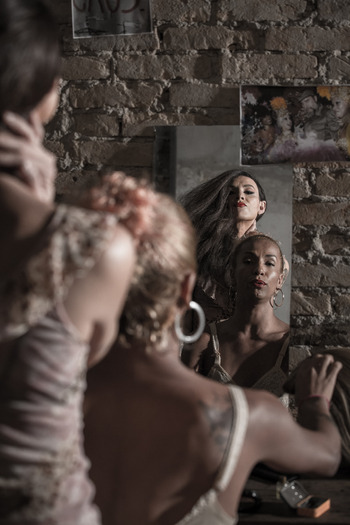
Ofélia, a travesti gorda (Ophelia, the Fat Transsexual) (2018) introduces us to a transgender perspective of Shakespeare's Ophelia. Magô Tonhon is Ophelia and Ophelia is Magô Tonhon: we watch the scene at the same time as it ‘watches us back’ as the audience. With text by Helena Vieira and direction by Rodrigo Abreu, the play was produced at Rio Diversidade in the city of São Paulo and at Brazil Diversity by Focus Foundation in the city of London. In it we witness the process by which a sense of belonging takes shape for a trangender person. Fat trans people have to deal with a double rejection imposed by the conventions of cisnormativity and thinness. A thin cisgender boy should be ashamed to even try playing this role: it was not made for him, either in fiction or in real life (Fig. 1).
Magô Tonhon in Ofélia, a travesti gorda. Photograph by Lenise Pinheiro.

In this play what we see is a radical critique of cisnormativity as a source of coloniality. The action in the scene cruises through a narrative of self-discovery about the process of gender formation in society. The dramaturgy makes a connection between the protagonist's gender transition and the effects of beauty standards that prioritize thinness. It is important to note as well that the transgender experiences presented by Magô are also related to whiteness, as a white trans person. On the other hand, if we consider Latin America's world position, it is easy to understand how we can all be considered trans people of colour by Europe's rich countries. It is definitely a colonial problem that we white trans people are not conscious of our racial privilege in Brazil, and it has an even more serious impact on black trans lives, as we will see in the upcoming play analysis.
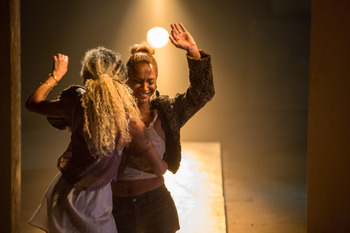
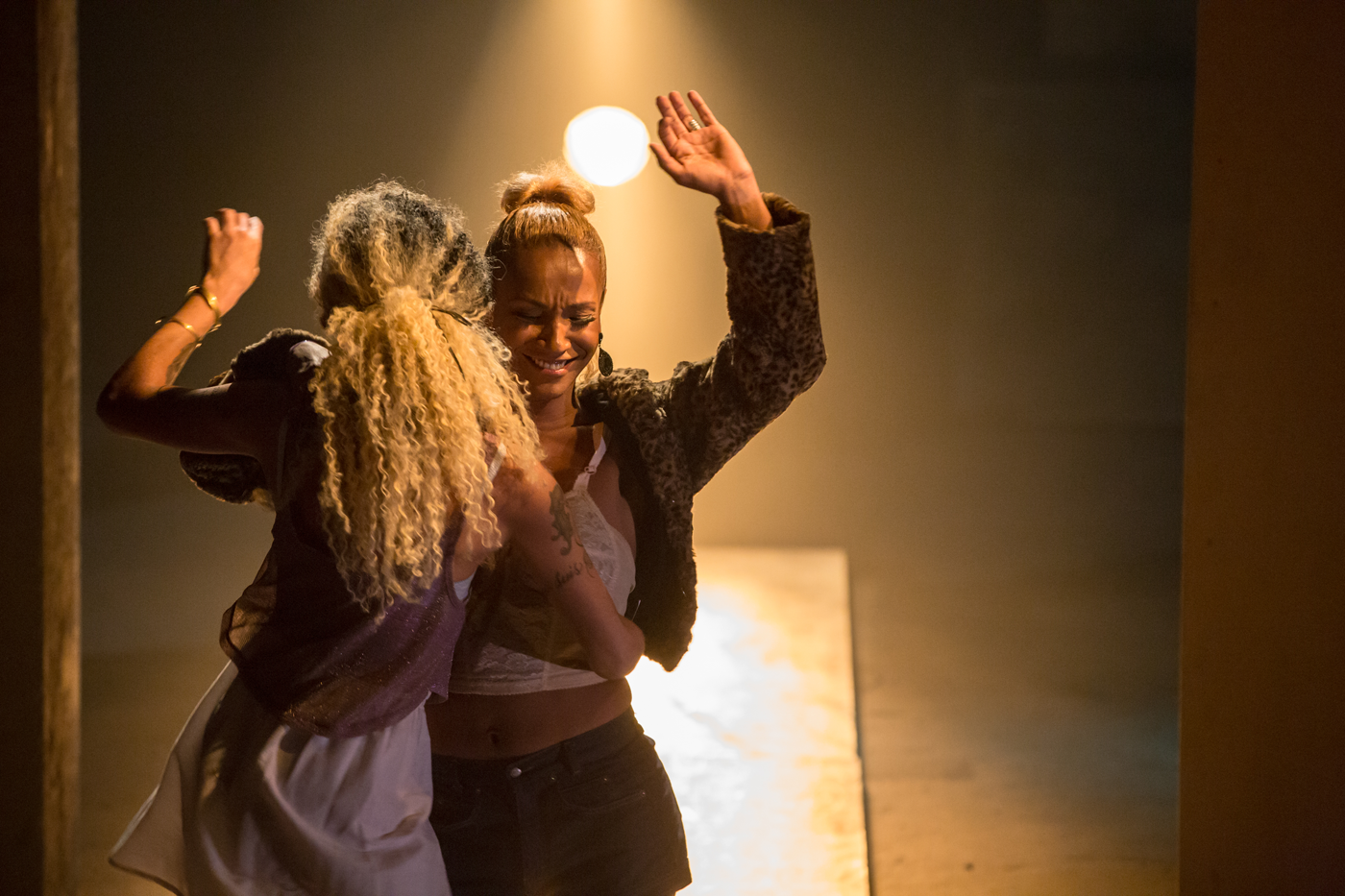
As 3 Uiaras de SP City enacts the dramaturgy of trans playwright Ave Terrena Alves, performed by the trans actresses Verónica Valenttino and Danna Lisboa (see Figs 2 and 3), along with other cis actors and actresses. Directed by Diego Moschkovich, onstage we see a very smart mise en scène that takes us into the streets, bringing the outside world in, and those inside it scream out loud against all the cruel and unfair political persecution against transgender people in the city of São Paulo that took place in the 1970s and 1980s. The struggle for civil rights is presented very powerfully by the playwright as she proposes not only a reinterpretation of the past based on the persistence of some problems that are still faced by trans people in Brazil nowadays: Alves insinuates that we still have so much to learn from the past to be able to change the present. There is also the astonishing presence of two singers in the cast (Verónica and Danna), playing Cínthia and Miella, whose scene unfolds in dialogue with the light, the presence of the live camera and the video projections.
Danna Lisboa in As 3 Uiaras de SP City. Photograph by Renato Mangolin.
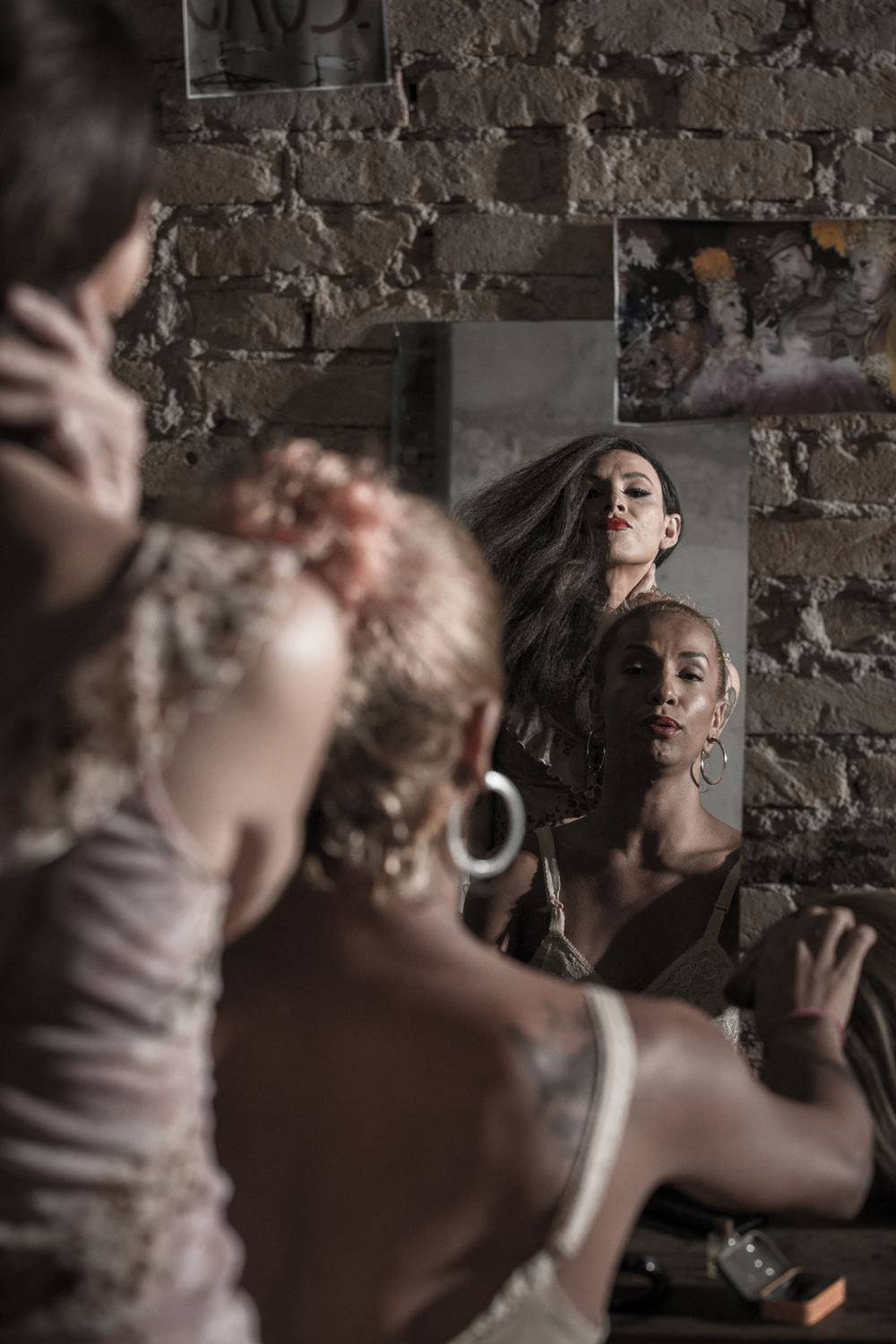
Verónica Valenttino in As 3 Uiaras de SP City. Photograph by Renato Mangolin.
Uiaras makes us stare at the racist social process that supports the oppressive logic of transphobia, and that is how we identify ethno-cis-centrism. This is an obvious consequence of cisnormativity's colonial heritage. The relationship between Christian religions and colonialism in Brazil is due to the long process of using the Christian faith as a means of domination. It is not a coincidence that how Christian colonialism impacts Brazil has been frequently explored in recent art productions by prominent Afro-Brazilian trans artists such as Ventura Profana, Castiel Vitorino Brasileiro, Alice Guél and Linn da Quebrada. When it comes specifically to theatre, the best example of this issue is presented below.
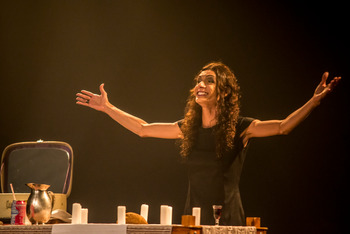
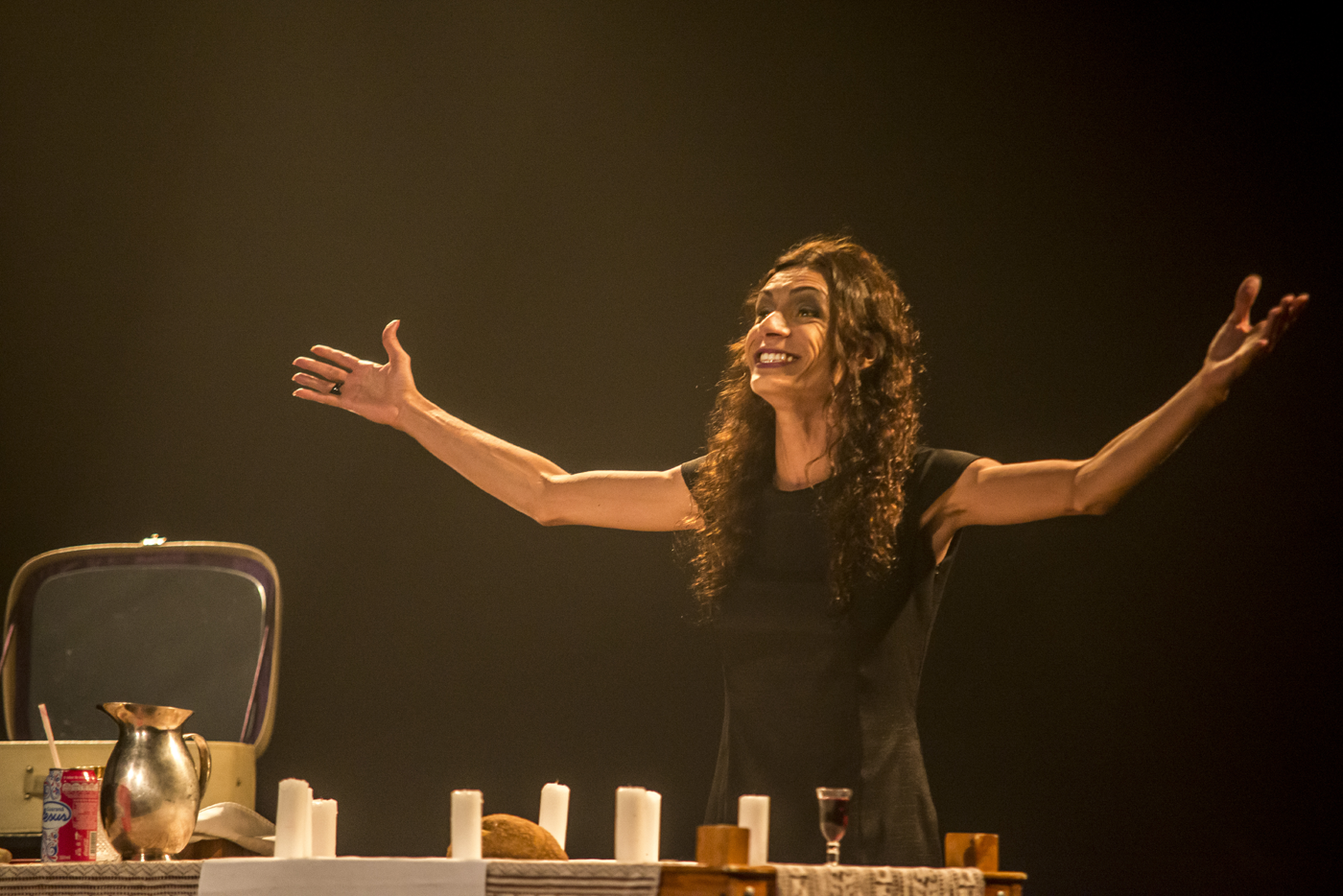
O Evangelho segundo Jesus, Rainha do Céu (The Gospel According to Jesus, Queen of Heaven) is a monologue written by the British playwright Jo Clifford. It was translated into Portuguese and directed by Natalia Mallo in 2016, with the Brazilian actress Renata Carvalho as Jesus (see Fig. 4). Carvalho is well-placed to speak to arts censorship in Brazil. She has been, until recently, broadly persecuted all over the country, dealing not only with some cowardly death threats but also with judicial intervention trying to stop her from performing in the play. In the eyes of the displeased Christian community she is a heretic playing Jesus, as we can see from the abuse the actress constantly receives. In performance, Carvalho's body and blood are shared with the audience as bread and wine, in a direct confrontation with the image of Jesus as the saviour and Father of us all. What we see onstage, on the other hand, is that this Christian God is actually a Queen, and obviously a transgender woman.
Renata Carvalho in O Evangelho Segundo Jesus, Rainha do Céu. Photograph by Rogério Alves.
Conclusion
This article has exposed how the transdanger presence in the performing arts in Brazil is more than just a new aesthetic form, but a necessary political turn in favour of protecting transgender people from unbridled transgendercide. I have examined some aspects of art production, mostly in theatre, from the perspective of an ‘art critic’, a role I have tried to challenge by centring transgender critique. To critique theatre from a transgender perspective is to drive the work of criticizing itself to crisis. Around the whole world traditional plays are not only made by cisgender people (even when they talk about trans experiences, which is problematic) but they are also made for cisgender audiences – they are the cisnormative patterns from which art is conceived and then evaluated.Footnote 17 The transgender exercise of critique introduces a particular set of views and values which can undermine conventional criticism by cis art critics.
This is me talking to you right here, right now. Instead of a formal conclusion, I say to you: see you on our next dangerous gender meeting, onstage or in daily life, it really doesn't matter.