INTRODUCTION
Microalgae are prokaryotic or eukaryotic photosynthetic microorganisms that have the ability to convert sunlight, carbon dioxide (CO2) and inorganic elements into nutrient-rich biomass with good essential nutrients including lipids, proteins, carbohydrates, glycoproteins and calories (Hudek et al. Reference Hudek, Davis, Ibbini, Erickson, Bajpai, Prokop and Zappi2014). Furthermore, some microalgae species, e.g. Schizochytrium, are considered rich sources of n–3 polyunsaturated fatty acids (PUFA) (Pereira et al. Reference Pereira, Barreira, Figueiredo, Custódio, Vizetto-Duarte, Polo, Rešek, Engelen and Varela2012).
One important microalgae species is Chlorella vulgaris. It is a fresh-water, single-celled microalgae which contains all the essential amino acids in proportions more suitable for humans and animal feed than soybean, canola, maize and wheat (Tibbetts et al. Reference Tibbetts, Whitney, MacPherson, Bhatti, Banskota, Stefanova and McGinn2015), making it a nutrient-dense food. Chlorella vulgaris contains about 580 g protein/kg dry matter (DM) with about 18 amino acids, and various vitamins and minerals with a chlorophyll content as high as many common plants (Priyadarshani & Rath Reference Priyadarshani and Rath2012). More than 20 vitamins and minerals including calcium, phosphorous, iron, magnesium, potassium, vitamins A, B complex, C, E and K, biotin, inositol and folic acid were reported by Priyadarshani & Rath (Reference Priyadarshani and Rath2012). In addition to its content of peptides and amino acids, which are stimulatory factors for ruminal microbial growth and digestion, the use of C. vulgaris as an animal feed additive has many advantages including increasing the concentration of some bacterial species, e.g. Butyrivibrio fibrisolvens, Ruminococcus albus and Clostridium sticklandii with forage-based diet in in vivo studies, resulting in improved bacterial growth and promotion of ruminal trans C18 : 1, trans-11 C18 : 1 fatty acids and monounsaturated fatty acids formation in goats (Anele et al. Reference Anele, Yang, McGinn, Tibbetts and McAllister2016; Tsiplakou et al. Reference Tsiplakou, Abdullah, Skliros, Chatzikonstantinou, Flemetakis, Labrou and Zervas2016). Consequently, microalgae rich in fats could be considered a potential option to reduce methane (CH4) emissions from ruminants because PUFA have antimicrobial effects on methanogens and protozoa due to their ability to disrupt microbial cell membranes (Martin et al. Reference Martin, Morgavi and Doreau2010). However, Tsiplakou et al. (Reference Tsiplakou, Abdullah, Skliros, Chatzikonstantinou, Flemetakis, Labrou and Zervas2016) reported that microalgae rich in protein and low in fat content increased the populations of CH4-producing bacteria and protozoa.
The density and activity of ruminal microflora depend on the chemical composition and the forage : concentrate ratio of diets fed to host animals (Elghandour et al. Reference Elghandour, Kholif, Hernandez, Mariezcurrena, Lopez, Camacho, Marquez and Salem2016b ). Increasing the dietary portion of forage has been shown to increase CH4 production (Elghandour et al. Reference Elghandour, Kholif, Salem, Montes De Oca, Barbabosa, Mariezcurrena and Olafadehan2016a ). The in vitro gas production (GP) technique is a useful tool for studying potential ruminal degradation of feeds (Rodriguez et al. Reference Rodriguez, Mariezcurrena, Mariezcurrena, Lagunas, Elghandour, Kholif, Kholif, Almaráz and Salem2015; Vallejo et al. Reference Vallejo, Salem, Kholif, Elghangour, Fajardo, Rivero, Bastida and Mariezcurrena2016). This method allows for the estimation of how much substrate is used to produce volatile fatty acids and the energetic value of feed as well as to determine the amount of substrate truly fermented, which is converted into microbial protein (Elghandour et al. Reference Elghandour, Kholif, Bastida, Martínez and Salem2015a , Reference Elghandour, Kholif, Márquez-Molina, Vázquez-Armijo, Puniya and Salem b ). During the first few hours of incubation (e.g. the first 24 h of incubation), the fermentation process is very active and more fermentation products are released. Therefore, it is important to measure the activity of fermentation processes at close intervals (i.e. every 2 h), and then extended to every 24 h. The aim of the present study was to assess the effects of adding C. vulgaris algae at different levels on in vitro rumen gas, CH4 and CO2 production of total mixed rations (TMR) with different maize silage to concentrate ratios.
MATERIAL AND METHODS
Chlorella vulgaris, substrate and treatments
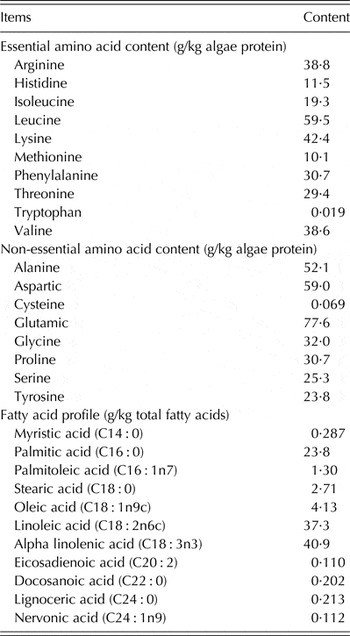
Chlorella vulgaris microalgae (Xuhuang Bio-Tech Co., Ltd., Shaanxi, China) containing 949 g DM/kg, with 944 g organic matter (OM)/kg DM was used in the current study. The crude protein (CP) content was 591 g/kg DM and the total carbohydrate content was 173 g/kg DM with 18·8 kJ energy/kg DM. The neutral detergent fibre (NDF) content was 121 g/kg DM, while the fat content was 134·2 g/kg DM. The amino and fatty acid profiles of C. vulgaris are shown in Table 1. Chlorella vulgaris was tested at 0, 20, 40 and 80 mg/g DM of TMR.
Amino and fatty acid profiles of Chlorella vulgaris algae (as provided by the manufacturer)

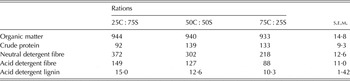
Three TMR of different concentrate (C): maize silage (S) ratios (25C : 75S, 50C : 50S and 75C : 25S) were prepared and used as fermentation substrates. Samples of TMR were dried at 65 °C for 48 h in a forced air oven until constant weight, ground in a Wiley mill to pass through a 1 mm sieve and stored in plastic bags for subsequent determination of chemical composition and in vitro incubation. Chemical composition of the TMR is shown in Table 2.
Chemical composition (g/kg DM) of the three total mixed rations with different concentrate* (C) to maize silage (S) ratios (adapted from Elghandour et al. Reference Elghandour, Kholif, Bastida, Martínez and Salem2015a, Reference Elghandour, Kholif, Márquez-Molina, Vázquez-Armijo, Puniya and Salemb)

* Contained (g/kg): 200 maize grain flaked, 260 maize grain cracked, 154 sorghum grain, 100 molasses sugarcane, 100 distilled dry grain, 96 soybean meal, 70 wheat bran, 10 NaCOOH3, 10 mineral premix (vitamin A [12 000 000 IU], vitamin D3 [2 500 000 IU], vitamin E [15 000 IU], vitamin K [2·0 g], vitamin B1 [2·25 g], vitamin B2 [7·5 g], vitamin B6 [3·5 g], vitamin B12 [20 mg], Pantotenic acid [12·5 g], Folic acid [1·5 g], Biotin [125 mg], Niacin [45 g], Fe [50 g], Zn [50 g], Mn [110 g], Cu [12 g], I [0·30 g], Se [200 mg], Co [0·20 g]).
In vitro gas production determination
Rumen inoculum was collected from a ruminally cannulated Brown Swiss cow of 450 ± 20 kg body weight, fitted with a permanent rumen cannula. The cow was fed ad libitum with a TMR made of a commercial concentrate (PURINA®, Toluca, Mexico) and alfalfa hay in the ratio of 1 : 1 and formulated to meet all nutrient requirements according to NRC (2001). Fresh water was available at all times.
Rumen contents were collected before the morning feeding, flushed with CO2, mixed and strained through four layers of cheesecloth into a flask with O2-free headspace. Samples (0·5 g) of each TMR were weighed into 120 ml serum bottles with appropriate addition of C. vulgaris level/g DM. Consequently, 10 ml of rumen fluid was added to each bottle followed by 40 ml of the buffer solution recommended by Goering & Van Soest (Reference Goering and Van Soest1970), with no trypticase added.
Three incubation runs were performed in 3 weeks. Three hundred and twenty-four bottles with O2-free headspace (three bottles for each TMR × four levels of C. vulgaris × three replication × three different runs) plus three bottles as blanks for each run (rumen fluid only) were incubated for 48 h. Once all bottles were filled, they were immediately closed with rubber stoppers, shaken and placed in an incubator at 39 °C. The volume of total gas, CH4 and CO2 productions were recorded at 2, 4, 6, 8, 10, 12, 24 and 48 h of incubation. Total GP was recorded using the Pressure Transducer Technique (Extech Instruments, Waltham) of Theodorou et al. (Reference Theodorou, Williams, Dhanoa, McAllan and France1994) while CH4 and CO2 production was recorded using a Gas-Pro detector (Gas Analyser CROWCON Model Tetra3, Abingdon, UK).
At the end of incubation at 48 h, the fermentation process was stopped by swirling the bottles in ice, then the bottles were uncapped and the pH was measured using a pH meter (Conductronic pH15, Puebla, Mexico) and the contents of each bottle filtered to obtain the non-fermented residue for determination of degraded substrate.
Degradability and sample analysis
Degradability and sample analysis were determined as described in Elghandour et al. (Reference Elghandour, Vázquez-Chagoyán, Salem, Kholif, Martínez-Castañeda, Camacho and Cerrillo-Soto2014). Briefly, after 48 h of incubation, the fermentation process was stopped and the contents of each serum bottle filtered under a vacuum through glass crucibles (coarse porosity no. 1, pore size 100–160 µm; Pyrex, Stone, UK) with a sintered filter. The fermentation residues were dried at 65 °C for 72 h to estimate DM disappearance.
Chemical analyses and calculations
Samples of the TMR and C. vulgaris were analysed for DM (method 934·01), ash (method 942·05), and nitrogen (method 954·01) according to AOAC (1997), while TMR contents for NDF (Van Soest et al. Reference Van Soest, Robertson and Lewis1991), acid detergent fibre (ADF) and lignin (AOAC 1997; method 973·18) analyses were carried out using an ANKOM200 Fibre Analyser Unit (ANKOM Technology Corp., Macedon, NY). Neutral detergent fibre was assayed with the use of an alpha amylase and sodium sulphite. Both NDF and ADF are expressed without residual ash. The fatty acid composition of C. vulgaris was determined on a Perkin-Elmer chromatograph (model 8420, Beacons-field, Perkin Elmer, Beaconsfield, UK) equipped with a flame ionization detector (analysis method ID: GB 5413.27–2010) according to the Chinese national standard methods (National Standards of People’s Republic of China 2010) as provided by the manufacturer. Fatty acids were esterified using 5% methanolic hydrogen chloride with pentacosanoic acid as the internal standard (Sigma, Chemical Co., St. Louis, MO). Fatty acids were identified by comparing the retention times of the peaks with those of known standards. Chlorella vulgaris amino acid content was determined using a Hitachi High-Speed Amino Acid Analyser (HITACHI L-8900, Chome Nishishinbash, Minato-ku, Tokyo, Japan) according to Chinese national standard methods (analysis method ID: GB/T 5009·124-2003) as provided by the manufacturer. The analysis was based on the separation of amino acids using strong cation exchange chromatography followed by the ninhydrin colour reaction and photometric detection at 570 nm.
To estimate kinetic parameters of GP, gas volumes recorded (ml/g DM) were fitted using the NLIN procedure of SAS (2002) according to the France et al. (Reference France, Dijkstra, Dhanoa, López and Bannink2000) model:
 $$y = A \times [{\rm 1} - {\rm e}^{ - c(t - L)}]$$
where y is the volume of GP at time t (h); A is the asymptotic GP (ml/g DM); c is the fractional rate of fermentation (/h) and L (h) is the discrete lag time prior to any gas being released.
Metabolizable energy (ME, MJ/kg DM) was estimated according to the method of Menke & Steingass (Reference Menke and Steingass1988) as follows:
 $$\eqalign{{\rm ME} & = {\rm 2} {\cdot} {\rm 2}0 + 0 {\cdot} {\rm 136}\;{\rm GP (ml}/0 {\cdot} {\rm 5}\;{\rm g}\;{\rm DM)} \cr & \quad + 0 {\cdot} 0{\rm 57}\;{\rm CP}\;({\rm g}/{\rm kg DM})}$$
where GP is net GP in ml from 200 mg of dry sample after 24 h of incubation.
The partitioning factor at 24 h of incubation (PF24; a measure of fermentation efficiency) was calculated as the ratio of DM degradability in vitro (mg) to the volume (ml) of GP at 24 h (i.e., in vitro DM disappearance (DMD)/total GP (GP24)) according to Blümmel et al. (Reference Blümmel, Steingass and Becker1997).
Statistical analyses
For each end-point studied, and for each TMR, values recorded from the three repetitions within each incubation run were averaged. Thus, within each TMR there were three replicates per treatment (each corresponding to the average value recorded at each incubation run) and each replicate was considered as an experimental unit. Results of in vitro GP and rumen fermentation parameters were analysed as a factorial experiment using the PROC GLM option of SAS (2002) as:
 $$Y_{ijk} = \mu + R_i + A_j + (R \times A)_{ij} + E_{ijk}$$
where Y ij k is every observation of the ith ration type (R i ) with jth C. vulgaris level (A j ), μ is the general mean, (R × A) ij is the interaction between ration type and C. vulgaris level and E ijk is the experimental error. Linear (i.e. additive = values are average) and quadratic (i.e. synergistic = values are higher than the average) polynomial contrasts were used to examine responses of different silage to concentrate ratios to increasing addition levels of C. vulgaris. Statistical significance was declared at P < 0·05.
RESULTS
In vitro gas production
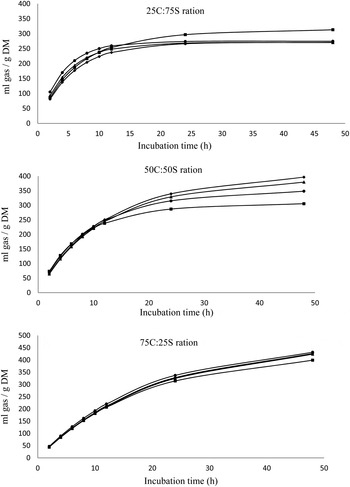
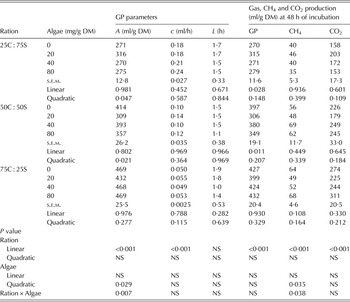
In vitro GP (ml/g DM) of the three TMR with different C : S ratios at different levels of C. vulgaris addition is shown in Fig. 1. There were significant interactions (P < 0·05) between ration type × C. vulgaris level for the asymptotic GP and CH4 production at 48 h of incubation (Table 3). Increasing the concentrate portion of the TMR linearly increased (P < 0·001) the asymptotic GP and decreased (P < 0·001) the rate of GP without affecting lag time. Addition of C. vulgaris to the 25C : 75S TMR increased the asymptotic GP (quadratic effect, P = 0·047). On the other hand, addition of C. vulgaris to the 50C : 50S TMR decreased the asymptotic GP (quadratic effect, P = 0·021). There were no effects of C. vulgaris addition to the 75C : 25S TMR on GP (Table 3).
The effects of three total mixed rations with different concentrate (C) to maize silage (S) ratios and C. vulgaris algae addition at 0 (-♦-), 20 (-■-), 40 (-▲-) and 80 (-●-) mg/g DM of the diet on in vitro gas production (ml/g DM).

The effects of three total mixed rations with different concentrate (C) to maize silage (S) ratios and different levels of microalgae Chlorella vulgaris on in vitro gas production (GP) kinetics, total GP, methane (CH4) and carbon dioxide (CO2) production at 48 h of incubation

NS, not significant; A, asymptotic gas production; c, rate of GP; L, the initial delay before GP begins.
Increasing the concentrate portion in the TMR linearly increased (P < 0·001) GP, CH4, CO2 and GP at 48 h of incubation. The highest (quadratic effect, P = 0·035) CH4 production at 48 h of incubation was observed with 20 mg/g DM for the 25C : 75S TMR, 40 mg/g DM for the 50C : 50S ration and 80 mg/g DM for the 75C : 25S ration. There were no effects of C. vulgaris addition on CO2 production at 48 h of incubation (Table 3).
In vitro methane and carbon dioxide production
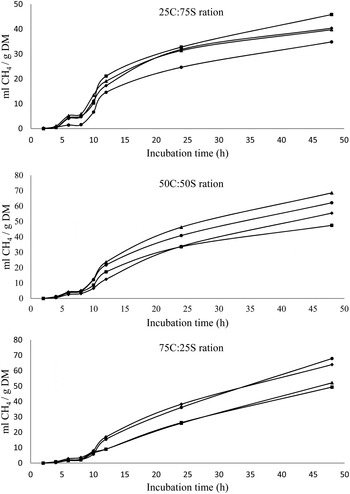
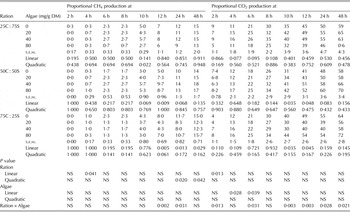
In vitro CH4 production (ml/g DM) of the three TMR with different C : S ratios at different levels of C. vulgaris addition is shown in Fig. 2. There were significant interactions (P < 0·05) between ration type × C. vulgaris level for CH4 production at 12 and 24 h of incubation (Table 3). Ration type quadratically affected CH4 production at 24 h (P = 0·020) and 48 h (P = 0·042) of incubation. Algae addition had no effect on CH4 production. For the 25C : 75S TMR, addition of C. vulgaris at 80 mg/g DM had the lowest (quadratic effect, P = 0·022) CH4 production at 10 h of incubation. On the other hand, addition of C. vulgaris at all levels to the 50C : 50S ration linearly increased (P = 0·009) CH4 production. Linear reductions in CH4 production were observed at 12 h (P = 0·005), 24 h (P = 0·013) and 48 h (P = 0·029) of incubation with the 75C : 25S ration (Table 4).
The effects of three total mixed rations with different concentrate (C) to maize silage (S) ratios and C. vulgaris algae addition at 0 (-♦-), 20 (-■-), 40 (-▲-) and 80 (-●-) mg/g DM of the diet on in vitro methane (CH4) production (ml/g DM).

The effects of three total mixed rations with different concentrate (C) to maize silage (S) ratios and different levels of microalgae Chlorella vulgaris on proportional methane (CH 4 ) and carbon dioxide (CO2) production (ml/100 ml gas) after 48 h of incubation

DM, dry matter; NS, not significant.
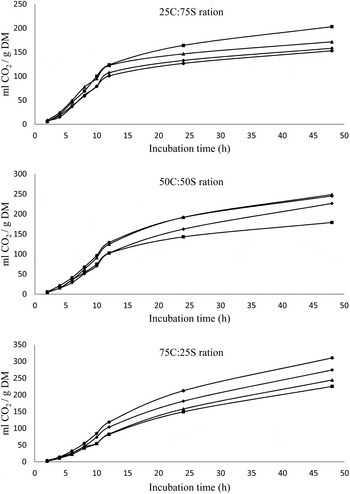
In vitro CO2 production (ml/g DM) of the three TMR with different C : S ratios at different levels of C. vulgaris addition is shown in Fig. 3. There were significant interactions (P < 0·05) between ration type × C. vulgaris level for CO2 production at 2, 6, 10, 12, 24 and 48 h of incubation (Table 4). Addition of C. vulgaris linearly increased CO2 production at 4 h (P = 0·028) and 6 h (P = 0·039) of incubation. Ration type linearly increased (P = 0·013) CO2 production at 2 h of incubation. For the 25C : 75S ration, C. vulgaris addition had no effect on CO2 production at all incubation times. For the 50C : 50S ration, addition of C. vulgaris linearly increased CO2 production at 10 h (P = 0·035) and 12 h (P = 0·048) of incubation. Addition of C. vulgaris to the 75C : 25S ration linearly increased CO2 production at 10 h (P = 0·035) and 12 h (P = 0·045) of incubation (Table 4).
The effects of three total mixed rations with different concentrate (C) to maize silage (S) ratios and C. vulgaris algae addition at 0 (-♦-), 20 (-■-), 40 (-▲-) and 80 (-●-) mg/g DM of the diet on in vitro carbon dioxide production (ml/g DM).

Fermentation kinetics
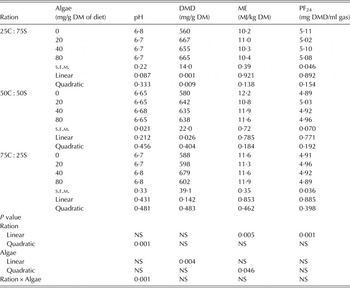
No interactions were observed between ration type and C. vulgaris addition for measured fermentation parameters, except for pH (P = 0·001) which increased for the 25C : 75S and 75C : 25S rations but remained the same for 50C : 50S ration (Table 5). Addition of C. vulgaris had no effect on DMD for the 75C : 25S ration but decreased DMD for the 25C : 75S ration (quadratic effect, P = 0·009) and 50C : 50S (linear effect, P = 0·026) ration. Addition of C. vulgaris had no effect on ME or PF24 for all rations (Table 5).
The effects of three total mixed rations with different concentrate (C) to maize silage (S) ratios and different levels of microalgae Chlorella vulgaris on in vitro rumen fermentation profile after 48 h of incubation

DMD, in vitro dry matter disappearance; ME, metabolizable energy; PF24, partitioning factor at 24 h of incubation; NS, not significant.
DISCUSSION
Chemical composition of Chlorella vulgaris algae
The chemical composition of C. vulgaris algae in the present study was consistent with some studies but not with others. Fiogbe et al. (Reference Fiogbe, Micha and Van Hove2004) reported that C. vulgaris algae contained (/kg DM): 200–255 g CP, 31 g fat, 349 g carbohydrates and 85–117 g cellulose, with a good profile of essential amino acids and rich content of some vitamins. Janczyk et al. (Reference Janczyk, Langhammer, Renne, Guiard and Souffrant2006) reported that C. vulgaris algae contained (/kg DM) 528 g CP, 81 g fat, 56 g carbohydrates, 208 g fibre, 251 g saturated fatty acids (SFA), 157 g mono-SFA and 585 g poly-SFA. Becker (Reference Becker2007) reported that C. vulgaris had a high protein content with a balanced amino acids profile compared with other referenced food proteins, e.g. soybean and egg. In their review, Priyadarshani & Rath (Reference Priyadarshani and Rath2012) reported that C. vulgaris contains (/kg DM) about 410–580 g CP, 120–170 g carbohydrate and 100–220 g fat. The differences observed between these reports and the results in the present study may be due to different cultivation conditions and nutrition (Priyadarshani & Rath Reference Priyadarshani and Rath2012). Protein is the most expensive nutrient in animal feed, thus developing natural alternatives to conventional protein meals may be cost-effective. Among all dietary amino acids in ruminant nutrition, lysine and methionine are the first and second limiting amino acids, respectively. The profile of amino acids in C. vulgaris shows relatively high amounts of lysine and methionine (Lum et al. Reference Lum, Kim and Lei2013; Kholif et al. Reference Kholif, Morsy, Matloup, Anele, Mohamed and El-Sayedin press).
Influence of ration type on in vitro gas production
The interaction between ration type × C. vulgaris level suggests that the fermentation kinetics are ration- and algae-level-dependent, thus underpinning the importance of identifying optimal supplemental levels of C. vulgaris for each ration type.
Rations with higher concentrate portions had higher asymptotic GP with lower rates of GP compared with high silage rations, implying an effect of the chemical composition of the feeds, in particular its fibre and protein contents, on GP and fermentation kinetics (Elghandour et al. Reference Elghandour, Vázquez-Chagoyán, Salem, Kholif, Martínez-Castañeda, Camacho and Cerrillo-Soto2014, Reference Elghandour, Kholif, Bastida, Martínez and Salem2015a ). Gas production is generally a good indicator of digestibility, fermentability and microbial protein production (Rodriguez et al. Reference Rodriguez, Mariezcurrena, Mariezcurrena, Lagunas, Elghandour, Kholif, Kholif, Almaráz and Salem2015). Higher proportions of concentrates in the rations indicate a better nutrient availability for rumen microorganisms (Elghandour et al. Reference Elghandour, Vázquez-Chagoyán, Salem, Kholif, Martínez-Castañeda, Camacho and Cerrillo-Soto2014), which will stimulate the degradability of different nutrients (Hamid et al. Reference Hamid, Akbar, Hossein and Ali2007). Increasing fibre content as a result of increased maize silage portion may have negative effects on microbial growth and fermentation due to the decreased readily available energy and protein content and increased structural carbohydrates content of those rations (Elghandour et al. Reference Elghandour, Kholif, Márquez-Molina, Vázquez-Armijo, Puniya and Salem2015b ), causing a decrease in ration digestibility and fermentability (Kumar et al. Reference Kumar, Dagar, Sirohi, Upadhyay and Puniya2013). Elghandour et al. (Reference Elghandour, Kholif, Bastida, Martínez and Salem2015a , Reference Elghandour, Kholif, Márquez-Molina, Vázquez-Armijo, Puniya and Salem b ) observed that increasing the maize silage portion in TMRs, instead of concentrate, lowered GP and negatively affected fermentation.
Influence of Chlorella vulgaris level on in vitro gas production
Addition of C. vulgaris at 20 mg/g DM to the 25C : 75S ration increased GP, which suggests increased ruminal microbial activity. Dubois et al. (Reference Dubois, Tomkins, Kinley, Bai, Seymour, Paul and De Nys2013) observed that algae rich in protein content increased GP in the rumen. Chlorella vulgaris contain a unique phytonutrient called Chlorella growth factor (CGF), which is concentrated in the nucleus of the algae cells. It comprises nucleic acid associated with peptides, proteins, amino acids, vitamins and sugars, and it is an agent for improved growth in bacteria (Kotrbáček et al. Reference Kotrbáček, Doubek and Doucha2015). Addition of C. vulgaris at 20 mg/g DM (low level of C. vulgaris in the present study) had a positive impact on ruminal fermentation compared to the higher levels. Moreover, C. vulgaris contains β-glucan, which has a role in scavenging free radicals (Iwamoto Reference Iwamoto and Richmond2004), thus improving fermentation.
Chlorella vulgaris at high levels has been recognized as an antimicrobial agent that acts against bacteria, protozoa and fungi, thus resulting in reduced fermentation activity. In the present study, increasing C. vulgaris levels negatively influenced GP. Microalgae contain toxic metabolites (phycotoxins), which have antibiotic and antifungal activities (Garcia-Camacho et al. Reference Garcia-Camacho, Gallardo-Rodriquez, Sanchez-Miron, Ceron-Gracia, Belarbi, Chisti and Molina-Grima2007). Janczyk et al. (Reference Janczyk, Halle and Souffrant2009) showed that C. vulgaris had a high antimicrobial activity due to the presence of cyclic peptides, alkaloids and lipopolysaccharides, in addition to the presence of polysaccharides, phenolic substances and aromatic compound. This supports the hypothesis that an optimal C. vulgaris level could improve fermentation efficiency. The high nucleic acid content in algal cells may be another reason for the negative effect on fermentation with increasing algae levels.
The increased asymptotic GP and rate of GP without affecting lag time could be due to the presence of oligosaccharides, sugar sources and non-protein nitrogen in the algae, which can improve the growth of bacteria to stimulate microbial activity.
Addition of C. vulgaris was also more effective for TMR with a high silage (roughage) portion than those with high concentrate content. It was expected that low concentrate diets would have better fermentation with algae addition due to better nutrient availability for rumen microorganisms to stimulate the degradability of nutrients. Low-quality TMR such as 25C : 75S lack the nutrients for ruminal microflora growth activity and it is postulated that the addition of algae provided more nutrients for microbial growth and activity. In case of high concentrate TMR, the incubation medium already contained adequate nutrients required for microbial activity, and the addition of more nutrients from the algae had no effect on microbial activity. This suggests that algae supplementation is more effective with poor quality TMR than high quality TMR.
Influence of ration type on in vitro carbon dioxide and methane production
Fermentation of dietary carbohydrates produces gases in the rumen, composed of hydrogen, CO2 and CH4. In the present study, ration type had no effect on CO2 production. However, increasing silage portion in the TMR increased total gas and CH4 production. This was expected, because the digestion of fibrous rations results in the preferential production of acetate, butyrate and CH4 compared to a concentrate ration (Kumar et al. Reference Kumar, Dagar, Sirohi, Upadhyay and Puniya2013). The methanogenic Archaea can utilize hydrogen gas (H2) produced from the ruminal degradation of structural carbohydrates for CH4 production (Stewart et al. Reference Stewart, Flint, Byrant, Hobson and Stewart1997). Furthermore, hydrogen-consuming acetogenic bacteria are able to use H2 as an energy source for growth using CO2, as H2 and CO2 are the dominant substrates of methanogenesis (Morgavi et al. Reference Morgavi, Forano, Martin and Newbold2010).
Influence of Chlorella vulgaris on in vitro methane and carbon dioxide productions
The 40 mg algae/g DM level of C. vulgaris addition decreased CH4 production of the 25C : 75S TMR. This may be related to the decreased DMD with this level of C. vulgaris addition (Anele et al. Reference Anele, Yang, McGinn, Tibbetts and McAllister2016). As previously mentioned, decreased DMD may have resulted in decreased GP for the 25C : 75S TMR. Goel & Makkar (Reference Goel and Makkar2012) suggested that CH4 production was associated with the increase in fermented and digested feed nutrients. Besides this, and due to its high eicosapentaenoic and docosahexaenoic (DHA) contents, C. vulgaris has been considered as a possible additive for reduction of CH4 emissions (Tsiplakou et al. Reference Tsiplakou, Abdullah, Skliros, Chatzikonstantinou, Flemetakis, Labrou and Zervas2016). This may be related to its content of unsaturated fatty acids, resulting in reduced CH4 production (Martin et al. Reference Martin, Morgavi and Doreau2010). Fievez et al. (Reference Fievez, Boeckaert, Vlaeminck, Mestdagh and Demeyer2007) observed up to 80% reduction in CH4 production with the addition of a DHA-rich supplement. Tsiplakou et al. (Reference Tsiplakou, Abdullah, Skliros, Chatzikonstantinou, Flemetakis, Labrou and Zervas2016) observed an increased methanobacteria and protozoa population in the rumen liquid of goats fed a forage-based diet supplemented with C. vulgaris. Anele et al. (Reference Anele, Yang, McGinn, Tibbetts and McAllister2016) observed a negative correlation between CH4 production and microalgae content of carbohydrate, oleic acid (C18 : 1n–9) and α-linolenic acid (C18 : 3n–3).
Addition of C. vulgaris at 80 mg/g DM increased CO2 production with both 50C : 50S and 75C : 25S TMR. However, the levels of 20 and 40 mg/g DM of C. vulgaris addition with the 75C : 25S TMR decreased CO2 production, suggesting that the effect of C. vulgaris microalgae is ration-type and -level dependent. Generally, microalgae lack lignin (Chen et al. Reference Chen, Zhao, Yen, Ho, Cheng, Lee, Bai and Chang2013), which gives them the ability to sequester more CO2 into digestible biomass, e.g. carbohydrate, protein and lipids (Walker Reference Walker2009) and may be used to produce biogas including CH4 and hydrogen via anaerobic processing (Hughes et al. Reference Hughes, Kelly, Black and Stanley2012), suggesting their potential as a strategy for carbon capture from fossil fuel manufacturing facilities (Sayre Reference Sayre2010).
Influence of ration type on in vitro fermentation kinetics
Improved fermentation with the 50C : 50S TMR could be because of the balanced concentration of nutrients, especially structural and non-structural carbohydrates (Elghandour et al. Reference Elghandour, Kholif, Bastida, Martínez and Salem2015a , Reference Elghandour, Kholif, Márquez-Molina, Vázquez-Armijo, Puniya and Salem b ).
Influence of Chlorella vulgaris on in vitro fermentation kinetics
Improved ruminal fermentation with C. vulgaris addition at 20 mg/g DM was associated with increased activity of ruminal microbes. It has been shown that C. vulgaris contains growth-promoting substance such as S-nucleotide adenosyl peptide complex, which may affect nutrient digestibility of the animals (Yan et al. Reference Yan, Lim and Kim2012). The addition of C. vulgaris might have provided the necessary nutrients required by the microbes to effectively degrade the TMRs for better fermentation (Anele et al. Reference Anele, Yang, McGinn, Tibbetts and McAllister2016). Halama (Reference Halama and Boda1990) suggested that the algal content of polysaccharides, phenolic substances and aromatic compounds had a nutritional and ecological importance to the fed animals. Tsiplakou et al. (Reference Tsiplakou, Abdullah, Skliros, Chatzikonstantinou, Flemetakis, Labrou and Zervas2016) observed changes in cellulolytic and proteolytic bacteria with modifications in the cellulase and protease activity in the rumen liquid of goats receiving C. vulgaris. In addition, Carro & Miller (Reference Carro and Miller1999) demonstrated that peptides and amino acids are stimulatory factors for ruminal microbial growth and digestion. Drewery et al. (Reference Drewery, Sawyer, Pinchak and Wickersham2014) reported increased OM digestibility with increasing levels of microalgae residue supplementation in steers fed oat straw. Tibbetts et al. (Reference Tibbetts, MacPherson, McGinn and Fredeenin press) reported that the dietary effects of algal supplementation on feed digestibility in ruminants are related in part to its lipid content. Inclusion of C. vulgaris increased the concentration of some bacteria in vitro (Fievez et al. Reference Fievez, Boeckaert, Vlaeminck, Mestdagh and Demeyer2007) and in vivo (Tsiplakou et al. Reference Tsiplakou, Abdullah, Skliros, Chatzikonstantinou, Flemetakis, Labrou and Zervas2016).
It can be concluded that C. vulgaris could be used as a feed additive to improve fermentation and feed utilization. The optimal level of C. vulgaris addition was 20 mg/g DM. Chlorella vulgaris addition was more effective with rations higher in fibre content than with rations high in concentrates. However, animal feeding trials are required to validate in vivo the utilization of C. vulgaris microalgae on animal performance.
The first author (A.E. Kholif) would like to thank the Mexican National Council for Science and Technology (CONACyT, Mexico) and The World Academy of Sciences (TWAS, Italy) for supporting his postdoctoral fellowship at the Facultad de Medicina Veterinaria y Zootecnia, Universidad Autónoma del Estado de México.