Early exposure to adverse experiences has consistently been linked to long-term negative physical and mental health outcomes (e.g., Danese et al., Reference Danese, Moffitt, Harrington, Milne, Polanczyk, Pariante and Caspi2009; Reuben et al., Reference Reuben, Moffitt, Caspi, Belsky, Harrington, Schroeder and Danese2016; Scott, Smith, & Ellis, Reference Scott, Smith and Ellis2010), including the development of internalizing and externalizing behaviors in children (Greeson et al., Reference Greeson, Briggs, Layne, Belcher, Ostrowski, Kim and Fairbank2014). Maternal trauma exposure is one type of early adversity that can increase risk for maternal depression (e.g., Mayou, Bryant, & Ehlers, Reference Mayou, Bryant and Ehlers2001; O'Donnell, Creamer, Pattison, & Atkin, Reference O'Donnell, Creamer, Pattison and Atkin2004) and child internalizing and externalizing behaviors (Bifulco, Moran, Ball, & Bernazzani, Reference Bifulco, Moran, Ball and Bernazzani2002; Lambert, Holzer, & Hasbun, Reference Lambert, Holzer and Hasbun2014). Nevertheless, little is known about whether the mechanisms linking maternal trauma and depressive symptoms with child internalizing and externalizing behaviors result from biological influences, environmental influences, or both.
We used a linked sample of adoptive and biological mother–child dyads to disentangle the environmental and biological mechanisms by which maternal trauma and depressive symptoms are associated with child internalizing and externalizing behaviors. The two family types were linked through the biological mother, who reared one biological child and placed another child for adoption. This study design allows for a novel examination of biological and environmental mechanisms because heritable influences can be traced through the biological mother's depressive symptoms across both family types, while shared genetic influences are not present in the adoptive mother–adopted child dyads, thereby isolating environmental risk factors in these dyads. Although maternal trauma has been linked to higher rates of maternal depressive symptoms (e.g., Kinderman, Schwannauer, Pontin, & Tai, Reference Kinderman, Schwannauer, Pontin and Tai2013), and maternal depressive symptoms have in turn been associated with child internalizing and externalizing behaviors (Goodman et al., Reference Goodman, Rouse, Connell, Broth, Hall and Heyward2011), previous research has not tested these pathways together in the same model. Our study addressed this gap by examining maternal depressive symptoms as a mediator of the relationship between maternal trauma and child internalizing and externalizing behaviors at child age 7 years in adoptive and biological families.
Theories of Intergenerational Effects of Trauma
Prominent theories of intergenerational effects of trauma (e.g., Kellermann, Reference Kellermann2001; Klein-Parker, Reference Klein-Parker, Wilson and Kahana1988; Sotero, Reference Sotero2006) posit that maternal trauma and its adverse consequences are passed on to children through exposure to the mother's stress, emotional numbing and detachment, and overall limited psychosocial functioning that can negatively influence the quality of the rearing environment (Schwerdtfeger & Goff, Reference Schwerdtfeger and Goff2007; Thompson, Reference Thompson2007; Wiseman, Reference Wiseman2008). These theories posit that child internalizing and externalizing behaviors are linked to maternal trauma through children's direct exposure to, and/or modeling of, their mother's trauma symptoms (Walker, Reference Walker1999), mental health problems (e.g., depression; Felsen, Reference Felsen and Danieli1998), and adaptation patterns (Fraiberg, Adelson, & Shapiro, Reference Fraiberg, Adelson and Shapiro1975). Rearing environments provided by mothers who experience ongoing emotional difficulties as a result of trauma are characterized by low responsivity and lack of emotional availability, more coercive interactions, and less parental monitoring (Felsen, Reference Felsen2017; Reich, Earls, & Powell, Reference Reich, Earls and Powell1988), all of which increase the risk of internalizing and externalizing behaviors in children (Loukas, Piejak, Bingham, Fitzgerald, & Zucker, Reference Loukas, Piejak, Bingham, Fitzgerald and Zucker2001). Exposure to such rearing environments during early childhood can be particularly detrimental to the socioemotional development of children (Cicchetti & Toth, Reference Cicchetti, Toth, Damon, Sigel and Renninger1998a; Goodman & Gotlib, Reference Goodman and Gotlib2002; Murray, Halligan, Adams, Patterson, & Goodyer, Reference Murray, Halligan, Adams, Patterson and Goodyer2006).
The effects of maternal trauma on child developmental outcomes can be especially pronounced in contexts of socioeconomic risk. Low socioeconomic status (SES) contexts can exacerbate the negative effects of trauma on depression (Lorant, Deliege, & Eaton, Reference Lorant, Deliege and Eaton2003) and child internalizing behavior (Krauss, Wilson, Padrón, & Samuelson, Reference Krauss, Wilson, Padrón and Samuelson2016). Therefore, we hypothesized that maternal trauma and associated depressive symptoms would have stronger behavioral consequences in children reared in low-SES backgrounds. We tested this hypothesis by comparing the associations between maternal trauma, maternal depressive symptoms, and child internalizing and externalizing behavior across two family types that differed significantly in their socioeconomic backgrounds.
Environmental and Heritable Pathways From Maternal Depressive Symptoms to Child Behavior
Past studies suggest a mediational role of maternal depressive symptoms in the link between maternal trauma and child behavior problems (e.g., Dubowitz et al., Reference Dubowitz, Black, Kerr, Hussey, Morrel, Everson and Starr2001; Min, Singer, Minnes, Kim, & Short, Reference Min, Singer, Minnes, Kim and Short2013). However, maternal depressive symptoms can affect child behavior through environmental influences (e.g., Natsuaki et al., Reference Natsuaki, Shaw, Neiderhiser, Ganiban, Harold, Reiss and Leve2014), heritable factors (e.g., Thapar, Collishaw, Pine, & Thapar, Reference Thapar, Collishaw, Pine and Thapar2012), or an interplay of the two. Several prominent theories suggest that the effects of maternal depressive symptoms on child behaviors are driven by environmental mechanisms (e.g., Cicchetti, Rogosch, & Toth, Reference Cicchetti, Rogosch and Toth1998; Cummings & Davies, Reference Cummings and Davies1994; Shaw, Dishion, Connell, Wilson, & Gardner, Reference Shaw, Dishion, Connell, Wilson and Gardner2009). Findings from these studies have been further validated by adoption and children-of-twins study designs that include tests of environmental mechanisms above and beyond genetically driven effects. A recent review of these studies demonstrates a consistent link between maternal depressive symptoms and child internalizing and externalizing behaviors in early and middle childhood (Natsuaki et al., Reference Natsuaki, Shaw, Neiderhiser, Ganiban, Harold, Reiss and Leve2014). Previous research that used the adoptive families in our study (Leve et al., Reference Leve, Neiderhiser, Shaw, Ganiban, Natsuaki and Reiss2013) has illustrated effects of adoptive mothers’ depressive symptoms on children's internalizing and externalizing behaviors at age 18 months, and externalizing behaviors at 27 months, controlling for birth mothers’ major depressive disorder (Kerr et al., Reference Kerr, Leve, Harold, Natsuaki, Neiderhiser, Shaw and Reiss2013; Pemberton et al., Reference Pemberton, Neiderhiser, Leve, Natsuaki, Shaw, Reiss and Ge2010). Similar findings have been reported in children-of-twins studies in the United States (Silberg, Maes, & Eaves, Reference Silberg, Maes and Eaves2010), Australia (Singh et al., Reference Singh, D'Onforio, Slutske, Turkheimer, Emery, Harden and Martin2011), and Sweden (Class et al., Reference Class, D'Onforio, Singh, Ganiban, Spotts, Lichtenstein and Neiderhiser2012), indicating an environmental mechanism of influence for maternal depressive symptoms.
Other reviews (e.g., McGuffin & Katz, Reference McGuffin and Katz1989; Rice, Harold, & Thapar, Reference Rice, Harold and Thapar2002; Sullivan, Neale, & Kendler, Reference Sullivan, Neale and Kendler2000; Thapar et al., Reference Thapar, Collishaw, Pine and Thapar2012) and twin studies (e.g., Rice et al., Reference Rice, Harold and Thapar2002) suggest low to moderate heritability of depressive symptoms. Consequently, children of mothers with elevated depressive symptoms may have a genetic propensity toward internalizing behaviors (Ferentinos et al., Reference Ferentinos, Koukounari, Power, Rivera, Uher, Craddock and Lewis2015). Similar findings by Goodman et al. (Reference Goodman, Rouse, Connell, Broth, Hall and Heyward2011) in children of depressed mothers suggest an inherited vulnerability for externalizing behaviors in first-degree relatives (Kovacs, Devlin, Pollock, & Mukerji, Reference Kovacs, Devlin, Pollock and Mukerji1997; Williamson et al., Reference Williamson, Ryan, Birmaher, Dahl, Kaufman, Rao and Puig-Antich1995). In consideration of these findings, we examined both environmental and heritable pathways from maternal depressive symptoms to child behaviors in our models.
Novel Study Design
By using a parent–child adoption design that included linked biological and adoptive mother–child dyads, we were able to examine the mediating role of maternal depressive symptoms on the relationship between maternal trauma and child internalizing and externalizing behaviors while differentiating inherited and rearing environmental pathways of influence. The inclusion of the adoption sample allowed for elimination of passive gene–environment correlation (rGE) in the proposed associations between rearing mothers’ trauma and depressive symptoms, and child behaviors. Passive rGE is one way in which children's inherited qualities are associated with their environment; it occurs when genes are shared between a rearing parent and a child, thus confounding the effects of the rearing environment with heritable influences (Harold et al., Reference Harold, Rice, Hay, Boivin, van den Bree and Thapar2011; Jaffee & Price, Reference Jaffee and Price2007; Price & Jaffee, Reference Price and Jaffee2008). Therefore, in the adoption sample, similarities between the adoptive mother's trauma and depressive symptoms and the adopted child's behavior would suggest an environmental mechanism of influence, due to the influence of the shared rearing environment and the lack of shared genes (Leve et al., Reference Leve, Neiderhiser, Harold, Natsuaki, Bohannan and Cresko2017). Our study also included data from the adopted child's biological mother, which enabled us to examine the heritable effects of a biological mother's depressive symptoms on the adopted child's internalizing and externalizing behaviors. Similarities between a biological mother and the adopted child reflect heritable influences and/or influences of the biological mother's prenatal environment, given the lack of a shared postnatal rearing environment between the biological mother and adopted child.
We included a second sample that was linked to the adoption sample via the biological mother. This sample included dyads of the biological mother and the biological child she was rearing. Together, this set of study samples enabled us to test for replication of the effects across two samples that varied in terms of the child's genetic relatedness to the mother (related or unrelated) and allowed us to compare path coefficients between rearing mother depressive symptoms and child externalizing and internalizing behaviors when passive rGE was, or was not, a design element.
Study Hypotheses
Our study used a multilevel approach by examining internalizing and externalizing behaviors as two separate outcomes, investigating heritable and environmental pathways of influence of maternal trauma via the effects of maternal depressive symptoms on child internalizing and externalizing behaviors, and comparing these associations across the two family types (i.e., biological mother–biological child families and adoptive mother–adopted child families) that also varied in terms of their socioeconomic background.
First, we hypothesized that rearing mother trauma would be related to child internalizing and externalizing behaviors assessed at child age 7 years in both family types. Given our study design, particularly the lack of measurement of epigenetic processes, we did not hypothesize a heritable association between biological mother trauma and adopted child behaviors, because this association was unlikely to be captured at the behavioral level.
Second, we hypothesized that rearing mother depressive symptoms would mediate the association between rearing mother trauma and child internalizing and externalizing behaviors in both samples. Maternal depressive symptoms were expected to have both behavioral and biological pathways of influence. Specifically, in adoptive families, we hypothesized that adoptive mother depressive symptoms would act as an environmental mediator of the association between adoptive mother trauma and adopted child externalizing and internalizing behaviors; in biological families, we hypothesized that biological mother depressive symptoms would act as both an environmental and a biological mediator of the association between biological mother trauma and biological child externalizing and internalizing behaviors. Given the genetic relatedness of the biological family dyads, the environmental and heritable effects of maternal depressive symptoms cannot be disentangled.
Third, we hypothesized that biological mother depressive symptoms would operate as a heritable mechanism of influence that would be associated with adopted child externalizing and internalizing behaviors.
Fourth, we hypothesized that the direct and mediated associations between rearing mother trauma and child internalizing and externalizing behaviors would be stronger in the biological families in our sample, given their lower SES as compared with SES of adoptive families.
Method
Participants
We used data from two linked studies of mother–child dyads that varied on whether the rearing mother was the biological parent or not. Study 1 included adoptive mother–adopted child dyads enrolled in the Early Growth and Development Study (EGDS), which is an ongoing, multisite, longitudinal adoption study designed to examine family, peer, and other social context factors that affect child development (Leve et al., Reference Leve, Neiderhiser, Shaw, Ganiban, Natsuaki and Reiss2013). The biological mother of the adoptee also participated in Study 1. Children were adopted within 3 months postpartum, with the median child age at adoption placement being 2 days (M = 6.2 days, SD = 12.45, range = 0–91 days). The eligibility criteria for the EGDS sample included the following: domestic and nonrelative adoption placement; both biological and adoptive parents able to understand English at the eighth-grade level; and no known major medical conditions, such as extensive medical surgeries, extreme prematurity, or any condition that required the child to be in the neonatal intensive care unit for more than 1 week (for more detail, see Leve et al., Reference Leve, Neiderhiser, Shaw, Ganiban, Natsuaki and Reiss2013). For our study, we included data across seven waves, from adopted child age 5 months to 7 years (n = 541). Child internalizing and externalizing behaviors were assessed at approximately age 7. Adoptive mother trauma and depressive symptoms were assessed during the span of 6.25 years, beginning at child age 9 months. Biological mother depressive symptoms were assessed from adopted child age 5 to 54 months to index heritable influences on adopted child behavior. For child internalizing and externalizing behaviors and one of our control variables (adoption openness), data from biological fathers (BF; n = 49) and adoptive fathers (AF; n = 330), when available, were used to create average scores based on maternal and paternal reports. In all other cases, only maternal reports were used.
Study 2 included a linked subsample of EGDS biological mothers who were rearing a biological child (i.e., a biological sibling to an adopted child in EGDS). Children in Study 2 were assessed at around age 7 (n = 126) as part of the ongoing Early Parenting of Children (EPoCh) study (Leve et al., Reference Leve, Neiderhiser, Harold, Natsuaki, Bohannan and Cresko2017). Biological mother trauma was assessed over the lifetime, and her depressive symptoms were assessed from adopted child age 5 to 54 months. For biological child internalizing and externalizing behavior, when available, data from biological fathers (n = 49) were also included to create average scores based on maternal and paternal reports.
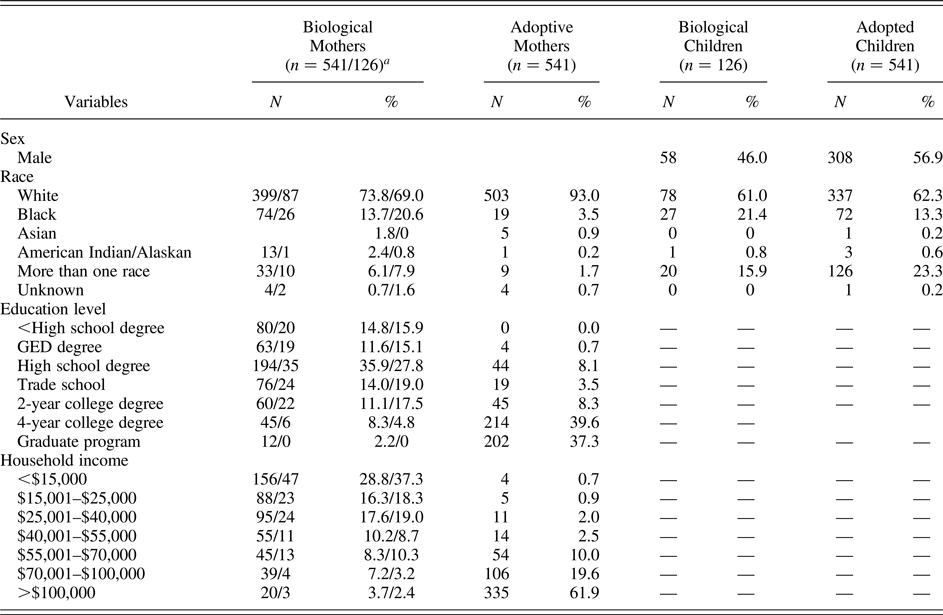
Biological mothers represented in the EPoCh subsample are a subset of biological mothers in the EGDS sample and were predominantly Caucasian (EGDS: 73.8%, EPoCh: 69.0%) and from low SES (annual household income less than $25,000 for EGDS and EPoCh), with a median education of high school diploma (EGDS and EPoCh). Adoptive mothers in EGDS tended to be middle class (annual household income more than $70,000) and college educated. There was a significant difference between biological mother and adoptive mother household income, t (226) = 27.85, p < .001, and education level, t (170) = 19.67, p < .001. The average age of the EGDS and EPoCh children at the time of child outcome assessment was 7.12 years and 7.98 years, respectively, with similar distributions of gender (56.9% male for EGDS and 46.0% for EPoCh). Additional demographic information is available in Table 1.
Sample demographics
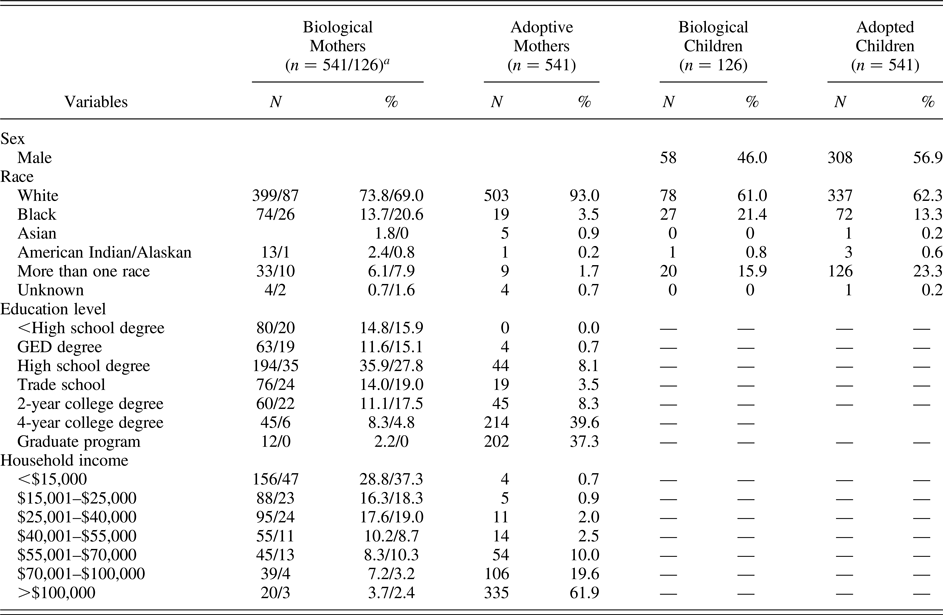
a Early Growth and Development Study/Early Parenting of Children Study.
Measures
Maternal trauma frequency
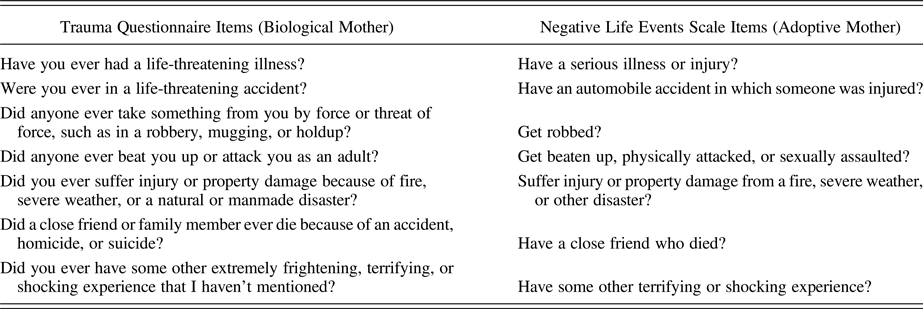
Seven items from the Trauma Questionnaire (Norris, Reference Norris1990) were used to assess trauma frequency in biological mothers, and seven matched items from the Negative Life Events Scale (NLS; Dohrenwend, Krasnoff Askenasy, & Dohrenwend, Reference Dohrenwend, Krasnoff, Askenasy and Dohrenwend1978; see Table 2) were used for adoptive mothers. The 13-item Trauma Questionnaire was administered to biological mothers as part of a telephone interview when adopted children were approximately 5 years old (M = 4.67, SD = 0.86, range = 2.82–7.25 years). Items assessed highly stressful events during the lifetime, with a yes/no response option (e.g., “Did anyone ever beat you up or attack you as an adult?”). For each positive response, the mother was asked whether she was pregnant when the event occurred. Given the impact of maternal psychological distress on fetal development and subsequent, long-lasting outcomes in children (Kinsella & Monk, Reference Kinsella and Monk2009; O'Connor, Heron, Golding, Beveridge, & Glover, Reference O'Connor, Heron, Golding, Beveridge and Glover2002; Pawlby, Hay, Sharp, Waters, & O'Keane, Reference Pawlby, Hay, Sharp, Waters and O'Keane2009; Talge, Neal, & Glover, Reference Talge, Neal and Glover2007), traumatic events occurring during pregnancy with either the adopted child or the biological child were not included to partially account for any trauma experienced in utero. We selected 7 items from this scale that matched with the items from the NLS that was administered to adoptive mothers. The scores on this variable ranged from 0 to 7 (M = 2.19, SD = 2.00). The NLS (Dohrenwend et al., Reference Dohrenwend, Krasnoff, Askenasy and Dohrenwend1978), administered to adoptive mothers, includes 31 items that assess important negative changes that the adoptive mother may have experienced in the past year, using a dichotomous (yes/no) response option (e.g., “Did you get beaten up, physically attacked, or sexually assaulted?”). To make the assessment of trauma in adoptive mothers comparable to the lifetime assessment of trauma in biological mothers, we averaged five waves of NLS data for adoptive mothers, collected at adopted child ages 9 months, 27 months, 4.5 years, 6 years, and 7 years. The composite score ranged from 0 to 3.33 (M = 0.50, SD = 0.49; see Table 3). Given that the individual items used to measure trauma frequency in these scales were not necessarily expected to correlate (i.e., the experience of one trauma is not necessarily related to the experience of another trauma), we did not compute interitem alphas for these measures.
Trauma items (n = 7) matched across the Trauma Questionnaire (biological mother) and the Negative Life Events Scale (adoptive mother)
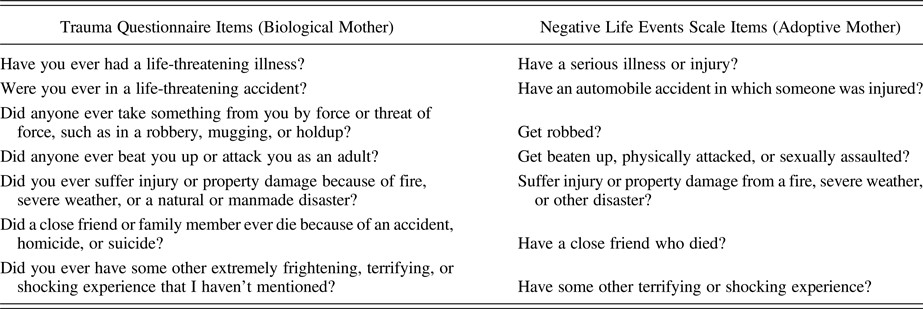
Note: For the Trauma Questionnaire, items were assessed for the biological mother's lifetime and at one time point in the study in spring 2009, when adopted children were approximately 5 years old (M = 4.67, SD = 0.86, range = 2.82–7.25). For the Negative Life Events Scale, items were assessed for the past year and at five time points in the study at adopted child ages 9 months, 27 months, 4.5 years, 6 years, and 7 years.
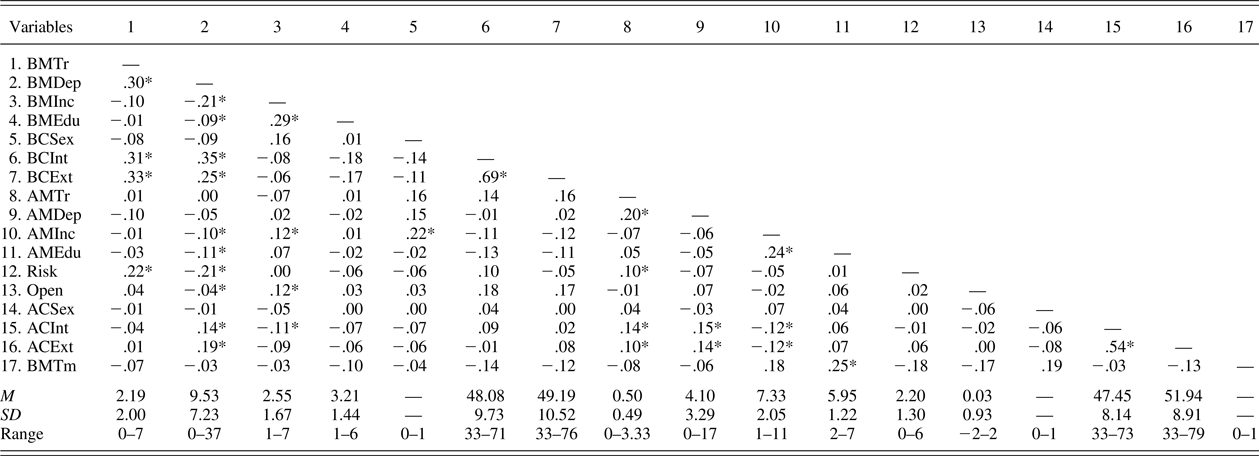
Means, standard deviations, ranges, and correlations for study variables
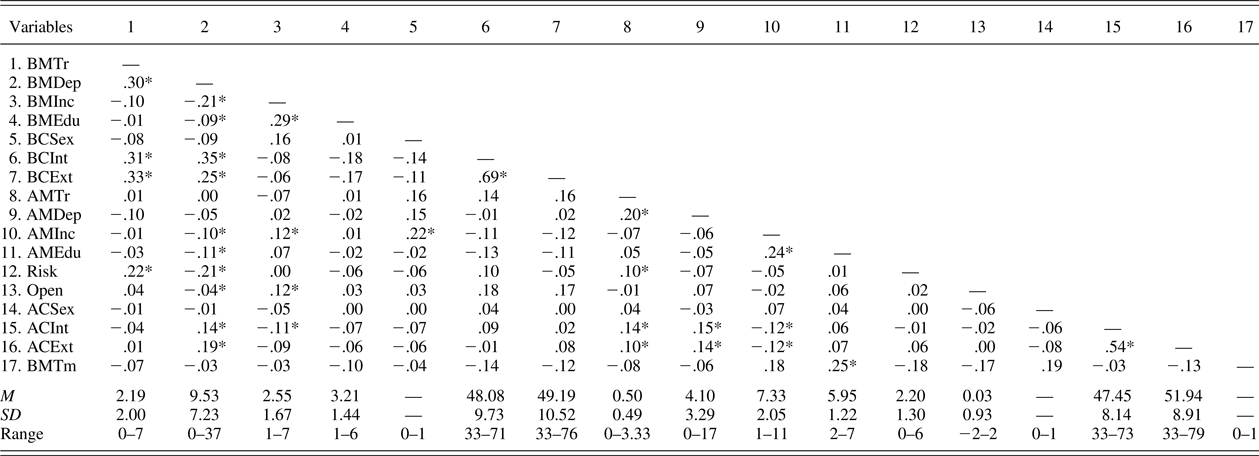
Note: Mean and standard deviations for child sex and biological mother trauma assessment timing were not provided because of the dichotomous nature of the variables. BMTr, biological mother trauma; BMDep, biological mother depressive symptoms; BMInc, household income in biological families; BMEdu, biological mother education; BCSex, biological child sex; BCInt, biological child internalizing behaviors; BCExt, biological child externalizing behaviors; AMTr, adoptive mother trauma; AMDep, adoptive mother depressive symptoms; AMInc, household income in adoptive families; AMEdu, adoptive mother education; Risk, perinatal risk; Open, adoption openness; ACSex, adopted child sex; ACInt, adopted child internalizing behaviors; ACExt, adopted child externalizing behaviors; BMTm, biological mother trauma assessment timing.
*p < .05.
Maternal depressive symptoms
Depressive symptoms in both biological and adoptive mothers were assessed using the Beck Depression Inventory (BDI; Beck, Steer, & Brown, Reference Beck, Steer and Brown1996). The BDI consists of 21 items, each with a group of statements that describe possible feelings experienced in the past week (e.g., “I do not feel sad,” “I feel sad,” “I am sad all the time and I can't snap out of it,” and “I am so sad or unhappy that I can't stand it”). Participants were asked to select the statement that best described their feelings in the past week. Biological mothers were assessed at three times: adopted child ages 5 months, α = 0.92; 18 months, α = 0.91; and 54 months, α = 0.90; rs = .39–.62, p < .001; adoptive mothers were assessed at six times: adopted child ages 9 months, α = 0.70; 18 months, α = 0.79; 27 months, α = 0.84; 4.5 years, α = 0.82; 6 years, α = 0.82; and 7 years, α = 0.88; rs = .49–.62, p < .001. BDI scores for each participant were averaged across the individual assessments to create a composite score. Item 9, which assessed suicidal thoughts, was not administered to the first 361 families enrolled into the study because of limited resources for making clinical referrals. The scale composite scores and the reported alphas do not include this item.
Child behaviors
Child internalizing and externalizing behaviors at age 7 years were measured using the Parent version of the Child Behavior Checklist: Ages 6–18 (Achenbach & Rescorla, Reference Achenbach and Rescorla2001). Parents were asked to indicate whether a series of child behaviors was “not true,” “sometimes true,” or “very true” for their child. Mother and father reports were collected to calculate a mean of both parents’ reports, when both reports were available (EGDS AM–AF pair total: 59.0%; EPoCh BM–BF pair total: 50.8%). We used the standardized internalizing and externalizing T scores for this study, EGDS internalizing (AM: α = 0.82; AF: α = 0.82); EPoCh internalizing (BM: α = 0.82; BF: α = 0.84); EGDS externalizing (AM: α = 0.89; AF: α = 0.89); and EPoCh externalizing (BM: α = 0.90; BF: α = 0.93).
Control variables
We controlled for SES, child sex, and timing of trauma assessment in EPoCh models, and SES, child sex, perinatal risk, and adoption openness in EGDS models. However, we did not include SES as a control variable in multigroup path analysis models comparing associations across biological and adoptive families (Hypothesis 4) because we were interested in examining its contribution to between-family variation. SES was measured using annual household income (i.e., “What was your total household income from all sources last year?”; range = less than $15,000–greater than $100,000) and maternal education level (i.e., “What is the highest level of education that you have completed?”; range = less than high school degree–graduate program).
Child sex was coded 0 for boys and 1 for girls and was included as a control variable because of potential gender differences in risk for internalizing and externalizing behaviors. For example, several studies have illustrated a greater likelihood of internalizing behaviors among prepubescent boys than among prepubescent girls, with the direction of this association reversed following puberty (Cyranowski, Frank, Young, & Shear, Reference Cyranowski, Frank, Young and Shear2000; McGee, Feehan, Williams, & Anderson, Reference McGee, Feehan, Williams and Anderson1992). Boys also tend to have higher rates of externalizing behaviors than do girls (Miner & Clarke-Stewart, Reference Miner and Clarke-Stewart2008).
Biological mother report of pregnancy complications (e.g., prenatal illness) was used to assess biological mothers’ perinatal risk at adopted child age 3–6 months, a pregnancy screener was used to assess prenatal drug use, and a pregnancy calendar was used to enhance recall (Caspi, Moffitt, Newman, & Silva, Reference Caspi, Moffitt, Newman and Silva1996). Scoring was modified based on the McNeil–Sjöström Scale for Obstetric Complications (see Marceau et al., Reference Marceau, De Araujo-Greecher, Miller, Massey, Mayes, Ganiban and Neiderhiser2016; McNeil & Sjöström, Reference McNeil and Sjöström1995, for more details). Responses were assigned a score on a scale of 1 (not harmful or relevant) to 6 (very great harm to or deviation in offspring), indicating level of perinatal risk. Perinatal risk is linked to child developmental outcomes, such as cognitive functions, mental health, and behavior (e.g., Barker, Reference Barker1990; Coussons-Read, Reference Coussons-Read2013; Irner, Reference Irner2012; Raznahan, Greenstein, Lee, Clasen, & Giedd, Reference Raznahan, Greenstein, Lee, Clasen and Giedd2012), and was prevalent in our biological mother sample (range = 0–6, M = 2.20, SD = 1.30).
We included the timing of assessment of biological mother's trauma with regard to the biological child's birth as an additional covariate in the EPoCH models (i.e., those predicting biological child outcomes). This variable was coded 0 if the trauma assessment occurred before the birth of the biological child (11.2% of sample), and 1 if assessment occurred after the birth of the biological child (88.8% of sample), regardless of whether or not the biological mother indicated any exposure to trauma. As previously mentioned, items in which biological mothers endorsed experiencing trauma while pregnant were not included in the final analyses.
Openness in adoption (i.e., contact between biological and adoptive parents) was used to control for similarities between biological parents and adopted children that might have been influenced by contact between the two parties. An adoption design rests on the assumption that similarities between the biological parent and adopted child are the result of genetic factors once intrauterine risk is controlled for, and contact between biological and adoptive families can challenge this assumption and bias model estimates. Adoption openness was measured at adopted child age 3–9 months by using a composite of biological mother, biological father, adoptive mother, and adoptive father ratings of perceived adoption openness (Ge et al., Reference Ge, Natsuaki, Martin, Leve, Neiderhiser, Shaw and Reiss2008), rated on a 7-point scale ranging from 1 (very closed: “you have no information about the adoptive parents”) to 7 (very open: “you have visits with the family at least once a month and communicate several times a month by phone, letters, or emails”). Interrater agreement based on correlations across the four reporters was high (r = .66–.81, p < .001).
Analytic plan
The goals of this study were to (a) examine the association between rearing mother trauma and children's internalizing and externalizing behaviors at child age 7; (b) test whether rearing mother depressive symptoms would mediate the association between rearing mother trauma and child internalizing and externalizing behaviors in both samples; (c) test whether biological mother depressive symptoms would operate as a heritable mechanism of influence that would be associated with adopted child externalizing and internalizing behaviors; and (d) examine whether the direct and mediated associations between rearing mother trauma and child internalizing and externalizing behaviors would be stronger in biological families (BM–BC) than in adoptive families (AM–AC), given the lower SES in biological families. Bivariate analyses were conducted in IBM SPSS version 21.0 for Windows (IBM Corporation, 2012). Independent samples t tests were conducted in SPSS to analyze mean differences in rearing mother trauma frequency, rearing mother depressive symptoms, and child internalizing/externalizing behavior across the two family types (AM–AC and BM–BC dyads). We used path analysis models in Mplus v7 (Muthén & Muthén, Reference Muthén and Muthén1998–2012) to test the direct and mediated effects of rearing mother trauma frequency on child internalizing and externalizing behavior. Confidence intervals for mediated effects were obtained using the bias-corrected bootstrap resampling method (MacKinnon, Lockwood, & Williams, Reference MacKinnon, Lockwood and Williams2004). Robust maximum likelihood estimation procedures were used to account for any violations of normality.
Model fit was evaluated using multiple global fit indices and examination of residual diagnostics. The criteria for a good fit included a nonsignificant χ2 test statistic, a root mean square error of approximation (RMSEA) value of <0.05, and a comparative fit index (CFI) value of >0.90. We used multigroup path analyses in Mplus to test whether the key pathways of influence operated similarly across the two samples. Testing involved comparing two nested models: (a) a baseline, fully unconstrained model, and (b) a model in which pathways of interest were systematically constrained to be invariant across the groups. Model fit change was assessed using χ2 difference testing.
Missing data
In the EGDS sample, variables with missing data included biological mother education level (2.0%), household income in biological families (7.9%), biological mother depressive symptoms (1.1%), adoptive mother education level (2.4%), household income in adoptive families (2.2%), adoptive mother trauma (0.9%), adopted child internalizing behaviors (26.6%), and adopted child externalizing behaviors (26.6%). Little's (Reference Little1988) missing completely at random test demonstrated that missingness on these variables was completely at random, χ2 (17) = 26.77, p = .06. Variables with missing data in EPoCh included biological mother trauma frequency (22.2%), household income (0.8%), and timing of trauma assessment (22.2%). Missingness on biological mother trauma frequency and timing of trauma assessment were present because the trauma measure was not administered to all participants. Little's missing completely at random test was used to test whether the missingness on these variables was completely at random, χ2 (1) = 3.40, p = .07. Because the study focus was on maternal trauma, we excluded 20 adoptive families in which the father was the primary respondent, which resulted in an EGDS analytic sample size of 541. We used full information maximum likelihood in Mplus to account for missing data.
Results
A correlation matrix of the key study variables is included in Table 3. In the EGDS sample, adopted child internalizing/externalizing behaviors were significantly associated with adoptive mother trauma frequency and adoptive mother depressive symptoms. Household income in adoptive families was negatively correlated with adopted child internalizing and externalizing behaviors. Biological mother depressive symptoms were also significantly associated with adopted child internalizing and externalizing behaviors. In the EPoCh sample, significant bivariate associations were observed between biological child internalizing/externalizing behaviors and biological mother trauma frequency and depressive symptoms.
Independent samples t tests were conducted to compare mean scores of rearing mother trauma, her depressive symptoms, and child internalizing and externalizing behaviors across the EGDS and EPoCh samples. Biological mothers (M = 2.19, SD = 2.00) reported significantly greater frequency of trauma than did adoptive mothers (M = 0.50, SD = 0.49), t (99) = −8.31, p < .001, and more depressive symptoms (M = 9.53, SD = 7.23) than did adoptive mothers (M = 4.10, SD = 3.29), t (137) = −8.24, p < .001. Adopted children (M = 51.94, SD = 8.91) had significantly higher externalizing scores than did biological children (M = 49.19, SD = 10.52), t (185) = 2.65, p = .009. There were no significant differences in child internalizing scores across the two samples.
Models predicting adopted child internalizing and externalizing behaviors (EGDS)
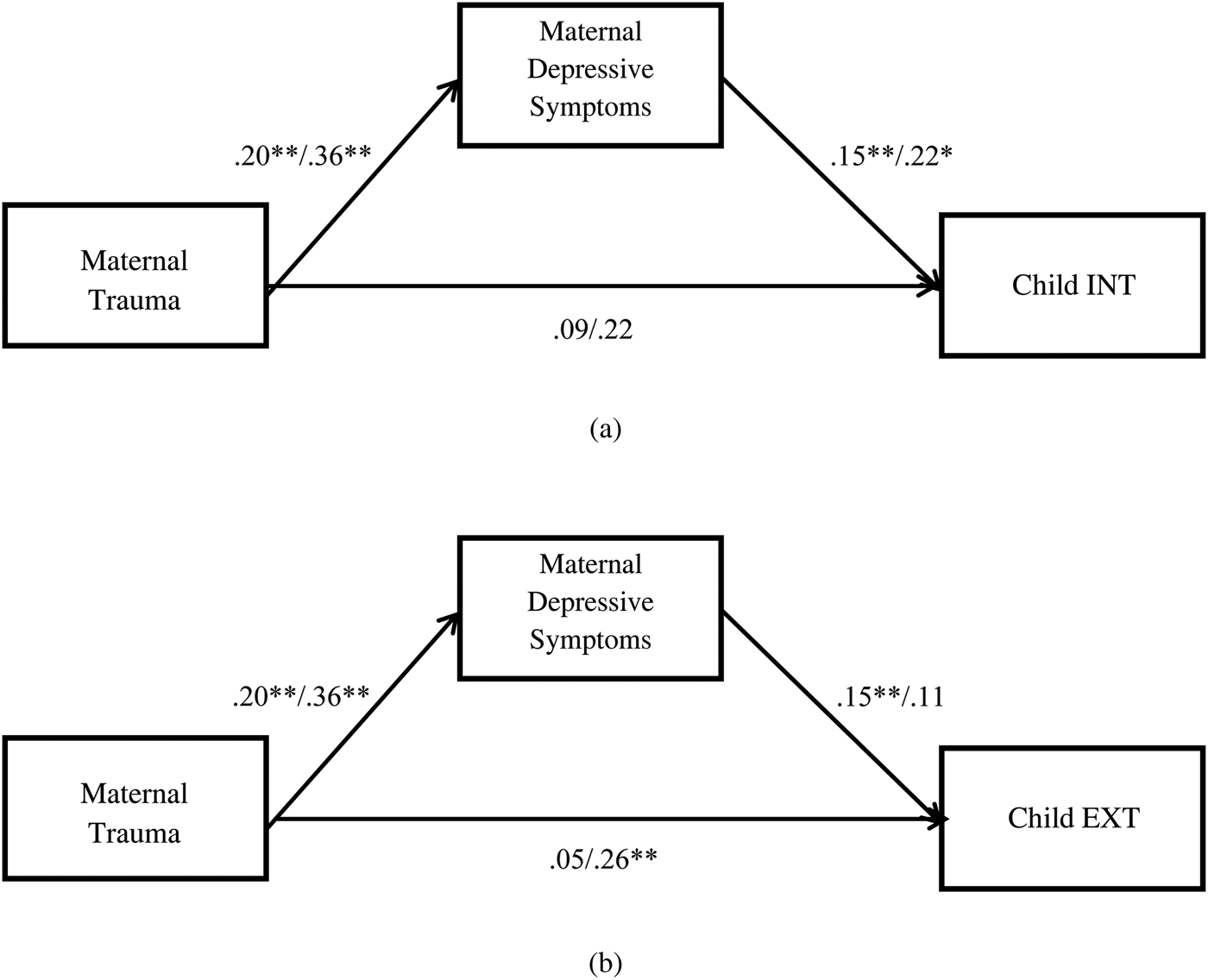
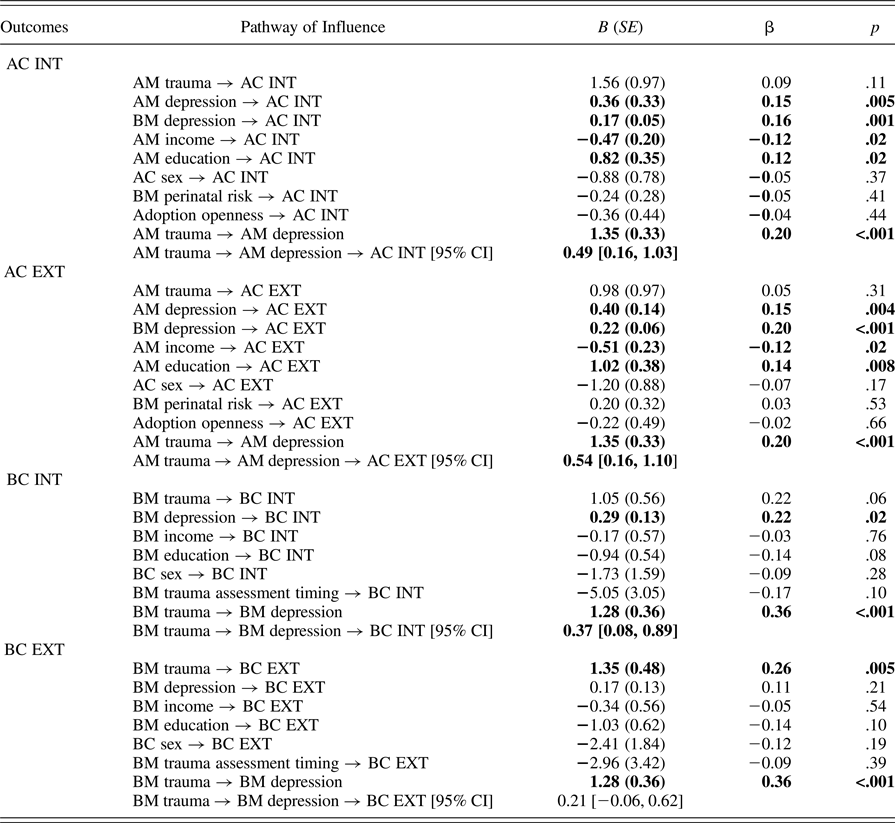
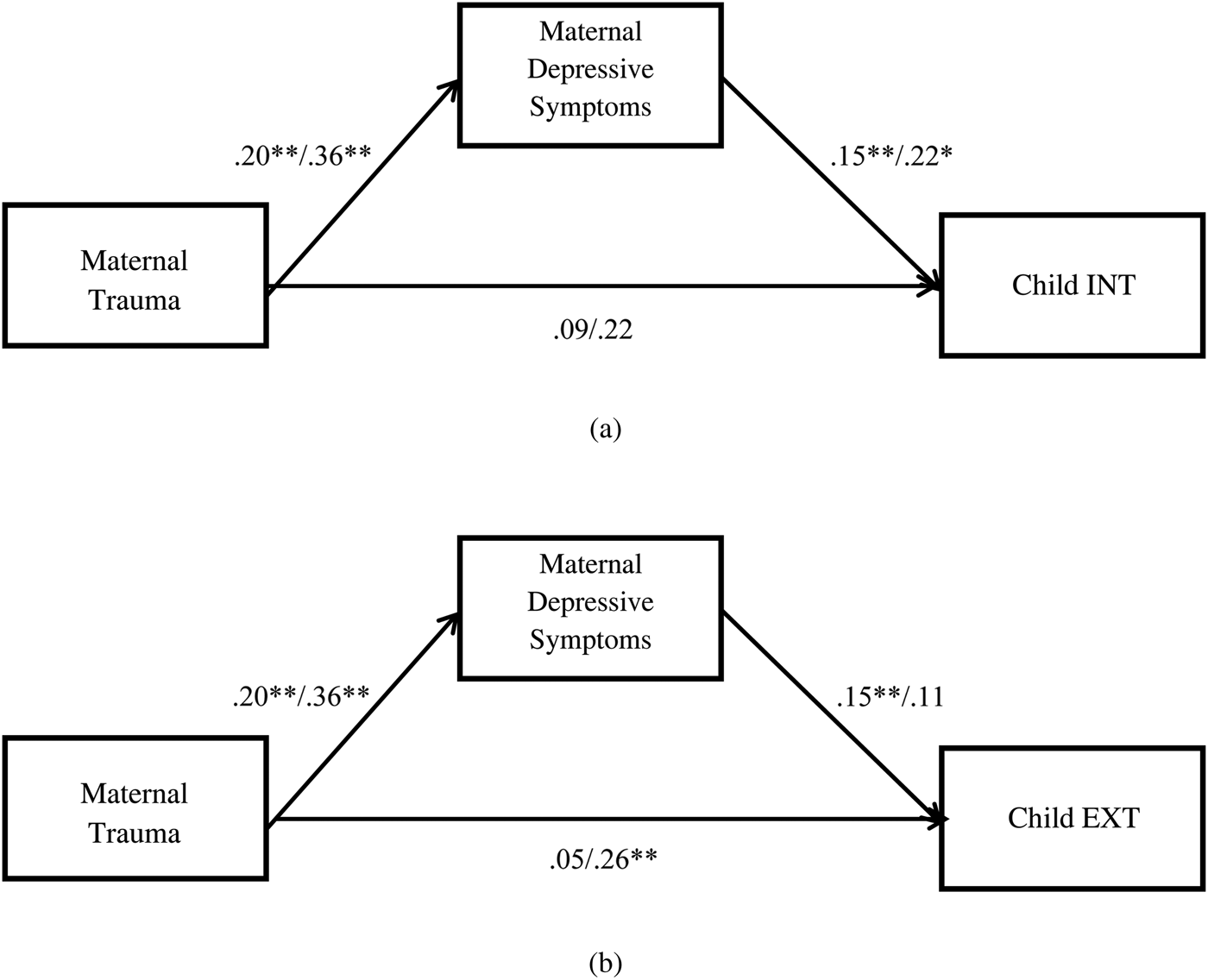
For models examining adopted child internalizing behavior, we observed a significant direct effect of adoptive mother trauma frequency (B = 2.47, SE = 0.89, p = .005), controlling for household income, maternal education, child sex, perinatal risk, and adoption openness. Adoptive mother depressive symptoms were a significant predictor of child internalizing behavior (B = 0.36, SE = 0.33, p = .005), and its inclusion as a mediator resulted in the direct effect of adoptive mother trauma becoming nonsignificant (B = 1.56, SE = 0.97, p = .11). The total mediated effect of adoptive mother trauma on child internalizing behavior was significant, B = 0.49, 95% CI [0.16, 0.94]. In addition, we found significant relationships between child internalizing behavior and household income (B = −0.47, SE = 0.20, p = .02), and adoptive mother education level (B = 0.82, SE = 0.35, p = .02). Regression coefficients associated with model pathways are reported in Table 4, and standardized coefficients for the internalizing model are provided in Figure 1a.
(a) Path analysis model of effects of maternal trauma and depressive symptoms on child internalizing behaviors in Early Growth and Development Study/Early Parenting of Children samples (standardized estimates). INT, internalizing behaviors. *p < .05. **p < .01. (b) Path analysis model of effects of maternal trauma and depressive symptoms on child externalizing behaviors in Early Growth and Development Study/Early Parenting of Children samples (standardized estimates). EXT, externalizing behaviors. *p < .05. **p < .01.
Regression coefficients for final models predicting child internalizing and externalizing behaviors
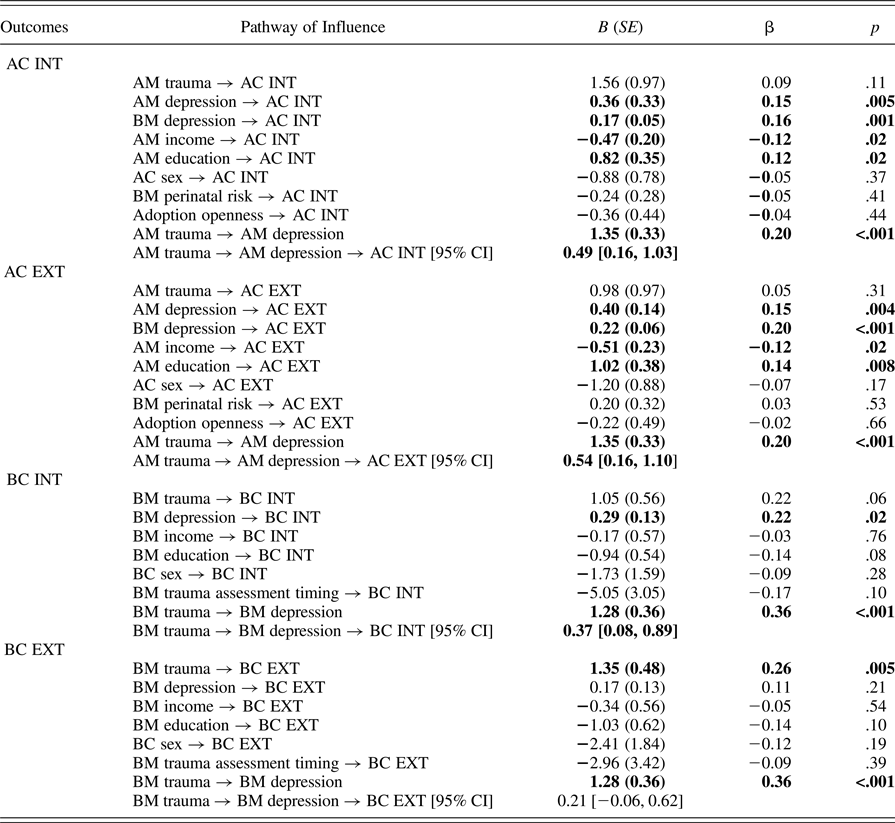
Note: Bold pathway values indicate statistical significance at p < .05. AC, adopted child; AM, adoptive mother; INT, internalizing behaviors; BM, biological mother; EXT, externalizing behaviors; BC, biological child. Regression estimates reported here are from full models, including all covariates. Separate models were tested for AC INT, AC EXT, BC INT and BC EXT outcomes.
We also examined the effect of biological mother depressive symptoms on adopted child internalizing and externalizing behaviors. In the case of adopted child internalizing behavior, we found a direct effect of biological mother depressive symptoms (B = 0.17, SE = 0.05, p = .001). The effects of adoptive mother trauma, mediated by her depressive symptoms, remained significant when the effects of biological mother depressive symptoms were included in the model. The model explained 8.8% of the variance associated with child internalizing behavior and had an adequate fit: χ2 (6) = 11.45, p = .08; CFI = 0.90; RMSEA = 0.04, 90% CI [0.00, 0.08].
Adoptive mother trauma was also a significant predictor of child externalizing behavior (B = 2.05, SE = 0.95, p = .03), controlling for household income, maternal education, child sex, perinatal risk, and adoption openness. When added to the model, adoptive mother depressive symptoms had a significant effect on child externalizing behavior (B = 0.40, SE = 0.14, p = .004), controlling for household income, maternal education, child sex, perinatal risk, and adoption openness. Furthermore, its inclusion as a mediator resulted in the direct effect of adoptive mother trauma becoming nonsignificant (B = 0.98, SE = 0.97, p = .31). The total mediated effect of adoptive mother trauma on child externalizing behavior was significant, B = 0.54, 95% CI [0.16, 1.10]. We also found significant relationships between child externalizing behavior and household income (B = −0.51, SE = 0.23, p = .02) and adoptive mother education level (B = 1.02, SE = 0.38, p = .008).
Biological mother depressive symptoms were significantly associated with adoptive child externalizing behavior (B = 0.22, SE = 0.06, p < .001). When including this effect in the full model, the effect of adoptive mother trauma mediated by adoptive mother depressive symptoms still remained significant. Overall, the model explained 10.2% of the variance in child externalizing behavior and had an adequate fit: χ2 (6) = 11.38, p = .07; CFI = 0.91; RMSEA = 0.04, 90% CI [0.00, 0.08].
Models predicting biological child internalizing and externalizing behaviors (EPoCh sample)
For biological child internalizing behavior, biological mother trauma had a significant direct effect (B = 1.45, SE = 0.53, p = .006), controlling for the effects of household income, maternal education, child sex, and timing of trauma assessment. Biological mother depressive symptoms were a significant predictor of biological child internalizing behavior (B = 0.29, SE = 0.13, p = .02), and its inclusion in the model resulted in the direct effect of biological mother trauma becoming nonsignificant (B = 1.05, SE = 0.56, p = .06), suggesting that the effect of biological mother trauma on child internalizing behavior was mediated by biological mother depressive symptoms. The total mediated effect of biological mother trauma on child internalizing behavior was significant, B = 0.37, 95% CI [0.08, 0.89]. The model explained 18.9% of the variance in child internalizing behavior, and had a good fit: χ2 (4) = 2.07, p = .72; CFI = 1.00; RMSEA = 0.00, 90% CI [0.00, 0.10].
For biological child externalizing behavior, there was a significant direct effect of biological mother trauma (B = 1.65, SE = 0.47, p < .001) after accounting for effects of household income, maternal education, child sex, and timing of trauma assessment. Biological mother depressive symptoms were not a significant predictor of child externalizing behavior (B = 0.17, SE = 0.13, p = .21), controlling for the effect of maternal trauma, and did not mediate the effect of trauma on child externalizing behavior (see Table 4). Overall, the model explained 16.2% of the variance in child externalizing behavior and had a good fit: χ2 (4) = 1.81, p = .77; CFI = 1.00; RMSEA = 0.00, 90% CI [0.00, 0.09]. Standardized coefficients for the externalizing model are provided in Figure 1b.
Multigroup path analysis
To test if the pathways of influence operated similarly across the two samples, we tested multigroup models with sample type (EGDS vs. EPoCh) as the grouping variable. We controlled for child sex in the multigroup model. The key pathways of influence, that is, the direct effect of rearing mother trauma on child internalizing/externalizing behavior and the mediated pathway involving rearing mother depressive symptoms, were constrained to be equal across the two groups. Examination of model fit for the unconstrained and constrained models suggested a nonsignificant drop in model fit for internalizing behavior (Δχ2 = 0.814, df = 3; p = .85) and externalizing behavior (Δχ2 = 0.299, df = 3; p = .96), suggesting that the magnitude of the associations between rearing mother trauma, rearing mother depressive symptoms, and child internalizing and externalizing behaviors was similar across the two samples.
Discussion
Using a parent–child adoption design that included linked biological mother–biological child dyads, we sought to examine environmental and biological mechanisms underlying associations from maternal trauma, to maternal depressive symptoms, to child internalizing and externalizing behaviors at age 7. We found evidence for the environmental transmission hypothesis whereby the association between maternal trauma and child internalizing and externalizing behavior was significant in cases of mother–child dyads living together, and in particular, among dyads with no shared genetic influences (i.e., AM–AC dyads). The effect of maternal trauma was mediated by rearing mother depressive symptoms, with the exception of the effect of maternal trauma on child externalizing behavior in BM–BC dyads. In this model, biological mother depressive symptoms were significantly associated with her exposure to trauma and the biological child's externalizing behavior, respectively, but failed to predict child externalizing behavior when included in combination with maternal trauma, possibly because of competing effects. It is possible that other variables not included in our models, such as negative parenting, may be stronger mediators of the effects of maternal trauma.
Overall, the findings were significant when controlling for the effects of household income, maternal education, and child sex in both samples, in addition to controlling for openness in adoption and perinatal risk in adoptive families and timing of trauma assessment in biological families. Given our novel adoption design, we were also able to control for the confounding effects of passive rGE in our AM–AC models. In addition, the presence of significant associations between biological mother depressive symptoms and adopted child internalizing and externalizing behaviors suggests a heritable transmission of risk. This finding is consistent with those from previous studies (Natsuaki et al., Reference Natsuaki, Shaw, Neiderhiser, Ganiban, Harold, Reiss and Leve2014), and suggests both heritable and environmental transmission mechanisms from maternal depressive symptoms to child internalizing and externalizing behaviors.
The positive association between maternal depressive symptoms and child internalizing and externalizing behaviors is consistent with findings reported in the literature (e.g., Cicchetti & Toth, Reference Cicchetti, Toth, Cicchetti and Cohen1995; Cicchetti & Toth, Reference Cicchetti and Toth1998b; Cummings & Davies, Reference Cummings and Davies1994; Kovacs & Devlin, Reference Kovacs and Devlin1998). Because of the overlapping operational definitions of depressive symptoms and internalizing behaviors, it is not surprising that rearing mothers’ internalizing symptoms tend to be related to children's internalizing behaviors cross-generationally (Kim, Capaldi, Pears, Kerr, & Owens, Reference Kim, Capaldi, Pears, Kerr and Owen2009). In addition, longitudinal studies suggest that children of depressed mothers have an increased risk for depressive symptoms through other environmental risk factors, such as marital conflict, stress, and compromised parenting (Natsuaki et al., Reference Natsuaki, Shaw, Neiderhiser, Ganiban, Harold, Reiss and Leve2014; Weissman et al., Reference Weissman, Wickramaratne, Nomura, Warner, Pilowsky and Verdeli2006).
Maternal depression has also been linked to child emotional and behavioral adjustment through interruption of attachment between mother and child (Cicchetti et al., Reference Cicchetti, Rogosch and Toth1998; Cohn & Tronick, Reference Cohn and Tronick1989). Although not directly examined in our study, children raised by mothers who are distant, rejecting, or inconsistent in their parenting as a consequence of their traumatic past and associated depressive symptoms are more likely to develop an insecure attachment (Iyengar, Kim, Martinez, Fonagy, & Strathearn, Reference Iyengar, Kim, Martinez, Fonagy and Strathearn2014), which in turn increases their risk for internalizing and externalizing behaviors (Cowan, Cowan, Cohn, & Pearson, Reference Cowan, Cowan, Cohn and Pearson1996; Groh, Fearon, van Ijzendoorn, Bakermans-Kranenburg, & Roisman, Reference Groh, Fearon, van Ijzendoorn, Bakermans-Kranenburg and Roisman2017).
Parents can play an important role in the development of a child's emotion regulation strategies through modeling (e.g., Cassidy, Reference Cassidy1994). A parent who experiences depressive symptoms as a result of exposure to trauma is more likely to neglect or reject a child's distress signals, perpetuating a stressful emotional state in the child. In such a scenario, the child may have difficulty developing internal strategies to modulate emotions in response to the distress (Izard & Kobak, Reference Izard, Kobak, Garber and Dodge1991), which may manifest in the form of internalizing or externalizing behavior (Cole & Zahn-Waxler, Reference Cole, Zahn-Waxler, Cicchetti and Toth1992). It is also possible that children adapt to an unresponsive parent by developing coping strategies that may be maladaptive in other settings. Externalizing behaviors, for instance, may be a way to elicit attention from a depressed caregiver (Hersen & Thomas, Reference Hersen and Thomas2007). Externalizing behaviors may also be an outcome of the social learning process, wherein a child who witnesses a traumatic event (e.g., domestic violence) may be more likely to model aggressive behaviors in other contexts (Campbell, Woods, Chouaf, & Parker, Reference Campbell, Woods, Chouaf and Parker2000).
We also found evidence for a heritable pathway of influence through biological mother depressive symptoms. Specifically, adopted children with biological mothers who reported higher levels of depressive symptoms had significantly higher levels of internalizing and externalizing behaviors, even after controlling for the effects of adoptive mother trauma and depressive symptoms. This biological pathway is important in that some children may be more susceptible to the negative effects of maternal trauma and depressive symptoms because of their inherited propensities. In other words, the combined environmental exposure to maternal trauma and heritable risk for depressive symptoms may place some children at greater risk for developing internalizing or externalizing behaviors. This is consistent with prior research that has demonstrated that children of mothers with comorbid symptoms of trauma and depression are significantly more likely to display internalizing and externalizing behaviors than are children of mothers with depression only (Chemtob et al., Reference Chemtob, Nomura, Rajendran, Yehuda, Schwartz and Abramowitz2010).
We found that adoptive mothers in our sample reported higher rates of externalizing behaviors in their adopted children than biological mothers reported about their biological children. This may be because externalizing behaviors (e.g., aggression) are easier to observe than internalizing behaviors (e.g., social withdrawal and depressive symptoms), and thus may be overreported by adoptive mothers who may be more vigilant to their child's behaviors. Adoptive mothers may also be more likely to perceive disruptive behaviors in their children as more problematic than biological mothers do. Similar trends have been observed in studies of parent–child conflict in adoptive families, in which parents reported their adopted child to be more conflictual than their nonadopted child (Reuter, Keyes, Iacono, & McGue, Reference Reuter, Keyes, Iacono and McGue2009).
Regardless of the differences in the levels of risk across the two samples, with biological mothers reporting significantly greater trauma exposure and depressive symptoms and lower SES, our findings indicated that the strength of the relationships between rearing mother trauma, rearing mother depressive symptoms, and child externalizing and internalizing behaviors was consistent across samples. This finding runs counter to our hypothesis that children in more adverse, low-SES environments with higher exposure to trauma would be more strongly affected by maternal trauma. Instead, our findings suggest that associations between rearing mother trauma and child internalizing and externalizing behaviors are present across all levels of SES. Our findings also indicate that trauma exposure and associated depressive symptoms can have a negative impact on child internalizing and externalizing behaviors, regardless of whether trauma involves a single incident or multiple exposures. The findings suggest that early interventions targeting both parents and children in the family system, and not just the behaviors of the children, may be beneficial in preventing longer term individual and intergenerational consequences. Research and clinical prevention work could benefit from a better understanding of the rearing environment influences in addition to the biological mechanisms of influence of maternal depressive symptoms.
Episodes of anxiety and depressive disorders have been found to be much more protracted than hitherto thought. Children with these diagnoses tend to have multiple problems, are impaired in important areas of functioning, and live with parents who themselves suffer from psychiatric symptoms.
Limitations
The following limitations should be noted when interpreting the results. First, although our study included a large sample of adopted children, our sample of biological children was relatively small (n = 126) because of ongoing data collection for the EPoCh study. This may have affected our ability to detect mediational effects of maternal depressive symptoms in the model predicting biological child externalizing behavior. Second, although we matched items across scales to similarly assess maternal trauma in biological and adoptive mothers, the two scale scores were not perfectly correlated. In the case of biological mothers, lifetime trauma was assessed using phone interviews, but for adoptive mothers, trauma was assessed over a period of 6.25 years using self-report surveys. In addition, minor variations in the specific wording of questions may have created unintended measurement differences between the two samples. We also did not have measures of trauma type (e.g., interpersonal vs. non-interpersonal) or posttraumatic stress disorder symptoms, which may have revealed a more nuanced understanding of the biological and environmental effects of maternal trauma on child internalizing and externalizing behavior (Chemtob et al., Reference Chemtob, Nomura, Rajendran, Yehuda, Schwartz and Abramowitz2010). Third, informant bias may have been an issue given that maternal trauma, maternal depressive symptoms, and child behavior problems were reported by the same individual, that is, either the biological or adoptive mother. We attempted to mitigate this limitation by using a combined mother–father rating of child behavior, when data from fathers were available. In addition, maternal depressive symptoms could have heightened the tendency of mothers to overreport past trauma and child behavior problems (Colman et al., Reference Colman, Kingsbury, Garad, Zeng, Naicker, Pattern and Thompson2016; Gartstein, Bridgett, Dishion, & Kaufman, Reference Gartstein, Bridgett, Dishion and Kaufman2009; Richters & Pellegrini, Reference Richters and Pellegrini1989). Given the mean differences in depressive symptoms in our two samples, this potential bias may have disproportionately affected our BM–BC models. Fourth, recent studies have called into question the validity of adult self-reports of childhood adversity (e.g., Reuben et al., Reference Reuben, Moffitt, Caspi, Belsky, Harrington, Schroeder and Danese2016), which could have been an issue in the maternal self-reports of trauma in our study.
Future directions
Research that has examined the effects of maternal trauma on child behavioral outcomes has typically measured trauma retrospectively. Future studies could benefit from incorporating a mixture of additional subjective and objective methods to supplement self-report records of maternal trauma exposure and depressive symptoms, such as clinical assessments, physiological measures, and/or multiple informants. Similarly, a multi-informant approach would strengthen the measurement of child behavioral outcomes (e.g., teacher reports of child behavior). It would also be beneficial to assess these pathways longitudinally and at younger ages, given that internalizing and externalizing behaviors tend to be relatively stable from toddlerhood and beyond (e.g., Pierce, Ewing, & Campbell, Reference Pierce, Ewing and Campbell1999). Our study examined maternal depressive symptoms as one biological and environmental mechanism in the intergenerational influence of maternal trauma. Other potential mediators, such as parenting behaviors and caregiving quality, should be examined to better understand the environmental mechanisms of influence of maternal trauma.
A useful next step for research would be to explore other gene–environment influences, such as gene–environment interaction and evocative rGE. Longitudinal studies observing nontwin siblings or, to extend our current design, nonrelated (e.g., adopted and nonadopted) siblings raised in the same environment, may provide insights about how children with dissimilar genes but exposed to the same early environmental adversity may or may not differ in their internalizing and externalizing behavioral outcomes. Finally, intergenerational transmission of trauma and its consequences should be examined through an epigenetics lens to better understand heritable and environmental pathways underlying the development of psychopathology (Cicchetti, Reference Cicchetti2016).