Introduction
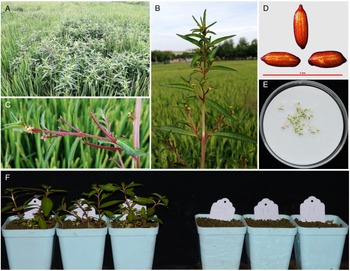
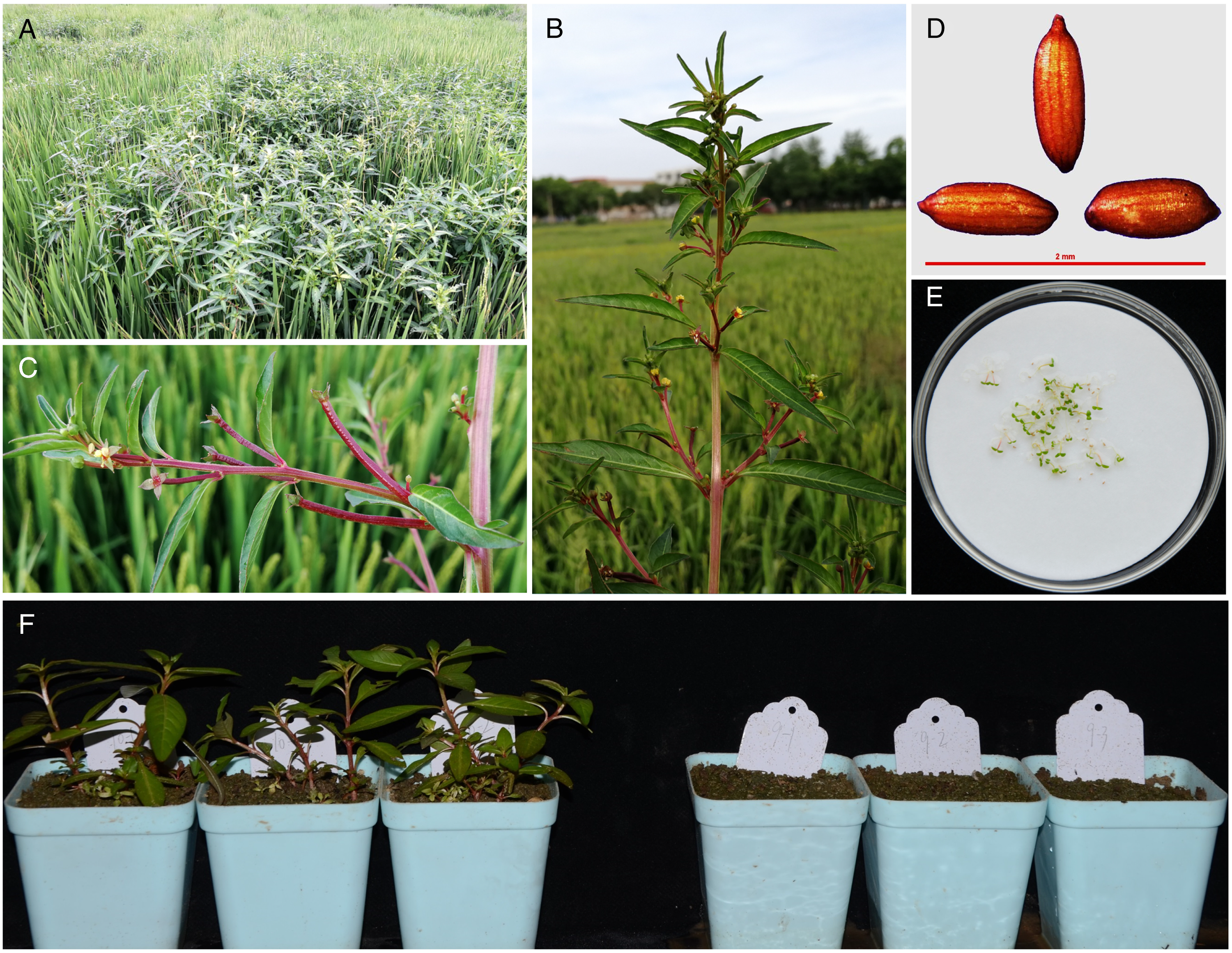
Rice is a principal source of food for more than half of the world’s population (Chauhan Reference Chauhan2012), but weeds are a major constraint to rice production (Parry and Shrestha Reference Parry and Shrestha2018; Ranaivoson et al. Reference Ranaivoson, Naudin, Ripoche, Rabeharisoa and Corbeels2018; Touré et al. Reference Touré, Rodenburg, Saito, Oikeh, Futakuchi, Gumedzoe and Huat2011). Changes in rice cultivation, tillage systems, and long-term use of a single type of herbicide have caused shifts in weed populations and community structures (Chauhan and Johnson Reference Chauhan and Johnson2010; Singh et al. Reference Singh, Bharadwaj, Thakur, Pachauri, Singh and Mishra2009), and many previously minor weeds have become troublesome in paddy fields in China. Among them is prostrate water primrose (Figure 1 A–C).
Photographs of prostrate water primrose and the experiment. A) Damage to prostrate water primrose in a paddy field; B) prostrate water primrose plant; C) branch of prostrate water primrose; D) seeds of prostrate water primrose; E) seed germination test; F) herbicide screening test.
Prostrate water primrose is a troublesome weed that is causing increasing problems in paddy fields. It is native to central and southeast Asia (Barkley et al. Reference Barkley, Holm, Pancho, Herberger and Plucknett1980; Moody Reference Moody1989; Reed Reference Reed and Hughes1977) and is commonly found in paddy fields, riverbanks, and other wet habitats. Prostrate water primrose is one of the most harmful weeds in rice cultivation, causing more than 30% yield reduction in rice in southern China (Zhang et al. Reference Zhang, He, Zheng, Li, Mao, Chen and Wei2000). It was listed as a “serious” and “principal” weed in Japan and Taiwan (China), respectively (Barkley et al. Reference Barkley, Holm, Pancho, Herberger and Plucknett1980). The weed also causes damage in both direct-seeded and transplanted rice fields in Korea (Kim et al. Reference Kim, Kim, Lee, Choi and Choi1997; Kim and Pyon Reference Kim and Pyon1998) and poses a significant threat to rice production in subtropical regions.
Herbicides are popular in modern agriculture due to their high efficiency, economy, and labor savings. Preemergence (PRE) herbicides can prevent weed occurrence for a period of time, especially for seeds in the soil a few millimeters from the surface (McCullough et al. Reference McCullough, Yu and de Barreda2013). Postemergence (POST) herbicides can selectively kill emerged weed seedlings. Herbicides vary in their weed control spectrum. For example, bispyribac-sodium is effective against barnyard grass [Echinochloa crus-galli (L.) Beauv.] but poor against Chinese sprangletop [Leptochloa chinensis (L.) Nees] (Chauhan and Abugho Reference Chauhan and Abugho2012; Singh and Singh Reference Singh and Singh2004). Another example is penoxsulam, which is effective against heartshape false pickerelweed [Monochoria vaginalis (Burm. F.) C. Presl ex Kunth], but poor against eared redstem (Ammannia arenaria Kunth) (Shiraishi Reference Shiraishi2005). Screening effective herbicides for a particular weed species is the key to identify effective management techniques.
Although the use of herbicides is considered the most economical and efficient method for weed control, it is unwise to rely too heavily on them. Intensive application of herbicides causes environmental pollution and results in the development of resistant weeds (Beckie and Harker Reference Beckie and Harker2017; Chauhan and Johnson Reference Chauhan and Johnson2010; Ruzmi et al. Reference Ruzmi, Ahmad-Hamdani and Bakar2017). Additionally, any single method of weed control cannot efficiently and sustainably control them. Therefore, it is necessary to integrate multiple management methods to control weeds, including agronomic and herbicide strategies.
Environmental and agronomic factors are known to affect the seedling establishment of weeds (Ahmed et al. Reference Ahmed, Opeña and Chauhan2015). For example, photoblastic seeds can germinate only when they are located on or near the soil surface (Chung and Paek Reference Chung and Paek2003). Temperature is closely related to seed germination speed and cumulative germination (Chauhan Reference Chauhan2012). Several species can occur within a wide range of soil pH values, but others can germinate only within a specific pH range (Shaw et al. Reference Shaw, Mack and Smith1991; Singh and Achhireddy Reference Singh and Achhireddy1984). Flooding is also an important factor affecting weed emergence. Studies on seed germination ecology can facilitate the development of integrated weed management strategies (Bhowmik Reference Bhowmik1997; Chauhan Reference Chauhan2012).
Few published studies exist on the germination ecology and management of prostrate water primrose. Ku et al. (Reference Ku, Seong, Song and Lee1996) studied the dormant characteristics of this species in Korea and found that mature seeds germinated well within 30 d after harvest. However, we do not know the effects of environmental and agronomic factors on its emergence and which herbicides could be applied to control it. Thus, the objectives of this study were to 1) confirm whether prostrate water primrose seed has dormancy; 2) understand the influence of temperature, light, pH, osmotic potential, NaCl concentration, flooding, and burial depth on seed germination; and 3) screen effective herbicides for controlling it.
Materials and Methods
Seed Collection and Storage
The study was carried out in the laboratory and greenhouse of Shanghai Academy of Agricultural Sciences (SAAS; 30.950°N, 121.467°E), in Shanghai, China. Mature seeds of prostrate water primrose were collected from approximately 100 randomly selected plants growing as weeds in paddy fields at SAAS (Figure 1D). After harvest, seeds were cleaned manually, dried in shade, placed inside a self-sealing bag, and stored in a laboratory (20±5 C, 60% to 70% relative humidity) until use. Nearly 90% of the seeds were viable by the tetrazolium chloride test (França-Neto and Krzyzanowski Reference França-Neto and Krzyzanowski2019) before each experiment was carried out.
Seed Germination Test
Germination tests were performed in 10-cm-diam Petri dishes (Figure 1E) according to the following steps unless stated otherwise. In a Petri dish, 50 seeds were sown on three sheets of filter paper moistened with 5 ml of deionized water or test solution. To prevent moisture loss, Petri dishes were wrapped in plastic wrap and then placed in an environmental chamber (day/night temperature of 30/20 C, 12-h photoperiod). The 30/20 C temperature range was optimum for germination in the temperature and light test. The light intensity of 150 μmol m−2 s−1 was supplied by fluorescent lamps. The number of germinated seeds was recorded 21 d after sowing. Seeds with protruded radicles were considered germinated seeds (Tang et al. Reference Tang, Chen, Zhang and Lu2017). The germination percentage was calculated as the proportion of germinated seeds to the sown seeds in the Petri dish.
Dormancy Test
To evaluate whether prostrate water primrose seeds have dormancy, the germination percentage of seeds stored for 0, 30, 60, 90, 120, 150, and 180 d after harvest was examined. The test steps were the same as those described above.
Alternating Temperature and Light Test
To determine the influence of alternating temperature and light on seed germination, seeds were incubated at four alternating temperatures (20/10, 25/15, 30/20, and 35/25 C) in both light/dark and continuous darkness. The temperatures were set according to the actual conditions during the rice growing season in the region. In the dark treatment, each Petri dish was wrapped in three sheets of aluminum foil to prevent light from penetrating. The number of germinated seeds in the light/dark treatment was recorded daily for 21 d. In the continuous dark treatment, the number of germinated seeds was recorded only after 21 d. To verify whether continuous dark affected seed germination, we added another 5 ml of deionized water to Petri dishes with seeds that had not germinated, placed them under a 12-h light/dark schedule for another 21 d, and then recorded the number of germinated seeds.
Osmotic Stress Test
To evaluate the influence of osmotic stress on seed germination, seeds were sown in solutions with osmotic potentials of 0 (control), −0.1, −0.2, −0.4, −0.6, and −0.8 MPa. To prepare the solutions, appropriate amounts of polyethylene glycol 8000 were dissolved in deionized water according to the method proposed by Michel (Reference Michel1983).
Salt Stress Test
To assess the influence of salt stress on seed germination, seeds were sown in NaCl solutions of 0 (control), 25, 50, 100, 150, 200, and 250 mM. Solutions were prepared by dissolving NaCl in deionized water (Michel Reference Michel1983).
pH Buffer Solution Test
The germination percentage of seeds in buffer solutions with pH 4, 5, 6, 8, 9, and 10 was determined, with deionized water (pH 7.05) serving as a control. The pH buffer solutions were prepared according to the method proposed by Chachalis and Reddy (Reference Chachalis and Reddy2000).
Burial Test
Fifty seeds were sown in each pot (10 × 10 × 8 cm height) filled with soil and then covered with soil to obtain corresponding burial depths of 0 (uncovered), 0.5, 1.0, 2.0, 3.0, and 4.0 cm. The soil was oven-dried at 180 C for 24 h and then sieved with a 0.3-cm screen mesh. The pots were irrigated regularly to keep the soil moist. Seedlings were judged to have emerged when cotyledons were visible. The number of seedlings that had grown was counted 21 d after sowing. The pots were placed in a chamber with a temperature of 25 to 30 C and a 12-h photoperiod. Emergence percentage was calculated as the proportion of the emerged seedlings to the sown seeds in the pot.
Flooding Test
Fifty seeds were sown in a single pot (as described above), which was placed into a larger tray (20 × 15 × 15 cm height). Water was retained and flooding depths were maintained at 0, 1, 2, 4, 6, and 8 cm. To avoid seed floating, these pots were kept moist for 6 h after sowing, allowing the seeds to absorb water. The desired flooding depth was introduced 12 h after sowing and was maintained for 21 d. The pot was then placed in a greenhouse at 20 to 25 C with natural illumination. The number of seedlings that emerged was counted 21 d after sowing, and the emergence percentage was calculated as the proportion of emerged seedlings to the sown seeds in the pot.
Herbicide Screening Test
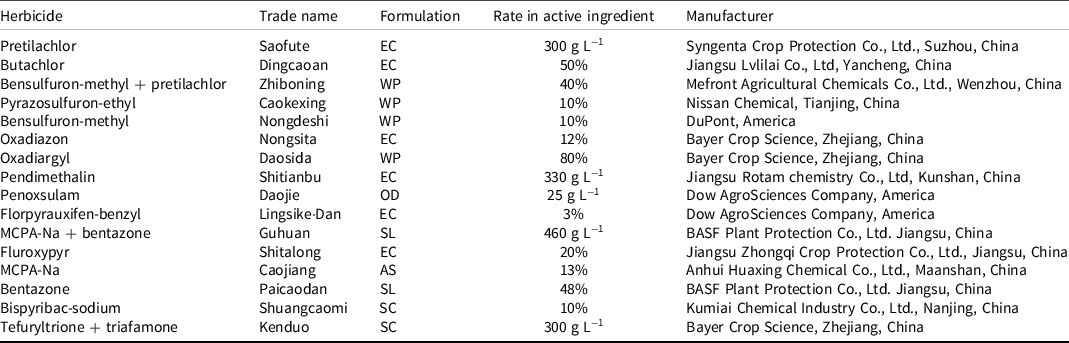
The efficacy of PRE and POST herbicides against prostrate water primrose was evaluated by conducting two greenhouse experiments (Figure 1F). Twenty-five seeds were sown in each pot (as described above). Eight PRE herbicides and eight POST herbicides registered for use in rice paddies were tested (Table 1). The herbicides were applied by a research track sprayer. The sprayer was equipped with a fan nozzle operated at a pressure of 275 kPa delivering a spray volume of 450 L ha−1. An untreated control was set for each experiment. PRE herbicides were sprayed 1 d after seeding. POST herbicides were sprayed at the 2- to 3-leaf seedling stage. In the POST herbicide screening experiment, five seedlings per pot were kept (some hypogenetic or runtish seedlings were removed; five well-developed seedlings were kept) before spraying. The number of surviving seedlings and the aboveground dry biomass were determined 21 d after herbicide application.
Herbicides tested. a

a Abbreviations: AS, aqueous solution; EC, emulsifiable concentrate; OD, oil dispersion; SC, suspension concentrate; SL, soluble liquid; WP, wettable powder.
Statistical Analysis
All experiments were performed using a randomized complete block design with four replications. Each replication was arranged on a different shelf in a chamber or greenhouse and was considered a block. Except for the seed dormancy experiment, all experiments were repeated 15 d after termination of the first run.
The data were tested for normal distribution and homoscedasticity by the Kolmogorov-Smirnov test and Levene’s test, respectively. If variances were not homogeneous, the data were arcsine square root–transformed before analysis. The data from the experimental repeats were pooled for analysis because of the absence of an experiment by treatment interaction. The data presented in the text and figures are means ± standard errors of two runs calculated using nontransformed data.
One-way ANOVA was performed to compare the differences in the data obtained from the dormancy test, pH test, burial test, and herbicide screening test separately using Fisher’s protected LSD test. Two-way ANOVA with a general linear model was applied to reveal the independent and interactive effects of alternating day/light temperatures and light conditions on seed germination percentage. All statistical analyses were performed using SPSS software (version 20; SPSS, Chicago, IL). The significance level concerning the difference in relevant factors was set to 0.05.
Different functions were applied to reveal the relationships between seed germination or seedling emergence with different temperatures, osmotic potentials, salt concentrations, and flooding depths. The functions with a high coefficient of determination and low Akaike information criterion were selected. The relationship between seed germination percentage and temperature (Chauhan and Johnson Reference Chauhan and Johnson2008) was as follows:
 $$G = {G_{\rm max}}/\{ 1 + {\rm exp}[ - (T - {T_{50}})/{G_{\rm rate}}]\} $$
where G, G max, T 50, and G rate represent the cumulative germination percentage at time T, the maximum germination percentage, the time required for 50% of maximum germination percentage, and the slope of the relationship, respectively. The model for the relationship between seed germination percentage and osmotic stress or salt concentration (Tang et al. Reference Tang, Chen, Zhang and Lu2017) was as follows:
 $$G = {G_{\rm max}}/\{ 1 + {\rm exp}[ - (x - {x_{50}})/{G_{\rm rate}}]\} $$
Where G, G max, x 50, and G rate represent the germination percentage at osmotic potential or salt concentration x, the maximum germination percentage, the osmotic potential or salt concentration for 50% inhibition of maximum germination, and the slope of the model, respectively. The relationship between seedling emergence inhibition percentage and flooding depth was modeled using the following function:
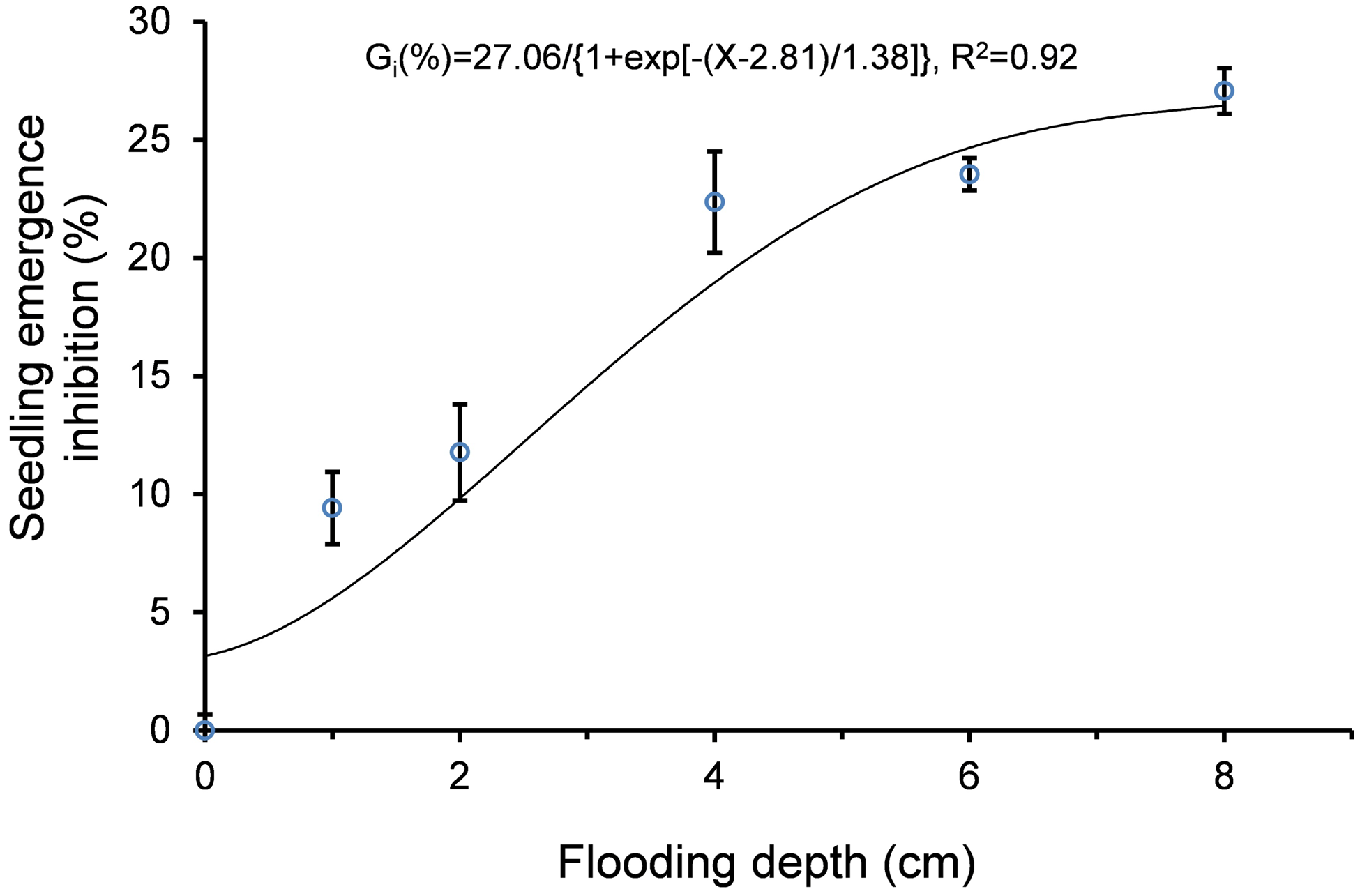
 $$Gi = G{i_{\rm max}}/\{ 1 + {\rm exp}[ - (x - {x_{50}})/G{i_{\rm rate}}]\} $$
where Gi represents the seedling emergence inhibition percentage at flooding depth x, Gi max represents the maximum inhibition percentage, x 50 represents the flooding depth for 50% of the maximum inhibition percentage, and Gi rate represents the slope of the relationship. The seedling emergence inhibition percentage was calculated as follows:
 $$Gi = ({G_{\rm max}} - {G_{\rm min}})/{G_{\rm max}} * 100\% $$
where G max is the number of emerged seedlings under the 0-cm flooding depth, whereas G min is the number under the 8-cm flooding depth.
Results and Discussion
Seed Dormancy
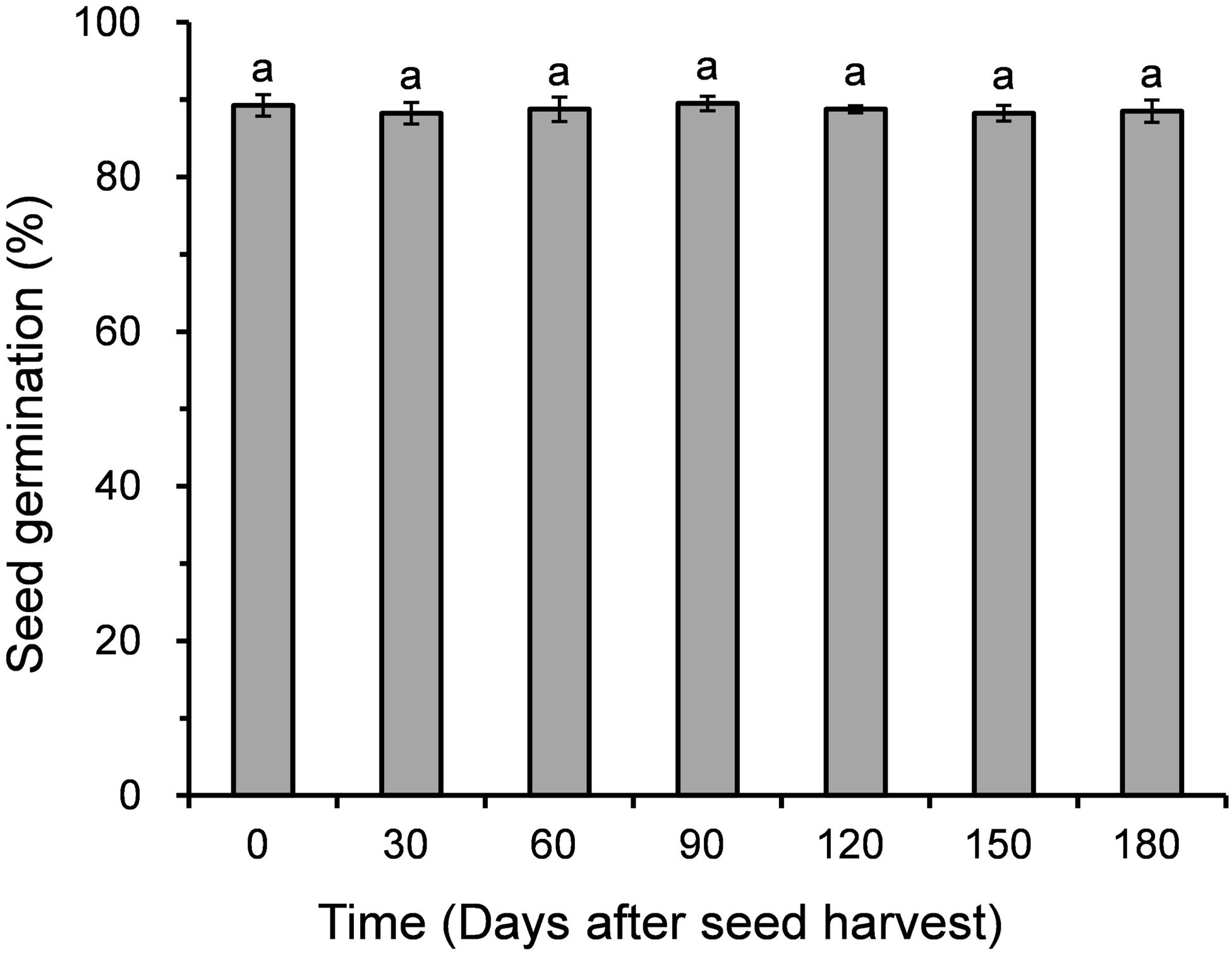
One-way ANOVA demonstrated that the seed germination percentage of prostrate water primrose did not significantly differ within 180 d after harvest (P = 0.987). Approximately 90% of the newly collected seeds germinated immediately, indicating that prostrate water primrose seeds have a short period of primary dormancy, which is consistent with results previously reported by Ku et al. (Reference Ku, Seong, Song and Lee1996; Figure 2). The results also suggested that stale seedbed practices prior to rice planting could mitigate the emergence of prostrate water primrose by depleting the seed bank of this species.
The germination percentage of prostrate water primrose seeds after harvest. Seeds were incubated at an alternating day/night temperature of 30/20 C with a 12-h photoperiod for 21 d. Vertical bars denote standard errors. Bars with the same letters are not significantly different (P < 0.05, n = 4).

Dormancy is an adaptation of seeds to adverse conditions that involves pausing growth and development (Jiang et al. Reference Jiang, Xu, Jing, Tang and Lin2016). Although low primary dormancy is detrimental to the continuation of prostrate water primrose populations, a combination of 1) seeds that are usually encased in capsules when mature and 2) seeds that fall to the soil surface often being covered by rice straw following rice harvest, would prevent the seeds from germinating rapidly and synchronously.
Alternating Temperature and Light
Two-way ANOVA showed that alternating day/light temperature, light condition, and the interaction of temperature and light all exerted significant effects on seed germination percentage (P < 0.001).
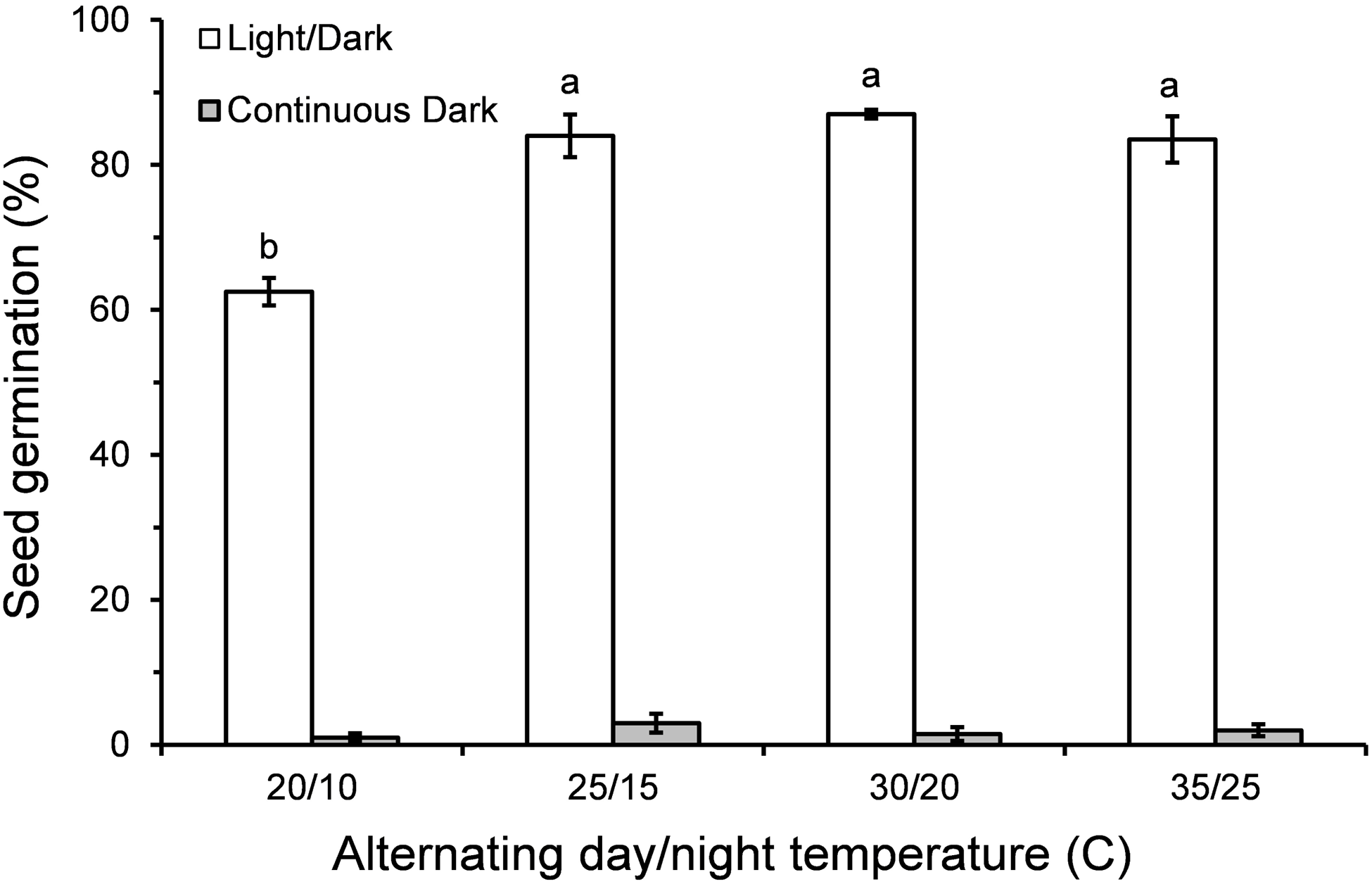
Light significantly stimulated the germination percentage of prostrate water primrose seeds. Under light/dark conditions, the seed germination of prostrate water primrose was greater than 60%. However, under continuous dark conditions, seed germination was less than 3% (Figure 3).
The germination percentage of prostrate water primrose seeds under alternating day/light temperatures and light. Vertical bars denote standard errors. Bars with different letters indicate significant differences of the seed germination percentage under different temperature treatments (P < 0.05). The differences of the seed germination percentage between light/dark and continuous dark are all significant at P < 0.001 (n = 8).

The influence of light on seed germination varies among species. Some species, such as Japanese brome (Bromus japonicus Thunb. ex Murr.), can germinate under light and dark conditions (Li et al. Reference Li, Tan, Li, Yuan, Du, Ma and Wang2015). whereas other species, such as Chinese sprangletop, need light to stimulate seed germination (Teuton et al. Reference Teuton, Brecke, Unruh, MacDonald, Miller and Ducar2004). In this study, prostrate water primrose exhibited low seed germination under continuous dark conditions regardless of temperature, indicating that light stimulates its germination. Weed species that need light to stimulate germination are more likely to cause infestations in no-tillage and less-tillage systems (Cousens et al. Reference Cousens, Baweja, Vaths and Schofield1993). With the implementation of less tillage and shallow tillage regimes in paddy fields in southern China, the occurrence and damage caused by prostrate water primrose has increased. Straw mulching could be an efficient way to control seedling emergence of prostrate water primrose, and this practice also has important ecological significance for maintaining field fertility, reducing the use of chemical fertilizers, improving the carbon sink capacity of soil, and reducing or avoiding environmental pollution caused by burning. Moreover, we observed that the nongerminated seeds of prostrate water primrose (previously incubated in the dark) were able to germinate well (with a germination percentage of 85%) when they were transferred to light/dark conditions. Therefore, under field conditions, prostrate water primrose seeds previously buried under soil may be triggered to germinate when they are exposed to light.
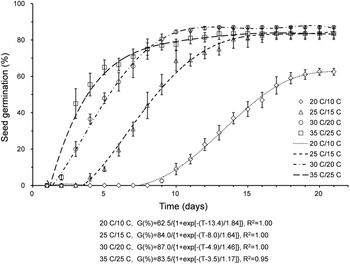
Seed germination of prostrate water primrose was also affected by temperature. Under light/dark conditions, 84% germination was observed at 25/15 C, 87% at 30/20 C, and 83.5% at 35/25 C versus 62.5% at 20/10 C. As the temperature increased, seed germination accelerated, and the time to onset of germination at 20/10 C, 25/15 C, 30/20 C, and 35/25 C was 9, 4, 3, and 2 d, respectively. However, the total percentage of germination under the temperatures of 25/15 C, 30/20 C, and 35/25 C was similar (Figure 4).
Influence of fluctuating day/night temperatures on seed germination of prostrate water primrose under light/dark conditions. Vertical bars denote standard errors (n = 8).

Temperature has a critical effect on seed germination (Burke et al. Reference Burke, Thomas, Spears and Wilcut2003). Direct-seeded rice is planted in early May in southern China, when the mean temperature is close to 20 C. The seeds of prostrate water primrose germinated at all the tested temperature regimes, suggesting that seedlings of this species can emerge throughout the rice growing season in the region. A lower germination percentage was observed at 20/10 C, indicating that some seedlings would escape from the early use of PRE herbicides.
Osmotic Stress
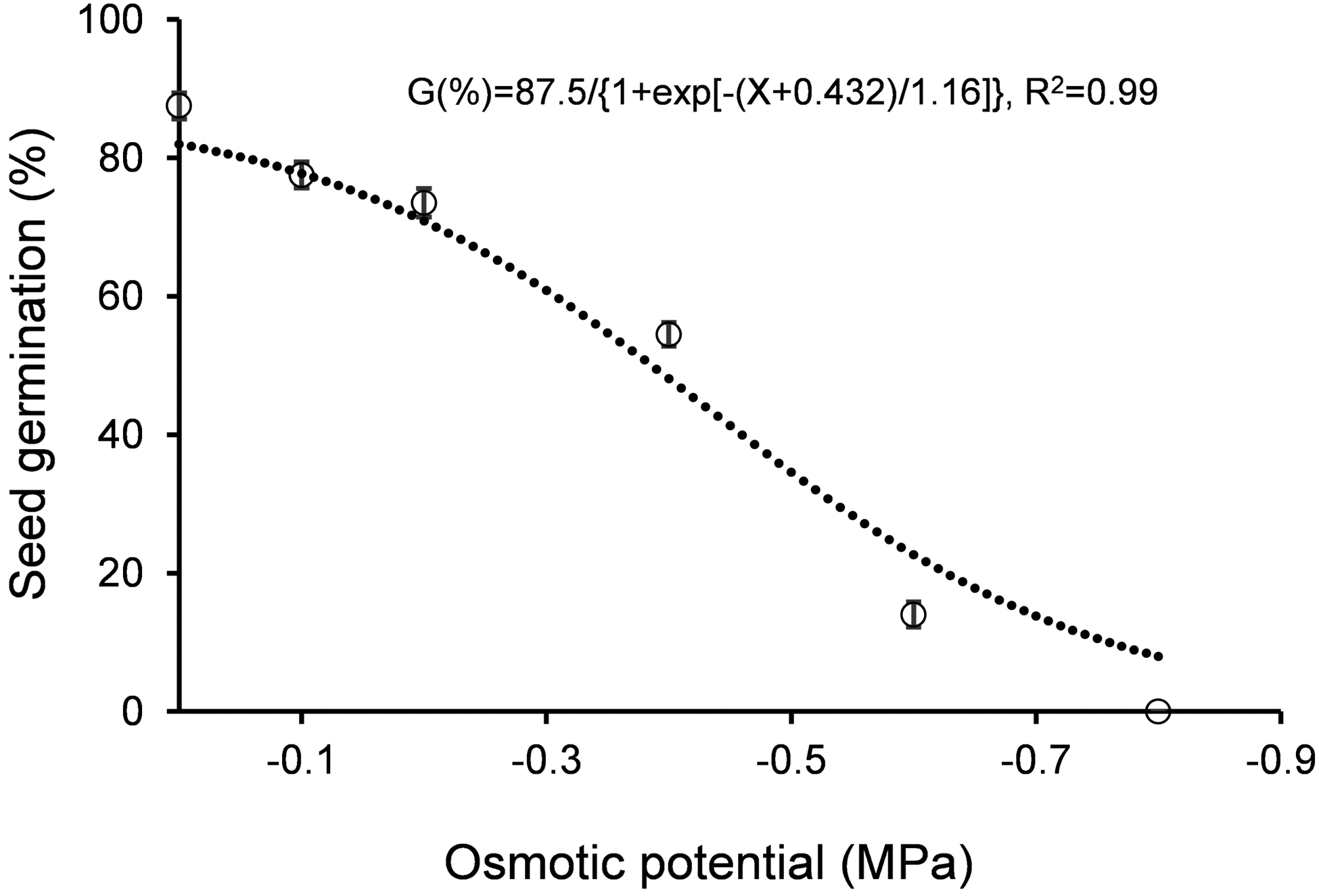
As shown in Figure 5, the seed germination percentage of prostrate water primrose was greatly affected by osmotic stress. The maximum germination percentage (87.5%) was detected at an osmotic stress of 0 MPa. The germination percentage decreased from 87.5% to 0% with decreasing osmotic stress values from 0 to −0.8 MPa. The osmotic stress for 50% inhibition of maximum germination percentage was −0.4 MPa.
Influence of osmotic potential on seed germination of prostrate water primrose. Vertical bars denote standard errors (n = 8).

A similar conclusion was reported for nakedstem dewflower [Murdannia nudiflora (L.) Brenan], with an osmotic stress value of −0.4 MPa to achieve 50% suppression of maximum germination (Ahmed et al. Reference Ahmed, Opeña and Chauhan2015; Atkinson Reference Atkinson2014). Additionally, we found that the nongerminated seeds of prostrate water primrose previously incubated at −0.8 MPa could germinate normally when they were incubated in deionized water. These results indicate that most prostrate water primrose seeds can germinate in wet habitats, but those in dry habitats cannot germinate until they become moist.
Salt Stress
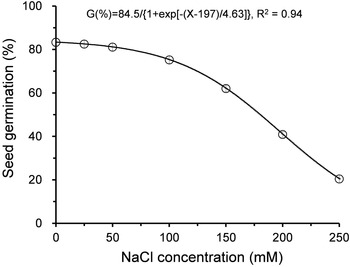
The seed germination percentage of prostrate water primrose decreased as the salt concentration increased. Germination was greater than 80% at salt concentrations of less than 50 mM. As the salt concentration increased further, the seed germination percentage decreased sharply. Seed germination decreased from 84.5% to 23.7% with increasing salt concentration from 0 to 250 mM. The salt concentration for inhibition of 50% of maximum germination was 197 mM (Figure 6).
Influence of salt stress on seed germination of prostrate water primrose. Vertical bars denote standard errors (n = 8).

The response of seed germination to salt stress varied greatly among species. Nakedstem dewflower and Chinese sprangletop, as the dominant weeds in direct-seeded rice fields, were completely unable to germinate at a salt concentration of 150 mM (Ahmed et al. Reference Ahmed, Opeña and Chauhan2015; Chauhan and Johnson Reference Chauhan and Johnson2008). However, at the same salt concentration, prostrate water primrose seeds were able to germinate, with a germination percentage of over 60%. These results suggest that prostrate water primrose is more salt-tolerant than nakedstem dewflower and Chinese sprangletop.
pH Buffer Solution
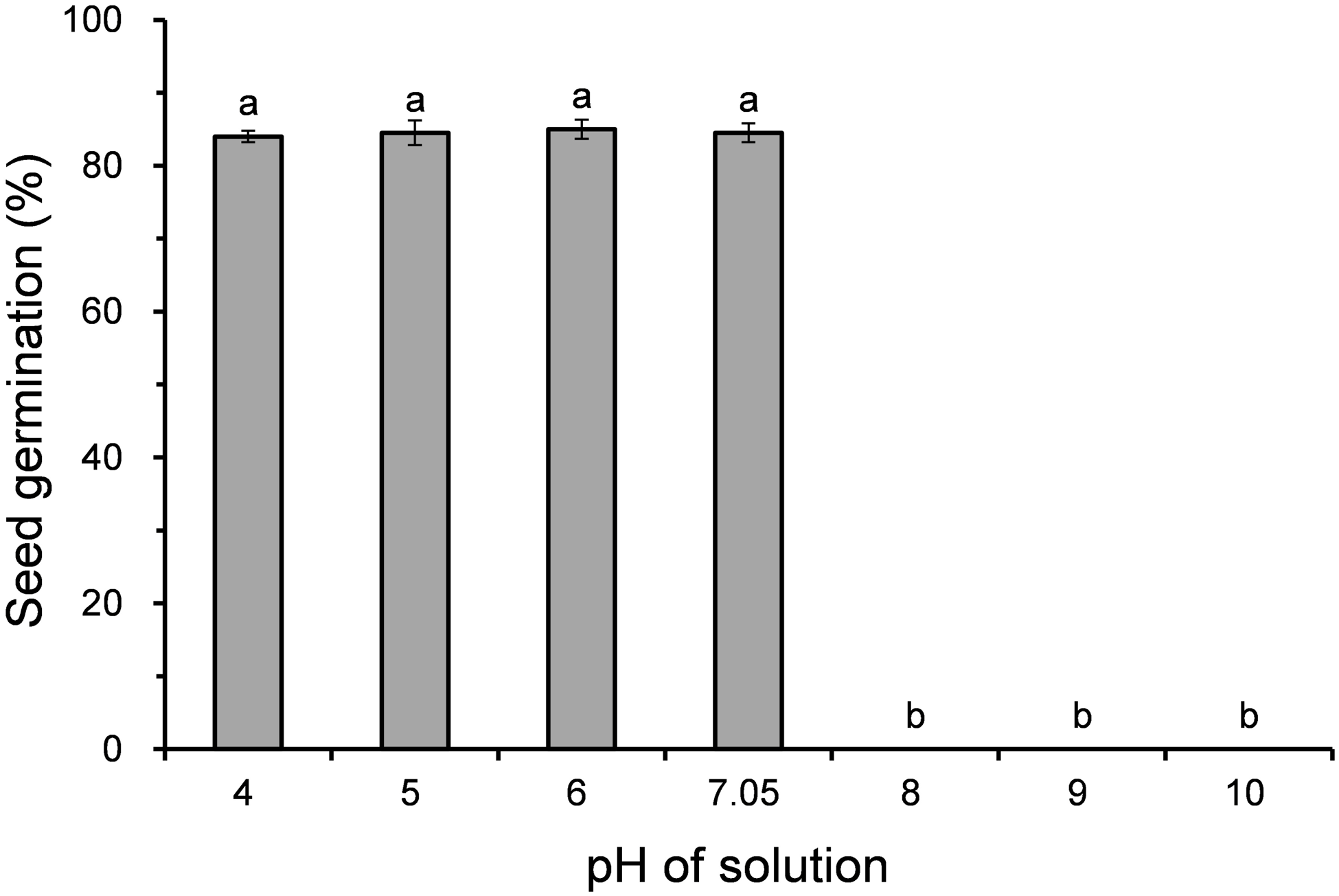
One-way ANOVA showed that buffer solutions with various pH values significantly affected the seed germination percentage of prostrate water primrose (P < 0.001). Seeds germinated normally at pH 4 to 7.05, with a germination of approximately 85%. However, seeds did not germinate at all at pH 8 to 10 (Figure 7). These results indicate that prostrate water primrose cannot emerge under alkaline conditions, and this information could be used to predict where it might occur.
Influence of pH buffer solutions on seed germination of prostrate water primrose. Vertical bars denote standard errors. Bars with different letters indicate significant differences (P < 0.05, n = 8).

Burial Depth
One-way ANOVA showed that burial depth significantly affected the seed germination of prostrate water primrose (P < 0.001). Seeds sown on the soil surface showed maximum seedling emergence value (83.0%). Seeds buried deeper than 0.5 cm did not form seedlings. This is consistent with the observation that seed germination in this species is stimulated by light. Almost no light can be transmitted to soil deeper than 0.4 cm (Benvenuti Reference Benvenuti1995). Egley (Reference Egley1986) and Woolley and Stoller (Reference Woolley and Stoller1978) also reported that less than 1% of light could reach soil depths deeper than 0.2 cm. Insufficient light is probably the main factor for preventing the formation of seedlings from seeds buried below 0.5 cm. Therefore, deep tillage regimes may be a viable way to reduce the emergence of prostrate water primrose. Nevertheless, due to the shortage of rural labor in China, no-tillage and shallow tillage regimes are popular in agricultural production, which leads to the increasing yearly occurrence of this species.
Flooding
The seedling emergence of prostrate water primrose was inhibited by flooding. The maximum seedling emergence was observed in saturated soil. As flooding increased from 0 to 8 cm, the inhibition of seedling emergence increased from 0% to 27.6% (Figure 8).
Influence of flooding on seedling emergence of prostrate water primrose. Vertical bars denote standard errors.

Flooding is an important method for weed control, and the tolerance of weed species to flooding varies. Ricefield flatsedge (Cyperus iria L.) cannot grow in flood conditions (Rsa and Moody Reference Rsa and Moody1979). The occurrence and growth of Chinese sprangletop were greatly reduced under shallow flooding (Chauhan and Johnson Reference Chauhan and Johnson2008). Other weeds such as heartshape false pickerelweed [Monochoria vaginalis (Burm. F.) C. Presl ex Kunth] prefer flooding for growth (Pons Reference Pons1982). In this study, seedling emergence at a flooding depth of 8 cm was only reduced by 27.1% compared with germination without flooding. Therefore, prostrate water primrose is tolerant to flooding stress, which is likely why this species can cause damage in both direct-seeded and transplanted rice fields.
Efficacy of Herbicides
The efficacy of the tested PRE herbicides on prostrate water primrose varied greatly (Table 2). After application of oxadiazon, oxadiargyl, and butachlor, the seedling number and biomass of prostrate water primrose was reduced by 95.4% to 100% and by 99.2% to 100%, respectively. Pretilachlor, bensulfuron-methyl + pretilachlor, pyrazosulfuron-ethyl, and bensulfuron-methyl showed acceptable control efficacy on the biomass of prostrate water primrose, but the control efficacy on seedling number was relatively poor, with 93.5% to 98.9% reduction in biomass, and 46.0% to 76.2% reduction in seedling number, respectively.
Control efficacy of preemergence herbicides on prostrate water primrose seedlings applied 1 d after sowing. a

a The values are mean ± standard error. Different letters in the same column denote significant differences (P < 0.05, n = 8).
Among the treatments with POST herbicide application, MCPA-Na + bentazone, bentazone, fluroxypyr, and MCPA-Na were highly effective against prostrate water primrose, and the seedling number and biomass were reduced by more than 90% and 99%, respectively. However, the efficacy of penoxsulam, bispyribac-sodium, tefuryltrione + triafamone, and florpyrauxifen-benzyl against this species was relatively poor, with a 31.3% to 56.3% reduction in seedling number and 67.1% to 73.4% reduction in biomass (Table 3).
Control efficacy of postemergence herbicides on prostrate water primrose seedlings applied at the 2- to 3-leaf stage. a

a The values are mean ± standard error. Different letters in the same column denote significant differences (P < 0.05, n = 8).
Direct-seeded rice plays a dominant role in rice production in China. Weeds in rice fields are primarily controlled by herbicides. The most commonly used herbicides are bensulfuron-methyl + pretilachlor applied PRE and penoxsulam applied POST, which are recommended by government agencies and have been applied for more than 20 yr. However, the efficacy of bensulfuron-methyl + pretilachlor applied PRE and penoxsulam applied POST on prostrate water primrose was poor (Tables 2 and 3). This may be one of the reasons for the increasing damage caused by this species in paddy fields in China. When considering efficacy, safety, and rice cultivation regime, replacing the PRE herbicide bensulfuron-methyl + pretilachlor with oxadiazon or oxadiargyl and replacing the POST herbicide penoxsulam with bentazone or MCPA-Na + bentazone are potential optional schemes for alleviating the damage caused by prostrate water primrose in paddy fields. The results of this study will provide guidance for controlling prostrate water primrose in paddy fields.
Practical Implications
Shifts in weed flora and the development of resistant weeds pose a challenge to weed management in rice. Various weed management approaches need to be integrated to achieve effective, sustainable, and long-term weed control. And these management methods depend on a detailed understanding of seed germination ecology. According to the results of the present study, the following practices could be considered to control prostrate water primrose in paddy fields:
-
1) Because the seeds have a short primary dormancy, stale seedbed practices prior to rice planting likely will mitigate the occurrence of prostrate water primrose through depleting the seed bank of this species.
-
2) Light may stimulate and continuous dark may inhibit the germination of prostrate water primrose seeds. Therefore, straw mulching may be an efficient way to control seedling emergence of prostrate water primrose.
-
3) The seeds of prostrate water primrose buried deeper than 0.5 cm do not form seedlings. Therefore, deep tillage regimes may be a viable way of reducing the emergence of prostrate water primrose.
-
4) Seeds germinate normally at pH 4 to 7.05 but cannot germinate at pH 8 to 10. This information can be used to predict its potential distribution.
-
5) PRE herbicides such as oxadiazon, oxadiargyl, butachlor and POST herbicides such as MCPA-Na + bentazone, bentazone, and fluroxypyr may provide complete control of prostrate water primrose.
Acknowledgments
This work was funded by the SAAS Program for Excellent Research Team [hu nong ke zhuo (2022) 017, 009, 002]. There are no conflicts of interest to declare.