1. Introduction
Stroke is a vascular lesion of the central nervous system (CNS) that causes significant motor impairments, particularly in the upper limbs, hindering daily activities requiring manual dexterity and often leading to hemiplegia. In all the world, stroke is one of the leading causes of death and disability, with considerable economic and social impacts [Reference Sacco, Kasner, Broderick, Caplan, Connors, Culebras, Elkind, George, Hamdan, Higashida and Hoh1, Reference Tsao, Aday, Almarzooq, Anderson, Arora, Avery, Baker-Smith, Beaton, Boehme, Buxton, Commodore-Mensah, Elkind, Evenson, Eze-Nliam, Fugar, Generoso, Heard, Hiremath, Ho and Martin2]. Risk factors for stroke are classified as nonmodifiable, such as age and family history, and modifiable, including hypertension, smoking, and sedentary lifestyle [Reference Tsao, Aday, Almarzooq, Anderson, Arora, Avery, Baker-Smith, Beaton, Boehme, Buxton, Commodore-Mensah, Elkind, Evenson, Eze-Nliam, Fugar, Generoso, Heard, Hiremath, Ho and Martin2].
Patients with stroke commonly exhibit a wide range of neuromotor impairments, including muscle weakness, spasticity, proprioceptive alterations, and sensory dysfunction. Spasticity, characterized by an abnormal increase in muscle tone, results in stiffness and involuntary movements, hindering precise and voluntary movements. It may also lead to muscle shortening and contractures, impairing upper limb function [Reference Gonçalves, L.S., L.P., G. and M.3]. Proprioceptive alterations affect joint position and movement perception, compromising coordination and movement precision, making it difficult for patients to sense limb positioning without visual assistance, thus impairing tasks requiring manual dexterity and fine coordination [Reference Rahayu, Wibowo, Setyopranoto and Hibatullah Romli4]. Additionally, sensory dysfunctions range from hypersensitivity to complete sensory loss, leading to inconsistent tactile feedback and impaired adaptive responses to the environment, complicating object manipulation tasks, such as holding delicate items [Reference Liaw, Hsu, Leong, Liao, Wang, Lu and Lin5].
Recovery of these functions depends on interventions promoting brain reorganization and plasticity, processes that allow the brain to adapt post-lesion. Physiotherapy, based on repetitive exercises, is traditionally employed to stimulate neuroplasticity but often lacks the intensity and precision required for optimal functional recovery [Reference Rahayu, Wibowo, Setyopranoto and Hibatullah Romli4, Reference Alves, Gonçalves and Carbone6].
In ref. [Reference Li, He, Wang and Rezaei7] was emphasized the importance of personalized, high-intensity strategies for neuromotor recovery in rehabilitation, highlighting advanced technologies such as robotic devices [Reference Alves, Gonçalves and Carbone6, Reference Garcia, Gonçalves and Carbone8]. Robotic-assisted rehabilitation therapies have shown promise by enabling a high volume of motor repetitions and precise sensory feedback, potentially overcoming "learned non-use"—a phenomenon where patients avoid using the affected limb after failed movement attempts [Reference Alves, Gonçalves and Carbone6, Reference Kin and Sang-Hun9]. In ref. [Reference Wu, Cheng, Zhang, Yang and Cai10], it was reported that robotic-assisted therapy for upper limb rehabilitation significantly improves motor function post-stroke, supporting the importance of intensive and targeted practices. Similarly, in ref. [Reference Jiang, You, Zhao and Zhang11], the benefits of short-term robotic therapy in subacute patients were highlighted , promoting rapid improvements in upper limb function.
Customizing robotic devices to adjust difficulty levels and sensory feedback to patient needs has improved therapy adherence and outcomes with gamified robotic interfaces, maintaining patient motivation and objectively document progress [Reference Kin and Sang-Hun9, Reference Cho and Song12]. In ref. [Reference Cho and Song12], it was suggested that tailored robotic training can enhance motor function, coordination, and movement precision, addressing proprioceptive and sensory challenges.
Given the need for innovative approaches to maximize recovery, this study evaluated the effects of a robotic-assisted rehabilitation protocol for wrist function in adults with stroke. The application of advanced technologies, as described by ref. [Reference Li, He, Wang and Rezaei7], underscores the importance of individualized, intensive rehabilitation strategies leveraging brain plasticity to optimize patient recovery.
2. A brief review of wrist rehabilitation robots
The use of robotic devices as effective tools for wrist rehabilitation therapy has been a focus of research, particularly in post-stroke recovery [Reference Hesse, Schulte-Tigges, Konrad, Bardeleben and Werner13]. Although rehabilitation technologies for the upper limbs have seen significant progress in recent years, further investigation is necessary due to the intricate nature of human hand movements [Reference Rose, Pezent, Kann, Deshpande and O’Malley14, Reference Yue, Zhang and Wang15].
This brief review section aims to report on the main research on robotic devices to aid the wrist rehabilitation process. Rehabilitation wrist robots can be classified into end effector and exoskeleton structures. Robotic exoskeletons are designed to mimic the structure of human limbs and are attached to the body at multiple points, aligning their joints with the user’s natural joints. In contrast, end-effector devices typically interface only with the patient’s hand or forearm. Exoskeletons are often designed to be wearable—electromechanical systems that assist, enhance, or support wrist motion and mobility [Reference Al-Mayahi and Al-Fahaam16]. Some wearable exoskeletons incorporate pneumatic components, such as artificial muscles, which can provide a more compliant and natural interaction with the user. This compliance may help address joint misalignment issues commonly found in traditional exoskeletons used for wrist rehabilitation.
End-effector robots allow for easy attachment of the hand, resulting in simpler mechanical structures and control systems. Because they do not constrain anatomical joints, these devices help prevent abnormal movements. However, they do not provide direct information about the upper limb’s kinematic configuration, and isolating the movement of individual joints can be challenging. In contrast, exoskeletons are capable of targeting and facilitating motion in specific joints [Reference Garcia, Gonçalves and Carbone8].
References [Reference Krebs, Volpe, Williams, Celestino, Charles, Lynch and Hogan17, Reference Durand, Rohan, Hamilton, Skalli and Krebs18] describe a three-degree-of-freedom wrist robot developed at the Massachusetts Institute of Technology (MIT), which integrates a load cell and employs a direct force control strategy to minimize interaction forces. Introduced in 2007, this device was among the first of its kind for wrist rehabilitation. A commercial version was later released, and clinical validation demonstrated improvements in wrist function among patients.
An electrically actuated forearm–wrist haptic exoskeleton, known as RiceWrist, was introduced in ref. [Reference Kadivar, Sullivan, Eng, Pehlivan, O’Malley, Yozbatiran, Berliner, Boake and Francisco19]. It utilized an impedance-based controller for both position and force. Building upon this design, the RiceWrist-S, a serial robotic mechanism, was later developed and described in ref. [Reference Pehlivan, Sergi, Erwin, Yozbatiran, Francisco and O’Malley20]. This enhanced version offered higher torque output and covered the full range of motion (ROM) of the human wrist. The OpenWrist, introduced in ref. [Reference Perry, Rosen and Burns21], evolved from the RiceWrist-S and incorporated a fourth, passive linear degree of freedom to better accommodate joint misalignments.
In ref. [Reference Oblak, Cikajlo and Matjacić22], a universal haptic unit (UHD) was developed for wrist rehabilitation, offering actuation across three degrees of freedom: flexion/extension, pronation/supination, and abduction/adduction. The mechanical design consists of a series of joints that can be locked or unlocked, enabling independent movement of the wrist. In ref. [Reference Squeri, Masia, Giannoni, Sandini and Morasso23], the IIT Genova Robotic System for wrist rehabilitation was introduced, offering three degrees of freedom for abduction/adduction, flexion/extension, and pronation/supination movements. The use of this device led to improvements in the active ROM of the wrist. In ref. [Reference Amirabdollahian, Ates, Basteris, Cesario, Buurke, Hermens, Hofs, Johansson, Mountain, Nasr and Nijenhuis24], the University of Sheffield developed the SCRIPT 1 prototype, designed to provide physiotherapy for stroke survivors by assisting with passive flexion/extension movements. The device requires users to have neurological and motor control to operate it effectively.
In ref. [Reference Bartlett, Lyau, Raiford, Holland, Gafford, Ellis and Walsh25], a robotic device from Harvard University was developed and tested with a healthy participant, focusing on ROM and torque. This device facilitates flexion/extension and pronation/supination movements using pneumatic actuators. The WRES robotic exoskeleton, introduced in ref. [Reference Buongiorno, Sotgiu, Leonardis, Marcheschi, Solazzi and Frisoli26], offers three degrees of freedom, enabling abduction/adduction, flexion/extension, and pronation/supination movements. The CR2-Haptic, a portable and reconfigurable wrist robot, was presented in ref. [Reference Khor, Chin, Hisyam, Yeong, Narayanan and Su27] with one degree of freedom. By changing the robot’s orientation, it can train all three wrist movements: abduction/adduction, flexion/extension, and pronation/supination. In ref. [Reference Higuma, Kiguchi and Arata28], a wrist exoskeleton was created using two linear actuators connected to elastic elements, allowing for flexion/extension and abduction/adduction movements. While the elastic components provide compliance, their use can reduce the precision and repeatability of wrist movements, requiring more complex control techniques.
One type of end effector used for wrist rehabilitation is the haptic virtual environment system. Haptic refers to the feedback provided to a human user through the sense of touch. A haptic system enables this feedback. In the context of virtual environments, haptic systems provide force feedback from virtual objects or computer-generated scenarios, allowing users to interact with and perceive the virtual world through tactile sensations [Reference Jiang, Qian, Lin, Bi, Liu and Zhang29]. In ref. [Reference Jiang, Qian, Lin, Bi, Liu and Zhang29], an analysis of virtual environment haptic robotic system for possible application at rehabilitation of post-stroke patients was done. The commercial Phantom Omni device was used to establish the mathematical model of the human–robot collaborative system. In ref. [Reference Gao, Zhang, Qian and Chen30], the same Phantom Omni device was used by patients to perform wrist circumduction rehabilitation exercise for functional assessment. In ref. [Reference Yang, Lin, Cai, Qian, Kivol and Zhang31], the same device was used to examine the fatigue effect on the wrist rehabilitation. The authors concluded that an elevated fatigue state significantly affects the wrist coordination task performance in rehabilitation, although this conclusion is derived from the experiment only on healthy subjects. In ref. [Reference Chen, Qian, Song, Yang and Zhang32], an objective assessment of the loss of the wrist function of post-stroke patients was analyzed using the Phantom omni device together with virtual environment. In refs. [Reference Wang, Qian, Lin and Zhang33, Reference He, Zhang, Bi and Zhang34], haptic robotic system based on serial architecture robots were proposed without tests with patients. Like shown in refs. [Reference Jiang, Qian, Lin, Bi, Liu and Zhang29–Reference He, Zhang, Bi and Zhang34] the combination of virtual environments and haptic devices gave the potential of obtaining a compact and reduced device to be applied to wrist rehabilitation. Otherwise, the haptic devices have the limitation of absence of active assistance to more impaired patients and do not restrict the individual wrist movements.
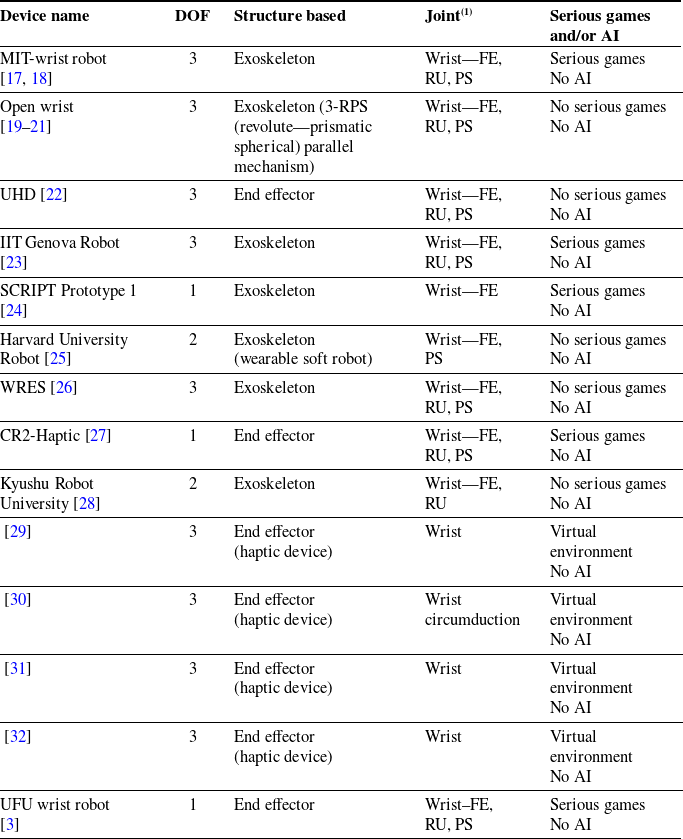
Table I summarizes the main structures applied to human wrist rehabilitation brief review at this paper. The existing devices are classified according to the number of degrees of freedom, wrist movements, and the presence of artificial intelligence (AI) in the implementation of serious games or virtual reality games. Serious games provide a playful and motivating environment for patients while also serving as tools for quantitatively assessing patient progress and the effectiveness of rehabilitation devices. This dual functionality enhances the rehabilitation experience by making it both engaging and measurable. When combined with AI, serious games can be dynamically adapted to each patient’s individual needs, adjusting difficulty levels to boost engagement and support motor recovery more effectively.
Features of wrist rehabilitation devices selected.

(1)RU—radial/Ulnar deviation, FE—flexion/extension, PS—pronation/supination.
The device used in this paper is an evolution of the one presented in ref. [Reference Gonçalves, L.S., L.P., G. and M.3]. The device is named UFU wrist robot and uses a palm rest base, coupled to a servo motor, and employs impedance control, allowing the patient to resist or assist the movements. This system stands out for its simplicity and ease of manufacture. In addition, its adaptability is remarkable, and it can be adjusted more flexibly to suit different hand/arm lengths.
3. A Novel wrist rehabilitation robot
The robotic therapy was implemented using a device designed to assist the physiotherapist in the wrist rehabilitation of stroke patients. This device was developed with the premise of being simple, with one degree of freedom, but allowing the individual movements of the human wrist to be performed. In ref. [Reference Andrade, Fernandes, Martins, Roma, Joaquim and Caurin35], it was demonstrated that the treatment of only one movement at a time proved to be better and more efficient, compared to the traditional method, in which all movements are worked simultaneously. The robotic device, Figure 1, enables movements in three individual directions: pronation/supination, flexion/extension, and radial/ulnar deviation, Figure 2. The device used in this paper is an evolution of the one presented in ref. [Reference Gonçalves, L.S., L.P., G. and M.3] with the insertion of a new motor and a new serious game coupled with AI to allow assistance to the patient when necessary. The insertion of the new motor allows assistance to patients with greater movement weaknesses due to its greater torque. The mechanism differs from those present in the literature in that it has only one actuator and allows individual movements of the human wrist only by modifying the position of holding the patient’s hand in the device. Unlike haptic devices, the mechanism used in this paper allows assistance to patients with greater motor impairments with the control system acting to complement the actions required in the game.
Robotic device to wrist rehabilitation.

Wrist movements.

The control system was designed to be low-cost and with commercial components easily found in stores. An Arduino MEGA was used in conjunction with the RAMPS 1.4 board. The stepper motor (model WS23-0240-40-4) was controlled with the DRV8825 driver in conjunction with the encoder model E40H8-104-6-I-5. To set the initial configuration of the device, a micro switch was used, as shown in Figure 1. The wrist proposed robot has a shared control system with the patient. The patient’s central nervous and musculoskeletal systems and the wrist device interact with each other through the measurement of the torque sensor (model MKDC 100 Nm). The stepper motor’s position θ can be controlled using the Eq. (1), where N is the number of steps per revolution and S represents the current step count. The DRV8825 driver facilitates microstepping, allowing finer control over θ by dividing each full step into smaller increments.
 \begin{equation}\theta =\left(\frac{S}{N}\right) \times 360^{\circ}\end{equation}
A torque sensor was used to measure the torque (T) exerted by the patient during exercises, using the sensor’s voltage output V, calculated by Eq. (2), where k is the sensor’s sensitivity and V 0 is the baseline voltage corresponding to zero torque.
 \begin{equation}T=k\; \left(V- V_{0}\right)\end{equation}
An adaptive motor control using AI to adjust the motor speed based on patient performance was used in this device. The AI system was designed to be personalized for each patient, allowing for continuous improvement and tailored therapy. The AI adjusts the motor speed S(t) based on the patient’s torque data T(t) at time t, using the Eq. (3), where S 0 is the base motor speed and K f is a proportionality constant. If a patient exerts more torque, the AI reduces the motor speed to prevent discomfort. Conversely, if a patient is applying minimal torque, the AI increases the motor speed to provide adequate resistance for effective therapy.
 \begin{equation}S\left(t\right)= S_{0}-k_{f} \cdot T(t)\end{equation}
Figure 3 illustrates the different ways of positioning the patient’s hand on the equipment, allowing the intended movement to be performed. The robotic device used in this paper is innovative because it allows the three individual movements of the human wrist, Figure 2, to be performed, using only one motor and without major modifications to the mechanical structure of the robotic device, simply by modifying the location of the patient’s hand, Figure 3.
Hand setup to wrist rehabilitation. (a) Flexion/extension; (b) radial/ulnar deviation; (c) flexion/extension.

3.1. Serious game graphical interface
This paper presents a new serious game for human wrist rehabilitation to work with the proposed robotic device. The serious game features a paper airplane controlled by the patient, who must navigate it through stacks of books without collisions by maneuvering the airplane to avoid them. The objective is to pass through all stacks, using the gaps, without hitting them, Figure 4. The serious game was developed using the Unity 3D game engine.
Game running screen.

The interaction between the serious game and the device is facilitated by the Arduino platform, which collects the angular position of the mobile platform. This angular position is reflected in real time as the paper airplane’s position in the game space. Consequently, any movement of the device by the patient simultaneously alters the airplane’s position. The development of this graphical interface was designed to avoid penalizing patients for their errors, instead of rewarding points for their achievements. To keep patients engaged, it was crucial that the game included fun features. Rehabilitation can often feel repetitive and dull, so the serious game incorporated elements like visual rewards, progress indicators, and positive audio feedback when patients performed the correct movements.
To ensure real-time synchronization between the device sensors and the serious game in Unity 3D, the system needed to capture data from the encoder every 100 milliseconds to continuously monitor wrist movements and send information about gate positions every 1.5 s to update game elements based on patient progress. The stepper motor operated within a continuous while loop with serial communication TX and RX wires for multiplex data flow between the device and the game. Managing the stepper motor within a continuous while loop presented a challenge, as it could potentially block the main thread and disrupt communication, solved using small time intervals within the loop, enabling asynchronous handling of incoming and outgoing serial data without interrupting motor operations. This approach ensured that the system remained responsive and maintained smooth motor functionality alongside data transmission. The system latency is 0.277 milliseconds per transmission cycle ensuring that patient wrist movements were promptly and accurately reflected within the developed serious game.
Before starting the exercises, a calibration phase was conducted, Figure 5. Due to variations in wrist movement types and individual patient differences, the system needed to calibrate the rotation degrees accurately. This calibration ensured that the device could accurately interpret and respond to each patient’s specific wrist movements. The calibration is made with two steps: the player goes to the minimum position and holds it for 5 s, and the player goes to the maximum position and holds it for 5 s. After the type of movement is selected, Figure 6(a). Next, the health professional or the patient chose the desired game mode, which included settings for speed, Figure 6(b) and precision, Figure 6(c). The game offered various game modes to support long-term patient progress. Patients had the option to select a game mode independently by standing on the desired character’s button for three seconds (shown by a filling green bar from down to up), Figure 6, allowing for intuitive and hands-free interaction.
Screenshot of the game’s setup (calibration).

(a) Player selection menu; (b) speed selection; (c) precision selection.

The game session was conducted for 60 s. This fixed duration facilitated consistent data collection, making it easier for the doctor to compare and analyze patient performance across different sessions. During the game, the system recorded various metrics, including movement accuracy, reaction times, and force applied.
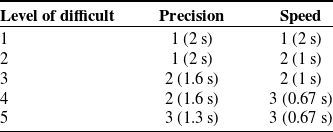
The serious game difficulty was divided into five levels, varying in function of speed and precision, as shown in Table II. Adapting difficulty levels to the patient’s performance aligns with the concept of visual and auditory motor feedback in rehabilitation, promoting adaptation and motor learning [Reference Huang, Gillespie and Kuo36]. The difficulty level is only adjusted when the patient completed at least two consecutive error-free attempts while navigating the stacks of books.
Level of difficult to the serious game.

The structure assists movement via the stepper motor if the patient fails to position the "paper airplane" object near the gap between the stacks of books. This assistance is based on reading the player’s position 0.5 s before the object reaches the target. If the patient is within the expected range, the motor remains inactive; however, if the object deviates beyond the predefined limits, the motor is activated.
4. Pilot study
This study was characterized as a pilot of a protocol with a multiple baseline design, incorporating qualitative and quantitative approaches and of an exploratory nature. It was conducted at the Physical Therapy Clinic at the Federal University of Uberlandia. The study included adults aged between 50 and 70 years with post-stroke and was approved by the Ethics Committee of the Federal University of Uberlândia under protocol number 77019323.7.0000.5152. A written informed consent form was signed during the initial meeting after the participants received detailed explanations.
4.1. Number of participants
The study focused on evaluating the upper limb of hemiparetic individuals affected by stroke before and after rehabilitation treatment through a robotic gaming program executed in real time by the participants. Inclusion criteria for this pilot test stipulated that participants must present hemiparesis resulting from a stroke sustained more than six months prior, be aged between 50 and 70 years, and exhibit muscular strength deficits and impaired manual function due to the stroke. Exclusion criteria specified that participants could not have uncontrolled hypertension or cognitive difficulties that hinder comprehension of the game commands utilized in the protocol. A convenience sample was used, consisting of two participants: one female diagnosed with ischemic stroke, with the nondominant upper limb affected and undergoing neurofunctional rehabilitation at the clinic, and one male with similar conditions, also with the nondominant limb affected. This experimental study involved data collection through the application of tests, questionnaires, and analyses of strength and manual function.
4.2. Assessment
4.2.1. Strength and range of motion
The robotic device used facilitates the measurement of ROM by reading the desired positions during free movement. During rehabilitation, the patient is seated in a height-adjustable chair.
4.2.2. Evaluation of movement quality
The motor activity log (MAL) is a structured interview developed in ref. [Reference Taub, Miller, Novack, Cook, Fleming, Nepomuceno, Connell and Crago37], in which participants assess how often (amount of use scale) and how well (quality of movement scale) they performed specific activities of daily living items, with the affected limb. These items encompass activities such as brushing teeth, buttoning a shirt, and eating with a fork or spoon [Reference Taub, Miller, Novack, Cook, Fleming, Nepomuceno, Connell and Crago37, Reference Winstein, Miller, Blanton, Taub, Uswatte, Morris, Nichols and Wolf38].
Both the quantitative and qualitative scales require participants to score each item using an ordinal scale ranging from zero to five. For the quantitative scale, responses reflect how frequently the affected limb was used during the previous week, with options ranging from “did not use,” “very rarely,” “rarely,” “occasionally,” “almost always,” to “always.” Conversely, the qualitative scale evaluates the quality of movement during use, using terms like “not used,” “very poor,” “poor,” “fair,” “almost normal,” and “normal.” Additionally, any response indicating nonuse of the affected limb must be justified on a separate scale from one to five. These justifications include statements such as “I used my unaffected arm the entire time,” “someone else performed the activity for me,” “I never perform this activity, with or without assistance, because it is impossible,” “I sometimes perform this activity, but I have not had the opportunity since I last answered these questions,” and “this is an activity I normally performed only with my dominant hand before the stroke, and I continue to perform it with my dominant hand now” [Reference Taub, Miller, Novack, Cook, Fleming, Nepomuceno, Connell and Crago37, Reference Winstein, Miller, Blanton, Taub, Uswatte, Morris, Nichols and Wolf38].
4.2.3. Assessment of sensorimotor impairment (Fugl-Meyer assessment)
The Fugl-Meyer Assessment (FMA) was the first quantitative tool developed to evaluate the sensorimotor behaviors of individuals recovering from stroke [Reference Fugl-Meyer, Jääskö, Leyman, Olsson and Steglind39]. The FMA evaluates six key aspects: ROM, presence of pain, sensitivity, motor coordination, and movement speed, with a total possible score of 226 points. For this study, only the section assessing the upper limb will be utilized, comprising 66 points. Its application is based on a three-point scale: 0 (cannot be performed), 1 (partially performed), and 2 (fully performed). The adoption of a three-point scale was chosen after observing that scales with more gradations resulted in less reliable judgments, whereas a three-point scale demonstrated higher reliability. The FMA was designed under the premise that motor function recovery in hemiplegic individuals follows a gradual and definable progression. Reflex recovery precedes voluntary movement, and as such, the initial reliance on primitive reflexes and synergistic patterns gradually diminishes, allowing for more controlled and independent movements [Reference Fugl-Meyer, Jääskö, Leyman, Olsson and Steglind39].
4.3. Therapy application
The therapy was applied twice a week, with sessions lasting 45 min. Of this, 5 min were allocated for welcoming and accommodating the patient, and another 5 min were dedicated to passive stretching of the muscles responsible for joint movement. This stretching was performed in two sets of 30 s, respecting the patient’s pain threshold. This practice has shown effectiveness in temporarily reducing spasticity and improving joint mobility in patients with neurological conditions [Reference Katalinic, Harvey and Herbert40].
The next 10 min were dedicated to therapy using the serious game on the robotic platform, focusing on wrist movements with the freedom to perform pronation and supination. Another 10 min were spent on therapy allowing flexion and extension movements, followed by 10 min for therapy involving radial and ulnar deviation. This protocol was carried out over a period of four weeks.
4.4. Data analysis
At the end of the post-protocol evaluation, the test results were subjected to statistical tests to assess data normality and homogeneity. If these tests returned positive results, the pre- and post-intervention evaluation results were compared using the unpaired T-student test. Otherwise, the results were compared using the Mann-Whitney test. All tests were conducted using the IDLE Shell software. In both cases, a significance level of 5% (p < 0.05) was adopted.
5. Results
5.1. Motor activity log–MAL
The MAL was applied during the initial assessment and reassessment. The comparison of the percentage of improvement in the quantitative and qualitative domains in the MAL Scale between their applications is shown in Table III. The number next to the percentage corresponds to the number of questions that improved when comparing MAL to the first and last week.
Comparison of improvement in the quantitative and qualitative domains of the MAL scale for patients “A” and “B”.

5.2. Fugl-Meyer scale
The Fugl-Meyer scale originally includes upper and lower limb domains, with a total of 100 points, where the upper limb domain accounts for 66 points. Scores below 33 indicate severe motor impairment, 33–55 indicate marked impairment, 56–62 indicate moderate impairment, and 63–66 indicate mild impairment.
In the initial evaluation using the FM scale in the domain of manual function, Participant “A” scored 51 points, indicating a marked functional impairment. During the reassessment, Participant “A” scored 53 showing improvement but remaining within the marked functional impairment category. Participant “B” scored 55 in the initial evaluation and improved to 59, transitioning from marked to moderate impairment.
5.3. Paper Airplane serious game results
Data collection was performed by the Encoder, so the parameters analyzed based on these data were the ROM and the GAP. The ROM was calculated as the difference between the maximum and minimum values recorded by the device, reflecting how much the patient moved the robotic equipment to control the object in the game, using the following Eq. (1):
 \begin{equation}\text{ROM}\equiv \left(\text{MinEncoderValue}-\text{MaxEncoderValue}\right)\cdot 0.177\end{equation}
The GAP is the distance of the "paper plane" from the target that is the center of the gate, this point is considered zero, when the distance is greater than zero (positive), it means that the target is to the right of the center, when the value is less than zero (negative) the target passed through the portal on the left, Figure 7. The maximum and minimum limits are depicted in Figure 7, as 12% of the total value of the encoder, if the object passes outside this margin it is counted as a hit. This also used positive and negative values, using the position of the paper plane as a reference.
Illustrative explanation of the parameters used in the serious game.

On the first day, for radial/ulnar deviation, Participant “A” achieved an average ROM of 19.175°, which increased to 19.868° on the last day. However, the participant reported fatigue, which may have influenced performance. Participant “B” started with an ROM of 31.506° and finished with 36.404°. The accuracy was evaluated based on the errors (hits) in the game. Participant “A” recorded 15 errors in 84 attempts (accuracy rate of 17.86%) on the first day and maintained 15 errors in 184 attempts by the last week, reducing the error rate to 9.15%. Participant “B” made no errors. The precision was also measured using the gap (the difference between the center of the target position and the real position). Participant “A” reduced their initial gap from 3.131 to 0.658, while Participant “B” improved from a gap of 1.905 to −1.609.
For flexion/extension movements, Participant “A” ROM improved from 19.47° on the first day to 27.79° on the last day, suggesting an increase in movement amplitude and control. The error rate decreased from 19.05% to 6.09%. Participant “B” maintained an ROM of 49.65° and 50.55°, with zero errors on both days. However, their activity volume increased significantly, from 168 gates on the first day to 460 gates on the last day, demonstrating good precision. The gap for Participant “A” showed a slight increase from 0.548 to 0.987, maintaining precision, while Participant “B” experienced an increase in the gap from 0.613 to −2.773, indicating a slight reduction in precision.
For pronation/supination movements, Participant “A” started with an ROM of 153.52°, which decreased to 108.66° on the last day, likely due to fatigue. Despite this, their accuracy improved, with the error rate dropping from 11.90% to 7.83%. Participant “B” increased their ROM from 98.023° to 146.910° and reduced their error percentage from 1.43% to zero. Regarding the gap, Participant “A” reduced their value from 3.20 to −2.90, while Participant “B” showed a variation from −4.907 to 4.772.
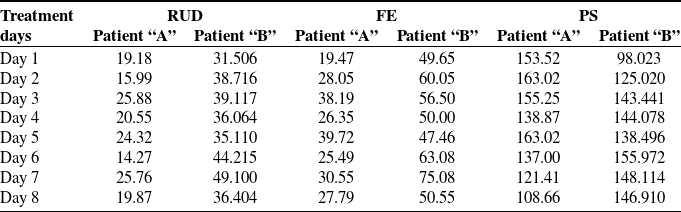
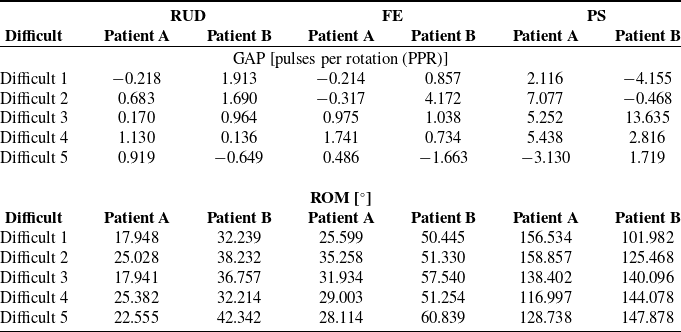
Figure 8 shows the ROM results per week, and Figure 9 per day. Table IV condensed the ROM results. Figures 10 and 11 present the percentual error per day of patients “A” and “B,” respectively.
Average ROM per week.

Average ROM per day.

5.4. Performance in relation to difficulty level
For radial/ulnar deviation, at the easiest levels (speed 1, precision 1), Participant “A” had an average gap of −0.218 and a ROM of 17.948°, reflecting controlled movements. With increased difficulty (speed 3, precision 2), the gap rose to 1.13, and the ROM to 25.382°, indicating wider movements but with reduced precision. At the highest difficulty (speed 3, precision 3), the gap was 0.92, and the ROM decreased to 22.555°, suggesting challenges in precision despite the reduced amplitude. Participant "B," at the easiest levels, exhibited an average gap of 1.913 and a ROM of 32.239°. At the intermediate level (speed 3, precision 2), the gap decreased to 0.964, and the ROM increased to 36.747°, showing improved amplitude without losing precision. At the highest difficulty, the gap approached zero (−0.649), and the ROM increased to 42.343°, maintaining movement quality.
Evolution of range of motion over treatment days patients “A” and “B” [°].

Percentual error per day of patient “A”.

Percentual error per day of patient “B”.

For wrist flexion/extension movements, Participant “A” recorded a gap of −0.21 and an ROM of 25.60° at the easiest level. At the intermediate level, the gap rose to −0.32, and the ROM increased to 35.26°, indicating greater amplitude but reduced precision. At the highest level, the gap increased to 1.74, and the ROM decreased to 29.00°, reflecting losses in both amplitude and precision. Participant "B," at the easiest level, achieved a gap of 0.857 and a ROM of 50.445°. With increased difficulty, the gap rose to 1.038, and the ROM to 57.540°. At the highest level, the gap was −1.663, and the ROM reached 60.839°, demonstrating maintained amplitude with a slight loss of precision.
For pronation/supination movements, Participant “A” initially achieved an ROM of 153.52°, which reduced to 108.66° by the final day, likely due to fatigue. However, accuracy improved, as the error rate dropped from 11.90% to 7.83%. Participant “B” increased their ROM from 98.023° to 146.910° while reducing their error rate from 1.43% to zero. Regarding the gap, Participant “A” reduced it from 3.20 to −2.90, while Participant “B” experienced a variation from −4.907 to 4.772.
5.5. Impact of speed and precision on performance
As the speed of objects in the game increased, both participants exhibited a decline in precision, evidenced by a rise in the average gap. ROM varied, being higher at intermediate levels and slightly reduced at the highest difficulty levels.
5.6. Statistical analysis
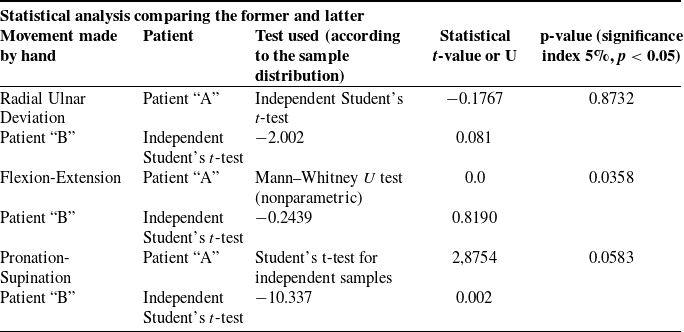
For the radial-ulnar deviation movement, the data showed normal distribution, justifying the use of the Student’s t-test. The p-value, greater than 0.05 for both patients, indicates no statistical evidence to reject the null hypothesis, meaning there was no significant difference in ROM values between the first and last day, Table V.
- average GAP and ROM to difficult.

For the flexion-extension movement in patient "A," the Mann–Whitney U test was used since the data did not show normal distribution on at least one analyzed day. The p-value of 0.0358 indicates a statistically significant difference in ROM values between the first and last day. In contrast, for patient "B," the data followed a normal distribution, justifying the use of the Student’s t-test. With a p-value greater than 0.05, there is no statistical evidence to reject the null hypothesis, indicating no significant difference in ROM values between the first and last day, Table VI.
Statistical analysis of the range of motion data obtained by the equipment.

For the Pronation-Supination movement, patient “A” data followed a normal distribution, allowing the use of the Student’s t-test. The p-value of 0.0583 is slightly above the significance level of 0.05, suggesting no statistically significant difference in ROM values between the first and last day. For patient "B," the data also showed a normal distribution, justifying the use of the Student’s t-test again. The p-value of 0.002, below the significance level, suggests a statistically significant difference in ROM values between the first and last day, Table VI.
6. Discussion
The results of this study on the use of a robotic device for the rehabilitation of manual function in patients with post-stroke sequelae indicate varied gains in mobility, ROM, and precision, with differentiated impacts between patients “A” and "B."
It is noteworthy that both patients demonstrated progressive improvements in ROM and precision when performing the proposed activity. Patient “B” showed greater evolution across all evaluated parameters, particularly in the Fugl–Meyer scale and the qualitative domain of the MAL. This can be attributed to a higher initial functional level compared to patient “A” In contrast, patient “A” exhibited more modest progress, with limitations likely linked to muscle fatigue and the severity of the initial impairment.
6.1. Comparison with the literature
The findings of this study align with and expand upon the existing knowledge regarding the effectiveness of robot-assisted therapies in the rehabilitation of post-stroke patients. In ref. [Reference Wu, Cheng, Zhang, Yang and Cai10], a comprehensive meta-analysis demonstrated that robot-assisted therapy promotes significant improvements in upper limb motor function compared to conventional interventions. Similarly, the present study showed progress in ROM and precision, particularly in patient “B” confirming the potential of robotic devices to foster motor reorganization in cases of moderate impairment.
In ref. [Reference Jiang, You, Zhao and Zhang11], the effects of short-term interventions in subacute stroke patients were investigated and observed rapid advancements in ROM and strength, highlighting that intensive robotic interventions can generate measurable benefits even within short timeframes. Although the protocol in this study spanned only four weeks, it produced comparable results, with patient “B” displaying rapid adaptive responses and consistent improvements, underscoring the efficacy of robotic interventions in limited durations.
In ref. [Reference Cho and Song12], it was emphasized that different approaches in robotic therapies can variably impact motor function and kinematics depending on protocol design and training type. In the present study, the inclusion of the interactive game with adjustable difficulty levels and sensory feedback was crucial in engaging patients and promoting greater motor precision. This playful component likely explains the progressive improvements observed, supporting the notion that personalization and adaptability in robotic therapy maximize functional gains.
In ref. [Reference Lo, Guarino, Richards, Haselkorn, Wittenberg, Federman, Ringer, Wagner, Krebs, Volpe, Bever, Bravata, Duncan, Corn, Maffucci, Nadeau, Conroy, Powell, Huang and Peduzzi41], it was reinforced that long-term robotic therapies are particularly effective in patients with chronic deficits. Although this study focused on a shorter period, the results suggest that extended interventions could further consolidate the functional benefits observed, especially for patients with marked impairments, such as patient “A”.
In summary, this study supports the effectiveness of robotic therapies as reported in the literature while highlighting the critical role of factors such as sensory feedback, interactive games, and therapy personalization in achieving functional gains. These characteristics make robotic approaches a viable and promising complement to conventional post-stroke rehabilitation interventions. The device used is innovative, portable, low-cost (below 500 dollars), simple to build and control, and allows for quick setup with the patient.
6.2. Differences between patients
The differences observed between the patients emphasize the individuality of responses to training, highlighting the influence of factors such as the initial degree of motor impairment, spasticity, and resistance to muscle fatigue. Patient "B," with lower initial motor impairment and greater resistance, showed more significant improvements, while patient “A” demonstrated more limited progress, possibly due to the presence of spasticity or muscle stiffness associated with their condition.
The inclusion of a detailed assessment of spasticity in future studies, such as through the Modified Ashworth Scale, would be valuable to better understand the impact of this factor on therapeutic outcomes. This scale, widely used to measure muscle resistance to passive stretching, has proven effective in evaluating spasticity in post-stroke patients. In ref. [Reference Jiang, You, Zhao and Zhang11], it was highlighted that spasticity can directly influence the response to robotic therapies, limiting ROM and precision in motor tasks. Therefore, its application in future protocols could not only refine participant selection but also enable more targeted adjustments to the therapeutic protocol.
Moreover, using the Ashworth Scale alongside measures of strength and function, such as the MAL and FMA, would provide a more comprehensive view of the patients’ initial conditions and their progress throughout the protocol. This approach would help identify subgroups of patients who could benefit more or less from robotic interventions and contribute to the development of more effective and personalized rehabilitation strategies.
6.3. Limitations and future perspectives
This study has limitations, such as the small sample size and the short duration of the protocol, factors that restrict the generalizability of the results. The absence of a control group also prevents direct comparisons between the robotic protocol and conventional approaches, limiting the understanding of the relative effectiveness of the intervention. Furthermore, the fatigue reported by patient “A” highlights the need to carefully monitor training load and incorporate more frequent breaks in intensive protocols to maximize adherence and benefits.
To address these issues, future studies should include larger samples and longer intervention periods, which would allow for the evaluation of not only the sustainability of the observed gains but also the generalization of the results to different populations. Additionally, investigating adjustable parameters, such as levels of sensory feedback, speed, and difficulty progression using artificial intelligence, could contribute to the development of more effective and personalized protocols tailored to the specific needs and limitations of each patient.
7. Conclusion
The robotic protocol employed in this study proved effective in promoting gains in ROM, precision, and motor control in post-stroke patients, with variable responses depending on the initial degree of motor impairment. Patient “B” demonstrated greater adaptability to the training, excelling in metrics related to ROM and precision, particularly in more challenging movements. In contrast, patient “A” achieved more limited progress, suggesting that individuals with greater initial impairments may benefit less from the protocol, especially in tasks requiring precision.
The findings indicate that the use of robotic devices holds promise for post-stroke rehabilitation, with the potential to enhance functionality and boost patient motivation during treatment. The variability observed between patients underscores the necessity for adjustable protocols that account for levels of impairment and fatigue, enabling more personalized rehabilitation.
For future studies, larger sample sizes and extended intervention periods are recommended, which could increase the reliability of the findings and provide a more detailed understanding of the benefits of robotic protocols in post-stroke rehabilitation. Moreover, long-term follow-up could reveal the sustainability of the gains in ROM and motor control, offering valuable insights into the protocol’s efficacy across different stages of recovery.
Author contribution
J. V. L. M., J. T., G. F. G., and R.S.G. were responsible for the design and development of serious game and wrist robot. J. V. L. M., G. F. G., and J. T. were in charge of collecting patient data. J.V.L.M. and R.S.G. also wrote the paper. J.V.L.M. and R.S.G. were responsible for reviewing the paper, giving new insights, and contributing with the paper format. All the authors contributed to analyzing and interpreting the results with patients.
Financial support
This project was partially funded by UFU, FAPEMIG (process APQ-01885-23), National Council for Scientific and Technological Development (CNPq process 303511/2021-4), and CAPES (Finance Code 001).
Competing interests
The authors declare no conflicts of interest exist.
Ethical approval
The questionnaire and methodology for this study was approved by the Human Research Ethics Committee of the Federal University of Uberlândia (ethics approval numbers 77019323.7.0000.5152), and written informed consent was obtained prior to any data collection.