


%20--%3e%3c!DOCTYPE%20svg%20PUBLIC%20'-//W3C//DTD%20SVG%201.0//EN'%20'http://www.w3.org/TR/2001/REC-SVG-20010904/DTD/svg10.dtd'%3e%3csvg%20version='1.0'%20id='Layer_1'%20xmlns='http://www.w3.org/2000/svg'%20xmlns:xlink='http://www.w3.org/1999/xlink'%20x='0px'%20y='0px'%20width='64px'%20height='64px'%20viewBox='5.5%20-3.5%2064%2064'%20enable-background='new%205.5%20-3.5%2064%2064'%20xml:space='preserve'%3e%3cg%3e%3ccircle%20fill='%23FFFFFF'%20fill-opacity='0'%20cx='37.785'%20cy='28.501'%20r='28.836'/%3e%3cpath%20fill='%23595959'%20d='M37.441-3.5c8.951,0,16.572,3.125,22.857,9.372c3.008,3.009,5.295,6.448,6.857,10.314%20c1.561,3.867,2.344,7.971,2.344,12.314c0,4.381-0.773,8.486-2.314,12.313c-1.543,3.828-3.82,7.21-6.828,10.143%20c-3.123,3.085-6.666,5.448-10.629,7.086c-3.961,1.638-8.057,2.457-12.285,2.457s-8.276-0.808-12.143-2.429%20c-3.866-1.618-7.333-3.961-10.4-7.027c-3.067-3.066-5.4-6.524-7-10.372S5.5,32.767,5.5,28.5c0-4.229,0.809-8.295,2.428-12.2%20c1.619-3.905,3.972-7.4,7.057-10.486C21.08-0.394,28.565-3.5,37.441-3.5z%20M37.557,2.272c-7.314,0-13.467,2.553-18.458,7.657%20c-2.515,2.553-4.448,5.419-5.8,8.6c-1.354,3.181-2.029,6.505-2.029,9.972c0,3.429,0.675,6.734,2.029,9.913%20c1.353,3.183,3.285,6.021,5.8,8.516c2.514,2.496,5.351,4.399,8.515,5.715c3.161,1.314,6.476,1.971,9.943,1.971%20c3.428,0,6.75-0.665,9.973-1.999c3.219-1.335,6.121-3.257,8.713-5.771c4.99-4.876,7.484-10.99,7.484-18.344%20c0-3.543-0.648-6.895-1.943-10.057c-1.293-3.162-3.18-5.98-5.654-8.458C50.984,4.844,44.795,2.272,37.557,2.272z%20M37.156,23.187%20l-4.287,2.229c-0.458-0.951-1.019-1.619-1.685-2c-0.667-0.38-1.286-0.571-1.858-0.571c-2.856,0-4.286,1.885-4.286,5.657%20c0,1.714,0.362,3.084,1.085,4.113c0.724,1.029,1.791,1.544,3.201,1.544c1.867,0,3.181-0.915,3.944-2.743l3.942,2%20c-0.838,1.563-2,2.791-3.486,3.686c-1.484,0.896-3.123,1.343-4.914,1.343c-2.857,0-5.163-0.875-6.915-2.629%20c-1.752-1.752-2.628-4.19-2.628-7.313c0-3.048,0.886-5.466,2.657-7.257c1.771-1.79,4.009-2.686,6.715-2.686%20C32.604,18.558,35.441,20.101,37.156,23.187z%20M55.613,23.187l-4.229,2.229c-0.457-0.951-1.02-1.619-1.686-2%20c-0.668-0.38-1.307-0.571-1.914-0.571c-2.857,0-4.287,1.885-4.287,5.657c0,1.714,0.363,3.084,1.086,4.113%20c0.723,1.029,1.789,1.544,3.201,1.544c1.865,0,3.18-0.915,3.941-2.743l4,2c-0.875,1.563-2.057,2.791-3.541,3.686%20c-1.486,0.896-3.105,1.343-4.857,1.343c-2.896,0-5.209-0.875-6.941-2.629c-1.736-1.752-2.602-4.19-2.602-7.313%20c0-3.048,0.885-5.466,2.658-7.257c1.77-1.79,4.008-2.686,6.713-2.686C51.117,18.558,53.938,20.101,55.613,23.187z'/%3e%3c/g%3e%3c/svg%3e)
%20--%3e%3c!DOCTYPE%20svg%20PUBLIC%20'-//W3C//DTD%20SVG%201.0//EN'%20'http://www.w3.org/TR/2001/REC-SVG-20010904/DTD/svg10.dtd'%3e%3csvg%20version='1.0'%20id='Layer_1'%20xmlns='http://www.w3.org/2000/svg'%20xmlns:xlink='http://www.w3.org/1999/xlink'%20x='0px'%20y='0px'%20width='64px'%20height='64px'%20viewBox='5.5%20-3.5%2064%2064'%20enable-background='new%205.5%20-3.5%2064%2064'%20xml:space='preserve'%3e%3cg%3e%3ccircle%20fill='%23FFFFFF'%20fill-opacity='0'%20cx='37.637'%20cy='28.806'%20r='28.276'/%3e%3cg%3e%3cpath%20fill='%23595959'%20d='M37.443-3.5c8.988,0,16.57,3.085,22.742,9.257C66.393,11.967,69.5,19.548,69.5,28.5c0,8.991-3.049,16.476-9.145,22.456%20C53.879,57.319,46.242,60.5,37.443,60.5c-8.649,0-16.153-3.144-22.514-9.43C8.644,44.784,5.5,37.262,5.5,28.5%20c0-8.761,3.144-16.342,9.429-22.742C21.101-0.415,28.604-3.5,37.443-3.5z%20M37.557,2.272c-7.276,0-13.428,2.553-18.457,7.657%20c-5.22,5.334-7.829,11.525-7.829,18.572c0,7.086,2.59,13.22,7.77,18.398c5.181,5.182,11.352,7.771,18.514,7.771%20c7.123,0,13.334-2.607,18.629-7.828c5.029-4.838,7.543-10.952,7.543-18.343c0-7.276-2.553-13.465-7.656-18.571%20C50.967,4.824,44.795,2.272,37.557,2.272z%20M46.129,20.557v13.085h-3.656v15.542h-9.944V33.643h-3.656V20.557%20c0-0.572,0.2-1.057,0.599-1.457c0.401-0.399,0.887-0.6,1.457-0.6h13.144c0.533,0,1.01,0.2,1.428,0.6%20C45.918,19.5,46.129,19.986,46.129,20.557z%20M33.042,12.329c0-3.008,1.485-4.514,4.458-4.514s4.457,1.504,4.457,4.514%20c0,2.971-1.486,4.457-4.457,4.457S33.042,15.3,33.042,12.329z'/%3e%3c/g%3e%3c/g%3e%3c/svg%3e)
Introduction
Penicillin (PCN) allergy is documented in approximately 10% of the US population with higher rates in older, hospitalized patients. Reference Castells, Khan and Phillips1 However, most patients with a reported PCN allergy do not have a clinically significant hypersensitivity reaction, and ≥90% are able to tolerate PCN and other beta-lactams (BLs) after skin testing or oral challenge. Reference Shenoy, Macy, Rowe and Blumenthal2–Reference DesBiens, Scalia and Ravikumar4
The burden of the PCN allergy label in hospitalized patients is substantial, resulting in higher rates of broad-spectrum antibiotic use, Reference Shenoy, Macy, Rowe and Blumenthal2 acute kidney injury (AKI), Reference Shenoy, Macy, Rowe and Blumenthal2 Clostridioides difficile infection (CDI), Reference Fu, Hu and Han5 and longer hospital length of stay (LOS). Reference Castells, Khan and Phillips1,Reference MacFadden, LaDelfa, Leen, Gold, Daneman and Weber6 The impact of the PCN allergy label may be particularly significant in the management of bacteremia caused by gram-positive (GP) organisms (methicillin-susceptible Staphylococcus aureus [MSSA] and Staphylococcus lugdunensis [MSSL], ampicillin-susceptible Enterococcus faecalis [ASEF], Streptococcus pneumoniae [Spne], Streptococcus pyogenes [Spyo]), where relatively narrow-spectrum BLs are preferred for therapy. Reference Baddour, Wilson, Bayer, Fowler, Tleyjeh and Rybak7–Reference Lew, Salam and Gross12
There is limited data on the effect of the PCN allergy label on the antibiotic and clinical outcomes of patients with GP bacteremia. In this study, we evaluated the association between reported PCN-class allergy and alternate broad-spectrum antibiotic use, AKI, CDI, LOS, recurrence, and mortality in a large national cohort of Veterans with GP bacteremia.
Methods
Data sources and study population
The Veterans Health Administration is one of the largest integrated healthcare systems in the United States, offering inpatient care at over 170 locations across the United States and Puerto Rico. 13 In this retrospective cohort study, we analyzed allergy, hospitalization, and bar-code medication administration (BCMA) records from a relational database created by the Veterans Affairs Informatics and Computing Infrastructure service.
We included the first hospitalization to an acute care service between 01/01/2021 and 12/31/2022 during which a Veteran was diagnosed as having GP bacteremia, defined as the isolation of MSSA/MSSL, ASEF, Spne, or Spyo from ≥1 blood culture (BC) collected between 48 hours before the admission and discharge date/time. Patients with a BC yielding an included species and another blood or non-blood culture yielding a different included species were classified as having polymicrobial gram-positive infection (PGPI). We excluded hospitalizations to facilities that had transitioned to the Federal Electronic Health Record (FEHR) system, due to significant differences in database architecture compared to the legacy EHR, hospitalizations with incomplete admission or discharge data, and hospitalizations lasting ≤72 hours. Additionally, we excluded patients with any culture positive for bacteria other than those listed in the inclusion criteria or those considered common contaminants (Bacillus spp. not anthracis, coagulase-negative Staphylococci, Corynebacterium spp., Cutibacterium acnes, Micrococcus spp.) as well as patients with discharge International Classification of Diseases (ICD) 10 codes suggesting additional bacterial infections. Lastly, we excluded patients with an active allergy to preferred cephalosporins (cefazolin for MSSA/MSSL; third-fourth generation cephalosporins for Spyo and Spne) or an active allergy to alternate non-beta-lactam (NBL) agents (vancomycin, oxazolidinones, and daptomycin for MSSA/MSSL and ASEF; vancomycin, oxazolidinones, and fluoroquinolones for Spne; vancomycin, oxazolidinones, fluoroquinolones, and daptomycin for Spyo) (Table S1).
For each patient, discharge ICD-10 codes were used to identify the presence of sepsis syndromes and potential sources of infection (Table S2) and to calculate the Elixhauser Comorbidity Index (ECI), applying the classification system developed by Quan et al Reference Quan, Sundararajan and Halfon14 and the weighting methodology proposed by van Walraven et al. Reference van Walraven, Austin, Jennings, Quan and Forster15 Infections were classified as severe if the patient required admission to the intensive care unit or had ≥1 discharge ICD-10 code for a sepsis syndrome.
Allergy definitions
Because allergy time stamps may not capture the precise hour that a change occurred, an allergy was considered active during a hospitalization if it was entered in the admitting facility’s EHR before the admission date/time and not removed until after the discharge date/time. Allergy labels present at admission but discontinued during the hospitalization were considered active. Allergy labels entered after admission were not considered active (Table S2). Antibiotic allergies were identified by their generic and US brand names and grouped based on their pharmacologic class. PCN-class allergy was defined as an allergy to PCN, amoxicillin, ampicillin, dicloxacillin, methicillin, nafcillin, oxacillin, piperacillin, and/or ticarcillin with or without a beta-lactamase inhibitor (Table S3).
Antibiotic definitions
Administered antibiotics were identified by their generic and US brand names and analyzed individually or in groups based on pharmacologic class or spectrum of activity (Table S4). Antibiotics were classified as alternate based on available recommendations for management of GP endovascular infections: daptomycin, oxazolidinones, and vancomycin for MSSA/MSSL and ASEF; fluoroquinolones, oxazolidinones, and vancomycin for Spne; daptomycin, fluoroquinolones, oxazolidinones, and vancomycin for Spyo; and oxazolidinones and vancomycin for PGPI (Table S5). Reference Baddour, Wilson, Bayer, Fowler, Tleyjeh and Rybak7–Reference Lew, Salam and Gross12 Additionally, antibiotics were classified as resistant gram-positive (RGPI) and broad-spectrum hospital-onset (BSHOI) infection agents based on their National Healthcare Safety Network category. 16 A day of therapy was defined as any dose of an antibiotic or antibiotic group administered in a calendar day. Days of therapy were counted only during the targeted therapy phase, defined as starting 48 hours after the first positive BC date/time and ending on the discharge date/time.
Outcome definitions
The primary outcome was percentage of Veterans who received ≥1 day of alternate antibiotics. Additional antibiotic outcomes included percentage of patients that completed ≥50% of their targeted therapy course with alternate, RGPI, or BSHOI agents. Clinical outcomes included 7-day AKI, 60-day CDI, hospital LOS, 90-day re-admission and recurrence of bacteremia due to the same organism, and 90-day all-cause mortality. We defined 7-day AKI as a ≥50% increase in serum creatinine (SCr) within 7 days of the first positive BC date/time compared to the average 3-month preadmission SCr. Patients with average 3-month preadmission SCr ≥6 mg/dL or ICD-10 code for end-stage renal disease (N18.6) within a year of admission were excluded from this outcome. We defined 60-day CDI as the presence of a positive Clostridioides difficile test or a discharge ICD-10 code for CDI (A04.7, A04.771, or A04.72) within 60 days of the first positive BC date/time.
Statistical analysis
Demographic and clinical characteristics were summarized for all patients and by organism group. We used Poisson regression with robust standard errors to evaluate the association between PCN allergy status and study outcomes, adjusting for age and ECI. We also tested for this association within subgroups stratified by isolated organism and infection severity. For the largest organism group (MSSA/MSSL), we evaluated the relationship between PCN-class allergy and the clinical outcomes of 7-day AKI, 60-day CDI, LOS, 90-day recurrence, and 90-day mortality across subgroups categorized by infection severity. Lastly, to clarify the interaction between PCN allergy status, cefazolin versus vancomycin use, and 7-day AKI, independent of anti-staphylococcal penicillin (ASP) use, we performed a sensitivity analysis removing patients who received ≥1 day of an ASP. Analyses were conducted in Stata version 19 (College Station, TX). All tests were two-sided, and P < .05 was considered statistically significant.
Results
Baseline characteristics
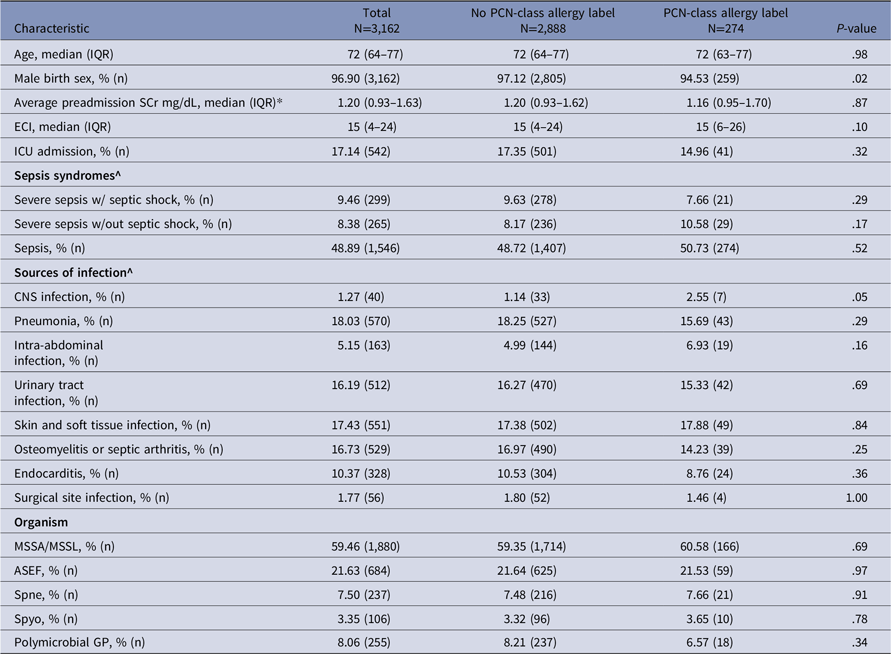
In this cohort of 3,162 Veterans with GP bacteremia, 8.66% had a PCN-class allergy. Other than a lower percentage of men (94.50% vs 97.12%) and a higher percentage of central nervous system infections (2.55% vs 1.14%) among PCN-allergic patients, the groups were evenly distributed in terms of age, ECI, and discharge ICD-10 codes for sepsis syndromes and potential sources of infection (Table 1).
Baseline patient characteristics by penicillin (PCN) class allergy label

Table 1. Long description
A table comparing baseline patient characteristics by penicillin class allergy label. The table has 3162 rows and 18 columns. The columns are labeled as Characteristic, Total N=3,162, No PCN-class allergy label N=2,888, PCN-class allergy label N=274, and P-value. The rows are labeled with various characteristics such as Age, Male birth sex, Average preadmission SCr mg/dL, ECI, ICU admission, Severe sepsis w/ septic shock, Severe sepsis w/o septic shock, Sepsis, CNS infection, Pneumonia, Intra-abdominal infection, Urinary tract infection, Skin and soft tissue infection, Osteomyelitis or septic arthritis, Endocarditis, Surgical site infection, MSSA/MSSSL, ASEF, Spne, Spyo, and Polymicrobial GP. Each row provides specific data points for each characteristic across the different columns.
Note. PCN, penicillin; IQR, interquartile range; SCr, serum creatinine; ECI, Elixhauser Comorbidity Index; ICU, intensive care unit; CNS, central nervous system; MSSA, methicillin-susceptible Staphylococcus aureus; MSSL, methicillin-susceptible Staphylococcus lugdunensis; ASEF, ampicillin-susceptible Enterococcus faecalis; Spne, Streptococcus pneumoniae; Spyo, Streptococcus pyogenes; GP, gram-positive.
* Only 2,522 patients included for this variable.
^Categories may overlap (ie, multiple categories may be present in a single patient).
In the ASEF bacteremia group, patients with a PCN-class allergy had more intra-abdominal infections (IAIs) (13.56% vs 6.72%), and in the Spyo bacteremia group, patients with a PCN-class allergy were less likely to be male (94.79% vs 70.00%). Otherwise, there were no significant associations between PCN allergy status and baseline characteristics within the organism groups (Tables S7–11).
Overall antibiotic use
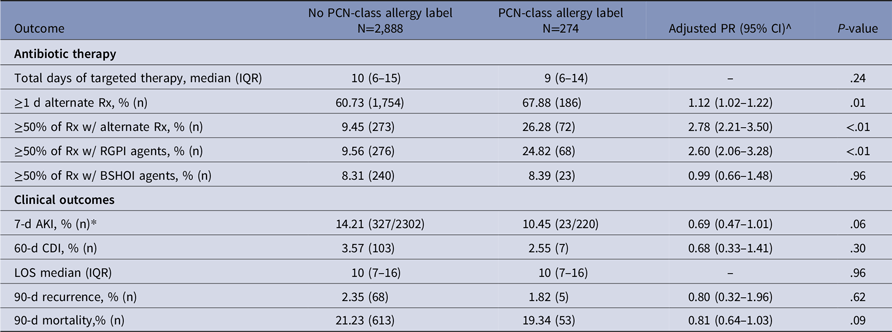
Compared to Veterans without a PCN-class allergy, a higher proportion of Veterans with a PCN-class allergy received ≥1 day of alternate antibiotics (67.88% vs 60.73%; PR 1.12, 95% CI 1.03–1.22). Additionally, more Veterans in the PCN-class allergy group completed ≥50% of their targeted therapy with alternate (26.80% vs 9.45%; PR 2.78, 95% CI 2.21–3.50) and RGPI agents (24.82% vs 9.56%%; PR 2.60, 95% CI 2.06–3.28). There was no difference in the total days of targeted therapy or the frequency of completing ≥50% of targeted therapy with BSHOI agents (Table 2).
Antibiotic use and clinical outcomes in overall cohort

Long description
A table comparing antibiotic use and clinical outcomes in a cohort with and without PCN-class allergy labels. The table has 11 rows and 5 columns. The columns are labeled Outcome, No PCN-class allergy label N=2,888, PCN-class allergy label N=274, Adjusted PR (95% CI)^, and P-value. The rows are grouped under Antibiotic therapy and Clinical outcomes. Antibiotic therapy includes Total days of targeted therapy, median (IQR), ≥1 d alternate Rx, % (n), ≥50% of Rx w/ alternate Rx, % (n), ≥50% of Rx w/ RGPI agents, % (n), and ≥50% of Rx w/ BSHOI agents, % (n). Clinical outcomes include 7-d AKI, % (n), 60-d CDI, % (n), LOS median (IQR), 90-d recurrence, % (n), and 90-d mortality, % (n).
Note. PCN, penicillin; PR, prevalence ratio; CI, confidence interval; IQR, interquartile range; RGPI, resistant gram-positive infection; BSHOI, broad-spectrum hospital-onset infection; AKI, acute kidney injury; CDI, Clostridioides difficile infection; LOS, length of stay.
*Only 2,522 patients included for this outcome.
^Categorical outcomes adjusted for age at admission and Elixhauser Comorbidity Index.
Organism-specific antibiotic use
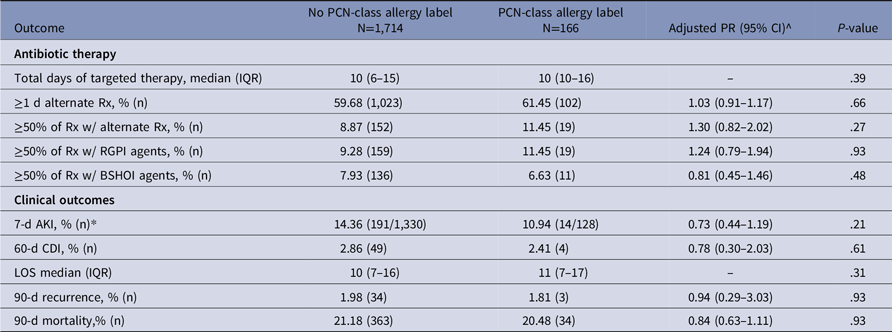
For patients with MSSA/MSSL bacteremia, total days of targeted therapy and antibiotic outcomes did not differ based on PCN allergy status (Table 3). Compared to patients without a PCN-class allergy, patients with a PCN-class allergy received less ASPs (4.82% vs 17.91%). Over 80% of patients received an ASP or cefazolin regardless of PCN allergy status (Table S7).
Antibiotic use and clinical outcomes for methicillin-susceptible Staphylococcus aureus and Staphylococcus lugdunensis bacteremia

Long description
A table comparing antibiotic use and clinical outcomes for patients with MSSA/MSSL bacteremia based on PCN allergy status. The table has 12 rows and 5 columns. Column headers are Outcome, No PCN-class allergy label N=1,714, PCN-class allergy label N=166, Adjusted PR (95% CI)^, and P-value. Row labels include Antibiotic therapy and Clinical outcomes. Antibiotic therapy rows include Total days of targeted therapy, median (IQR), ≥1 d alternate Rx, % (n), ≥50% of Rx w/ alternate Rx, % (n), ≥50% of Rx w/ RGPI agents, % (n), and ≥50% of Rx w/ BSHOI agents, % (n). Clinical outcomes rows include 7-d AKI, % (n), 60-d CDI, % (n), LOS median (IQR), 90-d recurrence, % (n), and 90-d mortality, % (n).
Note. PCN, penicillin; PR, prevalence ratio; CI, confidence interval; IQR, interquartile range; RGPI, resistant gram-positive infection; BSHOI, broad-spectrum hospital-onset infection; AKI, acute kidney injury; CDI, Clostridioides difficile infection; LOS, length of stay.
*Only 1,458 patients included for this outcome.
^Categorical outcomes adjusted for age at admission and Elixhauser Comorbidity Index.
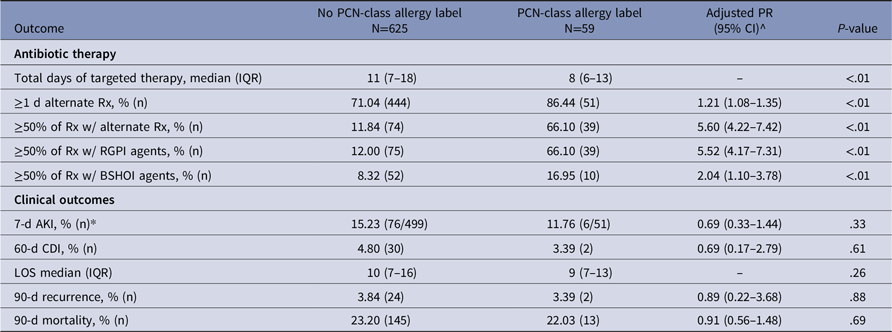
In the ASEF bacteremia group, PCN-class allergy was associated with a shorter duration of targeted therapy (8 [6–13] vs 11 [7–18] days) but higher rates of ≥1 day of alternate antibiotic use (86.44% vs 71.04%; PR 1.21, 95% CI 1.08–1.35) and higher rates of completing ≥50% of targeted therapy with alternate (66.10% vs 11.64%, PR 5.60, 95% CI 4.22–7.42), RGPI (66.10% vs 12.00, PR 5.52, 95% CI 4.17–7.31), and BSHOI agents (16.95% vs 8.32%, PR 2.04, 95% CI 1.10–3.78) (Table 4). Patients with a PCN-class allergy used less ampicillin +/− sulbactam (23.73% vs 83.68%) and piperacillin-tazobactam (TZP) (10.17% vs 27.04%), and more daptomycin (35.59 vs 10.40%). Regarding synergistic agents, PCN-class allergy was associated with lower ceftriaxone use (25.42% vs 43.68%) but had no association with aminoglycoside use (Table S8).
Antibiotic use and clinical outcomes for ampicillin-susceptible Enterococcus faecalis bacteremia

Long description
A table comparing antibiotic therapy and clinical outcomes between patients with and without PCN-class allergy labels. The table has 12 rows and 5 columns. The columns are labeled as Outcome, No PCN-class allergy label N=625, PCN-class allergy label N=59, Adjusted PR (95% CI), and P-value. The rows are grouped under Antibiotic therapy and Clinical outcomes. Under Antibiotic therapy, the outcomes include Total days of targeted therapy, median (IQR), ≥1 d alternate Rx, % (n), ≥50% of Rx w/ alternate Rx, % (n), ≥50% of Rx w/ RGPI agents, % (n), and ≥50% of Rx w/ BSHOI agents, % (n). Under Clinical outcomes, the outcomes include 7-d AKI, % (n), 60-d CDI, % (n), LOS median (IQR), 90-d recurrence, % (n), and 90-d mortality, % (n). The table presents the values for each outcome under the respective columns for patients with and without PCN-class allergy labels, along with the adjusted PR (95% CI) and P-value.
Note. PCN, penicillin; PR, prevalence ratio; CI, confidence interval; IQR, interquartile range; RGPI, resistant gram-positive infection; BSHOI, broad-spectrum hospital-onset infection; AKI, acute kidney injury; CDI, Clostridioides difficile infection; LOS, length of stay.
*Only 550 patients included for this outcome.
^Categorical outcomes adjusted for age at admission and Elixhauser Comorbidity Index.
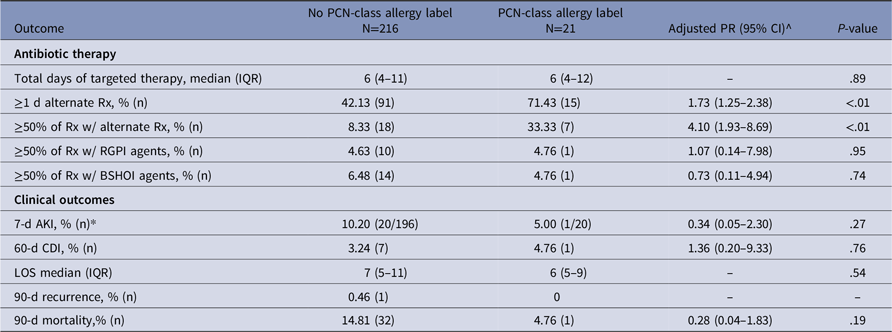
Veterans with Spne bacteremia and PCN-class allergy had higher rates of receiving ≥1 day (71.43% vs 42.13%; PR 1.73, 95% CI 1.25–2.38) and completing ≥50% of targeted therapy with an alternate antibiotic (33.33% vs 8.33%; PR 4.10, 95% CI 1.93–8.69) (Table 5). Patients with a PCN-class allergy had a higher frequency of fluoroquinolone use (38.10% vs 10.65%) (Table S9).
Antibiotic use and clinical outcomes for Streptococcus pneumoniae bacteremia

Long description
A table comparing antibiotic use and clinical outcomes for Streptococcus pneumoniae bacteremia. The table has 12 rows and 5 columns. The columns are labeled Outcome, No PCN-class allergy label N equals 216, PCN-class allergy label N equals 21, Adjusted PR (95 percent CI) caret, and P-value. The rows are grouped under Antibiotic therapy and Clinical outcomes. Antibiotic therapy includes Total days of targeted therapy, median (IQR), greater than or equal to 1 day alternate Rx, percent (n), greater than or equal to 50 percent of Rx with alternate Rx, percent (n), greater than or equal to 50 percent of Rx with RGPI agents, percent (n), and greater than or equal to 50 percent of Rx with BSHOI agents, percent (n). Clinical outcomes include 7-day AKI, percent (n) asterisk, 60-day CDI, percent (n), LOS median (IQR), 90-day recurrence, percent (n), and 90-day mortality, percent (n).
Note. PCN, penicillin; PR, prevalence ratio; CI, confidence interval; IQR, interquartile range; RGPI, resistant gram-positive infection; BSHOI, broad-spectrum hospital-onset infection; AKI, acute kidney injury; CDI, Clostridioides difficile infection; LOS, length of stay.
*Only 216 patients included for this outcome.
^Categorical outcomes adjusted for age at admission and Elixhauser Comorbidity Index.
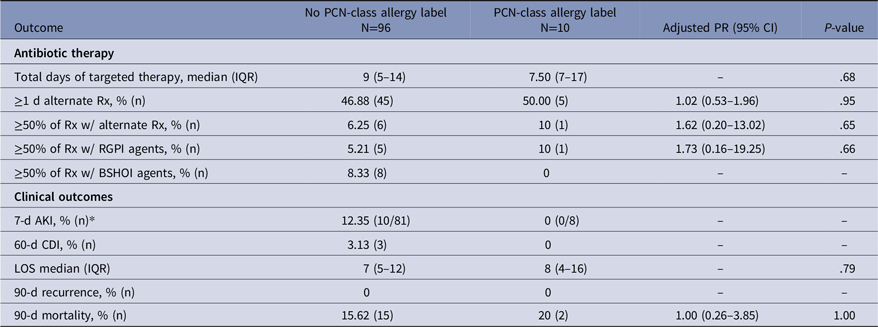
For patients with Spyo bacteremia, antibiotic outcomes and specific antibiotic use did not differ based on PCN allergy status (Tables 6 and S10).
Antibiotic use and clinical outcomes for Streptococcus pyogenes bacteremia

Long description
A table comparing antibiotic use and clinical outcomes for Streptococcus pyogenes bacteremia. The table has 12 rows and 5 columns. The columns are labeled as Outcome, No PCN-class allergy label N=96, PCN-class allergy label N=10, Adjusted PR (95% CI), and P-value. The rows are grouped under Antibiotic therapy and Clinical outcomes. Antibiotic therapy includes Total days of targeted therapy, median (IQR), ≥1 d alternate Rx, % (n), ≥50% of Rx w/ alternate Rx, % (n), ≥50% of Rx w/ RGPI agents, % (n), and ≥50% of Rx w/ BSHOI agents, % (n). Clinical outcomes include 7-d AKI, % (n), 60-d CDI, % (n), LOS median (IQR), 90-d recurrence, % (n), and 90-d mortality, % (n).
Note. PCN, penicillin; PR, prevalence ratio; CI, confidence interval; IQR, interquartile range; RGPI, resistant gram-positive infection; BSHOI, broad-spectrum hospital-onset infection; AKI, acute kidney injury; CDI, Clostridioides difficile infection; LOS, length of stay.
*Only 89 patients included for this outcome.
^Categorical outcomes adjusted for age at admission and Elixhauser Comorbidity Index.
In the PGPI group, patients with a PCN-class allergy had a shorter duration of targeted therapy (8 [4–13] vs 12 [7–18] days) but higher rates of completing ≥50% of targeted therapy with alternate (33.33% vs 9.70%; PR 3.27, 95% CI 1.60–6.70) and RGPI agents (44.44% vs 11.39%; PR 3.75, 95% CI 2.06–6.84) (Table S6). The PCN-class allergy label was associated with higher daptomycin use (27.78% vs 8.02%) (Table S11).
Clinical outcomes
No statistically significant association was observed between PCN allergy status and 7-day AKI, 60-day CDI, LOS, 90-day recurrence, or 90-day mortality in the overall cohort or within subgroups defined by isolated organism or infection severity (Tables 3–6, S6, S12–S13).
In the MSSA/MSSL bacteremia cohort, Veterans with non-severe infection and a PCN-class allergy had higher 90-day recurrence compared to patients without an allergy (4.05% vs 1.12%; PR 3.68, 95% CI 1.02–13.28) (Table S14). No significant associations were identified between PCN allergy status and clinical outcomes in the severe infection subgroup (Table S15). Receipt of ≥1 day of an ASP was associated with increased 7-day AKI (22.80% vs 12.50%; PR 1.83, 95% CI 1.40–2.40) (Table S16). After removing patients who received ≥1 day of an ASP, those with a PCN-class allergy had numerically higher 7-day AKI compared to patients without an allergy (30.77–75.00 vs 7.55–8.26%). Additionally, among Veterans with a PCN-class allergy, use of vancomycin instead of cefazolin for ≥50% of the targeted therapy phase was associated with higher 7-day AKI (75.00% vs 30.77%; PR 4.48, 95% CI 1.44–13.98) (Tables S17–18).
Discussion
In this analysis of 3,162 Veterans with GP bacteremia, a PCN-class allergy was associated with increased alternate and broad-spectrum antibiotic use in the overall cohort and in the ASEF, Spne, and PGPI groups. Additionally, among patients with MSSA/MSSL bacteremia, PCN-class allergy was associated with a higher 90-day recurrence rate in the non-severe infection subgroup. Lastly, patients with a PCN-class allergy who received vancomycin rather than cefazolin for ≥50% of their targeted therapy course had a higher rate of 7-day AKI.
Our findings align with those of prior studies highlighting opportunities to minimize the impact of the PCN allergy label on antibiotic selection and clinical outcomes. Reference Foo, Chater, Maley and van Hal17–Reference Turner, Moehring and Sarubbi21 For patients with MSSA/MSSL bacteremia, contrary to previous studies, we did not observe a statistically significant relationship between PCN allergy status and alternate or RGPI agent use. Reference Blumenthal, Shenoy and Huang20,Reference Turner, Moehring and Sarubbi21 In our study, 89% of PCN-allergic patients with MSSA/MSSL bacteremia were already receiving ≥1 day of an ASP or cefazolin, which is drastically higher than the previously reported 44–47%. Reference Blumenthal, Shenoy and Huang20,Reference Turner, Moehring and Sarubbi21 This may reflect increasing recognition of PCN allergy over-labeling and the minimal cross-reactivity between PCN-class agents and cefazolin. Reference Khan, Banerji and Blumenthal22 The widespread use of preferred agents among our patients may also account for discrepancies between our findings and those of prior studies regarding mortality, as increased mortality has been primarily associated with NBL agent use. Reference Kim, Kim and Kim18,Reference McDanel, Perencevich and Diekema19,Reference Turner, Moehring and Sarubbi21 We did observe a three-fold increase in 90-day recurrence among PCN-allergic patients with non-severe MSSA/MSSL bacteremia. Interestingly, these patients were less likely to receive ASPs, which are associated with decreased recurrence compared to vancomycin, Reference Chang, Peacock and Musher23 and more likely to receive fluoroquinolones, which have a lower barrier to resistance. Reference Hooper24 However, this association needs to be investigated further. Lastly, 7-day AKI did not differ based on PCN allergy status. Because ASP use is associated with AKI, Reference Prosty, Noutsios and Lee25 we hypothesized that the effect of vancomycin use on AKI among PCN-allergic patients was offset by the effect of ASP use among non-allergic patients. Reference Buis, van der Vaart and Mohan26 Our finding of a four-fold increase in 7-day AKI with predominant vancomycin instead of cefazolin use among PCN-allergic patients supports this hypothesis.
Our study also identified ASEF bacteremia as a potential focus for de-labeling efforts. The use of broad-spectrum agents among PCN-allergic patients with ASEF bacteremia likely stems from the limited selection of BL options for Enterococci Reference Baddour, Wilson, Bayer, Fowler, Tleyjeh and Rybak7–Reference Delgado, Ajmone Marsan and de Waha9 and the frequent isolation of Enterococci from polymicrobial infections. In our ASEF bacteremia cohort, PCN-allergic patients were more likely to receive NBL agents with Enterococcal activity (ie, significantly higher daptomycin use; numerically higher oxazolidinone and vancomycin use). Additionally, compared to their non-allergic counterparts, these patients were more likely to receive aztreonam and cefepime, and had numerically higher use of carbapenems. Because these agents are often used as part of combination regimens to treat polymicrobial infections in lieu of ampicillin-sulbactam (SAM) or TZP monotherapy, de-labeling efforts may reduce the total number of antibiotics used for these infections. Interestingly, SAM and TZP were used in 34% of PCN-allergic patients—if these patients tolerated these agents, they could be de-labeled without additional evaluation. One caveat is that IAIs were more common among PCN-allergic Veterans, which may partially account for observed differences in antibiotic use. However, the overall prevalence of IAIs within our ASEF bacteremia cohort was low (<14%) due to our selection criteria. Therefore, this disparity is unlikely to significantly impact our results. Our findings regarding clinical outcomes align with those of most prior studies, which focused on the impact of agent selection rather than the direct impact of the PCN allergy label on these outcomes. In most of these studies, NBL use was not associated with increased mortality. Reference Foo, Chater, Maley and van Hal17,Reference Petersiel, Bitterman and Manaa27–Reference Kang, Khan, Kim, Martin and Zuckerman30 It is important to note that these studies did not analyze long-term outcomes. Patients with ASEF bacteremia due to endovascular or osteoarticular infections associated with retained prosthetic material generally require prolonged or lifelong therapy, and amoxicillin is the best tolerated oral option for these scenarios. Reference Antonello, D’Oria and Cavallaro31,Reference Osmon, Berbari and Berendt32 Additionally, the use of NBLs for ASEF bacteremia may result in ecological complications, such as emergence of NBL-non-susceptible Enterococci. Reference Kang, Khan, Kim, Martin and Zuckerman30
Our findings also suggest that pneumonia may be another focus of de-labeling efforts as nearly 80% of the patients in our Spne bacteremia cohort had pneumonia. In an analysis of a national database of inpatients with pneumonia, 17% had a PCN-class allergy, which was associated with higher fluoroquinolone use. Reference Mancini, Wimmer and Schulz33 Similarly, in our Spne bacteremia cohort, 38% of PCN-allergic patients received a fluoroquinolone, compared to only 11% of non-allergic patients. Interestingly, despite significant differences in fluoroquinolone use, the 60-day CDI rate did not differ based on PCN allergy status. This is likely due to the low number of CDI cases in this cohort (n = 8).
The low numbers of Spyo and PGPI cases limit our ability to interpret their results. For Spyo bacteremia, ceftriaxone and vancomycin use did not differ based on PCN allergy status, likely contributing to similar outcomes. The significance of higher alternate and RGPI antibiotic use in the PGPI group is unclear. Possibly, the presence of a PCN-class allergy combined with isolation of multiple GP bacteria significantly restricted BL options. Alternatively, patients with PGPI may have developed multiple episodes of infection during their admission, which may have prompted multiple periods of empiric GP therapy.
The strengths of this study include the size and scope of our analysis. To our knowledge, this is the largest study to evaluate the impact of the PCN allergy label on antibiotic and clinical outcomes for MSSA/MSSL and ASEF bacteremia, and the first to detail its impact on these outcomes for Spne and Spyo bacteremia. The reliability of our findings is strengthened by the use of standardized allergy and antibiotic administration records, and by the inclusion of variables reflecting comorbidity burden, infection severity, and infection source. Limitations include the observational design and the use of ICD-10 codes, rather than chart review, to identify comorbidities and infectious diagnoses. Additionally, we have previously noted the inability of our national EHR to sync allergy records across different facilities and the inconsistent use of BCMA to document antibiotic administration in procedural locations. Reference Liu, Hoang-Nguyen, Ham, Eastment and Tulloch-Palomino34 To ensure that the impact of these limitations was minimal, the authors reviewed the allergy and antibiotic administration history of a random sample of patients and found no meaningful inconsistencies between the EHR and the captured data. Nonetheless, our definition of an active allergy may misclassify allergies modified during an admission as active or inactive. We also did not account for pre- and posthospitalization antibiotic use, which may have yielded additional differences. Lastly, AKI and CDI outcomes also relied on ICD-10 and laboratory data to capture events, which may not be as accurate as chart review.
In conclusion, our findings highlight ongoing opportunities for optimizing antibiotic selection and clinical outcomes through de-labeling efforts among PCN-allergic patients, particularly for those with MSSA/MSSL, ASEF, and Spne bacteremia.
Supplementary material
The supplementary material for this article can be found at https://doi.org/10.1017/ash.2026.10854.
Acknowledgments
LB designed the data collection query and analysis, validated data, and prepared the first draft of the manuscript. FL, HH, EH, ME, and LTP significantly assisted in the design of the data collection query and analysis and reviewed the manuscript. No financial support or relevant conflicts of interest to report for any of the authors. This material is the result of work supported with resources and the use of facilities at the VA Puget Sound Health Care System.
Ethical statement
This study was approved by the institutional review board of the Veterans Affairs (VA) Puget Sound Health Care System. The requirement for informed consent was waived.


 Open access

