Introduction
The first commercial planting of oil palm in Malaysia was established in Tennamaran Estate in 1917 (Keong Reference Keong2017). Since this establishment, Malaysia has been one of the leading countries in research and development of the oil palm industry. According to the statistics from MPOB (2020), the total area occupied for oil palm plantation in Malaysia as of December 2018 was 5.9 million hectares, with the largest (71.7%) category representing plantations and the remaining 28.3% consisting of smallholder areas. Malaysia is currently the second producer of oil palm in the world after Indonesia, accounting for 39% of the global production (Sawe Reference Sawe2018). In 2018, there were 19.52 million tonnes of crude palm oil production (CPO), 17.16 tonnes per hectares of fresh fruits bunch (FFB), 16.49 million hectares of oil palm export and 19.95% of oil extraction rates (OER) (Kushairi et al. Reference Kushairi, Ong-Abdullah and Nambiappan2019).
During the early cultivation period, oil palm was thought to be pollinated by the wind. Nevertheless, an investigation performed in 1977 by Dr Syed in Cameroon revealed that the pollination of oil palm was performed by insects. In Malaysia, Thrips hawaiiensis was identified in Peninsular Malaysia, but not in Borneo (Karim Reference Karim1982, Syed Reference Syed1979, Reference Syed1981b ). However, the presence of Thrips alone was not sufficient for the production of fresh fruit branches (FFB) in oil palm in Malaysia and hence, assisted pollination was utilized (Tay Reference Tay1981) prior to the introduction of Elaeidobius kamerunicus. It was observed that Elaeidobius spp. was the most efficient insect pollinator of the oil palm inflorescences in Cameroon (Syed Reference Syed1980, Reference Syed1981a ). The selection of E. kamerunicus for importation was based on selected traits that were compared with other Elaeidobius spp. Syed (Reference Syed1981a ) reported that E. kamerunicus was selected as it had a higher population on the male spikelet of oil palm during the dry and humid climates and higher pollen-carrying capacity. Additionally, it was also a specific host of the genus Elaeis with moderate searching ability.
The introduction of E. kamerunicus into Malaysia was established from Cameroon, where the natural pollinator was first identified and investigated (Syed Reference Syed1980). The E. kamerunicus was first released into Pamol Plantation, Kluang, Johor on 21 February 1981 after 7 months of quarantine by the Department of Agriculture (Syed et al. Reference Syed, Law and Corley1982). Following the establishment of E. kamerunicus in Peninsular Malaysia, the weevil was subsequently released into Pamol Estate in Sabah on 13 March 1981 (Syed et al. Reference Syed, Law and Corley1982). The introduction of this pollinator species reduced the costs for assisted pollination and increased the Fresh Fruit Bunch (FFB) weight in the estates (Syed et al. Reference Syed, Law and Corley1982). It was shown that the increase in fruit sets ranged from 15–30% in released areas in Peninsular Malaysia, while in Borneo, the increase in fruit sets was similar to the assisted pollination. Based on a survey conducted in 333 estates in Malaysia, an increase of 41–54% was reported in areas planted with the Dura and Tenera varieties (Wahid et al. Reference Wahid, Hassan and Hitam1983). These results indicated the significance of E. kamerunicus to the oil palm industry in Malaysia.
This review highlights the previous research studies that were performed to increase oil palm yield through pollination by Elaeidobius kamerunicus and further understand the potential and behaviour of these pollinating weevils. This article also emphasizes the potential factors that influence the population of weevils in oil palm areas and their significant effects on the oil palm industry.
Biology of Elaeidobius kamerunicus
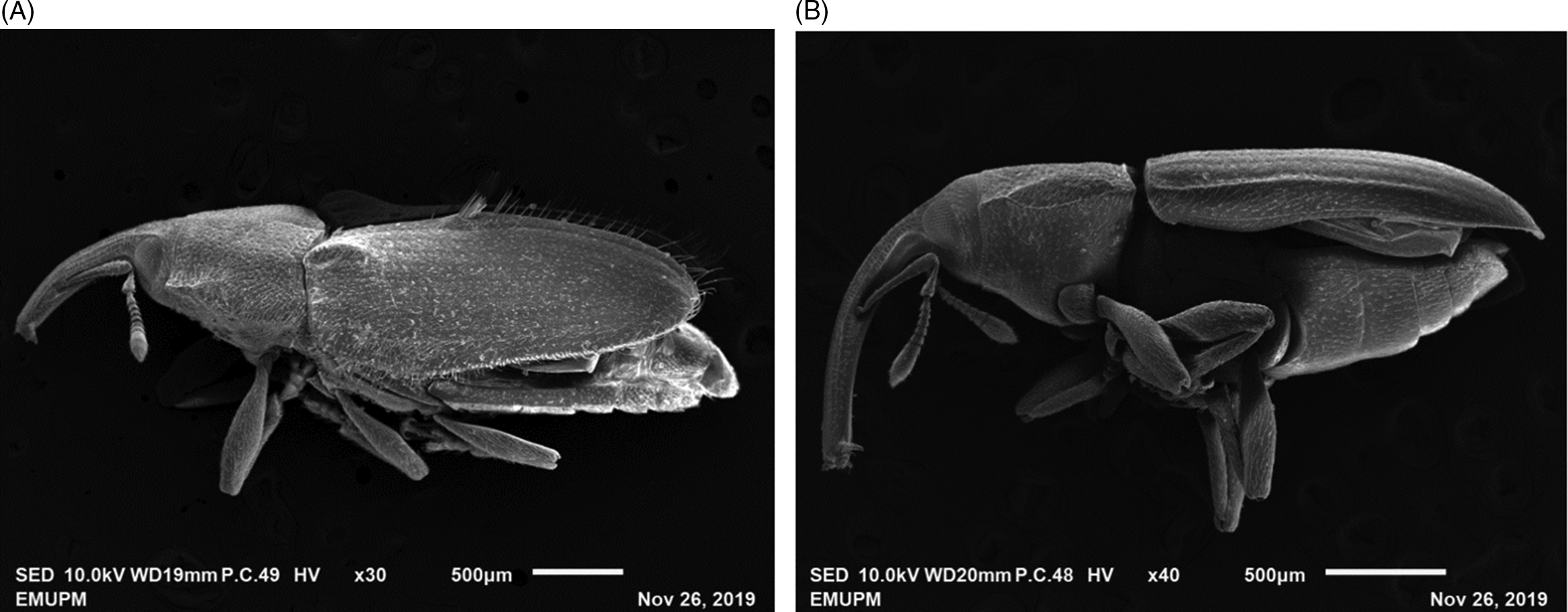
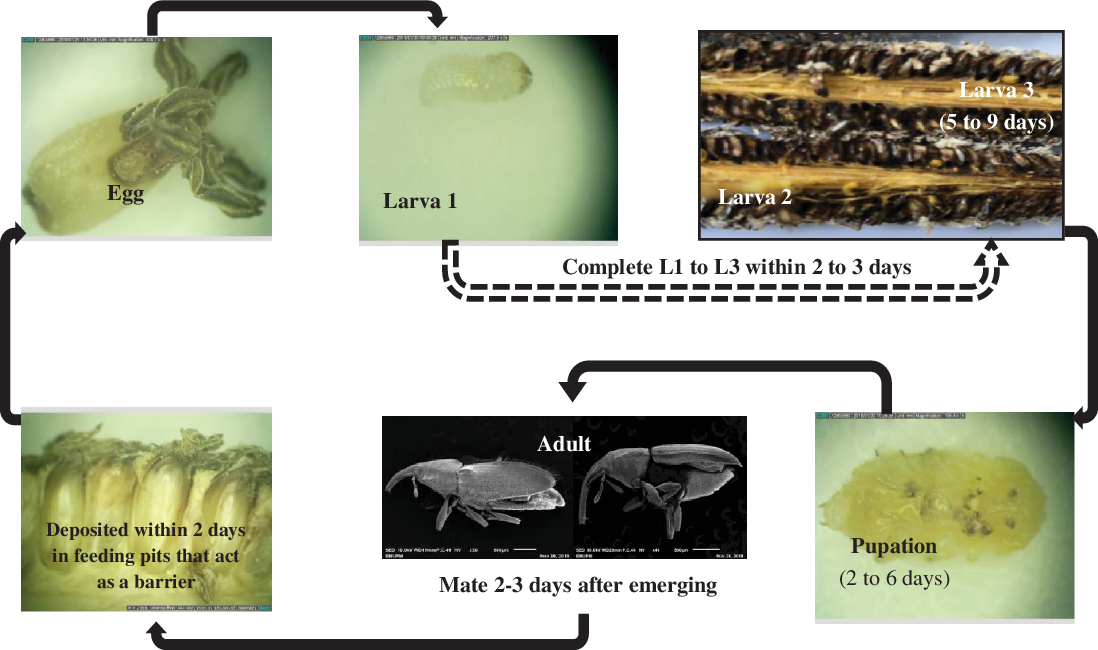
It was previously reported that the pollinator of oil palm in Cameroon belonged to the order Coleoptera and family Curculionidae (Syed Reference Syed1981a ). The Elaeidobius spp. identified in oil palm fields in Cameroon comprised six species, namely E. kamerunicus Fst, E. plagiatus Fhs, E. singularis Fst, E. bilineatus Fst, E. subvittatus Fst and E. spatulifer Mshl. (Syed et al. Reference Syed, Law and Corley1982). The weevil selected for introduction into the Malaysian oil palm industry was E. kamerunicus based on the traits that resulted in increasing oil palm yields (Syed Reference Syed1980). Elaeidobius spp. adults can be differentiated by the presence of a more extended proboscis for female weevils and the consumption of anther filaments of the anthesizing male inflorescences (AMI) of oil palm (Syed Reference Syed1981a ). Abd Latip et al. (Reference Abd Latip, Ghani and Hazmi2019) documented that morphometric characteristics of adult E. kamerunicus from Malaysia, Indonesia and Liberia were not differentiable and there are only distinct morphological differences between the adult sexes. The differentiation between the E. kamerunicus adult male and female is shown in Figure 1. The life cycle of E. kamerunicus was documented based on the research performed in Cameroon (Figure 2) by Syed (Reference Syed1981a ). It was shown that the adult Elaeidobius spp. laid eggs that were white, oval-shaped with an even surface and a delicate outer membrane by sticking it onto the feeding pits, whereby the dried tissue around the pit protected the eggs (Syed Reference Syed1981a ). In addition, Syed (Reference Syed1981a ) also documented that E. kamerunicus oviposited the eggs outside of the anther tube.
The differentiation between (A) male E. kamerunicus and (B) female E. kamerunicus using a scanning electron microscope.

The summarized life cycle of E. kamerunicus based on research performed in Cameroon (Syed Reference Syed1981a ). (Figure by Muhamad Haziq Hadif Zulkefli.)

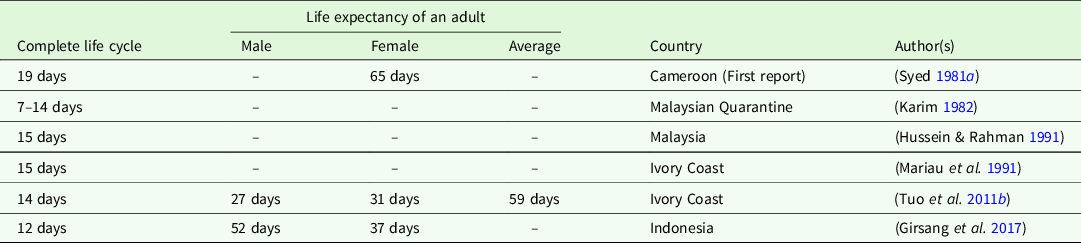
The three instar larval stages of E. kamerunicus grow in the anther of the male oil palm inflorescence. The first instar larva consumes the tissues around the laid pit outside of the anther tube, the second instar larva consumes the delicate tissues on the bottom part of the floret, and the third instar larva resumes feeding from the bottom to the top part of the floret. Subsequently, when the floret becomes desiccated, the larva will abandon it and transfer to a new floret by creating an opening at the lower part of the floret (Syed Reference Syed1981a ). Prior to the pupal stage, the larva will become idle for a day and detach the top floret for ease of emerging and the pupal stage will occur on the consumed floret (Syed Reference Syed1981a ). The life cycle of E. kamerunicus was observed and reported by several researchers and the published data are summarized in Table 1. The differences in the life cycles are related to the differences in the environmental factors of the research areas. The life cycle reported in the research studies conducted in Malaysia, Indonesia and Ivory Coast exhibited a similar trend compared with the earlier research conducted by Syed (Reference Syed1980).
Comparison of various studies conducted in several countries on the complete life cycle and life expectancy of E. kamerunicus

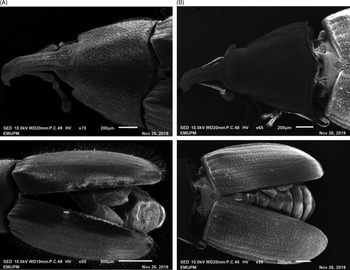
Pollen load (PL) was one of the factors considered during the introduction of E. kamerunicus into the Malaysian oil palm industry. Pollen load is defined as the number of pollen brought by the adult E. kamerunicus into the anthesizing female oil palm inflorescence (Dhileepan Reference Dhileepan1992). Pollen grains were observed to be scattered around the elytra, thorax and abdomen of the adult pollinator. Table 2 shows a similar trend in pollen load, with the highest pollen grains recorded by the male E. kamerunicus. Syed (Reference Syed1980) showed that E. kamerunicus was the most promising species as it carried the highest pollen grain compared with other Elaeidobius spp. In addition, Dhileepan (Reference Dhileepan1992) highlighted the function of the pleural setae in male adults to enhance the pollen transfer to the female oil palm inflorescence. The scanning electron microscope images in Figure 3 depict the setae on the male adult E. kamerunicus. Elaeidobius spp. was previously reported to transfer ∼70% of germinated pollen grains in Cameroon (Syed Reference Syed1979).
Summary of pollen load carried by E. kamerunicus

* Certain insects were observed to be carrying a high pollen load.
The differentiation between the dorsal setae and elytra of (A) male E. kamerunicus and (B) female E. kamerunicus using a scanning electron microscope.

Elaeidobius kamerunicus requires a single host, in which its life cycle evolves only on the anthesis of the male oil palm inflorescence and it does not consume the pollen grain of the inflorescence (Syed Reference Syed1981a ). Elaeidobius kamerunicus was identified as a specific host to the genus Elaeis (Elaeis guineensis and Elaeis oleifera), with a higher rate of reproduction and life expectancy observed on E. guineensis (Kang & Karim Reference Kang and Karim1982, Syed Reference Syed1981a ). Other hosts showed that Cocos nucifera provides a food source for the weevils to survive with a shorter life span, but they were unable to oviposit (Kang & Karim Reference Kang and Karim1982, Syed Reference Syed1981a ). A similar observation was reported for Veitchia sp. (Kang & Karim Reference Kang and Karim1982). The weevils were also seen to sample delicate tissues of other plants tested, but were unable to survive compared with the host plant (Kang & Karim Reference Kang and Karim1982, Syed Reference Syed1981a ).
The behaviour of E. kamerunicus
The behaviour of the weevils was observed and recorded based on the receptiveness of the oil palm inflorescence to understand its function as the pollinator. The male spikelet of the oil palm was receptive for 6 days (Syed Reference Syed1981a , Yue et al. Reference Yue, Yan, Bai, Chen, Lin and Jiao2015), whereby the receptiveness was based on the opening of the florets at the base of the male spikelet until the whole inflorescence had bloomed (Chiu et al. Reference Chiu, Khoo and Hussein1986, Syed Reference Syed1981a ) and the presence of yellowish pollen corresponding with the position of the weevils on the spikelet was observed (Chiu et al. Reference Chiu, Khoo and Hussein1986). The highest weevil cluster was reported on the male oil palm inflorescence on the 3rd day of anthesis as it reached the full anthesis (Dhileepan Reference Dhileepan1994, Syed Reference Syed1981a , Yue et al. Reference Yue, Yan, Bai, Chen, Lin and Jiao2015). The female weevil had the highest cluster during the full anthesis of the male inflorescence (Yue et al. Reference Yue, Yan, Bai, Chen, Lin and Jiao2015). Yue et al. (Reference Yue, Yan, Bai, Chen, Lin and Jiao2015) recorded the highest peak of weevil activity during the full anthesis period of the male inflorescence, which occurred early afternoon and late evening. In contrast, Auffray et al. (Reference Auffray, Frérot, Poveda, Louise and Beaudoin-Ollivier2017) reported a different result for the highest population at 10 am. This occurrence is expected due to the research being conducted at different localities, such as within the Asian region (Yue et al. Reference Yue, Yan, Bai, Chen, Lin and Jiao2015) and South America (Auffray et al. Reference Auffray, Frérot, Poveda, Louise and Beaudoin-Ollivier2017). In Cameroon, it was observed that E. kamerunicus had the highest activity on male oil palm inflorescence compared with other species (Syed Reference Syed1981a ).
It was shown that E. kamerunicus visited and subsequently, left the female spikelet of oil palm during the receptive period. Nevertheless, no feeding action was detected by the weevil (Syed Reference Syed1981a ). Syed (Reference Syed1981a ) concluded that this behaviour was due to the smell produced by the female spikelet that imitates the male spikelet, but without any food source offered to the weevil. It was shown that when a male spikelet was dipped with an extract of the anthesis from a female inflorescence, the repellent properties induced higher mortality and lower offspring compared with the male inflorescence spikelet alone (Syed Reference Syed1981a ). This action induced the pollinating mechanism by the weevils for oil palm fruit production. The female inflorescence anthesis is divided into three stages, namely pre-anthesis, anthesis and post-anthesis. The pre-anthesis female inflorescence is distinguished by the absence of tepal, with several inflorescences still bundled in the rachillae (Forero et al. Reference Forero, Hormaza and Romero2012). On the other hand, the anthesis female inflorescence is described by the presence of flower bud tepals with a yellowish colour and light white stigma lobe (Chiu et al. Reference Chiu, Khoo and Hussein1986, Forero et al. Reference Forero, Hormaza and Romero2012), as well as the presence of odour (Chiu et al. Reference Chiu, Khoo and Hussein1986). During the post-anthesis stage, the female inflorescence has pinkish-red flower bud tepals and a brown stigma lobe (Chiu et al. Reference Chiu, Khoo and Hussein1986, Forero et al. Reference Forero, Hormaza and Romero2012). The period recorded for the highest population of E. kamerunicus on the female inflorescence was during the 2nd day of reception (Yue et al. Reference Yue, Yan, Bai, Chen, Lin and Jiao2015). However, this result differed from Hala et al. (Reference Hala, Tuo, Akpesse, Koua and Tano2012), who reported that the highest population was observed during the 1st day of anthesis. Several researchers have documented the active period of E. kamerunicus on the female inflorescence of oil palm during anthesis, with results ranging from 10 am to 12 pm (Auffray et al. Reference Auffray, Frérot, Poveda, Louise and Beaudoin-Ollivier2017, Hala et al. Reference Hala, Tuo, Akpesse, Koua and Tano2012, Yue et al. Reference Yue, Yan, Bai, Chen, Lin and Jiao2015).
Estragole as the attractor of E. kamerunicus
Oil palm inflorescence emits an odour during anthesis to attract the pollinating weevils. This odour was identified as the source for inducing pollination activity by Elaeidobius spp. in oil palm. Lajis et al. (Reference Lajis, Hussein and Toia1985) conducted initial research to identify the volatile compounds produced by male and female inflorescences of oil palm during the receptive period. The inflorescences were found to produce a volatile oil compound (almost 100%) known as Estragole (1-methoxy-4-(2-propenyl) benzene) (Lajis et al. Reference Lajis, Hussein and Toia1985). The finding was later supported by the first identification of estragole in the pollen of oil palm (Opute Reference Opute1975). The volatile compound present in both male and female inflorescences that attracted E. kamerunicus to both inflorescences during anthesis was validated (Lajis et al. Reference Lajis, Hussein and Toia1985). Estragole was identified as a transparent liquid with a similar scent to anise in its refined form (Budavari Reference Budavari1989) and was shown to be naturally present in spices such as basil, anise, fennel, bay leaves, and tarragon (Bristol Reference Bristol2011). Estragole was reportedly used as flavouring due to its sweet anisic taste and in the perfume industry (Arctander Reference Arctander1960).
A study was conducted to identify estragole analogues that could be used for the attraction of E. kamerunicus. The chemical results showed that estragole attracted the weevils in all the replicates tested (Hussein et al. Reference Hussein, Lajis and Ali1991, Hussein & Lajis Reference Hussein and Lajis1992, Lajis et al. Reference Lajis, Hussein and Takahashi1992). In addition, another compound that showed a positive result was 4-methoxystyrene, with a lower percentage of attraction (Hussein et al. Reference Hussein, Lajis and Ali1991, Hussein & Lajis Reference Hussein and Lajis1992). The compound, 4-methoxystyrene, was identified as an odour that attracted the Erioscelis emarginata (Mannerheim) (Scarabaeidae, Dynastinae) beetle to pollinate the inflorescence of Philodendron selloum C. Koch (Araceae) (Dötterl et al. Reference Dötterl, David, Boland, Silberbauer-Gottsberger and Gottsberger2012). When the estragole extract derived from oil palm inflorescence was compared with the commercial estragole, the commercial estragole was more superior in attracting the weevil population in both the laboratory and field trials (Hussein et al. Reference Hussein, Lajis, Kinson and Teo1989, Lajis et al. Reference Lajis, Adelbert and Hussein1986). Hussein et al. (Reference Hussein, Lajis, Kinson and Teo1989) indicated that this observation was expected due to the presence of a compound that inhibited the estragole extract in the natural form. Additionally, Hussein et al. (Reference Hussein, Lajis, Kinson and Teo1989) reported that the male and female inflorescence estragole extract showed no difference in attracting the weevils. Similarly, the distance between the estragole odour and the weevil showed no effect (Hussein et al. Reference Hussein, Lajis, Kinson and Teo1989), and increasing the estragole dosage to greater than five microlitres negatively affected the attraction of weevils (Hussein et al. Reference Hussein, Lajis, Kinson and Teo1989, Hussein & Lajis Reference Hussein and Lajis1992).
It was previously shown that the emission rate of estragole odour greater than 1800 ml min-1 negatively affected the attraction of the weevils and the male adult E. kamerunicus was more attracted to the commercial estragole (Hussein & Lajis Reference Hussein and Lajis1992). Adult E. kamerunicus grown inside the laboratory was observed to be attracted to natural estragole than the wild adult as the laboratory-grown adult was not exposed to the natural estragole in the oil palm field (Hussein et al. Reference Hussein, Lajis, Kinson and Teo1989). Elaeis guineensis was observed to produce estragole as the main volatile compound in both the anthesizing inflorescences (Muhamad Fahmi et al. Reference Muhamad Fahmi, Ahmad Bukhary, Norma and Idris2016). Besides, soil types were also shown to influence the estragole production in oil palm inflorescence. For instance, it was reported that the highest estragole production was recorded in sandy soil (40%), followed by clay soil (30%) and peat soil (27%) (Muhamad Fahmi et al. Reference Muhamad Fahmi, Ahmad Bukhary, Norma and Idris2016). The estragole production had a potential effect on the poor pollination reported. Thus, more research is needed to confirm this hypothesis.
Natural enemies influencing the population of E. kamerunicus
Small rodents were identified as the most dangerous predator of immature weevils while it was still developing inside the male inflorescence. Liau (Reference Liau1984) was the first to report that this predator of oil palm had the potential to disrupt the weevil population. The rat species that preyed on immature weevils inside the post-anthesis male inflorescence (PAMI) were Rattus argentiventer, Rattus rattus diardii (Liau Reference Liau1984) and Rattus tiomanicus (Chiu et al. Reference Chiu, Khoo and Hussein1985, Liau Reference Liau1984). The rat species reported by Liau (Reference Liau1984) was observed to be immediately tearing apart the PAMI located in a laboratory to look for the larvae of E. kamerunicus. A similar observation was also recorded in the oil palm fields in previous studies (Chiu et al. Reference Chiu, Khoo and Hussein1985, Liau Reference Liau1984). However, there were no rats observed to be damaging the anthesis male inflorescence or the pre-anthesis male inflorescences (Chiu et al. Reference Chiu, Khoo and Hussein1985). The authors reported that R. tiomanicus was eating the immature weevils by gnawing the PAMI on the second day of the 7-day period. This observation was due to the rat consuming only the immature stage of weevils, in which the emergence of adult weevils was shown to occur on the eight day (Chiu et al. Reference Chiu, Khoo and Hussein1985). The effect on the growth development of laboratory-grown rats given a diet incorporated with E. kamerunicus larvae showed improved weight gain (Liau Reference Liau1984). This observation was due to the high protein nutrient provided by the larvae to the rat for growth (Chiu et al. Reference Chiu, Khoo and Hussein1985, Liau Reference Liau1984). The maximum damage observed for the PAMI was between 81–84% after 8 days post-anthesis with an immature weevil mortality of 82–85% (Chiu et al. Reference Chiu, Khoo and Hussein1985). The introduction of weevils into the oil palm plantation provided a greater food source in terms of larvae for the rat, although there is still insufficient research on rat predation affecting the fruit sets.
The phoretic association of nematodes with E. kamerunicus is also thought to contribute to the population of weevils. The early importation of E. kamerunicus into Malaysia resulted in a screening process of the weevils during quarantine to identify any potential threat to the Malaysian palm oil industry. It was shown that nematode infestation by Aphelenchoides bicaudatus and Cylindrocorpus sp. was present in the imported immature and adult weevils (Kang & Karim Reference Kang and Karim1982). The authors recorded a high nematode infestation of almost 50% on the rejected adult and immature weevils compared with the healthy samples. The high nematode infestations observed in the rejected weevil samples suggest that both the nematodes possessed a parasitic association with E. kamerunicus (Kang & Karim Reference Kang and Karim1982). Nevertheless, in the study by Poinar et al. (Reference Poinar, Jackson, Bell and Wahid2003), Cylindrocorpus sp. was shown to exhibit a phoretic association with E. kamerunicus. Additionally, Kang & Karim (Reference Kang and Karim1982) indicated that A. bicaudatus fed on fungi and was a suspected pathogen for several crops. The Cylindrocorpus species is a nematode that obtains nutrients from another living microorganism such as bacteria and decaying microorganisms of plants and animals (Goodey Reference Goodey1963). Similar results were obtained from oil palm plantations in Malaysia that showed the presence of phoretic nematodes under the elytra and cuticle of adult E. kamerunicus and on the surface of immature weevils (Jackson & Bell Reference Jackson and Bell2001). The phoretic nematode species from the oil palm field was identified as Cylindrocorpus inevectus sp. (Nematoda: Rhabditida: Cylindrocorporidae) (Poinar et al. Reference Poinar, Jackson, Bell and Wahid2003). The phoretic relationship was observed on moist florets of oil palm, in which the nictating dauers enabled them to locate the newly emerged adult weevils (Jackson & Bell Reference Jackson and Bell2001). The screening process during quarantine enabled the new weevil population of nematode-free culture to be established and mass bred before their release into the field in February 1981 (Kang & Karim Reference Kang and Karim1982). Cylindrocorpos inevectus sp. is difficult to remove due to the secretion of an oily substance that enables a greater grip on the surface, thus allowing this species to exploit the new habitat in Malaysian oil palm plantations (Poinar et al. Reference Poinar, Jackson, Bell and Wahid2003).
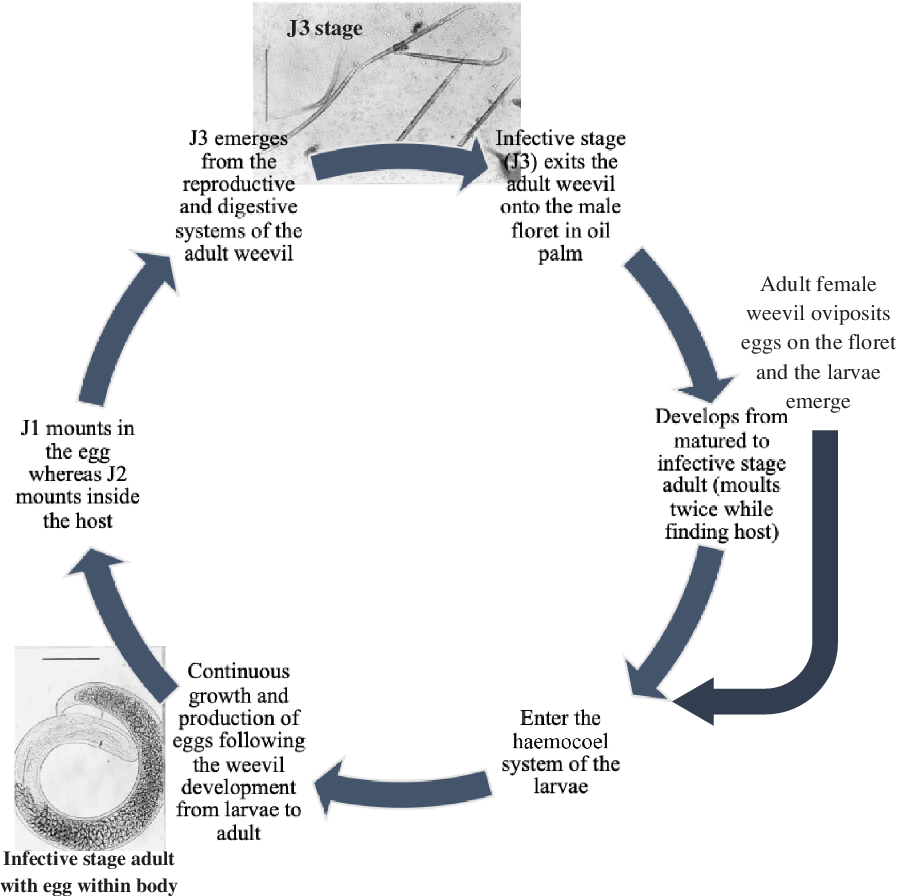
The major concern for the population of E. kamerunicus is the presence of parasitic nematodes. In a previous study by Jackson & Bell (Reference Jackson and Bell2001), the presence of parasitic nematodes was observed in all the life stages of E. kamerunicus except for the egg. The nematode identified was known as Elaeolenchus parthenonema sp. nov. (Family: Anandranematidae) and E. kamerunicus was identified as the host, although other Elaeidobius spp. may also be associated with this nematode as they share the same niche area of oil palm inflorescence (Poinar et al. Reference Poinar, Jackson, Bell and Wahid2002). The characteristics of this parasitic nematode were shown to be undergoing a pathogenesis development that lack a free-living cycle (Poinar et al. Reference Poinar, Jackson, Bell and Wahid2002). The complete life cycle based on the observation of the host E. kamerunicus is shown in Figure 3 (Poinar et al. Reference Poinar, Jackson, Bell and Wahid2002). Poinar et al. (Reference Poinar, Jackson, Bell and Wahid2002) reported that the infestation rate of the sampled weevils ranged from 40–70%, in which one weevil could be infested with 30 female adults as well as juveniles. The juvenile nematode infestation on the larvae weevils had a quadratic correlation with the moisture content of the spikelet, in which the decrease in infestation rates at maximum moisture levels enabled a higher survival of the weevils (Wahid et al. Reference Wahid, Kamarudin, Jackson and Masijan2003). Moist spikelets resulted in higher infestation rates of weevils by the nematode, but the correlation with the fecundity of the weevils was unable to be determined as other factors could contribute to the emergence of adult weevils (Wahid et al. Reference Wahid, Kamarudin, Jackson and Masijan2003). Data obtained between 2002 to 2003 for the infestation rate of parasitic nematodes in five locations in Peninsular Malaysia showed less than 15%, whereas one area had an infestation rate of 20% (Masijan et al. Reference Masijan, Kamarudin and Wahid2011). Masijan et al. (Reference Masijan, Kamarudin and Wahid2011) also noted that the nematode infestation remained below 8% 5 years later at the same location. A similar infestation rate was reported by Caudwell et al. (Reference Caudwell, Hunt, Reid, Mensah and Chinchilla2003), whereby the infestation rate of parasitic nematodes was 8.5% in Papua New Guinea, 6% in Sumatra, and 0.2% in Ghana. The effects of high infestation by the parasitic nematodes on weevils are the lower reproduction of eggs and smaller development of immature weevils, thus inhibiting the adult development (Poinar et al. Reference Poinar, Jackson, Bell and Wahid2002). It was also noted that the female adult E. kamerunicus became infertile, while the effect on the male E. kamerunicus was unknown. Hence, further research is needed to determine the potential factors that influence the growth and development of E. kamerunicus.
The ecosystem in the oil palm plantation involves the interaction between various bird species and other organisms including insect species (pest and beneficial species). A study performed on avian biodiversity in oil palm plantations and smallholder areas in Malaysia identified 72 bird species consisting of resident, migratory, wetland and forest-dependent species, in which plantations and smallholder areas had a similar total number of bird species richness (98 species) (Jambari et al. Reference Jambari, Azhar and Ibrahim2012). Additionally Azhar et al. (Reference Azhar, Puan and Aziz2015) reported 754 birds representing 36 understorey species of 21 families were recorded in oil palm smallholdings. However, in oil palm plantations in Indonesia, ∼29 bird species from 18 families were identified (Desmier de Chenon & Susanto Reference Desmier de Chenon and Susanto2006). It was also shown that ∼86–93% of birds were feeding on insects in the oil palm plantations in Indonesia (Desmier de Chenon & Susanto Reference Desmier de Chenon and Susanto2006). The main birds recorded in the oil palm plantations in Indonesia were from the family Sylviidae (Orthotomus ruficeps, Prinia atrogularis and Prinia flaviventris) that comprised 27–34% of the bird population and Pycnonotidae (Pycnonotus goiavier) that accounted for 24–28% (Desmier de Chenon & Susanto Reference Desmier de Chenon and Susanto2006). Studies were also performed (Amit et al. Reference Amit, Tuen, Haron, Harun and Kamarudin2015, Desmier de Chenon & Susanto Reference Desmier de Chenon and Susanto2006) to identify the birds that were a potential threat to the population of E. kamerunicus. Desmier de Chenon & Susanto (Reference Desmier de Chenon and Susanto2006) examined the middle alimentary canal of O. ruficeps and P. atrogularis birds and reported that ∼80% of the main constituents was derived from E. kamerunicus. Amit et al. (Reference Amit, Tuen, Haron, Harun and Kamarudin2015) also conducted a study on the most abundant bird species (P. goiavier) in Malaysia. It was reported that the alimentary canal of P. goiavier had the highest percentage of constituents from the family Curculionidae, with E. kamerunicus weevils accounting for ∼66% (Amit et al. Reference Amit, Tuen, Haron, Harun and Kamarudin2015). Several reports have claimed the presence of insectivorous birds for instance, Yellow-vented Bulbul and Oriental Magpie Robin are not just reducing the number of bagworms (Mathews et al. Reference Mathews, Yong and Nurulnahar2007), but also pollinator weevil (Amit et al. Reference Amit, Tuen, Haron, Harun and Kamarudin2015). Further research is still required to understand the impact of these birds on the weevil population and fruit sets of oil palm.
It was also observed that the adult weevils were preyed by the other insects associated with the oil palm fields. Liau (Reference Liau1984) reported that Cosmolestes picticeps (Family: Reduviidae), commonly known as the yellow assassin bug, preyed on the adult E. kamerunicus by the anthesizing male inflorescences. A similar observation was reported by Muhammad Luqman et al. (Reference Muhammad Luqman, Dzulhelmi, Idris and Izfa Riza2017), in which the yellow assassin bug pierced the abdomen of the weevil by sucking its fluid using its long proboscis. This insect was able to survive in the laboratory with a weevil-based diet for several weeks (Liau Reference Liau1984). Another potential insect that preyed on immature weevils was the ground-dwelling ants (Liau Reference Liau1984). The bigger soldier ants were observed to nibble the male inflorescence spikelet, thus allowing the worker ants to capture the immature weevils (Liau Reference Liau1984). Nevertheless, there were no specific species that were yet to be reported for ants. In another study, it was observed that the big-headed ant species, Pheidole megacephala (Family: Formicidae), was feeding on the adult weevils by using its strong and large mandible to tear apart the weevils (Muhammad Luqman et al. Reference Muhammad Luqman, Dzulhelmi, Idris and Izfa Riza2017). In oil palm plantations in India, it was observed that the earwig or formally known as Chelisoches moris (Family: Forficulidae) took shelter in the male spikelet of oil palm (Ponnamma et al. Reference Ponnamma, Sajeebkhan and Vijayan2006). Additionally, Ponnamma et al. (Reference Ponnamma, Sajeebkhan and Vijayan2006) reported that the earwig reared inside the laboratory setting preyed on the immature stage E. kamerunicus. Nevertheless, all the insects identified to be preying on the weevils have not been fully correlated to the weevil population and oil palm fruit sets.
The bacterial activity association with E. kamerunicus was reported only once through a study conducted by Hussein et al. (Reference Hussein, Norhazni and Ali1995). In this study, seven species from the Enterobacteriaceae family was isolated and identified as gram-negative bacteria (Hussein et al. Reference Hussein, Norhazni and Ali1995). The main species identified was Serratia marcascens that was present inside the digestive system of E. kamerunicus and Enterobacter cloacae that was isolated from the haemocoel and digestive systems of E. kamerunicus (Hussein et al. Reference Hussein, Norhazni and Ali1995). Hussein et al. (Reference Hussein, Norhazni and Ali1995) also identified the presence of both these gram-negative bacteria on the male inflorescence of oil palm. Serratia marcescens was reported to inhabit water, soil, food material (Steinhaus Reference Steinhaus1959), and plant material (Merlino Reference Merlino1924). Steinhaus (Reference Steinhaus1959) also reported that S. marcascens was able to transmit diseases in insects such as Bombyx and Galleria. The major characterisation feature of this bacteria was the production of red spots (Mahlen Reference Mahlen2011, Merlino Reference Merlino1924, Steinhaus Reference Steinhaus1959). Enterobacter cloacae was observed to inhabit all areas including wet environments such as water sources, land, and food sources (Davin-Regli & Pagès Reference Davin-Regli and Pagès2015, Mezzatesta et al. Reference Mezzatesta, Gona and Stefani2012). This gram-negative bacteria also acted as a pathogen for various insects and plants (Davin-Regli & Pagès Reference Davin-Regli and Pagès2015, Mezzatesta et al. Reference Mezzatesta, Gona and Stefani2012). However, the pathogenicity test conducted using both bacterial isolates showed no difference between the infected and control treatments on the larvae of E. kamerunicus (Hussein et al. Reference Hussein, Norhazni and Ali1995). To date, no studies have been performed to determine if the bacteria is a major threat to the population of E. kamerunicus.
Another potential threat to the population of E. kamerunicus was the spider species (Animalia: Araneidae). Several species of spiders (Nephila maculate, Gasteracantha hasselti, G. mammosa, Leucauge fastigiate, Cyrtophora moluccensis and Argiope catenulate) were observed to trap high populations of weevils on the web, particularly at the anthesis male inflorescence (Liau Reference Liau1984). Similarly, Muhammad Luqman et al. (Reference Muhammad Luqman, Dzulhelmi, Idris and Izfa Riza2017) reported that Argiope sp. captured adult weevils using a web constructed with a common fern growing in the oil palm plantation. A study in the oil palm fields in India showed that more spiders were recorded on the male inflorescence during the receptive period (Ponnamma et al. Reference Ponnamma, Sajeebkhan and Vijayan2006). It was reported that newly emerged adult E. kamerunicus were trapped on the spider web when approaching the receptive period of the inflorescence (Ponnamma et al. Reference Ponnamma, Sajeebkhan and Vijayan2006). Based on the field observations in India, the average construction of spider web per oil palm was 14 webs with the average capture of weevils per web of seven (Ponnamma et al. Reference Ponnamma, Sajeebkhan and Vijayan2006). Ponnamma et al. (Reference Ponnamma, Sajeebkhan and Vijayan2006) also mentioned that an average of one weevil was trapped in the spider web every 10 minutes. During the field observation in India, only one reptilian species was observed to be feeding on the adult weevils (Ponnamma et al. Reference Ponnamma, Sajeebkhan and Vijayan2006). The lizard, Calotes versicolor (garden lizard), was observed to be capturing the weevils at the anthesizing male inflorescence of oil palm (Ponnamma et al. Reference Ponnamma, Sajeebkhan and Vijayan2006). The association between the predator, nematode and bacteria on the weevil population needs to be further investigated as it can cause potential adverse effects to the bunch production.
Interaction with local insects
The whole life cycle of Elaeidobius kamerunicus takes place on the male inflorescence of oil palm. Interaction with the insect community on the male inflorescence needs to be justified as it will lead to disruption of the pollinator population due to competition. Bunch moth, Tirathaba sp. early instar stage favours the post anthesis male inflorescence of oil palm as its preferable breeding site (Mohamad et al. Reference Mohamad, Masijan and Moslim2017). According to Lim (Reference Lim2012) the pest is the larvae stage damaging both inflorescence of oil palm and the younger bunches fruitlet. The current practice of using synthetic pesticide especially on the anthesizing male inflorescence of oil palm will inevitably kill the E. kamerunicus population. Thus, the coexistence of the pest on the inflorescence needs to be handled carefully without disruption of the weevil population.
In a recent study conducted in Indonesia, Rizali et al. (Reference Rizali, Rahardjo and Karindah2019) documented four main insect species visited both the inflorescence of oil palm, namely E. kamerunicus (Coleoptera), Scaptodrosophila sp. (Diptera), Pheidole sp. (Hymenoptera) and Gelechiidae sp. (Lepidoptera). The Scaptodrosophila sp. favour the male inflorescence of oil palm suggesting the potential for food sources and breeding sites for the flies. It was also reported abundance relationship between the main weevil pollinator and the drosophilid flies (Rizali et al. Reference Rizali, Rahardjo and Karindah2019). The similar niche area between the weevil pollinator and the drosophilid flies requires further investigation to determine if these will face competition.
Effect of pesticides used on the population of E. kamerunicus
Pesticide use in oil palm fields is a common practice that protects the plants against pest outbreaks such as bagworms, bunch moths, rhinoceros beetles, nettle caterpillars and termites as well as providing better control of disease with fast effects. However, there are major concerns regarding the application of pesticides as they can harm the population and effectiveness of pollinating weevils (E. kamerunicus) on the fruit bunch production. The application of biological pesticides with the active ingredient, Bacillus thuringiensis (Bt), is a current practice in oil palm fields against bagworms, nettle caterpillars and bunch moths (Siti Ramlah et al. Reference Siti Ramlah, Norman, Mohd Basri and Kushairi2018). The effect of wettable powder and protein concentrates of Bt product on the pollinating weevil E. kamerunicus showed that the mortality rate of the weevils was lower, ranging from 26–33%, compared with chemical pesticides (Mohd Najib et al. Reference Mohd Najib, Siti Ramlah, Mohd Mazmira and Mohd Basri2009). The Bt biopesticide was found to be harmless to the weevil even at a higher concentration (100-fold) with no significant difference observed compared with the control treatment (Mohd Najib et al. Reference Mohd Najib, Siti Ramlah, Mohd Mazmira and Mohd Basri2009). In a separate study by Mohd Najib et al. (Reference Mohd Najib, Siti Ramlah, Mohamed Mazmira and Mohd Basri2012), a similar finding using another Bt product in various forms such as flowable concentrate, formulated solution, and emulsified concentrate resulted in a weevil mortality of less than 20%, even with a 100-fold dosage (Mohd Najib et al. Reference Mohd Najib, Siti Ramlah, Mohamed Mazmira and Mohd Basri2012). Yusdayati & Hamid (Reference Yusdayati and Hamid2015) reported that the application of Bt biopesticides showed no difference in the emergence of adult weevils compared with treatments without pesticide application. Field application using Bt biopesticides and rotation with Rynaxypyr pesticide showed that the E. kamerunicus population based on the anthesizing male inflorescence (AMI) remained constant (Prasetyo et al. Reference Prasetyo, Lopez, Eldridge, Zommick and Susanto2018). This finding proves that the Bt product (a biological pesticide) is harmless to the beneficial insects of oil palm and it is targeted specifically to the insects from the order Lepidopterans (Mohd Najib et al. Reference Mohd Najib, Siti Ramlah, Mohd Mazmira and Mohd Basri2009, Reference Mohd Najib, Siti Ramlah, Mohamed Mazmira and Mohd Basri2012). On the other hand, Metarhizium anisopliae was developed as an entomopathogenic fungus for biopesticide control of Oryctes rhinoceros (rhinoceros beetle) in the oil palm fields (Ramle et al. Reference Ramle, Mohd Basri, Norman, Siti Ramlah and Noor Hisham2006, Siti Ramlah et al. Reference Siti Ramlah, Norman, Mohd Basri and Kushairi2018). The entomopathogenic fungus showed no effect on the emergence of adult E. kamerunicus and no inoculation of the fungus on the weevils was observed when directly applied to the PAMI (Ramle et al. Reference Ramle, Mohd Basri, Norman and Siti Ramlah1999). Kalidas et al. (Reference Kalidas, Rajasekhar and Lalitha2008) reported that the Metarhizium anisopliae and Beauveria bassiana fungus recorded a moderate appearance of E. kamerunicus for ∼25 days. This entomopathogenic fungus caused a lower average mortality rate of weevils between 17–18% compared with the synthetic chemical.
Chemical pesticide application in the field is a major concern as it will be detrimental to the E. kamerunicus population and eventually, the production of fruit bunches. In vitro tests using Cypermethrin on E. kamerunicus showed a 100% weevil mortality rate after one day of treatment (Mohd Najib et al. Reference Mohd Najib, Siti Ramlah, Mohd Mazmira and Mohd Basri2009, Reference Mohd Najib, Siti Ramlah, Mohamed Mazmira and Mohd Basri2012; Yusdayati & Hamid Reference Yusdayati and Hamid2015). This observation indicates that Cypermethrin is harmful and has a greater effect on the population of E. kamerunicus (Mohd Najib et al. Reference Mohd Najib, Siti Ramlah, Mohd Mazmira and Mohd Basri2009, Reference Mohd Najib, Siti Ramlah, Mohamed Mazmira and Mohd Basri2012). The application of another broad-spectrum pesticide, Chlorantraniliprole, also caused a 100% mortality rate of E. kamerunicus after three days of treatment (Yusdayati & Hamid Reference Yusdayati and Hamid2015). The application of Cypermethrin caused a zero emergence of adult weevils, whereas Chlorantraniliprole only accumulated an average emergence of 15 adult weevils per spikelet (Yusdayati & Hamid Reference Yusdayati and Hamid2015). This broad-spectrum chemical pesticide was considered harmful to non-target organisms including the beneficial insects of oil palm (Mohd Najib et al. Reference Mohd Najib, Siti Ramlah, Mohd Mazmira and Mohd Basri2009, Reference Mohd Najib, Siti Ramlah, Mohamed Mazmira and Mohd Basri2012). Prasetyo et al. (Reference Prasetyo, Lopez, Eldridge, Zommick and Susanto2018) conducted a field assessment in Indonesia using Fipronil and showed a reduced population of E. kamerunicus on AMI that subsequently, returned to normal after the treatment ended. In contrast, the observation on the anthesizing female inflorescences showed reduced visitation by E. kamerunicus for 5 months (Prasetyo et al. Reference Prasetyo, Lopez, Eldridge, Zommick and Susanto2018). Therefore, Fipronil is thought to be less detrimental than Cypermethrin. In a separate field trial in Ivory Coast, the thiocyclam hydrogen oxalate chemical reduced the insect population of both the oil palm inflorescences including several Elaeidobius spp. (Tuo et al. Reference Tuo, Akpesse, Hala and Koua2011a ). The conventional chemical insecticides, monocrotophos and quinalphos, were also shown to be deadly to the weevils with an average mortality rate of 65–82% compared with synthetic pyrethroids (Kalidas et al. Reference Kalidas, Rajasekhar and Lalitha2008). Hence, it is evident that the chemical insecticide application can be detrimental to the population of E. kamerunicus and beneficial insects. It is therefore proposed that the Integrated Pest Management (IPM) should take the first step in managing the pest population in oil palm fields and chemical insecticides should only be utilized as the last resort when a major outbreak occurs. The continuous usage of chemical pesticides should also be monitored to ensure that pollination by E. kamerunicus is not affected.
Effect of climate on the population of E. kamerunicus
The population of E. kamerunicus can be influenced by several climate factors. In a study by Nurul Fatihah et al. (Reference Nurul Fatihah, Muhamad Fahmi and Luqman2018), the number of weevil population per ha had a significant intermediate positive correlation with the rainfall distribution. This correlation was observed in both planting materials (oil palm clones and dura (D) × pisifera (P) (D×P) oil palm). A similar result was reported by Nurul Fatihah et al. (Reference Nurul Fatihah, Muhamad Fahmi and Luqman2019), in which data from 4 and 6-year old oil palms revealed a significant intermediate correlation between the number of weevils per ha and the rainfall tabulation per month. Dhileepan (Reference Dhileepan1994) reported a similar finding in India, whereby the population of weevils positively correlated with the rainfall, number of rainy days and humidity. Positive interactions between the population abundance of weevils and the rainfall distribution on the planting materials (Nurul Fatihah et al. Reference Nurul Fatihah, Muhamad Fahmi and Luqman2018) and the age of oil palm (Nurul Fatihah et al. Reference Nurul Fatihah, Muhamad Fahmi and Luqman2019) were also reported. When a higher rainfall distribution was recorded, the population of E. kamerunicus was shown to increase linearly. In a separate study by Cik Mohd Rizuan et al. (Reference Cik Mohd Rizuan, Noor Hisham and Samsudin2013), an optimal climate that was observed to increase the population of the weevils in the field was a dry climate with rainfall less than 120 mm per month. Consistent with this finding, a pioneer research reported that the population of E. kamerunicus was not affected by the rainy climate, although Elaeidobius spp. favoured a dry climate (Syed Reference Syed1981a ). These observations indicate that other factors could have interacted with the climate factor to yield optimal conditions that increased the population of E. kamerunicus.
The influence of oil palm male inflorescences on the population of E. kamerunicus
The male inflorescence represents a food source and breeding site for E. kamerunicus. The population of weevils was shown to be influenced by the male inflorescence. The anthesizing male inflorescence of oil palm per ha had a significant intermediate to strong positive correlation with the number of weevils per ha on planting material clones and D×P (Nurul Fatihah et al. Reference Nurul Fatihah, Muhamad Fahmi and Luqman2018). A similar observation on 4 and 6-year old oil palms was reported by Nurul Fatihah et al. (Reference Nurul Fatihah, Muhamad Fahmi and Luqman2019), in which a significant and strong positive correlation between AMI and the number of E. kamerunicus per ha was observed. It was also reported that the increase in AMI per ha linearly increased the population of E. kamerunicus per ha (Nurul Fatihah et al. Reference Nurul Fatihah, Muhamad Fahmi and Luqman2018, Reference Nurul Fatihah, Muhamad Fahmi and Luqman2019). Dhileepan (Reference Dhileepan1994) also showed that the male inflorescence had a significant effect on the weevil population.
It was also shown that the production of male and female inflorescences was influenced by the changes in the climate. For instance, Gawankar et al. (Reference Gawankar, Devmore, Jamadagni and Joshi2004) reported that the number of female inflorescences was higher during the dry season compared with the male inflorescence. The male inflorescence favoured a humid climate for production. Despite the dry season, it was shown that the production of FFB could only be evaluated after 6 months of pollination. Nevertheless, it was also observed that there were less viable pollen grain in the oil palm male inflorescence during the rainy season. Dhileepan (Reference Dhileepan1994) reported that during the raining season, most of the viable pollen was removed either by the insect or the male inflorescence, thus causing a decrease in pollination.
The current development of oil palm planting material aims to increase the production of fruits bunches and thus, correspondingly increase the female inflorescence production (Rival Reference Rival2017). In the report by Kamarudin et al. (Reference Kamarudin, Moslim, Mohamad and Sulaiman2018) high sex ratio oil palm between 60 to 80% (higher female inflorescences) reduced the pollinator force between 80 to 98% lesser than lower sex ratio oil palm despite satisfactory fruit set recorded. This raises a new concern for the pollination efficiency as the reduction of the male inflorescence of oil palm will eventually reduce the population of E. kamerunicus in the field. Lower male inflorescence per hectare reduced the population of the E. kamerunicus (Kamarudin et al. Reference Kamarudin, Moslim, Mohamad and Sulaiman2018) as the male inflorescence is the breeding site and food sources for the weevil (Syed Reference Syed1981a , Syed et al Reference Syed, Law and Corley1982). Thus, research on the minimum level of male inflorescences per hectare for sufficient fruit bunches is still warranted.
Mitigating populations of E. kamerunicus
The population of E. kamerunicus in oil palm fields plays a crucial role in the production of high fruit sets. Interestingly, there are still reports of areas with low fruit sets, despite the introduction of E. kamerunicus in the early 1980s. Poor pollination activity resulted in the production of low fruit sets, thereby reducing the yield and fruit bunch development (Harun & Noor Reference Harun and Noor2002). The relationship observed between the high fruit set production and the high population of E. kamerunicus led to the introduction of the hatch and carry technique developed to increase the population of E. kamerunicus in the field (Prasetyo et al. Reference Prasetyo, Purba and Susanto2014). The method developed by Prasetyo et al. (Reference Prasetyo, Purba and Susanto2014) is described briefly in Figure 5.
Summary of the complete life cycle of Elaeolenchus parthenonema on the host, E. kamerunicus (Jackson & Bell Reference Jackson and Bell2001, Poinar et al. Reference Poinar, Jackson, Bell and Wahid2002). (Source: Poinar et al. Reference Poinar, Jackson, Bell and Wahid2002.)

Summarized steps for the hatch and carry technique developed in the oil palm field (Prasetyo et al. Reference Prasetyo, Purba and Susanto2014).

The introduction of the hatch and carry technique in Indonesian oil palm fields showed a positive impact on the fruit set (Prasetyo et al. Reference Prasetyo, Purba and Susanto2014). The application of this method resulted in a significant increase (more than 20-fold) in the number of E. kamerunicus adult weevils observed on the male spikelet during anthesis after 2 months of application and it increased at a slow pace for the following 4 months of observation (Prasetyo et al. Reference Prasetyo, Purba and Susanto2014). The slow increase was induced due to the limited production of male inflorescences in the field to complete the life cycle (Prasetyo et al. Reference Prasetyo, Purba and Susanto2014). The increasing weevil population was due to the continuous release of weevils through the hatch and carry technique (Prasetyo et al. Reference Prasetyo, Purba and Susanto2014). This enabled the researchers to understand the significant effect of the male inflorescence on the weevil population. A similar result was reported by Rao & Law (Reference Rao and Law1998), in which the decreasing weevil population correlated with the decreasing number of male inflorescences. Thus, the relationship between the male inflorescence and the weevil population needs to be further investigated to determine the minimum pollination factor.
Prasetyo et al. (Reference Prasetyo, Purba and Susanto2014) reported that the hatch and carry technique resulted in an 18-fold increase in the number of visiting weevils to the receptive female inflorescence after two months of application. It was reported that the technique had increased the fruit set by 15–21% after application (Prasetyo et al. Reference Prasetyo, Purba and Susanto2014). There was no difference observed between the fruit sets located at 10–200 m from the released box and the control (assisted pollination) (Prasetyo et al. Reference Prasetyo, Purba and Susanto2014). A positive relationship between the fruit set and bunch weight was also observed (Harun & Noor Reference Harun and Noor2002, Prasetyo et al. Reference Prasetyo, Purba and Susanto2014). It was shown that the further the distance of the palm tree from the released box, the lower the bunch weight (Prasetyo et al. Reference Prasetyo, Purba and Susanto2014). Thus, Prasetyo et al. (Reference Prasetyo, Purba and Susanto2014) concluded that the effective distance between each released box was 400 m or approximately one to two boxes for every 25 ha. The application of the hatch and carry technique in the field provided effective population management of E. kamerunicus to increase the production of fruit bunches.
Conclusion
Oil palm is a major commodity in Malaysia due to the high global demand from various sectors. However, the efficiency of E. kamerunicus plays a crucial role in obtaining a greater yield. Some of the concerns regarding the production of fruit bunches is the population factor of the pollinator weevils. There is a lack of research on the behaviour of the weevils in the Malaysian climate, especially with different soil properties in the oil palm fields. Additionally, the future utilization of clones in the field is also concerning as there are no reports regarding the efficiency of the weevil inside the new planting materials. It is widely known that the weevil life cycle evolves on the male inflorescence of oil palm and the current practice to produce a larger and higher number of fruit bunches solely from the female inflorescence can affect the production of breeding sites for the weevils. The sex ratio of the oil palm inflorescence should be investigated to determine their effects on the population of the pollinator. Besides, there have been no reports addressing the natural predators of the weevils, apart from some observations that were previously mentioned. This factor should be investigated to understand its impact on E. kamerunicus. It is vital for these concerns to be addressed based on the Malaysian oil palm climate and thus, contribute to a greater understanding of the pollinator community in oil palm plantations.
Acknowledgements
The project was funded by the Universiti Putra Malaysia under the Putra Grant (GP-IPM/2020/9687000).