Introduction
The olive black scale, Saissetia oleae (Olivier) (Hemiptera: Coccidae), is a significant pest affecting olive and citrus trees worldwide. It is reported to feed on around 150 species of trees, shrubs, and herbaceous plants across various families, including Nerium oleander L., Amygdalus spp., pepper tree (Schinus molle L.), and Solanum spp. (Abd-Rabou, Reference Abd-Rabou2005; Ouguas and Chemseddine, Reference Ouguas and Chemseddine2011; Tzanakakis, Reference Tzanakakis2003). Saissetia oleae is considered a major pest of olive trees, causing considerable economic damage worldwide (Haniotakis, Reference Haniotakis2005). It is thought to have originated in South Africa (De Lotto, Reference De Lotto1976) and has since spread to tropical and some subtropical regions (Hill, Reference Hill1983). In Morocco, the presence of S. oleae on olive trees has been documented since the 1970s (Elhormiti and Laraichi, Reference Elhormiti and Laraichi1979; Ouguas and Chemseddine, Reference Ouguas and Chemseddine2011). From 1971 to 1974, infestations led to an estimated loss of 118,325 tons of olives in the provinces of Kenitra, Fez, Meknes, and Marrakech (Elhormiti and Laraichi, Reference Elhormiti and Laraichi1979).
Saissetia oleae infests all parts of the plant, including fruits (Abd-Rabou et al., Reference Abd-Rabou, Ali and El-Fatih2009). It directly harms olive trees by sucking sap and indirectly causes damage by secreting honeydew, which promotes the growth of sooty mold (Tzanakakis, Reference Tzanakakis2003). This mold forms a black layer on the plant’s surface, inhibiting photosynthesis and respiration, leading to premature leaf and fruit drop, branch desiccation, and significant yield losses (Tena et al., Reference Tena, Soto, Vercher and Garcia-Marí2007). Additionally, the honeydew serves as a food source for other olive pests like the olive moth, Prays oleae (Bernard) (Lepidoptera: Yponomeutidae) (Villa et al., Reference Villa, Marrão, Mexia, Bento and Pereira2017) In Morocco, severe infestations by S. oleae can lead to losses exceeding 95% in certain areas, such as Ouazzane province; overall, losses are estimated to range between 16% and 33%, depending on the region and cultivation practices (Ouguas and Chemseddine, Reference Ouguas and Chemseddine2011).
After hatching, S. oleae crawlers, or first instar nymphs, typically settle on leaves to feed (Tena et al., Reference Tena, Soto, Vercher and Garcia-Marí2007). The immature stages of S. oleae include three molts, with later stages moving to small twigs for feeding. Adult females, reproducing parthenogenetically, can lay between a few hundred and 2,500 eggs, influenced by host conditions and temperatures (Briales and Campos, Reference Briales and Campos1988). The species’ high fecundity can lead to pest outbreaks under favourable environmental conditions (Tena et al., Reference Tena, Soto, Vercher and Garcia-Marí2007). Various studies indicate that S. oleae can have one or two generations per year, depending on factors like host plant species, agricultural practices, and climate (Blumberg et al., Reference Blumberg, Swirski and Greenberg1975; Panis, Reference Panis1977; Tena et al., Reference Tena, Soto, Vercher and Garcia-Marí2007). In Mediterranean climates, a second generation is often observed in coastal areas with higher humidity (Argyriou, Reference Argyriou1963). In California’s interior valleys, management practices like dense canopies and high irrigation levels can induce a partial second generation (Daane and Caltagirone, Reference Daane and Caltagirone1989). In Eastern Spain, the life cycle of S. oleae is not well-defined, with reports suggesting one or two generations annually and crawler emergence in March, June, and October (Noguera et al., Reference Noguera, Verdú, Gómez-Cadenas and Jaques2003; Panis, Reference Panis1977). However, comprehensive long-term studies comparing its life cycle in citrus and olive crops are lacking (Tena et al., Reference Tena, Soto, Vercher and Garcia-Marí2007). The life cycle of S. oleae involves overwintering as nymphs, with adults emerging from May to July and oviposition occurring from June to August (Coutinho, Reference Coutinho2011). Environmental factors such as temperature, relative humidity, tree vigour, and the presence of auxiliaries play a crucial role in influencing black scale presence (Santos et al., Reference Santos, Pereira, Torres and Nogueira2007).
Currently, S. oleae control mainly relies on chemical insecticides. However, concerns about environmental risks and resistance development have encouraged integrated pest management (IPM) approaches (Boller et al., Reference Boller, Avilla, Joerg, Malavolta, Wijnands and Esbjerg2004; Hawkes et al., Reference Hawkes, Janes, Hemingway and Vontas2005; Santos et al., Reference Santos, Pereira, da Conceição Rodrigues, Torres, Pereira and Nogueira2009). IPM combines methods such as biorational insecticides, resistant olive varieties, detergents, plant extracts, mycoinsecticides, biological control agents, and pruning (Ouguas and Chemseddine, Reference Ouguas and Chemseddine2011; Santos et al., Reference Santos, Pereira, da Conceição Rodrigues, Torres, Pereira and Nogueira2009). Effective chemical controls include chlorfenvinphos, carbaryl, methidathion, and azinphos-methyl (Alonso, Reference Alonso2001). Biological control using Metaphycus spp. parasitoids has been successful in France, Turkey, and California (Cozzi et al., Reference Cozzi, Stornelli, Moretti, Logrieco and Porcelli2002; Kennett, Reference Kennett1980), and its use in Israel has significantly reduced pesticide applications (Argov and Rossler, Reference Argov and Rossler1993). Predatory insects such as Chrysoperla carnea (Stephens) (Neuroptera: Chrysopidae), an important predator in olive agroecosystems, feed on various stages of scale insects, including Prays oleae (Bernard) (Lepidoptera: Yponomeutidae) and the young stages of S. oleae (Mahzoum et al., Reference Mahzoum, Villa, Benhadi-Marín and Pereira2020). The honeydew secreted by S. oleae can also benefit adults of C. carnea, as it enhances adult survival and encourages females to lay eggs in areas with high S. oleae populations (McEwen et al., Reference McEwen, Clow, Jervis and Kidd1993; Villa et al., Reference Villa, Santos, Benhadi-Marín, Mexia, Bento and Pereira2016). Furthermore, several predatory coccinellid species have been observed to correlate with different nymphal stages of the black scale. These include Chilocorus bipustulatus (Linnaeus,), Scymnus (Pullus) subvillosus (Goeze), Scymnus (Mimopullus) mediterraneus Iablokoff-Khnzorian, Scymnus (Scymnus) interruptus (Goeze), and Rhyzobius chrysomeloides (Herbst) (Santos et al., Reference Santos, Pereira, da Conceição Rodrigues, Torres, Pereira and Nogueira2009). Field trials have shown that strains of Fusarium larvarum (ITEM 2135 and ITEM 2139) reduced S. oleae populations by 65–70% within 7 days of application, with sustained control of larvae observed for up to 80 days (Cozzi et al., Reference Cozzi, Stornelli, Moretti, Logrieco and Porcelli2002). The timing of pesticide applications is crucial, as they are most effective against first and second instar nymphs (Flint et al., Reference Flint, Kobbe, Clark, Dreistadt, Pehrson, Flaherty, O’Connell, Phillips and Morse1991). Additionally, knowing the predominant life stage is essential for the augmentative release of biocontrol agent agents (parasitoids, predators, entomopathogenic microorganisms etc.) (Schweizer et al., Reference Schweizer, Morse and Luck2003). According to Tena et al. (Reference Tena, Soto, Vercher and Garcia-Marí2007), the optimal time for pesticide application to control S. oleae is in late July when the population is synchronized, with all crawlers having emerged and first instar nymphs being the dominant stage.
Temperature is a key factor influencing insect survival and population dynamics (Amarasekare et al., Reference Amarasekare, Chong, Epsky and Mannion2008; Kim et al., Reference Kim, Song and Kim2008). Lower temperatures slow down insect development, extending the duration of each life stage (Jarosik et al., Reference Jarosik, Kratochvil, Honek and Dixon2004). Thermal constants (K) and lower developmental thresholds (LDTs) (Tmin) help explain temperature effects on development rates (Aysal and Kivan, Reference Aysal and Kivan2008). At higher temperatures, the development rate-temperature relationship becomes non-linear, identifying optimal temperatures and upper survival limits (Briere et al., Reference Briere, Pracros, Le Roux and Pierre1999). Within favourable temperature ranges, this relationship is nearly linear (Honěk and Kocourek, Reference Honěk and Kocourek1990), aiding in predicting population dynamics and optimizing pest control timing. Studies on various scale insects, such as Phenacoccus solenopsis (Prasad et al., Reference Prasad, Prabhakar, Sreedevi, Rao and Venkateswarlu2012), Dactylopius opuntiae (El Aalaoui and Sbaghi, Reference El Aalaoui and Sbaghi2022), and Diaspis echinocacti (El Aalaoui and Sbaghi, Reference El Aalaoui and Sbaghi2024), highlight these effects. However, research on the biology and growth parameters of S. oleae at constant temperatures is limited (Abd-Rabou et al., Reference Abd-Rabou, Ali and El-Fatih2009; Ibrahim and Copland, Reference Ibrahim and Copland1987). This study addresses this gap by assessing the development, survival, and reproduction of S. oleae on olive seedlings (variety Picholine marocaine) across a range of controlled temperature conditions.
Materials and methods
Host plant
In this study, olive seedlings (Picholine marocaine variety) were used as host plants. They were planted in plastic pots (33 cm diameter, 12 cm height) filled with a substrate mix of fine sand (2/3) and peat (1/3). The seedlings were grown in a greenhouse (11 m length × 7 m width × 3 m height) under controlled conditions, with temperatures set at 28°C during the day and 17°C at night, under natural light, and humidity levels maintained between 60 and 70%. The seedlings were allowed to grow for three months before being used in experiments. Greenhouse temperature and humidity were recorded every 2 h using a thermohygrometer (Testo, Germany), with nighttime temperatures and humidity determined from the lowest three recorded values (Vinogradova and Reznik, Reference Vinogradova and Reznik2013). Regular irrigation was provided to ensure optimal growth.
Saissetia oleae colony establishment
Saissetia oleae used in this study was obtained from a colony maintained at the insectarium of the National Institute of Agricultural Research (INRA) in Zemamra, Morocco (32°37′48″ N, 8°42′0″ W, elevation 165 m). The colony originated from infested olive branches, stems, and leaves collected from infested olive plantations in the Zemamra area. These infested olive parts were housed in entomological cages (80 cm length × 80 cm width × 80 cm height) made of a wooden frame covered with mesh fabric for ventilation, containing non-infested olive plants (Picholine marocaine variety) where the insects were allowed to establish and develop. The colony was maintained in a growth chamber at 25 ± 1°C, 60 ± 10% relative humidity, and a 16:8 h light/dark photoperiod. Prior to experimentation, the colony was reared for at least one generation on the olive plants. To monitor insect age and boost the population, 24-h-old first instar nymphs of S. oleae were placed in a separate cage under the same conditions to complete their development. Voucher specimens of S. oleae, identified according to De Lotto (this is the direct reference, Reference De Lotto1965, Reference De Lotto1971), have been archived at the INRA insectarium. Various life stages of S. oleae required for the experiments were sourced from this colony.
Development and survivorship studies
The development and survival of S. oleae were evaluated at five constant temperatures (18°C, 23°C, 27°C, 30°C, and 33°C ± 1°C) in a growth chamber with 60% relative humidity and a 16:8 h light-to-dark cycle. Ten freshly laid eggs (less than 24 h old) from our strain colony were carefully transferred to individual plants using a fine camel hairbrush (No. 000, CAMLIN, USA). These plants, each with 10 eggs, were placed in separate entomological cages (one plant per cage). There were 10 replicates (plants) for each temperature. Plants were inspected twice daily to monitor hatching, development, and survival.
The olive black scale undergoes distinct developmental stages with clear sexual dimorphism. Initially, the first-instar nymphs (crawlers) are about 0.35 mm in size, translucent light brown, and possess two black eyes (Gill, Reference Gill1988). These crawlers are mobile and emerge from under the adult female’s body to search for plant tissue to feed on. After the first moult, sex differentiation becomes visible. Males, which are smaller, develop a yellow colour and then progress through a stage where they acquire wings, halteres, and non-functional mouthparts (De Lotto, Reference De Lotto1965). Their role as adults is limited to mating with females (Tena et al., Reference Tena, Soto, Vercher and Garcia-Marí2007). Females, in contrast, undergo two moults to reach sexual maturity; they grow larger, about 2–5 mm, and develop a wingless, hemispherical, and convex body that turns dark brown or black with age; the adult female has a shell-like structure that protects her eggs, which she deposits under her body (Gill, Reference Gill1988). Adult females are typically more sedentary compared to the males, as they remain on the plant surface where they feed and lay eggs (Tena et al., Reference Tena, Soto, Vercher and Garcia-Marí2007). The morphological differences, including the presence of wings in males and the protective shell in females, are key to distinguishing between the sexes in this species (De Lotto, Reference De Lotto1965; Gill, Reference Gill1988; Tena et al., Reference Tena, Soto, Vercher and Garcia-Marí2007).
The development time from egg to adult emergence was recorded for both males and females, along with the sex ratio (proportion of females). The lifespan, survival rates, and biological data for each developmental stage were also documented. Survival rates leading to adult emergence were noted. All experiments were independently replicated twice at different time intervals.
Reproduction
The reproductive parameters of S. oleae were evaluated at five constant temperatures (18°C, 23°C, 27°C, 30°C, and 33°C ± 1°C) using the same design as in the development and survivorship studies section. Plants were placed individually in cages within a growth chamber (60% RH, 16:8 h light/dark cycle). Thirty first-instar nymphs were introduced per plant. When females reached the gravid stage, only one was kept per plant. Reproductive periods recorded included the adult pre-oviposition period (APOP) – time from adult emergence to first egg-laying, total pre-oviposition period (TPOP) – time from egg hatching to first egg-laying, oviposition period – egg-laying duration, and post-oviposition period – time from last egg-laying to death. Female longevity, fecundity (total eggs per female), and fertility (viable eggs) were measured, with fertility calculated according to Abbas et al. (Reference Abbas, Shad and Razaq2012):
 \begin{equation*}Fertility = \frac{{{\text{All neonates}}}}{{{\text{All eggs}}}} \times {\text{ }}100\end{equation*}
An identical trial was conducted to test for parthenogenesis in S. oleae. Twenty nymphs were placed on each of ten plants, and males were removed upon emergence, leaving only females. Female size changes and oviposition were monitored across all temperatures. All the experiments were repeated twice.
Life table analysis
Data from the development, survivorship, and reproduction studies were used to construct a life table for S. oleae at five constant temperatures. The life table was created using the method described by Morris (Reference Morris1963), with an initial cohort size of 200 eggs for all temperatures. Calculations were then made to determine the expected fecundity of the next generation (G2) and the population trend index (I), based on the methodology of Ju et al. (Reference Ju, Wang and Li2011), to estimate the population growth rate relative to the initial cohort size.
Developmental thresholds and thermal constants for S. oleae
To examine the relationship between temperature and the developmental rate of S. oleae, we applied the linear degree-day (DD) model (Campbell et al., Reference Campbell, Frazer, Gilbert, Gutierrez and Mackauer1974): Y = a + bT, where Y is the developmental rate (1/D), T is the temperature (°C), and a and b are the intercept and slope. The LDT was calculated as T = −a/b, and the thermal constant (K) was derived as K = 1/b, indicating the DDs required for complete development (Qin et al., Reference Qin, Qiu, Wu, Cuthbertson and Ren2013).
Statistical analysis
This study examined the development, survival, and reproduction of S. oleae at five constant temperatures (18°C, 23°C, 27°C, 30°C, and 33°C ± 1°C) using the age-stage, two-sex life table method (Chi, Reference Chi1988; Chi and Liu, Reference Chi and Liu1985) and TWOSEX-MSChart software (Chi, Reference Chi2017). Parameters assessed included the age-stage-specific survival rate (Sxj), which indicates the probability of newly laid eggs reaching a specific age and developmental stage, and the age-specific survival rate (lx), representing survival likelihood to a certain age regardless of stage. The age-stage-specific fecundity (fxj), referring to the number of offspring produced by each female at a given age and stage, was also evaluated.
Population growth metrics were calculated, including the net reproductive rate (R 0), which reflects the expected number of offspring a female will produce in her lifetime and is derived as
 \begin{equation*}{R_{\text{0}}} = \mathop \sum \limits_{x = 0}^\infty {I_{\text{x}}}{m_{\text{x}}}\end{equation*}
where lx represents the age-specific survival rate, mx denotes the age-specific fecundity, and x corresponds to age. The parameter lx reflects the survival probability of the entire S. oleae population as individual transition through various ages and stages. Meanwhile, mx quantifies the average number of nymphs produced per female at each age (Seyfollahi et al., Reference Seyfollahi, Esfandiari, Mossadegh and Rasekh2016).
The intrinsic rate of increase (r), indicating the rate of population growth under ideal conditions and influenced by factors such as age of first reproduction and peak fecundity, was calculated using the Euler–Lotka equation and iterative bisection method (Goodman, Reference Goodman1982):
 \begin{equation*}\mathop \sum \limits_{X = 0}^\infty {e^{ - r\left( {x + 1} \right)}}{I_{\text{x}}}{m_{\text{x}}}{\text{ = 1}}\end{equation*}
The mean generation time (T), representing the average interval between successive generations, was determined as
 \begin{equation*}T = \frac{{\ln {R_{\text{0}}}}}{r}\end{equation*}
The gross reproductive rate (GRR), the average number of female offspring produced by a female during her life, was calculated as
 \begin{equation*}GRR = \mathop \sum \limits_{x = \alpha }^\infty {m_{\text{x}}}\end{equation*}
The finite rate of increase (λ), reflecting population growth between discrete time periods, was calculated as λ = er. Metrics such as GRR and λ offer insights into population growth dynamics. The sex ratio (proportion of females) and preadult survival rates (proportion of individuals surviving from egg to adulthood) were also analysed at the tested temperatures using TWOSEX-MSChart software (Chi, Reference Chi2017).
Statistical analyses were carried out to evaluate how temperature affected developmental and reproductive parameters of S. oleae. One-way ANOVA was used, followed by Tukey’s LSD test (α = 0.05) in SPSS version 23. Differences in developmental durations between males and females were assessed using Student’s t-test in STATISTICA version 6. Bootstrap analysis with 100,000 iterations (Efron and Tibshirani, Reference Efron and Tibshirani1993; Huang and Chi, Reference Huang and Chi2013) was applied to estimate variances and standard errors for population growth parameters. Significant differences in population growth parameters, sex ratios, and preadult survival rates across treatments were identified using a paired bootstrap test in TWOSEX-MSChart (Hesterberg et al., Reference Hesterberg, Moore, Monaghan, Clipson, Epstein, Moore and McCabe2005; Wei et al., Reference Wei, Chi, Guo, Li, Zhao and Ma2020). Additionally, regression analysis in XLSTAT (2017) was conducted to explore the relationship between temperature and the development rate (1/DT).
Results
Development and survivorship
The developmental duration of S. oleae stages was significantly influenced by temperature (Table 1, P < 0.05). The pre-adult stages of both males and females showed marked reductions in developmental time as temperatures increased from 18°C to 33°C (pre-adult females: F4,300 = 4279.7, P < 0.0001; pre-adult males: F4,235 = 3429.1, P < 0.0001). No significant differences were observed between male and female pre-adult development across the temperature range tested.
Developmental duration (mean ± SE) of S. oleae female and male under different constant temperatures (18°C, 23°C, 27°C, 30°C, and 33°C (±1°C))

Adult longevity also varied significantly with temperature. Male adults lived longest at 30°C (5.2 days), followed by 27°C and 23°C, with the shortest longevity recorded at 18°C (2.3 days) (F4,199 = 74.8, P < 0.0001). Female adults, however, exhibited the greatest longevity at 27°C and 23°C (83.8 and 83.3 days, respectively), followed by 30°C and 18°C, with the shortest lifespan observed at 33°C (57.5 days) (F4,252 = 304.6, P < 0.0001). Across all temperatures, females lived significantly longer than males (18°C t = −120.4, df = 53, P < 0.0001, 23°C t = −87.3, df = 112, P < 0.0001, 27°C t = −139.3, df = 99, P < 0.0001, 30°C t = −129.0, df = 123, P < 0.0001, 33°C t = −116.6, df = 64, P < 0.0001). The total lifespan of both sexes decreased as temperatures rose from 18 to 33°C. However, the duration of the female life span did not show a significant difference between 18°C (161.6 days) and 23°C (163.7 days) (female life span: F4,252 = 1260.7, P < 0.0001; male life span: F4,199 = 2586.2, P < 0.0001). Across all tested temperatures, females consistently had a longer total lifespan than males (18°C t = −101.0, df = 53, P < 0.0001, 23°C t = −79.2, df = 112, P < 0.0001, 27°C t = −111.2, df = 99, P < 0.0001, 30°C t = −112.9, df = 123, P < 0.0001, 33°C t = −83.2, df = 64, P < 0.0001).
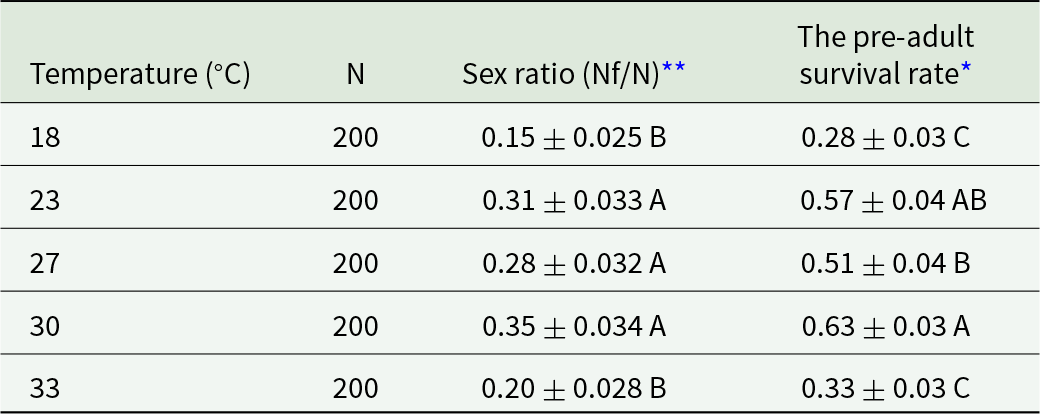
Table 2 shows that the sex ratio (proportion of females) and pre-adult survival rate of S. oleae varied significantly with temperature. The highest sex ratio occurred at 30°C (0.35), 27 (0.28), and 23°C (0.31), while the lowest was observed at 18°C (0.15) and 33°C (0.20). Pre-adult survival peaked at 30°C (0.63) and declined at 18°C (0.28) and 33°C (0.33). These results suggest 30°C is the most favourable temperature for both parameters.
Sex ratio (proportion of females) and pre-adult survival rate of S. oleae population under different constant temperatures (18°C, 23°C, 27°C, 30°C, and 33°C (±1°C))

Adult female (Nf).
* calculated using all the immature stage in the population.
** calculated using all adults in the population (N).
Within columns, means followed by the same letters are not statistically different according to the paired bootstrap test at 5% significance level.
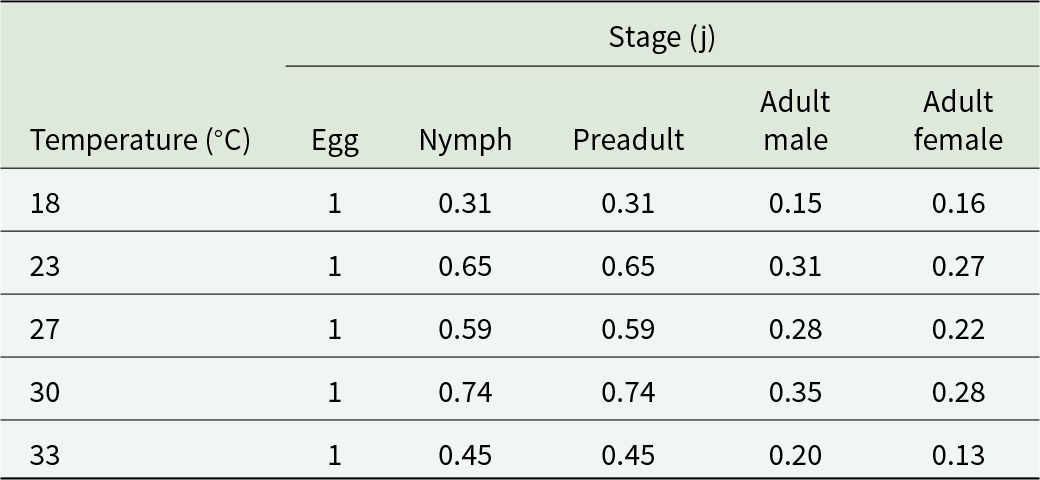
Significant overlap between developmental stages was observed at all tested temperatures, attributed to the variable developmental rates among individuals (fig. 1). The survival probabilities of S. oleae also varied with temperature (table 3). The highest survival was observed at 30°C, where 74% of individuals successfully reached and completed the nymph and preadult stages, 35% matured into adult males, and 28% developed into adult females. These findings identify 30°C as the optimal temperature for survival.
Age-stage specific survival rate (sxj) calculated for S. coffeae fed on olive plant (variety Picholine marocaine) at five different constant temperatures.

The probability that a newborn individual will survive to stage j (but it may die in stage j). The probability is calculated as the number of individuals entered stage j/200

Reproduction
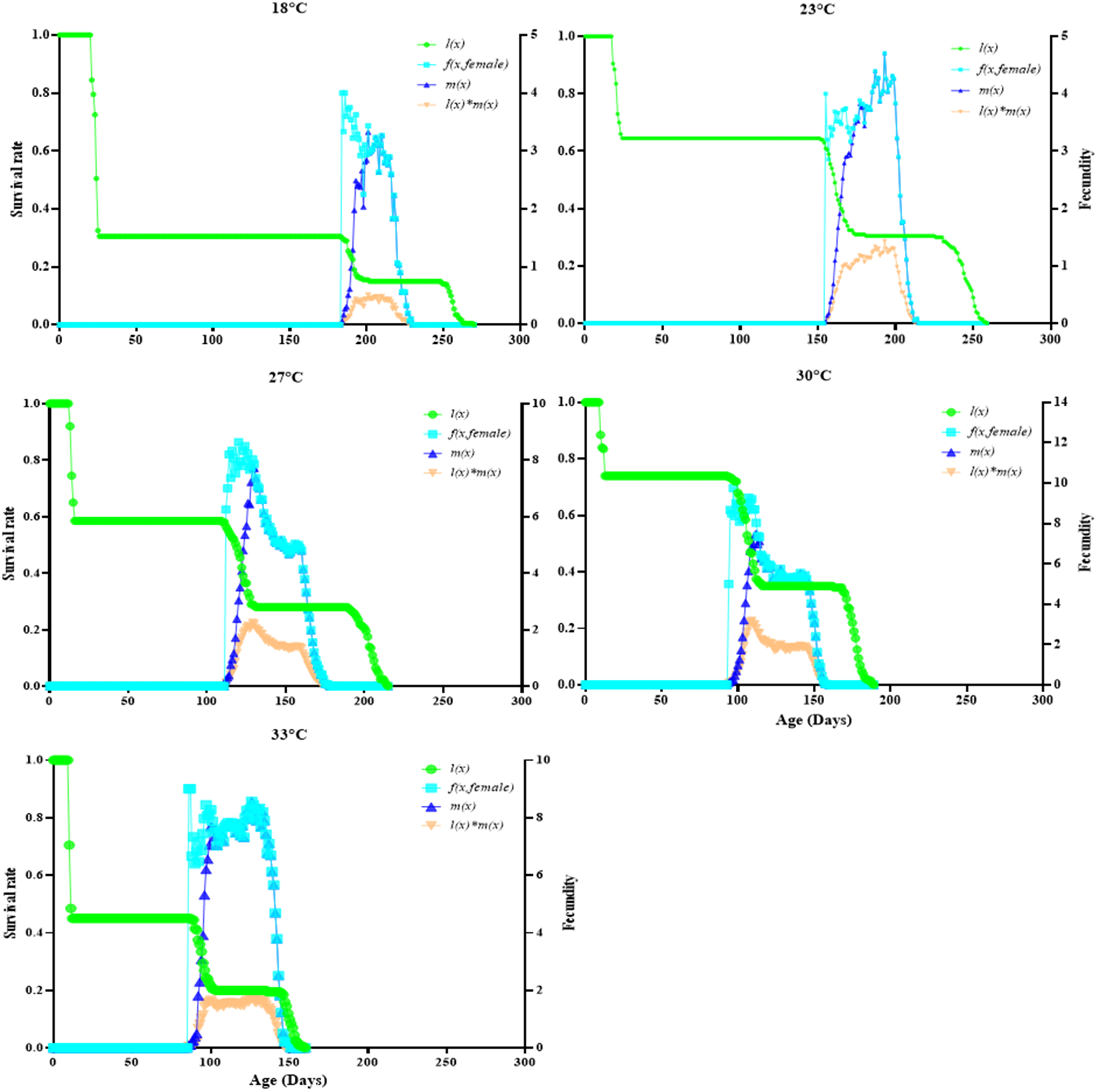
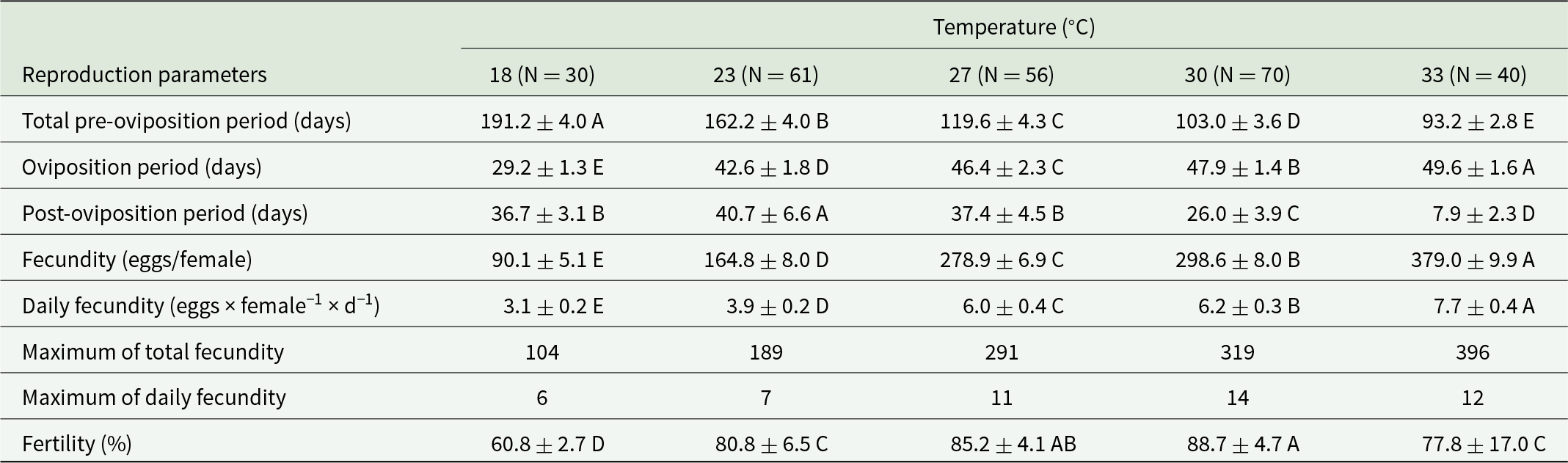
Age-specific survival rate (lx), age-stage fecundity of female (fx) (eggs/female), age-specific fecundity (mx), and age-specific maternity (lxmx) of S. oleae reared on Picholine marocaine olive plants at five constant temperatures are shown in fig. 2. At 18°C, lx remains high until age 20, then declines to zero by age 270 days. Fecundity and maternity (fx, mx, lxmx) are zero until age 184 days, after which several peaks are observed, with the highest peak at age 184 and 186 days for fx and at age 201 days for mx and lxmx. At 23°C, lx stays high until age 17 days and drops to zero by age 259 days. Fecundity and maternity remain zero until age 154 days, after which several peaks occur, with the highest peak at age 193 days for all parameters. At 27°C, lx stays high until age 12 days and declines to zero at age 215 days. Fecundity and maternity remain zero until age 111 days, after which several peaks are observed, with the highest peak at age 120 days for fx and at age 129 days for mx and lxmx. At 30°C, lx stays high until age 9 days and drops to zero at age 189 days. Fecundity and maternity are zero until age 93 days, after which several peaks occur, with the highest peak at age 107 days for all parameters. At 33°C, lx remains high until age 9 and declines to zero at age 189 days. Fecundity and maternity remain zero until age 95 days, after which several peaks are observed, with the highest peak at ages 86 days and 87 days for fx and at age 126 days for mx and lxmx. Generally, the highest peaks observed at 27 and 30°C (fig. 2). Parthenogenesis in females was not observed in our study. All females in the presence of males produced eggs and offspring, but no females in the absence of males produced eggs. The reproductive parameters of S. oleae under different constant temperatures are shown in table 4. The TPOP significantly decreased with increasing temperature (F2,252 = 4928.23, P < 0.0001). The oviposition period was longest at 33°C (49.6 days) and shortest at 18°C (29.2 days) (F4,252 = 757.78, P < 0.0001). The post-oviposition period was longest at 23°C (40.7 days) and shortest at 33°C (7.9 days) (F4,252 = 383.20, P < 0.0001). Fecundity was highest at 33°C (379.0 eggs/female) and lowest at 18°C (90.1 eggs/female) (F4,252 = 8556.13, P < 0.0001). Daily fecundity followed a similar trend, with the highest rate observed at 33°C (7.7 eggs/female/day) and the lowest at 18°C (3.1 eggs/female/day) (F4,252 = 1534.77, P < 0.0001). Maximum total fecundity was highest at 33°C (396 eggs) and lowest at 18°C (104 eggs). Maximum daily fecundity was highest at 30°C (14 eggs/day) and lowest at 18°C (6 eggs/day). Fertility was highest at 30°C (88.7%) and lowest at 18°C (60.8%) (F4,252 = 67.751, P < 0.0001).
Age-specific survival rate (lx), age-stage fecundity of female (fx) (eggs/female), age-specific fecundity (mx), and age-specific maternity (lxmx) of S. coffeae fed on olive plant (variety Picholine marocaine) at five different constant temperatures.

Pre-oviposition, oviposition, post-oviposition, fecundity, daily fecundity (eggs/female) and fertility (%) of S. oleae under different constant temperatures (18°C, 23°C, 27°C, 30°C, and 33°C (±1°C)) (mean ± SE).

Population growth parameters
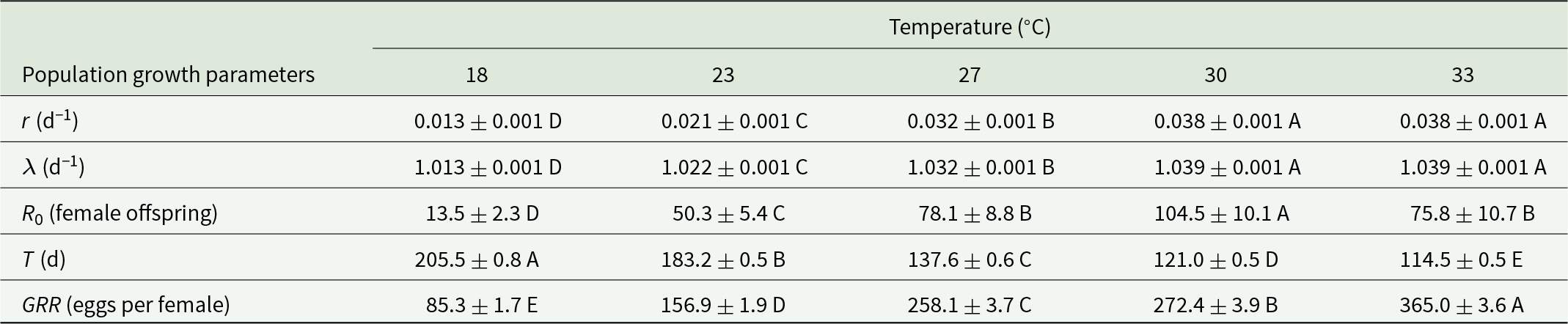
The intrinsic rate of increase (r) and finite rate of increase (λ) were significantly higher at 30°C and 33°C compared to 18°C (table 5). The net reproductive rate (R0) was highest at 30°C and lowest at 18°C, with no significant difference between the rates at 27°C and 33°C. The mean generation time (T) decreased significantly from 205.5 days at 18°C to 114.5 days at 33°C. The GRR was highest at 33°C and lowest at 18°C (table 5).
Intrinsic rate of increase (r), finite rate of increase (λ), net reproductive rate (R 0), mean generation time (T), and gross reproduction rate (GRR) of S. oleae under different constant temperatures (18°C, 23°C, 27°C, 30°C, and 33°C (±1°C)) (mean ± SE).

Life table
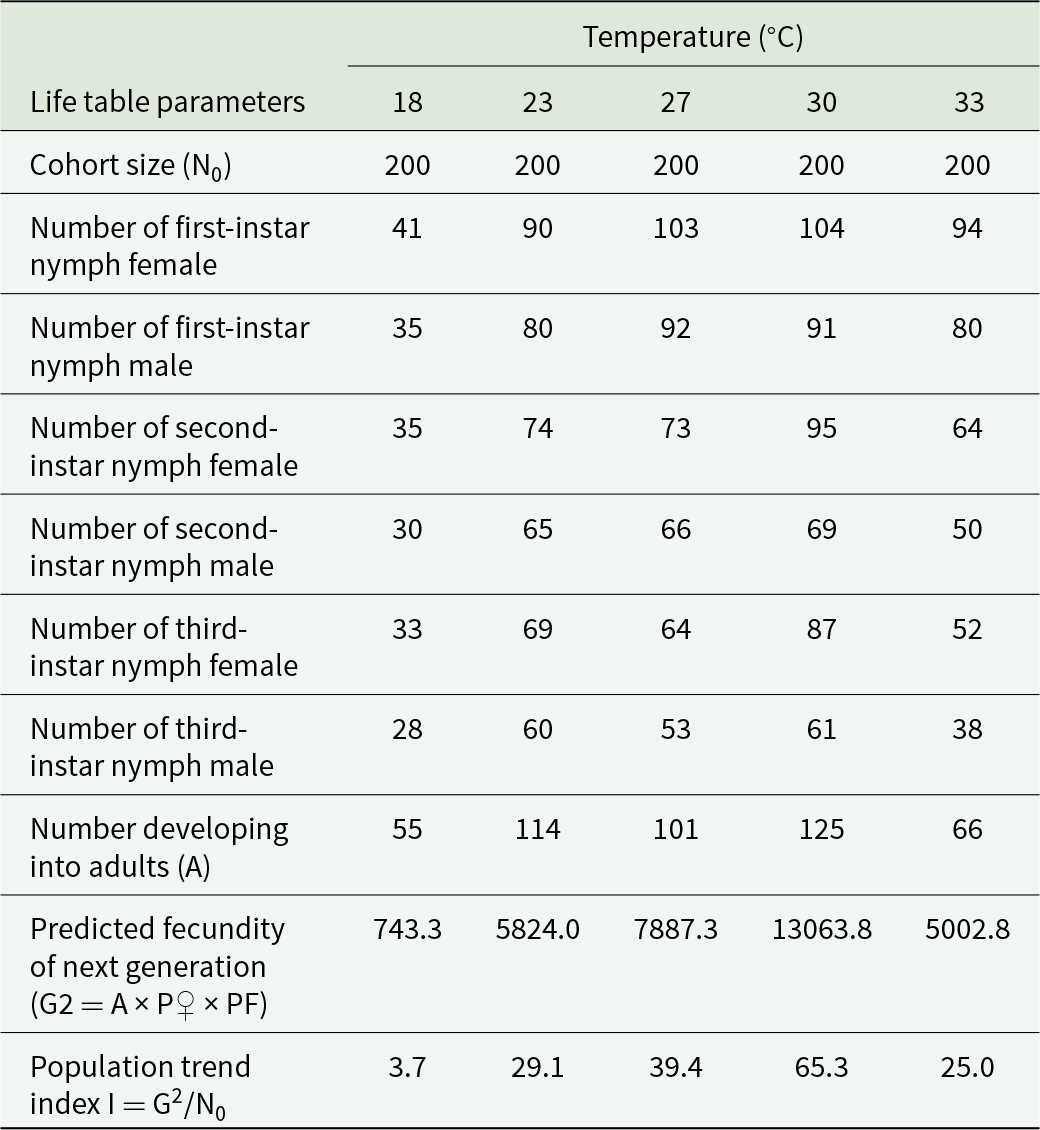
Table 6 highlights the influence of temperature on the life table parameters and potential population dynamics of S. oleae. Predicted fecundity for the next generation (G2) was highest at 30°C (13,063.8), followed by 27°C (7,887.3), indicating favourable conditions for reproduction. The population trend index (I) further emphasized the impact of temperature, showing the largest potential population increase at 30°C (65.3 times) and 27°C (39.4 times) compared to lower (18°C, 3.7) and higher (33°C, 25.0) temperatures. These results suggest that temperatures within the range of 27–30°C are optimal for the growth and reproduction of S. oleae.
Life table parameters of S. oleae at different constant temperatures (18°C, 23°C, 27°C, 30°C, and 33°C (±1°C))

P♀ = Female proportion, PF = Average fecundity per female.
Development thresholds and thermal constants
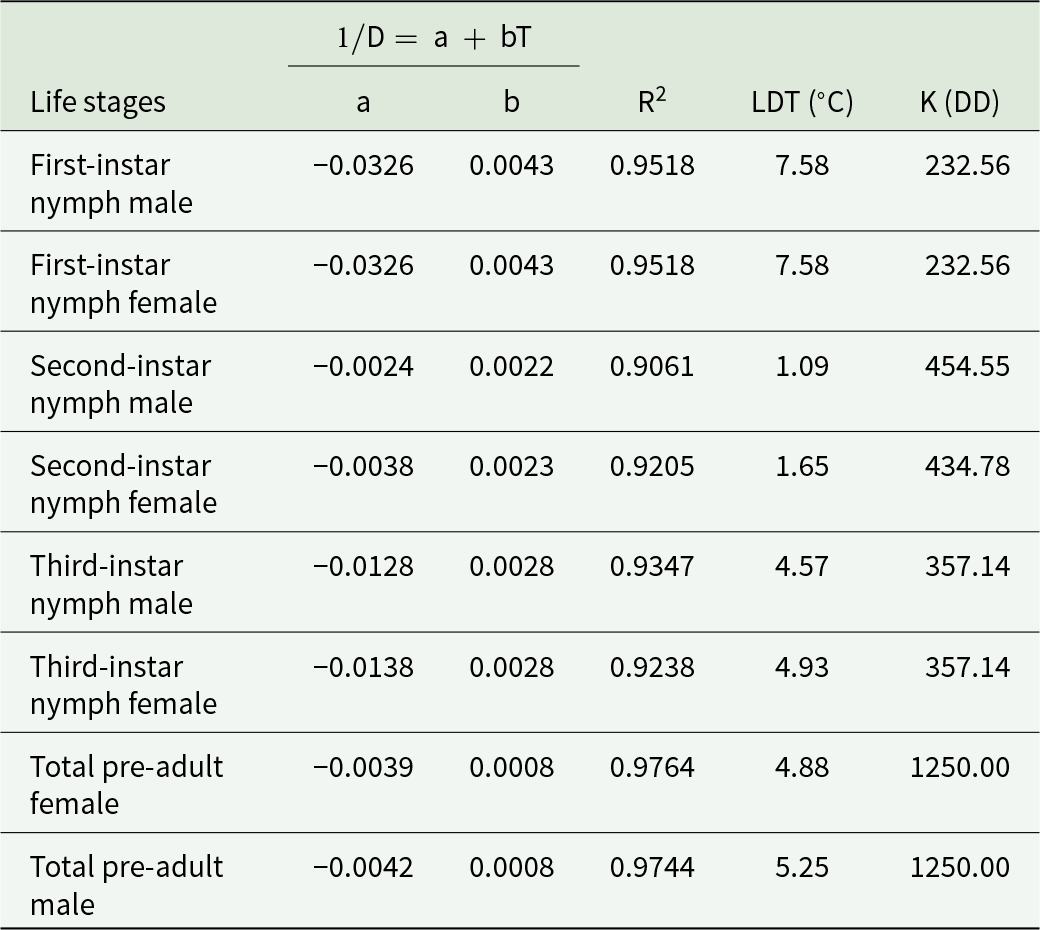
Table 7 demonstrates the temperature-dependent development of S. oleae using the linear DD model. The LDT varied across life stages, with first-instar nymphs (male and female) requiring the highest threshold of 7.58°C, while second-instar nymphs had lower thresholds (1.09°C for males and 1.65°C for females). Thermal constants (K) showed that second-instar nymphs required the most DDs for development (454.55 DD for males and 434.78 DD for females), while third-instar nymphs had intermediate requirements (357.14 DD for both sexes). The total pre-adult development required an LDT of 4.88°C for females and 5.25°C for males, with 1250 DD needed for both. High coefficients of determination (R2 ≥ 0.9061) confirm a strong linear relationship between temperature and development rate, emphasizing the importance of temperature in regulating S. oleae development across its life stages.
Lower development threshold (LDT) and thermal constant (K) required for the development of the different stages of S. oleae, with the respective coefficient of determination (R2), slope (a) and intercept (b)

Discussion
Insects’ development rates are influenced by environmental factors, with temperature being the most critical (Briere et al., Reference Briere, Pracros, Le Roux and Pierre1999; Liu and Tsai, Reference Liu and Tsai2000). For poikilothermic organisms like insects, development rates vary with temperature (Andrewartha and Birch, Reference Andrewartha and Birch1954). This study investigates the development, reproduction, and population growth of S. coffeae under five constant temperatures to determine its thermal requirements. The results indicate that temperatures between 27°C and 30°C significantly enhanced the development and survival of S. coffeae. The fastest development and highest survival rates were observed within this range, with the highest sex ratios (proportion of females) recorded at 30°C. Males lived the longest at 30°C, whereas females had the greatest longevity at 27°C. Overall, the 27–30°C range proved to be the most favourable for the development and survival of S. coffeae. These findings are consistent with Abd-Rabou et al. (Reference Abd-Rabou, Ali and El-Fatih2009), who reported that 30°C was the optimal temperature for the development of S. coffeae. Lowering the temperature extended the development period, corroborating previous studies by Ibrahim (Reference Ibrahim1985), Valand et al. (Reference Valand, Patel and Mehta1989), and Li-Chen and Hong (Reference Li-Chen and Hong2002). Li-Chen and Hong (Reference Li-Chen and Hong2002) also noted that nymphal scales continuously reared at 30°C failed to produce adults. Additionally, increasing temperatures were found to shorten the egg, nymph, and egg-to-adult stages due to insects’ inability to regulate internal temperatures (Albuquerque Junior et al., Reference Albuquerque Junior, Silva, Ramos, Zanuncio and Castellani2023).
Both preadult males and females exhibited similar developmental times across all tested temperatures, with no significant sex-based differences. This absence of sexual dimorphism in developmental rates suggests that both sexes are equally adapted to temperature fluctuations (Abd-Rabou et al., Reference Abd-Rabou, Ali and El-Fatih2009). Adult longevity varied significantly with temperature, with males living longest at 30°C and females at 27°C and 23°C. These results align with the general trend in insects, where moderate temperatures often support longer lifespans, particularly in females (Qin et al., Reference Qin, Qiu, Wu, Cuthbertson and Ren2013).
The observed decrease in lifespan at higher temperatures (33°C) may be attributed to thermal stress, which can accelerate metabolic rates and reduce survival (Hahn and Denlinger, Reference Hahn and Denlinger2011; Irwin and JrRE, Reference Irwin and JrRE2000). Saissetia coffeae, reared on squash plants, showed faster development with rising temperatures; at 18°C, first, second, and third instars lasted 15.5, 23.3, and 22.6 days, reducing to 9, 16.9, and 13.2 days at 30°C. Incubation periods dropped from 21.4 to 10.1 days (Abd-Rabou et al., Reference Abd-Rabou, Ali and El-Fatih2009). Studies conducted by Ibrahim (Reference Ibrahim1985) reported that the developmental time from egg to adult for S. coffeae on green potato sprouts was 95.2 days at 18°C and 31.2 days at 28°C. The results from these studies clearly show that host plant species as well as temperature strongly influence S. coffeae development. The sex ratio and pre-adult survival of S. oleae were highest at 30°C, indicating that this temperature is optimal for both reproduction and survival, highlighting its significance as the most favourable condition for the species. This statement agrees with the results of Ibrahim (Reference Ibrahim1985), and Abd-Rabou et al. (Reference Abd-Rabou, Ali and El-Fatih2009). The higher survival rates of S. coffeae males and females at 23–30°C indicate this temperature range as optimal for the species. This finding aligns with the optimal range of 23–27°C reported for Aonidiella aurantii (Hemiptera: Diaspididae) on butternut squash (Mohammed et al., Reference Mohammed, Karaca, Agarwal, Newman and Ren2020) and the 20–25°C range reported for Diaspis echinocacti (Bouché) (Hemiptera: Diaspididae) on Opuntia spp. (El Aalaoui and Sbaghi, Reference El Aalaoui and Sbaghi2024).
This study demonstrates that temperature significantly affects the reproduction of S. oleae. At higher temperatures (27–33°C), the pre-oviposition period was shorter, enabling earlier reproduction, while the oviposition period was longest at 33°C, leading to the highest fecundity and fertility. In contrast, lower temperatures (18°C) resulted in longer pre-oviposition periods, shorter oviposition durations, and reduced fecundity and fertility. The post-oviposition period was longest at 23°C and shortest at 33°C, indicating faster reproductive cycles at higher temperatures. The average number of eggs laid per S. coffeae female reared on the squash plants during her lifetime was 189, 275 and 489 at 18, 24 and 30°C, respectively (Abd-Rabou et al., Reference Abd-Rabou, Ali and El-Fatih2009), but In the study of Valand et al. (Reference Valand, Patel and Mehta1989) on pointed gourd (Trichosanthes dioica), was 268, 547 and 488 at 24, 27 and 30°C, respectively. These variations in fecundity may be attributed to the chemical defences of studied species, which include alkaloids, flavonoids, phenols, and saponins, with concentrations varying among species (Abd El-Mageed et al., Reference Abd El-Mageed, Semida and Rady2017; Miho et al., Reference Miho, Expósito-Díaz, Marquez-Perez, Ledesma-Escobar, Diez, Prusky, Priego-Capote and Moral2024; Vidyarthi et al., Reference Vidyarthi, Thakur, Khela and Roy2024). The significantly lower total numbers of eggs, Maximum of total fecundity and eggs laid per female per day by S. coffeae at 18°C in this study clearly indicate that this temperature is unsuitable for the insect reproduction. This observation aligns with findings from other studies of Ibrahim (Reference Ibrahim1985), Valand et al. (Reference Valand, Patel and Mehta1989) Li-Chen and Hong (Reference Li-Chen and Hong2002), and Abd-Rabou et al. (Reference Abd-Rabou, Ali and El-Fatih2009).
While S. coffeae has been reported to reproduce parthenogenetically, with occasional male presence (Asmaa and Mohamed, Reference Asmaa and Mohamed2020; Tena et al., Reference Tena, Soto, Vercher and Garcia-Marí2007), our study found no evidence of parthenogenesis. This suggests that in the studied population, sexual reproduction is the primary mode. Also the temperature-dependent changes in reproductive parameters, such as lx, fx, mx, and lxmx, show that warmer temperatures (27–33°C) lead to higher reproduction rates in S. oleae. This suggests that pest populations are likely to grow more rapidly in warmer environments. Notably, rising temperatures enhance metabolism, leading to increased activity, fecundity, population size, and geographic range, while simultaneously reducing the lifespan of insect pests (Just and Frank, Reference Just and Frank2020).
From a pest management perspective, understanding these reproductive patterns allows for better prediction of population growth. Since S. oleae shows the highest fecundity and fertility at temperatures above 27°C, pest management efforts should be concentrated during periods of warmer weather when the pest is likely to be most prolific. Additionally, the lack of parthenogenesis in S. oleae means that both males and females are needed for reproduction. Therefore, pest management programs should focus on reducing both male and female populations to effectively control reproduction. This can be achieved by implementing control measures (such as biological control agents or chemical treatments) that target the pest during its peak reproductive phases.
This study shows that warmer temperatures (27–33°C) enhance S. oleae population growth, with higher r and λ rates and shorter T. Reproductive rates peaked at 30°C, indicating optimal conditions for reproduction. These results suggest faster pest proliferation in warmer climates, highlighting the need for targeted management during such periods. These results align with Abd-Rabou et al. (Reference Abd-Rabou, Ali and El-Fatih2009), who found 30°C to be ideal for S. coffeae, yielding the highest oviposition (489.4 eggs/female), maximum r value (0.08), shortest incubation period (10.1 days), and longest adult longevity (8.9 days). Similarly, Ceroplastes floridensis Comstock (Homoptera: Coccidae) showed optimal growth and reproduction at 30°C on citrus trees, with the highest intrinsic rate (r = 1.078), finite rate (λ = 0.075), shortest generation time (T = 71.73 days), and peak fecundity (316.82 eggs) (Kaf et al., Reference Kaf, Mohammed and Hasan2019).
The present study demonstrates that S. oleae thrives best at temperatures between 27°C and 30°C. Within this temperature range, the predicted fecundity for the next generation reached its peak, and the population trend index (I) showed the highest potential increase. These results indicate rapid reproduction and population growth within this range. To prevent significant population increases, pest management efforts should focus on warmer periods when these temperatures are most common. Additionally, integrating diverse control methods, rather than relying solely on natural enemies, is essential for long-term, effective management (Cruz-Rodríguez et al., Reference Cruz-Rodríguez, González-Machorro, Villegas González, Rodríguez Ramírez and Mejía Lara2016).
In the present study, S. oleae development was temperature-dependent, with varying thresholds across life stages. First-instar nymphs had the highest LDT (7.58°C), while second-instar nymphs required fewer DDs. Pre-adult development needed 1250 DDs. Similar temperature-dependent patterns were observed in other insect pests such as Dactylopius ceylonicus Green (Hemiptera: Dactylopiidae) (Sullivan, Reference Sullivan1990), the tomato psyllid, Bactericera cockerelli (Sulc) (Hemiptera: Triozidae) (Tran et al., Reference Tran, Worner, Hale and Teulon2012), and Dactylopius opuntiae (Cockerell) (Hemiptera: Dactylopiidae) (El Aalaoui and Sbaghi, Reference El Aalaoui and Sbaghi2022), where developmental thresholds varied by life stage.
The high correlation (R2 ≥ 0.9061) between temperature and development rate indicates a good fit for the linear model. However, linear models may not account for temperature extremes that could have nonlinear effects, such as a threshold effect where very high or low temperatures slow development (Pincebourde and Casas, Reference Pincebourde and Casas2015; Régnière et al., Reference Régnière, Powell, Bentz and Nealis2012). We chose the linear model due to its simplicity and practicality, as both T0 and the thermal constant are commonly used for insect phenology prediction (Worner, Reference Worner1992). While nonlinear models can be more sensitive to temperature variability, there is no clear evidence that they outperform linear models under all conditions, especially in oceanic climates (Worner, Reference Worner1988, Reference Worner1992). Furthermore, high mortality at extreme temperatures justifies using only the linear part of the developmental relationship to estimate parameters (Walgama and Zalucki, Reference Walgama and Zalucki2006). In some cases, a combination of models – such as using a linear model for lower temperature thresholds and a nonlinear model for optimal and upper development parameters – has been suggested (Tran et al., Reference Tran, Worner, Hale and Teulon2012).
Conclusion
In conclusion, the development, survivorship, and reproductive parameters of S. oleae were significantly influenced by temperature. The most favourable conditions for both development and survival occurred at temperatures between 27°C and 30°C, with the highest survival rates, optimal sex ratios, and fastest developmental times observed at 30°C. Female adults exhibited longer lifespans compared to males, with the longest lifespan recorded at 27°C. Reproductive performance, including fecundity, was highest at 33°C, although the TPOP and oviposition periods were shortest at this temperature. Population growth and life table parameters confirmed that temperatures within the range of 27–30°C are optimal for S. oleae, supporting the highest reproductive success and population growth. Understanding this temperature range helps predict population dynamics and guides pest management strategies, such as timing control measures (e.g. biological control agents or insecticides) to target S. oleae during peak population periods. Additionally, by knowing the temperature conditions that favour its growth, more effective monitoring and intervention strategies can be developed for varying climatic conditions, ensuring more efficient pest management.
Acknowledgements
The research of this study was supported by the National Institute of Agricultural Research (INRA-Morocco) and MCRDV project.
Competing interests
The authors declare that they have no known competing financial interests or personal relationships that could have appeared to influence the work reported in this paper.