Introduction
The oriental fruit fly, Bactrocera dorsalis (Hendel) (Diptera: Tephritidae), is a major pest throughout South East Asia and further west through to Pakistan and north to southern China and Nepal (EPPO, Reference Smith, McNamara, Scott and Holderness1997). Waterhouse (Reference Waterhouse1993) identifies B. dorsalis as one of the three most important pests of agriculture in South East Asia. It is a serious pest of a wide variety of fruit crops such as citrus and guava, but seldom cucurbits (EPPO, Reference Smith, McNamara, Scott and Holderness1997). As well as being a serious pest in Asia, B. dorsalis has established in a number of other countries, and is a very damaging pest wherever it occurs (PMP-FFM, 2004). It was first detected in French Polynesia in 1996 where eradication plans are now in place (PMP-FFM, 2004). Bactrocera dorsalis has been established in Hawaii since 1946, where it is a pest in a number of fruits such as guava, mango and avocado, and its occurrence has resulted in quarantine measures being imposed prior to shipment of these crops to mainland USA markets (Manoto & Mitchell, Reference Manoto and Mitchell1976; Burditt & Balock, Reference Burditt and Balock1985; Fitt, Reference Fitt, Robinson and Hooper1989).
Bactrocera dorsalis has established and been eradicated from a number of places, including Ryukyu Islands in Japan, and Nauru, Guam and Northern Mariana Islands in the Pacific. Prior to eradication from Nauru, B. dorsalis and mango fly B. frauenfeldi (Schiner) infested 95% of mangoes, 90% of guavas and almost 10% of soursops. Since their eradication, damage on mango and soursop has been negligible (PMP-FFM, 2004). Four infestations of B. dorsalis were eradicated from California between 1960 and 1997 (Weems et al., Reference Weems, Heppner, Nation and Fasulo2004).
Bactrocera dorsalis has been intercepted without establishing at a number of ports throughout the world, thus Mangan & Moreno (Reference Mangan, Moreno, Hallman and Schwalbe2002) describe it as a chronically invading species. It has been occasionally trapped in Florida (Weems et al., Reference Weems, Heppner, Nation and Fasulo2004) and intercepted at Sydney airport in mangoes from India (Drew & Hancock, Reference Drew and Hancock1994). Bactrocera dorsalis sensu lato was by far the most frequently intercepted tephritid (80%) on prohibited fruit in a study at Osaka Airport, Japan (Matsumoto et al., 1992 in EPPO, Reference Smith, McNamara, Scott and Holderness1997). SriRamaratnam (Reference Sriramaratnam1996) suggests that the most likely pathway for horticultural pests to enter New Zealand is through the illegal introduction of infested produce into the country by travellers, rather than from regular commercial fruit imports.
Because of the damage it can cause and the frequency of its interception, many countries are concerned about the risk of B. dorsalis as well as many other tephritidae species. In both New Zealand and the Pacific Islands, a permanent trapping regime has been established to detect incursions as early as possible (Allwood, Reference Allwood2000; Stephenson et al., Reference Stephenson, Gill, Randall and Wilson2003). The EPPO (Reference Smith, McNamara, Scott and Holderness1997) lists B. dorsalis on the A1 quarantine pest list, which contains pests that are recommended for regulation by EPPO countries and are absent from the EPPO region. Because the climatic range of B. dorsalis is primarily tropical and subtropical, the risk of direct economic losses from an incursion into Europe is considered ‘minimal, though populations may enter and multiply during the summer months’ (EPPO, Reference Smith, McNamara, Scott and Holderness1997). The EPPO judged that the greatest threat of B. dorsalis was as a result of stricter phytosanitary measures that would be imposed by trading partners as a result of its presence in Europe.
Despite its pest status and frequency of invasion, relatively little effort has gone into defining the climatic requirements of B. dorsalis, or into estimating its potential to colonize new areas. The only serious attempts were by Flitters & Messenger (Reference Flitters and Messenger1953) and Messenger & Flitters (Reference Messenger and Flitters1954) who used growth cabinets to simulate the climates of various North American cities to determine whether B. dorsalis could survive there. While this work provided insight into the instantaneous weather requirements of B. dorsalis, a growth cabinet fails to allow for microclimate and behavioural responses; it is a homogeneous environment while an orchard is a heterogenous one. It is also difficult to relate instantaneous population responses to climatic variables in order to extrapolate the findings to other locations. Insects have a range of behavioural responses that can moderate the effects of weather, and long-term climate averages hide a degree of climatic variability. Whilst a population may be able to persist under the average conditions, the natural variability could include extremes to which a population may be sensitive. Some laboratory work has been undertaken in other regions, particularly Hawaii, investigating the temperature requirements for growth and development of this species under conditions well-suited for growth (e.g. Vargas et al., Reference Vargas, Walsh, Jang, Armstrong and Kanehisa1996, Reference Vargas, Walsh, Kanehisa, Jang and Armstrong1997, Reference Vargas, Walsh, Kanehisa, Stark and Nishida2000), but little work has been done to identify limiting climatic conditions. In this study, the CLIMEX™ model was used to infer the response of B. dorsalis to climate and to predict its potential global distribution. The CLIMEX model has been used successfully to describe the potential distribution of other tephritid fruit fly species, such as the Mediterranean fruit fly Ceratitis capitata (Wiedemann) (Worner, Reference Worner1988; Vera et al., Reference Vera, Rodriguez, Segura, Cladera and Sutherst2002) and the Queensland fruit fly Bactrocera tryoni (Froggatt) (Yonow & Sutherst, Reference Yonow and Sutherst1998; Sutherst et al., Reference Sutherst, Collyer and Yonow2000). An understanding of the potential distribution of B. dorsalis can assist biosecurity agencies to develop appropriate strategies to manage the risk posed by this invasive species. By assessing the likely climatic suitability of B. dorsalis, individual biosecurity agencies can decide whether to devote scarce resources toward detecting or preventing it's entry. Similarly, they can consider likely entry pathways via climatically suitable routes, with a view to attenuating the flow of propagules if necessary.
As well as developing appropriate strategies for the short term, long term planning is also required. Global climate change is widely accepted as having led to global temperatures increases of about 0.6°C throughout the 20th century, with temperatures expected to continue to increase in the current century (Christie et al., Reference Christie, Clarke, Gruza, Jouzel, Mann, Oerlemans, Salinger, Wang, Houghton, Ding, Griggs, Noguer, van der Linden, Dai, Maskell and Johnson2001). The implications of climate change for biosecurity and pest risk assessment may be significant as pest ranges are likely to shift in response to changes in temperature, soil moisture and humidity patterns. CLIMEX has previously been used to model the effects of climate change on species' potential distributions using both regional global climate model (GCM) (Kriticos, Reference Kriticos and Shepherd1996) and synthetic climates (Kriticos et al., Reference Kriticos, Sutherst, Brown, Adkins and Maywald2003a,Reference Kriticos, Sutherst, Brown, Adkins and Maywaldb). In this study, GCM results are used for future scenarios for the 2080s to assess the direction and magnitude of future invasion threats by B. dorsalis.
Materials and methods
Overview of the CLIMEX model
The CLIMEX model is based on the assumption that if you know where a species lives, you can infer what climatic conditions it can tolerate (Andrewartha & Birch, Reference Andrewartha and Birch1954, Reference Andrewartha and Birch1984; Sutherst et al., Reference Sutherst, Maywald, Bottomley and Bourne2004). CLIMEX simulates the mechanisms that limit a species' geographical distribution in relation to climate using the ‘compare locations’ function (Sutherst et al., Reference Sutherst, Maywald, Bottomley and Bourne2004). CLIMEX integrates weekly responses of a population to moisture and temperature and calculates annual indices from these. There are two aspects to a species' response to these variables. The growth index (GI), which represents the suitability of the location for growth and development, is calculated according to how close ambient temperatures, soil moistures or day-lengths are to a species' optimal preferences. The stress indices (SI) relate to the stress factors limiting the geographical distribution of the species. The stress factors are prolonged periods of cold, wet, hot or dry weather or pair-wise combinations of these factors. CLIMEX combines the GI and SI into one overall ecoclimatic index (EI) which is scaled from 0 to 100. The assignment of classifications to EI values is usually an arbitrary process, as the resulting patterns are species-specific. Sutherst et al. (Reference Sutherst, Maywald, Bottomley and Bourne2004) provide some suggested guidelines: an EI=0–0.49 indicates that the climate is unsuitable; the species can not persist in an area under average environmental conditions, an EI of 0.50–9.99 indicates marginal conditions, an EI of 10–19.99 indicates suitable conditions and an EI of 20+ indicated optimal conditions. An EI of 100 indicates that conditions are perfect all year round, and there are few environments that are stable enough to provide perfect habitat year round.
CLIMEX parameters are most reliably based on the species' native and exotic ranges (Kriticos & Randall, Reference Kriticos, Randall, Groves, Panetta and Virtue2001), as the exotic ranges can include the effects of biotic release, whereby the species can express a broader range of climatic habitat preferences if it is released from the effects of its natural enemies. Experimentally determined tolerances of the species to key environmental characteristics and life history information such as senescence or diapause can be used to corroborate parameter selections if they are available (US National Research Council, 2002).
Meteorological databases and climate change
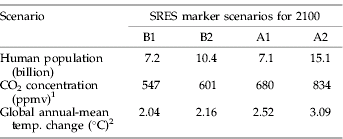
Two climate databases were used in this modelling exercise. By default, CLIMEX uses 30-year averages of climate data to estimate climatic suitability. Firstly, the CLIMEX standard meteorological dataset was used to create an initial fit. This dataset that comes with CLIMEX version 2.0 consists of 30-year averages from 1961 to 1990 for an irregularly spaced set of 2500 climate stations. Subsequently, a regular gridded dataset of climate normals for the same period (TYN SC 2.0, http://www.cru.uea.ac.uk/~timm/grid/TYN_SC_2_0.html) was used to fine-tune the parameter fit. The climate normals dataset consisted of 67,420 points spaced on a 0.5° latitude×0.5° longitude regular grid for significant land areas worldwide. The TYN SC2.0 dataset also includes climate change scenario results from five GCMs, though only the CSIRO2 model (Hirst et al., Reference Hirst, O'Farrell and Gordon2000) was used because it provided good median results for the South Pacific region compared with other models (Ruosteenoja et al., Reference Ruosteenoja, Carter, Jylhä and Tuomenvirta2003). The change surfaces in the TYN SC2.0 dataset are taken from GCMs run with four emissions scenarios described in the Special Report on Emission Scenarios (SRES) (IPCC, 2000). These emission scenarios specify equally plausible future states of socio-economic and technological development. Of those available, the two extreme scenarios (B1 and A2, table 1) were selected to represent the range of possible future climate suitability for OFF in the 2080s.
Special Report on Emission Scenarios (SRES) markers and calculated variables.
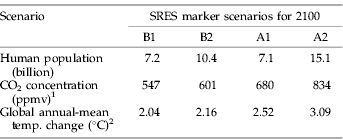
1 Best guess assumptions regarding the carbon cycle.
2 Assuming a 2.5°C climate sensitivity.
Scenarios have been ordered in terms of their potential for climate impact. The A1 scenario is the mean for a set of three A1 variants (FI, fossil fuel intensive; T, non-fossil-fuel intensive; B, balanced). The A1FI is the most extreme SRES scenario. Source: IPCC-TGCIA (Reference Carter, Hulme and Lal1999).
The original TYN SC2.0 dataset consists of data for precipitation, mean temperature, diurnal temperature range, vapour pressure and cloudiness. Prior to use, the climate scenario datasets were extracted and reformatted to generate a set of surfaces of monthly averages for daily minimum temperature, maximum temperature and total rainfall. It was also necessary to calculate daily minimum and maximum temperature from mean temperature and diurnal temperature range and to estimate relative humidity at 0900 h and 1500 h based on the vapour pressure data. Python® scripts (http://www.python.org/) and ArcGIS version 9.0 (ESRI, Redlands California) were used to transform the data format and estimate values for the temperature and relative humidity variables that are needed in CLIMEX.
The climate change scenarios were constructed for each variable (v), global climate model (g), and SRES scenario (s) as follows. The value (x) at a particular grid-box (i) in a particular year (y) and month (m) is:

where (c) is the observed climatological mean from 1961–1990, (r) is the residual difference between the annual observation and the 1961–1990 means, detrended against global temperature, (p) is the pattern of response to radiative forcing (expressed as anomalies relative to 1961–1990, per degree of global temperature change), and (t) is the global temperature change (relative to the 1961–1990 reference period).
For CLIMEX analyses where biological models have been fitted to the standard 1961–1990 climatological means, models ideally should be fitted to the climatological mean c vim and then projected using a scenario that ignores the residual term for interannual variability:

The residual term is a series of values that represent the detrended variability in climate throughout the 20th century and should be reserved for generating time series for comparing the variability in climate suitability through time. GCMs frequently produce strong inter-annual and inter-decadal variability, and the IPCC-TCGIA (Reference Carter, Hulme and Lal1999) recommend using 30-year means in order to detect the climate signal reliably against the background noise. Here, the chosen future scenarios were taken from the commonly used 2080s (the 30-year period centred around 2085, i.e. 2070–2099).
Extracting the climatological means and generating CLIMEX variables for future scenarios
CLIMEX uses five climate variables: monthly averages of daily precipitation sum, daily maximum temperature, daily minimum temperature, relative humidity at 0900 h and relative humidity at 1500 h. The change scenarios provide four relevant variables: monthly averages of daily precipitation sum, average daily temperature, diurnal temperature range and average daily vapour pressure. Daily minimum and maximum temperatures were calculated from the average temperature and diurnal temperature range values. Relative humidity values for 0900 h and 1500 h were estimated based on vapour pressure values and estimates of saturation vapour pressure using the Tetens equation (Allen et al., Reference Allen, Pereira, Raes and Smith1998).
Predicting the potential distribution of B. dorsalis
CLIMEX represents the mechanisms that limit a species' distribution in relation to climate. It is a common misconception that the CLIMEX parameters describing the species' response to temperature and soil moisture need to be derived from direct ecophysiological experiments. However, a good description of the species' geographical distribution is the most desirable form of input data for building compare locations models in CLIMEX (Sutherst, Reference Sutherst2003). The species' distribution data are used to infer the values for the model parameters using an iterative procedure in which the model parameters are adjusted until the projected range compares favourably with the known distribution. While the distribution of B. dorsalis is very well known in some regions (for example, Hawaii) its range is very poorly described in parts of its native range, in particular India and Pakistan. In such cases, knowledge of the species' ecophysiology is used to inform the selection of model parameters, and where suitable, to check that selected parameter values are reasonable. Data from such laboratory studies are also useful starting points for modelling.
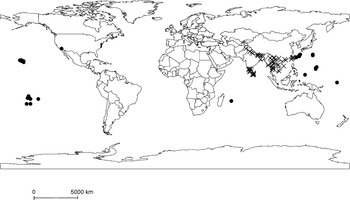
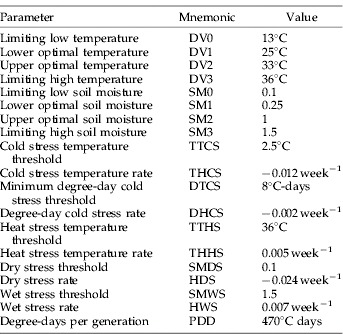
To fit the CLIMEX model of B. dorsalis, the parameters were manually and iteratively adjusted until the simulated geographical distribution as estimated by the EI values coincided with the species known native distribution (fig. 1) and the EPPO's (Reference Smith, McNamara, Scott and Holderness1997) description of its range. The parameters were then validated using data from regions where B. dorsalis has invaded or established. None of the known exotic locations from which this species has been recorded as establishing exceeded the climatic limits experienced in its native range; therefore, no exotic locations were used for the fitting of the model parameters. Parameters used in the CLIMEX model are presented in table 2. Because of the confusion over oriental fruit fly taxonomy (Drew & Hancock, Reference Drew and Hancock1994), many older references that refer to oriental fruit fly may, in fact, refer to another species in the B. dorsalis complex; therefore, we ensured that all records were in line with the description of B. dorsalis (rather than in line with other species in the complex) given by Drew & Hancock (Reference Drew and Hancock1994).
The current global distribution of Bactrocera dorsalis (●, invasive; ×, native). NB: oriental fruit fly has been eradicated, or is under an eradication plan, in some of the depicted invasive range.

Parameters used in the CLIMEX model for oriental fruit fly, Bactrocera dorsalis.

Threshold heat sum
Vargas et al. (Reference Vargas, Walsh, Kanehisa, Jang and Armstrong1997) report mean generation times for B. dorsalis at five different constant temperatures. To estimate the minimum heat sum required to complete a generation (PDD), at varying base temperatures, we took the calculated heat sum required at each constant temperature for the average generation time at a range of hypothetical base temperatures using base temperatures for related species.
PDD=t∗(c−a) where PDD is degree days required for a generation, t is the average generation time, c is the experimental temperatures used by Vargas et al. (Reference Vargas, Walsh, Kanehisa, Jang and Armstrong1997) and a is the hypothetical base temperature. We adjusted a and compared the corresponding mean PDD values for each of the temperatures reported by Vargas et al. (Reference Vargas, Walsh, Kanehisa, Jang and Armstrong1997) and calculated the co-efficient of variation between the observed and expected generation times for each of the temperatures. The base temperature that gave a mean PDD with the best fit to the data (lowest co-efficient of variation) was used for the CLIMEX model.
Temperature index
From the data generated by Vargas et al. (Reference Vargas, Walsh, Kanehisa, Jang and Armstrong1997), PDD was calculated for a range of base temperatures as described above. The co-efficient of variation was lowest at a threshold of 11°C; but to allow for the averaging effect of climate cf. daily weather, the minimum temperature for development (DV0) was set at 13°C. Authors have reported differing lower and upper optimum temperatures for varying B. dorsalis populations, host plants and experimental design (Flitters & Messenger, Reference Flitters and Messenger1953; Shukla & Prasad, Reference Shukla and Prasad1985; Yang et al., Reference Yang, Carey and Dowell1994; Vargas et al., Reference Vargas, Walsh, Jang, Armstrong and Kanehisa1996, Reference Vargas, Walsh, Kanehisa, Jang and Armstrong1997, Reference Vargas, Walsh, Kanehisa, Stark and Nishida2000). The lower and upper temperature optima (DV1 and DV2) were set at 25 and 33°C, respectively, which is within the range given by these reports. Messenger & Flitters (Reference Messenger and Flitters1954) suggest that 38°C is the maximum temperature for survival. Accordingly, the upper temperature for development, DV3, was adjusted to be slightly lower than Messenger & Flitters' maximum survival temperature. This was done to account for the moderating effect of climate averaging, whereby the long-term climate averages include days in the month when the weather is more extreme than the average. The daily extremes can be lethal to a population that is sensitive to short-term exposure to such high temperatures. For example, a long-term monthly average of daily maximum temperatures of 38°C could include several days per month when temperatures exceed 40°C.
Moisture index
The moisture requirements of B. dorsalis are mediated through their host plants. The lower soil moisture limit for development (SM0) was set to 0.1 to indicate the permanent wilting point, which is normally about 10% of soil moisture. The lower and upper limits for optimal growth (SM1 and SM2) were set to biologically reasonable levels for many host plants; and upper soil moisture limit for development, SM3, was set to field capacity (1.0) as B. dorsalis pupates in the soil (Weems et al., Reference Weems, Heppner, Nation and Fasulo2004) and water-logging has been shown to be deleterious to other fruit fly species (Hulthen & Clarke, Reference Hulthen and Clarke2006). The selected value for SM3 was a compromise determined from fitting the threshold soil moisture wet stress threshold (SMWS). A lower value of SMWS would have made it more difficult to achieve a satisfactory fit to the known distribution in southern Asia.
Cold stress
TTCS was set to 2.5°C. A long-term average minimum temperature of 2.5°C corresponds to several frost days per month (Bureau of Meteorology, 1975). The northern Asian boundary of B. dorsalis is indistinct. Kathmandu and nearby areas are suitable (Drew & Hancock, Reference Drew and Hancock1994); according to the EPPO (Reference Smith, McNamara, Scott and Holderness1997), it has been reported from somewhere in the Sichuan province of China. Bactrocera dorsalis is unable to overwinter in Kunming, in the Yunnan province of China (Shi et al., Reference Shi, Kerdelhue and Ye2005), but is unreported in Jiangxi province. It was impossible to allow persistence in all the Chinese provinces from which it has been recorded simultaneously, as well as model the unfavourability of Jiangxi province. Accordingly, parameters were adjusted to barely prevent persistence in Kunming, whilst still allowing persistence in Hunan and Sichuan provinces, and at higher altitudes in Hawaii.
Heat stress
Messenger & Fitters (Reference Messenger and Flitters1954) noted that B. dorsalis cannot survive above 38°C. TTHS was set to 36°C to account for the averaging effect of climate, whereby several days where temperatures exceed 38°C may be expected in a long-term climate record where the monthly average of daily maximum temperature is 36°C. The accumulation rate, THHS, was adjusted to minimize the suitable area in Madhya Pradesh and Andhra Pradesh in central India, whilst still allowing persistence in Rajasthan, India, from where it has been reported (EPPO, Reference Smith, McNamara, Scott and Holderness1997). Elevated mountain ranges that bisect these states appear to be climatically suitable. It was impossible to make them unsuitable for B. dorsalis (as suggested by distribution records) without introducing unacceptable distortions elsewhere in the model.
Dry stress
The EPPO (Reference Smith, McNamara, Scott and Holderness1997) records B. dorsalis from Rajasthan, India and the United Arab Emirates, but not from Gujarat, India. HDS was adjusted to make United Arab Emirates unsuitable without irrigation, and Rajasthan barely able to support a population on natural rainfall. It was impossible simultaneously to exclude B. dorsalis from Gujarat and still allow persistence in Rajasthan.
Wet stress
Wet stress was adjusted to limit the southerly distribution in Asia. In the south, the critical fitting considerations were the reported presence of the fly in Rangoon in Burma (Drew & Hancock, Reference Drew and Hancock1994) and the lack of reports from Malaysia (EPPO, Reference Smith, McNamara, Scott and Holderness1997). It proved impossible to make mainland Malaysia unsuitable using wet stress, without also making conditions appear too wet for persistence in Rangoon. The compromise was to adjust the stress accumulation rate so as to make Rangoon barely suitable. The result is that Sarawak province of Malaysia on the island of Borneo was made marginally suitable. Most of the island of Java in Indonesia remains suitable, in accord with EPPO reports (Reference Smith, McNamara, Scott and Holderness1997).
Results
Current climate
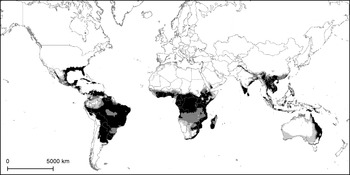
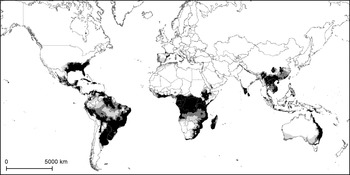
Under current climate, conditions are projected to be suitable for B. dorsalis throughout much of the tropics and subtropics (fig. 2) with the exception of desert areas where dry stress and/or hot stress limit its distribution. Optimal climate conditions occur in large parts of South America, Central America and sub-Saharan Africa, as well in the south-eastern USA, Queensland and most of the Pacific Islands. Climatic conditions are projected to be marginal in many warm temperate areas, such as southern Mediterranean Europe and northern New Zealand.
The climate suitability (EI) for the oriental fruit fly under the reference climate (1961–1990 averages) projected using CLIMEX™ (□, unsuitable (0.00–0.49); , marginal (0.50–9·99);, suitable (10.00–19.99); ■, optimal (20.00+)).

Future climate
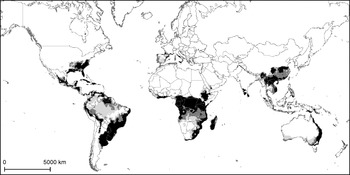
The major effect of future climate on the potential distribution of B. dorsalis is that the distribution will expand poleward into areas that are currently too cold (figs 3 and 4). The projected range expansion may be limited to about 200 km in extent, but the degree of suitability in the vicinity of the range boundary could vary substantially depending upon the future emissions scenarios. For example, under current climate, optimal conditions in the USA only occur south of Charleston, South Carolina, but under the future scenarios, the optimal range extends further north towards Richmond, Virginia (fig. 3) and Washington DC (fig. 4). In some regions, e.g. South America, the projected warming under future climate scenarios may decrease the invasion threat from B. dorsalis. Under current climatic conditions, optimal conditions for B. dorsalis extend through much of Brazil, Venezuela, Guyana, Surinam, Paraguay and Uruguay. Climate change scenarios indicate that South America is likely to become hotter and wetter. As a result of these changes, under the milder B1 scenario, much of the Amazon Basin is projected to become less suitable, and under the more severe A2 scenario, optimal areas for B. dorsalis are projected to be restricted to areas outside the Amazon Basin, primarily along the eastern coast of South America between Rio Grande do Norte (Brazil) and Bahía Blanca (Argentina) and inland to Asunción (Paraguay) (fig. 4). The projected optimal range of B. dorsalis in Africa and inland Australia also reduces as the climate is projected to become drier, although the effects are not as dramatic as in South America. In Europe, the potential range for B. dorsalis is projected to spread northward with climatically suitable or marginal conditions occurring in much of Spain, Portugal and Italy, to the south of France. In Asia, the projected potential range also expands polewards, although projected conditions in South East Asia for B. dorsalsis deteriorate because of increasing wet stress on New Guinea, and heat stress around Myanmar and Thailand. Under each of the future climate scenarios examined here, the climatic suitability of the south Pacific Islands, including New Zealand increases substantially, with some areas becoming climatically optimal. This includes some of New Zealand's prime horticultural regions in the North Island.
The climate suitability (EI) for the oriental fruit fly in the 2080s projected using CLIMEX™ (□, unsuitable (0.00–0.49);, marginal (0.50–9·99);, suitable (10.00–19.99); ■, optimal (20.00+)). Source meteorological data adjusted using the CSIRO Mark 2 GCM running the SRES B1 scenario.

The climate suitability (EI) for the oriental fruit fly in the 2080s projected using CLIMEX™ (□, unsuitable (0.00–0.49);, marginal (0.50–9·99);, suitable (10.00–19.99); ■, optimal (20.00+)). Source meteorological data adjusted using the CSIRO Mark 2 GCM running the SRES A2 scenario.

Discussion
The results provided here should be considered indicative of the directions and likely magnitudes of the expected changes in the potential range of B. dorsalis in response to climate change, highlighting areas where more detailed risk assessments may be worthwhile.
Bactrocera dorsalis is projected to be able to establish persistent populations throughout the tropics and subtropics. Given its wide host range, and the likelihood that host plant species will also be subject to similar range-shifting pressures due to climate change (e.g. relaxation of degree day limits), it is unlikely that host distributions will significantly affect the ability of B. dorsalis to shift its distribution in relation to climate changes. While cold stress is the primary limiting factor, hot and dry stress prevent its establishment in the Sahara, inland Australia and parts of the Middle East. Areas of particular invasion risk include Central and South America, sub-Saharan Africa, coastal Queensland, Mexico, the Caribbean and the south-eastern USA. The EPPO (Reference Smith, McNamara, Scott and Holderness1997) rate the risk of establishment of B. dorsalis in the EPPO region as minimal, although acknowledging that it may survive in southern areas. Our results indicate that the climate in parts of southern Europe (Spain, Portugal, Italy and Greece) is likely to be marginal for establishment of B. dorsalis under current climate. This result supports the EPPO (Reference Smith, McNamara, Scott and Holderness1997) risk assessment for direct economic losses due to a B. dorsalis incursion in Europe as minimal under current climate conditions. However, under future climate conditions, the area of the Mediterranean that is potentially habitable for B. dorsalis expands and becomes increasingly suitable. This trend lends further support to the classification of B. dorsalis as an A1 pest for Europe under the EPPO classification scheme (Reference Smith, McNamara, Scott and Holderness1997).
Under climate change the potential range of B. dorsalis expands into areas currently too cold for its survival and contracts from areas which are predicted to become drier under climate change scenarios. The agricultural value of these areas is likely to decrease as they become drier. Where conditions become warmer and wetter (e.g. Brazil) there is a tendency for the climate suitability to decrease, and under the extreme A2 scenario, there is even a range contraction. As the climatic suitability of an area increases, the direct impact of B. dorsalis, through damage to fruit, is likely to increase. This will in turn affect market access costs, although the impact will depend on the export orientation of a country versus the importance of the domestic market.
Because the CLIMEX model was fitted primarily to the currently known native distribution, the model probably represents the realised niche of B. dorsalis (Hutchinson, Reference Hutchinson1957; Wharton & Kriticos, Reference Wharton and Kriticos2004); and, therefore, it is likely to be conservative because of the presence of biotic constraints from competitors and natural enemies in the native range (Davis et al., Reference Davis, Lawton, Shorrocks and Jenkinson1998). However, as noted by Brown et al. (Reference Brown, Stevens and Kaufman1996), such biotic range constraints are likely to be most important where climatic resources (temperature and moisture) are abundant. Therefore, the poleward distribution limits presented here are likely to be more reliable than the equatorial limits.
Potential distributions cannot be predicted based on climate alone; and there is a need to consider dispersal and species interactions, such as host availability, competition and the effect of natural enemies (Baker et al., Reference Baker, Sansford, Jarvis, Cannon, MacLeod and Walters2000). In some regions, fruit availability during the winter months would be likely to influence the range of this species. To ascertain the likelihood of competition leading to exclusion of B. dorsalis from a region, a detailed examination of host preferences would need to be made to determine the likelihood of competition for food resources occurring. Duyck et al. (Reference Duyck, David and Quilici2004) reviewed the history of competitive interactions between polyphagous fruit fly species following invasions and noted that, in all cases where B. dorsalis has invaded, the existing species (either natives or earlier introductions) were displaced. Thus, an incursion of B. dorsalis could potentially have adverse effects on native Tephritidae fauna in a region.
By default, CLIMEX uses a 30-year climate average reference dataset, the default for climatic analysis. Such data can mask the fact that establishment by transient pests in areas that are usually unsuitable or marginal may be possible during a 30-year period if there are years or sequences of years where conditions are favourable (Baker, Reference Baker, Hallman and Schwalbe2002). However, this effect depends upon the nature of the distribution data used to build the model. If the reference data include locations of populations that are transient and taking advantage of particularly favourable weather patterns, then the resulting CLIMEX model will probably also include this marginal habitat, albeit with a low EI value. If a model is likely to be affected by this type of data, it should be apparent in terms of outlying data that are difficult to reconcile with other distribution points during the parameter fitting exercise. No such points were observed, providing more confidence in the model.
Projecting climate changes using GCMs is an inexact procedure. There are three major sources of uncertainty. Firstly, there are uncertainties in future greenhouse gas and aerosol emissions. These uncertainties are represented by the variation in the SRES emissions scenarios. Secondly, there are uncertainties in global climate sensitivity, because of differences in the way each GCM portrays physical processes. This is apparent in the different levels of global warming projected by each GCM in response to the same level of radiative forcing. Finally, there are uncertainties in regional climate changes, which appear as regional differences in projections in response to similar emissions scenarios and mean global warming. Thus, the results presented here represent most of the accepted uncertainty due to the future socio-economic conditions that underpin the SRES emissions scenarios. Whilst most of the GCMs indicate similar results at the global level, there are significant regional differences. Therefore, for critical decision making, it is prudent to consider the sensitivity of the affected system to the probable full range of expected climatic changes. A more comprehensive portrayal of the uncertainties in future changes in the potential distribution of B. dorsalis at the regional scale should consider results from a range of GCMs that display the desirable traits described by the IPCC (IPCC-TGCIA, Reference Carter, Hulme and Lal1999; Ruosteenoja et al., Reference Ruosteenoja, Carter, Jylhä and Tuomenvirta2003), or work with climate modellers to use results from regional climate models (Mearns et al., Reference Mearns, Giorgi, Whetton, Pabon, Hulme and Lal2003). Bactrocera dorsalis is projected to represent a serious threat to many tropical, subtropical and warm temperature regions of the world; and, for many countries, these threats are likely to increase as a result of the projected global climate change. In light of the results presented here, the trapping grid in place for monitoring in New Zealand and the Pacific ought to remain in place, and ongoing vigilance from biosecurity authorities is necessary. The EPPO should consider revising their assessment of the pest status of B. dorsalis to reflect the potential for establishment in southern Mediterranean Europe, especially under global climate change scenarios. The FAO and biosecurity authorities need to be future- focused and consider the changing threat profiles of species such as B. dorsalis as a result of climate change.
Acknowledgements
The New Zealand Foundation for Science, Research and Technology programme, ‘Better Border Biosecurity’, funded this work. Thanks to Shaun Kolomeitz and Neil Alexander, Ensis, for Python programming to generate the climate change surfaces. Also thanks to Barney Stephenson, MAF for early discussions about fruit fly threats and John Charles and Peter Dentener, HortResearch, for assistance with various aspects of this project. Sue Worner, Anne Gunson and Barbara Waddell made helpful comments on a draft of the paper.