Multiple sclerosis (MS), a chronic inflammatory disease of the central nervous system (CNS), causes demyelination and axonal/neuronal damage, resulting in a neurologic manifestation of the CNS that is associated with changes in functional activities, cognitive impairment, pain, over sensation, and coordination and speech difficulties (Reference Weinshenker, Bass and Rice1). Its clinical features have a typical onset during a person's productive working years, ranging from 20 to 40 years of age, and predominantly occurring in females (Reference Cohen2). The prevalence of MS is high in North America (140 per 100,000) and Europe (108 per 100,000) (Reference Kurtzke3), whereas the prevalence of MS in Thailand reported by Prayoonwiwat et al. (Reference Prayoonwiwat, Apiwattanakul and Pasogpakdee4) was 0.201 per 100,000, indicating that it is a very rare disease in this country. Despite its relative rarity, the burden of MS has been documented across every part of the world (Reference Browne, Chandraratna and Angood5). MS is characterized by economic burden and decreased patients’ quality of life (QoL), particularly as the disease progresses to later stages.
MS disease progression is classified into the following four stages: (i) relapsing–remitting MS (RRMS), a self-limited attack of neurologic dysfunction; (ii) secondary progressive MS (SPMS), a steady deterioration in function unrelated to acute attacks; (iii) primary progressive MS (PPMS), a steady decline in function from the onset of the disease without acute attacks; and (iv) progressive relapsing MS (PRMS), a progressive course with occasional attacks (Reference Katz Sand6). Disability due to MS has been commonly measured by the Kurtzke Expanded Disability Status Scale (EDSS). This scale, ranging from 0 to 10 by 0.5 intervals, quantifies disability into several functional system scores (FSSs). Patients with EDSS scores of 0–3.5 are fully ambulatory and have moderate disability in at least one functional system. Those with scores of 4.0–6.5 are fully ambulatory and have relatively severe disability eventually requiring constant bilateral assistance. Those scoring 7.0–9.5 are restricted to wheelchairs and confined to bed. Those with a score of 10 have died due to MS (Reference Kurtzke7).
Currently, disease-modifying therapy (DMT) has been prescribed primarily to prevent disability due to MS. They may also reduce rates of relapse or the number of lesions found on magnetic resonance imaging (MRI). In Thailand, three medications, interferon beta-1a (IFNß−1a), interferon beta-1b (IFNß−1b), and fingolimod, are approved for RRMS treatment; while mitoxantrone, primarily approved for cancer treatment, may be used off-label for MS. However, these treatments are very costly. The objective of this study was to evaluate the cost-utility of MS treatments compared with best supportive care (BSC) based on the societal perspective in Thailand. The results of this study can provide policy makers with information to determine whether DMT should be included on the National List of Essential Medicines (NLEM), the reimbursement drug list in Thailand used by three health insurance schemes: the Civil Servant Medicine Beneficiary Scheme (CSMBS) for government officers and their dependents (7 percent), the Social Security Scheme (SSS) for private employees (13 percent), and the Universal Health Coverage Scheme (UCS) for the rest of Thai populations (80 percent) who are not currently under CSMBS or SSS.
METHODS
A cost-utility analysis using a Markov model was performed to compare the lifetime costs and outcomes of RRMS patients receiving alternative treatments compared with BSC, from a societal perspective as recommended by Thailand's health technology assessment (HTA) guidelines (8). The target population was MS patients aged 35 years consistent with the median age of MS patients in Thailand based on the data collected from the patients who attended three out of the four hospitals that provide the treatment for MS patients in the country (Reference Chanatittarat9). Treatments included in the economic analysis that were compared with BSC were IFNß−1a, IFNß−1b, and fingolimod. BSC includes symptomatic treatment for spasticity, neuropathic pain, and bladder and bowel disorders. All future costs and outcomes were discounted to present values at the rate of 3 percent per year according to the Thai HTA guidelines (8). The main outcomes were quality-adjusted life-years (QALYs) gained and incremental cost-effectiveness ratio (ICER) in US dollar (USD) per QALY gained. The Subcommittee for the Development of the NLEM uses the Thai societal WTP of approximately USD 4,500 per QALY gained (8) as the cost-effectiveness threshold.
Economic Model
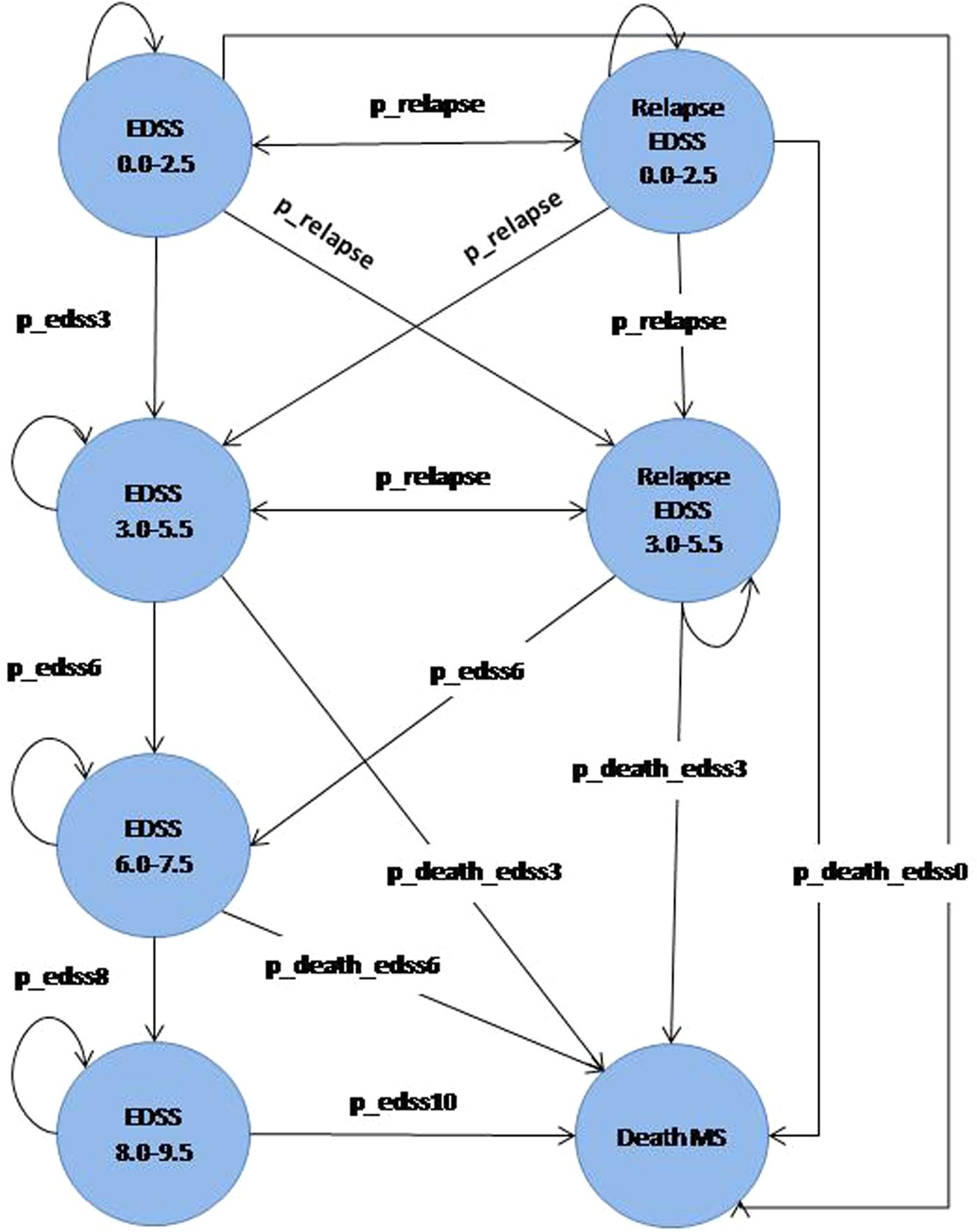
We used a Markov model to simulate the clinical progression of RRMS and estimate the relevant costs and health outcomes over a lifetime horizon or 30 years, with a cycle length of 1 month (Figure 1). The study compared three mutually exclusive treatment alternatives with BSC as the comparator. The Markov model contained seven different health states including: (i) patients without disability or with few ambulatory limitations (EDSS 0.0–2.5); (ii) patients with an EDSS score of 0.0–2.5 experiencing a relapse (relapse EDSS 0.0–2.5); (iii) patients with moderate disability or ambulatory limitations (EDSS 3.0–5.5); (iv) patients with an EDSS score of 3.0–5.5 experiencing a relapse; (v) patients requiring walking aids or wheelchairs (EDSS 6.0–7.5); (vi) patients restricted to bed (EDSS 8.0–9.5); and, (vii) patients who have died. The arrows in Figure 1 demonstrates permissible transition. All patients start at the “EDSS 0.0–2.5” state with the option to move to other health states as indicated by the arrows, or to remain in the same state, or to move to the death state.
Schematic Markov model for multiple sclerosis (MS) treatment. EDSS, Expanded Disability Status Scale. The seven health states simulated the clinical progression of MS disease are as follows: (Reference Weinshenker, Bass and Rice1) EDSS 0.0–2.5, (Reference Cohen2) EDSS 3.0–5.5, (Reference Kurtzke3) EDSS 6.0–7.5, (Reference Prayoonwiwat, Apiwattanakul and Pasogpakdee4) EDSS 8.0–9.5, (Reference Browne, Chandraratna and Angood5) Relapse EDSS 0.0–2.5, (Reference Katz Sand6) Relapse EDSS 3.0–5.5, and (Reference Kurtzke7) death. Arrows represent transition probabilities, that is, p_relapse = transition probability of progressing from EDSS 0.0–2.5 to relapse EDSS 0.0–2.5 (and vice-versa), or to relapse EDSS 3.0–5.5; transition probability of progressing from relapse EDSS 0.0–2.5 to EDSS 3.0–5.5, or to relapse EDSS 3.0–5.5; transition probability of progressing from EDSS 3.0–5.5 to relapse EDSS 3.0–5.5 (and vice-versa); p_edss3, p_edss6, and p_edss 8 = transition probabilities of progressing from earlier EDSS health state to EDSS 3.0–5.5, to EDSS 6.0–7.5, and to EDSS 8.0–9.5, respectively; p_death_edss0, p_death_edss3, or p_death_edss6; and p_edss10 = transition probabilities of progressing to death from EDSS or Relapse EDSS 0.0–2.5, from EDSS or Relapse EDSS 3.0–5.5, from EDSS 6.0–7.5, and from EDSS 8.0–9.5, respectively.
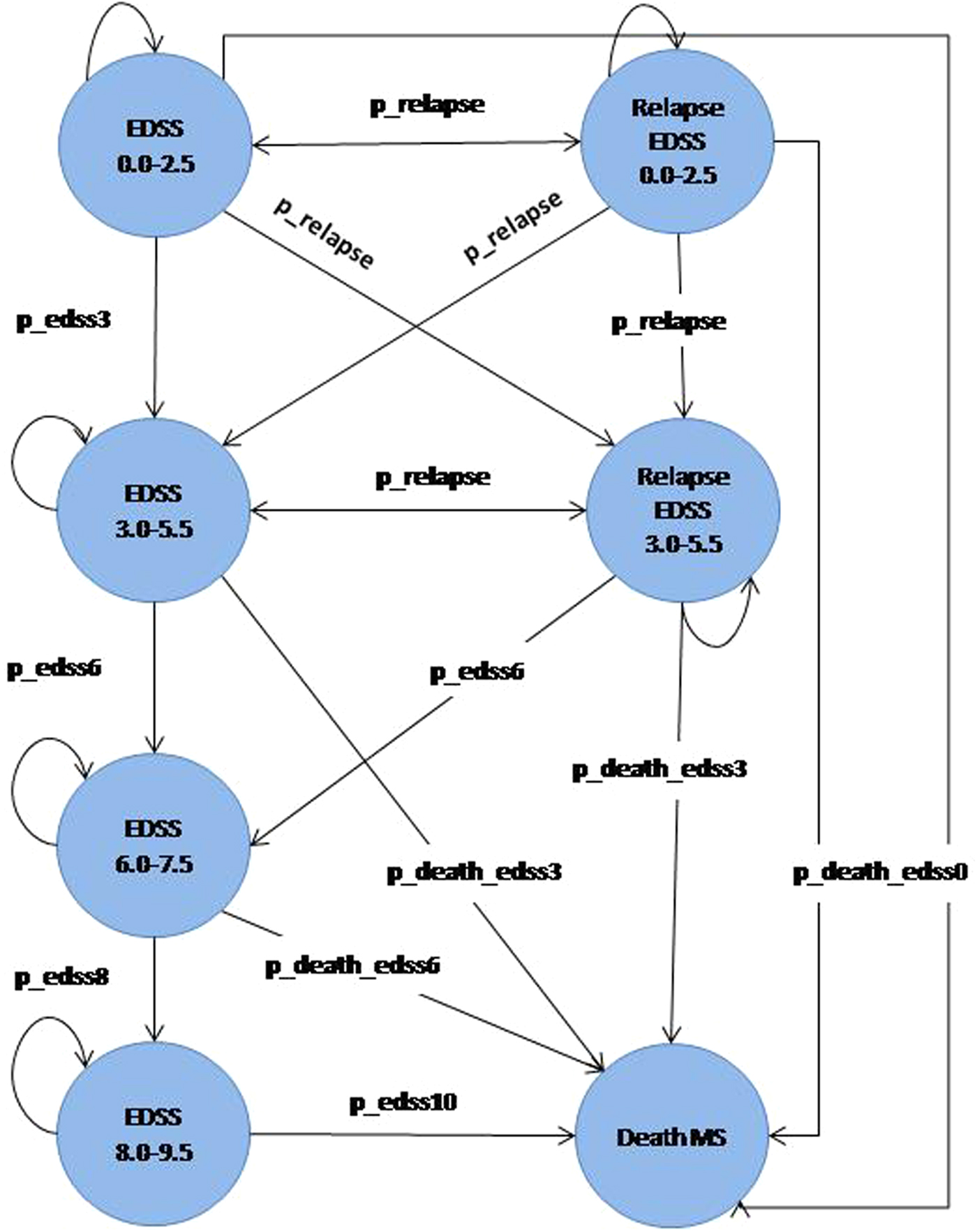
We applied several assumptions in our study model. First, all patients would experience all EDSS health states. Second, according to the currently approved indications for RRMS treatments and consistent with the current clinical practice in Thailand, patients would cease treatment with fingolimod, IFNβ−1a, or IFNβ−1b after patients reached the EDSS 6.0–7.5 health state. Third, second-line treatments were not considered in this model as there are no approved treatments for SPMS patients in Thailand. Therefore, patients who progressed to the SPMS stage would receive BSC as the standard treatment in Thailand. After the termination of treatment as patients reach the EDSS 6.0–7.5 health state, the efficacy of treatment in those who received fingolimod or interferon would be the same as that of supportive care or placebo. Fourth, the model assumed that patients could not transition to a lower EDSS health state reflecting the chronic progression of MS over time. Fifth, the model did not specify the clinical point at which patients progressed to SPMS, a late and more severe state in which patients experience more progressive symptoms and disability. Lastly, the same probability of relapse was assumed for all transitions to and from the two relapsed EDSS health states.
Cost Variables
Both direct medical and nonmedical costs were included and collected from all patients who were diagnosed with MS and attended any of the three participating hospitals (out of a total of four) where MS treatment can be provided in Thailand. Patients were recruited during the period of March 1, 2011, to September 30, 2014, and accounted for 75 percent of all MS patients in the country (Reference Chanatittarat9). The Institutional Review Board (IRB) Ethics Committee of the three hospitals granted the ethics approval for the study.
All costs were adjusted to 2016 values using the consumer price index. Costs were converted to USD using the 2016 average annual exchange rate of 35.26 Thai baht (THB) per 1 USD (10). Direct medical costs included all costs of treatment (i.e., drug and other healthcare costs). Drug costs were retrieved from the reference price database of the Drugs and Medical Supplies Information Centre (11), while other healthcare cost data were retrospectively obtained from electronic health records of MS patients receiving treatments at the MS clinics of the three hospitals during the 2007–13 period (Reference Chanatittarat9). Data on demographic characteristics and costs (e.g., cost of drugs, diagnosis, hospitalization, and other medications) were obtained. Charges were adjusted to costs using the cost-to-charge ratio of 1.63 (8).
Data on direct nonmedical costs (i.e., costs of food, transportation, accommodation, facility modification, formal care, and informal care) were collected through interviews with patients and their families from the three participating hospitals and their MS clinics. The outpatient direct nonmedical costs classified based on the EDSS states were estimated based on outpatient visit once a month of patients at the different EDSS states.
In addition, the costs of hospital admission and relapse were classified by the EDSS state measured at the last outpatient visit before the relapse occurred. Although the same probability of relapse was applied to all EDSS states, according to the results from our primary data collection from MS patients, inpatient and relapse costs classified by EDSS state were different due to the differences in disease severity. This resulted in a difference in the direct medical and nonmedical costs. Therefore, the relapse costs were classified by EDSS state to reflect the real costs for MS patients. We did not include indirect costs to avoid double counting in the cost-utility analysis based on the recommendation from the Thai HTA guidelines (8).
Clinical Variables
Transition probabilities for the BSC arm were obtained from published studies (Reference Weinshenker, Bass and Rice1;Reference Scalfari, Neuhaus and Degenhardt12;Reference Goodkin, Hertsgaard and Rudick13). Age specific all-cause mortality was retrieved from the Thai population's life table data based on the World Health Organization (14).
Data on the relative treatment effects (i.e., relative risk, RR) of disease progression and relapse for IFNß−1a, IFNß−1b, and fingolimod compared with BSC were obtained from a published network meta-analysis (NMA) study (Reference Tramacere, Del Giovane, Salanti, D'Amico and Filippini15). The RR for each treatment was chosen from the high assumed risk with placebo. To calculate the monthly transition probabilities of the disease progression and relapse for each treatment, the RR for each treatment was converted to a monthly RR, which was applied to calculate a monthly transition probability of disease progression and relapse for each treatment (Reference Fleurence and Hollenbeak16).
Health Outcomes
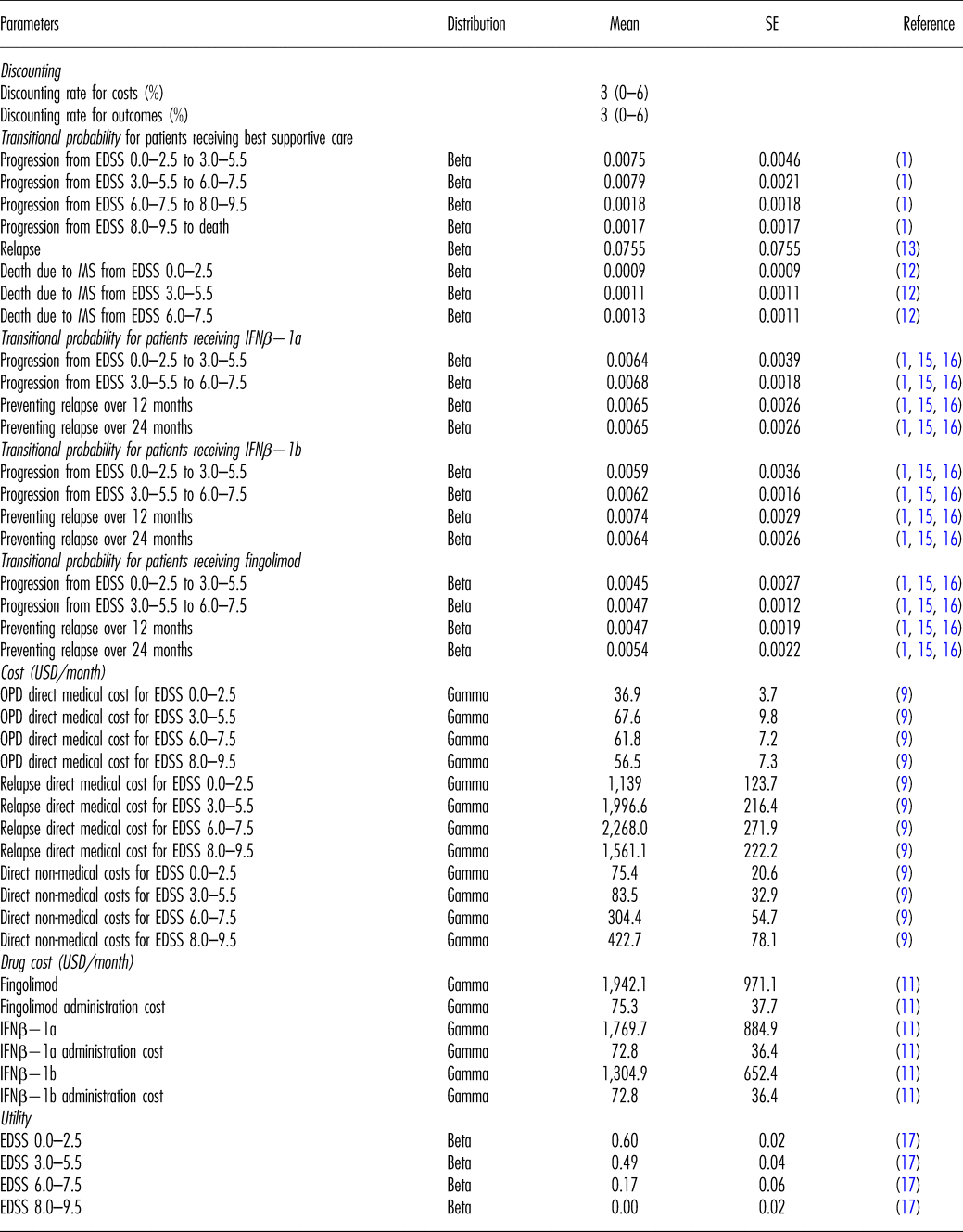
Health outcomes were presented as QALYs gained defined as the life-years gained in an individual health state multiplied by the utility or QoL score relevant for that health state. A multicenter cross-sectional study was conducted from September 2011 to July 2014 at the MS and related disorders clinics of the three participating hospitals to collect QoL data from 104 MS patients by face-to-face interviews using the standard Thai version of the EuroQol five-dimension questionnaire with three levels (EQ-5D-3L) questionnaires (Reference Siritho17). The study was approved by the local IRB Ethics Committee of each hospital. All patients gave written informed consent before data collection. A total of 105 patients were asked, and 1 refused to participate in the study due to unavailability. Each EQ-5D health state was converted to health utility value ranging from 0 (worst QoL) to 1 (best QoL) applying the Thai value set and were derived using time trade-off method (Reference Tongsiri and Cairns18). All utility data were categorized according to patient disease status (EDSS) as evaluated by neurologists (Reference Siritho17). Table 1 displays all input parameters used in the model.
All Input Parameters Used in the Model

EDSS, Kurtzke Expanded Disability Status Scale; IFNß−1a, Interferon beta-1a; IFNß−1b, Interferon beta-1b; OPD, outpatient department visit; RR, risk ratio; SE, standard error; USD, United States dollar.
Uncertainty Analysis
One-way sensitivity analyses for all three treatments were conducted to evaluate the uncertainties of each parameter and the results were presented as Tornado diagrams. Probabilistic sensitivity analyses (PSA) were performed to simultaneously test the uncertainty of all parameters. The Monte Carlo model was run for 1,000 simulations. The results of PSA were presented as cost-effectiveness acceptability curves.
RESULTS
Cost-Utility Analysis
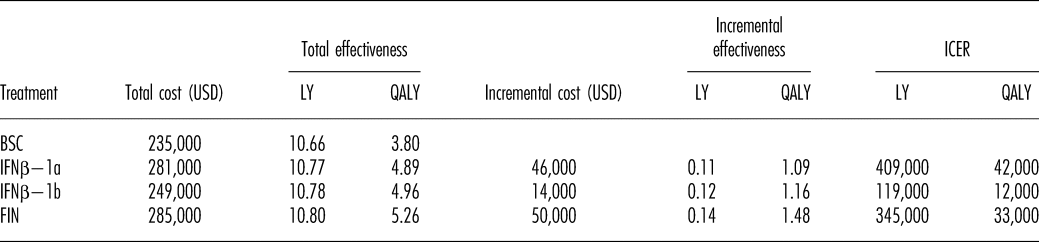
The cost-utility analysis results were presented as the ICER in USD per QALY gained compared with BSC (Table 2). Of the patients with RRMS aged 35 years, treatment with fingolimod resulted with the highest cost (USD 285,000), while those receiving BSC had the lowest cost (USD 235,000). Patients receiving fingolimod achieved the highest total outcomes with 10.80 LYs and 5.26 QALYs versus other treatment alternatives that were compared with BSC. Compared with BSC, IFNβ−1b had the lowest ICER value at USD 12,000 per QALY gained, followed by fingolimod at USD 33,000 per QALY gained, and IFNß−1a at USD 42,000 per QALY gained.
Total Costs, Effectiveness, and ICER
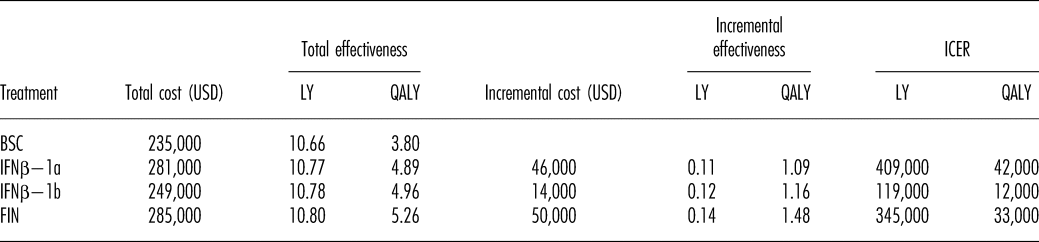
Note. Numbers were rounded to the nearest ‘000 USD.
BSC, best supportive care; FIN, fingolimod; ICER, incremental cost-effectiveness ratio; IFNß−1a, interferon beta-1a; IFNß−1b, interferon beta-1b; LY, life-year; QALY, quality-adjusted life-year; USD, United States dollar.
Uncertainty Analysis
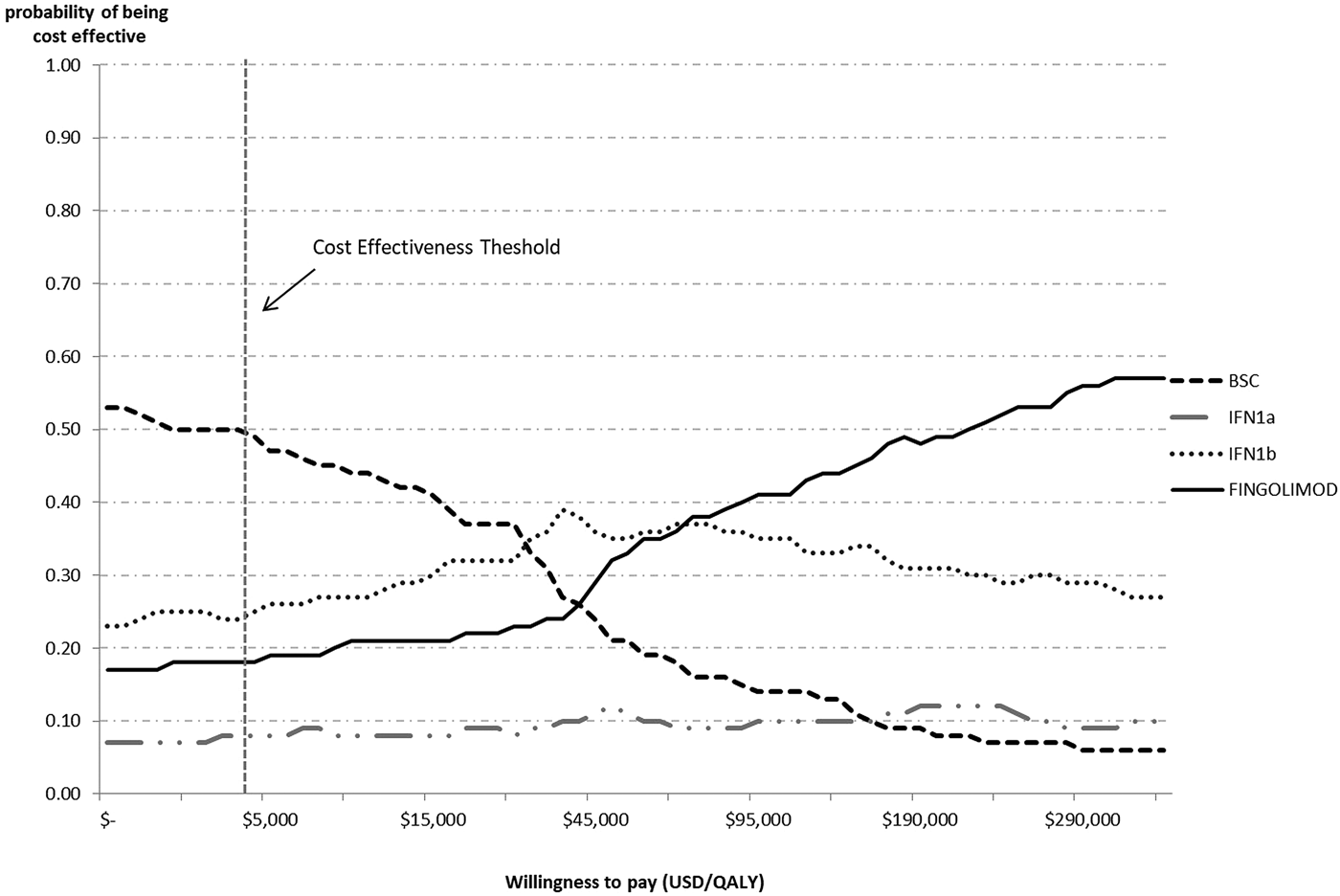
Three tornado diagrams are presented in Supplementary Figures 1, 2, and 3, which demonstrate the one-way sensitivity analysis results of IFNβ−1b, fingolimod, and IFNβ−1a, respectively. For patients receiving IFNβ−1b, fingolimod, or IFNβ−1a, the ICER was most sensitive to variations in drug cost, transition probability of progressing from EDSS 0.00–2.5 to EDSS 3.0–5.5, and transition probability of delaying progression from EDSS 0.0–2.5 or 3.0–5.5 to EDSS 6.0–7.5. Figure 2 presents the cost-effectiveness acceptability curves for all the treatments. At the WTP of USD 4,500 per QALY gained, the PSA results demonstrated that BSC had the highest probability of being cost-effective at 49 percent, followed by IFNβ−1b at 25 percent, fingolimod at 18 percent, and IFNβ−1a with the lowest probability at 8 percent. Supplementary Figure 4 illustrating the cost-effectiveness acceptability curves of undiscounted costs demonstrated similar results to those of discounted costs in Figure 2.
Cost-effectiveness acceptability curves for all DMTs based on the societal perspective. BSC, best supportive care; DMTs, disease-modifying therapies; IFN1a, interferon beta 1a; IFN1b, interferon beta1b; QALY, quality-adjusted life-year; USD, United States dollar.

DISCUSSION
Although the burden of MS on patients and their families in Thailand has been recognized for more than 20 years, the low country prevalence of MS conceals the overall impact to society as a result of inaccessibility to standard treatment and insufficient coverage of neurologists nationwide. This is the first study in Thailand to investigate the cost-utility of DMTs, which have been approved as first-line treatments for MS in the country, but have not been included in the NLEM. Therefore, the findings of this study may help inform decision makers on the health and economic impact associated with DMT coverage for MS patients upon NLEM listing.
At the current societal WTP threshold of USD 4,500 per QALY gained recommended by the Thai Subcommittee for the Development of the NLEM (8), the results suggested that fingolimod, IFNβ−1a, and IFNβ−1b were not cost-effective compared with BSC for the treatment of patients with RRMS aged 35 years in Thailand. However, among the three medications, IFNβ−1b resulted with the lowest ICER value, whereas fingolimod provided the highest total QALYs gained among the treatments that were compared with BSC. Similar to other published studies, it was found that not all active drugs or DMTs were cost-effective (Reference Nuijten and Hutton19). According to the National Institute for Health and Care Excellence (NICE) in the United Kingdom, (Reference Chilcott, McCabe and Tappenden20), IFNβ, fingolimod, natalizumab, and alemtuzumab were cost-ineffective; thus, a new pricing scheme was offered and approved by NICE with a closed agreement (21).
In contrast to our findings and those of NICE, some published studies reported that IFNß−1a [both the intramuscular (Reference Dembek, White and Quach22) and subcutaneous (Reference Fredrikson, McLeod and Henry23) injection preparations], fingolimod (Reference Bergvall, Costa-Scharplatz and Hettle24), and IFNß−1b (Reference Goldberg, Edwards and Fincher25) were cost-effective. These varying conclusions on the value for money of DMTs may be on account of the different time horizons, perspectives, and comparators applied in these studies. The cost-effectiveness study of DMTs commissioned by NICE (Reference Chilcott, McCabe and Tappenden20) compared fingolimod with IFNß−1a in RRMS and SPMS patients over a 20-year time horizon from a government perspective. The studies in Spain (Reference Dembek, White and Quach22) and Sweden (Reference Fredrikson, McLeod and Henry23) both compared intramuscular (Reference Dembek, White and Quach22) and subcutaneous IFNß−1a (Reference Fredrikson, McLeod and Henry23) with BSC over 30- (Reference Dembek, White and Quach22) and 40-year time horizons (Reference Fredrikson, McLeod and Henry23), respectively, and applied a societal perspective.
The results of one-way sensitivity analyses for the current model identified that the ICER values for all DMTs were most sensitive to their prices. In our analysis, we have estimated that the price of IFNβ−1b, fingolimod, and IFNβ−1a would have to be reduced by 15–35 percent, 32–50 percent, and 35–60 percent of their current market prices, respectively, to result to a cost-effective ICER value that is equal to Thailand's WTP threshold. This suggests price negotiation with the pharmaceutical industries to enable access to DMTs, which is a possible mechanism in Thailand. Past considerations of the NLEM Subcommittee included drugs that were not cost-effective at the current market price (i.e., tenofovir, oxaliplatin, and pegylated interferon alpha 2a) based on conducted economic evaluations, which eventually led to price negotiations referred from the calculated cost-effective price of the drugs based on their cost-effectiveness analyses (Reference Teerawattananon, Tritasavit, Suchonwanich and Kingkaew26). Consequently, the prices of these drugs were successfully reduced to be listed on the NLEM, which is equivalent to potential budget savings of THB 1,127 million (approximately USD 32 million) for the Thai Government (Reference Teerawattananon, Tritasavit, Suchonwanich and Kingkaew26).
The ICER values were also sensitive to the RR of disease progression. These RR values used as the relative treatment effects of the MS drugs in this study were obtained from a published NMA study (Reference Tramacere, Del Giovane, Salanti, D'Amico and Filippini15). It should be noted that, in our model, we applied the RR of the disease progression and relapse as a constant ratio until the patients reached EDSS 6.0. After which, the treatment effect of all drugs as patients progress further in the model were assumed to be equal to that of placebo. This assumption was based on published studies demonstrating that the efficacy of fingolimod (Reference Cohen, Tenenbaum, Bhat, Pimentel and Kappos27) or IFNβ (Reference Moccia, Palladino and Carotenuto28) in reducing annual relapse rate and disease progression was found to be sustainable in long term use.
Varying the utility parameters also had an effect on the ICER values. It should be noted that, with similar disease severity, the utility values in this study were lower compared with the previous study in United Kingdom (21). A previous study using the EQ-5D in Thailand reported that Thai patients had lower utility values in general compared with those in Western counties (Reference Szende, Janssen and Cabases29). The relatively lower Thai health utility may be explained by the differences in the healthcare system, access to treatment, and standard of living between Western and non-Western countries. Lower estimates of utility would favor the treatment arms in the model.
Due to the low prevalence of MS in Thailand, the expected total number of MS patients is equivalent to less than 140 (Reference Prayoonwiwat, Apiwattanakul and Pasogpakdee4). A budget impact analysis is, therefore, recommended to estimate the likely budgetary requirement to guide policy decision making, should the government decide to cover the treatment for MS patients. The overall budget impact, however, is not expected to be large.
The validation of the conceptual model, input data, computerized model, and model outcomes was performed in this study. Face validity testing was conducted through consultation with four clinicians with expertise in the progression of MS disease from the MS and related disorders clinics of the three participating hospitals in Thailand. These experts were asked to judge the appropriateness of the Markov model, input data, data sources, and model outcomes. The computerized model was also validated by a health economist with modeling expertise. The clinical and modeling experts agreed that the model was valid and reasonable to apply. For the validation of the model outcomes, time to reach EDSS 6.0 for BSC arm (6 years) is similar to that obtained from the study of Alroughani et al. (Reference Alroughani, Akhtar, Ahmed, Behbehani and Al-Hashel30).
In addition, there were more patients receiving BSC in the EDSS 6.0–9.5 health state (60 percent) than those receiving DMTs (23–33 percent). This may indicate a more favorable efficacy of DMTs in delaying progression. Moreover, approximately 68 to 80 percent of the total costs for DMTs were incurred in the EDSS 0.0–5.5 health state, whereas 67 percent of total costs for BSC were found in the EDSS 6.0–9.5 health state. It was noted that the total cost in the late EDSS health state could be offset by DMTs costs.
Our economic analysis has some limitations. First, the evidence from published randomized controlled trials, observational studies, and MRI studies indicate that neutralizing antibodies (NAbs) observed in 15–35 percent of MS patients (Reference Grossberg, Oger, Grossberg, Gehchan and Klein31) were related to negative clinical outcomes. However, we did not take into account the effect of NAbs; hence, the ICER value of IFNß might be underestimated. Should DMT become available in Thailand, it is recommended that patients be tested for NAbs to ensure that patients who are likely to be nonresponders will avoid ineffective treatment and receive alternative treatments.
Second, we did not consider treatment discontinuation despite DMTs, especially IFNß−1a and IFNß−1b, being associated with adverse effects which can lead to treatment discontinuation. Upon consultation with local clinical experts, we were referred to one published study by Jarernsook et al. (Reference Jarernsook, Siritho and Prayoonwiwat32), which showed that only 5 percent of MS patients in Thailand discontinued IFNß treatment and the probability that patients will discontinue fingolimod was lower as it caused less adverse effects compared with IFNß treatment (Reference Jarernsook, Siritho and Prayoonwiwat32). Thus, we did not consider the treatment discontinuation in our study which might result in the overestimated costs of drugs.
Third, we did not account for the cost of other treatment-related adverse events. The LONGTERMS study (Reference Cohen, Tenenbaum, Bhat, Pimentel and Kappos27) which investigated the safety of fingolimod for 10 years revealed that no safety concern had been reported to be associated with long-term exposure to fingolimod for RRMS patients; hence, were not included in the costs of our study.
Fourth, we did not consider changes in therapy due to the failure of first-line treatment even though it is possible in the clinical practice. This assumption was consistent with the approach taken in other economic evaluations of DMTs (Reference Bergvall, Costa-Scharplatz and Hettle24).
Fifth, we did not apply a utility decrement to the relapse states; thus, the collected utility data did not capture the utility effects of relapses, which may have led to overestimated utility values for relapse patients. As relapse occurs more commonly in patients receiving BSC, the QALY gained in the BSC arm is likely overestimated, thereby disfavoring the DMT treatment arms. Lastly, the treatment effect will cease after the patients progressed to EDSS 6.0. After which, BSC or symptomatic treatment will be provided, in compliance with the current practice in Thailand.
In conclusion, the findings of this study demonstrated that IFNß−1a, IFNß−1b, and fingolimod are not cost-effective compared with BSC, at the Thai societal WTP of USD 4,500 per QALY. Hence, these treatments should not be included in the NLEM unless the current market prices of IFNβ−1b, fingolimod, and IFNβ−1a will be reduced by 15–35 percent, 32–50 percent, and 35–60 from percent, respectively, or special schema arranged. Budget impact analysis should be further conducted to estimate the budgetary requirement for the Thai Government.
SUPPLEMENTARY MATERIAL
The supplementary material for this article can be found at https://doi.org/10.1017/S0266462318003604
Supplementary Figure 1: https://doi.org/10.1017/S0266462318003604
Supplementary Figure 2: https://doi.org/10.1017/S0266462318003604
Supplementary Figure 3: https://doi.org/10.1017/S0266462318003604
Supplementary Figure 4: https://doi.org/10.1017/S0266462318003604
CONFLICTS OF INTEREST
There was no funding for this study. Dr. Pasogpakdee reports other from Merck Serono, other from UCB (Thailand), other from Novartis, outside the submitted work. Dr. Apiwattanakul reports other from Merck Serono, other from Biogen Idec, other from UCB (Thailand), other from Novartis , outside the submitted work. Dr. Siritho reports other from Merck Serono, other from Pacific Healthcare (Thailand), other from Menarini (Thailand), other from Biogen Idec, other from UCB (Thailand), other from Novartis, outside the submitted work. Dr. Prayoonwiwat reports other from Bayer Schering Pharma, other from Eisai Inc, other from Pfizer Pharmaceutical Company Limited, other from Novartis, other from Sanofi-Aventis, outside the submitted work. Dr. Chaikledkaew has nothing to disclose. Dr. Chanatittarat has nothing to disclose. Dr. Riewpaiboon has nothing to disclose. Dr. Thavorncharoensap has nothing to disclose.