INTRODUCTION
Congestive heart failure (CHF) and chronic obstructive pulmonary disease (COPD) affect >20,000,000 patients in the United States and account for as much as $25 billion in annual healthcare expenditures. These disorders usually are characterized by progression over years, and episodic exacerbations that become more frequent and life threatening over time. In the advanced stages, patients may experience declining quality of life associated with progressive functional impairment, symptom distress, and high rates of anxiety and depression (Grady et al., Reference Grady, Jalowiec and White-Williams1995; Gore et al., Reference Gore, Brophy and Greenstone2000; Jaarsma et al., Reference Jaarsma, Halfens and Tan2000; Edmonds et al., Reference Edmonds, Karlsen and Khan2001; Blinderman et al., Reference Blinderman, Homel and Billings2008, Reference Blinderman, Homel and Billings2009).
Numerous other factors also may influence quality of life. Among those likely to be important is spiritual well-being (Daaleman & Nease, Reference Daaleman and Nease1994; SUPPORT Principal Investigators, 1995; Dein & Stygall, Reference Dein and Stygall1997; Koenig et al., Reference Koenig1997; Ehman et al., Reference Ehman, Ott and Short1999; Daaleman & VandeCreek, Reference Daaleman and VandeCreek2000). The diverse factors that may predict levels of spiritual well-being in populations with CHF or COPD have received little attention, and there are few data describing its course over time or its relationship with quality of life. Studies of spiritual well-being in patients with advanced COPD and CHF may contribute to an improved understanding of the unmet need for palliative interventions in these populations.
The aims of this prospective longitudinal study of patients with advanced CHF and COPD were to: (1) profile spiritual well-being over time; (2) identify significant correlates of spiritual well-being among demographic variables, disease-related variables, and quality of life domains; and (3) clarify the extent to which spiritual well-being influences quality of life relative to other phenomena.
METHOD
The Heart and Lung Disease (HALD) study was a 4 year prospective observational study of patients with advanced CHF or COPD. Patients were recruited from ambulatory practices at the Beth Israel Medical Center in New York and the Massachusetts General Hospital in Boston. The study protocol was approved by the Institutional Review Boards at the New England Research Institute and each of the two medical centers. Patients provided informed consent prior to participation.
Methods for patient recruitment and data collection have been described previously (Blinderman et al., Reference Blinderman, Homel and Billings2008, Reference Blinderman, Homel and Billings2009). In brief, a convenience sample of eligible patients was identified through chart review and discussion with specialist physicians. Patients had a primary diagnosis of CHF with an ejection fraction <35% and New York Heart Association (NYHA) class III or IV disease, or a primary diagnosis of COPD with a nonacute FEV1 < 30% predicted (stage IV COPD). Other eligibility criteria included life expectancy believed by the patient's attending physician to be at least 3 months, community (i.e., noninstitutional) residence, English speaking, and no clinical evidence of neurological or psychiatric disease severe enough to compromise data collection.
Patients were interviewed every 3 months for up to 2 years from study enrollment. Data were primarily collected through in-person interviews; telephone interviews were used to complete self-report questionnaires if necessary.
Measures
Spiritual Well-Being
Spiritual well-being was measured using the four-item basic faith subscale of the Functional Assessment of Chronic Illness Therapy-Spiritual Well-Being (FACIT-Sp) Questionnaire (Peterman et al., Reference Peterman, Fitchett and Brady2002). This instrument, which measures level of comfort and strength derived from one's faith, includes the following statements: “I find comfort in my faith,” “I find strength in my faith,” “My illness has strengthened my faith,” and “I know that things will be okay.” Each item is scored on a five-point Likert scale ranging from 0 (“not at all”) to 4 (“very much”). The overall score was calculated as the sum of all items and ranges 0–16, with a higher score indicating greater degree of spiritual well-being. Only this subscale was administered, in order to minimize burden on the part of the participants and also because faith was considered a possible modifier of illness-related stress. The Faith subscale correlates significantly with the Peace/Meaning subscale of the FACIT-Sp, with correlation r-values ranging between 0.36 and 0.54. Therefore, the Faith subscale was considered a surrogate for spirituality that allowed the researchers to also capture the aspects of patients' experience more closely related to religiosity.
Quality of Life
Quality of life was measured using the Multidimensional Index of Life Quality (MILQ), a valid and reliable instrument that assesses nine domains: Mental Health, Physical Health, Physical Functioning, Cognitive Functioning, Social Functioning, Partner Intimacy, Work and Productivity, Financial Status, and Relationship with Health Professionals (Healthcare/Support) (Avis et al., Reference Avis, Smith and Hambleton1996).
Symptom Number and Distress
The Memorial Symptom Assessment Scale (MSAS) was used to evaluate symptom number and distress. This instrument includes a valid subscale, the MSAS-Global Distress Index (MSAS-GDI) that measures overall symptom distress (Portenoy et al., Reference Portenoy, Thaler and Kornblith1994). The MSAS-GDI rates 10 common symptoms, 4 psychological and 6 physical, on four-point or five-point verbal rating scales.
Psychological Distress
The Rand Mental Health Inventory (MHI) is a validated measure of psychological distress (Rand Corporation & Ware, Reference Ware, McDowell and Newell1996). It was used to gauge the likelihood of depression as a potential mediating variable.
Physical Functioning
The 68-item version of the Sickness Impact Profile (SIP) was used to assess physical functioning and disability (Bergner et al., Reference Bergner, Bobbitt and Carter1981)
Comorbid Medical Conditions
Medical comorbidity was measured at all visits with the Charlson Comorbidity Index (Charlson et al., Reference Charlson, Pompei and Ales1987). It is a weighted index that assesses both the number and the seriousness of comorbid diseases, and it was used as an assessment of the overall burden of patient comorbidities.
Demographic Factors
Demographic identifiers also were evaluated as potential mediating variables. Among these, socioeconomic status (SES) was specifically measured using the Nam Powers Index (Nam & Powers, Reference Nam and Powers1983), a score based on the income and education levels associated with each occupation enumerated in the United States Census.
Finally, the Short Portable Mental Status Questionnaire (SPMSQ), a validated measure of cognitive impairment (Pfeiffer, Reference Pfeiffer1975) was administered, to further profile the population and exclude patients with significant cognitive impairment.
Statistical Analyses
Categorical variables were described in terms of percent (frequency), whereas continuous variables were described either as mean ± standard deviation if they were normally distributed, or as median (minimum, maximum) if they were skewed. Two-group univariate comparisons were performed using the Student t-test (continuous and normally distributed outcomes). These analyses were performed using SPSS 15.0. Univariate correlations were calculated based on Pearson's product moment r.
Two multivariate analyses were conducted. The first evaluated predictors of spiritual well-being and the second evaluated the influence of spiritual well-being and other variables on overall quality of life. Both analyses accounted for possible changes in scores over time using mixed-model regression analyses. All mixed-model regression models were conducted using SAS 9.1. For these analyses, the total score on the FACIT Sp subscale and the MILQ composite score were used as the dependent variables, respectively. Independent variables consisted either of one time demographic measures or of scores on the other measures that were taken over the course of 30 months of longitudinal measurements. Variables with multiple measures over the course of the study were chosen for inclusion in the multivariate mixed-model regressions if they showed significant correlations with the FACIT Sp subscale and the MILQ composite score over time and not just at baseline.
Results of the mixed-model regression are reported in terms of regression coefficients and p-values. A positive coefficient indicates a direct relationship between the predictor and outcome (e.g., the higher the level of the predictor, the higher the level of spiritual well-being), whereas a negative coefficient indicates an inverse relationship. A p-value < 0.05 is considered to be significant.
RESULTS
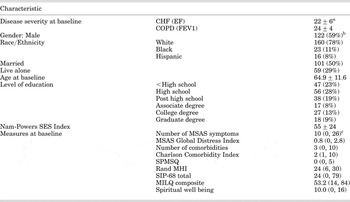
The 206 patients enrolled in the study included 103 patients with CHF and 103 patients with COPD (Table 1). Three of the COPD patients had a secondary diagnosis of CHF. The advanced nature of these diseases is evident in the mean ejection fraction of 22% for the CHF patients and the mean FEV1 of 24% for the COPD patients (Table 1).
Sample characteristics (n = 206)

aMean ± standard deviation.
bFrequency (%).
cMedian (minimum, maximum)
CHF, congestive heart failure; COPD, chronic obstructive pulmonary disease; MSAS, Memorial Symptom Assessment Scale; SPMSQ, Short Portable Mental Health Questionnaire; MHI, Mental Health Inventory; SIP, Sickness Impact Profile; MILQ, Multidimensional Index of Life Quality.
The mean age of the combined sample was 65 years, 59% were male (59%), and 78% were Caucasian. Half of the sample was married, 29% lived alone, and 77% had at least a high school education. The average level of SES was 55 (comparable to communications technician or machinist). Of the 59 patients who lived alone, 27 (46%) received some sort of home service or outside contact (e.g., home aide, meal delivery, adult day care, and transportation).
There was considerable variation in terms of comorbid conditions, cognitive function, mental health, and physical function (Table 1). Overall, however, patients had few comorbidities (median 3; range: 0–10) and cognitive functioning was good (median SPMSQ score of 0 and only one patient reporting more than mild cognitive impairment). In contrast, 23% of patients had MHI scores ≤ 18, indicating possible depression, whereas the median baseline MHI was 24. The median baseline SIP score was 24, and 22% reported scores indicating moderate to severe impairment (SIP ≥ 50). The median MILQ score at baseline was 53 and 34% had moderate-to- low scores (MILQ ≤ 48). The median number of symptoms at baseline was 10 (range: 0–26), although the median (min, max) MSAS-GDI was 0.8 (0, 2.8), indicating a low level of distress.
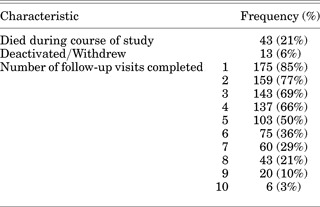
As shown in Table 2, 43 patients (21 %) died during the course of the study, 10 patients withdrew, and 3 were discontinued because of noncompliance with study procedures. The number of follow-up visits completed by patients varied primarily with the timing of recruitment into the study, and to a smaller extent, from attrition because of death or withdrawal. The median duration of enrollment in the study was 15 months (equivalent to five visits), with a range of 0–32 months; Sixty-four percent of the patients were followed for >1 year and 12% were followed for >2 years.
Sample follow-up characteristics

Course and Predictors of Spiritual Well-Being
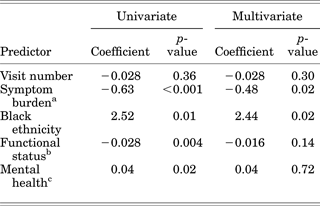
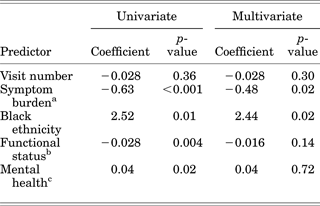
The median baseline FACIT-Sp subscale score was 10.0, with a range 0–16. There was no significant change in FACIT-Sp subscale score over time or the number of visits (Table 3; univariate p = 0.36; multivariate p-value = 0.30), indicating stability of spiritual well-being during the course of the study. Based on univariate analysis (Table 3), the FACIT-Sp subscale score was significantly associated with race (black patients scored higher, p = 0.01). Symptom distress (MSAS-GDI) and physical impairment (SIP) were negatively correlated with spiritual well-being (p = 0.01 and p = 0.004, respectively), and mental health (MHI) was positively correlated (p = 0.01).
Univariate and multivariate predictors of spiritual well-being over time
aMemorial Symptom Assessment Scale global score.
bTotal Sickness Impact Profile.
cMental Health Inventory.
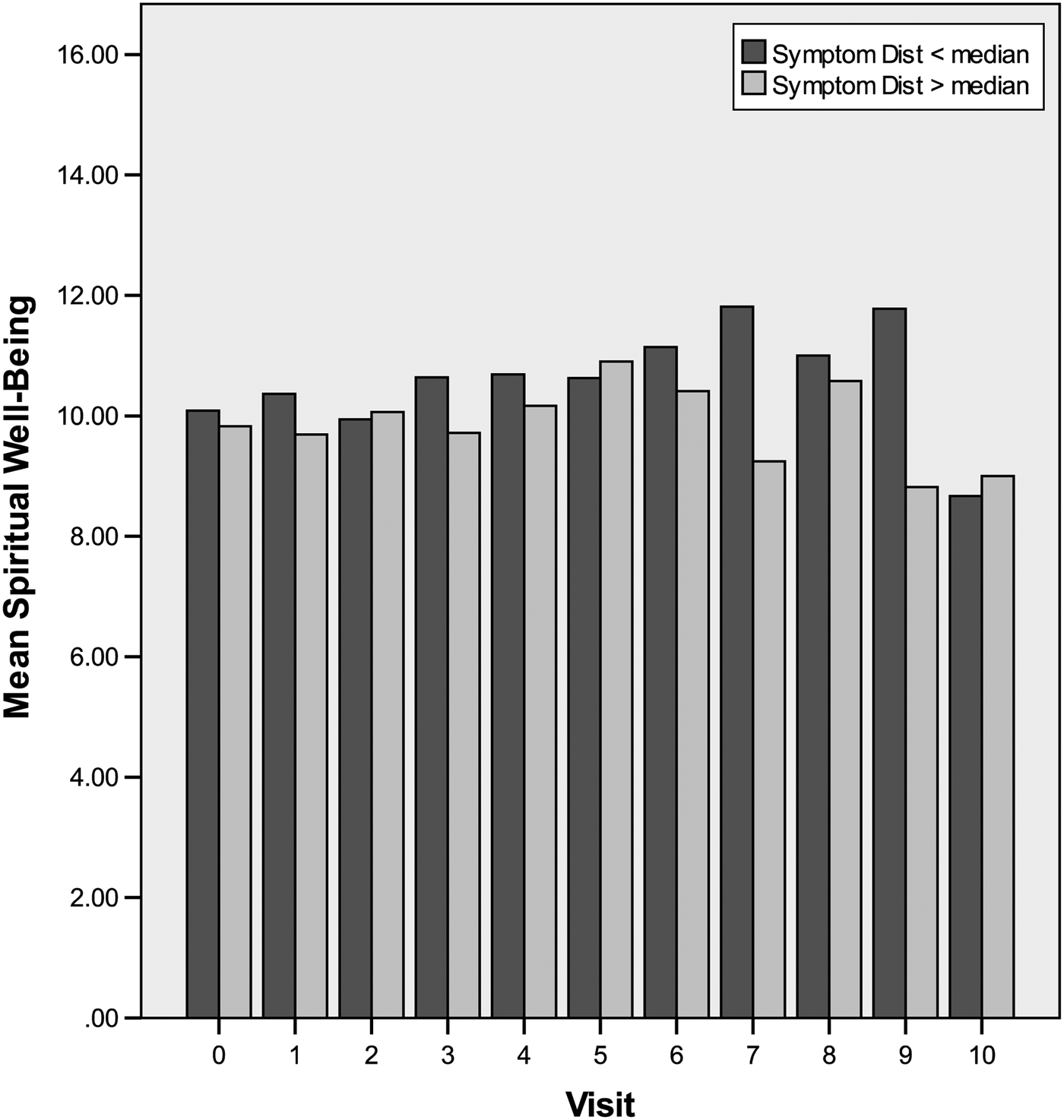
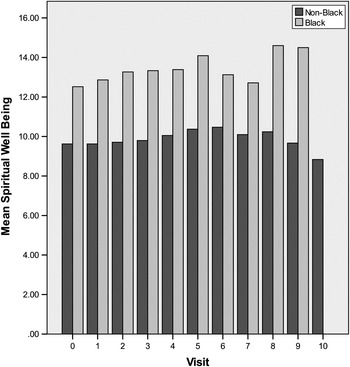
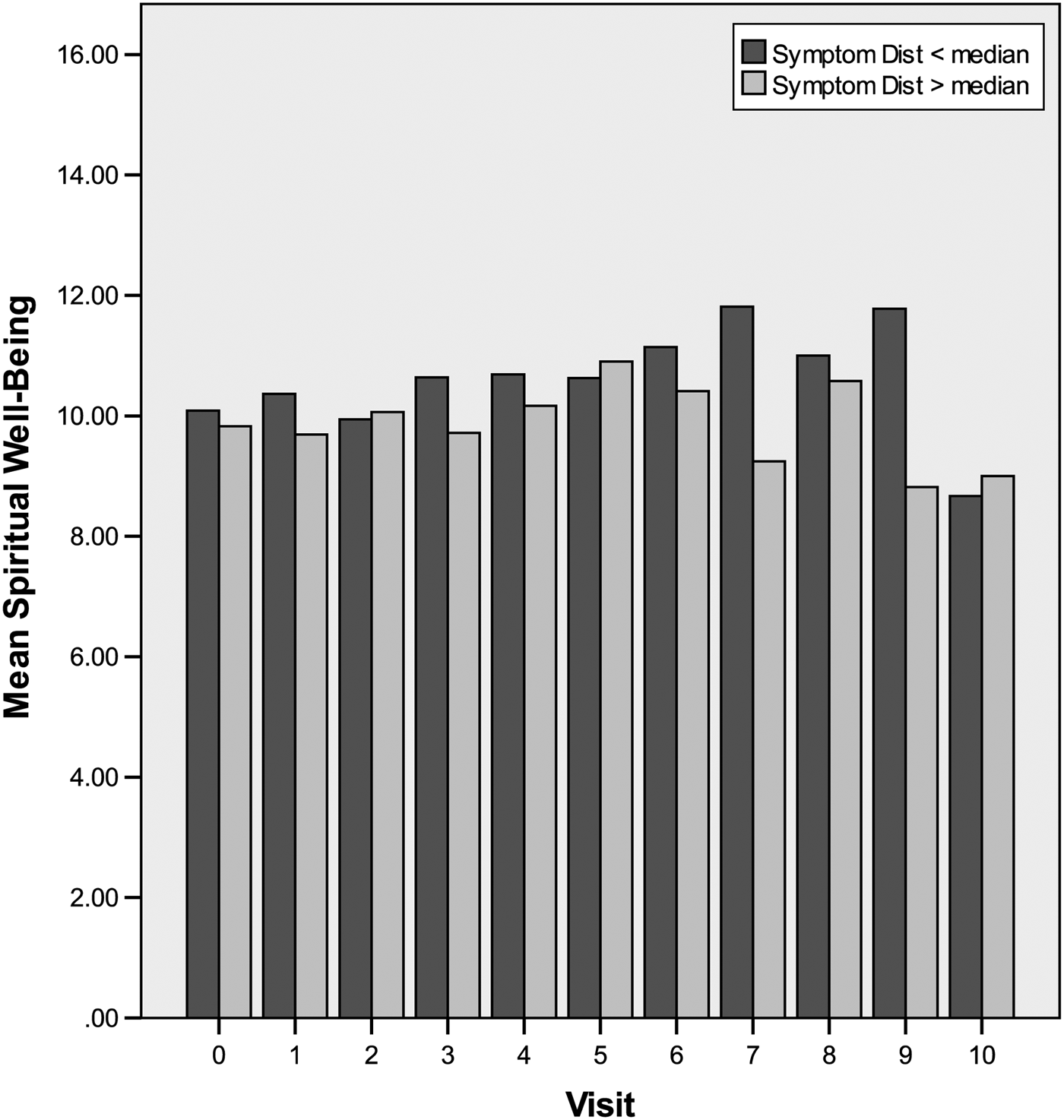
A multivariate model was then performed to evaluate the independent relationships of the four variables that were found to be significantly associated with spiritual well-being on univariate analyses. Being black and reporting lower symptom distress (MSAS-GDI) predicted spiritual well-being (both p = 0.02) (Figs. 1 and 2). Secondary analyses indicated that there were no significant interactions between any multivariate predictor and CHF/COPD diagnosis, indicating that the model held for both CHF and COPD patients.
Spiritual well-being over time as a function of level of symptom distress.
Spiritual well-being over time as a function of black ethnicity.

Spiritual Well-Being and Quality of Life
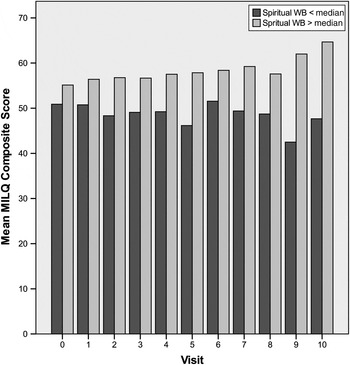
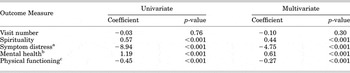
Other analyses were focused on quality of life, as measured by the MILQ. Similar to the FACIT-Sp subscale, there was no significant correlation between time in the study and quality of life scores (univariate p = 0.76). Quality of life scores, like spiritual well-being scores, remained relatively stable in the sample over the months of follow-up. Results of the univariate mixed model regression (Table 4), indicated that spiritual well-being (FACIT-Sp subscale), mental health (MHI), global symptom distress (MSAS-GDI) and physical impairment (SIP) were all significantly related to quality of life (all p < 0.001). As shown in Table 4, these predictors remained statistically significant (each p < 0.001), whereas number of visits again showed no differences in quality of life over time (p = 0.30). Figure 3 shows the mean quality of life scores for each visit depending upon whether the patient was above or below the median score for spiritual well-being on that visit; patients with higher spiritual well-being consistently reported better quality of life. There were no significant interactions between any multivariate predictor and CHF/COPD diagnosis, supporting the conclusion that the model for quality of life was equivalent for both CHF and COPD patients.
Quality of life (Multidimensional Index of Life Quality [MILQ]) as a function of level of spiritual well-being.

Spiritual well-being and other predictors of quality of life (MILQ)

aMemorial Symptom Assessment Scale Global Score.
bMental Health Inventory.
cSickness Impact Profile total score.
MILQ, Multidimensional Index of Life Quality.
A further exploratory analysis evaluated the contribution of individual items of the FACIT-Sp subscale. The scores on the individual items were substituted for the total score in the multivariate model. Significance was specifically found for two of the four items: “My illness has strengthened my faith” (coefficient = 0.72, p = 0.004) and “I know that things will be okay” (coefficient = 0.64, p = 0.005).
DISCUSSION
To our knowledge, this is the first study to evaluate spiritual well-being over time in populations with advanced heart or lung disease. Key findings are that spiritual well-being and overall quality of life remain relatively stable over time, black race and lower symptom distress predict higher spiritual well-being, and spiritual well-being is among a number of phenomena (better mental health, lower symptom distress, and less physical impairment) that significantly contribute to relatively good quality of life over time.
Earlier studies of patients with CHF and COPD have found that spiritual beliefs are important in these populations (Singer et al., Reference Singer, Martin and Kelner1999; Curtis et al., Reference Curtis, Engelberg and Nielsen2004; Murray et al., Reference Murray, Kendall and Boyd2004; Varkey, Reference Varkey2006; Bekelman et al., Reference Bekelman, Dy and Becker2007; Hardin et al., Reference Hardin, Meyers and Louie2008). In one study of patients with lung disease, 66% agreed that a physician's inquiry about spiritual beliefs would strengthen their trust in their physician, and 94% of those for whom spirituality was important wanted their physicians to address their spiritual beliefs and be sensitive to their values (Ehman et al., Reference Ehman, Ott and Short1999). However, only 15% of the patients in the study recalled being asked about the impact of their spiritual beliefs on their medical decisions. Interestingly, 50% of patients who reported that spirituality was not important still felt that doctors should inquire about their spiritual beliefs in case of serious illness.
Religiosity and spirituality also were explored in a study of patients who were depressed and had CHF (Hardin et al., Reference Hardin, Meyers and Louie2008). The severity of depression was relatively less among those who reported higher levels of spiritual well-being. In another study of 115 patients with advanced COPD (Curtis et al., Reference Curtis, Engelberg and Nielsen2004, Reference Curtis, Engelberg and Wenrich2005; Curtis, Reference Curtis2008) spirituality, prognosis, and dying were perceived by patients to be the main areas of communication not sufficiently addressed by physicians in their interactions with them. Another study found positive correlations between religious struggle and depression, anxiety, and hostility (Fitchett et al., Reference Fitchett, Murphy and Kim2004). Interestingly, these correlations were much higher for patients with CHF, a finding that contrasts with our data. A study evaluating patient samples with advanced CHF, advanced COPD, advanced cancer, or end-stage renal disease elicited spiritual concerns by asking “Are you at peace?” (Steinhauser et al., Reference Steinhauser, Voils and Clipp2006). Across all diagnoses, the response to this query was significantly correlated with measures of emotional and spiritual well-being, as well as with the faith and purpose subscales of the FACIT.
These studies in populations with CHF or COPD support what is known about the role of spiritual and religious belief in other medically ill populations. Validation studies of the FACIT-Sp have suggested a protective role in terms of quality of life and related domains. In populations with cancer (King & Bushwick, Reference King and Bushwick1994; Brady et al., Reference Brady, Peterman and Fitchett1999) chronic pain (Skevington, Reference Skevington1998; Rippentrop et al., Reference Rippentrop, Altmaier and Chen2005) end-stage renal disease (Patel et al., Reference Patel, Shah and Peterson2002; Kimmel et al., Reference Kimmel, Emont and Newmann2003; Ko et al., Reference Ko, Khurana and Spencer2007) and HIV/AIDS (Mrus et al., Reference Mrus, Sherman and Leonard2006; Szaflarski et al., Reference Szaflarski, Ritchey and Leonard2006) spiritual well-being has been shown to significantly predict quality of life, independent of other important predictors. The relative stability of spiritual well-being over time may indicate the potential role of spirituality as a coping skill that provides patients with continued emotional strength and reassurance in the face of declining health and increase in physical symptoms. Even though the association between higher levels of spirituality and higher quality of life cannot be interpreted as a causal relationship, it suggests that spirituality is positively related to patients' ability to cope with advanced illness.
In contrast to these findings, other data suggest that religious and spiritual beliefs sometimes can be associated with negative coping (Koenig, Reference Koenig2007a). Negative religious and spiritual coping is associated with excessive guilt, interpretation of the illness as a punishment from God, absolute belief in prayer for cure, and inability to resolve anger when cure does not occur. This, in turn, may be associated with more depression, poorer quality of life, and less sensitivity and compassion toward others (Knauft et al., Reference Knauft, Nielsen and Engelberg2005; Yohannes, Reference Yohannes2007). These data highlight the complexity of the spiritual well-being construct and do not refute the potential for a positive effect from religiosity or spirituality (Beery et al., Reference Beery, Baas and Fowler2002; Griffin et al., Reference Griffin, Lee and Salman2007; Koenig, Reference Koenig2007b; Selman et al., Reference Selman, Beynon and Higginson2007).
The present study may provide additional insight into the relationships between spiritual well-being and other factors. The association between spiritual well-being and symptom distress in this study suggests two possibilities. First, that spirituality may lose its protective impact in the presence of higher levels of symptom distress. Second, that spiritual well-being, linked to positive coping, may result in less overall suffering and better quality of life, even in the face of increasing symptom distress. Further work in this area would be valuable from both a medical and a psychospiritual perspective.
This study also found that black patients reported overall higher levels of spiritual well-being. This finding is consistent with previous research indicating the important role of spirituality and religiosity for African American patients (True et al., Reference True, Phipps and Braitman2005). For example, African American women on hemodialysis for end-stage renal disease scored higher on religious well-being than Caucasian women (Tanyi et al., Reference Tanyi and Werner2007). A study of older African Americans and Caribbean blacks and non-Hispanic whites showed that African Americans and Caribbean blacks reported higher levels of religious participation, religious coping, and spirituality than older whites (Taylor et al., Reference Taylor, Chatters and Jackson2007). African American women with breast cancer used more positive religious coping than negative religious coping (Morgan et al., Reference Morgan, Gaston-Johansson and Mock2006). Additionally, a significant relationship was found between spiritual well-being and the physical, emotional, and functional domains of quality of life. Likewise, spirituality in African American patients is closely linked to self-management of chronic illness and treatment compliance (Harvey, Reference Harvey2006).
It is possible that still other illness-specific factors may relate to spiritual well-being. For example, the course of CHF and COPD is much more gradual in term of its periods of exacerbation and improvement than is advanced cancer. This in turn may lead patients with CHF/COPD to improve their ability to use familiar coping skills and rely on a more predictable sense of self. Studies are needed to clarify whether this is the case and to identify additional factors that contribute to the relative stability of spiritual well-being identified in this study.
LIMITATIONS
The findings of this study must be interpreted in light of several important limitations. The reliability of the long-term relationships may have been compromised by the variation across patients in terms of study duration. Overall, only 50% of the patients completed ≥ 5 visits and were observed >15 months, and only 3% of patients completed 10 visits (30 months observation). This reflects the timing of recruitment into the study. Patients recruited at the beginning of the study generally had longer follow-up, and results recorded for the last visits of the study are based on a relatively small number of patients, who might or might not have been representative of the whole group. The use of a convenience sample also limited the ability to generalize these results to all patients with CHF or COPD, as the patients who chose to participate in this study may have had personality characteristics or personal coping styles that could have had an influence on their spiritual well-being and their sense of quality of life. Studies of larger populations and of those from other geographic areas are needed to confirm these findings. Additionally, the decision to administer only the Faith subscale of the FACIT-Sp represents a limitation of this study, because it is likely that faith alone may not account for all aspects of spirituality, even though it correlates with it.
Although longitudinal data may help clarify the direction of causality when variables are associated in an observational study, it is not possible to attribute causality to the complex relationships identified in this survey. Further research and analysis must be directed to clarifying the direction of these relationships.
CONCLUSION
Longitudinal evaluation of patients with advanced heart or lung disease demonstrates that spiritual well-being is a relatively stable phenomenon associated with race and symptom experience, and significantly contributes to overall quality of life. Further research is needed to evaluate causal links among these important variables, and to determine whether specific interventions to support spiritual well-being have a meaningful effect on the course of the illness.