Introduction
Psychotic disorders are associated with prominent functional impairment, which involves difficulties with social, occupational and independent living activities even at the early phases of psychosis. Although there is a large variability in the recovery trajectory and functional outcome of first-episode psychosis (FEP) patients (Fusar-Poli, McGorry, & Kane, Reference Fusar-Poli, McGorry and Kane2017), it has been shown that only one-quarter of subjects achieved sustained adequate social and vocational functioning, and only one-eighth met both symptomatic and functional recovery (Robinson, Woerner, McMeniman, Mendelowitz, & Bilder, Reference Robinson, Woerner, McMeniman, Mendelowitz and Bilder2004). Therefore, a significant proportion of FEP patients exhibit functional disability even in the presence of clinical symptom remission (Chang et al., Reference Chang, Tang, Hui, Lam, Chan, Wong and Chen2012). A better understanding of this gap is needed in order to improve functioning by means of specific therapeutic interventions.
According to the literature, a wide range of factors has been proposed to influence functioning, including negative symptoms (Mezquida et al., Reference Mezquida, Cabrera, Bioque, Amoretti, Lobo and González-Pinto2017; Vesterager et al., Reference Vesterager, Christensen, Olsen, Krarup, Melau, Forchhammer and Nordentoft2012), cognitive performance (Sánchez-Torres et al., Reference Sánchez-Torres, Moreno-Izco, Lorente-Omeñaca, Cabrera, Lobo and González-Pinto2018; Van Winkel et al., Reference Van Winkel, Myin-Germeys, De Hert, Delespaul, Peuskens and van Os2007) and cognitive reserve (CR) in first-episode schizophrenia (Amoretti et al., Reference Amoretti, Bernardo, Bonnin, Bioque, Cabrera, Mezquida and Torrent2016, Reference Amoretti, Cabrera, Torrent, Mezquida, Lobo and González-Pinto2018, Reference Amoretti, Cabrera, Torrent, Bonnín, Mezquida, Garriga and Bernardo2019). Furthermore, cognitive performance is strongly associated with clinical improvement in FEP as patients with higher cognitive performance also display a greater reduction in the severity of negative symptoms (Jordan et al., Reference Jordan, Veru, Lepage, Joober, Malla and Iyer2018; Milev, Ho, Arndt, & Andreasen, Reference Milev, Ho, Arndt and Andreasen2005; Rodríguez-Sánchez et al., Reference Rodríguez-Sánchez, Ayesa-Arriola, Pérez-Iglesias, Periañez, Martinez-Garcia, Gomez-Ruiz and Crespo-Facorro2013). More specifically, in the field of cognition-related factors, CR has been defined as the ability of the brain to cope with brain pathology in order to minimize symptoms (Stern, Reference Stern2002). In severe mental illness CR has proved to predict clinical, cognitive and functional outcomes (Amoretti et al., Reference Amoretti, Bernardo, Bonnin, Bioque, Cabrera, Mezquida and Torrent2016; Reference Amoretti, Cabrera, Torrent, Mezquida, Lobo and González-Pinto2018; De la Serna et al., Reference De la Serna, Andrés-Perpiñá, Puig, Baeza, Bombin, Bartrés-Faz and Castro-Fornieles2013; González-Ortega et al., Reference González-Ortega, González-Pinto, Alberich, Echeburúa, Bernardo and Cabrera2019). Therefore, CR refers to the capacity to make flexible and efficient use of cognitive networks and can become a skill set that allows some people to actively offset the effects of the disease. This might explain the fact that some individuals with similar brain pathologies have higher functioning than others (Stern, Reference Stern2013). Higher CR has also been considered as a protective factor in individuals suffering from psychiatric diseases (Anaya et al., Reference Anaya, Torrent, Caballero, Vieta, Bonnín and Ayuso-Mateos2016; Forcada et al., Reference Forcada, Mur, Mora, Vieta, Bartrés-Faz and Portella2015; Grande et al., Reference Grande, Sanchez-Moreno, Sole, Jimenez, Torrent, Bonnín and Martínez-Arán2017) and a recent systematic review suggests that higher CR delays the clinical diagnosis threshold and severity of symptoms in patients with schizophrenia (Herrero et al., Reference Herrero, Contador, Stern, Fernández-Calvo, Sánchez and Ramos2019). For instance, in FEP it was shown that subjects with higher CR seem to have a greater capacity for reasoning and better insight, factors that may attenuate a worse long-term outcome (Barnett, Salmond, Jones, & Sahakian, Reference Barnett, Salmond, Jones and Sahakian2006; Leeson et al., Reference Leeson, Sharma, Harrison, Ron, Barnes and Joyce2011). This is probably due to the fact that these variables have been associated with treatment adherence, symptom severity and functional performance (Lincoln, Lüllmann, & Rief, Reference Lincoln, Lüllmann and Rief2007). As de la Serna et al., mentioned (2013), IQ, academic–occupational level and leisure activities (three essential components of CR) taken together could reflect the compensation capacity of patients and have a strong influence on clinical and neuropsychological outcomes. Poor premorbid functioning was also associated with worse functioning and severity of symptoms on the long term, especially negative ones in subjects with a FEP (Cuesta et al., Reference Cuesta, Sánchez-Torres, Cabrera, Bioque, Merchán-Naranjo and Corripio2015; Mezquida et al., Reference Mezquida, Cabrera, Bioque, Amoretti, Lobo and González-Pinto2017; White et al., Reference White, Stirling, Hopkins, Morris, Montague, Tantam and Lewis2009).
Although there was evidence of a complex interrelationship between CR, cognitive performance and clinical variables, it is not clear how these variables may affect functioning in FEP subjects. In this sense, there have been no studies to date that have explored the role of CR in mediating the relationship between multiple domains of cognitive performance or clinical symptoms and functioning in FEP subjects. Evidence suggests that there are multiple trajectories of long-term illness course among individuals with non-affective FEP, indicating the heterogeneity of symptoms course in the early stage of psychotic illness (Abdin et al., Reference Abdin, Chong, Vaingankar, Peh, Poon, Rao and Subramaniam2017; Hall, Holton, Öngür, Montrose, & Keshavan, Reference Hall, Holton, Öngür, Montrose and Keshavan2019). This heterogeneity could be partially explained by the CR level. A better understanding of this interrelationship is essential for the planning of future interventions that should focus on both symptomatic and functional recovery. Identifying clinical and cognitive phenotypes according to the estimated level of CR might provide relevant information that may allow us to define early personalized intervention and person-focused therapy.
Aims of the study
The aim of this study was to analyze simultaneous mediation between multiple domains of cognition or clinical variables and functional outcome at baseline and 2-year follow-up by CR in an adult sample of subjects with a non-affective FEP.
In the present study, CR was entered in a path analysis model as a potential mediator between cognitive domains or clinical symptoms and functioning. We hypothesized that patients with greater neurocognitive impairment and severity of symptoms would have worse psychosocial functioning in the long term; and that such an effect would be mediated by the CR level.
Material and methods
Sample
The sample of this study came from a multicentre, naturalistic and longitudinal project ‘Phenotype-genotype interaction. Application of a predictive model in first psychotic episodes’ (PEPs Project) (Bernardo et al., Reference Bernardo, Bioque, Parellada, Saiz, Cuesta and Llerena2013). A total of 335 patients with a FEP were recruited from April 2009 to April 2011. For the current study we only included patients who belonged to the non-affective psychotic disorder diagnostic category, who were 18 years old or over and, additionally, had all the information needed to calculate CR (see subsection Assessments – Cognitive Reserve Assessment). The final sample for this study consisted of 211 non-affective FEP patients.
The inclusion criteria for patients were: (1) aged between 18 and 35 years at the time of first evaluation; (2) presence of psychotic symptoms of less than 12 months’ duration; (3) ability to speak Spanish correctly and (4) signed informed consent. Exclusion criteria were: (1) mental retardation according to DSM-IV criteria; (2) history of head trauma with loss of consciousness and (3) organic disease with mental repercussions.
This study was conducted in accordance with the ethical principles of the Declaration of Helsinki and Good Clinical Practice and the Hospital Clinic Ethics and Research Board.
All participants provided written informed consent prior to their inclusion in the study.
Assessments
Clinical and sociodemographic assessment
We gathered all the relevant clinical and sociodemographic data for all participants. Parental socioeconomic status (SES) was determined using Hollingshead's Two-Factor Index of Social Position (Hollingshead & Redlich, Reference Hollingshead and Redlich1958); pharmacological treatment was measured by chlorpromazine equivalents (CPZ) based on international consensus (Gardner, Murphy, O'Donnell, Centorrino, & Baldessarini, Reference Gardner, Murphy, O'Donnell, Centorrino and Baldessarini2010); and the Duration of Untreated Psychosis (DUP) was calculated as the number of days between the first manifestations of psychotic symptoms until the initiation of adequate treatment for psychosis. Apart from the interviews with the patient, multiple sources of information (including medical records and interviews with relatives) were used to establish the onset of positive psychotic symptoms (defined as the first week with the PANSS items P1, P3, P5, P6 or G9 scoring four or more). Drug misuse habits were also collected using an adapted version of the European Adaptation of a Multidimensional Assessment Instrument for Drug and Alcohol Dependence scale (Kokkevi & Hartgers, Reference Kokkevi and Hartgers1995).
Diagnoses were determined with the Structured Clinical Interview for DSM (SCID-I-II) (First, Gibbon, Spitzer, Williams, & Benjamin, Reference First, Gibbon, Spitzer, Williams and Benjamin1997; First, Spitzer, Gibbon, & Williams, Reference First, Spitzer, Gibbon and Williams1997) according to DSM-IV criteria. Taking into consideration potential changes across time and in order to ensure diagnostic stability, the diagnoses of the patients who completed the study were determined based on information gathered at 2-year follow-up visit.
A psychopathological assessment was carried out with the Positive and Negative Syndrome Scale (PANSS) (Kay, Fiszbein, & Opler, Reference Kay, Fiszbein and Opler1987), the Young Mania Rating Scale (YMRS) (Young, Biggs, Ziegler, & Meyer, Reference Young, Biggs, Ziegler and Meyer1978) and the Montgomery-Asberg Depression Rating Scale (MADRS) (Montgomery & Asberg, Reference Montgomery and Asberg1979). Higher scores indicate greater severity.
Functional assessment
The overall functional outcome was assessed by means of the Functioning Assessment Short Test (FAST) (Rosa et al., Reference Rosa, Sánchez-Moreno, Martínez-Aran, Salamero, Torrent, Reinares and Vieta2007). The FAST scale comprises 24 items, each item rated from 0 (no difficulty) to 3 (severe difficulty). They are divided according to 6 specific areas of functioning: autonomy, occupational functioning, cognitive functioning, financial issues, interpersonal relationships, and leisure time. Autonomy refers to the capacity to do things alone and take one's own decisions. Occupational functioning is related to the capacity to maintain a paid job; efficiency of performing tasks at work; working in the field in which the patient was educated; and earning according to the level of the employment position. Cognitive functioning refers to the ability to concentrate, perform simple mental calculations, solve problems, learn new information and remember learned information. Financial issues involve the capacity to manage finances and spend in a balanced way. Interpersonal relationships refer to relations with friends, family, involvement in social activities, sexual relations and the ability to defend ideas and opinions. Finally, leisure time refers to the capacity to perform physical activities (sport, exercise) and the enjoyment of hobbies. Higher scores indicate worse functioning.
The Premorbid Adjustment Scale (PAS) (Cannon-Spoor, Potkin, & Wyatt, Reference Cannon-Spoor, Potkin and Wyatt1982) was applied retrospectively to assess premorbid adjustment. The PAS was completed based on information from the patients and parents or close relatives. Only childhood and early adolescence life periods have been taken into account since they are the two periods answered by all the participants. Higher scores indicate worse premorbid adjustment.
Neuropsychological assessment
The neuropsychological assessments were performed in the second month of evaluation in order to ensure the clinical stability of patients and were repeated during the 2-year follow-up visit. The neuropsychological battery measured the following cognitive domains: (1) sustained attention was tested with the Continuous Performance Test–II (CPT-II) (Conners, Reference Conners2004), version 5; (2) verbal learning and memory, assessed with the Verbal Learning Test Spain Complutense for adults (TAVEC) (Benedet, Reference Benedet1998); (3) working memory was assessed by the Digit Span Subtest and the Letter-Number Sequencing Subtest of the Wechsler Adult Intelligence Scale (WAIS-III) (Wechsler, Reference Wechsler1997); (4) the executive functions were evaluated using the Wisconsin Card Sorting Test (Heaton, Reference Heaton1993), corrected by age and educational level. A global cognition index (GCI) was obtained from the aforementioned cognitive domains. Higher scores correspond to better performance in all cognitive domains except for attention.
Cognitive reserve assessment
To assess CR we have used the three most commonly proposed proxy indicators of CR (Amoretti et al., Reference Amoretti, Bernardo, Bonnin, Bioque, Cabrera, Mezquida and Torrent2016; Reference Amoretti, Cabrera, Torrent, Mezquida, Lobo and González-Pinto2018; Barnett et al., Reference Barnett, Salmond, Jones and Sahakian2006; Buonocore et al., Reference Buonocore, Bechi, Uberti, Spangaro, Cocchi, Guglielmino and Cavallaro2018; De la Serna et al., Reference De la Serna, Andrés-Perpiñá, Puig, Baeza, Bombin, Bartrés-Faz and Castro-Fornieles2013; Herrero et al., Reference Herrero, Contador, Stern, Fernández-Calvo, Sánchez and Ramos2019; Leeson et al., Reference Leeson, Sharma, Harrison, Ron, Barnes and Joyce2011; Nucci, Mapelli, & Mondini, Reference Nucci, Mapelli and Mondini2012; Pettigrew & Soldan, Reference Pettigrew and Soldan2019) which include IQ, education and participation in leisure, social and physical activities. The current IQ was calculated with the vocabulary subtest of the WAIS-III as a measure reflecting crystallized intelligence. The second proxy, ‘education’ was assessed taking into account the number of years of obligatory education that subjects had completed as well as parents’ educational level, and lifetime school performance (assessed by PAS scale – scholastic performance). Finally, participation in leisure, social and physical activities was assessed by the Functioning Assessment Short Test. This instrument allows us to assess specific life-domains such as interpersonal relationships and leisure time. The existing literature demonstrates that the three components of CR are necessary (Amoretti et al., Reference Amoretti, Bernardo, Bonnin, Bioque, Cabrera, Mezquida and Torrent2016; De la Serna et al., Reference De la Serna, Andrés-Perpiñá, Puig, Baeza, Bombin, Bartrés-Faz and Castro-Fornieles2013). A principal components analysis (PCA) was performed to create a ‘Cognitive reserve score’ for each subject with the three main proxies. Higher scores correspond to better performance.
Statistical analysis
To summarize the information of the principal cognitive domains, a PCA was performed to create a ‘Global Cognition Index (GCI)’ for each subject. To compare the performance at baseline and 2-year follow-up, a repeated-measures analysis of variance (ANOVA) was used.
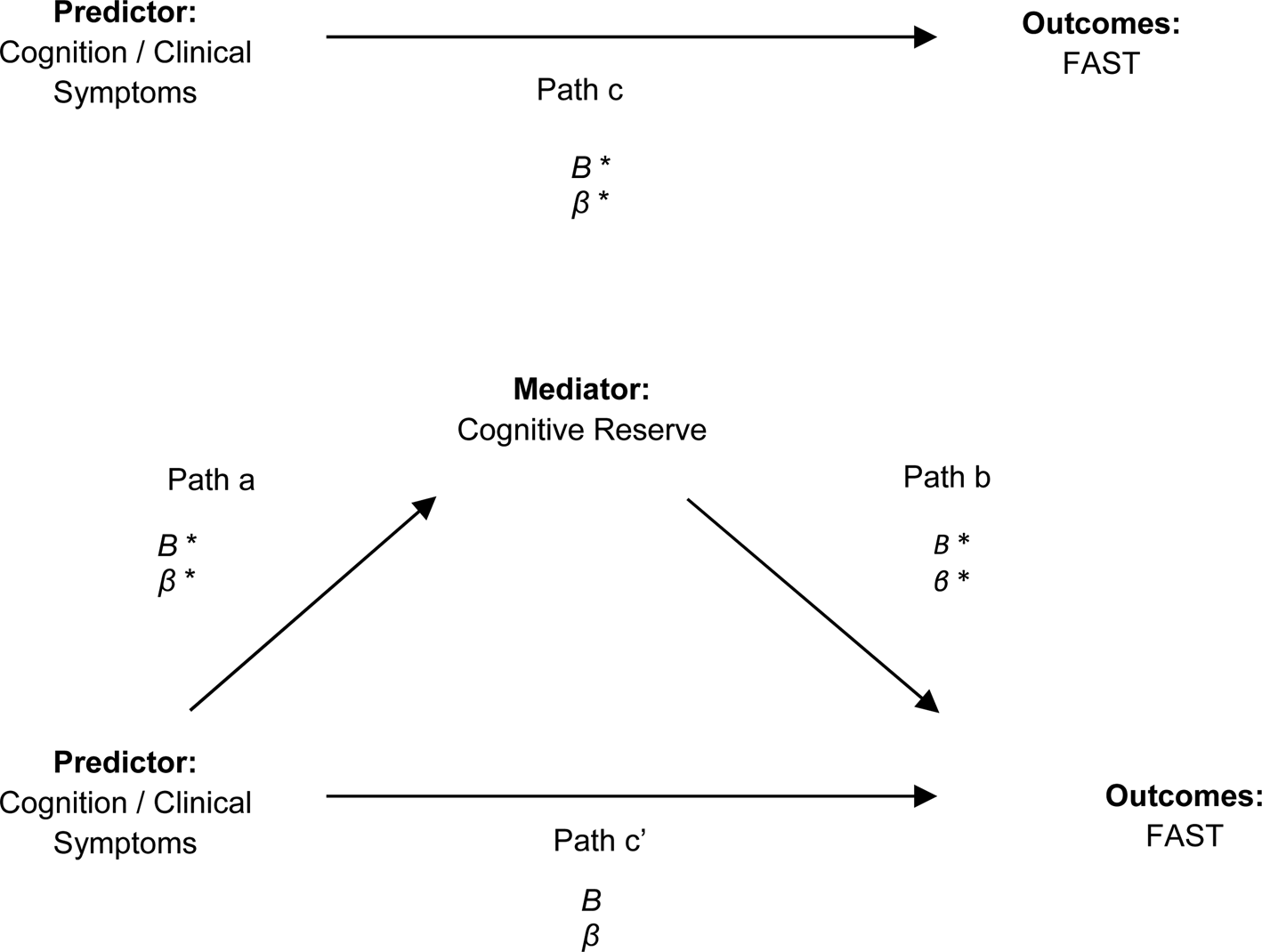
The mediation analyses were performed according to the principles of Baron and Kenny (Baron & Kenny, Reference Baron and Kenny1986). In the first instance, the mediator variable (CR) was regressed onto the independent variable (clinical and cognitive domains). In the second equation, the dependent variable (functioning) was regressed onto the independent variable (clinical and cognitive domains). Finally, in the third equation, the dependent variable (functioning) was regressed onto the independent variable (clinical and cognitive domains), adjusted for the mediator (CR) (see Fig. 1). Hence, if the independent variable is no longer significant when the mediator is controlled, the finding supports full mediation. If the independent variable is still significant, the finding supports partial mediation.
Path analyses: effect of cognitive performance or clinical symptoms on functioning mediated by cognitive reserve. B = unstandardized values; β = standardized values. *p < 0.05. FAST = Functioning Assessment Short Test. Mediation was identified if the following criteria were met: (1) the independent variable was significantly related to the dependent variable (path c); (2) the independent variable was significantly related to the proposed mediator (path a); (3) the proposed mediator was significantly related to the dependent variable when controlling for the effects of the independent variable (path b); (4) the independent variable was not significantly related to the dependent variable when controlling for the effects of the proposed mediator (path c’).

Results
Sociodemographic characteristics of the sample
A total of 211 non-affective FEP patients were enrolled in this study. At 2-year follow-up, 139 patients were re-evaluated. The remainder of the sample dropped out of the study, mostly due to a loss of follow-up or refusal of re-evaluation.
Those patients who were assessed at follow-up (n = 139) were indistinguishable from those who were not (n = 72) in terms of age (t = 0.51, p = 0.61), gender (χ2 = 1.04, p = 0.19), age at first episode (U = 2879, p = 0.69), SES (χ2 = 6.54, p = 0.26), DUP (t = 1.05, p = 0.29), positive PANSS (t = 0.79, p = 0.43), negative PANSS (t = 1.55, p = 0.12), general PANSS score (t = 0.86, p = 0.39), total PANSS score (t = 1.23, p = 0.22), total MADRS score (t = 1.30, p = 0.20), YMRS (U = 4561, p = 0.08), FAST score (t = 0.50, p = 0.62), tobacco (χ2 = 0.02, p = 0.51) and cannabis use (χ2 = 0.43, p = 0.31) at first presentation. They also failed to show differences in the cognitive domains (Attention, t = 0.47, p = 0.64; Verbal memory, t = −1.54, p = 0.13; Working memory, t = −0.42, p = 0.68; Executive function, t = 0.97, p = 0.34). However, these two groups differed in terms of CR (t = −2.42, p = 0.016), showing a lower CR in patients assessed only at baseline than those who were assessed at baseline and follow-up (72.10 ± 11 v. 75.96 ± 11).
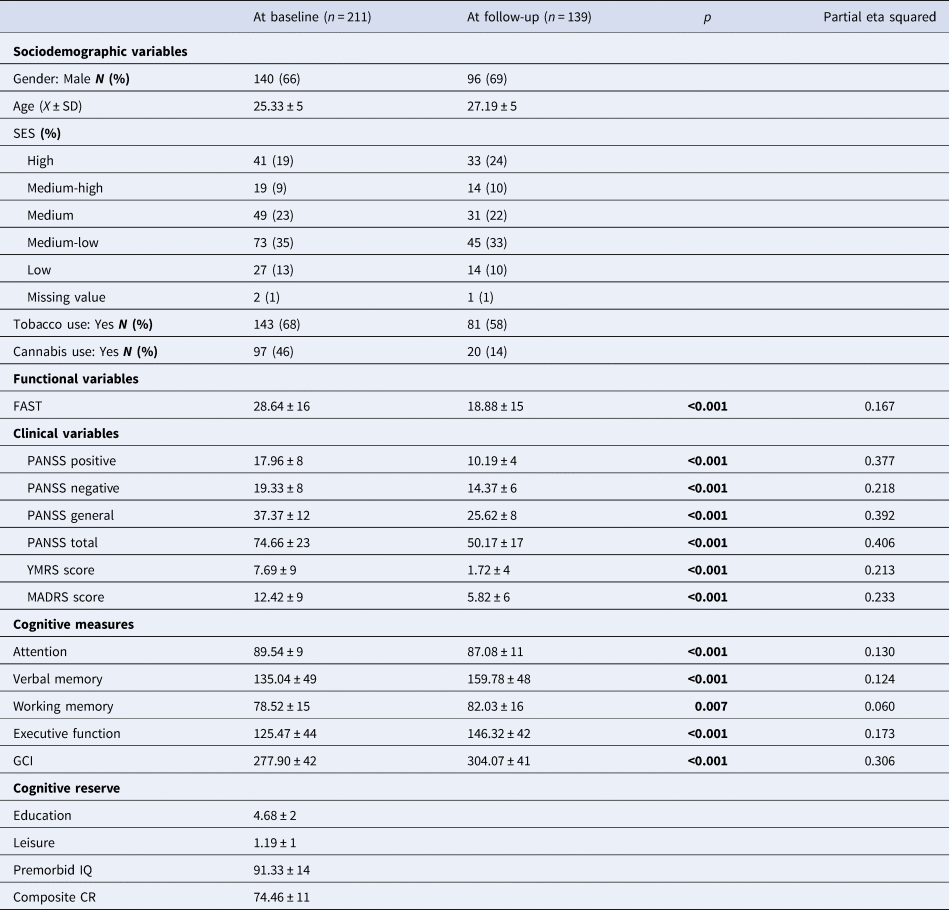
A summary of the baseline sociodemographic and clinical characteristics of patients is shown in Table 1. Of the total, 66% were male with a mean age of 25.33 years (age at onset of psychosis was 24.63 years). The mean dose of antipsychotic medication was equivalent to 624.33 ± 441 mg/day of CPZ and the mean of DUP was determined as 108.73 ± 124 days (15 weeks approximately). There was a correlation between CPZ and CR (r= −0.206, p = 0.004). After 2 years of follow-up, the severity of clinical symptoms improved (values of partial eta squared range from 0.212 to 0.406, medium to large effect sizes), as did cognitive (η2 ranges from 0.060 to 0.306) and functional scores (η2 = 0.167).
Baseline and follow-up sociodemographic, clinical, functional and CR proxies for non-affective patients

SES, socioeconomic status; FAST, Functioning Assessment Short Test; PANSS, Positive and Negative Symptom Scale; YMRS, Young Mania Rating Scale, MADRS, Montgomery-Asberg Depression Rating Scale; GCI, Global Cognition Index; IQ, Intelligence Quotient; CR, Cognitive Reserve; NA, not applicable.
Significant differences (p < 0.05) are marked in bold.
Mediators of functional outcome
We examined whether the relationships between clinical variables or cognitive performance and functional outcome (at baseline and 2-year follow-up) were mediated by CR following the four steps proposed by Baron & Kenny (Reference Baron and Kenny1986).
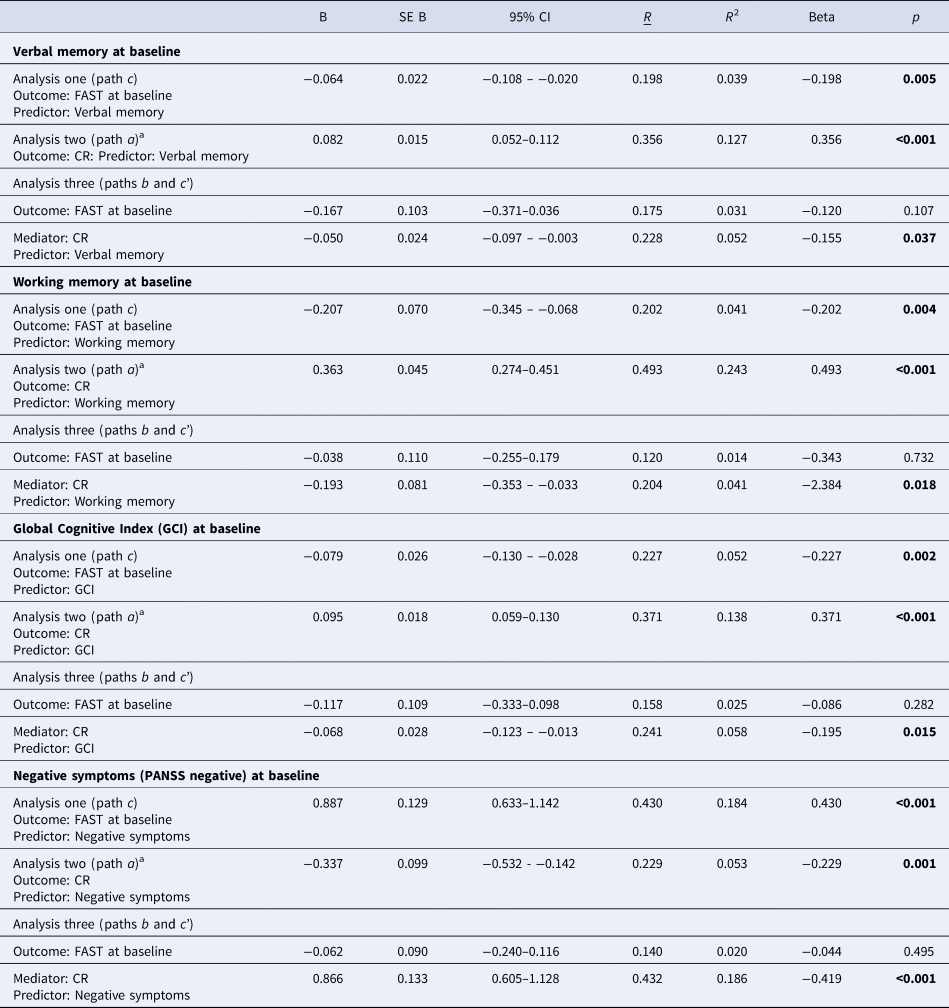
At baseline, we found that the effect of clinical variables or cognitive performance on functioning was not mediated by CR (see Table 2). There were clinical variables associated with functioning, but CR was not related to them (PANSS positive, general and total, MADRS and YMRS) and a cognitive domain (attention) was related to CR (p = 0.003) but not to functioning (p = 0.547).
Testing Mediator Effects Using Linear Regression Analyses at baseline with cognitive performance, clinical symptoms and functioning measures assessed at baseline
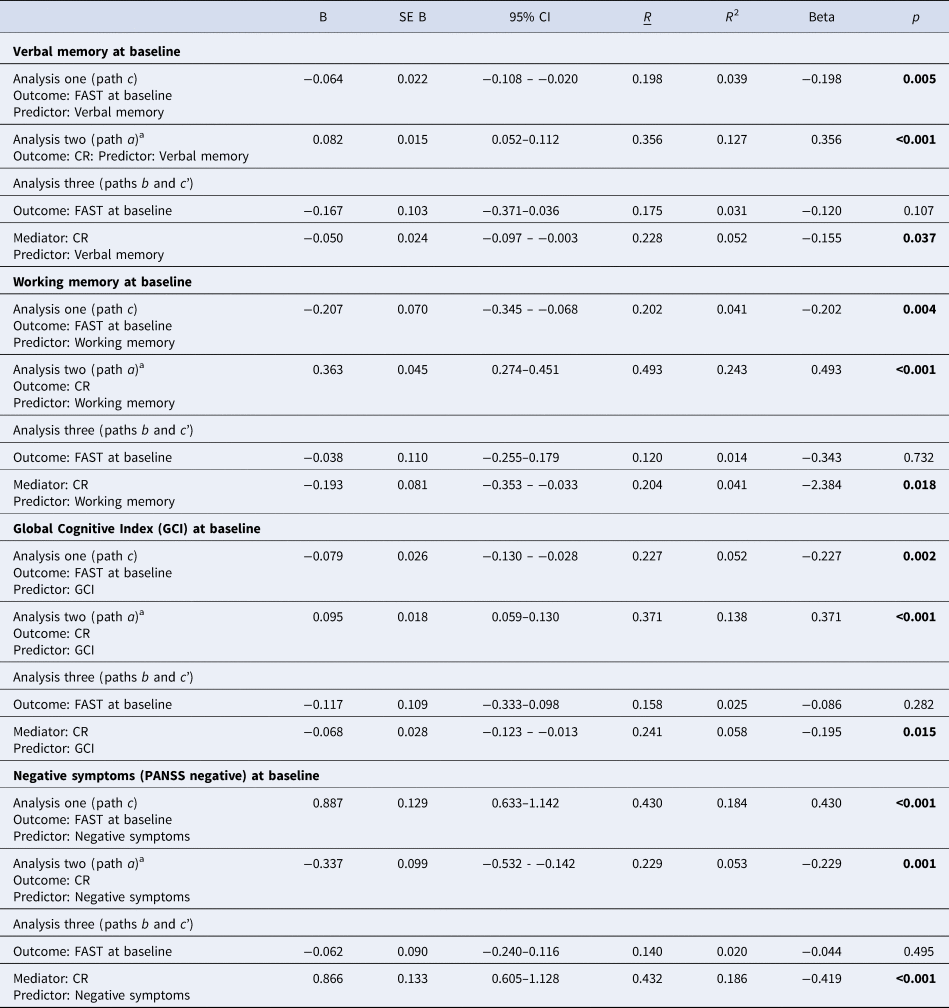
Significant differences (p < 0.05) are marked in bold. Note that only the mediating variables that are statistically significant with the predictor are shown. FAST, Functioning Assessment Short Test; CR, Cognitive Reserve; GCI, Global Cognition Index.
a Path c is the same in the three analyses.
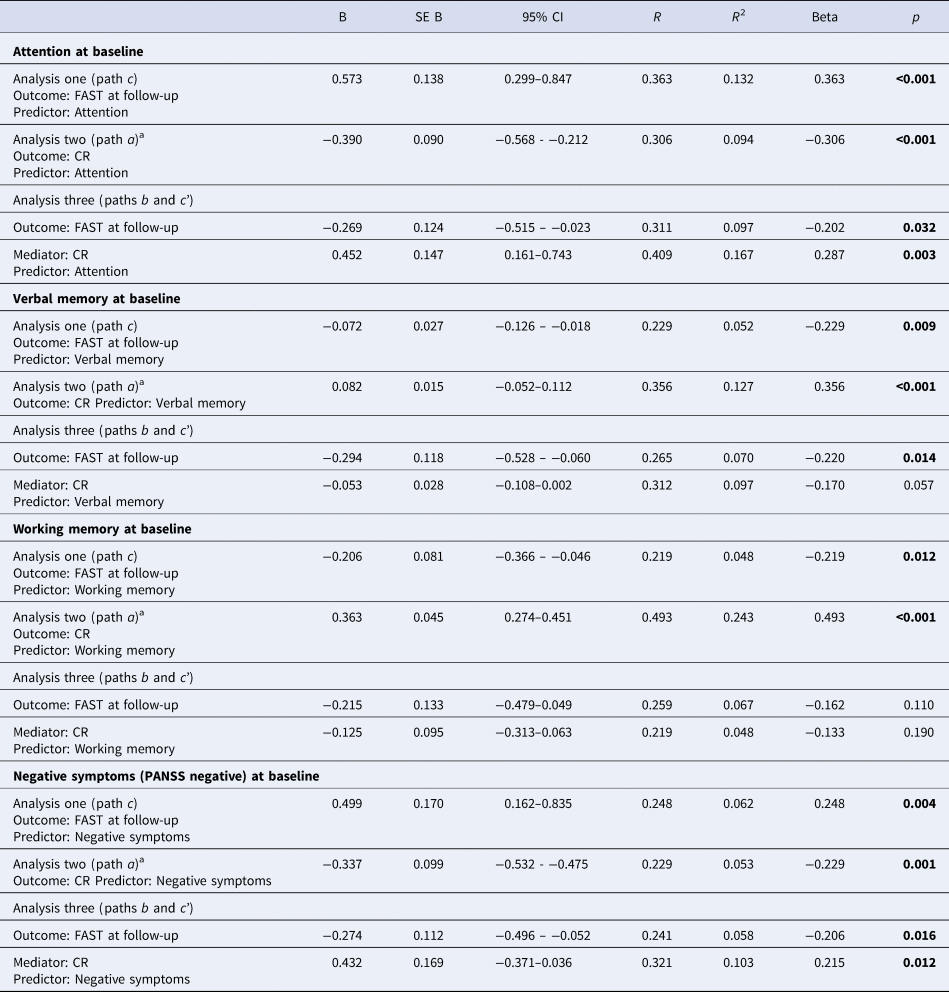
Interestingly, at 2-year follow-up, the effect of attention (p = 0.003) and negative symptoms (p = 0.012) assessed at baseline on functioning was partially mediated by CR level (p = 0.032 and p = 0.016, respectively). That is, even after controlling for this variable, the effect of the attention and negative symptoms on functioning remained significant. With regard to other cognitive domains such as verbal memory (p = 0.057), the independent variable was no longer significant when the mediator was controlled (CR) (p = 0.014), indicating that the relationship between verbal memory at baseline and functioning at follow-up was mediated by CR (see Table 3). Again, there were clinical variables associated with functioning, but CR was not related to them (general and total PANSS, MADRS and YMRS) and a cognitive domain (CGI) that was related to CR (p = 0.004) but not to functioning (p = 0.790).
Testing Mediator Effects Using Linear Regression Analyses with cognitive performance and clinical symptoms assessed at baseline and functioning at 2-year follow-up
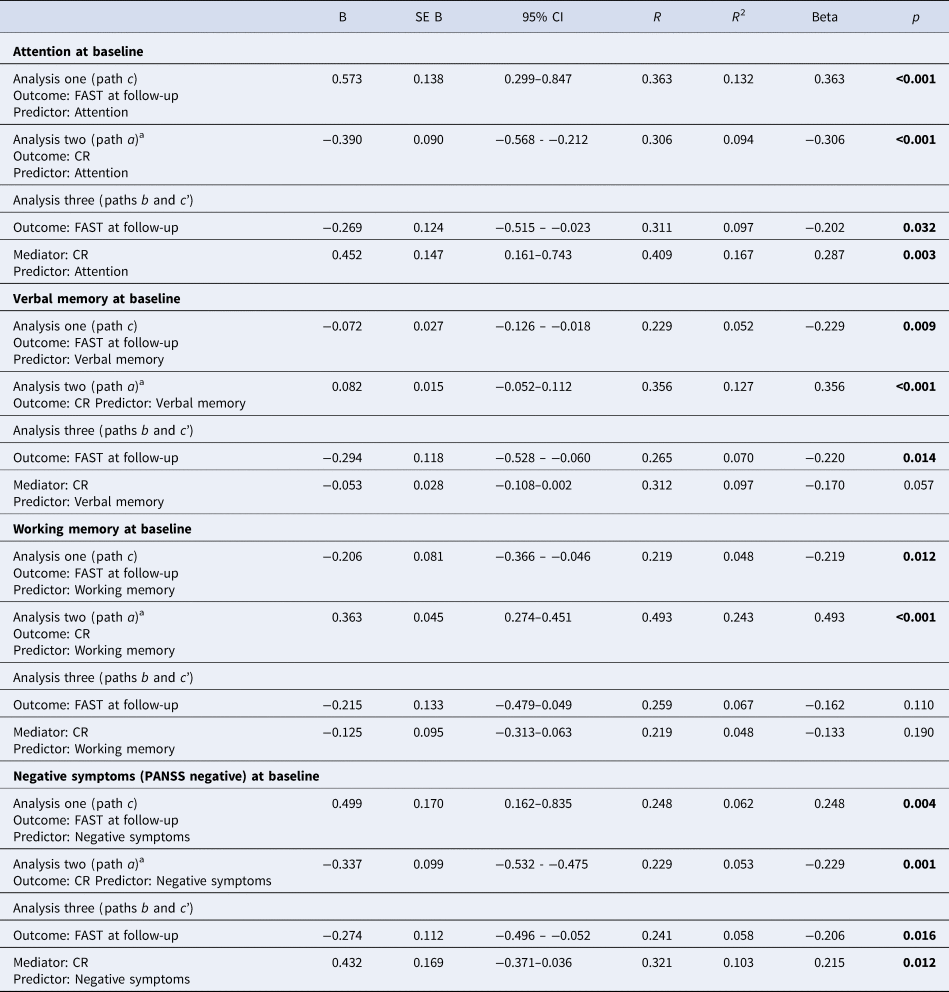
Significant differences (p < 0.05) are marked in bold. Note that only the mediating variables that are statistically significant with the predictor are shown.
FAST, Functioning Assessment Short Test, CR, Cognitive Reserve, GCI, Global Cognition Index.
a Path c is the same in the three analyses.
Finally, when considering all the variables (cognitive, clinical, and functional) assessed at 2-year follow-up, we found that the effect of attention and negative symptoms (p = <0.001) on functioning was not mediated by CR (p = 0.106). Verbal memory and positive and total subscales of PANSS (p < 0.001) were partially mediated by CR (p = 0.049, 0.031 and 0.048, respectively) and the effect of working memory (p = 0.121) on functioning was totally mediated by CR (p = 0.047) (see Table 4). There were clinical variables associated with functioning, but CR was not related to them (PANSS general, MADRS and YMRS).
Testing Mediator Effects Using Linear Regression Analyses with cognitive performance, clinical symptoms and functioning measures assessed at 2-year follow-up
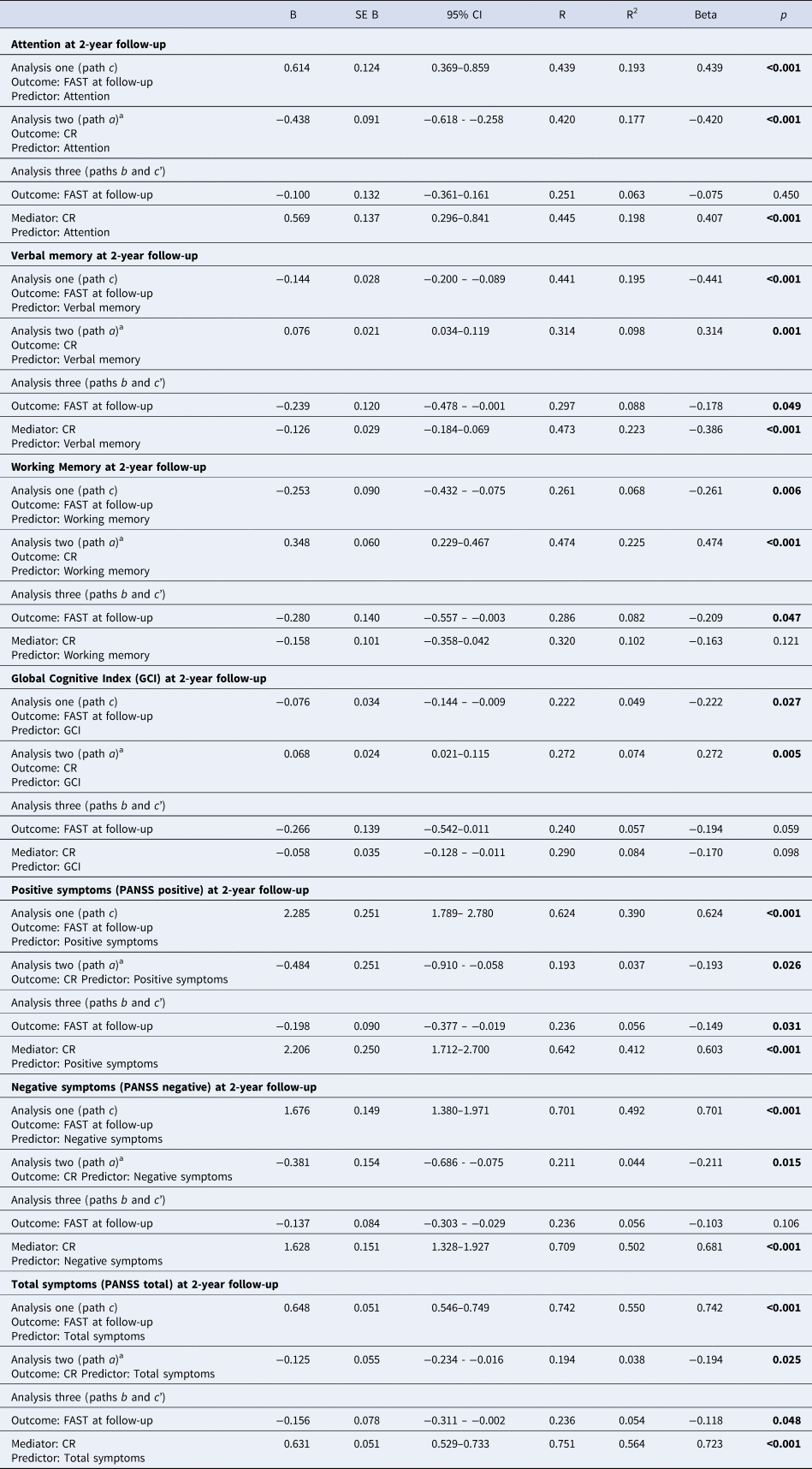
Significant differences (p < 0.05) are marked in bold. Note that only the mediating variables that are statistically significant with the predictor are shown.
FAST, Functioning Assessment Short Test; CR, Cognitive Reserve; GCI, Global Cognition Index.
a Path c is the same in the three analyses.
Discussion
To our knowledge, this is the first study to investigate the role of CR in mediating the relationship between cognitive performance or clinical symptoms and functioning in FEP. A better understanding of how these factors may impact functioning is key to achieve the goal of implementing more precise personalized treatments.
Three main findings have emerged from the present study. Confirming our initial hypothesis, there is a relationship between cognitive performance, clinical symptoms or CR and functioning in patients with newly diagnosed non-affective psychosis; at baseline, the path between domains of cognitive performance such as verbal memory, working memory and GCI as well as negative symptoms and functioning were not mediated by CR suggesting that these aspects contribute strongly towards functioning at baseline; at 2-year follow-up, CR plays a mediator effect on attention and negative symptoms measured at baseline, but not when neurocognitive and clinical symptoms were assessed at follow-up.
Our results showed the absence of influence that CR has in mediating the relationship between cognitive performance or clinical symptoms assessed at illness onset and functioning in non-affective FEP individuals at baseline. One possible explanation is that patients presented a prominent functional impairment at study entry which may be a consequence of clinical symptoms (Barnes & Pant, Reference Barnes and Pant2005). Therefore, patients with greater psychotic symptoms are more likely to experience cognitive deficits and consequently poor functioning. These findings highlight the importance of identifying high-risk individuals for care management in primary care in order to prevent mental illness.
As expected, after 2 years of treatment, FEP improved their functioning and this improvement occurred in parallel with the better clinical and neurocognitive course. We also observed a relationship between attention domain or negative symptoms and functioning at follow-up and this path was partially mediated by CR. The effect of verbal memory on functioning was totally mediated by CR. Hence, verbal memory measured at baseline was no longer significant in explaining psychosocial functioning at follow-up when controlling for CR. Although a meta-analysis indicated that verbal memory and attention may be separately associated with psychosocial functioning (Fett et al., Reference Fett, Viechtbauer, Domínguez, Penn, van Os and Krabbendam2011), our results suggest that CR was more strongly associated with poor functioning than verbal memory performance at baseline and that CR alone was not enough to explain the association between attention and psychosocial functioning. However, when we used the cognitive performance or clinical symptoms assessed also at follow-up, attention and negative symptoms were not mediated by CR. Thus, attention and negative symptoms are potential targets for psychosocial interventions as at both moments (at illness onset and 2-year follow-up) they seem to have a strong association with functioning at follow-up. Studies of patients with chronic schizophrenia and with FEP showed that negative symptoms, specifically apathy, were more strongly associated with poor functioning than other symptoms (Faerden et al., Reference Faerden, Friis, Agartz, Barrett, Nesvåg, Finset and Melle2009; Kiang, Christensen, Remington, & Kapur, Reference Kiang, Christensen, Remington and Kapur2003). In line with our results, the evidence suggests that higher negative symptom severity was associated with worse functioning (Milev et al., Reference Milev, Ho, Arndt and Andreasen2005; Ventura, Hellemann, Thames, Koellner, & Nuechterlein, Reference Ventura, Hellemann, Thames, Koellner and Nuechterlein2009). However, despite the fact that negative symptoms of schizophrenia contribute to impaired quality of life and poor functioning, the management of negative symptoms continues to be a major unmet clinical need. This is because treatment with current antipsychotic medications seems to reach at best modest efficacy and psychological therapies have failed to address the issue effectively (Tsapakis, Dimopoulou, & Tarazi, Reference Tsapakis, Dimopoulou and Tarazi2015). Our results also suggest that attention is a key factor to consider. However, the strategies for improving sustained attention are quite limited and there is inconclusive evidence that attention training is effective in schizophrenia (Rodríguez-Blanco, Lubrini, Vidal-Mariño, & Ríos-Lago, Reference Rodríguez-Blanco, Lubrini, Vidal-Mariño and Ríos-Lago2017; Suslow, Schonauer, & Arolt, Reference Suslow, Schonauer and Arolt2001). Although there is no specific treatment available, based on these results, an intervention oriented toward cognitive rehabilitation can be suggested. As shown in previous studies, this intervention could improve performance in cognitive domains and therefore also improve functionality (Garrido et al., Reference Garrido, Barrios, Penadés, Enríquez, Garolera, Aragay and Vendrell2013; Olivier et al., Reference Olivier, Killian, Chiliza, Asmal, Schoeman, Oosthuizen and Emsley2015; Penadés et al., Reference Penadés, Catalán, Salamero, Boget, Puig, Guarch and Gastó2006).
At follow-up, CR partially mediated the effect of clinical symptoms (as positive and total subscales of PANSS) on functioning. This result is in accordance with previous studies in which the CR is associated with illness insight (including its symptoms) and greater capacity for reasoning (Barnett et al., Reference Barnett, Salmond, Jones and Sahakian2006; Leeson et al., Reference Leeson, Sharma, Harrison, Ron, Barnes and Joyce2011). In addition, poor insight is associated with symptom severity and functioning (McEvoy et al., Reference McEvoy, Johnson, Perkins, Lieberman, Hamer, Keefe and Sharma2006; Segarra et al., Reference Segarra, Ojeda, Peña, García, Rodriguez-Morales, Ruiz and Gutiérrez2012). Thus, CR seems to be related to factors that may attenuate a worse long-term outcome.
Therefore, taking these results into account, it can be confirmed that CR has a significant influence on functioning. Considering that it is important to identify patients with poorer outcomes as early as possible, our study suggests that CR could help in identifying FEP patients at higher risk of poor long-term outcome. Our results also showed that patients with high CR require a lower dose of medication, confirming that CR might be considered as a protective factor (Herrero et al., Reference Herrero, Contador, Stern, Fernández-Calvo, Sánchez and Ramos2019). Additionally, the implementation of early interventions centered on CR stimulation and engaging lifestyle, if conducted in the early stages of the illness or even on people with a high risk of suffering psychosis, could also be beneficial in preventing or reducing the impact of illness (Vieta, Reference Vieta2015). Although several programs are underway to enhance CR in people with first-episode psychosis, early stages of the illness or even those with a high risk of suffering psychosis, to the best of our knowledge, there is no validated intervention to enhance CR to date. Further studies are required to test the efficacy of cognitive reserve enhancement in these populations.
Some limitations of our work have to be taken into consideration before translating these findings into clinical practice. Firstly, a limitation present in all CR studies undertaken on a psychiatric population is that at this time there was no validated instrument to measure CR, criteria established and replicated in previous studies were followed (IQ, educational level and leisure activities). Secondly, we are aware of the limitations of the use of WAIS (Lezak, Howieson, Loring, Hannay, & Fischer, Reference Lezak, Howieson, Loring, Hannay and Fischer2004; Strauss, Sherman, & Spreen, Reference Strauss, Sherman and Spreen2006) for the assessment of premorbid IQ such as the decline in the expected cognitive trajectory from premorbid expectations. However, to be consistent with our previous research and taking into account that is a subanalysis of a multicenter, naturalistic and longitudinal project (Amoretti et al., Reference Amoretti, Bernardo, Bonnin, Bioque, Cabrera, Mezquida and Torrent2016; Reference Amoretti, Cabrera, Torrent, Mezquida, Lobo and González-Pinto2018; Bernardo et al., Reference Bernardo, Bioque, Parellada, Saiz, Cuesta and Llerena2013) we used the available common tools. Recently, the Cognitive Reserve Assessment Scale in Health (CRASH) (Amoretti et al., Reference Amoretti, Cabrera, Torrent, Bonnín, Mezquida, Garriga and Bernardo2019) has been validated. It is the first measure developed specifically for patients with severe mental illness with optimal psychometric properties, facilitating reliable and valid measurement of CR. Thirdly, the diagnosis of FEP is frequently modified during the course of the illness. However, the evidence suggests a high prospective consistency for schizophrenia and bipolar disorder (Fusar-Poli et al., Reference Young, Biggs, Ziegler and Meyer2016). The diagnosis was established based on data collected at a 2-year follow-up visit. The final limitation would be that further research is needed to determine what factors might influence the relationship between cognitive or clinical outcomes and functioning, such as treatment, DUP, age of onset, substance use, gender… Larger studies may analyze a large number of variables and are required to confirm these findings. However, it is important to note that this is a naturalistic, multicentric and longitudinal study. This fact makes the sample representative of FEP as it occurs in Spain. Furthermore, the sample is very well characterized because it includes different variables of interest and longitudinal monitoring is performed. In spite of its limitations, the study shows innovative and significant results that can be implemented in daily clinical practice.
In summary, our results showed the influence that CR has in mediating the relationship between cognitive performance or clinical symptoms and functioning in FEP individuals. In particular, CR partially mediated the relationship between some cognitive domains or clinical symptoms and functioning at follow-up. Therefore, these findings highlight that the functional recovery of the FEP population is heterogeneous and that it can be very helpful to evaluate CR as it can considerably improve our understanding of individual differences in the long-term functioning of patients with a non-affective FEP. Based on these results, we consider that training programs aimed to the enhancement of CR by increasing mental stimulation (e.g. reading and cognitive exercises), promoting education, introducing physical exercise and leisure activities, building social skills and social interaction (Willis & Hakim, Reference Willis and Hakim2013), could be beneficial for the prevention or reduction of the illness’ impact and the improvement of functional outcomes in FEP.
Acknowledgements
We are extremely grateful to all participants. This study is part of a coordinated-multicentre Project, funded by the Ministerio de Economía y Competitividad (PI08/0208; PI11/00325; PI14/00612), Instituto de Salud Carlos III – Fondo Europeo de Desarrollo Regional. Unión Europea. Una manera de hacer Europa, Centro de Investigación Biomédica en Red de salud Mental, CIBERSAM, by the CERCA Programme / Generalitat de Catalunya AND Secretaria d'Universitats i Recerca del Departament d'Economia I Coneixement (2017SGR1355). Departament de Salut de la Generalitat de Catalunya, en la convocatoria corresponent a l'any 2017 de concessió de subvencions del Pla Estratègic de Recerca i Innovació en Salut (PERIS) 2016–2020, modalitat Projectes de recerca orientats a l'atenció primària, amb el codi d'expedient SLT006/17/00345. This publication is co-financed with file number B15_17R by Operational Program FEDER Aragón 2014–2020: ‘Building Europe from Aragon’.
ARR thanks to the support of the CNPq PQ process number 305707-2015/9. EV thanks the support of the Spanish Ministry of Science, Innovation and Universities (PI15/00283) integrated into the Plan Nacional de I + D + I y cofinanciado por el ISCIII-Subdirección General de Evaluación y el Fondo Europeo de Desarrollo Regional (FEDER); CIBERSAM; and the Comissionat per a Universitats i Recerca del DIUE de la Generalitat de Catalunya to the Bipolar Disorders Group (2017 SGR 1365) and the project SLT006/17/00357, from PERIS 2016–2020 (Departament de Salut). CERCA Programme/Generalitat de Catalunya. CT is funded by the Spanish Ministry of Economy and Competitiveness, Instituto Carlos III, through a ‘Miguel Servet’ postdoctoral contract (CPI14/00175). The study has been supported by a BITRECS project conceded to NV. BITRECS project has received funding from the European Union's Horizon 2020 research and innovation programme under the Marie Skłodowska-Curie grant agreement No 754550 and from ‘La Caixa’ Foundation.
We also would like to thank the authors of the PEPs group who participated in the development of this manuscript.
Conflicts of interest
MBi has received honoraria from talks and consultancy of Adamed, has received honoraria from the consultancy of Ferrer, has received research support and honoraria from talks and consultancy of Janssen-Cilag, has received honoraria from talks and consultancy of Lundbeck, has received honoraria from talks and consultancy of Otsuka, and a research prize from Pfizer. DF has been a consultant and/or has received fees from Angelini, Eisai, IE4Lab, Janssen, Lundbeck, and Otsuka. He has also received grant support from Instituto de Salud Carlos III (Spanish Ministry of Science, Innovation and Universities) and from Fundación Alicia Koplowitz. EV has received research support from or served as consultant, adviser or speaker for AB-Biotics, Actavis, Allergan, Angelini, AstraZeneca, Bristol-Myers Suibb, Dainippon Sumitomo Pharma, Ferrer, Forest Research Institute, Gedeon Richter, Glaxo-Smith-Kline, Janssen, Lundbeck, Otsuka, Pfizer, Roche, Sanofi-Aventis, Servier, Shire, Sunovion, Takeda, Telefónica, the Brain and Behaviour Foundation, the Spanish Ministry of Science and Innovation (CIBERSAM), the Seventh European Framework Programme (ENBREC), and the Stanley Medical Research Institute. MBe has been a consultant for, received grant/research support and honoraria from, and been on the speakers/advisory board of ABBiotics, Adamed, AMGEN, Eli Lilly, Ferrer, Forum Pharmaceuticals, Gedeon, Janssen-Cilag, Lundbeck, Otsuka, Pfizer and Roche. DC has received financial support to attend scientific meetings from Janssen-Cilag, Eli Lilly, Lundbeck, Novartis and Astrazeneca. The remaining authors from Zaragoza have no conflicts of interest. MG has been on the speakers/advisory board of Janssen-Cilag. RR has been a consultant for, spoken in activities of, or received grants from: Instituto de Salud Carlos III, Fondo de Investigación Sanitaria (FIS), Centro de Investigación Biomédica en Red de Salud Mental (CIBERSAM), Madrid Regional Government (S2010/ BMD-2422 AGES), JanssenCilag, Lundbeck, Otsuka, Pfizer, Ferrer, Juste, Takeda. The rest of the authors report no biomedical financial interests or potential conflicts of interest.