Surgical site infections (SSIs) represent a substantial burden on the healthcare system worldwide. 1 An estimated 800,000 SSIs occur annually in the European Union, making SSIs the most frequently occurring healthcare-associated infection. Reference Cassini, Plachouras and Eckmanns2 A prevalence survey conducted in >200 acute-care hospitals in Germany in the year 2016, found SSIs to be among the most common healthcare-associated infections, with a share of ~22% of all healthcare-associated infections documented. Reference Behnke, Aghdassi, Hansen, Diaz, Gastmeier and Piening3 Risk factors for SSIs can be separated into different categories. Most commonly, patient-related factors are differentiated from procedure-related factors. Reference Aghdassi, Schröder and Gastmeier4–Reference Schroder, Schwab and Behnke6 However, in recent years, other risk factors have been investigated, among them season, temperature, and climate. Reference Aghdassi and Gastmeier7
Using a similar approach in a previous analysis, we were able to demonstrate that the occurrence of SSIs was associated with warmer temperatures. Reference Aghdassi, Schwab, Hoffmann and Gastmeier8 Similar associations have been observed for other types of infections, particularly for bloodstream infections caused by certain gram-negative bacteria. Reference Anderson, Richet and Chen9–Reference Schwab, Gastmeier and Meyer11 We therefore performed deeper analyses of our data set to investigate pathogens for which the association between SSI occurrence and warmer temperatures is especially strong, and to determine whether differences exist regarding the depth of infection.
Methods
The data utilized in our analyses were from the database of the SSI surveillance module “OP-KISS” of the German national nosocomial infection surveillance system “KISS“ (Krankenhaus-Infektions-Surveillance-System, German), as well as data from the German Meteorological Service “DWD” (Deutscher Wetterdienst, German). In OP-KISS, data are collected and SSI surveillance is conducted for selected procedures. SSIs are segregated into superficial, deep incisional, and deep organ-space SSIs. A maximum of 4 pathogens can be documented per SSI. The concept and methodology of SSI surveillance in KISS have been described in earlier publications. Reference Brandt, Hansen, Sohr, Daschner, Ruden and Gastmeier12,Reference Brandt, Sohr, Behnke, Daschner, Ruden and Gastmeier13
We calculated SSI rates as the number of SSIs per 1,000 operations for included procedures conducted between December 2016 and January 2000. We divided the documented SSIs into SSIs with and without pathogen, and if a pathogen was identified, by pathogen or group of pathogens. Analyses were conducted for all SSIs, as well as separately for SSIs of different depths of infection, namely superficial SSIs versus deep SSIs (i.e. deep incisional and deep-organ space SSIs were considered as a single group).
To analyze the association of SSIs with meteorological parameters, data of the DWD were used. We included the following meteorological parameters: daily mean outside temperature as a continuous and categorical variable (in 5° intervals), daily precipitation (mm), relative humidity (%), vapor pressure (hectopascal), daily sunshine duration (hours), number of heat days (ie, maximum temperature >30°C) per month, number of ice days (ie, maximum temperature <0°C) per month, number of days with heavy rain (ie, >30 mm per day) per month, as well as longitude and latitude.
The interpolation of the meteorological data was operated using the nearest neighbor approach. Reference Menz14 The measurements were aggregated into monthly data and were associated with the respective OP-KISS departments using postal codes. The Spearman rank correlation coefficients were calculated for meteorological data. As demonstrated in an earlier publication, Reference Aghdassi, Schwab, Hoffmann and Gastmeier8 the coefficients revealed a medium-to-strong correlation between temperature and relative humidity, vapor pressure, sunshine duration, as well as the number of heat and ice days (Table S1 in the online supplement). Due to this correlation, analyses were conducted with a focus on temperature only. For this study, we matched the date of procedure with the monthly mean of the meteorological parameter for the month, in which the procedure was performed.
In a descriptive analysis, SSI rates were calculated with 95% confidence intervals and differences were tested by Poisson regression analysis. To investigate the effect of meteorological parameters on the occurrence of SSIs (yes or no; without or with pathogen or pathogen group), univariable and multivariable regression analyses were performed using logistic regression models. In addition to the meteorological parameters, the following department- and patient-related parameters were considered in the models: type of hospital (tertiary and maximum care: yes, no, or unknown), age (<30, 30–39, 40–49, 50–59, 60–69, 70–79, ≥80 years), sex (male or female), type of procedure (stratified into 7 surgical groups: general and other surgery, abdominal surgery, traumatology and orthopedics, urology, gynecology, heart surgery, vascular surgery), surgical approach (laparoscopic or open), season (winter, December–February; spring, March–May; summer, June–August; autumn, September–November), year, and the National Nosocomial Infections Surveillance System (NNIS) risk index. A wound contamination class ≥3, American Society of Anesthesiologists (ASA) score ≥3, and duration of surgery >75% percentile were factors that increased the NNIS risk index. 15
In the univariable analysis, for each outcome (SSI total, without, or with pathogen or pathogen group), crude odds ratios with 95% confidence intervals were calculated for each factor. In the multivariable analysis, for each outcome, adjusted odds ratios with 95% confidence intervals were calculated in reference to the temperature: continuous (type I models) or categorical (type II models). Pathogens with at least 200 attributable SSIs were included in the analyses and were calculated in separate models. For better interpretability of the effects of the meteorological parameters in the models, the following parameters were included in every multivariable model: age, sex, NNIS risk index, type of procedure, surgical approach, and year. Analyses were exploratory in nature. All analyses were conducted with SPSS statistical software (IBM, Somers, NY) and SAS statistical software (SAS Institute, Cary, NC).
Hospitals in Germany are required by the German Protection Against Infection Act to collect surveillance data on healthcare-associated infections. Because this publication describes data collected for this purpose (ie, surveillance-based data), ethical approval or informed consent were not required.
Results
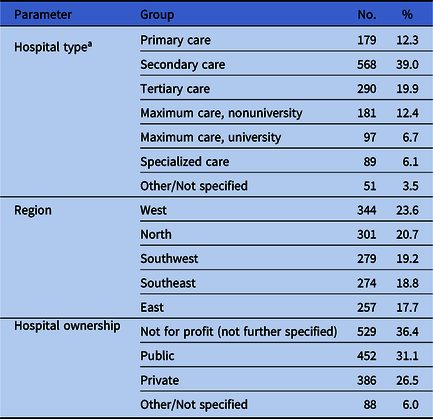
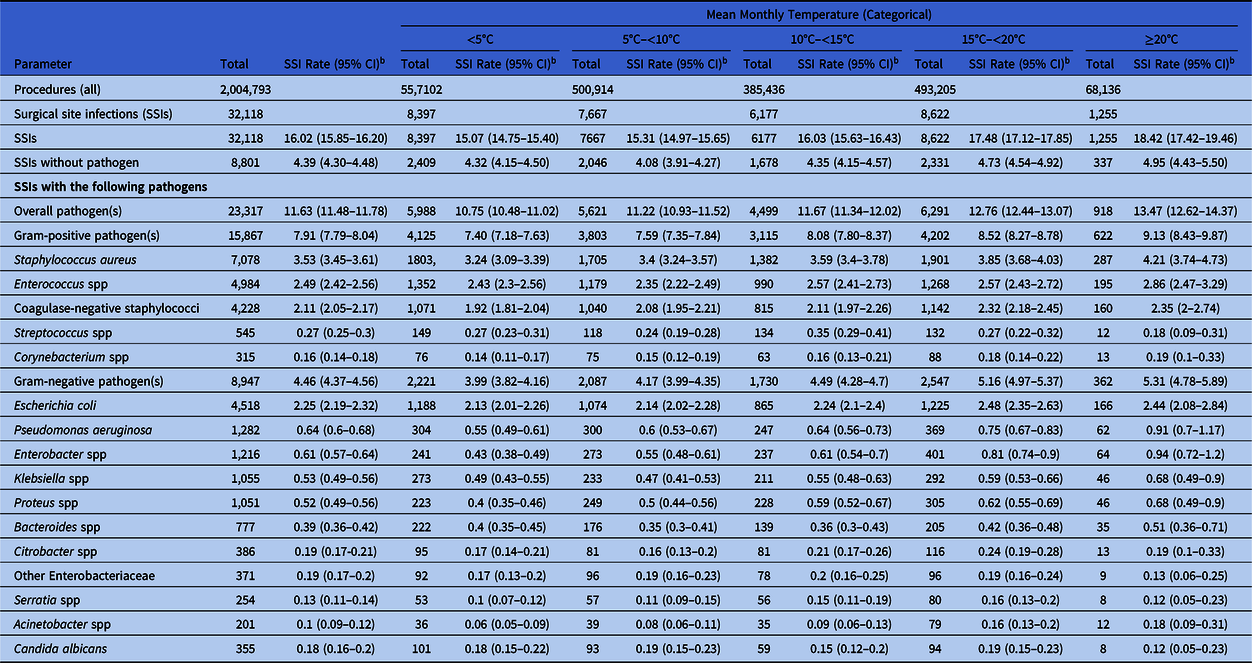
In total, 2,004,793 procedures with 32,118 SSIs from 1,455 surgical departments were included in this study. Table 1 summarizes the baseline characteristics of these departments. Generally, SSIs occurred more frequently after procedures conducted in months with warmer outside temperatures (Table 2). When analyzing superficial and deeper SSIs separately, similar results were observed (Supplementary Tables S2 and S3 online). Documentation of at least 1 pathogen was available for 23,317 SSIs. The most frequently documented pathogens were Staphylococcus aureus (n = 7,078, 23%), Enterococcus spp (n = 4,984, 16%), and Escherichia coli (n = 4,518, 14.4%). The proportion of SSIs with at least 1 documented pathogen was lower for superficial SSIs than deeper SSIs. Further information on the distribution per pathogen and depth of infection can be found in Supplementary Figs. S1–S6 (online).
Structural Characteristics of the Included 1,455 Surgical Departments Participating in the German Surgical Site Infection Surveillance Network Between 2000 and 2016

Note. East: Berlin, Brandenburg, Saxony, Saxony-Anhalt, Thuringia; North: Bremen, Hamburg, Lower Saxony, Mecklenburg-West Pomerania, Schleswig-Holstein; Southeast: Bavaria, Hesse; Southwest: Baden-Württemberg, Saarland, Rhineland-Palatinate; West: North Rhine-Westphalia.
a No uniform definitions of “hospital type” are used nationwide in Germany. Therefore, participating surgical departments specify a hospital type according to their own assessment upon registration in the German surgical site infection surveillance network. A higher level of care (primary < secondary < tertiary < maximum) generally indicates a higher differentiation by function and specialty and higher intensity of care.
Surgical Site Infections and Surgical Site Infection Rates (All Depths) per 1,000 Procedures Stratified By Temperature Category And Pathogen a
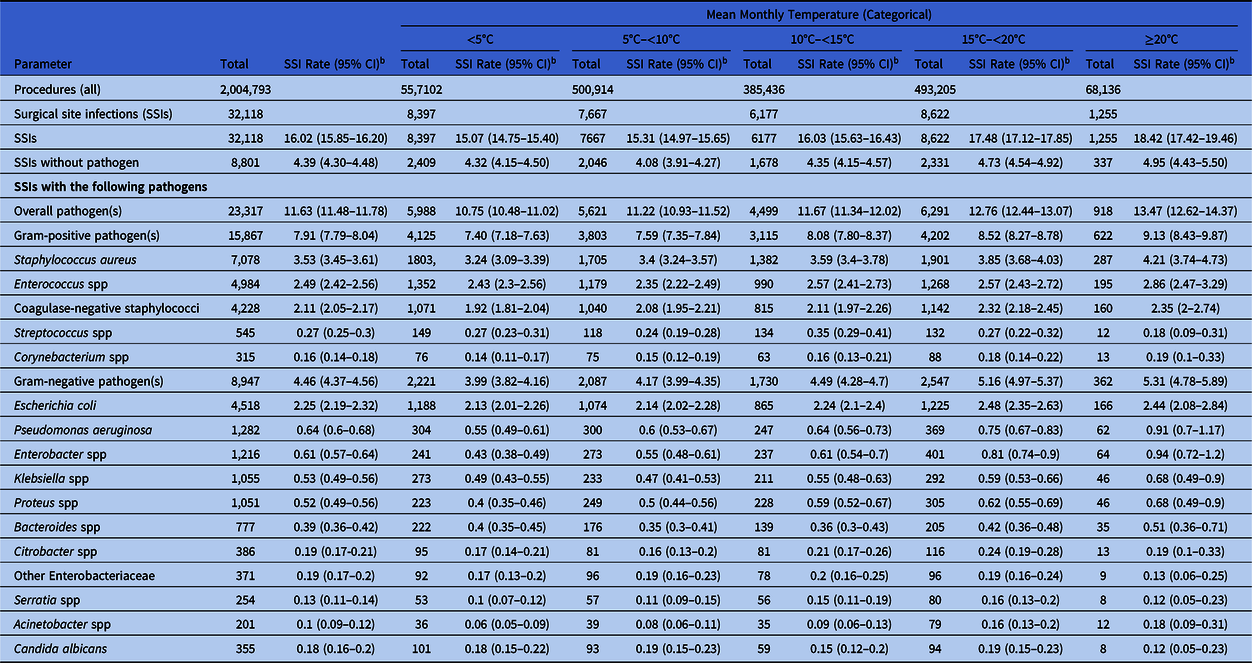
a Data from 2,004,793 procedures conducted between 2000 and 2016 in 1,455 surgical departments participating in the German surgical site infection surveillance network
b Per 1,000 procedures.
By applying a multivariable logistic regression model, we were able to calculate the adjusted odds ratios for the occurrence of SSI in reference to the mean temperature during the month of surgery. The results of the underlying descriptive, univariable and multivariable analyses are available in Supplementary Tables S4–S7 (online).
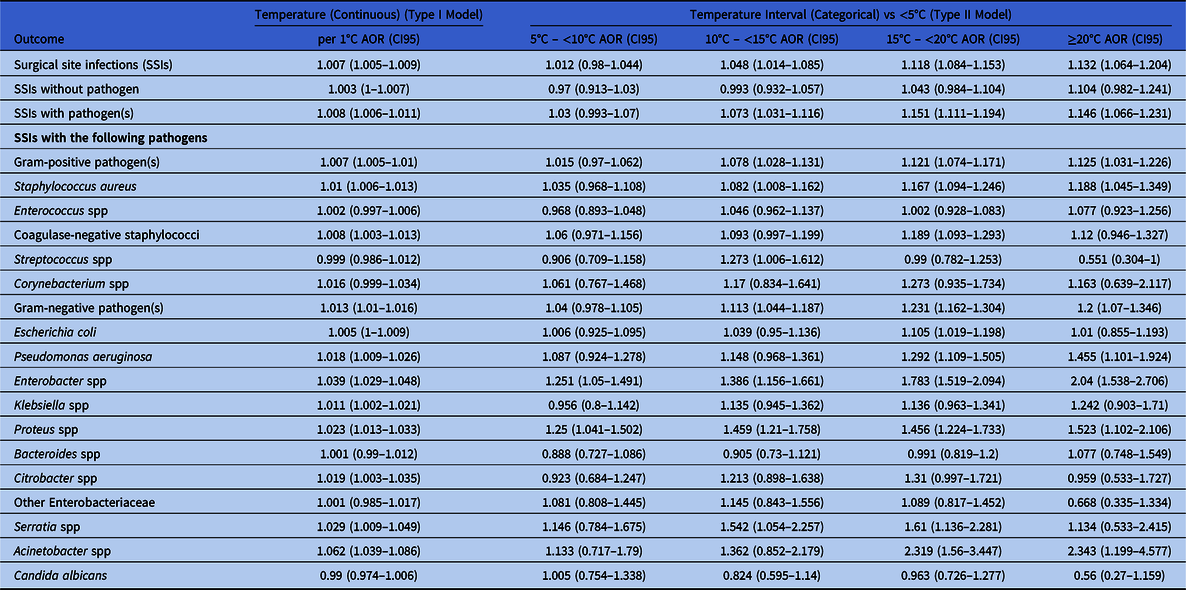
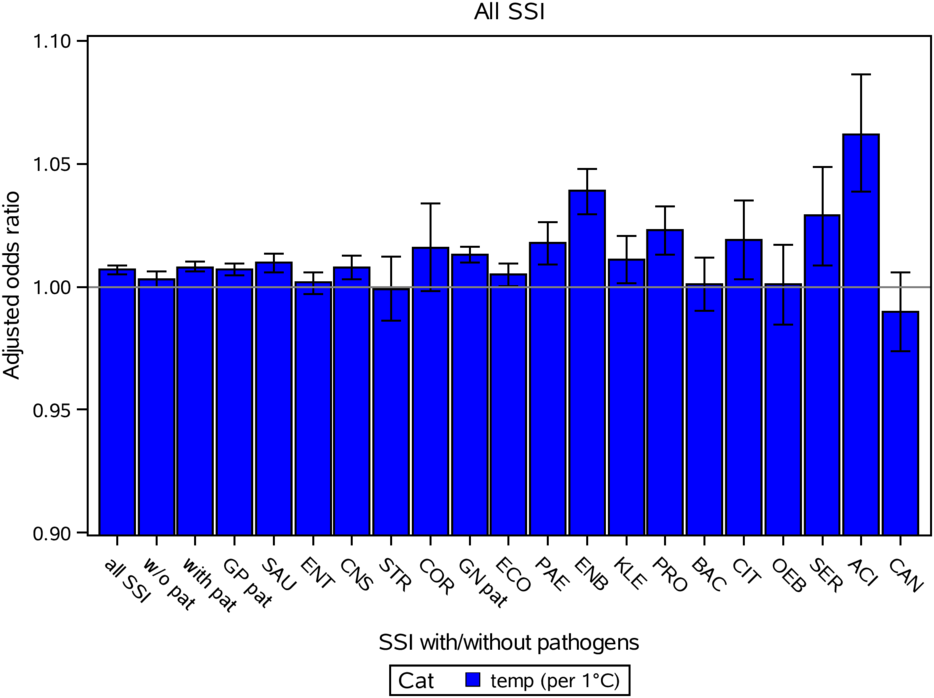
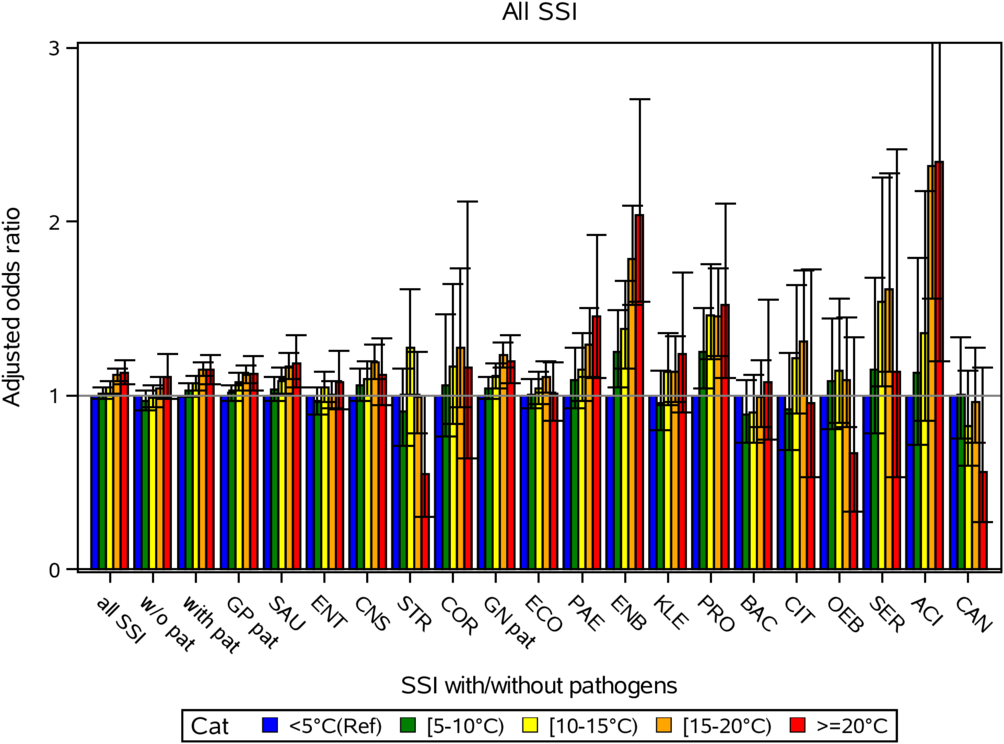
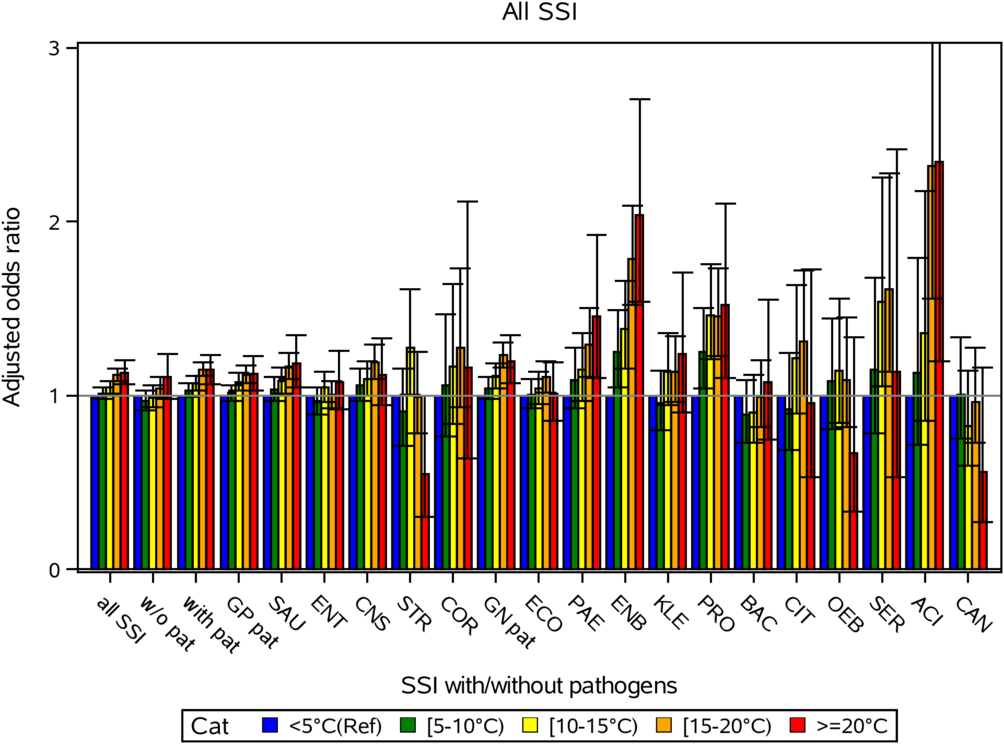
When stratifying by pathogen, diverse results were observed in the logistic regression analyses. Generally, we observed a correlation between higher temperatures and the occurrence of SSI (Table 3). An analysis in which temperature was considered as a continuous variable (type I model) showed an increase in the SSI risk per additional 1°C for almost all pathogens, with the exception of Streptococcus spp and Candida albicans. The association was especially strong for the risk for SSIs with Acinetobacter spp (6% increase per additional 1°C) and Enterobacter spp (4% increase per additional 1°C) (Table 3 and Fig. 1). Additional to analyzing temperature as a continuous variable, we also conducted analyses for defined temperature intervals (type II model). Here, the same overall trends as for temperature as a continuous variable were observed. In particular, the risk for SSIs caused by Acinetobacter spp and Enterobacter spp increased >2-fold, when comparing surgeries in months with a mean temperatures of <5°C to months with a mean temperature of ≥20°C (Table 3 and Fig. 2). Among gram-positive pathogens, S. aureus showed the strongest association with warmer temperatures. Other gram-positive pathogens did not show an equally strong association. Superficial SSIs were demonstrated to have a higher temperature-related association than deeper SSIs. The risk for superficial SSIs with Acinetobacter spp significantly increased >10-fold after surgeries conducted in months with a mean temperature of ≥20°C (in reference to <5°C). For Enterobacter spp and Pseudomonas aeruginosa, we observed a >2-fold statistically significant increase in the risk for superficial SSIs (≥20°C vs <5°C) (Supplementary Table S8 and Supplementary Figure S7 online). Supplementary Table S9 and Supplementary Fig. S8 (online) illustrate the association of temperature with deeper SSIs stratified by pathogen.
Results of the Multivariable Logistic Regression Analysis: Adjusted Odds Ratios With 95% Confidence Intervals in Reference to the Mean Monthly Temperature as a Continuous Parameter (Type I Model) and as a Categorical Parameter (Type II Model) for the Outcome Occurrence of Surgical Site Infection a
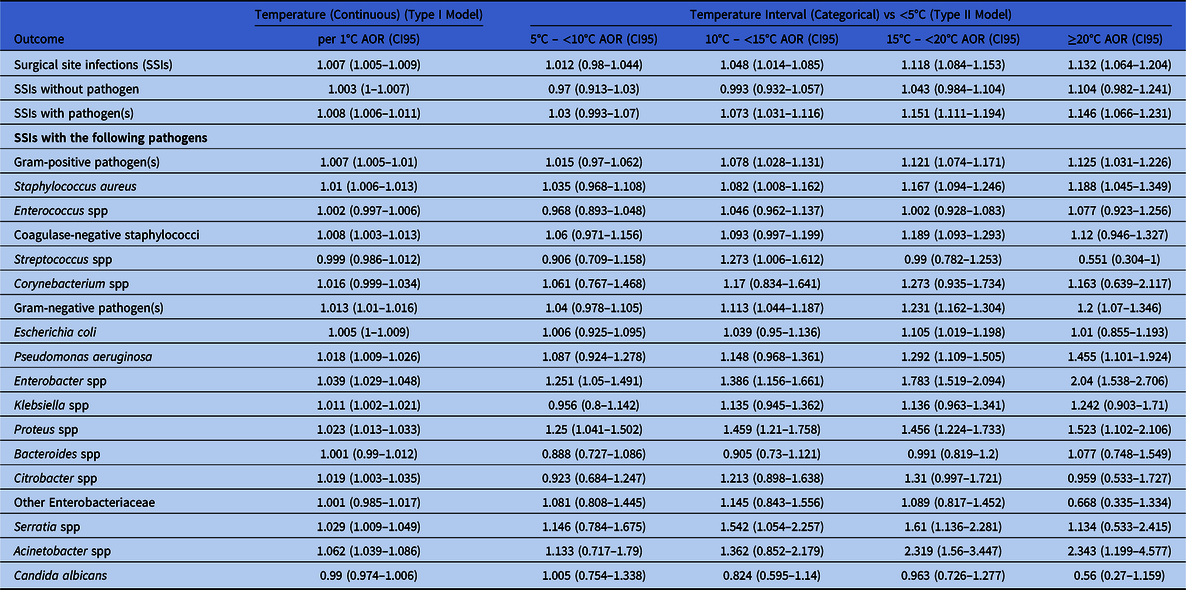
Note. AOR, adjusted odds ratio; CI, confidence interval.
a Data from 2,004,793 procedures conducted between 2000 and 2016 in 1,455 surgical departments participating in the German surgical site infection surveillance network. All adjusted odds ratios are adjusted by age, sex, National Nosocomial Infections Surveillance System (NNIS) risk index, type of procedure, surgical approach and year. NNIS risk index includes the following parameters: wound contamination class, ASA-score, duration of surgery. A wound contamination class ≥3, ASA score ≥3, and duration of surgery >75% percentile increase the index by 1 point. The type I model analyzes temperature as a continuous variable. The type II model analyzes temperature as a categorical variable for defined temperature intervals.
Adjusted odds ratios with 95% confidence intervals for the occurrence of surgical site infections in reference to a 1°C temperature increase (type I model), stratified by pathogen. Data from 2,004,793 procedures conducted between 2000 and 2016 in 1,455 surgical departments participating in the German surgical site infection surveillance network.
All models are adjusted for the following factors: age, sex, type of procedure, surgical approach (laparoscopic vs. open), year of surgery, and National Nosocomial Infections Surveillance System (NNIS) risk index. NNIS risk index includes the following parameters: wound contamination class, ASA score, duration of surgery. A wound contamination class ≥3, ASA-score ≥3, and duration of surgery >75% percentile increase the index by 1 point. The type I model analyzes temperature as a continuous variable. The error bar represents the 95% confidence interval. Note. ACI, Acinetobacter spp; ASA, American Society of Anesthesiologists; BAC, Bacteroides spp; CAN, Candida albicans; Cat, category; CIT, Citrobacter spp; CNS, coagulase-negative staphylococci; COR, Corynebacterium spp; ECO, Escherichia coli; ENB, Enterobacter spp; ENT, Enterobacter spp; GN pat, gram-negative pathogen(s); GP pat, gram-positive pathogen(s); KLE, Klebsiella spp; OEB, other Enterobacteriaceae; PAE, Pseudomonas aeruginosa; pat, pathogen; PRO, Proteus spp; SAU, Staphylococcus aureus; SER, Serratia spp; SSI, surgical site infection; STR, Streptococcus spp; temp, temperature; w/o pat, without pathogen.

Adjusted odds ratios with 95% confidence intervals for the occurrence of surgical site infections in reference to <5°C (the type II model), stratified by pathogen. Data from 2,004,793 procedures conducted between 2000 and 2016 in 1,455 surgical departments participating in the German surgical site infection surveillance network. All models are adjusted for the factors: age, sex, type of procedure, surgical approach (laparoscopic vs open), year of surgery, and National Nosocomial Infections Surveillance System (NNIS) risk index. NNIS risk index includes the following parameters: wound contamination class, ASA-score, duration of surgery. A wound contamination class ≥3, ASA score ≥3, and duration of surgery >75% percentile increase the index by 1 point. The type II model analyzes temperature as a categorical variable for defined temperature intervals. The error bar represents the 95% confidence interval. Note. ACI, Acinetobacter spp; BAC, Bacteroides spp; CAN, Candida albicans; Cat, category; CIT, Citrobacter spp; CNS, coagulase-negative staphylococci; COR, Corynebacterium spp; ECO, Escherichia coli; ENB, Enterobacter spp; ENT, Enterobacter spp; GN pat, gram-negative pathogen(s); GP pat, gram-positive pathogen(s); KLE, Klebsiella spp; OEB, other Enterobacteriaceae; PAE, Pseudomonas aeruginosa; pat, pathogen; PRO, Proteus spp; SAU, Staphylococcus aureus; SER, Serratia spp; SSI, surgical site infection; STR, Streptococcus spp; temp, temperature; w/o pat, without pathogen.
Discussion
Our data analysis demonstrates 2 aspects, namely that warmer temperatures were associated with an increase in the likelihood of SSI occurrence and that this increase was particularly strong for certain gram-negative pathogens.
We observed a significant increase in the risk for SSIs caused by various gram-negative pathogens, most prominently for Acinetobacter spp, Enterobacter spp, P. aeruginosa, and Proteus spp. Although not yet fully understood, a strong interaction between the human microbiome composition and the occurrence of SSIs has been suggested by various studies. Reference Lederer, Pisarski, Kousoulas, Fichtner-Feigl, Hess and Huber16–Reference Wenzel18 It appears likely that differences in bacterial colonization patterns influence the likelihood of SSI occurrence. Intuitively, such associations would be expected to be strongest for bacteria colonizing the human skin (eg, staphylococci). However, the strongest correlation between temperature and pathogens was observed for Acinetobacter spp, Enterobacter spp, P. aeruginosa, and Proteus spp, none of which are abundant in the physiological flora of the human skin, but rather in the gut. This finding emphasizes the importance that the human gut microbiome plays in the pathogenesis, not only of gastrointestinal diseases, but also other diseases, including infections in general Reference Kho and Lal19,Reference Haak, Prescott and Wiersinga20 and SSIs in particular. Reference Alverdy, Hyoju, Weigerinck and Gilbert17,Reference Wenzel18,Reference Kasatpibal, Whitney, Saokaew, Kengkla, Heitkemper and Apisarnthanarak21,Reference Liu, Yan and Ma22 The fact that the gut microbiome can be heavily influenced by climate and weather factors has been demonstrated previously. Reference Lau, Mitsuyama, Odamaki, Xiao and Liong23
When put into a global context, similar patterns can be observed. The correlation of infections by gram-negative bacteria and climate factors, or indirectly the geographical proximity to the equator, has been described in earlier publications. Fisman et al Reference Fisman, Patrozou and Carmeli10 demonstrated that proximity to the equator increased the likelihood of bloodstream infection occurrence. Although not focusing on SSIs, we see a strong correlation between the work of Fisman et al and our data.
Generally, SSI surveillance data from low- and middle-income countries show substantially higher SSI rates in these countries. Reference Singh, Chakravarthy and Rosenthal24–Reference Rosenthal27 Unlike data from Western high-income countries, 15 publications from low- and middle-income countries in warmer regions of the Earth have reported a higher percentage of SSIs caused by gram-negative pathogens. Reference Viet Hung, Anh Thu and Rosenthal28 Although the higher SSI rates in low- and middle-income countries are likely partly attributable to socioeconomic factors, the higher percentage of gram-negative bacteria among SSI causing pathogens indicates that meteorological factors play an important role as well. This interpretation is supported by our data; we not only observed an increase in overall SSI rates but also a shift to gram-negative pathogens that was associated with warmer temperatures. Notably, however, extrapolations of data from low- and middle-income countries to data from our study are strongly limited by several organizational and process of care aspects such as nonavailability of air conditioning as well as periods of extreme heat in certain low- and middle-income countries.
S. aureus is generally referred to as the most common SSI causing pathogen. 15 Unsurprisingly, S. aureus was the most frequently documented pathogen in our study period. Among the group of gram-positive pathogens, S. aureus was the pathogen with the strongest association of SSI occurrence to warmer temperatures. The fact that skin infections with S. aureus occur more frequently during warmer than colder months has been described previously. Reference Leekha, Diekema and Perencevich29
Another main result of our study was that we found a higher correlation between temperature and superficial SSIs than deeper SSIs. A possible explanation for this may be that the outer layers of body tissue, where superficial SSIs manifest, are subject to more intense temperature shifts than deeper body tissues.
A study by Schwab et al that used a similar methodology to analyze the association of meteorological factors and hospital-acquired bloodstream infections in German intensive care units yielded results similar to the results of this study. Authors reported a significant increase in the likelihood of hospital-acquired bloodstream infections caused by gram-negative bacteria (particularly Acinetobacter spp and Enterobacter spp) in months with higher mean temperatures. Reference Schwab, Gastmeier, Hoffmann and Meyer30 The similarity of our results to the findings of Schwab et al indicates that meteorological factors impact the occurrence and causing pathogens of not only SSIs but also other healthcare-associated infections. Overall, explanations for the observed results and shifts in pathogen distribution attributable to temperature remain speculative to a certain extent due to the novelty of this type of research and the lack of data on interactions of the human microbiome and infection vulnerability.
Several study limitations must be considered when interpreting the data. All data collected were based upon voluntary participation in the German national nosocomial infection surveillance system. Although trained in methodology, the heterogeneity of data collectors has to be recognized. The methodology of OP-KISS encourages participating departments to conduct a so-called “postdischarge surveillance” for SSIs after the patient has been discharged from the hospital. This procedure cannot be standardized; thus, it is not formally requested from participants. Therefore, an unknown percentage of SSIs may never be detected. To our best knowledge, however, the degree to which postdischarge surveillance is implemented at the respective hospitals is not subject to seasonal changes; thus, it did not represent a relevant confounder for our research objectives. We were unable to obtain data on the air-conditioning systems of participating hospitals. The temperature inside a hospital and a ward can differ substantially from outside temperatures. All temperatures in this study are monthly aggregated outside ambient temperatures. However, we believe that this does not significantly reduce the validity of our study because changes in microbiome composition, which were possibly an important reason for our observations, do not typically occur over the course of a short hospital stay but, rather, over longer periods (ie, weeks or months). Furthermore, it has to be acknowledged that a substantial percentage of procedures included were from the field of abdominal surgery, for which gram-negative pathogens are the most common pathogens. Whether the observed temperature-related associations for gram-negative pathogens would have been equally strong, if these surgical procedures were excluded from the analysis remains speculative. Moreover, no data were collected regarding the individual surgeons that conducted the procedures. The experience of the surgical team and its potential confounding effect on surgical outcomes could not be assessed.
Aside from these limitations, our study had numerous strengths. The most relevant strengths were the high number of procedures included from a large number of participating surgical departments and the long period of observation, which allowed for careful extrapolations to the national level and reduced the potential for random effects. Moreover, the meteorological data utilized were precisely geographically associated with all other procedure-related data using postal codes.
Meteorological factors influence the likelihood of SSI occurrence. The observed associations were especially strong for SSIs with certain gram-negative pathogens such as Acinetobacter spp, Enterobacter spp, P. aeruginosa, and Proteus spp. To our knowledge, this is the first study to include a large number of surgical procedures, to investigate the interaction of meteorological factors and SSI causing pathogens. The insights gained from our analyses should be used to explore novel approaches to SSI prevention. For instance, during periods of warmer temperature, it may be conceivable to conduct certain decolonizing regimens, to administer probiotics to modify the patient’s microbiome, or to adjust perioperative antimicrobial prophylaxis to cover a broader range of gram-negative pathogens. To obtain more conclusive data, further research is required. When this is done, a special emphasis should be placed on the fluctuations of human microbiome composition and its correlation with temperature changes. Given the expected rise of global temperatures until the end of this century, the topic has relevance from multiple perspectives.
Supplementary material
To view supplementary material for this article, please visit https://doi.org/10.1017/ice.2020.463
Acknowledgments
We wish to thank the German Meteorological Service for the cooperation and all hospitals participating in KISS for their continuous efforts. The funder had no role in the writing of this manuscript and its submission for publication.
Financial support
This study was funded by InfectControl 2020 within the scope of the funding program “Zwanzig20 – Partnerschaft für Innovation” headed by the German Federal Ministry for Education and Research (BMBF).
Conflicts of interest
All authors report no conflicts of interest relevant to this article.