In memoriam Semavi Eyice (1922–2018)
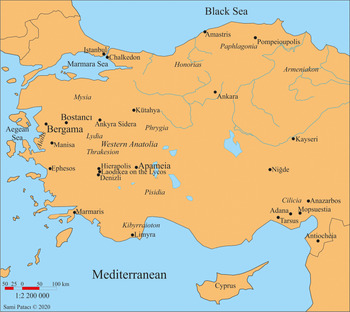
Pergamon (Greek τὸ Πέργαμον or ἡ Πέργαμος, Latin Pergamum, Turkish Bergama), was a rich and powerful ancient Greek, Roman and Byzantine city in southwestern Mysia on the border to Aeolis (Map 1). It is located 26 km from the modern coastline of the Aegean, two km northwest of the modern city of Bergama and c. 110 km north of Izmir. In Hellenistic times, the town of Elaia at the mouth of the Kaikos, modern Bakırçay, served as the port of Pergamon. The Emperor Hadrian raised the city to the rank of metropolis of the province of Asia in A.D. 123 and thereby elevated it above its local rivals, Ephesos and Smyrna, but Antoninus Pius (r.138–61) transferred this rank to Ephesos. In the mid-second century, these three cities were among the largest in the province. During the crisis of the third century, the economic strength of Pergamon diminished: the city was badly damaged in an earthquake in 262 and sacked by the Goths shortly thereafter. In Late Antiquity, it experienced only limited economic recovery: it gradually declined and its inhabited core was limited to the acropolis, probably fortified by Constans II (r.641–68). In 665, Pergamon was captured by raiding Arabs for the first time under ʿAbd al-Raḥmān ibn Khālid ibn al-Walīd (616–66). In 716, it was sacked again by the armies of Maslama ibn ʿAbd al-Mālik (in Greek sources known as Μασαλμᾶς). The city was rebuilt and refortified after the Arabs had abandoned their siege of Constantinople in 717/18.Footnote 1
More than a dozen lead seals were unearthed during excavations in Pergamon; some of them came to the Münzkabinett der Staatlichen Museen zu Berlin and were first published by Kurt Regling, though not always in a satisfactory manner. The four earliest Byzantine seals from Pergamon originate from the last third of the seventh century. One of them addresses a Ioannes ἀπὸ ἐπάρχων,Footnote 2 two offer an eagle with an invocative monogram on the obv. and a block monogram, perhaps meaning Μαυριανῷ ἀπὸ ἐπάρχων resp. Μαυριανῷ on the rev.,Footnote 3 and the last has an invocative monogram on the obv. and a cross monogram meaning Θεοδώρου on the rev.Footnote 4
Two quite interesting seals originate from the very end of the seventh century. The first refers to Georgios ἀπὸ ὑπάτων, responsible for the giant ἀνδράποδα-markets in the provinces of Asia, Caria and Lycia in the year 694/695,Footnote 5 the other to the βασιλικὰ κομμέρκια Μεσημβρίας for the following year.Footnote 6 The seal type of Barasbakourios can also be approximately dated, as this general was killed in 711. The legend calls him πατρίκιος, κόμης τοῦ βασιλικοῦ Ὀψικίου καὶ στρατηγὸς Θρᾴκης.Footnote 7 The seal of Thalassios στρατηλάτης καὶ ἄρχων Λυδίας belongs to the early eighth century.Footnote 8 To the first half of the eighth century we date two seals of Maurianos πατρίκιος καὶ στρατηγός,Footnote 9 one of Ioannes πατρίκιοςFootnote 10 and the much discussed seal of a Konstantinos chartoularios, which is now kept in Berlin (acc. no. 86/1888). This Konstantinos was βασιλικὸς ἀσηκρῆτις καὶ χαρτουλάριος τῶν βασιλικῶν ἀγελῶν καὶ τοῦ δρόμου; the legend is in the dative case, but the devotional formula δούλου τοῦ Θ(εο)ῦ appears in the genitive.Footnote 11
Some further seals which refer to dignitaries of Pergamon are known. An early plomb was found in Noviodunum (Isaacea) on the Danube, with the inscription ΠΕΡ|ΓΑΜΗ|ΝωΝ.Footnote 12 It was dated to the fourth–sixth centuries by its excavators, but should be dated to the sixth century, though it is difficult to judge more precisely without a better photo. Nevertheless, this seal may be associated with the duties of the quaestor Iustinianus exercitus. Footnote 13 A seal in Dumbarton Oaks refers to an Andreas διάκο(νος) Περγάμου, probably for the period c. 650/680.Footnote 14 For the seal of the Rouphinion of Pergamon, see the Appendix here.
The Museum of Bergama and its sigillographic collection
As the result of the excavations that started in Pergamon in 1878 under the direction of Carl Humann and Alexander Conze, a storeroom for the excavated finds was constructed near the German Excavation House on the acropolis between 1900 and 1913. This was one of the first two archaeological depots that existed in the Ottoman Empire at the beginning of the twentieth century. The excavations at Pergamon were interrupted during the First World War and restarted in 1927 under the direction of Theodor Wiegand. In the same year, in addition to the excavations on the acropolis, new excavations started in the Asklepieion and resulted in an increasing number of archaeological finds. An archaeological and ethnographic collection was already on display in the Public Hall of Bergama in 1924. Field marshal Fevzi Çakmak (1876–1950), who came to Bergama in 1932, was very interested in the large number of archaeological finds, and after his visit ordered the inauguration of a new museum. The current building was thus planned as a Turkish-German collaboration, and was opened on 30 October 1936. The archaeological collection in the Public Hall was then transferred to this new building. Today a new museum building is currently under construction in Bergama.
The main collection of the Museum of Bergama consists of Hellenistic, Roman and Early Byzantine finds from Pergamon and its urban parts, such as the Asklepieion as well as the Red Basilica–Serapeion (Kızıl Avlu). The museum also stores finds from nearby Aeolian and Mysian sites, such as Pitane, Gryneion, Elaia, Myrina and Allianoi, finds from the rescue excavations directed by the museum itself in minor sites in and around Bergama, from some sites in the Kaikos area (especially from Elaia) or from several sites in neighbouring Lydia, such as Saittai, Sardis, Silandos, Maionia, Daldis, Gölde and Kula.
The sigillographic collection of the museum does not only consist of finds from the German excavations at Pergamon, but also of some acquisitions by the museum, which were the focus of our sigillographic project in Bergama. All of these latter seals were brought by local dealers who did not state any precise provenance for the objects. Most of these acquisitions, including the sigillographic collection, may, however, consist of local finds from an area between Bergama, Izmir and Manisa;Footnote 15 it is thus a homogenous collection, consisting of seals primarily from the Byzantine themes of Thrakesion and Neokastra respectively.Footnote 16 All of the seals are kept in the storeroom of the museum.
The seals in the Byzantine sigillographic collection of the Museum of Bergama that are the focus of this paper were purchased in the period between 1978 and 1999 and they are 31 in number. An amulet purchased in 1978 was the first sigillographic piece by acquisition. İbrahim Kurşun sold a group of 18 seals in December 1999Footnote 17 and Hasan Beden, a known numismatic collector in Izmir (d. 2013), sold a group of nine seals in October 1999.Footnote 18 The name of the seller of two seals in June 1980 is not given in the catalogue. Two seals, however, belong to none of these three groups: Rafet Tüm sold no. 3 in 1992, and Önder Taşkın sold one in 1996.
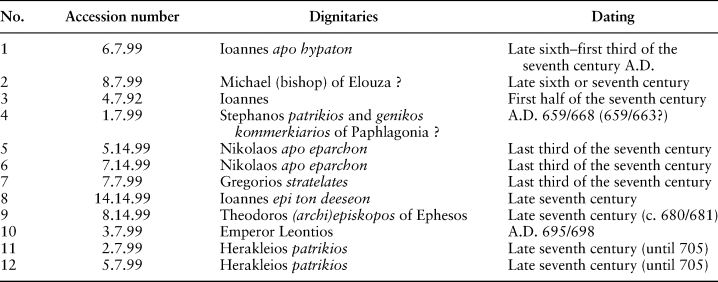
The present catalogue offers a substantial analysis of twelve early Byzantine pieces with discussion of the sigillographic inscriptions and imagery; in another article (forthcoming in BMGS 46.1) the remaining 19 Middle and Late Byzantine seals (eighth to twelfth centuries) will be presented.
Early Byzantine sigillographic evidence from the Museum of Bergama

CatalogueFootnote 19
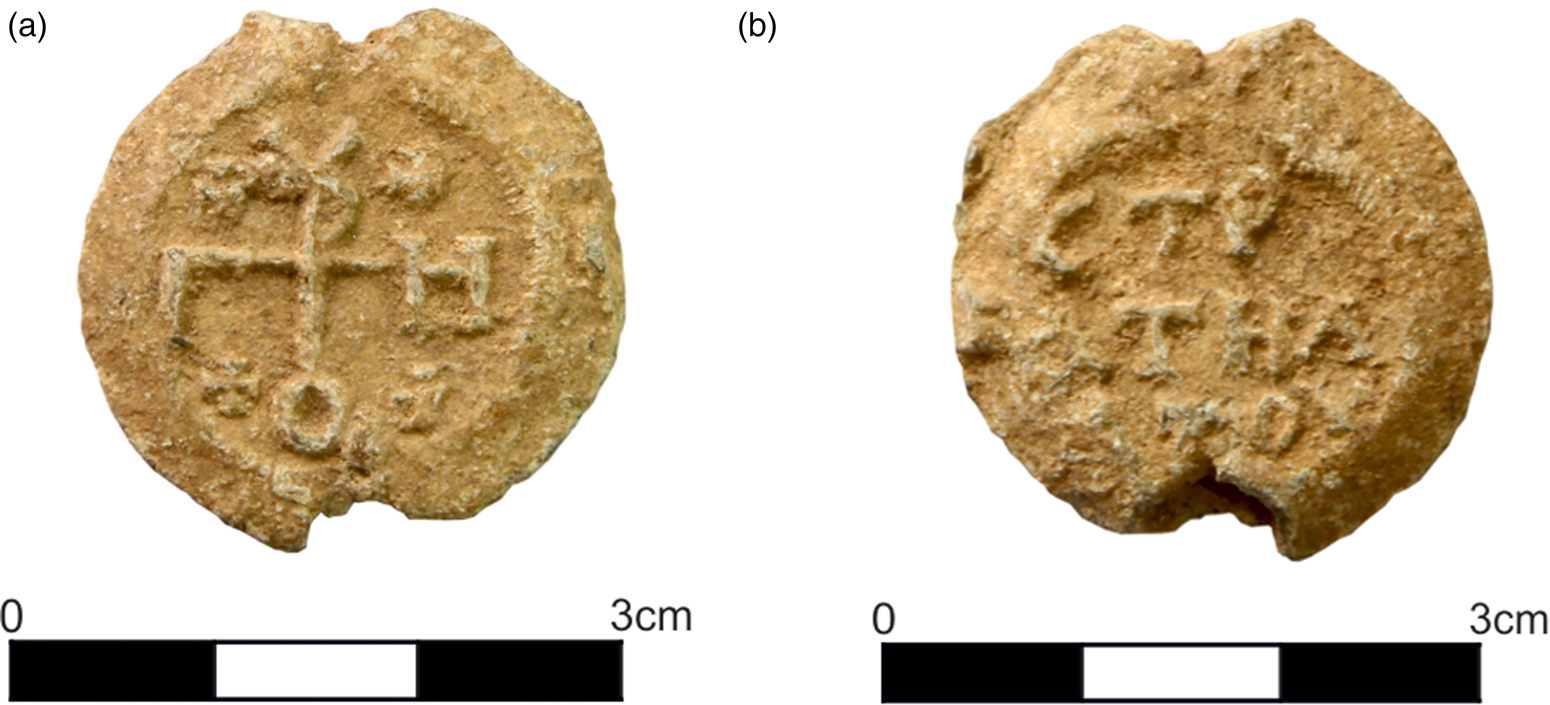
1. Ioannes apo hypaton (Figs 1a–b)
Map 1.Referred places in Asia Minor (© S. Patacı, 2020).
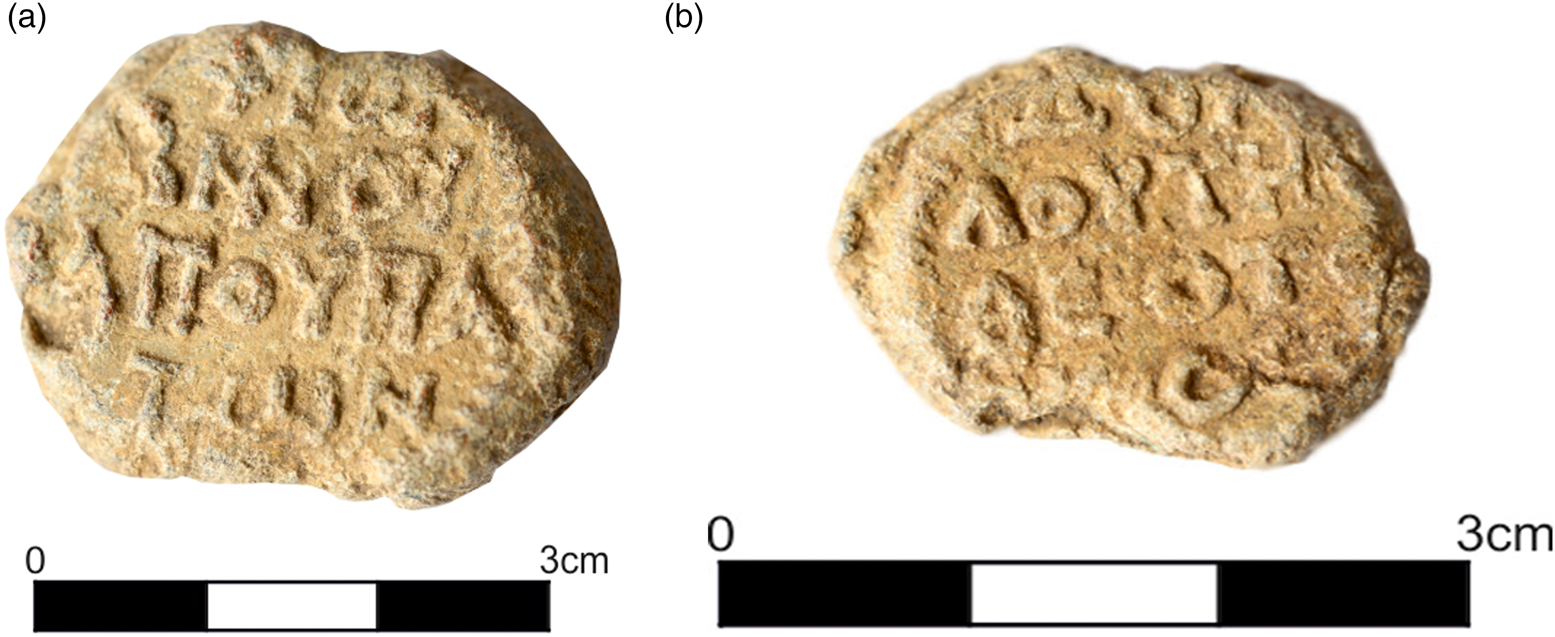
 Fig. 1.
Seal of Ioannes apo hypaton (© D. Çağlayan, 2019).
Acc. no. 6.7.99.
Measurements. Diam., 27 mm, th., 4 mm, and wg., 10.26 gr.
Provenance. An acquisition from Hasan Beden for 2.000.000 TL ($US 4.3) on 20 October 1999.
Obv. Inscription on four lines: + Iω|ANNOY |ΑΠΟ YΠΑ|ΤωΝ.
Rev. Inscription on four lines: ΔΟY|ΛΟY TH. | ΘΕΟΤΟ|.Ο.
The legend reads: Ἰωάννου ἀπὸ ὑπάτων, δούλου τῆ[ς] Θεοτό[κ]ο[υ].
We know of two exact parallels, one in the Museum of Niğde in Cappadocia,Footnote 20 one in the Tatış Collection in Izmir,Footnote 21 and there are some similarities with two slightly earlier seals published by Zacos and Veglery with the legend: + IωA|NNOV A|ΠΟ VΠΑ|ΤωΝ - + ΔΟV|ΛΟV THC | ΘΕΟΤΟ|ΚΟV.Footnote 22
Dating. As our seal has the earlier form of the ypsilon, common until the later sixth century, it should be dated to the late sixth–first third of the seventh century.
Prosopographic comments. The title Apo hypaton corresponds to the Latin consularis, which may be a mere title but also the designation of a governor of a province, perhaps active in western Anatolia.Footnote 23
2. Michael (bishop) of Elouza ? (Figs 2a–b)
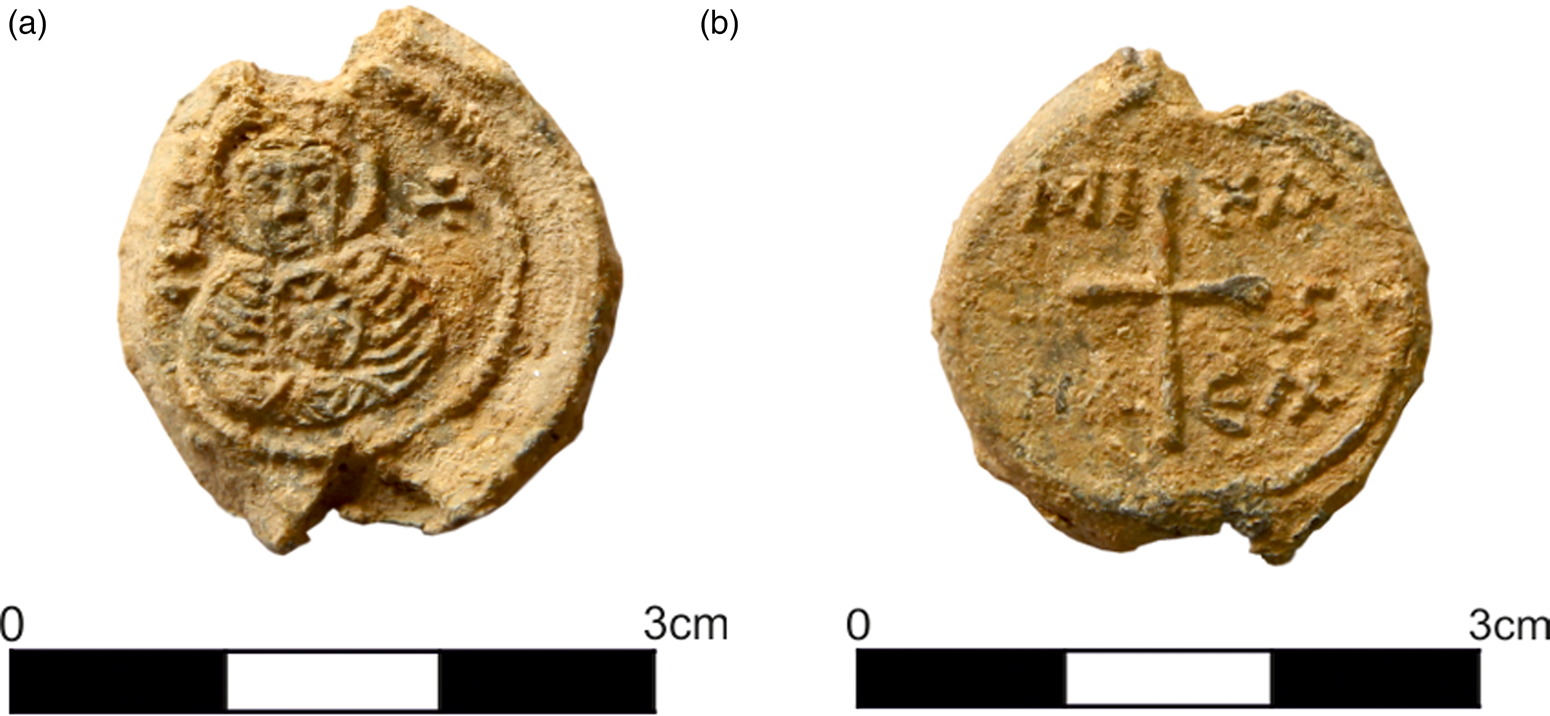
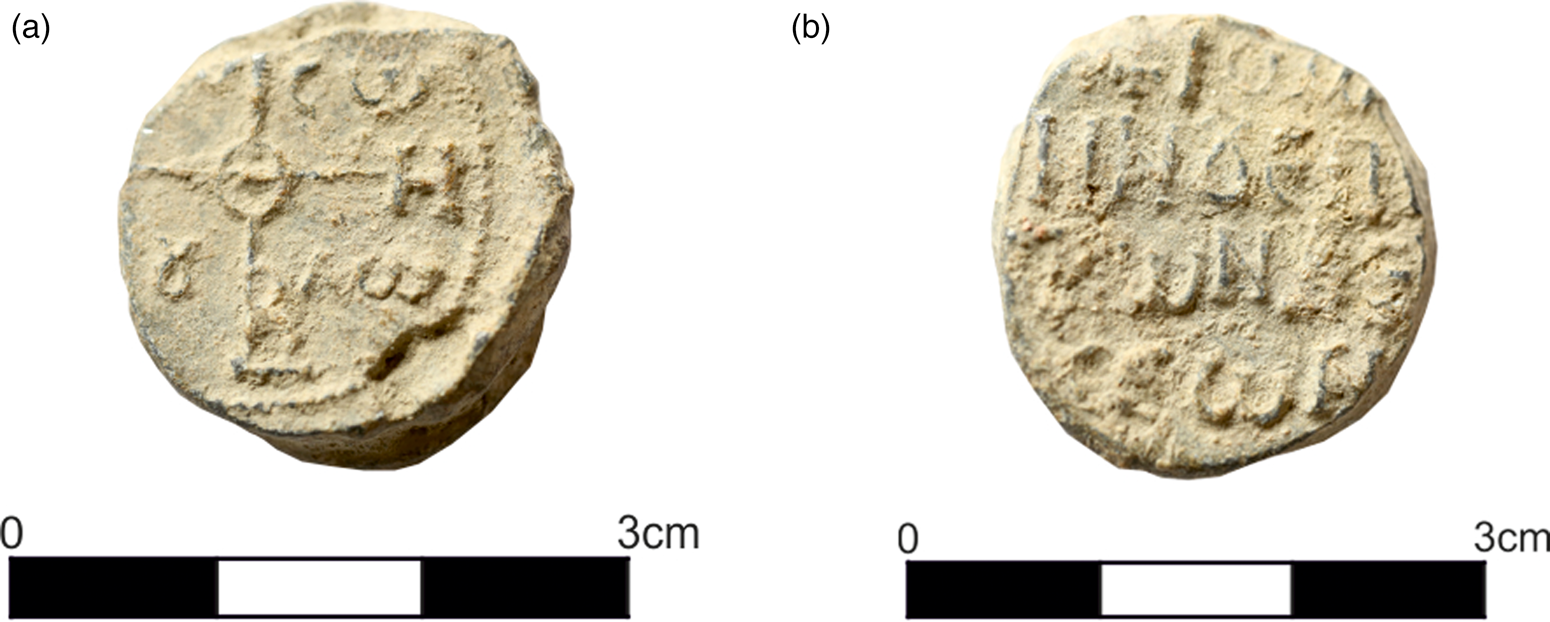
Fig. 2.Seal of Michael (bishop) of Elouza (?) (© D. Çağlayan, 2019).
Acc. no. 8.7.99.
Measurements. Diam., 22 mm, th., 4 mm, wg., 11.20 gr.
Provenance. An acquisition from Mr Hasan Beden for 2.000.000 TL ($US 4.3) on 20 October 1999.
Obv. Primitive bust of the Theotokos with a bust of Christ in front of her chest, between small Greek crosses. The face of the Theotokos is relatively large.
Rev. A dominant Latin cross (the vertical bar of which is longer than its horizontal one) is placed in the centre with an inscription in the quarters: MI|XA-HΛ | ΕΛ, probably with a Z or perhaps S above the final lambda which has an oblique bar as an abbreviation sign.
The name Michael is clear, but the following letters are problematic. Epsilon and Lambda with an abbreviation alone could mean ἐλ(αχίστου), indicating a clerical man, perhaps a bishop, but above there is a letter which is possibly a zeta, or even a S (for -και- or -κε-) would not be impossible. If a bishopric is hidden behind this combination, it could be Ἔλουζα / Ἴλουζα, a suffragan of the metropolis of Laodikeia in the diocese of Phrygia Kapatiane / Pakatiane, which is well known in the notitiae episcopatuum.Footnote 24 In this case the legend reads: Μιχαὴλ Ἐλ(ού)ζ(ης) or Ἐλ(ού)ζ(ων). A further possibility would be Μιχαὴλ Ἐλ(αία)ς,Footnote 25 as Elaia was a suffragan bishopric of the metropolis Ephesos.
Dating. The seal probably originates from the late sixth or seventh century, perhaps before c. 660. For the seventh century only one bishop of Elouza is known, one Patrikios, who participated to the council of 681.Footnote 26
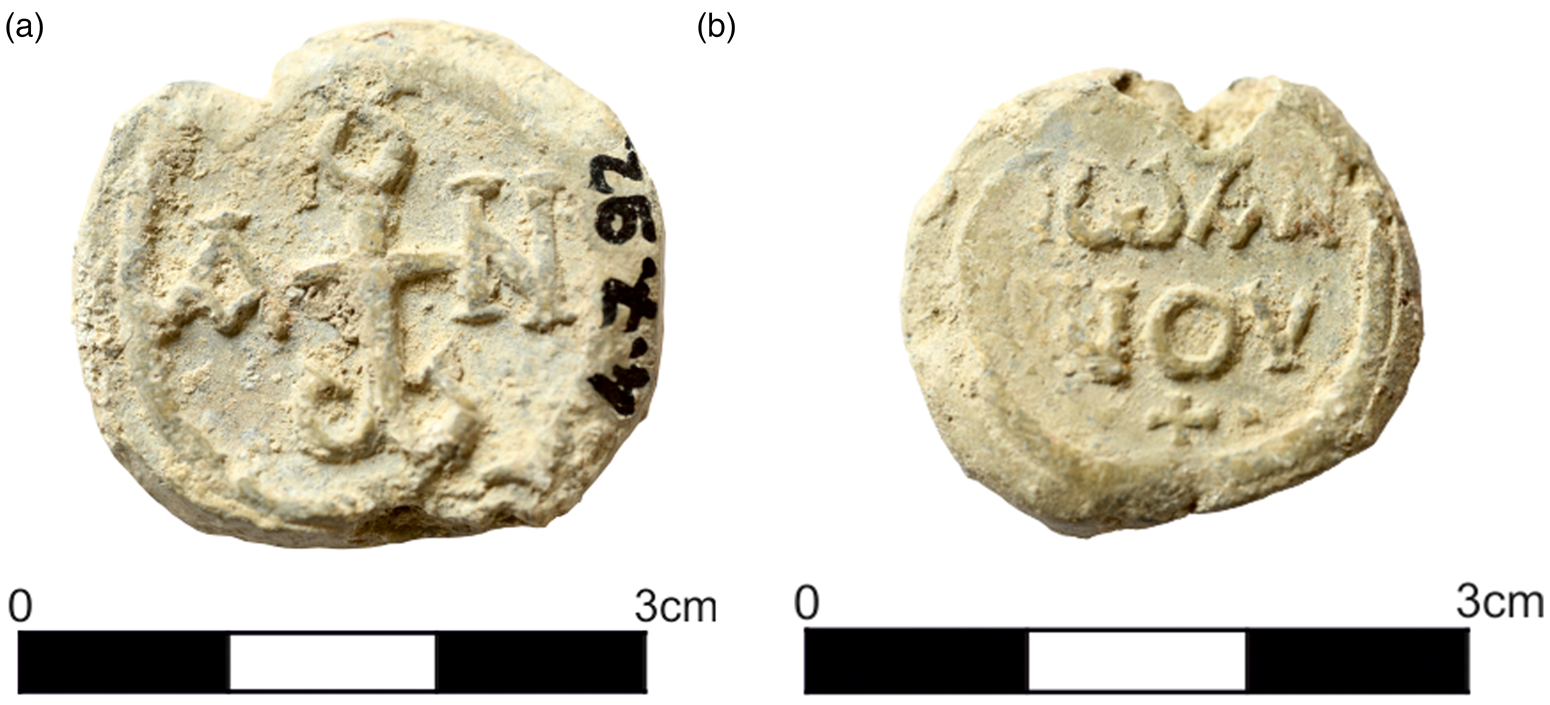
3. Ioannes (Figs 3a–b)
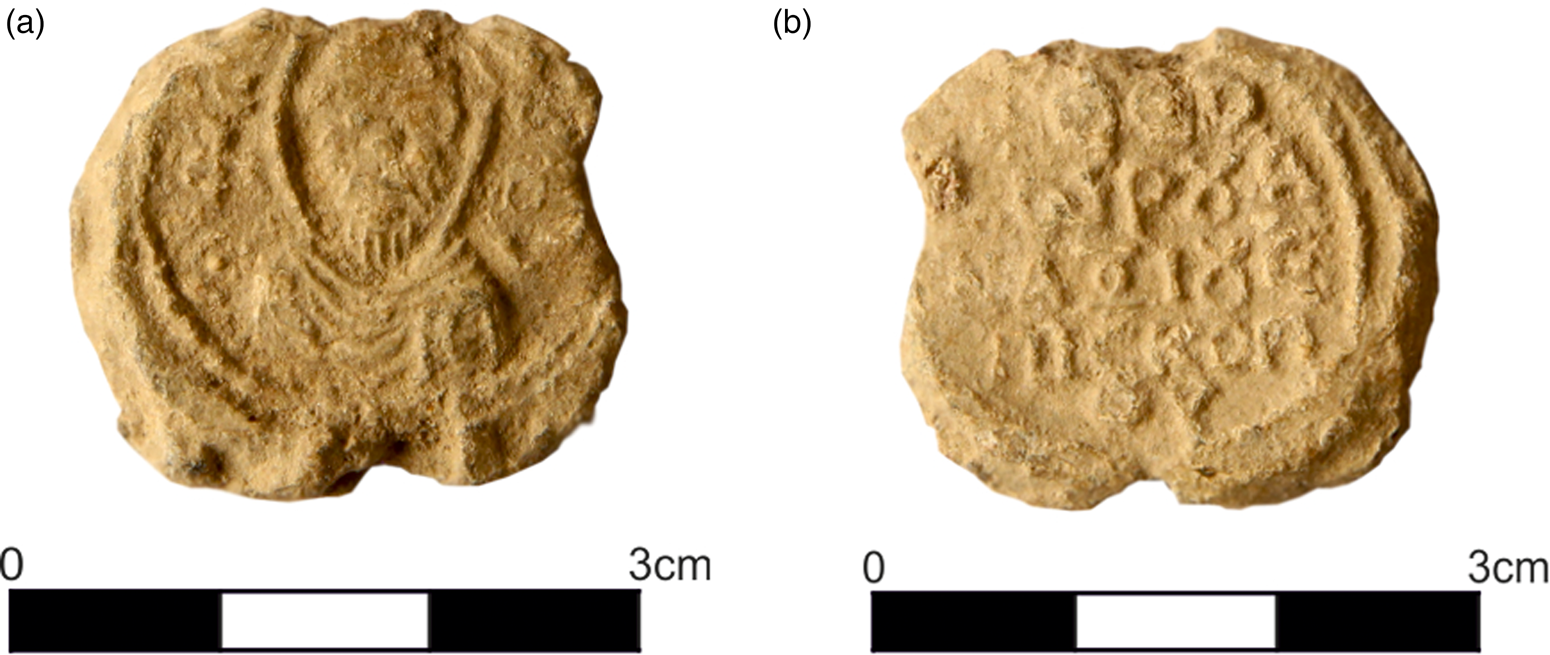
Fig. 3.Seal of Ioannes (© D. Çağlayan, 2019).
Acc. no. 4.7.92.
Measurements. Diam., 21 mm, th., 4 mm, wg., 7.75 gr.
Provenance. From the district of Bostancı in the township of Kırkağaç, province Manisa, in northwestern Lydia.Footnote 27 An acquisition from Rafet Tüm for 30.000 TL ($US 4) on 8 October 1992.
Obv. Cruciform monogram of the name Ἰωάννου in a common form.Footnote 28
Rev. Inscription of two lines between crosses and dots above and under the legend IωAN|NOV – Ἰωάννου.
Sigillographic comments. If the name of the monogram of the obv. is repeated on the rev., it appears sometimes in Latin letters,Footnote 29 but here again in Greek.
We could find no exact parallel, but there are similarities with a piece kept in Istanbul, with the same monogram on the obv., and the legend + | IωA|NNO|V on the rev.Footnote 30
Dating. First half of the seventh century.
Comments on the historical geography of the findspot. The findspot of this seal, Kırkağaç on the Lydian-Mysian border, deserves particular attention. Kırkağaç is located on the foothills of the Yund (Aspordenon) Mountains and northeast of the city lies the Kırkağaç Plain, through which flows the river Bakırçay, ancient Kaikos. Several sites of the Byzantine period are known in the Lydian-Mysian region of Upper Kaikos, in the surroundings of the modern townships of Kırkağaç and Soma in northern Manisa: among others Chliara–Gördük Kale, Stratonikeia or Hadrianoupolis–Yağmurlu-Siledik, Nakrason or Nakrasos–Bakır and İlyaslar–Asartepe.Footnote 31
The exact findspot of this seal is located 67 km from Manisa, 26 km from Kırkağaç and seven km south of Gelenbe (Byzantine Kalamos or Kalanda). The neighbourhood was formerly called Yortan, later renamed Bostancı. Near Yortan a höyük site with an extensive early Bronze Age cemetery is located, excavated by Paul Gaudin and M. Victor Chapot, who worked as engineers in the service of the Ottoman Empire in 1900 and 1901. This site was later plundered by illicit diggings and thus sepulchral containers known as “Yortan vessels” belonging to the third and second millennia B.C. are scattered in numerous museums around the world. In the 1940s Kurt Bittel from the Istanbul Section of the German Archaeological Institute directed the first scientific excavations and introduced the cemetery of Yortan to the scholarly world. This seal is thus one of the first Byzantine finds from this höyük site.


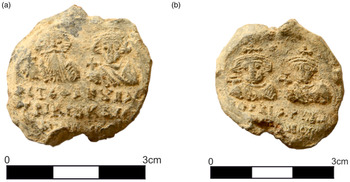
4. Stephanos patrikios and genikos kommerkiarios Footnote 32 of Paphlagonia (?) (Figs 4a–b)
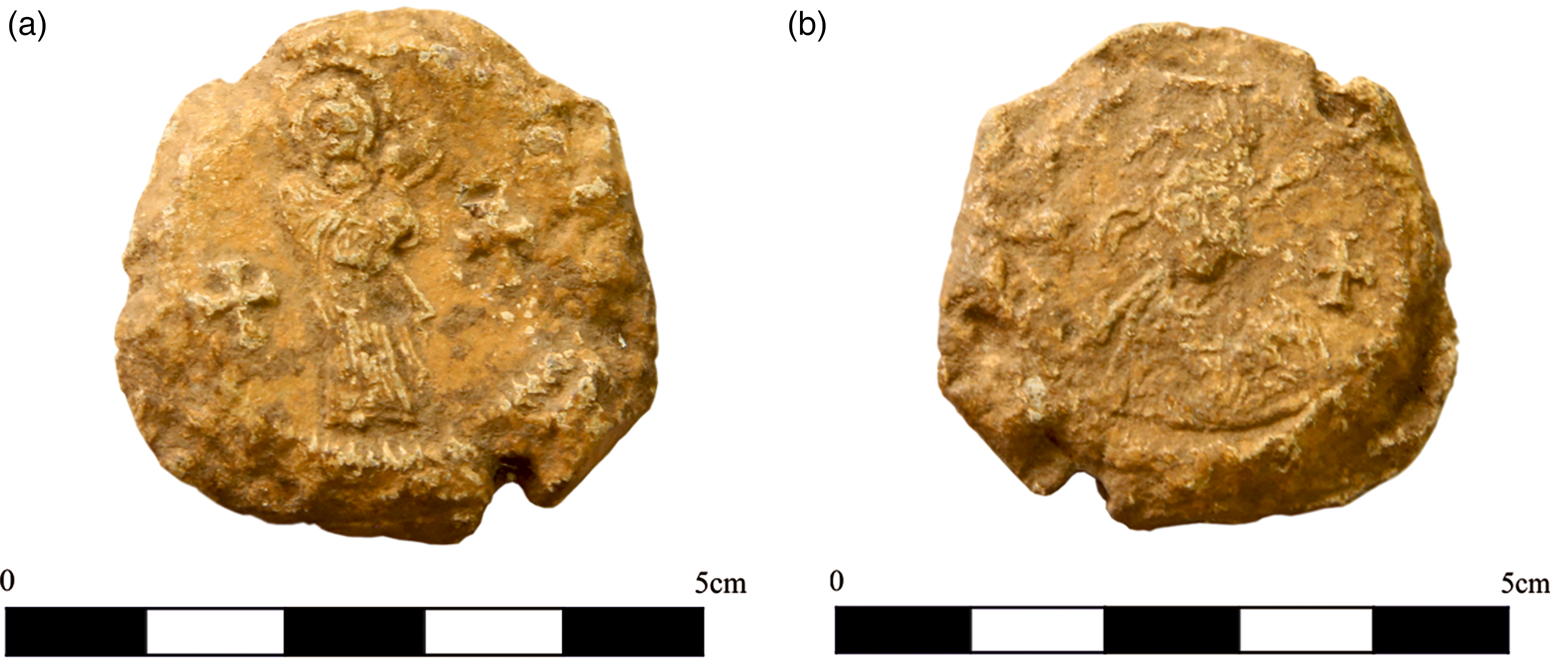
Fig. 4.Seal of Stephanos patrikios and genikos kommerkiarios of Paphlagonia (?) (© D. Çağlayan, 2019).
Acc. no. 1.7.99.
Measurements. Diam., 29 mm, th., 4 mm, wg., 20.50 gr.
Provenance. An acquisition from Hasan Beden for 2.000.000 TL ($US 4.3) on 20 October 1999.
Obv. In the upper half of the seal there are two busts of the emperors Constans II (with a long beard) and his son Constantine (IV). Both wear a crown topped by a cross and hold a globus cruciger in the right hand.
The lower half of the seal has a legend in three lines:
+ CTΕΦΑΝǒ ΠΑ|ΤΡΙΚΙǒ ΚΑΙ .|.Ν… ….
Rev. In the upper part two imperial busts, in a similar manner, of Constans II's younger sons Herakleios and Tiberios. In the lower half the legend continues in three lines, though much is lost:
ΕPKIAPIǒ A|…..HC П.|………
The whole legend reads:
+ Στεφάνου πατρικίου καὶ [γε]ν[ικοῦ κομμ]-ερκιαρίου ἀ[ποθήκ]ης Π[αφλαγονίας]?
The last letter seems to be a pi, perhaps indicating Paphlagonia. The second my of the office could have been at the beginning of the rev. legend and not at the end of the obv.
Dating. As the seals of the kommerkiarioi do not have any indiction numbers in this period, we can date the seal only to the period of 659–68, perhaps more precisely to 659–63. The kommerkiarios Stephanos left some pieces in different provinces; in the earlier he is only patrikios, but in the later ones (perhaps after 663) also apo hypaton and patrikios.Footnote 33 On one of the later pieces Stephanos was apo hypaton patrikios, stratiotikos logothetes and genikos kommerkiarios of the apotheke of Paphlagonia.Footnote 34

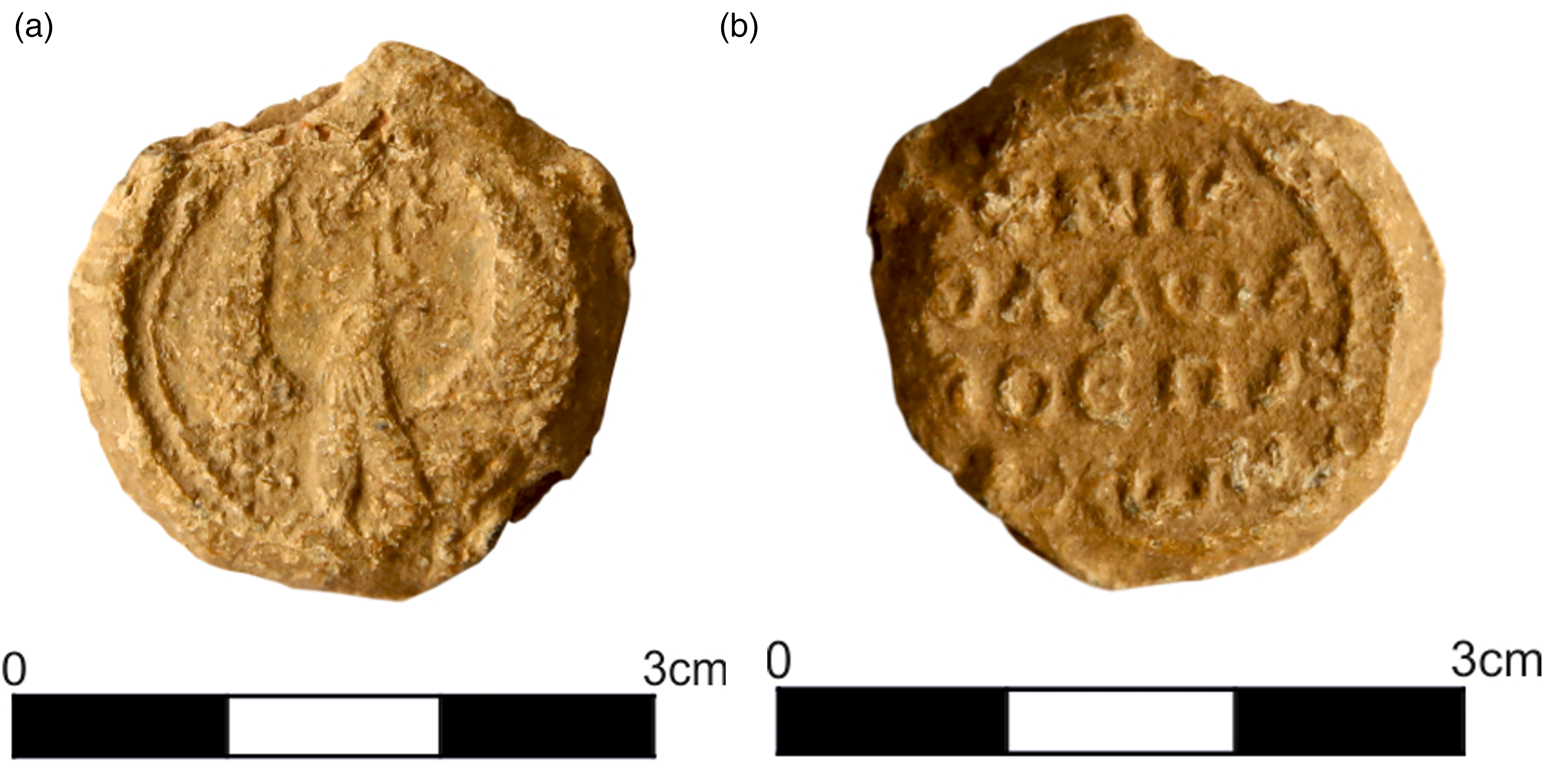
5–6. Nikolaos apo eparchon Footnote 35
5. (Figs 5a–b)
Fig. 5.Seal of Nikolaos apo eparchon (© D. Çağlayan, 2019).
Acc. no. 5.14.99.
Measurements. Diam., 24 mm, th., 4 mm, wg., 13.11 gr.
Provenance. An acquisition from İbrahim Kurşun for 3.000.000 TL ($US 5.6) on 29 December 1999.
6. (Figs 6a–b)
Fig. 6.Seal of Nikolaos apo eparchon (© D. Çağlayan, 2019).
Acc. no. 7.14.99.
Measurements. Diam., 24 mm, th., 4 mm, wg., 13.18 gr.
Provenance. An acquisition from İbrahim Kurşun for 3.000.000 TL ($US 5.6) on 29 December 1999.
Description. The two pieces of Nikolaos apo eparchon are closely comparable, though on the obv. of no. 6 the body of the eagle is slightly larger and the invocative monogram above is smaller. Numerous parallels are known: six seals are kept in DO,Footnote 36 one is in the Museum of Efes in TurkeyFootnote 37, and another was in a Zacos collection.Footnote 38
Obv. Eagle with uplifted wings, head to right, with a cruciform invocative monogram, type Laurent I (where the Beta touches the central Theta), between the wings.
Rev. Legend in four lines, without any ornaments:
+ NIK|OΛΑω Α|ΠΟ ΕΠΑ|ΡΧωΝ.
The complete legend reads: + Θεοτόκε βοήθει Νικολάῳ ἀπὸ ἐπάρχων.
Sigillographic comments. There are three similar types which probably belong to the same person, all with an identical obv., but the rev. is distributed slightly distinctive: + | NIKO|ΛΑω Α|ΠΟ ΕΠΑ|ΡΧωΝ,Footnote 39 or + NIK|OΛAω A|ΠO ΕΠAΡ|XωN,Footnote 40 or + NI|KOΛAω | AΠO ΕΠ|AΡX,.Footnote 41
This Nikolaos was active in the last third of the seventh century A.D.Footnote 42 Another slightly later seal of a Nikolaos apo eparchon probably belonged to someone with the same name.Footnote 43
7. Gregorios stratelates (Figs 7a–b)
Fig. 7.Seal of Gregorios stratelates (© D. Çağlayan, 2019).
Acc. no. 7.7.99.
Measurements. Diam., 25 mm, th., 4 mm, wg., 13.55 gr.
Provenance. An acquisition from Hasan Beden for 2.000.000 TL ($US 4.3) on 20 October 1999.
Obv. A simple cross monogram with an accurate reading of Γρηγορίου,Footnote 44 with small-scale crosses in the quarters.
Rev. Legend in three lines, without any ornament, even a cross: CTP|ATHΛ|ΑΤΟV: Στρατηλάτου.
A parallel seal existed once in a private collection in Berlin.Footnote 45
Dating. The seal originates from the seventh century, probably from its last third. A seal of (another?) Gregorios stratelates, edited by Zacos and Veglery,Footnote 46 is nearly synchronous, but has the Virgin Hodegetria between crosses on the obv. Some more nearly synchronous pieces have the legend on both sides of the seal.Footnote 47 Another seal of a homonymous person is slightly later, as the legend has already the dative instead of the genitive.Footnote 48
Prosopographic comment. Stratelates may simply be a title in this period, but might designate a military commander or even a general.Footnote 49
8. Ioannes epi ton deeseon (Figs 8a–b)
Acc. no. 14.14.99.
Measurements. Diam., 20 mm, th., 5 mm, wg., 10.13 gr.
Provenance. An acquisition from İbrahim Kurşun for 3.000.000 TL ($US 5.6) on 29 December 1999.
Obv. Invocative monogram, probably Laurent type V, whose top and left side are lost, with the conventional tetragram.
Rev. + IωA|NNǒ ΕΠ. | ΤωΝ ΔΕ.|CΕωN.
The complete legend reads:
Θ[εοτόκ]ε β[ο]ήθ[ει τῷ] σῷ [δ]ούλῳ Ἰωάννου επ[ὶ] τῶν δε[ή]σεων.
Historical comments. The epi ton deeseon, the successor of the Late Antique magister memoriae, was responsible for receiving and answering petitions to the Byzantine emperor; in some cases he answered personally. Subordinate officials with the same title also existed in the provinces and the patriarch of Constantinople had a similar epi ton deeseon.Footnote 50
Fig. 8.Seal of Ioannes epi ton deeseon (© D. Çağlayan, 2019).
Comparandum. A damaged and probably parallel piece stored in the Institut français d’études byzantines in Paris has been published by Vitalien Laurent.Footnote 51
Dating. The invocative monogram type Laurent V together with the tetragram starts only in the late seventh century; in some cases its legend is still composed in the earlier genitive form. Therefore, our seal should originate from the late seventh century. Laurent misread the ου ligature Ɣ at the end of the name as a simple οmicron, transcribing the legend in nominative as Ἰ[ω]άνν(ης) ὁ ἐπὶ…, and thus erroneously dated the seal to the ninth century.
9. Theodoros (archi)episkopos of Ephesos (Figs 9a–b)
Fig. 9.Seal of Theodoros (archi)episkopos of Ephesos (© D. Çağlayan, 2019).
Acc. no. 8.14.99.
Measurements. Diam., 25 mm, th., 4 mm, wg., 12.13 gr.
Provenance. An acquisition from İbrahim Kurşun for 3.000.000 TL ($US 5.6) on 29 December 1999.
Obv. Primitive bust of a bearded saint holding the Gospels in his left hand, surely the apostle St John Theologos, who was especially venerated in Ephesos.Footnote 52 On either side the vertical inscription Ε|Φ|Ε-C|Ο|V which is preserved in comparable pieces in better condition.
Rev. Inscription on five lines, starting with a cross: + ΘΕΟ|ΔωΡǒ Α|ΝΑōΙǒ Ε|ΠΙCKOΠ|OV.
The complete legend reads: Θεοδώρου ἀναξίου ἐπισκόπου Ἐφέσου.
Sigillographic comment. The high-ranking metropolitan of Ephesos often called himself archiepiskopos, because Christianity was established there by the apostle John Theologos. Sometimes an archbishop preferred the modest episkopos in subscriptions and seals.
There are two parallel seals in DO,Footnote 53 a third one was in the former Zacos Collection in Basel,Footnote 54 and a last one is in the Tatış Collection in Izmir.Footnote 55
Dating. This seal type most probably belonged to a Theodoros who participated in the Sixth Ecumenical Council in Constantinople in 680/681.Footnote 56 It is interesting to note that this metropolitan subscribed the acta of the council as ἐπίσκοπος τῆς Ἐφεσίων μητροπόλεως.
It is possible that another contemporary seal type belongs also to the same metropolitan. On the obv. we see a similar bust of St John Theologos, this time between crosses, and the rev. has the legend: + ΘΕΟ|ΔωΡǒ ΑΡ|ΧΙΕΠΙCKO|ΠΟV ΕΦΕ|COV.Footnote 57
10. Emperor Leontios (?) (Figs 10a–b)
Fig. 10.Seal of Emperor Leontios (?) (© D. Çağlayan, 2019).
Acc. no. 3.7.99.
Measurements. Diam., 35 mm, th., 6 mm, wg., 41.24 gr.
Provenance. An acquisition from Hasan Beden for 2.000.000 TL ($US 4.3) on 20 October 1999.
Obv. Standing figure of the Virgin Hodegetria with the child on her left arm between massive Greek crosses.
Rev. Imperial bust with long hair-dress, holding a spear transversely behind his head, between relatively large Greek crosses, but without any inscription. This figure resembles another figure of Constantine IV (r. 668–85) on coins and seals, though without crosses on either side.Footnote 58
A seal in the VaticanFootnote 59 and a badly damaged one in DOFootnote 60 may be exact parallels.
Sigillographic comments. The imperial seals of Constantine IV usually have a large cross potent on the other side.
There is no question that this seal type is the earliest imperial one with the Virgin Hodegetria: Constantine's successor, Justinian II (r. 685–95), still preferred the older type of the Theotokos holding the child in front of her chest during his first reign. Two emperors reigned between Justinian II's first deposition and his regaining power: Leontios (r. 695–98) and Tiberios III (Apsimar) (r. 698–705).Footnote 61
Though earlier editors have attributed similar seals to Constantine IV, we doubt this early dating and argue that Leontios was responsible for the change from the Theotokos with the child in front of her chest to the Virgin Hodegetria to announce the beginning of a new period, and connected his reign symbolically with that of Constantine IV by choosing a similar iconographic type for the portrait on his seal.Footnote 62 Another imperial seal type with the Virgin Hodegetria appearing between crosses on the obv. and a bust of the emperor between crosses, but dressed in the loros, originates from the era of Leontios.Footnote 63 On the seals of Tiberios III, the Virgin Hodegetria was depicted between crosses on the obv. and a bust of the emperor was depicted on the rev., but the emperor holds the spear in front of him slightly lower, still without an identifying inscription or crosses on either side.Footnote 64 Only in his second reign, in 705–11, did Justianian return to such an inscription, with the depiction of Virgin Hodegetria on the obv.Footnote 65


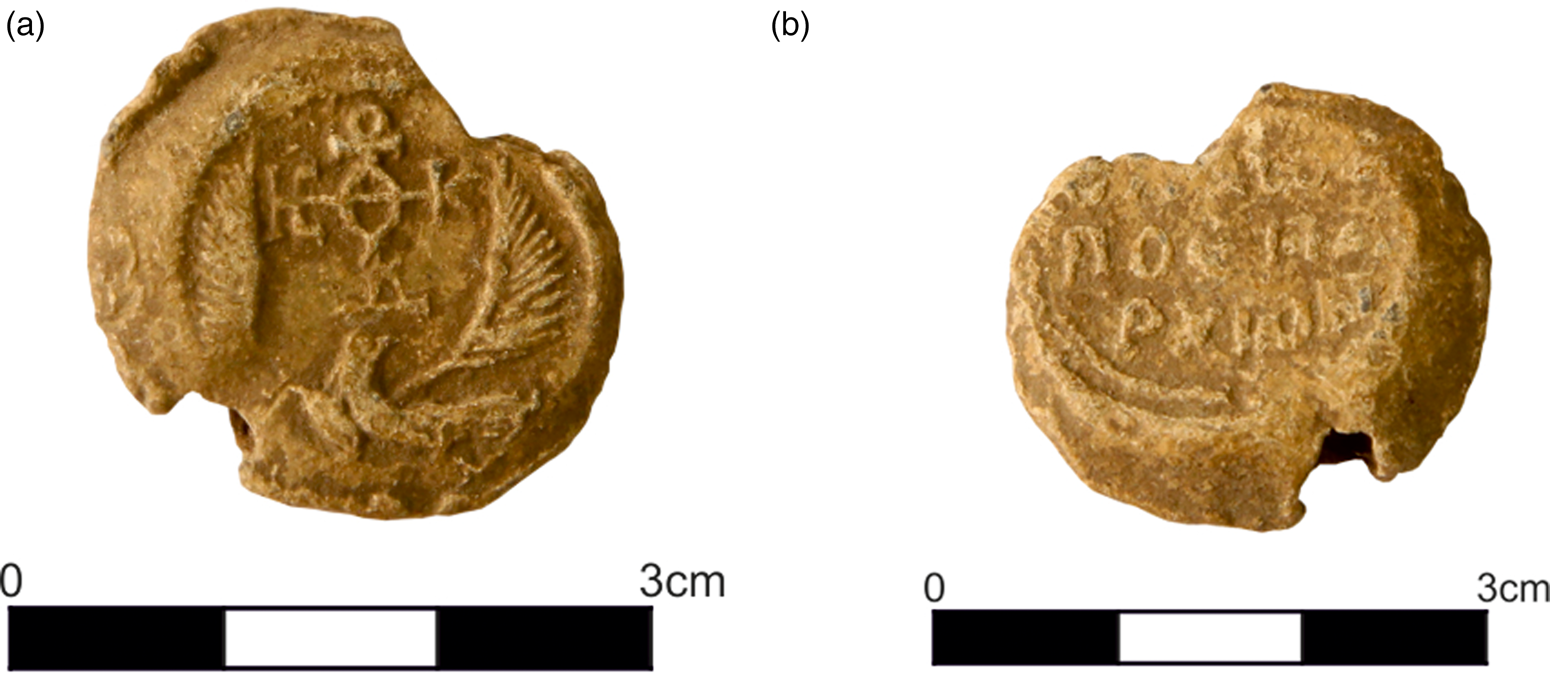
11–12. Herakleios patrikios
11. (Figs 11a–b)
Fig. 11.Seal of Herakleios patrikios (© D. Çağlayan, 2019).
Acc. no. 2.7.99.
Measurements. Diam., 27 mm, th., 5 mm, wg., 23.60 gr.
Provenance. An acquisition from Hasan Beden for 2.000.000 TL ($US 4.3) on 20 October 20, 1999.
12. (Figs 12a–b)
Fig. 12.Seal of Herakleios patrikios (© D. Çağlayan, 2019).
Acc. no. 5.7.99.
Measurements. Diam., 27 mm, th., 5 mm, wg., 17.50 gr.
Provenance. An acquisition from Hasan Beden for 2.000.000 TL ($US 4.3) 20 October 1999.
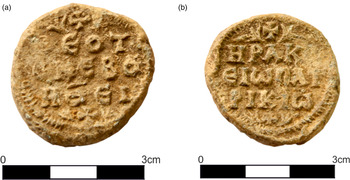
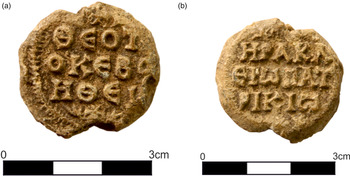
Comparanda. Exact parallels to no. 12 seem to be Fogg 1421,Footnote 66 a seal that was offered at numerous auctions since 2000,Footnote 67 and perhaps in the Körner Collection in Linz.Footnote 68 There are minor differences, especially the beta of the verb and the ornaments, to another type.Footnote 69 No. 11 has minor differences to no. 12, e.g. the first omicron of Θεοτόκε is smaller than on other examples.
Obv. Inscription of three lines with a cross between trifolia above and under the legend:
ΘεΟΤ|.Κε ΒΟ|ΗΘεΙ.
Rev. The same arrangement with the continuing legend:
HPAKΛ|εIω ΠΑΤ|PΙΚΙω.
Θεοτ[ό]κε βοήθει Ἡρακλείῳ πατρικίῳ.
Sigillographic comments. These seals probably belong to Herakleios, the brother of Tiberios III, who was promoted to patrikios and monostrategos in 698 but killed in 705.Footnote 70 As we know only one example of his seal as the patrikios and monostrategos, it is quite possible that Herakleios also used some other seal types, like those only as patrikios, especially during the period of his very high command.
A further seal type belongs probably also to this Herakleios patrikios with a very similar rev. design, but with an invocative monogram of Laurent type V without a tetragram on the obv.Footnote 71 Though the adornment by crosses between trifolia was more common in the first half of the eighth century, the possibility that this Herakleios could be a later person of the same name seems negligible, since such an apparently prominent person should have left other vestiges.


Appendix. The Rouphinion of Pergamon (Figs 13a–b)
It is worthwhile to bring up here an exceptional Byzantine seal referring to an institution called the ‘Rouphinion of Pergamon’.Footnote 72
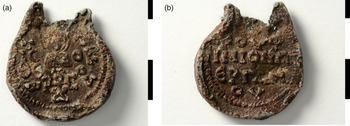
A Byzantine seal referring the institution called Rouphinion of Pergamon (© Dumbarton Oaks, Byzantine Collection, Washington, DC).

Obv. There is a minor bust of the Theotokos in the middle of the upper half, with the inscription T|IC |ΘΕ|ω - Τ|ΟΚ|ΟV on either side. In the middle of the lower half we also find a small cruciform monogram, reading Ἰσιδώρου or perhaps Ἰσιδώρου δούλου. In the seventh century the devotional formula “δούλου τῆς Θεοτόκου” was frequent, particularly on seals.
Rev. It bears only an inscription in four lines, perhaps preceded by an ornament:
POVΦ|ΙΝΙΟΝ Π|ΕPΓΑΜ|OV.
The complete legend reads: Ἰσιδώρου δούλου (?) τ(ῆ)ς Θε(ο)τόκου / Ρουφίνιον Περγάμου.
Isidoros was the head of the Roufinion of Pergamon. The seal has been dated to the sixth century, but we argue that it belongs in the first half of the seventh century.
The Roufinion was a well-known celebrated building in Pergamon, sometimes even numbered as a ‘wonder of the world’, as Ρουφίνιον ἄλσος.Footnote 73 According to Denis Feissel it is identical with the complex of the temple of Zeus Asklepios which is situated outside the walls of the site and built by L. Cuspius Pactumeius Rufinus, a citizen of Pergamon, who was consul in 142.Footnote 74 It was later transformed into a church, and probably it also had a building for social welfare, perhaps a nosokomeion. Numismatic evidence of the archaeological excavations in the formerly built Asklepieion dates to Emperor Heraclius (r. 610–41).Footnote 75
Professor Ergün Laflı is a classical archaeologist at the Dokuz Eylül University in Izmir, where he chairs the Division of Medieval Archaeology and is director of the Center of the Archaeology of Western Anatolia (EKVAM). He holds a BA from the University of Ankara (1996), an MA from the University of Tübingen (1999) and a PhD from the University of Cologne (2003).
Professor Werner Seibt is a retired professor for Byzantine Studies at the University of Vienna, since 2007 honorary fellow of the Austrian Academy of Sciences (Division of Byzantine Research). He is chairman of the Commission for Byzantine Sigillography of the AIEB.
Mr Doğukan Çağlayan is a classical archaeologist at the Metropolitan Municipality of Istanbul, Directorate of Cultural Heritage Projects and a Ph.D. candidate in the Department of Archaeology at Istanbul University. He holds BA and MA degrees from the Dokuz Eylül University in Izmir.