


Introduction
People around the world are not only interested on eating healthier food, but also in food produced with low-environmental impacts, protecting animal welfare and with contributions to local communities' development. These demands raised the level of traceability in commercial channels, with higher coordination between producers and consumers. The evidences of these changes are the increase in eco-labels based on sustainability attributes and the number of direct marketing channels from farmers to consumers. Organic certification is nowadays the dominant eco-label (FiBL, 2019). Organic production systems refrain from using synthetic fertilizers, pesticides and genetically modified organisms (GMOs), promote crop rotations, soil fertility conservation and closed nutrient cycles. Organic foods are often perceived as more nutritious, better tasting and more sensitive to animal welfare and the environment, compared to conventionally produced food (Reganold and Wachter, Reference Reganold and Wachter2016; Muller et al., Reference Muller, Schader, El-Hage Scialabba, Brüggemann, Isensee, Erb, Smith, Klock, Leiber, Stolze and Niggli2017; Mukherjee et al., Reference Mukherjee, Omondi, Hepperly, Seidel and Heller2020).
There are some critics to organic agriculture as an inefficient approach to food production, and under this view, it is expected to become less relevant under an increasing food demand. However, the number of organic farms and the market size for organic food have being constantly growing, along with investment in research and education in this field (Reganold and Wachter, Reference Reganold and Wachter2016). Organic agriculture is seen as a concrete but controversial alternative to solve the sustainability challenge in agricultural production (Clark and Tilman, Reference Clark and Tilman2017; Muller et al., Reference Muller, Schader, El-Hage Scialabba, Brüggemann, Isensee, Erb, Smith, Klock, Leiber, Stolze and Niggli2017). On the positive side, there is a consensus on the advantages of the reduction in pesticide use, and biodiversity protection per land unit in organic production. However, its superiority is questioned when measured per unit of produced food, due to lower yields in organic farming. Clark and Tilman (Reference Clark and Tilman2017) indicated that changes in consumer choices leading to lower food waste, less animal products intake and increases in agricultural input use efficiency would offer larger benefits than switching from conventional agricultural systems to alternatives such as organic agriculture. However, Muller et al. (Reference Muller, Schader, El-Hage Scialabba, Brüggemann, Isensee, Erb, Smith, Klock, Leiber, Stolze and Niggli2017) emphasize that precisely these changes in consumer choices would make possible for agriculture to switch to organic systems without an increase in land use, providing benefits from lower pesticide contamination and biodiversity protection in farming areas.
Experimental trials conducted in different parts of the world show that organic agriculture can be more profitable, or at least competitive with respect to conventional agriculture (Chavas et al., Reference Chavas, Posner and Hedtcke2009; Delate et al., Reference Delate, Duffy, Chase, Holste, Friedrich and Wantate2013; Delbridge et al., Reference Delbridge, Fernholz, King and Lazarus2013; Reganold and Wachter, Reference Reganold and Wachter2016). However, in organic farms, yields are generally lower when compared to those of high input agricultural systems, in particular during the years of conversion. De Ponti et al. (Reference De Ponti, Rijk and Van Ittersum2012) and Seufert et al. (Reference Seufert, Ramankutty and Foley2012) compiled studies carried out at the farm plot level, and reported that yields in organic cereals were between 75 and 80% of the yields obtained with high inputs in conventional production. However, De Ponti et al. (Reference De Ponti, Rijk and Van Ittersum2012) suggested that since this analysis was conducted at the field and crop levels, and the maintenance of nutrient availability in organic systems often requires assigning land to legume cover crops and pastures, the yield gap may be larger at crop rotation, farm and regional level. Seufert et al. (Reference Seufert, Ramankutty and Foley2012) reported that with good management practices, for particular crop types and growing conditions, organic systems can match conventional yields.
Lower yields can be totally or partially compensated by lower costs and the premiums of organic products. Organic premiums have large fluctuations between products, crop years and business opportunities. Crowder and Reganold (Reference Crowder and Reganold2015) reported premiums around 30% on a global scale, and breakeven premiums necessary for organic profits to match conventional profits around 5–7%.
With respect to production costs in organic agriculture, different situations are reported in the literature. In some cases, production costs decrease due to the lower use of inputs, whereas in others, total direct costs increase due to the intensity of tillage, and the participation of cover crops in rotations. Crowder and Reganold (Reference Crowder and Reganold2015) found on a global scale review that total costs were not significantly different between convectional and organic farms.
Organic production in Argentina
Argentine Pampas is a major agricultural region. The Pampas maintained native grasslands until the beginning of the 1920s, when the establishment of perennial pastures and annual crops started (Solbrig and Viglizzo, Reference Solbrig and Viglizzo1996). Since the 1970s, a process of continuous expansion of the area planted with annual grain crops, and an even more rapid expansion of soybeans at the expense of other crops and pasture area have occurred in this area. The spread of genetically modified (GMO) herbicide-resistant soybeans and corn enhanced the use of no-till and herbicides. Although currently the search for greater productivity is mainly associated with the use of GMO crops, with increases in the use of fertilizers and chemicals, there is also an increasing interest in production system designs based on the natural functioning of ecosystems.
Currently, Argentina is ranked second in the world in terms of land under organic certification, with 4.4 million hectares and 1343 certified farms in 2020 (SENASA, 2021). Extensive sheep production in Patagonia natural grasslands accounts for 90% of this area. Harvested organic area has been growing, with an annual average 3% increase between 2010 and 2020, but remains a very small fraction on Argentina total harvest area (0.6%, approximately, total harvested area: 84,328 ha).
There are four organic certifiers operating in Argentina.Footnote 1 There is also a label created in 2012 ‘Orgánico Argentina’, that identifies the organic production in the national territory. With the goal of promoting organic production, MAPO (Movimiento Argentino para la Producción Orgánica) is an NGO that brings together institutions, people, companies and NGOs related to organic production in Argentina. Organic products are sold mainly in the export markets (97%), with EU and USA as principal buyers.
Since organic production has the potential to generate not only on-farm benefits, but also positive externalities, it is of interest to understand the incentives and limitations for implementing organic farming, in order to provide information valuable for policy design.
This paper aims to contribute to the discussion of opportunities and limitations of organic farming as an ecological intensification alternative. There are three goals in this study: (1) to provide information about field crops–livestock organic production systems in Argentine Pampas, (2) to understand the motives of conversion to organic farming (3) to identify major limitations in organic production systems.
Factors affecting the adoption of organic farming
Several studies have analyzed farmers' reasons to participate in organic agriculture or to adopt agri-environmental schemes in different parts of the world. Some authors looked at incentives from a rational economic approach, where maximizing the profit is the basic rule for decision-making (Midmore and Padel, Reference Midmore and Padel2002; Klonsky and Greene, Reference Klonsky and Greene2005). Under this approach, organic production can be thought of as a particular case of specialty production. Differences in economies of scale are analyzed under the assumption that smaller farms may be more competitive in the production of specialties. Emphasis is in the reduction of transaction costs by a tighter coordination with the distribution channels.
On the contrary, most studies analyze the decision to do organic production from a behavioral approach (e.g., Wu and Babcock, Reference Wu and Babcock1998; Darnhofer et al., Reference Darnhofer, Schneeberger and Freyer2005; Toma and Mathijs, Reference Toma and Mathijs2007; Kallas et al., Reference Kallas, Serra and Gil2009), considering the values, motives and attitudes as determinants of the farmers' decision-making. This approach generally focused on the heterogeneity of farmers' choices, and is consistent with the theory of utility based on multiple attributes, since it allows us to consider the different objectives of farmers and the importance that they assign to each one of them (Berkhout et al., Reference Berkhout, Schipper, Van Keulen and Coulibaly2011). Results from these papers identified concerns about environmental and health protection among the main reasons that influence the decision to produce organically.
Less attention was paid in the previous literature to the obstacles in being an organic farmer compared to the motives for converting to organic farming (Madelrieux and Alavoine-Mornas, Reference Madelrieux and Alavoine-Mornas2013). In a review study (Sahm et al., Reference Sahm, Sanders, Nieberg, Behrens, Kuhnert, Strohm and Hamm2013), four types of reasons for reverting to conventional farming were identified: poor economic performance, problems with the certification process, problems with production techniques and the macroenvironment. These authors found that economic performance was the main factor for withdrawing from organic production. Alexopoulos et al. (Reference Alexopoulos, Koutsouris and Tzouramani2010) found that less innovative and pluriactive farmers, owning larger farms, experiencing low prices and without supportive networks were more likely to abandon organic farming. Obstacles in organic farming are likely to be production system specific, and therefore there is a need to assess them in the different regions and farm activities. Although numerous studies have addressed incentives and limitations to become organic farmers in Europe and North America, only a few studies have been conducted in Latin America and no study on this topic has been conducted in Argentina.
Data and methods
Case study: Pampa Orgánica Norte
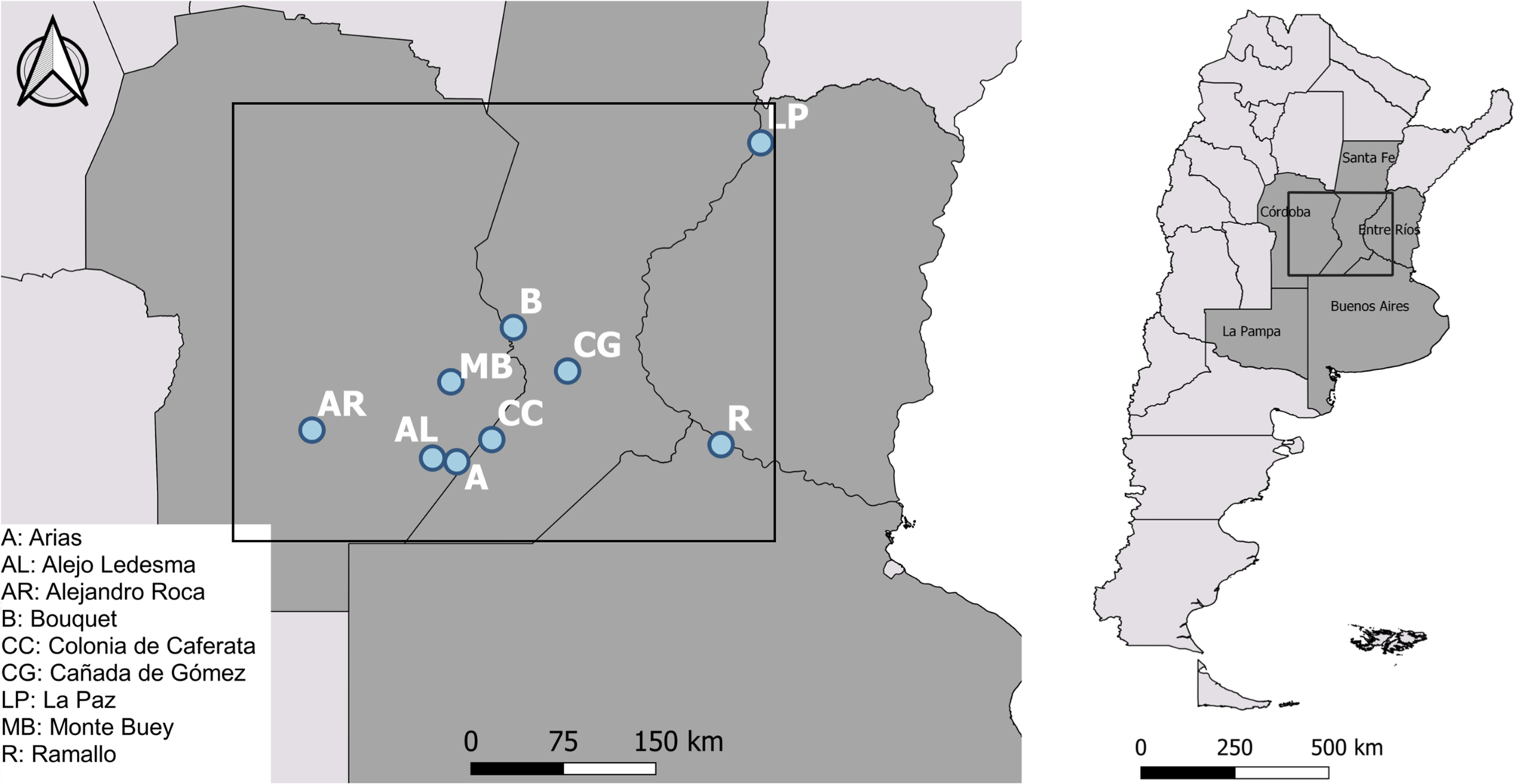
A case study was conducted on Pampa Orgánica Norte (PON), a group of nine organic farmers located in the Rolling and Central Sub-humid Pampas, the most productive agricultural region in Argentina. Pampa Orgánica (http://www.grupopampaorganica.com.ar/) is the first group of extensive certified organic farmers in Argentina. Created in 2004, the group started in a government program for supporting small- and medium-size farmers. Pampa Orgánica is divided into two working groups: Pampa Orgánica Norte and Pampa Orgánica Sur. PON farms are located in the North of Buenos Aires, South of Córdoba, Santa Fe and Entre Rios (Fig. 1). Approximately 85% (36,000 ha) of Argentine organic harvested area of cereals, oilseeds and legumes is located in these four provinces. Based on the official list of organic operators (https://datos.agroindustria.gob.ar/), there are 29 farm enterprises with certified extensive organic production of crops and livestock in this area. PON is considered a single case study with nine units (individual farms), since it is expected that membership in PON produces a strong effect on each unit. A single case study is suitable for in-depth documentation of a unique event or situation in its real context (Hernández Sampieri et al., Reference Hernández Sampieri, Fernández Collado and Bautista Lucio2014).
Pampa Orgánica Norte
farms: Buenos Aires, Cordoba, Santa Fe and Entre Rios Provinces, Argentina.
Between October 2015 and April 2017, quantitative and qualitative data were gathered in interviews with nine farmers, two group leaders and two organic farming consultants, and in group meetings and visits to four of the farms. The interviews were performed using a semi-structured questionnaire that combined closed and open questions. All interviews were recorded and then transcribed. Data analysis was conducted by open codification, followed by thematic analysis (Hernández Sampieri et al., Reference Hernández Sampieri, Fernández Collado and Bautista Lucio2014). First, a preliminary list of categories and subcategories was defined based on the questions included in the questionnaire. As the quotations were analyzed and categorized, these preliminary categories were modified and divided into sub-categories and new categories were added. Atlas-ti software (Thomas Muhr-Universidad Técnica de Berlín) was used for coding. In order to perform a reliable qualitative analysis, two researchers made codification and thematic analysis independently and the results were then shared for the final analysis. This approach is robust for conducting an introductory study of a phenomenon about which there is little information. Working with qualitative information allows a better understanding of a social phenomenon, by studying values, attitudes and behavior, and therefore is appropriated to understand incentives in farming decision-making. Farmers' quotations are included in the ‘Results’ section so the reader can gain insight into farmers' opinions and feelings. In some categories, binary variables were constructed from the answers and frequency charts were developed.
Results
Research results are divided into three sections: a description of PON group dynamics and farms' characteristics is provided in ‘Pampa Orgánica Norte: group dynamics and farms characteristics’; factors affecting the decision to become organic farmers are discussed in ‘Factors affecting the decision to become an organic farmer’ and limitations in organic farming are explained in ‘Limitations for organic production’.
Pampa Orgánica Norte: group dynamics and farms characteristics
Nine organic farms participated in PON, median farm size was 400 ha, with a range from 4175 to 10 ha under organic production (Table 1). With the exception of two farms which were in organic transition, all the fields had more than 11 years of organic agriculture. The majority of farm owners had a university degree; however, only in one case the field of study was agriculture. All of them had received some training in organic agriculture.Footnote 2
Pampa Orgánica Norte, characteristics of farming systems

Note: The letters indicate farm locations (departments). A: Arias, Córdoba; AL: Alejo Ledesma, Córdoba; AR: Alejandro Roca, Córdoba; B: Bouquet, Santa Fe; CC: Colonia de Cafferata, Córdoba; CG: Cañada de Gómez, Santa Fe; LP: La Paz, Entre Rios; MB: Monte Buey, Córdoba; R: Ramallo, Buenos Aires.
Most farming systems were mixed field crops–livestock. Only the two farms in organic transition were dedicated exclusively to crops. Productive diversification was high. One farm had part of land as a protected natural area and it was part of the Network of Private Nature Reserves in Argentina.
Sources of information and advice
PON organized monthly on-farm meetings. All farmers agreed in that these meetings represented a valuable space for permanent training. In some of the meetings experts were invited to present specific topics. Some farmers mentioned the importance of INTA demonstrative plots located in Pergamino (Buenos Aires) and Marcos Juárez (Córdoba) as a source of information on crop management techniques. In most farms, external professional advice for agronomic management was hired.
Farm trading practices
Figure 2 presents the numbers of farms implementing different trading practices, other than spot markets transactions. Three farmers had processing activities: production of sunflower oil, wheat and rye flower, and mustard and coriander cleaning, classifying and packaging. Organic oil and flour are sold under farm owned brands.Footnote 3 Also, mustard and coriander seeds were sold directly to consumers.
Number of organic farmers implementing trading practices different from buying/selling in spot markets.

The use of spot markets to sell their production was a common strategy for these farmers. The major final destination is the export market, and no market coordination mechanism with exporters was reported. Although meat is produced in certified organic farms, only a few sales opportunities were reported in the export market and in most cases, meat was sold as conventional product in the domestic market. Most farmers expressed interest in developing new business in organic meat markets.
Networking
The group participated actively in MAPO, and three farms participated in environmental NGOs: World Wild Life Foundation (https://www.worldwildlife.org), Biodynamic Agriculture Association in Argentina (https://aabda.com.ar/) and the Network of Private Nature Reserves in Argentina (https://reservasprivadas.org.ar/).
Factors affecting the decision to become an organic farmer
The second objective in this study was to identify the factors that influence the decision to adopt organic agriculture. These factors were grouped into two categories: economic and environmental factors. Figure 3 presents a summary of the factors mentioned by the nine farmers as motives for becoming organic farmers. Each circle shows that the factor was mentioned by a farmer, and the main factors identified in each farm are highlighted with a thicker circle. The figure shows that the main drivers for conversion to organic production are related to the environmental factors.
Motives of conversion to organic farming, Grupo Pampa Orgánica Norte
, Argentina.

Economic factors
It was considered whether farmers adopt organic agriculture based on the expectation of increasing profit and/or reducing risk.
Increasing profit: Although obtaining a positive economic result is an objective in farming, higher profit expectation was not a factor that determined the decision of the farming system for PON farmers. Farmers' opinions are exemplified in the following paragraphsFootnote 4:
‘If we had continued with the conventional, perhaps the economic result would have been better, but the decision was not based on that…’ (Farmer – CG)
‘The economic is not a predominant factor, but we keep a part of the farm in conventional production. It is not easy to become organic and live on that, it takes time…’ (Farmer – AL)
Although most farmers in PON became organic without the expectation of increasing farm profit, these farmers are constantly looking for profitable business, and economic viability of organic production was a limitation for expanding the business of organic production. Price premium and differential in export taxes in conventional vs organic products were mentioned as a source of advantage in organic production.
Risk reduction: Approximately half of the farms considered that organic production is more stable than predominant agricultural systems of the region, while, the others considered that organic production is a riskier business. Synergies between crop and livestock production were emphasized as a source of risk reduction. This was expressed by the group advisor in this quote:
‘By adding livestock to the system, production stability increases, since there are advantages from taking better care of soils and weed control, and this leads to a better economic result’. (Advisor)
It was also mentioned:
‘ … The only way to consider crop production is in combination with livestock production’. (Farmer – AL)
Half of the farmers considered organic production a riskier business compared to conventional production. These farms have chosen organic agriculture despite its higher risk. Most identify high-yield variability as the main source of risk, while there were different opinions regarding price and commercial risk.
Environmental factors
The factors mentioned by the farmers were classified into three categories: protecting soil productivity, reducing the impact on ecosystems' functions and production of healthy food. Some farmers mentioned the overall purpose of organic agriculture including all of these aspects in statements as below:
‘Organic production defines the highest environmental quality: it is working for oneself, for the system, the biodiversity, the quality of water, soil and air, and for people who will be fed with quality and safety…’. (Farmer – AR)
Conservation of soil productivity: Conservation of soil productivity was mentioned by five farmers as a motivation in the decision to produce organically. Soil care is related to controlling erosion and preserving the soil from the effect of agrochemicals. Some farmers highlighted the relationship between soil, plant and animal health:
‘The concept is to keep the soil fertile so that forage is healthy and tasty, animals eat good feed, and strengthen their immune system’. (Farmer – CG)
Protection of ecosystems: For all PON members, their concern about the impacts of farming on ecosystems is a motivation to produce organically. Ecosystem protection is mainly related to the reduction in pesticides pollution and biodiversity conservation:
‘We have to produce in alternative systems that take into account the human health, biodiversity, and protecting the water bodies from glyphosate pollution since it is not biodegradable’. (Farmer – AR)
The need of studying the pesticide dynamics in rural landscapes was mentioned, referring in particular to glyphosate, as this is the most frequently used herbicide in the Pampas.
The conservation of biodiversity appeared as another key issue in the protection of ecosystems. Although only two farms had biological corridors, in organic farms, the fences with spontaneous vegetation, contribute to biodiversity conservation by supplying habitats and refuges for insects and other wildlife. One on the farms was member of Alianza del Pastizal (‘Southern Cone Grasslands Alliance’, http://www.alianzadelpastizal.org/en/). This association was created in 2006 by BirdLife International with the objective of promoting the conservation of grasslands of the Southern Cone, with emphasis on birds' protection.
Consumer health: Most farmers also expressed concerns about food quality and consumer health. Although in only one case healthy food production was mentioned as the main factor in the decision to convert to organic agriculture, five other farmers highlighted the importance of healthier products related no only to the absence of pesticides, but also to the higher levels of certain nutrients. In some cases, the importance of local food markets and farmer–consumer connection was mentioned:
‘… Another reason was the desire to produce for someone we know… to build a farmer- consumer connection…’. (Farmer – B)
Limitations for organic production
Five factors were identified as limitations in organic production. Figure 4 shows how many farmers mentioned each of the limitations.
Frequency of farmers who mentioned different types of limitations for organic production.

Complexity in management
Management complexity was mentioned as a characteristic of organic production. However, half of the interviewed farms did not refer to this complexity in a negative sense. Some farmers expressed the pleasure of spending more time in the fields and highlighted this as a positive aspect compared to conventional agriculture. Farmers indicated that crop management in organic production requires more frequent decision-making after visiting the fields.
A critical aspect in these systems is weed control in summer crops. Weed management is based on tillage, delaying planting time and, in some cases, manual weeding. Producers stated that tillage is indispensable for weed control; however, some farmers expressed concern about negative impacts of excessive tillage impacts:
‘We have to practice tillage. It would be better to implement no-till organic production, we are trying to, but the result is still uncertain’. (Farmer – R)
In two farms, manual weeding is implemented every summer as part of the weed management strategy. There are different opinions with respect to this practice:
‘In soybean, manual weeding is necessary. In corn it can be considered an investment’. (Advisor)
‘It is not reasonable to implement manual weeding, if there is a major weed problem, I won't harvest it, it is lost’. (Farmer – AR)
Lack of knowledge in crop management
All farmers mentioned that the lack of knowledge in crop management practices is a key limitation. Managing highly complex production systems is a challenge for farmers and their consultants. Most farmers express that they ‘learn-by-doing’ organic agriculture and even that they transfer technological knowledge to their advisors. PON contributes in the process of generating knowledge in organic production. Farmers carry out on-farm trials, and results are shared within the group, facing themselves the cost and risk in technology testing:
‘… PON is a space for new technologies evaluation, one year a trial is carried out in one farm, the following year another trial is carried out in another farm…’. (Farmer – R)
Lack of agronomic advisors
The lack of good advisors was a concern shared by the group of farmers. In most cases, at some point a technician was hired for assistance, who had soon to be dismissed due to the lack of specific knowledge. This is expressed by a farmer:
‘It is not easy to get specialized technicians. We learn by doing… There are few specialists and they gain experience along with us’. (Farmer – R)
Lack of adequate farm equipment and inputs
The lack of adequate farm equipment and inputs was indicated as another limitation for organic farming. In particular, the lack of adequate seeds, machinery and storage facilities were mentioned. Some comments from farmers were:
‘As there is little demand, it is not an interesting market for seed companies …’. (Farmer – AR)
‘There are new technologies in tillage implements in other countries, in Argentina there are none’. (Farmer – AL)
Low government participation in technology generation and transfer
Farmers expressed criticism regarding the role of government in organic production. They pointed out not only the lack of adequate policies for promoting organic production and the absence of public investment in applied research, but also the lack of recognition of the positive off-farm impacts in this activity. In particular, they emphasized the need for support in the transition period to organic farming:
‘Organic farming generates a decrease in government spending in different areas: public health, water pollution remediation. If these facts were considered, the organic farmer should have economic incentives’. (Farmers – CG)
Organic farmers highlighted the importance of INTA and in particular the interaction with INTA research stations which are conducting field trials for non-pesticides agriculture. However, they emphasized the low participation of INTA researchers and extensionists in organic production.
The interviewees who demanded a more active role from the government, do so in relation to the development of production technologies, but not in market promotion of organic products. This is mainly because it was considered that there were no limitations for selling the production due to an increasing market demand.
Discussion
PON farmers reported several motives for converting to organic production. Results indicate that although there are differences within PON farmers in the importance given to each motive, most farmers assign high weight to environmental performance, in particular ecosystem protection, when choosing their farming systems. Farmers have chosen organic agriculture despite having lower profit expectations. This result is consistent with previous research that identified food quality, health and environmental protection as core values for organic farmers (Padel, Reference Padel2008). However, the economic viability of organic agriculture in Argentine Pampas seems to be a determining factor to grow in the activity, since there are farmers with a long history of organic farming and strong motivations for organic production, who still have part of the land under conventional agriculture for economic reasons.
Although the goals in this study did not include formal statistical comparisons between organic and conventional farms, it is interesting to consider whether there are major differences between the characteristics of PON and conventional farms in Central Pampas. A farmers' survey recently conducted in Pergamino Department,Footnote 5 North of Buenos Aires (Bitar et al., Reference Bitar, Cabrini, Orlando, Lingua, Paolilli, Fillat, Elustondo, Bevaqua and Senigagliesi2020) showed that, the median operated area in conventional farms is similar to the median operated land in PON farms, approximately 400 ha. The main difference between PON and conventional farms is with respect to land tenancy. While in the first case 70% of operated land is rented, the organic farms manage owned land exclusively.
With respect to farm managers, it is interesting that in conventional agriculture, a 40% of farm managers have university education in fields related to agriculture, whereas six out of nine farmers have university studies in PON. However, in this last case for most farmers university training is not related to agriculture.
Although only a few vertical coordination mechanisms are implemented by PON farmers, the marketing of organic products was not mentioned as a problem. Farmers seem to be more focused on reaching acceptable production levels than on building vertical coordination mechanisms. However, after the interviewing period in this paper, some new commercial agreements were announced.Footnote 6
Based on Cavaliere et al. (Reference Cavaliere, Peri and Banterle2016), vertical relationships, including contracts, agreements and other instruments of vertical coordination should be recommended in organic food chains, in order to increase the transparency and communication along the supply chain. These authors studied a sample of organic farmers in the EU Mediterranean area and found that integration between the agricultural sector and processing was stronger compared to conventional farmers, and only the 23% of organic farmers use spot markets for selling products. This contrasts with the fact that spot market was the most common mechanism chosen by PON farmers for selling their production.
In Argentina, the role of the government has been mainly in setting the regulatory framework for organic certification, with minor investments in applied research for technology development and transfer in organic farming. Argentina had almost always imposed export taxes for agricultural products. Since 2020, tax rates are 33% for soybeans (beans and flour) and range from 9 to 12% for other agricultural products. During this study, there were differential tax rates for organic soybeans exports, and zero rate for the rest of organic exports. However, since 2018 these differential rates are no longer available for organic exports. Moreover, since export taxes are computed based on FOB (Free On Board) prices and fobbing costs are generally higher in organic than in conventional products, export taxes are currently a higher proportion of the price received by farmers for organic products. A reduction of exports tax rates is currently demanded from the organic sector.
Nowadays, there is an increasing interest in environmentally friendly farming systems in Argentina. The Organic Production Area in this Ministry of Agriculture, which was historically focused on the export market, is increasingly involved in the development of local markets, in particular for farming systems in peri-urban areas. Moreover, it is incipient (2020) the creation of a Nacional Direction for Agroecology. Agroecology refers to production systems based on four principles: diversity, efficiency, recycling and regulation, without any standard certification process and emphasis in local markets and small farmers (Tittonell, Reference Tittonell2016).
Conclusions
Organic production systems are based on precise production standards and are proposed as an alternative for achieving sustainable agroecosystems from a social, ecological and economic point of view. In Argentina, harvested organic area has been growing, but remains a very small fraction of total harvested land. With the aim of generating information on field crops–livestock organic production in Argentine Pampas, a case study was conducted in PON, a group of organic farmers located in the most productive agricultural region in the country. The case study methodology allowed to understand in depth farmers' motives for converting to organic and the main limitations encountered.
The farmers interviewed in this study considered different criteria including economic and environmental attributed when choosing organic agriculture. However, they assigned higher weight to environmental performance, in particular ecosystem protection, when choosing their farming systems.
The main limitations in field crops organic production are related to crop management practices, in particular weed control. There seems to be a low technology trap for field crops–livestock organic production. Low technology availability for organic production is certainly an obstacle for the growth of this sector in Argentina, which remains very small, and fails to capture the interest of the private sector in specific technology development.
Based on the results in this study, two policy recommendations seem appropriated to achieve the goal of increasing organic production in Argentine Pampas: (1) a more active role of the public sector in technology generation and transfer. This could be done by creating funding opportunities for field research and outreach projects in organic agriculture. (2) To eliminate export taxes for organic products.
This study provides a preliminary assessment of organic field crops–livestock production in Argentine Pampas. Further research is needed for a complete characterization of incentives and limitations for organic production in this area, including studies based on random samples and panel data of organic farms. It is expected that the topic of this research will become more important due to the growing concerns about the use of agrochemicals, in particular, in the rural–urban fringe. Organic agriculture could be a valuable alternative, in particular, in the proximity to villages, towns or rural schools where preventing from using pesticides and having a more diverse rural landscape represent greater benefits for local population.
Financial support
This study was supported by research project SIB-UNNOBA 0611/2019: ‘Evaluación económica y ambiental de alternativas de intensificación sostenible en la cuenca del río Arrecifes’, research project SIB-UNNOBA 0214/2017: ‘Dinámica, sustentabilidad y procesos de agregado de valor de sistemas de producción agropecuaria en el territorio del Norte de Buenos Aires’ and research project INTA PE1129023: ‘Diversidad, sustentabilidad y dinámica de los sistemas de producción agropecuaria’.
Conflict of interest
The authors have no conflicts of interest to disclose.



