Introduction
Oral antiplatelet drugs are increasingly being encountered in patients scheduled for elective ENT surgery. These are predominantly either aspirin or clopidogrel, although some patients may take both simultaneously. However, there is very little in the ENT literature addressing these drugs, outside of the emergency situation.Reference Pope and Hobbs1 More to the point, there appears to be no consensus on when these drugs should be temporarily discontinued for elective surgery, and the safety of doing so in certain clinical situations.
The head and neck have a profuse blood supply, so one would expect a higher risk of bleeding and related complications when patients taking drugs affecting coagulation undergo head and neck surgery. But is this necessarily the case with antiplatelet drugs? Whilst this question has remained scientifically unanswered in the ENT literature, it has been addressed in a number of other surgical specialties. There certainly appear to be some procedures that can be performed without necessarily stopping antiplatelet drugs.Reference Alwitry, King and Vernon2–Reference Mukerji, Munasinghe and Raza4 This is important, as even temporary cessation of antiplatelet drugs can pose very serious risks to some patients.Reference Servin5
In this paper, we summarise the key points which ENT surgeons need to understand regarding drugs affecting platelet function. We also present the findings of a national online survey of ENT surgeons assessing current management of these medications in the peri-operative and early post-operative period. Finally, we attempt to provide some guidance on when and when not to stop these drugs in the pre-operative period.
Antiplatelet drugs
Aspirin is probably the antiplatelet drug with which ENT surgeons are most familiar. Its antiplatelet function has been thoroughly evaluated: in high-risk patients, its use enables an approximately 15 per cent reduction in the risk of vascular death, and a 30 per cent reduction in non-fatal vascular events.6 It acts by permanently inactivating cyclo-oxygenase, an enzyme vital to the metabolic conversion of arachidonic acid to thromboxane A2, amongst other products.
Aspirin is rapidly absorbed and its antiplatelet effects are evident 1 hour after ingestion. However, because of the permanent effect of aspirin on cyclo-oxygenase, the platelet-inhibitory effect lasts for the life span of the platelet (approximately 8 to 10 days). Ten to 12 per cent of platelets are replaced every 24 hours.Reference Patrono, Baigent, Hirsh and Roth7 It takes 4 to 5 days after cessation of aspirin for 50 per cent of platelets to regain normal function; after 7 to 10 days, more than 90 per cent of platelets will have normal function.Reference Patrono, Coller, FitzGerald, Hirsch and Roth8 Aspirin has effective antiplatelet activity at a dose of 75–150 mg/day. There is no benefit to taking a higher dose as the haemorrhage risk seems to rise, although the dose can be increased in morbidly obese patients.Reference Servin5
The other commonly encountered antiplatelet drug is clopidogrel. This has a different mechanism of action: it selectively and irreversibly inhibits adenosine diphosphate induced platelet aggregation, with no effect on arachidonic acid metabolism. Therefore, it has a complementary antiplatelet action which works synergistically with aspirin in some clinical situations.Reference Patrono, Baigent, Hirsh and Roth7 However, unlike aspirin, clopidogrel's effects are dose-dependent due to a variable patient response. A loading dose is therefore usually given, in the region of 300–600 mg, followed by a maintenance dose of 75 mg/day.
Once again, because of clopidogrel's irreversible effects on platelet function, new platelets need to be produced in sufficient amounts before function returns to normal following drug cessation. A study in healthy volunteers found that platelet function had normalised 7 days after clopidogrel discontinuation.Reference Webber, Braun, Hohfeld, Schiwippert, Tschope and Schror9
Newer antiplatelet drugs are now in development, namely prasugrel and ticagrelor. These have the same mechanism of action as clopidogrel, and may replace it as a second, concomitant agent with aspirin.Reference Bhala, Taggar, Rajasekhar and Banerjee10
Indications for antiplatelet drugs
In Western countries, more than two million patients undergo coronary artery dilatation per year, and of these over 90 per cent will require placement of an intracoronary stent.Reference Chassot, Delabays and Spahn11 Angioplasty breaks the atherosclerotic plaque, which in itself exposes a multitude of substances that can activate platelet aggregation and thrombus formation.
There are two types of intracoronary stent currently in clinical use: metal and drug-eluting (the latter being more contemporary). Dual antiplatelet therapy (i.e. aspirin and clopidogrel) is indicated in the high-risk period after stent insertion to prevent restenosis and stent occlusion. This high-risk period can be up to and even longer than 12 months in the case of drug-eluting stents. This is due to reports of late and very late stent thrombosis, a phenomenon not seen anywhere near as frequently with metal stents.Reference Naidu12 A number of medical societies have stressed the importance of continuing this dual therapy without cessation, and have recommended that non-urgent surgery be avoided in the high-risk post-operative period, due to a 5- to 10-fold increased risk of peri-operative death and myocardial infarction.Reference Bhala, Taggar, Rajasekhar and Banerjee10, Reference Chassot, Delabays and Spahn11
Antiplatelet drug therapy is also indicated after angioplasty for peripheral vascular disease, as well as the more classical indications including atherosclerotic cerebrovascular disease, retinal artery occlusion, congestive cardiac failure (which increases platelet activity) and atherosclerotic vascular disease.Reference Patrono, Baigent, Hirsh and Roth7 Interestingly, more than 5 per cent of patients who have undergone coronary stent placement will require non-cardiac surgery within 12 months of stent insertion.Reference Servin5
Methods
We designed an online survey (see Appendix 1) which aimed to obtain an impression of current practice within the ENT specialty. The survey questions addressed management of elective surgical patients taking antiplatelet drugs, in both the pre- and post-operative periods. We were also interested to obtain information on any complications that had occurred in patients who had continued taking aspirin, clopidogrel or both during the peri-operative period, and to record the nature of their surgery.
The survey was edited and approved by the ENT UK Survey Guardian prior to distribution. It was circulated via e-mail invitation to the Expert Panel of ENT UK, the British Association of Otolaryngologists Head and Neck Surgeons, between 13 January and 15 February 2011.
The findings of the survey are presented below.
Results
At the time of writing, the Expert Panel of ENT UK consisted of 303 members, all of whom received an invitation to complete the online survey. The response rate was 55 per cent (167 replies); 78 per cent of respondents were consultants.
Stopping antiplatelet drugs prior to surgery
The majority of respondents (91 per cent) stated that they asked their patients to stop antiplatelet drugs prior to an elective procedure. However, this was routine practice in only 20 per cent; in contrast, 71 per cent of respondents were selective in which patients they asked to cease antiplatelet drugs, either because of a department protocol or due to individual judgement. Nine per cent of respondents stated that they did not ask patients to stop either aspirin or clopidogrel before any surgical procedure.
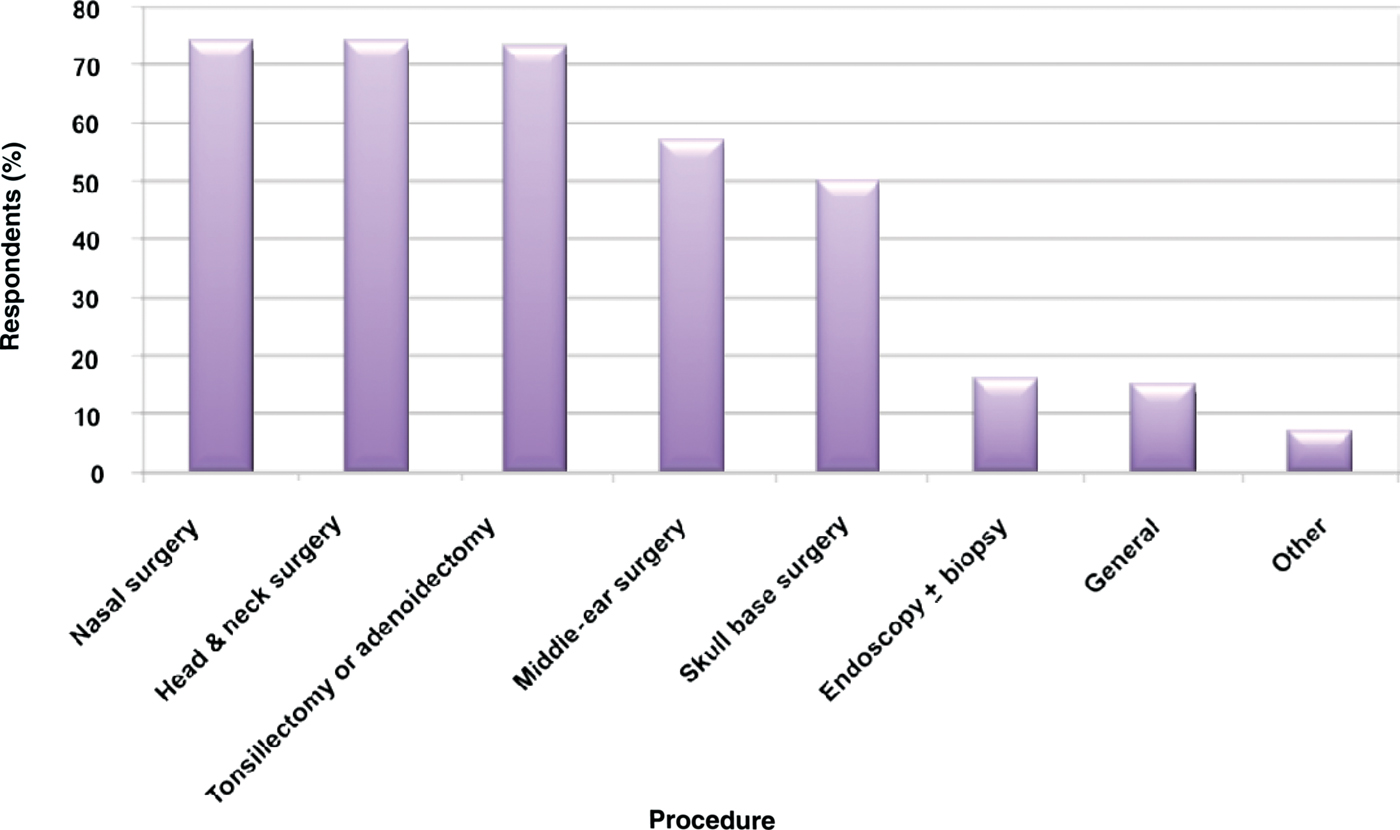
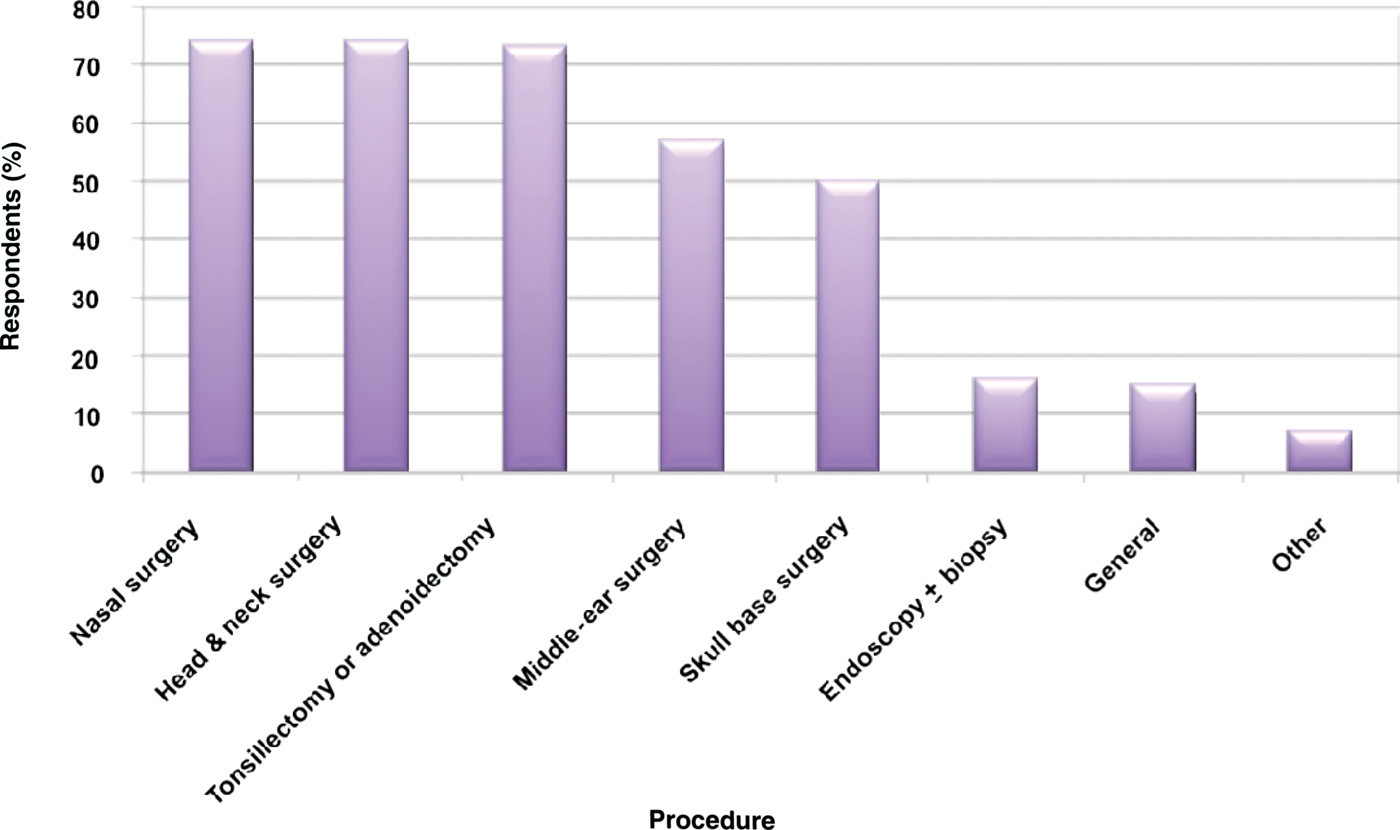
Of those surgeons who were selective in stopping antiplatelet drugs, Figure 1 shows the percentage of those stopping such drugs before various categories of surgery (advised by the survey). Respondents' qualitative comments on their rationale for this action included the importance of reducing the risk of significant reactionary or prolonged secondary haemorrhage, and the need to improve the operative field during microscopic or endoscopic surgery.
Percentage of respondents stating they would stop antiplatelet therapy before various types of surgery.
Forty-five per cent of respondents stated that there was no relevant departmental or hospital protocol, but an additional 22 per cent were unsure about whether such a protocol existed. Eighty-eight per cent stated that the medical indication for antiplatelet therapy would influence their decision on whether or not to stop it, but 77 per cent stated that they did not routinely seek the advice of a cardiologist or haematologist in this situation. Sixty-five per cent of respondents stated they would consider bridging therapy, either with low molecular weight or unfractionated heparin, in some clinical instances; however, a further 20 per cent were unsure about this.
Interestingly, a consistent number of respondents were more anxious about the antiplatelet effects of clopidogrel than aspirin.
Adverse events in patients stopping antiplatelet drugs
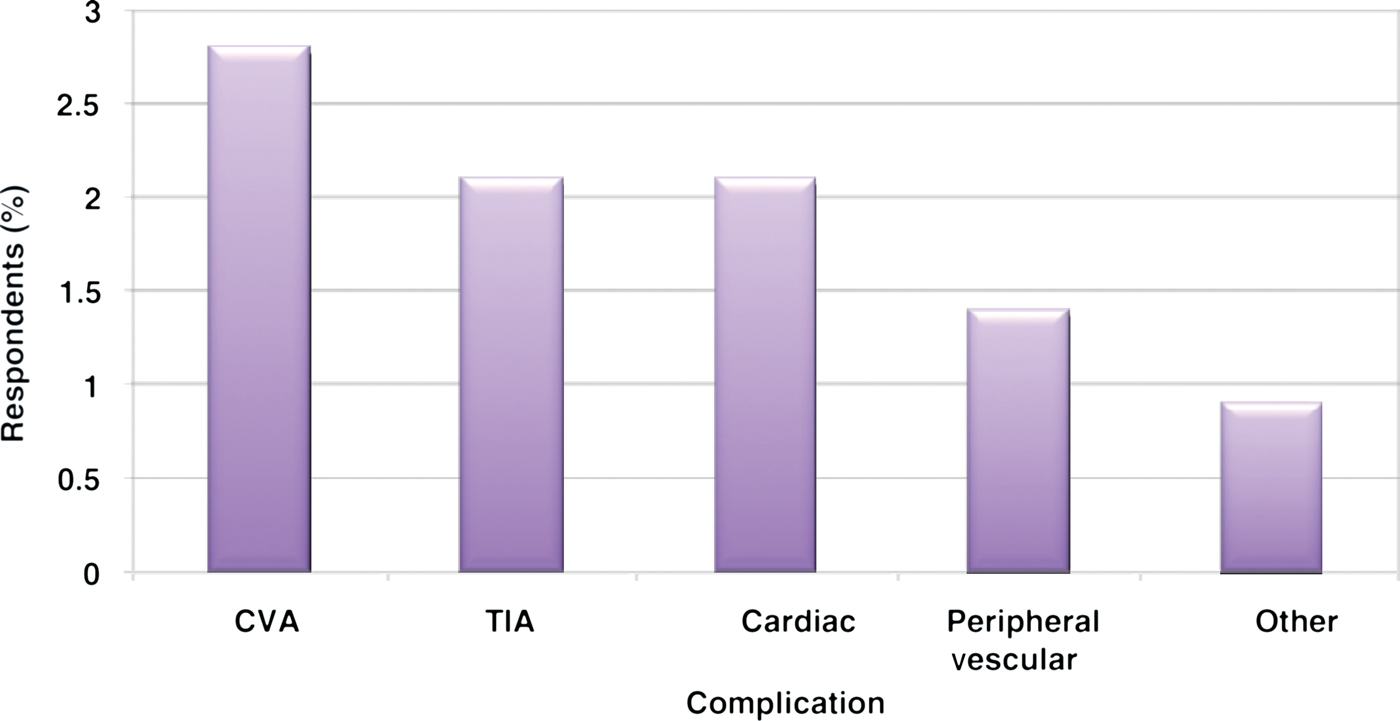
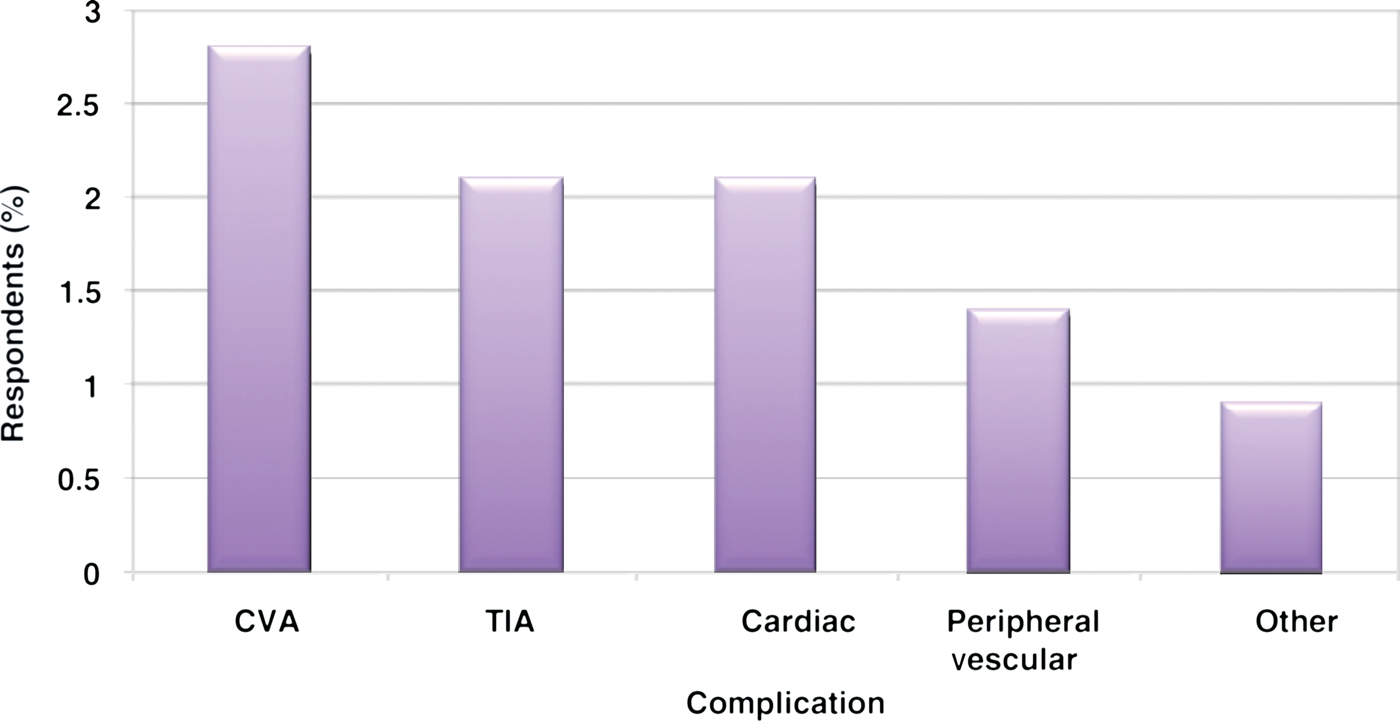
As shown in Figure 2, 9 per cent of respondents stated that they had encountered a complication related to stopping a patient's antiplatelet drug, the commonest being a cerebrovascular accident.
Percentage of respondents stating they had encountered various complications in patients who had stopped antiplatelet therapy peri-operatively. CVA = cerebrovascular accident; TIA = transient ischaemic attack.
Complications in patients continuing antiplatelet drugs
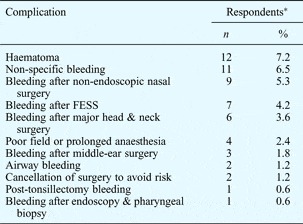
Fifty-seven per cent of respondents have not encountered a complication related to continuing a patient's antiplatelet drug. However, of the 43 per cent who had, 50 per cent attributed the complication to clopidogrel, 44 per cent to aspirin and 23 per cent to a combination of both. Nearly all complications were related to bleeding (Table I).
Reported complications in patients continuing antiplatelet drug

*Total n = 167. FESS = functional endoscopic sinus surgery
Of those respondents whose patients' surgery had been complicated by bleeding, 8 per cent had needed to return the patient to the operating theatre to address the complication, and 5 per cent had needed to use a blood transfusion.
Two respondents stated that they had cancelled the surgery of a patient still taking an antiplatelet drug on the day of their operation, due to the bleeding risk. (These statements were entered into the section of the survey dealing with complications in patients continuing antiplatelet drugs, hence their inclusion in Table I.) Whilst not strictly a complication of the drugs themselves, one could argue that such cancellation is an unwanted sequela, given the inconvenience caused to the patient as well as the wasted surgical time for the surgeon and the hospital.
Restarting antiplatelet drugs after surgery
Seventy-two per cent of respondents stated that they would recommence a patient's pre-operative antiplatelet drug regimen within three days of surgery. Within this group, 23 per cent would restart the medication immediately, over 6 per cent would leave it until four days post-operatively, and 21 per cent had no fixed protocol dictating the best time to restart.
Protocols on antiplatelet drug use during the peri-operative period
Forty-five per cent of respondents did not have a protocol for the management of patients taking antiplatelet drugs and undergoing elective surgery. A further 22 per cent were unsure whether a protocol existed within their department.
Eighty-six per cent of respondents stated that they would welcome guidance on the peri-operative management of patients taking antiplatelet drugs.
Discussion
Patients taking antiplatelet drugs are increasingly being encountered by all surgeons, not just those within the ENT specialty, and the indications for such drugs' use are expanding.Reference Servin5 Therefore, it is surprising that there is very little information in the ENT literature to guide ENT surgeons' management of this complicated group of patients.
Surveys similar to ours have been conducted within other surgical specialties, with a similar number of respondents encountering complications from both cessation and continuation of antiplatelet drugs.Reference Alwitry, King and Vernon2, Reference Mukerji, Munasinghe and Raza4 However, by contrast ENT surgeons seem more willing to consider their patient's indication for taking antiplatelet therapy, before stopping it. In addition, ENT surgeons seem keen to restart antiplatelet therapy sooner after surgery.
Looking more specifically at our results, a significant number of our respondents considered their patient's clinical reason for taking antiplatelet drugs when deciding whether to cease therapy pre-operatively, rather than simply stopping the drug regardless. This is for the very good reason that a high number of patients undergo intracoronary stent insertion annually.Reference Chassot, Delabays and Spahn11 Furthermore, the annual rate of intracoronary stenting is rapidly increasing, meaning that more ENT surgical patients will be taking antiplatelet drugs as a consequence. Stopping aspirin and/or clopidogrel could have serious consequences in these patients.
Furthermore, the abrupt cessation of antiplatelet drugs in patients with coronary artery disease can have serious rebound effects, in particular a two- to four-fold increase in the risk of myocardial infarction and death.Reference Servin5 Of equal concern is the fact that bridging therapy, in the form of low molecular weight heparins, seems to have little effect on this risk.Reference Servin5
Withdrawal of antiplatelet drugs in the immediate period after stent insertion (i.e. up to 6 weeks) carries an even greater risk of death (i.e. a 5- to 10-fold increase). This high-risk time is extended to 12 months for patients with drug-eluting stents, for reasons already explained.Reference Douketis, Berger, Dunn, Jaffer, Spyropoulos and Becker13
In response to these serious risks, guidelines have been published on how best to manage patients with coronary stents.Reference Douketis, Berger, Dunn, Jaffer, Spyropoulos and Becker13, Reference Grines, Bonow, Casey, Gardner, Lockhart and Moliterno14 These guidelines state that if there is any uncertainty about patients' antiplatelet drug therapy, then their cardiologist should be contacted for clarification. If the patient has previously undergone intracoronary stent insertion, and if the ENT procedure is elective and has a significant bleeding risk, then surgery should be deferred until the patient has completed their post-stenting dual-therapy aspirin and clopidogrel regime; this regime should last a minimum of 4 to 6 weeks in patients with a bare metal stent, and 12 months in those with a drug-eluting stent. After this time, aspirin therapy should be continued peri-operatively in patients with a drug-eluting stent, while clopidogrel can usually be stopped.
The impact of continuing low-dose aspirin in the peri-operative period has been analysed in a large meta-analysis of 474 studies, assessing all surgical specialties.Reference Burger, Chemnitus, Kneissl and Rücker15 This showed that the risk of intra-operative bleeding increased by a factor of 1.5, without any additional risk regarding post-operative morbidity or mortality (with the exception of that related to intracranial surgery). However, despite this global conclusion, the meta-analysis authors devoted a substantial degree of attention to a single ENT operation, tonsillectomy; for this procedure, pooling of results regarding the need to return to the operating theatre due to bleeding produced an odds ratio of 7.2 (p < 0.001). Notably, the studies included in the meta-analysis were all over 20 years old.
There has been no such global research on the effects of clopidogrel in the peri-operative period. However, a study assessing patients taking clopidogrel and undergoing surgery for a fractured neck of femur highlighted the risk of complications.Reference Nwachuku, Jones and Clough16
Our survey respondents generally expressed greater concern about operating on patients taking clopidogrel, compared with those taking aspirin. Nearly half of all respondents stated that they had encountered a post-operative complication attributable to antiplatelet drug therapy.
Recommendations
There are currently no general recommendations in the ENT literature on the management of patients taking antiplatelet drugs. This situation needs to be addressed, given the serious consequences of stopping these drugs peri-operatively in certain patients, as highlighted above.
Nearly half the respondents to our survey stated that there was no relevant protocol in place in their institution. In addition, an overwhelming majority would welcome guidance or recommendations. Clearly, a multidisciplinary consensus would need to be achieved, which is beyond the scope of this paper. However, ENT surgeons are fortunate in that the majority of their practice is elective. This is particularly so given the fact that ENT surgery involves a highly vascular area of the body with many anatomical complexities, requiring contemporary surgical techniques including the use of sophisticated microscopes and endoscopes.
• Antiplatelet drugs are used to prevent thrombosis in several clinical situations
• Aspirin and clopidogrel have different mechanisms of action and work synergistically
• Cessation of antiplatelet drugs in intracoronary stent patients can be fatal
• ENT-specific guidelines for peri-operative antiplatelet drug management are needed
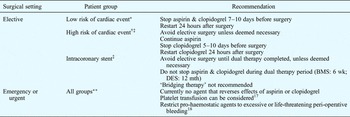
The American College of Chest Physicians has produced evidence-based clinical practice guidelines on the peri-operative management of patients taking antiplatelet drugs, summarised in Table II.Reference Douketis, Berger, Dunn, Jaffer, Spyropoulos and Becker13 The guideline authors state that there is currently no evidence that encompasses the spectrum of benefit from antiplatelet drugs. However, they ascribe a low risk of peri-operative cardiovascular events to those patients in whom temporary interruption of antiplatelet therapy would not be expected to confer a substantially increased risk of adverse cardiovascular events. This includes patients receiving antiplatelet therapy (typically aspirin) for the primary prevention of myocardial infarction or stroke. At the opposite end of the spectrum are those patients at high risk, namely those who have recently undergone intracoronary stent insertion and, to a lesser extent, those who have suffered a myocardial infarction in the past three months.
Recommendations on Peri-Operative Antiplatelet Drug ManagementReference Douketis, Berger, Dunn, Jaffer, Spyropoulos and Becker13

*Patients receiving antiplatelet drugs (typically aspirin) for primary prevention of myocardial infarction or stroke. †Patients receiving dual therapy for recent (within 3 to 6 months) placement of a bare metal or drug-eluting coronary stent, or (to a lesser extent) myocardial infarction within the past 3 months. ‡Cardiologist consultation required. **Cardiologist consultation recommended for all high-risk patients. BMS = bare metallic stent; wk = weeks; DES = drug-eluting stent; mth = months
Conclusion
The indications for and use of antiplatelet drugs are increasing in patients who require non-cardiac surgery, including ENT surgery. The majority of these patients are at low risk of a peri-operative cardiac event due to temporary cessation of their antiplatelet drug.
However, there is an increasing population of patients who have had intracoronary stents inserted and who are taking both aspirin and clopidogrel. These patients have a 5 to 10 times greater risk of peri-operative death due to stent thrombosis formation if their antiplatelet drugs are stopped before the recommended duration of therapy has been completed. It is vital that ENT surgeons consult with a cardiologist in order to reach a consensus decision on how best to manage this complex group of patients in the peri-operative period.
Acknowledgement
We acknowledge the voluntary contribution of ENT UK Expert Panel members, who help develop knowledge within our specialty by sharing their reflections on practice.
Appendix 1. Survey
1. Do you stop aspirin/clopidogrel pre-operatively?
Yes, routinely
Yes, selectively based on departmental/trust protocol
Yes, selectively based on individual judgment
No
2. If you answered selectively in question 1, which groups of procedures would you think warrant stopping a patient's antiplatelet drug? Can you give the rationale behind your decision to stop the antiplatelet drug? (e.g. middle-ear surgery – to improve operative field)
Tonsillectomy/adenoidectomy
Middle-ear surgery
Skull base surgery
Nasal surgery
Head and neck surgery
General (e.g. grommets, neck lumps)
Endoscopy ± biopsy
Other (please specify)
3. Does your department have a protocol in place regarding the preparation of patients on antiplatelet drugs for their elective surgery?
Yes/no/unsure
4. Does the reason for being on the medication (e.g. drug-eluting coronary stent, cerebrovascular accident) affect your decision to stop?
Yes/no/unsure
5. Do you routinely consult a cardiologist or haematologist before stopping the antiplatelet drug?
Yes/no
6. Would you consider ‘bridging therapy’ in some instances?
Yes/no/unsure
7. How soon after surgery do you recommend recommencing the medication?
Immediately
1–3 days post-operatively
4–7 days post-operatively
>7 days post-operatively
No fixed protocol
8. Have you ever encountered any significant complication in patients who did not stop their antiplatelet drug?
Yes/no
Please give details …
9. If you have encountered any significant complications, can you specify the antiplatelet drug(s) involved?
Aspirin
Clopidogrel
Patient on both
Other (please specify)
10. Have you ever encountered a significant complication in patients who stopped their antiplatelet drug?
Transient ischaemic attack
Cerebrovascular accident
Peripheral vascular event
Cardiac event
Other (please specify)
11. Do you think guidelines detailing when to stop antiplatelet drugs pre-operatively in the elective situation would be useful?
Yes/no/unsure
12. Please enter your region, subspecialty interest and grade