Implications
It is suspected that highly productive pigs have difficulties to cope with environmental challenges and are at risk for behavioural, physiological and immunological problems. This review focused on the relationships between high physiological demands, health and welfare in pigs partly validates this hypothesis. Therefore, better knowledge of the problems that are encountered by highly productive pigs is needed to define new goals for selection as well as for future technical changes. More efforts should be done on fattening pigs for which the magnitude and origin of problems are least known.
Introduction
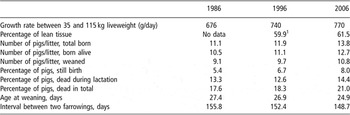
During the past decades, production levels of pigs have considerably increased thanks to genetic selection, to acceleration of the reproductive cycles and to improvement of the environment including housing and feeding as well as husbandry and health management. These higher production levels concern reproduction (prolificacy and duration of reproductive cycles) and growth (growth rate, lean tissue development and feed conversion) as illustrated in Table 1. Therefore, animals must cope with high physiological demands that may be difficult to be met due to external and internal limitations of resources. Modification of the environment allows increasing the amount of external resources available to animals, for example, by increasing the energy and protein contents of diets. It can also allow reducing the physiological demands, for example, by controlling the ambient temperature or the load of pathogens. However, possibilities to change the environment are limited by the availably of the resources and the cost of the improvements. Genetic selection can improve the efficiency of the animals to use the available resources but also has limits. For example, feed intake is restricted by the size of the animals and feeding efficiency is limited by the energetic cost of the biochemical processes involved in nutrient uptake and utilization. Reaching the limits is likely to have detrimental effects on health and welfare as suggested in the resource allocation theory (Beilharz et al., Reference Beilharz, Luxford and Wilkinson1993; Rauw, Reference Rauw2009). Therefore, the aims of this paper are to identify the situations when physiological demands are very high in the pig production and evaluate the possible consequences on health and welfare. Where possible, ways of attenuating problems will be suggested or further research will be pointed out.
Variation in growth and reproductive performance of French commercial pig herds between 1986 and 2006 (Institut du Porc, IFIP 1986)

1value in 1997 as not available in 1996.
Weaned piglets and growing pigs
The average weaning age of piglets has been reduced from about 8 weeks of age in the 1950s to about 27 days 20 years ago and to about 25 days of age nowadays in France. This reduction was realized in order to augment the number of litters weaned per sow and per year and was allowed by technical changes. In parallel, average daily gain of fattening pigs has increased in commercial herds from about 670 to 770 g/day during the past 20 years and percentage of lean tissue was also increased (Table 1). These better performances are essentially due to genetic selection as demonstrated by Tribout et al. (Reference Tribout, Caritez, Gogué, Gruand, Bouffaud, Billon, Griffon, Brenot, Péry, Le Tiran, Bussières, Le Roy and Bidanel2004) showing similar differences in contemporary growing pigs originating from the frozen semen of large white (LW) boars born either in 1977 or in 1998. Margins for improvement with a better control of the environment still exist as shown by results in experimental herds, whereas average pigs daily gains above 1 kg/day during the fattening period (30 to 115 kg live weight) are frequently observed (e.g. in Lebret et al., Reference Lebret, Meunier-Salaun, Foury, Mormede, Dransfield and Dourmad2006; Arthur et al., Reference Arthur, Barchia and Giles2008). Therefore, growing pigs must face high physiological demands from weaning to slaughter.
Challenges at weaning
In natural or semi-natural conditions, weaning the pig is a progressive process characterized by a substitution of maternal milk by other food, mainly from plant origin, starting around the 4th week of age and terminating between the 9th and 17th week of age (Newberry and Woodgush, Reference Newberry and Woodgush1985; Jensen, Reference Jensen1986; Bøe, Reference Bøe1991). Nowadays, weaning is an abrupt process that occurs very commonly during the 4th week of age when milk still represents the essential of the nutrient intake of the sucking piglets (Bøe, Reference Bøe1991). At weaning, change in the diet is accompanied by a change in the physical environment as piglets are usually moved from the farrowing unit to a new building, and by a social change due to the withdrawal of the contacts with the dam and the frequent mixing of piglets originating from different litters. Therefore, weaning represents a critical period of adaptation and stress, imposing high demands for adaptive processes.
Change of diet
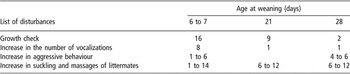
When piglets are maintained with their dam until 28 to 35 days of age and receive creep feed from 14 to 21 days of age, creep feeding is marginal, representing <1% to 20% of the daily metabolic energy intake (reviewed by Pluske et al., Reference Pluske, Williams and Aherne1995). Consumption of creep feed is highly variable between studies (reviewed by Pluske et al., Reference Pluske, Hampson and Williams1997), within and between litters of a given herd (e.g. Appleby et al., Reference Appleby, Pajor and Fraser1991; Pajor et al., Reference Pajor, Fraser and Kramer1991; Delumeau and Meunier-Salaün, Reference Delumeau and Meunier-Salaün1995). Most animals do not eat significant amounts of creep feeding during lactation and hence undergo an abrupt change of diet at weaning. During lactation, piglets receive milk that flows from the dam at about hourly intervals. Milk is liquid and warm, contains lactose and animal proteins, is rich in lipids and contains non-nutritional products that regulate intestinal physiology and health (reviewed by Xanthou, Reference Xanthou1998; Xu et al., Reference Xu, Wang and Zhang2000; Salmon et al., Reference Salmon, Berri, Gerdts and Meurens2009). Among them, immunoglobulin A, macrophages, lactoferrin and lysosyme are probably of special importance for protecting the digestive tract against pathogens. Numerous growth factors support gastrointestinal growth, maturation and even tissue repair after damage. After weaning animals must eat, from a feeder, a dry diet that contains no milk-bioactive products but is rich in starch and plant proteins requiring enzymes to be digested (reviewed by Pluske et al., Reference Pluske, Hampson and Williams1997). Levels of these enzymes in the digestive tract are low at weaning and a few days are needed to reach sufficient levels for efficient digestion. Animals have some difficulties to adapt to this new diet and voluntary feed intake decreases; metabolic energy intake falls and 2 to 3 weeks are necessary to restore the lactational level (reviewed by Pluske et al., Reference Pluske, Hampson and Williams1997). A growth check, as well as numerous changes in the gastrointestinal tract, such as villous atrophy and crypt hyperplasia, are generally observed (reviewed by Pluske et al., Reference Pluske, Hampson and Williams1997; Le Dividich and Sève, Reference Le Dividich and Sève2000; Xu et al., Reference Xu, Wang and Zhang2000). As a consequence of these nutritional and physiological disorders, diarrhoea is very frequent. It occurs essentially during the 2nd and 3rd weeks after weaning in commercial herds (Madec et al., Reference Madec, Bridoux, Bounaix and Jestin1998, Figure 1). The younger animals are at weaning, the more difficulties they have to adapt to the new diet as shown by lower feed intake and higher growth check in piglets weaned at 14 compared with those weaned at 24 days of age (Dunshea et al., Reference Dunshea, Kerton, Cranwell, Campbell, Mullan, King and Pluske2002). Growth check lasted for 9 days in piglets weaned at 21 days, whereas only for 2 days in piglets weaned at 28 days (Colson et al., Reference Colson, Orgeur, Foury and Mormède2006).
Variation in the percentage of pens where piglets are suffering from diarrhoea according to the numbers of days from weaning (Madec et al., Reference Madec, Bridoux, Bounaix and Jestin1998)

In addition to adapting to a new diet, animals must learn to drink from a new form of water supply at weaning. They must learn to get water separately from nutrients and to use drinking troughs. It can take more than 1 week for the weaned piglets to restore their fluid intake to the level observed before weaning (Gill, 1989 cited in Brooks and Tsourgiannis, Reference Brooks and Tsourgiannis2003).
Insufficient nutrient and water intakes are likely to induce welfare problems since animals may suffer from hunger, thirst and coldness. The risk of coldness is all the more acute because body reserve mobilization induces a significant decrease in thickness of backfat, which is important for thermal isolation of the animals (Fenton et al., Reference Fenton, Roehrig, Mahan and Corley1985). In addition, diarrhoea impairs welfare.
Changes in the social and physical environment
Adaptation to a new social group and to a new physical environment constitutes a stressful situation for pigs that induces neuroendocrine and behavioural reactions. It is generally accepted that weaning induces a transient activation of the adrenal and sympathetic axis (reviewed by Dunshea, Reference Dunshea2003) even though significant increases after weaning are not observed in numerous studies when measuring plasma cortisol (Funderburke and Seerley, Reference Funderburke and Seerley1990; Carroll et al., Reference Carroll, Veum and Matteri1998), salivary cortisol (Jarvis et al., Reference Jarvis, Moinard, Robson, Sumner, Douglas, Seckl, Russell and Lawrence2008) or urinary corticoids and catecholamines (Hay et al., Reference Hay, Orgeur, Lévy, Le Dividich, Concordet, Nowak, Schaal and Mormède2001; Colson et al., Reference Colson, Orgeur, Foury and Mormède2006). In most of the studies, the effects of the nutritional stress were confounded with those related to the changes in the social and/or physical environments. Funderburke and Seerley (Reference Funderburke and Seerley1990) tried to partition the cortisol response of piglets weaned at 4 weeks of age into psychological, climatic and nutritional effects, but failed to detect variation between the suckling group and any experimental group. More recently, Colson et al. (Reference Colson, Orgeur, Martin and Prunier2005) found that weaning had nearly no effect on salivary cortisol when weaned piglets remained in their home pen, whereas a marked increase was observed when piglets were transferred to a new environment at weaning and even more marked when social mixing was added to this second stressor. However, often in modern swine industry, the housing conditions for the newly weaned piglets are better in weaning rooms than in farrowing pens.
Regarding behaviour, some perturbations are very transient and observed mainly on the day of weaning as vocalizations, whereas others last longer, like aggressive behaviours (until about 6 days), massaging and suckling other piglets (until about 14 days) as shown by Weary and Fraser (Reference Weary and Fraser1997), Orgeur et al. (Reference Orgeur, Hay, Mormède, Salmon, Le Dividich, Nowak, Schaal and Lévy2001) and Colson et al. (Reference Colson, Orgeur, Foury and Mormède2006). Overall, behavioural perturbations are more marked in piglets weaned around 1 week of age than in those weaned at 3 or 4 weeks of age that differ only marginally (Table 2). Bedding material, particularly straw, has been shown to relieve stress being a recreational stimulus, a nutritional substrate and providing thermal, as well as physical comfort (Fraser et al., Reference Fraser, Phillips, Thompson and Tennesen1991).
Influence of the age at weaning on the duration of the growth and behavioural disturbances in days (Orgeur et al., Reference Orgeur, Hay, Mormède, Salmon, Le Dividich, Nowak, Schaal and Lévy2001; Colson et al., Reference Colson, Orgeur, Foury and Mormède2006)

In order to detect the problems associated with weaning and to be able to take immediate action when necessary, behaviour, feed and water intake as well as disease symptoms of piglets should be observed daily. Solutions to prevent problems are based on the improvement of the management, the housing and the feed strategy. Animals should not be weaned before 4 weeks as recommended in the European Union (EU) regulation (Directive 2001/93/EC) and social mixing should be avoided. A good hygiene based on all-in all-out management, cleaning and disinfection of housing facilities is also very important (Madec et al., Reference Madec, Bridoux, Bounaix and Jestin1998). The ambient temperature should be comfortable, especially during the first days after weaning when animals eat very little, with appropriate ventilation but without draught. Moderate bedding as compared with barren environment is an easy way of improving the housing. It may reduce post-weaning diarrhoea and increase growth in weaners (Munsterhjelm et al., Reference Munsterhjelm, Peltoniemi, Heinonen, Hälli, Karhapää and Valros2009).
Challenges during fattening: rapid growth rate and high muscular development
Genetic selection for growth rate, lean tissue development and feed efficiency is likely to have modified the release and/or action of hormones supporting nutrient utilization and storage. These hormones are numerous and often interrelated with biological effects beyond their influence on nutrient fluxes and metabolism. Among them, cortisol and catecholamines are of special importance since they are the main mediators of the animal’s response to stressors. In addition, these hormones have mainly immunosuppressive effects on the immune system (for reviews see: Munck et al., Reference Munck, Guyre and Holbrook1984; Merlot, Reference Merlot2004) and are able to influence bone growth (for review see: Robson et al., Reference Robson, Siebler, Shalet and Williams2002). Other metabolic hormones from the somatotropic axis (e.g. growth hormone and IGF-I), the thyroid gland (triiodothyronine and thyroxine) or the adipose tissue (e.g. leptin) are also known to influence the activity of the immune system (for reviews see: Dorshkind and Horseman, Reference Dorshkind and Horseman2000; Lago et al., Reference Lago, Dieguez, Gomez-Reino and Gualillo2007) and the bone metabolism (for reviews see: Butler and Le Roith, Reference Butler and Le Roith2001; Robson et al., Reference Robson, Siebler, Shalet and Williams2002; Cirmanova et al., Reference Cirmanova, Bayer, Starka and Zajickova2008).
Changes in stress hormone release due to genetic selection for growth and leanness were evaluated by comparing contemporary pigs originating from frozen semen of LW or Landrace (LR) boars, born either in 1977 or in 1998 to 2000 (Foury et al., Reference Foury, Tribout, Bazin, Billon, Bouffaud, Gogué, Bidanel and Mormède2009). For that purpose, concentrations of cortisol, adrenaline and noradrenaline were measured in urine of slaughtered fatteners and expressed as their ratios to creatinine content to correct for the variable dilution of urine. The results indicate a genetic trend for a decrease in catecholamine and cortisol ratios in LW but not in LR pigs. The decrease in cortisol ratio observed in LW pigs could be related to the selection for leanness given the influence of this hormone on energy fluxes (Scheurink and Steffens, Reference Scheurink and Steffens1990; Dallman et al., Reference Dallman, Strack, Akana, Bradbury, Hanson, Scribner and Smith1993) and the negative phenotypic correlation between this ratio and carcass lean content (Foury et al., Reference Foury, Tribout, Bazin, Billon, Bouffaud, Gogué, Bidanel and Mormède2009). Alternatively, the decrease in cortisol and catecholamines ratios could be explained, at least in part, by the increase in muscle mass since creatinine excretion is directly proportional to this mass (Heymsfield et al., Reference Heymsfield, Arteaga, McManus, Smith and Moffitt1983).
Changes in circulating levels of metabolic hormones due to genetic selection were evaluated by measuring hormone levels at each generation of pigs selected for growth rate or against backfat (te Pas et al., Reference te Pas, Visscher and de Greef2001) or, more convincingly, by comparing contemporary pigs selected for divergent performance regarding feed intake, growth rate or backfat (Cameron et al., Reference Cameron, McCullough, Troup and Penman2003a and Reference Cameron, McCullough, Troup and Penman2003b). Regarding plasma IGF-I, te Pas et al. (Reference te Pas, Visscher and de Greef2001) did not see any differences between lines of pigs, whereas Cameron et al. (Reference Cameron, McCullough, Troup and Penman2003a) observed higher levels in pigs selected for high daily food intake or lean tissue growth. However, in the first study, higher levels of pituitary GH mRNA were observed in the lines selected for growth rate or against backfat together with a variation in the characteristics of plasma GH pulses (higher frequency but lower amplitude). Finally, lower plasma levels of leptin were observed in the leaner lines that were selected either for low feed intake or high growth rate under restricted feeding (Cameron et al., Reference Cameron, McCullough, Troup and Penman2003b).
Stress susceptibility, abnormal behaviour and immunity
A common way to increase muscle development in pigs consists of raising animals carrying the n allele(s) of the gene RYR1 T with homozygous animals having higher muscular development than heterozygous animals that have, themselves, better performance than NN animals. The RYR1 T gene codes for the type 1 ryanodine receptor, a Ca2+ release channel in the skeletal muscle sarcoplasmic reticulum, and a single amino acid substitution was found to be responsible for the effect on lean tissue development (Fujii et al., Reference Fujii, Otsu, Zorzato, De Leon, Khanna, Weiler, Obrien and MacLennan1991). In addition, this allele affects mortality because animals that are nn homozygous are highly susceptible to stress. They develop malignant hyperthermia under various stress conditions such as elevated ambient temperature, transport, social mixing or even farrowing. Meat quality problems (the so-called pale soft and exudative meat) are also associated with the presence of the n allele, especially in homozygous animals. Therefore, nn animals are avoided in commercial herds, whereas heterozygous animals are still raised for their better propensity to develop lean tissue. In a survey realized in slaughterhouses in Spain, the n allele was detected in nearly 60% of the pigs, most of them (90%) being heterozygotos (Gispert et al., Reference Gispert, Faucitano, Oliver, Guàrdia, Coll, Siggens, Harvey and Diestre2000). Those heterozygous animals may still be relatively sensitive to stress since higher rectal temperature and respiratory rate after loading and transport were observed in nN than in NN animals (Yoshioka et al., Reference Yoshioka, Imaeda, Torimoto, Ohtani and Hayashi2004).
Modern genotypes of pigs may be more susceptible to demonstrate abnormal behaviour such as tail biting. Indeed, a significant positive genetic correlation has been observed between tail biting predisposition and lean tissue growth rate as well as a significant negative genetic correlation between tail biting predisposition and back fat thickness (Breuer et al., Reference Breuer, Sutcliffe, Mercer, Rance, O’Connell, Sneddon and Edwards2005). Given that feeding patterns and intake show some heritability in pigs and are positively genetically correlated with growth rate and fatness (Labroue et al., Reference Labroue, Gueblez and Sellier1997), it is conceivable that heritability of tail biting is related to heritability of these motivational and physiological processes (European Food and Safety Authority report, 2007).
It is also suspected that pigs highly selected for growth rate and leanness are more aggressive. However, data from Turner et al. (Reference Turner, White, Brotherstone, Farnworth, Knap, Penny, Mendl and Lawrence2006a) did not show any significant genetic correlations between skin lesions and growth rate or backfat depth even though skin lesions are good indicators of pig aggressiveness (Turner et al., Reference Turner, Farnworth, White, Brotherstone, Mendl, Knap, Penny and Lawrence2006b) and have been shown to be under genetic control (estimated heritability of 0.22, Turner et al., Reference Turner, White, Brotherstone, Farnworth, Knap, Penny, Mendl and Lawrence2006a). More recently, Velie et al. (Reference Velie, Maltecca and Cassady2009) observed the behaviour of resident pigs when non-familiar pigs were introduced in their home pen. They failed to demonstrate genetic correlations between indicators of aggressiveness and growth rate, backfat thickness or loin muscle area.
The selection for high production efficiency (leanness, feed efficiency and litter size) may have resulted in correlated responses in abilities of pigs to overcome immune challenges according to Rauw et al. (Reference Rauw, Kanis, Noordhuizen-Stassen and Grommers1998) and Knap and Rauw (Reference Knap and Rauw2009). They hypothesized that selection has decreased metabolic resources that are used by the animals to face environmental challenges, including immune challenges. In the same line, Le Floc’h and Sève (Reference Le Floc’h and Sève2007) wondered whether in animals highly selected for growth, immune defences always have priority over body growth for nutrient utilization. In addition, selection for growth performance may have resulted in correlated responses in hormones that are known to influence the immune system (c.f. Challenges during fattening: rapid growth rate, high muscular development). However, experimental data are missing to clearly demonstrate an influence of genetic selection on immune competence of pigs. Comparing genetic lines selected for divergent lean tissue development, Clapperton et al. (Reference Clapperton, Bishop, Cameron and Glass2005) observed, in the increased performing line, higher α1-acid glycoprotein levels (one acute phase protein), more circulating leucocytes, lymphocytes and monocytes as well as modified numbers of specific subsets of circulating lymphocytes. However, these differences are difficult to interpret and may reflect either a greater incidence of sub-clinical infections or a better immune response to environmental pathogens. Finally, significant negative genetic correlations between growth rate and number or percentage of specific subsets of circulating lymphocytes were observed but, again, their significance for immune competence is not known (Clapperton et al., Reference Clapperton, Glass and Bishop2008).
Overall, the question of negative consequences of selection for feed efficiency and lean tissue deposition on pig’s sensitivity to stress, behavioural disorders and diseases is opened and merits further investigation.
Leg weakness
One important cause of leg weakness and lameness in pigs is osteochondrosis (OCD; for reviews see: Ytrehus et al., Reference Ytrehus, Carlson and Ekman2007; Jensen and Toft, Reference Jensen and Toft2009). OCD is a non-infectious disease affecting the joint cartilage as well as the epiphyseal plates, characterized by a disturbance of the transformation of cartilage into bone. The frequency of the lesions is greatest in the elbow (distal humerus and proximal ulna) and knee (distal femur) joints (for review see: Nakano et al., Reference Nakano, Brennan and Aherne1987). When lesions are severe, they cause lameness, pain and may lead to insufficient feed intake and unnecessary culling of animals (for reviews see: Nakano et al., Reference Nakano, Brennan and Aherne1987; Jensen and Toft, Reference Jensen and Toft2009). First signs of OCD can be seen in piglets already at 2 weeks of age and are commonly observed by 2 months of age (Hill et al., Reference Hill, Kincaid and Visco1990). Clinical signs usually appear when pigs are 4 to 18 months old (for review see: Dewey, Reference Dewey1999) and are characterized by a progressive and chronic lameness affecting one or more limbs.
OCD is a multifactorial disorder, but intrinsic features of the pigs seem to play a very important role (reviewed by Nakano et al., Reference Nakano, Brennan and Aherne1987; Ytrehus et al., Reference Ytrehus, Carlson and Ekman2007; Jensen and Toft, Reference Jensen and Toft2009). There is a clear genetic component as shown by differences between breeds and offspring of different sires as well as by a heritability ranging between 0.1 and 0.5 according to studies and more importantly to the site of the disturbance (Stern et al., Reference Stern, Lundeheim, Johansson and Andersson1995; Jorgensen and Andersen, Reference Jorgensen and Andersen2000; Kadarmideen et al., Reference Kadarmideen, Schworer, Ilahi, Malek and Hofer2004; Ytrehus et al., Reference Ytrehus, Grindflek, Teige, Stubsjoen, Grondalen, Carlson and Ekman2004a; Jorgensen and Nielsen, Reference Jorgensen and Nielsen2005; Luther et al., Reference Luther, Schworer and Hofer2007). The differences between genotypes may be explained, at least in part, by differences in anatomic conformation that affects local overloading of joints and hence the occurrence of OCD (Grondalen, Reference Grondalen1974a and Reference Grondalen1974b; Ytrehus et al., Reference Ytrehus, Carlson, Lundeheim, Mathisen, Reinholt, Teige and Ekman2004b). A segregating major gene could be involved in the occurrence of the disease (Kadarmideen and Janss, Reference Kadarmideen and Janss2005).
Some studies have suggested that rapid growth may favour the occurrence of OCD. Indeed, data from Danish herds showed that the risk of OCD increased by about 20% for each 100 g increase in the daily gain during the finishing period (Busch et al., Reference Busch, Christensen, Wachmann and Petersen2007). In addition, positive genetic correlations between growth rate and prevalence of OCD have been observed (Lundeheim, Reference Lundeheim1987; Jorgensen and Andersen, Reference Jorgensen and Andersen2000; Luther et al., Reference Luther, Schworer and Hofer2007). However, other studies do not support this view failing to show positive phenotypic (e.g. Ytrehus et al., Reference Ytrehus, Grindflek, Teige, Stubsjoen, Grondalen, Carlson and Ekman2004a and Reference Ytrehus, Carlson, Lundeheim, Mathisen, Reinholt, Teige and Ekman2004b; Jorgensen and Nielsen, Reference Jorgensen and Nielsen2005; Luther et al., Reference Luther, Schworer and Hofer2007) or genetic (Kadarmideen et al., Reference Kadarmideen, Schworer, Ilahi, Malek and Hofer2004; Jorgensen and Nielsen, Reference Jorgensen and Nielsen2005) correlations between growth rate and prevalence of OCD. A positive genetic correlation between the occurrence of OCD and the percentage of lean tissue has also been demonstrated in some studies (Kadarmideen et al., Reference Kadarmideen, Schworer, Ilahi, Malek and Hofer2004; Jorgensen and Nielsen, Reference Jorgensen and Nielsen2005; Busch et al., Reference Busch, Christensen, Wachmann and Petersen2007) but not in others (Jorgensen and Andersen, Reference Jorgensen and Andersen2000; Luther et al., Reference Luther, Schworer and Hofer2007). One explanation for these controversial results should be that rapid growth may favour OCD that in turn may have negative consequences on appetite, and hence on overall growth and lean tissue development depending on the severity of the damage. After a genetic selection for lean tissue growth rate on either a low or a high protein diet, Stern et al. (Reference Stern, Lundeheim, Johansson and Andersson1995) observed a tendency for OCD score in the knee to be higher in the line that was leaner after four generations.
Leg problems can be detected by observing gait abnormalities during movement (Velarde, Reference Velarde2007). In lame animals, OCD or osteoarthrosis is diagnosed by thorough inspection of the limbs showing no obvious swelling of any joint, no external lesion, infection or overgrown claws (Hill, Reference Hill1990). Clinical examination of the joints can also be realized at the slaughterhouse. Treatment of live animals by pharmacological means or by changes in management practices or in housing conditions is difficult (Nakano et al., Reference Nakano, Brennan and Aherne1987; Oomah, Reference Oomah2008). However, pain can be alleviated with anti-inflammatory drugs, and pigs can recover if the lesions are not severe. In severe cases, treatment is often ineffective and the best solution is euthanasia. In order to prevent the occurrence and reduce the severity of OCD, various measures based on the housing and management of the animals (more space per animal, solid non-abrasive and non-slippery floor, restricted feeding and no trauma) have been identified but none of them seems to be very efficient (for reviews see: Nakano et al., Reference Nakano, Brennan and Aherne1987; Ytrehus et al., Reference Ytrehus, Carlson and Ekman2007; Jensen and Toft, Reference Jensen and Toft2009). Among them, avoiding trauma seems to be more important. Numerous measures can be taken for that purpose: no dropping pigs at young ages, careful and patient handling, especially during transport and avoiding social mixing that favours fighting between animals. In the long run, planned breeding programmes and genetic selection to limit leg weakness could be applied taking into account the genetic component of OCD.
Reproductive sows and suckling piglets
During the past decades, prolificacy of sows has been regularly improved in commercial herds as shown by French databases. The total number of piglets at birth has increased by nearly 25% between 1986 and 2006 (Table 1). During the same period, the number of weaned piglets per litter has increased by 15%, the lower gain being due to higher percentages of stillbirth and piglets dead during lactation. It was demonstrated experimentally that those increases are largely due to genetic selection for prolificacy (Canario et al., Reference Canario, Rydhmer, Gogué, Tribout and Bidanel2007a). The increase in piglet mortality was particularly noticeable after the introduction of hyperprolific sows into commercial herds. In parallel to the increase in litter size, it is likely that live weight gain of sows during gestation as well as mineral and nutrient needs to support foetal growth and milk production have increased. Therefore, it can be questioned whether physiological limits are close to be met on both the mother and the offspring sides. Regarding the sow, we will examine the possible consequences of rapid live weight increase during gestation on leg weakness and of large litters on sow’s nutritional deficit and related problems. Regarding the offspring, we will focus on the consequences of large litters on survival, health and welfare.
Challenging situations and consequences regarding the sow
Rapid live weight increase in pregnant females
Leg disorders are important problems of reproductive females all over their life and are one of the major causes for culling, especially in gilts and primiparous sows (Lucia et al., Reference Lucia, Dial and Marsh2000). The reasons for lameness have been studied, and in many reports, OCD is the most important cause (Dewey et al., Reference Dewey, Friendship and Wilson1993; Heinonen et al., Reference Heinonen, Oravainen, Orro, Seppä-Lassila, Ala-Kurikka, Virolainen, Tast and Peltoniemi2006). For example, about 10% of gilts and primiparous sows and 7% of multiparous sows were diagnosed lame in loose-housed herds and the clinical reason for lameness was estimated to be OCD/osteoarthritis in half of the animals (Heinonen et al., Reference Heinonen, Oravainen, Orro, Seppä-Lassila, Ala-Kurikka, Virolainen, Tast and Peltoniemi2006). Fast growth rate and local overloading in the joints may be implicated in the development of leg weakness, especially OCD (c.f. Challenges during fattening: rapid growth rate, high muscular development). Indeed, it was demonstrated that increasing growth rate of rearing gilts by supplying higher feed level resulted in more frequent problems of leg weakness and in a reduced percentage of females completing four reproductive cycles (Jorgensen and Sorensen, Reference Jorgensen and Sorensen1998).
During pregnancy, live weight increase is due to growth in gilts (20 to 50 kg) or body reserve restoration in primiparous and multiparous sows (5 to 50 kg), development of the mammary glands (6 to 10 kg), development of the uterus (3 to 5 kg) and development of the foetuses including the placenta and fluids (15 to 30 kg) (Noblet et al., Reference Noblet, Close, Heavens and Brown1985; Dourmad, Reference Dourmad1991; Dourmad et al., Reference Dourmad, Etienne and Noblet1996). Overall, live weight gain during the first pregnancy reaches 40 to 90 kg representing an increase of 20% to 60% in live weight (Dourmad, Reference Dourmad1991; Prunier et al., Reference Prunier, Guadarrama, Mourot and Quesnel2001). The gain associated with uterus and foetuses development represents between one-third and one-half of the overall gestation gain and is likely to increase with prolificacy. Gain due to restoration of body reserves is also important and is likely to increase with previous lactation loss that itself augments with prolificacy (c.f. Energy and protein demands for milk production). Therefore, it is likely that modern types of pig females are at risk for leg disorders. In addition, the trend for higher adult body weight may exacerbate problems due to local overloading on the joints.
Consequences of leg problems are similar in reproductive females to those described in growing pigs, that is, pain and insufficient feed intake, but the economic consequences are probably more severe given the consequences on reproductive performances (c.f. Energy and protein demands for milk production) and the cost of replacement of breeding animals.
Problems can be detected by observing claws and gait abnormalities during movement as in growing pigs. Animals should also be examined for abnormal posture such as fore- or hind-legs that are turned out (Kirk et al., Reference Kirk, Jorgensen and Jensen2008). Records of culling reasons of reproductive females and clinical examination of euthanized pigs are very important to ascertain the occurrence of different kinds of leg problems.
Solutions are based on housing, management and breeding programmes as developed in growing pigs (c.f. Leg weakness). Energy intake should be controlled to avoid excessive growth rate in gilts and excessive variations of live weight in reproductive sows. However, limiting energy intake to fulfil just nutritional needs generates a welfare problem. It is well known that restricted feeding during pregnancy may be associated to hunger as well as to behavioural disorders such as stereotypes and aggressiveness between animals (Terlouw and Lawrence, Reference Terlouw and Lawrence1993; Robert et al., Reference Robert, Rushen and Farmer1997). Therefore, dietary fibre should be incorporated into diets to alleviate feeding frustration (Meunier-Salaün et al., Reference Meunier-Salaün, Edwards and Robert2001).
Particular care should be taken in the management of the groups of females in order to facilitate the introduction of the young females and to limit aggressive behaviour between females regardless of parity. Recently, a group of researchers studied the effect of exercise during gestation on several parameters (Schenck et al., Reference Schenck, McMunn, Rosenstein, Stroshine, Nielsen, Richert, Marchant-Forde and Lay2008). Exercise resulted in faster lying down time, decreased piglet mortality and increased bone density. Although there was no benefit of exercise on lameness, the other benefits are in favour of housing systems enabling sows to move more.
Energy and protein demands for milk production
Nutritional deficiency during lactation is frequent in primiparous and multiparous sows and results in mobilization of fat and protein body reserves (Noblet and Etienne, Reference Noblet and Etienne1986; Dourmad et al., Reference Dourmad, Etienne and Noblet1996). It is more severe in young sows that still need nutrients for body growth and have a lower appetite than older sows (reviewed by Eissen et al., Reference Eissen, Kanis and Kemp2000) despite an already good milk production (Noblet and Etienne, Reference Noblet and Etienne1986). Nutritional deficiency also depends on litter size as feed intake increases with the number of suckling piglets but in a lesser extent than milk production (reviewed by Noblet et al., Reference Noblet, Dourmad and Etienne1990; Eissen et al., Reference Eissen, Kanis and Kemp2000). Therefore, modern sows that have been selected for prolificacy are probably more at risk for nutritional deficiency during lactation. In parallel to selection for prolificacy, pigs have been selected for growth rate and leanness. Thus, it can be speculated that appetite and body reserves of adult animals have also been modified. Indeed, a genetic trend over years for lower fat body reserves at farrowing and higher lactational weight loss have been observed in sows of parity one and two (Canario et al., Reference Canario, Tribout and Bidanel2006 and Reference Canario, Rydhmer, Gogué, Tribout and Bidanel2007a). In contrast, feed intake during lactation did not seem to have been modified.
The detrimental impact of nutritional deficiency during lactation on subsequent performance of reproduction has been extensively reviewed (e.g. Foxcroft, Reference Foxcroft1992; Prunier and Quesnel, Reference Prunier and Quesnel2000; Quesnel, Reference Quesnel2009). A severe nutritional deficiency during lactation results in a delayed oestrus after weaning and is associated with a reduction in fertility rate and subsequent litter size. Ultimately, nutritional deficiency enhances the rate of culling. In the most recent studies, however, a severe feed restriction during first lactation or during the last week of lactation delayed only marginally the post-weaning oestrus but resulted in a reduction of embryonic survival (reviewed by Quesnel, Reference Quesnel2009). It seems that rapid return to oestrus occurs at the expense of other parameters of reproduction. Reduction in embryonic survival is likely to be related to poor ovocyte quality and impaired secretory activity of follicles and corpora lutea. Embryonic loss could be due to epigenetic defects originating from severe lactational catabolism (Vinsky et al., Reference Vinsky, Novak, Dixon, Dyck and Foxcroft2006). Whether surviving embryos are also of poor quality, leading to impaired placental development and foetal growth remains unknown.
At farm level, post-weaning reproductive disorders can be anticipated by observing litter growth rate, sow feed intake and sow body condition. Strategies must aim at preventing or limiting sow’s catabolic status. First, reducing demand for milk can be achieved by cross-fostering, anticipated- or split-weaning. Anticipated weaning consists of weaning a litter several days before the other litters of the farrowing batch and split weaning in removing the heaviest piglets of the litter before the others. Anticipated- and split-weaning are usually applied to primiparous sows or sows in dramatically catabolic state. However, it should be reminded that weaning piglets at earlier ages has more detrimental consequences than at older ages (c.f. Challenges at weaning). Moreover, depending on batch management, anticipating weaning may require a hormonal treatment by a progestagen to synchronize post-weaning oestrus with other sows from the batch. Second, management should stimulate sow feed intake, by avoiding high ambient temperature, cleaning troughs to keep diet appetence and adapting diet formulation. For example, in hot climate, reducing the total protein content of the diet will minimize heat production and favour appetite (Silva et al., Reference Silva, Noblet, Oliveira, Donzele, Primot and Renaudeau2009). Third, increasing sow body reserves at farrowing has been shown to reduce the impact of protein deficiency during lactation (Clowes et al., Reference Clowes, Aherne, Schaefer, Foxcroft and Baracos2003; Quesnel et al., Reference Quesnel, Mejia-Guadarrama, Pasquier, Dourmad and Prunier2005). Moreover, as mentioned above, restricting feeding during pregnancy may be associated with hunger and behavioural disorders. On the other hand, higher feed intake during gestation resulting in increased body reserves at farrowing has a detrimental effect on appetite during lactation (Dourmad, Reference Dourmad1991; Prunier et al., Reference Prunier, Guadarrama, Mourot and Quesnel2001) and may alter leg status (c.f. Rapid live weight increase in pregnant females). Therefore, the best compromise should be found between positive and negative effects of increased feed intake during gestation taking also into account the welfare and nutritional aspects. Alternative strategies could consist of allowing sows to recover from lactational catabolic status by delaying post-weaning insemination. This can be achieved by inseminating sows at the second oestrus after weaning (Clowes et al., Reference Clowes, Aherne and Foxcroft1994) or delaying the first post-weaning oestrus by administration of a progestagen (Patterson et al., Reference Patterson, Wellen, Hahn, Pasternak, Lowe, DeHaas, Kraus, Williams and Foxcroft2008). Consequences of such strategies on litter and newborn characteristics need to be investigated. Finally, sows’ appetite could be taken into account in genetic selection.
Mineral needs for foetal growth and milk production in highly prolific females
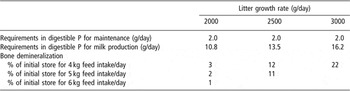
Mineral requirements are very high for milk production that increases with litter size. In pigs, milk production can be estimated from litter growth and it is possible to calculate mineral needs according to that parameter (Table 3). Diets for lactating sows are formulated to meet mineral and vitamin requirements, but in highly productive sows, mineral demand may exceed mineral retention from feed if feed intake is not sufficient. When mineral demand for milk production exceeds mineral retention from feed, sows have to mobilize bone mineral stores (Mahan, Reference Mahan1990; Jondreville and Dourmad, Reference Jondreville and Dourmad2005). Taking the example of phosphorus, it was calculated that 1% to 22% of the initial bone store is mobilized during a 4-week lactation, when average lactational feed intake decreases from 6 to 4 kg/day (Table 3). Negative balance is not expected for vitamins, but due to a lack of available information, it is not possible to ascertain that intake is always sufficient to optimize performance and health in lactating sows with a high productive level (reviewed by Matte et al., Reference Matte, Le Floc’h, Mosnier and Quesnel2009).
Influence of litter growth during lactation on mineral demand and bone demineralization in sows fed with a standard diet using the example of phosphorus (Jondreville and Dourmad, Reference Jondreville and Dourmad2005)

Mobilization of mineral stores from bones increases the risk of fractures and hence of lameness, pain and culling. The identification of the problem is based on the monitoring of severe lameness in herds and of bone fractures at slaughterhouses. Solutions are based on balanced diets for minerals and vitamins and on any measure to stimulate the appetite of lactating sows (c.f. Energy and protein demands for milk production). In addition, cross fostering is a good tool to limit excessive milk production and hence mineral deficit (c.f. Energy and protein demands for milk production).
Challenging situations and consequences regarding the offspring
In large litters, competition among pigs for space and/or nutrients might be severe both during foetal life and after birth. With the increase in litter size, longer farrowing duration could be expected. However, to our knowledge, there are no data supporting this hypothesis that will not be examined further in the present paper.
Foetal demand for space and nutrients
In utero development and survival have been extensively investigated in the 1970s and 1980s, in sows that were moderately prolific compared with modern ones. It was established that a major wave of mortality occurs around implantation of embryos (20% to 40% of loss) followed by moderate mortality (5% to 10%) in late gestation (reviewed by Ashworth and Pickard, Reference Ashworth and Pickard1998). Uterine space available to each embryo before 25 or 30 days of gestation has little influence on embryonic survival, as demonstrated by experiments of ova or embryo transfer. For example, embryonic survival was similar in sows receiving 24 or only 12 embryos (Pope et al., Reference Pope, Christenson, Zimmerman-Pope and Day1972). Consistently, embryonic mortality seems not to be markedly increased in modern genotypes exhibiting high ovulation rates. A mean mortality of 40% was reported by day 25 of gestation in sows exhibiting 23 or 26 ovulations on average (Vonnahme et al., Reference Vonnahme, Wilson, Foxcroft and Ford2002; Town et al., Reference Town, Patterson, Pereira, Gourley and Foxcroft2005). Good embryonic survival (85%) was also observed in gilts, resulting in 17 live embryos in the uterus at day 27 of gestation (Quesnel et al., Reference Quesnel, Venturi, Royer, Elleboudt, Boulot, Serriere and Martinat-Botté2009).
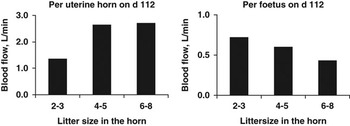
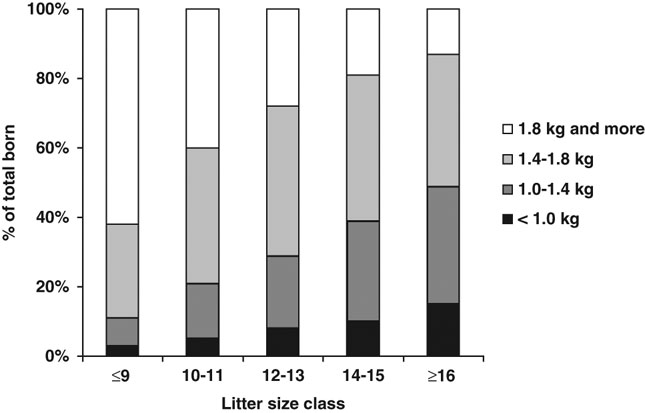
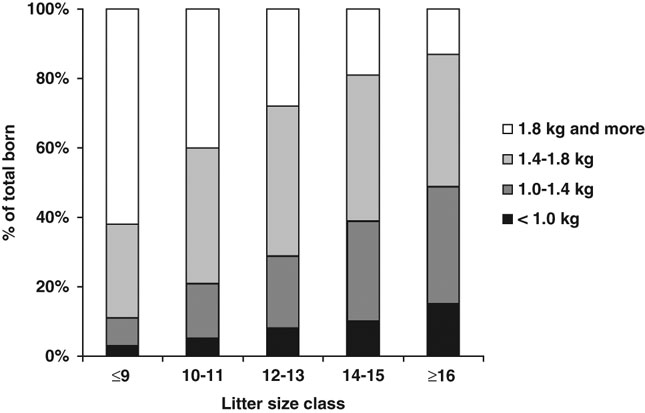
The increased number of conceptuses surviving the embryonic period results in uterine crowding around day 30. As a consequence, a second wave of mortality occurs in the post-implantation period, between days 25 and 55 of gestation, in highly prolific sows (Vonnahme et al., Reference Vonnahme, Wilson, Foxcroft and Ford2002; Town et al., Reference Town, Patterson, Pereira, Gourley and Foxcroft2005). This mortality occurs when placental development has started. Excessive, and even moderate, uterine crowding in the post-implantation period has also been shown to impair placental development and induce extreme in utero growth retardation, as evidenced by disproportionate changes in organ development (Town et al., Reference Town, Patterson, Pereira, Gourley and Foxcroft2005; Tse et al., Reference Tse, Town, Murdoch, Novak, Dyck, Putman, Foxcroft and Dixon2008). Although uterine blood flow has been shown to increase with the number of foetuses, blood flow per foetus, and thus nutrient availability decreases when litter size increases (Père and Etienne, Reference Père and Etienne2000, Figure 2). Consequently, foetuses and piglets at birth are lighter in large than in small litters. This was further supported by recent studies on newborn piglets from pure LW or crossbred LR × LW sows showing that the proportion of light piglets (<1 kg) increases, whereas that of heavy piglets (>1.6 kg) decreases when litter size increases (Figure 3, Quesnel et al., Reference Quesnel, Brossard, Valancogne and Quiniou2008). Consistently, genetic improvement of prolificacy over 10 years resulted in a 5% to 10% decrease in mean birth weight. Using frozen semen from LW boars born either in 1977 or in 1998, genetic changes in piglet characteristics at birth accompanying selection for prolificacy were examined (Canario et al., Reference Canario, Rydhmer, Gogué, Tribout and Bidanel2007a and Reference Canario, Père, Tribout, Thomas, David, Gogué, Herpin, Bidanel and Le Dividich2007b). Data showed an increase over time in individual birth weight when it was adjusted on litter size but a trend for delayed maturity at birth as indicated by a lower percentage of dry matter and lower concentrations of plasma IGF-I and albumin. Therefore, improvement on prolificacy was obtained at the expense of other traits.
Influence of the litter size in the uterine horn at 112 days of gestation on the overall blood flow per uterine horn and on the average blood flow per foetus (Père and Etienne, Reference Père and Etienne2000)

Effect of litter size on piglet distribution into birth weight classes (data based on 1596 litters from LR × LW crossbred sows; redrawn from Quesnel et al., Reference Quesnel, Brossard, Valancogne and Quiniou2008)
Piglet demand for colostrum and milk
Although milk yield has not been included among selection criteria, the genetic ability to milk production has been improved together with the increase in sow prolificacy (reviewed by Etienne et al., Reference Etienne, Legault, Dourmad and Noblet2000). Regarding colostrum production, to our knowledge, the influence of selection during the last decades is not known.
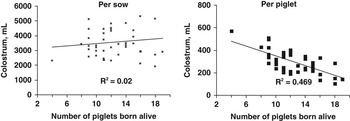
Colostrum production does not increase with litter size and its availability per piglet decreases when litter size increases (Devillers et al., Reference Devillers, Farmer, Le Dividich and Prunier2007, Figure 4). It can be calculated that colostrum intake per piglet decreases by 20 g on an average for each additional piglet in the litter. Unlike colostrum production, milk yield has been well demonstrated to increase with litter size and litter weight (Auldist et al., Reference Auldist, Morrish, Eason and King1998; Nielsen et al., Reference Nielsen, Trottier, Stein, Bellaver and Easter2002). However, the increase being not proportional to the number of piglets, each piglet has less milk available in large than in small litters.
Influence of the number of piglets born alive in the litter on sow colostrum yield and on average colostrum intake per piglet (redrawn from Devillers et al., Reference Devillers, Farmer, Le Dividich and Prunier2007)

To summarize, because of increased competition among foetuses and nursed piglets, high prolificacy is associated with greater risks for low birth weight, low colostrum intake and low milk intake. Consequences regarding piglet health and welfare are numerous. Colostrum consumption is essential for piglet survival because energy stores and immune protection of the newborn piglet are poor, and because newborn piglets have high energy needs for thermoregulation, growth and physical activity (reviewed by Le Dividich et al., Reference Le Dividich, Rooke and Herpin2005). Light piglets have been shown to consume less colostrum than their heavier littermates, because they are generally less vigorous and less able to compete for teat access (Devillers et al., Reference Devillers, Farmer, Le Dividich and Prunier2007). As a consequence, mortality rate until weaning reaches 25% in piglets weighing <1 kg at birth, whereas it is only 5% in piglets weighing at least 1.6 kg (Roehe and Kalm, Reference Roehe and Kalm2000; Quiniou et al., Reference Quiniou, Dagorn and Gaudré2002). Difficulties of light piglets are exacerbated in large litters especially when they have to compete with heavy piglets (Milligan et al., Reference Milligan, Fraser and Kramer2002). Besides this ultimate consequence, low colostrum consumption can impact piglet health and welfare before and after weaning. It increases piglet susceptibility to diseases, because of low immunoglobulin intake, and problems at weaning related to impaired development of the gastro-intestinal tract. Furthermore, low colostrum and milk consumption is associated with hunger, thirst and coldness because of low nutrient and water intake. Competition for teats in order to get milk induces agonistic behaviour between piglets that may result in skin lesions as shown by more lesions when litter size increases and when growth rate decreases (Norring et al., Reference Norring, Valros, Munksgaard, Puumala, Kaustell and Saloniemi2006). Moreover, fighting piglets may disturb the sow, which will become more prone to terminate nursing sessions and hence will exacerbate the problems.
Problems related to poor welfare and health of piglets must be detected at birth and in early lactation in order to develop strategies to alleviate them and limit detrimental consequences. Problems can be predicted from several criteria at birth, such as long farrowing process, light piglets and large litter size. During lactation, piglets must be observed for skin lesions, poor hair-coat, agonistic or isolation behaviour, occurrence of diarrhoea and low weight gain. Above all, mortality rate of piglets must be registered. Strategies that can be implemented at farm level will aim at controlling litter size, on the one hand, and at providing extra feeding, on the other hand. Light piglets can be provided by energy rich pastes or by preserved colostrum. This latter solution is probably more efficient as colostrum provides energy but also immunoglobulins and growth factors. However, it is also more time consuming because of colostrum collection and bottle-feeding. Litter size must not exceed the number of functional teats of the dam (from 14 and 16) and standardized by cross fostering within 48 h after birth. Supernumerary piglets must be adopted by a nurse (Boulot et al., Reference Boulot, Quesnel and Quiniou2008). Weaning before 21 days of age may be recommended but again the welfare aspects of early weaning should be considered (c.f. Challenges at weaning). During lactation, piglets can be provided by good quality creep feed and should have free access to water.
Other strategies, especially those related to sow nutrition during gestation and genetic selection, are subjected to extensive research. Increasing feed or energy supply to the sow during the last days of gestation slightly improved piglet vitality or weight at birth, but had no consequence on survival rate until weaning (Quiniou, Reference Quiniou2005; Papadopoulos et al., Reference Papadopoulos, Maes, van Weyenberg, van Kempen, Buyse and Janssens2009). Providing diets rich in unsaturated fatty acids n-3 to the dam would alter piglet fat composition and reduce piglet mortality by 1.5% until weaning at 5 weeks of age (Rooke et al., Reference Rooke, Sinclair and Edwards2001). Regarding selection, piglet health and welfare could be improved by taking into account overall maternal quality, including nursing behaviour and colostrum and milk production. In Europe, several projects have aimed at determining appropriate criteria for selection of the sow on behaviour and maternal quality. Criteria include litter weight and uniformity, colostrum and milk production, sow ability to mobilize body reserves, feed intake, scores of maternal behaviour or gestation length (e.g. Valros et al., Reference Valros, Rundgren, Spinka, Saloniemi, Rydhmer, Hulten, Uvnäs-Moberg, Tomanek, Krejci and Algers2003; Rydhmer et al., Reference Rydhmer, Lundeheim and Canario2008; Hellbrügge et al., Reference Hellbrügge, Tölle, Bennewitz, Henze, Presuhn and Krieter2008a and Reference Hellbrügge, Tölle, Bennewitz, Henze, Presuhn and Krieter2008b). Attention should be paid to potential conflicts of resources between piglets and sows. For example, selection on milk production should not induce dramatic catabolic state in the sows and subsequent reproductive disorders (see above).
Conclusion
Present review of the literature indicates that high physiological demands of modern types of pigs in intensive piggeries are likely to induce health and welfare problems. However, the frequency and intensity of the problems can be limited by good housing and management, appropriate diets and a good control of genetics. However, when selecting for a given trait, possible consequences on other traits should be taken into account in order to avoid deterioration on any other trait, especially those related to health and welfare. Moreover, it is important to evaluate the effects of selection during the whole life of the animals, not only during a single phase of their life. Similarly, before implementing any change in management and housing at one stage, possible consequences during the whole life of the animals regarding performance, health and welfare should be evaluated.
Acknowledgements
The authors are thankful to Dr Elodie Merlot (INRA, UMR 1079, 35590 Saint-Gilles, France) for her useful comments to improve this study.