Introduction
Recently, emergency physicians have begun using ad hoc vasopressors to temporize hypotensive patients until more definitive blood pressure support can be established.Reference Selde 1 Despite a paucity of clinical outcome data, emergency department applications are expanding into the prehospital setting.Reference Weingart 2 This series will present two cases of field expedient vasopressor use by emergency medicine providers for preflight stabilization during aeromedical evacuation to a hospital ship as part of the Department of Defense’s (DOD; Washington, DC USA) support for the Federal Emergency Management Agency’s (FEMA; Washington, DC USA) disaster response in Puerto Rico.
On September 20, 2017, Hurricane Maria, a Category 4 storm, made landfall near Yabucoa, Puerto Rico with sustained winds of 155mph before tracking west across the island, devastating vital infrastructure. Maria left the island in need of clean running water, food, shelter, reliable power, and stable transportation routes. The extensive damage to the power grid disabled most lines of communication and compromised the power supply of virtually every hospital on the island. By September 26, 86% of Puerto Rican hospitals were damaged, but were “operationally able to care for patients,” primarily functioning on generators.Reference Resnick and Eliza 3 However, adequate hospital power was short-lived as generators, designed to provide temporary power for hours, began to fail. It became apparent that medical resources external to the island would be required to avoid a medical catastrophe.
On September 27, 2017, the United States Navy Ship (USNS) Comfort was activated. The hospital ship is one of the largest trauma facilities in the United States, equipped with X-ray, computed tomography, ultrasound, angiography, dental, optometry, laboratory, and blood banking capability. Its 1,000 in-patient ward beds, 80 intensive care beds, 12 operating rooms, and 50 bed emergency department (Casualty Receiving; CASREC) is manned by approximately 800 active duty service members, representing multiple medical and surgical specialties. The USNS Comfort has the ability to desalinate water, provide power, and produce its own oxygen. The USNS Comfort also has a helicopter landing pad (flight deck) capable of critical care air transport missions with military helicopters. The hospital ship can remain at sea indefinitely given the logistical and re-supply capabilities that are standard practice in the US Navy. The USNS Comfort departed its berth in Norfolk, Virginia (USA) on September 29, 2017 and arrived on station in San Juan, Puerto Rico on October 3, 2017.
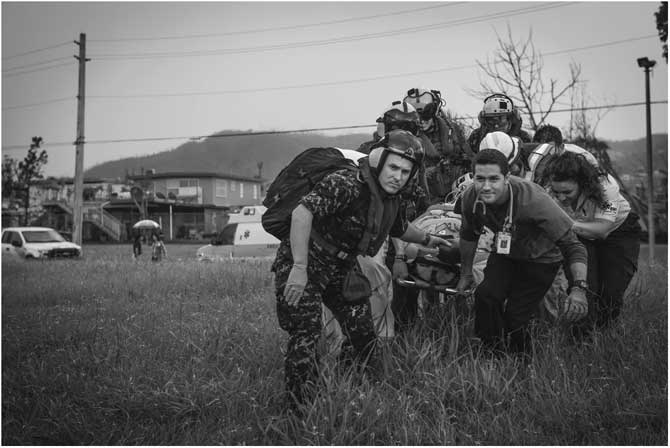
After caring for San Juan patients in port, the USNS Comfort strategically positioned itself off the northern coast of Puerto Rico to facilitate critical care air transport operations and better serve the entire island. Off-coast positioning was required due to flight limitations for ships in port. En route care transport teams (ECTs) were ad hoc staffed from existing manpower resources. These two provider teams are composed of an anesthesia provider (board-certified anesthesiologist or certified registered nurse anesthetists) plus an emergency medicine provider (board-certified emergency physician or post-graduate year three emergency medicine resident) or two emergency medicine providers. Occasionally, a search and rescue corpsman that was part of the helicopter crew flew with the team, but this was not doctrinally required. Figure 1 depicts one of the ECTs evacuating a critically ill patient during the disaster response with the assistance of the local hospital staff.
En Route Care Transport Team. Photo Credit: Department of Defense Public Affairs (Washington, DC USA).

Case 1
On the night of October 6, 2017, the USNS Comfort was conducting aeromedical evacuations of critically ill in-patients from hospitals reporting power outages. A request to transport two critically ill patients to the USNS Comfort for on-going care was sent from the hospital in Caguas, Puerto Rico. Upon arrival at the landing zone (LZ), the helicopter was met by two Level B - Basic Life Support ambulance crews. The first patient was quickly assessed and determined to be hemodynamically stable, awake, talking, and with appropriate mentation. However, the second patient was a 71-year-old female who had been admitted one week prior for abdominal pain and a history of heart failure with reduced ejection fraction. Per on-site emergency medical technician (EMT) report, the patient had been on non-invasive positive pressure support the day prior. The EMT had not been involved in her in-patient hospital care and this was the only medical history available. The EMT was manually ventilating the patient with a bag-valve-mask (BVM) and supplemental oxygen at 15 liters per minute (Lpm). For vascular access, she had a triple lumen central venous catheter (CVL) in her left internal jugular vein (IJ) but no medications infusing. The ambulance had no hemodynamic monitoring attached to the patient. There was only a finger pulse oximeter, which was reading 84% SpO2 and a pulse of 108 beats per minute (bpm). Due to the severe resource limitations caused by the hurricane, it was not uncommon to encounter ambulance crews who were unable to hemodynamically monitor their patient with electronic equipment. This ambulance was particularly limited in that all they had was a finger pulse oximeter; not even a manual blood pressure cuff was available.
The ECT monitoring equipment revealed an organized sinus rhythm with heart rate of 113 bpm, blood pressure of 70/36mmHg, mean arterial pressure (MAP) of 47, and a SpO2 of 85%. She had a Glasgow Coma Scale (GCS) of six (E1 V1 M4) and the decision was made to secure the patient’s airway prior to critical care aeromedical evacuation. Due to concerns about peri- and post-intubation hypotension and risk for cardiac arrest, the patient was started on a field expedient epinephrine infusion mixed ad hoc on-site. By this time her oxygen saturation had declined to 78%. The patient received an infusion of epinephrine 5μg/min and her blood pressure rose to 134/76mmHg, after which she underwent rapid sequence intubation in the field. Induction medications included intravenous (IV) etomidate 12mg (approximately 0.15mg/kg) and succinylcholine 120mg. Using a handheld Ranger video laryngoscope with a hyper-angulated GVL4 blade (Glidescope Go Ranger; Verathon Incorporated; Bothell, Washington USA), a cuffed 7.5-French endotracheal tube was appropriately placed on the first attempt. Placement was confirmed with a colorimetric detector and auscultation of equal breath sounds. Oxygen saturation quickly recovered to 100% with 15Lpm via BVM. The first blood pressure after intubation was 95/65mmHg, so the epinephrine infusion was increased to 7μg/min, and during the remainder of the 30-minute flight, her blood pressure ranged between 101-123/70-85mmHg. Upon arrival at the USNS Comfort, she was transported to CASREC where she was transitioned to mechanical ventilation, started on a pharmacy-prepared norepinephrine infusion at 10μg/min, and appropriately sedated before admission to the intensive care unit (ICU).
Case 2
On October 18, 2017, an urgent request to aeromedically evacuate a 73-year-old female with acute renal failure and sepsis was received from a hospital in Moca, Puerto Rico. The patient was transported to the LZ with an Advanced Life Support (ALS) ambulance crew.
Upon arrival at the makeshift LZ, a baseball stadium, the patient appeared to be cachectic and unresponsive to stimuli. Initial vital signs revealed a blood pressure of 76/43mmHg, heart rate of 97 bpm, respiratory rate of 28 breaths per minute (bpm), and an oxygen saturation of 98% on 3Lpm oxygen via nasal cannula. Her GCS was eight (E2 V2 M4). Primary assessment revealed respiratory distress with tachypnea, accessory muscle use, and sonorous breathing. Her peripheral pulses were weak and her skin was cool and dry. For vascular access, a triple lumen CVL had been placed in her left IJ, as well as a 14-French double lumen high flow temporary dialysis catheter in her right IJ. Given her high-risk for decompensation during flight and the anticipated length of transport, the decision was made to establish a definitive airway.
To reduce the likelihood of peri- and post-intubation cardiac arrest, an ad hoc solution of epinephrine 10μg/mL was prepared and the patient received a 10μg IV bolus. Repeat vital signs revealed blood pressure 135/76mmHg, heart rate 96 bpm, respiratory rate 28 bpm, and SpO2 98% on 15Lpm via nasal cannula. The patient was induced with etomidate 10mg IV (approximately 0.15mg/kg) and paralyzed with rocuronium 75mg IV. The patient was successfully intubated via direct laryngoscopy on the first attempt. Tube placement was confirmed via auscultation of bilateral breath sounds and color change capnography. She was ventilated via BVM. Approximately 25 minutes after intubation, the patient’s blood pressure fell to 84/10mmHg and she was given a second 10μg bolus of epinephrine IV. Her hemodynamics stabilized with systolic blood pressures (SBP) ranging from 112-134mmHg during the remainder of the flight to the USNS Comfort. In CASREC, she remained hemodynamically stable and was transitioned to mechanical ventilation before being admitted to the ICU.
Discussion
Bolus-dose vasopressors have been safely used to maintain hemodynamic stability in the operating room for decades. Ad hoc vasopressor use has now moved into emergency medicine practice. Several authors have voiced concerns that the practice in an emergency department setting lacks an adequate evidence basis.Reference Holden, Ramich and Timm 4 - Reference Acquisito, Bodkin and Johnstone 6 However, this intervention is often employed when few alternative stabilization options exist. This was the experience of Joint Task Force 189 medical response during Hurricane Maria disaster relief operations in Puerto Rico.
The damage to Puerto Rican medical infrastructure left many hospital providers without the means by which to stabilize critically ill and injured citizens. Although the USNS Comfort’s ICU offered a solution to the critical care needs of Puerto Rican citizens, many patients identified for transfer to the ship required additional stabilization before they could be safely aeromedically evacuated.
With air travel times up to 45 minutes, hypotensive patients requiring definitive airways prior to flight represent a significant in-flight cardiac arrest risk. Kim, et al found that SBP ≤ 90mmHg and/or a MAP ≤ 65mmHg prior to intubation were the strongest predictors of post-intubation cardiac arrest among patients intubated in the controlled setting of an emergency department.Reference Kim, Kwak and Ko 7 This is not unexpected as multiple medications utilized for rapid sequence induction to facilitate endotracheal intubation have the potential to reduce blood pressure. In fact, Heffner, et al found that 22% of normotensive patients undergoing emergency intubation developed post-intubation hypotension, and that this finding was associated with increased in-hospital mortality. Additionally, the authors concluded that a pre-intubation shock index of 0.8 or higher was the strongest predictor of post-intubation hypotension.Reference Hefner, Swords and Kline 8 An Austrian research group added to this data by identifying the average blood pressure at which cardiovascular collapse occurs. Employing a retrospective cohort design, Brunauer, et al investigated blood pressure immediately before cardiovascular collapse in cardiac arrest patients in an ICU. In their cohort of 140 critically ill patients with fatal cardiac arrest, 86% had a MAP of 46mmHg or less with a mean of 35mmHg.Reference Brunauer, Koköfer and Bataar 9
The patient from Case 1 had several risk factors for post-intubation cardiac arrest. In the case control study done by Kim, et al of 2,403 patients who underwent emergent tracheal intubation, 41 patients experienced post-intubation cardiac arrest within 10 minutes of the procedure. Several factors identified in the study were independently associated with post-intubation cardiac arrest, which included obesity, congestive heart failure, increased age, sepsis, and pre-intubation systolic hypotension.Reference Kim, Kwak and Ko 7 The patient from Case 1 had an initial MAP of 47mmHg with an SBP of 70mmHg, and she had a shock index of 1.6. Her APACHE II score and predicted mortality were 38 and 88.4%, respectively.Reference Knaus, Draper and Wagner 10 As assessed by pre-transport shock index, this patient represents one of the most critically ill patients aeromedically evacuated by the en route care teams during the Puerto Rican disaster relief mission. Further, her pre-epinephrine MAP of 46mmHg suggests that she was at high-risk for post-intubation cardiac arrest. For these reasons, hemodynamic support via an ad hoc field expedient epinephrine infusion was initiated, and the patient had an uneventful 30-minute aeromedical transport.
Epinephrine is a common vasoactive drug that is quickly accessible in most hospitals and ALS-capable ambulances. It is safe for temporary infusion via a peripheral IV catheter and it is available in pre-measured dosages amenable to mixing field expedient infusions or bolus-dose vasopressor syringes.Reference Cardenas-Garcia, Schaub and Belchikov 11 In Case 1, an ad hoc field expedient epinephrine infusion was created by using a premanufactured “cardiac epinephrine” syringe, containing 1mg epinephrine in 10mL of normal saline. The syringe was injected into a 1-liter bag of normal saline and thoroughly mixed to a concentration of 1μg/mL. The IV tubing stocked in the en route care medical bags utilizes a 15 drop/mL drip chamber. Therefore, a rate of two to 10μg/min would be equivalent to two to 10 drops every four seconds in the drip chamber. The rate of field expedient epinephrine infusion was titrated based on the patients’ blood pressure, not to exceed a rate of 20μg/min (20 drops every four seconds).
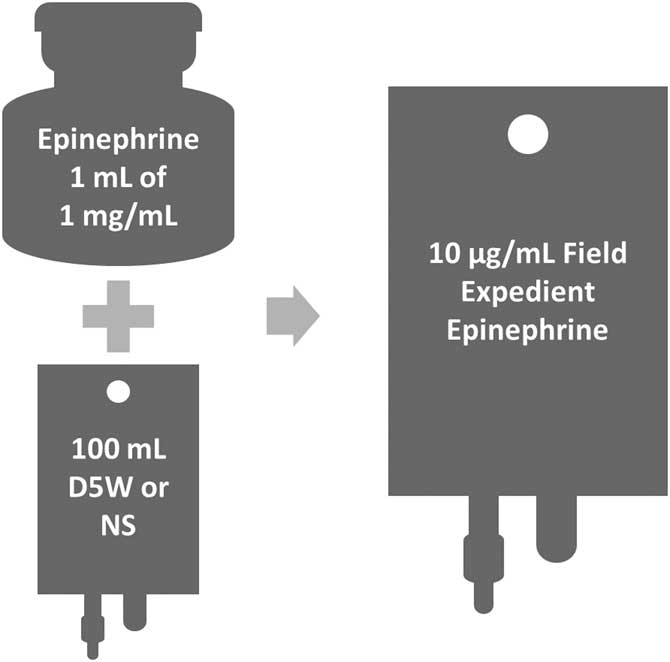
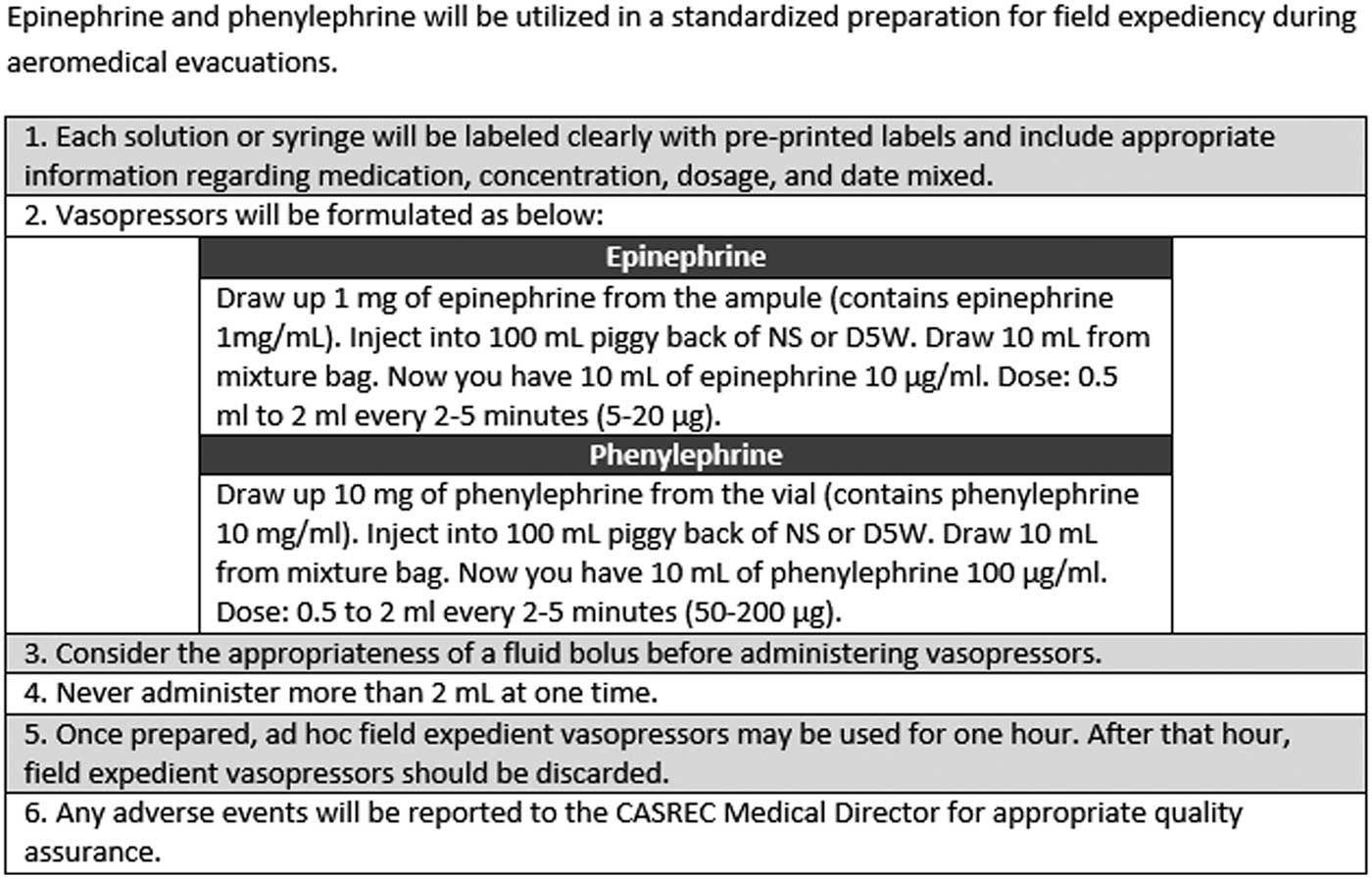
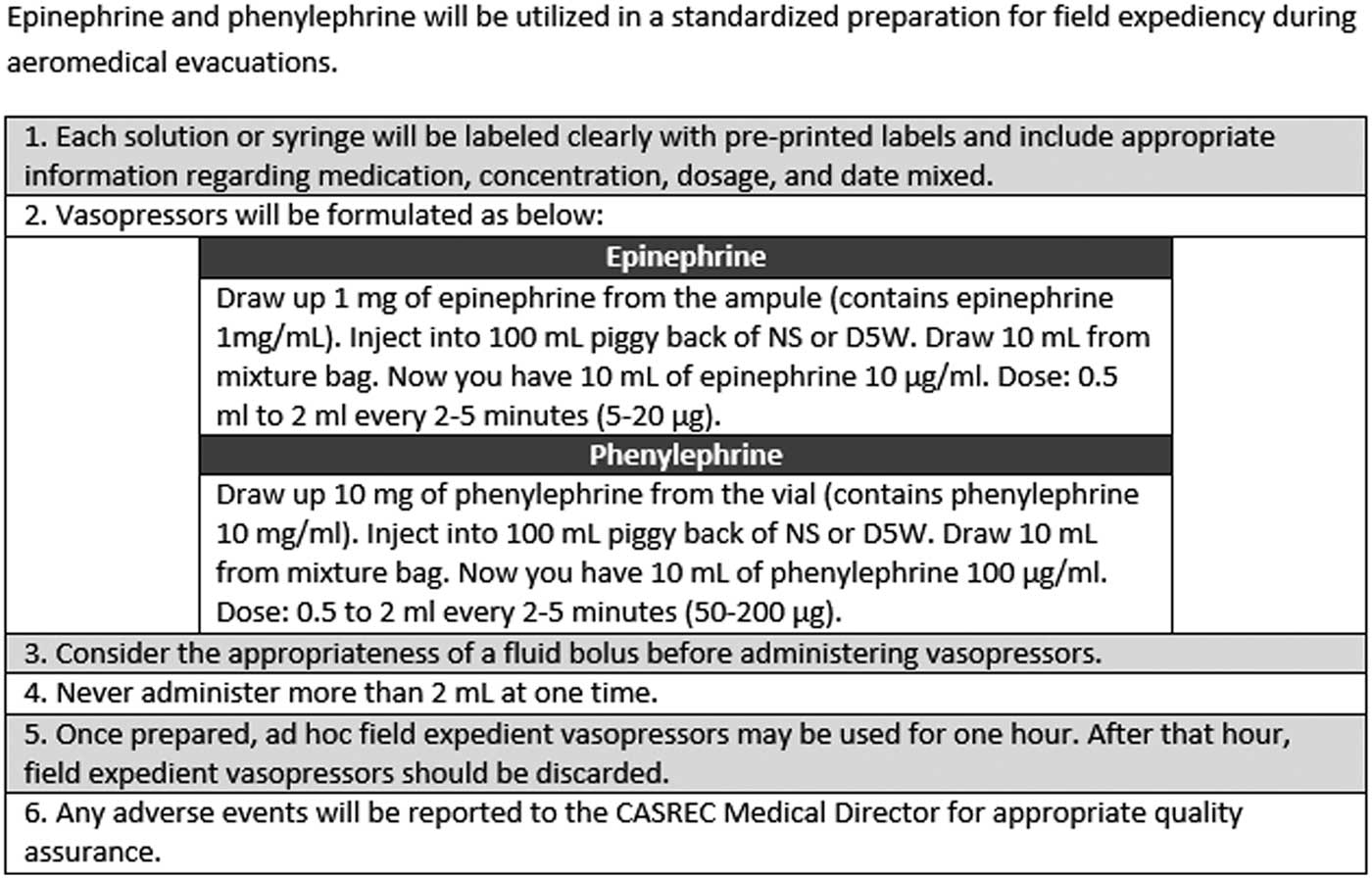
Case 1 occurred early in the disaster relief mission, and it was definitely an eye-opening experience that changed the tone of the mission in Puerto Rico. From a medical standpoint, it objectively showed the level of tragedy this island had suffered, the incomprehensible resource shortages Puerto Rico faced, and their struggle to save their people. The ECT who responded to Case 1 utilized their combined medical expertise to innovate a fix to a problem no one expected to encounter. But because of lessons learned from Case 1, the En Route Care Committee (ERCC) developed an appendix within the standard operating procedures to include guidance for field expedient vasopressor administration (Figure 2). This guidance was designed to task-unload providers through pre-determined mixing instructions, and enhance patient safety as has been recommended by emergency medicine community authorities.Reference Holden, Ramich and Timm 4 , Reference Cole 5
Push Dose Pressor Standard Operating Procedure.
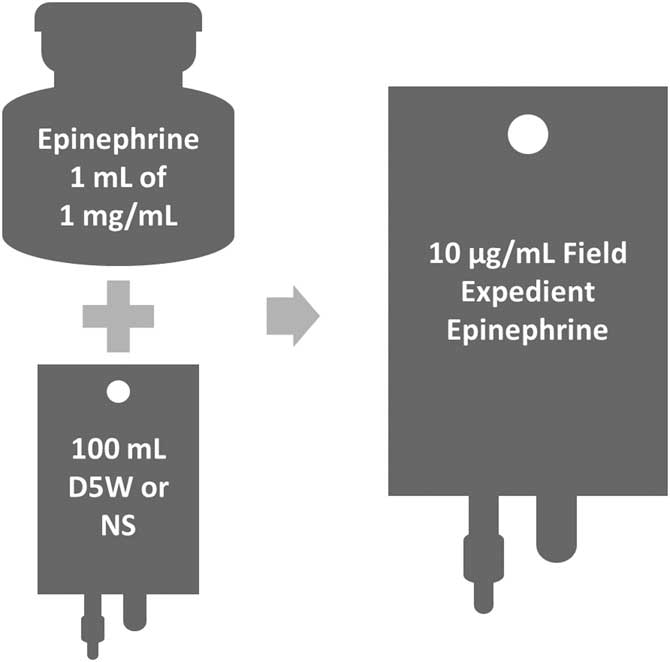
The ERCC determined that given the choice of administering an ad hoc bolus-dose vasopressor or an ad hoc vasopressor infusion, the bolus-dose vasopressor would be safer for the patient, faster to time of administration, and easier to use in an austere environment. As was detailed above, the vasopressor infusion requires either estimation of dose administration from the drip chamber, titration based off non-invasive blood pressure readings, or the use of an IV pump, which was not available in this setting due to the fact the IV pumps were not qualified for use in an aircraft. Both the vibrations from the helicopter and having to work in red-light-only conditions at night make drip chamber calculations difficult, time consuming, and utilize manpower that could be performing other tasks. Bolus-dose administration delivers more precise vasopressor dosages in significantly smaller volumes, is much faster to administer, and does not introduce more IV tubing that becomes cumbersome in small working areas.
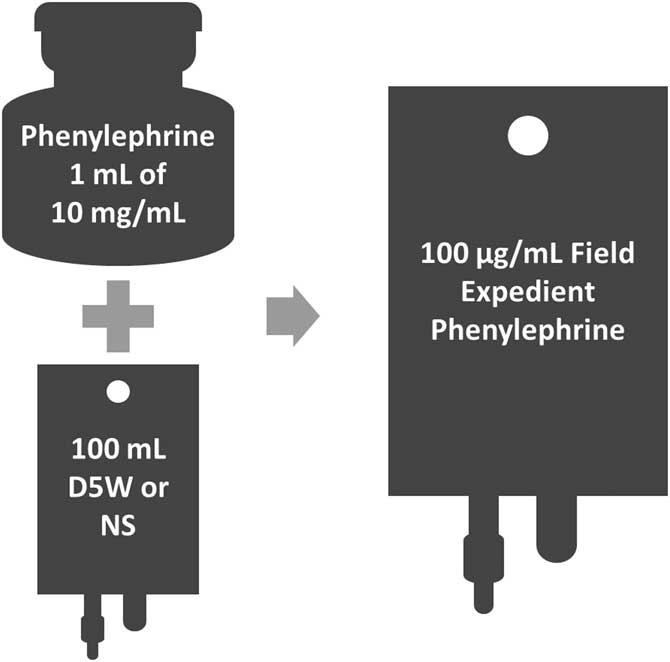
Following the debrief of Case 1, 1mg epinephrine ampules, 10mg phenylephrine vials, and 100mL normal saline bags were added to the en route care medical bags. To avoid dosing errors in the field, laminated placards with instructions and concentrations were placed in all medical bags for mixing epinephrine and phenylephrine (Figure 3 and Figure 4, respectively).
Epinephrine Mixing Procedure.
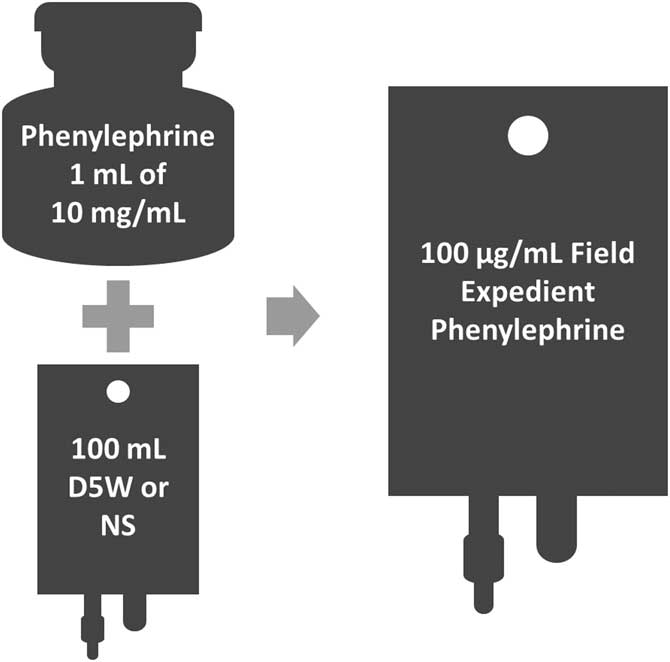
Phenylephrine Mixing Procedure.
As in Case 1, the patient from Case 2 exhibited multiple risk factors for post-intubation cardiac arrest. She was septic with an initial MAP of 54mmHg, SBP of 76mmHg, and a pre-intubation shock index of 1.3. Her APACHE II score and predicted mortality were 41 and 92.2%, respectively.Reference Knaus, Draper and Wagner 10 As demonstrated by her pre-intubation shock index, this patient also represents one of the most critically ill patients aeromedically evacuated by the ECT during the Puerto Rican disaster response. She too was at high-risk for post-intubation cardiac arrest. Because of process improvements like simplifying and standardizing how ECTs would compound field expedient vasopressors, bolus-dose epinephrine was able to be quickly and safely administered to stabilize the patient pre-intubation and throughout her 45-minute flight.
This case demonstrates that the use of field expedient vasopressors is a reasonable option for peri-intubation blood pressure support in high-risk patients requiring urgent advanced airway management. While obtaining an adequate intravascular volume is a core tenant of resuscitation, both these cases demonstrated clinical scenarios where the use of field expedient vasopressors could be used as a reasonable temporizing measure, when on-ground time for helicopter transport is restricted or time delays associated with fluid boluses may potentially harm the patient. The team who responded to Case 2 greatly benefited from the after action debrief of Case 1, including literature review, standardization of medication formulations carried by teams, and procedures for mixing field expedient vasopressors. The outcomes from this case series support the recommendation of including field expedient vasopressors in the medical resources carried by qualified teams providing transport for potentially hemodynamically unstable patients. Given the safety and simplicity of compounding field expedient vasopressors, despite the austerity of the clinical environment, it is reasonable to include field expedient vasopressors in standardized protocols within emergency departments and in prehospital settings so qualified providers are trained to administer this life-saving intervention. Figure 2 demonstrates the ECT standard operating procedure based on the available literature.
Limitations
This account represents lessons learned while caring for disaster victims in Puerto Rico after Hurricane Maria. Their observational nature limits conclusions that can be drawn. As neither patients nor providers were randomized or blinded, directly attributing outcomes to interventions cannot be done. However, despite these patients being at significant risk for peri- and/or post-intubation decompensation, neither patient experienced post-intubation cardiac arrest during transport or in the emergency department (CASREC) and both survived to ICU admission. Additional studies are needed to determine long-term survival benefits, long-term neurologic outcomes, and best practices for ad hoc vasopressor use in the emergency department setting.
Conclusions
Field expedient vasopressors provide a therapeutic option to prehospital and emergency department providers tasked with hemodynamically optimizing critically ill patients prior to rapid sequence intubation. Use of pre-made kits for compounding field expedient vasopressors and providing standardized training on mixing procedures maximizes both the safety and effectiveness of this life-sustaining intervention. Utilizing quality assurance review allowed the ERCC to capitalize on team experiences throughout the mission and rapidly improve provider training and patient care. All patient encounters involving field expedient vasopressors should undergo an internal program quality assurance review, and share conclusions with all providers utilizing this resource. Ad hoc vasopressor administration is both feasible and safe in an austere field environment, and it is recommended that this intervention be made available to qualified prehospital and emergency department providers.