INTRODUCTION
Law, courts, and litigation remain central to American politics and policy (Reference KaganKagan, 2019; Reference KeckKeck, 2014; Reference NoletteNolette, 2015). Courts continue to take the lead on contentious issues (Reference LemleyLemley, 2022; Reference Brown and EpsteinBrown & Epstein, 2022) and groups on the left and right keep using litigation to pursue their agendas (Reference KaganKagan, 2019; Reference KeckKeck, 2014). Even a dramatic reversal of rights at the federal level, like the overturning of Roe v. Wade, does not always end litigation; instead, it can trigger new lawsuits in state courts (Reference ZinerkeZinerke, 2022). As a result, despite some retrenchment (Reference BarnesBarnes, 2007; Reference Burbank and FarhangBurbank & Farhang, 2017; Reference CoffeeCoffee, 2015; Reference StaszakStaszak, 2015, Reference Staszak2020), the “litigation state” endures (Reference FarhangFarhang, 2010; Reference KaganKagan, 2019; Reference Melnick, Burke and BarnesMelnick, 2018).
All this litigation has engendered a fierce debate over its costs and benefits. As elaborated below, “tort tales” portray litigation as out of control, inundating businesses with a flood of frivolous lawsuits (Reference Barnes and HevronBarnes & Hevron, 2018, Reference Barnes and Hevron2022; Reference Haltom and McCannHaltom & McCann, 2004; Reference McCann and HaltomMcCann & Haltom, 2004; Reference Nielsen, Nelson, Nielsen and NelsonNielsen & Nelson, 2005). “Total justice” narratives, by contrast, depict litigation positively, describing how lawsuits hold wrongdoers accountable while promoting public health and safety (Reference FriedmanFriedman, 2019; Reference LyttonLytton, 2019, Reference Lytton2022; see also Reference EppEpp, 2009; Reference ShklarShklar, 1964). A middle view recognizes tort's promise while acknowledging that it can be slower, costlier, and less predictable than its alternatives, like no-fault social insurance programs, and that the threat of super-aggressive lawyering and break-the-bank verdicts can produce counterproductive organizational responses (Reference KaganKagan, 2019).
These narratives matter. Stories define who is deserving (and not), focus attention on particular aspects of issues, and place them in a “field of meaning” (Reference ScheufeleScheufele, 1999; see also Reference AarøeAarøe, 2011; Reference Chong and DruckmanChong & Druckman, 2007, Reference Chong and Druckman2010; Reference EntmanEntman, 1993; Reference GrossGross, 2008; Reference IyengarIyengar, 1991). Moreover, not all stories are likely to have the same impact. Vivid tort tales like the infamous McDonald's hot coffee case may loom large in public perceptions given the “availability heuristic”: a tendency to equate the ease of recalling an event with its likelihood of occurrence (Reference Tversky and KahnemanTversky & Kahneman, 1973). (This is why reading a graphic account of an airplane crash will undermine assessments of air travel safety, even though flying on an airplane is demonstrably safer than driving in a car). As a result, tort tales—even if exaggerated or inaccurate—may unfairly tilt public attitudes against the tort system, as people might believe that these “horror stories” are indicative of tort as a whole, casting doubt on the validity of all tort claims regardless of merit.
Kneejerk negative reactions against litigation constitute a form of public opinion backlash (Reference Barnes, Menounou and HevronBarnes et al., 2023) and may add to what Reference Gash and MurakamiGash and Murakami (2015) call the “opportunity cost” of turning to the courts. These costs can create challenges to making claims as well as increase the chances of adverse political fallout from litigation. For example, tort tale attitudes can undermine the willingness of jurors and judges to recognize claims, making it harder to get relief in court (Reference Daniels and MartinDaniels & Martin, 2015; Reference MacCounMacCoun, 2006; see also Reference Henderson and EisenbergHenderson & Eisenberg, 1990). Negative bias against lawsuits may also politically tarnish legal victories and bolster support for tort reforms aimed at limiting access to the courts across-the-board (Reference Barnes, Menounou and HevronBarnes et al., 2023; Reference MalhotraMalhotra, 2015; see also Reference Daniels and MartinDaniels & Martin, 2015; Reference Haltom and McCannHaltom & McCann, 2004).
The ongoing practical and structural significance of tort lend urgency to these concerns. Practically, claimants filed an estimated 624,000 tort cases in state courts in 2018 alone, which averages to more than one tort suit a minute, 24 hours a day, 7 days a week (State Court Caseload Digest, 2019: 7). Tort also accounts for a significant portion of the federal docket. From June 2021 to June 2022, tort filings made up over one-third—105,267 of 293,762—of all federal civil cases, which is more than twice the number of civil rights suits and 15 times the number of immigration cases (105,267 vs. 39,592 and 6611, respectively) (Federal Judicial Caseload Statistics 2021, Table C-2). While some lawsuits have been deterred by reforms or circumvented by arbitration agreements (Reference CoffeeCoffee, 2015; Reference Daniels and MartinDaniels & Martin, 2015; Reference StaszakStaszak, 2020), tort still addresses a wide range of claims, from individual cases arising from automobile collisions, medical malpractice, and slip-and-fall accidents to complex litigation related to public health disasters, such as the opioid epidemic (Reference Gluck, Hall and SurfmanGluck et al., 2018), the never-ending asbestos crisis (Reference Barnes and BurkeBarnes & Burke, 2015), the contamination of the Flint, Michigan water supply (Reference CollingsworthCollingsworth, 2020), the derailment of a train carrying toxic chemicals near Palestine, Ohio (Reference KohliKohli, 2023), and others (Reference DerthickDerthick, 2012; Reference GiffordGifford, 2013; Reference NagaredaNagareda, 2007).
The breadth and depth of tort litigation is not happenstance. Structurally, tort is integral to injury compensation and risk management in the United States, which Timothy Lytton aptly describes as “a three-legged stool supported by government regulation, private industry efforts, and the civil liability system” (Reference LyttonLytton, 2022: 109; see also Reference Barnes and BurkeBarnes & Burke, 2020; Reference KaganKagan, 2019; see generally Reference HackerHacker, 2002). Within this triadic system, tort provides a set of broad principles that can be adapted to novel claims, sealing potential gaps in the patchy US social safety net (Reference BarnesBarnes, 2011; Reference Barnes and BurkeBarnes & Burke, 2015, Reference Barnes and Burke2020). Moreover, while tort's deterrent effect is imperfect (Reference KaganKagan, 2019), the “fertile fear of litigation” can disrupt entrenched practices and force recalcitrant organizations to change (Reference EppEpp, 2009; Reference Sabel and SimonSabel & Simon, 2004).
Law and society scholars traditionally have conceptualized the disputing process within this system in terms of a “dispute pyramid,” which narrowly focuses on how injuries can culminate in lawsuits. Using this approach, studies have shown that only a small fraction of injuries produce litigation, and many claimants forego making any type of claim (Reference EngelEngel, 2016; Reference KritzerKritzer, 2011). Claimants even “lump” their injuries in areas that are supposedly hotbeds of litigation, including medical malpractice (Reference Brennan, Leape, Laird, Liesi Hebert, Localio, Lawthers, Newhouse, Weiler and HiattBrennan et al., 1991). More recently, scholars have revised this concept, recognizing that injuries might produce a variety of claims, presenting claimants with a potential choice of remedies. This shift is due in part to the growth and prevalence of alternative and internal dispute resolution processes, which have emerged in response to the costs and delays of litigation and business' efforts to replace litigation with more friendly forums (e.g., Reference StaszakStaszak, 2020; Reference TaleshTalesh, 2012). The result has been to re-envision the claiming process as a “dispute tree,” which recognizes the central role of remedy choice in the complex US injury compensation system (see Reference Albiston, Edelman and MilliganAlbiston et al., 2014; see also Reference Nielsen, Nelson, Nielsen and NelsonNielsen & Nelson, 2005). The dispute tree framework represents a significant advance in mapping claims. However, we know much less about the consequences of a claimant's decision to pursue different branches of the tree, including whether the decision to sue triggers negative attitudes toward the claim, regardless of its underlying merits.
Given this background, it is time to take a closer look at basic questions about public attitudes toward the tort system: namely, how do people perceive tort claims versus their alternatives? Do attitudes reflect tort tales or more positive total justice or mixed narratives? To the extent that people turn against tort claims, even meritorious ones, can these negative attitudes be countered? If so, how?
To explore these questions, we designed a survey experiment based on the dispute tree concept to examine attitudes toward claims for workplace injuries. Our findings paint a varied picture. Consistent with total justice views, our participants strongly favored claiming over doing nothing and indicated that lawsuits were significantly more appropriate than asking family for help and on par with filing a government claim or hiring a lawyer to write a demand letter. Yet, our participants were not free from tort tale attitudes, even though they believed the litigant was injured and mostly not at fault. Specifically, when given information that contradicted tort tale tropes about litigants rushing to court, the perceived justifiability of litigation steadily (and significantly) improved. Indeed, the more remedies that were tried and failed prior to filing, the more the lawsuit was seen as justifiable, even though the repeated denial of claims may raise doubts about their legitimacy. The implication, we contend, is that attitudes toward tort claims hinge not only on the decision to litigate but also how litigants exercise their right to sue. Under this logic, litigation should be on the table as an option but used only as a last resort—even if claims are meritorious—a point with significant practical implications for lawyers and advocates designing claiming and communication strategies for the courtroom and beyond.
We develop our argument in stages. First, we take a closer look at the rhetorical battle over tort law, elaborating the competing narratives and setting forth related hypotheses about attitudes toward tort claims versus other remedies. Second, we operationalize these hypotheses using the dispute tree framework. Third, we outline the research design and survey implementation. Fourth, we review our findings, consider their implications, and identify their limits and potential next steps. Along the way, we hope to link two long-standing law and society literatures—scholarship on public narratives about the myth of litigiousness and studies using the dispute tree—and illustrate how survey experiments might fit within a broader, multi-method law and society research agenda on attitudes toward ordinary litigation.
THE RHETORICAL BATTLE OVER TORT: COMPETING NARRATIVES AND RELATED HYPOTHESES
As noted in the introduction, the tort system lies at the faultline between tort tale, total justice, and mixed views of litigation. Tort tales are part of a broader conservative critique of contemporary American society (Reference Haltom and McCannHaltom & McCann, 2004). Under this view, the United States has become a “nation of victims” (Reference RamaswamyRamaswamy, 2022), and litigation represents a byproduct of a regrettable “culture of complaint” (Reference HughesHughes, 1993). The result has been the “death of common sense” and claiming practices that violate an ideal of American individualism that emphasizes self-sufficiency (Reference HowardHoward, 2011; Reference RamaswamyRamaswamy, 2022), as grasping plaintiffs and trigger-happy lawyers rush to the courthouse to cash in their “litigation lottery tickets” (Reference EngelEngel, 1984, Reference Engel2016; Reference Haltom and McCannHaltom & McCann, 2004). These themes have been part of the story of litigation in the United States for decades, appearing in the views of citizens in a small midwestern farming community as documented in Engel's classic 1984 ethnography, “The Oven Bird's Song,” to the opening of Pixar's The Incredibles, which uses a faux newsreel to tell how mounting lawsuits forced superheroes into hiding. In this account, a cascade of lawsuits by whiny plaintiffs seeking damages arising from being rescued—“you didn't save my life, you ruined my death!”—have robbed society of its superpowers.
The lead-in to The Incredibles can, of course, be seen as satire. But tort tales have become deeply woven into media accounts of the tort system. In Distorting the Law (Reference Haltom and McCannHaltom & McCann, 2004), Haltom and McCann carefully document mass media's reliance on dramatic but misleading anecdotes about litigation, which lack context and exaggerate the tort system's cost, inefficiency, and arbitrariness. In addition to debunking high-profile tort tales, they demonstrate how these stories fit a pattern. In their content analysis of 952 articles about litigation, for example, they find 1001 critiques, which sound like conservative talking points about the “litigation crisis”: namely, litigation costs too much, claims are soaring, too much litigation is hurting American society, lawyers are greedy, and lawsuits are frivolous. More recent studies replicate their findings and add a comparative dimension, showing that media coverage of the tort system is particularly negative in comparison to other types of injury compensation regimes, such as no-fault compensation programs (Reference Barnes and HevronBarnes & Hevron, 2018, Reference Barnes and Hevron2022; see also Reference CoffeeCoffee, 2015; Reference Daniels and MartinDaniels & Martin, 2015).
This view implies deep distrust toward tort claims versus its alternatives, which can take several forms. One reflects a general skepticism toward the appropriateness of litigation versus other types of claims (regardless of the underlying claim's validity) in light of the tort system's wastefulness, the arbitrariness of juries, and other factors. Another version questions the relative merits of lawsuits, assuming that they are based on bogus claims. These views imply the following tort tale hypotheses:
Tort Tale Claiming Hypothesis. All things being equal, respondents will believe that legal claims are less appropriate than doing nothing and other types of claims.
Tort Tale Frivolous Lawsuit Hypothesis. All things being equal, respondents will believe that claimants who file lawsuits are less injured and more at fault than claimants who pursue other types of claims.
Tort tales may be the most prominent media narrative about the tort system, but they are not alone (Reference EngelEngel, 2016). “Total justice” narratives provide a positive counter-narrative, which reflect a version of American individualism that stresses self-assertiveness and the value of standing up for your rights (Reference EngelEngel, 1984, Reference Engel2016). The gist is that, whereas Americans once resigned themselves to injuries and lumped them, they now believe government can and should address pervasive social problems, including injuries from harmful products, hazardous workplaces, and corporate negligence (Reference FriedmanFriedman, 2019). As Robert Kagan explains, while liberals and conservatives disagree on how to prioritize claims for total justice, the “key notion is that fatalism has declined; solutions are possible. Hence government and law ought to be responsive to pressing problems” (Reference KaganKagan, 2019: 46).
In general, total justice narratives are agnostic about the type of third-party claim filed. The point is that victims should not be left on their own to cope with their injuries or seek help from their families. Rather, they should be assertive, pursue their rights, and seek compensation, while the source of compensation is secondary. There is, however, a pro-litigation version of this narrative that identifies law as the best response to demands for total justice. In the words of Judith Shklar, “law aims at justice, while politics looks only to expediency. The former is neutral and objective, the latter the uncontrolled child of competing interests and ideologies. Justice is not only the policy of legalism; it is a policy superior to and unlike any other” (Reference ShklarShklar, 1964: 111). Movies like Erin Brockovich and A Civil Action encapsulate this view, depicting entrepreneurial lawyers as uniquely positioned to confront irresponsible corporations, expose decades of wrongdoing, and vindicate the rights of overlooked victims. Collectively, these views suggest the following total justice hypotheses:
The Total Justice Claiming Hypothesis. All things being equal, respondents will believe that legal claims are more appropriate than doing nothing or engaging in self-help and as appropriate as other types of third-party claims.
The Total Justice Legal Superiority Hypothesis. All things being equal, respondents will believe that legal claims are more appropriate than doing nothing and other types of claims, including self-help and third-party claims.
A third recurring narrative stakes out a middle ground. It acknowledges the need to compensate injury victims, hold powerful interests accountable, and deter misconduct. At the same time, it recognizes tort is not the only (or even always the best) means to achieve those goals. This mixed narrative has its own cultural and scholarly touchstones. Movies like Michael Clayton portray ordinary families seeking to hold multinational corporations accountable for recklessly creating public health disasters through a legal system plagued by costly delays, corrupt practices, and morally bankrupt lawyers. Similarly, Robert Kagan's widely cited Adversarial Legalism: The American Way of Law (Reference KaganKagan, 2019) describes “two faces” of litigation: one heroic, the other shadowy. Kagan's description of asbestos litigation, which opens his chapter on tort, captures this double-sided quality (Reference KaganKagan, 2019: 148–152). In that case, litigation began as an example of total justice. Aggressive lawyers and innovative judges recognized novel claims by asbestos injury victims, who had received inadequate compensation through existing workers' compensation programs. Over time, however, asbestos litigation skyrocketed and came to embody the system's worst excesses: soaring costs, unpredictable outcomes, and questionable (and at times fraudulent) claiming practices often directed against defendants who had little to do with mining asbestos or manufacturing asbestos-laden products, much less concealing its health risks.
It is difficult, if not impossible, to assess the overall value of our tort system in light of this Janus-faced account (Reference Barnes and BurkeBarnes & Burke, 2020; Reference KaganKagan, 2019). Are a large number of claims indicative of openness, innovativeness and responsiveness, or a sign of costliness and too much litigation? Does the threat of costly, inefficient, and unpredictable lawsuits encourage the equivalent of wasteful “defensive medicine,” as organizations overreact to legal uncertainty (Reference KaganKagan, 2019), or force otherwise intractable actors to adopt much-needed reforms (Reference EppEpp, 2009)? Even if we can measure the system's attributes and spillover effects, how should they be weighed? What is the net value of slow and costly litigation that recognizes novel claims overlooked by other policymakers? Answering these types of questions requires context-specific analysis, which defy broad generalizations about “the system.”
Given these uncertainties, people may be torn about tort litigation, adopting the attitude of “not sure” or “it depends.” If so, in the absence of details about a specific claim, we would not expect clear patterns in attitudes toward tort claims as compared to their counterparts, suggesting a null hypothesis:
The Null Claiming Hypothesis. All things being equal, there will not be a significant difference in participants' beliefs about the appropriateness of legal claims versus other types of claims.
SURVEY DESIGN
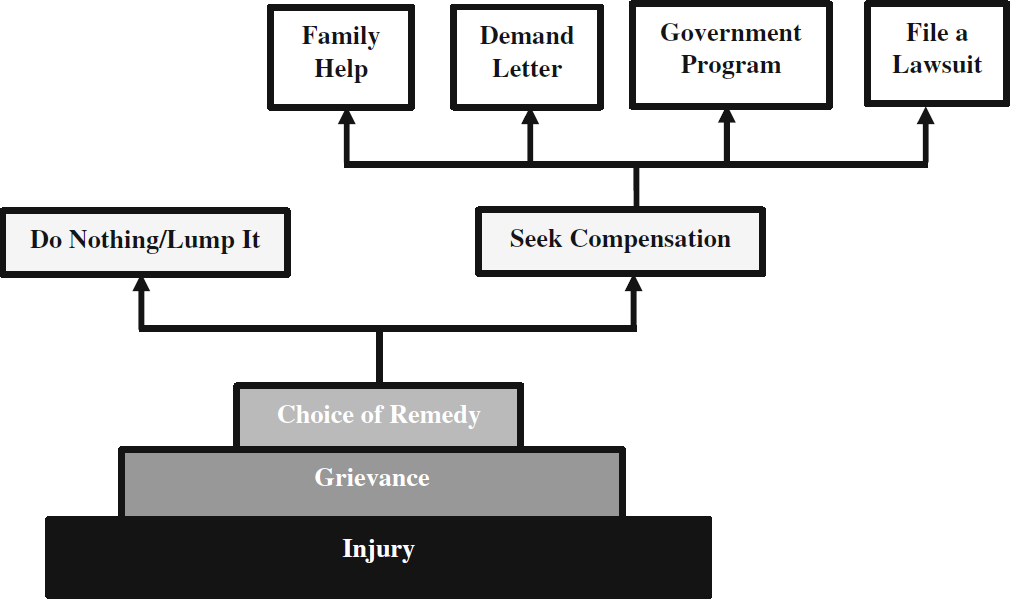
These hypotheses are inherently comparative, positing attitudes toward tort lawsuits that are more positive, less positive, or equivalent to their alternatives. The question, then, is: tort compared to what? Here, the socio-legal literature on claiming is helpful. As noted in the introduction, law and society scholars have created a dispute tree framework to chart the complicated choices injury victims face as they consider whether to seek compensation (e.g., Reference Albiston, Edelman and MilliganAlbiston et al., 2014). Figure 1 adapts this framework to the present analysis. Our version of the dispute tree begins with an injury and then moves to grievance. (Of course, in practice, some “climb” the dispute tree in bad faith without a legitimate injury or grievance.) At this stage, the dispute tree recognizes that aggrieved victims face the choice of seeking compensation or “lumping it.” If aggrieved injury victims decide to make a claim, they must choose a remedy, such as asking family for assistance, or turning to outsiders, such as hiring a lawyer to write a demand letter on their behalf, filing a claim with a government program, or bringing a lawsuit.Footnote 1
The dispute tree.

The dispute tree represents an important advance in analyzing the claiming process. Its branches reflect the growth and prevalence of formal and informal means of compensation. They also capture the compartmentalized—or layered—nature of American injury compensation policy, which creates conceptually separate sources of compensation as opposed to a single set of interlocking options (Reference Barnes and BurkeBarnes & Burke, 2020). Indeed, the “collateral source rule” in the US bars juries from even hearing about payments from other sources (Reference KaganKagan, 2019: 155–156, 175). In recognizing these layers, the dispute tree highlights the centrality of choosing remedies, raising questions about the consequences of pursuing different claiming options.
These questions raise thorny methodological issues because many factors might influence attitudes toward different remedies. To address these issues, we re-purposed the dispute tree. Instead of using it to describe claiming options and practices, we use it to frame a survey experiment aimed at exploring the effect of remedy choice on attitudes toward work-related injuries. Our approach differs from traditional law and society studies on attitudes toward claiming, which tend to rely on qualitative, narrative, and ethnographic methodologies (Reference Engelsee Engel, 1984, Reference Engel2016; Reference Engel and McCannEngel & McCann, 2009). The great strength of these approaches lies in their attention to context, ability to capture the heterogeneity of attitudes and norms, and richness of detail. They are, however, ill-suited to isolating potential causal effects. Survey experiments, by contrast, tend to rely on relatively sparse hypotheticals but offer a means to randomly assign the choice of remedy related to the same injury, which provides analytic leverage over assessing the impact of remedy choice on attitudes. The point is not that one approach is “better.” Rather, qualitative and experimental methods can be complementary, and part of a mixed-method law and society research agenda committed to careful description and causal inference (Reference Hevronsee Hevron, 2018).
Converting the dispute tree from a descriptive framework into an experiment on attitudes toward workplace injuries is not a mechanical exercise. It requires context, both with respect to law and policy. From a legal perspective, compensating workplace injuries normally falls under workers' compensation programs. These programs typically bar tort lawsuits by employees against their employers, limiting the choice of remedies. But not always. The nation's largest workers' compensation system in California, for example, allows victims of occupational disease to sue their employers in tort, even if they have already received workers' compensation benefits, when they believe their employees concealed risks and made their injuries worse (Aerojet General Corp. v. Superior Court (1986) 177 Cal.App.3d 950, 956; see generally California Labor Code Section 3602(b)(2)). Under this scenario, all the claiming options in the dispute tree are theoretically available.
From a policy perspective, the debate over litigation matters most for meritorious claims. We would expect negative reactions to bogus lawsuits. Moreover, public disapproval of groundless suits and support for reforms aimed at frivolous litigation are not particularly troublesome. More problematic are significantly negative attitudes toward deserving claims, as well as support for reforms that are not tailored to curtailing groundless litigation, such as damage caps that only directly apply to successful lawsuits. Accordingly, any experiment designed to probe the debate among tort tale, total justice, and mixed narratives about tort claims would ideally target attitudes toward sympathetic claims, such as a dispute between ordinary workers against companies for injuries that were not primarily their fault (Reference Hanssee Hans, 2000).
Given the twin goals of probing the fullest range of claiming options under the dispute tree and attitudes toward valid claims, we designed the survey around a hypothetical worker, Joe, who was diagnosed with an illness associated with chemicals that he used at work and believes that his employer contributed to his injury. Specifically, after introducing him, the survey prompt states:
Joe believes that his company should have told its employees that these chemicals were risky. He thinks that his employer didn't take adequate steps to do this while he worked there. Joe's company argues that nobody knew about these risks at the time Joe worked there and that it followed the rules that were in place.
Despite the fact that Joe worked for the company for a long time and has some health insurance, his insurance does not fully cover his doctors' bills and medical expenses.
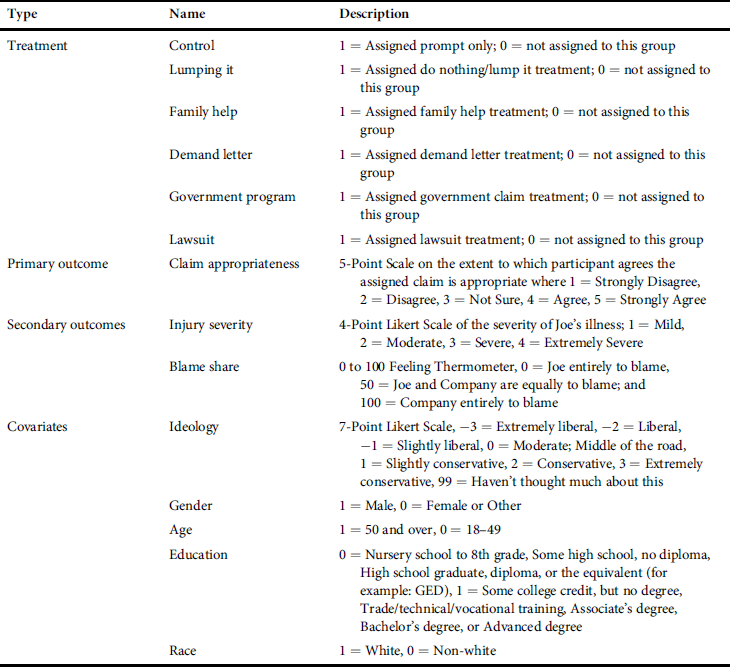
We then randomly assigned the survey participants to a control and treatment groups. The control group received only the prompt. The treatment groups received the prompt and two additional pieces of information. First, they were given a list of five potential claiming options: (1) forego pursuing compensation and lump it (“Lumping It”); (2) ask his family for help (“Family Help”); (3) hire a lawyer to write a letter to his former company seeking compensation (“Demand Letter”); (4) hire a lawyer to file a claim with a government program for workers injured on the job (“Government Program”); or (5) hire a lawyer to file a lawsuit against his former company (“Lawsuit”). Second, they were told which claiming option Joe selected based on their randomly assigned treatment group. For example, participants in the Lawsuit Group were given the list of five claiming options listed above and told Joe chose to sue.Footnote 2 Following assignment, for purposes of this article, we asked how our participants felt toward Joe's level of injury and fault, his mode of seeking compensation, and the appropriateness of different claiming scenarios.
DATA AND MEASURES
Our treatment variables consist of a series of dummy variables (0 for not assigned, 1 for assigned) for the control and each treatment option. For our primary outcome, claim appropriateness, we asked whether our respondents agreed the assigned choice of remedy was appropriate on scale from 1 (“Strongly Disagree”) to 5 (“Strongly Agree”).Footnote 3 Our secondary outcomes, designed to explore the Tort Tale Frivolous Litigation Hypothesis, are perception of injury and assignment of blame. We measured perceived injury on a four-point scale, where 1 is mild illness, 2 is moderate illness, 3 is severe illness and 4 is extremely severe illness, and assignment of blame on a scale from 0 to 100, where 0 is entirely Joe's fault, 50 is equal blame, and 100 is entirely the Company's fault. These measures, along with our covariates, are summarized in Table 1.
Summary of key variables and measures.

SURVEY IMPLEMENTATION
We fielded our survey in January 2021 online using the subject pool from Qualtrics (without quotas), which is the most demographically and politically representative among leading online convenience samples in the United States (Reference Boas, Christenson and GlickBoas et al., 2020). The survey was intended to take about 10 minutes and participants were paid $5 upon completion. It was conducted in waves. We fielded a soft launch on January 7 and 8, collecting 100 pilot responses to troubleshoot problems, and resumed on January 20. The survey closed on January 22.
We included several quality checks. For example, we automatically dropped respondents who completed the survey in less than one-half the median soft launch time. Prior to treatment, we asked a series of demographic questions, including questions about our participants' gender, education, race, and political ideology, to test whether the randomization produced balanced groups. (See Appendix A for these results.) We also tested comprehension and attentiveness in the pre-test questionnaire using a “screener” question designed by Reference Berinsky, Margolis, Sances and WarshawBerinsky et al. (2019); see also (Reference Berinsky, Margolis and SancesBerinsky et al., 2014; cf. Reference Montgomery, Nyhan and TorresMontgomery et al., 2018). The screener question was unrelated to our topic and focused solely on ensuring that participants fully read the prompts provided to them.Footnote 4
There were 1007 participants in total after screening.Footnote 5 One hundred seventy-six participants were randomly assigned to the Control Group; 164 to the Lumping It Group; 162 to the Family Help Group; 168 to the Demand Letter Group; 163 to the Government Program Group; and 174 to the Lawsuit Group. As demonstrated in Appendix B, the randomization performed quite well, producing groups that are similar with respect to the pretreatment demographic characteristics that might affect attitudes toward litigation.
FINDINGS
Claiming hypotheses
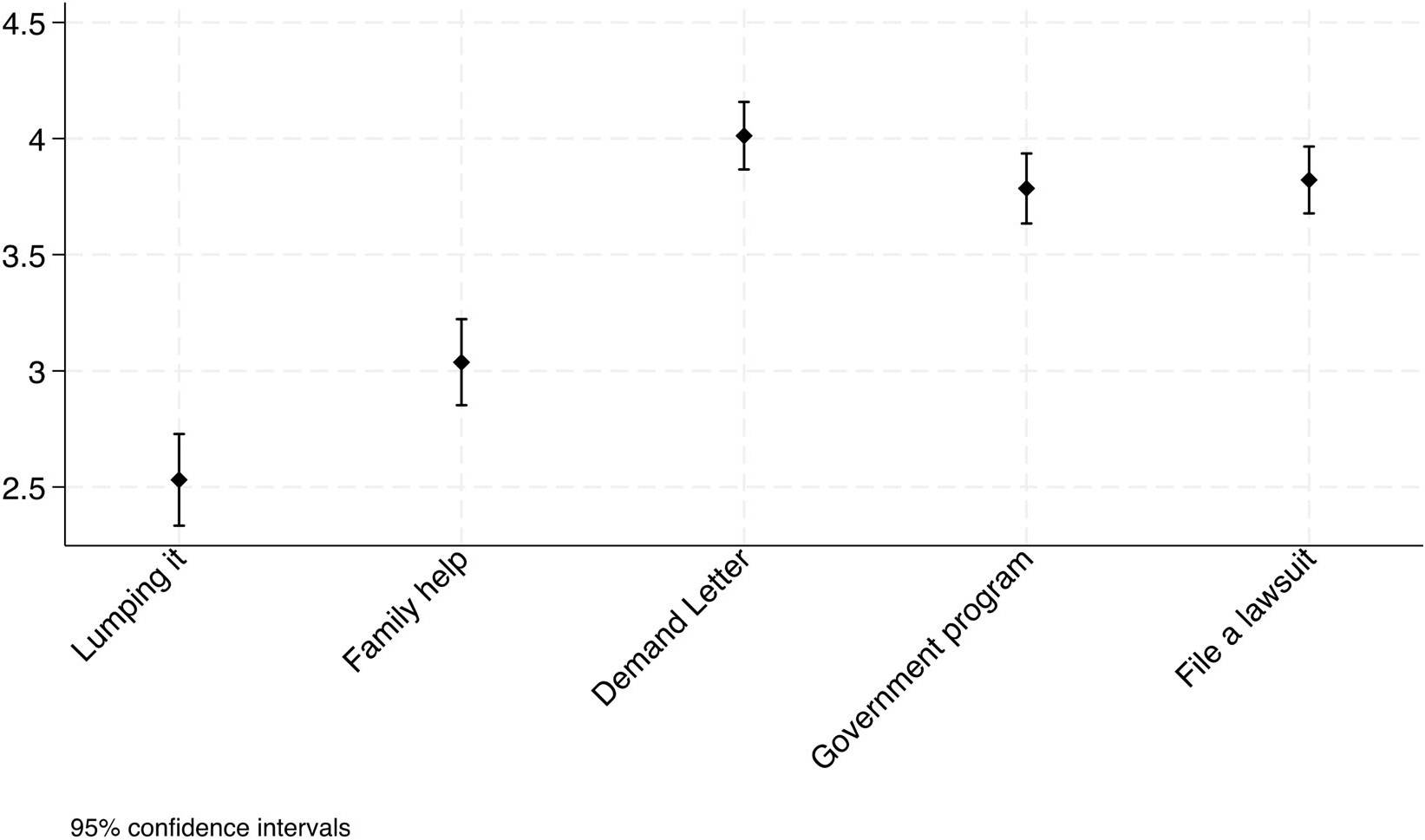
The Total Justice, Tort Tale and Null Claiming Hypotheses predict different attitudes toward the appropriateness of filing a lawsuit versus its alternatives. Figure 2 sets forth the mean responses across the claiming groups with 95% confidence intervals.Footnote 6 The results were consistent with the Total Justice Claiming Hypothesis (but not the Total Justice Legal Superiority Hypothesis, which predicts litigation would be seen as the most appropriate remedy). Specifically, filing lawsuits were seen as significantly more appropriate than lumping it or asking family for help (3.82 vs. 2.53 and 3.04, respectively), about the same as filing a claim with a government program (3.82 vs. 3.78), and only slightly less appropriate than hiring a lawyer to write a demand letter (3.82 vs. 4.01, which was within the confidence interval).
Mean perception of claim appropriateness across groups (n = 831).

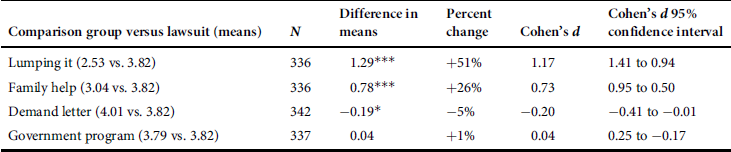
Table 2 elaborates Figure 2.Footnote 7 Each row represents a comparison between a claiming group and the Lawsuit Group and provides the difference in means, percentage change, Cohen's d and Cohen's d 95% confidence intervals, which offer a measure of the magnitudes of the effects. As seen in the first row, the difference between the Lumping It and Lawsuit Groups is 2.33 versus 3.82, which is statistically significant beyond the 0.01 level. This 1.29 shift represents a 51% increase, which constitutes a large effect using Cohen's d.Footnote 8 The difference between the Family Help and Lawsuit Groups (3.04 vs. 3.82) is also statistically significant beyond the 0.01 level. But the 26% increase is smaller, representing a medium to large effect using Cohen's d. By contrast, the difference between the Lawsuit and Government Program Groups (3.79 vs. 3.82) is not statistically significant, while the difference between the Lawsuit and Demand Letter Groups (3.82 vs. 4.01) is significant to only the 0.10 level. Both represent a 5% change or less, which range from small to negligible effect sizes. (Recall that all confounding variables that may explain the differences in means across these groups beyond our randomized conditions are “controlled for” through the experimental design).Footnote 9
Summary of difference in means and substantive effects between lawsuit and other groups: Claim appropriateness (N = 831).

Note: Assumes unequal variance. All numbers rounded to nearest one-hundredth, except percentages are rounded to nearest integer.
*p ≤ 0.10; **p ≤ 0.05; ***p ≤ 0.01.
Tort tale frivolous lawsuit hypothesis
Contrary to the Tort Tale Frivolous Lawsuit Hypothesis, participants in the Lawsuit Group did not believe that Joe was less injured or more at fault than other groups. If anything, they thought Joe was more injured than other groups and that the company was mostly at fault.
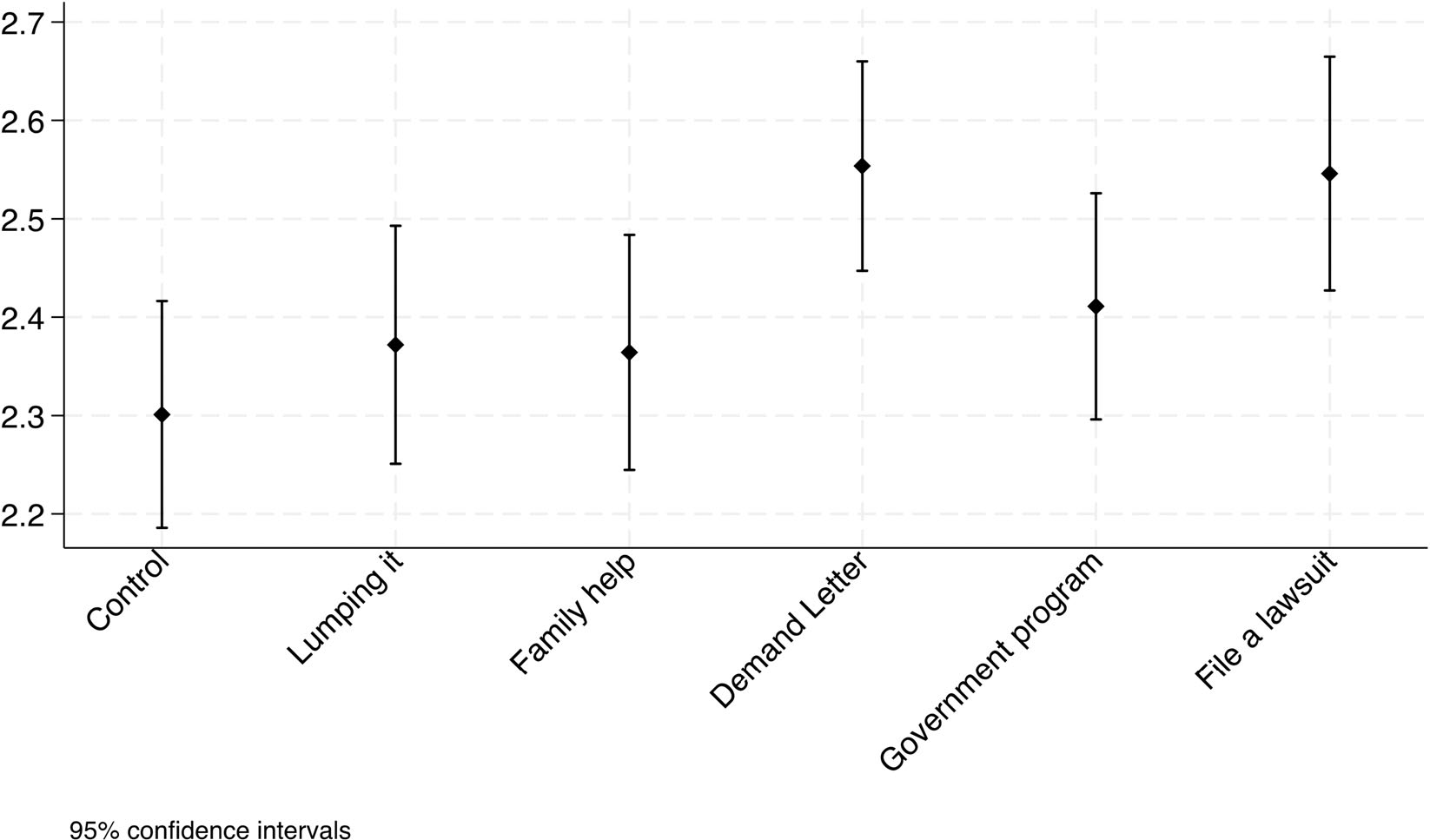
Figure 3 reports the mean perceptions of the severity of Joe's illness with 95% confidence intervals. Recall that injury severity was measured on a four-point scale, ranging from 1 (mild illness) to 4 (extremely severe illness). As seen in Figure 3, the Control Group believed that Joe was moderate to severely injured on our scale (2.30); the Lawsuit and Demand Letter Groups were higher (2.54 and 2.55, respectively); and the Family Help and Government Program Groups were in the middle (2.36 and 2.41, respectively).
Mean perception of injury severity across groups (n = 1007).

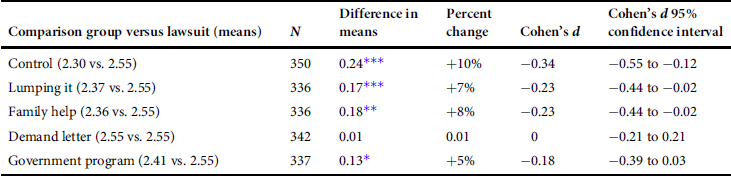
Table 3 reports the differences in means and substantive effects. Overall, participants in the Lawsuit Group viewed Joe as either more or equivalently injured than other groups. Specifically, the difference in mean perception of Joe's injury was higher in the Lawsuit Group versus the Control (2.54 vs. 2.30) beyond the 0.01 level of statistical significance, the Lumping It and Family Help Groups (2.54 vs. 2.36) to the 0.05 level, and Government Program Group (2.54 vs. 2.41) to the 0.10 level. Perceptions of injury severity between of Lawsuit and Demand Letter Groups were nearly identical (2.54 vs. 2.55) and statistically equivalent. The magnitude of the effects for all the groups were generally small, ranging from a one to 10% change with Cohen's d scores around 0.20.
Summary of difference in means and substantive effects between lawsuit and other groups: Perception of injury severity (N = 1007).

Note: Assumes unequal variance. All numbers rounded to nearest one-hundredth, except percentages are rounded to nearest integer.
* p ≤ 0.10; ** p ≤ 0.05; *** p ≤ 0.01.
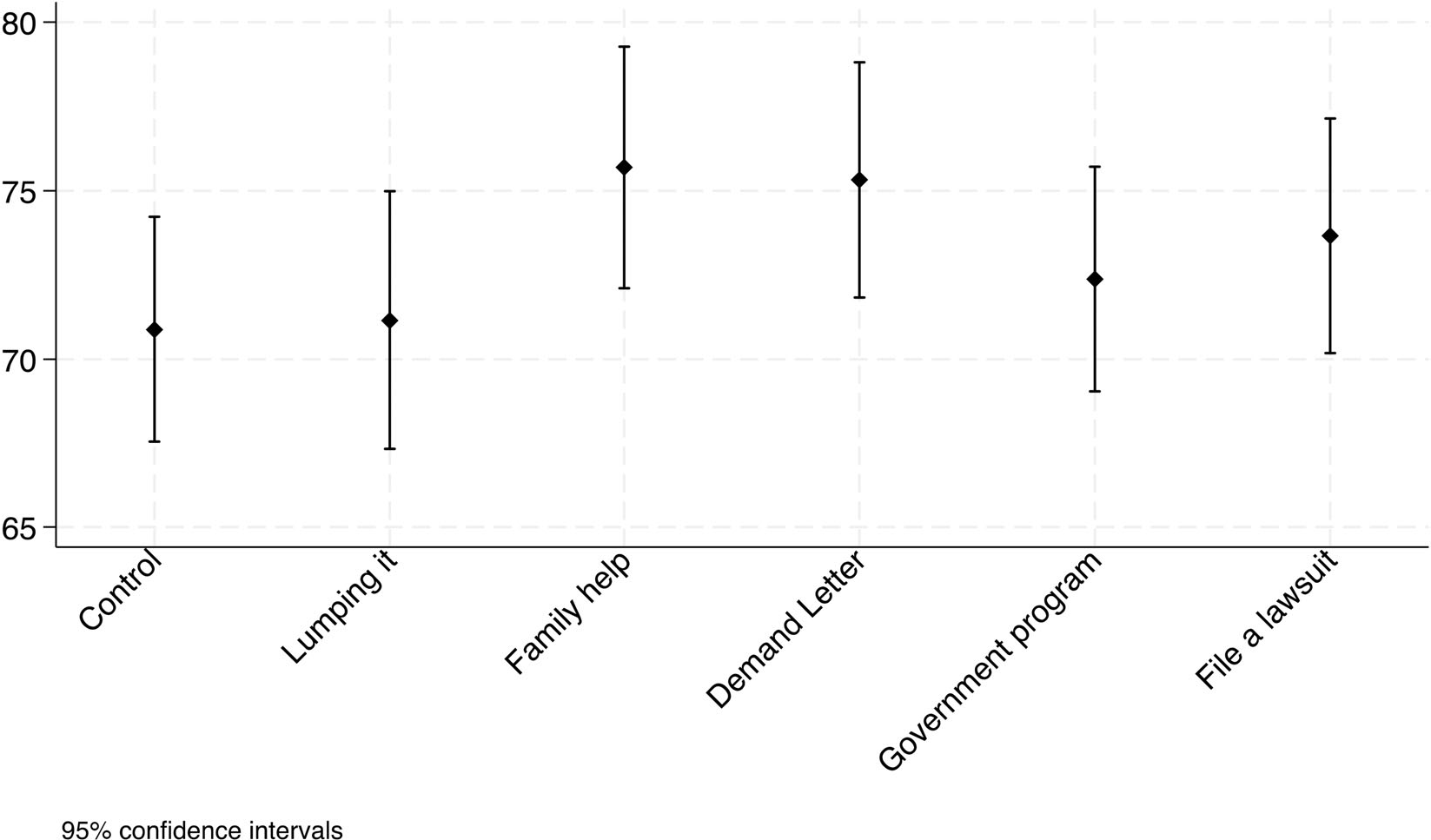
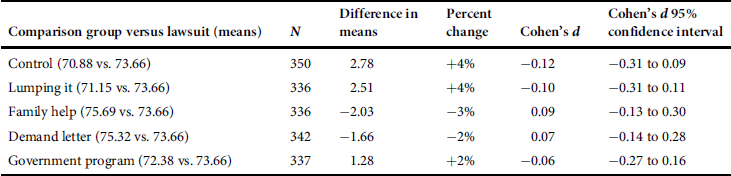
Figure 4 reports the mean assignment of blame across the groups on a scale from 0 to 100 with 95% confidence intervals, where 0 is entirely Joe's fault, 50 is equal blame, and 100 is entirely the Company's fault. The results ranged from 71 to 76, indicating that our participants placed most of the blame on the Company across all groups. Table 4 reports the differences in means and substantive effects. It shows that all groups placed the lion's share of blame on the Company, and that levels of blame assignment in the Lawsuit Group were statistically equivalent to those in the other claiming groups with small to negligible effect sizes.
Mean assignment of blame across groups (n = 1007).

Summary of difference in means and substantive effects between lawsuit and other groups: Assignment of blame (N = 1007).

Note: Assumes unequal variance. All numbers rounded to nearest one-hundredth, except percentages are rounded to nearest integer.
*p ≤ 0.10; **p ≤ 0.05; ***p ≤ 0.01.
Shifting attitudes on the justifiability of Joe's lawsuit
The differences in means represent a useful first cut at the data, presenting the choice of remedy as a series of discrete decisions. In practice, however, the claiming process often escalates, starting with less formal remedies and building toward a lawsuit. Accordingly, following the experiment, we explored whether Joe's lawsuit would seem more justifiable if our participants were told that he turned to the courts after trying other remedies. Of course, being denied by other potential sources might have the reverse effect, casting doubt on the underlying merits of the claim and hence undermining the justifiability of pursuing litigation.
To explore these possibilities, we presented participants in the lawsuit experimental treatment group with a series of claim exhaustion scenarios: (1) Joe filed a lawsuit after failing to get compensation from his family; (2) Joe filed a lawsuit after failing to get compensation from his family and a demand letter; and (3) Joe filed a lawsuit after failing to get compensation from his family, demand letter and government claim. Footnote 10 After each scenario, we asked respondents whether they agreed that Joe's filing a lawsuit would be more justified on scale from 1 (“Strongly Disagree”) to 5 (“Strongly Agree”).
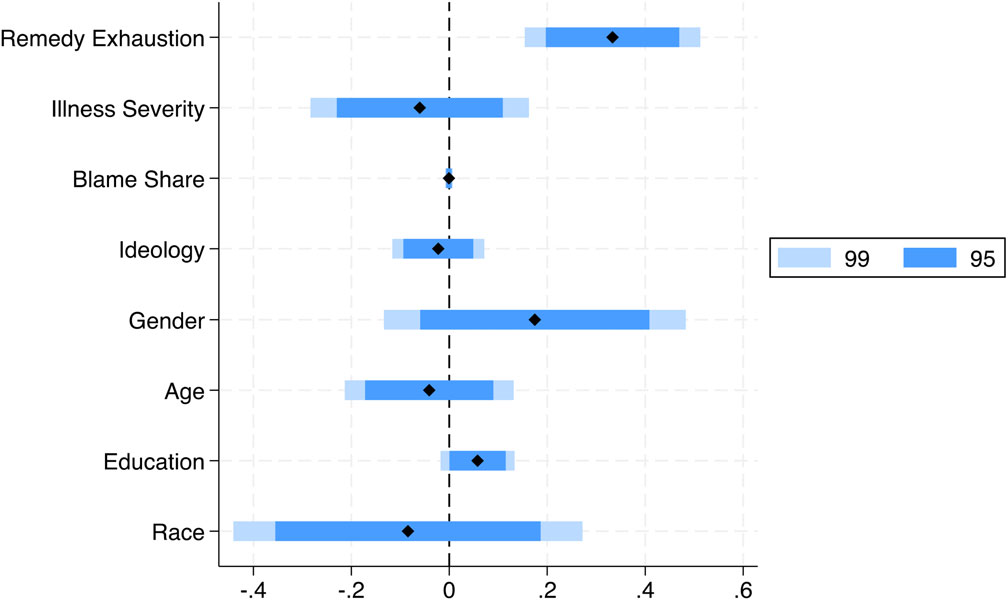
On average, the respondents' level of agreement steadily increased after learning of each scenario. When told Joe filed a lawsuit after failing with his family, respondents' mean level of agreement was 2.91. After being informed that he failed not only with his family but also after a lawyer wrote a demand letter, the mean level of agreement jumped to 3.33. It increased again to 3.56 after being told that Joe filed a lawsuit after exhausting the family help, demand letter, and government program options. As seen in Figure 5, the effect of Remedy Exhaustion—the number of claims exhausted prior to filing represented in the nested claiming scenarios described above—was significant beyond the 0.01 level, controlling for perception of injury, assignment of blame share and our covariates.Footnote 11 Although not part of our randomized experiment, this “dose effect”—significant increases in the outcome after each increment of treatment—buttresses the notion that attitudes toward tort claims are malleable and that systematically exhausting remedies prior to litigating might enhance attitudes toward lawsuits (Reference Barnes, Menounou and HevronBarnes et al., 2023).
Coefficient plot: Remedy exhaustion effect on justifiable action (n = 486).

DISCUSSION
Our findings reveal varied attitudes toward tort claims. These multifaceted views did not yield uncertainty, as predicted by the Null Hypothesis, but a layered set of preferences, which reflect elements of both total justice and tort tale narratives. As a general matter, our participants did not believe that Joe's lawsuit was meritless or inappropriate. Instead, they believed that all claimants, including litigants, were similarly injured and mostly not at fault (contrary to the Tort Tale Frivolous Lawsuit Hypothesis). Moreover, consistent with the Total Justice Claiming Hypothesis, our participants significantly favored pursuing third-party claims over lumping it or seeking help from family members and saw hiring a lawyer to send a demand letter, make a claim with a government program, or file a lawsuit as similarly appropriate.Footnote 12
Given that our participants saw Joe as injured and mostly not at fault, perhaps it is unsurprising that they supported his making a claim as opposed to lumping it. It is also worth noting that our findings are not necessarily inconsistent with the American ideal of individualism, which can have multiple meanings, including that individuals protect themselves by exercising their rights (Reference EngelEngel, 1984: 558). From this vantage, our claiming findings resonate with total justice narratives about the appropriateness of making claims and the value of self-assertiveness, as opposed to tort tale accounts that favor lumping it and self-sufficiency.
At the same time, our claim exhaustion findings suggest that tort tales cast a partial shadow over our participants' attitudes, despite their perception of Joe's injury and lack of culpability and the appropriateness of his taking action. Recall that a common tort tale refrain is that litigants unjustifiably rush to the courts to “cash in” (Reference EngelEngel, 2016; Reference Haltom and McCannHaltom & McCann, 2004). When told that Joe did not follow this claiming pattern, attitudes toward the lawsuit improved. Specifically, when participants assigned to the Lawsuit Group learned that Joe tried other remedies before turning to the courts, they believed his decision to sue was significantly more justifiable. The more remedies Joe unsuccessfully tried before filing his lawsuits, the more justifiable the lawsuit became, even though repeated rejections of a claim might indicate its weakness on the merits.
Other findings from our survey experiment reinforce the duality of our participants' attitudes, which encompass skepticism toward litigants while acknowledging litigation as an appropriate remedy. Specifically, while this article focuses on attitudes toward claims, we also tested attitudes toward claimants (Reference Barnes, Menounou and HevronBarnes et al., 2023). In that portion of our survey experiment, we asked participants (in random order) the degree to which Joe seemed (1) sympathetic, (2) trustworthy, (3) dishonest, and (4) greedy. We then rescaled these responses from negative to positive attitudes toward Joe (from 1, the least positive, to 5, the most positive) and averaged the rescaled responses to create an overall measure of attitudes toward Joe.Footnote 13 Consistent with tort tale narratives, participants in the Lawsuit Group held significantly more negative attitudes toward Joe than the other claiming groups.
It is fair to ask about the role of lawyers in this process and how their presence in the claiming scenarios might be affecting our results. A potential concern, for example, is the Demand Letter, Government Claim, and Lawsuit Groups all involve the hiring of a lawyer and thus might be seen as equivalent. Putting aside that this assumes a high level of sophistication about the role of lawyers in the claiming process, studies have found differences in perceptions of the fairness of fault and no-fault systems among participants after controlling for levels of lawyer participation (Reference Elbers, Collie, Hogg‐Johnson, Lippel, Lockwood and CameronElbers et al., 2016), which suggests that factors other than perceived lawyers' roles contribute to attitudes toward claiming options. More importantly, in our experiment, the finding of significant variation of attitudes toward claimants across the Demand Letter, Government Claim, and Lawsuit Groups suggests that the underlying claiming options involving hiring lawyers were, in fact, seen differently by our participants. Finally, even if one believes that including the hiring of a lawyer in the Demand Letter, Government Claim, and Lawsuit treatments renders them equivalent, this critique does not change our basic findings that our participants (1) believed all claimants were injured and mostly not at fault; (2) they favored claiming over lumping it or seeking help from their families; and (3) claim exhaustion bolsters perceptions of turning to the courts within the Lawsuit Group.
Stepping back, these views may seem discordant. How can people simultaneously see litigation as appropriate while viewing litigants skeptically? Taking a closer look at our claim exhaustion findings, we believe, helps square this circle, suggesting our participants' ambivalence reflects an underlying preference for incremental claiming strategies that build toward litigation: namely, claimants should start with informal remedies and only use litigation as a last resort, even when underlying claims are meritorious. From this vantage, exhausting other options can strengthen attitudes toward the decision to turn to the courts despite underlying tort tale doubts about those who actually sue. In this way, litigants might demonstrate self-sufficiency by initiating informal remedies and self-assertiveness by doing what is necessary to redeem their rights when their initial efforts fail. The broader implication is that perceptions of tort are not only a function of the decision to sue but also how parties pursue claims on the way to the courthouse.
It is worth noting that studies using quite different methods and types of data also find that exhausting other remedies bolsters a lawsuit's justifiability despite distrust of the tort system. Consider Engel's classic ethnography of attitudes toward tort litigation in a small, Midwestern county, mentioned in the introduction (Reference EngelEngel, 1984; see also Reference TrautnerTrautner, 2018). In that study, Engel explored attitudes toward litigation based on interviews of strategically located community members, an analysis of court filings, and case study research on the local area. His qualitative analysis reveals general hostility to tort claims, despite the fact that personal injury suits were relatively rare, reflecting the view that personal injury plaintiffs are greedy and that their decision to sue violates the value of self-sufficiency. These attitudes stood in stark contrast to views of contract claims, which were far more common but seen as enforcing the norm of honoring one's commitments and self-assertiveness. In the face of these tort tale attitudes, Engel finds that local lawyers emphasized the importance of their client's claim exhaustion. An attorney explained:
So first I've got to sell the jury on the fact that this man's tried every way or this woman's tried every way to get justice and she couldn't. And they now come to you for their big day. … And then you try like hell to show that they're one of you, they've lived here and this and that.
(Reference EngelEngel, 1984: 561)
It is striking that findings from Engel's immersive, qualitative ethnography converge with our quantitative survey experiment. When studies relying on such divergent methods and data yield similar findings, the results lend some convergent validity to both (Reference Barnes and WellerBarnes & Weller, 2017).
While these findings relate to tort and injury compensation cases, exhausting remedies is not limited to these areas. We see the Justice Department adopting this strategy when it retrieved government documents from former President Donald Trump. Given Trump's defiance following the 2020 presidential election, government officials may have been skeptical of the effectiveness of asking for his cooperation. Moreover, there was some urgency to force the former President's hand, as there were concerns that highly classified documents were being held in an unsecure facility. Yet, government officials carefully escalated their efforts, beginning with informal requests, moving to official demands, and then referring the matter to the Department of Justice, which also exhausted less intrusive remedies before having the FBI search the former President's private residence. Spokespersons for the Justice Department highlighted its efforts to use less formal remedies when defending the search in the media (Reference Broadwater, Benner and HabermanBroadwater et al., 2022).
CONCLUSION
Looking back, our experiment revealed a complex set of attitudes that reflected both pro-claim and anti-litigant sentiments, even when the underlying litigant is injured and mostly not at fault. These ostensibly discordant views, we contend, reflect a predilection for claiming strategies that systematically exhaust other options before turning to the courts. Indeed, telling people that litigants did not rush to the courthouse (contrary to common tort tale refrains) significantly improved attitudes toward the justifiability of deciding to sue. By using lawsuits as a last resort, litigants can be seen as both self-sufficient by initially seeking to address their injuries without help from the courts and assertive by standing up for their rights when they must. This finding implies lawyers and rights-based advocates should climb other branches of the dispute tree before ascending the courthouse steps. If they do—and explain their efforts to juries, judges and, where appropriate, mass media—they might find more sympathy toward the decision to litigate in the courtroom and the court of public opinion.
Looking forward, all studies make trade-offs and ours is no exception. We focused on a sympathetic employee suffering from occupational disease to highlight attitudes toward meritorious claims. Obviously, there are other types of tort claims, claimants, and lawsuits. There are also very different claiming contexts—ranging from corporations to prisons (Reference Calavita and JennessCalavita & Jenness, 2018; Reference Edelman, Lande and ErlangerEdelman et al., 1993)—and styles of lawyering (Reference KaganKagan, 2019), which might impact both the range of claiming options and willingness of claimants to pursue remedies. Moreover, our experiment rested on a specific claiming scenario, which naturally trades internal for external validity. We think this is a worthwhile trade-off given the difficulty of making causal inferences from observational data. But it would be interesting to see if similar dynamics emerge in other policy areas, including other torts, such as routine auto accident, slip-and-fall, and medical malpractice cases, and using other methods, including conjoint experiments (Reference Dohertysee Doherty, 2022) designed to assess how different dimensions and attributes of claimants, levels of fault, defendants and levels of claim exhaustion might shape attitudes toward claims.
Finally, the fact that attitudes toward the justifiability of lawsuits can shift suggests the existence of tipping points in views toward tort claims. Identifying these tipping points and better understanding what drives attitudes toward tort represent promising avenues of inquiry. The possibilities are numerous, from how people attribute fault, blame, and responsibility (see Reference Bartels, Bauman, Cushman, Pizarro, Peter McGraw, Keren and WuBartels et al., 2016; Reference DohertyDoherty, 2006; Reference IyengarIyengar, 1991, Reference Iyengar1996; Reference StokerStoker, 1996), to the affective states related to the underlying injury scenarios (Reference EngelEngel, 1984; Reference HansHans, 2007), to social identity and biases (Reference HuddyHuddy, 2001; Reference SkitkaSkitka, 2010). All warrant further investigation using appropriate research designs and measures, including designs that leverage insights from rich qualitative work that is a hallmark of law and society scholarship as well as the growing number of quantitative and experimental tools geared toward causal inference.
Funding information
National Science Foundation, Grant/Award Number: 53-4871-1701
ACKNOWLEDGMENTS
We wish to thank the anonymous reviewers and the editors at Law & Society Review for their thoughtful comments, as well as panel participants at the 2023 meeting of the Western Political Science Association, including Martin J. Adamian, Celeste Arrington, Christopher Berk, Edward Fitzgerald, Shana Gadarian, Logan Strother, and, especially, J. P. Anderson. We also thank Ann Crigler, Christian Grose, and Nicholas Weller for their keen insights at various stages of this project. This article originated as part of a project funded by the National Science Foundation (Award No. 53-4871-1701), whose support we gratefully acknowledge. Of course, any remaining errors are our own.
APPENDIX A DEMOGRAPHIC CHARACTERISTICS OF SAMPLE

APPENDIX B COMPARING COVARIATES AMONG TREATMENT AND CONTROL GROUPS

Note: The above table lists demographic covariates. Columns 1–7 display the mean value for each variable, by treatment group, after the variable has been recoded to range from 0 to 1. Columns to the far right are the differences in means among the treatment groups, along with results from difference-in-mean tests (allowing for unequal variances).
*p ≤ 0.10; **p ≤ 0.05; ***p ≤ 0.01.
APPENDIX C DIFFERENCES IN MEAN CLAIM APPROPRIATENESS ACROSS GROUPS (n = 831).

Note: Cohen's d, 95% confidence intervals for Cohen's d and N in parentheses. All t-tests assume unequal variance.
*p ≤ 0.10; **p ≤ 0.05; ***p ≤ 0.01.
APPENDIX D OLS REGRESSIONS FOR ATTITUDES TOWARD CLAIM APPROPRIATENESS

Note: The Lumping It Group is the omitted category. The smaller N in Model 1 (N = 831) reflects the exclusion of the Control group in the regression. The smaller N in Models 2 and 3 (N = 771) reflects the exclusion of the Control Group as well as missing data on the ideology covariate. +Robust standard errors, ++Robust standard errors, Standardized Coefficients.
*p ≤ 0.10; **p ≤ 0.05; ***p ≤ 0.01.
APPENDIX E OLS REGRESSIONS FOR PERCEPTION OF ILLNESS SEVERITY (ROBUST STANDARD ERRORS)

Note: The Control Group is the omitted category and the smaller N in Model 2 (N = 934) reflects the exclusion of missing data on the ideology covariate. Coefficients are unstandardized.
*p ≤ 0.10; **p ≤ 0.05; ***p ≤ 0.01.
APPENDIX F OLS REGRESSION FOR PERCEPTION OF BLAME SHARE ACROSS (ROBUST STANDARD ERRORS)

Note: The Control Group is the omitted category and that the smaller N in Model 2 (N = 934) reflects the exclusion of missing data on the ideology covariate. Coefficients are unstandardized.
*p ≤ 0.10; **p ≤ 0.05; ***p ≤ 0.01.