Introduction
The reproduction process entails mutual responsibilities for men and women. Assessing and understanding men's participation in reproductive and maternal health is an area seldom focused upon by research studies. This is because of the assumption of women's primacy in fertility, and the ignoring of men's roles in reproductive health (Becker, Reference Becker1996; Ferdinand, Reference Ferdinand1996; Becker & Robinson, Reference Becker and Robinson1998; Greene & Biddlecom, Reference Greene and Biddlecom2000; Pachauri, Reference Pachauri2001; Barua et al., Reference Barua, Pande, MacQuarrie and Walia2004; Singh & Ram, Reference Singh and Ram2007). For many years, reproductive health programmes did not address men, partly because women's centrality to reproduction was taken for granted (a postulation that itself reflects social norms), and in part because little was acknowledged about men (Greene & Biddlecom, Reference Greene and Biddlecom2000; White et al., Reference White, Greene and Murphy2003; Dudgeon & Inhorn, Reference Dudgeon and Inhorn2004). Male involvement in maternal and child health (MCH) is one of the important issues in the reproductive and child health programme (RCH) in all developed as well as developing countries. It includes two components: encouraging men to be more involved in, and supportive of, women's needs, choices and rights in reproductive health; and addressing male's reproductive and sexual health needs and behaviour (MEDiCAM, 2004). Research has shown that women would like their partners to be more involved in maternal and child health care and that, in many cases, men are interested in being involved (Population Council, 2005). Increased male participation could yield health benefits for men, women and children by ensuring the use of antenatal care (ANC), healthy practices during pregnancy, institutional delivery and child care (Singh Reference Singh1998; Caleb Varkey, Reference Caleb Varkey2001; Caleb Varkey et al., Reference Caleb Varkey, Mishra, Das, Ottolenghi, Huntington, Adamchak, Khan and Homan2004; Barua et al., Reference Barua, Pande, MacQuarrie and Walia2004; Walston, Reference Walston2005; Singh & Ram, Reference Singh and Ram2007). Propagating male involvement in maternal health care was thus a welcome note in the International Conference on Population and Development (ICPD) in 1994, which affirmed that special efforts should be made to give importance to husbands' shared responsibility and promote their active involvement in responsible parenthood and sexual and reproductive behaviour (ICPD, 1994).
Tradition, norms and values govern Indian social behaviour. Reproductive and child health are personal matters to an Indian woman. Males are less involved in it (WHO, 1998), though they wield more authority in the domain of women's health care decisions (Population Council, 2005; Walston, Reference Walston2005). Within the household, women have restricted roles: cooking, taking care of the family and rearing children. Thus women's involvement in maternal health in a patriarchal society like India is a big challenge. Until male partners are mobilized to participate in reproductive health care and encourage women to avail themselves of health care facilities during and after pregnancy, achieving high coverage of antenatal care or safe delivery by skilled birth personnel, as stated in Goal 5 of the Millennium Development Goals (MDGs), will remain a day dream. Women are often unable to access prenatal, natal and postnatal health services for a variety of reasons, including lack of control over the household's finances, transport problems, poor knowledge and family restrictions. Reasons cited range from ‘spouse could not take time off work’ to ‘could not leave children and other dependants to travel to the nearest clinic or hospital’. These reasons illustrate the urgency of the need to include men in MCH and RCH care.
Against the backdrop of spreading STD and HIV/AIDs, there has been an emphasis on a client-oriented approach to needs assessment and service delivery and the incorporation of gender in development studies. Since it has been established that the attitude and level of involvement of the husband in his wife's health and morbidity during the reproductive phase plays a prominent role, there have been policy efforts to involve men actively in maternal health care (UNFPA, 1998). Barua et al. (Reference Barua, Pande, MacQuarrie and Walia2004) state that there are several ways in which men's participation has been conceptualized, for instance:
(1) men's involvement in decisions about family size and family planning;
(2) men's responsibility to reduce risky sexual behaviour and prevent spread of sexually transmitted infections;
(3) men's support for the reproductive health of women;
(4) men's own reproductive health needs (Drennan, Reference Drennan1998; Pachauri, Reference Pachauri2001).
There have been a number of studies on the husband's role in desired family size (see Becker & Costenbader, Reference Becker and Costenbader2001) and contraceptive use (see Becker, Reference Becker1996; Balaiah, Reference Balaiah1999). Yet, few studies on the husband's involvement or agreement have been extended into the arena of maternal health, particularly in relation to safe motherhood and birth preparedness practices (Mullany, Reference Mullany2010).
Bloom and others found that, in India, men know little about pregnancy and related care, though they are the gatekeepers to care (Bloom et al., Reference Bloom, Tsui, Plotkin and Bassett2000). There are a number of gaps in the existing literature regarding men's role in maternal care. First, while studies on men's reproductive attitude and behaviour have grown in number, they are dominated by problem-oriented approaches (Greene & Biddlecom, Reference Greene and Biddlecom2000). For instance, the HIV epidemic has encouraged researchers to understand male sexual behaviour, sexual health problems and condom use, while continued high fertility has dragged attention to the decision-making process and spousal communication. Second, most of the existing studies place emphasis on the husband's knowledge of danger signs in obstetric emergencies (Bhalerao, Reference Bhalerao1984; Thaddeus & Maine, Reference Thaddeus and Maine1994; Bender, Reference Bender, Santander, Balderrama, Arce and Medini1995; Khan, Reference Khan1997; Becker & Robinson, Reference Becker and Robinson1998; Singh, Reference Singh1998; Ormel, Reference Ormel1999; Bloom et al., Reference Bloom, Tsui, Plotkin and Bassett2000; Ransom, Reference Ransom2000; Beegle, Reference Beegle2001). Third, many studies have focused on small samples (see the study of Bhalerao, Reference Bhalerao1984; Nagawa Reference Nagawa1994; Bender, Reference Bender, Santander, Balderrama, Arce and Medini1995; Kaune & Seoane, Reference Kaune and Guillermo1998; Ratto, Reference Ratto1998; Raju & Leonard, Reference Raju and Leonard2000; Bloom et al., Reference Bloom, Tsui, Plotkin and Bassett2000; Celeb, Reference Caleb Varkey2001; Das et al., Reference Das2002; Celeb et al., Reference Caleb Varkey2002, Reference Caleb Varkey, Mishra, Das, Ottolenghi, Huntington, Adamchak, Khan and Homan2004; Barua et al., Reference Barua, Pande, MacQuarrie and Walia2004; Srivastava, Reference Srivastava, Ram, Unisa and Sekher2011). A study conducted by Action Research in Community Health and Development (ARCH, Reference Raju and Leonard2000) in Gujarat found that men had high levels of correct information about pregnancy-related issues, but knew little about the details of ANC, iron tablets or tetanus injections. Husbands were found to be unaware of the care their wives should receive during pregnancy and delivery, and did not accompany their wives to the clinic or for delivery (Barua et al., Reference Barua, Pande, MacQuarrie and Walia2004). A study of men's knowledge about a range of reproductive health issues in Uttar Pradesh showed that men were less knowledgeable about the warning symptoms of pregnancy and delivery complications than about other aspects of reproductive health (Singh, Reference Singh1998; Bloom et al., Reference Bloom, Tsui, Plotkin and Bassett2000). Srivastava (Reference Srivastava, Ram, Unisa and Sekher2011) studied male involvement in three villages of Udaipur district of Rajasthan, India. His in-depth study revealed that though many of the husbands opined that it was their prime responsibly to take care of their wives during the reproductive phase, cultural taboos made them feel ashamed and they hesitated to accept their responsibility openly. Despite high awareness and a professed sense of responsibility, as revealed in a study in Maharashtra (Barua et al., Reference Barua, Pande, MacQuarrie and Walia2004), the extent to which husbands were present at routine antenatal or postnatal care visits, or at the time of delivery, was found to be limited. Fourth, the surveys most relied upon for reproductive health programmes usually asked questions only of women, assuming that they are the ones who make the decisions regarding reproduction and that the men are either not involved or only marginally involved (UNFPA, 1998). Fifth, a host of studies are intervention research results, the findings of which cannot be generalized (Bhalerao, Reference Bhalerao1984; Bender, Reference Bender, Santander, Balderrama, Arce and Medini1995; Kaune & Seoane, Reference Kaune and Guillermo1998; Lakhani, Reference Lakhani, Raju and Leonard2000; Pal, Reference Pal, Raju and Leonard2000). For instance, in a study of perinatal outcomes in Mumbai, the findings show that in a case-control design, one out of three pregnant women attending a maternity clinic were encouraged to bring their husbands to the clinic where they both received maternal care information; in the control group, only women received the information (Bhalerao, Reference Bhalerao1984). The intervention group experienced a significantly reduced perinatal mortality rate compared with the control group (Becker, Reference Becker1996). The Population Council's (2004) intervention study in the hospitals of Delhi revealed an improved level of attendance of men with their wives at antenatal and postpartum clinics as well as a dramatic increase in inter-spousal communication as the intervention encouraged the husband's participation and communication on reproductive health matters.
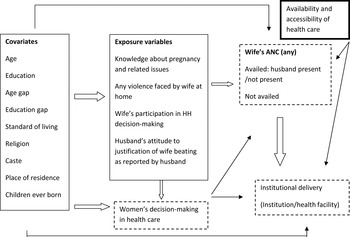
In the above context, conceptual frameworks have been developed to understand the process of male involvement in maternal care. In the framework of Ajzen & Fishbein (Reference Ajzen and Fishbein1980), background variables are shown to affect beliefs, which in turn influence attitudes towards the behaviour that manipulates intentions, which again determine whether the behaviour occurs or not (Becker, Reference Becker1996). The conceptual framework proposed here (Fig. 1) indicates the possible impact of the husband's background on attitude and behaviour, which influence his wife's decision-making and use of antenatal care and institutional delivery. Socioeconomic and demographic variables of husband and/or wife (age, education, religion, caste etc.) or couple characteristics (standard of living, place of residence, children ever born) directly and indirectly affect decision-making and utilization of maternal care facilities. At the intermediate level, the role of the husband and the husband–wife relationship is included in the picture. The perceived role of resource channelling to women during and after pregnancy is known to be slow, added to which is the slow pace of changing perception that reinforces the notion that men are tangentially involved in the mother–fetus health package, as opined by Gerein et al. (Reference Gerein, Mayhew and Lubben2003). Husband's improved knowledge about pregnancy and related matters received during his wife's pregnancy, a non-violent conjugal life, wife's ability to make health care decisions, and husband's disapproval of wife beating depict a positive husband–wife relationship. One of the most important predictors of prenatal care utilization in the US is husband–wife interaction, which is being portrayed through husband's knowledge about pregnancy, absence of violence and the wife's freedom to made decisions, as mentioned in the framework (Casper & Hogan, Reference Casper and Hogan1990; D'Ascoli et al., Reference D'Ascoli, Alexander, Petersen and Kogan1997; Oropesa et al., Reference Oropesa, Landale, Inkley and Gorman2000). This set of exposure variables enhances the chance of maternal health care utilization and safe delivery, and lessens maternal and newborn deaths. It is important to mention here that the framework for addressing obstetric care includes the three Rs, namely: Recognition of the care, Readiness to seek care and Rapid transportation to care centres. Men potentially influence the outcome of institutional delivery at all three levels as partners, relatives, neighbours and service providers (Prevention of Maternal Mortality Network, 1992). Again, the wife's ability to make her own health care decisions (which is affected by the husband–wife relationship) acts as an important factor in maternal health care use. Structural constraints in society range from inequity in women's work opportunities to domestic violence to poor access to (health care) resources.
Conceptual framework for husband's role in maternal health care.

Yet, few studies have investigated the actual role men play in maternal health care. A major gap in the literature on men's involvement in reproductive health is in the predictors of women's health care utilization by husband's perceptions and attitudes about prenatal–postnatal care (Dudgeon & Inhorn, Reference Dudgeon and Inhorn2004) using large-scale representative data. In the Indian context, research to date is mainly area specific and based on intervention. In recent years, the Government of India has made new commitments of its own resources to improve health, especially maternal and child health. In 2005, the Prime Minister launched the National Rural Health Mission (NRHM), a $US9.5 billion programme aimed at providing essential health services to poor families. Based on the ICPD Cairo (1994) recommendations, the current MCH programmes in India have included men. In the last two decades, the plans have re-emphasized the importance of male involvement, yet without any clear policy directives and a monitoring system to measure the achievements of the programme in enhancing male participation in women-related health programmes (Srivastava, Reference Srivastava, Ram, Unisa and Sekher2011).
No published study exists to date, using NFHS data, to comprehend the outcome of the husband's positive role in the wife's safe pregnancy and delivery. In this study, a wide range of questions have been asked for the first time to married men to bring to light their knowledge and attitude towards their (husband's and wife's) reproductive health. Thus, the findings of the work, based on a nationwide large scale survey, can potentially help policymakers to formulate policy frameworks for incorporating men in MCH. In this context, the paper aims to understand the husband's role in maternal health care in India, with specific reference to three selected states: Uttar Pradesh, West Bengal and Maharashtra. The specific objectives are:
• To examine the husband's role in their wife availing themselves of antenatal care and institutional delivery (in institution or health facility) and test the hypothesis that the husband's presence during an ANC visit has a positive effect on women's institutional delivery.
• To explore the wife's decision-making in health care in the context of her relationship with her husband, postulating that a positive husband–wife relationship (husband's improved knowledge about pregnancy and related matters received during wife's pregnancy, a non-violent conjugal life, wife's ability to make household decisions and husband's disapproval of wife beating) enhances her ANC visits, institutional delivery and decisions regarding health care.
Data and Methods
The National Family Health Survey III (IIPS & Macro International, 2007), the equivalent of the Demographic and Health Survey in India, is considered for the analysis. This is a nationwide survey, conducted by the International Institute for Population Sciences under the aegis of the Ministry of Health and Family Welfare, Government of India. The NFHS is considered one of the best surveys in the field of health and health care utilization in India. It uses standardized questionnaires, sample design and field procedures to collect data. Information from 74,369 men and 124,385 women aged 15–49 was collected. The information provided by NFHS surveys assists policymakers and administrators in planning and implementing population-related programmes (IIPS & Macro International, 2007).
For the first time, NFHS-III (2005–06) provided information on men. This large-scale survey collected data from men in 2005–06 on varying aspects of women's health and welfare, household violence and decision-making. The file on men for India for the three states of Uttar Pradesh, West Bengal and Maharashtra, with varying developmental stages, was chosen for the study. The weighted sample for Uttar Pradesh, West Bengal and Maharashtra in the men's file are 9155, 2335 and 6216, respectively. India being a vast country, the stage of development is also disparate across states. Maharashtra, located in western India, is one of the fastest growing states in terms of economy. Mumbai, the state capital, is the hub of industrialization and commercialization in India. Its total fertility rate (TFR) is at the level of replacement (2.1), 75% of mothers had at least three ANC visits, 70% of births are in institutions and the infant mortality rate is 37.5 (IIPS & Macro International, 2007). West Bengal, an eastern state, is in the middle order of development, an outlier of the north–south divide of the country, and the only state in India under the communist regime for the last three decades (Chattopadhyay et al., Reference Chattopadhyay and Goswami2007; Chattopadhyay, Reference Chattopadhyay2009). West Bengal is placed favourably as compared with the national average in developmental parameters. Like Maharashtra, its total fertility rate (TFR) is also at the level of replacement; 62% of mothers have had at least three ANC visits, 43% of births are institutional and the infant mortality rate is 48.0. Uttar Pradesh, located in the north, is one of the laggard states in terms of overall development. Its TFR is well above replacement (3.8), only a quarter of pregnant women have had at least three ANC visits and institutional delivery is very low (22%). The infant mortality rate of the state is 72.7, against India's average of 57.0. Hence, these three diverse states represent a mixed picture of India.
The variables used in the analysis are grouped under outcome, exposure and covariates.
Outcome variables
Utilization of ANC and institutional delivery
The determinants of utilization of ANC and institutional delivery are observed by applying binary logistic regression models. Questions asked in NFHS-III to the husband regarding ANC care are as follows: ‘When wife was pregnant did she have any antenatal checkup?’, ‘Were you (husband) present during any check-up?’ and ‘What was the main reason why she did not have any antenatal check up?’ Queries regarding institutional delivery were directly put to the mother: ‘Where did you give birth?’ Institutional delivery was coded as 1 and non-institutional delivery as 0 to understand the predictors of institutional delivery. Delivery under hygienic conditions and under supervision of trained health professionals is an important thrust under the reproductive and child health programme. Women who had given birth in the five years preceding the survey were considered in the analysis.
Women's decision-making in health care
Regarding women's health care decision in NFHS-III, the question asked to women is: ‘Who usually makes the health care decision?’ The answer codes are: mainly you, mainly husband, you and your husband jointly and someone else. In this analysis, the first and the third response were coded as 1 (that is, respondent own or jointly with husband), and the rest as 0 (that is, someone else).
Exposure variables
Independent variables of intermediate phase are termed as exposure variables, and have a direct impact on use/non-use of ANC, institutional delivery and health care decision-making by the wife.
Husband's knowledge about pregnancy and related issues
In NFHS-III, a series of questions were put to husbands to capture the above issue. The husband was asked whether at any time when the wife was pregnant, any health provider or health worker told him about the signs of pregnancy complications like vaginal bleeding, convulsions and prolonged labour; whether, at any time during the pregnancy, any health provider or health worker spoke to the husband about the importance of delivering the baby in a hospital or health facility and the importance of proper nutrition for the mother during pregnancy. Besides considering the above variables in calculating ‘husband's knowledge about pregnancy and delivery’, the other variables taken into account for the summative index are: whether any health provider or health worker spoke to the husband about family planning or delaying the next child, whether anyone explained to the husband the importance of breast-feeding the baby immediately after delivery, keeping the baby warm immediately after birth, cleanliness at the time of delivery and use of a new/unused blade to cut the cord. So the index of ‘husband's knowledge about pregnancy and delivery’ includes seven questions and the score ranges from 0 to 7.
Any violence faced by the wife at home
In NFHS-III, ever-married women were asked about seven types of physical violence, two types of sexual violence and three types of emotional violence by their current or most recent husband. In a non-violent husband–wife relationship, it is assumed that women should not face any type of violence. Here physical violence includes pushing, slapping, twisting the arm, punching, kicking, choking or burning, attacking with weapon; sexual violence includes coercion in sexual intercourse or any sexual act; and emotional violence incorporates humiliation or insult in the presence of others, with a threat to hurt or harm.
Wife's participation in household decision-making
Questions were put to the wife in NFHS-III regarding her decision-making in major household purchases, purchase of daily household needs and visits to her family and relatives. Out of these three decisions, if the wife did not make even one, it was coded as ‘no’, while in the case of the wife made the decision solely or with others, it was coded as ‘fully’. The rest were considered partial decision-making.
Husband's attitude towards justification of wife beating
The NFHS-III also asked married men about their opinion on wife beating. The question put forward was: ‘Sometimes a husband is annoyed or angered by things that his wife does. Is a husband justified in hitting or beating his wife in the following situations: if she goes out without telling him, neglects the house or children, argues with him, refuses to have sex with him, does not cook food properly, is disrespectful towards the in-laws or he suspects her of being unfaithful?’. A summative score was computed to understand the husband's justification of wife beating. The score was 0 if in any of the above statements the husband was not justifying beating the wife. The higher the score, the stronger is the husband's justification in this regard. The score was kept as 0 for not justifying wife beating and 1 (more than 0) otherwise in the regression analysis.
Covariates
Husband's and wife's socioeconomic background, i.e. age, place of residence, husband's education, couple's religion, caste and wealth index, along with number of children ever born, were controlled in the multivariate analysis.
Results
Women who had given birth in the five years preceding the survey were asked in the NFHS-III whether they saw anyone for antenatal care for their most recent birth. In India, health workers are supposed to provide information about several aspects of maternal and child health care to expectant fathers. Besides ANC, another important thrust of the RCH programme in India is institutional delivery. Every husband whose youngest living child is less than 3 years old was asked whether their youngest child was delivered in a health facility, and if not, what the reason was for it. The states selected (Maharashtra, West Bengal and Uttar Pradesh) are at three different stages of development, as mentioned in the Methods section. To be more specific, 75% women in Maharashtra had three or more ANC visits for their most recent birth, against 62% in West Bengal and just 27% in Uttar Pradesh. For the most recent birth, of those women who received ANC, in Maharashtra 76% received it from doctors, and in West Bengal the percentage was 56.5, while it was barely 22.5% in Uttar Pradesh. The percentages of fathers who said that at some time during the pregnancy a health worker spoke to them about the importance of delivering in a health facility range from 57% for Maharashtra to 41% in West Bengal and 22% in Uttar Pradesh, with an average of 43% in India. The state differential becomes clearer when we see the percentage of women who received all the recommended types of antenatal care (three or more ANC visits, two or more tetanus toxoid injections and iron–folic acid tablets for three or more months). It is abysmally low in Uttar Pradesh (barely 4%), just 12% in West Bengal and 22% in Maharashtra, with an average of 15% in India.
The detailed results of ANC and safe delivery are as follows:
Bivariate analysis
Antenatal care
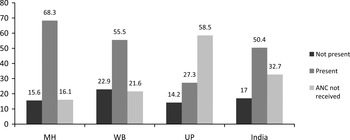
During pregnancy, a woman is advised to have at least three ANC check-ups. Figure 2 shows that one-third of the women (32.7%), as reported by their husbands, have not received any ANC and this proportion rises to 59% in Uttar Pradesh, while it is 16% in Maharashtra and 22% in West Bengal. More than half of the husbands of expectant women were reported to be present in at least one of the ANC check-ups in Maharashtra and West Bengal, while in Uttar Pradesh the percentage was only 27%. At the all-India level, 50% of the husbands of the total expectant women were present during ANC check-ups, while it was only 27% in Uttar Pradesh against 55% in West Bengal and 68% in Maharashtra.
Percentage of women who received any ANC before last birth and husband's presence during any ANC visit.

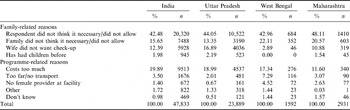
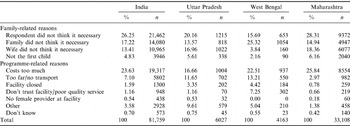
Among those women who had not received any ANC, the husband was asked for plausible reasons. In the majority of cases, the husband felt that it was not necessary at all, as shown in Table 1: 42% for India, 48% for Maharashtra, 43% for West Bengal and 44% for Uttar Pradesh. In Uttar Pradesh, while 17% of mothers (wives) did not think it requisite, 13% of the husband's family believed that ANC was not required. In West Bengal, among those who did not receive ANC, 22% of families pay no attention to the need for ANC and 17% believe that the cost is too high, even though ANC check-ups in government and municipal hospitals are free. In Maharashtra, one out of every five families ignores the requirement of ANC among those who failed to use ANC, and almost 50% of the husbands did not allow the wife to take the benefit of ANC as they felt that it was not required. Thus, familial reasons are the main hindrance for 75% of the cases of women who did not avail themselves of ANC.
Reasons for not receiving any ANC among those whose wife did not have ANC check-up: husband's report, India

Institutional delivery
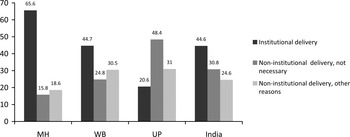
As shown in Fig. 3, 45% of deliveries are institutional in India, with 23% institutional deliveries in Uttar Pradesh, 40% in West Bengal and 59% in Maharashtra. As reported by the husbands, 55% of the wives experienced non-institutional delivery of their last child. Thirty-one per cent of husbands believe that it is not necessary to deliver in a hospital or in health centres under the supervision of trained health personnel. This proportion goes up to 48% in Uttar Pradesh, while one out of every four husbands believes so in West Bengal. Among the three states, non-institutional delivery is the lowest (34%) in Maharashtra, where 15% of the husbands believe that it is not necessary. Among those children who were born in a non-institutional set-up, 26% of the fathers, 13% of the mothers and 17% of the members of the family believe that delivery in a health facility is unnecessary (Table 2). After familial reasons, the high cost of delivery emerges as the second most important reason for non-institutional delivery.
Percentage of women who had (did not have) an institutional delivery for the last birth and reasons for non-institutional delivery, as opined by husband.

Reasons for not delivering in hospital or health care centre among those who did not have institutional delivery for last birth: husband's report, India

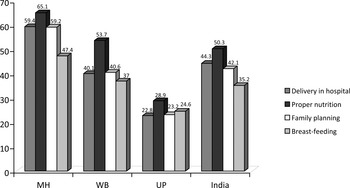
Information received by husbands from a health care provider regarding delivery and breast-feeding is far from universal, as shown in Fig. 4. Only three to five in ten husbands in India are aware of such MCH practices with a wide state-level variation. For instance, in Uttar Pradesh, less than 25% of the husbands know about the necessity of delivering in hospitals, about the need for family planning during pregnancy and about basic knowledge of breast-feeding. Knowledge of breast-feeding is low among husbands, even in Maharashtra and West Bengal, so the need to create awareness of maternal health among husbands is of prime importance.
Percentage of husbands having knowledge and awareness about pregnancy and related care.

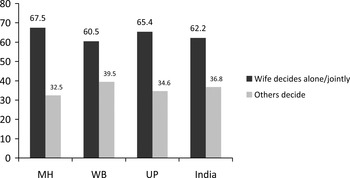
Figure 5 shows whether the decision on health care is taken by the wife alone, jointly or by someone else. In India, 62% of the women said that the health care decision is taken by them alone or jointly. Of the three selected states, the lowest percentage of wives who take the decision is observed in West Bengal (60.5%). State-wise variation is not large in this regard.
Percentage of women by decision-making on own health care. Note: jointly means wife with husband/parents/in-laws/others.

Cross-classification of ANC and delivery by husband's exposure
Among those women who experienced institutional delivery, in most cases the husband was present during ANC check-ups. To elaborate, among those women who experienced institutional delivery, in 65% of cases the husband was present at an ANC visit. This percentage is 77% in Maharashtra, 60% in West Bengal and only 39% in Uttar Pradesh. While in India, only one out of ten women who did not have an ANC check-up availed themselves of institutional delivery (Appendix Table A1).
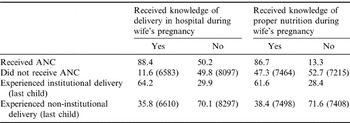
Use of ANC and institutional delivery differ according to the level of awareness and knowledge received (not received) by the husband from a health worker during the wife's pregnancy. Among those husbands who were aware of institutional delivery, 88% of their wives received ANC and 64% experienced institutional delivery, while among those who did not have this knowledge, 70% experienced non-institutional delivery. Similarly, among those who knew about the importance of a mother's proper nutrition during pregnancy, 87% of the women received ANC and 62% had institutional delivery. For those who did not receive information on proper nutrition, only 13% availed themselves of ANC and 28% experienced institutional delivery. Thus, the bivariate analysis clearly shows that the extent of husband's knowledge matters substantially to the wife's use of ANC and institutional delivery (Appendix Table A2).
The relation of ANC care, institutional delivery and health care decision-making by husband's attitude towards justification of wife beating reveals that for those who say that wife beating is justified, a lower proportion of their wives use ANC, institutional delivery and took health care decisions than those who reject the justification of wife beating. For example, 27% of the women in West Bengal whose husbands justified wife beating availed themselves of institutional delivery, while it was 52% among those whose husbands rejected the justification of wife beating. The difference between these two groups is minimal in Uttar Pradesh, perhaps due to traditional cultural perceptions of a husband's right to beat his wife (Krug, Reference Krug2002).
Multivariate analysis
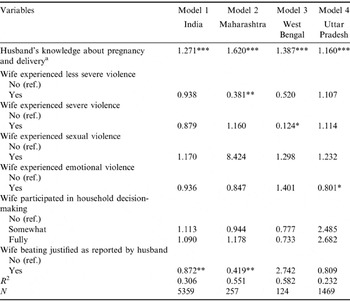
Table 3 shows the determinants of wives availing themselves of any ANC by the husband's exposure variables. The covariates controlled in these regressions are age, place of residence, education, caste, wealth index and children ever born. With increasing age, urban residence, more education, more wealth and lower number of births, the chances of using ANC increases (not given in the table). The strongest association is observed in the case of the wealth index, as the chance of using ANC increases five times for the richest against the poorest group in all the regression models. Husband's attitude towards justification of wife beating decreases the odds of using ANC, while husband's knowledge about pregnancy and related matters increases the probability of using ANC by 1.27 times. However, none of the violence variables and household decision-making by the wife shows any significance in India. Looking into the determinants of exposure variables with ANC check-ups in these three selected states, as far as the data allows, it is seen that knowledge of the husband about pregnancy and delivery is an important positive determinant of ANC use. In Maharashtra and West Bengal, physical violence emerges as an important determinant of ANC use, as with increasing experience of violence, the chances of the wife using ANC reduces significantly. Emotional violence plays an important role in this regard in Uttar Pradesh as the probability of using ANC decreases by 20% among those who experience aggressive behaviour. Husband's approval regarding wife beating is a negative predictor of ANC use in Maharashtra, where the odds of using ANC decreases by 86%.
Determinants of having any ANC in India and three states: odds ratios from logistic regression models

a Continuous variable.
Covariates controlled: husband's age, education, place of residence, wealth index, caste, religion, children ever born.
ANC: 0=no; 1=yes.
Level of significance: ***1%, **5%, *10%.
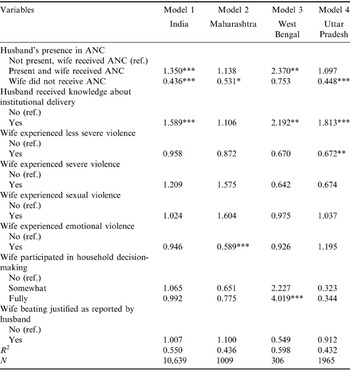
Table 4 indicates the determinants of institutional delivery in India (Model 1), as well as in the three selected states (Models 2, 3, 4). As expected, husband's individual factors, that is education, urban residence and wealth, promote institutional delivery while the number of children decreases this chance. Like ANC, here also, the wealth index plays a marked role as the richest cohort has 12.5 times more chance of using institutional delivery compared with the poorest (not shown in the table). Model 1 also supports the bivariate findings of the relationship of husband's presence (absence) during ANC and institutional delivery (non-institutional delivery). Husband's presence during ANC increases the odds of his wife's availing herself of institutional delivery by 35% and thus it supports the first hypothesis that the husband's presence at the time of any ANC visit increases the chances of his wife having an institutional delivery. Again, husband's knowledge about institutional delivery during pregnancy has a statistically significant positive effect on the chances of this wife having an institutional delivery. However, none of the violence variables or justification of wife beating has an important effect on institutional delivery at the all-India level.
Determinants of having an institutional delivery in last birth in India and three states: odds ratios from logistic regression models

Covariates controlled: husband's age, education, place of residence, wealth index, caste, religion, children ever born.
0=non-institutional delivery; 1=institutional delivery.
Level of significance: ***1%, **5%, *10%.
Looking into the determinants of exposure variables at the state level, it is seen that the impact of the husband's presence is most notable in West Bengal, where the husband's presence during ANC enhances the odds of having an institutional delivery by 2.37 times. While in the two other states, ANC use as a whole has an impact on institutional delivery, as non-receipt of ANC markedly reduces the chances of having an institutional delivery; the husband's presence (absence) does not make any significant difference. Knowledge of safe delivery obviously enhances the likelihood of having an institutional delivery in West Bengal and Uttar Pradesh. However, the violence variables are not significant, even at the state level. In Uttar Pradesh, experience of physical violence decreases the chance of institutional delivery by 40%, while in Maharashtra, emotional violence reduces the same chance by 52%. Full participation in decision-making enhances the likelihood of institutional delivery by four times in West Bengal. Thus, overall, the husband's exposure variables and a non-violent conjugal life, combined with the wife's autonomy in decision-making at the household level, are strong predictors of the wife having an institutional delivery.
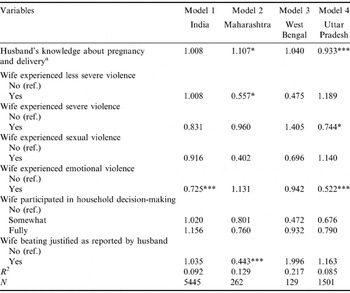
Table 5 explores the determinants of wife's health care decision-making. Of the exposure variables, experience of emotional violence has a detrimental effect on women's decision-making ability about their health care. For women who experienced emotional violence, the probability of them making their own health care decision at the all-India level reduces by 30%. At the state level in Maharashtra, knowledge about pregnancy and related matters is an important positive predictor of the wife's decision-making ability about her health care, while it is the other way round in Uttar Pradesh where the husband's increased knowledge decreases the wife's decision-making ability. This trend is reflected in Bloom et al.'s (Reference Bloom, Tsui, Plotkin and Bassett2000) research in Uttar Pradesh, which reveals that very few men had basic knowledge of any of the areas of maternal health. So, perhaps, in Uttar Pradesh, either the quality of knowledge of husbands is not well captured, or the strong patriarchal society restricts women from making decisions about their own health. Experience of physical violence and the husband's justification of wife beating have negative odds ratios in Maharashtra, while in Uttar Pradesh severe physical violence and emotional violence emerge as negative predictors. The study finds that the chances of taking health care decisions by those who experience emotional violence are reduced by 65% in Uttar Pradesh.
Determinants of taking own health care decision by wife in India and three states: odds ratios from logistic regression models

a Continuous variable.
Covariates controlled: husband's age, education, place of residence, wealth index, caste, religion, children ever born.
Others taking decision=0; decision taken on own or jointly=1.
Level of significance: ***1%, **5%, *10%.
Discussion
Since the International Conference on Population and Development (ICPD) in Cairo in 1994, there has been increased attention on the issue of male involvement in reproductive health, and as its importance is acknowledged, more programmes are trying to incorporate it as one of their components. A focus on men only is as inadequate as a focus on women only because it fails to take into account the way in which many decisions are made and the context that influences them (Bankole & Westoff, Reference Bankole and Westoff1998). Programmes have traditionally been institutionalized through the MCH facility of the Ministry of Health, with a dominant focus on women and children, keeping men outside the purview of services and scrutinizing their extent of responsibility sharing in the area of reproductive health of their wives and the health of their children. The surveys most relied upon for reproductive health programmes usually pose the questions only to the women, assuming that they are the ones who make the decisions regarding reproduction and that men are either not involved, or only marginally involved (Chatterjee & Riley, Reference Chatterjee and Riley2001) – hence the need for an inclusive policy. The issue of lack of men's data to understand male perspectives and the extent of their involvement in reproductive health is now solved to some extent with the availability of the NFHS-III (2007) data for the first time in India, which has been used for the present analysis. This study aims to understand whether the husband's positive knowledge about pregnancy and his happy conjugal relationship affirms women's availing themselves of ANC and institutional delivery as well as health care decision-making.
A large proportion of pregnant women do not have three ANC check-ups, especially in the northern state of Uttar Pradesh, mainly due to lack of pregnancy-related knowledge among the husband and other members of the family and a strong patriarchal set-up, where the decisions about even the movement of women are in the hands of men.
The results show that not even 50% of the husbands are present in any antenatal check-up. Evidence implies that the majority of maternal deaths are due to a delay in care-seeking behaviour, which is conditioned by the low level of knowledge and awareness prevalent among family members (Bloom et al., Reference Bloom, Tsui, Plotkin and Bassett2000; Dudgeon & Inhorn, Reference Dudgeon and Inhorn2004). Potential policy formulations could therefore be based on a simulation study of men becoming involved in maternal health care. Education on pregnancy and its related care can be disseminated at the grassroots level, for instance in the primary health care centres, and the presence of husbands should be made compulsory during ANC check-ups.
A policy analysis study in Uttar Pradesh (Centre for Health and Social Justice, 2009) reveals that health care service providers think that the presence or absence of men in maternal health services impacts on uptake of services. According to the study, if men are absent from health care units, it negatively affects the well-being of women, and on the other hand if they are present, it can help women understand about the care to be taken during pregnancy. A man, thus, is seen more as a person who ‘understands’ better than a woman does, and hence the need to involve men in maternal care. However, providers feel that it is difficult to reach out to men as their work timings overlap with the time of service provision. The study also reveals that women in Uttar Pradesh felt that men need to be involved in women's health issues and that they should accompany them and provide necessary financial support.
Again, as this study reveals, not even half of deliveries in India are institutional and thus safe from a maternal health point of view. Not surprisingly, the rate of non-institutional delivery is 77% in Uttar Pradesh where delivery-related misconceptions and prejudices are rampant, ranging from ‘dai (midwives) will do it’, ‘not a big deal’, ‘most of us are doing it at home’ to ‘mahanga hai’ (costly, though in governed sponsored hospitals, the cost of delivery is negligible). Knowledge about safe delivery and child-related care like breast-feeding is far from universal with wide variations at the state level. In traditional societies, this is abysmally low, as is the case of Uttar Pradesh, while in advanced states like Maharashtra, where 40% of husbands do not know the need for institutional delivery, a lot of scope remains to enhance husbands' knowledge in this direction.
Community-based studies in India point out the high prevalence of reproductive morbidities and maternal complications due to unsafe delivery and the absence of postpartum care (Bang et al., Reference Bang1989; Koenig et al., 1996; Stephenson et al., Reference Stephenson, Koenig and Saifuddin2006). Women's healthy reproduction and care can only happen if the individual as well as her partner are both concerned about illness and the benefits of care (Bloom et al., Reference Bloom, Tsui, Plotkin and Bassett2000). So without involving men, it is difficult to improve women's access to health care (Bhalerao et al., Reference Bhalerao1984). This study's multivariate analysis shows that even after controlling all covariates, knowledge of husbands about pregnancy and delivery is a very significant affirmative determinant for the wife's ANC visits, irrespective of the development stage of the states. So the relevance of the husband's integration in MCH policy is beyond doubt.
Even the landmark study of Raju & Leonard (Reference Raju and Leonard2000) shows that women need and want the support of their partners for accessing reproductive health services. Men are interested in getting involved in reproductive health issues, particularly when they pertain to children and the family. Thus health care providers, including outreach workers, need specialized training to support the additional involvement of men. The statistically significant effect of the husband's presence during ANC visits and the wife's institutional delivery, or the husband's knowledge about institutional delivery during his wife's pregnancy and the wife's institutional delivery, reaffirm the call for inclusion of husbands in the reproductive programme for safer pregnancy, healthy birth, less maternal mortality and less sexually transmitted disease. The findings also show that where women did have ANC, they were in most cases accompanied by their husbands. The concern is that although a low proportion of husbands have stated they ‘had children earlier’ as a reason for not using ANC, in the multivariate analysis increasing parity significantly reduces the chance of either having an ANC visit or an institutional delivery. So a big gap remains between attitude and actual behaviour, which is a concern.
Another finding worth noting is that wealth or living standard is a strong predictor of the use of ANC and institutional delivery (odds ratios not shown), in spite of the fact that in public health care units, ANC as well as delivery are given at a subsidized rate. Thus, the results perhaps indirectly point out that people prefer private health care units for these services and the better the economic condition, the higher the chances of benefiting from these facilities. Or it could be interpreted that poor people are reluctant to spend even the minimal amount at public health centres. Salam & Siddiqui's (Reference Salam and Siddiqui2006) study based on the NFHS-II also reveals a similar finding. Ladusingh et al. (Reference Ladusingh and Singh2007) reaffirmed this trend when they observed that in north-east India that there is a concentration of women without adequate maternal care amongst the poorest economic strata.
In all three selected states, though the majority of wives said that they take health care decisions alone or jointly, in Maharashtra and Uttar Pradesh it is basically the husband's knowledge about pregnancy and delivery, and a non-violent physical and emotional relationship, that determine the level of the wife's health care decision-making. It is indeed ironic that in Uttar Pradesh, the improved knowledge of the husband regarding prenatal and natal care inversely affects the wife's health care decisions. This needs in-depth exploration. As mentioned earlier, perhaps male dominance in a patriarchal society restricts women's decision-making power, or it could be attributed to the poor knowledge or lack of awareness on the part of the husbands regarding reproductive and maternal health care. The culture in north India is quite different to the egalitarian east or westernized north-east or the educated south. Though patriarchy exists everywhere, and violence against women is widespread and viewed as a woman's due and her husband's right, female powerlessness is much more acute in north India than in the south (Jejeebhoy, Reference Jejeebhoy1998a). The low female autonomy in north India, as mentioned by Dyson & Moore (Reference Dyson and Moore1983), restricts them from availing themselves of health care services. From a programmatic point of view, every expectant mother can be monitored and motivated to avail herself of proper health care by grassroots workers. In all three selected states, violence emerges as a significant predictor of maternal care. Hence, it can be concluded that a healthy conjugal life devoid of a violent relationship contributes to a healthy reproductive life. Though the term ‘violence’ varies according to the cultural context and one has to make allowances for individual reporting of violence with its subjective approach, emotional violence, physical violence and justification of wife beating have emerged as deterrent factors in reproductive health matters, be it wife's ANC, institutional delivery or wife's decision-making about health care in the selected states. However, unlike the knowledge variable of the husband, the violence factor does not show much consistency at the state level, indicating a variation in the culture of aggression within India. Jejeebhoy's (Reference Jejeebhoy1998b) commendable study on violence and pregnancy outcome in India shows that violence in marital life in Indian society is intrinsic, and she has argued for the integration of services to identify, refer and prevent violence in reproductive health programmes.
To mention some of the drawbacks of the data, the NFHS-III does not provide information on the availability and accessibility of health care components. Although the approach of the NFHS-III in measuring violence is optimal, the possibility of under-reporting violence, particularly sexual violence, cannot be ruled out (IIPS & Macro International, 2007). After inclusion of husband–wife relationship variables, the sample size at the state level reduces sharply. So whether the result at the state level can be generalized is questionable. Also, in the file on men in the NFHS-III, many of the questions put to both the husband and the wife are not included (for instance, with regard to availing themselves of ANC, only the husband's report is given) and thus the application of the Kuppa index is out of reach of the researcher.
Again, though various studies (see Miller et al., Reference Miller, Rochelle and Pasta1991; Ezeh, Reference Ezeh1993; Stolley, Reference Stolley1995; Thomson, 1995) have shown that in couple analysis, husband's and wife's characteristics do have a separate and significant effect on the outcome variables (especially family planning and birth interval), here only the husband's variables are given more importance because of co-linearity of husband–wife individual variables. This is because the study views women's health care use/decision-making from the husband's perspective.
Conclusions
There is a growing debate among policymakers and researchers on the role of involving males in reproductive health programmes. Formulation of policies related to these issues is still in its infancy, because of the poor quality of data and lack of research. This study, based on data from a national-level, large-scale survey, tries to assess the efficacy of the husband's role in maternal care, whether it helps Indian women avail themselves of health services, and the extent to which women can make independent decisions regarding their health care. There is sufficient evidence that ignorance, indifference and lack of concern on the part of men act as hindrances to fulfilling MCH goals. Household dynamics of power relations are critical in this respect. Empowering women and giving equal importance to men are necessary, along with proper dissemination of knowledge among men. Thus men's support in every respect is a necessary prerequisite for sound maternal health care.
As a good proportion of husbands accompany their wives to ANC check-ups and the husband's presence in ANC enhances the chances of institutional delivery, it could be made mandatory to counsel husbands along with their wives during ANC visits. Level of knowledge received during wife's pregnancy by the husband is another vital determinant of ANC and safe delivery. There should be concerted action to step up efforts to educate men about reproductive and maternal health. Thus, programmes should be implemented based on the understanding of gender dynamics, on how decisions are made and implemented, on the changing needs of both genders and their interaction. Much more needs to be known about the relations between men and women in particular contexts where programmes will be set up in order to make an effective change. The forthcoming programmes under the umbrella of RCH and MCH must focus on the mobilization of men on maternal care, encouraging sound husband–wife relationships and creating a hospitable environment of maternal concern at the household level.
Acknowledgement
The author would like to express her sincere thanks to Professor Stan Becker of Johns Hopkins Bloomberg School of Public Health for his valuable comments.
Appendix
Percentage of women (n) who experienced institutional delivery by husband's presence (non-presence) during ANC visits, India and selected states

Percentage of women (n) who received ANC and had an institutional delivery by husband's knowledge of nutrition and institutional delivery during pregnancy