Introduction
During the female mammalian reproductive life, follicles grow from primordial follicles surrounded by a small number of flat granulosa cells to large antral follicles containing a net of 21 doublings of granulosa cell numbers (Wezel & Rodgers, Reference Wezel and Rodgers1996; Rodgers & Irving-Rodgers, Reference Rodgers and Irving-Rodgers2010). In addition to their proliferation, granulosa cells differentiate into cumulus cells and mural granulosa cells. During each round of the somatic cell cycle, telomeric DNA replication results in telomere shortening due to the end replication problem. Once the telomeric length shortens to a critical level, the cell exits the cell cycle and undergoes cell senescence (Olovnikov, Reference Olovnikov1996). However, granulosa cells reportedly maintain their telomerase activity during follicle development (Lavranos et al., Reference Lavranos, Mathis, Latham, Kalionis, Shay and Rodgers1999; Russo et al., Reference Russo, Berardinelli, Martelli, Di, Giacinto, Nardinocchi, Fantasia and Barboni2006; Liu & Li, Reference Liu and Li2010), which may enable their numerous replications. In addition, the telomerase activity of granulosa cells differed according to follicle size and their localization in the follicles such that granulosa cells either from small follicles or in the middle layers had higher telomerase activity than those from large follicles or in the basal layers (Lavranos et al., Reference Lavranos, Mathis, Latham, Kalionis, Shay and Rodgers1999).
Age-associated decline in fertility is a concern in modern society, and vast literature regarding the relationship between maternal ageing and oocyte quality in humans exists (Ottolenghi et al., Reference Ottolenghi, Uda, Hamatani, Crisponi, Garcia, Ko, Pilia, Sforza, Schlessinger and Forabosco2004; Baird et al., Reference Baird, Collins, Egozcue, Evers, Gianaroli, Leridon, Sunde, Templeton, Van, Steirteghem, Cohen, Crosignani, Devroey, Diedrich, Fauser, Fraser, Glasier, Liebaers, Mautone, Penney, Tarlatzis and ESHRE2005; Broekmans et al., Reference Broekmans, Knauff, Te, Velde, Macklon and Fauser2007). However ethical constraints have limited the sample numbers and hindered thorough investigations. A bovine model of human reproduction has been introduced by Malhi et al. to study the age-associated problems of human fertility, and there is increasing evidence demonstrating age-associated decline in bovine fertility (Malhi et al., Reference Malhi, Adams and Singh2005, Reference Malhi, Adams, Pierson and Singh2006, Reference Malhi, Adams, Mapletoft and Singh2008; Yamamoto et al., Reference Yamamoto, Iwata, Goto, Shiratuki, Tanaka, Monji and Kuwayama2010; Iwata et al., Reference Iwata, Goto, Tanaka, Sakaguchi, Kimura, Kuwayama and Monji2011). In our previous study, oocytes were harvested from old cows (age, >120 months) and young cows (age, 25–35 months); the progression of nucleic meiotic maturation of oocytes from old cows was faster than that of oocytes from young cows. Furthermore, when oocytes were denuded of surrounding cells, the differences between the two age groups disappeared (Yamamoto et al., Reference Yamamoto, Iwata, Goto, Shiratuki, Tanaka, Monji and Kuwayama2010). On the basis of these observations, we speculate that ageing also affects the characteristics of the granulosa cells in cows.
It is widely accepted that the quality of cumulus and granulosa cells is closely associated with oocyte development through their mutual interactions (Orisaka et al., Reference Orisaka, Tajima, Tsang and Kotsuji2009; Downs, Reference Downs2010; Pandey et al., Reference Pandey, Tripathi, Premkumar, Shrivastav and Chaube2010). In humans, it has been demonstrated that ageing influences the quality of granulosa cells (Tatone et al., Reference Tatone, Carbone, Falone, Aimola, Giardinelli, Caserta, Marci, Pandolfi, Ragnelli and Amicarelli2006; Ito et al., Reference Ito, Miyado, Nakagawa, Muraki, Imai, Yamakawa, Qin, Hosoi, Saito and Takahashi2010). However, few reports regarding the effects of ageing on bovine granulosa cells exists.
Proliferative activity is a primary characteristic reflecting the quality of cells and the cell character depends on the genomic epigenetic information which closely associated with cytosine methylation; thus, the aim of the present study was to examine the effect of ageing on the proliferative activity and global DNA methylation of granulosa cells, and relative telomere lengths and telomerase activity of the granulosa cells harvested from the ovaries of old and young cows. Although the characteristics of granulosa cells differ considerately among follicular developmental phases and individual cows, to the best of our knowledge, this is the first report regarding age-associated changes in the characteristics of bovine granulosa cells. We observed that the proliferative activity and global cytosine methylation of the granulosa cells was profoundly affected by donor age. However, no significant difference was observed between the relative telomere lengths of the cumulus cells derived from old and young cows. In addition, the relative telomere length and telomerase activity of the granulosa cells derived from old cows were shorter than those from young cows, though the difference was not significant.
Materials and methods
Unless otherwise stated, all chemicals were purchased from Nacalai Tesque (Kyoto, Japan). Granulosa cells were cultured in a TCM-199 medium (Gibco, Paisley, UK) supplemented with 0.5 mM pyruvic acid and 5% fetal calf serum (FCS).
Ovary and oocyte collection
Ovaries with a functional luteum were harvested from cows in a local slaughterhouse and stored at 25°C in phosphate-buffered saline (PBS) containing 10 mM glucose, 10 mM sucrose and antibiotics; these were transported to our laboratory within 4 h. Granulosa cells and cumulus–oocyte complexes (COCs) were harvested from the follicles on the surfaces of the ovaries using a syringe with an 18-gauge needle.
Preparation of granulosa and cumulus cells
The telomerase activity of granulosa cells differs in accordance with the localization in the follicle. Thus, we collected granulosa cells from two distinct positions: granulosa cells distal to the oocyte, which were aspirated from the follicle and granulosa cells proximal to the oocyte, which are defined as cumulus cells in the present study. The contents aspirated from the follicles were suspended in a wash solution (PBS with 1 mg/ml BSA (bovine serum albumin)) and washed by centrifugation. Next, the granulosa cells were carefully collected from the pellet and re-suspended in a wash solution containing 0.2% hyaluronidase. The cells were separated by vortexing for 3 min and then washed by centrifugation. The resulting cell pellet was subjected to DNA extraction or used for in vitro culture. For culture, the cells were suspended in a culture medium at a final concentration of 5 × 10⁵ viable cells/ml. The proportion of viable cells was assessed by trypan blue staining. This cell suspension was used for proliferation assays.
For cumulus cell preparation, the COCs harvested from each cow were vortexed in the wash solution containing 0.25% hyaluronidase. After removing the oocytes, the cell suspension was centrifuged, and the resulting cell pellet was subjected to DNA extraction immediately after collection or after passage culture. For passage culture, the cumulus cells were cultured in a 4-well plate (Nunc) for 5–7 days and sub-cultured four times.
Proliferation assay
The suspension of the granulosa cells derived from each cow was dispensed into three wells of a 96-well plate (100 μl/well; Falcon) and incubated for 24 h at 38.5°C with maximum humidity in an atmosphere of 5% CO2 in air. The cell proliferative activity was assessed by the cell proliferation ELISA BrdU assay kit (Roche), according to the manufacturer's protocol. The average of triplicate determinations was used for each cow.
DNA extraction and telomere length assessment
Granulosa and cumulus cells were prepared as described above. These cells were diluted in 100 μl of the extraction buffer (20 mM of Tris, 0.4 mg/ml of pronase K, 0.9% of Nonidet-40 and 0.9% of Tween 20), and DNA was extracted at 55°C for 30 min followed by 95°C for 5 min. Real-time quantification of relative telomere length was performed based on the protocol described by Mastromonaco et al. (Reference Mastromonaco, Perrault, Betts and King2006). Briefly, reactions were performed in triplicate in 20-μl reaction volumes (6 μl of sample per reaction) for a standard DNA sample and all experimental samples. The PCR (polymerase chain reaction) mixture (20 μl) contained 6 μl of extracted DNA, 0.5 μM of each primer set, and 10 μl of MESA Blue (qPCR TM-Mastermix Plus for SYBR Assay; Eurogentec, Belgium). This assay included amplification of the telomere and a single-copy gene (BTF3) for normalization. The teh telomere and single-copy gene amplifications were performed in series. The telomere primer sequences were as follows: Tel 1b: 5′-CGGTTTGTTTGGGTTTGGGTTTGGTTTGGGTTTGGGTT-3′ and Tel 2b: 5′-GGCTTGCCTTACCCTTACCCTTACCCTTACCCTTACCCT-3′. The primer sequences for the single-copy gene were as follows: BTF3u: 5′-AGGAACTGCTCGCAGAAAGA-3′ and BTF3d: 5′-GCCCGTAATGGTGAAAGTGT-3′.
The telomere length assay consisted of a 10-min incubation at 95°C for enzyme activation followed by 20 cycles at 95°C for 5 s, 56°C for 10 s, and 72°C for 60 s and fluorescent signal acquisition. The single-copy gene assay consisted of a 10 min incubation at 95°C followed by 35 cycles at 95°C for 5 s, 60°C for 5 s and 72°C for 20 s and fluorescence signal acquisition. Real-time PCR was performed using the Rotor-Gene 6500 real-time rotary analyser (Corbett Research). The samples that contained the highest amounts of DNA were selected as external standards and three serial dilutions were produced using this DNA. DNA extracted from the cumulus cells of a cow aged 27 months and DNA from the granulosa cells of a cow aged 147 months were used as external standards. The concentrations of the telomere and single-copy gene were defined as 1. In this experiment, relative telomere concentration (T) and relative concentration of a single-copy gene (S) were calculated using an external standard that was amplified in all assays and was used for calculating the sample T/S. The sample T/S was compared with the standard sample to obtain the relative T/S ratio [(sample T/S)/(standard T/S)]. The relative T/S ratio of each sample indicates its telomere length relative to the standard sample.
Quantitative telomerase assay
Granulosa cells were aspirated from the medium follicles on the surface of dominant phase ovaries. Telomerase detection was conducted according to the manufacture's protocol (Cat No. MT3010, Allied Biotech Inc.). In brief, granulosa cells were washed and suspended in lysis buffer followed by centrifugation. The cell extract was subjected to real-time PCR to determine the telomerase activity through its ability to synthesize telomeric repeats onto an oligonucleotide substrate in vitro.
Global DNA methylation sift assay
The global methylation shift assay was conducted according to the manufacture's protocol (Imprint Methylated DNA Quantification Kit; Sigma-Aldrich). Granulosa cells were aspirated from the medium follicles on the surface of dominant phase ovaries. Purified DNA was prepared from 4 × 10⁶ granulosa cells of each cow using NucleoSpin Tissue XS (Takara), and the concentration of the DNA was measured. One hundred nanograms each of the extracted DNA and control methylated DNA were subjected to the measurement and the relative methylation of the each sample compared with the methylated DNA control was calculated.
Experimental protocols
Experiment 1
Follicle development occurs in a wave-like pattern during the oestrous cycle, and the ovaries were categorized into two distinct follicular development phases; the dominant phase and growth phase (Hagemann, Reference Hagemann1999). We then selected ovaries in the two distinct follicular development phases and examined the effect of the follicular development phase on the proliferation of granulosa cells. To establish the two different follicular development phases, an ovary with a functional luteum and at least one large follicle (>9 mm in diameter) was defined as a dominant phase ovary, and an ovary with a functional luteum but without large follicles (>7 mm in diameter) was defined as a growth phase ovary. Dominant and growth phase ovaries were harvested from 14 cows aged 27–29 months (7 cows for each phase). Granulosa cells were collected from teh medium follicles (3–5 mm in diameter) on the surfaces of the ovaries. Cell proliferative activity was examined as described above.
Experiment 2
Here we examined the effect of follicular size on the proliferative activity of granulosa cells. Dominant phase ovaries with functional luteum were harvested from eight cows aged 26–29 months and granulosa cells were harvested from the small (1–3 mm in diameter), medium (3–5 mm in diameter) and large follicles (>5 mm in diameter) on the surfaces of individual ovaries. The proliferative activity of the granulosa cells was examined.
Experiment 3
Here we examined the effect of donor age on the proliferative activity of granulosa cells. Dominant phase ovaries with a functional luteum were harvested from eight young cows aged 26–35 months (average age, 30.9 months) and old cows aged 144–185 (average age, 165.1 months). The proliferative activity of the granulosa cells harvested from medium follicles was examined.
Experiment 4
We examined the effect of donor age on the global cytosine methylation of granulosa cells. Granulosa cells were harvested from the medium follicles on the surface of dominant phase ovaries with a functional luteum of 15 young cows aged 20–32 (average 27.4) months and 12 old cows aged 120–170 (average 141.0) months. The methylation of genomic DNA was assessed as described above.
Experiment 5
Here we examined the validity of the relative telomere length assay. We harvested dominant phase ovaries with a functional luteum from five young cows aged 26–27 months. Cumulus cells were collected from the COCs derived from the medium follicles of each ovary. DNA was extracted from the cumulus cells immediately after collection and after four passages in culture (1 month). Relative telomere lengths of the primary and continuously cultured cells were compared.
Experiment 6
The relative telomere length of the cumulus and granulosa cells collected from the medium follicles on the surface of dominant phase ovaries with functional luteum were compared by the age of donors. Ovaries of 18 young cows aged 25–30 months (average age 27.7 months) and those of 15 older cows aged 137–198 months (average age 160.9 months) were used to compare the relative telomere lengths of cumulus cells. Ovaries of 16 young cows aged 29–47 months (average age 30.6 months) and 17 older cows aged 129–223 months (average age, 164.6 months) were used to compare relative telomere lengths of granulosa cells. We compared the relative telomere lengths of the cumulus and granulosa cells between the two age groups.
Experiment 7
Here we compared the relative telomerase activity in the granulosa cells of nine old cows aged 120–190 (average age, 151.3) months and 10 young cows aged 26–38 (average age, 28.1) months. The telomerase activity of the cells was measured as described above.
Statistical analysis
The proliferative activity among different follicle sizes was compared by analysis of variance (ANOVA) followed by Tukey's test. The proliferative activity, telomere length, global cytosine methylation, and telomerase activity of the two groups were compared using Student's t-test. A p-value of less than 0.05 was considered significant.
Results
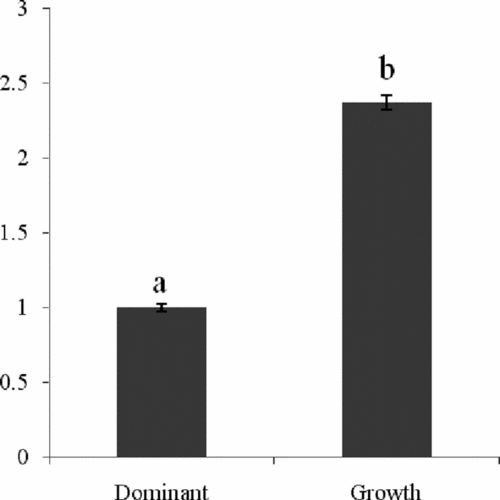
Figure 1 shows the proliferative activities of the granulosa cells harvested from the two distinct follicular development phases. The proliferative activity of the granulosa cells of the medium follicles from dominant phase ovaries was defined as follows: the proliferative activity was 2.4-fold and significantly higher in the granulosa cells from the medium follicles of the growth phase ovaries than those of the dominant phase ovaries.
Proliferative activity of granulosa cells harvested from growth and dominant phase ovaries. Dominant: dominant phase ovaries with a functional luteum and a large follicle (>9 mm). Growth: growth phase ovaries with a functional luteum but not large follicles (<7 mm). The proliferative activity of granulosa cells from dominant phase ovaries was defined as 1. a, b: Values between columns with different letters were significantly different (p < 0.05).
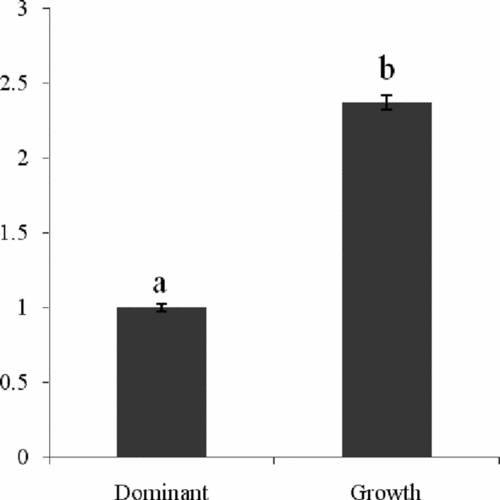
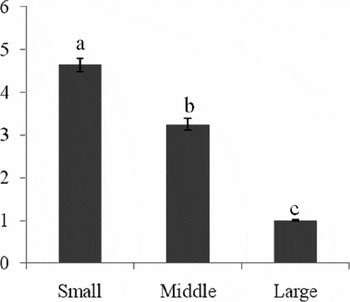
Figure 2 shows that the proliferative activity of granulosa cells was inversely associated with follicular size. The activity shown by the rate to the cells from large follicles was 3.2 and 4.6 from medium and small follicles, respectively. These values were significantly different among the three follicle sizes (p < 0.05).
Proliferative activity of granulosa cells harvested from small (1–3 mm in diameter), medium (3–5 mm) and large follicles (>9 mm) on the surface of the dominant phase ovaries. The proliferative activity of granulosa cells derived from large follicles was defined as 1. (a–c) Values between columns with different letters were significant different (p < 0.05).

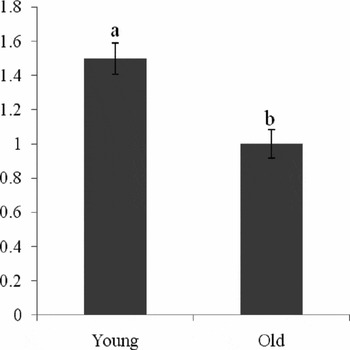
In Experiment 3, granulosa cells were harvested from the medium follicles on the surfaces of dominant phase ovaries from old and young cows. A comparison of the proliferative activity of the granulosa cells between old and young cows is shown in Fig. 3. The proliferative activity of cells from young cows was shown by the rate to that from old cows. The activity from young cows was 1.5-fold higher than that of cells from old cows (p < 0.05).
Proliferative activity of granulosa cells harvested from medium follicles on the surface of dominant phase ovaries from young and old cows. The proliferative activity of granulosa cells from old cows was defined as 1. (a, b) Values between columns with different letters were significantly different (p < 0.05).

In Experiment 4, the percentage of the overall genomic methylation of the granulosa cells derived from old cows was 31.2% which was significantly lower (p = 0.04) than that of the cells derived from young cows (38.9%).
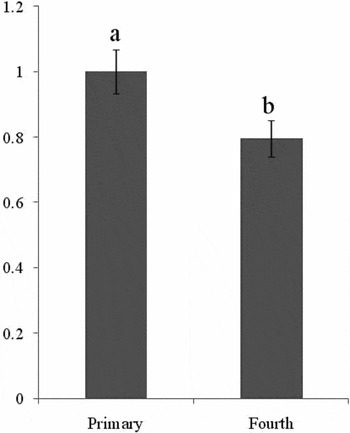
In Experiment 5, we examined the validity of the relative telomerase length assay by checking for telomere length following passage in culture. When cumulus cells were sub-cultured four times, a decrease in telomere lengths was observed (Fig. 4; p < 0.05).
Telomere lengths of cumulus cells during culture. Cumulus cells were harvested from medium follicles on the surface of dominant phase ovaries of young cows. Telomere length of cumulus cells just after harvest (primary) was compared with those after fourth passage. (a, b) Values between columns with different letters were significantly different (p < 0.05).

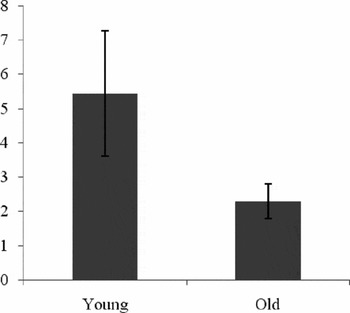
In Experiment 6, the relative telomere length in the granulosa and cumulus cells of young and old cows was compared. A comparison of the relative telomere length of the granulosa and cumulus cells is shown in Figs. 5 and 6, respectively. The relative telomere length of the granulosa cells derived from an old cow (142 months) was defined as follows: although the mean value of the relative telomere length was 5.4 and 2.3 in the granulosa cells derived from young (average age, 30.6 months) and old cows (average age, 164.6 months) respectively, these values were not significant different (p = 0.09).
Relative telomere lengths in granulosa cells from young and old cows. Granulosa cells were harvested from medium follicles on the surface of dominant phase ovaries. Difference between young and old cows was not significant (p = 0.09).

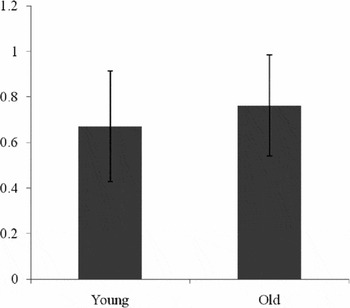
Relative telomere lengths in cumulus cells from young and old cows. Cumulus cells were harvested from cumulus oocytes complexes collected from medium follicles on the surface of dominant phase ovaries. Difference between young and old cows was not significant (p = 0.28).

In Fig. 6, the relative telomere length of the cumulus cells harvested from a young cow (27 months) was defined as follows: the relative telomere length of the cumulus cells derived from old cows was similar to that derived from young cows and there was no significant difference between the two groups (p = 0.28).
In Experiment 7, the telomerase activity of the granulosa cells collected from the medium size follicles of young cows was defined as 1 (means ± S.E, 1.0 ± 0.28), and the relative telomerase activity of the granulosa cells from old cows was 0.32 ± 0.15. The difference was not significant (p = 0.053).
Discussion
This study demonstrated that the proliferative activity and global genomic methylation of granulosa cells was profoundly affected by the age of donor cow. Although the relative telomere lengths were similar in the cumulus cells of young and old cows, the relative telomere length and telomerase activity of the granulosa cells from old cows tended to be shorter and less than those from young cows (p = 0.09 and 0.053, respectively).
In cows, once small antral follicles are recruited for development, one or two of the largest follicles are selected to become dominant follicles, while the remaining small follicles regress. (Aerts & Bols, Reference Aerts and Bols2010). Thus, antral follicle development is divided into the following two phases: growth phase ovaries and dominant phase ovaries (Fortune et al., Reference Fortune, Rivera and Yang2004). Oocytes derived from growth phase ovaries have higher developmental competence than those from dominant phase ovaries, and the frequency of apoptosis among the follicular cells derived from dominant phase is also higher than that from growth phase ovaries (Hagemann et al., Reference Hagemann, Beaumont, Berg, Donnison, Ledgard, Peterson, Schurmann and Tervit1999).
In Experiment 1, the proliferative activity was higher for the granulosa cells originating from the medium follicles on the surface of growth phase ovaries as compared with those of dominant phase ovaries; this result is consistent with previous reports. In addition, the proliferative activity of granulosa cells was inversely associated with follicular size, with the highest proliferative activity observed for the granulosa cells derived from small follicles. Lavranos et al. (Reference Lavranos, Mathis, Latham, Kalionis, Shay and Rodgers1999) reported that telomerase activity is high in small antral follicles and is reduced in large follicles in cows. Furthermore, the amount of estradiol secretion, the number of receptors for this hormone and the frequency of apoptosis varies among follicles of different sizes (Gutiérrez et al., Reference Gutiérrez, Campbell and Webb1997; Lavranos et al., Reference Lavranos, Mathis, Latham, Kalionis, Shay and Rodgers1999; Schams & Berisha, Reference Schams and Berisha2002). On the basis of these findings, the difference in proliferative activity depending on follicular size may be reflected by different degrees of differentiation, apoptosis and/or telomere lengths of the cells in the present study.
In general, the characteristics of granulosa and cumulus cells differ considerably among follicles. It is important to collect uniform samples for studying the properties of granulosa cells. Hence we attempt to minimize the effect of follicle characteristics such as the follicular development phase of ovaries and size by using the medium follicles on the surface of dominant phase ovaries. It is worth noting that the characteristics of the granulosa cells used in this study did not precisely reflect the properties of granulosa cells in vivo, as a follicle destined for ovulation is the largest follicle or dominant follicle on the surface of the ovary at the end of a follicular wave.
Both granulosa and cumulus cells support oocyte development through energy metabolism, amino acid uptake, hormone secretion and by providing suitable microenvironments. In contrast, the oocytes themselves regulate the granulosa and cumulus cell functions and differentiation through growth/differentiation factor 9, bone morphogenetic protein 15 and others (Hunter, Reference Hunter2000; Hamel et al., Reference Hamel, Dufort, Robert, Gravel, Leveille, Leader and Sirard2008; Su et al., Reference Su, Sugiura and Eppig2009; Huang & Wells, Reference Huang and Wells2010). Moreover, the quality of oocytes is closely related to the apoptosis rate among cumulus cells as well as cumulus and granulosa cell gene expressions (Hamel et al., Reference Hamel, Dufort, Robert, Gravel, Leveille, Leader and Sirard2008; Huang & Wells, Reference Huang and Wells2010).
Many reports have demonstrated the effects of ageing on the quality of oocytes and age-associated changes in the characteristics of the granulosa cells in humans. Ito et al. (Reference Ito, Miyado, Nakagawa, Muraki, Imai, Yamakawa, Qin, Hosoi, Saito and Takahashi2010) reported that p38 MAPK activity was high in the granulosa cells of aged women and suggested that this enhanced activity was caused by oxidative stress. In addition, mRNA levels of the glutathione S-transferase family are reduced in the granulosa cells of aged females (Ito et al., Reference Ito, Muraki, Takahashi, Imai, Tsukui, Yamakawa, Nakagawa, Ohgi, Horikawa, Iwasaki, Iida, Nishi, Yanase, Nawata, Miyado, Kono, Hosoi and Saito2008), and the mRNA and protein levels of SOD1, SOD2 and catalase are also decreased in the granulosa cells of aged women.
To the best of our knowledge, the present study is the first to demonstrate that the proliferative activity of granulosa cells harvested from old cows differ significantly from that of younger cows. Furthermore, it has been previously demonstrated that bovine oocyte quality reduces as donor age increases (Malhi et al., Reference Malhi, Adams, Mapletoft and Singh2007; Yamamoto et al., Reference Yamamoto, Iwata, Goto, Shiratuki, Tanaka, Monji and Kuwayama2010). Taken together, the decline in the proliferative activity of the granulosa cells observed in the present study may have influenced the quality of oocytes derived from old cows.
During ageing, the DNA methylation pattern of somatic cells changed, and DNA methyltransferase activity decreased (Fuke et al., Reference Fuke, Shimabukuro, Petronis, Sugimoto, Oda, Miura, Miyazaki, Ogura, Okazaki and Jinno2004; Kim et al., Reference Kim, Friso and Choi2009; Murgatroyd et al., Reference Murgatroyd, Wu, Bockmühl and Spengler2010). Furthermore, we detected greater loss of global cytosine methylation in the granulosa cells of old cows compared with those of young cows. It is plausible that this change may influence telomere length because telomere length is regulated by neighbouring histone modifications (Kim et al., Reference Kim, Friso and Choi2009). Although many factors are possible candidates for the age-related down-regulation in the proliferative activity of granulosa cells, we focused on the relative telomere lengths of the granulosa cells.
In primordial follicles, flattened granulosa cells surrounding oocytes remain quiescent for many years, and once follicle development starts, massive proliferation of the granulosa cells supports follicle development from primordial to antral follicles. It is generally accepted that passage in culture shortens the telomere lengths of somatic cells. However, cumulus and granulosa cells have high telomerase activity, (Lavranos et al., Reference Lavranos, Mathis, Latham, Kalionis, Shay and Rodgers1999; Russo et al., Reference Russo, Berardinelli, Martelli, Di, Giacinto, Nardinocchi, Fantasia and Barboni2006; Liu & Li. Reference Liu and Li2010), which may enable their numerous replications. In the present study, the relative telomere length of cumulus cells decreased significantly following four serial passages in culture, which demonstrated the validity of the relative telomere length assay. When the relative telomere length of cumulus cells was compared between the two age groups, similar relative telomere length was observed. However, large deviations in telomere length of the granulosa cells were observed with an approximately 44-fold difference between the maximum and minimum values. In addition, the relative telomere length and telomerase activity of the granulosa cells from old cows was shorter and lower than those from young cows, although the difference was not significant (p = 0.09 and 0.053, respectively). The results suggest that the cumulus cells collected from COCs were less affected by ageing than the granulosa cells collected by aspiration of follicles, and the granulosa cells are more heterogeneous than the cumulus cells and more likely to be affected by the age of donor cows. The telomerase activity of granulosa cells differed between middle and basal layers in the follicles (Lavranos et al., Reference Lavranos, Mathis, Latham, Kalionis, Shay and Rodgers1999). In addition, Russo et al. (Reference Russo, Berardinelli, Martelli, Di, Giacinto, Nardinocchi, Fantasia and Barboni2006) used a quantitative FISH technique and demonstrated that pig granulosa cells have high telomerase activity from preantral to antral stage follicles, and only cumulus cells and antral granulosa layer cells, not basal granulosa cells, harbour elongated telomeres.
On the basis of these observations, we hypothesize that the causes of the low proliferative activity of the granulosa cells from old cows may be as follows: (1) the changes in global cytosine methylation affect the physiological conditions of the granulosa cells of old cows; (2) the frequency of atretic follicles in the ovaries of old cows is greater than that in the ovaries of young cows; and (3) the granulosa cells of old cows lose telomerase activity faster than those of young cows. However, additional studies are required.
It is worth noting that granulosa cells immediately differentiate during in vitro culture (Luck et al., Reference Luck, Rodgers and Findlay1990; Wathes et al., Reference Wathes, Perks, Davis and Denning-Kendall1995; Zheng et al., Reference Zheng, Price, Tremblay, Lussier and Carrière2008), and culture conditions, such as serum supplementation, presence of oocytes and the maturation stage of the oocytes, profoundly affect the function and differentiation of granulosa cells (Maillet et al., Reference Maillet, Bréard, Benhaïm, Leymarie and Féral2002; Lucidi et al., Reference Lucidi, Bernabò, Turriani, Barboni and Mattioli2003; Gilchrist et al., Reference Gilchrist, Ritter and Armstrong2004; Parborell et al., Reference Parborell, Irusta, Vitale, Gonzalez, Pecci and Tesone2005). In the present study, we used the TCM-199 medium supplemented with 0.5 mM pyruvate and 5% FCS, and experiments were conducted within 29 h. During this period, our culture conditions may have affected the degree of differentiation and apoptosis of the cells, and this will require further studies.
In conclusion, the relative telomere lengths and telomerase activity of granulosa cells tend to differ in young and old cows, and the proliferative activity and global genomic methylation of the granulosa cells of old cows were significantly lower than those of young cows.
Acknowledgements
This study was supported by the Promotion and Mutual Aid Corporation for Private Schools of Japan.