Introduction
Raised blood pressure (RBP), or hypertension, constitutes a major public health problem. Data from the Global Burden of Disease Study show that hypertension is the single largest contributor to the global burden of disease and mortality with 9.4 million deaths globally every year (Lim et al., Reference Lim, Vos, Flaxman, Danaei, Shibuya and Adair-Rohani2012; Poulter et al., Reference Poulter, Prabhakaran and Caulfield2015). Its effect on adults (age 30 or above years) has led to the loss of 92 million Disability Adjusted Life Years (DALYs) (Lawes et al., Reference Lawes, Vander Hoorn and Rodgers2008). In particular, hypertension affects over a quarter of the world adult population (Hedner et al., Reference Hedner, Kjeldsen and Narkiewicz2012). Even the less-severe pre-hypertension (systolic blood pressure (SBP) of 120–139 mmHg/diastolic blood pressure (DBP) of 80–89 mmHg) is associated with the increased risk of a number of non-communicable diseases (NCDs) including myocardial infarction, stroke and chronic kidney disease (Guo et al., Reference Guo, Zou, Zhang, Li, Zheng and Sun2011).
Raising hypertension awareness and increasing antihypertensive use present major public health challenges. It has been recommended that hypertensive patients should attempt to maintain an SBP of 130–139 mmHg and DBP of 80–85 mmHg in order to reduce the negative effects of this condition (Banach & Aronow, Reference Banach and Aronow2012). Raised blood pressure is the leading risk factor for diseases throughout the developing world (Lim et al., Reference Lim, Vos, Flaxman, Danaei, Shibuya and Adair-Rohani2012). In fact, over 80% of its global burden is specifically in lower- and middle-income countries (LMICs) (Lawes et al., Reference Lawes, Vander Hoorn and Rodgers2008). The prevalence of both awareness and treatment of hypertension in low-income countries (LICs), specifically, were found to be 40.8% and 31.7%, respectively (Rahimi et al., Reference Rahimi, Emdin and MacMahon2015).
Nepal is approaching an epidemiological transition with an increasing burden of NCDs, including hypertension (Mishra et al., Reference Mishra, Neupane, Bhandari, Khanal and Kallestrup2015). In 2016, it was found that around 20% of Nepalese adults were suffering from hypertension (Hasan et al., Reference Hasan, Sutradhar, Akter, Das Gupta, Joshi and Haider2018). Data on hypertension awareness is relatively sparse in Nepal; however, the most recent numbers show that 43.6% of hypertensive patients in Nepal are aware of their hypertension status, which is similar to the level of awareness in other LICs. Despite this, almost three-quarters (76.1%) of patients who were aware of their diagnosis are utilizing treatment, which is much higher than the estimated average in LICs (Karmacharya et al., Reference Karmacharya, Koju, LoGerfo, Chan, Mokdad and Shrestha2017). Furthermore, there are significant differences and inequalities in both treatment and awareness between rural and urban communities of Nepal and those of other LICs (Vaidya et al., Reference Vaidya, Pokharel, Karki and Nagesh2007; Chow et al., Reference Chow, Teo, Rangarajan, Islam, Gupta and Avezum2013).
Raised blood pressure, or hypertension, is more prevalent among males than females in Nepal (Hasan et al., Reference Hasan, Sutradhar, Akter, Das Gupta, Joshi and Haider2018). A recent study with a relatively small sample size has shown that men are less likely to be aware of their diagnosis, though the difference was not statistically significant. Nevertheless, female patients are significantly more likely to treat their condition (Karmacharya et al., Reference Karmacharya, Koju, LoGerfo, Chan, Mokdad and Shrestha2017). The data on hypertension awareness in Nepal are either very limited or outdated (Sharma et al., Reference Sharma, Bkc, Rajbhandari, Raut, Baidya and Kafle2006; Karmacharya et al., Reference Karmacharya, Koju, LoGerfo, Chan, Mokdad and Shrestha2017). Given the consequences of raised blood pressure, the gap in knowledge on up-to-date and nationally representative data on hypertension awareness and treatment must be filled. Addressing this gap will provide a comprehensive assessment of hypertension awareness and its various associated factors in Nepal, which, in turn, will allow policymakers to direct future awareness and health promotion campaigns. This study analysed the data of a nationally representative survey to assess the gender differences in hypertension awareness, antihypertensive use and blood pressure control in Nepal.
Methods
Study design
The study analysed data from the Nepal Demographic and Health Survey (NDHS) 2016. This was a nationally representative survey in Nepal, implemented by NEW ERA under the stewardship of the Nepal Ministry of Health between June 2016 and January 2017 (Ministry of Health and Population et al., 2017a). The survey utilized stratified cluster sampling of households for data collection. Data were collected from all seven provinces of Nepal. Nepal’s provinces were formed as part of the administrative reformation of Nepal in 2015 (Ministry of Health and Population et al., 2017a). The provinces were given provisional names of Province No. 1 to No. 7. All except Provinces No. 2 and No. 5 contain each of the three ecological zones of Nepal: Terai (lowlands), hills and mountains/snow-covered Himalayan region. Provinces No. 2 and No. 5 are located exclusively in the Terai region. All the provinces are the residence of different ethnic groups (Nepali et al., Reference Nepali, Ghale and Hachhethu2018).
Two-staged and three-staged stratified sampling techniques were used in the rural and urban areas, respectively. In the rural area, primary sampling units (PSUs) (n=199) were selected by the probability proportional to size method. Then, households were systematically selected from individual PSUs. In the urban area, following the selection of the PSUs (n=184), enumeration areas (EAs) were randomly selected from each PSU. The households were then selected by systematic selection in the final stage of sampling. Final data were collected from 11,490 households (5520 urban households and 5970 rural households). A description of the detailed methodology and data collection procedure of the NDHS 2016 can be found elsewhere (Ministry of Health and Population et al., 2017a). The target individuals of the study were adult Nepalese men and women aged ≥18 years. Data points with missing and extreme values were excluded from the analysis.
Outcomes of interest
The outcomes of interest were: prior measurement of blood pressure (BP), hypertension awareness, antihypertensive treatment and control of hypertension. Blood pressure monitors (UA-767F/FAC, A&D Medical) were used to measure blood pressure. Cuffs of small, medium or large size were used according to the arm circumference of the respondent. The BP of each individual was measured three times. The first measurement was discarded and the average of the second and third measurement was reported as the BP of the respondent (Ministry of Health and Population et al., 2017a). In this study, BP was defined according to the Joint National Committee Seven (JNC7) guidelines. An individual with an SBP of ≥140 mmHg, a DBP of ≥90 mmHg or using antihypertensive medication at the time of the survey, irrespective of BP level, was considered to be hypertensive (Chobanian et al., Reference Chobanian, Bakris, Black, Cushman, Green and Izzo2003). An SBP of less than 120 mmHg and DBP of less than 80 mmHg was reported as a normal BP (Chobanian et al., Reference Chobanian, Bakris, Black, Cushman, Green and Izzo2003).
Each respondent was asked the following three questions before the measurement of their BP (Ministry of Health and Population et al., 2017a): ‘Before this survey, has your blood pressure ever been checked?’;‘Were you told on two or more different occasions by a doctor or other health professional that you had hypertension or high blood pressure?’; and ‘To lower your blood pressure, are you now taking a prescribed medicine?’
Prior measurement of BP was defined as the measurement of the respondent’s BP prior to the survey. Hypertension awareness was defined as self-reported knowledge of own hypertensive status based on the diagnosis of a doctor or other health professional among individuals who were identified with hypertension during the survey or were taking antihypertensive medication. Antihypertensive treatment was defined as self-reported use of taking a prescribed medicine to lower BP. Control of hypertension was defined as a person being treated with prescribed BP-lowering medication and having an SBP of less than 140 mmHg and DBP of less than 90 mmHg.
Explanatory variables
Based on a literature review, the following potential explanatory variables were considered: age (18–34 years, 35–54 years, ≥55 years); gender (male, female); marital status (never married, ever married); educational attainment (no formal education, primary education, secondary education and above); household wealth index (poorest, poor, middle, rich, richest); place of residence (urban, rural); province of residence (Province No. 1, Province No. 2, Province No. 3, Province No. 4, Province No. 5, Province No. 6, Province No. 7); ecological region of residence (Terai, Hills, Mountains); and body mass index (BMI) (underweight [<18.5 kg/m2], normal weight [18.5–24.99 kg/m2]; overweight/obese [≥25 kg/m2]). Caste was also considered as a covariate, and was categorized into Total Brahmin/Chhetri, Other Terai caste, Total Dalits, Newar, Hill Janjatis, Terai Janjatis and ‘Muslims and Others’ (Bennett et al., Reference Bennett, Tamang, Onta and Thapa2006). Household wealth index was calculated based on principal component analysis of selected assets, i.e. construction materials used for the roof and floor of the household, types of water source and sanitation facilities, availability of electricity and other belongings (television, bicycle, etc.) (Filmer & Pritchett et al., Reference Filmer and Pritchett2001; Jolliffe & Cadima, Reference Jolliffe and Cadima2016; Ministry of Health and Population et al., 2017a).
Statistical analysis
First, descriptive analyses of the selected variable were conducted. Continuous variables are presented with mean and standard deviation (±SD) and categorical variables as frequencies and percentages. To find the difference among the covariates across gender, Pearson’s χ 2 test was used for categorical variables and a t-test was used for continuous variables. Then, the prevalences of prior measurement of BP, hypertension awareness, antihypertensive treatment and control of hypertension across the covariates were identified for males and females separately. Sample weight of the NDHS 2016 was used in the analyses.
In order to find the association between the outcome variables and independent variables, multilevel logistic regression analyses were done. At first, a crude odds ratio (COR) with a 95% confidence interval (CI) was obtained for all potential covariates. A pre-determined p-value of <0.2 was considered sufficient to adjust additional residual effect (Maldonado & Greenland, Reference Maldonado and Greenland1993). Those variables that yielded a pre-determined p-value of <0.2 in the bivariate analyses were put into the final multivariable logistic regression model to yield the adjusted odds ratio (AOR). A determinant was considered significant with a p-value of <0.05 in the final logistic regression model. A variance inflation factor (VIF) was derived to find out whether any multicollinearity existed among the covariates; however, no significant multicollinearity was found. Sub-sample analysis was conducted for castes as more than three-fifth of the data related to ethnicity were missing. Survey weight from NDHS 2016 was used for all analyses. Stata 14.0 (Stata Corp, College Station, TX, USA) was used for data analysis.
Results
Characteristics of the study population
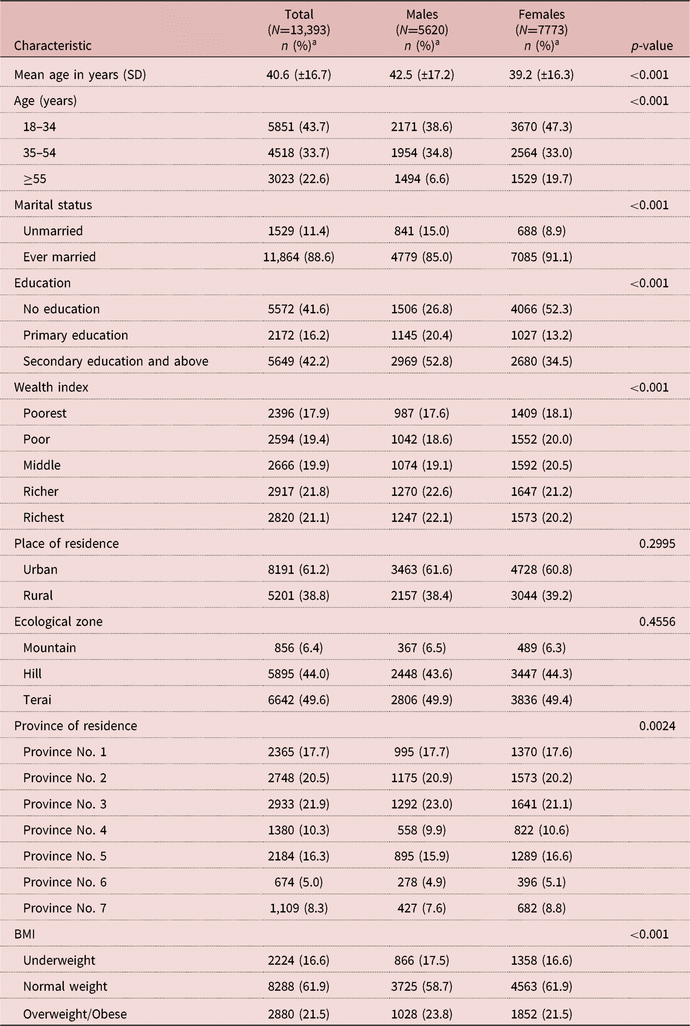
Data from a weighted total of 13,393 respondents were analysed (5620 males and 7773 females). The characteristics of the study population and important gender differences are shown in Table 1. The mean age (±SD) of the study participants was 40.6 (±16.7) years. The mean age of the males (42.5 [±17.2] years) was greater than that of the females (39.2 [±16.3] years, p<0.001). More than one-fifth of the study population (22.6%) was aged ≥55 years. Around two-fifths received no formal education; the proportion of females without formal education was twice that of males (52.3% females vs 26.8% males; p<0.001). Most of the participants were residing in urban areas (61.2%), Province No. 3 (21.9%) and the Terai region (lowlands) (49.6%). Underweight and overweight/obesity were more prevalent among the males than females (underweight: 17.5% males vs 16.6% females; overweight/obese: 23.8% males vs 21.5% females; p<0.001).
Characteristics of the study population and important gender differences (weighted estimates), NDHS 2016, N=13,393

Except for mean age, the difference of other characteristics by gender was measured by χ 2 test. For mean age, the difference by gender was measured by t-test.
a Column percentage.
Prevalence of prior BP and hypertension awareness and control
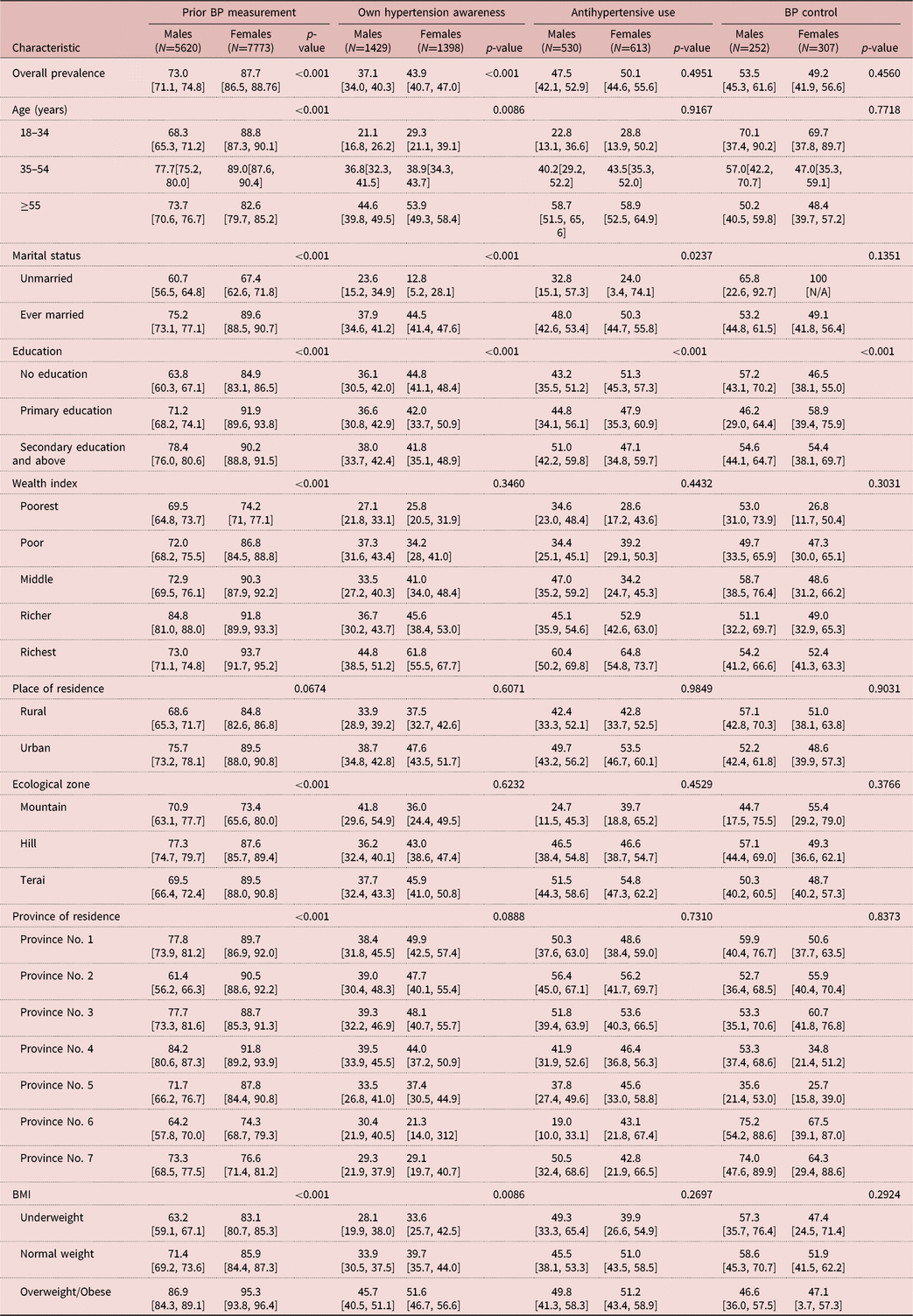
The prevalences (with 95% CI) of prior BP measurement, hypertension awareness, antihypertensive medication use and control of BP among antihypertensive users across the covariates are presented in Table 2. The majority of respondents (81.5%) had measured their BP prior to the survey; the proportion was higher among females (87.7%) than males (73.0%). Similarly, more female hypertensive patients were aware of their high BP compared with their male counterparts (43.9% females vs 37.1% males; p<0.001). Moreover, the prevalence of antihypertensive treatment was higher among females (50.1%) than males (47.5%), although no statistically significant difference was found. However, among the antihypertensive users, the proportion of males with controlled BP was slightly higher than the proportion of females (53.5% males vs 49.2% females); again, no statistically significant difference was found between the two groups.
Weighted prevalence (with 95% CI) of prior BP measurement, own hypertension awareness, self-reported antihypertensive medication use and control of blood pressure (SBP <140, DBP <90 mmHg) among antihypertensive users, by different factors (weighted estimate), N=13,393
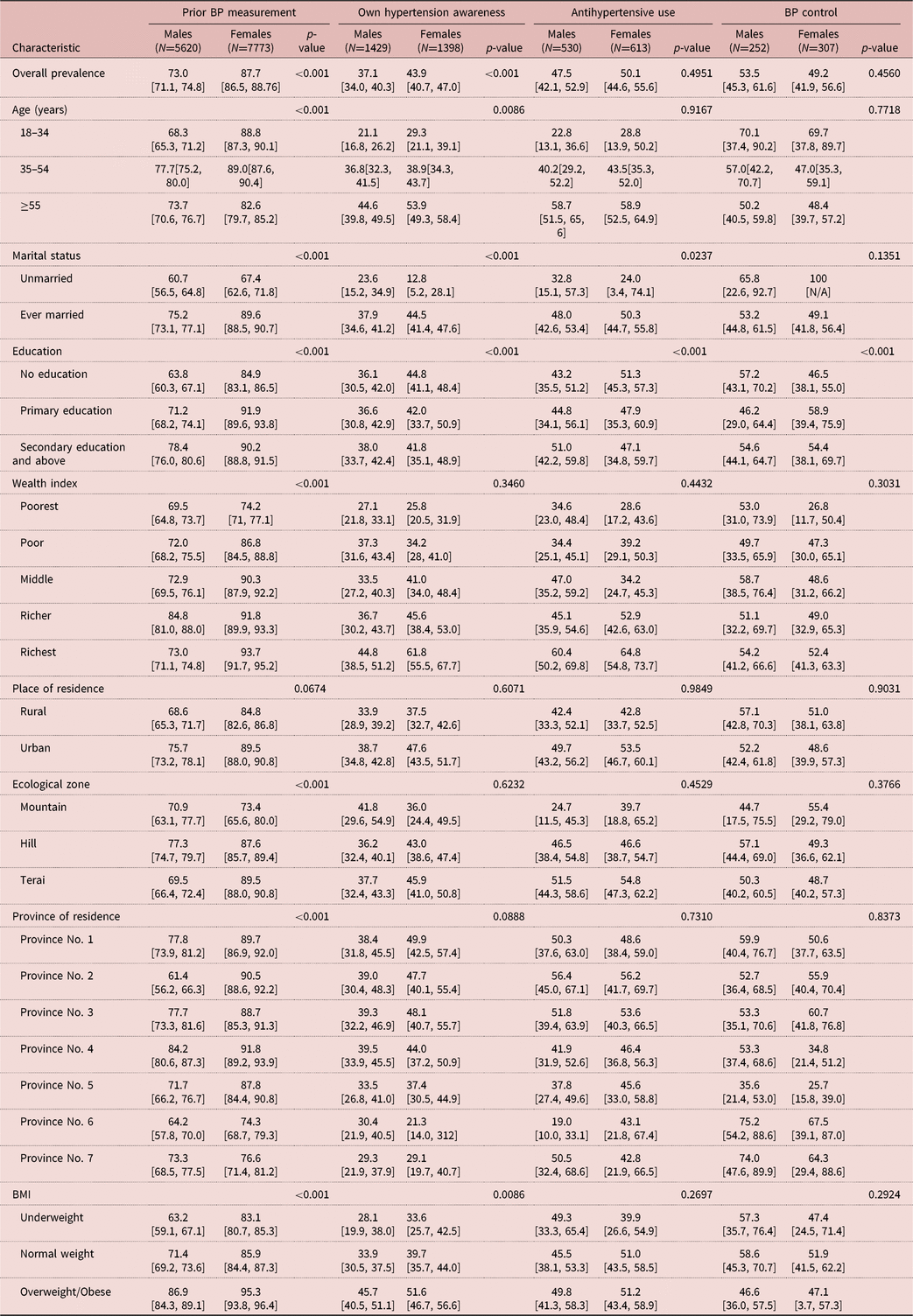
The proportion of prior measurement of BP status was higher among females than males in all age groups; however, the male–female difference reduced with increasing age (the difference was 20.5% in the 18- to 34-year age group; 11.3% in 35- to 54-year age group; and 8.9% in ≥55-year age group). Similarly, hypertension awareness status was also significantly higher among females. Furthermore, the male–female difference reduced with increasing level of education (no education, 8.7%; primary education, 5.4%; secondary and above, 3.8%). Interestingly, in the ‘no education’ and ‘primary education’ groups, self-reported antihypertensive use was higher among females, while the prevalence was higher among males in the ‘secondary and higher education’ group. Urban females had a higher prevalence of antihypertensive use compared with their male counterparts, although a similar relationship was also found in the rural settings.
Among participants taking antihypertensive medication, almost half did not have their BP controlled. Though females more frequently measured BP, were aware of their hypertension status and took antihypertensive medication, more male antihypertensive users were found to have their BP controlled (53.5%) compared with their female counterparts (49.2%).
Factors associated with BP and hypertension awareness and control by gender
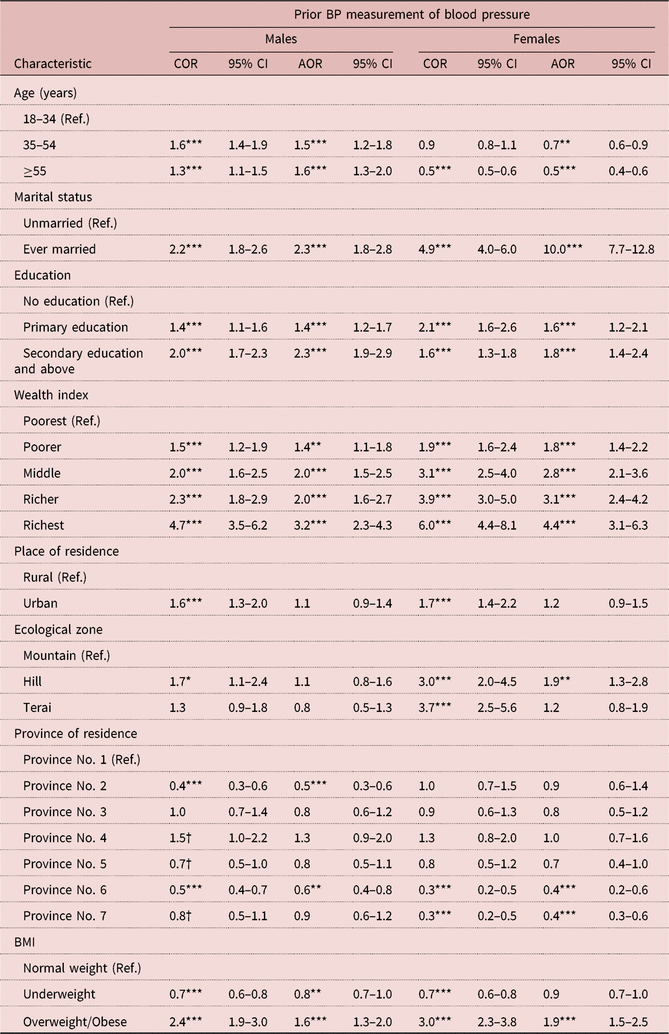
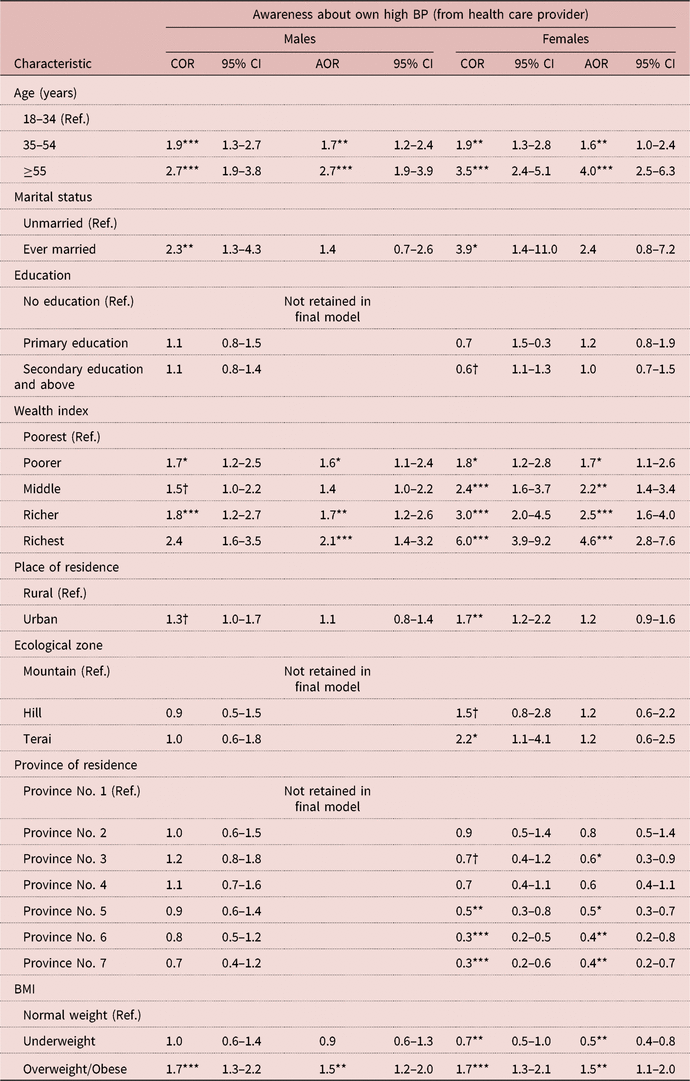
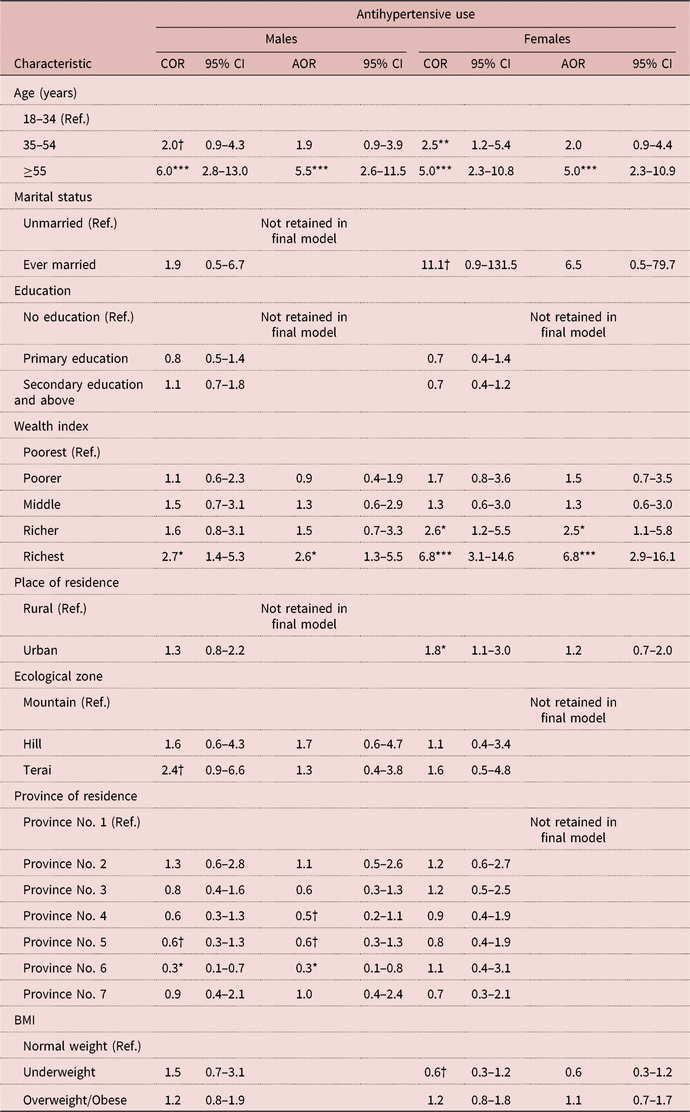
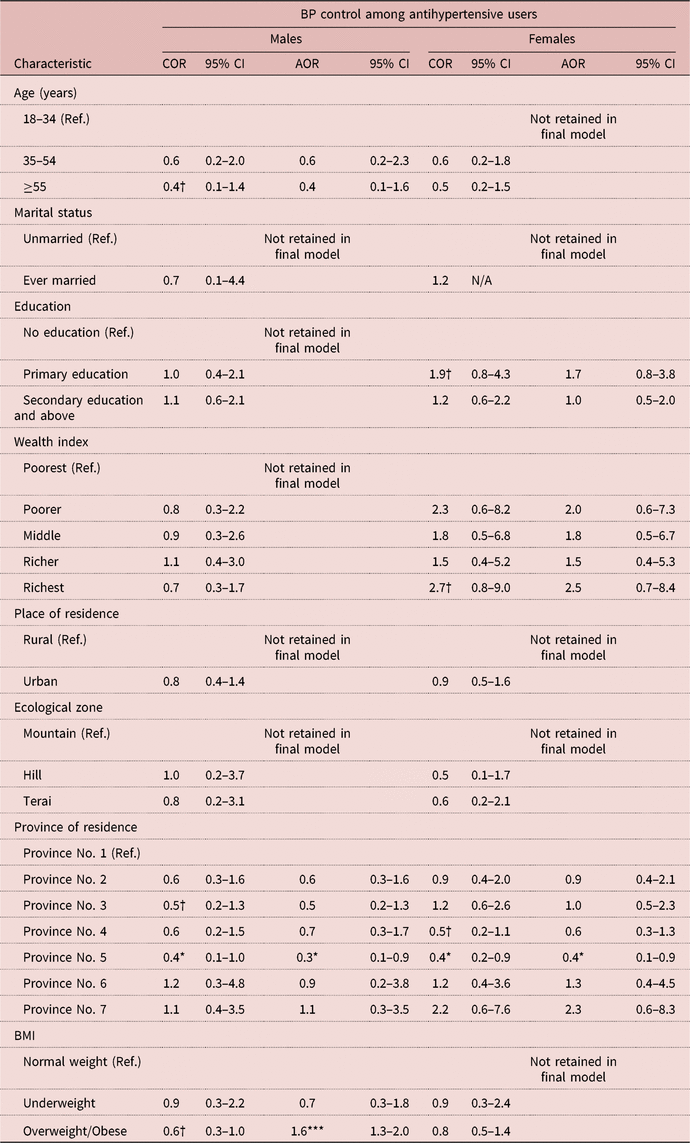
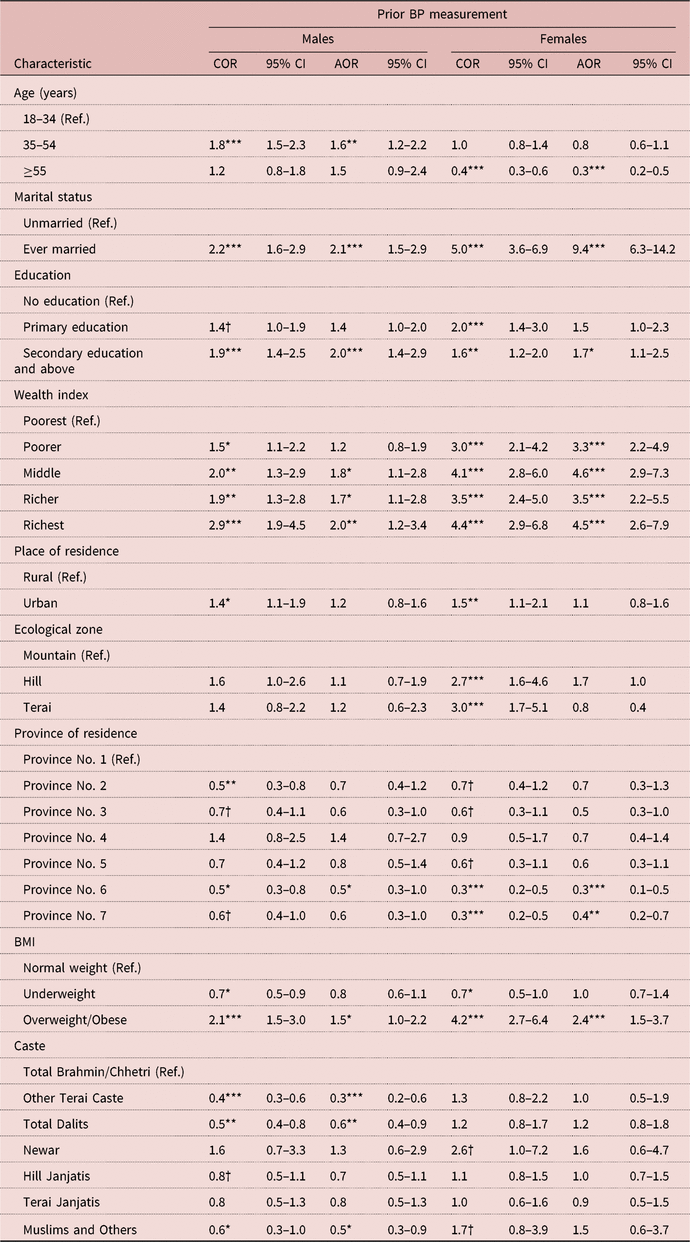
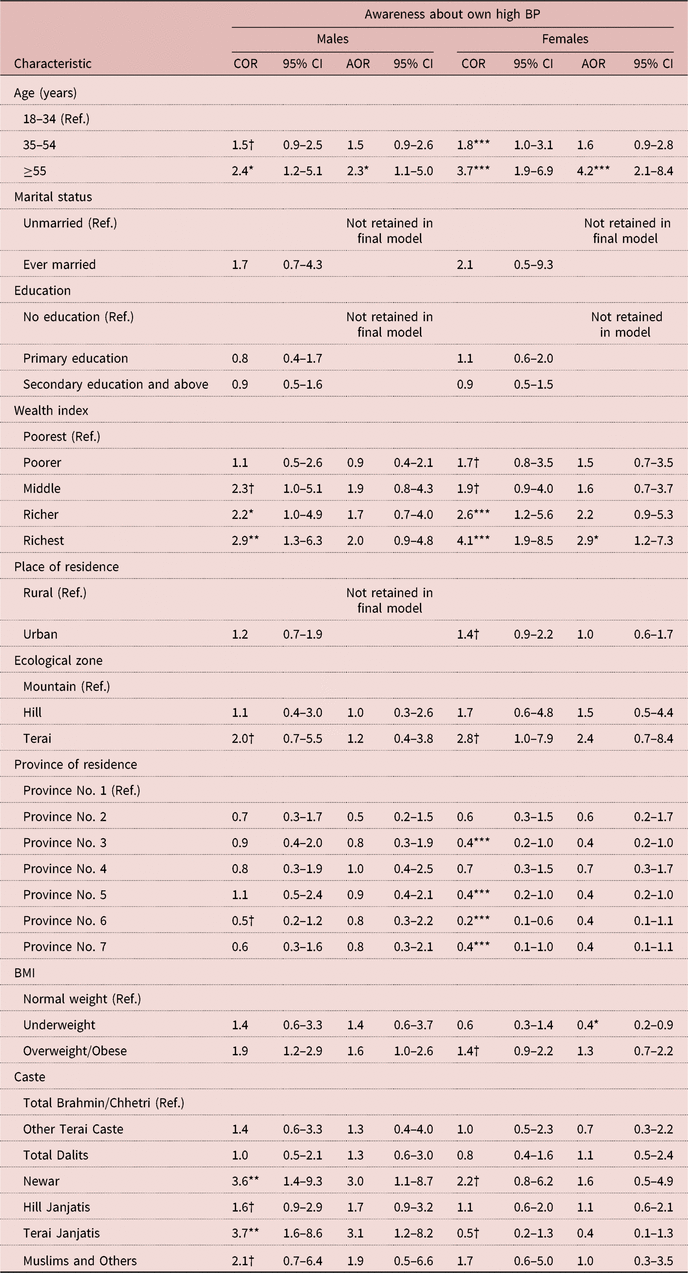
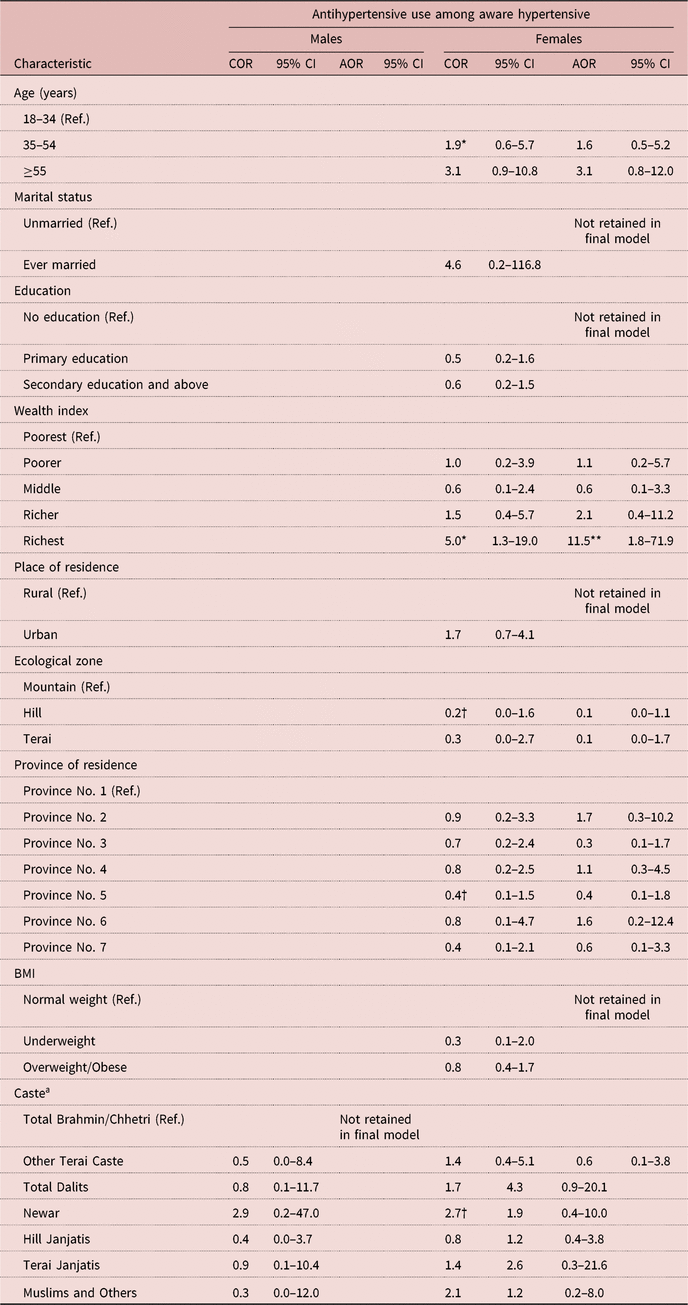
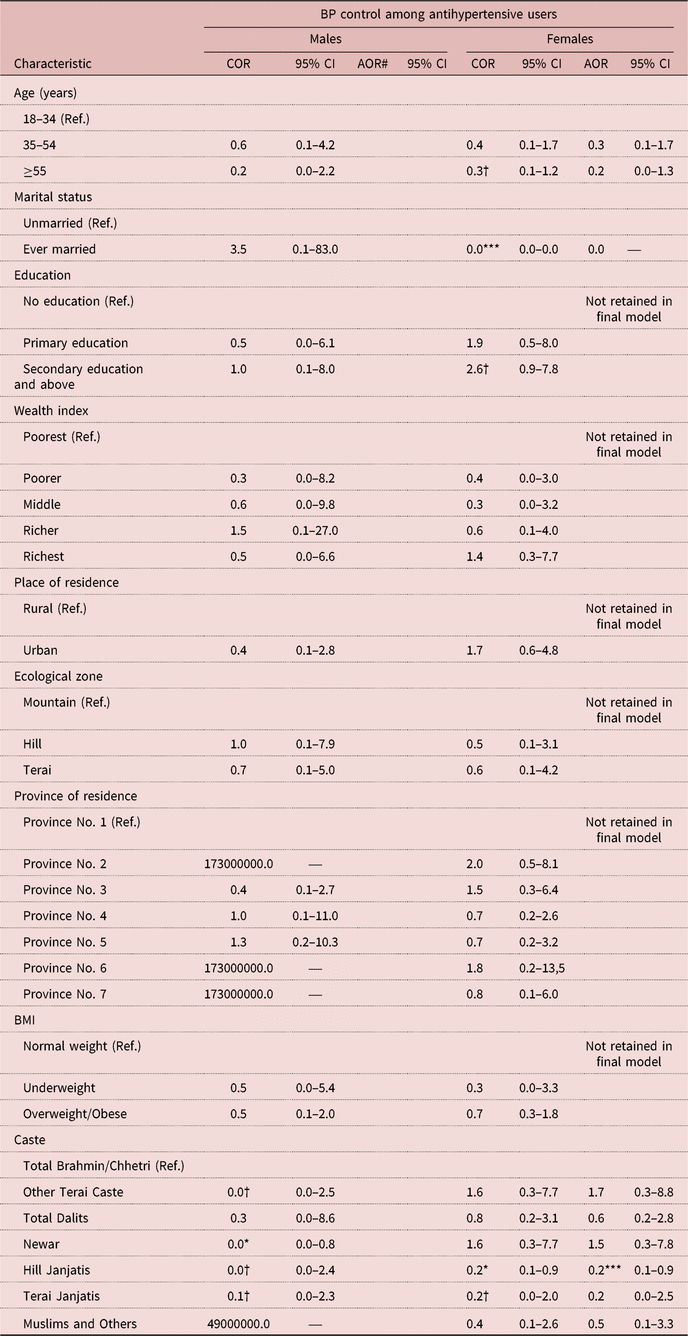
Tables 3, 4, 5 and 6 show the COR and the AOR with 95% CI for factors associated with BP measurement, hypertension awareness, antihypertensive use and BP control, respectively, by gender.
Unadjusted and adjusted odds ratios (with 95% CI) for factors affecting BP measurement, N=13,393

AOR: Adjusted odds ratio; CI: Confidence interval; COR: Crude odds ratio.
†p<0.2; *p<0.05; **p<0.01; ***p<0.001.
Variables with a p-value of <0.2 from the unadjusted model were included in the multivariable analysis.
Unadjusted and adjusted odds ratios (with 95% CI) for factors affecting awareness about own high BP, N=2827

AOR: Adjusted odds ratio; CI: Confidence interval; COR: Crude odds ratio.
†p<0.2; *p<0.05; **p<0.01; ***p<0.001.
Variables with a p-value of <0.2 from the unadjusted model were included in the multivariable analysis.
Unadjusted and adjusted odds ratios (with 95% CI) for factors affecting antihypertensive use among respondents who were aware of hypertension status, N=1143

AOR: Adjusted odds ratio; CI: Confidence interval; COR: Crude odds ratio.
†p<0.2; *p<0.05; **p<0.01; ***p<0.001.
Variables with a p-value <0.2 from unadjusted model were included in the multivariable analysis.
Unadjusted and adjusted odds ratio (with 95% CI) for factors affecting BP control among antihypertensive users, N=559

AOR: Adjusted odds ratio; CI: Confidence interval; COR: Crude odds ratio.
†p<0.2; *p<0.05; **p<0.01; ***p<0.001.
Variables with a p-value of <0.2 from the unadjusted model were included in the multivariable analysis.
Age was significantly associated with BP measurement, BP awareness and antihypertensive use among both males and females, although the direction and magnitude of the association varied. For males, the odds of measuring BP, hypertension awareness and antihypertensive use increased with age. A Nepalese male aged ≥55 years was 1.6 times more likely to have his BP checked (AOR: 1.6; 95% CI: 1.3–2.0, p<0.001) (Table 4), 2.7 times more likely to be aware of his hypertension status (AOR: 2.7; 95% CI: 1.9–3.9, p<0.001) (Table 5) and 5.5 times more likely to use antihypertensive medication (if hypertensive) (AOR: 5.5; 95% CI: 2.6–11.5, p<0.001) (Table 6) compared with a male aged 18–34 years. On the other hand, older Nepalese women were less likely to check their own BP. A Nepalese female aged ≥55 years was almost 50% less likely (AOR: 0.5; 95% CI: 0.4–0.6, p<0.001) to have her BP checked compared with a female aged 18–34 years. However, the older females had higher odds of being aware of their hypertension status (AOR: 4.0; 95% CI: 2.5–6.3; p<0.001) and of using antihypertensive medication compared with younger females (AOR: 5.0; 95% CI: 2.3–10.9; p<0.001).
Marital status was only significantly associated with prior measurement of BP. A male and female that had ever married was almost twice (AOR: 2.3; 95% CI: 1.8–2.8; p<0.001) and 10 times (AOR: 10.0; 95% CI: 7.7–12.8; p<0.001) more likely to have their BP checked, respectively. Males who had only primary education (AOR: 1.4; 95% CI: 1.2–1.7; p<0.001), as well as those who had secondary education or above (AOR: 2.3; 95% CI: 1.9–2.9; p<0.001), were more likely to check their BP than those males who did not have any formal education. A similar direction of association was noted for females.
The household wealth index was positively correlated with the odds of BP measurement, BP awareness and antihypertensive use. Males and females from the richest wealth quintile had more than three times (AOR: 3.2; 95% CI: 2.3–4.3; p<0.001) and four times (AOR: 4.4; 95% CI: 3.1–6.3; p<0.001) higher odds of measuring BP than their counterparts from the poorest wealth quintile, respectively. On the other hand, hypertensive males and females from the richest wealth quintile were twice (AOR: 2.1; 95% CI: 1.4–3.2; p<0.001) and more than four times (AOR: 4.6; 95% CI: 2.8–7.6; p<0.001) more likely to be aware of their own BP than their poorest counterparts, respectively. In the case of antihypertensive use, only wealth quintile had a significant association. Hypertensive males and females from the richest wealth quintile were twice (AOR: 2.6; 95% CI: 1.4–5.3; p<0.01) and almost seven times (AOR: 6.8; 95% CI: 2.9–16.1; p<0.001) more likely to use antihypertensive drugs than their poorest counterparts, respectively.
In the case of having their own BP checked, female respondents from the hilly region of Nepal had 90% higher odds (AOR: 1.9; 95% CI: 1.3–2.8; p<0.01) than the female residents of the mountainous region. No such association was observed for males. In general, the ecological zone of residence had no significant association with BP awareness or treatment. Similarly, place of residence was also not found to be significantly associated with the variables of interest.
Unlike ecological zone, province of residence was associated with BP measurement, BP awareness and antihypertensive use. Nevertheless, the nature of the relationship varied by gender. Male residents of Province No. 2 and Province No. 6 were, respectively, 50% (AOR: 0.5; 95% CI: 0.3–0.8; p<0.001) and 40% (AOR: 0.6; 95% CI: 0.4–0.8; p<0.01) less likely to measure their BP than their counterparts residing in Province No. 1. On the other hand, females from Province No. 6 and Province No. 7 were 60% less likely to have their BP checked (Province No. 6: AOR: 0.4; 95% CI: 0.2–0.6; p<0.001; Province No. 7: AOR: 0.4; 95% CI: 0.3–0.6; p<0.001) and be aware of their hypertensive status (Province No. 6: AOR: 0.4; 95% CI: 0.2–0.8; p<0.01; Province No. 7: AOR: 0.4; 95% CI: 0.2–0.7; p<0.001) compared with their counterparts in Province No. 1. On the other hand, male antihypertensive users from Province No. 6 had 70% lower odds (AOR: 0.3; 95% CI: 0.1–0.8; p<0.05) of having their BP controlled compared with their counterparts from Province No. 1.
For both genders, an increased BMI was positively correlated with the likelihood of prior measurement of BP and hypertension awareness. In comparison, underweight males were 20% less likely (AOR: 0.8; 95% CI: 0.7–1.0; p<0.01) to check their BP than those with a normal BMI. Similarly, underweight females were 50% less likely (AOR: 0.5; 95% CI: 0.4–0.8; p<0.01) to be aware of their hypertensive status than hypertensive females with a normal BMI. When comparing overweight/obese and normal hypertensive males who are taking antihypertensive medication, an overweight/obese male was 60% more likely (AOR: 1.6; 95% CI: 1.3–2.0; p<0.001) to have his BP under control.
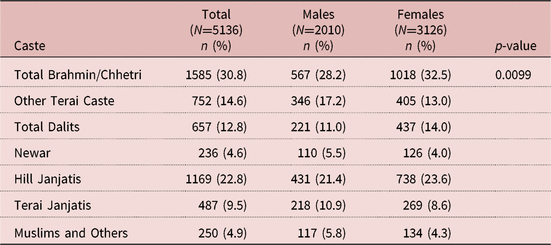
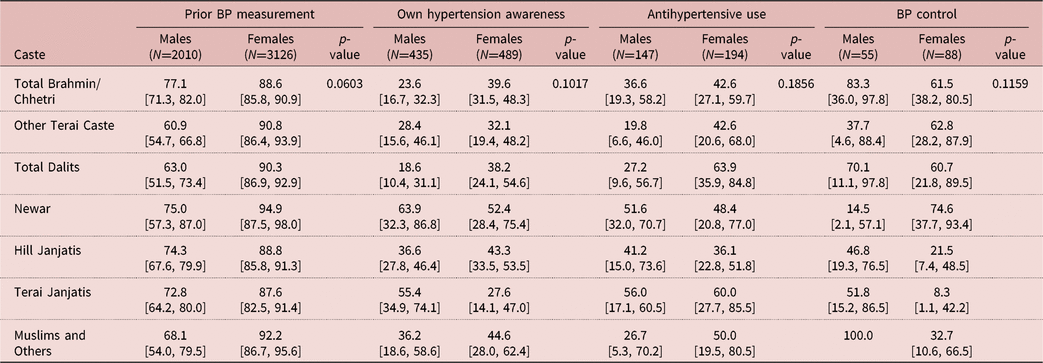
Caste-related data were available for a weighted sample of 5136 individuals. The largest majority (32.5%) belonged to the Total Brahmin/Chhetri (Table 7). As with the main analysis, the levels of prior BP measurement, hypertension awareness and antihypertensive medication use were higher among the female respondents. However, except for Newar and Other Terai Castes, males had a higher prevalence of BP control than females (Table 8). The factors associated with BP measurement, hypertension awareness, antihypertensive use and BP control, including the ethnicity variable, are shown in Tables 9–12. The logistic regression analysis identified a similar associated of factors as the main analysis. In the case of the female participants, ethnicity was not associated with BP measurement, hypertension awareness, antihypertensive use or BP control. However, male respondents who identified as Newar, Other Terai Caste or Muslim/Other Caste had lower odds of having their BP checked compared with respondents from the Total Brahmin/Chhetri Castes.
Distribution of study population by caste (weighted estimates), NDHS 2016, N=5136

Weighted prevalences (with 95% CI) of prior BP measurement, own hypertension awareness, antihypertensive medication use and control of blood pressure (SBP <140 and DBP <90 mmHg) among antihypertensive users, by caste (weighted estimate), N=5136

Unadjusted and adjusted odds ratios (with 95% CI) for factors (including caste) affecting BP measurement, N=5136

AOR: Adjusted odds ratio; CI: Confidence interval; COR: Crude odds ratio.
†p<0.2; *p<0.05; **p<0.01; ***p<0.001.
Variables with a p-value of <0.2 from the unadjusted model were included in the multivariable analysis.
Unadjusted and adjusted odds ratios (with 95% CI) for factors (including caste) affecting awareness about own high BP (from health care provider), N=919

AOR: Adjusted odds ratio; CI: Confidence interval; COR: Crude odds ratio.
†p<0.2; *p<0.05; **p<0.01; ***p<0.001.
Variables with a p-value of <0.2 from the unadjusted model were included in the multivariable analysis.
Unadjusted and adjusted odds ratios (with 95% CI) for factors (including caste) affecting antihypertensive use among respondents who were aware of hypertension status, N=341

AOR: Adjusted odds ratio; CI: Confidence interval; COR: Crude odds ratio.
†p<0.2; *p<0.05; **p<0.01; ***p<0.001.
Variables with a p-value of <0.2 from the unadjusted model were included in the multivariable analysis.
a As the caste variable did not yield a p-value of <0.2 from the unadjusted model it was not included into multivariable analysis.
Unadjusted and adjusted odds ratios (with 95% CI) for factors (including caste) affecting BP control among antihypertensive users, N=143

AOR: Adjusted odds ratio; CI: Confidence interval; COR: Crude odds ratio.
†p<0.2; *p<0.05; **p<0.01; ***p<0.001.
Variables with a p-value of <0.2 from the unadjusted model were included in the multivariable analysis.
a As the caste variable did not yield a p-value of <0.2 from the unadjusted model it was not included into multivariable analysis.
Discussion
This study investigated the gender differences in hypertension awareness, antihypertensive use and blood pressure control in Nepal using a nationally representative sample. The study found that females had a higher prevalence of checking BP, hypertension awareness and antihypertensive use compared with males. Despite this, a higher proportion of male hypertensive participants had their BP under control compared with female respondents. The higher prevalence of BP checking, hypertension awareness and antihypertensive medication use among women is consistent with findings from other studies in Nepal (Karmacharya et al., Reference Karmacharya, Koju, LoGerfo, Chan, Mokdad and Shrestha2017) and its neighbouring countries, like Bangladesh (Rahman et al., Reference Rahman, Williams and Al Mamun2017) and India (Rao et al., Reference Rao, Kamath, Shetty and Kamath2014). The findings also echo the fact that the higher prevalence of antihypertensive drug use among women does not translate into BP control (Maranon & Reckelhoff, Reference Maranon and Reckelhoff2013; Rahman et al. Reference Rahman, Gilmour, Akter, Abe, Saito and Shibuya2015, Reference Rahman, Williams and Al Mamun2017).
The study found a positive and inverse association between age and BP awareness in males and females, respectively. With increasing age, men face many health problems and as such are more likely to get their BP checked (Malekzadeh et al., Reference Malekzadeh, Etemadi, Kamangar, Khademi, Golozar and Islami2013). This finding is similar to that of Rahman et al. (Reference Rahman, Williams and Al Mamun2017). Similarly, younger women were more likely to measure their BP as it is commonly measured during antenatal visits. Between 1994 and 2011, the coverage of antenatal care in Nepal increased six-fold, from 9% in 1994 to 54% in 2011 (Mehata et al., Reference Mehata, Paudel, Dariang, Aryal, Lal and Khanal2017). This may explain the higher prevalence of BP measurement and hypertension awareness among younger females. On the other hand, the finding that older men and women were more likely to be aware of their hypertensive status and use antihypertensive medication is also similar to the findings of other studies in Nepal (Khanal et al., Reference Khanal, Dhungana, Bhandari, Gurung and Paudel2017) and in other settings including Bangladesh and Iran (Malekzadeh et al., Reference Malekzadeh, Etemadi, Kamangar, Khademi, Golozar and Islami2013; Rahman et al., Reference Rahman, Williams and Al Mamun2017). This may be due to increased utilization of health services by the older population compared with their younger counterparts (Malekzadeh et al., Reference Malekzadeh, Etemadi, Kamangar, Khademi, Golozar and Islami2013). The same explanation applies to better awareness among overweight/obese hypertensive respondents (Malekzadeh et al., Reference Malekzadeh, Etemadi, Kamangar, Khademi, Golozar and Islami2013).
Secondary and higher educational attainment was associated with better BP check-up for both men and women. The prevalence of prior measurement of BP, hypertension awareness and antihypertensive use was positively correlated with increasing educational attainment for males. This is consistent with the findings from a multi-country study by Chow et al. (Reference Chow, Teo, Rangarajan, Islam, Gupta and Avezum2013), which found a positive association between hypertension and educational attainment in LMICs. In both men and women, an increased proportion of BP control was noted in the groups that received higher education, which is aligned with the findings of Chow et al. (Reference Chow, Teo, Rangarajan, Islam, Gupta and Avezum2013).
Individuals from the richest wealth quintiles had higher odds of hypertension awareness and antihypertensive medication use than their poorest counterparts. This finding is consistent with a multi-country study conducted in South Asia by Gupta et al. (Reference Gupta, Kaur, Islam, Mohan, Mony and Kumar2017). Wealthier people are more likely to have access to the health care system and better antihypertensive medication (Orach, Reference Orach2009; Palafox et al., Reference Palafox, McKee, Balabanova, AlHabib, Avezum and Bahonar2016). Inequity in BP control among males and females was also observed. Women in the poorest wealth quintiles had a lower prevalence of antihypertensive use and BP control compared with their male counterparts. Gender inequality is particularly prevalent when examining the affordability of expensive antihypertensive medication, which is also reflected in a study in Bangladesh (Rahman et al., Reference Rahman, Williams and Al Mamun2017). One group of respondents – those who possessed little to no education and who were in the poorest wealth quintile – had a particularly low prevalence of hypertension control. Low socioeconomic status influences one’s ability to access health care services as it is often indicative of a lack of knowledge of the utility of the services and a differing perspective regarding the feasibility of long-term plans. Poor hypertension control is ultimately just one aspect of a larger issue for this socioeconomic group (Axon et al., Reference Axon, Bradford and Egan2009; Justin Zaman et al., Reference Justin Zaman, Patel, Jan, Hillis, Raju and Neal2012).
The higher likelihood of low BP awareness, low antihypertensive use and uncontrolled hypertension in Province No. 6 (officially named Karnali Pradesh) and Province No. 7 (officially named Sudurpashchim Pradesh) requires further exploration. According to the Nepal Health Facility Survey 2015, the health facilities of Province No. 6 (Karnali Pradesh) had the lowest of all basic client services in Nepal (Ministry of Health and Population et al., 2017b). In both provinces, the availability of essential medicines was very low (Aryal et al., Reference Aryal, Dangol, Gartoulla and Subedi2018). This may explain the low awareness and antihypertensive use in these two provinces. Further exploration is needed to understand this geographic inequity. Public health programmes in Nepal must prioritize intervention targeted towards reducing this inequity. Although previous studies found urban–rural differences in hypertension awareness, antihypertensive medication use and control of BP (Anchala et al., Reference Anchala, Kannuri, Pant, Khan, Franco and Di Angelantonio2014; Rahimi et al., Reference Rahimi, Emdin and MacMahon2015), no significant association was found in the present study. This implies that public health programmes may not need to preferentially focus on the urban–rural divide when raising awareness.
No association was found between caste and the outcome variables, except for prior BP measurement in the case of male respondents. Robust analysis related to caste was not possible due to missing data. Further study is needed to understand the influence of caste on hypertension control.
It has been seen that a reduction in BP of 10 mmHg is associated with a 20% reduction in major cardiovascular events (Ettehad et al., Reference Ettehad, Emdin, Kiran, Anderson, Callender and Emberson2016). As more than half of the hypertensive respondents were unaware of their own hypertension status, population-level awareness-building activities against undiagnosed and untreated hypertension is needed. Targeted approaches towards high-risk populations, like elderly women and respondents from poor socioeconomic strata, are also required.
The findings of this study show that better awareness and antihypertensive medication use do not necessarily result in better BP control. Uncontrolled hypertension may result from poor and non-adherence to medication regimens (Tibazarwa & Damasceno et al., Reference Tibazarwa and Damasceno2014). Knowledge on the type, dosage and compliance with antihypertensive drug treatment was not collected by the NDHS 2016, limiting further analysis. Currently, antihypertensive drug use is not included in the Essential Services Package (ESP) provided by the Government of Nepal. As a result, these drugs are not available at no or low cost resulting in increased cost of treatment (Misra et al., Reference Misra, Tandon, Ebrahim, Sattar, Alam and Shrivastava2017). Previous studies have found an association between high cost of treatment and poor compliance with pharmacological treatment of hypertension (Rao et al., Reference Rao, Kamath, Shetty and Kamath2014; Vrijens et al., Reference Vrijens, Antoniou, Burnier, de la Sierra and Volpe2017). The health facilities of Nepal suffer from an acute shortage of trained health care providers and guidelines on the diagnosis and treatment of hypertension (Ministry of Health and Population et al., 2017b). Part of the solution to this issue would necessitate the Nepalese government facilitating the training of service providers in the appropriate management of hypertension and to require health care facilities to have antihypertension guidelines.
The limitations of this study warrant discussion. Blood pressure was measured three times in a single day for the study, whereas JNC7 guideline recommends longitudinal measurement for confirmatory diagnosis of hypertension (Chobanian et al., Reference Chobanian, Bakris, Black, Cushman, Green and Izzo2003). The temporal relationship between the outcome variable and explanatory variables could not be established because of the cross-sectional nature of the study. Robust association between the outcome variables and caste could not be obtained due to missing data. However, to the best of the authors’ knowledge, this is the first study to determine the gender differences in hypertension awareness, antihypertensive use and blood pressure control in Nepalese adults using a nationally representative sample. Furthermore, the NDHS utilized valid tools and standard measurement techniques minimizing the probability of measurement errors.
In conclusion, this study has shown that BP measurement, hypertension awareness and antihypertensive use were higher among Nepalese adult women, but control of BP was lower in comparison to Nepalese men. Gender inequity in antihypertensive medication use and BP control was observed for females from the poorest wealth quintiles. Individuals from the poorest wealth quintiles and the ‘no educational attainment’ stratum were less likely to be aware of their hypertension status or use antihypertensive medication. Geographical inequity was observed for Province No. 6 (Karnali Pradesh) and Province No. 7 (Sudurpashchim Pradesh) regarding hypertension awareness and antihypertensive medication use. Public health programmes in Nepal on hypertension and NCDs should focus on raising awareness among elderly women and reducing the economic burden of those belonging to the poorest wealth quintiles and lower education strata, especially those living in Province No. 6 (Karnali Pradesh) and Province No. 7 (Sudurpashchim Pradesh). Further insight is needed to understand why females have poorer control of BP than males, despite having higher antihypertensive medication use.
Acknowledgments
This study was conducted using the datasets of the Nepal Demographic Health Survey (NDHS) 2016. Hence, the authors of this study are thankful to DHS programme for offering the datasets.
Ethical Approval
In order to obtain ethical approval, the NDHS survey protocols were submitted to the Nepal Health Research Council as well as to the ICF Institutional Review Board in Calverton, MD, USA. Informed consent was obtained from the respondents.
Conflicts of Interest
The authors have no conflicts of interest to declare.
Funding
This research received no specific grant from any funding agency, commercial entity, or not-for-profit organization.