Most medieval Islamic art, like the art of Africa or China, has an instantly recognisable cachet; surely, all can agree on that. But to recognise it is one thing; to define it is quite another. After all, as the adage has it, “Poetry is what gets lost in translation”. The principal aim of this article is precisely to attempt a definition of what makes medieval Islamic art Islamic, a perennial question that has vexed scholars for well over a century, and that is still contentious today, with significant contributions to that debate by F. B. Flood, A. Shalem, G. Necipoğlu, and W. Shaw among others, although the field of enquiry has broadened far beyond the medieval period in much of recent scholarship.Footnote 1 The fact that several of the greatest of the scholars of earlier generations, notably EttinghausenFootnote 2 and Grabar,Footnote 3 restlessly returned to this topic again and again over many years is a testament to the difficulties attendant on a satisfactory set of definitions. That in turn suggests that there is no one answer to the question, and that the best way forward is to propose a series of interlinked characteristics whose net impact stamps a given object as being from the medieval Islamic world, defining the period concerned as stretching from circa 650 to circa 1500 ad. As Ettinghausen noted in a key article, “the apparent uniform character of Islamic art” belies its “tremendous variety”.Footnote 4
Problems of definition
Why should that quest for a satisfactory definition of what makes medieval Islamic art Islamic meet so many obstacles? It may help to identify some of those obstacles. The quest for an acceptable solution is all too often swamped in the very numerous general accounts of how that art developed over the centuries, in which the essential nature of medieval Islamic art scarcely figures, so that one cannot see the wood for the trees. Or the search for an answer is entangled in the perennial debates about what terminology to use, which are sometimes triggered by a change in fashion. These debates can often be both repetitive and circular, and in the worst case, serve as mere displacement activity.
A more insidious problem, however, must be confronted and dealt with at the outset. It concerns unconscious bias. So it is well to remind scholars whose focus is Western art, and whose first encounter with medieval art tends to be with that of Western Europe, that the result of that encounter is apt to skew their expectations of medieval Islamic art. Such exposure can encourage preconceptions that medieval art in general is largely figural and religious; that it privileges sculpture, easel, and mural painting; and that, in its later centuries, it has its full quota of named dominant personalities about whom a good deal is known. Such views constitute a kind of unacknowledged baggage that must be jettisoned when contemplating medieval Islamic art, for that art cannot be understood through the application of such categories. Its hierarchies are fundamentally different. Figural art exists, but not on a major scale and certainly not with earnest mimetic intent. To the medieval Muslim artist, man was emphatically not the measure of all things. So portraiture and large-scale figural art did not interest him. Nor were religious themes or the classical tradition major sources of inspiration. Nor—to take the issue of mimesis a little further—did the development of landscape, genre, or of still life. Finally, there are very few medieval artists from the medieval Islamic world about whom much more is known than their bare names. Many hundreds of works, large and small, are signed—far more than in medieval Western art, as it happens—but the personalities behind those names are unknowable.Footnote 5 This is a paradox—a multitude of names, but with little prospect of learning much from them. So it is important to begin by acknowledging what medieval Islamic art is not before attempting to understand what it is, and what aesthetic governs it.
These remarks have a very specific context. For the past century-and-a-half, it is Westerners that have dominated the study of medieval Islamic art,Footnote 6 and they have inevitably brought with them their baggage as described above. As late as 1950, as Oleg Grabar, the doyen of this field for a generation, once observed to me, it was possible for a young scholar attending an international conference to meet all the major players in the field at that time, and virtually all of them came from the West. Over the past couple of generations that has changed, at first only gradually but now rapidly, as those scholars who are themselves Muslims, or citizens of Muslim-majority countries, or who were raised in those countries, or who value that heritage as their own even though they live in the West, have taken on an increasingly important role in the study of medieval Islamic art. And they bring to the task a host of hitherto unexplored perspectives.Footnote 7
One further initial caveat is important. The attempt to identify a single aesthetic of pre-modern Islamic art is doomed from the outset. The reason is plain: it is folly to try to fit works of art created in the vast region, spanning from Spain to Indonesia, and the vast time-frame from the seventh to the late seventeenth centuries—for thereafter Islamic art departs still further from its medieval expressions and undergoes something of a sea-changeFootnote 8 while still remaining Islamic, as discussed below—into a single umbrella definition. It is more helpful to think, with Allen, in terms of a “family of artistic traditions that we call Islamic art”Footnote 9 or, as Aga-Oglu put it, to see it as a composite art reflecting an entire civilisation whose unity comprises immense variety,Footnote 10 an idea subsequently taken up by Ettinghausen.Footnote 11 Incidentally, Aga-Oglu's article was far ahead of its time and has not had the detailed recognition that it deserves. It is noteworthy, however, that the bulk of its content is precisely not devoted to a definition of what constitutes the full range of medieval Islamic art but is devoted largely to the first two Islamic centuries.Footnote 12
The evidence of medieval texts
The present article is necessarily an exercise in inductive reasoning. This means that it attempts to infer hitherto uncertain or undefined general principles and attitudes from individual examples. This procedure is quite the opposite to deductive reasoning, in which the known general principle is applied to elucidate a particular but problematic example. The need to proceed inductively, to attempt to uncover first principles, is dictated by the absence of medieval texts that spell out the components of a medieval Islamic aesthetic in the visual arts, as will be discussed later in this article. Descriptions abound, often enthusiastic ones, but it is hard to draw general principles from them.Footnote 13 They refuse to be pinned down. The briefest look at other ancient or medieval cultures—for instance, ByzantiumFootnote 14 or the medieval WestFootnote 15—shows that this is a standard problem.
This is not to suggest that the sensibilities of medieval connoisseurs were inadequate to the task of appreciating works of art. But it is worth remembering that art history in the West as an academic study is barely two centuries old. One must reckon with what the acceptable style of discourse was in medieval times, and not castigate accounts of works of art that sound extravagant, that offer description rather than analysis, or that have recourse to an imagined but irrelevant and essentially meaningless gold standard of times long past—Phidias for a medieval Byzantine, Mani for a medieval Persian.
So the comments of Muslim men of taste are of disappointingly limited value. Does one fare any better with Islamic philosophers when they attempt, say, to define what constitutes beauty? Unfortunately, not. In some strange way their definitions contrive to keep actual works of art at arm's length, and even to disengage from them. The discussion remains cerebral, as in al-Ghazali's comments on beauty,Footnote 16 and the visual arts tend to be referred to in the most general terms.Footnote 17
Why should this be? Perhaps a certain poverty of language is at least partly to blame. Or the connection between the thought of the Muslim intellectual and the actual product of the medieval Islamic craftsman is simply too tenuous to be helpful because these intellectuals were fundamentally uninterested in the visual arts. It is true that the celebrated theory of Ibn Khaldun on the rise and fall of dynasties and civilisations carries the unmistakable message that the greater the luxury of a civilisation, the sooner it will fall.Footnote 18 But as one engages with a particular work of art, such a theory is of little value in developing a theory of medieval Islamic aesthetics in the visual arts. After all, one person's notion of refinement may equate to another's notion of decadence.
Philosophers and craftsmen, then, seem to inhabit different worlds. And as Robert Hamilton remarked in another context, Arabia bred no art historians.Footnote 19 Doers do, critics criticise. The skills of the two parties are simply different and there is no place for them to meet. It is scarcely reasonable to hope that both sets of skills will be found to a high degree in one person. For our purposes it has to be underlined that medieval Muslim artists did not write down detailed analyses of what they were trying to achieve,Footnote 20 and why, and how, in their work, nor what impact they were hoping their work would have on the viewer. If they ever defined in words what made their work outstanding, it seems that those words have not come down to us.
It is even possible that the comments of the learned class on medieval Islamic art could be misleading. Even the most cursory comparison of the voluminous literature on the lawfulness of figural art in the medieval Islamic world with the actual output of medieval Muslim artists lays bare the yawning gap between theory and practice. While the medieval Islamic jurists tackled the theoretical issues with all the energy of their Western colleagues debating how many angels could fit onto the head of a pin, medieval Islamic artists continued in their own sweet way, apparently in blithe disregard of what the lawyers dictated. Theory and practice diverged. It is true enough that a de facto prohibition on the depiction of living creatures in a religious context was indeed generally respected, though with significant exceptions in Turkey, Iran, and India. But while the medieval jurists interpreted their writ as being much more general than this, in the non-religious sphere of those times their views were almost totally ignored. So the debate about Islamic iconoclasm—a debate which each new generation of Islamic art historians feels compelled to re-open—has something rather unreal about it. What the ‘alim in the madrasa laid down as law—and the differences of opinion in the different madhhabs on this issue seem to have been slightFootnote 21—the man in the workshop largely ignored. To understand these works of art it seems preferable to accept, regretfully, that their makers tend to be all too silent, and one must therefore interrogate the objects themselves.
The favoured media of medieval Islamic art
Medieval Islamic art promotes those arts described in the West as “decorative” or “minor” to major status.Footnote 22 So it privileges, alongside architecture and book painting (which are arts highly valued in many another culture), media such as textiles and carpets, ceramics and metalwork. Thus, in much of medieval Islamic—as distinct from, say, medieval Western—art, the focus switches from the macro to the micro. That instantly lays a heavier burden on both the maker and the viewer; both have to concentrate harder. The implications of that finding will be explored in more detail below. But it is worth noting that such questions as what happens within these media, and what exactly they have in common, are addressed all too rarely.
Moreover, the core question of identifying what constitutes medieval Islamic art is often elbowed aside by other concerns. Some scholars have broadened the scope of the enquiry still further by seeking to pin down connections between medieval Islamic art and the Islamic contribution to other areas of the humanities, such as poetry,Footnote 23 or to view medieval Islamic art within the much wider context of Islamic aesthetics as expressed in music, literature, philosophy, and theology.Footnote 24 Others have tried to bring order to the problem of identifying a distinctive Islamic aesthetic by concentrating on common misconceptions about what medieval Islamic art is.Footnote 25 Yet that means concentrating on the negative rather than the positive. It is not the same as seeking to define the immanent characteristics of that art.
Still others take a more radical turn and assert that medieval Islamic art as a whole is an expression of religious faith.Footnote 26 That is a point worth making, and in many individual cases it is plainly true; but it does not work as a generalisation, because it implies simply ignoring a great deal of medieval Islamic art that is clearly secular in inspiration. Thus, nomenclature itself is being weaponised. Assertion, moreover, is central to this argument and the evidence that is adduced in support of such assertion is inconclusive. The fact that the artist lives in a Muslim society and has a typically Muslim name is not enough to prove that he is devout and that his religious faith is the engine that makes his art take a given form. Furthermore, a strong, even strident, polemical tone that is intolerant of other views can be detected in this group of scholars, whose influence was at its peak in the 1970s.Footnote 27 Subsets of this view, which has subsequently lost ground to other concerns, underline the importance of the Sunni or the Sufi element. This view brings issues of terminology into play again, for it insists that the word “Islamic” is a religious term rather than a shorthand way of describing the society that produced this art. That society was multi-confessional. And while it is perfectly reasonable to underline the importance of Christian and Jewish artists in the general canon of medieval Islamic art, it is vital to recognise their contribution as minor.Footnote 28
Moreover, the debate has moved on. One approach has stressed a variety of interconnected issues such as reception rather than production, secularity, perception, the role of the heart, and the global and political context of Islamic art right down to our own times. Here Wendy Shaw's recent book, already cited, is of particular interest.Footnote 29 Another long-overdue development has been a newly intense focus on the many versions of Islamic art produced between circa 1700 and the present day, a trend in which Barry Flood has had a leading role.Footnote 30 All this has substantially changed the nature of the debate about what is Islamic about Islamic art. Attempts to hive off contemporary art produced in the Islamic world as a subject to be treated alongside contemporary art in a global context, and accordingly to minimise its Islamic nature, have been strongly challenged.Footnote 31 But one should bear in mind that much of this recent discourse has taken place across a much more panoramic landscape than is implied in the phrase “medieval Islamic art”. That landscape includes a much wider chronological and geographical scope; the involvement of other arts, such as music, and of other disciplines, such as philosophy; greater recourse to theoretical models; a greater awareness of historiography,Footnote 32 and of the degree to which the discipline of Islamic art history has been shaped by its founding fathers in the late nineteenth and early twentieth centuries;Footnote 33 a new emphasis on regionalism and revival;Footnote 34 and much more detailed reference to the global political developments of the last two centuries, for example, colonial and post-colonial studies.Footnote 35 A key paper by Gülru Necipoğlu covers many of these bases and forms an excellent introduction to the range of current discourses on the landscape outlined in the previous sentence.Footnote 36 As for the way forward, Avinoam Shalem's 2012 paper offers perhaps the fullest set of options.Footnote 37 In sum, it is abundantly clear that every generation of scholars feels drawn to reflect on the nature of the art commonly described as “Islamic”,Footnote 38 and indeed that adjective has itself been challenged in some quarters—which is not surprising, given that (as already noted) it is open to more than one interpretation, for example, to refer only to the religion of Islam or, alternatively, to the culture of the Islamic world. The flood of critical debate in recent years on the very nature of what constitutes Islamic art history has led to proposals for a radical rethinking of how it should be studied and the need to reassess certain embedded paradigms,Footnote 39 which must increasingly include the digital turn.Footnote 40 The problems caused by the undue medievalisation of Islamic art in general have been highlighted in recent scholarship,Footnote 41 but that is not to diminish the importance of the art produced in that period. Indeed, the focus of the present article is squarely on the art of the central Islamic lands in the medieval period, with the aim of teasing out some of the defining characteristics of this art by referring to specific examples so that the discussion remains solidly rooted in what was actually produced. Hence the frequent use of the qualifying adjective “medieval” in the present article, so as to obviate the possibility of misunderstanding. For medieval and post-medieval Islamic art are two very different entities.
Three pervasive major themes
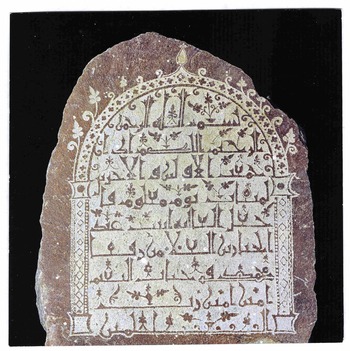
So what are the favoured modes of expression in medieval Islamic art, and how do they impact on its underlying aesthetic? The first part of that formulation is familiar ground to many, though it is worth revisiting quickly; the second part has attracted far less attention. This article, dedicated to a scholar who has thought both widely and deeply on these matters, acknowledges the widely accepted fact that the most common forms of expression in medieval Islamic art are geometry, vegetal themes, and writing. It is a fact worth pondering that no other civilisation has chosen these themes as the primary foundation for its art. Equally worth pondering is that none of them is explicitly and intrinsically religious, even though a culture defined by its religion has generated them. At base, all three are theoretically simple. But they become an endless fount of inspiration in medieval Islamic art over the centuries. Moreover, these three categories, though apparently quite separate from each other, overlap and interpenetrate each other to such a degree that it is hard to draw boundaries between them. Geometric networks of polygons contain dense vegetal infill. Scrolling networks, which seem at first sight to replicate nature in their randomness, accommodate themselves easily into grids and thus partake more of geometry than of natural growth. The shafts of inscriptions metamorphose into complex geometric knots while their tips become foliate, or indeed the letters themselves burst into flowers (Figure 1). Inscriptions form themselves into rayed solar roundels so that, alongside their content, they become a metaphor of light. Here, if anywhere, in this constant creative interplay between geometry, vegetal themes, and writing, often with powerful symbolic undertones, is the place to search for a distinctive medieval Islamic aesthetic as it applied to the visual arts. And while these themes responded bountifully to the concentration which medieval Islamic artists devoted to them, they could be, and usually were, exploited without recourse to any form of realism. That is a tribute to what seems to be a natural tendency towards abstraction on the part of medieval Islamic artists working across multiple media and on the most varied scales.
Mecca, basalt funerary stele of al-Ghaliya bint ‘Abd al-Jabbar, tenth century. Source: National Museum, Riyad.

But that urge towards abstraction brought with it a heavy opportunity cost, for it closed huge swathes of artistic expression to the artist. It would not be hard to cite exceptions to this general rule, but exceptions they remain.Footnote 42 The primacy of figural art and religious subject matter is displaced, as is landscape, the classical tradition, and, indeed, naturalism in all its forms, including the depiction of genre and everyday life. None of this endlessly rich subject matter struck more than a temporary chord with medieval Muslim artists. But on the credit side, their themes of choice concentrated their minds to spectacular effect. So the three basic categories of geometry, vegetal ornament, and writing achieved an unusual intensity in the hands of medieval Islamic craftsmen, who used contrasts of size, colour, and texture; light and dark; and solid and void, as well as employing devices of rhythm, repetition, echo, and symmetry to secure effects of abstraction and concentration. In particular, they gravitated to the use of ornament as a vehicle of contemplation. So the emphasis on decoration and embellishmentFootnote 43 could have deeper resonances. But it must be conceded that embellishment all too easily becomes an end in itself, and this manifests itself in the paradoxical case of inscriptions that are so complex that the urge to inform is swamped by the urge to decorate.Footnote 44
A single article cannot hope to investigate the many expressions of the three categories outlined above, and there is no space here to develop yet further themes such as tricks of illusion like the exterior dome of the Shaykh Lutfallah mosque,Footnote 45 the meanings of, say, geometry in Islamic art,Footnote 46 or the role of religious belief in medieval Islamic ornament.Footnote 47 Grabar devoted one of his finest books to the theme of Islamic ornament—its longevity, its variety, its uses, its meanings—clear evidence of the rich potential of this field of enquiry.Footnote 48 And Terry Allen, in a seminal book that is the work of a powerfully original thinker, exemplifies the value of multiple approaches to the problem tackled in the present article.Footnote 49
In order to keep this article within manageable proportions, it seems better to focus closely on one of the three major themes of medieval Islamic art categories outlined above, for which the general term “nature” is appropriate. That said, it would have been equally possible and productive, had space permitted, to subject geometry or writing to the same detailed analysis. This general discussion of nature will be followed by a detailed analysis of the aesthetic of what is sometimes termed classical Persian painting,Footnote 50 a field to which Barbara Brend has made many important contributions.
Nature
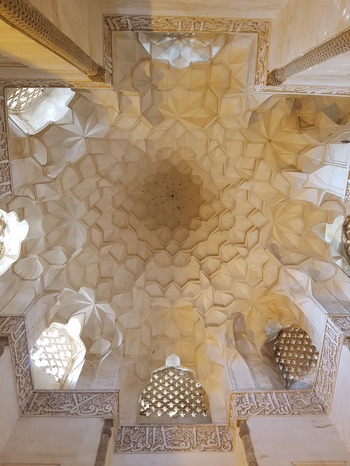
It is often noted that Islamic craftsmen privilege vegetal designs, but the exact character of this theme is equally often overlooked. This is because it is common for medieval Islamic craftsmen to depict not nature itself—mimesis, as already noted, was rarely their aim—but rather a world beyond nature. This world is rooted in what you know, in the evidence of your own eyes, but the artist uses the familiar as a launching pad for the unfamiliar. Thus the honeycomb becomes the muqarnas vault (Figure 2), the spider's web turns into a network of exploding polygons, the ice crystal is mirrored in symmetrical hexagons, the blossoming flower underlies the transformation of an inner dome into a gigantic rosette. These are all examples of a natural geometry—whose precision is all the more miraculous for the tiny scale of its execution—inspiring some much larger man-made creation. Part of the success of that creation is our dim sense that behind it lies some aspect of the world of nature. It is not mere fantasy; it is anchored in objects of nature that have their own unique beauty and that are the common property of us all, and that we have known from childhood on.
Muqarnas dome, Mausoleum of ‘Abd al-Samad, Natanz, fourteenth century. Source: Mehreen Chida-Razvi, 2016.

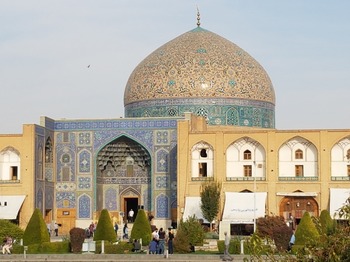
But this is by no means the only way in which the medieval Islamic craftsman manipulates the world of nature. A second area of experiment has even enriched the English language. Enter the arabesque, whose very name betrays if not its origin, at least the area where one would most expect to encounter it.Footnote 51 It evokes plant life readily enough, but does not replicate it exactly. As Alexander Pope put it: “’tis nature still, but nature methodis'd”. It knows virtually no limits as to where it is used or on what scale. Blown up to colossal size, arabesques curl all over the exteriors of Safavid domes (Figure 3).Footnote 52
Dome, Shaykh Lutfallah Mosque, Isfahan, 1590s-1619. Source: Mehreen Chida-Razvi, 2016.

At first glance they suggest natural growth, but closer inspection reveals that they form mathematically exact concentric scrolls, of equal size in each tier and with the very tendrils repeating themselves on the same scale and in the same place in mirror symmetry. That is no mean achievement for the curvilinear surface of a dome. The aim is obviously to suggest untrammelled luxurious vegetation, especially in the tendrils whose wavy forms artfully suggest the unpredictable quality of natural growth. But the execution is far too precise to sustain that illusion for long, since it betrays the use of the compass. Seen as a whole, moreover, such a dome is notable for the lack of irregularity, whether in the size or the positioning of its components, and equally the absence of overlap. In short, ostensibly natural forms have been dragooned into place to achieve an even covering of the field. But paradoxically enough, by some intricate and invisible sleight of hand, they seem to flow with all the freedom of organic life. Moreover, the arabesque proved flexible enough to survive with its essential character intact even when it was shoehorned into long narrow bands or employed as infill for leftover spaces—spandrels, corners, and any number of polygons in panels containing geometric networks. Even when they are squashed into place, and reduced to a piece of decorative inconsequence, they do not lose their essentially vegetal nature.
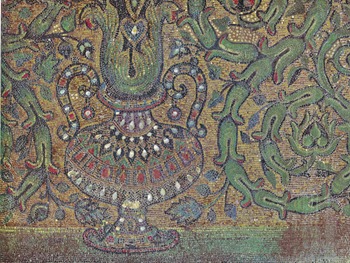
Among recognisably vegetal forms it is not only the arabesque that is marshalled with a strict and artificial regularity that is foreign to plant life. So, in a third kind of variation on an ostensibly natural theme, almost any vegetal form, from vine leaf to floral blossom, can be made to serve the purposes of design by repetition—on a vertical, horizontal, or diagonal axis, in circular form, in alternation, or in still other ways. The key point here is that the vegetal form is treated as a motif even when it maintains some connection with growth, for example, by its attachment to a tendril, root, branch, or even tree. Thus, the form itself may be accurately represented, but it is the way in which it is used that departs from nature. In this faithfulness of apparently natural forms to an underlying man-made geometric order one may recognise an authentically Islamic aesthetic. This approach makes its appearance in the earliest years of Islamic art, in the seemingly endless multiplication of vegetal scrolls encircling the inner drum of the Dome of the Rock (Figure 4).
Jerusalem, Dome of the Rock, detail of interior drum, 691–692 ce. Source: After R. Ettinghausen, Arab Painting (Geneva, 1962), p. 21.

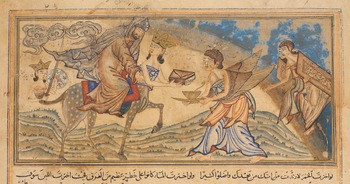
A fourth way in which nature is, so to speak, used against itself might colloquially be termed “cut and paste”. A particularly obvious instance of this approach is the hybrid creature. Clearly such a being is beyond nature, and it is made all the more powerful by the further ideas associated with it, which of necessity conjure up a world other than our own. The connection may be zodiacal or planetary (Figure 5), and thus suggest a world of endless space and time, but one that impacts for good or ill on mankind. Or the fabulous creature may imply protection from evil and thus be stationed at points of extra vulnerability—dragon door-knockers at a mosque entrance in Jazirat ibn ‘Umar, serpents with dracontine heads at the Talisman Gate of Baghdad or the citadel at Aleppo,Footnote 53 or in the frontispiece of a book like the Kitab al-Diryaq. Nor was this idea confined to the medieval Islamic world; the griffin of Pisa, for instance, was for centuries placed on the gable of the west front of the city's cathedral. Such creatures could confer a blessing—like the harpy or human-headed bird, or the sphinx, the human-headed winged lion—and as such they pace sedately around the rims of many a luxury ceramic plate accompanied by a roll call of inscribed blessings. Thus, word and image complement each other. In certain cases, for example, in divination bowls with images of creatures that are half-human, half-demonic, they may represent a curse. The demons of the immemorially distant past described in the Shahnama are of this kind, but the lurid imagination of the painter or painters known by the blanket term ‘Siyah Qalam’ depicts such creatures of the night with unsparing realism and horror as denizens of our own world too. Often enough, like Sagittarius, the griffin, or the senmurv, these hybrid beings are inherited from other cultures; and, at times, memories, which can be blurred and confused, of their earlier, pre-Islamic significance can survive in the medieval Islamic context. Less portentously, hybrids and fantastic creatures like the roc or the sannaja may be used to allude to unexplored, dangerous, and exotic lands, traditionally located (as they were for medieval Europeans) far to the east. When Abu Zayd and al-Harith journey to the Eastern Isles, as related in the forty-eighth maqama of al-Hariri, those islands are shown in the 1237 Paris manuscript as inhabited by sphinxes and harpies.Footnote 54
Tabriz, Rashid al-Din, Jami‘ al-Tawarikh, the mi‘raj of the Prophet Muhammad, 1314. Source: Edinburgh University Library, Ms. Arab 20, f. 55r. Courtesy of Edinburgh University Library.

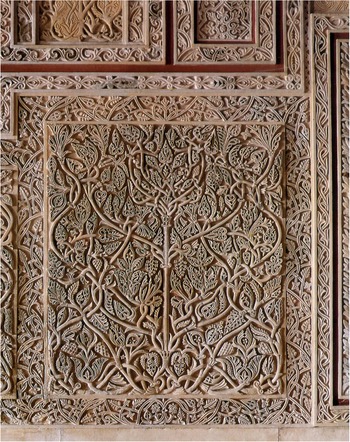
But hybrids of course occur in other contextsFootnote 55 too, namely those that are not animal but vegetal. The mosaics of the Dome of the Rock contain numerous biomorphic plants that obey the laws of no earthly botanical system but instead are pure flights of fancy. Set in the ethereal otherworldly context of a gold mosaic background, they loom gigantically out of the dimness like plants from another planet, instinct with supernal life. Their context is the inscription band proclaiming messages from the Qur'an and the more than earthly abundance of the endlessly varied plant life depicted in the mosaic programme.Footnote 56 An outstanding later example of the type is a tenth-century marble panel from Madinat al-Zahra in Andalusia, carved to the outer limits of density and therefore readability. It depicts at its centre a tree with interlaced branches. But what a tree (Figure 6)! With eye-popping technical panache the artist has produced a bravura relief sculpture of, it seems, an entire extra-terrestrial botanical garden magically reduced into a single miraculous living organism. It produces a truly unreasonable number of different fruits, leaves, and branches. And it does not reveal its secrets lightly. Every nook and cranny of the panel is crammed with arresting and varied detail, and each fresh look reveals something new and unexpected. One cannot help wondering what purpose it served. Barbara Finster has called it the Tree of Life—and she may well be right.Footnote 57
Madinat al-Zahra, Salon Rico, stone carving of tree, tenth century. Source: After M. Barrucand and A. Bednorz, Moorish Architecture in Andalusia (Cologne, 1992), p. 67.

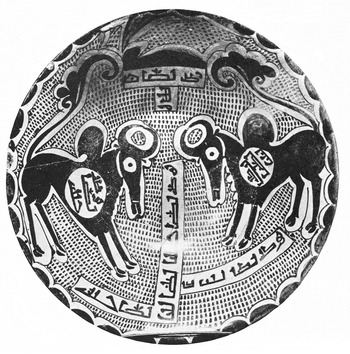
A fifth way whereby nature undergoes some surprising transformations at the hands of medieval Islamic artists can be recognised when it invades themes or motifs in which it has no rightful place. Animals sprout bi-lobed leafy tails as if they were a hybrid between a living creature and a plant (Figure 7).Footnote 58
Iraq, ‘Abbasid lustre bowl with affronted zebus. The ‘Abbasid dish with zebus is attributed to Brahminabad, circa 950. Source: After E. Kühnel, “Die ‘abbasidischen Lüsterfayencen”, Ars Islamica I.2 (1934), p. 158 and fig. 7.

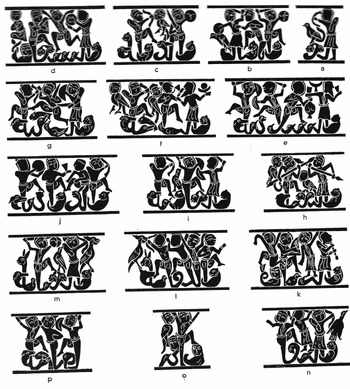
Inscriptions contain letters ending in leaves or blossoms, or a flower may appear suddenly in the middle of a word. And just as plants, as we have seen, obey the dictates of geometry, so too do geometric forms take on organic character, or the soft lines of a flower and the hard lines of a geometric figure intermingle in easy interplay. Many an inscription unfolds against a background of regimented concentric scrolls executed with geometric precision. This mixing of categories reaches such a pass that the usual divisions are overturned and essentially separate modes are promiscuously jumbled together. Inscriptions are plastered all over images of animals, which may also bear geometric networks or undulating arabesque borders. Letters turn into people or animals trapped in a thicket of undergrowth, and yet miraculously remain legible (Figure 8).
Western Iran (?), the Wade Cup, circa 1200, animated inscription, Cleveland Museum. Source: After D. S. Rice, The Wade Cup in the Cleveland Museum of Art (Paris, 1955), p. 24, fig. 20.

Contemplation
Finally, the question poses itself: is there some underlying reason for the way that an aesthetic which so plainly embraces the entire medieval Islamic world manifests itself in the ways that this article has tried to explain? With all due hesitation, it seems permissible to propose that an awareness of the presence of God is the connecting thread between most of the key elements examined here. It is at its most obvious in the use of writing to transmit religious messages. But it can be sensed too in the perennial challenge to contemplate, for deep meditation is apt to cross over into the spiritual realm. The delight in “the wonders of creation”—a phrase that is the title of the best-loved cosmology of medieval Islamic times, written by Zakariyya al-Qazvini in the late thirteenth century—is a constant of medieval Islamic art. One of its most typical expressions is through the medium of what one might term ‘super-nature’, with its collateral emphasis on abundance, endless fertility, and the marvellous, and this could be understood as implying the immanence of God, whose creative powers extend far beyond man's imagination. Islamic gardens from Spain to India, with their distinctive combination of umbrageous and fruiting trees, running water and pavilions, and the garden carpets which mirror these same features and transport their associations into private houses and desert environments alike, seem to prefigure on earth the delights of Paradise as described in the Qur'an. So, perhaps—if only in a subliminal way—do some of the thousands of compositions, found in medieval Islamic art great and small, that celebrate the inexhaustible fertility of plants and vegetation. For those with eyes to see, these can serve as reminders or auguries of the world to come. Intimations of infinity and perfection, both of them concepts that have spiritual resonances, run through some of the most frequent uses of geometry in medieval Islamic art. This is especially true of compositions that refuse to be contained within the frame in which they are set, or of those which display the greatest degree of complexity. The celebrated horror vacui which so many scholars of previous generations saw as the defining characteristic of Islamic art also lends itself to an other-worldly interpretation. This idea has had its day, of course, and, by the way, could equally be seen as amor pleni. This is particularly true of the way that it involves the even, overall covering of a surface, in some sense denying its reality and dissolving its substance. This teaches—once again, to those ready to receive such a lesson—that outward appearance is deceptive and impermanent, and thus draws attention to the source of all that is fundamentally real and permanent, namely God Himself.
These interpretations may well seem laboured, and indeed they are by no means the only ones that could be proposed. But it is noticeable that the theme of contemplation is common to them all. And it is worth pointing out further that a religious interpretation does not of itself exclude others. It is a truism that the same work of art can mean quite different things to different people. Indeed, that can be part of its depth and subtlety. One could go further and suggest that the more complex medieval Islamic ornament is, the more likely it is that it does indeed transmit deeper messages than mere surface beauty.
Many observers have noted the intensity and profundity of some of the best medieval Islamic decoration, which may excite not only admiration but also wonder or deep feeling. Could the undeniable power of such compositions owe some of its impact to the fact that the creative energies of medieval Islamic craftsmen were perforce directed into narrower channels than was the case for their peers in other cultures, where the range of expression was much wider? And that thus, as a result, their work carries a heavier freight of meaning? Be that as it may, a narrow channel certainly generates more dynamism than a broad one. Sometimes the energy contained in a panel of ornament builds up, so to speak, such a head of steam that it threatens to explode. The excitement and fervour that it transmits is almost palpable. Of course, it is an expression of virtuosity, like Chopin's one-minute waltz, but there is more to it than that. Particularly in those vegetal and geometric compositions whose various levels interact, as it were, polyphonically (to make another musical analogy), one is aware not only of feats of skill but of an abiding sense of wonder. These artists were not simply filling up a space, wallpaper fashion. Instead, it seems plausible that they dedicated their talents to a meditation on plant ornament as an expression of the miracle of life, or to the contemplation of geometry as an expression of the majesty and mystery of the structure of the universe. They heard the music of the spheres.
This is by no means the only possible interpretation of such works of art. The sheer degree of repetition in certain forms of medieval Islamic ornament, from vegetal scrolls to complex many-layered polygonal compositions, suggests the close study of earlier models, perhaps at different scales and in different media, or the widespread use of pattern books, so that mechanical copying rather than original creativity may be at work. But that does not detract from the power of the first appearance of such a theme.
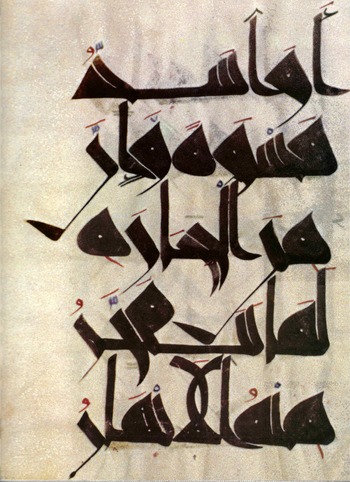
The Mediterranean world, from Plato onwards, saw beauty in terms of mimesis. The Abrahamic religions, by contrast, saw it in terms of God's creative power, and thus sub specie aeternitatis. The hadith “God is beautiful and loves beauty” is riddling, and is a challenge to contemplation. Beauty and precision can be at opposite ends of the spectrum. Here a leaf from the celebrated North African Nurse's Qur'an of circa 1019–1020 may serve as an example (Figure 9).Footnote 59 At first sight one notes the ultra-thick assertive strokes that make this such a masculine and aggressive artefact. Only by degrees does one register the razor-thin slanting strokes that suddenly open out into the broad spatulate bars that terminate so many letters, or the tiny size of the pin-holes that alone identify such letters as waw and qaf. As more time looking at such a page elapses—contemplation again—the balance between the extremes of huge and tiny, very thick and very thin, gradually asserts itself. It is precisely at this meeting of opposite poles that a distinctively medieval Islamic aesthetic emerges.
Qairawan (?), leaf from the Nurse's Qur'an, 1019–1020, 44.5 x 60 cm, New York Metropolitan Museum of Art, 2007.191. Source: Public domain.

The aesthetics of medieval Persian book painting
Given that Barbara Brend, the dedicatee of this Festschrift, has in the course of a long and productive scholarly career devoted most of her energies to Persian painting, it seems appropriate to test some of the tentative conclusions reached above to that body of material, especially in its earlier stages. It will quickly become plain that while medieval Persian painting does indeed engage with the major foci of Islamic art as defined above, namely geometry, vegetal themes, and writing, it evolved its own characteristic view of the world in which quite other factors played a decisive and indeed more important part. The analysis that follows is deliberately confined to the period 1200 to 1500.
At the outset, however, one must concede that in the field of medieval Persian painting, as in medieval Islamic art in general, medieval texts, couched as they often are in impenetrably flowery language, are of little help.Footnote 60 At issue here is the lack of a sufficiently precise vocabulary. It follows from this that, even if connoisseurship reaches a high level of sophistication, its findings cannot be put across with the requisite degree of nuance. Instead, the key terms that are used, and that were obviously loaded with meaning for those who used them, often strike a modern reader or viewer as muffled, ambiguous, or imprecise, or they come across as standard-issue terms of praise and admiration. Schroeder cites the relationship between metaphor and simile in the threadbare clichés of Persian poetry.Footnote 61 But medieval texts which purport to offer critical evaluations of Persian painting are frankly disappointing and curiously colourless to a modern observer, however much they would have meant to a contemporary observer who understood them in a far fuller context than someone looking at the same work of art today could hope to match. Schroeder, in particular, cites 12 words used in the early sixteenth century by Mirza Muhammad Haidar Dughlat in his assessment of Timurid painting in his Tarikh-i Rashidi: tarh, uslub, muhkam, pukhta, andam, malahat, nazuki, khunuk, saf, pardakht, durusht, and kham.Footnote 62 These terms are frustratingly gnomic, and rendered all the more so by the absence of a context which would explain each of them. While Schroeder seeks to convey their meaning, his one-word translations are not definitive and his glosses cannot be more than speculative. It is worth mentioning here, if only in passing, Strika's novel attempt to pin down the aesthetic qualities of Persian painting,Footnote 63 and his examination of the Arabic vocabulary which deals with art.Footnote 64 But here too the results are inconclusive.
That connoisseurship was encouraged and valued in medieval times is not to be doubted—the numerous attributions scribbled on paintings by later hands prove as much,Footnote 65 as does the monetary value ascribed to individual manuscripts in Mughal IndiaFootnote 66—but the basis of that connoisseurship remains elusive. Single words of commendation are no substitute for close analysis of a painting, and not a single example of such sustained assessment has survived. The visual evidence proves beyond a shadow of doubt that painters looked closely at the work of their predecessors and copied it, while also changing this or that detail—whether that was to improve or to criticise.Footnote 67 Imitation is, of course, the sincerest form of flattery. In many a majlis in Timurid Herat, moreover, illustrated manuscripts were passed around for learned commentary by the cognoscenti present. But what was said was not recorded; no minutes of those meetings have come down to us.Footnote 68 As for modern connoisseurship, it is an interesting, if melancholy, exercise to contemplate the remarkable lack of agreement in the ongoing controversy about the authorship of Bihzad and his colleagues in late Timurid painting, a controversy that was in the forefront of the scholarship on medieval Persian painting up to the middle of the twentieth century or thereabouts.Footnote 69 In hindsight, this leads to the dispiriting suspicion that the entire procedure is a waste of time. It is likely enough that the fever to pin down the authorship of a given painting owed something to the parallel tradition in Western art history in the early twentieth century. At first glance it may seem absurd to view Bihzad as more of a committee than simply and exclusively as an artist of outstanding genius, but to regard him as the chairman of the board may help in understanding how the atelier to which he belonged worked in practice. The limits of connoisseurship are revealed by Welch's work on Shah Tahmasp's Shahnama, where the urge to put a name to every single painting can often displace objective analysis of the painting itself.Footnote 70 That is a heavy opportunity cost to pay. It is perhaps significant that his example has not inspired the next generation of scholars to follow suit.Footnote 71
The limitations of medieval vocabulary and the siren call of connoisseurship are not the only obstacles to a better understanding of medieval Persian painting. There is an important body of scholarship that either implicitly or explicitly denies that Persian painting, seen as a whole, possesses intellectual content, arguing instead that it is an art of surface beauty and embellishment, and that the prime intent of the artist was to decorate the surface of the page and please his patron. Among those who subscribe to this view one may perhapsFootnote 72 cite Stchoukine, who laid the very foundations for the study of this field; Robinson, who did more than any other scholar to assemble the key basic information on which all subsequent work depends;Footnote 73 and Yarshater, whose wide and deep erudition enabled him to set Persian painting within the wider context of Persian culture.Footnote 74 It has to be said that the work of scholars such as Ettinghausen, Grabar, Grube, and more recently of Milstein,Footnote 75 Kia,Footnote 76 Da'adliFootnote 77 and BalafrejFootnote 78—to name but a few among many—points in precisely the contrary direction and has opened numerous and previously unsuspected horizons of meaning, symbolism, satire, spirituality, literary allusion, and iconography, all with ample supporting evidence. All this indicates that many of the best Timurid painters were something more than skilled craftsmen. At the core of this deeper understanding of medieval Persian painting is, in comparison with earlier scholarship, a much fuller acknowledgment, founded on close readings of the relevant texts, of the powerful religious and especially Sufi meanings that it embodies.
So how best to define the aesthetic of medieval Persian painting? From the very earliest Persian illustrated manuscript to survive—Varqa va Gulshah, conventionally dated circa 1250— Persian painting has preferred the general to the particular, an ideal world to a grittily realistic one, and this basic preference has found expression not just in the choice of subject matter, but in the mise-en-scène, whether this is a landscape or a palatial interior, in the preferred palette and in the treatment of the figures themselves. But the distinctive character of this art took time to develop. After lengthy experiment, Persian painting found its manner of choice around 1400 and it is that so-called “classical” style of Persian painting, which arguably lasted until the late sixteenth century, that will be the prime focus in what follows.
There can be no doubt that beauty and precision were high among the ideals which the medieval Persian artist had constantly before him. Precision reveals itself in multiple ways. Precise planning and measurement underlie some of the most successful Timurid and later compositions, as Guest, Adle, and Chapman have shown.Footnote 79 Many of these paintings also exhibit an intuitive sense of space and interval that might be likened in musical terms to perfect pitch and is well illustrated—to take examples from media other than painting—in the exploitation of empty space in Samanid epigraphic pottery or in many Islamic bookbindings. This awareness of the potential of space crystallised in the adoption of proportional ratios. Thus ratios of 2:3 recur in much early Islamic art.Footnote 80 Tastes changed in later centuries, and saw a move to dramatically narrower proportions, approaching a height to width ratio of 2:1, in Ilkhanid architecture and in the later fourteenth-century arts of the book.Footnote 81 A delight in the manipulation of space, extending from a single line to the design of an entire page, can be seen in the use of the elongation of letters (mashq), especially in the Kufic and nasta‘liq hands. This device, with its varied gap-filling and highlighting potential, served as a way of controlling the overall aesthetic of a page. The slanting of letters for aesthetic effect in nasta‘liq has been explored by WrightFootnote 82 within the wider context of a fourteenth-century move from a page design that was large, well-spaced, and bold to one that was smaller, denser, and more intricate.Footnote 83
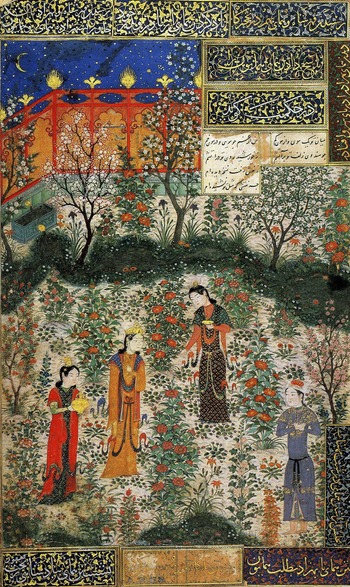
But beyond the lofty aims of beauty and precision were a host of attendant attitudes, some of which constricted subject matter or forms of expression to a significant degree. Crucially, the world conjured up by medieval Persian painting is one that transcends the everyday at every turn. The consistent focus on what might be termed ‘super-nature’ ensures that in most Persian book painting the flowers are always in blossom, the trees are always in full leaf, and the sun is always shining. It never rains or snows. Neither the slow decay of autumn nor the bleakness of winter appeal to these painters, nor—to invoke wider perspectives—are landscapes, seascapes, or skyscapes regarded as suitable themes in their own right for painting. Nocturnal scenes are sufficiently indicated by the presence of the moon and stars set in a sky of midnight blue, but otherwise the setting is floodlit. The garden figures large in Persian painting, as indeed it does in Persian carpetsFootnote 84 and for that matter poetry,Footnote 85 but it is almost always an ideal garden which makes no concession to the change of seasons.
“Humay and Humayun in a garden”, Iran, circa 1430. Source: Musée du Louvre, Paris (deposited from Musée des Arts Décoratifs, n°AD 3727). © Musée du Louvre.

What general principle is at work here? Abstraction is the key: the action is removed from a specific time and space, so there is little room for realism. One aspect of this attitude is that the subject matter—a flower, a tree, a building, a carpet, a garden—is shown in a manner that presents its essential nature to best advantage even at the cost of making it too big or too small. No matter whether it is shown from above, even when the setting demands that it be presented at an angle. Thus, perspectival and chromatic inconsistencies are irrelevant—hence in one and the same painting some objects are viewed head on, others from above, yet others diagonally, or horses are roan and blue.Footnote 86
Abstraction also implies a shift away from truth to nature, or to the individual, let alone the singular. Instead, it is types that matter, not real people. Hence, the use of words like “narcissus” and “cypress” to describe them, for type easily declines into stereotype.Footnote 87 Thus, despite the hundreds of single-leaf paintings produced in the sixteenth and seventeenth centuries, very few seriously attempt portraiture. One often has a sense that the real person is incidental to the finished painting, which is a product of the mind rather than the eye. Indeed, I have watched a modern master create his version of a time-honoured topos, the Sufi master seated in meditation under a tree. He began at the furthest extension of one of the tree roots and did not lift his pen from the paper until the entire composition was finished. The whole process took only a few minutes. Effectively he was tracing a stencil of the mind rather than creating something new.
Abstraction is not the only key to unlock the secrets of this art. Equally important is, as already noted, the constricted range of its subject matter. This does not announce itself, and it may well be that it is due at least in part to the sheer expense of book painting, which required the patronage of the wealthy and the elite. So their doings take centre stage, whether these involve banquets or battles, music-making or hunting, and formal court life. These are the themes on which Persian painters can compose endless variations. There is all too little trace of low life or the domestic scene or the minutiae of everyday life, although the school of Bihzad shows what could be achieved in this line.Footnote 88 Yet the work of nineteenth-century photographers like HoltzerFootnote 89 and Sevruguin,Footnote 90 undertaken when in some respects, such as Sufi practicesFootnote 91 or exemplary punishments,Footnote 92 so little of the country had been modernised, shows that material of this kind was abundantly at hand.
Scholars who come to medieval Persian painting with eyes trained to appreciate the subtleties of Western techniques of shading, perspective, and the rendering of light, movement, and expression have often noted the absence of such features in that art. Such absences are all the more noticeable given the extremely close and accurate focus on tiny details—flowers, trees, rocks, clothing, furnishings, architectural ornament—in medieval Persian painting. There is a paradox here: the combination of a discerning eye and flawless technique allied to indifference to naturalism. It is as if loyalty to a Platonic ideal trumps the evidence of the eye. And the danger of over-refinement looms. Indeed, the very perfectionism on display in mature Timurid painting might be thought to carry within it the seeds of its own decay, if only in the sense that “perfection”, once achieved, proves impossible to sustain.
Conclusion
This article has attempted, first, to define some of those immanent features that create a distinctively medieval Islamic aesthetic, and, second, to identify some of the major characteristics of what is often termed “classical” Persian painting. The two aims are complementary. The first seeks to identify immanent principles; the second to test them against a particular body of material. And the whole article is no more than one person's attempt to identify some key characteristics of this subtle and allusive artistic tradition. Moreover, many other aspects clamour for closer attention, among them—to cite only a few—the use of colour, the principles of composition, and the emphasis on reciprocity, whether it is a matter of tone, pose, or meaning. It seems that every generation of Islamic art historians feels compelled to address the question of what makes Islamic art Islamic, even though the answers are notoriously elusive. That is particularly true if the entirety of “Islamic” art right up to the present day is under scrutiny. Indeed, one might well question whether it is even possible to arrive at generally acceptable solutions for determining the core characteristics of such a huge and disparate body of material—disparate chronologically, geographically, in medium, in meaning, in ethnicity, and in still more aspects. Hence the emphasis in this article on the medieval period. But the effort is worth it nonetheless, for the deeper one digs, the more unexpected subtleties come to light, for of course masterpieces operate on multiple levels. And one might well conclude that the essence of medieval Islamic art lies in its use of ornament, with its capacity to transform the surface of things, and its protean use of the geometric, vegetal, and epigraphic modes. No matter what mode it uses, and irrespective of its scale, medium, context, or function, this ornament becomes a conduit to channel energy and creativity. Ornament transforms surfaces with colour and movement, dissolves mass, and encourages contemplation. Here—if anywhere—is a key to medieval Islamic art.