Introduction
Ghana introduced its Children's Act, 1998 (Act 560) 8 years after ratifying the United Nations Convention on the Rights of the Child (UNCRC). The ratification of the Convention in 1990 demonstrated Ghana's commitment to review its child welfare policies and legislation in accordance with provisions in the UNCRC (Manful & Manful, Reference Manful and Manful2014). Just as the UNCRC (Articles 12 and 13) includes provisions to ensure that children and young people are given the opportunity to participate in decisions affecting their lives, Ghana's Children's Act affirms children's right to have their opinions heard in matters involving their wellbeing (Manful & Manful, Reference Manful and Manful2014). Though there is increasing research that supports the promotion of children's participation in the child protection process (Bouma, López López, Knorth, & Grietens, Reference Bouma, López López, Knorth and Grietens2018; Heimer, Näsman, & Palme, Reference Heimer, Näsman and Palme2018; King, Wattam, & Blackstock, Reference King, Wattam and Blackstock2016; Winkworth & McArthur, Reference Winkworth and McArthur2006), some studies in Western nations have shown that there are significant barriers to children's participation (Dahlø, Tor, & Randi, Reference Dahlø, Tor and Randi2018; Healy & Darlington, Reference Healy and Darlington2009; Križ & Skivenes, Reference Križ and Skivenes2017). However, not much is known in Ghana about the issue. Thus, it is important to know what barriers practitioners in Ghana encounter in promoting participatory practices for children in order to identify practical solutions to better facilitate children's participation. Research evidence suggests that participatory practices lead to better outcomes for children, improved safety, wellbeing, and low levels of out-of-home placements (Healy & Darlington, Reference Healy and Darlington2009; King et al., Reference King, Wattam and Blackstock2016).
This study is part of a larger research project which focused on practitioners’ suggestions of ways to promote children's participation in the child protection process. This study is the result of follow-up interviews conducted with the practitioners to investigate the barriers to children's participation. Child protection, in this paper, is used to describe a range of social services to prevent child abuse and neglect.
Children's Participation in Child Protection Context
Service user participation in child protection emerged in New Zealand in 1989 through the introduction of family group conferencing to ensure that parents and their children were engaged in the decision-making process (Connolly, Reference Connolly2006). This approach was adopted in the UK a few years later with the enactment of the Children Act 1989, which recommended that practitioners should work in partnership with families (Sinclair & Grimshaw, Reference Sinclair and Grimshaw1997). The encouragement of service user participation in child protection also gained ground in Australia, and has been a topic of study (Healy & Darlington, Reference Healy and Darlington2009; Woodman, Roche, McArthur, & Moore, Reference Woodman, Roche, McArthur and Moore2018). Each of the eight states and territories in Australia has its own child protection laws, and there are variations in how children and parents’ rights to participate are considered (Healy & Darlington, Reference Healy and Darlington2009). Healy and Darlington (Reference Healy and Darlington2009) have observed that Queensland was the first Australian state to introduce family group conferencing, ensuring that today parents and their children have their voices heard before children are taken into the care of the state. Queensland's Child Protection Act of 1999 was amended in 2004 to mandate practitioners to involve children and their families in the child protection process (Healy & Darlington, Reference Healy and Darlington2009). For most states in Australia, children's participation in child protection is the norm. Responses from child protection practitioners in five jurisdictions in Australia have shown that practitioners also have confidence in involving children because it is a recognised part of their job to listen to children (Woodman et al., Reference Woodman, Roche, McArthur and Moore2018).
Unlike Australia and other Western countries that have established policies to promote children's participation in child protection, this issue remains on the periphery of child protection in Ghana. Over 1.1 million children are in out-of-home care in Ghana following the intervention of child welfare authorities (Bettmann, Mortensen, & Akuoko, Reference Bettmann, Mortensen and Akuoko2015). Although some children are moved to institutions to protect them from abuse and neglect, the priority among child protection practitioners is to keep children within family networks. This is because social and cultural practice in Ghana supports the provision of care by kin to preserve family connections and culture (Manful & Cudjoe, Reference Manful and Cudjoe2018). Most of the children placed in Ghana's care system are not given the opportunity to contribute their views about which care options they would prefer. Most decisions about moving children to institutions are made by practitioners without consulting the child affected by the decision. Even in cases when children are present during decision-making discussions with the practitioners, they are usually not allowed to speak because most Ghanaian children are socialised not to talk during meetings between grown-ups (Twum-Danso, Reference Twum-Danso2009). However, in some cases, children may be able to contribute to meetings when they are considered mature by their parents and practitioners. The concept of maturity may be difficult to define, however, as both parents and practitioners can have different views on when a child is mature enough to have a say in meetings. Thus, given the difficulties of promoting participatory practices, but that Ghana is a signatory to the UNCRC, it is important to conduct research into how these barriers to children's participation can be addressed.
Barriers to Children's Participation
Notwithstanding the benefits associated with promoting children's participation in child protection, research has revealed several barriers that prevent children's involvement in child protection processes. A study by Woodman et al. (Reference Woodman, Roche, McArthur and Moore2018) revealed that some practitioners may not give due weight to children's views because parents are seen to have the potential to influence children's responses. Research has indicated, however, that the older the child, the greater the practitioners’ confidence that the child is not being influenced by parents (Woodman et al., Reference Woodman, Roche, McArthur and Moore2018). Therefore, child protection practitioners do need to be able to understand parents’ abilities to influence children's responses and deal with this appropriately.
There is also the concern that child protection issues are considered problems for adults (van Bijleveld, Dedding, & Bunders-Aelen, Reference van Bijleveld, Dedding and Bunders-Aelen2015), and that it is inappropriate to involve children because it is the job of practitioners to protect children from adult issues. For example, Healy and Darlington (Reference Healy and Darlington2009) have observed that involving children can bring potential harm to them, such as being exposed to hostile behaviour during meetings. This points to an underlying tension between participation and protection in child protection (Vis, Holtan, & Thomas, Reference Vis, Holtan and Thomas2012), with children having the right to participate in decision making while, at the same time, practitioners are responsible for protecting children from potential harm that may arise through their participation (Križ & Skivenes, Reference Križ and Skivenes2017; Ney, Stoltz, & Maloney, Reference Ney, Stoltz and Maloney2013). This raises the further issue of what is considered to be the best interest of the child. There may be cases when the child's view contradicts the professional's opinion of what is best for the child (Woodman et al., Reference Woodman, Roche, McArthur and Moore2018). It is also common for some children to feel intimidated at the presence of several unknown adults during case meetings (van Bijleveld et al., Reference van Bijleveld, Dedding and Bunders-Aelen2015). When children feel this way, they may not be able to share their opinions freely.
In addition, a study by Cossar, Brandon and Jordan (Reference Cossar, Brandon and Jordan2016) revealed that child protection practitioners’ lack of regular contact with children can become a barrier to children's participation. This is because the practitioner may not be able to establish a strong relationship with the child to foster participation. Toros, Tiko, and Saia (Reference Toros, Tiko and Saia2013) and Husby, Slettebø, and Juul (Reference Husby, Slettebø and Juul2018) have observed that most child protection practitioners lack adequate time to establish sustaining relationships with children due to heavy workloads and procedural impediments. The issue of heavy workloads among child protection practitioners hinders participatory practices and this issue has been reported in a study in Ghana (Cudjoe & Abdullah, Reference Cudjoe and Abdullah2018). Although research that addresses the barriers affecting children's participation in child protection is increasing, there are currently no empirical studies in Ghana that consider this matter. Consequently, we report on findings from a qualitative study into the barriers to children's participation in child protection practice in Ghana, while we aim to offer suggested solutions to guide child protection practice in this country.
Methods
Study Purpose and Design
Data for the study were collected from practitioners at the Department of Social Welfare (DSW) in Sekondi, Ghana. The DSW was purposively selected as the site for the research for the following reasons. First, the Department is one of the main state welfare organisations in Ghana dealing with issues related to child protection. Most cases handled by workers at the Department involve child abuse and neglect, domestic violence, and parenting problems, issues of concern to child protection practice. Second, the Department has been a focal point in the study of participatory practices in child protection practice in Ghana (Cudjoe & Abdullah, Reference Cudjoe and Abdullah2018), making the selection of the DSW suitable for this study.
Due to the lack of empirical research in Ghana regarding children's participation in child protection practice, this study adopted a qualitative approach to explore, in depth, practitioners’ views and experiences of barriers that hinder participatory practices for children. The constructivist grounded theory approach was used to make meaning from the views and experiences of the practitioners. Grounded theory was appropriate as the researchers approached the study with open minds, seeking to develop ideas from the data and be as flexible as possible, without imposing preconceived ideas on the data (Charmaz, Reference Charmaz2014; Padgett, Reference Padgett2008). Data collection and analysis proceeded concurrently, while memos were written during the research process to reflect on emerging ideas about barriers to children's participation. Frequent codes were put together to form categories and are presented in the study as findings.
Recruitment
Selection of practitioners was based on a set of inclusion and exclusion criteria. In the first instance, practitioners working at the DSW as frontline workers, with more than two years practice experience and a background education in social work and/or other human service professions, were eligible to participate in the study. Thus, child welfare administrators at the DSW were excluded from the study as their responsibilities do not include working directly with service users. The workers chosen to participate were also expected to have been part of child protection meetings where children were involved in proceedings. This was to ensure that the practitioners had enough information to provide on the topic under investigation. In total, 15 out of a total of 18 eligible practitioners, who took part in a larger study, were approached again by the lead author with flyers containing information about the purpose of the current study. All 15 participants agreed to participate in the follow-up interviews. The other practitioners could not make time to participate in research.
Ethical Approval
Ethical approval for this research was obtained from the Department of Social Welfare, the state institution mandated with the responsibilities to promote access to social services for the disadvantaged, and vulnerable and excluded groups such as children.
Data Collection
Between December 2016 and February 2017, all research participants were involved in in-depth semi-structured interviews averaging 45–50 minutes. Interviews with research participants were conducted using a semi-structured interview guide. The use of the interview guide provided flexibility during interview discussions, allowing researchers to probe into new insights that emerged during the conversations. This enabled diverse and even contradictory responses from the participants to be pursued in order to provide a deeper understanding of the topic (Marvasti, Reference Marvasti2004). The interview guide primarily included questions concerning practitioners’ views about the challenges that affect children's participation in child protection practice, including, for example, what hinders children's involvement in child protection meetings. Since this study adopted the constructivist grounded theory approach, some questions were asked in the interviews based on ideas that emerged during initial analysis. This means that both data collection and analysis proceeded concurrently (Charmaz, Reference Charmaz2014). All interviews were conducted in an office at the DSW, which was the choice of the research participants.
Data Analysis
The audio-recorded interviews were transcribed verbatim, and the researchers checked the interview transcripts against the audios for accuracy. The constructivist grounded theory approach suggested by Charmaz (Reference Charmaz2014) was used to analyse the interview data. Initial and focused coding strategies were adopted for this study. In conducting the initial coding, all interview transcripts were read more than twice to get a general idea of major patterns developing from the data. The researchers do not believe they were influenced by pre-existing ideas about the data, and initial codes were therefore developed based on what the data suggested. Both line-by-line and in vivo codings were used for the initial coding (Charmaz, Reference Charmaz2014). Line-by-line coding was done by naming each line of the interview transcript. Some codes developed at this stage included ‘parents’ idea’, ‘how they talk’, and ‘trust the child’. However, not all lines in the transcript were coded line-by-line because the meanings of some were incomplete. The researchers also used participants’ special terms (Charmaz, Reference Charmaz2006), in vivo codes, in conducting the initial coding. This is a way of ensuring that participants’ meanings of their views are preserved. For example, some in vivo codes used were ‘communication problem’ and ‘intimidation’. The researchers also kept memos while doing their initial analysis. The memos were used to record thoughts, emerging themes, and arguments that were found in the analysis. The memos served to establish a connection between the data and the ongoing analysis. An example of a memo created during the data analysis has been provided in Table 1.
An example of memo.

A more selective and conceptual analysis was conducted using focused coding. The most frequent and significant codes were used to sift through the data (Charmaz, Reference Charmaz2014). The researchers conducted a thorough reading of the initial codes to identify frequent and significant codes. Codes that reflected similar ideas were put together into categories. The categories were developed by identifying frequent and significant codes, grouping codes that represented similar ideas, and naming them with conceptual labels. All categories were related to the core category of ‘children's participation’. The focused coding was managed with NVivo 11 qualitative software.
Sample Demographics
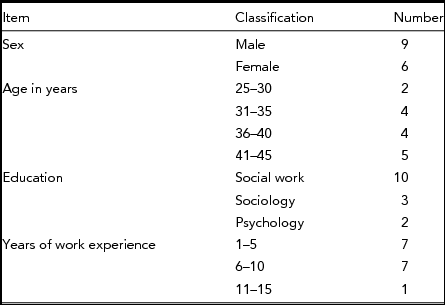
This study collected data from 15 practitioners working as frontline social workers with the DSW. The practitioners worked with cases related to domestic violence, parenting issues, child maltreatment, truancy, and alcohol abuse. The demographic features of the practitioners have been presented in Table 2.
Demographics of the child protection practitioners. Source: Field data, 2017.

Findings
Analysis of the interviews with the child protection practitioners revealed four main categories representing practitioners’ views on the challenges hindering children's participation in child protection practice. The categories presented in the study as findings include the following: intimidation, parental influence, communication problem, and confidentiality. The categories were identified after the interview data were subjected to the constructivist grounded theory analysis procedure. Quotes presented in the study represent participants’ actual responses. A few have been altered by the researchers to make meanings more clear, but the meanings have not been altered.
Intimidation
The intimidation of children was identified by the child protection practitioners as a major challenge affecting children's participation in the child protection process. Children were reported to be filled with fear by the presence of their parent(s) during case meetings with child protection practitioners. The data also revealed that children felt intimidated by the presence of strangers and other family members who were unfamiliar. Thus, the presence of third parties, including parents, extended family members, and strangers, deterred children from opening up to have fruitful interactions with the child protection practitioners. Narrating how the presence of parents affected case meetings with children, a practitioner had this to say:
‘They just don't feel comfortable with the presence of other people … though they don't voice out their dissatisfaction, you could clearly read from their demeanour that they are not comfortable with the presence of their parents. Sometimes they fear that they may face maltreatment by their parents when they reveal hidden truth to the child protection practitioners’ (P3, Female).
Another child protection practitioner indicated that a sense of loyalty to parents prevents children from being honest about the situation at hand even though they may be its main victims:
‘It's quite strange that when children see their parents at the case meetings they fear to say the truth about what is at stake. Though the situation bothers them and they are the primary victims of the situation, still they will try to shield their parents’ (P9, Male).
A different interviewee revealed that children's loyalty stemmed from their socialisation and culture: ‘No way, they won't betray their parents in their presence. That is not how they were brought up’ (P15, Male). Children's unease with the presence of parents during case sessions indicates the need for some practical techniques to enable children to share their opinions honestly without facing potential reprisal from parents. However, it appears there may be cultural implications to consider in doing so.
Nevertheless, one worker identified instances when children had shared their honest views on issues when a parent was present:
‘It's not all the time that they feel reluctant to talk, no. Children who stay with one parent, most times the mothers, [tend] to voice out their situations especially when they and their parents are both victims of the situation. However, as to whether they are telling the truth is another question. For instance, when a father abandons his child and that child goes to stay with her mother, the child will not feel reluctant sharing [her] side of the case in support of the mother’ (P11, Female).
This indicates that children's ability to effectively participate in decision making is sometimes positively influenced by the thought that their participation could be beneficial to a parent who is similarly a victim. As a result, it may be argued that children are most likely to feel uncomfortable about actively participating in the presence of both parents, when they do not want to be seen to speak against one of them.
Parental Influence
The child protection practitioners indicated that parental influence also affects children's active participation in the child protection process. They reported that some parents, on invitation to attend the child welfare agency, coach their children on what to say when being asked to speak during case meetings with practitioners. The practitioners identified this sometimes explicit parental influence on children as a major impediment to children's participation in the child protection system, because it prevents children from giving their own views. One practitioner reflected:
‘Upon parents’ realisation that their children will be engaged to share their side of the situation, they [tend] to coach them on what to say and what not to say when being asked by us [child protection practitioners]’ (P12, Male).
Clearly, it is perceived and understood that parents influence their children to provide evidence that strengthens the parents’ own position. In addition, the participants believed that children are typically coached to make assertions against their other parent:
‘Mostly they are coached to give these lies against the other parent, but they don't feel any problem because they have been coached well on what to say at each stage. So when a different question is asked that they have not been coached about, then they [tend] to give contrary responses, forgetting what they have said earlier. Others even go to the extent of asking such parents what to say when they are present at the case sessions. So all these [incidents] tell us what goes on before we engage the children’ (P4, Male).
Another participant commented that children are motivated by the relationship that exists between them and their parents, as a result of which they see nothing wrong in giving evidence to support claims made by one or other parent:
‘At times it depends on the relationship that exists between them and such parents. Because the children grew up with such parents, there is that understanding and attachment which makes it possible for them to support them at the expense of the case’ (P10, Female).
Participants indicated that some parents even ‘forcefully interfere’ in the interactions between their children and practitioners, particularly when they realise that the children are not saying what they were told to say. This was identified by the workers as a major challenge that makes it difficult for them to get at the truth of a situation:
‘It will surprise you that some of the parents forcefully interfere when we are interacting with their children, especially when they realise that what they are saying is leading to their betrayal. You can imagine this happening. How can we know the truth about the situation when parents continuously interfere in our interaction with children?’ (P15, Male).
One interviewee attributed this to traditional cultural approaches to decision making and case resolution:
‘You know, you can't blame the parents so much, because that is how it is done in the family. When children are speaking in the presence of elders it is assumed that they can't talk properly, so an elderly person has to intercede and talk on their behalf. So most parents envisaged that in our practice, and try to act as it is done in the traditional setting’ (P9, Male).
The responses of the practitioners showed that they felt very dissatisfied and frustrated with the impacts of parental coaching and authority on their attempts to successfully engage with children.
Communication Problems
Child protection practitioners cited communication as another key challenge impeding children's participation in child protection practice. According to the practitioners, many of them and their colleagues struggle to communicate with young children effectively due to a lack of expert training. As one interviewee remarked, ‘some of us are not trained on how to work with [a] special population like children’ (P7, Male). Their comments reveal a need for specialist training in communicating with children in order to better facilitate children's involvement in child protection processes. Elaborating on the challenge of communicating with children, one practitioner said:
‘Some of us here don't even know how to engage children in a proper way. Though this may be due to the lack of training on communication with children, another cause too can be our interest in the area. [The] majority of our colleagues here had training in other related programs like psychology, sociology, political science, which [don't give] them the practical experience on how to work with children in [the] child protection system compared to those of us with training in social work. [This makes] it difficult for them to properly engage children in child protection practice’ (P3, Female).
She went on to state that the Department was also seeing a number of children presenting with ‘special situations’, and there was a lack of personnel with the knowledge to work and communicate with these children. ‘If I say children with special situations’, she explained, ‘I mean those children who have faced difficulties and brought here in the midst of the difficulty to talk to us. For instance, children with emotional problems or children who are facing perennial abuse or maltreatment’ (P3, Female). Perceiving a need for greater expertise to assist these children, she observed, ‘Suppose one of our workers had knowledge in communicating with people with special needs, you realise that [they] will be useful in such circumstance[s]’.
Another practitioner similarly indicated that the difficulties of communicating with children affected by specific issues sometimes compelled them to overlook a child's views when making decisions, even though practitioners deem children's views to be vital:
‘Yes, it's true, sometimes we are forced to ignore the views of the children, though we know perfectly that their engagement will contribute positively to the decision making process. However, we ignore them because we do not have the skills to engage them’ (P6, Male).
Furthermore, one practitioner indicated that communication difficulties could also stem from workers’ inability to engage with children from diverse backgrounds:
‘Sometimes we don't understand the language spoken by some of our clients, so engaging the parents alone is difficult, not to even talk of the children. You are much aware that we engage people from diverse ethnic and cultural backgrounds and most of them too don't understand the Fante (local) language’ (P15, Male).
These responses suggest there is a need for specialist training to help child protection practitioners address a number of complexities that impede them in their interactions with children. This includes not only training in how to communicate with children who are emotionally vulnerable or traumatised, but also training in techniques for communicating across language and cultural divides.
Confidentiality
Finally, the child protection practitioners suggested that issues of confidentiality were another challenge hindering the involvement of children in decision making. Participants said that they sometimes find it difficult to build a trusting relationship with a child. They recognised that before children can reveal the truth about a situation, children need to feel safe and have trust that whatever they say will remain confidential. ‘Sometimes it is difficult to build a trusting relationship with the children’, said one practitioner, ’because they fear that information shared could be revealed to their parents, which may lead to further maltreatment’ (P6, Male).
Another participant indicated that some of the difficulty in building trusting relationships with children could be attributed to mandatory legislative requirements. He explained that the Children's Act (560) stipulates that a child's age should be considered before involving the child in decisions. Thus, the ability to build a relationship with the child was affected by the practitioner's need to seek consent from parents or guardians:
‘The Children's Act mandates that we seek consent from the parents or guardians of the children when they cannot give consent themselves. But the difficulty here is that, when we seek the consent through parents, the children see that as involvement of a third party by thinking that whatever they will tell us will be revealed to the third party [their parents]’ (P4, Male).
One interviewee confirmed this by describing how parents do indeed sometimes use the consent-giving process as an opportunity to solicit information about what has transpired between the practitioner and the child:
‘Some of the parents, when you ask them to consent on behalf of their children, they use that as an opportunity to make demand by requesting that you reveal information about what transpired between us and their children. So in a way I think the children have also noticed this, that's why they find it difficult building relationship with us when they see the involvement of their parents’ (P3, Female).
The responses suggest that legislation requiring consent to be obtained in order to protect children inadvertently serves to diminish practitioners’ willingness to involve children. The process of seeking consent is perceived to undermine children's confidence in the confidentiality of their information, as well as leaving practitioners vulnerable to hostile demands from parents.
Discussion
Findings from this study highlighted a number of specific issues that act as barriers to children's participation in the child protection process. In particular, the findings reveal that child protection practitioners consider the presence of parents and other family members at case meetings to be a key impediment for engaging children. This concern is corroborated by van Bijleveld et al.’s (Reference van Bijleveld, Dedding and Bunders-Aelen2015) study, which indicated that children may become concerned when many people attend case meetings, because they are unable to share their opinions openly in the presence of several adults. Moreover, when children and parents are both present during meetings with practitioners, children often wish to show loyalty towards their parents (Pölkki, Vornanen, Pursiainen, Riikonen, & Pölkki, Reference Pölkki, Vornanen, Pursiainen, Riikonen and Pölkki2012) and avoid causing problems for them. Practitioners also noted that when children lived with one parent, they were inclined to speak in favour of the parent with whom they lived.
The study's findings suggest that parental influence is perceived to be, and indeed is, a notable barrier for the promotion of participatory practices for children. While it was inferred from practitioners’ responses that the extent of parental influence related to cultural practices and expectations are specific to Ghana, some of their observations are also supported by similar findings in other contexts. For example, the interviewees reported that some parents coach their children on what to say, usually to support the parent's own interests, a finding that is also reported by Woodman et al. (Reference Woodman, Roche, McArthur and Moore2018). In other instances, children appeared to follow parental wishes because they did not want to do damage to their existing relationship with a parent, and studies internationally suggest this is common, and may occur, too, when young children have not developed the confidence to share their personal views on issues (Cossar et al., Reference Cossar, Brandon and Jordan2016; Toros et al., Reference Toros, Tiko and Saia2013). More specific to Ghana, however, this study has found that it is not uncommon for parents to interfere when children are presenting their views to practitioners, including during child protection meetings. This practice is largely condoned because Ghanaian traditional culture values children's silence during meetings with grown-ups (Twum-Danso, Reference Twum-Danso2009). The practice, as practitioners point out, prevents the full involvement of children in decision making.
Age-appropriate communication also presented challenges for children's participation in child protection processes. This finding is supported by other studies that have identified the need for requisite training and skills for child protection practitioners to engage in child-friendly communication (Pölkki et al., Reference Pölkki, Vornanen, Pursiainen, Riikonen and Pölkki2012; Toros et al., Reference Toros, Tiko and Saia2013). In addition, challenges for communication are compounded for practitioners trying engage with children who are experiencing emotional turmoil. Such children find it difficult to open up to practitioners who are perceived as strangers, making it even more important for practitioners to be able to foster trusting relationships with them (Cossar et al., Reference Cossar, Brandon and Jordan2016). Some practitioners indicated that the DSW lacks personnel with adequate training to address a number of these issues.
Finally, the findings revealed that practitioners found it difficult to build the trust needed to give children confidence in the confidentiality of their information. This has also been identified as a concern in other studies, which have stressed the importance of establishing a trusting relationship as the basis for empowering children to open up about their experiences (Cossar et al., Reference Cossar, Brandon and Jordan2016; Husby et al., Reference Husby, Slettebø and Juul2018; Jobe & Gorin, Reference Jobe and Gorin2013). The requirement to seek third-party consent in order to engage with children posed a notable challenge for Ghanaian practitioners due to parental demands for information to be exchanged in return for consent. Practitioners recognised that providing such information to parents could be unethical and have negative consequences for the children, but did not necessarily have ready strategies to help them deflect such demands.
Implications for Practice
The study findings have several practical implications for the promotion of participatory practices with children in Ghana. First, within the child protection system, there needs to be recognition of the impact of culture on children's participation. As culture is intrinsic to the lives of parents, children, and practitioners, it is important to develop practices within the system to help manage the influence of culture when it negatively impacts on the child. There are currently negative impacts that arise, for example, when children's participation in child protection means they are put in the position of speaking against parents when parents are present. Consequently, a recommendation from this study is that practitioners should be able to engage with children in separate rooms, without the presence of parents or other adults. By doing so, practitioners may be better able to build trusting relationships with children during case sessions, and thereby give children greater confidence to express their own views and opinions about situations. Speaking with children in separate rooms may also help overcome some of the issues of intimidation and parental influence that currently impact both practitioners and children. Addressing these issues could also be achieved by assigning separate caseworkers to children, as done in Australia and some other countries.
There is also scope for practitioners to do more to educate children and parents about the reasons for and benefits of children's involvement in child protection processes. Parents and other adults may not be aware of the pressures that children experience due to the presence of several adults during case meetings. Specifically, parents should be made aware that creating an unfriendly environment for children can lead to outcomes which may not meet children's needs, and that it is important for both practitioners and parents to prioritise children's views during discussions. It may also be helpful for practitioners to meet with children during break times at school to provide them with information about their potential role in decision making and how their views are important for the process.
The study findings suggest that more work is required to understand the needs of children coming into contact with child protection in Ghana. There is a scope for further research to be used to inform professional and in-service skill training. For example, the findings of the present study showed that some practitioners struggled to engage with children in an age-appropriate manner, or struggled to bridge language or cultural divides. More research may point to the most effective ways to overcome these challenges, and which specific skills child protection practitioners need to upgrade in order to best promote and support children's involvement.
Limitations of Study
The use of the constructivist grounded theory means that the study is highly contextual and caution may need to be exercised when generalising the study findings to other contexts. Furthermore, this study currently stands as the first to explore child protection practitioners’ views on the impediments for children's participation in Ghanaian child protection processes. Consequently, there are no similar studies from Ghana with which the present findings may be compared for added validity.
Conclusion
Although there is an increasing body of research documenting the benefits of children's participation in the child protection process, there are key factors that make children's participation particularly challenging for child protection practitioners in Ghana. To ensure the successful engagement of children, practitioners need to be aware of these barriers and be able to adapt in order to deal with the issues appropriately. The practical solutions suggested in this study provide as an important starting point for practitioners seeking to reflect on and address these issues. At the same time, the findings also corroborate challenges for child protection practitioners that exist across cultures.