




No CrossRef data available.
The U.S. Sugar Program and the Cuban Revolution
Published online by Cambridge University Press: 01 September 2004
Abstract
This article argues that one contributing factor to the Cuban Revolution of 1959 was the 1956 revision of U.S. sugar quotas. Its significance has been overlooked because its real economic impact was programmed to occur after 1959. Combining a statistical simulation and an event study of sugar companies' rates of return on equity, we show that the revision had adverse long-run consequences for sugar exports, and that forward-looking investors anticipated them and incorporated them into their valuation of sugar-company stocks after 1953. Further evidence shows that the Batista regime and prominent insurgents understood the vital nature of Cuba's sugar import quota.
Information
- Type
- ARTICLES
- Information
- Copyright
- © 2004 The Economic History Association
It is often forgotten that Cuba, before the Revolution of 1959, was one of the United States' strongest allies. What happened to the “singular ties” that united Cuban interests with the United States? The search for the origins of the Cuban Revolution has captured scholars' attention for decades and is one of the most controversial issues in Latin American history.
Though most specialists believe that U.S. economic interests in some way compromised the ultimate political stability of the island nation, historians often make a subtle distinction, or are of two minds, about the causes of the Revolution. The fact that Cuba was not suffering from economic recession in the months before the rise of Castro's July 26th Movement leads many to downplay the importance of economic causes and to emphasize, instead, the crisis in Cuban politics caused by the constitutional illegitimacy of the Batista dictatorship, a popular demand to restore democracy, and a loss of faith in a corrupt and sterile political system. As for economic causes, scholars argue that they came in the form of a “permanent economic crisis”—a structural crisis that established the root socioeconomic conditions for revolution.1
The phrase “permanent economic crisis” is from O'Connor, Origins.
Among the relevant works are Benjamin, United States; Domínguez, Cuba; Draper, Castro's Revolution; Farber, Revolution; Ibarra, Prologue; Pérez-Stable, Cuban Revolution; and Zeitlin and Sheer, Cuba.
A major oversight in the literature is the neglect of the effects of increased trade protection in the United States against Cuban sugar. The import quota Cuba was given in the controlled U.S. sugar market is sometimes mentioned in digression, but no study has closely looked at its effects, and few scholars give it serious consideration. Its dismissal as a factor is surprising especially because it falls in sharp contrast with the views of contemporaries, who were gravely concerned about the shrinking market for sugar caused by downward revisions to Cuba's sugar import quota in the U.S. market. This article aims to fill this gap in the literature by gauging the expected effect of the downward revision of the U.S. sugar quota on the Cuban sugar industry and considering its political consequences.
One reason other scholars have not put much weight on the sugar import quota revision as a causal factor is that the Cuban economy did not show signs of adverse shocks after the revisions of 1951 and 1956 went into effect. Sugar prices, aggregate income, unemployment, wages, and other indicators performed well in the years following the downward quota revisions. Yet casual observations of the aggregate data can be misleading. To examine the effects of the quota revision more carefully, we ask two questions: How significant an impact did the sugar quota revision have on the expected future prosperity of the Cuban economy? And what were its political consequences? The answer comes in three parts. First, we show that the immediate effects of the quota revision were muted by programmed delays in the effective implementation of the revision and offsetting exogenous market conditions so that the most severe adverse effects of the quota revisions would have been realized years later.
Second, we show that the long-run effects of the revision were well understood and anticipated by forward-looking economic actors. In particular, despite propitious short-run market conditions, specialized investors in sugar company stocks calculated the consequences of the revisions for long-run performance of the various regional suppliers to the U.S. sugar market and incorporated that information into sugar companies' stock prices by region. As an empirical strategy for capturing the effects of this forward-looking behavior, we employ a modified CAPM (capital-asset pricing model) and the event-study method used by Kristen Willard, Timothy Guinnane, and Harvey Rosen to identify structural breaks in sugar-company security risk.3
Willard, Guinnane, and Rosen, “Turning Points.”
Finally, though its political effects are more difficult to identify, our analysis shows that the events that caused the structural breaks in perceived risk in the sugar industry paralleled and contributed to political and military events that led to Batista's downfall. Besides adding a new dimension to explanations of the timing of the Cuban Revolution, the finding that increased trade protection in the United States had such destabilizing economic and political effects on Cuba is significant in light of the controversy in the Doha round of negotiations in the World Trade Organization over the high levels of protection given to agricultural products in the developed countries. The history of Cuban trade relations with the United States gives a prime example of such policy inconsistency. Although the United States was a leading advocate of global liberalization under GATT, it restrained trade with Cuba when narrow domestic interests demanded it, with beggar-thy-neighbor implications and costly diplomatic consequences.4
New York Times, 15 September 2003, 6 May 2001, 4 September 2001. Goldstein, Ideas; and Krueger, Economic Policies.
A few institutional and structural features are needed as background. First, Cuba's economic relationship with the United States was always dominated by, and sensitive to, the sugar trade. Eighty percent or more of Cuba's exports consisted of sugar. More than half of it was exported to the United States—so much that, in the 1950s, about 15 percent of Cuba's national income was represented by its gross earnings from sugar exports to the United States.5
Figures are from Cuba Económica y Financiera, Anuario azucarero 1958; and Cuba, Banco Nacional, Memoria, 1958. See also U.S. Dept. of Commerce, Investmen; and Zanetti Lecuona, Cautivos de la reciprocidad, appendix, table 2.
Second, Cuba's dependence on the U.S. market meant dependence on its import quota. From 1934, except for the period of price controls during the Second World War, the U.S. sugar market was quantitycontrolled.6
The quota program was renewed until 1974, when it was allowed to expire, leaving only tariff protection for U.S. domestic sugar producers. In 1977 it was replaced by a loan and price support program, but the quota system was reinstituted in 1982. Schmitz and Christian, “Economics,” p. 51.
SUPPLIER-AREA STOCK PRICE MOVEMENTS
The regulations on sugar imports in the United States distinguished eight sugar supplier areas by geographical and political boundaries. The defined “supplier areas” included five domestic areas—mainland beet and cane sugar producers, Hawaii, Puerto Rico, and the Virgin Islands; and two main foreign suppliers, Cuba and the Philippines, and other “full-duty” foreign suppliers that received small quotas, mainly the Dominican Republic and Mexico.7
In the sugar laws of 1934 and 1937 the Territory of Hawaii, Puerto Rico, and the Philippines were designated as “insular possessions”—not described as “domestic.” The Philippines treaty of independence, signed in 1935, changed its status to foreign when it went into effect in 1945. In the sugar law of 1948 the language was revised to refer to the insular possessions as “domestic.” Wolf, “United States Sugar Policy,” pp. 33, 56.
“Sugar companies,” to be distinguished from refineries, were companies that processed raw material—cane or beets—into sugar. Cane sugar companies most often produced raw sugar (95–97 percent pure) to be sold to refineries. Beet sugar companies typically produced (nearly pure) “direct-consumption” sugar, which was the legal term for sugar processed directly from the raw material for final consumption, of the same quality as refined.
Weights and other details of their construction are noted in Dye and Sicotte, “Legislative Shocks,” p. 13 and table 5. Total assets are adjusted for some Cuban and Puerto Rican firms to account for holdings outside their borders.
The Anuario azucarero lists more than 120 sugar companies in operation in Cuba during the 1950s. Ten of those were traded on U.S. stock exchanges. An additional seven were listed on the Havana Bolsa, but most shares on the Bolsa were not actively traded. Listed companies were relatively larger and typically operated multiple sugar mills.
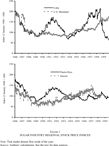
The stock price movements of sugar companies in Cuba and the United States differed because the U.S. companies were insulated from the world market and Cuban producers were not. Figure 1, which gives the movements of each supplier-area index from 1947 to 1959, shows this. Two periods of divergence stand out. The first one begins with the Korean conflict, which began in June 1950 and stimulated the world demand for sugar. The strong sellers' market was reversed abruptly in 1952 by a huge bumper crop of sugarcane in Cuba that exceeded the previous five-year average (of 6.3 million short tons) by 27 percent (to 8.0 million short tons).11
All volume figures used in this article are in raw sugar equivalent value in short tons of 2,000 pounds.
Cuba Económica y Financiera, July 1952, and market analyses from Willett and Gray, Weekly Statistical Sugar Trade Journal, passim. Sugar production figures are from Moreno Fraginals, El ingenio, vol. 3, pp. 47–48.

SUGAR INDUSTRY REGIONAL STOCK PRICE INDICES
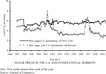
From Wall Street's perspective, investment in Cuban sugar companies was highly speculative and dependent on world political conditions. Investment in U.S. mainland sugar was considered less risky because it was insulated from world shocks. Figure 2 shows how U.S. and world sugar prices diverged in these periods. Comparison of Figures 1 and 2 show that U.S. mainland and Hawaiian firms, which sold exclusively in the U.S. market, were not as responsive to world price shocks as were Cuba and, to a smaller extent, Puerto Rico.13
Puerto Rico was less insulated than the mainland because surpluses at times were sold in the non-U.S. world market.

SUGAR PRICES IN THE U.S. AND INTERNATIONAL MARKETS
THE QUOTAS UNDER THE SUGAR ACTS
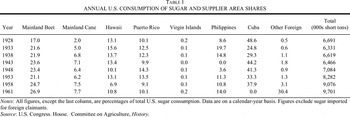
The U.S. sugar market first came under a quota-based regulatory regime in 1934 as part of the Agricultural Adjustment Administration program of the USDA, adopted to enact relief measures in response to the Great Depression. The Sugar Act of 1948 restored the quota regime after World War II.14
The Sugar Act of 1934, revised in 1937, became nonbinding because of a wartime boom in demand in 1941. The law was formally suspended in 1942, and sugar was placed under wartime price controls. From 1942 to 1947, the U.S. and Cuban governments negotiated the sale of the entire Cuban sugar crop in single annual bulk transactions.
Cuba's quota was abrogated in July 1960. Congress revised the Sugar Act in 1961 and reallocated its quota.
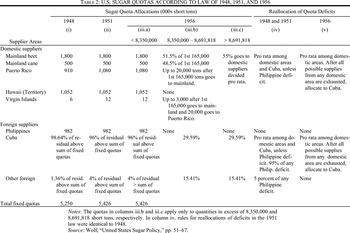
To determine the quota each year, the law established formulas that, depending on the supplier area, were either fixed or a function of an annual estimate of total U.S. consumption to be determined by the Department of Agriculture.16
Estimation of consumption requirements was delegated to the Sugar Branch of the Department of Agriculture, staffed by sugar-industry experts. The chief of the Sugar Branch met each November with representatives of farmers', processors', refiners', industrial users', and labor organizations to collect information to forecast sugar demands and supplies. USDA total consumption targets were announced annually in December and revised periodically throughout the year.
Deficits in any supplier area were reallocated pro rata between the domestic producers and Cuba, except that Cuba had the right to 95 percent of the Philippines' deficit. Other foreign suppliers received the remaining 5 percent.


Before 1956, therefore, Cuba was assigned almost all the growth and variability in the market. However, mainland beet sugar producers' and the Philippines' quotas were set to be nonbinding for much of our period of study such that they received some of the upward, but none of the downward, variation in the market. The legislation charged the Department of Agriculture to select estimates of U.S. consumption so as to stabilize the domestic price of sugar. Cuba had sugar-production capacity of more than double its quota to the U.S. market, and the price Cuban producers received for raw sugar sales in the U.S. market, net of duties, between 1948 and 1955 exceeded the price on the world market on average by 25 percent. In short, Cuban sugar producers had the ability and incentive to assist the USDA's sugar price stabilization effort by absorbing much of the variability in demand and filling other supplier areas' deficits.18
The U.S.-Cuban trade reciprocity treaty provided that Cuban raw sugar imports received a 20-percent discount on the sugar tariff. On the history of U.S. sugar policy, see Ballinger, History.
The Sugar Act of 1948 was revised in 1951 with few major changes: an increase in Puerto Rico's fixed quota and an increase in the residual share going to full-duty foreign countries. By contrast, the 1956 revision introduced major changes in the assignment rules. Below an overall consumption benchmark of 8.35 million tons, quotas remained as in the 1951 sugar law. Beyond that benchmark, there were three main changes in the quota formulas: Domestic producers, for the first time, were awarded an explicit share of the increase in the U.S. market; they were given priority in reallocations of deficits; and full-duty foreign suppliers were awarded a larger share in future market growth. All of these were at the expense of market rights formerly assigned to Cuba.
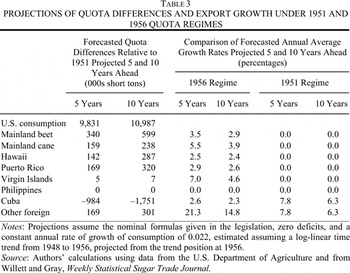
Table 3 gives projections of expected quotas by supplier areas for five-year and ten-year horizons based on a constant rate of growth of consumption projected from 1956. Assuming an annual rate of growth of 2.2 percent (the trend rate 1948–1956), domestic beet sugar producers expected an increase in their quota in five years of about 0.34 million tons in the 1956 legislation relative to the 1951 legislation—an addition to the projected quota of over 60 percent. Other domestic producers expected similar proportionate increases. Meanwhile, after five years under the 1956 legislation, Cuban producers expected a loss in annual exports to the U.S. of 0.98 million tons, relative to what they would have had under the 1951 legislation—a loss in the projected quota of about 32 percent. Cuban officials objected that in 1948 they had “accepted” the reduction to their historical share of the U.S. market (an average of about 40 percent since 1902) only because of the compensation expected from future market growth. Assuming the regulatory parameters established in 1951 would continue, they would have expected an average annual rate of sugar export growth to the U.S. market over the next five years of 7.8 percent. Under the new 1956 regime, expected market growth fell to 2.6 percent or less.

Two hypotheses emerge about the pricing of sugar company securities before and after these two regulatory revisions. First, Cuba's quota was relatively uncertain because it depended on market variability and the deficits of other producers. On that basis, investors would assess the risk of Cuban securities as above average, and that of mainland sugar companies as below average, relative to average security risk of all suppliers to the U.S. sugar market. Second, we expect a change in pricing structure as investors foresaw the regulatory changes of 1956. After 1956, Cuban sugar producers would have to sell a larger proportion of their sugar on the more volatile (non-U.S.) world market. Investors would have required a higher risk premium for Cuban securities once information about the 1956 revision was incorporated into their valuations. Risk premiums on U.S. securities would have fallen as uncertainties were reduced about whether the U.S. government would respond to relieve mainland companies of the burden of fixed and binding quotas. The reallocation of the benefits of expected future sugar market growth widened the relative risk assessments of long-run performance in the two areas.19
Hawaiian producers were operating close to capacity, so they received no increase to their basic quota unless U.S. demand rose substantially. Puerto Rican producers had a binding quota and were exposed to the world market. In 1950 and 1951 the USDA authorized Puerto Rican sugar surpluses to be exported to the non-U.S. market. See Willett and Gray, Weekly Statistical Sugar Trade Journal, 1950–1951; and USNA, R.G. 16.
Pricing and Risk Structure
In this section, we estimate the pricing structure of our supplier-area stock price indices to test these hypotheses, using a modified form of the so-called market model, common in studies of regulatory events on stock prices, a variant of the CAPM.
20See Jensen, Studies, for an explanation of the CAPM and market model. For related applications and discussion, see Binder, “Measuring the Effects”; Mullin et al., “Competitive Effects”; Rose, “Incidence”; Schwert, “Using Financial Data”; and Thompson, “Trade.”

where ri is the “excess return” of supplier-area index, i, (the difference between the nominal and risk-free rates of return), rMt is the excess return to the stock market, and rNt is the excess return to the sugar industry. The modification, relative to the CAPM, is the inclusion of the third term on the right-hand side of the equation. The usual approach distinguishes only two classes of risk—systematic “market risk,” captured by the second term, and diversifiable “unique risk,” captured in the error term, uit; but it assumes that the errors are independent, which holds only if supplier-area index i's variability can be attributed strictly to one of two types of events—“market events,” which affect all securities in the stock market, or “unique events,” which are specific to index i. Our indices of supplier-area rates of return, however, were influenced by a third type of event—“industry events,” defined as events that were specific to the sugar industry, commonly affecting all sugar-company and related stocks, but having little effect on non-sugar-related securities. We therefore extend the usual model by adding the third term in equation 1 to account for industry-related risk.
As in the standard market model, β1i represents the risk-premium factor on the average company's stock in supplier area i required to compensate for systematic market risk. Similarly, β2i gives the premium paid over and above β1i to compensate for systematic industry-related risk. Tests of our two hypotheses about relative risk premiums pertain to statistical inferences about β2i. If the first hypothesis is correct, the industry- effect marginal risk, β2i, should be greater than one for Cuba and less than one for the mainland. If the second hypothesis is true, the gap between the Cuban and mainland estimates of β2i should increase as investors learned about the changes in quota allocations that were to go into effect as a consequence of the 1956 revision.
To test for structural changes as investors incorporated information about the likely effects of the 1956 revision, we adopt the method employed by Willard, Guinnane, and Rosen, which offers advantages for endogenous identification of significant events and ease of identifying multiple structural breaks.
21See Willard, Guinnane, and Rosen, “Turning Points,” for an explanation of the method used. Endogenous identification of timing is preferred to exogenous identification because the timing of the release of information about prospective legislative events that caused contemporaries to alter their forecasts is not obvious and unlikely to coincide with events perceived with hindsight to be most important. As for multiple breaks, research shows that securities markets incorporate new information about future legislative changes into share prices as soon as investors learn about it. New information usually becomes available in piecemeal fashion causing structural breaks at multiple key dates leading up to passage. Event studies of legislative changes usually find that most significant information is revealed in increments before the date of passage. It leads to a high probability of multiple events, which the Willard, et al., method is superior for identifying relative to other proposed methods, for example, Salinger, “Value Event Studies.” See also the reference in note 20.
The length of the window is chosen to be as short as possible to increase the likelihood of identifying multiple breaks, but it cannot be made so short as to give insufficient degrees of freedom for estimation purposes.

To test for a break at the midpoint of each window, D1 and D2 are assigned zeroes to all observations before the midpoint, and ones after it. Exclusion tests on D1 and D2 constitute tests for structural breaks.
The data are weekly, running from the beginning of 1946 through the end of 1959, giving 624 possible 104-observation windows. We use Standard & Poor's index of 500 industrial stocks for the market return and the three-month Treasury bill rate as the risk-free rate to calculate excess returns. The industry excess return, rNt, is an index of sugar industry stocks consisting of the four supplier-area portfolios.
23Firms within each supplier area are weighted in proportion to their total assets, but the industry portfolio weights the four supplier areas equally to prevent a single supplier area from dominating the estimated average industry performance. In our sample, weighted by adjusted total assets, the U.S. mainland and Cuban components are roughly equal in size and make up about 73 percent of the summed assets in the sample. See Dye and Sicotte, “Legislative Shocks,” for more details about its construction.

To generate estimation results that focus on events of general significance to all supplier areas, rather than local significance, we adopt a seemingly-unrelated-regression procedure (SUR) on the four supplier area indices of rates of return to facilitate simultaneous tests of D1 and D2 on each supplier area.
24The SUR procedure gives the convenience of having only one test for each window that incorporates information from all supplier areas as a group rather than generating a separate test for each supplier area, which would not incorporate all available information. We assume an identical error structure for each. Tests supported an AR(1) estimation procedure.
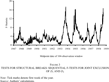
The tests of exclusion generated three series of 624 F-statistics to test for the exclusion of D1 and D2 separately and jointly. The results of the separate and joint tests were similar, so for brevity we show only the joint test results. Figure 3 maps the series of test statistics against the midpoint date of each window to permit easy identification of breaks. The higher the F-statistic, the more certain one is of rejecting the null hypothesis that no break occurred at that date. The critical value for a 0.01 significance level is 3.20. The F series cross that critical level repeatedly, suggesting considerable instability in the coefficients, which is consistent with our expectation of frequent updating from new information. (See note 21.) Maxima in the F series identify the best candidate dates for inferring structural breaks. In the graph, the F series produces spikes showing the dates when structural breaks were most evident. Our analysis focuses on the three tallest spikes—on 31 December 1953, 1 April 1955, and 5 December 1958.25
The spikes occur on the same dates in the separate tests for exclusion. In general, the results are robust to variations in the procedure for positioning the estimation window. A more complete set of tests, wider range of procedures, and sensitivity results is given in Dye and Sicotte, “Legislative Shocks.” Two minor spikes occur at the beginning of the calendar years of 1957 and 1958, which are likely attributed to the customary release at that time of year of the USDA's forecasted consumption level target for the coming year. Because of the events mentioned earlier (Korean conflict, Cuban market intervention in 1952, Suez crisis, drought in Puerto Rico, sugar-workers' strikes in Hawaii, and political unrest in Cuba in 1958), those forecasts were likely to contain more unanticipated information than most years. Further analysis of those events, however, is outside the scope of this article.

TESTS FOR STRUCTURAL BREAKS: SEQUENTIAL F-TESTS FOR JOINT EXCLUSION OF D1 AND D2
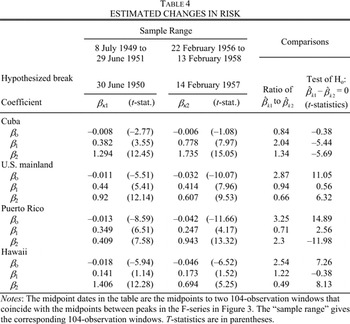
Inferring that these three dates are the points most likely to exhibit structural breaks in risk, in a second step, we compare estimates of β2i for the intervals on alternate sides of the breaks. To select observation windows that do not overlap with the dates of parameter shifts, that is, where risk assessments were more stable, we select two windows centered in the intervals between the tallest peaks in the F series in Figure 3.26
This approach makes our estimates in the second step robust to variance in the estimated dates of structural breaks in the first step.

Our main interest is in β2i—the marginal premium associated with industry-related risk. The estimated coefficients for β2i are significant at the 0.01 level for all supplier areas. Consistent with our first hypothesis, for the U.S. mainland β2i <1, indicating lower-than-average risk; and for Cuba β2i>1, indicating higher-than-average risk relative to the industry. As for our second hypothesis, all between-period estimates are significantly different, and our prior expectations about the directions of the shifts for the U.S. mainland and Cuba are confirmed.27
The results for Hawaii and Puerto Rico are also consistent with prior expectations. Risk assessments in Hawaii were above average, contrary to expectations; but inspection of the data suggests high risk in the early period was associated with postwar adjustment. Consistently, the estimated β2i fell by one-half in the latter period. Puerto Rico's β2i rose, which is consistent with Puerto Rican producers' prior expectations about the 1956 revisions.
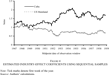
The high values of the F-statistics in Figure 3 suggest considerable instability in the betas. To observe their magnitudes at more than two points, Figure 4 gives the estimated coefficients for all 624 104- observation regressions, thus estimating the paths that industry-related risk premiums took for Cuban and U.S. mainland sugar companies. Corroborating the tests, and consistent with the analysis to follow, the paths show that U.S. mainland risk fell and stabilized after 1953 whereas the estimated beta measuring Cuban risk stayed below 1.5 before 1953, peaked in late 1954, and afterward, fluctuated at a higher average level, between 1.5 and 2.

ESTIMATED INDUSTRY-EFFECT COEFFICIENTS USING SEQUENTIAL SAMPLES
THE POLITICAL ECONOMY OF THE REVISIONS
The three spikes in Figure 3 identify the most likely dates at which new information produced the most abrupt changes in investor behavior. What was the nature of this new information? Each of the three coincided with a critical legislative or political moment. The third occurred during a week in which Batista's regime was beginning to collapse.28
García-Pérez, Insurrection, pp. 11, 99–100; and U.S. Department of State, Foreign Relations: Cuba, pp. 276–77.
An important fact that impinged on the political economy of the revision was that some of the quotas were nonbinding. Most important, the fixed quotas for mainland sugar, in the original 1948 act, were deliberately set beyond current production capacities so that mainland producers did not face crop restrictions before 1953. In that year, beet sugar producers balanced their quota deficit, and mainland cane sugar growers, for the first time since 1948, exceeded their quota and had to accept crop restrictions set by the Department of Agriculture.29
Another factor exacerbated the problem. The controls imposed an 8-percent acreage restriction. Sugarcane yields per acre in Louisiana rose afterward, reflecting foreseeable increased cropping intensity. Officials thus predicted more drastic cuts in 1954. Letter of Robert F. Kennon, Governor of Louisiana to Secretary of State, John Foster Dulles, 1 Feb. 1954, USNA RG 59, 811.2351/2-154. See also New York Times, 13 August 1953, p. 33.
Political demands for increased mainland quotas emerged as the threat of binding crop restrictions approached in late 1953. An alliance of the American Sugar Cane League and the U.S. Beet Sugar Association emerged publicly by the spring of 1954.30
Memo of conversation between Sherlock Davis, United States-Cuban Sugar Council, and Mr. Wellman, U.S. Department of State, 20 May 1954, USNA RG59 811.235/5-2054. Congressional Record, 83rd Cong., 2nd Sess., pp. 1525–27, 4586, 4536–37.
Letters from Secretary of State, John Foster Dulles, to Secretary of Agriculture, Ezra Taft Benson, 4 June 1954, Foreign Relations…1952–1954, vol. 4, pp. 900–902, and to President Eisenhower, 7 June 1954, Foreign Relations…1952–1954, vol. 4, pp. 902–03; Letter from True Morse, Undersecretary of Agriculture, to Gabriel Hauge, Administrative Assistant to the President for Economic Affairs, 18 June 1954, USNA RG 59, 811.235/6-2254; Memo of conversation between Assistant Secretary of State, Henry Holland, other State Dept. officials, and representatives of the beet sugar industry, 22 June 1954, USNA RG 59, 811.235/6-1654.
The first spike in the event-study coincides with the week in which investors perceived the possible effect the new alliance could have on the timing of the anticipated revision. As late as 22 December 1953, the Journal of Commerce noted with disdain that the “bleat of Louisiana attracted scorn more than anything else. Trade interests felt it undignified for Louisiana to whine so often.”32
Journal of Commerce, 22 December 1953, p. 12.
New Orleans Times-Picayune, 7 January 1954, p. 50; American Cane Sugar League, Sugar Bulletin, February 1954, pp. 133, 135.
A complementary, portentous event explains more why investors inferred a need to update their market forecasts. The effects of a coordinated grassroots letter-writing campaign on the part of myriad local beet and cane sugar growers' associations and processing companies began to be felt in Washington by the last week in December 1953. Letters poured into congressional representatives' offices from December through the first few months of 1954. The first of the letters preserved in the archives of the Secretary of Agriculture was dated 19 December 1953.34
The earliest letter we have located was written by the American Beet Growers' Federation in Greeley, Colorado, on 19 December 1953. The campaign was clearly coordinated at a national level, as many of the letters sent from various places contained passages with identical language. USNA RG16, December 1953. Copies of lobbying letters from beet and cane interests are in the archives of the Departments of Agriculture and State, and in the papers of the sugar companies, among memos of the United States Cuban Sugar Council, a lobby organization representing American cane sugar interests in Cuba, and in the archives of the Cuban Sugar Stabilization Institute, in Havana. USNA, RG 16 and 59; ANC Fondo ICEA; BB RG 4, Ser. 10c, see folders labeled USCSC.
Because the data are end-of-week weekly data, information captured in the observation on 31 December 1953, corresponds to events that occurred in the seven days prior to that date.
The transmission of this information from Washington to Wall Street as quickly as we observe required insider information. Whether this is plausible depends on how this information became available to investors. Though newspapers in Louisiana and Havana reflect more insight into its significance, the New York Times and the Journal of Commerce capture the import of the events of that time only with a lag. But were other sources of information available to investors? First, it is important to note that informed investors in sugar company stocks were specialized investors (mill owners, sugar traders, or others in various branches of the business), who did not rely solely only on the press for information. The financial press warned that the normal investor should leave investment in sugar-company shares to the specialized investor.36
For example, the sugar section of Standard and Poor, Industry Surveys, “Current Analyses” repeatedly warned that the normal investor should not invest in sugar equities. The coverage of annual shareholders' meetings of the major companies in Willett and Gray, Weekly Statistical Sugar Trade Journal, constitutes additional evidence of the participation of specialized buyers.
Fensler's letters are found in BB, RG 4, Ser. 10c.
Besides this, lobby organizations were formed to monitor and respond to relevant political events. The main lobby group for Cuban, and associated American, sugar interests was the New York-based United States-Cuban Sugar Council (USCSC), to which relevant specialist firms and individuals subscribed as members. The USCSC employed a full-time secretary whose primary responsibility was to gather intelligence about the politics of sugar in Washington and pass it on to its members. We know that they knew about the letter-writing campaign and considered it important; copies of some of the letters were found in USCSC members' files, with cover letters indicating they were forwarded by the Secretary of USCSC. The USCSC files also contain drafts of letters being prepared for counter-reply. Also, the Cuban corporatist regulatory agency, the Cuban Sugar Stabilization Institute, maintained a full-time official representative in Washington. He had direct personal connections with the prominent members of organizations such as the USCSC and incentives to leak information to them. Informal networks and extant records of unpublished communiqués illustrate the type of information available to the specialized investor. The quantity of such information, naturally, was more abundant than that which has been preserved.38
BB, RG, Ser. 10c, see folders labeled USCSC, passim.
The bill submitted by the mainland sugar alliance was blocked by the State Department in 1954 on Cold-War grounds, but the political climate changed in 1955 after the Republicans lost control of both the Senate and the House. Senator Ellender (D-LA), who returned to chair the Senate Committee on Agriculture, was also the self-appointed leading advocate of domestic sugar interests in Congress.39
Memo of conversation between Robert Shields, President of the U.S. Beet Sugar Association, and Paul Callanan, U.S. Department of State, 4 August 1954, and memo of Shields, Philip Jones, Treasurer of the U.S. Beet Sugar Association, and Paul Callanan, 15 October 1954, USNA RG 59, lot 65D212, Box 432, folder entitled “Efforts to Reopen the Sugar Act in 1954, File 2;” Memo between Shields, President of the Great Western Sugar Co., Frank Kemp, Assistant Secretary of State Henry Holland, and other Department of State officials, 22 June 1954, USNA RG 59, no. 811.235/6-1654; David Fernsler, “Sugar in Washington,” 30 December 1954, BB RG 3, Ser. 50, Box 22, folder: “USCSC Nov.-Dec. 1954.”
Congressional Record, 84th Congress, 1st Session, pp. 4138–39, 4187–88. Journal of Commerce, 4 April 1955, p. 19; New York Times, 1 April 1955 p. 38, 2 April 1955; p. 27; Wall Street Journal, 1 April 1955, p. 1. Address to the American Chamber of Commerce of Cuba by Laurence A. Crosby, President of the United States Cuban Sugar Council, 25 May 1956, BB RG 3, Ser. 47, Box 6, folder: “Sugar Act 1956;” Memo of a phone conversation between Robert Shields, President of the U.S. Beet Sugar Association, and Paul Callanan, official of the Department of State, 5 April 1955, USNA RG 59, no. 811.235/4-555. Shields says that the bill would have had more co-sponsors, but they ran out of time.
For reasons extraneous to this study, the revision was not passed until 17 May 1956.41
Address to the American Chamber of Commerce of Cuba by Laurence A. Crosby, Pres. of the United States Cuban Sugar Council, 25 May 1956, BB RG 3, Ser. 47, Box 6, folder: “Sugar Act 1956;” BB RG 3, Ser. 47, Box 5, folder: “Sugar Act Revision 1955.”
Economic and Political Risk
The regressions in Table 4 show that investors considered Cuban sugar-company securities as riskier than mainland securities and, further, that perceptions about the risk of the two supplier areas diverged further between December 1953 and April 1955, in anticipation of the 1956 quota revision. What other evidence supports this result? First, Cuba's loss of quota access to the U.S. market forced it into a position of relying more on the world market. Producers were concerned mainly with two types of risk—price risk and cost risk. Figure 2 shows that price risk was higher on the so-called “world” market (a residual market consisting of importers with relatively less restrictive sugar trade protection). Cuban sugar companies were exposed to greater risk as a greater share of their sales went to the “world” market. Cost risk was sensitive to capacity utilization because sugar milling involved substantial fixed costs in milling and transportation equipment.42
Dye, Cuban Sugar, pp. 107–18.
It was not feasible for Cuba to compensate for its losses in the protected U.S. market by shifting sales to the rest of the world. The non-U.S. world market was segmented into several preferential markets, where, like the United States, the major sugar-consuming countries in Europe protected domestic and former colonial production. Besides the United States, Cuba had no other preferential access, and it faced prohibitive protection in markets other than the residual “world” market; yet Cuban exports already accounted for nearly 3 million of the roughly 6 million short tons normally sold in that market. If Cuban producers had shifted another 1 million tons from the U.S. market into that market (the five-year projected differential loss in sales volume caused by the 1956 revision), the additional exports would have increased the supplies on the residual market by 17 percent. Because estimates of the price elasticity of demand for sugar range from 0.04 to 0.16, this implies a fall of 106 percent or more in the price of sugar in the residual market.43
The market data are averages for the 1950s, based on the authors' calculations using data from the International Sugar Council. Elasticity estimates are from Schmitz and Christian, “Economics,” p. 74.
Pérez-Cisneros, Cuba y el mercado; Pérez-López, Economics; Swerling, “International Sugar Agreement.”
A risky strategy available to the Cuban sugar industry, given its current production capacity, was to take advantage of periods of supply shortage elsewhere in the world when Cuban producers could temporarily increase their capacity utilization and lower unit costs.45
In cooperation with the U.S. sugar program, Cuba, through the Cuban Sugar Stabilization Institute, imposed crop restrictions on all sugar mills and cane growers and distributed export licenses pro rata to the U.S. market.
Standard and Poor, Industry Surveys.
By late 1956 analysts were explaining the price movements of Cuban sugar securities more and more as associated with fluctuating demand in the world sugar market. Noting the influence of the Suez crisis, Barron's remarked that “sugar is a notorious war baby.” “[F]or at least several months to come, [Cuban] earnings should be relatively sweet. Over the long term, predictions about the … feast-or-famine industry obviously are less easy.”47
Barron's, 26 November 1956, p. 5.
THE POLITICAL ECONOMY OF THE REVOLUTION
Hugh Thomas gives an apt description of the connection Cubans saw between these world political crises affecting the sugar market and Cuban domestic politics:
… the two world wars, the Depression, Korea, Suez—impressed on Cubans of all walks of life that good and bad times in Cuba depended on good and bad times in the world outside. War rather than peace still brought prosperity. Nothing which Cuba could do at home was so important to her economy as a variation of a cent or two in the price of sugar.48
Thomas, Cuba, p. 1153.
Yet despite widespread recognition of the importance of sugar and its price to the Cuban political situation, Jorge Domínguez notes with puzzlement that “perhaps no other hypothesis about the origins of the revolution has been held in such wide disrepute and treated with so much scorn” as the notion that “economic causes contributed to the downfall of Batista.” One reason, Domínguez proposes, is that until the last few months of the insurrection in 1958, the economy was doing unusually well. In 1957 and 1958, sugar prices and quantities, and wage and employment figures were high. In macroeconomic performance, 1957 was one of the best years in recent history.49
Domínguez, Cuba, pp. 120–22, 128–29; For competing views, see O'Connor, Origins, pp. 41–42; Draper, Castro's Revolution, pp. 3–59; Suárez, Cuba, p. xiii; Pérez-Stable, Cuban Revolution, pp. 52–60.
A second reason may be its contradiction with a view, held by many historians, that the real problem with trade policy was the U.S.-Cuban reciprocity treaty, which blocked Cuba from adopting importsubstituting trade protection to diversify its economy. Yet regardless whether import-substitution policies were or were not adopted (or even advised), the reduced quota was damaging. In the experience of other countries, one main problem with import substitution was that it ran up against foreign exchange shortages that constrained acquisition of necessary imported inputs. For Cuba, sugar was the only major source of foreign exchange. A few years later, the revolutionary government encountered this very constraint. In 1960/61, the government transferred resources (by then, controlled by the state) out of sugar to fuel industrial diversification; but, overwhelmed by shortages of foreign exchange, in 1963 Cuban authorities reversed the policy and tried to diversify by reintensifying the production of sugar. The industrial reconcentration in sugar is said to have been a pillar of the greater prosperity of the revolutionary economy in the 1970s.50
Pérez-López, Economics, pp. 12–13; Rodríguez, “Agricultural Policy,” pp. 26–27; Mesa-Lago, Cuba.
References to the quota in the retrospective historical literature recognize it as a device that strengthened Cuba's sugar oligarchy and reinforced Cuba's dependence on the United States, but they overlook its main effects as a restriction on trade. This is in great contrast to the views of contemporary supporters and opponents of the Batista regime. In the infancy of the revolutionary regime, Raúl Cepero Bonilla, Minister of Commerce, advised Cuba's continued participation in the U.S. sugar quota program but demanded a higher quota.51
From a Cuban television appearance by Cepero Bonilla, 8 October 1959; USNA RG 59 837.2351/10-959.
From the U.S. Embassy in Havana to the Department of State, 22 October 1959; USNA RG 59 837.2351/10-2759.
Our findings of a large, significant economic impact refine and confirm contemporary analyses. Cepero Bonilla, who before the Revolution labored as a dissident economic journalist, published figures that forecasted the losses in 1960 from the 1956 revision at about 4 percent of GDP. The assumptions underlying the forecast clearly caused the estimates to understate the earnings losses.53
Cepero Bonilla, Obras históricas, pp. 426–27.
Martínez Saenz, Por la independencia, p. 40; Thomas, Cuba, p. 1142. Memo of conversation between Chester Davis and Arturo Mañas, 28 February 1955, USNA RG 59, 811.235/3-355.
The institutional mechanisms through which economic effects were translated into political outcomes are consistent with recent work by Stephen Haber, Armando Razo, and Noel Maurer on the fall of Porfirio Díaz in Mexico.55
Haber, Razo, and Maurer, Political Institutions, chaps. 2, 3.
Libecap, “Distributional Issues,” gives a useful conceptual framework for examining the distributional motivations for policy demands of the two groups.
Just as Haber, Razo and Maurer find for Porfirian Mexico, the narrow cronyist support upon which the Batista regime depended gave little flexibility to deviate much from its commitment to the sugar program. Yet pressures from political supporters in other sectors increasingly demanded it. Batista's political backing was tied to relational commitments to the Cuban Sugar Stabilization Institute (ICEA), a corporatist body controlled by private sugar representatives with vested interests in the quota system, and to domestic and foreign bankers and merchant houses whose enterprises held liens on most of the sugar crop. Batista's closest economic advisers were in this group. Other political support for the regime was built upon deals with select leaders of organized labor and insiders among the clases económicas (businessmen, bankers, and corporate directors). Batista's ties to sugar, at the time of the 1952 coup, were seen as consistent with business's outlook for economic growth in Cuba, but that outlook changed with the revision in the U.S. sugar quota.57
Thomas, Cuba, p. 1113.
Batista, Cuba; Thomas, Cuba, passim; Haber, Razo, and Maurer, Political Institutions.
In an interview in 1957 Castro explained that the revolutionary forces did not expect to defeat Batista single handedly; they aimed rather to produce a “climate of collapse.”59
Pérez, Army Politics, p. 161; and New York Times, 20 May 1957, p. 8.
See especially Pérez, Army Politics, and García-Pérez, Insurrection; Domínguez, Cuba; Pérez-Stable, Cuban Revolution; and Zeitlin and Sheer, Cuba.
Thomas, Cuba, pp. 884, 953–55; and Pérez-Stable, Cuban Revolution, pp. 56, 63.
Other archival evidence supports our argument that businesspeople in Cuba saw it coming. In late February 1955 Arturo Mañas, President of the Cuban Sugar Stabilization Institute, forewarned that the current economic situation for Batista was delicate. “[E]specially adverse sugar legislation could blow things wide open and cause the downfall of not only [Amadeo] López Castro, [Carlos] Saladrigas, etc. [i.e., various prosugar members of Batista's cabinet] but the Batista Government itself.”62
Memo of conversation between Chester Davis, Attaché at U.S. Embassy, and Arturo Mañas, President of the Cuban Sugar Stabilization Institute, 28 February 1955, 811.235/3-355. Others mentioned as “in the front ranks of the sugar fight” were Jorge Barroso and Aurelio Concheso. Barroso and López Castro were Ministers Without Portfolio, Concheso was Cuban Ambassador to the United States, and Saladrigas was Minister of State.
U.S. Department of State, Foreign Relations, 1953–1956, passim.
Unusually advantageous world sugar market conditions in 1957 diverted the effects of the quota revisions. The Batista regime was weakened politically but it did not fall until later. The popular withdrawal of support happened progressively throughout the summer of 1958, yet significant elite business support remained. Our final piece of evidence relates to the event study's identification of 5 December 1958 as a likely structural break in sugar company rates of return—the third spike in Figure 3. Although the analysis of this event is outside the scope of the study, it is noteworthy that the week of that event coincides with a fateful meeting of a group of U.S. businessmen in Cuba with Ambassador Earl T. Smith less than three weeks after Batista's handpicked successor, Andrés Rivero Agüero, was declared the victor in a presidential election widely considered as fraudulent. This group informed the ambassador that business interests in Cuba viewed the political situation as irreparable. They recommended that the United States abandon Batista and Rivero Agüero and “give full and actual support” to a military civilian junta. The abandonment of key business support ended the last hope for Batista, and the event resonated on Wall Street, as Figure 3 indicates.
In conclusion, though the literature downplays the adverse effects of U.S. protectionism on the revolutionary movement in Cuba, we find that view to be mistaken. After 1955 Batista lost significant political support from the clases económicas because of his regime's inability to offer a viable policy alternative as the anticipated sugar market growth was legislated away in the United States. Three kinds of evidence combine to show the economic and political impact of the downward revision of Cuba's import quota into the U.S. sugar market. First, projections of the quotas five or ten years after the 1956 law went into effect show substantial losses in Cuba's sales to the U.S. market that could not be shifted to the non-U.S. world market because of inelastic world demand and Cuba's already dominant position in that market. Second, behavior of stock prices of sugar companies shows that investors revised their assessments of Cuban sugar-company risk upward (and U.S. mainland sugar-company risk downward) in 1954 and 1955 as they learned about the probable contents and expected date of the 1956 revision. Finally, private memoranda and letters among key figures confirm it. On these events, Julio Lobo, a prominent figure among the Cuban sugar interests alienated by Batista's ineffectiveness, commented: “We didn't care who overthrew Batista, so long as someone did.”64
García-Pérez, Insurrection, p. 11, U.S. Department of State, Foreign Relations … Cuba, pp. 276–77. Thomas, Cuba, pp. 1015–16, 1150.
The collapse of the Batista regime and the popularity of the revolutionary movement led by Fidel Castro undoubtedly had multiple causes. Cronyism, the illegitimacy of the Batista government, and fraudulent elections explain why democratic processes were not expected to produce a satisfactory response to popular demands for a change of government. Yet, contrary to conventional views, our findings show that the adverse shock from U.S. trade policy contributed to the demands for the change of government by imposing economic stresses that alienated Batista's political and military support just as the popular cry for a restoration of constitutional government served as a focal point for the Revolution.
We wish to thank Lee Alston, Aurora Gómez, Stephen Haber, Margaret Levenstein, Noel Maurer, Larry Neal, Jean-Laurent Rosenthal, Tridib Sharma, William Summerhill, Alan Taylor, Gavin Wright, Oscar Zanetti, an anonymous referee, and participants of the 2nd Latin American Cliometrics Conference, the Canadian Network for Economic History Conference, the economic and economic history workshops at the University of Illinois, the University of Massachusetts, the University of Vermont, Instituto Tecnológico Autónomo de México, and the Centro de Investigación y Docencia Económicas for useful comments; the staffs of the Instituto de Historia de Cuba and the University Archives of the University of Florida at Gainesville for invaluable assistance; and the Smith Richardson Foundation, the Newcomen Society for financial support of the project.
References
Archives Consulted
ANC. Archivo Nacional de Cuba, Fondo, I.C.E.A. (Instituto Cubano de Estabilización del Azúcar).
BB. Braga Brothers Collection, University of Florida at Gainesville. R.G. III.
USNA. National Archives of the United States, R.G. 16, Papers of the Secretary of Agriculture, General Correspondence; R.G. 59, Dept. of State Central Files.
Books and Articles
Batista y Zaldívar Fulgencio.
1962
Cuba Betrayed.
New York:
Vantage Press,
Benjamin Jules.
1990
The United States and the Origins of the Cuban Revolution.
Princeton, NJ:
Princeton University Press,
Ballinger Roy A.
1971
A History of Sugar Marketing.
U.S. Department of Agriculture, Economic Research Service, Agricultural Economic Report 197,
February
Binder John.
“Measuring the Effects of Regulation with Stock Price Data.” Rand Journal of Economics
16,
no. 2 (summer 1985):
167–
83.
Cepero Bonilla Raúl.
1963
Obras históricas.
Havana:
Instituto de Historia,
Cuba Económica y Financiera,
Anuario azucarero 1958.
Havana:
Cuba Económica y Financiera.
Domínguez Jorge.
1978
Cuba: Order and Revolution.
Cambridge, MA:
Belknap Press of the Harvard University Press,
Draper Theodore.
1962
Castro's Revolution: Myths and Realities.
New York:
Praeger,
Dye Alan.
1998
Cuban Sugar in the Age of Mass Production: Technology and the Economics of the Sugar Central, 1899–1929.
Stanford, CA:
Stanford University Press,
Dye Alan, and
Richard Sicotte,
“Legislative Shocks to the U.S.-Cuban Sugar Trade: The Seismic Information in Stock Prices.”
Barnard College Economics Department Working Paper No. 04-06.
Farber Samuel.
1976
Revolution and Reaction in Cuba, 1933–1960: A Political Sociology from Machado to Castro.
Middletown, CT:
Wesleyan University Press,
García-Pérez Gladys Marel.
1998
Insurrection and Revolution: Armed Struggle in Cuba, 1952–1959.
Boulder, CO:
Lynne Rienner,
Goldstein Judith.
1993
Ideas, Interests and American Trade Policy.
Ithaca, NY:
Cornell University Press,
Haber Stephen,
Armando Razo, and
Noel Maurer.
2003
The Politics of Property Rights: Political Instability, Credible Commitments, and Economic Growth in Mexico, 1876-1929.
Cambridge:
Cambridge University Press,
Ibarra Jorge.
1998
Prologue to Revolution: Cuba, 1898–1958.
Boulder, CO:
Lynne-Rienner,
Jensen Michael, ed.
1972
Studies in the Theory of Capital Markets.
New York:
Praeger,
Krueger Anne O.
1993
Economic Policies at Cross Purposes: The United States and Developing Countries.
Washington, DC:
Brookings Institution,
Libecap Gary.
1989
“Distributional Issues in Contracting for Property Rights.
Journal of Institutional and Theoretical Economics
145,
no. 1 (March):
6–
24.Google Scholar
Martínez Saenz Joaquín.
1959
Por la independencia económica de Cuba.
Havana:
Editorial Cenit,
Mesa-Lago Carmelo.
1978
Cuba in the 1970s: Pragmatism and Institutionalization.
Albuquerque:
University of New Mexico Press,
Moreno Fraginals Manuel.
1978
El Ingenio: El complejo económico social del azúcar.
3 vols.
Havana:
Editorial de Ciencias Sociales,
Mullin George,
Joseph Mullin, and
Wallace Mullin.
1995
“The Competitive Effects of Mergers: Stock Market Evidence from the U.S. Steel Dissolution Suit.”
Rand Journal of Economics
26,
no. 2 (summer):
314–
30.Google Scholar
O'Connor James.
1970
The Origins of Socialism in Cuba.
Ithaca, NY:
Cornell University Press,
Pérez Louis.
1976
Army Politics in Cuba, 1898–1958.
Pittsburgh:
University of Pittsburgh Press,
Pérez-Cisneros Enrique.
1957
Cuba y el Mercado azucarero mundial.
Havana:
Ucar García,
Pérez-López Jorge.
1991
The Economics of Cuban Sugar.
Pittsburgh:
University of Pittsburgh Press,
Pérez-Stable Marifeli,
1993
The Cuban Revolution: Origins, Course, and Legacy.
New York:
Oxford University Press,
Rodríguez José Luís.
1987
“Agricultural Policy and Development in Cuba.”
In Cuba's Socialist Economy Toward the 1990s,
edited by Andrew Zimbalist,
25–
41.
Boulder, CO:
Lynne Reinner,
Rose Nancy.
1985
“The Incidence of Regulatory Rents in the Motor Carrier Industry.”
Rand Journal of Economics
16,
no. 3 (autumn):
299–
318.Google Scholar
Salinger Michael.
1992
“Value Event Studies.”
Review of Economics and Statistics
74,
no. 4 (November):
671–
77.Google Scholar
Schmitz Andrew, and
Douglas Christian.
1993
“The Economics and Politics of U.S. Sugar Policy.”
In The Economics and Politics of World Sugar Policies,
edited by Stephen Marks and
Keith Maskus,
49–
78.
Ann Arbor:
University of Michigan Press,
Schwert William.
1981
“Using Financial Data to Measure Effects of Regulation.”
Journal of Law and Economics
24,
no. 1 (April):
121–
58.Google Scholar
1948–1959
Standard and Poor,
Industry Surveys,
Suárez Andrés.
1967
Cuba: Castroism and Communism, 1959–1966.
Cambridge, MA:
MIT Press,
Swerling Boris C.
1954
“The International Sugar Agreement of 1953,”
American Economic Review
44,
no. 5 (December):
837–
53.Google Scholar
Thomas Hugh.
1971
Cuba; the Pursuit of Freedom.
New York:
Harper and Row,
Thompson Aileen.
“Trade Liberalization, Comparative Advantage, and Scale Economies: Stock Market Evidence from Canada.”
Journal of International Economics
37
(1994):
1–
27.
1962
U.S. Congress. House. Committee on Agriculture.
History and Operations of the U.S. Sugar Program.
Washington, DC:
GPO,
1956
U.S. Department of Commerce. Bureau of Foreign Commerce.
Investment in Cuba: Basic Information for United States Businessmen.
Washington, DC:
GPO,
1983, 1987
U.S. Department of State,
Foreign Relations of the United States.
Vols. 4, 6; American Republics.
Washington, DC:
GPO,
1996
Willard Kristen L.,
Timothy W. Guinnane, and
Harvey S Rosen.
“Turning Points in the Civil War: Views from the Greenback Market.”
American Economic Review
86,
no. 4 (September):
1001–
18.Google Scholar
Willett and
Gray.
Weekly Statistical Sugar Trade Journal.
Wolf Harold A.
1958
“The United States Sugar Policy and Its Impact Upon Cuba: A Reappraisal.”
Ph.D. diss.
University of Michigan,
Zanetti Lecuona Oscar.
1989
Los cautivos de la reciprocidad: la burguesía cubana y la dependencia comercial.
Havana:
Ediciones ENPES,
Zeitlin Maurice, and
Robert Sheer.
1963
Cuba: Tragedy in Our Hemisphere.
New York:
Grove Press,
SUGAR INDUSTRY REGIONAL STOCK PRICE INDICES
SUGAR PRICES IN THE U.S. AND INTERNATIONAL MARKETS
ANNUAL U.S. CONSUMPTION OF SUGAR AND SUPPLIER AREA SHARES
U.S. SUGAR QUOTAS ACCORDING TO LAW OF 1948, 1951, AND 1956
PROJECTIONS OF QUOTA DIFFERENCES AND EXPORT GROWTH UNDER 1951 AND 1956 QUOTA REGIMES
TESTS FOR STRUCTURAL BREAKS: SEQUENTIAL F-TESTS FOR JOINT EXCLUSION OF D1 AND D2
ESTIMATED CHANGES IN RISK
ESTIMATED INDUSTRY-EFFECT COEFFICIENTS USING SEQUENTIAL SAMPLES
 You have
Access
- 11
- Cited by