Introduction
Countries like Pakistan and India lie in temperate climatic zones where the weather remains cold in the winter and hot in the summer season. Pakistan is an agro-livestock based economy and the poultry industry shares a major part in the economy of Pakistan (Abidin, Reference ABIDIN2011). The total share of agriculture in the national GDP is 21% and the livestock and poultry share is 55% of total agricultural GDP. The total poultry population in Pakistan is 1261 million, out of which the broiler population represents 542.74 million and layer population 32.54 million. Poultry meat contributes about 25% of the total meat production in the country while egg production is 12,857 million per annum (Anonymous, Reference ANONYMOUS2010).
In July and August, the temperature of most areas of Pakistan exceeds 40-45°C with high humidity; and conditions become very harsh for the survival of poultry and other animals. In desert areas, conditions become even worse than plain areas as the sand becomes hot and dissipates heat. As birds are more sensitive to changing environments than other livestock species, the survival of birds in these months becomes a major issue due to the increased incidence of heat stroke and heat stress and special care is required for rearing poultry, especially in open houses.
Heat stress
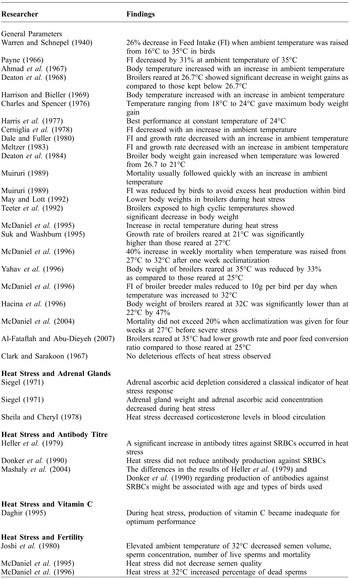
Under normal conditions, the body temperature of birds remains slightly higher than the environmental temperature, with a continuous loss of heat from the body to the environment by evaporation, radiation, convection and conduction (Sabah Elkheir et al., Reference SABAH ELKHEIR, MOHAMMED AHMED and ABDEL GADIR2008). The productivity of birds’ peaks in thermoneutral conditions, as minimum energy is required in such an environment for thermoregulation (Obaldiston and Sainsbury, Reference OBALDISTON and SAINSBURY1963). Compared with other domestic animals, birds are more susceptible to changing conditions of environment (Nolan et al., Reference NOLAN, HINCH, TWAITES and WALKDEN-BROWN1999). Heat stress is characterised as a combination of high environmental temperature along with upper limits of humidity which does not allow proper thermoregulation in birds to dissipate the heat produced during metabolic processes and maintain homeostasis (Webster, Reference WEBSTER1983). Heat stress can be acute or chronic. Acute heat stress refers to short and sudden intervals of extremely high temperature whereas chronic heat stress refers to extended intervals of raised or elevated temperature (Emery, Reference EMERY2004). High ambient temperature is one of the major sources of stress in poultry production in tropical, sub-tropical and temperate regions of the world. Birds respond to hot environments by changing the circulating levels of hormones, glucose, leukocytes and electrolytes, and the function of organs (Blalock and Smith, Reference BLALOCK and SMITH1985; Mitchell and Kettlewell, Reference MITCHELL and KETTLEWELL1998). Heat stress decreases the GDP shared by the poultry industry in a nation's economy by decreasing feed intake, growth rate, egg quality, egg production, number of chicks per hen, hatchability of fertile eggs, immunity, increasing mortality and lowering carcass quality (Van Kampen, Reference VAN KAMPEN1981; Peebles and Brake, Reference PEEBLES and BRAKE1985; Carmen et al., Reference CARMEN, FRANCE, MACLEOD and JULIE1991; Muiruri and Harrison, Reference MUIRURI and HARRISON1991; Teeter et al., Reference TEETER, SMITH and WIERNUSZ1992; McDaniel et al., Reference MCDANIEL, BRAMWELL, WILSON and HOWARTH1995; Ayo et al., Reference AYO, OLADELE and FAYOMI1996; Yahav et al., Reference YAHAV, STRASCHNOW, PLAVNIK and HURWITZ1996; Mills et al., Reference MILLS, MITCHELL and MAHON1999; Har et al., Reference HAR, RONG and ZHANG2000; Temim et al., Reference TEMIM, CHAGNEAU, PERESSON and TESSERAUD2000; Naseem et al., Reference NASEEM, ANWAR, GHAFOOR, ASLAM and AKHTER2005). High ambient temperature also decreases the concentration of some minerals in poultry (El Husseiny and Creger, Reference EL HUSSEINY and CREGER1981). It increases mobilisation, and subsequently the excretion of vitamins and minerals from tissues, leading to deficiencies (McDowell, Reference MCDOWELL1989; Siegel, Reference SIEGEL1995). It also results in a decreased value of ascorbic acid in poultry (Klasing, Reference KLASING1998; Sahin and Kucuk, Reference SAHIN and KUCUK2001; Sahin et al., Reference SAHIN, KUCUK, SAHIN and GURSU2002; Al Ghamdi, 2008), and causes the release of catecholamines and induces lipid peroxidation in cell membranes (Siegel, Reference SIEGEL1995; Sahin and Kucuk, Reference SAHIN and KUCUK2003). Many studies have been carried out involving heat stress in birds, some of which are mentioned in Table 1.
Findings of different researchers regarding heat stress in poultry.

Ambient temperatures of 32-35°C are most suitable for brooding chicks (Gietema, Reference GIETEMA1996) and consequently young chicks are most prone to the deleterious effects of high temperatures than mature birds (Payne and Wilson, Reference PAYNE and WILSON1999). The ideal humidity level for broiler performance is 60-70% (Hoffman and Gwin, Reference HOFFMAN and GWIN1954). Birds are able to survive at 35°C when the relative humidity remains in the range of 60-70% (Hoffman and Gwin, Reference HOFFMAN and GWIN1954; Card and Nesheim, Reference CARD and NESHEIM1972). The ideal temperature for laying hens is 20°C (North and Bell, Reference NORTH and BELL1990). Heat stress occurs in laying hens when the temperature goes beyond 25°C and it is most prominent when the temperature goes above 30°C, posing a negative impact on live weight gain, feed efficiency, feed intake, production and quality of eggs, and causing an increase in mortality (Demir et al., Reference DEMIR, OZTURKCAN, GORGULU, KUTLU and OKAN1995; Bollengier-Lee et al., 1999).
Reduced weight gain and feed intake, and increased rectal temperature
Heat stressed birds exhibit lower feed intake in order to reduce the thermogenic effect related to nutrient absorption and utilisation (Withers, Reference WITHERS1992). In broilers reared at 32°C, there is a 47% decrease in feed consumption and weight gain as compared to those reared at 24°C (Cerniglia et al., Reference CERNIGLIA, KOONCE and WALTS1978). Cumulative feed intake and weight gain is depressed in old broilers by 16-53 g (approximately) per bird for every 1°C increase in ambient temperature respectively (Charles, Reference CHARLES1980). However, the feed efficiency of broilers exposed to high temperatures at an early age (first five days) can be significantly improved without any adverse effects on body weight gain (Arjona et al., Reference ARJONA, DENBOW and MEAVER1988). Growth rate decreases with an increase in ambient temperature above 25°C (Harris et al., Reference HARRIS, DODGEN and NELSON1977; Cerniglia et al., Reference CERNIGLIA, HEBERT and WATTS1983; Reece and Lott, Reference REECE and LOTT1983; Deaton et al., Reference DEATON, REECE and LOTT1984; Simmons and Deaton, Reference SIMMONS and DEATON1989; Smith, Reference SMITH1993; Zulkifieli et al., Reference ZULKIFIELI, DUNNINGTON, GROSS and SIEGEL1994; Njoya, Reference NJOYA1995; Yahav et al., Reference YAHAV, STRASCHNOW, PLAVNIK and HURWITZ1996).
As a result, performance may decrease due to decreased feed consumption (Emmans and Charles, Reference EMMANS and CHARLES1989), impaired metabolism (Farrell and Swain, Reference FARRELL and SWAIN1978), inefficient digestion (Har et al., Reference HAR, RONG and ZHANG2000) and the genetic makeup of birds (Cahaner et al., Reference CAHANER, PINCHASOV and NIR1995) during heat stress. Summers et al. (Reference SUMMERS, SPRAT and ATKINSON1990) reported that reduced weight gain may be associated with some of the feed energy being used for muscle contraction during panting while Keshavarz and Fuller (Reference KESHAVARZ and FULLER1980) explained that decreased weight gain during heat stress may be associated with a reduction in the size and secretion of the thyroid gland. Rectal temperature has been reported to increase during heat stress (Kadim et al., Reference KADIM, AI-QAMSHUI, MAHGOUB, AI-MARZOOQI and JOHNSON2008).
Effect on immunity
Heat stress affects the lymphoid organs (bursa, spleen, and thymus), white blood cells and results in an increased number of monocytes, heterophils and lymphocytes (Mogenet and Youbicier-Simo, Reference MOGENET and YOUBICIER-SIMO1998; Borges et al., Reference BORGES, ARIKI, MARTINS and DE MORAES1999; Altan et al., Reference ALTAN, ALTAN, CABUK and BAYRAKTAR2000; Naseem et al., Reference NASEEM, ANWAR, GHAFOOR, ASLAM and AKHTER2005). It reduces the immune response of birds (Savic et al., Reference SAVIC, MIKEC, PAVICIC and TISIJAR1993). Heat stress reduces the concentrations of IgM and IgG, and also suppresses the production of antibodies in young chickens (Zulkifi et al., Reference ZULKIFI, NORMA, ISRAF and OMAR2000). ‘Heat stress induced-immunosuppression’ may be associated with the breed of the bird (Regnier et al., Reference REGNIER, KELLEY and GASKINS1980) and, on the length and intensity of exposure to heat (Kelley, Reference KELLEY1983). It also decreases T-helper-2 cytokines in poultry (Wang et al., Reference WANG, XU and CAO2001) which are important for antibody production (Lebman and Coffman, Reference LEBMAN and COFFMAN1988).
Lipid peroxidation and oxidative stress
Heat stress generates free radicals like O2- and HO which may harm cell membranes by induction of lipid peroxidation of polyunsaturated fatty acids in these cell membranes (NRC, Reference NRC1994). As these reactions produce heat, they contribute towards failure of thermoregulation and an increase in body temperature during heat stress.
Increased panting
Heat stress results in panting and wing lifting (Kadim et al., Reference KADIM, AI-QAMSHUI, MAHGOUB, AI-MARZOOQI and JOHNSON2008). Increased temperature up to 42°C increases panting and reduces the activity and spreading of wings in birds away from the body to re-establish heat balance with their surroundings (Gray et al., Reference GRAY, BUTCHER and RICHARD2003; Sabah Elkheir et al., Reference SABAH ELKHEIR, MOHAMMED AHMED and ABDEL GADIR2008).
Insufficient nutrient absorption
Decreased blood supply to the GIT during heat-induced-peripheral-vasodilation may impair nutrient absorption (Bottie and Harrison, Reference BOTTIE and HARRISON1987). During hot weather, the consumption of micronutrients may be insufficient to support optimum performance (Ferket and Qureshi, Reference FERKET and QURESHI1992).
Increased tissue damage
High temperature in the shed increases body temperature, leading to tissue damage and the release of intracellular components into circulation (Whitehead and Keller, Reference WHITEHEAD and KELLER2003). Lipid peroxidation induced by high ambient temperature is the major cause of tissue damage, particularly where the cell membrane is involved (Kadim et al., Reference KADIM, AI-QAMSHUI, MAHGOUB, AI-MARZOOQI and JOHNSON2008).
Effect on fertility and semen quality
Heat stress decreases the reproductive capability of broiler breeders (McDaniel et al., Reference MCDANIEL, BRAMWELL, WILSON and HOWARTH1995). High environmental temperature together with high humidity has an adverse effect on the fertility of poultry chicks. During summer, the reproductive ability or fertility of broiler breeders decreases by 15% (Keirs, Reference KEIRS1982). The fertility of male broiler breeders is greatly decreased during times of high environmental temperature. It was reported that when heat stressed broiler breeder males, reared at 27°C for 12 hours, were used for insemination, the number of sperm reaching and penetrating the egg was decreased by 48% as compared to those hens which were inseminated with the semen of males maintained at 21°C (McDaniel et al., Reference MCDANIEL, BRAMWELL and HOWARTH1996). Fertility decreases by up to 42% when male birds are maintained at 32°C and the effect of heat stress on male fertility can be observed within only 12 hours at an average temperature of 29°C (McDaniel et al., Reference MCDANIEL, BRAMWELL, WILSON and HOWARTH1995).
High environmental temperature affects the semen quality and fertility in other poultry species as well. Heat stress for merely two to four hours in white Plymouth Rock males resulted in decreased sperm production (Boone and Huston, Reference BOONE and HUSTON1963). Parker and McSpadden (Reference PARKER and MCSPADDEN1943) reported a decreased semen production during the summer months while Clark and Sarakoon (Reference CLARK and SARAKOON1967) reported no change in semen production of Leghorns within a temperature range of 21-38°C. Heat stress at 32°C, for a period of 40 days, results in decreased sperm concentration and semen volume as well as number of live and normal sperms (Joshi et al., Reference JOSHI, PANDA and JOSHI1980).
The physiological mechanism involved in heat stress-induced-infertility is not completely understood, but it can be logically explained. There is a hypothesis that during summer, the body temperature increases which may have a negative impact on gamete formation and the fertilisation process (McDaniel et al., Reference MCDANIEL, BRAMWELL, WILSON and HOWARTH1995). Karaca et al. (Reference KARACA, PARKER and MCDANIEL2002) reported that changes in semen quality due to increased body temperature were the only factor responsible for heat stress induced-infertility in male broiler breeders. However, it was further proved that only fewer sperm were stored in the hen's oviduct and penetrated the ovum in heat stressed birds as compared to sperm from males which were reared in a thermo neutral environment (McDaniel et al., Reference MCDANIEL, BRAMWELL and HOWARTH1996). Heat stress affects feed consumption, body temperature, mortality, semen characteristics and fertility (McDaniel et al., Reference MCDANIEL, HOOD and PARKER2004).
Increased mortality
When the temperature reaches lethal limits (up to 47°C), many birds are likely to die (Bell and Freeman, Reference BELL and FREEMAN1971). More than 40% mortality in market age broilers occurred in Jordan due to heat stress where the highest temperature was 45.8°C in 1985 (Al-Fataftah, Reference AL-FATAFTAH1987). Prolonged intervals of high ambient temperature increase mortality and the time to attain market weight in broilers (Howlider and Rose, Reference HOWLIDER and ROSE1989). Increased mortality during heat stress may occur because of inefficient cooling by evaporation leading to an accumulation of heat inside the body. The accumulated heat continuously increases body temperature and may lead to cardiac arrest or adrenal cortical insufficiency or ionic imbalance in the blood (Deaton et al., Reference DEATON, REECE and LOTT1984).
High levels of corticosterone in plasma
Exposure of birds to high environmental temperatures causes an increase in plasma corticosterone that subsequently reduces the activity and performance of lymphoid organs and total leukocytic count (Gross et al., Reference GROSS, SIEGEL and DUBOSE1980).
Reduction in carcass weight
Heat stress suppresses broiler carcass weight and a longer time is required to attain market weight (Hurwitz et al., Reference HURWITZ, WEISELBERG, EISNER, BARTOV, REISENFELD, SHARVIT, NIV and BORNSTEIN1980; Donkoh, Reference DONKOH1989; Mckee et al., Reference MCKEE, HARRISON and RISKOWSKI1997; Richards, Reference RICHARDS1997; Seehawer, Reference SEEHAWER2001).
Decreased egg production and egg quality
During heat stress, there is an increased conversion of norepinephrine to epinephrine by corticosterone which ultimately induces degeneration of ovarian follicles, leading to decreased egg production and quality (Moudgal et al., Reference MOUDGAL, RAZDAN, KAJAL and SINGHAL1985).
Vitamin C
Ascorbic acid (vitamin C) is a simple compound that was first isolated from a mammalian adrenal gland (Szent and Gyorgi, Reference SZENT and GYORGI1928). It was first given the name hexuronic acid, but later it was also known as cevitaminic acid, sorbutamin and scorbutic vitamin (Kutsky, Reference KUTSKY1922). Vitamin C is actually a white crystalline compound now called L-ascorbic acid (Fletcher and Cason, Reference FLETCHER and CASON1991). The kidneys are primarily involved in the synthesis of ascorbic acid in chickens (Roy and Guha, Reference ROY and GUHA1958). Sugars like glucose, mannose and fructose act as precursors for ascorbic acid. Many organs like the spleen, liver and intestine contain much higher concentrations of ascorbic acid than plasma (Freeman, Reference FREEMAN1986). Levels of adrenal ascorbic acid in different tissues range from 61 to 350 mg per kilogram of tissue (Pardue and Thaxton, Reference PARDUE and THAXTON1986).
Various efforts involving the environment and nutrition have been made to minimize the deleterious effects of heat stress in poultry. Environmental modifications include increasing ventilation rate, increasing air flow across the house and using evaporative cooling systems while nutritional modifications include optimising the diet for the changing demands of protein and energy for heat stressed birds and providing extra nutrients. As the mechanical cooling of the house can be expensive, efforts are mainly focused on nutritional modifications. For this purpose, different vitamins like vitamin C and E are being added into poultry diets as they have been shown to have good anti stress effects and also due to their reduced synthesis during heat stress (El-Boushy et al., Reference EL-BOUSHY, SIMONS and WIERTZ1968; Kafri and Cherry, Reference KAFRI and CHERRY1984; Njoku Reference NJOKU1986; Gonzalez et al., Reference GONZALEZ, CONTRERAS, KLEIN and BOHMWALD1995; Bollengier-Lee et al., Reference BOLLENGIER-LEE, MITCHELL, UTOMO, WILLIAMS and WHITEHEAD1998).
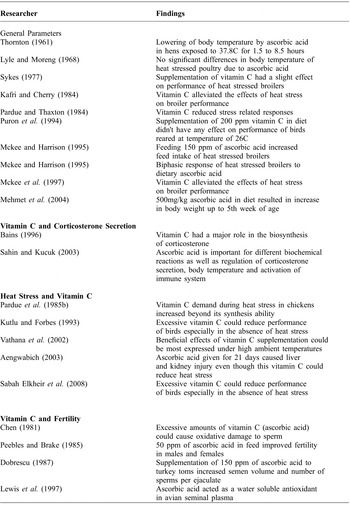
Physiological stress inducers, like over-crowding and heat stress, increase the bird's demand for ascorbic acid (Nockels, Reference NOCKELS1984). Ascorbic acid (Vitamin C) is actively transported in tissues and there is an increased utilisation and demand for ascorbic acid during hot weather (Pardue et al., Reference PARDUE, THAXTON and BRAKE1985a, Reference PARDUE, THAXTON and BRAKE1985b; Pardue and Thaxton, Reference PARDUE and THAXTON1986; Kutlu and Forbes, Reference KUTLU and FORBES1993). Ascorbic acid is an essential nutrient as it maintains efficient homeostasis. Subsequently, its demand in heat stress increases as its synthesis in the body does not meet the physiological needs of the bird (Pardue and Thaxton, Reference PARDUE and THAXTON1986). Chickens produce ascorbic acid endogenously, which is sufficient for normal physiological functions under normal conditions (Pardue and Thaxton, Reference PARDUE and THAXTON1986). However, this endogenous ascorbic acid becomes insufficient under any stress. Ascorbic acid levels in the blood are inversely proportional to the environmental temperature within the range of 21 to 31°C (Thornton, Reference THORNTON1961). When environmental temperature increases, ascorbic acid levels in the blood decrease. Therefore, ascorbic acid from external sources can prove beneficial for proper growth. Vitamin C is required by the chicken for proper metabolism of amino acids and minerals as well as for the synthesis and production of hormones involved in resistance to stress. It stimulates the functioning of leukocytes and has a role in the synthesis of antibodies (McDowell, Reference MCDOWELL1989). Table 2 presents the importance of vitamin C during heat stress as explained by different sources.
Importance of supplementation of vitamin C during heat stress in poultry.

The function of vitamin C is the biosynthesis of collagen and corticosteroids in adrenal glands which may involve ascorbic acid related hydroxylation steps (McDowell, Reference MCDOWELL1989). When the adrenal gland is stimulated with ACTH, a decrease in ascorbic acid concentration occurs, and it is suggested that vitamin C is required for steroidogenesis (Kutlu and Forbes, Reference KUTLU and FORBES1993).
In hot environments, birds should be given a diet with altered levels of proteins, amino acids and other nutrients to increase feed intake and to avoid the deleterious effects of heat stress on poultry (Fuquay, Reference FUQUAY1981). Vitamin C ameliorates ‘heat stress-induced-alterations’ and some of them are discussed below.
Amelioration of reduced weight gain and feed intake, and increased rectal temperature
In heat stress, rectal temperature increases and there is reduced weight gain and feed intake. Supplementation of ascorbic acid reduces rectal temperature, increases feed intake and body weight gain (Attia, Reference ATTIA1976; Howlider and Rose, Reference HOWLIDER and ROSE1987; Gross, Reference GROSS1988; Donkoh, Reference DONKOH1989; Kutlu and Forbes, Reference KUTLU and FORBES1993; Sayed and Shoeib, Reference SAYED and SHOEIB1996; Bonnet et al., Reference BONNET, GERAERT, LESSIRE, CARRE and GUILLAUMIN1997; Yalcin et al., Reference YALCIN, SETTAR, OZKAN and CAHANER1997; Raja and Qureshi, Reference RAJA and QURESHI2000; Ozkan et al., Reference OZKAN, AKBAS, ALTAN, ALTAN, AYHAN and OZKAN2003). It has been shown that 200-300 ppm of ascorbic acid decreases rectal temperature and improves feed intake, body weight gain and feed conversion by 8%, 11% and 5% respectively (Kadim et al., Reference KADIM, AI-QAMSHUI, MAHGOUB, AI-MARZOOQI and JOHNSON2008). It also reduces the body temperature of birds reared at 29.4°C and exposed to 35°C (Ahmad et al., Reference AHMAD, MORENG and MULLER1967) by reducing the production of heat or by increasing heat loss (Chang et al., Reference CHANG, CHONG, SOHN, KWON, LEE, KIM, YANG and JOO1993). However, Pardue et al. (Reference PARDUE, THAXTON and BRAKE1985b) reported no change in supplemented (1000 ppm ascorbic acid) and unsupplemented birds maintained at 22°C and exposed to 43°C. Other trials showed that 250 mg/kg vitamin C gives superior performance while higher doses (500 and 750 mg/kg feed) give lower performance when compared with controls (Sabah Elkheir et al., Reference SABAH ELKHEIR, MOHAMMED AHMED and ABDEL GADIR2008).
During acute heat stress, supplementation of vitamin C at the rate of 20 mg/kg/bird/day in drinking water can increase body weight up to 10.9% in chicken (Njoku, Reference NJOKU1984, Reference NJOKU1986; Jaffar and Blaha, Reference JAFFAR and BLAHA1996; Vathana et al., Reference VATHANA, KANG, LOAN, THINGGAARD, KABASA and MEULEN2002). Blaha and Kroesna (Reference BLAHA and KROESNA1997) observed 18% increases in body weight in heat stressed birds fed ad libitum vitamin C. Certain studies have shown that supplemental vitamin C does not affect feed intake in heat stressed birds, however it improves FCR (Mckee and Harrison, Reference MCKEE and HARRISON1995; Jaffar and Blaha, Reference JAFFAR and BLAHA1996; Blaha and Kroesna, Reference BLAHA and KROESNA1997; Vathana et al., Reference VATHANA, KANG, LOAN, THINGGAARD, KABASA and MEULEN2002).
Amelioration of heat stress induced lipid peroxidation and oxidative stress
Vitamin C plays an important role in cellular antioxidant defence not only by reacting with all oxygen species through formation of dehydroascorbyl (inert radical) but also by transferring radical equivalents from lipid phases to aqueous compartments (Halliwell and Gutteridge, Reference HALLIWELL and GUTTERIDGE1989; Ciftci et al., Reference CIFTCI, NIHAT ERTAS and GULER2005). Heat stress increases the demand of antioxidants like vitamin C (Cheng et al., 1990; Orban et al., Reference ORBAN, ROLAND, CUMMINS and LOVELL1993; Gey, Reference GEY1998).
Amelioration of increased panting and increased body temperature
It has been shown that 200-300 ppm of ascorbic acid supplementation in feed results in less panting as compared to unsupplemented birds (Kutlu and Forbes, Reference KUTLU and FORBES1993; Kadim et al., Reference KADIM, AI-QAMSHUI, MAHGOUB, AI-MARZOOQI and JOHNSON2008). Supplemental vitamin C can significantly decrease the body temperature of birds (Sykes, Reference SYKES1977; Orban et al., Reference ORBAN, ROLAND, CUMMINS and LOVELL1993; Pardue et al., Reference PARDUE, THAXTON and BRAKE1985a, Reference PARDUE, THAXTON and BRAKE1985b).
Amelioration of nutrient absorption
Ascorbic acid given in hot weather may be important to facilitate the utilisation of nutrients by bringing non-enzymatic scission of plant cell wall polysaccharides to induce hydroxyl radicals (Fry, Reference FRY1998) leading to better digestion of nutrients which may improve the performance of birds (Allsheihov, Reference ALLSHEIHOV1980; Kafri and Cherry, Reference KAFRI and CHERRY1984; Njoku, Reference NJOKU1986; Orban et al., Reference ORBAN, ROLAND, CUMMINS and LOVELL1993; Jaffar and Blaha, Reference JAFFAR and BLAHA1996; Mckee et al., Reference MCKEE, HARRISON and RISKOWSKI1997; Blaha et al., Reference BLAHA, DRASLAROYA and KROESNA2000; Marron et al., Reference MARRON, BEDFORD and MCCRACKEN2001; Aengwabich et al., Reference AENGWABICH, SRIDAMA, PHASUK, VONGPRALAB, PAKDEE, KATAWATIN and SIMARAKS2003). Vitamin C improves iron assimilation by reduction of Fe3+ to Fe2+ which is better assimilated by the intestine, thereby vitamin C improves resistance to infections (Ciftci et al., Reference CIFTCI, NIHAT ERTAS and GULER2005).
Amelioration of infertility and semen quality
Supplementation of ascorbic acid in heat stressed birds can improve reproductive performance (Pardue and Thaxton, Reference PARDUE and THAXTON1986). Ascorbic acid is involved in the synthesis of sex hormones, including testosterone (McDowell, Reference MCDOWELL1989). Supplementation of ascorbic acid increases the testicular weight of young cockerels (Pardue and Thaxton, Reference PARDUE and THAXTON1986). In humans, seminal fluid contains ten to fifteen times more ascorbic acid than that of blood and a decrease in the ascorbic acid level of semen results in decreased fertility (Jungck et al., Reference JUNGCK, MADDOCK and BROGEN1947). In chicks under normal conditions, ascorbic acid in the diet improves fertility. Ascorbic acid supplementation up to 150 ppm increases sperm concentration, the total number of sperm produced per turkey breeder male, and semen volume (Dobrescu, Reference DOBRESCU1987). Ascorbic acid supplementation results in reduced sperm agglutination and improves fertility (Harris et al., Reference HARRIS, HARDEN and DAWSON1974; Peebles and Brake, Reference PEEBLES and BRAKE1985).
Lowering increased levels of corticosterone in plasma
Ascorbic acid is found to cause a reduction in high plasma corticosterone levels with subsequent maintenance of normal leukocytic count (Schemling and Nockels, Reference SCHEMLING and NOCKELS1978; Richard, Reference RICHARD1998).
Amelioration of increased mortality
Vitamin C supplementation converts body proteins and fats into energy for production and survival through increased corticosterone secretion, and improves mortality (Marshall and Hughes, Reference MARSHALL and HUGHES1980; Pardue et al., Reference PARDUE, THAXTON and BRAKE1985a, Reference PARDUE, THAXTON and BRAKE1985b; Bains, Reference BAINS1996; Giang and Doan, Reference GIANG and DOAN1998; Doan, Reference DOAN2000; Vathana et al., Reference VATHANA, KANG, LOAN, THINGGAARD, KABASA and MEULEN2002). Vitamin C takes part in the synthesis of leukocytes especially phagocytes and neutrophils, which play an important role in the defence system of chickens during heat stress (Vathana et al., Reference VATHANA, KANG, LOAN, THINGGAARD, KABASA and MEULEN2002). Supplementation of vitamin C lowers heat stress-induced increased mortality (Kafri and Cherry, Reference KAFRI and CHERRY1984). David and Brake (Reference DAVID and BRAKE1985) reported a 14.6% reduction in mortality rate in heat stressed birds supplemented with 1000 ppm of vitamin C.
Amelioration of immunity and immune responses
There is a positive correlation between antibody titre and supplementation of ascorbic acid (Tuekam et al., Reference TUEKAM, MILES and BUTCHER1994). Ascorbic acid supplementation improves the immune system and different immune responses (Gross, Reference GROSS1992; Sahin and Kucuk, Reference SAHIN and KUCUK2003; Naseem et al., Reference NASEEM, ANWAR, GHAFOOR, ASLAM and AKHTER2005).
Amelioration of reduced carcass weight
Vitamin C supplementation alleviates the effect of reduced carcass weight in poultry (Hurwitz et al., Reference HURWITZ, WEISELBERG, EISNER, BARTOV, REISENFELD, SHARVIT, NIV and BORNSTEIN1980; Donkoh, Reference DONKOH1989; Mckee et al., Reference MCKEE, HARRISON and RISKOWSKI1997; Richards, Reference RICHARDS1997; Seehawer, Reference SEEHAWER2001). It was shown that 976 ppm of ascorbic acid per 128 gallons of drinking water increased slaughter carcass yield (Quarles and Adrian, Reference QUARLES and ADRIAN1989).
Improves egg quality and production
Vitamin C supplementation in heat stressed laying hens improves egg quality, egg production, egg weight, specific gravity, shell thickness and percentage of yolk (Njoku and Nwazota, Reference NJOKU P.C. and NWAZOTA1989; Demir et al., Reference DEMIR, OZTURKCAN, GORGULU, KUTLU and OKAN1995; Ciftci et al., Reference CIFTCI, NIHAT ERTAS and GULER2005).
Conclusions
It is concluded in this review that heat stress adversely affects the health and performance of birds and these adverse effects can be ameliorated by vitamin C supplementation in the diet or drinking water of poultry birds. It is thus recommended, that a specific dose of vitamin C should be added as a supplement in the diet, as endogenous synthesis of vitamin C is adversely affected during heat stress. In both backyard and commercial poultry, the addition of vitamin C can prove beneficial in alleviating the adverse effects of heat stress, and in decreasing heat stress-induced-mortality.