Introduction
During the year 2012, an estimated 163,000 children were diagnosed with cancer worldwide (American Cancer Society, 2015); approximately 80% of children diagnosed with cancer in high-income countries survived for 5 years or more after the diagnosis, a survival rate that decreases in low-income countries (World Health Organization (WHO), 2017). Cancer is the second leading cause of death globally (World Health Organization (WHO), 2018a), and as Laubmeier and Zakowski (Reference Laubmeier and Zakowski2004) expose, there is a potential life threat associated with the disease. The term “life-threatening condition” in childhood is defined as any illness or condition developed in childhood whereby the child is likely to die prematurely (Lenton et al., Reference Lenton, Stallard and Lewis2001), as it is cancer. As Fernandes and Souza (Reference Fernandes and Souza2019) point out, children with cancer are faced with impending death at all times; therefore, life-threatening situations can appear at the time of diagnosis (Laubmeier and Zakowski, Reference Laubmeier and Zakowski2004; Kazak et al., Reference Kazak, Kassam-Adams and Schneider2006), during difficult moments in the treatment as a relapse (Koocher, Reference Koocher1986), or in the end-of-life process. Indeed, it is known that the life-threatening perception is more related to psychological aspects than to objective measures such as the stage of the illness (Laubmeier and Zakowski, Reference Laubmeier and Zakowski2004).
Most studies that have been carried out in relation to psychological aspects of pediatric oncology patients facing life-threatening situations are about how communication with the pediatric patient should be (Lannen et al., Reference Lannen, Wolfe and MacK2010; Jalmsell et al., Reference Jalmsell, Kontio and Stein2015; Kaye et al., Reference Kaye, Snaman and Johnson2018; Lövgren et al., Reference Lövgren, Kreicbergs and Udo2019; Montgomery et al., Reference Montgomery, Hendricks-Ferguson and Hellsten2020), about making necessary decisions during the illness and who should be involved in them (Day et al., Reference Day, Jones and Langner2016; Badarau et al., Reference Badarau, Ruhe and Kühne2017; Yamaji et al., Reference Yamaji, Suto and Takemoto2020), and about the quality of life of the children and adolescents in the dying process and their needs (Tomlinson et al., Reference Tomlinson, Hinds and Bartels2011; Avoine-Blondin et al., Reference Avoine-Blondin, Parent and Lahaye2017). The studies mentioned above are relevant, but they do not address the personal experience of the pediatric oncology patient facing life-threatening situations.
The psychological experience of children and adolescents facing life-threatening situations is complex, as it involves emotional, relational, physical, cognitive, and spiritual aspects. To understand it, we cannot infer from the experience of an adult, and hence, we need to identify studies that analyze their own experience. As the American Psychological Association (APA, 2005) points out, children are not adults in miniature. Therefore, the evolution and maturity of children can condition aspects of the illness, the treatment, or the prognosis. It can also condition ethical aspects, such as decision-making process or the communication with patients and their families.
In the field of psychological care, knowing how the child or adolescent experiences life-threatening situations due to an oncological illness is crucial if we are to offer appropriate care. The main objective of this study is to explore and synthesize through a systematic review what has been published on the subject to date. The goals of the review are as follows: (1) to describe the elements of the psychological experience of pediatric oncology patients facing life-threatening situations and (2) to identify the corresponding care needs.
Methods
Selection criteria
The review included the following studies: quantitative, qualitative, and mixed-methods studies that analyzed the psychological experience of children and adolescents facing life-threatening situations; studies that referred to children and adolescents between 6 and 18 years of age; and research where the subjects under study were children or adolescents, their families, or the health professionals that cared for them. The review excluded studies that described the experience of children and adolescents due to a nononcological illness or other circumstances because cancer is a leading cause of death for children and adolescents around the world (World Health Organization (WHO), 2018b), as well as nonscientific studies or those with low methodological quality.
Search strategy
A search in the Scopus, Web of Science, PubMed, and PsycINFO databases was carried out to identify articles published on the psychological experience of pediatric oncology patients facing life-threatening situations. The search was done including all the studies published until June 2020 and was restricted to articles written in English, French, and Spanish. The following keywords were used for the search:
“Near death experience,” Death*, “Life threatening illness,” “Pediatric palliative care,” “Adolescent palliative care,” End-of-life, Palliative phase, Palliative care
Child*, Adolescent*, Youth*, “Pediatric patients”
“Child cancer,” “Pediatric oncology,” “Terminally ill child,” “Children with cancer,” “Dying with cancer,” “Adolescent cancer”
The PRISMA standard was followed. The duplicates of articles identified in the databases were eliminated; criteria created by the three authors were followed to screen these articles. One reviewer (ECC) independently proceeded by eliminating those studies that were clearly irrelevant from reading the titles, and from the abstracts selected those that needed to be read in full in order to decide their inclusion. The three authors discussed the selected articles to make sure that the selection was in line with the objectives of the review. Two authors (ECC and DMO) then independently collected the full text of the selected articles to evaluate their possible inclusion in the review. If no agreement was reached between the two reviewers, the third reviewer was consulted (EBA).
Evaluation of the risk of bias
The “Critical Appraisal Skills Programme” (CASP) (2018) was used to evaluate the risk of bias of the articles included in the review. The CASP consists of 10 questions that are designed to think systemically on three general aspects: the validity, the content, and the applicability of the results. Each study was given a score based on the number of questions that were answered positively, and those articles that had a score of less than 50% of the total number of questions were excluded. Each study was assessed independently by two reviewers, and any disagreements were resolved through discussion.
Extraction and synthesis of the data
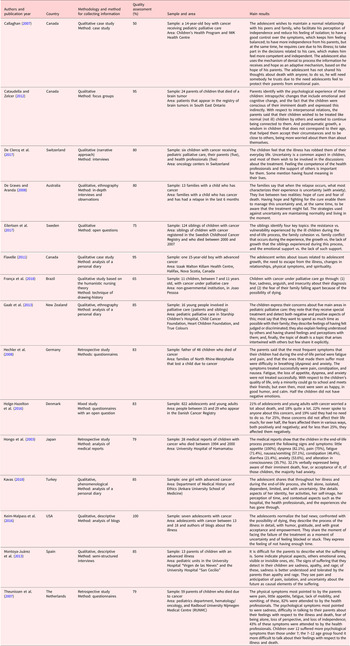
The extraction of the data was carried out with the help of a standard format table that gathered together information about the authors, year, and country; methodology and method of data collection; quality assessment; sample and study area; and results.
A narrative synthesis of the data using the Popay et al. (Reference Popay, Roberts and Sowden2006) guide was carried out. As Popay et al. (Reference Popay, Roberts and Sowden2006) assert, narrative synthesis is a way of telling stories; it permits the gathering of evidence and the construction of a convincing story as to why one needs to act, or stop acting, in a certain way. To bring forward the narrative synthesis, the following adapted steps of Popay et al. (Reference Popay, Roberts and Sowden2006) were applied: (1) extracting the data of the studies on a table, (2) exploring the relations in each study and between the different studies, (3) describing the central topics brought from the data, (4) critically reflecting on the process of the synthesis, and (5) elaborating the conclusion of the narrative synthesis.
Results
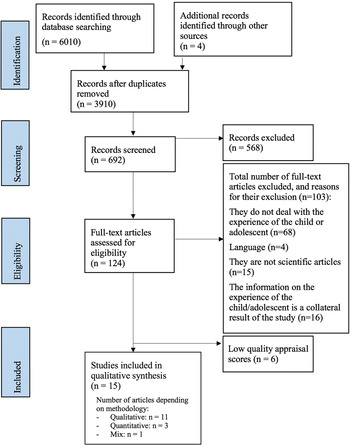
Once the duplicates were eliminated, 3,910 articles were identified in the database. Those studies that failed to fulfill the selection criteria were excluded. Many of these were eliminated since they lacked results in the area of psychology. This exclusion left 124 articles whose full texts were read, and of these, 21 were included in the review. The reasons to exclude articles are that they do not deal with the experience of the child or adolescent, they are not scientific articles, the information on the experience of children is a collateral result of the study, and they are written in a language other than the selected ones. Six articles were excluded due to a risk of bias once their quality had been assessed by the CASP (2018; Figure 1). The details of the final articles analyzed and the quality assessment of each one are described in Table 1.
PRISMA diagram.

Description of the articles

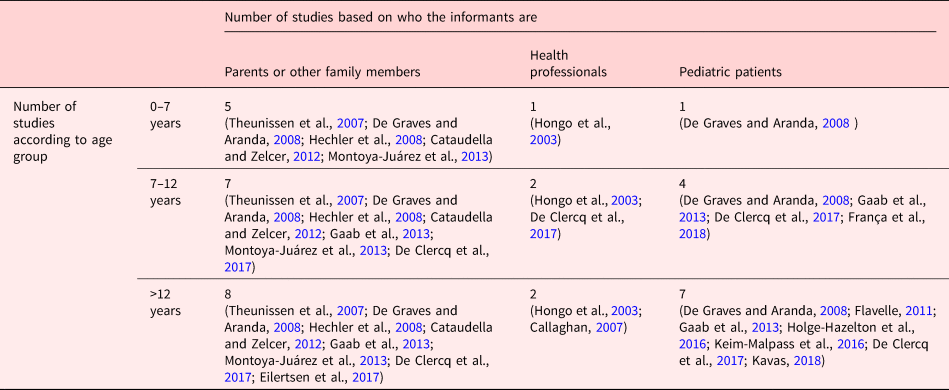
The 15 studies synthesized in this article are heterogeneous in their methodology: 11 are qualitative, 3 quantitative, and 1 mixed. Most of them are studies from the perspective of family members, and the ages of the patients are varied, although there is a predominance of studies focused on patients over 12. Studies from the perspective of the patient are practically nonexistent with the 0–7 age group (Table 2), which is understandable taking into account that at this stage children have not developed the mental capacities of logic thought, which is an impediment to the generation of an explanation of his own experience (Piaget and Inhelder, Reference Piaget and Inhelder2007).
Number of studies according to their characteristics

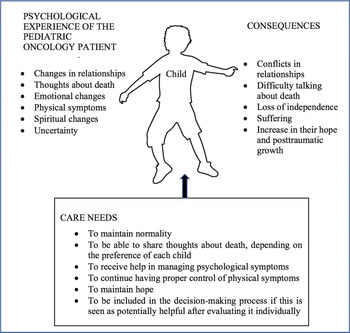
After carrying out the narrative synthesis, six key elements in the literature on the psychological experience of children and adolescents facing life-threatening situations were identified. These are (1) changes in relationships, (2) thoughts about death, (3) emotional changes, (4) physical symptoms that are a source of suffering, (5) changes on a spiritual level, and (6) feelings of uncertainty. The conceptual map of the synthesis of the results shows the elements of the psychological experience of the pediatric oncology patient, the consequences of these elements on them, and the related care needs (see Figure 2).
Conceptual map of the synthesis of results.

Change in relationships
The aspect that appeared in 50% of the articles reviewed is a change in the relationships experienced by children and adolescents with cancer. These changes are identified, in general, as negative, despite the detection of certain positive aspects as well (Callaghan, Reference Callaghan2007; Hechler et al., Reference Hechler, Blankenburg and Friedrichsdorf2008; Flavelle, Reference Flavelle2011; Gaab et al., Reference Gaab, Owens and MacLeod2013; Montoya-Juárez et al., Reference Montoya-Juárez, García-Caro and Schmidt-Rio-Valle2013; Eilertsen et al., Reference Eilertsen, Lövgren and Wallin2017; Kavas, Reference Kavas2018).
Gaab et al. (Reference Gaab, Owens and MacLeod2013) describe that pediatric oncology patients feel that they are treated differently and this disturbs them. The social isolation experienced due to the limitations resulting from the illness and the confusion that friends may feel with respect to the illness and physical limitations are factors that facilitate this change in the relationship with their peers (Callaghan, Reference Callaghan2007; Hechler et al., Reference Hechler, Blankenburg and Friedrichsdorf2008; Montoya-Juárez et al., Reference Montoya-Juárez, García-Caro and Schmidt-Rio-Valle2013). This can make them feel dependent on others, distanced from their friends, and fearful of being disregarded or judged, all of which increases the distance between them (Kavas, Reference Kavas2018). Some studies show that relationships can change leading to family conflict: sadness, anxiety, and pain cause the family to argue and become frustrated, despite needing to be together (Eilertsen et al., Reference Eilertsen, Lövgren and Wallin2017).
At the same time, other authors point out that this complex situation also leads to a strengthening of family bonds, a feeling of being closer to each other, and placing more importance on love and their relationships. The children and adolescents emphasize the loving care, comfort, and affection that they receive (Flavelle, Reference Flavelle2011; Gaab et al., Reference Gaab, Owens and MacLeod2013; Eilertsen et al., Reference Eilertsen, Lövgren and Wallin2017), but also the worry they feel for their carers and their need to protect them (Flavelle, Reference Flavelle2011).
Of the 15 studies included in the synthesis, 4 show that pediatric oncology patients wish to maintain normality: they wish to be treated like their healthy friends or siblings, to feel as “normal” as possible, and they want to lead the life they led before the illness. Maintaining normality can reduce the feeling of impotence and desperation (Callaghan, Reference Callaghan2007; De Graves and Aranda, Reference De Graves and Aranda2008; Cataudella and Zelcer, Reference Cataudella and Zelcer2012; Kavas, Reference Kavas2018). One article points out that the “normal” treatment of children or adolescents facing life-threatening situations involves avoiding overprotection (De Graves and Aranda, Reference De Graves and Aranda2008). Kavas (Reference Kavas2018) points out that, despite the children's need to resume their daily activities, to be accepted by their classmates, and to be treated like a healthy child, they can distance themselves out of fear of being judged, which makes the process more challenging.
Thoughts about death
All the studies that deal with the topic of thoughts about death show that children and adolescents with cancer worry about death, and they express this awareness of their possible imminent death verbally or indirectly through certain comments, behavior, or gestures (Hongo et al., Reference Hongo, Watanabe and Okada2003; Callaghan, Reference Callaghan2007; Theunissen et al., Reference Theunissen, Hoogerbrugge and van Achterberg2007; Cataudella and Zelcer, Reference Cataudella and Zelcer2012; Gaab et al., Reference Gaab, Owens and MacLeod2013; Holge-Hazelton et al., Reference Holge-Hazelton, Timm and Graugaard2016).
There are studies with different results regarding whether this population talks or does not talk about death with someone. Gaab et al. (Reference Gaab, Owens and MacLeod2013) say that the topic of death arises in children with advanced illnesses and that some of them talk about it openly. Holge-Hazelton et al. (Reference Holge-Hazelton, Timm and Graugaard2016), on the other hand, explain that although a majority of the patients express their desire to talk about death with someone, a third of them do not. Another article explains the situation of an adolescent who has not shared his thoughts about death with anybody. According to the author, this behavior is justified by the tendency of adolescents to protect their parents from emotional pain (Callaghan, Reference Callaghan2007). Theunissen et al. (Reference Theunissen, Hoogerbrugge and van Achterberg2007) corroborate the results discussed earlier, indicating that the difficulty of children in palliative care to talk about their feelings with respect to the illness and death is the second most common symptom after sadness, especially for children between 7 and 12.
Emotional changes
All the children and adolescents facing life-threatening situations feel most of the following emotions or moods: sadness, rage or frustration, anxiety, fear, and guilt (Hongo et al., Reference Hongo, Watanabe and Okada2003; Theunissen et al., Reference Theunissen, Hoogerbrugge and van Achterberg2007; Hechler et al., Reference Hechler, Blankenburg and Friedrichsdorf2008; Cataudella and Zelcer, Reference Cataudella and Zelcer2012; Montoya-Juárez et al., Reference Montoya-Juárez, García-Caro and Schmidt-Rio-Valle2013; França et al., Reference França, Costa and Lopes2018). Some studies emphasize some emotions over others. Hongo et al. (Reference Hongo, Watanabe and Okada2003) point out that approximately half of the children feel anxious and a third fear death, whereas Theunissen et al. (Reference Theunissen, Hoogerbrugge and van Achterberg2007) say that the most prevalent emotions are sadness and fear, although they also identify rage and feelings of guilt.
As Montoya-Juárez et al. (Reference Montoya-Juárez, García-Caro and Schmidt-Rio-Valle2013) point out, sadness is observed through the tears or facial expression of the child, apathy is perceived when the patient does not want anything, does not want to speak, etc., and rage is shown via hostile or aggressive behavior toward the parents or health professionals. Of these emotions, sadness is better understood and tolerated by the parents than apathy or rage due to the feelings of impotence and suffering that generate them (Montoya-Juárez et al., Reference Montoya-Juárez, García-Caro and Schmidt-Rio-Valle2013). According to Cataudella and Zelcer (Reference Cataudella and Zelcer2012), the causes of these emotions are sadness due to not being able to do pleasant activities, frustration at the progressive loss of communication, mood change, and the progressive loss of self-esteem due to the physical changes produced by the treatment and anxiety due to the pain. Anxiety is considered to be one of the symptoms that cause most suffering and that it is not treated successfully (Hechler et al., Reference Hechler, Blankenburg and Friedrichsdorf2008). According to França et al. (Reference França, Costa and Lopes2018), when children are going through a process of severe and uncertain disease, they perceive death itself, which generates fear. This causes them anguish and suffering, especially for the treatment and the separation from their parents and siblings when hospitalization is necessary.
One aspect that is connected to emotional changes and the change in relationships mentioned earlier is the loss of independence (Callaghan, Reference Callaghan2007; Theunissen et al., Reference Theunissen, Hoogerbrugge and van Achterberg2007; Flavelle, Reference Flavelle2011; Kavas, Reference Kavas2018). This independence is demanded more strongly by adolescents since they want independence from their parents, but the limitations of the illness make becoming independent more challenging (Callaghan, Reference Callaghan2007; Flavelle, Reference Flavelle2011; Kavas, Reference Kavas2018). If the adolescents are involved in the decision-making process during the illness, their feelings of competence and independence increase (Callaghan, Reference Callaghan2007; Flavelle, Reference Flavelle2011).
Physical symptoms
Physical symptoms are another important aspect of the psychological experience of children or adolescents facing life-threatening situations; five articles describe them. The main symptoms that cause suffering are pain, fatigue, little appetite, lack of mobility, vomiting, constipation, and diarrhea (Hongo et al., Reference Hongo, Watanabe and Okada2003; Theunissen et al., Reference Theunissen, Hoogerbrugge and van Achterberg2007; Hechler et al., Reference Hechler, Blankenburg and Friedrichsdorf2008; Flavelle, Reference Flavelle2011; Montoya-Juárez et al., Reference Montoya-Juárez, García-Caro and Schmidt-Rio-Valle2013). The physical symptoms are attended to more frequently and better managed than the psychological symptoms (Theunissen et al., Reference Theunissen, Hoogerbrugge and van Achterberg2007), although fatigue, loss of appetite, and dyspnea are not always treated successfully (Hechler et al., Reference Hechler, Blankenburg and Friedrichsdorf2008). Pain is one of the symptoms that affect the quality of relationships: patients can show anger with their loved ones due to the pain and feel bad for having this reaction (Flavelle, Reference Flavelle2011).
Spiritual changes
Five articles of the review detect changes on a spiritual level (Flavelle, Reference Flavelle2011; Cataudella and Zelcer, Reference Cataudella and Zelcer2012; Holge-Hazelton et al., Reference Holge-Hazelton, Timm and Graugaard2016; De Clercq et al., Reference De Clercq, Elger and Wangmo2017; Kavas, Reference Kavas2018). The search for meaning and purpose in life is the most common aspect with respect to the spirituality of children and adolescents (Flavelle, Reference Flavelle2011; De Clercq et al., Reference De Clercq, Elger and Wangmo2017; Kavas, Reference Kavas2018). Kavas (Reference Kavas2018) describes an adolescent who goes through an existential crisis due to having faced life-threatening situations, questioning the meaning of her life, going over her past errors and early relationships, and thinking about the future and the person that she would have liked to become.
Maintaining hope in spite of being aware of the diminishing probability of surviving is another common element of the spiritual needs of these children and adolescents (Flavelle, Reference Flavelle2011; Cataudella and Zelcer, Reference Cataudella and Zelcer2012; Kavas, Reference Kavas2018). More specifically, one article explains how one adolescent shares her recognition of faith as a source of strength and makes the use of prayer (Flavelle, Reference Flavelle2011).
The last aspect of spiritual change is posttraumatic growth, detected by some parents who see a wisdom in these children that does not correspond to their age. This helps them accept their circumstances and to be close to others, being more concerned about them than about themselves. Their personal strength increases, and this is seen in their capacity to cope with unpleasant treatments, to accept help, and to find meaning in the normal things of life (Cataudella and Zelcer, Reference Cataudella and Zelcer2012). Another study shows that the adolescents’ concern about death can cause fear or other negative aspects, but they also experience a process of transition, feel more mature, and, as a result of this, lead a fuller life emphasizing the positive aspects of existence (Holge-Hazelton et al., Reference Holge-Hazelton, Timm and Graugaard2016). A final article describes one person who speaks of having matured and learnt to be happier than before falling ill, happier with the little things of life (De Clercq et al., Reference De Clercq, Elger and Wangmo2017).
Uncertainty
Uncertainty about the effectiveness of the treatment, or when it has not been successful, is a difficult moment and one of feeling stuck or blocked in which the children and adolescents live between two realities: the hope of being cured and the fear of death (De Graves and Aranda, Reference De Graves and Aranda2008; Montoya-Juárez et al., Reference Montoya-Juárez, García-Caro and Schmidt-Rio-Valle2013; Keim-Malpass et al., Reference Keim-Malpass, Stegenga and Loudin2016; De Clercq et al., Reference De Clercq, Elger and Wangmo2017; Kavas, Reference Kavas2018).
Maintaining hope and fighting to become cured enables them to manage this uncertainty and, at the same time, to be aware that the treatment may fail (De Graves and Aranda, Reference De Graves and Aranda2008). Hope becomes modified during the process of the illness, and when the end-of-life process begins, the hope of being cured can become the hope of spending more quality time with the family; pediatric patients tend to adopt the hope of their parents as their own (Callaghan, Reference Callaghan2007).
To counteract the feeling of uncertainty, most patients wish to be involved in the discussions on diagnosis and treatment, although some prefer not to think about it (De Clercq et al., Reference De Clercq, Elger and Wangmo2017). During these periods of uncertainty, the health professionals might adopt a paternalistic attitude, which can later change into a relationship where the adolescent participates and is committed to the discussions of the treatment. If this occurs, the patients feel better and their rumination decreases (Keim-Malpass et al., Reference Keim-Malpass, Stegenga and Loudin2016).
The main adaptation strategies for dealing with uncertainty are living for the moment adopting a “day by day” attitude and maintaining normality in the patients’ lives, a factor analyzed above (De Graves and Aranda, Reference De Graves and Aranda2008).
Discussion
The systematic literature review suggests that children and adolescents that go through life-threatening situations experience relational and emotional changes (Hongo et al., Reference Hongo, Watanabe and Okada2003; Callaghan, Reference Callaghan2007; Theunissen et al., Reference Theunissen, Hoogerbrugge and van Achterberg2007; Hechler et al., Reference Hechler, Blankenburg and Friedrichsdorf2008; Flavelle, Reference Flavelle2011; Cataudella and Zelcer, Reference Cataudella and Zelcer2012; Gaab et al., Reference Gaab, Owens and MacLeod2013; Montoya-Juárez et al., Reference Montoya-Juárez, García-Caro and Schmidt-Rio-Valle2013; Eilertsen et al., Reference Eilertsen, Lövgren and Wallin2017; França et al., Reference França, Costa and Lopes2018; Kavas, Reference Kavas2018), which are intertwined and entail a loss of independence of the patient. The most outstanding relational aspect is the feeling that the children and adolescents with cancer have of being treated differently from other people (Gaab et al., Reference Gaab, Owens and MacLeod2013; Kavas, Reference Kavas2018), along with the unease that goes with this. This is triggered by the loss of their routine and social life that results from the illness, and by the impact that this has on others (Callaghan, Reference Callaghan2007; Hechler et al., Reference Hechler, Blankenburg and Friedrichsdorf2008; Montoya-Juárez et al., Reference Montoya-Juárez, García-Caro and Schmidt-Rio-Valle2013). The most common emotions or moods in pediatric oncology patients facing these situations are sadness (Theunissen et al., Reference Theunissen, Hoogerbrugge and van Achterberg2007; Montoya-Juárez et al., Reference Montoya-Juárez, García-Caro and Schmidt-Rio-Valle2013), fear of death or of being alone (Hongo et al., Reference Hongo, Watanabe and Okada2003; Theunissen et al., Reference Theunissen, Hoogerbrugge and van Achterberg2007; França et al., Reference França, Costa and Lopes2018), anxiety (Hongo et al., Reference Hongo, Watanabe and Okada2003; Hechler et al., Reference Hechler, Blankenburg and Friedrichsdorf2008), rage (Theunissen et al., Reference Theunissen, Hoogerbrugge and van Achterberg2007; Montoya-Juárez et al., Reference Montoya-Juárez, García-Caro and Schmidt-Rio-Valle2013), and guilt (Theunissen et al., Reference Theunissen, Hoogerbrugge and van Achterberg2007). These arise as a consequence of the illness, the threat to life that it represents, and the physical symptoms that can create or strengthen some of these emotions affecting, at the same time, the quality of the relationships that the child or adolescent has with his or her loved ones (Flavelle, Reference Flavelle2011).
Thoughts about death are another prominent element that emerge from the synthesis of the articles. Children and adolescents facing life-threatening situations due to cancer worry about death and express this directly or indirectly (Hongo et al., Reference Hongo, Watanabe and Okada2003; Callaghan, Reference Callaghan2007; Theunissen et al., Reference Theunissen, Hoogerbrugge and van Achterberg2007; Cataudella and Zelcer, Reference Cataudella and Zelcer2012; Gaab et al., Reference Gaab, Owens and MacLeod2013; Holge-Hazelton et al., Reference Holge-Hazelton, Timm and Graugaard2016). The results obtained show that talking about death tends to be difficult for children and adolescents, especially children between 7 and 12, although it is not clear whether they do speak about death with someone or not, nor whether they need to do so. These findings make us wonder whether this difficulty is due to problems of understanding on the part of the children and adolescents; because they are worried about causing suffering to their family; because they cannot find an appropriate interlocutor; because they do not have the communicative resources or for other reasons. These questions become more relevant once we know that the capacity of a child to understand the concept of death does not depend only on their cognitive capacity but also on their lived experiences. As Bluebond-Langner (Reference Bluebond-Langner1978) points out, a child of 4 can understand the illness and its prognosis better than a child of 10 depending on their lived experiences.
Another significant source of suffering for children and adolescents is the uncertainty that they experience on not knowing what is going to happen, whether the treatment will or will not work. According to Callaghan (Reference Callaghan2007) and De Graves and Aranda (Reference De Graves and Aranda2008), hope provides the balance to manage the uncertainty and to be aware of the possibility that there might be no cure. In fact, the articles reviewed identified that pediatric patients experience hope as one of the elements of spiritual change when facing life-threatening situations. Other spiritual elements found are the search for meaning and purpose in life and posttraumatic growth (Flavelle, Reference Flavelle2011; Cataudella and Zelcer, Reference Cataudella and Zelcer2012; De Clercq et al., Reference De Clercq, Elger and Wangmo2017; Kavas, Reference Kavas2018).
Finally, we would like to highlight some of the protective factors in this same experience: the strengthening of family bonds, shared affection, and the valuing of love (Flavelle, Reference Flavelle2011; Gaab et al., Reference Gaab, Owens and MacLeod2013; Eilertsen et al., Reference Eilertsen, Lövgren and Wallin2017); constructive cope mechanisms of the children and adolescents, like playing an active role and having a sense of humor (Cataudella and Zelcer, Reference Cataudella and Zelcer2012); and resources developed by them like the capacity to normalize bad news in order to cope with this experience (Keim-Malpass et al., Reference Keim-Malpass, Stegenga and Loudin2016). All these are protective factors identified by Haase et al. (Reference Haase, Kintner and Monahan2014) that, as these authors assert, can promote resilience and contribute to a better psychosocial adjustment.
The results of the review allow to identify the pediatric oncology patients' care needs. What these patients value the most is normality: to be treated as “normal” children or adolescents and to carry on with their habitual routines and activities (Callaghan, Reference Callaghan2007; De Graves and Aranda, Reference De Graves and Aranda2008; Cataudella and Zelcer, Reference Cataudella and Zelcer2012; Holge-Hazelton et al., Reference Holge-Hazelton, Timm and Graugaard2016; Kavas, Reference Kavas2018). Normality helps in three different ways: to reduce the relational changes that take place, to decrease the feeling of uncertainty, and to facilitate the independence of the adolescents. Another aspect that helps reduce uncertainty is involving the patients in the discussions on the diagnosis and treatment of the illness (Keim-Malpass et al., Reference Keim-Malpass, Stegenga and Loudin2016; De Clercq et al., Reference De Clercq, Elger and Wangmo2017), which, at the same time, increases their feeling of independence (Callaghan, Reference Callaghan2007; Flavelle, Reference Flavelle2011). Holge-Hazelton et al. (Reference Holge-Hazelton, Timm and Graugaard2016) suggest that one aspect that would help to meet the needs of the children and adolescents is to offer them the possibility of sharing their thoughts on death, provided that such a concern is detected in the patient. According to the synthesis of the review, fostering hope (Callaghan, Reference Callaghan2007; De Graves and Aranda, Reference De Graves and Aranda2008) is another crucial element to accompany the experience of the children or adolescents that feel their life is threatened.
Strengths and limitations of the review
The review conducted in this article includes studies of different methodologies — qualitative, quantitative, and mixed — which provides a broad perspective of the topic being studied. The risk of bias of all the research included has been assessed, and those studies that failed to present sufficient methodological quality were discarded. The narrative synthesis carried out has enabled us to present the evidence clearly and concisely.
One limitation of this review is the inclusion of studies on populations of very different ages, which may mean that the assertions made are not valid for all age groups. It should be pointed out that, given the dearth of studies from the perspective of the children or adolescents, we have included and compared studies done from the perspective of the pediatric patient, of their family members, and of the health professionals, as well as studies using different methodologies, which could weaken the results. Furthermore, one aspect that might hinder the generalization of the results is that most of the studies analyzed were conducted in the USA or Europe (10 out of 15). Consequently, the results cannot be generalized since there is not enough socio-cultural variety. Finally, it should be pointed out that restricting the articles searched to those written in English, Spanish, and French could entail an additional limitation of this review.
In spite of these limitations, this literature review provides crucial information on the psychological experience of the pediatric oncology patient facing life-threatening situations. There is another review on the experience of pediatric oncology patients facing the end-of-life process (Montgomery et al., Reference Montgomery, Sawin and Hendricks-Ferguson2016), but it does not go deeply into their psychological experience. The results obtained enable us to get a little closer to what the children or adolescents think, what they feel, and what they do when they face life-threatening situations.
Conclusions
To know which are the main elements involved in the psychological experience of pediatric oncology patients facing life-threatening situations can guide health professionals on what aspects are worth considering when caring for these children.
The main elements that pediatric oncology patients can experience in these situations are (1) changes in relationships: identified, in general, as negative; (2) thoughts about death, which can be expressed verbally or indirectly; (3) emotional changes: most of them feel sadness, rage or frustration, anxiety, fear, and guilt; (4) physical symptoms: pain, fatigue, little appetite, lack of mobility, vomiting, constipation, and diarrhea; (5) spiritual changes: searching for meaning and purpose in life and posttraumatic growth; and (6) feelings of uncertainty about the effectiveness of the treatment.
The analysis of these elements shows that there are six main domains of care needs that can be considered as guidelines for interventions with these children: (1) The children express a wish to be treated like their peers, to feel as “normal” as possible. Maintaining this normality also helps to manage feelings of uncertainty (Callaghan, Reference Callaghan2007; De Graves and Aranda, Reference De Graves and Aranda2008; Cataudella and Zelcer, Reference Cataudella and Zelcer2012; Kavas, Reference Kavas2018). (2) Talking about death is an important element (Callaghan, Reference Callaghan2007; Theunissen et al., Reference Theunissen, Hoogerbrugge and van Achterberg2007; Gaab et al., Reference Gaab, Owens and MacLeod2013), although it should be noted that some results indicate that while a majority of the patients express their desire to talk about death, a third of them do not (Holge-Hazelton et al., Reference Holge-Hazelton, Timm and Graugaard2016). (3) A full psychological assessment and a proper control of the psychological symptoms are necessary. Hechler et al. (Reference Hechler, Blankenburg and Friedrichsdorf2008) show that anxiety is considered to be one of the symptoms that cause most suffering and that it is not treated successfully. Furthermore, Theunissen et al. (Reference Theunissen, Hoogerbrugge and van Achterberg2007) point out that, in general, physical symptoms are attended to more frequently and better managed than psychological symptoms. (4) To continue ensuring the proper control of physical symptoms, since it is shown that they are generally well attended (Theunissen et al., Reference Theunissen, Hoogerbrugge and van Achterberg2007), although fatigue, loss of appetite, and dyspnea are not always treated successfully (Hechler et al., Reference Hechler, Blankenburg and Friedrichsdorf2008). (5) Maintaining hope seems to be an important aspect for children. In this regard, some authors (Flavelle, Reference Flavelle2011; Cataudella and Zelcer, Reference Cataudella and Zelcer2012; Kavas, Reference Kavas2018) found that maintaining hope in spite of being aware of the diminishing probability of surviving is a spiritual need of these children and adolescents. In addition, De Graves and Aranda (Reference De Graves and Aranda2008) found that hope enables them to manage uncertainty. (6) Finally, considering including patients in the decision-making process during the illness would be recommendable, given that there are studies that show that doing so increases their feelings of competence and independence and reduces rumination (Callaghan, Reference Callaghan2007; Flavelle, Reference Flavelle2011; Keim-Malpass et al., Reference Keim-Malpass, Stegenga and Loudin2016). Individualized care is shown to be important for this type of patient. In this regard, De Clercq et al. (Reference De Clercq, Elger and Wangmo2017) indicate that while most patients wish to take part in the decision-making process because it reduces the sense of uncertainty, there are some who prefer not to think about it.
The literature review showed that studies from the perspective of the patient are practically nonexistent with the 7–12 age group, which is surprising if we bear in mind that at this age, children are capable of expressing themselves and explaining their personal experiences. Furthermore, the qualitative studies can offer more detailed information and consider it appropriate to continue along these lines. It also emphasizes the need to conduct more studies from the perspective of the pediatric patient since, in this population, many of the studies are done from the perspective of the parents, and we know that the perception of the parents is not always the same as the one of the children, especially with respect to subjective aspects of the experience (Janse et al., Reference Janse, Sinnema and Uiterwaal2008). Future research should continue to deepen our knowledge of the psychological experience of children or adolescents facing life-threatening situations since there is little evidence on the subject.
Supplementary material
The supplementary material for this article can be found at https://doi.org/10.1017/S1478951521000031.
Acknowledgment
The authors thank Ramon Benito for his technical support.
Funding
This research received no specific grant from any funding agency, commercial or not-for-profit sectors.
Conflicts of interest
There are no conflicts of interest.